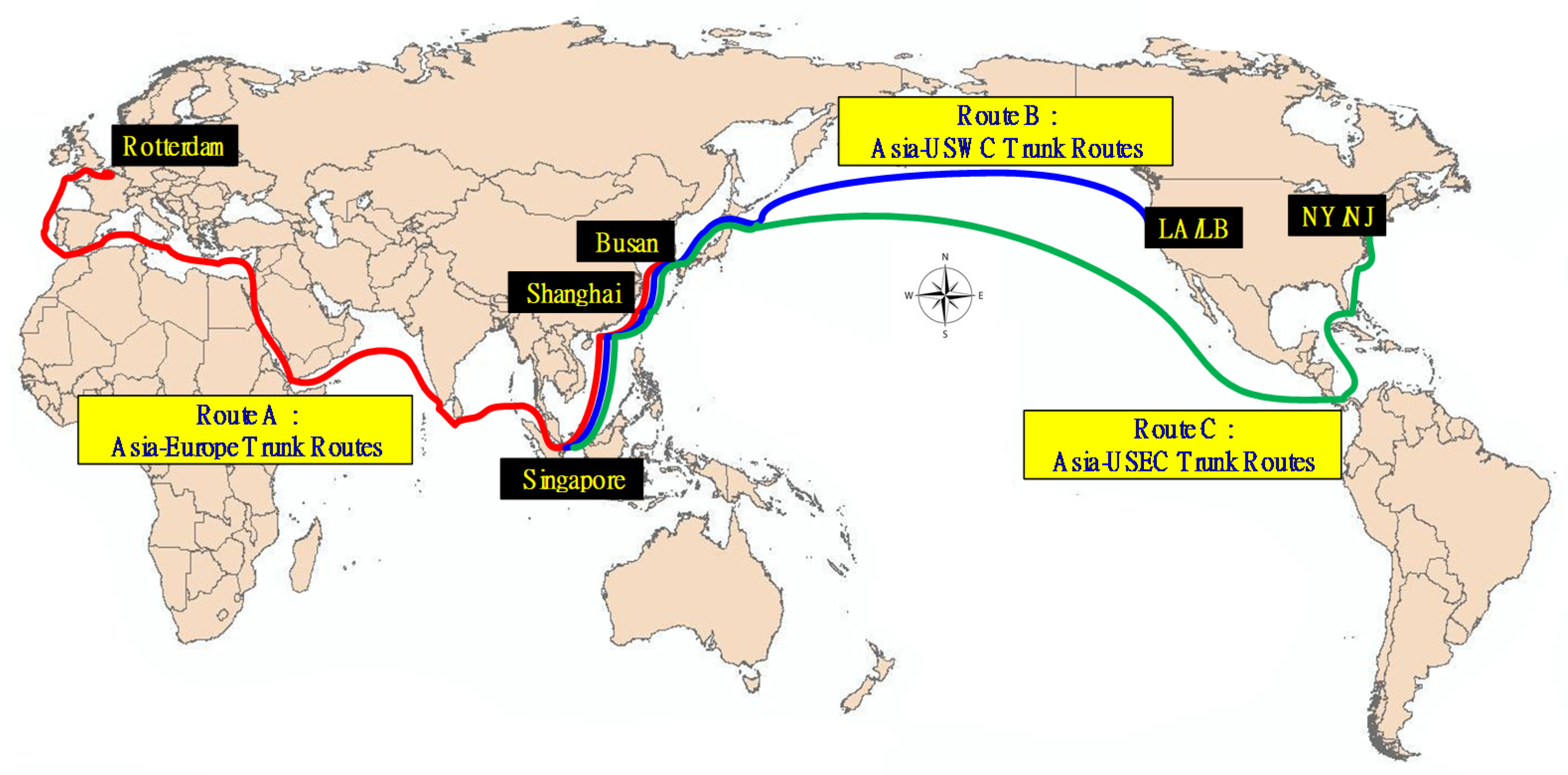
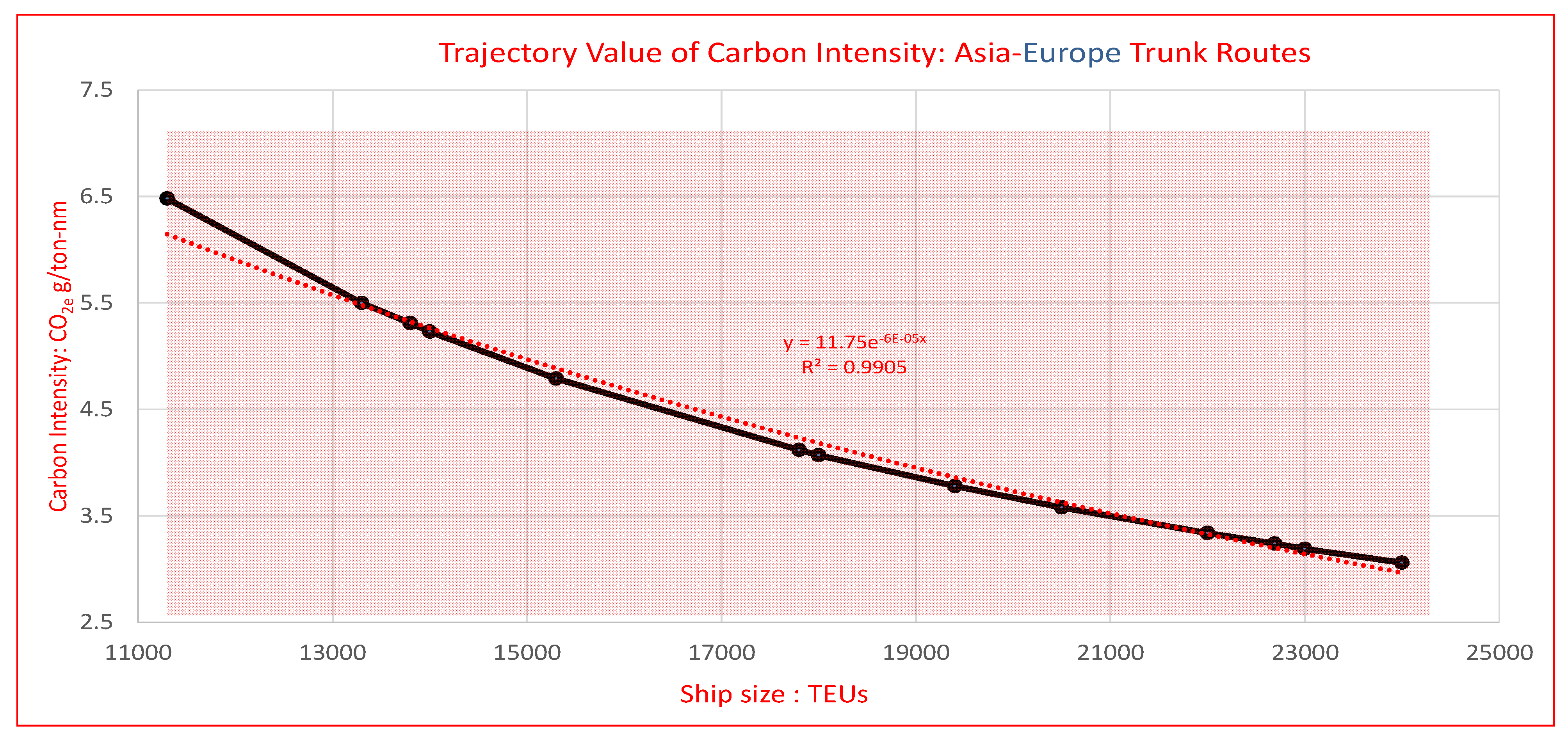
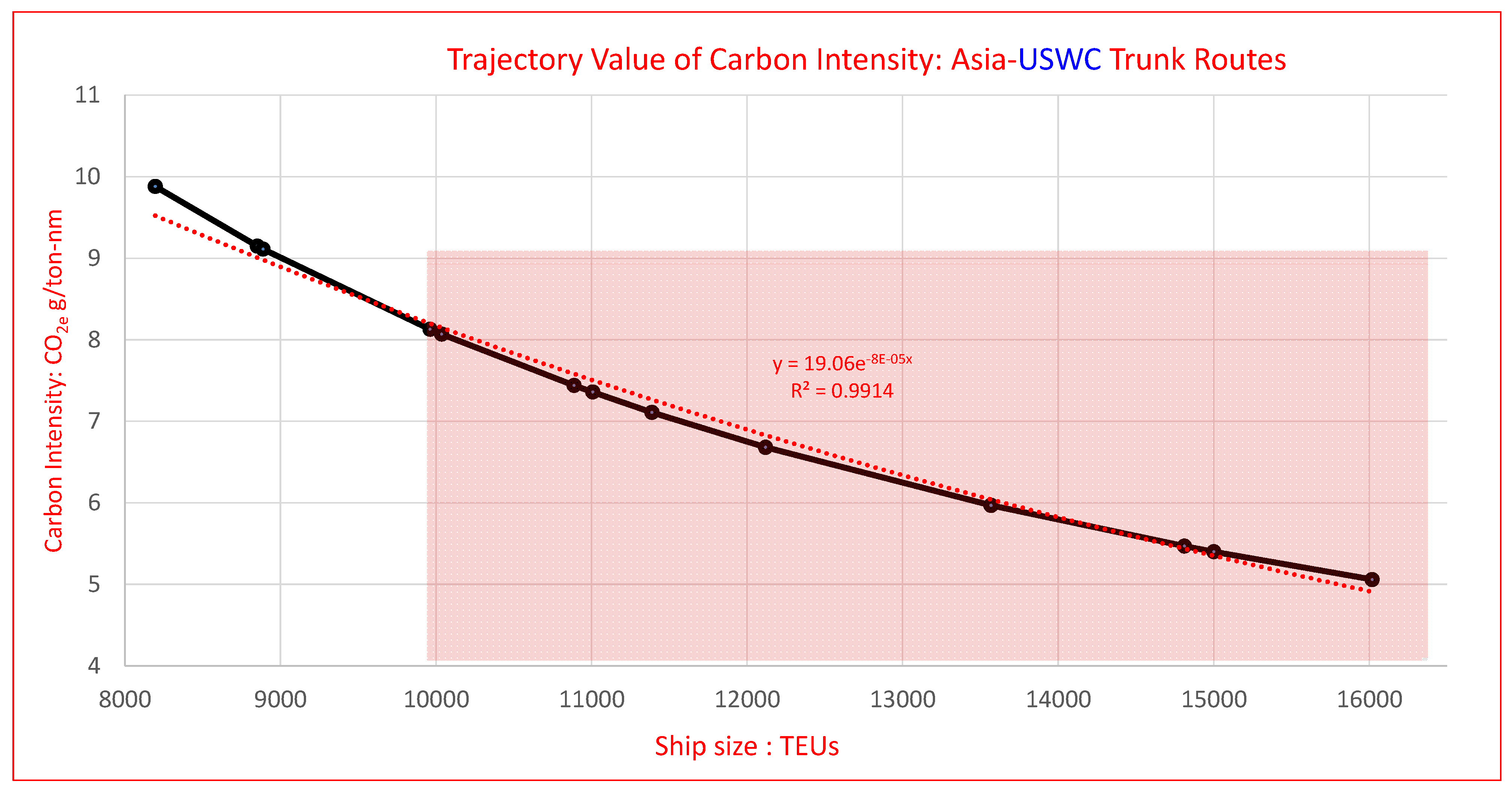
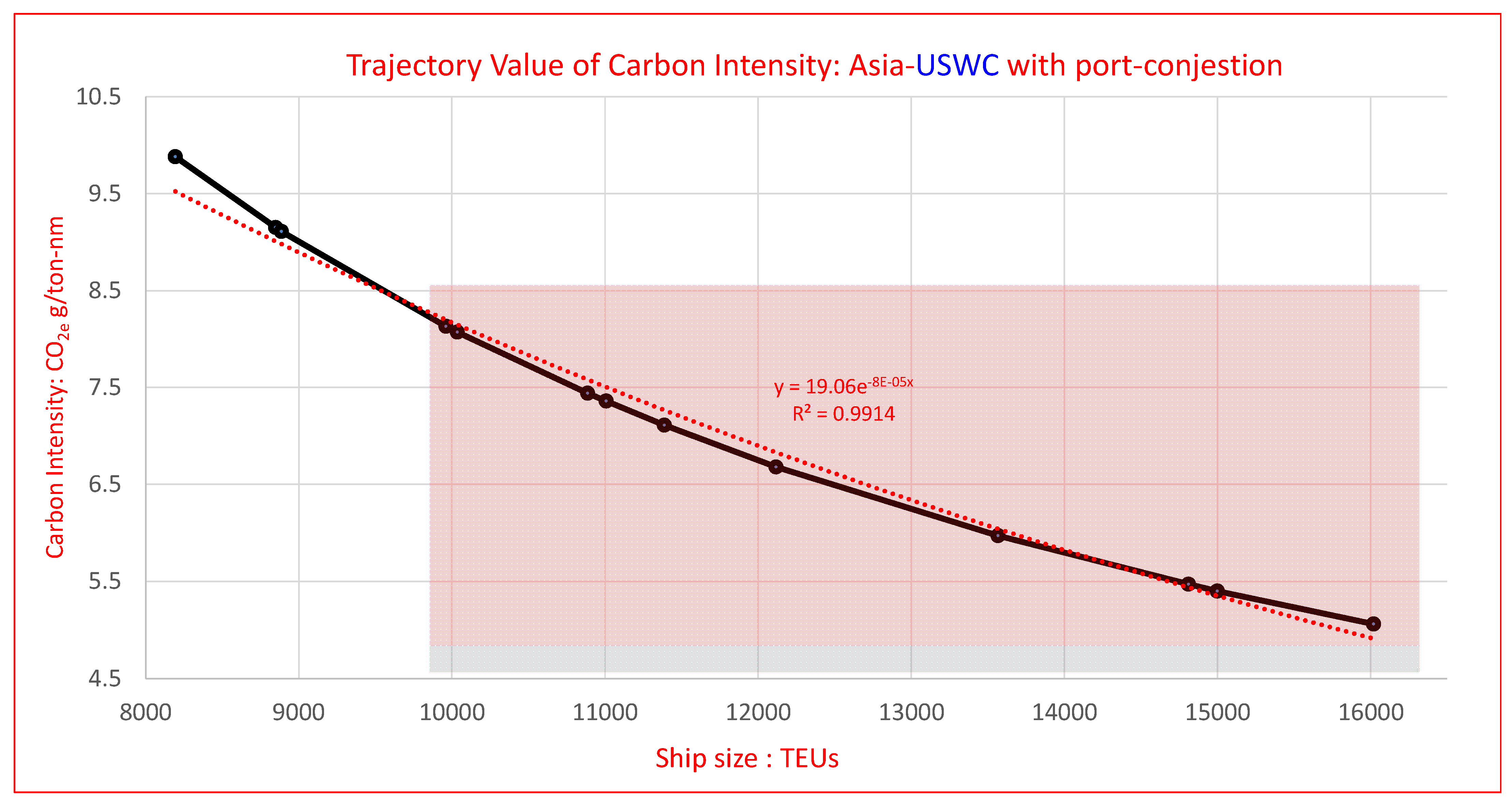
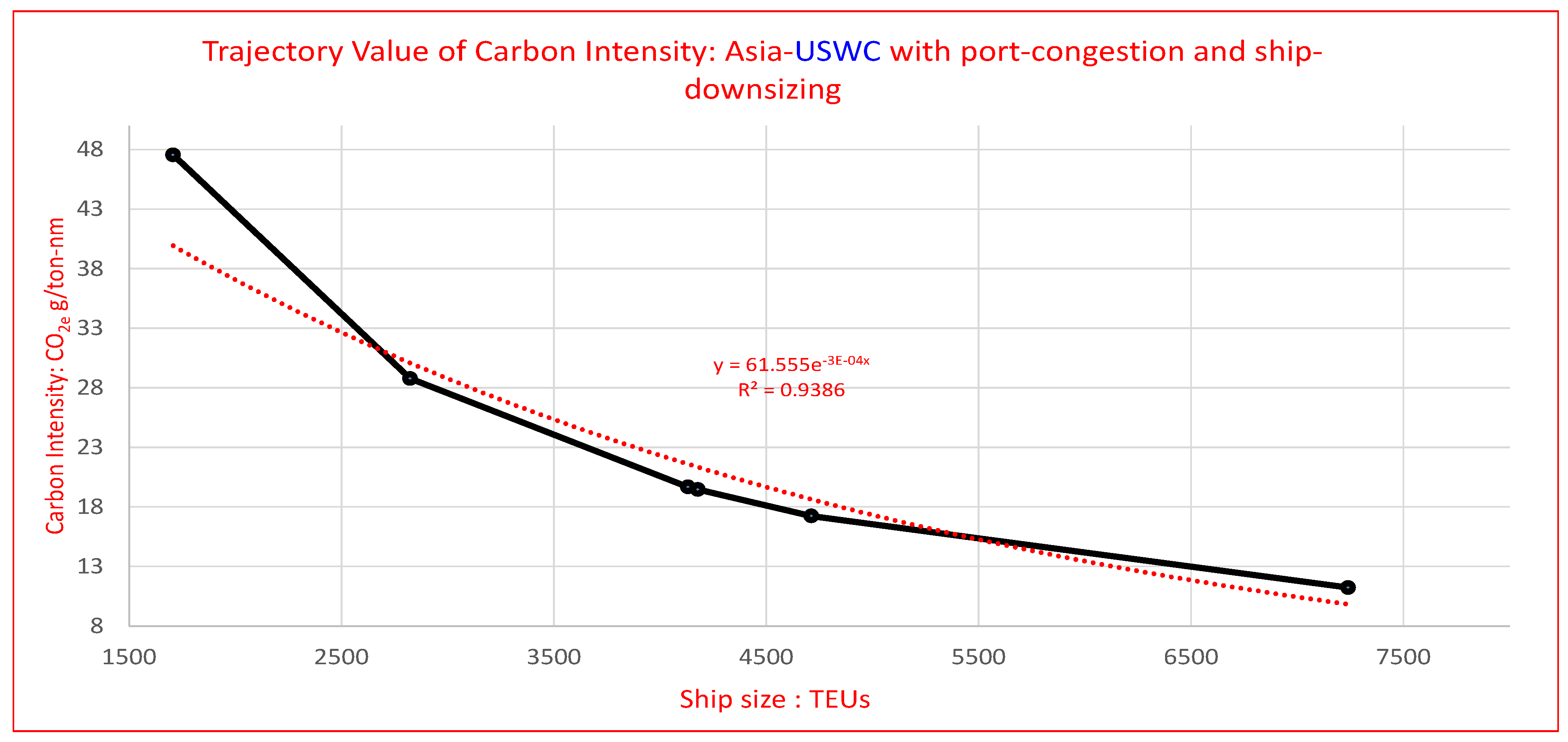
Analysis of the Carbon Intensity of Container Shipping on Trunk Routes: Referring to the Decarbonization Trajectory of the Poseidon Principle


Abstract
Share and Cite
Tai, H.-H.; Chang, Y.-H.; Chang, C.-W.; Wang, Y.-M. Analysis of the Carbon Intensity of Container Shipping on Trunk Routes: Referring to the Decarbonization Trajectory of the Poseidon Principle. Atmosphere 2022, 13, 1580. https://doi.org/10.3390/atmos13101580
Tai H-H, Chang Y-H, Chang C-W, Wang Y-M. Analysis of the Carbon Intensity of Container Shipping on Trunk Routes: Referring to the Decarbonization Trajectory of the Poseidon Principle. Atmosphere. 2022; 13(10):1580. https://doi.org/10.3390/atmos13101580
Chicago/Turabian StyleTai, Hui-Huang, Yun-Hua Chang, Chin-Wei Chang, and Yu-Meng Wang. 2022. "Analysis of the Carbon Intensity of Container Shipping on Trunk Routes: Referring to the Decarbonization Trajectory of the Poseidon Principle" Atmosphere 13, no. 10: 1580. https://doi.org/10.3390/atmos13101580
APA StyleTai, H.-H., Chang, Y.-H., Chang, C.-W., & Wang, Y.-M. (2022). Analysis of the Carbon Intensity of Container Shipping on Trunk Routes: Referring to the Decarbonization Trajectory of the Poseidon Principle. Atmosphere, 13(10), 1580. https://doi.org/10.3390/atmos13101580