Maternal Pregestational Diabetes Contributes to Neural Tube Defects in Mouse Fetuses Through H4K5ac-Mediated Regulation of Focal Adhesion Pathway


Abstract
1. Introduction
2. Materials and Methods
2.1. Animal Experiments
2.2. Liquid Chromatography-Tandem Mass Spectrometry (LC-MS/MS)
2.2.1. Total Protein Extraction from Tissues
2.2.2. Protein Digestion and Tandem Mass Tag (TMT) Labeling
2.2.3. Nano-High-Performance Liquid Chromatography/Mass Spectrometry (Nano-HPLC/MS) Analysis
2.2.4. Protein Identification and Quantification
2.3. Chromatin Immunoprecipitation Followed by Sequencing (ChIP-seq)
2.4. Reverse Transcription-Quantitative Polymerase Chain Reaction (RT-qPCR)
2.5. Bioinformatics and Statistical Analysis
3. Results
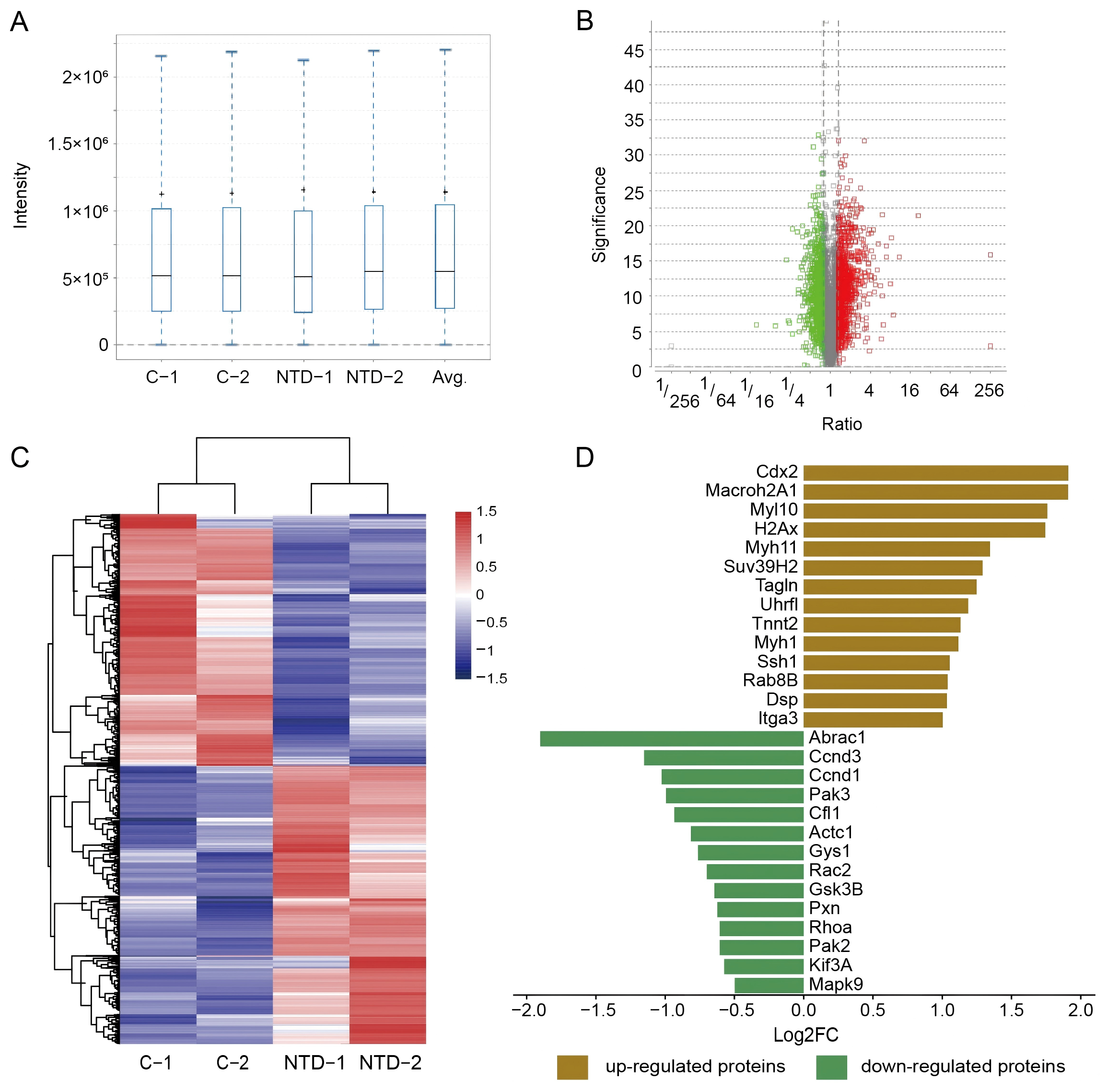
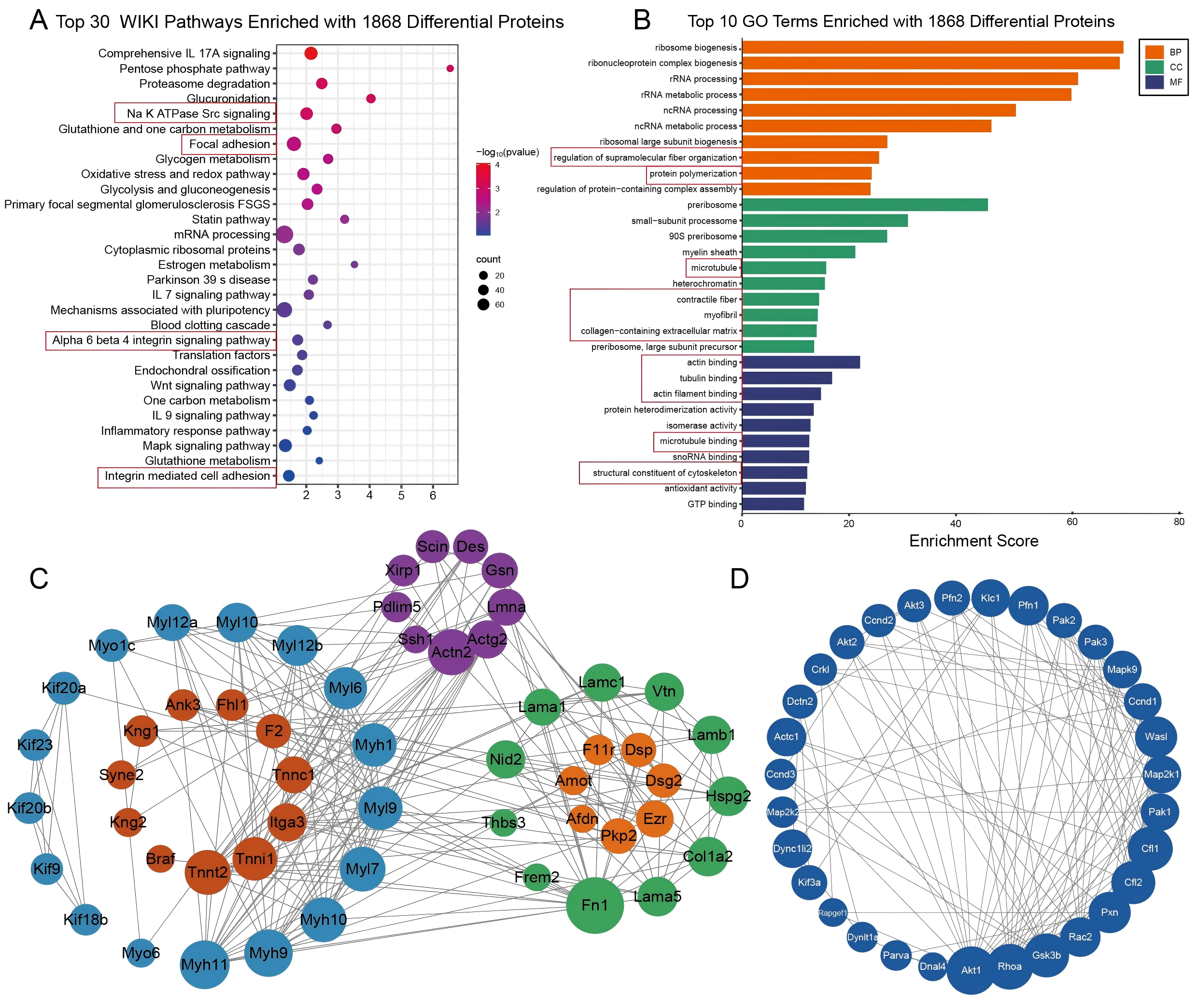
3.1. Dysregulation of Focal Adhesion and Cytoskeleton Regulatory Protein Expression in the Brain of E9.5 NTDs Fetuses Induced by Pregestational Diabetic Dams
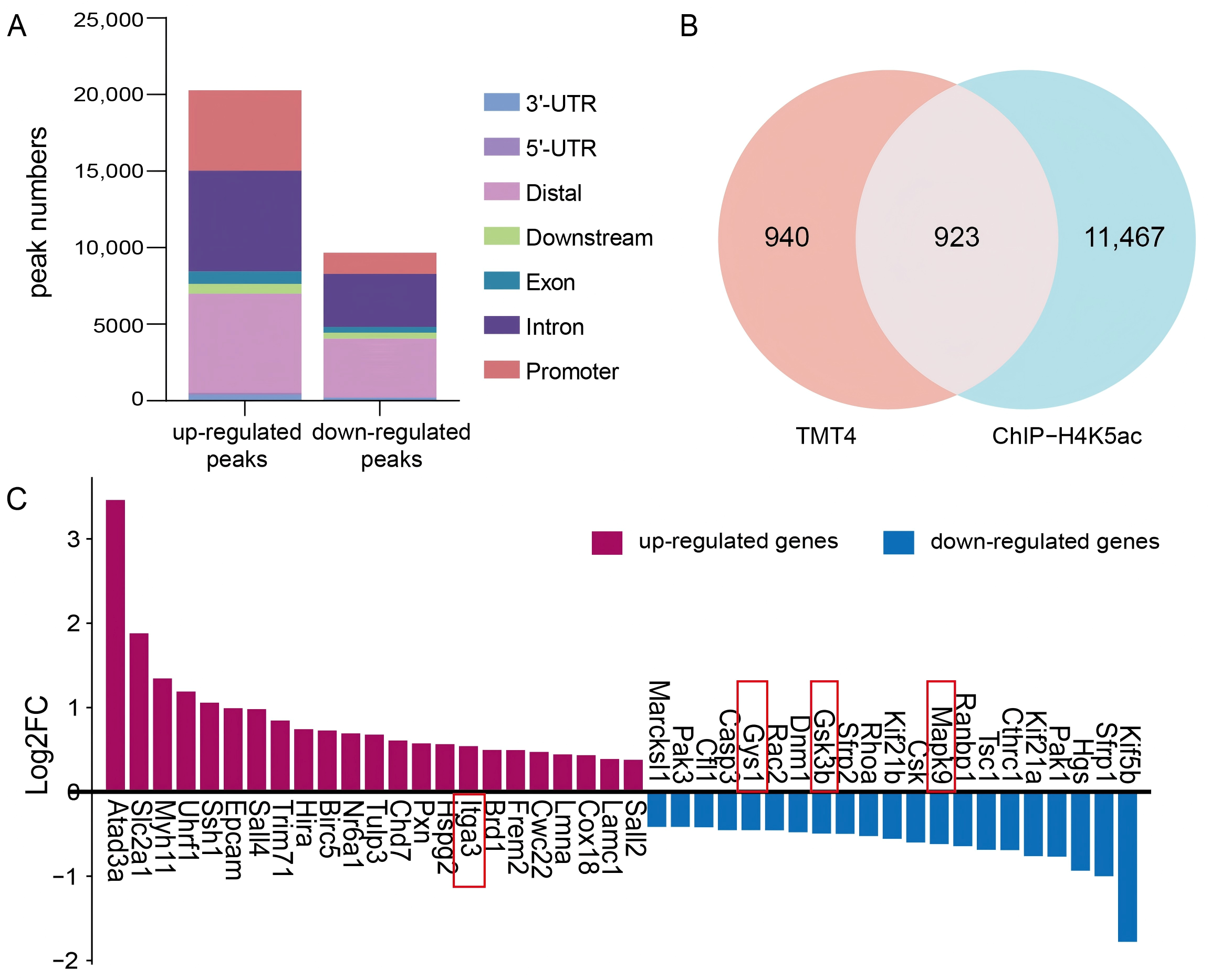
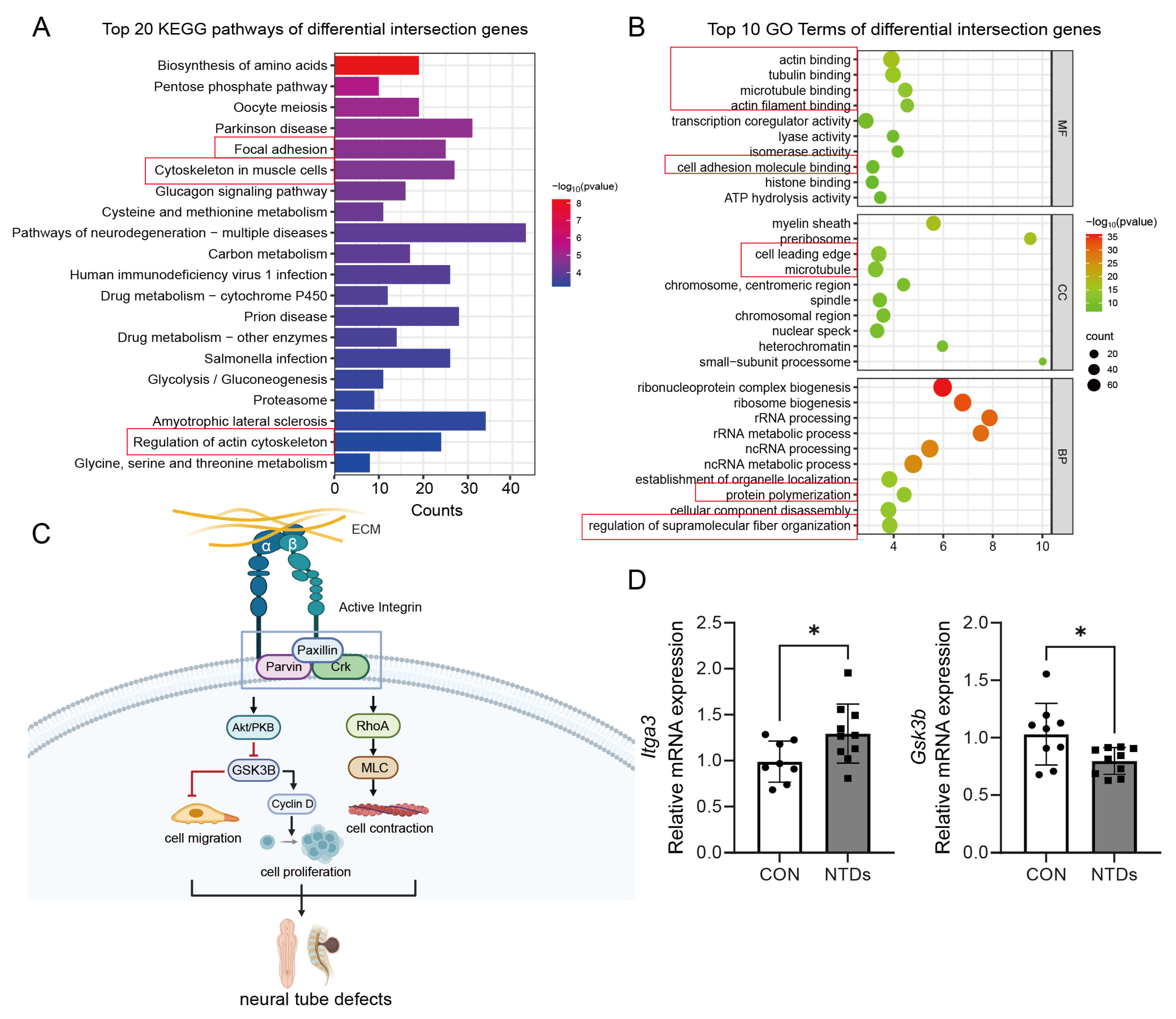
3.2. H4K5ac Regulates the Focal Adhesion Pathway Genes Itga3 and Gsk3b, Thereby Contributing to the Pathogenesis of Maternal Pregestational Diabetes-Induced NTDs
4. Discussion
5. Conclusions
Author Contributions
Funding
Institutional Review Board Statement
Informed Consent Statement
Data Availability Statement
Conflicts of Interest
Abbreviations
| H4K5ac | Histone H4 lysine 5 acetylation |
| NTDs | Neural tube defects |
| FVB mice | Friend leukemia virus B strain mice |
| STZ | Streptozotocin |
| TMT | Tandem mass tag |
| LC-MS/MS | Liquid chromatography-tandem mass spectrometry |
| PPI network | Protein–protein interaction network |
| PGDM | Pregestational diabetes mellitus |
| ct/ct mice | curly tail homozygous mice |
| ATRA | All-trans retinoic acid |
| MALDI-TOF MS | Matrix-assisted laser desorption/ionization time-of-flight mass spectrometry |
| LC/MS | Liquid chromatography-mass spectrometry |
| IP-MS | Immunoprecipitation-mass spectrometry |
| SIRT | Sirtuin |
| FDR | False discovery rate |
| ChIP-seq | Chromatin immunoprecipitation followed by sequencing |
| RT-qPCR | Reverse Transcription-Quantitative Polymerase Chain Reaction |
| FC | Fold change |
| DEPs | Differentially expressed proteins |
| GO annotation | Gene Ontology annotation |
| ECM | Extracellular matrix |
| DEGs | Differentially expressed genes |
| FAK | Focal adhesion kinase |
| Src | Proto-oncogene tyrosine-protein kinase Src |
| Gsk3b | Glycogen synthase kinase 3 beta |
| Itga3 | Integrin alpha 3 |
| Mapk9 | Mitogen-activated protein kinase 9 |
| MACS | Model-based Analysis of ChIP-Seq |
| RELN | Reelin |
| SLMAP3 | Sarcolemmal membrane-associated protein 3 |
| Crmp4 | Collapsin response mediator protein 4 |
| Hsp70 | Heat shock protein 70 |
References
- Lee, S.; Gleeson, J.G. Closing in on Mechanisms of Open Neural Tube Defects. Trends Neurosci. 2020, 43, 519–532. [Google Scholar] [CrossRef]
- Huang, W.; Fu, J.; Yuan, Z.; Gu, H. Impact of prenatal exposure to metallic elements on neural tube defects: Insights from human investigations. Ecotoxicol. Environ. Saf. 2023, 255, 114815. [Google Scholar] [CrossRef]
- Becerra, J.E.; Khoury, M.J.; Cordero, J.F.; Erickson, J.D. Diabetes mellitus during pregnancy and the risks for specific birth defects: A population-based case-control study. Pediatrics 1990, 85, 1–9. [Google Scholar] [CrossRef] [PubMed]
- Li, K.; Shao, X.; Li, H.; Kuang, X.; Song, X.; Wang, Y.; Zhu, S.; Li, D. Synergistic Effects of Folic Acid and n-3 Polyunsaturated Fatty Acid in Preventing Neural Tube Defects in Diabetic Mice. J. Agric. Food Chem. 2022, 70, 11281–11289. [Google Scholar] [CrossRef] [PubMed]
- Wang, G.; Song, S.; Shen, W.B.; Reece, E.A.; Yang, P. MicroRNA-322 overexpression reduces neural tube defects in diabetic pregnancies. Am. J. Obstet. Gynecol. 2024, 230, 254.e1–254.e13. [Google Scholar] [CrossRef] [PubMed]
- Chappell, J.H., Jr.; Wang, X.D.; Loeken, M.R. Diabetes and apoptosis: Neural crest cells and neural tube. Apoptosis 2009, 14, 1472–1483. [Google Scholar] [CrossRef]
- Correa, A.; Gilboa, S.M.; Besser, L.M.; Botto, L.D.; Moore, C.A.; Hobbs, C.A.; Cleves, M.A.; Riehle-Colarusso, T.J.; Waller, D.K.; Reece, E.A. Diabetes mellitus and birth defects. Am. J. Obstet. Gynecol. 2008, 199, 237.e1–237.e9. [Google Scholar] [CrossRef]
- Zhang, Q.; Cai, T.; Xiao, Z.; Li, D.; Wan, C.; Cui, X.; Bai, B. Identification of histone malonylation in the human fetal brain and implications for diabetes-induced neural tube defects. Mol. Genet. Genom. Med. 2020, 8, e1403. [Google Scholar] [CrossRef]
- De Castro, S.C.; Malhas, A.; Leung, K.Y.; Gustavsson, P.; Vaux, D.J.; Copp, A.J.; Greene, N.D. Lamin b1 polymorphism influences morphology of the nuclear envelope, cell cycle progression, and risk of neural tube defects in mice. PLoS Genet. 2012, 8, e1003059. [Google Scholar] [CrossRef]
- Puvirajesinghe, T.M.; Borg, J.P. Neural tube defects: From a proteomic standpoint. Metabolites 2015, 5, 164–183. [Google Scholar] [CrossRef]
- Wang, Y.; Ma, L.; Jia, S.; Liu, D.; Gu, H.; Wei, X.; Ma, W.; Luo, W.; Bai, Y.; Wang, W.; et al. Serum exosomal coronin 1A and dynamin 2 as neural tube defect biomarkers. J. Mol. Med. 2022, 100, 1307–1319. [Google Scholar] [CrossRef]
- Rehmani, T.; Dias, A.P.; Applin, B.D.; Salih, M.; Tuana, B.S. SLMAP3 is essential for neurulation through mechanisms involving cytoskeletal elements, ABP, and PCP. Life Sci. Alliance 2024, 7, e202302545. [Google Scholar] [CrossRef]
- Negrato, C.A.; Marques, P.R.J.; Leite, H.B.; Torigoe, C.N.; Silva, B.F.; Costa, K.; Kamei, J.M.; Zampa, C.L.; Toni, A.; Pereira, I.; et al. Glycemic and nonglycemic mechanisms of congenital malformations in hyperglycemic pregnancies: A narrative review. Arch. Endocrinol. Metab. 2022, 66, 908–918. [Google Scholar] [CrossRef]
- Yu, J.; Wu, Y.; Yang, P. High glucose-induced oxidative stress represses sirtuin deacetylase expression and increases histone acetylation leading to neural tube defects. J. Neurochem. 2016, 137, 371–383. [Google Scholar] [CrossRef]
- Banik, A.; Kandilya, D.; Ramya, S.; Stünkel, W.; Chong, Y.S.; Dheen, S.T. Maternal Factors that Induce Epigenetic Changes Contribute to Neurological Disorders in Offspring. Genes 2017, 8, 150. [Google Scholar] [CrossRef] [PubMed]
- Shyamasundar, S.; Jadhav, S.P.; Bay, B.H.; Tay, S.S.; Kumar, S.D.; Rangasamy, D.; Dheen, S.T. Analysis of epigenetic factors in mouse embryonic neural stem cells exposed to hyperglycemia. PLoS ONE 2013, 8, e65945. [Google Scholar] [CrossRef] [PubMed]
- Vargas, R.P.; Finnell, R.H.; Ross, M.E.; Alarcón, P.; Suazo, J. Neural tube defects and epigenetics: Role of histone post-translational histone modifications. Epigenomics 2024, 16, 419–426. [Google Scholar] [CrossRef] [PubMed]
- Salbaum, J.M.; Kappen, C. Responses of the embryonic epigenome to maternal diabetes. Birth Defects Res. A Clin. Mol. Teratol. 2012, 94, 770–781. [Google Scholar] [CrossRef] [PubMed]
- Li, D.; Wan, C.; Bai, B.; Cao, H.; Liu, C.; Zhang, Q. Identification of histone acetylation markers in human fetal brains and increased H4K5ac expression in neural tube defects. Mol. Genet. Genom. Med. 2019, 7, e1002. [Google Scholar] [CrossRef]
- Bai, B.; Zhang, Q.; Wan, C.; Li, D.; Zhang, T.; Li, H. CBP/p300 inhibitor C646 prevents high glucose exposure induced neuroepithelial cell proliferation. Birth Defects Res. 2018, 110, 1118–1128. [Google Scholar] [CrossRef]
- Wu, Y.; Wang, F.; Fu, M.; Wang, C.; Quon, M.J.; Yang, P. Cellular Stress, Excessive Apoptosis, and the Effect of Metformin in a Mouse Model of Type 2 Diabetic Embryopathy. Diabetes 2015, 64, 2526–2536. [Google Scholar] [CrossRef]
- Li, K.; Shi, Y.; Zhu, S.; Shao, X.; Li, H.; Kuang, X.; Li, S.; Guo, X.F.; Li, D. N-3 polyunsaturated fatty acids effectively protect against neural tube defects in diabetic mice induced by streptozotocin. Food Funct. 2021, 12, 9188–9196. [Google Scholar] [CrossRef] [PubMed]
- Zhang, Q.; Wu, L.; Bai, B.; Li, D.; Xiao, P.; Li, Q.; Zhang, Z.; Wang, H.; Li, L.; Jiang, Q. Quantitative Proteomics Reveals Association of Neuron Projection Development Genes ARF4, KIF5B, and RAB8A with Hirschsprung Disease. Mol. Cell Proteom. 2021, 20, 100007. [Google Scholar] [CrossRef]
- Zhang, Q.; Bai, B.; Mei, X.; Wan, C.; Cao, H.; Dan, L.; Wang, S.; Zhang, M.; Wang, Z.; Wu, J.; et al. Elevated H3K79 homocysteinylation causes abnormal gene expression during neural development and subsequent neural tube defects. Nat. Commun. 2018, 9, 3436. [Google Scholar] [CrossRef]
- Veloso, A.; Bleuart, A.; Conrard, L.; Orban, T.; Bruyr, J.; Cabochette, P.; Germano, R.F.V.; Schevenels, G.; Bernard, A.; Zindy, E.; et al. The cytoskeleton adaptor protein Sorbs1 controls the development of lymphatic and venous vessels in zebrafish. BMC Biol. 2024, 22, 51. [Google Scholar] [CrossRef] [PubMed]
- Mu, Y.; Liu, J.; Wu, Q.; Wang, B.; Hu, T.; Li, Y.; Yan, X.; Ma, L.; Tan, Z. A dual αvβ1/αvβ6 integrin inhibitor Bexotegrast (PLN-74809) ameliorates organ injury and fibrogenesis in fibrotic kidney disease. Eur. J. Pharmacol. 2024, 983, 176983. [Google Scholar] [CrossRef] [PubMed]
- Peng, Z.; Yang, Q.; Yeerken, R.; Chen, J.; Liu, X.; Li, X. Multi-omics analyses reveal the mechanisms of Arsenic-induced male reproductive toxicity in mice. J. Hazard. Mater. 2022, 424, 127548. [Google Scholar] [CrossRef] [PubMed]
- Chen, X.; Liu, C.; Wang, H.; Liu, Q.; Yue, Y.; Duan, Y.; Wang, Z.; Zheng, L.; Chen, X.; Wang, Y.; et al. Ustilaginoidea virens-secreted effector Uv1809 suppresses rice immunity by enhancing OsSRT2-mediated histone deacetylation. Plant Biotechnol. J. 2024, 22, 148–164. [Google Scholar] [CrossRef]
- Salbaum, J.M.; Kappen, C. Neural tube defect genes and maternal diabetes during pregnancy. Birth Defects Res. A Clin. Mol. Teratol. 2010, 88, 601–611. [Google Scholar] [CrossRef]
- Wang, Y.; Zhang, K.; Guo, J.; Yang, S.; Shi, X.; Pan, J.; Sun, Z.; Zou, J.; Li, Y.; Li, Y.; et al. Loss-of-Function of p21-Activated Kinase 2 Links BMP Signaling to Neural Tube Patterning Defects. Adv. Sci. 2023, 10, e2204018. [Google Scholar] [CrossRef]
- Maniou, E.; Staddon, M.F.; Marshall, A.R.; Greene, N.D.E.; Copp, A.J.; Banerjee, S.; Galea, G.L. Hindbrain neuropore tissue geometry determines asymmetric cell-mediated closure dynamics in mouse embryos. Proc. Natl. Acad. Sci. USA 2021, 118, e2023163118. [Google Scholar] [CrossRef]
- Carragher, N.O.; Frame, M.C. Focal adhesion and actin dynamics: A place where kinases and proteases meet to promote invasion. Trends Cell Biol. 2004, 14, 241–249. [Google Scholar] [CrossRef]
- Gaffke, L.; Rintz, E.; Pierzynowska, K.; Węgrzyn, G. Actin Cytoskeleton Polymerization and Focal Adhesion as Important Factors in the Pathomechanism and Potential Targets of Mucopolysaccharidosis Treatment. Cells 2023, 12, 1782. [Google Scholar] [CrossRef]
- Chau, T.C.Y.; Keyser, M.S.; Da Silva, J.A.; Morris, E.K.; Yordanov, T.E.; Duscyz, K.P.; Paterson, S.; Yap, A.S.; Hogan, B.M.; Lagendijk, A.K. Dynamically regulated focal adhesions coordinate endothelial cell remodelling in developing vasculature. Development 2022, 149, dev200454. [Google Scholar] [CrossRef] [PubMed]
- Kara, N.; Wei, C.; Commanday, A.C.; Patton, J.G. miR-27 regulates chondrogenesis by suppressing focal adhesion kinase during pharyngeal arch development. Dev. Biol. 2017, 429, 321–334. [Google Scholar] [CrossRef]
- Kang, T.; Lee, S.J.; Kwon, Y.; Park, D. Loss of βPix Causes Defects in Early Embryonic Development, and Cell Spreading and PlateletDerived Growth Factor-Induced Chemotaxis in Mouse Embryonic Fibroblasts. Mol. Cells 2019, 42, 589–596. [Google Scholar] [CrossRef] [PubMed]
- Durkin, M.E.; Avner, M.R.; Huh, C.G.; Yuan, B.Z.; Thorgeirsson, S.S.; Popescu, N.C. DLC-1, a Rho GTPase-activating protein with tumor suppressor function, is essential for embryonic development. FEBS Lett. 2005, 579, 1191–1196. [Google Scholar] [CrossRef] [PubMed]
- Wang, Y.; Yang, D.; Zhu, R.; Dai, F.; Yuan, M.; Zhang, L.; Zheng, Y.; Liu, S.; Yang, X.; Cheng, Y. YY1/ITGA3 pathway may affect trophoblastic cells migration and invasion ability. J. Reprod. Immunol. 2022, 153, 103666. [Google Scholar] [CrossRef]
- Brązert, M.; Kranc, W.; Celichowski, P.; Jankowski, M.; Piotrowska-Kempisty, H.; Pawelczyk, L.; Bruska, M.; Zabel, M.; Nowicki, M.; Kempisty, B. Expression of genes involved in neurogenesis, and neuronal precursor cell proliferation and development: Novel pathways of human ovarian granulosa cell differentiation and transdifferentiation capability in vitro. Mol. Med. Rep. 2020, 21, 1749–1760. [Google Scholar] [CrossRef]
- Kähler, A.K.; Djurovic, S.; Kulle, B.; Jönsson, E.G.; Agartz, I.; Hall, H.; Opjordsmoen, S.; Jakobsen, K.D.; Hansen, T.; Melle, I.; et al. Association analysis of schizophrenia on 18 genes involved in neuronal migration: MDGA1 as a new susceptibility gene. Am. J. Med. Genet. B Neuropsychiatr. Genet. 2008, 147b, 1089–1100. [Google Scholar] [CrossRef]
- Hosako, H.; Martin, G.S.; Barrier, M.; Chen, Y.A.; Ivanov, I.V.; Mirkes, P.E. Gene and microRNA expression in p53-deficient day 8.5 mouse embryos. Birth Defects Res. A Clin. Mol. Teratol. 2009, 85, 546–555. [Google Scholar] [CrossRef]
- Zhao, J.; Wei, M.; Guo, M.; Wang, M.; Niu, H.; Xu, T.; Zhou, Y. GSK3: A potential target and pending issues for treatment of Alzheimer’s disease. CNS Neurosci. Ther. 2024, 30, e14818. [Google Scholar] [CrossRef]
- Li, S.; Luo, D.; Yue, H.; Lyu, J.; Yang, Y.; Gao, T.; Liu, Y.; Qin, J.; Wang, X.; Guan, Z.; et al. Neural tube defects: Role of lithium carbonate exposure in embryonic neural development in a murine model. Pediatr. Res. 2021, 90, 82–92. [Google Scholar] [CrossRef]
- Wang, D.; Liu, C.; Liu, H.; Meng, Y.; Lin, F.; Gu, Y.; Wang, H.; Shang, M.; Tong, C.; Sachinidis, A.; et al. ERG1 plays an essential role in rat cardiomyocyte fate decision by mediating AKT signaling. Stem Cells 2021, 39, 443–457. [Google Scholar] [CrossRef]
- Xu, X.F.; Li, T.; Wang, D.D.; Chen, B.; Wang, Y.; Chen, Z.Y. Integrin-linked Kinase is Essential for Environmental Enrichment Enhanced Hippocampal Neurogenesis and Memory. Sci. Rep. 2015, 5, 11456. [Google Scholar] [CrossRef]



| Genes | Forward Primer | Reverse Primer |
|---|---|---|
| Itga3 | 5′-AACTCCGTCCTATCGTCATTGC-3′ | 5′-TAGCCTGTGCCTGGTTGAG-3′ |
| Lamc1 | 5′-GCAGCCTTCCTGACCGACTACA-3′ | 5′-GCGTGAGGTTGATGGAGTTGG-3′ |
| Gsk3b | 5′-AGCCACAGGACAAGGAGAACC-3′ | 5′-AGCCGAGCGACCTGGATAAC-3′ |
| Ccnd3 | 5′-TGAACTACCTGGATCGCTACCT-3′ | 5′-CACAGCCTGGTCCGTATAGATG-3′ |
| β-actin | 5′-GAGAGGGAAATCGTGCGTGACA-3′ | 5′-AACCGCTCGTTGCCAATAGTGA-3′ |
| Genes | NTDs_group_counts | CON_group_counts | Log2FC | Regulated | Location | |
|---|---|---|---|---|---|---|
| up-regulated genes | Birc5 | 48 | 24 | 1.600783264 | Up | Promoter |
| Itga3 | 24 | 0 | 7.926007906 | Up | Distal Intergenic | |
| Hira | 29 | 0 | 8.198003262 | Up | Intron | |
| Cwc22 | 35 | 25 | 1.087674251 | Up | Intron | |
| Cox18 | 25 | 0 | 7.984664291 | Up | Distal Intergenic | |
| down-regulated genes | Casp3 | 0 | 55 | −8.513562715 | Down | Promoter |
| Cfl1 | 0 | 92 | −9.254176449 | Down | Promoter | |
| Marcksl1 | 0 | 34 | −7.822102029 | Down | Intron | |
| Sfrp2 | 0 | 39 | −8.019223854 | Down | Promoter | |
| Ranbp1 | 0 | 28 | −7.543359557 | Down | Promoter | |
| Dnm1 | 0 | 54 | −8.487163606 | Down | Promoter | |
| Hgs | 0 | 55 | −8.513562715 | Down | Promoter | |
| Gys1 | 0 | 56 | −8.539487429 | Down | Promoter | |
| Mapk9 | 0 | 34 | −7.822102029 | Down | Promoter | |
| Gsk3b | 0 | 37 | −7.943575561 | Down | Intron |
Disclaimer/Publisher’s Note: The statements, opinions and data contained in all publications are solely those of the individual author(s) and contributor(s) and not of MDPI and/or the editor(s). MDPI and/or the editor(s) disclaim responsibility for any injury to people or property resulting from any ideas, methods, instructions or products referred to in the content. |
© 2026 by the authors. Licensee MDPI, Basel, Switzerland. This article is an open access article distributed under the terms and conditions of the Creative Commons Attribution (CC BY) license.
Share and Cite
Cheng, J.; Zhang, K.; Yang, S.; Bai, B.; Zhang, Q. Maternal Pregestational Diabetes Contributes to Neural Tube Defects in Mouse Fetuses Through H4K5ac-Mediated Regulation of Focal Adhesion Pathway. Genes 2026, 17, 671. https://doi.org/10.3390/genes17060671
Cheng J, Zhang K, Yang S, Bai B, Zhang Q. Maternal Pregestational Diabetes Contributes to Neural Tube Defects in Mouse Fetuses Through H4K5ac-Mediated Regulation of Focal Adhesion Pathway. Genes. 2026; 17(6):671. https://doi.org/10.3390/genes17060671
Chicago/Turabian StyleCheng, Jiaxin, Kexin Zhang, Shuangshuang Yang, Baoling Bai, and Qin Zhang. 2026. "Maternal Pregestational Diabetes Contributes to Neural Tube Defects in Mouse Fetuses Through H4K5ac-Mediated Regulation of Focal Adhesion Pathway" Genes 17, no. 6: 671. https://doi.org/10.3390/genes17060671
APA StyleCheng, J., Zhang, K., Yang, S., Bai, B., & Zhang, Q. (2026). Maternal Pregestational Diabetes Contributes to Neural Tube Defects in Mouse Fetuses Through H4K5ac-Mediated Regulation of Focal Adhesion Pathway. Genes, 17(6), 671. https://doi.org/10.3390/genes17060671