
Article

OsBADH1–OsBADH2 Double Mutants Increase 2-Acetyl-1-Pyrroline Accumulation and Alter GABA-Associated Abiotic Stress Responses in Rice


1
Division of Horticultural Biotechnology, Hankyong National University, Anseong 17579, Republic of Korea
2
Institute of Genetic Engineering, Hankyong National University, Anseong 17579, Republic of Korea
*
Author to whom correspondence should be addressed.
Genes 2026, 17(5), 579; https://doi.org/10.3390/genes17050579
Submission received: 22 April 2026 / Revised: 14 May 2026 / Accepted: 16 May 2026 / Published: 18 May 2026
(This article belongs to the Section Plant Genetics and Genomics)

Abstract

Background/Objectives: Rice fragrance is mainly determined by 2-acetyl-1-pyrroline (2-AP), which is negatively regulated by OsBADH2. However, the contribution of its paralog OsBADH1 to aroma-associated metabolism and GABA-linked abiotic stress responses remains unclear. This study investigated whether simultaneous disruption of OsBADH1 and OsBADH2 further enhances 2-AP accumulation while affecting stress tolerance in rice. Methods: Independent osbadh1 and osbadh2 knockout lines were generated using CRISPR/Cas9 and crossed to obtain homozygous osbadh1 osbadh2 double mutants. Wild type, single mutants, and double mutants were compared for 2-AP accumulation, GABA content, agronomic traits, abiotic stress responses, and expression of genes associated with GABA metabolism and stress responses. Results: The osbadh2 mutant showed a marked increase in 2-AP, and the osbadh1 osbadh2 double mutant exhibited the highest level, corresponding to a 7.1-fold increase over the wild type. In contrast, the GABA content progressively decreased and reached 0.46-fold of the wild-type level in the double mutant. Under normal growth conditions, the double mutant showed no major agronomic defects. However, under salinity and drought stress, its survival declined to 0.41-fold and 0.40-fold of the wild-type levels, respectively. KEGG and expression analyses further indicated coordinated disruption of GABA-associated metabolic and stress-responsive pathways in the double mutant. Conclusions: Combined disruption of OsBADH1 and OsBADH2 enhanced aroma-associated metabolism but weakened GABA-linked abiotic stress tolerance, revealing a trade-off between increased fragrance and reduced stress resilience in rice.

1. Introduction

Rice (Oryza sativa L.) is one of the world’s most important staple crops, and grain quality remains a major target in rice improvement programs. Among quality traits, fragrance is particularly valuable because it strongly influences consumer preference and market price. The characteristic aroma of fragrant rice is primarily attributed to 2-acetyl-1-pyrroline (2-AP), and loss of function of OsBADH2 has been established as the major genetic basis of this trait [1,2,3,4]. Previous genetic and molecular studies identified BADH2 as the key gene underlying rice fragrance, while allelic and breeding analyses demonstrated that nonfunctional badh2 alleles are broadly associated with aromatic germplasm across diverse rice populations [1,2,3,4]. More recently, CRISPR/Cas9-based studies confirmed that targeted disruption of OsBADH2 is an efficient strategy for generating fragrant rice lines, further highlighting its value in aroma-oriented rice improvement [5,6]. However, focusing on OsBADH2 alone is unlikely to fully explain the biological consequences of fragrance-associated BADH disruption in rice. Rice contains a closely related paralog, OsBADH1, and available biochemical evidence indicates that the two BADH proteins are functionally distinct rather than redundant. OsBADH1 shows efficient acetaldehyde oxidation activity, whereas OsBADH2 exhibits extremely low activity toward the same substrate [7]. This distinction is biologically important because aldehyde dehydrogenases contribute to reactive aldehyde detoxification, metabolic homeostasis, and cellular protection under stress conditions. Thus, disruption of OsBADH1 in an osbadh2 background is not merely an additional mutation in a homologous gene; rather, it provides a genetic framework to test whether loss of an aldehyde-buffering pathway exacerbates the metabolic and physiological consequences associated with fragrance-related BADH perturbation [7]. This question is particularly relevant in the context of 2-AP biosynthesis.
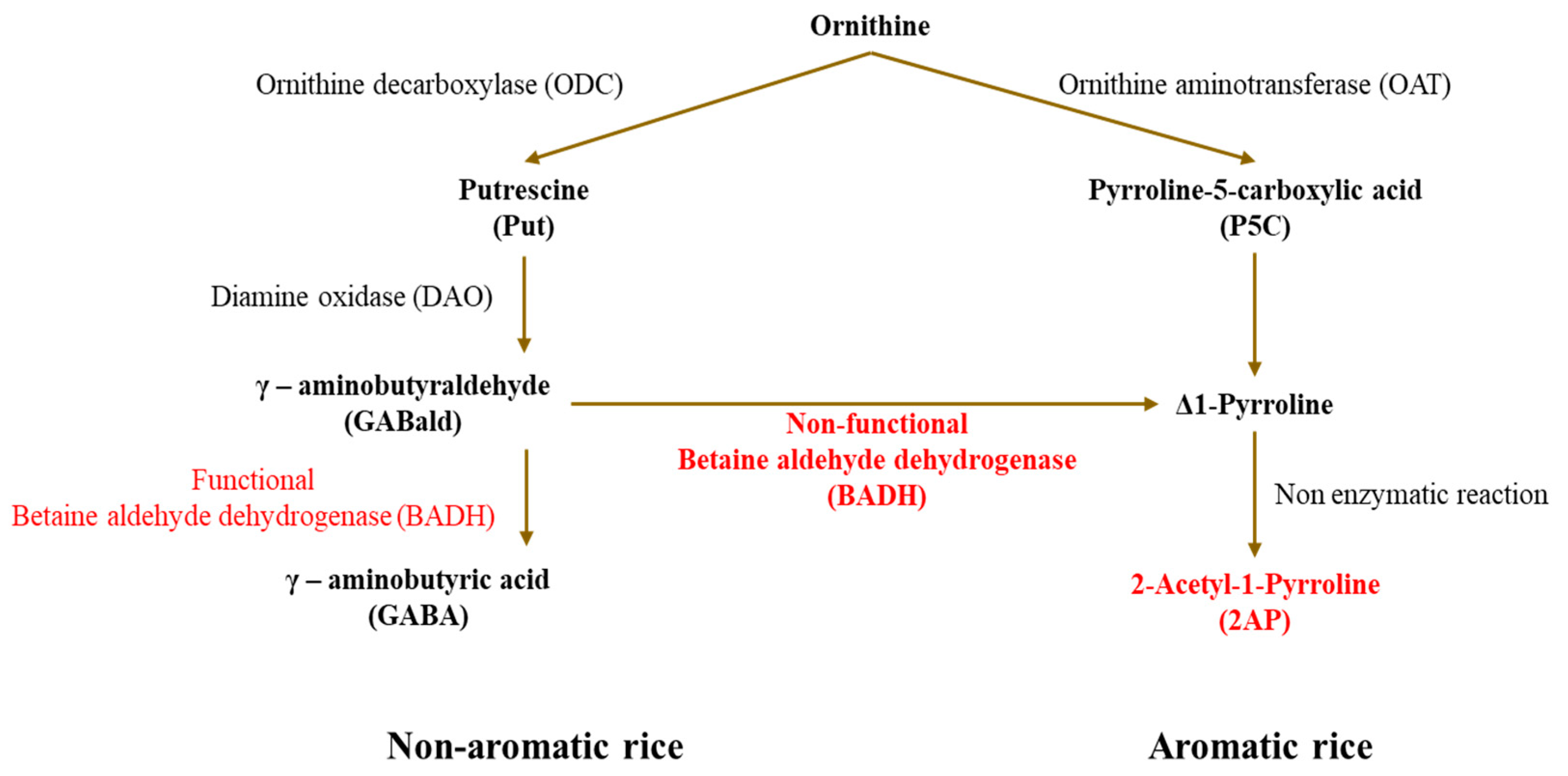
Current models indicate that functional BADH2 converts γ-aminobutyraldehyde (GABald) into γ-aminobutyric acid (GABA), thereby limiting the formation of Δ1-pyrroline and downstream 2-AP accumulation [2]. When BADH2 is disrupted, this conversion is reduced, metabolic flux is redirected toward 2-AP-related intermediates, and aroma formation is enhanced [2,8,9]. Importantly, recent studies indicate that 2-AP biosynthesis is embedded within a broader metabolic network involving proline, ornithine, glutamate, GABA, and environmentally responsive metabolic regulation [8,9,10]. These findings suggest that fragrance-associated BADH disruption affects not only volatile formation but also broader metabolic processes linked to aldehyde turnover, nitrogen balance, and stress acclimation [8,9,10]. GABA provides a key link between aroma-associated metabolism and stress physiology. In plants, GABA is widely implicated in responses to salinity, drought, heat, and oxidative stress, with functions in redox homeostasis, carbon–nitrogen coordination, osmotic adjustment, and stress-related signaling [11,12,13]. In fragrant rice, the relationship among BADH2, GABA-associated metabolism, and 2-AP accumulation has been discussed extensively, but most evidence remains centered on OsBADH2 alone or on comparisons between aromatic and non-aromatic backgrounds [2,8,9,10]. Whether simultaneous disruption of OsBADH1 and OsBADH2 further redirects metabolic flux toward aroma while weakening GABA-associated buffering capacity has not been directly tested. This unresolved question is important because it addresses whether fragrance-oriented gene editing may confer not only quality benefits but also a physiological cost under adverse environmental conditions.
In this study, we generated independent osbadh1 and osbadh2 knockout lines using CRISPR/Cas9 and crossed the single mutants to produce homozygous osbadh1 osbadh2 double mutants. By comparing wild type, single mutants, and double mutants, we examined the effects of combined OsBADH1 and OsBADH2 disruption on 2-AP accumulation, GABA content, agronomic traits, and responses to salinity and drought stress. We hypothesized that OsBADH1 and OsBADH2 make genetically distinct but interacting contributions to BADH-associated metabolism and that simultaneous loss of both genes would enhance aroma-associated metabolic reprogramming beyond the effect of OsBADH2 alone while increasing abiotic stress sensitivity. By linking fragrance-related metabolism with stress physiology, this study provides a genetic and physiological framework for evaluating the trade-off between aroma improvement and stress resilience in rice breeding.

2. Materials and Methods

2.1. Plant Materials and Growth Conditions

Rice (O. sativa L. cv. Dongjin) was used in this study. Wild-type and mutant plants were grown in a controlled greenhouse under a 12 h light/12 h dark photoperiod at 28 °C during the day and 25 °C at night. For routine growth, plants were cultivated in soil until maturity for phenotypic and agronomic evaluation. For abiotic stress assays, seedlings were germinated and transferred to hydroponic culture, and 2-week-old seedlings were used for stress treatments. Hydroponic cultivation was performed according to the standard rice culture solution procedure described by Yoshida [14].

2.2. CRISPR/Cas9 Vector Construction and Plant Transformation

RISPR/Cas9 target sites for OsBADH1 and OsBADH2 were selected within coding regions using Cas-Designer [15], which is available through the CRISPR RGEN Tools platform (http://www.rgenome.net/cas-designer/; accessed on 21 April 2024) (Supplementary Table S1). Candidate sgRNAs were further evaluated for potential off-target sites using Cas-OFFinder [16] in the same platform (http://www.rgenome.net/cas-offinder/; accessed on 21 April 2024). For each sgRNA, potential off-target sites in the rice genome were searched by allowing one, two, or three mismatches relative to the target sequence. Under these search conditions, only the intended target site was detected for each selected sgRNA, and no additional genomic sites with one to three mismatches were identified. The sgRNA design information and mismatch-based off-target prediction results are summarized in Supplementary Table S1. Complementary oligonucleotides corresponding to each sgRNA were annealed and cloned into the pBOsC CRISPR/Cas9 binary vector under the control of the rice U3 promoter (Supplementary Figure S1A). The inserted sgRNA regions were confirmed by Sanger sequencing prior to plant transformation. The confirmed constructs were introduced into Agrobacterium tumefaciens strain EHA105. Mature seeds of Dongjin were used to induce embryogenic calli (Supplementary Figure S1B). Actively growing calli were infected with Agrobacterium harboring each construct and co-cultivated according to the Agrobacterium-mediated rice transformation protocol described by Nishimura et al. [17]. After co-cultivation, infected calli were transferred to selection medium, and resistant calli were regenerated into shoots and rooted to obtain independent T0 plants. Regenerated plants were screened for targeted mutations according to previously reported rice CRISPR/Cas9 procedures [18,19].

2.3. Genotyping and Mutation Analysis

Genomic DNA was extracted from young leaves using a CTAB-based method [20]. Target regions flanking each sgRNA site were amplified by PCR using gene-specific primers (Supplementary Table S2). PCR products were purified and subjected to Sanger sequencing to identify insertion/deletion mutations. Mutation types were determined by comparison with the wild-type genomic sequence, and homozygous knockout lines were selected for further analysis [18,19]. Sequence chromatograms obtained by Sanger sequencing were analyzed to determine the type and size of edited alleles, and mutation patterns were interpreted according to the general analytical framework used for CRISPR/Cas9-induced indel analysis, including chromatogram-based sequence assessment, as described in Cas-Analyzer (http://www.rgenome.net/cas-analyzer/; accessed on 17 September 2024) [21]. To confirm segregation of the CRISPR/Cas9 T-DNA, later-generation plants carrying homozygous edited alleles were screened by PCR using T-DNA-specific primers targeting the vector backbone/selectable marker region. Plants showing the expected edited alleles at the OsBADH1 and/or OsBADH2 loci but lacking amplification of the T-DNA-specific fragment were selected as transgene-free mutant lines and used for subsequent biochemical, physiological, and gene expression analyses. The primers used for T-DNA confirmation are listed in Supplementary Table S2.

2.4. Generation of Double Mutants

Homozygous osbadh1 and osbadh2 single-mutant lines carrying frameshift-inducing deletions predicted to generate premature stop codons were selected as parental lines for crossing. The selected osbadh1 and osbadh2 lines were crossed to generate F1 plants. F1 individuals were self-pollinated, and F2 populations were screened by PCR-based genotyping and sequencing to identify homozygous osbadh1 osbadh2 double mutants. For each selected F2 line, the edited status of both loci was confirmed by sequence analysis. Segregation of the edited alleles in the F2 generation was evaluated according to the expected Mendelian ratio.

2.5. 2-Acetyl-1-Pyrroline and GABA Analysis

For 2-acetyl-1-pyrroline (2-AP) analysis, mature rice grains were harvested, dehulled, immediately frozen in liquid nitrogen, and ground into a fine powder. Volatile compounds were collected from the powdered grain matrix using headspace solid-phase microextraction (HS-SPME), following previously reported approaches for volatile profiling and aroma compound analysis in fragrant and non-fragrant rice [22,23]. Briefly, 4.0 g of powdered grain sample was placed in a 20 mL sealed headspace vial, equilibrated at 80 °C for 30 min, and extracted using a 75 μm CAR/PDMS SPME fiber for 60 min. GC–MS analysis was performed using an Agilent 7890A gas chromatograph coupled to an Agilent 5975C inert XL mass-selective detector (Agilent Technologies, Santa Clara, CA, USA). Volatiles were separated on a DB-5 capillary column (30 m × 0.25 mm × 0.25 μm) using helium as the carrier gas at 1.0 mL min−1. The GC oven temperature was programmed as follows: 40 °C for 3 min, increased to 100 °C at 5 °C min−1 and held for 3 min, then increased to 250 °C at 10 °C min−1 and held for 4 min. 2-AP was identified by comparison of retention time and mass spectrum with an authentic standard and quantified using standard calibration curves. Raw data for 2-AP analysis are provided in Supplementary Table S3. For GABA analysis, mature rice grain samples were homogenized and extracted, and the extracts were subjected to derivatization prior to chromatographic separation. GABA content was determined by high-performance liquid chromatography (HPLC) after derivatization, following previously described procedures for GABA quantification in rice samples [24,25]. Quantification was based on calibration curves generated with authentic GABA standards. Raw data for GABA analysis are provided in Supplementary Table S4.

2.6. Phenotypic and Agronomic Analysis

Phenotypic and agronomic traits were evaluated at the mature stage according to the Standard Evaluation System for Rice of the International Rice Research Institute [26]. Plant height was measured from the soil surface to the tip of the tallest panicle, excluding awns. Tiller number was recorded as the total number of tillers per plant. Panicle-related traits were evaluated using representative main panicles harvested at maturity and included panicle length and grain set. Grain-related traits were assessed after harvest using fully matured seeds. Where applicable, seed morphology was examined using representative grains from each genotype. Quantitative measurements were collected from independent biological replicates for each genotype and used for genotype-based comparisons.

2.7. Abiotic Stress Treatment and Physiological Analysis

For salt stress treatment, 2-week-old hydroponically grown seedlings were transferred to a nutrient solution containing 150 mM NaCl and maintained for 7 days [27]. For drought stress treatment, soil-grown plants were subjected to water withdrawal until visible wilting occurred, followed by re-watering to assess recovery [28]. Stress symptoms were photographed, and survival rates were recorded after treatment. Relative water content was determined according to the method of Barrs and Weatherley [29]. Briefly, fresh weight was measured immediately after sampling, leaves were rehydrated to obtain turgid weight, and samples were then dried to determine dry weight. Chlorophyll content was measured spectrophotometrically according to Arnon [30] using a UV-1800 spectrophotometer (Shimadzu, Kyoto, Japan). Additional physiological parameters associated with stress responses were evaluated as indicated in Supplementary Table S5.

2.8. Gene Expression and Statistical Analysis

Total RNA was extracted from plant tissues using TRIzol reagent (Invitrogen, Carlsbad, CA, USA) according to the manufacturer’s instructions. Reverse transcription was performed using the SuPrimeScript RT premix kit (Genet Bio, Daejeon, Republic of Korea). Quantitative real-time PCR (qRT-PCR) was carried out using gene-specific primers, and relative expression levels were calculated using the 2−ΔΔCt method [31]. OsActin was used as the internal reference gene. Primer information is provided in Supplementary Table S2. KEGG pathway-based analysis was performed using the targeted stress-associated gene expression dataset and metabolite profiling dataset generated in this study. This analysis was used to interpret pathway-level changes associated with GABA metabolism, amino acid metabolism, aldehyde-related metabolism, and stress responses.

2.9. Statistical Analysis

All experiments were conducted with at least three biological replicates. Data are presented as mean ± standard deviation (SD). Statistical significance was determined by one-way analysis of variance (ANOVA), followed by Tukey’s multiple comparison test. Differences were considered significant at p < 0.05.

3. Results

3.1. Generation of osbadh1, osbadh2, and osbadh1 osbadh2 Double Mutants

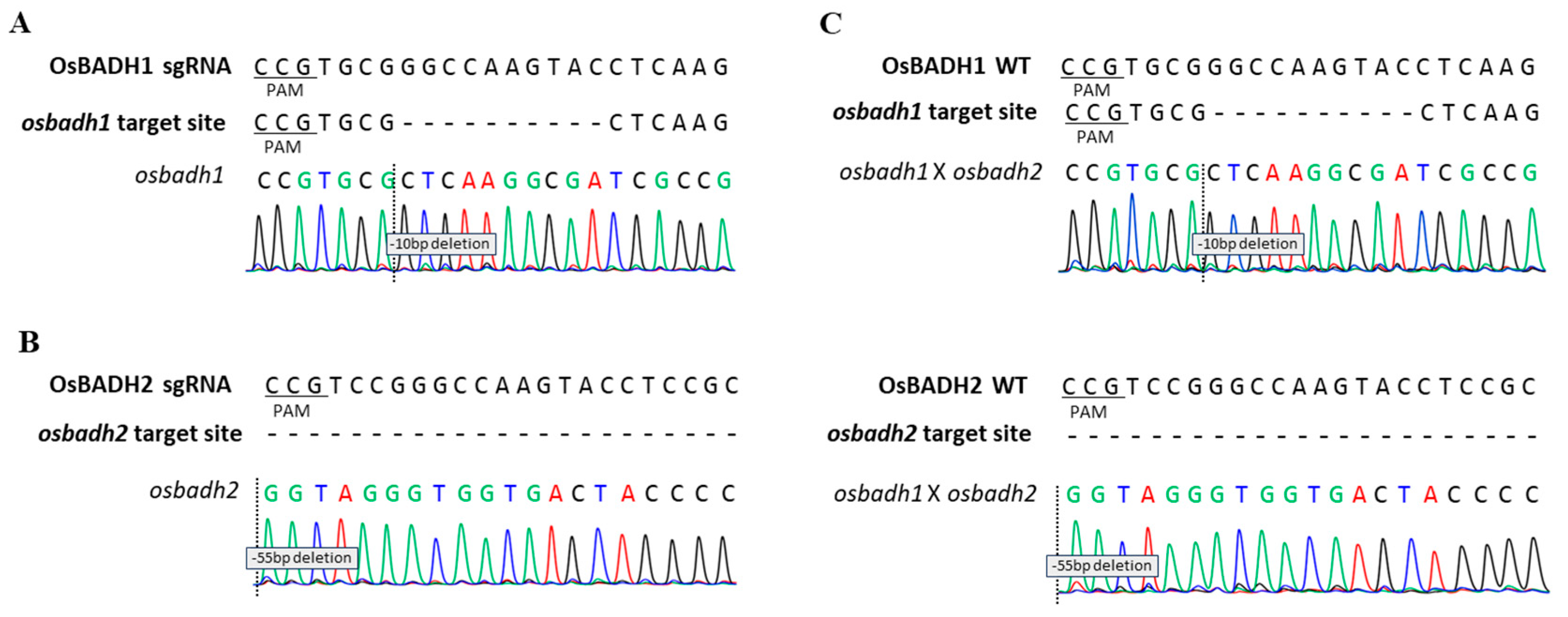
To investigate the genetic relationship between OsBADH1 and OsBADH2, independent knockout lines for each gene were generated using the CRISPR/Cas9 system. Target sites were designed within the coding regions of OsBADH1 and OsBADH2, and regenerated plants were screened by PCR and sequence analysis (Supplementary Table S6 and Figure S1C). Multiple edited alleles with distinct mutation patterns were identified, and homozygous mutant lines were obtained through self-pollination of the edited plants. Among these, representative alleles carrying a 10 bp deletion in OsBADH1 and a 55 bp deletion in OsBADH2 were selected for further analysis (Figure 1A,B; Supplementary Figure S1). Hereafter, the line carrying the 10 bp deletion in OsBADH1 is referred to as osbadh1, and the line carrying the 55 bp deletion in OsBADH2 is referred to as osbadh2. Both mutations were predicted to cause frameshifts leading to premature termination codons, indicating loss of normal OsBADH1 or OsBADH2 gene function (Supplementary Figure S2). To generate the double mutant, the selected homozygous osbadh1 and osbadh2 single-mutant lines were crossed, and the resulting F1 plants were self-pollinated. F2 progeny were subsequently screened by PCR-based genotyping and sequence analysis, which identified homozygous osbadh1 osbadh2 double-mutant individuals carrying edited alleles at both loci (Figure 1C). Segregation of the edited alleles in the F2 population generally followed the expected Mendelian pattern (Supplementary Table S7). In later generations, the selected homozygous osbadh1, osbadh2, and osbadh1 osbadh2 mutant lines were further screened by PCR using T-DNA-specific primers, and only lines lacking CRISPR/Cas9 T-DNA-specific amplification were used for subsequent analyses (Supplementary Figure S3B). These results confirmed the successful establishment of transgene-free osbadh1, osbadh2, and osbadh1 osbadh2 mutant lines for subsequent analyses of 2-AP accumulation, GABA content, and abiotic stress responses.

3.2. Enhanced 2-AP Accumulation in Double Mutants

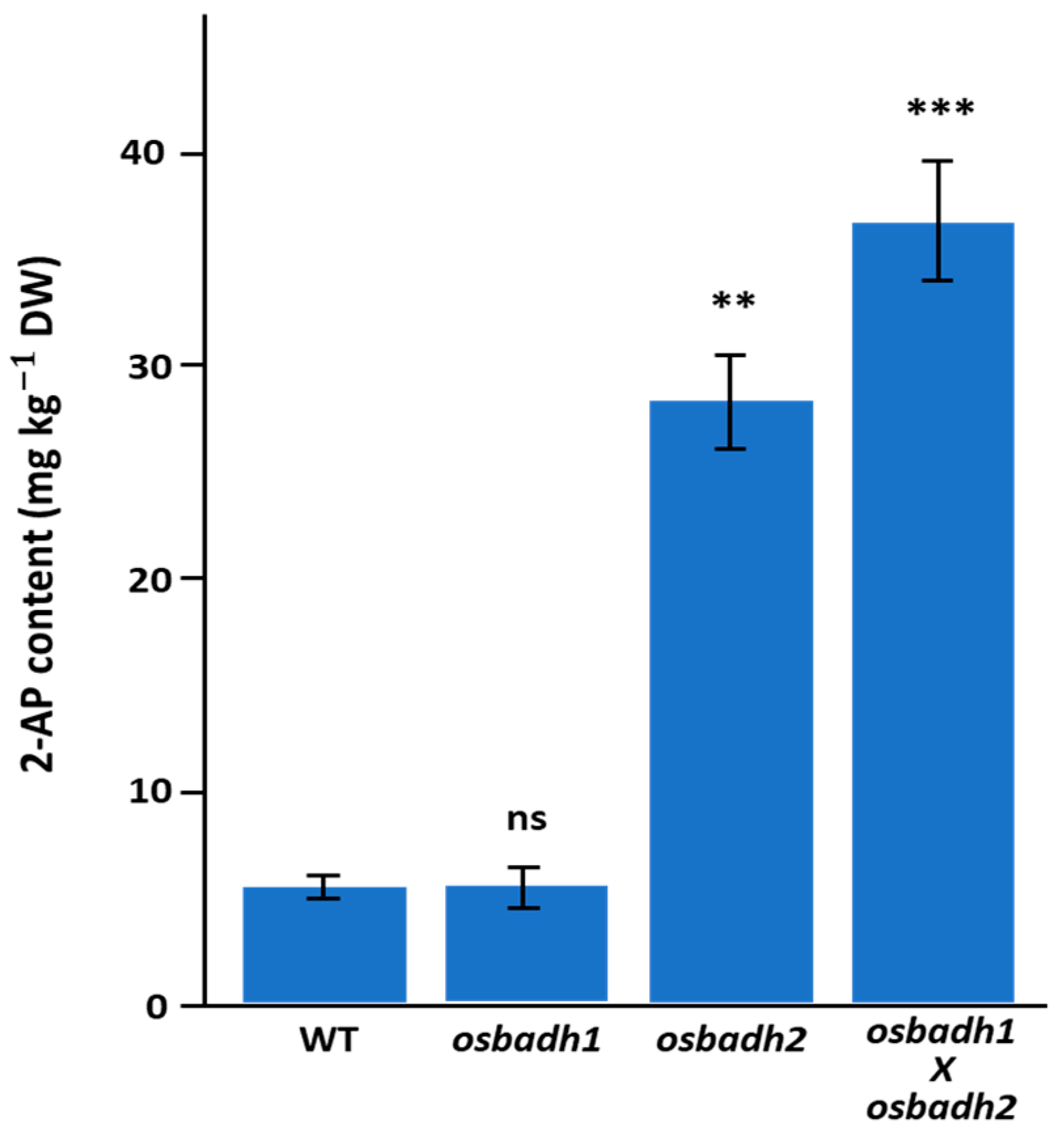
To assess whether combined disruption of OsBADH1 and OsBADH2 further enhances aroma-related metabolite accumulation, 2-acetyl-1-pyrroline (2-AP) content was measured in the wild type, osbadh1, osbadh2, and the osbadh1 osbadh2 double mutant. The osbadh1 mutant showed a 2-AP level of 5.5 ± 0.9 mg kg−1 DW, which was comparable to that of the wild type (5.2 ± 0.8 mg kg−1 DW) and was not significantly different. In contrast, the osbadh2 mutant exhibited a marked increase in 2-AP accumulation, reaching 28.4 ± 2.1 mg kg−1 DW, corresponding to a 5.5-fold increase relative to the wild type (p < 0.01). Notably, the osbadh1 osbadh2 double mutant showed the highest 2-AP content (36.7 ± 2.8 mg kg−1 DW), representing a 7.1-fold increase compared with the wild type (p < 0.001) (Figure 2). Consistent with these results, the relative 2-AP levels were 1.0 in the wild type, 1.1 in osbadh1, 5.5 in osbadh2, and 7.1 in the double mutant. Together, these findings indicate that OsBADH2 is the principal determinant of elevated 2-AP accumulation, while additional disruption of OsBADH1 further enhances 2-AP accumulation in the osbadh2 background.

3.3. Reduction of GABA and Related Metabolites in Double Mutants

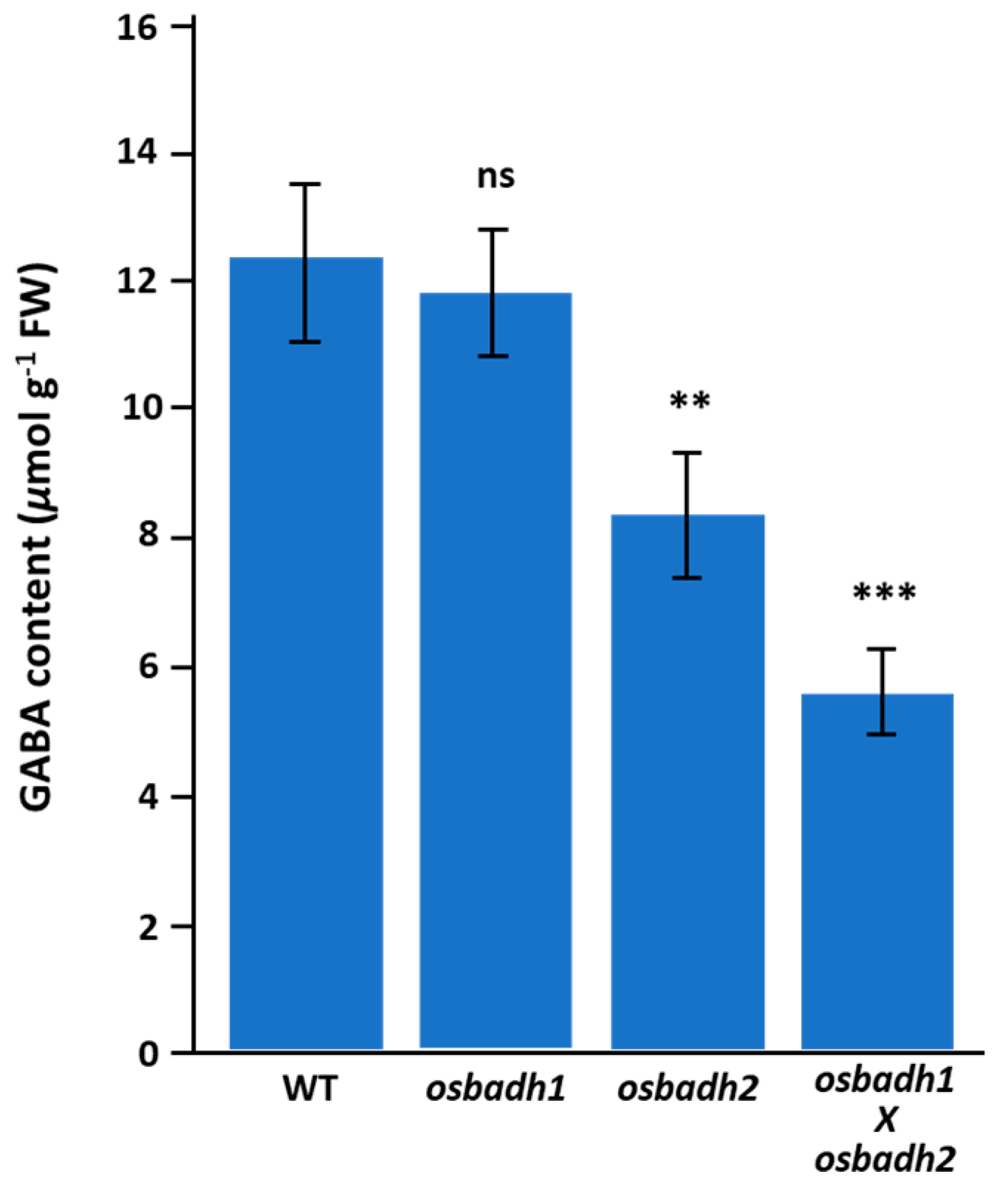
To examine the effect of OsBADH1 and OsBADH2 disruption on GABA-associated metabolism, γ-aminobutyric acid (GABA) content was quantified in the wild type, osbadh1, osbadh2, and the osbadh1 osbadh2 double mutant. The osbadh1 mutant showed a GABA content of 11.8 ± 1.0 μmol g−1 FW, which was comparable to that of the wild type (12.3 ± 1.2 μmol g−1 FW) and was not significantly different. In contrast, the osbadh2 mutant exhibited a significant reduction in GABA content to 8.4 ± 0.9 μmol g−1 FW, corresponding to 0.68-fold of the wild type (p < 0.01). Notably, the osbadh1 osbadh2 double mutant showed the lowest GABA level (5.6 ± 0.7 μmol g−1 FW), representing 0.46-fold of the wild type (p < 0.001) (Figure 3; Supplementary Table S4). Consistent with these results, the relative GABA levels were 1.0 in the wild type, 0.96 in osbadh1, 0.68 in osbadh2, and 0.46 in the double mutant. Metabolite profiling further showed that GABA- and 2-AP-related metabolites were altered in a genotype-dependent manner (Supplementary Table S4). Glutamate, proline, and γ-aminobutyraldehyde were reduced in the osbadh2 mutant and showed further decreases in the osbadh1 osbadh2 double mutant. In contrast, 2-AP accumulation was markedly increased in the osbadh2 mutant and reached the highest level in the double mutant. Together, these findings indicate that disruption of OsBADH2 reduces GABA-associated metabolite accumulation, while additional disruption of OsBADH1 further shifts the metabolic balance toward enhanced 2-AP accumulation in the osbadh2 background.

3.4. Normal Growth Under Non-Stress Conditions

To determine whether disruption of OsBADH1 and OsBADH2 affects plant growth and agronomic performance under normal conditions, the wild type, osbadh1, osbadh2, and the osbadh1 osbadh2 double mutant were compared for major vegetative and yield-related traits. Plant height was 102.5 ± 4.3 cm in the wild type, 101.8 ± 5.0 cm in osbadh1, 100.6 ± 4.7 cm in osbadh2, and 99.8 ± 5.2 cm in the double mutant. Likewise, tiller number per plant was 12.1 ± 1.2, 11.8 ± 1.4, 11.5 ± 1.3, and 11.3 ± 1.5, respectively. Panicle length also showed only minor variation among genotypes, with values of 23.4 ± 1.1 cm in the wild type, 23.1 ± 1.3 cm in osbadh1, 22.9 ± 1.2 cm in osbadh2, and 22.7 ± 1.4 cm in the double mutant. Grain-related traits were similarly comparable among the genotypes. Grain number per panicle was 128.6 ± 8.7 in the wild type, 125.9 ± 7.9 in osbadh1, 122.3 ± 9.1 in osbadh2, and 120.7 ± 8.5 in the double mutant, whereas 1,000-grain weight was 24.8 ± 0.9 g, 24.5 ± 1.0 g, 24.2 ± 0.8 g, and 24.0 ± 0.9 g, respectively. None of these differences were statistically significant (Table 1 and Supplementary Figure S3). These results indicate that single or combined disruption of OsBADH1 and OsBADH2 does not cause marked defects in plant growth or agronomic performance under non-stress conditions.

3.5. Reduced Abiotic Stress Tolerance in Double Mutants

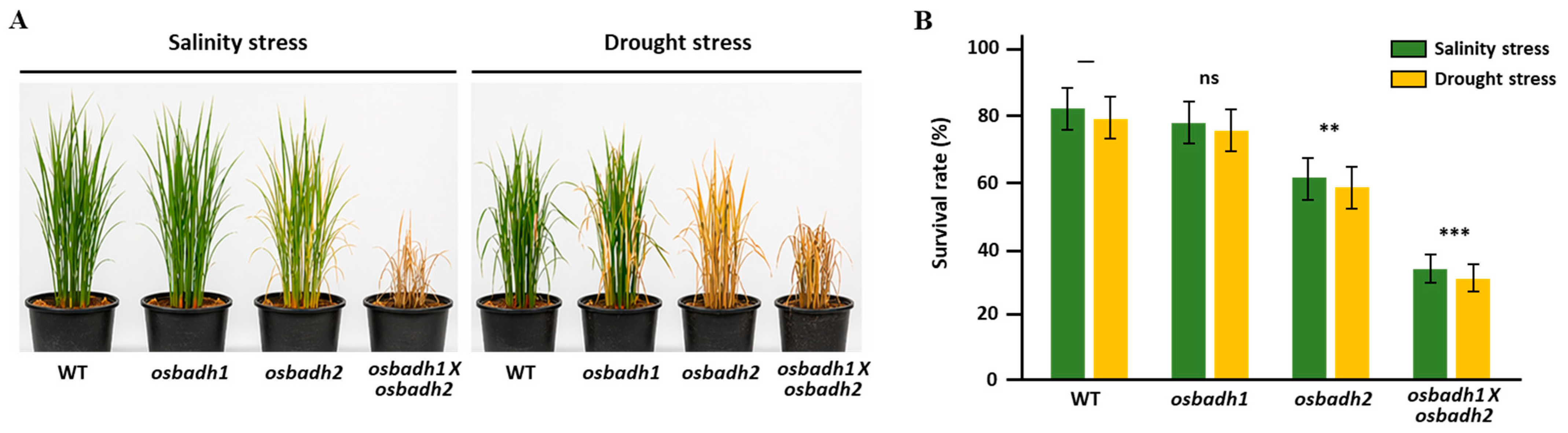
Given that the osbadh1 osbadh2 double mutant exhibited enhanced 2-AP accumulation together with reduced GABA content under normal conditions, we next examined whether these metabolic differences were associated with altered abiotic stress responses. The wild type, osbadh1, osbadh2, and the osbadh1 osbadh2 double mutant were subjected to salinity and drought treatments. Representative phenotypes showed that osbadh2 and, more prominently, the osbadh1 osbadh2 double mutant exhibited more severe stress symptoms than the wild type and osbadh1 under both conditions, including enhanced chlorosis, wilting, and growth inhibition (Figure 4A). Consistent with these observations, survival assays revealed a marked reduction in stress tolerance in the mutants carrying the osbadh2 allele. Under salinity stress, survival rates were 82.3 ± 4.8% in the wild type, 78.5 ± 5.1% in osbadh1, 61.4 ± 4.3% in osbadh2, and 34.2 ± 3.6% in the osbadh1 osbadh2 double mutant. A similar pattern was observed under drought stress, with survival rates of 79.6 ± 5.2%, 75.2 ± 4.9%, 58.7 ± 4.6%, and 31.8 ± 3.9%, respectively. Relative survival was 1.0 in the wild type, 0.95 in osbadh1, 0.74 in osbadh2, and 0.41 in the double mutant. Statistical analysis showed no significant difference in osbadh1, whereas survival was significantly reduced in osbadh2 (p < 0.01) and further reduced in the osbadh1 osbadh2 double mutant (p < 0.001) compared with the wild type (Figure 4B). Physiological measurements further supported the increased stress sensitivity of the double mutant. Relative water content decreased from 82.6 ± 3.5% in the wild type to 68.7 ± 3.1% in osbadh2 and 55.3 ± 2.8% in the double mutant, while chlorophyll content declined from 38.4 ± 2.1 SPAD in the wild type to 32.5 ± 2.0 and 27.8 ± 1.9 SPAD, respectively. In contrast, stress-associated damage indicators increased progressively in the mutants, with electrolyte leakage rising from 18.2 ± 2.3% in the wild type to 28.6 ± 3.0% in osbadh2 and 41.2 ± 3.4% in the double mutant. Likewise, MDA content increased from 2.8 ± 0.3 to 4.5 ± 0.5 and 6.8 ± 0.6 nmol g−1 FW, and ROS levels increased from 1.0 to 1.6 and 2.3 relative units, respectively (Supplementary Table S5). Together, these results indicate that mutants carrying the osbadh2 allele, particularly the osbadh1 osbadh2 double mutant, are more susceptible to salinity and drought stress than the wild type and osbadh1.

3.6. Altered GABA-Associated Stress Pathways in Double Mutants

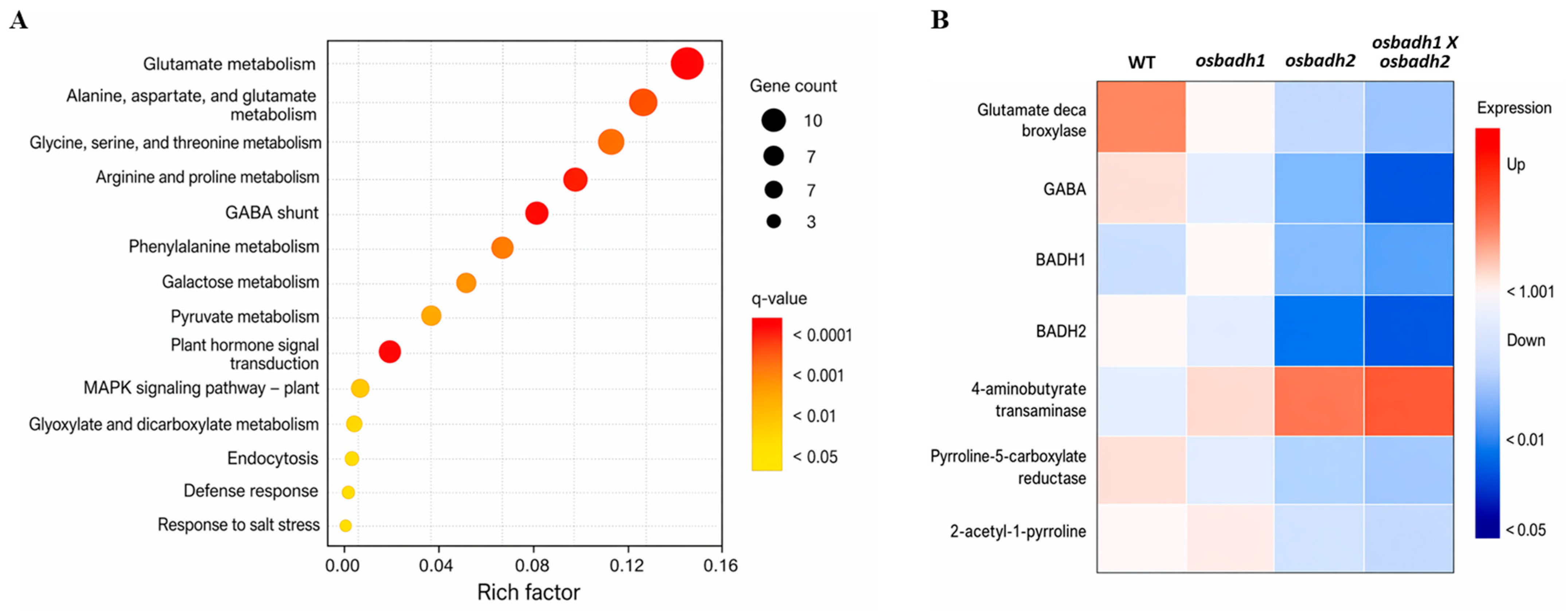
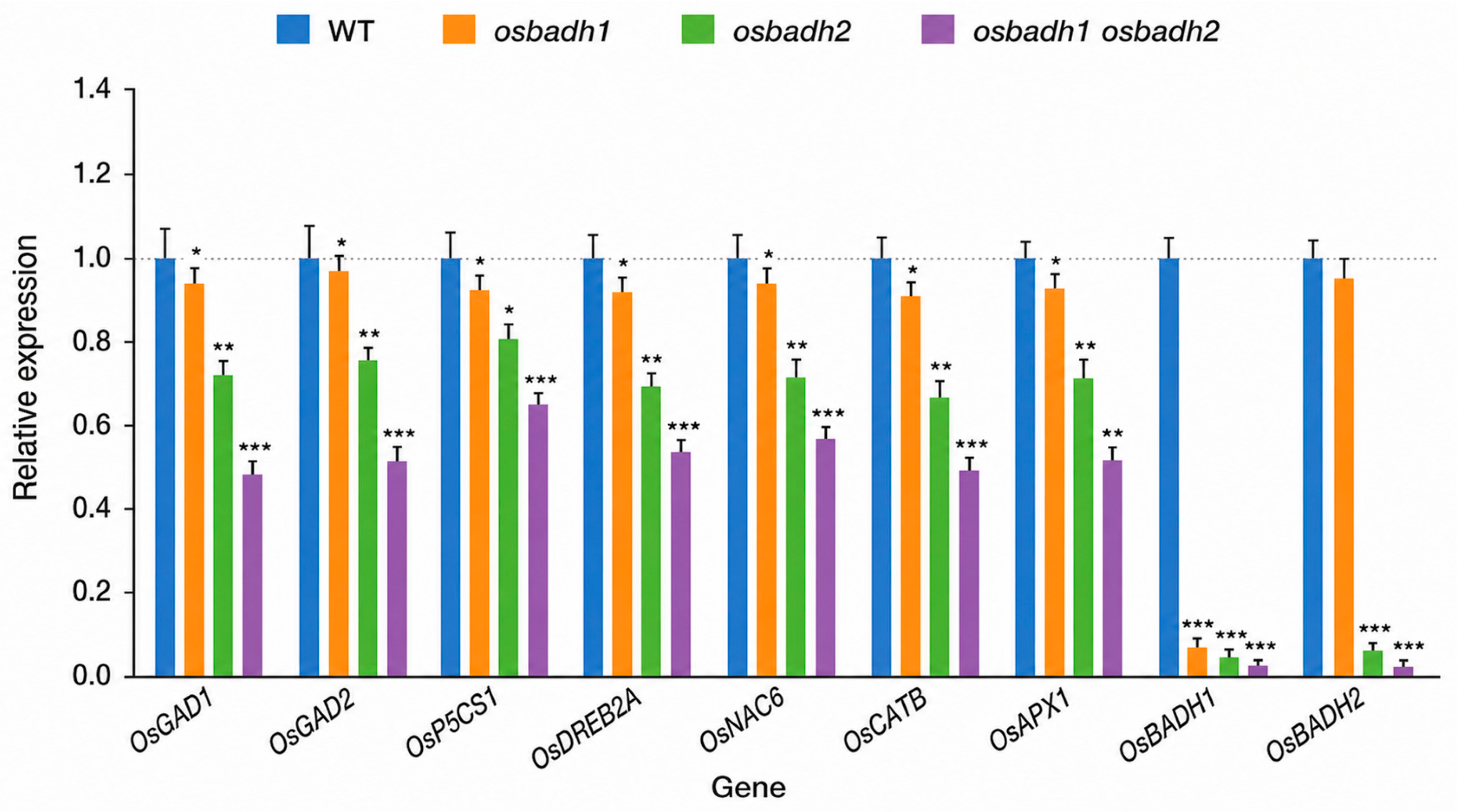
To investigate the molecular basis underlying the increased abiotic stress sensitivity of the mutants, we performed KEGG pathway-based analysis using the targeted stress-associated gene expression dataset and metabolite profiling dataset generated in this study. The affected pathways were mainly associated with GABA-related amino acid metabolism and stress responses, including glutamate metabolism, alanine, aspartate and glutamate metabolism, arginine and proline metabolism, the GABA shunt, plant hormone signal transduction, and MAPK signaling (Figure 5A). To further examine these pathway-level changes, we analyzed the expression patterns of genes associated with GABA metabolism, stress responses, and aldehyde detoxification. The heatmap showed a clear overall shift in expression profiles across the mutants, with the most pronounced changes observed in the osbadh1 osbadh2 double mutant (Figure 5B). Consistent with this pattern, targeted expression analysis showed that OsGAD1 and OsGAD2 were reduced to 0.48 ± 0.05-fold and 0.51 ± 0.06-fold of wild-type levels, respectively, in the double mutant (Figure 6). Likewise, OsP5CS1, OsDREB2A, and OsNAC6 were downregulated to 0.65 ± 0.05-fold, 0.54 ± 0.05-fold, and 0.57 ± 0.05-fold, respectively, while OsCATB and OsAPX1 decreased to 0.49 ± 0.05-fold and 0.52 ± 0.04-fold, respectively. As expected, OsBADH1 transcript levels were markedly reduced in the osbadh1 single mutant and in the osbadh1 osbadh2 double mutant, whereas OsBADH2 transcript levels were markedly reduced in the osbadh2 single mutant and in the double mutant. In the double mutant, OsBADH1 and OsBADH2 transcript levels decreased to 0.04 ± 0.01-fold and 0.02 ± 0.01-fold of wild-type levels, respectively. Together, these results indicate that simultaneous disruption of OsBADH1 and OsBADH2 disturbs GABA-associated metabolic homeostasis and weakens stress-responsive pathways, which is consistent with the reduced GABA accumulation and enhanced abiotic stress sensitivity observed in the double mutant.

4. Discussion

Rice fragrance has classically been interpreted through the BADH2–2-AP axis, but current evidence indicates that aroma formation is embedded in a broader metabolic framework involving aldehyde turnover, amino acid metabolism, GABA homeostasis, and abiotic stress adaptation [32,33,34,35,36]. Within this framework, the present study examined whether simultaneous disruption of OsBADH1 and OsBADH2 would intensify aroma-associated metabolic reprogramming beyond the effect of OsBADH2 alone and whether such reprogramming would impose a physiological cost. Our results support this interpretation: the osbadh1 osbadh2 double mutant showed the highest 2-AP accumulation (Figure 2), the lowest GABA content (Figure 3; Supplementary Table S4), and the strongest sensitivity to salinity and drought stress (Figure 4; Supplementary Table S5). The stronger aroma phenotype of the double mutant indicates that the metabolic consequences of BADH disruption cannot be explained solely by OsBADH2 disruption. Previous genetic, biochemical, and physiological studies established that loss of BADH2 activity promotes fragrance by favoring 2-AP formation, and several reports further showed that fragrance-associated metabolism is closely linked to precursor availability, aldehyde handling, and stress-responsive metabolic regulation [32,33,37,38,39,40]. In this context, the further increase in 2-AP observed in the osbadh1 osbadh2 double mutant suggests that OsBADH1, although not the primary fragrance gene, contributes to aldehyde-associated buffering capacity when OsBADH2 is disrupted. This interpretation is consistent with broader work on plant aldehyde dehydrogenases showing that these enzymes participate not only in specialized metabolism but also in detoxification and stress-related homeostasis [41,42]. Additional aldehyde dehydrogenase family members may also contribute to metabolic compensation and stress adaptation, warranting further investigation.
A second major implication of the present results is that enhancement of aroma was tightly associated with impairment of GABA-linked stress protection. The double mutant displayed the lowest endogenous GABA content together with the most severe physiological stress injury, including reduced survival, lower relative water content and chlorophyll content, and increased electrolyte leakage, MDA content, and ROS accumulation (Figure 3 and Figure 4; Supplementary Tables S4 and S5). These physiological changes indicate that the double mutant experienced greater membrane damage and oxidative stress-associated injury under abiotic stress conditions. Although ion homeostasis was not directly examined in the present study, future analyses of Na+, K+, and Na+/K+ ratios may provide additional mechanistic insight into the enhanced salt sensitivity observed in the osbadh1 osbadh2 double mutant. Similarly, antioxidant enzyme activities were not directly measured; however, the increased ROS accumulation, MDA content, and electrolyte leakage observed in the double mutant suggest impaired oxidative stress homeostasis. Future analyses of antioxidant enzyme activities, including SOD, CAT, APX, and POD, will help further clarify the mechanisms underlying oxidative stress imbalance in the double mutant. This stress-sensitive phenotype is biologically meaningful because GABA is widely recognized as a multifunctional metabolite involved in osmotic adjustment, intracellular pH regulation, antioxidant defense, carbon–nitrogen balance, and stress signaling [34,35,36,43]. Earlier work in fragrant rice also showed that salt treatment can reshape the relationships among 2-AP, proline, and GABA and that fragrance-associated backgrounds may show reduced performance under salt- or drought-related stress [37,39,40,43]. Taken together, our data indicate that the enhanced aroma phenotype in the double mutant is coupled to weakened GABA-associated buffering capacity under abiotic stress.
This interpretation is further supported by metabolite profiling data showing reduced levels of glutamate, proline, and γ-aminobutyraldehyde together with increased 2-AP accumulation in the osbadh1 osbadh2 double mutant (Supplementary Table S4). These metabolite patterns support a shift in metabolic balance from GABA-associated pathways toward enhanced aroma-associated 2-AP biosynthesis. Future rescue experiments using exogenous GABA application will be valuable for directly testing whether reduced GABA accumulation contributes causally to the stress-sensitive phenotype of the osbadh1 osbadh2 double mutant. The molecular analyses further support this interpretation. KEGG pathway-based analysis of the targeted stress-associated gene expression and metabolite profiling datasets indicated that the affected pathways were mainly related to glutamate metabolism, alanine, aspartate and glutamate metabolism, arginine and proline metabolism, the GABA shunt, plant hormone signal transduction, and MAPK signaling (Figure 5A). In parallel, the heatmap and targeted expression analysis showed that the strongest transcriptional shift occurred in the double mutant, including downregulation of OsGAD1, OsGAD2, OsP5CS1, OsDREB2A, OsNAC6, OsCATB, and OsAPX1, together with reduced expression of the edited target genes OsBADH1 and OsBADH2 in the corresponding mutant backgrounds (Figure 5B and Figure 6). These coordinated changes suggest that simultaneous loss of the two BADH paralogs affects not only volatile metabolism but also broader transcriptional networks associated with GABA homeostasis, ROS control, and stress adaptation. This interpretation agrees with recent models positioning GABA metabolism as an integrated stress-response system rather than an isolated branch pathway [34,35,36,41,42].
The conceptual model presented in Figure 7 provides a framework for integrating these observations. Functional BADH activity favors metabolic conversion of γ-aminobutyraldehyde toward GABA formation, whereas impaired BADH function promotes the accumulation of Δ1-pyrroline-related intermediates and downstream 2-AP production [2,8,9]. Within this framework, the phenotype of the osbadh1 osbadh2 double mutant can be interpreted as a more pronounced loss of BADH-dependent aldehyde-buffering capacity, resulting in reduced GABA accumulation and enhanced 2-AP formation. Therefore, BADH-centered genome editing remains an effective route for fragrance improvement, but our results indicate that stronger disruption of BADH-associated metabolism may also weaken performance in salinity- and drought-prone environments [37,40,43]. From a breeding perspective, this finding extends previous studies on fragrant rice mutants and cultivars carrying natural badh2 alleles, which have mainly emphasized aroma enhancement through increased 2-AP accumulation. Our results suggest that combined disruption of OsBADH1 and OsBADH2 may further improve fragrance but also introduce a physiological trade-off related to stress-associated metabolic homeostasis. Future multi-environment field evaluations will be necessary to determine the stability of aroma-associated traits and stress responses under diverse cultivation conditions. In addition, although GC–MS-based 2-AP quantification is widely used as a biochemical indicator of rice fragrance, sensory evaluation will be important for linking 2-AP accumulation with consumer-perceived aroma intensity. Overall, this study expands the current understanding of rice BADH function by showing that OsBADH1 and OsBADH2 are linked not only to aroma-associated 2-AP accumulation but also to GABA-related metabolic homeostasis and abiotic stress resilience.

5. Conclusions

Simultaneous disruption of OsBADH1 and OsBADH2 enhanced aroma-associated metabolism but weakened GABA-linked abiotic stress tolerance in rice. The osbadh1 osbadh2 double mutant accumulated more 2-acetyl-1-pyrroline (2-AP) than the osbadh2 single mutant, indicating that OsBADH1, although not the primary fragrance gene, contributes to BADH-associated metabolic homeostasis. In parallel, the double mutant showed the lowest GABA content and the strongest sensitivity to salinity and drought stress, while no major defects in growth or agronomic traits were detected under normal conditions. KEGG enrichment, heat map analysis, and targeted expression profiling further showed that combined loss of OsBADH1 and OsBADH2 disturbed GABA-associated metabolic and stress-responsive pathways. Together, these findings reveal a clear trade-off between enhanced aroma and reduced stress resilience in rice with combined BADH disruption. This study expands the current understanding of rice BADH function by showing that OsBADH1 and OsBADH2 are linked not only to 2-AP accumulation but also to metabolic buffering and abiotic stress adaptation, providing a useful framework for balancing grain quality and stress tolerance in fragrance-oriented rice breeding.

Supplementary Materials

The following supporting information can be downloaded at https://www.mdpi.com/article/10.3390/genes17050579/s1, Figure S1. CRISPR/Cas9 construct design, rice transformation, and mutation screening of OsBADH1 and OsBADH2; Figure S2. Predicted frameshift mutations and premature termination caused by representative osbadh1 and osbadh2 edited alleles; Figure S3. Representative agronomic phenotypes and T-DNA segregation analysis of WT, osbadh1, osbadh2, and osbadh1 osbadh2 plants under normal growth conditions; Table S1. sgRNA design information and mismatch-based off-target prediction results for CRISPR/Cas9-mediated editing of OsBADH1 and OsBADH2; Table S2. The primers list used in this study; Table S3. Raw data for 2-acetyl-1-pyrroline (2-AP) quantification; Table S4. Metabolite profiling associated with GABA and 2-acetyl-1-pyrroline (2-AP) biosynthesis pathways in WT, osbadh1, osbadh2, and osbadh1 osbadh2 double mutants; Table S5. Additional physiological measurements under salinity and drought stress; Table S6. Mutation types identified in CRISPR/Cas9-edited OsBADH1 and OsBADH2 lines; Table S7. Segregation analysis of osbadh1, osbadh2, and osbadh1 osbadh2 double mutants in the F2 population derived from a cross between single mutants.

Author Contributions

Conceptualization, Y.-J.J.; methodology, Y.-J.J.; software, J.-Y.K.; validation, Y.-J.J.; formal analysis, J.-Y.K.; data curation, J.-Y.K.; writing—original draft preparation, Y.-J.J.; writing—review and editing, K.-K.K.; visualization, J.-Y.K. All authors have read and agreed to the published version of the manuscript.

Funding

This work was supported by a grant from the New Breeding Technologies Development Program (Project No. RS-2024-00322378), Republic of Korea. This work was supported by the National Research Foundation of Korea (NRF) grant funded by the Korean government (MSIT) (IRIS RS-2026-25481809).

Institutional Review Board Statement

Not applicable.

Informed Consent Statement

Not applicable.

Data Availability Statement

The original contributions presented in the study are included in the article/Supplementary Materials; further inquiries can be directed to the corresponding author.

Conflicts of Interest

The authors declare no conflicts of interest.

References

  1. Bradbury, L.M.T.; Fitzgerald, T.L.; Henry, R.J.; Jin, Q.; Waters, D.L.E. The gene for fragrance in rice. Plant Biotechnol. J. 2005, 3, 363–370. [Google Scholar] [CrossRef]
  2. Chen, S.; Yang, Y.; Shi, W.; Ji, Q.; He, F.; Zhang, Z.; Cheng, Z.; Liu, X.; Xu, M. Badh2, encoding betaine aldehyde dehydrogenase, inhibits the biosynthesis of 2-acetyl-1-pyrroline, a major component in rice fragrance. Plant Cell 2008, 20, 1850–1861. [Google Scholar] [CrossRef]
  3. Kovach, M.J.; Calingacion, M.N.; Fitzgerald, M.A.; McCouch, S.R. The origin and evolution of fragrance in rice (Oryza sativa L.). Proc. Natl. Acad. Sci. USA 2009, 106, 14444–14449. [Google Scholar] [CrossRef] [PubMed]
  4. Chandanshive, S.; Mathure, S.; Nadaf, A. Multiple mutations in BADH2 gene reveal the novel fragrance allele in indica rice (Oryza sativa L.). J. Genet. 2024, 103, 13. [Google Scholar] [CrossRef]
  5. Ashokkumar, S.; Jaganathan, D.; Ramanathan, V.; Rahman, H.; Palaniswamy, R.; Kambale, R.; Muthurajan, R. Creation of novel alleles of fragrance gene OsBADH2 in rice through CRISPR/Cas9-mediated gene editing. PLoS ONE 2020, 15, e0237018. [Google Scholar] [CrossRef]
  6. Imran, M.; Shafiq, S.; Tang, X. CRISPR-Cas9-mediated editing of BADH2 gene triggered fragrance revolution in rice. Physiol. Plant. 2023, 175, e13871. [Google Scholar] [CrossRef]
  7. Mitsuya, S.; Yokota, Y.; Fujiwara, T.; Mori, N.; Takabe, T. OsBADH1 is possibly involved in acetaldehyde oxidation in rice plant peroxisomes. FEBS Lett. 2009, 583, 3625–3629. [Google Scholar] [CrossRef] [PubMed]
  8. Luo, H.; Duan, M.; Kong, L.; He, L.; Chen, Y.; Wang, Z.; Tang, X. The regulatory mechanism of 2-acetyl-1-pyrroline biosynthesis in fragrant rice (Oryza sativa L.) under different soil moisture contents. Front. Plant Sci. 2021, 12, 772728. [Google Scholar] [CrossRef] [PubMed]
  9. Imran, M.; Shafiq, S.; Ashraf, U.; Qi, J.; Mo, Z.; Tang, X. Biosynthesis of 2-acetyl-1-pyrroline in fragrant rice: Recent insights into agro-management, environmental factors, and functional genomics. J. Agric. Food Chem. 2023, 71, 4201–4215. [Google Scholar] [CrossRef]
  10. Chen, J.; Zhang, J.; Liu, Y.; Zhang, K.; Zhu, F.; Xie, Y. Advances in the biosynthetic regulation and functional roles of 2-AP in aromatic rice. Int. J. Mol. Sci. 2025, 26, 7971. [Google Scholar] [CrossRef]
  11. Bouché, N.; Fromm, H. GABA in plants: Just a metabolite? Trends Plant Sci. 2004, 9, 110–115. [Google Scholar] [CrossRef]
  12. Islam, S.N.U.; Kouser, S.; Hassan, P.; Asgher, M.; Shah, A.A.; Khan, N.A. Gamma-aminobutyric acid interactions with phytohormones and its role in modulating abiotic and biotic stress in plants. Stress Biol. 2024, 4, 36. [Google Scholar] [CrossRef] [PubMed]
  13. Hu, Y.; Huang, X.; Xiao, Q.; Wu, X.; Tian, Q.; Ma, W.; Shoaib, N.; Liu, Y.; Zhao, H.; Feng, Z.; et al. Advances in plant GABA research: Biological functions, synthesis mechanisms and regulatory pathways. Plants 2024, 13, 2891. [Google Scholar] [CrossRef]
  14. Yoshida, S.; Forno, D.A.; Cock, J.H.; Gomez, K.A. Laboratory Manual for Physiological Studies of Rice, 3rd ed.; International Rice Research Institute: Los Baños, Philippines, 1976. [Google Scholar]
  15. Park, J.; Bae, S.; Kim, J.S. Cas-Designer: A web-based tool for choice of CRISPR-Cas9 target sites. Bioinformatics 2015, 31, 4014–4016. [Google Scholar] [CrossRef]
  16. Bae, S.; Park, J.; Kim, J.-S. Cas-OFFinder: A fast and versatile algorithm that searches for potential off-target sites of Cas9 RNA-guided endonucleases. Bioinformatics 2014, 30, 1473–1475. [Google Scholar] [CrossRef]
  17. Nishimura, A.; Aichi, I.; Matsuoka, M. A protocol for Agrobacterium-mediated transformation in rice. Nat. Protoc. 2006, 1, 2796–2802. [Google Scholar] [CrossRef] [PubMed]
  18. Jung, Y.J.; Bae, S.; Lee, G.J.; Seo, P.J.; Cho, Y.G.; Kang, K.K. A novel method for high-frequency genome editing in rice, using the CRISPR/Cas9 system. J. Plant Biotechnol. 2017, 44, 89–96. [Google Scholar] [CrossRef]
  19. Jung, Y.J.; Lee, H.J.; Bae, S.; Kim, J.H.; Kim, D.H.; Kim, H.K.; Kang, K.K. Acquisition of seed dormancy breaking in rice (Oryza sativa L.) via CRISPR/Cas9-targeted mutagenesis of OsVP1 gene. Plant Biotechnol. Rep. 2019, 13, 511–520. [Google Scholar] [CrossRef]
  20. Doyle, J.J.; Doyle, J.L. Isolation of plant DNA from fresh tissue. Focus 1990, 12, 13–15. [Google Scholar]
  21. Park, J.; Lim, K.; Kim, J.S.; Bae, S. Cas-analyzer: An online tool for assessing genome editing results using NGS data. Bioinformatics 2017, 33, 286–288. [Google Scholar] [CrossRef] [PubMed]
  22. Widjaja, R.; Craske, J.D.; Wootton, M. Comparative studies on volatile components of non-fragrant and fragrant rices. J. Sci. Food Agric. 1996, 70, 151–161. [Google Scholar] [CrossRef]
  23. Bryant, R.J.; McClung, A.M. Volatile profiles of aromatic and non-aromatic rice cultivars using SPME/GC–MS. Food Chem. 2011, 124, 501–513. [Google Scholar] [CrossRef]
  24. Hayat, A.; Jahangir, T.M.; Khuhawar, M.Y.; Alamgir, M.; Siddiqui, A.J.; Musharraf, S.G. Simultaneous HPLC determination of gamma amino butyric acid (GABA) and lysine in selected Pakistani rice varieties by pre-column derivatization with 2-hydroxynaphthaldehyde. J. Cereal Sci. 2014, 60, 356–360. [Google Scholar] [CrossRef]
  25. Lü, Y.; Zhang, H.; Meng, X.; Wang, L.; Guo, X. A Validated HPLC Method for the Determination of GABA by Pre-Column Derivatization with 2,4-Dinitrofluorobenzene and Its Application to Plant GAD Activity Study. Anal. Lett. 2010, 43, 2663–2671. [Google Scholar] [CrossRef]
  26. IRRI. Standard Evaluation System for Rice, 5th ed.; International Rice Research Institute: Manila, Philippines, 2013. [Google Scholar]
  27. Munns, R.; Tester, M. Mechanisms of salinity tolerance. Annu. Rev. Plant Biol. 2008, 59, 651–681. [Google Scholar] [CrossRef]
  28. Blum, A. Plant Breeding for Water-Limited Environments; Springer: New York, NY, USA, 2011. [Google Scholar]
  29. Barrs, H.D.; Weatherley, P.E. A re-examination of the relative turgidity technique for estimating water deficits in leaves. Aust. J. Biol. Sci. 1962, 15, 413–428. [Google Scholar] [CrossRef]
  30. Arnon, D.I. Copper enzymes in isolated chloroplasts. Polyphenoloxidase in Beta vulgaris. Plant Physiol. 1949, 24, 1–15. [Google Scholar] [CrossRef]
  31. Livak, K.J.; Schmittgen, T.D. Analysis of relative gene expression data using real-time quantitative PCR and the 2−ΔΔCT method. Methods 2001, 25, 402–408. [Google Scholar] [CrossRef]
  32. Hashemi, F.S.G.; Rafii, M.Y.; Ismail, M.R.; Mahmud, T.M.M.; Rahim, H.A.; Asfaliza, R.; Malek, M.A.; Latif, M.A. Biochemical, Genetic and Molecular Advances of Fragrance Characteristics in Rice. Crit. Rev. Plant Sci. 2013, 32, 445–457. [Google Scholar] [CrossRef]
  33. Renuka, N.; Barvkar, V.T.; Ansari, Z.; Zhao, C.; Wang, C.; Zhang, Y.; Nadaf, A.B. Co-functioning of 2AP Precursor Amino Acids Enhances 2-Acetyl-1-pyrroline under Salt Stress in Aromatic Rice (Oryza sativa L.) Cultivars. Sci. Rep. 2022, 12, 3911. [Google Scholar] [CrossRef]
  34. Yuan, D.; Wu, X.; Gong, B.; Huo, R.; Zhao, L.; Li, J.; Lü, G.; Gao, H. GABA Metabolism, Transport and Their Roles and Mechanisms in the Regulation of Abiotic Stress (Hypoxia, Salt, Drought) Resistance in Plants. Metabolites 2023, 13, 347. [Google Scholar] [CrossRef]
  35. Guo, Z.; Gong, J.; Luo, S.; Zuo, Y.; Shen, Y. Role of Gamma-Aminobutyric Acid in Plant Defense Response. Metabolites 2023, 13, 741. [Google Scholar] [CrossRef]
  36. Jin, Y.; Zhi, L.; Tang, X.; Chen, Y.; Hancock, J.T.; Hu, X. The Function of GABA in Plant Cell Growth, Development and Stress Response. Phyton-Int. J. Exp. Bot. 2023, 92, 2211–2225. [Google Scholar] [CrossRef]
  37. Fitzgerald, T.L.; Waters, D.L.E.; Brooks, L.O.; Henry, R.J. Fragrance in rice (Oryza sativa) is associated with reduced yield under salt treatment. Environ. Exp. Bot. 2010, 68, 292–300. [Google Scholar] [CrossRef]
  38. Wongpanya, R.; Boonyalai, N.; Thammachuchourat, N.; Horata, N.; Arikit, S.; Myint, K.M.; Vanavichit, A.; Choowongkomon, K. Biochemical and Enzymatic Study of Rice BADH Wild-Type and Mutants: An Insight into Fragrance in Rice. Protein J. 2011, 30, 529–538. [Google Scholar] [CrossRef]
  39. Poonlaphdecha, J.; Maraval, I.; Roques, S.; Audebert, A.; Boulanger, R.; Bry, X.; Gunata, Z. Effect of Timing and Duration of Salt Treatment during Growth of a Fragrant Rice Variety on Yield and 2-Acetyl-1-pyrroline, Proline, and GABA Levels. J. Agric. Food Chem. 2012, 60, 3824–3830. [Google Scholar] [CrossRef]
  40. Prodhan, Z.H.; Islam, S.A.; Alam, M.S.; Li, S.; Jiang, M.; Tan, Y.; Shu, Q. Impact of OsBadh2 Mutations on Salt Stress Response in Rice. Plants 2022, 11, 2829. [Google Scholar] [CrossRef]
  41. Tola, A.J.; Jaballi, A.; Jellouli, N.; Tounsi, S.; Limam, F. Recent Development on Plant Aldehyde Dehydrogenase Enzymes and Their Functions in Plant Development and Stress Signaling. Genes 2021, 12, 51. [Google Scholar] [CrossRef]
  42. Niazian, M.; Niedbała, G. Betaine Aldehyde Dehydrogenase (BADH) vs. Flavodoxin (Fld): Two Important Genes for Enhancing Plants Stress Tolerance and Productivity. Front. Plant Sci. 2021, 12, 650215. [Google Scholar] [CrossRef]
  43. Ashraf, U.; Anjum, S.A.; Naseer, S.; Abbas, A.; Abrar, M.; Nawaz, M.; Luo, K. Gamma amino butyric acid (GABA) application modulated the morpho-physiological and yield traits of fragrant rice under well-watered and drought conditions. BMC Plant Biol. 2024, 24, 569. [Google Scholar] [CrossRef]
Figure 1. Sanger sequencing-based confirmation of homozygous osbadh1, osbadh2, and osbadh1 osbadh2 double mutants. (A) Wild-type and homozygous edited alleles of OsBADH1. (B) Wild-type and homozygous edited alleles of OsBADH2. (C) Confirmation of the homozygous osbadh1 osbadh2 double mutant obtained by crossing the homozygous osbadh1 and osbadh2 single-mutant lines. The double mutant carried edited alleles at both OsBADH1 and OsBADH2 loci.
Genes 17 00579 g001
Figure 2. 2-AP content in the wild type, osbadh1, osbadh2, and osbadh1 osbadh2 double mutant. Data are presented as mean ± SD. Statistical significance was evaluated relative to the wild type; ns, not significant; ** p < 0.01; *** p < 0.001.
Genes 17 00579 g002
Figure 3. GABA content in the wild type, osbadh1, osbadh2, and osbadh1 osbadh2 double mutant. Data are presented as mean ± SD. Statistical significance was evaluated relative to the wild type; ns, not significant; ** p < 0.01; *** p < 0.001.
Genes 17 00579 g003
Figure 4. Abiotic stress responses of the wild type, osbadh1, osbadh2, and osbadh1 osbadh2 double mutant. (A) Representative seedling phenotypes under salinity and drought stress conditions. (B) Relative survival rates after stress treatments. Data are presented as mean ± SD from three independent biological replicates. Statistical significance was evaluated relative to the wild type; ns, not significant; ** p < 0.01; *** p < 0.001.
Genes 17 00579 g004
Figure 5. KEGG pathway-based analysis and heat map of GABA-associated stress pathways in rice BADH mutants. (A) KEGG pathway-based analysis using targeted stress-associated gene expression and metabolite profiling datasets generated in this study. (B) Heat map showing expression patterns of genes associated with GABA metabolism, stress responses, and aldehyde detoxification in WT and mutant lines.
Genes 17 00579 g005
Figure 6. Relative expression levels of selected GABA metabolism-, stress response-, and aldehyde detoxification-related genes in rice BADH mutants. Expression levels of OsGAD1, OsGAD2, OsP5CS1, OsDREB2A, OsNAC6, OsCATB, OsAPX1, OsBADH1, and OsBADH2 in WT, osbadh1, osbadh2, and osbadh1 osbadh2 mutants by qRT-PCR. Data are presented as mean ± SD from three biological replicates. Asterisks indicate significant differences compared with WT (* p < 0.05, ** p < 0.01, *** p < 0.001).
Genes 17 00579 g006
Figure 7. Simplified model of BADH-dependent metabolic flux toward GABA or 2-AP in rice. Functional BADH favors GABA production from γ-aminobutyraldehyde, whereas non-functional BADH promotes flux toward 2-AP accumulation.
Genes 17 00579 g007
Table 1. Vegetative and agronomic traits of the wild type, osbadh1, osbadh2, and osbadh1 osbadh2 double mutant under non-stress conditions.
GenotypePlant Height (cm)Tiller NumberPanicle Length (cm)Primary BranchesSecondary BranchesGrain Number Per PanicleSeed Setting Rate (%)1000-Grain Weight (g)
WT102.5 ± 4.312.1 ± 1.223.4 ± 1.111.2 ± 0.922.6 ± 1.8128.6 ± 8.792.4 ± 2.124.8 ± 0.9
osbadh1101.8 ± 5.011.8 ± 1.423.1 ± 1.310.9 ± 1.021.8 ± 2.0125.9 ± 7.991.6 ± 2.324.5 ± 1.0
osbadh2100.6 ± 4.711.5 ± 1.322.9 ± 1.210.7 ± 0.821.2 ± 1.7122.3 ± 9.190.8 ± 2.524.2 ± 0.8
osbadh1 ×
osbadh2
99.8 ± 5.211.3 ± 1.522.7 ± 1.410.5 ± 0.920.9 ± 1.9120.7 ± 8.589.9 ± 2.724.0 ± 0.9
Data are presented as mean ± standard deviation (SD) from at least three biological replicates. No statistically significant differences were observed among genotypes (p > 0.05, one-way ANOVA).
Disclaimer/Publisher’s Note: The statements, opinions and data contained in all publications are solely those of the individual author(s) and contributor(s) and not of MDPI and/or the editor(s). MDPI and/or the editor(s) disclaim responsibility for any injury to people or property resulting from any ideas, methods, instructions or products referred to in the content.