Pericytes: Biomarkers and Roles in Thoracic Aortic Aneurysm



Abstract
1. Introduction
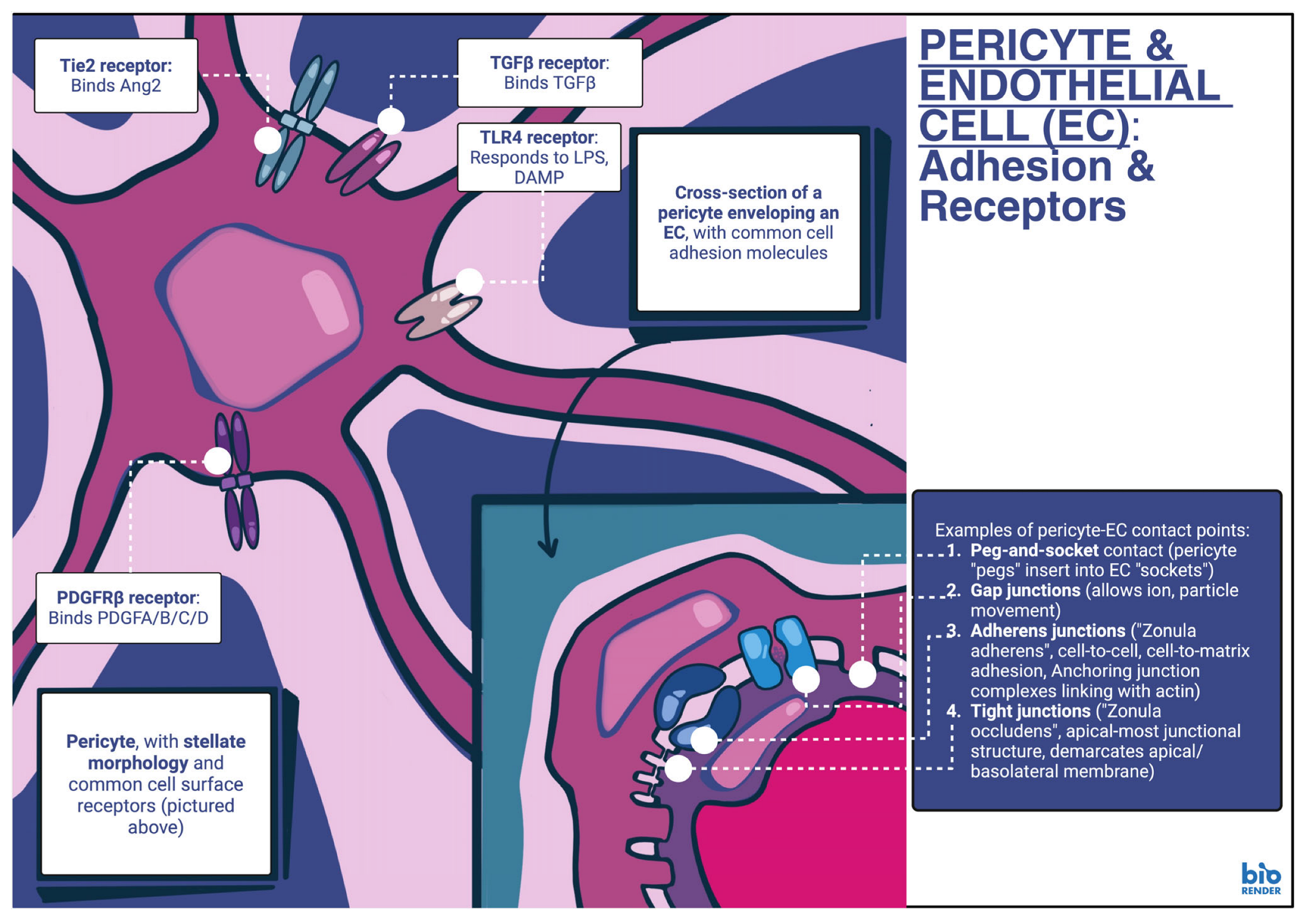
2. Pericytes
3. Aorta
3.1. Brief Overview of Structure
3.2. Adventitia and the Vasa Vasorum Network
4. Aorta and Cell Populations
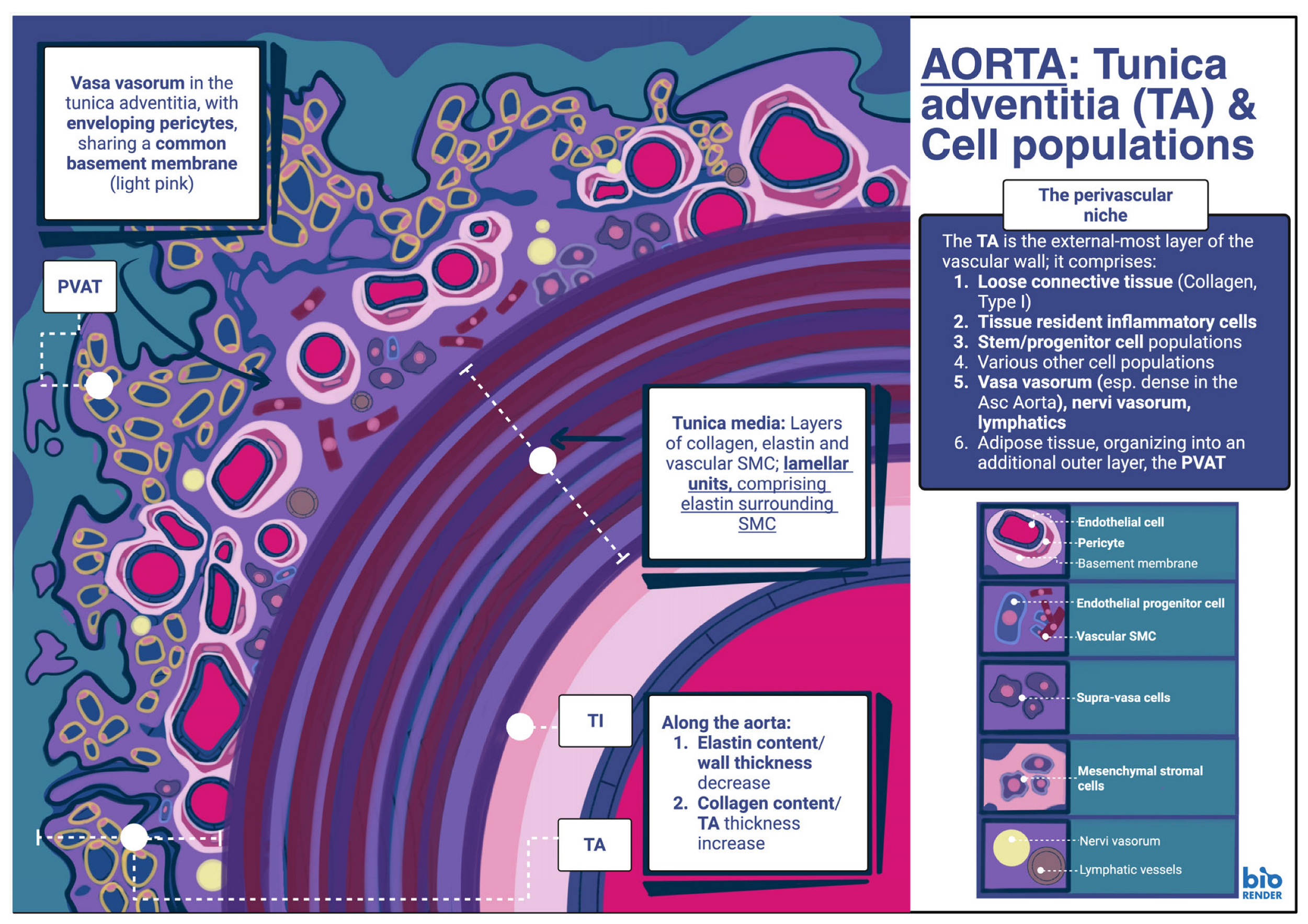
4.1. Tunica Adventitia and Cell Populations
4.2. Pericytes in the Tunica Adventitia
4.2.1. Pericytes and Differentiation Potential
4.2.2. Pericytes and Function
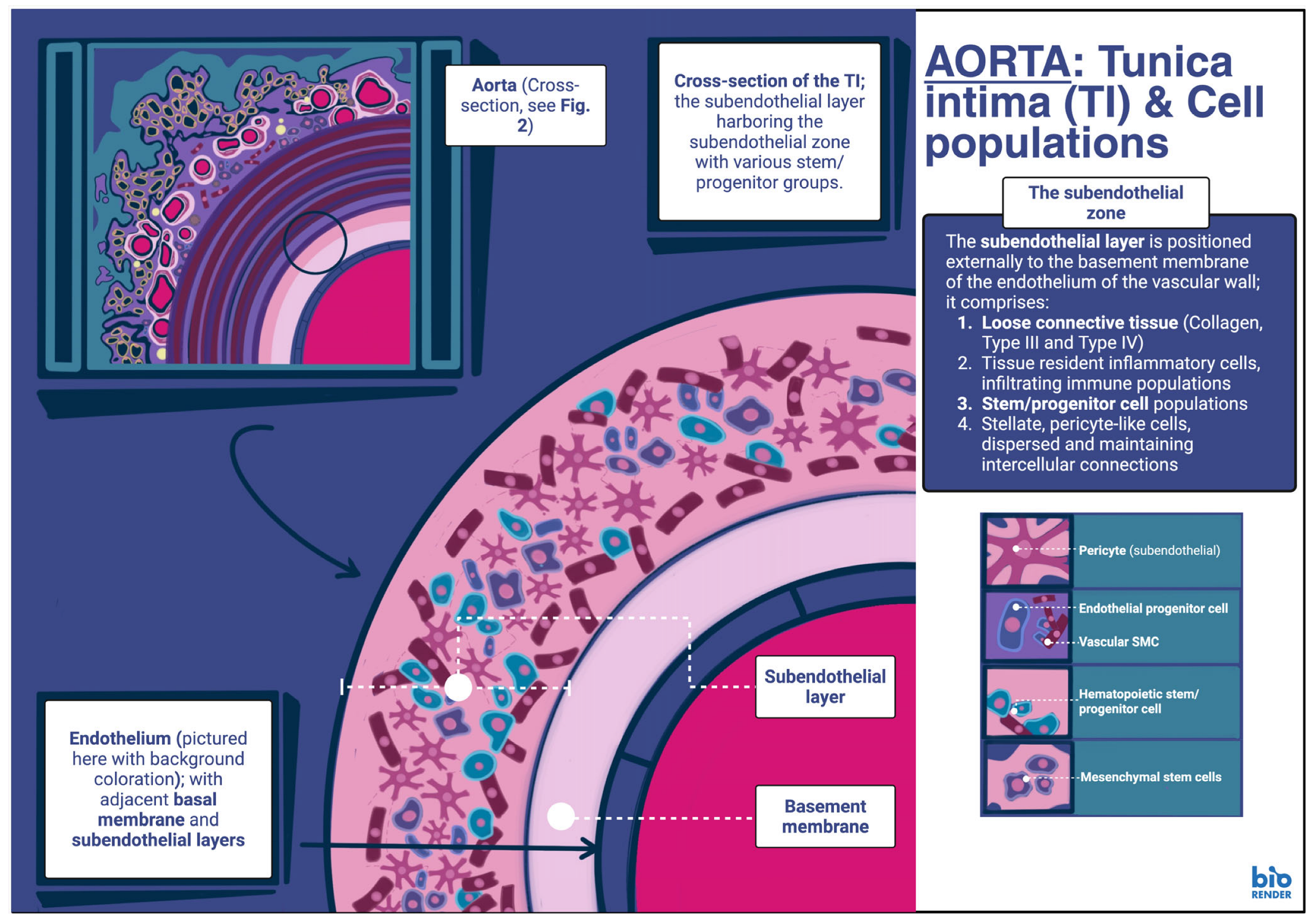
4.3. Tunica Intima and Cell Populations
5. Thoracic Aortic Aneurysm (TAA) and Pericytes
5.1. Thoracic Aortic Aneurysm (TAA) and the Tunica Adventitia
5.2. Thoracic Aortic Aneurysm (TAA) and Pericytes
6. Conclusions
Author Contributions
Funding
Institutional Review Board Statement
Informed Consent Statement
Data Availability Statement
Conflicts of Interest
Abbreviations
| 2A7 | Alpha–Synuclein antibody |
| 3D | Three–dimensional |
| 3G5 | O–Sialoganglioside |
| AAA | Abdominal aortic aneurysm |
| ACTA2 | Actin alpha 2, Smooth muscle |
| ADSC | Adipose stromal cell |
| AKT | Protein kinase B (PKB) |
| ALP | Alkaline phosphatase |
| ASC | Adipose stem cell |
| BAT | Brown adipose tissue |
| BBB | Blood–brain barrier |
| BRB | Blood retina barrier |
| c–Kit | KIT Proto–oncogene, receptor tyrosine kinase |
| CD11b | ITGAM (integrin subunit Alpha M) |
| CD14 | CD14 molecule |
| CD19 | CD19 molecule |
| CD31 | PECAM1 (platelet and endothelial cell adhesion molecule 1) |
| CD34 | CD34 molecule |
| CD44 | CD44 molecule |
| CD45 | PTPRC (protein tyrosine phosphatase receptor, Type C) |
| CD56 | NCAM1 (neural cell adhesion molecule 1) |
| CD68 | CD68 molecule |
| CD73 | NT5E (5′ Nucleosidase, Ecto) |
| CD79a | CD79a molecule, immunoglobulin-associated alpha |
| CD90 | THY1 (Thy–1 cell surface antigen) |
| CD105 | ENG (endoglin) |
| CD133 | PROM1 (prominin 1) |
| CD146 | MCAM (melanoma cell adhesion molecule) |
| CD201 | PROCR (protein C receptor) |
| CNN1 | Calponin 1 |
| CNS | Central nervous system |
| CT | Computed tomography |
| EC | Endothelial cell |
| ECM | Extracellular matrix |
| EEL | External elastic lamina |
| EGF | Epidermal growth factor |
| EndMT | Endothelial–to–mesenchymal transition |
| EPC | Endothelial progenitor cell |
| ERK | Extracellular signal-related kinase |
| MAPK1 | Mitogen–associated protein kinase 1 |
| FACS | Fluorescence-activated cell sorting |
| Flk–1 | Protein tyrosine kinase receptor Flk–1 |
| KDR | Kinase insert domain receptor |
| VEGFR2 | Vascular endothelial growth factor receptor 2 |
| FGF2 (bFGF) | Fibroblast growth factor 2 (basic fibroblast growth factor) |
| FGFR | Fibroblast growth factor receptor |
| GLUT1 | Glucose transporter, type 1 |
| HIF–1α | Hypoxia inducible factor–1 alpha |
| HLA–DR | Human leukocyte antigen, D–related (DR) |
| IEL | Internal elastic lamina |
| IL–6 | Interleukin-6 |
| ISCT® | International Society for Cell & Gene Therapy |
| LDL | Low–density lipoprotein |
| lncRNA | Long non–coding RNA |
| MAPK | Mitogen–associated protein kinase |
| MEK | Mitogen–associated extracellular signal–regulated kinase |
| MEMA | Mucoid extracellular matrix (ECM) accumulation |
| Mt–1α | Metallotheionin–1 alpha |
| MPC | Mesodermal progenitor cell |
| MSC | Mesenchymal stromal cell |
| MYH11 | Myosin heavy chain 11 |
| MYL9 | Myosin light chain 9 |
| NAT | Nuclear antisense transcript |
| NG2 | Neural glial antigen 2 |
| NG2 | Chondroitin sulfate proteoglycan |
| NUDT6 | Nucleoside diphosphate-linked moiety X motif 6 |
| PDGF–BB | Platelet–derived growth factor BB (two B-type subunits) |
| PDGFRβ | Platelet derived growth factor beta |
| PF4 | Platelet factor 4 |
| PGA | Polyglycolic acid |
| PGC–1α | Peroxisome proliferator-activated receptor gamma coactivator 1–alpha |
| PI3K | Phosphoinositide 3 kinase |
| PIP2 | Phosphatidylinositol–(4, 5) biphosphate |
| PIP3 | Phosphatidylinositol–(3, 4, 5) triphosphate |
| PTEN | Phosphatase and tensin homolog deleted on chromosome 10 |
| PVAT | Perivascular adipose tissue |
| RNA | Ribonucleic acid |
| SCA–1 | Stem cell antigen–1 |
| LY6A | Lymphocyte antigen 6 complex, locus A |
| SMC | Smooth muscle cell |
| TAA | Thoracic aortic aneurysm |
| TAD | Thoracic aortic dissection |
| TAGLN | Transgelin |
| SM22 | Smooth muscle protein 22 alpha |
| TNF–α | Tumor necrosis factor alpha |
| TSP–1 | Thrombospondin–1 |
| TGF–β | Transforming growth factor beta |
| UCP–1 | Uncoupling protein–1 Thermogenin |
| VEGF | Vascular endothelial growth factor |
| vWF | von Willebrand factor |
| WAT | White adipose tissue |
| α–SMA | alpha-Smooth muscle actin, ACTA2 (actin alpha 2, smooth muscle) |
References
- Billaud, M.; Donnenberg, V.S.; Ellis, B.W.; Meyer, E.M.; Donnenberg, A.D.; Hill, J.C.; Richards, T.D.; Gleason, T.G.; Phillippi, J.A. Classification and Functional Characterization of Vasa Vasorum-Associated Perivascular Progenitor Cells in Human Aorta. Stem Cell Rep. 2017, 9, 292–303. [Google Scholar] [CrossRef]
- Boström, K.; Watson, K.E.; Horn, S.; Wortham, C.; Herman, I.M.; Demer, L.L. Bone Morphogenetic Protein Expression in Human Atherosclerotic Lesions. J. Clin. Investig. 1993, 91, 1800–1809. [Google Scholar] [CrossRef]
- Orekhov, A.N.; Bobryshev, Y.V.; Chistiakov, D.A. The Complexity of Cell Composition of the Intima of Large Arteries: Focus on Pericyte–like Cells. Cardiovasc. Res. 2014, 103, 438–451. [Google Scholar] [CrossRef]
- Crisan, M.; Yap, S.; Casteilla, L.; Chen, C.-W.; Corselli, M.; Park, T.S.; Andriolo, G.; Sun, B.; Zheng, B.; Zhang, L.; et al. A Perivascular Origin for Mesenchymal Stem Cells in Multiple Human Organs. Cell Stem Cell 2008, 3, 301–313. [Google Scholar] [CrossRef]
- Faggion Vinholo, T.; Brownstein, A.J.; Ziganshin, B.A.; Zafar, M.A.; Kuivaniemi, H.; Body, S.C.; Bale, A.E.; Elefteriades, J.A. Genes Associated with Thoracic Aortic Aneurysm and Dissection: 2019 Update and Clinical Implications. Aorta 2019, 7, 99–107. [Google Scholar] [CrossRef]
- Magouliotis, D.E.; Sicouri, S.; Sicouri, N.; Baudo, M.; Cabrucci, F.; Yamashita, Y.; Ramlawi, B. Epigenetic Biomarkers in Thoracic Aortic Aneurysm, Dissection, and Bicuspid Aortopathy: A Comprehensive Review. Biomolecules 2025, 15, 568. [Google Scholar] [CrossRef]
- Huang, W.; Hill, J.C.; Patel, S.; Richards, T.D.; Sultan, I.; Kaczorowski, D.J.; Phillippi, J.A. Deficiency of Fibroblast Growth Factor 2 Promotes Contractile Phenotype of Pericytes in Ascending Thoracic Aortic Aneurysm. Am. J. Physiol. Heart Circ. Physiol. 2025, 328, H1130–H1143. [Google Scholar] [CrossRef] [PubMed]
- Mohammed, K.; Avolio, E.; Mohamed Ahmed, E.; Rajakaruna, C.; Ghoneim, A.; Elminshawy, A.; Angelini, G.; Madeddu, P. Exploring Adventitial Pericyte Dysfunction and MEK/ERK Signalling as Therapeutic Targets in Thoracic Aortic Aneurysm. Eur. Heart J. 2025, 46, ehaf784.4926. [Google Scholar] [CrossRef]
- Armulik, A.; Genové, G.; Betsholtz, C. Pericytes: Developmental, Physiological, and Pathological Perspectives, Problems, and Promises. Dev. Cell 2011, 21, 193–215. [Google Scholar] [CrossRef] [PubMed]
- Díaz-Flores, L.; Gutiérrez, R.; Madrid, J.F.; Varela, H.; Valladares, F.; Acosta, E.; Martín-Vasallo, P.; Díaz-Flores, L. Pericytes. Morphofunction, Interactions and Pathology in a Quiescent and Activated Mesenchymal Cell Niche. Histol. Histopathol. 2009, 24, 909–969. [Google Scholar] [CrossRef]
- Dave, J.M.; Saito, J.; Mottola, G.; Greif, D.M. Out to the Tissues: The Arterial Side (Arteries, Arterioles—Development, Structure, Functions, and Pathologies). In The Vasculome; Academic Press: Cambridge, MA, USA, 2022; pp. 89–98. [Google Scholar]
- Yamazaki, T.; Mukouyama, Y. Tissue Specific Origin, Development, and Pathological Perspectives of Pericytes. Front. Cardiovasc. Med. 2018, 5, 78. [Google Scholar] [CrossRef] [PubMed]
- Cen, K.; Huang, Y.; Xie, Y.; Liu, Y. The Guardian of Intracranial Vessels: Why the Pericyte? Biomed. Pharmacother. 2024, 176, 116870. [Google Scholar] [CrossRef]
- Geevarghese, A.; Herman, I.M. Pericyte-Endothelial Crosstalk: Implications and Opportunities for Advanced Cellular Therapies. Transl. Res. 2014, 163, 296–306. [Google Scholar] [CrossRef]
- Uemura, M.T.; Maki, T.; Ihara, M.; Lee, V.M.Y.; Trojanowski, J.Q. Brain Microvascular Pericytes in Vascular Cognitive Impairment and Dementia. Front. Aging Neurosci. 2020, 12, 80. [Google Scholar] [CrossRef]
- Klaassen, I.; Van Noorden, C.J.F.; Schlingemann, R.O. Molecular Basis of the Inner Blood-Retinal Barrier and Its Breakdown in Diabetic Macular Edema and Other Pathological Conditions. Prog. Retin. Eye Res. 2013, 34, 19–48. [Google Scholar] [CrossRef]
- Solár, P.; Zamani, A.; Lakatosová, K.; Joukal, M. The Blood–Brain Barrier and the Neurovascular Unit in Subarachnoid Hemorrhage: Molecular Events and Potential Treatments. Fluids Barriers CNS 2022, 19, 29. [Google Scholar] [CrossRef] [PubMed]
- Waxman, S.; Villafranca-Baughman, D.; Phillippi, J.; Jakobs, T.C.; Alarcon-Martinez, L.; Di Polo, A.; Sigal, I.A. Pericytes in the Optic Nerve Head. Prog. Retin. Eye Res. 2025, 107, 101375. [Google Scholar] [CrossRef]
- Dabravolski, S.A.; Markin, A.M.; Andreeva, E.R.; Eremin, I.I.; Orekhov, A.N.; Melnichenko, A.A. Emerging Role of Pericytes in Therapy of Cardiovascular Diseases. Biomed. Pharmacother. 2022, 156, 113928. [Google Scholar] [CrossRef]
- Teichert, M.; Milde, L.; Holm, A.; Stanicek, L.; Gengenbacher, N.; Savant, S.; Ruckdeschel, T.; Hasanov, Z.; Srivastava, K.; Hu, J.; et al. Pericyte-Expressed Tie2 Controls Angiogenesis and Vessel Maturation. Nat. Commun. 2017, 8, 16106. [Google Scholar] [CrossRef] [PubMed]
- Sokolis, D.P. Passive Mechanical Properties and Structure of the Aorta: Segmental Analysis. Acta Physiol. 2007, 190, 277–289. [Google Scholar] [CrossRef]
- Burke-Kleinman, J.; Gotlieb, A.I. Progression of Arterial Vasa Vasorum from Regulator of Arterial Homeostasis to Promoter of Atherogenesis. Am. J. Pathol. 2023, 193, 1468–1484. [Google Scholar] [CrossRef]
- Rolf-Pissarczyk, M.; Schussnig, R.; Fries, T.-P.; Fleischmann, D.; Elefteriades, J.A.; Humphrey, J.D.; Holzapfel, G.A. Mechanisms of Aortic Dissection: From Pathological Changes to Experimental and in Silico Models. Prog. Mater. Sci. 2025, 150, 101363. [Google Scholar] [CrossRef] [PubMed]
- Mei, C.C.; Zhang, J.; Jing, H.X. Fluid Mechanics of Windkessel Effect. Med. Biol. Eng. Comput. 2018, 56, 1357–1366. [Google Scholar] [CrossRef] [PubMed]
- Marsh, J.N.; Takiuchi, S.; Lin, S.J.; Lanza, G.M.; Wickline, S.A. Ultrasonic Delineation of Aortic Microstructure: The Relative Contribution of Elastin and Collagen to Aortic Elasticity. J. Acoust. Soc. Am. 2004, 115, 2032–2040. [Google Scholar] [CrossRef]
- Astrand, H.; Stalhand, J.; Karlsson, J.; Karlsson, M.; Sonesson, B.; Länne, T. In Vivo Estimation of the Contribution of Elastin and Collagen to the Mechanical Properties in the Human Abdominal Aorta: Effect of Age and Sex. J. Appl. Physiol. 2011, 110, 176–187. [Google Scholar] [CrossRef]
- Singh, M.; Ziganshin, B.A.; Elefteriades, J.A. Aortic Aneurysm. In Encyclopedia of Cardiovascular Research and Medicine; Vasan, R.S., Sawyer, D.B., Eds.; Elsevier: Oxford, UK, 2018; pp. 123–142. [Google Scholar]
- Grewal, N.; Dolmaci, O.; Klautz, A.; Legue, J.; Driessen, A.; Klautz, R.; Poelmann, R. The Role of Transforming Growth Factor Beta in Bicuspid Aortic Valve Aortopathy. Indian J. Thorac. Cardiovasc. Surg. 2023, 39, 270–279. [Google Scholar] [CrossRef] [PubMed]
- Xiong, W.; Zhao, X.; Villacorta, L.; Rom, O.; Garcia-Barrio, M.T.; Guo, Y.; Fan, Y.; Zhu, T.; Zhang, J.; Zeng, R.; et al. Brown Adipocyte-Specific PPARγ (Peroxisome Proliferator-Activated Receptor γ) Deletion Impairs Perivascular Adipose Tissue Development and Enhances Atherosclerosis in Mice. Arterioscler. Thromb. Vasc. Biol. 2018, 38, 1738–1747. [Google Scholar] [CrossRef] [PubMed]
- Ueda, K. Perivascular Adipose Tissue in Cardiovascular Disease: From Mechanisms to Therapeutic Targets. J. Cardiol. 2026, 87, 64–68. [Google Scholar] [CrossRef]
- Shi, K.; Anmin, R.; Cai, J.; Qi, Y.; Han, W.; Li, M.; Zhang, G.; Zhang, S.; Fu, L.; Han, W.; et al. Ascending Aortic Perivascular Adipose Tissue Inflammation Associates with Aortic Valve Disease. J. Cardiol. 2022, 80, 240–248. [Google Scholar] [CrossRef]
- Cai, M.; Zhao, D.; Han, X.; Han, S.; Zhang, W.; Zang, Z.; Gai, C.; Rong, R.; Gao, T. The Role of Perivascular Adipose Tissue-Secreted Adipocytokines in Cardiovascular Disease. Front. Immunol. 2023, 14, 1271051. [Google Scholar] [CrossRef]
- Majesky, M.W. Adventitia and Perivascular Cells. Arter. Thromb. Vasc. Biol. 2015, 35, e31–e35. [Google Scholar] [CrossRef]
- Virmani, R.; Sato, Y.; Romero, M.E.; Butany, J. Aneurysms of the Aorta: Ascending, Thoracic, and Abdominal and Their Management. In Cardiovascular Pathology; Academic Press: Cambridge, MA, USA, 2022; pp. 353–406. [Google Scholar]
- Tonar, Z.; Tomášek, P.; Loskot, P.; Janáček, J.; Králíčková, M.; Witter, K. Vasa Vasorum in the Tunica Media and Tunica Adventitia of the Porcine Aorta. Ann. Anat.-Anat. Anz. 2016, 205, 22–36. [Google Scholar] [CrossRef] [PubMed]
- Billaud, M.; Hill, J.C.; Richards, T.D.; Gleason, T.G.; Phillippi, J.A. Medial Hypoxia and Adventitial Vasa Vasorum Remodeling in Human Ascending Aortic Aneurysm. Front. Cardiovasc. Med. 2018, 5, 124. [Google Scholar] [CrossRef] [PubMed]
- Hu, Y.; Xu, Q. Adventitial Biology. Arterioscler. Thromb. Vasc. Biol. 2011, 31, 1523–1529. [Google Scholar] [CrossRef]
- Weis-Müller, B.T.; Modlich, O.; Drobinskaya, I.; Unay, D.; Huber, R.; Bojar, H.; Schipke, J.D.; Feindt, P.; Gams, E.; Müller, W.; et al. Gene Expression in Acute Stanford Type A Dissection: A Comparative Microarray Study. J. Transl. Med. 2006, 4, 29. [Google Scholar] [CrossRef][Green Version]
- Suguro, T.; Watanabe, T.; Ban, Y.; Kodate, S.; Misaki, A.; Hirano, T.; Miyazaki, A.; Adachi, M. Increased Human Urotensin II Levels Are Correlated with Carotid Atherosclerosis in Essential Hypertension. Am. J. Hypertens. 2007, 20, 211–217. [Google Scholar] [CrossRef] [PubMed]
- Chai, S.B.; Li, X.M.; Pang, Y.Z.; Qi, Y.F.; Tang, C.S. Increased Plasma Levels of Endothelin-1 and Urotensin-II in Patients with Coronary Heart Disease. Heart Vessel. 2010, 25, 138–143. [Google Scholar] [CrossRef]
- Gruson, D.; Rousseau, M.F.; Ahn, S.A.; van Linden, F.; Ketelslegers, J.M. Circulating Urotensin II Levels in Moderate to Severe Congestive Heart Failure: Its Relations with Myocardial Function and Well Established Neurohormonal Markers. Peptides 2006, 27, 1527–1531. [Google Scholar] [CrossRef]
- Zhang, Y.-G.; Kuang, Z.-J.; Mao, Y.-Y.; Wei, R.-H.; Bao, S.-L.; Wu, L.-B.; Li, Y.-G.; Tang, C.-S. Osteopontin Is Involved in Urotensin II-Induced Migration of Rat Aortic Adventitial Fibroblasts. Peptides 2011, 32, 2452–2458. [Google Scholar] [CrossRef]
- Barbour, J.R.; Spinale, F.G.; Ikonomidis, J.S. Proteinase Systems and Thoracic Aortic Aneurysm Progression. J. Surg. Res. 2007, 139, 292–307. [Google Scholar] [CrossRef]
- Viswanathan, S.; Shi, Y.; Galipeau, J.; Krampera, M.; Leblanc, K.; Martin, I.; Nolta, J.; Phinney, D.G.; Sensebe, L. Mesenchymal Stem versus Stromal Cells: International Society for Cell & Gene Therapy (ISCT®) Mesenchymal Stromal Cell Committee Position Statement on Nomenclature. Cytotherapy 2019, 21, 1019–1024. [Google Scholar] [CrossRef]
- Medici, D.; Shore, E.M.; Lounev, V.Y.; Kaplan, F.S.; Kalluri, R.; Olsen, B.R. Conversion of Vascular Endothelial Cells into Multipotent Stem-like Cells. Nat. Med. 2010, 16, 1400–1406. [Google Scholar] [CrossRef] [PubMed]
- Zimmerlin, L.; Donnenberg, V.S.; Pfeifer, M.E.; Meyer, E.M.; Péault, B.; Rubin, J.P.; Donnenberg, A.D. Stromal Vascular Progenitors in Adult Human Adipose Tissue. Cytom. Part A 2009, 77A, 22–30. [Google Scholar] [CrossRef] [PubMed]
- Wang, Y.; Thottappillil, N.; Gomez-Salazar, M.; Tower, R.J.; Qin, Q.; Del Rosario Alvia, I.C.; Xu, M.; Cherief, M.; Cheng, R.; Archer, M.; et al. Integrated Transcriptomics of Human Blood Vessels Defines a Spatially Controlled Niche for Early Mesenchymal Progenitor Cells. Dev. Cell 2024, 59, 2687–2703.e6. [Google Scholar] [CrossRef]
- Ferrante, A.; Guggino, G.; Di Liberto, D.; Ciccia, F.; Cipriani, P.; Balistreri, C.R.; Sireci, G.; Giacomelli, R.; Triolo, G. Endothelial Progenitor Cells: Are They Displaying a Function in Autoimmune Disorders? Mech. Ageing Dev. 2016, 159, 44–48. [Google Scholar] [CrossRef] [PubMed][Green Version]
- Zhang, L.; Issa Bhaloo, S.; Chen, T.; Zhou, B.; Xu, Q. Role of Resident Stem Cells in Vessel Formation and Arteriosclerosis. Circ. Res. 2018, 122, 1608–1624. [Google Scholar] [CrossRef]
- Vasuri, F.; Fittipaldi, S.; Buzzi, M.; Degiovanni, A.; Stella, A.; D’Errico-Grigioni, A.; Pasquinelli, G. Nestin and WT1 Expression in Small–sized Vasa Vasorum from Human Normal Arteries. Histol. Histopathol. 2012, 27, 1195–1202. [Google Scholar] [CrossRef]
- Chen, C.-W.; Okada, M.; Proto, J.D.; Gao, X.; Sekiya, N.; Beckman, S.A.; Corselli, M.; Crisan, M.; Saparov, A.; Tobita, K.; et al. Human Pericytes for Ischemic Heart Repair. Stem Cells 2013, 31, 305–316. [Google Scholar] [CrossRef]
- West, C.C.; Hardy, W.R.; Murray, I.R.; James, A.W.; Corselli, M.; Pang, S.; Black, C.; Lobo, S.E.; Sukhija, K.; Liang, P.; et al. Prospective Purification of Perivascular Presumptive Mesenchymal Stem Cells from Human Adipose Tissue: Process Optimization and Cell Population Metrics across a Large Cohort of Diverse Demographics. Stem Cell Res. Ther. 2016, 7, 47. [Google Scholar] [CrossRef]
- Petrini, M.; Pacini, S.; Trombi, L.; Fazzi, R.; Montali, M.; Ikehara, S.; Abraham, N.G. Identification and Purification of Mesodermal Progenitor Cells from Human Adult Bone Marrow. Stem Cells Dev. 2009, 18, 857–866. [Google Scholar] [CrossRef]
- Scott, S.S.; Yang, X.; Robich, M.; Liaw, L.; Boucher, J.M. Differentiation Capacity of Human Aortic Perivascular Adipose Progenitor Cells. J. Vis. Exp. 2019, e59337. [Google Scholar] [CrossRef]
- Gimble, J.M.; Bunnell, B.A.; Frazier, T.; Rowan, B.; Shah, F.; Thomas-Porch, C.; Wu, X. Adipose-Derived Stromal/Stem Cells. Organogenesis 2013, 9, 3–10. [Google Scholar] [CrossRef] [PubMed]
- Baer, P.C. Adipose-Derived Mesenchymal Stromal/Stem Cells: An Update on Their Phenotype in Vivo and in Vitro. World J. Stem Cells 2014, 6, 256–265. [Google Scholar] [CrossRef]
- Avolio, E.; Madeddu, P. Discovering Cardiac Pericyte Biology: From Physiopathological Mechanisms to Potential Therapeutic Applications in Ischemic Heart Disease. Vasc. Pharmacol. 2016, 86, 53–63. [Google Scholar] [CrossRef]
- Beltrami, A.P.; Madeddu, P. Pericytes and Cardiac Stem Cells: Common Features and Peculiarities. Pharmacol. Res. 2018, 127, 101–109. [Google Scholar] [CrossRef]
- Thottapillil, N.; Corselli, M.; Murray, I.; Hardy, R.; Gomez-Salazar, M.; Casamitjana, J.; Shaw, I.; Wang, Z.; Vezzani, B.; Ding, L.; et al. Mesenchymal Progenitor Cells in Perivascular Niches: Forerunners of Mesenchymal Stem Cells and Players in Tissue Scarring and Regeneration. Vasc. Pharmacol. 2025, 161, 107533. [Google Scholar] [CrossRef]
- Corselli, M.; Chin, C.J.; Parekh, C.; Sahaghian, A.; Wang, W.; Ge, S.; Evseenko, D.; Wang, X.; Montelatici, E.; Lazzari, L.; et al. Perivascular Support of Human Hematopoietic Stem/Progenitor Cells. Blood 2013, 121, 2891–2901. [Google Scholar] [CrossRef]
- Kabara, M.; Kawabe, J.; Matsuki, M.; Hira, Y.; Minoshima, A.; Shimamura, K.; Yamauchi, A.; Aonuma, T.; Nishimura, M.; Saito, Y.; et al. Immortalized Multipotent Pericytes Derived from the Vasa Vasorum in the Injured Vasculature. A Cellular Tool for Studies of Vascular Remodeling and Regeneration. Lab. Investig. 2014, 94, 1340–1354. [Google Scholar] [CrossRef]
- Wiegreffe, C.; Christ, B.; Huang, R.; Scaal, M. Remodeling of Aortic Smooth Muscle during Avian Embryonic Development. Dev. Dyn. 2009, 238, 624–631. [Google Scholar] [CrossRef]
- Pouget, C.; Pottin, K.; Jaffredo, T. Sclerotomal Origin of Vascular Smooth Muscle Cells and Pericytes in the Embryo. Dev. Biol. 2008, 315, 437–447. [Google Scholar] [CrossRef] [PubMed]
- Stratman, A.N.; Pezoa, S.A.; Farrelly, O.M.; Castranova, D.; Dye, L.E., III; Butler, M.G.; Sidik, H.; Talbot, W.S.; Weinstein, B.M. Interactions between Mural Cells and Endothelial Cells Stabilize the Developing Zebrafish Dorsal Aorta. Development 2017, 144, 115–127. [Google Scholar] [CrossRef] [PubMed]
- Gerhardt, H.; Betsholtz, C. Endothelial-Pericyte Interactions in Angiogenesis. Cell Tissue Res. 2003, 314, 15–23. [Google Scholar] [CrossRef]
- Santoro, M.M.; Pesce, G.; Stainier, D.Y. Characterization of Vascular Mural Cells during Zebrafish Development. Mech. Dev. 2009, 126, 638–649. [Google Scholar] [CrossRef]
- Halper, J. Basic Components of Vascular Connective Tissue and Extracellular Matrix. In Advances in Pharmacology; Academic Press: Cambridge, MA, USA, 2018; Volume 81, pp. 95–127. [Google Scholar]
- Stępień, K.L.; Auguściak-Duma, A.; Fus-Kujawa, A.; Diak, N.; Lesiak, M.; Bogunia, E.; Hermyt, M.; Czekaj, P.; Sznapka, M.; Ziaja, D.; et al. Abdominal Aortic Aneurysm: Characteristics of Extracellular Matrix Abnormalities Caused by Disorders of Collagen Types I and III and Elastin. Int. J. Cardiol. 2026, 444, 133973. [Google Scholar] [CrossRef] [PubMed]
- Bjorgvinsdottir, O.; Ferguson, S.J.; Snorradottir, B.S.; Gudjonsson, T.; Wuertz-Kozak, K. The Influence of Physical and Spatial Substrate Characteristics on Endothelial Cells. Mater. Today Bio 2024, 26, 101060. [Google Scholar] [CrossRef]
- Gui, C.; Chang, W.; Liu, Y.; Tao, L.; Shen, D.; Ge, M. Modeling and Experimental Research of Heat and Mass Transfer during the Freeze-Drying of Porcine Aorta Considering Radially-Layered Tissue Properties. Front. Heat Mass Transf. 2025, 23, 1621–1637. [Google Scholar] [CrossRef]
- Jana, S.; Hu, M.; Shen, M.; Kassiri, Z. Extracellular Matrix, Regional Heterogeneity of the Aorta, and Aortic Aneurysm. Exp. Mol. Med. 2019, 51, 1–15. [Google Scholar] [CrossRef]
- Kielty, C.M.; Bax, D.V.; Hodson, N.; Sherratt, M.J. Extracellular Matrix Molecules in Vascular Tissue Engineering. In Surfaces and Interfaces for Biomaterials; Woodhead Publishing: Cambridge, UK, 2005; pp. 637–665. [Google Scholar]
- Zafar, M.A.; Peterss, S.; Ziganshin, B.A.; Elefteriades, J.A. Histology of Aortic Disease and Progression of Aortic Dissection from Acute to Chronic. In New Approaches to Aortic Diseases from Valve to Abdominal Bifurcation; Academic Press: Cambridge, MA, USA, 2018; pp. 41–59. [Google Scholar]
- Andreeva, E.R.; Pugach, I.M.; Gordon, D.; Orekhov, A.N. Continuous Subendothelial Network Formed by Pericyte–like Cells in Human Vascular Bed. Tissue Cell 1998, 30, 127–135. [Google Scholar] [CrossRef]
- Andreeva, E.R.; Rekhter, M.D.; Romanov, Y.A.; Antonova, G.M.; Antonov, A.S.; Mironov, A.A.; Orekhov, A.N. Stellate Cells of Aortic Intima: II. Arborization of Intimal Cells in Culture. Tissue Cell 1992, 24, 697–704. [Google Scholar] [CrossRef]
- Andreeva, E.R.; Pugach, I.M.; Orekhov, A.N. Subendothelial Smooth Muscle Cells of Human Aorta Express Macrophage Antigen in Situ and in Vitro. Atherosclerosis 1997, 135, 19–27. [Google Scholar] [CrossRef] [PubMed]
- Van Camp, L.; Vanhooren, J.; Depreter, B.; Hofmans, M.; D’Hont, I.; Chantrain, C.; Dedeken, L.; Van Damme, A.; Uyttebroeck, A.; Lammens, T.; et al. Deciphering the Role and Therapeutic Potential of Macrophage Marker CD68 in Pediatric Acute Myeloid Leukemia. Blood 2024, 144, 6093. [Google Scholar] [CrossRef]
- Rekhter, M.D.; Andreeva, E.R.; Mironov, A.A.; Orekhov, A.N. Three-Dimensional Cytoarchitecture of Normal and Atherosclerotic Intima of Human Aorta. Am. J. Pathol. 1991, 138, 569–580. [Google Scholar]
- Andreeva, E.R.; Serebryakov, V.N.; Orekhov, A.N. Gap Junctional Communication in Primary Culture of Cells Derived from Human Aortic Intima. Tissue Cell 1995, 27, 591–597. [Google Scholar] [CrossRef] [PubMed]
- Orekhov, A.N.; Bobryshev, Y.V.; Orekhov, A.N.; Bobryshev, Y.V. Cell Composition of the Subendothelial Aortic Intima and the Role of Alpha-Smooth Muscle Actin Expressing Pericyte–like Cells and Smooth Muscle Cells in the Development of Atherosclerosis. In Muscle Cell and Tissue; IntechOpen: London, UK, 2015. [Google Scholar]
- Ivanova, E.A.; Orekhov, A.N. Cellular Model of Atherogenesis Based on Pluripotent Vascular Wall Pericytes. Stem Cells Int. 2016, 2016, 7321404. [Google Scholar] [CrossRef]
- Nayak, R.C.; Berman, A.B.; George, K.L.; Eisenbarth, G.S.; King, G.L. A Monoclonal Antibody (3G5)-Defined Ganglioside Antigen Is Expressed on the Cell Surface of Microvascular Pericytes. J. Exp. Med. 1988, 167, 1003–1015. [Google Scholar] [CrossRef] [PubMed]
- Orekhov, A.N.; Andreeva, E.R. Intimal Macrovascular Pericytes: Their Role in Vascular Biology and Atherogenesis. Curr. Med. Chem. 2025, 32, 4657–4670. [Google Scholar] [CrossRef]
- Fancello, I.; Willett, S.; Castiglioni, C.; Amer, S.; Santoleri, S.; Bragg, L.; Galli, F.; Cossu, G. TNAP Expressing Adventitial Pericytes Contribute to Myogenesis during Foetal Development. Vasc. Pharmacol. 2025, 159, 107489. [Google Scholar] [CrossRef]
- Makris, K.; Mousa, C.; Cavalier, E. Alkaline Phosphatases: Biochemistry, Functions, and Measurement. Calcif. Tissue Int. 2023, 112, 233–242. [Google Scholar] [CrossRef] [PubMed]
- Rogers, M.S.; D’Amato, R.J. The Effect of Genetic Diversity on Angiogenesis. Exp. Cell Res. 2006, 312, 561–574. [Google Scholar] [CrossRef]
- Afonyushkin, T.; Oskolkova, O.V.; Bochkov, V.N. Oxidized Phospholipids Stimulate Production of Stem Cell Factor via NRF2-Dependent Mechanisms. Angiogenesis 2018, 21, 229–236. [Google Scholar] [CrossRef]
- Du, J.; Song, J.; Ding, L.; Fan, X.; Lin, L.; Li, A.; Liang, L.; Kong, X. Treatment with Imatinib Was Useful to Delay the Neointimal Hyperplasia of Aortocaval Fistula in Adenine-Induced Renal Failure Rats. Biochem. Biophys. Res. Commun. 2023, 672, 10–16. [Google Scholar] [CrossRef]
- Gritz, E.; Hirschi, K.K. Specification and Function of Hemogenic Endothelium during Embryogenesis. Cell. Mol. Life Sci. 2016, 73, 1547–1567. [Google Scholar] [CrossRef]
- Yoon, J.W.; Jang, I.H.; Heo, S.C.; Kwon, Y.W.; Choi, E.J.; Bae, K.-H.; Suh, D.-S.; Kim, S.-C.; Han, S.; Haam, S.; et al. Isolation of Foreign Material-Free Endothelial Progenitor Cells Using CD31 Aptamer and Therapeutic Application for Ischemic Injury. PLoS ONE 2015, 10, e0131785. [Google Scholar] [CrossRef]
- Boss, A.L.; Damani, T.; Wickman, T.J.; Chamley, L.W.; James, J.L.; Brooks, A.E. Full Spectrum Flow Cytometry Reveals Mesenchymal Heterogeneity in First Trimester Placentae and Phenotypic Convergence in Culture, Providing Insight into the Origins of Placental Mesenchymal Stromal Cells. eLife 2022, 11, e76622. [Google Scholar] [CrossRef] [PubMed]
- Marvasti, T.B.; Alibhai, F.J.; Weisel, R.D.; Li, R.-K. CD34+ Stem Cells: Promising Roles in Cardiac Repair and Regeneration. Can. J. Cardiol. 2019, 35, 1311–1321. [Google Scholar] [CrossRef]
- Rakocevic, J.; Orlic, D.; Mitrovic-Ajtic, O.; Tomasevic, M.; Dobric, M.; Zlatic, N.; Milasinovic, D.; Stankovic, G.; Ostojić, M.; Labudovic-Borovic, M. Endothelial Cell Markers from Clinician’s Perspective. Exp. Mol. Pathol. 2017, 102, 303–313. [Google Scholar] [CrossRef]
- Naor, D.; Sionov, R.V.; Ish-Shalom, D. CD44: Structure, Function, and Association with the Malignant Process. Adv. Cancer Res. 1997, 71, 241–319. [Google Scholar] [CrossRef]
- Li, C.; Hampson, I.N.; Hampson, L.; Kumar, P.; Bernabeu, C.; Kumar, S. CD105 Antagonizes the Inhibitory Signaling of Transforming Growth Factor Beta1 on Human Vascular Endothelial Cells. FASEB J. 2000, 14, 55–64. [Google Scholar] [CrossRef]
- Park, T.I.-H.; Feisst, V.; Brooks, A.E.S.; Rustenhoven, J.; Monzo, H.J.; Feng, S.X.; Mee, E.W.; Bergin, P.S.; Oldfield, R.; Graham, E.S.; et al. Cultured Pericytes from Human Brain Show Phenotypic and Functional Differences Associated with Differential CD90 Expression. Sci. Rep. 2016, 6, 26587. [Google Scholar] [CrossRef] [PubMed]
- Mancini, M.L.; Terzic, A.; Conley, B.A.; Oxburgh, L.H.; Nicola, T.; Vary, C.P.H. Endoglin Plays Distinct Roles in Vascular Smooth Muscle Cell Recruitment and Regulation of Arteriovenous Identity during Angiogenesis. Dev. Dyn. 2009, 238, 2479–2493. [Google Scholar] [CrossRef] [PubMed]
- Ollauri-Ibáñez, C.; Núñez-Gómez, E.; Egido-Turrión, C.; Silva-Sousa, L.; Díaz-Rodríguez, E.; Rodríguez-Barbero, A.; López-Novoa, J.M.; Pericacho, M. Continuous Endoglin (CD105) Overexpression Disrupts Angiogenesis and Facilitates Tumor Cell Metastasis. Angiogenesis 2020, 23, 231–247. [Google Scholar] [CrossRef] [PubMed]
- Adini, A.; Adini, I.; Ghosh, K.; Benny, O.; Pravda, E.; Hu, R.; Luyindula, D.; D’Amato, R.J. The Stem Cell Marker Prominin-1/CD133 Interacts with Vascular Endothelial Growth Factor and Potentiates Its Action. Angiogenesis 2013, 16, 405–416. [Google Scholar] [CrossRef]
- Bailey, A.S.; Fleming, W.H. Converging Roads: Evidence for an Adult Hemangioblast. Exp. Hematol. 2003, 31, 987–993. [Google Scholar] [CrossRef] [PubMed]
- Pleskač, P.; Fargeas, C.A.; Veselska, R.; Corbeil, D.; Skoda, J. Emerging Roles of Prominin-1 (CD133) in the Dynamics of Plasma Membrane Architecture and Cell Signaling Pathways in Health and Disease. Cell. Mol. Biol. Lett. 2024, 29, 41. [Google Scholar] [CrossRef]
- Tuleta, I.; Frangogiannis, N.G. Pericytes in Tissue Fibrosis. Am. J. Physiol. Cell Physiol. 2025, 329, C868–C886. [Google Scholar] [CrossRef]
- Richards, A.; Khalil, A.; Bisht, P.; Whitfield, T.W.; Gao, X.; Mooney, D.; Gehrke, L.; Jaenisch, R. A Human Blood-Brain Barrier Model Reveals Pericytes as Critical Regulators of Viral Neuroinvasion. iScience 2026, 29, 114443. [Google Scholar] [CrossRef]
- Esmon, C.T. The Endothelial Protein C Receptor. Curr. Opin. Hematol. 2006, 13, 382–385. [Google Scholar] [CrossRef]
- Fink, K.; Busch, H.-J.; Bourgeois, N.; Schwarz, M.; Wolf, D.; Zirlik, A.; Peter, K.; Bode, C.; Muhlen, C. von zur Mac-1 Directly Binds to the Endothelial Protein C-Receptor: A Link between the Protein C Anticoagulant Pathway and Inflammation? PLoS ONE 2013, 8, e53103. [Google Scholar] [CrossRef]
- Lattenist, L.; Kers, J.; Claessen, N.; Berge, I.J.M.t.; Bemelman, F.J.; Florquin, S.; Roelofs, J.J.T.H. Renal and Urinary Levels of Endothelial Protein C Receptor Correlate with Acute Renal Allograft Rejection. PLoS ONE 2013, 8, e64994. [Google Scholar] [CrossRef]
- Zhou, H.; Ke, J.; Liu, C.; Zhu, M.; Xiao, B.; Wang, Q.; Hou, R.; Zheng, Y.; Wu, Y.; Zhou, X.; et al. Potential Prognostic and Immunotherapeutic Value of Calponin 1: A Pan-Cancer Analysis. Front. Pharmacol. 2023, 14, 1184250. [Google Scholar] [CrossRef] [PubMed]
- Yao, G.; Zheng, X.; Hu, Y.; Zhao, Y.; Kong, B.; Ti, Y.; Bu, P.L. FBLN7 Mediates Vascular Smooth Muscle Cell Phenotype Switching and Vascular Remodeling in Hypertension. Theranostics 2024, 14, 7569–7588. [Google Scholar] [CrossRef] [PubMed]
- Lesiak, M.; Augusciak-Duma, A.; Stepien, K.L.; Fus-Kujawa, A.; Botor, M.; Sieron, A.L. Searching for New Molecular Markers for Cells Obtained from Abdominal Aortic Aneurysm. J. Appl. Genet. 2021, 62, 487–497. [Google Scholar] [CrossRef]
- Rajasekar, J.; Perumal, M.K.; Vallikannan, B. A Critical Review on Anti-Angiogenic Property of Phytochemicals. J. Nutr. Biochem. 2019, 71, 1–15. [Google Scholar] [CrossRef]
- Dębski, T.; Kurzyk, A.; Ostrowska, B.; Wysocki, J.; Jaroszewicz, J.; Święszkowski, W.; Pojda, Z. Scaffold Vascularization Method Using an Adipose-Derived Stem Cell (ASC)-Seeded Scaffold Prefabricated with a Flow-through Pedicle. Stem Cell Res. Ther. 2020, 11, 34. [Google Scholar] [CrossRef]
- Liu, R.; Merola, J.; Manes, T.D.; Qin, L.; Tietjen, G.T.; López-Giráldez, F.; Broecker, V.; Fang, C.; Xie, C.; Chen, P.-M.; et al. Interferon-γ Converts Human Microvascular Pericytes into Negative Regulators of Alloimmunity through Induction of Indoleamine 2,3-Dioxygenase 1. JCI Insight 2018, 3, e97881. [Google Scholar] [CrossRef] [PubMed]
- Zierer, J.; Cojean, C.; Osinga, R.; Läuchli, S.; Wieczorek, G.; Roth, L.; Roediger, B. Hidradenitis Suppurativa Is an HLA-Associated Autoimmune Disease. J. Investig. Dermatol. 2025, 146, 840–843.e3. [Google Scholar] [CrossRef]
- Iwayama, T.; Steele, C.; Yao, L.; Dozmorov, M.G.; Karamichos, D.; Wren, J.D.; Olson, L.E. PDGFRα Signaling Drives Adipose Tissue Fibrosis by Targeting Progenitor Cell Plasticity. Genes. Dev. 2015, 29, 1106–1119. [Google Scholar] [CrossRef]
- Liu, Y.; Xiao, F.; Hu, X.; Tang, Z.; Fu, Z.; Liang, X.; Zeng, G.; Zeng, W.; Liao, Y.; Ren, Y.; et al. Recovery and Maintenance of NESTIN Expression in Umbilical Cord-MSC Using a Novel Culture Medium. AMB. Express 2020, 10, 132. [Google Scholar] [CrossRef]
- Struys, T.; Krage, T.; Vandenabeele, F.; Raab, W.H.-M.; Lambrichts, I. Immunohistochemical Evidence for Proteolipid Protein and Nestin Expression in the Late Bell Stage of Developing Rodent Teeth. Arch. Oral Biol. 2005, 50, 171–174. [Google Scholar] [CrossRef] [PubMed][Green Version]
- Takamori, Y.; Mori, T.; Wakabayashi, T.; Nagasaka, Y.; Matsuzaki, T.; Yamada, H. Nestin-Positive Microglia in Adult Rat Cerebral Cortex. Brain Res. 2009, 1270, 10–18. [Google Scholar] [CrossRef]
- Murfee, W.L.; Skalak, T.C.; Peirce, S.M. Differential Arterial/Venous Expression of NG2 Proteoglycan in Perivascular Cells Along Microvessels: Identifying a Venule-Specific Phenotype. Microcirculation 2005, 12, 151–160. [Google Scholar] [CrossRef]
- Nayak, T.; Trotter, J.; Sakry, D. The Intracellular Cleavage Product of the NG2 Proteoglycan Modulates Translation and Cell-Cycle Kinetics via Effects on mTORC1/FMRP Signaling. Front. Cell. Neurosci. 2018, 12, 231. [Google Scholar] [CrossRef]
- Ozerdem, U.; Grako, K.A.; Dahlin-Huppe, K.; Monosov, E.; Stallcup, W.B. NG2 Proteoglycan Is Expressed Exclusively by Mural Cells during Vascular Morphogenesis. Dev. Dyn. 2001, 222, 218–227. [Google Scholar] [CrossRef]
- Horiuchi, K.; Kano, K.; Minoshima, A.; Hayasaka, T.; Yamauchi, A.; Tatsukawa, T.; Matsuo, R.; Yoshida, Y.; Tomita, Y.; Kabara, M.; et al. Pericyte-Specific Deletion of Ninjurin–1 Induces Fragile Vasa Vasorum Formation and Enhances Intimal Hyperplasia of Injured Vasculature. Am. J. Physiol. Heart Circ. Physiol. 2021, 320, H2438–H2447. [Google Scholar] [CrossRef] [PubMed]
- Hamaguchi, H.; Dohi, K.; Sakai, T.; Taoka, M.; Isobe, T.; Matsui, T.S.; Deguchi, S.; Furuichi, Y.; Fujii, N.L.; Manabe, Y. PDGF–B Secreted from Skeletal Muscle Enhances Myoblast Proliferation and Myotube Maturation via Activation of the PDGFR Signaling Cascade. Biochem. Biophys. Res. Commun. 2023, 639, 169–175. [Google Scholar] [CrossRef] [PubMed]
- Magnusson, P.U.; Looman, C.; Åhgren, A.; Wu, Y.; Claesson-Welsh, L.; Heuchel, R.L. Platelet-Derived Growth Factor Receptor-β Constitutive Activity Promotes Angiogenesis In Vivo and In Vitro. Arterioscler. Thromb. Vasc. Biol. 2007, 27, 2142–2149. [Google Scholar] [CrossRef]
- Sheng, X.; Zhang, C.; Zhao, J.; Xu, J.; Zhang, P.; Ding, Q.; Zhang, J. Microvascular Destabilization and Intricated Network of the Cytokines in Diabetic Retinopathy: From the Perspective of Cellular and Molecular Components. Cell Biosci. 2024, 14, 85. [Google Scholar] [CrossRef]
- Barron, L.; Gharib, S.A.; Duffield, J.S. Lung Pericytes and Resident Fibroblasts: Busy Multitaskers. Am. J. Pathol. 2016, 186, 2519–2531. [Google Scholar] [CrossRef]
- Caporali, A.; Martello, A.; Miscianinov, V.; Maselli, D.; Vono, R.; Spinetti, G. Contribution of Pericyte Paracrine Regulation of the Endothelium to Angiogenesis. Pharmacol. Ther. 2017, 171, 56–64. [Google Scholar] [CrossRef] [PubMed]
- Mao, Y.; Liu, X.; Song, Y.; Zhai, C.; Zhang, L. VEGF-A/VEGFR-2 and FGF-2/FGFR-1 but Not PDGF–BB/PDGFR-β Play Important Roles in Promoting Immature and Inflammatory Intraplaque Angiogenesis. PLoS ONE 2018, 13, e0201395. [Google Scholar] [CrossRef]
- Bradfute, S.B.; Graubert, T.A.; Goodell, M.A. Roles of SCA–1 in Hematopoietic Stem/Progenitor Cell Function. Exp. Hematol. 2005, 33, 836–843. [Google Scholar] [CrossRef] [PubMed]
- Ni, Z.; Lyu, L.; Gong, H.; Du, L.; Wen, Z.; Jiang, H.; Yang, H.; Hu, Y.; Zhang, B.; Xu, Q.; et al. Multilineage Commitment of SCA–1+ Cells in Reshaping Vein Grafts. Theranostics 2023, 13, 2154–2175. [Google Scholar] [CrossRef]
- Valente, M.; Nascimento, D.S.; Cumano, A.; Pinto-do-Ó, P. SCA–1+ Cardiac Progenitor Cells and Heart-Making: A Critical Synopsis. Stem Cells Dev. 2014, 23, 2263–2273. [Google Scholar] [CrossRef]
- Zhong, L.; He, X.; Si, X.; Wang, H.; Li, B.; Hu, Y.; Li, M.; Chen, X.; Liao, W.; Liao, Y.; et al. SM22α (Smooth Muscle 22α) Prevents Aortic Aneurysm Formation by Inhibiting Smooth Muscle Cell Phenotypic Switching Through Suppressing Reactive Oxygen Species/NF–κB (Nuclear Factor-κB). Arterioscler. Thromb. Vasc. Biol. 2019, 39, e10–e25. [Google Scholar] [CrossRef]
- Sun, Y.; Zhao, Z.; Hou, L.; Xiao, Y.; Qin, F.; Yan, J.; Zhou, J.; Jing, Z. The Regulatory Role of Smooth Muscle 22 on the Proliferation of Aortic Smooth Muscle Cells Participates in the Development of Aortic Dissection. J. Vasc. Surg. 2017, 66, 875–882. [Google Scholar] [CrossRef]
- Barlak, N.; Sanli, F.; Celik, S.; İskender, B.; Anil, D.A.; Gambacorta, N.; Burmaoglu, S.; Nicolotti, O.; Algul, O.; Karatas, O.F. Synthesis and Evaluation of Sulfonamide-Chalcone Hybrid Compounds as Inhibitors of VEGFR1/VEGFR2-Mediated Angiogenesis. Bioorg. Chem. 2025, 164, 108903. [Google Scholar] [CrossRef]
- Benjamin, L.E.; Hemo, I.; Keshet, E. A Plasticity Window for Blood Vessel Remodelling Is Defined by Pericyte Coverage of the Preformed Endothelial Network and Is Regulated by PDGF–B and VEGF. Development 1998, 125, 1591–1598. [Google Scholar] [CrossRef] [PubMed]
- Shibuya, M.; Claesson-Welsh, L. Signal Transduction by VEGF Receptors in Regulation of Angiogenesis and Lymphangiogenesis. Exp. Cell Res. 2006, 312, 549–560. [Google Scholar] [CrossRef] [PubMed]
- Santos-Gomes, J.; Gandra, I.; Adão, R.; Perros, F.; Brás-Silva, C. An Overview of Circulating Pulmonary Arterial Hypertension Biomarkers. Front. Cardiovasc. Med. 2022, 9, 924873. [Google Scholar] [CrossRef]
- O’Malley, D.P.; Kim, Y.S.; Weiss, L.M. Distinctive Immunohistochemical Staining in Littoral Cell Angioma Using ERG and WT-1. Ann. Diagn. Pathol. 2015, 19, 143–145. [Google Scholar] [CrossRef]
- Pinard, A.; Jones, G.T.; Milewicz, D.M. Genetics of Thoracic and Abdominal Aortic Diseases. Circ. Res. 2019, 124, 588–606. [Google Scholar] [CrossRef] [PubMed]
- Tinajero, M.G.; Gotlieb, A.I. Recent Developments in Vascular Adventitial Pathobiology: The Dynamic Adventitia as a Complex Regulator of Vascular Disease. Am. J. Pathol. 2020, 190, 520–534. [Google Scholar] [CrossRef]
- Choi, J.Y.; Shin, M.-Y.; Suh, S.H.; Park, S. Lyso-Globotriaosylceramide Downregulates KCa3.1 Channel Expression to Inhibit Collagen Synthesis in Fibroblasts. Biochem. Biophys. Res. Commun. 2015, 468, 883–888. [Google Scholar] [CrossRef]
- Fercana, G.R.; Yerneni, S.; Billaud, M.; Hill, J.C.; VanRyzin, P.; Richards, T.D.; Sicari, B.M.; Johnson, S.A.; Badylak, S.F.; Campbell, P.G.; et al. Perivascular Extracellular Matrix Hydrogels Mimic Native Matrix Microarchitecture and Promote Angiogenesis via Basic Fibroblast Growth Factor. Biomaterials 2017, 123, 142–154. [Google Scholar] [CrossRef]
- Mohammed, K.A.K.; Madeddu, P.; Avolio, E. MEK Inhibitors: A Promising Targeted Therapy for Cardiovascular Disease. Front. Cardiovasc. Med. 2024, 11, 1404253. [Google Scholar] [CrossRef] [PubMed]
- Olszewska-Pazdrak, B.; Hein, T.W.; Olszewska, P.; Carney, D.H. Chronic Hypoxia Attenuates VEGF Signaling and Angiogenic Responses by Downregulation of KDR in Human Endothelial Cells. Am. J. Physiol. Cell Physiol. 2009, 296, C1162–C1170. [Google Scholar] [CrossRef]
- Kessler, K.; Borges, L.F.; Ho-Tin-Noé, B.; Jondeau, G.; Michel, J.-B.; Vranckx, R. Angiogenesis and Remodelling in Human Thoracic Aortic Aneurysms. Cardiovasc. Res. 2014, 104, 147–159. [Google Scholar] [CrossRef]
- Aviles, R.J.; Annex, B.H.; Lederman, R.J. Testing Clinical Therapeutic Angiogenesis Using Basic Fibroblast Growth Factor (FGF-2). Br. J. Pharmacol. 2003, 140, 637–646. [Google Scholar] [CrossRef]
- Ji, J.; Xu, F.; Li, L.; Chen, R.; Wang, J.; Hu, W. Activation of Adventitial Fibroblasts in the Early Stage of the Aortic Transplant Vasculopathy in Rat. Transplantation 2010, 89, 945. [Google Scholar] [CrossRef]
- Chen, H.; Du, X. Increased FGF2 Expression Promotes Immune Cell Infiltration and Correlates with an Unfavorable Prognosis in Thyroid Cancer. Heliyon 2024, 10, e32272. [Google Scholar] [CrossRef] [PubMed]
- Dessalles, C.A.; Babataheri, A.; Barakat, A.I. Pericyte Mechanics and Mechanobiology. J. Cell Sci. 2021, 134, jcs240226. [Google Scholar] [CrossRef]
- Angouras, D.; Sokolis, D.P.; Dosios, T.; Kostomitsopoulos, N.; Boudoulas, H.; Skalkeas, G.; Karayannacos, P.E. Effect of Impaired Vasa Vasorum Flow on the Structure and Mechanics of the Thoracic Aorta: Implications for the Pathogenesis of Aortic Dissection. Eur. J. Cardiothorac. Surg. 2000, 17, 468–473. [Google Scholar] [CrossRef] [PubMed]
- Traktuev, D.O.; Merfeld-Clauss, S.; Li, J.; Kolonin, M.; Arap, W.; Pasqualini, R.; Johnstone, B.H.; March, K.L. A Population of Multipotent CD34-Positive Adipose Stromal Cells Share Pericyte and Mesenchymal Surface Markers, Reside in a Periendothelial Location, and Stabilize Endothelial Networks. Circ. Res. 2008, 102, 77–85. [Google Scholar] [CrossRef]
- Karar, J.; Maity, A. PI3K/AKT/mTOR Pathway in Angiogenesis. Front. Mol. Neurosci. 2011, 4, 51. [Google Scholar] [CrossRef]
- Song, M.; Finley, S.D. Mechanistic Insight into Activation of MAPK Signaling by Pro-Angiogenic Factors. BMC Syst. Biol. 2018, 12, 145. [Google Scholar] [CrossRef]
- Wu, H.; Xie, C.; Wang, R.; Cheng, J.; Xu, Q.; Zhao, H. Comparative Analysis of Thoracic and Abdominal Aortic Aneurysms across the Segment and Species at the Single–cell Level. Front. Pharmacol. 2023, 13, 1095757. [Google Scholar] [CrossRef] [PubMed]
- Avolio, E.; Katare, R.; Thomas, A.C.; Caporali, A.; Schwenke, D.; Carrabba, M.; Meloni, M.; Caputo, M.; Madeddu, P. Cardiac Pericyte Reprogramming by MEK Inhibition Promotes Arteriologenesis and Angiogenesis of the Ischemic Heart. J. Clin. Investig. 2022, 132, e152308. [Google Scholar] [CrossRef]
- Campagnolo, P.; Cesselli, D.; Al Haj Zen, A.; Beltrami, A.P.; Kränkel, N.; Katare, R.; Angelini, G.; Emanueli, C.; Madeddu, P. Human Adult Vena Saphena Contains Perivascular Progenitor Cells Endowed with Clonogenic and Proangiogenic Potential. Circulation 2010, 121, 1735–1745. [Google Scholar] [CrossRef]
- Kajimoto, M.; Shimono, T.; Hirano, K.; Miyake, Y.; Sawada, Y.; Kato, N.; Hirata, H.; Imanaka-Yoshida, K.; Nishikawa, M.; Yoshida, T.; et al. Development of a New Method for Endovascular Aortic Repair. Circulation 2006, 114, I–378. [Google Scholar] [CrossRef] [PubMed][Green Version]
- Fujiwara, H.; Oda, K.; Saiki, Y.; Sakamoto, N.; Ohashi, T.; Sato, M.; Tabata, Y.; Tabayashi, K. The Wrapping Method Using Biodegradable Felt Strips Has a Preventive Effect on the Thinning of the Aortic Wall: Experimental Study in the Canine Aorta. J. Vasc. Surg. 2006, 43, 349–356. [Google Scholar] [CrossRef][Green Version]
- Sato, M.; Kawamoto, S.; Watanabe, M.; Sakamoto, N.; Sato, M.; Tabata, Y.; Saiki, Y. Medial Regeneration Using a Biodegradable Felt as a Scaffold Preserves Integrity and Compliance of a Canine Dissected Aorta. Circulation 2012, 126, S102–S109. [Google Scholar] [CrossRef] [PubMed][Green Version]
- Faghihi, M.A.; Wahlestedt, C. Regulatory Roles of Natural Antisense Transcripts. Nat. Rev. Mol. Cell Biol. 2009, 10, 637–643. [Google Scholar] [CrossRef] [PubMed]
- Winter, H.; Winski, G.; Busch, A.; Chernogubova, E.; Fasolo, F.; Wu, Z.; Bäcklund, A.; Khomtchouk, B.B.; Van Booven, D.J.; Sachs, N.; et al. Targeting Long Non-Coding RNA NUDT6 Enhances Smooth Muscle Cell Survival and Limits Vascular Disease Progression. Mol. Ther. 2023, 31, 1775–1790. [Google Scholar] [CrossRef] [PubMed]
- Wang, J.; He, C.; Chen, Y.; Hu, X.; Xu, H.; Liu, J.; Yang, Y.; Chen, L.; Li, T.; Fang, L.; et al. Platelet Factors Ameliorate Thoracic Aortic Aneurysm and Dissection by Inhibiting the FGF-FGFR Cascade Activation in Aortic-Endothelial Cell. iScience 2024, 27, 110953. [Google Scholar] [CrossRef]



| Marker | Gene Name | Pericyte Marker | Cardiovascular/ Aortic Wall | Information | References |
|---|---|---|---|---|---|
| 2A7 (NG2) | MCSP, (also known as CSPG4) | YES | NG2 is also found in vascular SMCs (large vessels including aorta), CM | Antigen 2A7 is expressed in activated pericytes; it has since been identified as MCSP (or Chondroitin sulfate proteoglycan or NG2). The term ‘antigen 2A7’ appears in early studies of stellate, pericyte–like cells in the subendothelial layer of large vessel intima and the effects of atherosclerosis on their morphology. Both 2A7 and 3G5 are named after the mAb used to identify an antigenic target, with mAb 2A7 identifying HMW–MAA (also known as CSPG4 or MCSP) and mAb identifying an O–sialoganglioside compound. | [2,74,75,76,78,79,80,81,82,83] |
| 3G5 | O–monosialoganglioside | YES | N/A | Identified on the surface of stellate, pericyte–like cells in the subendothelial layer of the aortic intima (assembled into a network in this layer). Antigen 3G5 is specific for microvascular pericytes and is often present in cells characterized by membrane processes. Both 2A7 and 3G5 are named after the mAb used to identify an antigenic target; mAb 2A7 identifies HMW–MAA (also known as CSPG4, or MCSP); mAb identifies an O–monosialoganglioside compound, possessing intermediate mobility between gangliosides GM1 and GM2. | [3,75,80,81,82,83] |
| Alkaline phosphatase | ALP TNAP | YES | Aortic valve interstitial cells (pathologic calcification) | Alkaline phosphatases are isoenzymes expressed on the cell membrane surface, along with co-factors (Zn, Mg), they catalyze hydrolysis of organic phosphate esters in the ECM. TNAP expressed mainly in liver and bone, corresponds to circulating fraction of alkaline phosphatase; overexpression associated with aortic calcification (osteochondrogenic transformation in aortic pericytes). Expressed by progenitors which give rise to fetal myoblasts during embryonic development, in turn generating skeletal and SMC populations, as well as pericytes; TNAP+ pericytes will eventually give rise to skeletal muscle and SMC populations. | [4,84,85] |
| Angiopoietin 1 | ANGPT1 | YES | Vascular SMC, fibroblasts | Soluble vascular growth factor, involved in angiogenesis and vascular stabilization/maturation; it binds the Tie2 receptor, mediating interactions that contribute to vessel stabilization. Angiopoietin 1 is expressed by pericytes and many other cell types; in the context of pericyte–EC interactions, angiopoietin 1 binds Tie2 on the surface of ECs, is involved in EC quiescence/survival and vascular maturation via AKT–mediated regulation of FOXO1. | [20,86] |
| c–Kit (CD117) | KIT | NO | EC | Transmembrane protein receptor, tyrosine kinase family. Expressed on the surface of many different cells, including EC. Binds SCF, and regulates cell proliferation and cell–to–cell adhesion, which are distinguishing features of hemogenic ECs, compared to non-hemogenic EC populations. Stimulation of c–Kit/SCF signaling in EC activates pro-angiogenic reactions associated with vascular tube assembly, stimulates proliferation/angiogenesis processes in HUVEC via AKT–mTOR and ERK signaling; expression of c–Kit in large vessel EC (IVC) correlates with degree of intimal thickness, intimal stenosis in association with renal failure. | [87,88,89] |
| CD31 | PECAM1 | NO | EC | Expressed by ECs in cell–to–cell junctions, involved in adhesion between immune cells and ECs, regulates leukocyte transmigration across the endothelial surface during inflammation, and is involved in angiogenesis. | [1,90] |
| CD34 | CD34 | YES | HSPC | Hematopoietic progenitor cell antigen, functions in cell adhesion, anchoring HSPC to surrounding matrix in bone marrow. Involved in lymphocyte–EC (lymphoid tissues) interaction, also interacts with L– and E–Selectin. Involved in maintenance of ‘stemness’ and regulation of cell proliferation in undifferentiated stem/progenitor cell populations; involved in regulation of cell migration during wound healing and angiogenesis. Expressed by a subset of pericytes (α–SMA+ CD31–) in the tunica adventitia; CD34+ pericytes represent ~15% of non–endothelial groups (CD31–) in the perivascular niche of the ascending thoracic aorta, compared to ~32% in the perivascular niche of adipose tissue. Absence of CD34 is one of the defining characteristics of mesenchymal stem cell populations, though this requirement is not absolute. | [1,91,92,93] |
| CD44 | CD44 | NO | EC (CD44V8–10/CD44E) | Cell surface glycoprotein and adhesion molecule involved in cell–to–cell and cell-to-ECM interactions; facilitates cell trafficking/homing towards lymph nodes, participation in signaling cascades regulating hematopoiesis and apoptosis and uptake/degradation of hyaluronic acid. CD44s variant expressed on lymphohematopoietic cell surface, CD44V8–10/CD44E preferentially expressed on ECs, CD44V3–10 expressed in keratinocytes. | [94] |
| CD90 | THY1 | YES | Mesenchymal stem cells | GPI-anchored glycoprotein. It has diverse functions depending on organ system (neurite growth, cell adhesion, wound repair); counteracts TGFβ1 inhibitory effects on ECs; and has physiological levels of CD105 required for angiogenesis (TGFβ generally regulates pericyte differentiation, adhesion). CD90+ pericytes have higher tendency for proliferation and are more receptive to TGFβ stimulation, after which they undergo cellular senescence/display mature pericyte phenotype (CNS pericytes); CD90– pericytes are more receptive to inflammatory stimulation (IFN–γ, LPS), leading to ICAM1 and MCP1 upregulation in these cells, and leukocyte extravasation in the CNS. Presence of CD90 is one of the defining characteristics of mesenchymal stem cell populations. | [95,96] |
| CD105 | ENG | YES | Mesenchymal stem cells | Endoglin, auxiliary receptor for the TGFβ superfamily of proteins. its expression is upregulated in angiogenesis (sprouting edge), with a threshold level required to trigger angiogenesis; it regulates EC migration towards a VEGF stimulus, vascular stability/maturation, and mural cell recruitment to developing vascular tubes. Presence of CD105 is one of the defining characteristics of mesenchymal stem cell populations. | [1,97,98] |
| CD133 | PROM1 | NO | EPC | Glycosylated transmembrane protein, binds cholesterol, associated with membrane lipid rafts; expression downregulated in mature EC, distinguishes progenitor from mature EC populations. Involved in vesicle trafficking (release of intracellular vesicles), cell membrane protrusions (microvilli, primary cilia and motile cilia, filopodia), regulation of cell signaling pathways (PI3K/AKT implicated in cell self-renewal/tumorigenesis, Src–FAK implicated in cytoskeleton, cell motility/metastasis); CD133 interacts with VEGF, stabilizes dimer formation of VEGF164, promotes tumor growth (regulation of angiogenesis, suppression of cell apoptosis). | [99,100,101] |
| CD146 | MCAM | YES | EC, mesenchymal stem cells | Ubiquitously expressed amongst pericytes in most tissues, co-receptor for PDGFRβ in pericytes, PDGF–B/PDGFRβ–mediated pericyte recruitment to assembling vascular tubes (vessel maturation, stability); low specificity for pericytes, populations lacking CD146 have also been identified [102]. | [4,102,103] |
| CD201 (EPCR) | PROCR | NO | HSPC, EC (typically large vessels) | Transmembrane protein involved in regulation of coagulation (limits binding of thrombin), inflammation via protein C/activated protein C binding (limits coagulation, inflammation, apoptosis), and contributes to endothelial barrier integrity. Soluble EPCR binds neutrophils, regulates neutrophil adhesion to endothelium. | [104,105,106] |
| CNN1 | CNN1 | YES | EC, Vascular SMC | Actin filament-associated protein, regulates SMC contraction, involved in the maintenance of the contractile phenotype and differentiation/maturation of SMC. It inhibits myosin ATPase (normally stimulated by actin) and inhibits Ca2+–dependent actin migration; has cytoskeleton stability; and has high CNN1 levels associated with the vascular SMC contractile phenotype. Pericyte CNN1 expression associated with switch towards contractile phenotypes and involvement in aortic aneurysm; endothelial CNN1 expression is associated with aortic aneurysm. | [7,107,108,109] |
| FGF | FGF | YES | EC, Vascular SMC | Growth factor, involved in EC proliferation/migration/differentiation (autocrine), lumenization during vasculogenesis/angiogenesis, and vascular tube maturation/enlargement. Involved in vascular SMC proliferation/migration, vascular tube enlargement, pericyte proliferation/migration, and pericyte recruitment to developing vascular tubes, along with VEGF and PDGF; FGF2 deficiency associated with transition towards the contractile phenotype in pericytes of the aortic adventitia. | [7,110,111] |
| HLA–DR | HLA–DRA, HLA–DRB1/B3/B4/B5 | YES | EC | ECs can express HLA–DR during inflammatory states, after induction by pro–inflammatory mediators (IFN–γ, IL–17). Pericytes can also express HLA–DR, participating in antigen presentation along with dendritic cells, contributing to atherosclerosis. Human placental microvascular pericytes can normally activate alloreactive memory T–lymphocytes, though upon IFN–γ stimulation, pericytes suppress memory T-lymphocyte activation. Absence of HLA–DR is one of the defining characteristics of mesenchymal stem cell populations. | [81,112,113] |
| Nestin | NES | YES | Stem/progenitor populations | Class VI IF protein, expressed in the CNS, and during muscle development, contributes to morphogenesis in various organ systems with expression downregulated in mature tissues; generally expressed in stem/progenitor populations. Used to identify pericyte–like cells with stem/progenitor–like qualities in transgenic models of PVAT fibrosis; in these models, pericyte–like cells acquire pro-fibrotic phenotypes, contributing to perivascular fibrosis. | [1,4,50,114,115,116,117] |
| NG2 | CSPG4 | YES | Vascular SMC (large vessels including aorta), CM | Receptor for various ECM components, including collagen type VI, contributes to mural cell migration during development. It binds/acts as a co-receptor for PDGF–AA and bFGF and contributes to survival/proliferation/migration of mural cells. It binds to plasminogen, facilitating plasminogen activation by plasmin and contributing to TGFβ1 activation. | [1,4,49,118,119,120] |
| Ninjurin–1 | NINJ1 | YES | EC | Absence of ninjurin–1 protein in vasa vasorum pericytes contributes to microvessel instability and fragility; ninjurin–1 absence also contributes to intimal hyperplasia during vascular injury. | [121] |
| PDGF–BB | PDGFB | YES | EC | Family of polypeptide GF (includes PDGF–A, PDGF–B, PDGF–C, PDGF–D, and PDGF–BB), binds to one of two receptor isoforms, PDGFRα or PDGFRβ; PDGF–BB is the homodimer form of PDGF–B. It is secreted by ECs during angiogenesis. PDGF–BB/PDGFRβ binding on pericytes allows for pericyte recruitment into assembling endothelial vascular tubes, vascular stabilization/maturation, EC proliferation/migration/survival, and muscle cell proliferation/maturation. | [120,122,123,124] |
| PDGFRβ | PDGFRB | YES | Vascular SMC, EC | PDGF represents a family of polypeptide growth factors, including PDGF–A, PDGF–B, PDGF–C, PDGF–D, and PDGF–BB; it binds to one of two receptor isoforms, PDGFRα or PDGFRβ; PDGFRα/β belongs to class III receptor tyrosine kinase family. Pericyte PDGFRβ can bind to EC-secreted PDGF–B, triggering pericyte recruitment to assembling endothelial vascular tubes, facilitating vascular stabilization; EC–pericyte interactions facilitate adhesion/migration/proliferation; PDGF–BB/PDGFRβ signaling is also involved in pericyte survival and development. | [4,120,123,125,126,127] |
| SCA–1 | LY6A/SCA–1 | NO | CPC | GPI-linked protein that belongs to the family of proteins containing a UPAR domain; UPAR domains are involved in cell migration/adhesion via integrin binding/regulation of integrin expression/function; SCA–1 is involved in stem/progenitor cell lineage fate decisions, regulation of c–Kit expression. SCA–1 expressed in CPC populations that also express cardiac lineage transcription factors such as Mef2, GATA4 and can differentiate into CM/EC/fibroblast groups; SCA–1+ vascular progenitors in the aorta TA contribute to replenishment of the endothelial layer after injury/neointima formation in atherosclerosis (differentiation into EC, vascular SMC populations); SCA–1 expression physiologically low in endothelium, expression increased after injury. | [49,128,129,130] |
| SM22 | TAGLN | YES | Vascular SMC (contractile phenotype) | Actin-binding protein. It is associated with actin filaments and the cytoskeleton, modulates signaling pathways in vascular SMCs, affects phenotypic switch in vascular SMCs, and contributes to vascular wall homeostasis; expression is reduced in conditions such as atherosclerosis, neointima formation, aortic aneurysm and dissection. Pericyte SM22 expression associated with switch towards contractile phenotypes, aortic aneurysm progression. | [7,131,132] |
| Tie2 | TEK | YES | EC | Binds angiopoietin 1/2, involved in regulation of sprouting angiogenesis both in vitro (sprouting) and in vivo (spheroid assay). ‘Bidirectional model of Tie2/Angiopoietin binding in pericytes and ECs. Pericyte Tie2 binds to EC–derived angiopoietin 2 and EC Tie2 binds to pericyte–derived angiopoietin 1; angiopoietin 1 binding to Tie2 contributes to vascular maturation; angiopoietin 2 contributes to vascular destabilization. | [20] |
| VEGFR2 | Flk–1 (mouse), VEGFR2, KDR | NO | EC, EPC | Transmembrane receptor tyrosine kinase. In ECs, involved in angiogenesis, including EC survival, proliferation, differentiation and formation of vascular tubes along with regulation of vascular maturation/vascular permeability. Binds VEGFA, VEGFC, and VEGFD, and stimulates signaling pathways comprising many different mediators (PI3K/AKT, ERK1/2, HSP27 signaling). In EPCs, associated with vasculogenesis during early development; inactivation of VEGFR2 during early murine development leads to embryonic death during E8.50–E9.0, owing to failure of vasculogenesis/hematopoietic development. Anti–VEGFR2 therapies can successfully target immature, non-pericyte-coated vessels, but do not affect mature, pericyte-coated vessels. | [133,134,135] |
| Von Willebrand factor | VWF | NO | EC | Glycoprotein involved in coagulation/hemostasis, via mediation of platelet adhesion, during vascular endothelial injury/endothelial activation. Expressed/stored in ECs and megakaryocytes. | [1,136] |
| Wilm’s tumor protein | WT1 | YES | Vascular SMC | Transcriptional regulator. Regulates development of tissues derived from the intermediate mesoderm; involved in angiogenesis, vascular SMC proliferation, and vascular remodeling in both physiological and pathophysiological states. | [4,50,137] |
| α–SMA | ACTA2 | YES | Vascular SMC | Expressed by pericytes that acquire a smooth muscle phenotype in vitro, particularly after culturing with TGFβ1 and PDGF–BB; target pericytes exhibit either SM–MHC expression, or α–SMA and CNN expression, along with spindle-like cellular morphology. Expressed in CD146+ α–SMA+ pericytes (in vivo), which have been characterized as mature quiescent pericytes in older studies. | [1,4,120] |
Disclaimer/Publisher’s Note: The statements, opinions and data contained in all publications are solely those of the individual author(s) and contributor(s) and not of MDPI and/or the editor(s). MDPI and/or the editor(s) disclaim responsibility for any injury to people or property resulting from any ideas, methods, instructions or products referred to in the content. |
© 2026 by the authors. Licensee MDPI, Basel, Switzerland. This article is an open access article distributed under the terms and conditions of the Creative Commons Attribution (CC BY) license.
Share and Cite
Stougiannou, T.M.; Karangelis, D. Pericytes: Biomarkers and Roles in Thoracic Aortic Aneurysm. Genes 2026, 17, 555. https://doi.org/10.3390/genes17050555
Stougiannou TM, Karangelis D. Pericytes: Biomarkers and Roles in Thoracic Aortic Aneurysm. Genes. 2026; 17(5):555. https://doi.org/10.3390/genes17050555
Chicago/Turabian StyleStougiannou, Theodora M., and Dimos Karangelis. 2026. "Pericytes: Biomarkers and Roles in Thoracic Aortic Aneurysm" Genes 17, no. 5: 555. https://doi.org/10.3390/genes17050555
APA StyleStougiannou, T. M., & Karangelis, D. (2026). Pericytes: Biomarkers and Roles in Thoracic Aortic Aneurysm. Genes, 17(5), 555. https://doi.org/10.3390/genes17050555