Integrated Evolutionary and Multi-Omic Analysis of STAT Family Activation Across Solid Tumors



Abstract
1. Introduction
2. Materials and Methods
2.1. Sequence Retrieval and Phylogenetic Analysis
2.2. RNA-Seq Analysis
2.3. Single-Cell RNA-Seq Analysis
2.4. ChIP-Seq Analysis
3. Results
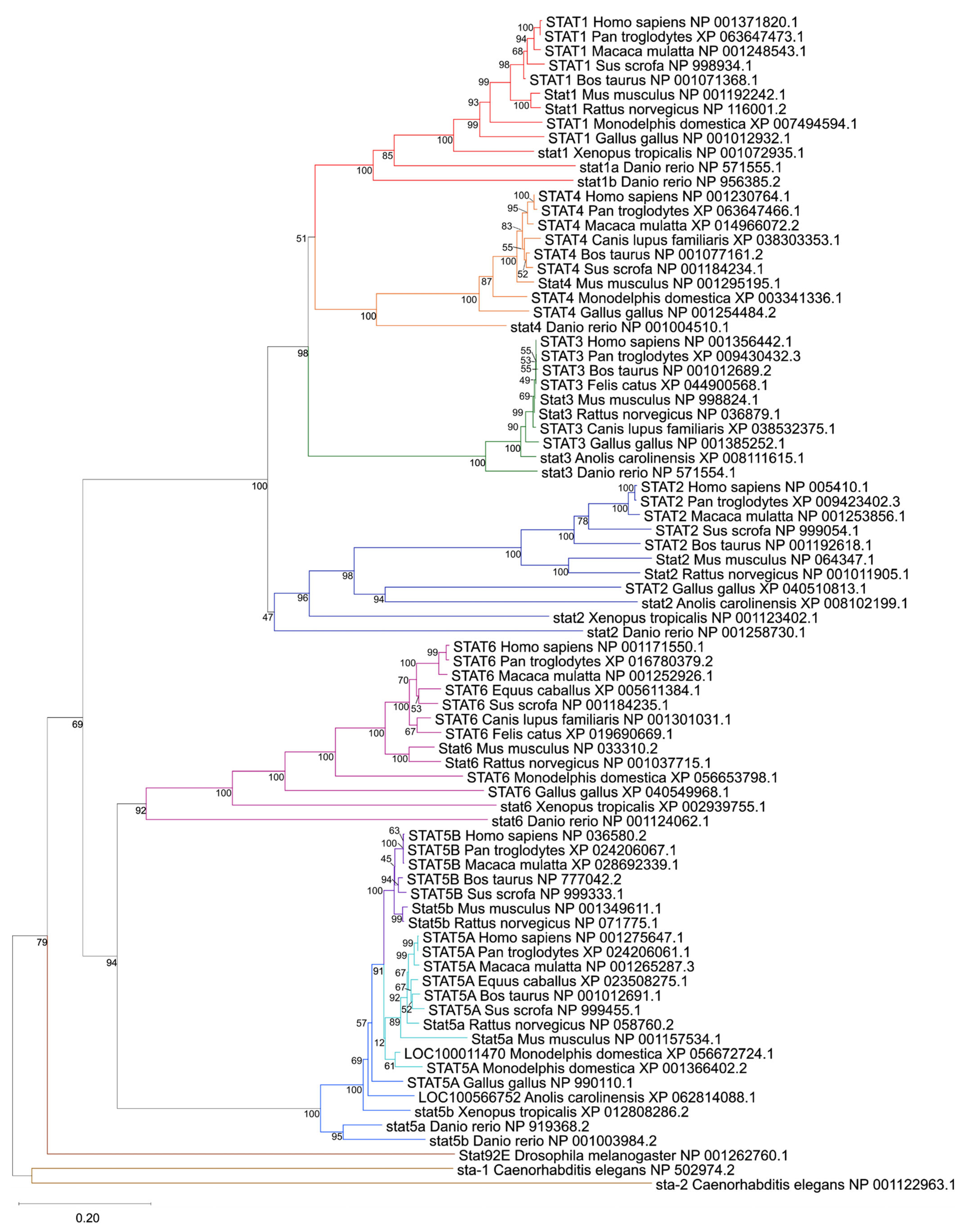
3.1. Evolutionary Expansion and Lineage-Specific Diversification of the STAT Family
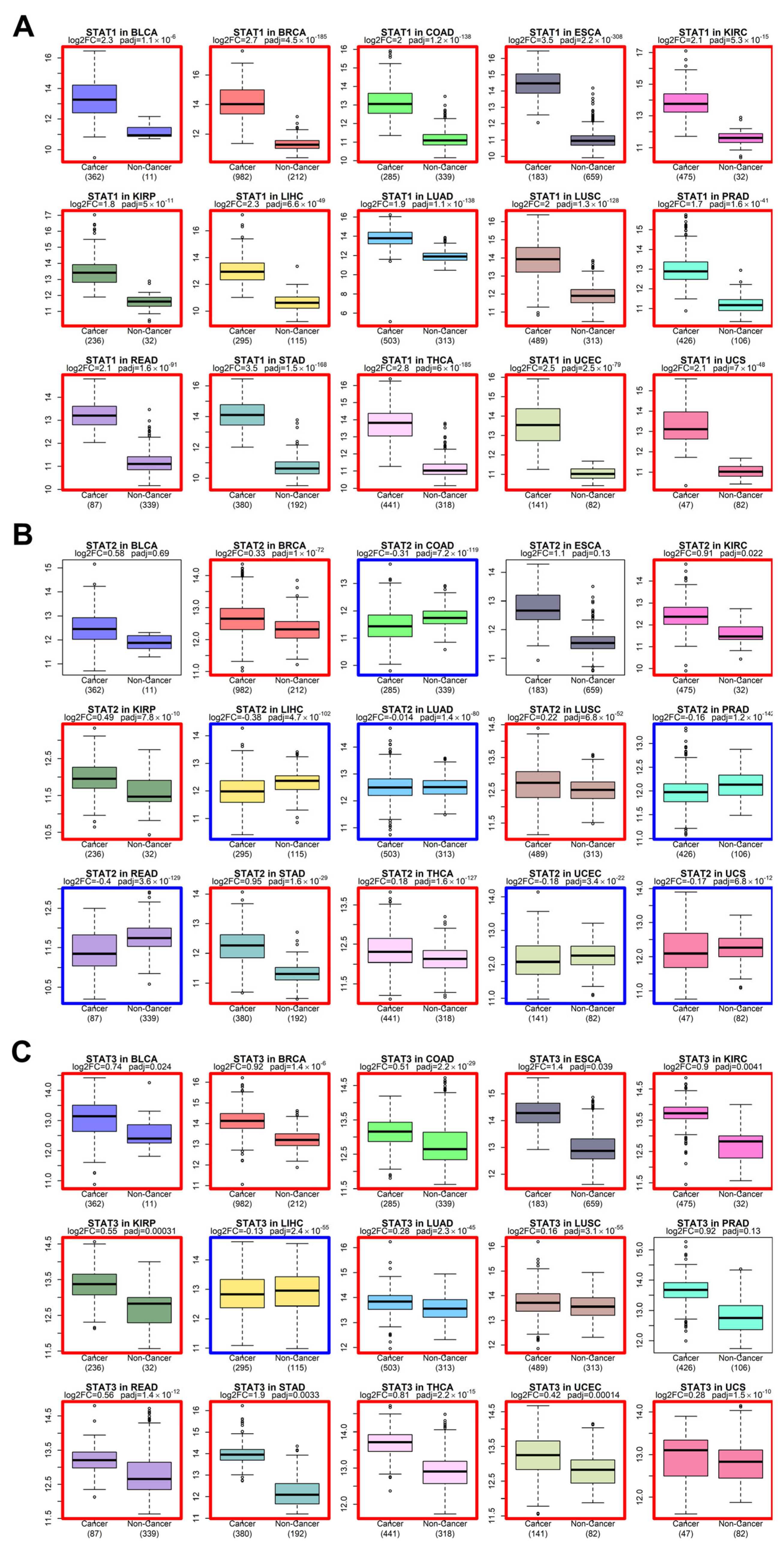
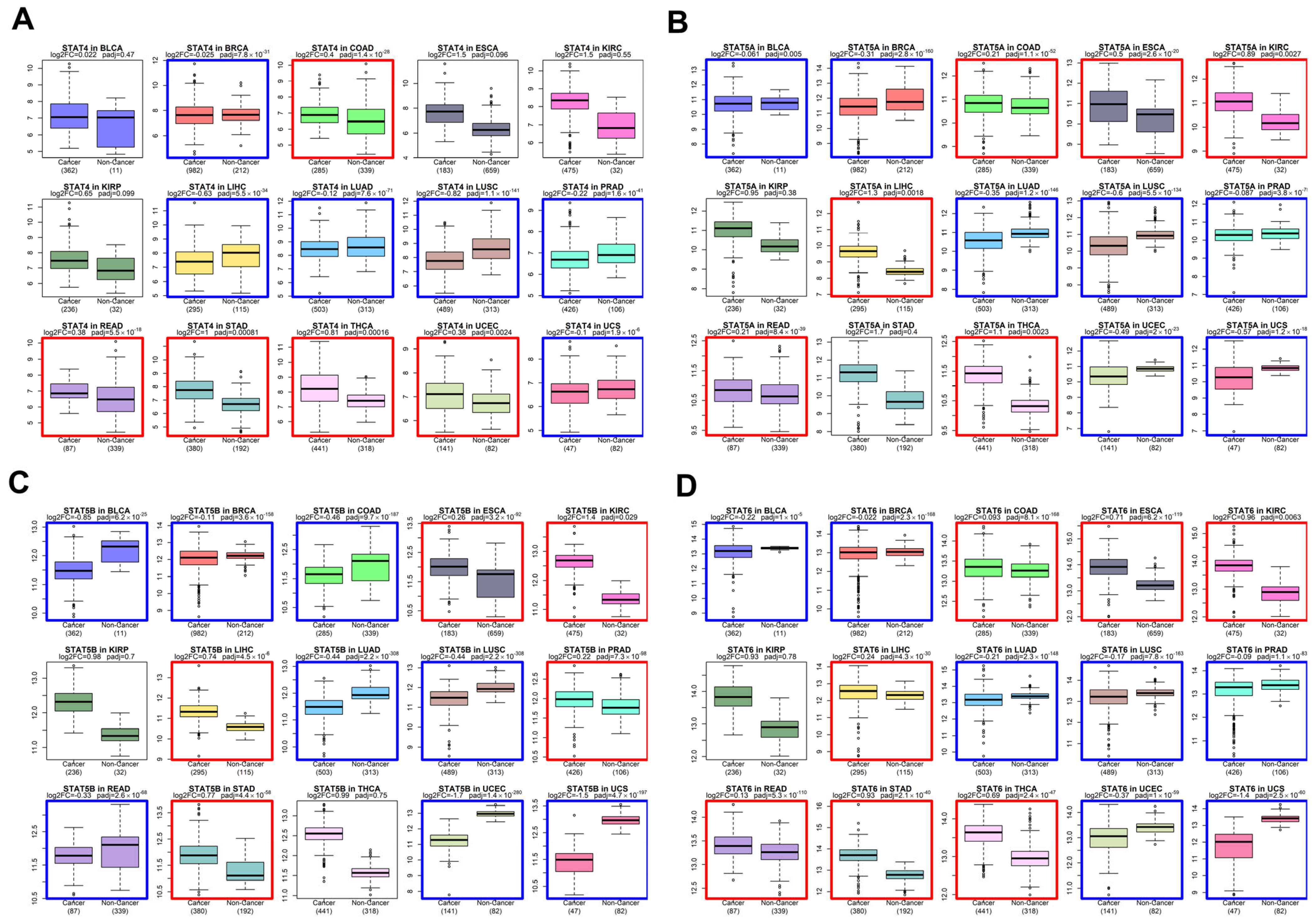
3.2. Pan-Cancer Upregulation of STAT Transcription Factors
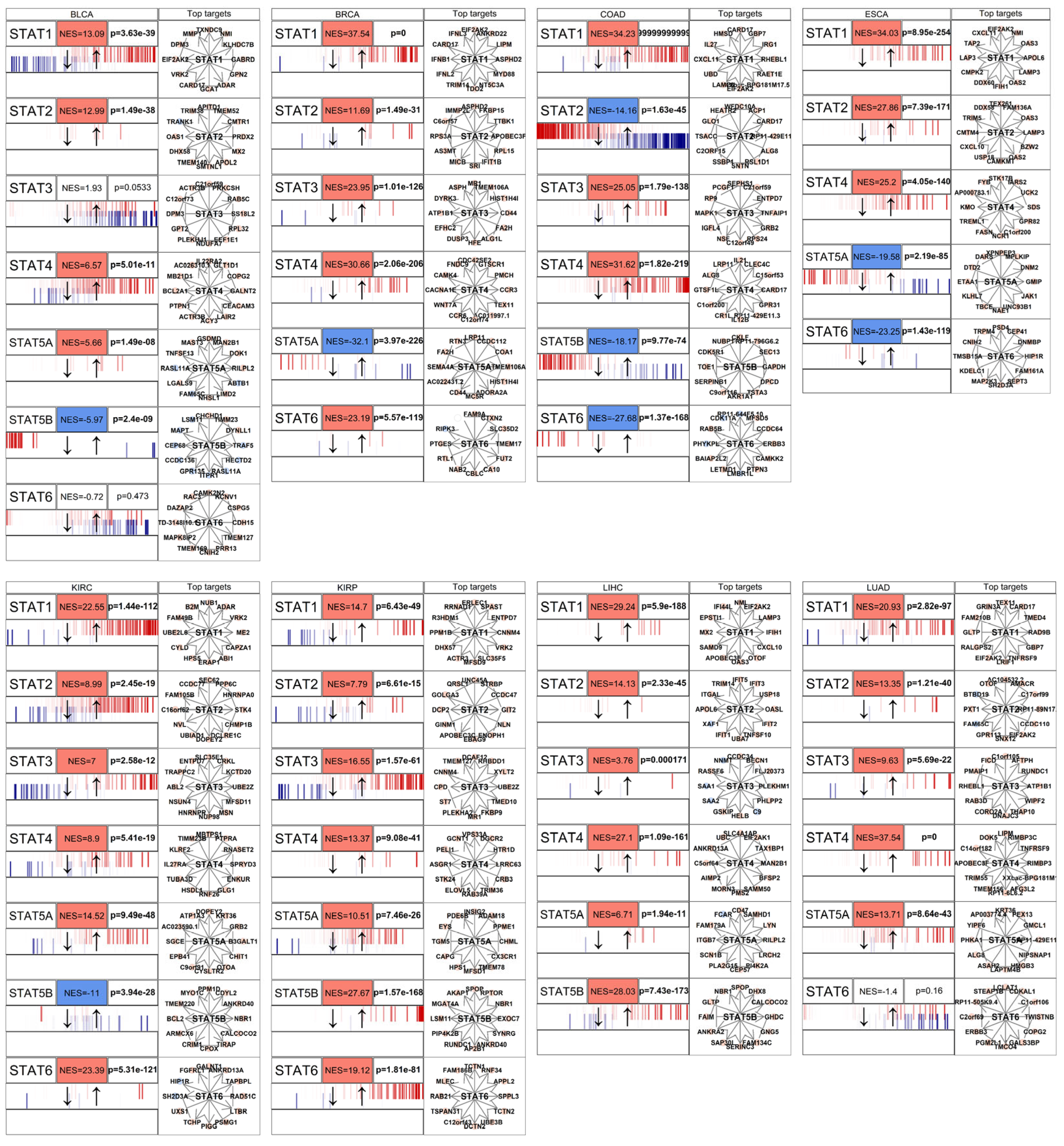
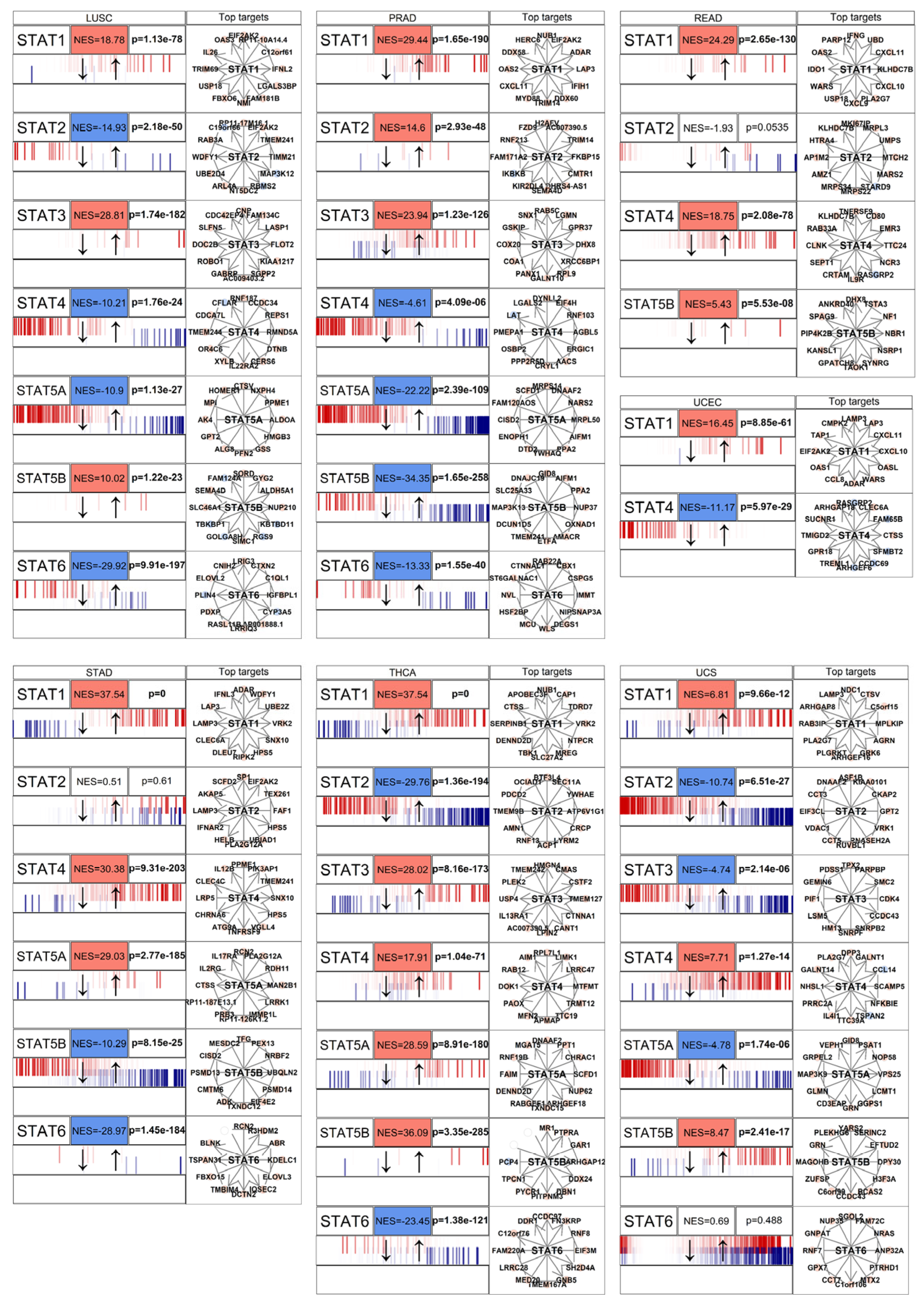
3.3. STAT Transcriptional Networks Are Functionally Activated in Cancer
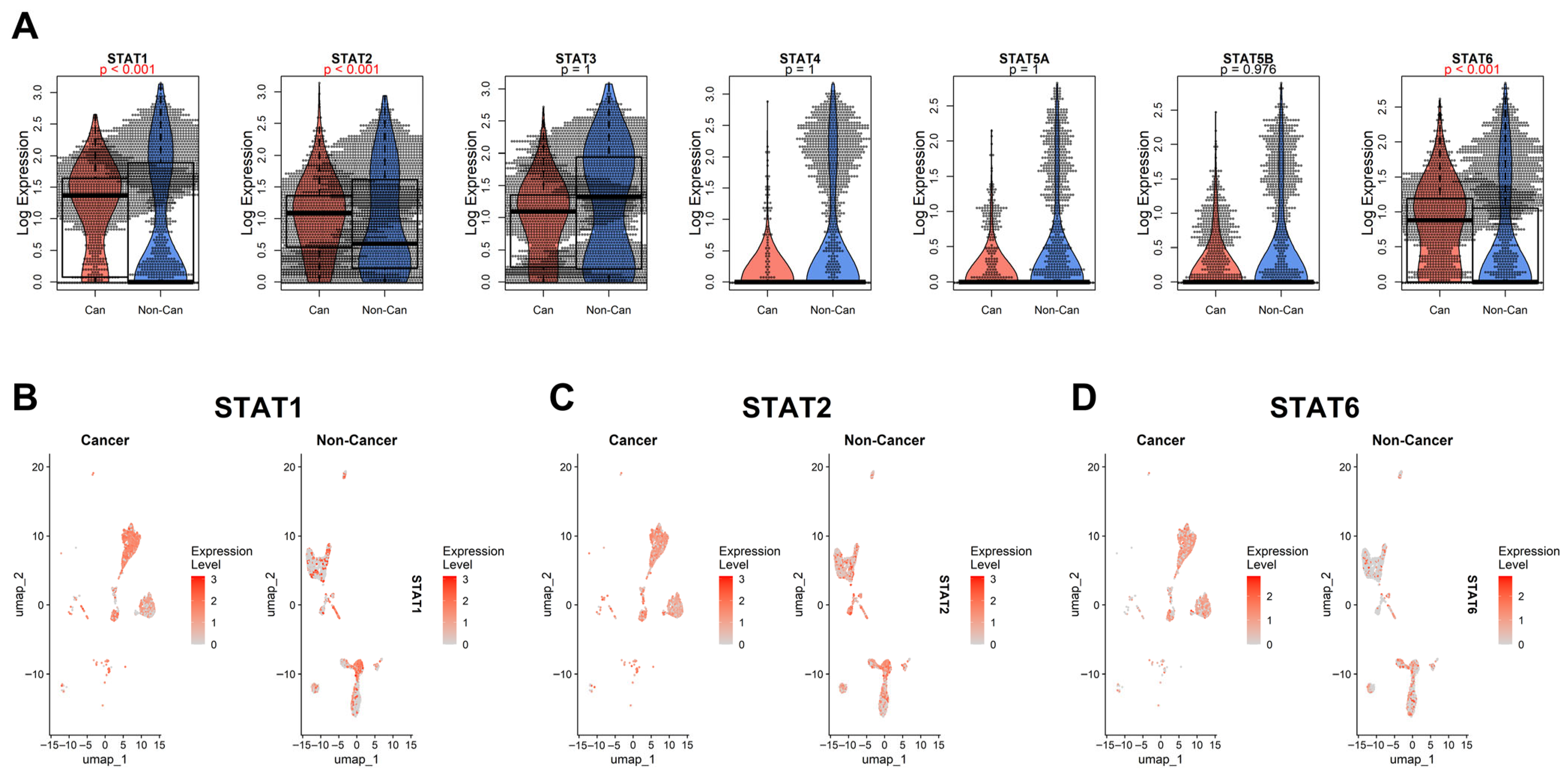
3.4. Single-Cell Validation of STAT1, STAT2, and STAT6 Upregulation in Malignant Cells
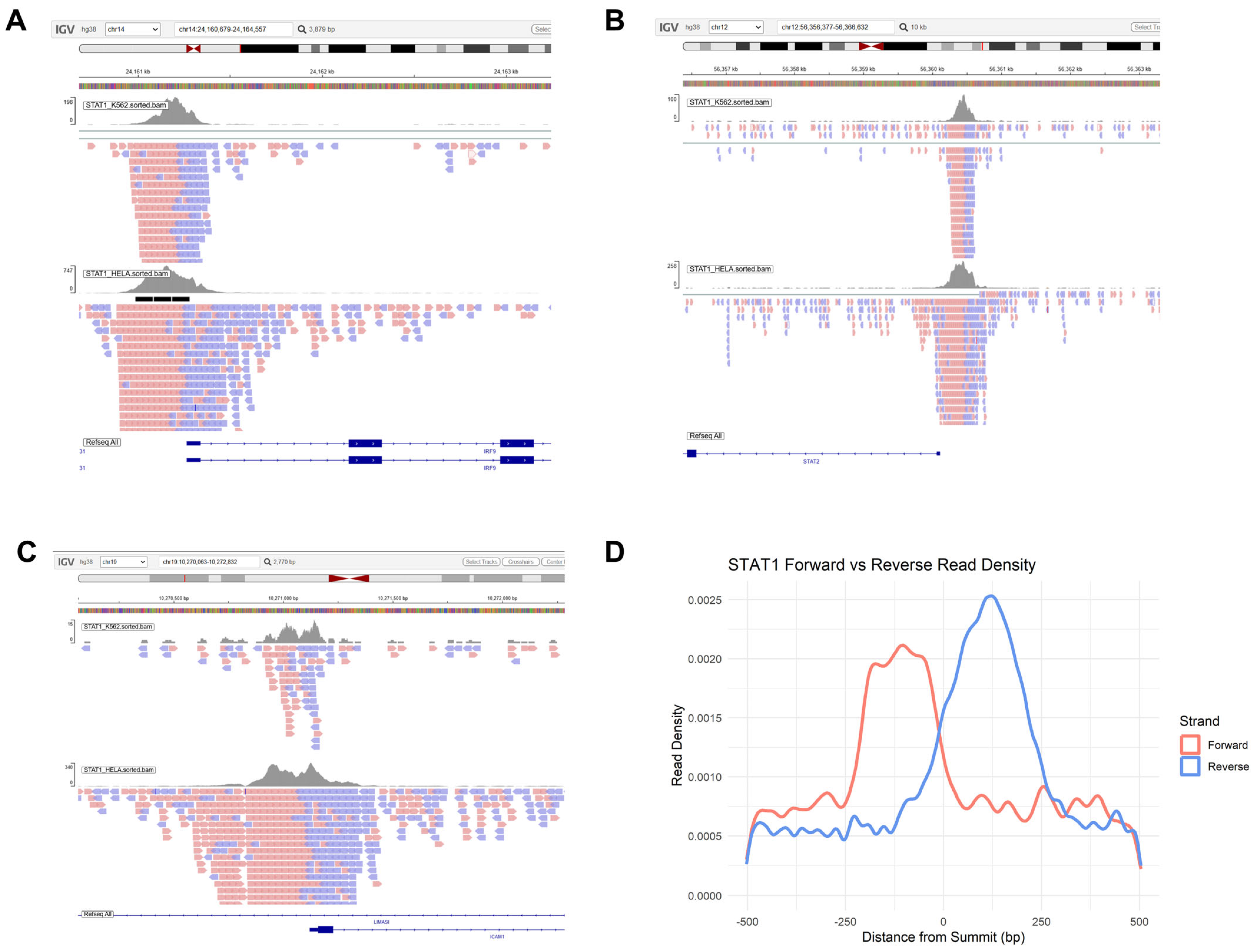
3.5. Exploratory Analysis of Strand-Skewed STAT1 ChIP-Seq Read Distributions
4. Discussion
Supplementary Materials
Author Contributions
Funding
Institutional Review Board Statement
Informed Consent Statement
Data Availability Statement
Conflicts of Interest
References
- The Potential and Controversy of Targeting STAT Family Members in Cancer. Semin. Cancer Biol. 2020, 60, 41–56. [CrossRef] [PubMed]
- Shahmarvand, N.; Nagy, A.; Shahryari, J.; Ohgami, R.S. Mutations in the Signal Transducer and Activator of Transcription Family of Genes in Cancer. Cancer Sci. 2018, 109, 926–933. [Google Scholar] [CrossRef]
- Yu, H.; Lee, H.; Herrmann, A.; Buettner, R.; Jove, R. Revisiting STAT3 Signalling in Cancer: New and Unexpected Biological Functions. Nat. Rev. Cancer 2014, 14, 736–746. [Google Scholar] [CrossRef]
- Philips, R.L.; Wang, Y.; Cheon, H.; Kanno, Y.; Gadina, M.; Sartorelli, V.; Horvath, C.M.; Darnell, J.E.; Stark, G.R.; O’Shea, J.J. The JAK-STAT Pathway at 30: Much Learned, Much More to Do. Cell 2022, 185, 3857–3876. [Google Scholar] [CrossRef]
- Rah, B.; Rather, R.A.; Bhat, G.R.; Baba, A.B.; Mushtaq, I.; Farooq, M.; Yousuf, T.; Dar, S.B.; Parveen, S.; Hassan, R.; et al. JAK/STAT Signaling: Molecular Targets, Therapeutic Opportunities, and Limitations of Targeted Inhibitions in Solid Malignancies. Front. Pharmacol. 2022, 13, 821344. [Google Scholar] [CrossRef] [PubMed]
- Samra, S.; Bergerson, J.R.E.; Freeman, A.F.; Turvey, S.E. JAK-STAT Signaling Pathway, Immunodeficiency, Inflammation, Immune Dysregulation, and Inborn Errors of Immunity. J. Allergy Clin. Immunol. 2025, 155, 357–367. [Google Scholar] [CrossRef] [PubMed]
- Levy, D.E.; Darnell, J.E. Stats: Transcriptional Control and Biological Impact. Nat. Rev. Mol. Cell Biol. 2002, 3, 651–662. [Google Scholar] [CrossRef]
- Li, P.; Huang, D. Targeting the JAK-STAT Pathway in Colorectal Cancer: Mechanisms, Clinical Implications, and Therapeutic Potential. Front. Cell Dev. Biol. 2024, 12, 1507621. [Google Scholar] [CrossRef]
- Muñoz-García, N.; Jara-Acevedo, M.; Caldas, C.; Bárcena, P.; López, A.; Puig, N.; Alcoceba, M.; Fernández, P.; Villamor, N.; Flores-Montero, J.A.; et al. STAT3 and STAT5B Mutations in T/NK-Cell Chronic Lymphoproliferative Disorders of Large Granular Lymphocytes (LGL): Association with Disease Features. Cancers 2020, 12, 3508. [Google Scholar] [CrossRef]
- Küçük, C.; Jiang, B.; Hu, X.; Zhang, W.; Chan, J.K.C.; Xiao, W.; Lack, N.; Alkan, C.; Williams, J.C.; Avery, K.N.; et al. Activating Mutations of STAT5B and STAT3 in Lymphomas Derived from Γδ-T or NK Cells. Nat. Commun. 2015, 6, 6025. [Google Scholar] [CrossRef]
- Wang, W.; Lopez McDonald, M.C.; Hariprasad, R.; Hamilton, T.; Frank, D.A. Oncogenic STAT Transcription Factors as Targets for Cancer Therapy: Innovative Strategies and Clinical Translation. Cancers 2024, 16, 1387. [Google Scholar] [CrossRef]
- Igelmann, S.; Neubauer, H.A.; Ferbeyre, G. STAT3 and STAT5 Activation in Solid Cancers. Cancers 2019, 11, 1428. [Google Scholar] [CrossRef]
- de Araujo, E.D.; Keserű, G.M.; Gunning, P.T.; Moriggl, R. Targeting STAT3 and STAT5 in Cancer. Cancers 2020, 12, 2002. [Google Scholar] [CrossRef] [PubMed]
- Wang, H.-Q.; Man, Q.-W.; Huo, F.-Y.; Gao, X.; Lin, H.; Li, S.-R.; Wang, J.; Su, F.-C.; Cai, L.; Shi, Y.; et al. STAT3 Pathway in Cancers: Past, Present, and Future. MedComm 2022, 3, e124. [Google Scholar] [CrossRef]
- Maninang, C.; Li, J.; Li, W.X. The Prognostic Role of STAT5B Across Cancer Types and Comparative Analysis with STAT5A: A Systematic Review. Biomolecules 2025, 15, 1503. [Google Scholar] [CrossRef]
- Temple, A.E.; Walker, S.R. The Roles of STAT3 and STAT5 in Breast Cancer. Cancers 2025, 17, 1781. [Google Scholar] [CrossRef]
- Ebersbach, C.; Beier, A.-M.K.; Thomas, C.; Erb, H.H.H. Impact of STAT Proteins in Tumor Progress and Therapy Resistance in Advanced and Metastasized Prostate Cancer. Cancers 2021, 13, 4854. [Google Scholar] [CrossRef] [PubMed]
- Kovacic, B.; Stoiber, D.; Moriggl, R.; Weisz, E.; Ott, R.G.; Kreibich, R.; Levy, D.E.; Beug, H.; Freissmuth, M.; Sexl, V. STAT1 Acts as a Tumor Promoter for Leukemia Development. Cancer Cell 2006, 10, 77–87. [Google Scholar] [CrossRef]
- Zhang, Y.; Liu, Z. STAT1 in Cancer: Friend or Foe? Discov. Med. 2017, 24, 19–29. [Google Scholar] [PubMed]
- Carpenter, R.L.; Lo, H.-W. STAT3 Target Genes Relevant to Human Cancers. Cancers 2014, 6, 897–925. [Google Scholar] [CrossRef]
- McFarland, B.C.; Hong, S.W.; Rajbhandari, R.; Twitty, G.B.; Gray, G.K.; Yu, H.; Benveniste, E.N.; Nozell, S.E. NF-κB-Induced IL-6 Ensures STAT3 Activation and Tumor Aggressiveness in Glioblastoma. PLoS ONE 2013, 8, e78728. [Google Scholar] [CrossRef]
- Tian, Y.; Liu, H.; Wang, M.; Wang, R.; Yi, G.; Zhang, M.; Chen, R. Role of STAT3 and NRF2 in Tumors: Potential Targets for Antitumor Therapy. Molecules 2022, 27, 8768. [Google Scholar] [CrossRef]
- Yang, J.; Liao, X.; Agarwal, M.K.; Barnes, L.; Auron, P.E.; Stark, G.R. Unphosphorylated STAT3 Accumulates in Response to IL-6 and Activates Transcription by Binding to NFkappaB. Genes Dev. 2007, 21, 1396–1408. [Google Scholar] [CrossRef]
- Liongue, C.; Ward, A.C. Evolution of the JAK-STAT Pathway. Jak-Stat 2013, 2, e22756. [Google Scholar] [CrossRef]
- Wang, Y.; Levy, D.E.C. Elegans STAT: Evolution of a Regulatory Switch. FASEB J. Off. Publ. Fed. Am. Soc. Exp. Biol. 2006, 20, 1641–1652. [Google Scholar] [CrossRef]
- Gorissen, M.; de Vrieze, E.; Flik, G.; Huising, M.O. STAT Genes Display Differential Evolutionary Rates That Correlate with Their Roles in the Endocrine and Immune System. J. Endocrinol. 2011, 209, 175–184. [Google Scholar] [CrossRef] [PubMed]
- Babadei, O.; Strobl, B.; Müller, M.; Decker, T. Transcriptional Control of Interferon-Stimulated Genes. J. Biol. Chem. 2024, 300, 107771. [Google Scholar] [CrossRef] [PubMed]
- Satoh, J.; Tabunoki, H. A Comprehensive Profile of ChIP-Seq-Based STAT1 Target Genes Suggests the Complexity of STAT1-Mediated Gene Regulatory Mechanisms. Gene Regul. Syst. Biol. 2013, 7, GRSB.S11433. [Google Scholar] [CrossRef]
- Wu, J.; Jin, Y.-Y.; Gong, R.-L.; Yang, F.; Su, X.-Y.; Chen, T.-X. Genome-Wide ChIP-Seq and RNA-Seq Analyses of STAT3 Target Genes in TLRs Activated Human Peripheral Blood B Cells. Front. Immunol. 2022, 13, 821457. [Google Scholar] [CrossRef]
- Robertson, G.; Hirst, M.; Bainbridge, M.; Bilenky, M.; Zhao, Y.; Zeng, T.; Euskirchen, G.; Bernier, B.; Varhol, R.; Delaney, A.; et al. Genome-Wide Profiles of STAT1 DNA Association Using Chromatin Immunoprecipitation and Massively Parallel Sequencing. Nat. Methods 2007, 4, 651–657. [Google Scholar] [CrossRef] [PubMed]
- Giovannozzi, S.; Demeulemeester, J.; Schrijvers, R.; Gijsbers, R. Transcriptional Profiling of STAT1 Gain-of-Function Reveals Common and Mutation-Specific Fingerprints. Front. Immunol. 2021, 12, 632997. [Google Scholar] [CrossRef] [PubMed]
- Karim, A.; Garg, R.; Saikia, B.; Tiwari, A.; Sahu, S.; Malhotra, M.; Minz, R.W.; Rawat, A.; Singh, S.; Suri, D. Unraveling the Unphosphorylated STAT3-Unphosphorylated NF-κB Pathway in Loss of Function STAT3 Hyper IgE Syndrome. Front. Immunol. 2024, 15, 1332817. [Google Scholar] [CrossRef]
- Cheng, M.; Liu, Y.; Guo, Y.; Li, M.; Xian, S.; Qin, H.; Yang, Y.; Qian, W.; Tang, J.; Lu, Y.; et al. Pan-Cancer Analysis Reveals Signal Transducer and Activator of Transcription (STAT) Gene Family as Biomarkers for Prognostic Prediction and Therapeutic Guidance. Front. Genet. 2023, 14, 1120500. [Google Scholar] [CrossRef]
- Seal, R.L.; Braschi, B.; Gray, K.; Jones, T.E.M.; Tweedie, S.; Haim-Vilmovsky, L.; Bruford, E.A. Genenames.Org: The HGNC Resources in 2023. Nucleic Acids Res. 2023, 51, D1003–D1009. [Google Scholar] [CrossRef]
- Eyre, T.A.; Wright, M.W.; Lush, M.J.; Bruford, E.A. HCOP: A Searchable Database of Human Orthology Predictions. Brief. Bioinform. 2007, 8, 2–5. [Google Scholar] [CrossRef]
- Giorgi, F.M.; Ceraolo, C.; Mercatelli, D. The R Language: An Engine for Bioinformatics and Data Science. Life 2022, 12, 648. [Google Scholar] [CrossRef] [PubMed]
- Edgar, R.C. MUSCLE: Multiple Sequence Alignment with High Accuracy and High Throughput. Nucleic Acids Res. 2004, 32, 1792–1797. [Google Scholar] [CrossRef]
- Kumar, S.; Stecher, G.; Suleski, M.; Sanderford, M.; Sharma, S.; Tamura, K. MEGA12: Molecular Evolutionary Genetic Analysis Version 12 for Adaptive and Green Computing. Mol. Biol. Evol. 2024, 41, msae263. [Google Scholar] [CrossRef] [PubMed]
- Tomczak, K.; Czerwińska, P.; Wiznerowicz, M. The Cancer Genome Atlas (TCGA): An Immeasurable Source of Knowledge. Contemp. Oncol. 2015, 19, A68–A77. [Google Scholar] [CrossRef]
- GTEx Consortium. The GTEx Consortium Atlas of Genetic Regulatory Effects across Human Tissues. Science 2020, 369, 1318–1330. [Google Scholar] [CrossRef]
- Wang, Q.; Armenia, J.; Zhang, C.; Penson, A.V.; Reznik, E.; Zhang, L.; Minet, T.; Ochoa, A.; Gross, B.E.; Iacobuzio-Donahue, C.A.; et al. Unifying Cancer and Normal RNA Sequencing Data from Different Sources. Sci. Data 2018, 5, 180061. [Google Scholar] [CrossRef]
- Love, M.I.; Huber, W.; Anders, S. Moderated Estimation of Fold Change and Dispersion for RNA-Seq Data with DESeq2. Genome Biol. 2014, 15, 550. [Google Scholar] [CrossRef]
- Mercatelli, D.; Lopez-Garcia, G.; Giorgi, F.M. Corto: A Lightweight R Package for Gene Network Inference and Master Regulator Analysis. Bioinformatics 2020, 36, 3916–3917. [Google Scholar] [CrossRef]
- Pozzobon, D.; Bellezza, A.; Giorgi, F.M. Pan-Cancer Upregulation of the FOXM1 Transcription Factor. Genes 2025, 16, 56. [Google Scholar] [CrossRef]
- Puram, S.V.; Tirosh, I.; Parikh, A.S.; Patel, A.P.; Yizhak, K.; Gillespie, S.; Rodman, C.; Luo, C.L.; Mroz, E.A.; Emerick, K.S.; et al. Single-Cell Transcriptomic Analysis of Primary and Metastatic Tumor Ecosystems in Head and Neck Cancer. Cell 2017, 171, 1611–1624.e24. [Google Scholar] [CrossRef] [PubMed]
- Christensen, E.; Naidas, A.; Chen, D.; Husic, M.; Shooshtari, P. TMExplorer: A Tumour Microenvironment Single-Cell RNAseq Database and Search Tool. PLoS ONE 2022, 17, e0272302. [Google Scholar] [CrossRef]
- Hao, Y.; Hao, S.; Andersen-Nissen, E.; Mauck, W.M.; Zheng, S.; Butler, A.; Lee, M.J.; Wilk, A.J.; Darby, C.; Zager, M.; et al. Integrated Analysis of Multimodal Single-Cell Data. Cell 2021, 184, 3573–3587.e29. [Google Scholar] [CrossRef]
- Tirosh, I.; Izar, B.; Prakadan, S.M.; Wadsworth, M.H.; Treacy, D.; Trombetta, J.J.; Rotem, A.; Rodman, C.; Lian, C.; Murphy, G.; et al. Dissecting the Multicellular Ecosystem of Metastatic Melanoma by Single-Cell RNA-Seq. Science 2016, 352, 189–196. [Google Scholar] [CrossRef] [PubMed]
- Chung, W.; Eum, H.H.; Lee, H.-O.; Lee, K.-M.; Lee, H.-B.; Kim, K.-T.; Ryu, H.S.; Kim, S.; Lee, J.E.; Park, Y.H.; et al. Single-Cell RNA-Seq Enables Comprehensive Tumour and Immune Cell Profiling in Primary Breast Cancer. Nat. Commun. 2017, 8, 15081. [Google Scholar] [CrossRef]
- Chen, Y.-P.; Yin, J.-H.; Li, W.-F.; Li, H.-J.; Chen, D.-P.; Zhang, C.-J.; Lv, J.-W.; Wang, Y.-Q.; Li, X.-M.; Li, J.-Y.; et al. Single-Cell Transcriptomics Reveals Regulators Underlying Immune Cell Diversity and Immune Subtypes Associated with Prognosis in Nasopharyngeal Carcinoma. Cell Res. 2020, 30, 1024–1042. [Google Scholar] [CrossRef] [PubMed]
- Rozowsky, J.; Euskirchen, G.; Auerbach, R.K.; Zhang, Z.D.; Gibson, T.; Bjornson, R.; Carriero, N.; Snyder, M.; Gerstein, M.B. PeakSeq Enables Systematic Scoring of ChIP-Seq Experiments Relative to Controls. Nat. Biotechnol. 2009, 27, 66–75. [Google Scholar] [CrossRef] [PubMed]
- ENCODE Project Consortium. An Integrated Encyclopedia of DNA Elements in the Human Genome. Nature 2012, 489, 57–74. [Google Scholar] [CrossRef]
- Kim, D.; Langmead, B.; Salzberg, S.L. HISAT: A Fast Spliced Aligner with Low Memory Requirements. Nat. Methods 2015, 12, 357–360. [Google Scholar] [CrossRef]
- Li, H.; Handsaker, B.; Wysoker, A.; Fennell, T.; Ruan, J.; Homer, N.; Marth, G.; Abecasis, G.; Durbin, R. 1000 Genome Project Data Processing Subgroup The Sequence Alignment/Map Format and SAMtools. Bioinformatics 2009, 25, 2078–2079. [Google Scholar] [CrossRef]
- Zhang, Y.; Liu, T.; Meyer, C.A.; Eeckhoute, J.; Johnson, D.S.; Bernstein, B.E.; Nusbaum, C.; Myers, R.M.; Brown, M.; Li, W.; et al. Model-Based Analysis of ChIP-Seq (MACS). Genome Biol. 2008, 9, R137. [Google Scholar] [CrossRef]
- Robinson, J.T.; Thorvaldsdóttir, H.; Winckler, W.; Guttman, M.; Lander, E.S.; Getz, G.; Mesirov, J.P. Integrative Genomics Viewer. Nat. Biotechnol. 2011, 29, 24–26. [Google Scholar] [CrossRef]
- Rao, S.S.; Nelson, P.A.; Lunde, H.S.; Haugland, G.T. Evolutionary, Comparative, and Functional Analyses of STATs and Regulation of the JAK-STAT Pathway in Lumpfish upon Bacterial and Poly(I:C) Exposure. Front. Cell. Infect. Microbiol. 2023, 13, 1252744. [Google Scholar] [CrossRef]
- Wang, Y.; Levy, D.E. Comparative Evolutionary Genomics of the STAT Family of Transcription Factors. JAK-STAT 2012, 1, 23–33. [Google Scholar] [CrossRef]
- Davesne, D.; Friedman, M.; Schmitt, A.D.; Fernandez, V.; Carnevale, G.; Ahlberg, P.E.; Sanchez, S.; Benson, R.B.J. Fossilized Cell Structures Identify an Ancient Origin for the Teleost Whole-Genome Duplication. Proc. Natl. Acad. Sci. USA 2021, 118, e2101780118. [Google Scholar] [CrossRef] [PubMed]
- Tolomeo, M.; Cascio, A. STAT4 and STAT6, Their Role in Cellular and Humoral Immunity and in Diverse Human Diseases. Int. Rev. Immunol. 2024, 43, 394–418. [Google Scholar] [CrossRef] [PubMed]
- Platanitis, E.; Decker, T. Regulatory Networks Involving STATs, IRFs, and NFκB in Inflammation. Front. Immunol. 2018, 9, 2542. [Google Scholar] [CrossRef]
- Sikorski, K.; Chmielewski, S.; Przybyl, L.; Heemann, U.; Wesoly, J.; Baumann, M.; Bluyssen, H.A.R. STAT1-Mediated Signal Integration between IFNγ and LPS Leads to Increased EC and SMC Activation and Monocyte Adhesion. Am. J. Physiol. Cell Physiol. 2011, 300, C1337–C1344. [Google Scholar] [CrossRef]
- Chen, X.; Vinkemeier, U.; Zhao, Y.; Jeruzalmi, D.; Darnell, J.E.; Kuriyan, J. Crystal Structure of a Tyrosine Phosphorylated STAT-1 Dimer Bound to DNA. Cell 1998, 93, 827–839. [Google Scholar] [CrossRef]
- Menon, P.R.; Staab, J.; Gregus, A.; Wirths, O.; Meyer, T. An Inhibitory Effect on the Nuclear Accumulation of Phospho-STAT1 by Its Unphosphorylated Form. Cell Commun. Signal. CCS 2022, 20, 42. [Google Scholar] [CrossRef]
- Mao, X.; Ren, Z.; Parker, G.N.; Sondermann, H.; Pastorello, M.A.; Wang, W.; McMurray, J.S.; Demeler, B.; Darnell, J.E.; Chen, X. Structural Bases of Unphosphorylated STAT1 Association and Receptor Binding. Mol. Cell 2005, 17, 761–771. [Google Scholar] [CrossRef]
- Begitt, A.; Droescher, M.; Meyer, T.; Schmid, C.D.; Baker, M.; Antunes, F.; Knobeloch, K.-P.; Owen, M.R.; Naumann, R.; Decker, T.; et al. STAT1-Cooperative DNA Binding Distinguishes Type 1 from Type 2 Interferon Signaling. Nat. Immunol. 2014, 15, 168–176. [Google Scholar] [CrossRef] [PubMed]
- Bhinge, A.A.; Kim, J.; Euskirchen, G.M.; Snyder, M.; Iyer, V.R. Mapping the Chromosomal Targets of STAT1 by Sequence Tag Analysis of Genomic Enrichment (STAGE). Genome Res. 2007, 17, 910–916. [Google Scholar] [CrossRef]
- Bonham, A.J.; Wenta, N.; Osslund, L.M.; Prussin, A.J.; Vinkemeier, U.; Reich, N.O. STAT1:DNA Sequence-Dependent Binding Modulation by Phosphorylation, Protein:Protein Interactions and Small-Molecule Inhibition. Nucleic Acids Res. 2013, 41, 754–763. [Google Scholar] [CrossRef] [PubMed]
- Veit, E.C.; Salim, M.S.; Jung, M.J.; Richardson, R.B.; Boys, I.N.; Quinlan, M.; Barrall, E.A.; Bednarski, E.; Hamilton, R.E.; Kikawa, C.; et al. Evolution of STAT2 Resistance to Flavivirus NS5 Occurred Multiple Times despite Genetic Constraints. Nat. Commun. 2024, 15, 5426. [Google Scholar] [CrossRef] [PubMed]
- Meissl, K.; Macho-Maschler, S.; Müller, M.; Strobl, B. The Good and the Bad Faces of STAT1 in Solid Tumours. Cytokine 2017, 89, 12–20. [Google Scholar] [CrossRef]
- Braverman, E.L.; Mognol, G.P.; Minn, A.J.; Vignali, D.A.A.; Varner, J.A. One Step Ahead: Preventing Tumor Adaptation to Immune Therapy. Am. Soc. Clin. Oncol. Educ. Book 2025, 45, e481556. [Google Scholar] [CrossRef] [PubMed]
- Cheon, H.; Borden, E.C.; Stark, G.R. Interferons and Their Stimulated Genes in the Tumor Microenvironment. Semin. Oncol. 2014, 41, 156–173. [Google Scholar] [CrossRef]
- Garcia-Diaz, A.; Shin, D.S.; Moreno, B.H.; Saco, J.; Escuin-Ordinas, H.; Rodriguez, G.A.; Zaretsky, J.M.; Sun, L.; Hugo, W.; Wang, X.; et al. Interferon Receptor Signaling Pathways Regulating PD-L1 and PD-L2 Expression. Cell Rep. 2017, 19, 1189–1201. [Google Scholar] [CrossRef]
- Yang, X.; Liu, Y.; Cao, J.; Wu, C.; Tang, L.; Bian, W.; Chen, Y.; Yu, L.; Wu, Y.; Li, S.; et al. Targeting Epigenetic and Post-Translational Modifications of NRF2: Key Regulatory Factors in Disease Treatment. Cell Death Discov. 2025, 11, 189. [Google Scholar] [CrossRef] [PubMed]
- Hyun, K.; Ahn, J.; Kim, H.; Kim, J.; Kim, Y.-I.; Park, H.-S.; Roeder, R.G.; Lee, J.E.; Kim, J. The BAF Complex Enhances Transcription through Interaction with H3K56ac in the Histone Globular Domain. Nat. Commun. 2024, 15, 9614. [Google Scholar] [CrossRef]
- Hu, Y.; Shen, Y.; Zhao, Y.; Tang, Y.; Liu, C.; Gu, Y.; Yang, T.; Shen, Y. Genomic Distribution of Signal Transducer and Activator of Transcription (STAT) Family in Colorectal Cancer. Hum. Cell 2023, 36, 286–295. [Google Scholar] [CrossRef]
- Begitt, A.; Krause, S.; Cavey, J.R.; Vinkemeier, D.E.; Vinkemeier, U. A Family-Wide Assessment of Latent STAT Transcription Factor Interactions Reveals Divergent Dimer Repertoires. J. Biol. Chem. 2023, 299, 104703. [Google Scholar] [CrossRef]
- Shawky, A.M.; Almalki, F.A.; Abdalla, A.N.; Abdelazeem, A.H.; Gouda, A.M. A Comprehensive Overview of Globally Approved JAK Inhibitors. Pharmaceutics 2022, 14, 1001. [Google Scholar] [CrossRef]
- Chen, R.J.; Lu, M.Y.; Williamson, D.F.K.; Chen, T.Y.; Lipkova, J.; Noor, Z.; Shaban, M.; Shady, M.; Williams, M.; Joo, B.; et al. Pan-Cancer Integrative Histology-Genomic Analysis via Multimodal Deep Learning. Cancer Cell 2022, 40, 865–878.e6. [Google Scholar] [CrossRef]
- Zhou, M.; Zhang, P.; Da, M.; Yang, R.; Ma, Y.; Zhao, J.; Ma, T.; Xia, J.; Shen, G.; Chen, Y.; et al. A Pan-Cancer Analysis of the Expression of STAT Family Genes in Tumors and Their Relationship to the Tumor Microenvironment. Front. Oncol. 2022, 12, 925537. [Google Scholar] [CrossRef] [PubMed]
- Muckenhuber, M.; Seufert, I.; Müller-Ott, K.; Mallm, J.-P.; Klett, L.C.; Knotz, C.; Hechler, J.; Kepper, N.; Erdel, F.; Rippe, K. Epigenetic Signals That Direct Cell Type-Specific Interferon Beta Response in Mouse Cells. Life Sci. Alliance 2023, 6, e202201823. [Google Scholar] [CrossRef] [PubMed]


Disclaimer/Publisher’s Note: The statements, opinions and data contained in all publications are solely those of the individual author(s) and contributor(s) and not of MDPI and/or the editor(s). MDPI and/or the editor(s) disclaim responsibility for any injury to people or property resulting from any ideas, methods, instructions or products referred to in the content. |
© 2026 by the authors. Licensee MDPI, Basel, Switzerland. This article is an open access article distributed under the terms and conditions of the Creative Commons Attribution (CC BY) license.
Share and Cite
Lukic, D.; Guzzi, P.H.; Giorgi, F.M. Integrated Evolutionary and Multi-Omic Analysis of STAT Family Activation Across Solid Tumors. Genes 2026, 17, 547. https://doi.org/10.3390/genes17050547
Lukic D, Guzzi PH, Giorgi FM. Integrated Evolutionary and Multi-Omic Analysis of STAT Family Activation Across Solid Tumors. Genes. 2026; 17(5):547. https://doi.org/10.3390/genes17050547
Chicago/Turabian StyleLukic, Dunja, Pietro Hiram Guzzi, and Federico Manuel Giorgi. 2026. "Integrated Evolutionary and Multi-Omic Analysis of STAT Family Activation Across Solid Tumors" Genes 17, no. 5: 547. https://doi.org/10.3390/genes17050547
APA StyleLukic, D., Guzzi, P. H., & Giorgi, F. M. (2026). Integrated Evolutionary and Multi-Omic Analysis of STAT Family Activation Across Solid Tumors. Genes, 17(5), 547. https://doi.org/10.3390/genes17050547