Genetic Diversity and Collection Structure Studies of Sesame (Sesamum indicum L.) Accessions Across Ethiopian Research Centers
 ,
,
Abstract
1. Introduction
2. Materials and Methods
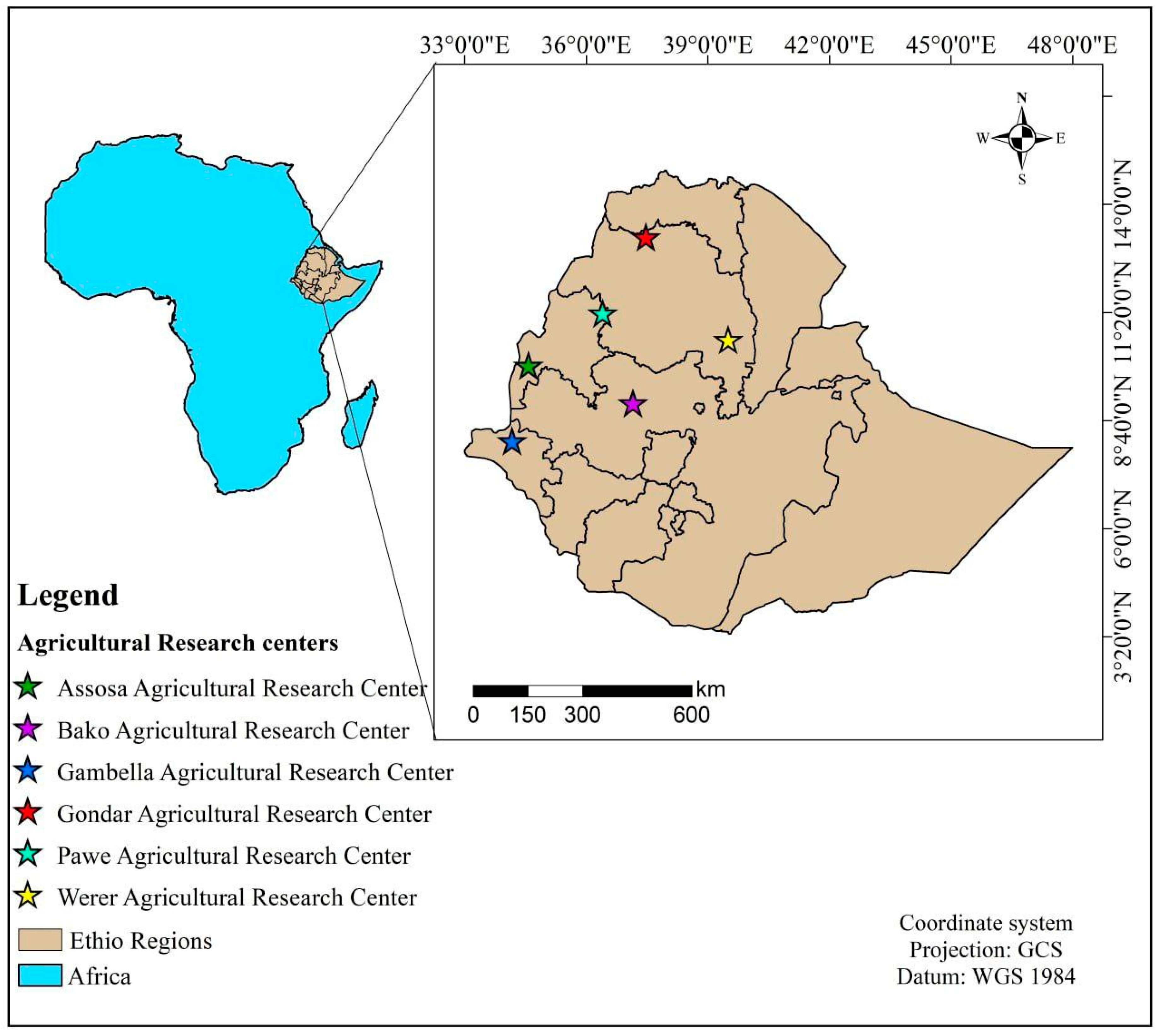
2.1. Plant Materials
- Purposeful Sampling: Institutional priorities for specific traits or geographic regions.
- Management Bottlenecks: Potential loss of rare alleles during repeated cycles of seed increase and regeneration.
- Managed Mating: The use of closed mating systems during germplasm maintenance.
- Germplasm Exchange: The historical movement and sharing of accessions between research centers.
2.2. Genomic DNA Extraction and Sequencing
2.3. SNP Calling and Data Filtering
2.4. Genetic Relationship Visualization and Diversity Analysis
2.5. Collection Diversity and Cluster Analysis
2.6. Analysis of Molecular Variance (AMOVA)
3. Results
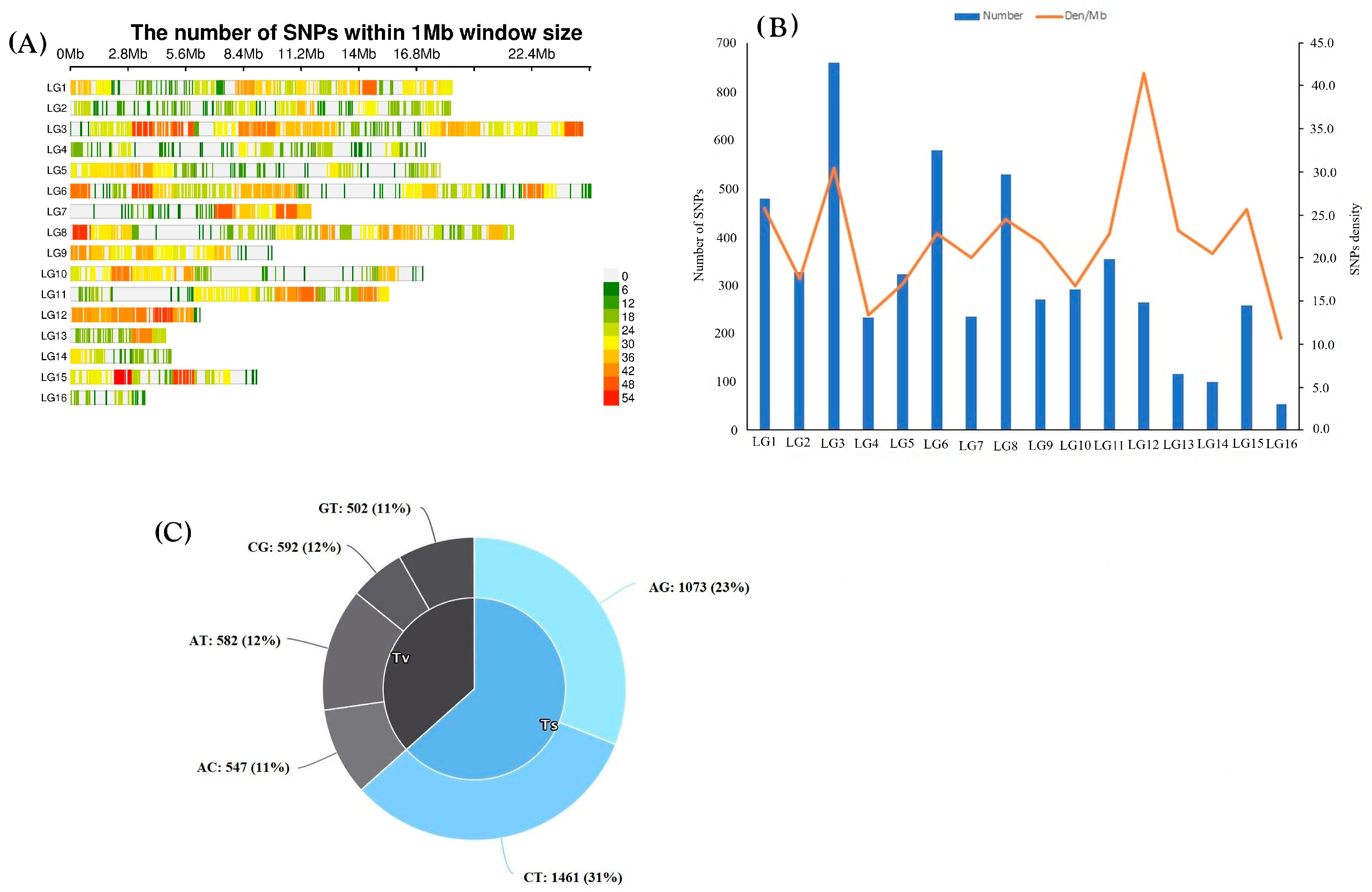
3.1. SNP Markes Summary
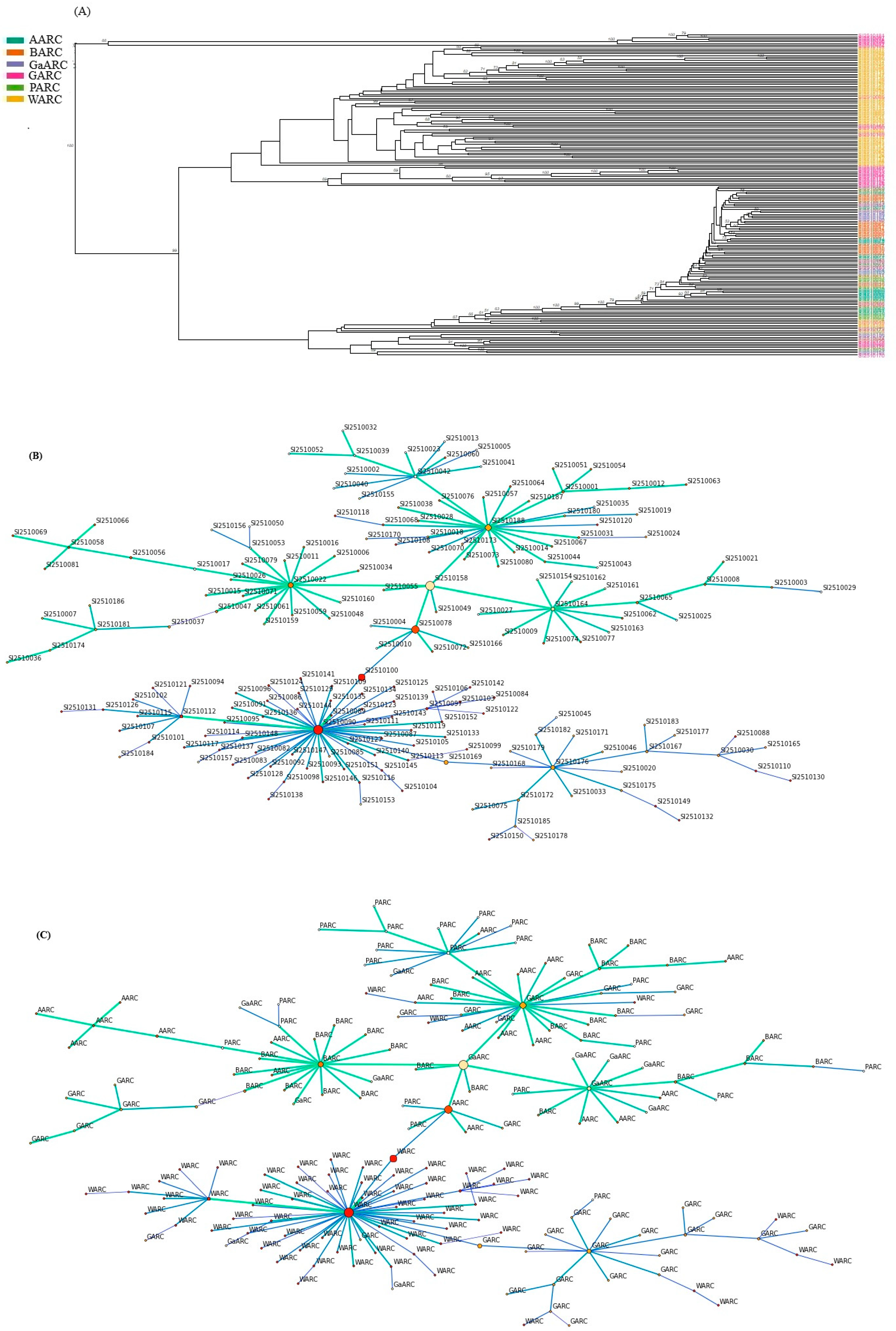
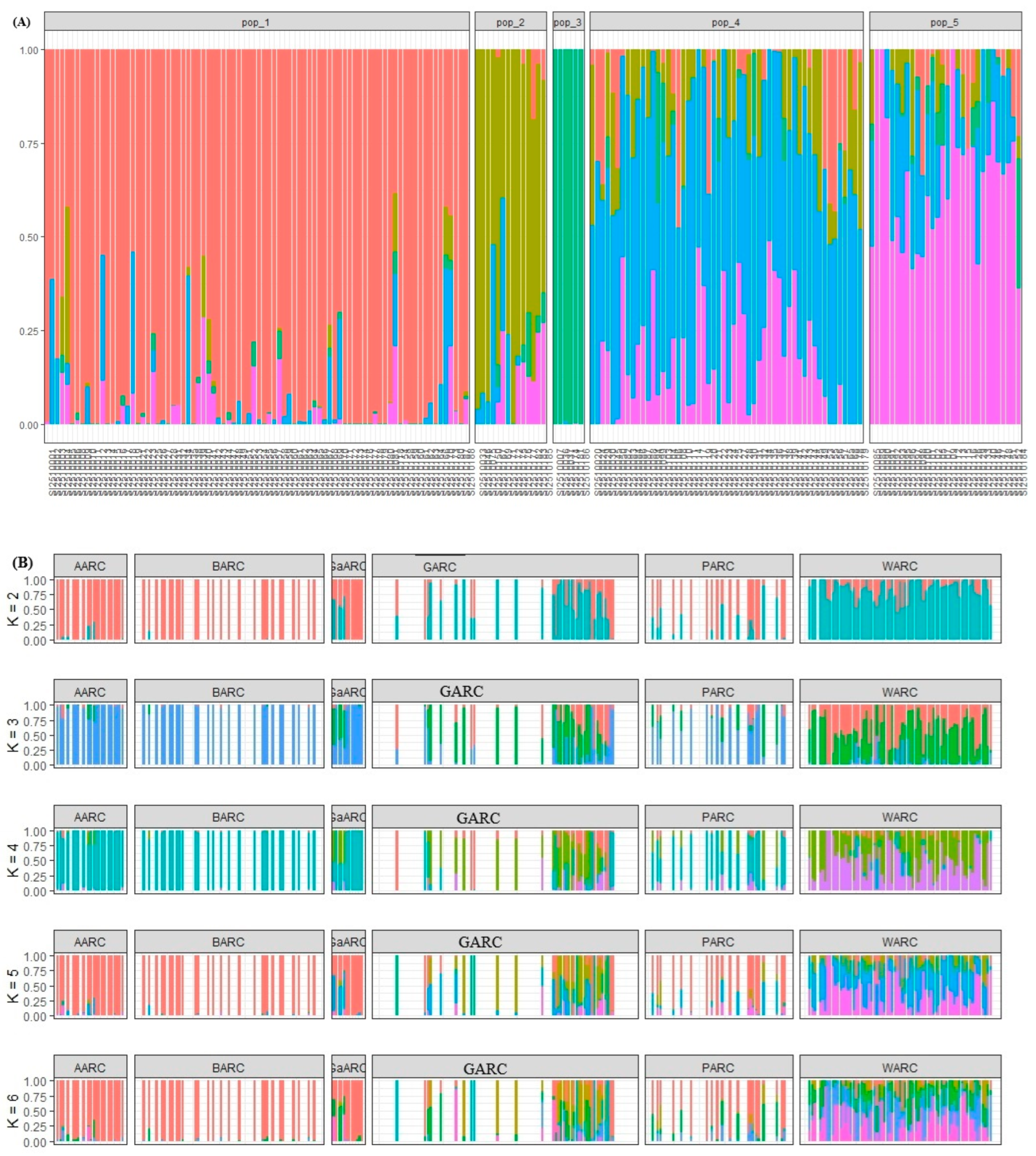
3.2. Genetic Relationship Visualization Analysis
3.3. Genetic Diversity
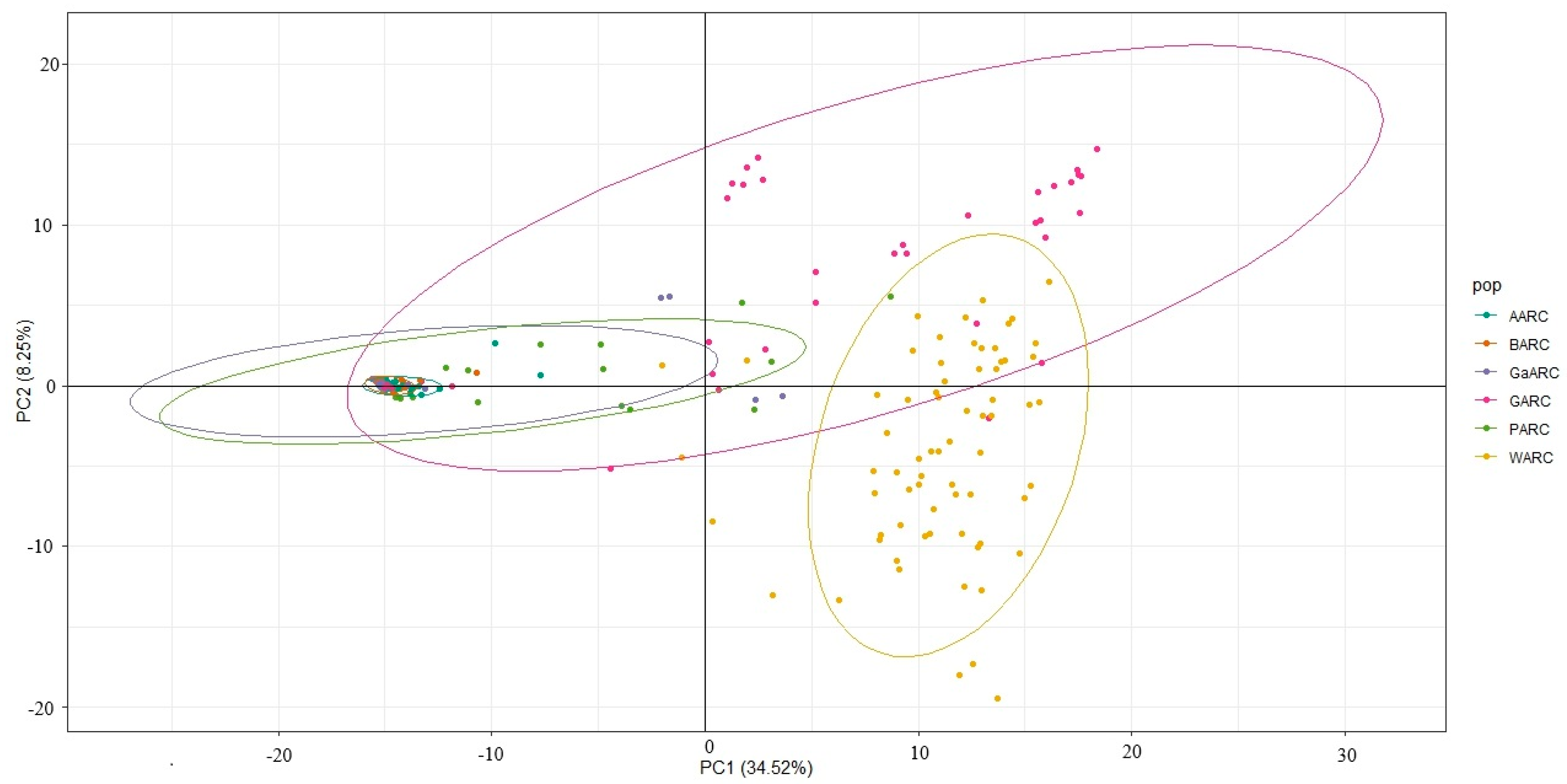
3.4. Principal Component Analysis (PCA)
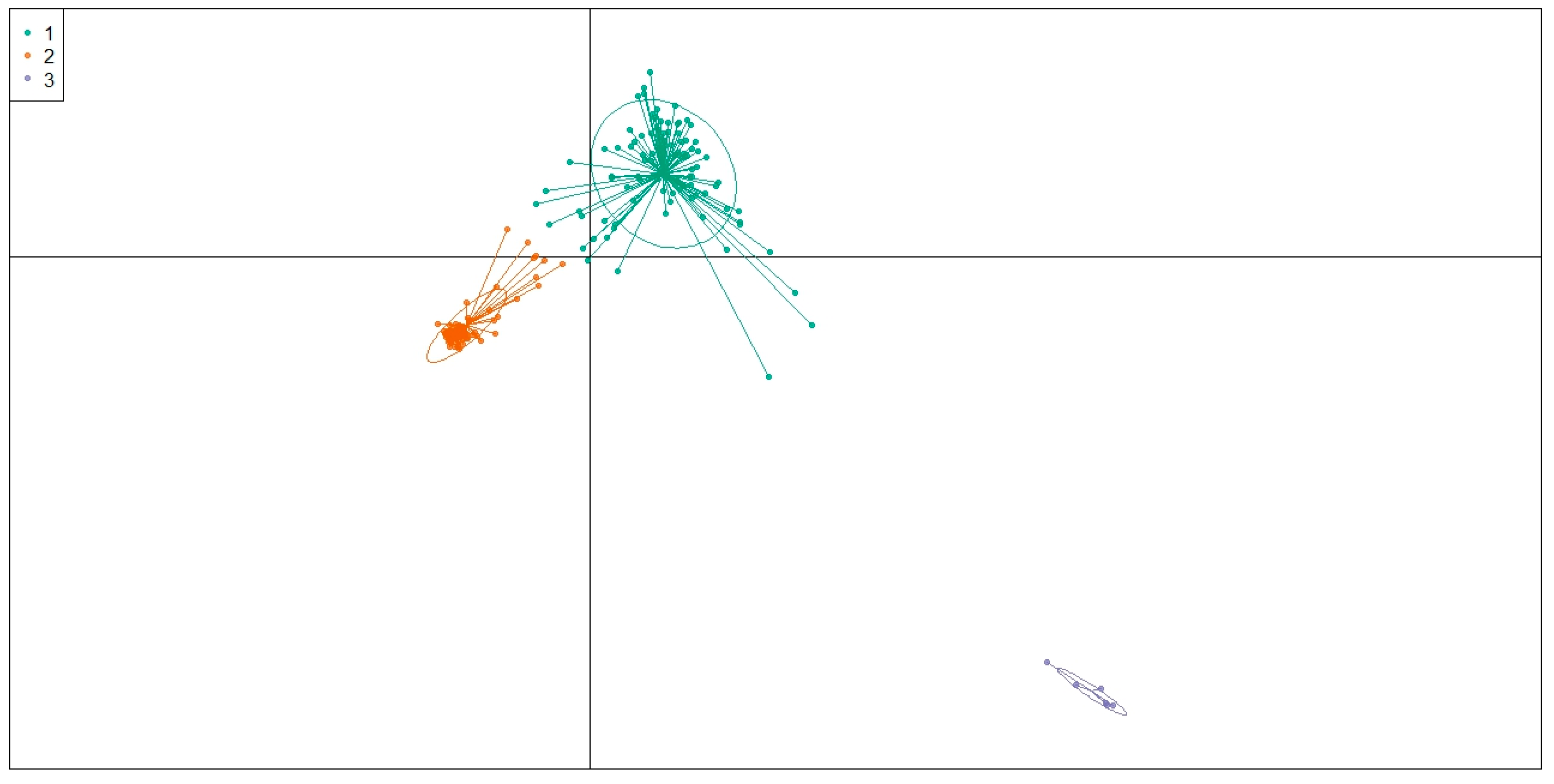
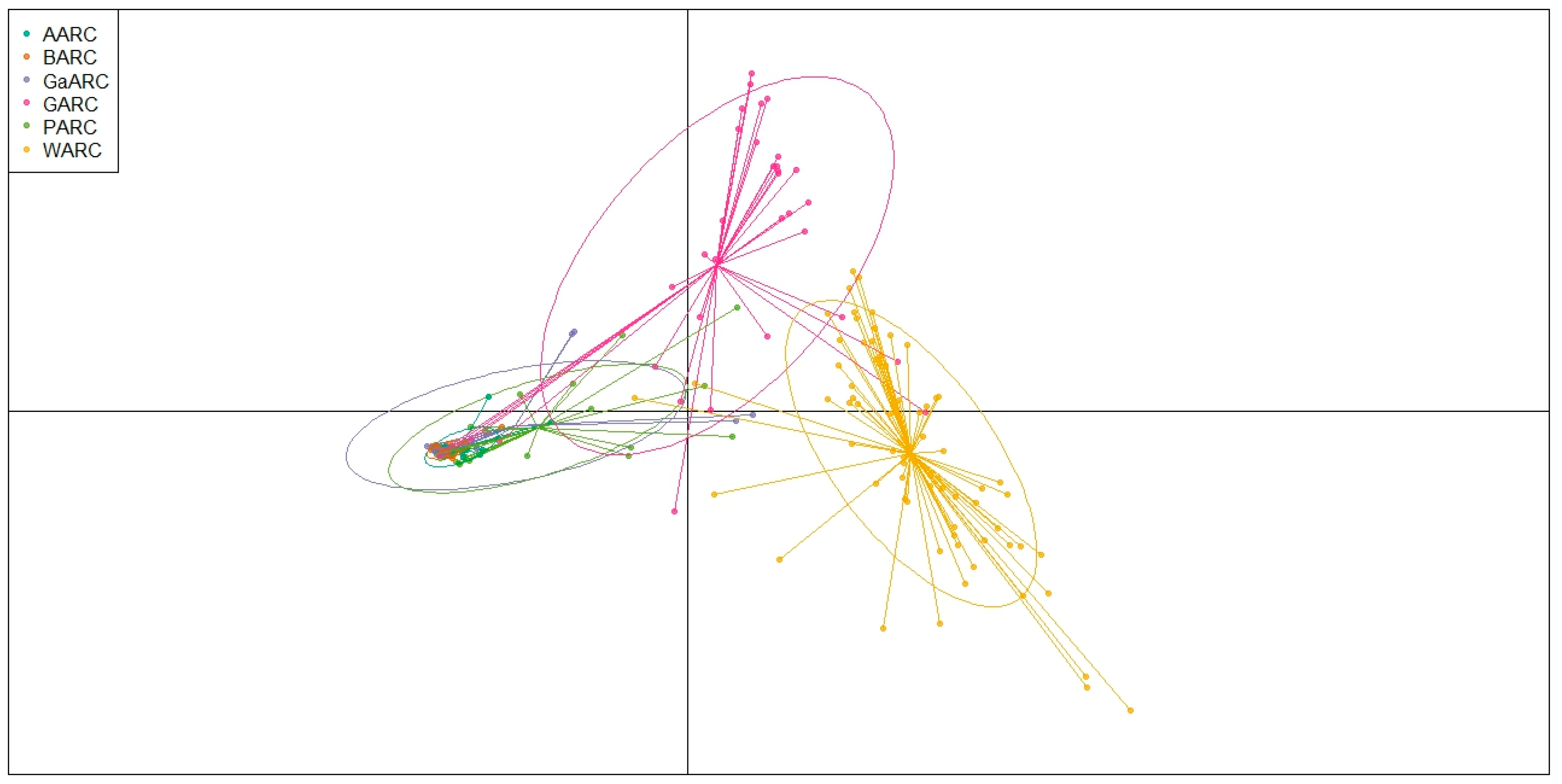
3.5. Discriminant Analysis of Principal Components (DAPC)
3.6. Collection Diversity Analysis
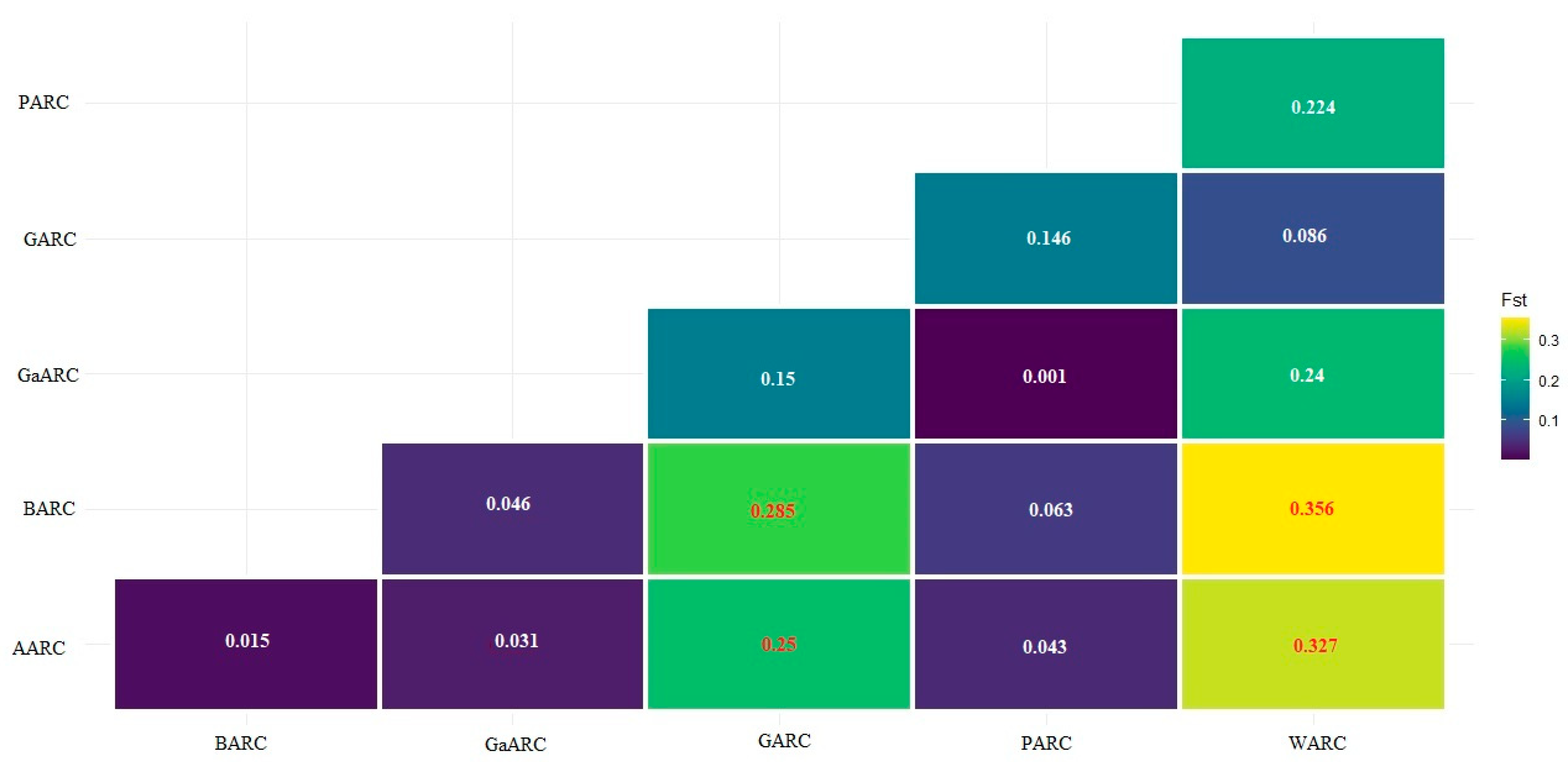
3.7. Molecular Variance (AMOVA)
4. Discussion
4.1. SNP Markers Density and Genome-Wide Variation Patterns
4.2. Unequal Distribution of Genetic Diversity of Sesame Accessions Across Ethiopian Research Centers
4.3. Genetic Diversity Metrics Among Research Center-Based Sesame Accessions
5. Conclusions
Supplementary Materials
Author Contributions
Funding
Institutional Review Board Statement
Informed Consent Statement
Data Availability Statement
Acknowledgments
Conflicts of Interest
Abbreviations
| AARC | Assosa Agricultural Research Center |
| BARC | Bako Agricultural Research Center |
| GaARC | Gambella Agricultural Research Center |
| GARC | Gondar Agricultural Research Center |
| PARC | Pawe Agricultural Research Center |
| WARC | Werer Agricultural Research Center |
| Ho | Observed heterozygosity |
| He | Expected heterozygosity |
| Ht | Overall gene diversity |
| Dst | Gene diversity among samples |
| Dst | Locus-Specific Differentiation |
| Fis | Inbreeding Coefficient |
| H′ | Shannon diversity index |
| Ng | Number of genotypes |
| Pa | Private alleles |
| Ps | Private SNPs |
| Ad | Allelic diversity |
| Nd | Nucleotide diversity |
| He′ | Gene diversity |
| Ho′ | Heterozygosity |
| Fst | Fixation index across the population |
| Df | Degrees of freedom |
| SS | Sum of squares |
| MS | Mean square |
| EV | Estimated variance |
| PV | Percentage variance |
| PhiPT | Genetic differentiation among populations |
| Phi’PT | Standardized genetic differentiation |
| PhiPT max | Maximum possible population differentiation |
References
- Gormley, I.C.; Bedigian, D.; Olmstead, R.G. Phylogeny of pedaliaceae and martyniaceae and the placement of Trapella in Plantaginaceae s. l. Syst. Bot. 2015, 40, 259–268. [Google Scholar] [CrossRef]
- Bedigian, D. Systematics and evolution in Sesamum L. (Pedaliaceae), part 1: Evidence regarding the origin of sesame and its closest relatives. Webbia 2015, 70, 1–42. [Google Scholar] [CrossRef]
- De Candolle, A. Origin of Cultivated Plants; Kegan Paul, French Co.: London, UK, 1884; Reprinted by Noble Offset Printers: New York, NY, USA, 1959. [Google Scholar]
- Vavilov, N.I. Studies on the origin of cultivated plants. Bull. Appl. Bot. 1926, 16, 1–248, (In Russian, English Summary). [Google Scholar]
- Watt, G. Dictionary of the Economic Products of India, Govt; India Central Printing Office: Calcutta, India, 1893; Volume 6, pp. 502–541. [Google Scholar]
- Angamuthu, M.; Govindasamy, S.; Kasirajan, S.; Langyan, S.; Rangan, P.; Pradheep, K. Origin and History of Sesame and Its Uses; Springer: Berlin/Heidelberg, Germany, 2025; pp. 1–19. [Google Scholar] [CrossRef]
- Miao, H.; Wang, L.; Qu, L.; Liu, H.; Sun, Y.; Le, M.; Wang, Q.; Wei, S.; Zheng, Y.; Lin, W.; et al. Genomic evolution and insights into agronomic trait innovations of Sesamum species. Plant Commun. 2024, 5, 100729. [Google Scholar] [CrossRef]
- Kobayashi, T. Cytogenetics of sesame (Sesamum indicum L.). In Chromosome Engineering in Plants: Genetics, Breeding, Evolution. Part B; Tsuchiya, T., Gupta, P.K., Eds.; Elsevier: Amsterdam, The Netherlands, 1991; pp. 581–592. [Google Scholar]
- Teklu, D.H.; Shimelis, H.; Tesfaye, A.; Mashilo, J.; Zhang, X.; Zhang, Y.; Dossa, K.; Shayanowako, A.I.T. Genetic variability and population structure of Ethiopian sesame (Sesamum indicum L.) germplasm assessed through phenotypic traits and simple sequence repeats markers. Plants 2021, 10, 1129. [Google Scholar] [CrossRef]
- Wei, P.; Zhao, F.; Wang, Z.; Wang, Q.; Chai, X.; Hou, G.; Meng, Q. Sesame (Sesamum indicum L.): A Comprehensive Review of Nutritional Value, Phytochemical Composition, Health Benefits, Development of Food, and Industrial Applications. Nutrients 2022, 14, 4079. [Google Scholar] [CrossRef]
- Food and Agriculture Organization Corporate Statistical Database (FAOSTAT). Crops and Livestock Products. 2024. Available online: https://www.fao.org/faostat/en/#data/QCL (accessed on 1 December 2025).
- Pathak, N.; Rai, A.K.; Kumari, R.; Thapa, A.; Bhat, K.V. Sesame Crop: An Underexploited Oilseed Holds Tremendous Potential for Enhanced Food Value. Agric. Sci. 2014, 5, 519–529. [Google Scholar] [CrossRef]
- Wang, L.; Yu, S.; Tong, C.; Zhao, Y.; Liu, Y.; Song, C.; Zhang, Y.; Zhang, X.; Wang, Y.; Hua, W.; et al. Genome Sequencing of the High Oil Crop Sesame Provides Insight into Oil Biosynthesis. Genome Biol. 2014, 15, R39. [Google Scholar] [CrossRef] [PubMed]
- Maurya, R.; Singh, S.; Babu, Y.S.; Khan, F.N.; Nawade, B.; Vishwakarma, H.; Kumar, A.; Yadav, R.; Jalli, R.; Angamuthu, M.; et al. Molecular Diversity Studies and Core Development in Sesame Germplasm (Sesamum indicum L.) Using SSR Markers. Plant Mol. Biol. Rep. 2025, 43, 180–196. [Google Scholar] [CrossRef]
- Gildemacher, P.; Audet-Bélanger, G.; Mangnus, E.; Van De Pol, F.; Tiombiano, D.; Sanogo, K. Sesame Sector Development Lessons Learned in Burkina Faso and Mali; Royal Tropical Institute (KIT): Amsterdam, The Netherlands, 2015. [Google Scholar]
- Abate, M.; Mekbib, F. Assessment of Genetic Diversity in Ethiopian Sesame (Sesamum indicum L.) Germplasm using Random Amplified Polymorphic DNA (RAPD) Markers. J. Adv. Agric. 2015, 5, 639–649. [Google Scholar] [CrossRef]
- Muthoni, J.; Shimelis, H. Production of minor tropical oil crops in Africa: Case of sesame (Sesamum indicum L.). Aust. J. Crop Sci. 2025, 19, 816–829. [Google Scholar] [CrossRef]
- Girma, T.K.; Worku, Y.; Bachewe, F.; Asnake, W.; Abate, G. Scoping study on Ethiopian sesame value chain. In Rethinking Food Markets; International Food Policy Research Institute: Washington, DC, USA, 2022. [Google Scholar]
- Weldemichael, M.Y.; Gebremedhn, H.M. Research advances and prospects of molecular markers in sesame: A review. Plant Biotechnol. Rep. 2023, 17, 585–603. [Google Scholar] [CrossRef]
- Gulhan, E.A.; Taskin, M.; Turgut, K. Analysis of Genetic Diversity in Turkish Sesame (Sesamum indicum L.) Populations Using RAPD Markers. Genet. Resour. Crop Evol. 2004, 51, 599–607. [Google Scholar] [CrossRef]
- Laurentin, H.; Karlovsky, P. AFLP fingerprinting of sesame (Sesamum indicum L.) cultivars: Identification, genetic relationship and comparison of AFLP informativeness parameters. Genet. Resour. Crop Evol. 2007, 54, 1437–1446. [Google Scholar] [CrossRef]
- Laurentin, H.; Ratzinger, A.; Karlovsky, P. Relationship between metabolic and genomic diversity in sesame (Sesamum indicum L.). BMC Genom. 2008, 9, 250. [Google Scholar] [CrossRef]
- Pham, T.D.; Bui, T.M.; Werlemark, G.; Bui, T.C.; Merker, A.; Carlsson, A. A study of genetic diversity of sesame (Sesamum indicum L.) in Vietnam and Cambodia estimated by RAPD markers. Genet. Resour. Crop Evol. 2009, 56, 679–690. [Google Scholar] [CrossRef]
- Ferdinandez, Y.S.N.; Somers, D.J.; Coulman, B.E. Estimating the genetic relationship of hybrid bromegrass to smooth bromegrass and meadow bromegrass using RAPD markers. Plant Breed. 2001, 120, 149–153. [Google Scholar] [CrossRef]
- Govindaraj, M.; Vetriventhan, M.; Srinivasan, M. Importance of genetic diversity assessment in crop plants and its recent advances: An overview of its analytical perspectives. Genet. Res. Int. 2015, 2015, 431487. [Google Scholar] [CrossRef]
- Akbar, F.; Rabbani, M.A.; Shahid Masood, M.; Shinwari, Z.K. Genetic diversity of sesame (Sesamum indicum L.) germplasm from Pakistan using RAPD markers. Pak. J. Bot. 2011, 43, 2153–2160. [Google Scholar]
- Nyongesa, B.O.; Were, B.A.; Gudu, S.; Dangasuk, O.G.; Onkware, A.O. Genetic diversity in cultivated sesame (Sesamum indicum L.) and related wild species in East Africa. J. Crop Sci. Biotechnol. 2013, 16, 9–15. [Google Scholar] [CrossRef]
- Cho, Y.I.; Park, J.H.; Lee, C.W.; Ra, W.H.; Chung, J.W.; Lee, J.R.; Ma, K.H.; Lee, S.Y.; Lee, K.S.; Lee, M.C.; et al. Evaluation of the genetic diversity and population structure of sesame (Sesamum indicum L.) using microsatellite markers. Genes Genom. 2011, 33, 187–195. [Google Scholar] [CrossRef]
- Furat, S.; Uzun, B. The use of agro-morphological characters for the assessment of genetic diversity in sesame (Sesamum indicum L.). Plant Omics 2010, 3, 85–91. [Google Scholar]
- Sharma, S.N.; Kumar, V.; Mathur, S. Comparative Analysis of RAPD and ISSR Markers for Characterization of Sesame (Sesamum indicum L.) Genotypes. J. Plant Biochem. Biotechnol. 2009, 18, 37–43. [Google Scholar] [CrossRef]
- Tabatabaei, I.; Pazouki, L.; Bihamta, M.R.; Mansoori, S.; Javaran, J.; Niinemets, Ü. Genetic variation among Iranian sesame (Sesamum indicum L.) accessions vis-à-vis exotic genotypes on the basis of morpho-physiological traits and RAPD markers. Aust. J. Crop Sci. 2011, 5, 1396–1407. [Google Scholar]
- Uzun, B.; Çaǧ, M.I. Identification of molecular markers linked to determinate growth habit in sesame. Euphytica 2009, 166, 379–384. [Google Scholar] [CrossRef]
- Zhang, H.; Wei, L.; Miao, H.; Zhang, T.; Wang, C. Development and validation of genic-SSR markers in sesame by RNA-seq. BMC Genom. 2012, 13, 316. [Google Scholar] [CrossRef]
- Kumar, H.; Kaur, G.; Banga, S. Molecular Characterization and Assessment of Genetic Diversity in Sesame (Sesamum indicum L.) Germplasm Collection Using ISSR Markers. J. Crop Improv. 2012, 26, 540–557. [Google Scholar] [CrossRef]
- Gebremichael, D.E.; Parzies, H.K. Genetic variability among landraces of sesame in Ethiopia. Afr. Crop Sci. J. 2010, 19, 1–13. [Google Scholar] [CrossRef]
- Laurentin, H.E.; Karlovsky, P. Genetic relationship and diversity in a sesame (Sesamum indicum L.) germplasm collection using amplified fragment length polymorphism (AFLP). BMC Genet. 2006, 7, 10. [Google Scholar] [CrossRef] [PubMed]
- Zhang, Y.X.; Zhang, X.R.; Hua, W.; Wang, L.H.; Che, Z. Analysis of genetic diversity among indigenous landraces from sesame (Sesamum indicum L.) core collection in China as revealed by SRAP and SSR markers. Genes Genom. 2010, 32, 207–215. [Google Scholar] [CrossRef]
- Zhang, Y.; Zhang, X.; Che, Z.; Wang, L.; Wei, W.; Li, D. Genetic diversity assessment of sesame core collection in China by phenotype and molecular markers and extraction of a mini-core collection. BMC Genet. 2012, 13, 102. [Google Scholar] [CrossRef]
- Wu, K.; Yang, M.; Liu, H.; Tao, Y.; Mei, J.; Zhao, Y. Genetic analysis and molecular characterization of Chinese sesame (Sesamum indicum L.) cultivars using Insertion-Deletion (InDel) and Simple Sequence Repeat (SSR) markers. BMC Genet. 2014, 15, 35. [Google Scholar] [CrossRef] [PubMed]
- Antoni, R. Applications of Single-Nucleotide Polymorphisms in Crop Genetics. Curr. Opin. Plant Biol. 2002, 5, 94–100. [Google Scholar] [CrossRef]
- Basak, M.; Uzun, B.; Yol, E. Genetic diversity and population structure of the Mediterranean sesame core collection with use of genome-wide SNPs developed by double digest RAD-Seq. PLoS ONE 2019, 14, e0223757. [Google Scholar] [CrossRef] [PubMed]
- Elshire, R.J.; Glaubitz, J.C.; Sun, Q.; Poland, J.A.; Kawamoto, K.; Buckler, E.S.; Mitchell, S.E. A robust, simple genotyping-by-sequencing (GBS) approach for high-diversity species. PLoS ONE 2011, 6, e19379. [Google Scholar] [CrossRef]
- Bajgain, P.; Rouse, M.N.; Anderson, J.A. Comparing genotyping-by-sequencing and single nucleotide polymorphism chip genotyping for quantitative trait loci mapping in wheat. Crop Sci. 2016, 56, 232–248. [Google Scholar] [CrossRef]
- Xiong, H.; Shi, A.; Mou, B.; Qin, J.; Motes, D.; Lu, W.; Ma, J.; Weng, Y.; Yang, W.; Wu, D. Genetic diversity and population structure of cowpea (Vigna unguiculata L. Walp). PLoS ONE 2016, 11, e0160941. [Google Scholar] [CrossRef]
- Fatokun, C.A.; Tarawali, S.A.; Singh, B.B.; Kormawa, P.M.; Tamò, M. Challenges and Opportunities for Enhancing Sustainable Cowpea Production; International Institute of Tropical Agriculture (IITA): Ibadan, Nigeria, 2018. [Google Scholar]
- Kilian, A.; Wenzl, P.; Huttner, E.; Carling, J.; Xia, L.; Blois, H.; Caig, V.; Heller-Uszynska, K.; Jaccoud, D.; Hopper, C.; et al. Diversity arrays technology: A generic genome profiling technology on open platforms. Methods Mol. Biol. 2012, 888, 67–89. [Google Scholar] [CrossRef]
- Gruber, B.; Unmack, P.J.; Berry, O.F.; Georges, A. Dartr: An R package to facilitate analysis of SNP data generated from reduced representation genome sequencing. Mol. Ecol. Resour. 2018, 18, 691–699. [Google Scholar] [CrossRef]
- Danecek, P.; Auton, A.; Abecasis, G.; Albers, C.A.; Banks, E.; DePristo, M.A.; Handsaker, R.E.; Lunter, G.; Marth, G.T.; Sherry, S.T.; et al. The variant call format and VCF-tools. Bioinformatics 2011, 27, 2156–2158. [Google Scholar] [CrossRef]
- Bradbury, P.J.; Zhang, Z.; Kroon, D.E.; Casstevens, T.M.; Ramdoss, Y.; Buckler, E.S. TASSEL: Software for association mapping of complex traits in diverse samples. Bioinformatics 2007, 23, 2633–2635. [Google Scholar] [CrossRef]
- R Core Team. R: A Language and Environment for Statistical Computing; R Foundation for Statistical Computing: Vienna, Austria, 2021. [Google Scholar]
- Jombart, T.; Ahmed, I. Adegenet 1.3-1: New tools for the analysis of genome-wide SNP data. Bioinformatics 2011, 27, 3070–3071. [Google Scholar] [CrossRef]
- Evanno, G.; Regnaut, S.; Goudet, J. Detecting the number of clusters of individuals using the software STRUCTURE: A simulation study. Mol. Ecol. 2005, 14, 2611–2620. [Google Scholar] [CrossRef] [PubMed]
- Letunic, I.; Bork, P. Interactive tree of life (iTOL) v5: An online tool for phylogenetic tree display and annotation. Nucleic Acids Res. 2021, 49, W293–W296. [Google Scholar] [CrossRef]
- Porras-Hurtado, L.; Ruiz, Y.; Santos, C.; Phillips, C.; Carracedo, Á.; Lareu, M.V. An overview of STRUCTURE: Applications, parameter settings, and supporting software. Front. Genet. 2013, 4, 98. [Google Scholar] [CrossRef]
- Jombart, T.; Collins, C. A Tutorial for Discriminant Analysis of Principal Components (DAPC) Using Adegenet 2.1.6; Imperial College: London, UK, 2022. [Google Scholar]
- Neath, A.A.; Cavanaugh, J.E. The Bayesian information criterion: Background, derivation, and applications. WIREs Comput. Stat. 2012, 4, 199–203. [Google Scholar] [CrossRef]
- Salazar, E.; González, M.; Araya, C.; Mejía, N.; Carrasco, B. Genetic diversity and intra-racial structure of Chilean Choclero corn (Zea mays L.) germplasm revealed by simple sequence repeat markers (SSRs). Sci. Hortic. 2017, 225, 620–629. [Google Scholar] [CrossRef]
- Jombart, T. Adegenet: A R package for the multivariate analysis of genetic markers. Bioinformatics 2008, 24, 1403–1405. [Google Scholar] [CrossRef] [PubMed]
- Jombart, T.; Devillard, S.; Balloux, F. Discriminant analysis of principal components: A new method for the analysis of genetically structured populations. BMC Genet. 2010, 11, 94. [Google Scholar] [CrossRef]
- Excoffier, L.; Smouse, P.E.; Quattro, J.M. Analysis of Molecular Variance Inferred from Metric Distances Among DNA Haplotypes: Application to Human Mitochondrial DNA Restriction Data. Genetics 1992, 131, 479–491. [Google Scholar] [CrossRef]
- Kamvar, Z.N.; Tabima, J.F.; Grünwald, N.J. Poppr: An R package for genetic analysis of populations with clonal, partially clonal, and/or sexual reproduction. PeerJ 2014, 2014, e281. [Google Scholar] [CrossRef]
- Kamvar, Z.N.; Brooks, J.C.; Grünwald, N.J. Novel R tools for analysis of genome-wide population genetic data with emphasis on clonality. Front. Genet. 2015, 6, 208. [Google Scholar] [CrossRef]
- Nei, M. Genetic distance between populations. Am. Nat. 1972, 106, 283–292. [Google Scholar] [CrossRef]
- Hamrick, J.L.; Godt, M.W. Effects of life history traits on genetic diversity in plant species. Philos. Trans. R. Soc. Lond. Ser. B Biol. Sci. 1996, 351, 1291–1298. [Google Scholar]
- Nordborg, M. Linkage disequilibrium, gene trees and selfing: An ancestral recombination graph with partial self-fertilization. Genetics 2000, 154, 923–929. [Google Scholar] [CrossRef] [PubMed]
- Van Hintum, T.J.; Brown, A.H.; Spillane, C. Core Collections of Plant Genetic Resources; Bioversity International: Rome, Italy, 2000. [Google Scholar]
- Dossa, K.; Diouf, D.; Wang, L.; Wei, X.; Zhang, Y.; Niang, M.; Fonceka, D.; Yu, J.; Mmadi, M.A.; Yehouessi, L.W.; et al. The emerging oilseed crop Sesamum indicum enters the ‘Omics’ era. Front. Plant Sci. 2017, 8, 1154. [Google Scholar] [CrossRef] [PubMed]
- Wang, L.; Xia, Q.; Zhang, Y.; Zhu, X.; Zhu, X.; Li, D.; Ni, X.; Gao, Y.; Xiang, H.; Wei, X.; et al. Updated sesame genome assembly and fine mapping of plant height and seed coat color QTLs using a new high-density genetic map. BMC Genom. 2016, 17, 31. [Google Scholar] [CrossRef]
- Wei, X.; Wang, L.; Zhang, Y.; Qi, X.; Wang, X.; Ding, X.; Zhang, J.; Zhang, X. Development of simple sequence repeat (SSR) markers of sesame (Sesamum indicum L.) from a genome survey. Molecules 2014, 19, 5150–5162. [Google Scholar] [CrossRef]
- Dossa, K.; Wei, X.; Zhang, Y.; Fonceka, D.; Yang, W.; Diouf, D.; Liao, B.; Cissé, N.; Zhang, X. Analysis of genetic diversity and population structure of sesame accessions from Africa and Asia as major centers of its cultivation. Genes 2016, 7, 14. [Google Scholar] [CrossRef] [PubMed]
- Dossa, K.; Li, D.; Zhou, R.; Yu, J.; Wang, L.; Zhang, Y.; You, J.; Liu, A.; Mmadi, M.A.; Fonceka, D.; et al. The genetic basis of drought tolerance in the high oil crop Sesamum indicum. Plant Biotechnol. J. 2019, 17, 1788–1803. [Google Scholar] [CrossRef]
- Cui, C.; Liu, Y.; Liu, Y.; Cui, X.; Sun, Z.; Du, Z.; Wu, K.; Jiang, X.; Mei, H.; Zheng, Y. Genome-wide association study of seed coat color in sesame (Sesamum indicum L.). PLoS ONE 2021, 16, e0251526. [Google Scholar] [CrossRef]
- Rosenberg, N.A.; Pritchard, J.K.; Weber, J.L.; Cann, H.M.; Kidd, K.K.; Zhivotovsky, L.A.; Feldman, M.W. Genetic structure of human populations. Science 2002, 298, 2381–2385. [Google Scholar] [CrossRef]
- Dixit, A.; Jin, M.H.; Chung, J.W.; Yu, J.W.; Chung, H.K.; Ma, K.H.; Park, Y.J.; Cho, E.G. Development of polymorphic microsatellite markers in sesame (Sesamum indicum L.). Mol. Ecol. Notes 2005, 5, 736–738. [Google Scholar] [CrossRef]
- Zhang, H.; Miao, H.; Wang, L.; Qu, L.; Liu, H.; Wang, Q.; Yue, M. Genome sequencing of the important oilseed crop Sesamum indicum L. Genome Biol. 2013, 14, 401. [Google Scholar] [CrossRef] [PubMed]
- Allendorf, F.W.; Luikart, G.; Aitken, S.N. Conservation and the Genetics of Populations, 2nd ed.; John Wiley & Sons: Hoboken, NJ, USA, 2013. [Google Scholar]
- Hajjar, R.; Hodgkin, T. The use of wild relatives in crop improvement: A survey of developments over the last 20 years. Euphytica 2007, 156, 1–13. [Google Scholar] [CrossRef]
- Gouesnard, B.; Diaw, Y.; Gay, L.; Ronfort, J.; David, J. Seed management and selection in ancient maize landraces from the French Pyrenees: Ethnobotanical survey and selection experiment. Genet. Resour. Crop Evol. 2025, 72, 10375–10395. [Google Scholar] [CrossRef]
- Morrell, P.L.; Buckler, E.S.; Ross-Ibarra, J. Crop genomics: Advances and applications. Nat. Rev. Genet. 2011, 13, 85–96. [Google Scholar] [CrossRef]
- Eltaher, S.; Sallam, A.; Belamkar, V.; Emara, H.A.; Nower, A.A.; Salem, K.F.M.; Poland, J.; Baenziger, P.S. Genetic diversity and population structure of F3:6 Nebraska Winter wheat genotypes using genotyping-by-sequencing. Front. Genet. 2018, 9, 76. [Google Scholar] [CrossRef] [PubMed]
- Pritchard, J.K.; Stephens, M.; Donnelly, P. Inference of Population Structure Using Multilocus Genotype Data. Genetics 2000, 155, 945–959. [Google Scholar] [CrossRef]
- Olukolu, B.A.; Mayes, S.; Stadler, F.; Ng, N.Q.; Fawole, I.; Dominique, D.; Azam-Ali, S.N.; Abbott, A.G.; Kole, C. Genetic diversity in Bambara groundnut (Vigna subterranea (L.) Verdc.) as revealed by phenotypic descriptors and DArT marker analysis. Genet. Resour. Crop Evol. 2012, 59, 347–358. [Google Scholar] [CrossRef]
- Van De Wouw, M.; Kik, C.; Van Hintum, T.; Van Treuren, R.; Visser, B. Genetic erosion in crops: Concept, research results and challenges. Plant Genet. Resour. Charact. Util. 2010, 8, 1–15. [Google Scholar] [CrossRef]
- Khazaei, M.R.; Ahmadi, S.; Saghafian, B.; Zahabiyoun, B. A new daily weather generator to preserve extremes and low-frequency variability. Clim. Change 2013, 119, 631–645. [Google Scholar] [CrossRef]






| Populations | Genetic Parameters | |||||||
|---|---|---|---|---|---|---|---|---|
| Ng | Pa | Ps | Ad | Nd | Ho′ | He′ | Fst | |
| Based on Research Center Collections | ||||||||
| AARC | 21 | 0 | 0 | 1.404 | 0.2048 | 0.131 | 0.102 | −0.123 |
| BARC | 28 | 0 | 0 | 1.743 | 0.3921 | 0.166 | 0.197 | 0.138 |
| GaARC | 12 | 113 | 20 | 1.930 | 0.6477 | 0.223 | 0.325 | 0.291 |
| GARC | 35 | 6 | 1 | 1.480 | 0.2385 | 0.138 | 0.119 | −0.066 |
| PARC | 21 | 152 | 24 | 1.882 | 0.5644 | 0.292 | 0.282 | 0.002 |
| WARC | 71 | 0 | 0 | 1.741 | 0.3726 | 0.207 | 0.185 | −0.065 |
| Mean | 45.2 | 7.5 | 1.7 | 0.4 | 0.2 | 0.2 | 0.03 | |
| Research Center Collections | Number of Accessions | Admixed Individual | Proportion of Membership in Each Cluster (%) | ||||
|---|---|---|---|---|---|---|---|
| Cluster I | Cluster II | Cluster III | Cluster IV | Cluster V | |||
| STRUCTURE | |||||||
| AARC | 21 | 0 | 21 | 0 | 0 | 0 | 0 |
| BARC | 28 | 2 | 26 | 0 | 0 | 0 | 0 |
| GaARC | 12 | 2 | 8 | 0 | 0 | 2 | 0 |
| GARC | 36 | 13 | 5 | 11 | 3 | 4 | 0 |
| PARC | 21 | 7 | 14 | 0 | 0 | 0 | 0 |
| WARC | 70 | 35 | 0 | 0 | 0 | 17 | 19 |
| 188 | 31% | 39% | 6% | 2% | 12% | 10% | |
| Source of Variation | Df | SS | MS | EV | PV | Statistics | p-Value | ||
|---|---|---|---|---|---|---|---|---|---|
| PhiPT | PhiPT Max | Phi’PT | |||||||
| Among accession groups | 5 | 46,887.540 | 9377.508 | 298.304 | 30% | ||||
| Within accession groups | 182 | 127,753.864 | 701.944 | 701.944 | 70% | ||||
| Total | 187 | 174,641.404 | 1000.248 | 100% | 0.298 | 0.730 | 0.409 | 0.001 | |
Disclaimer/Publisher’s Note: The statements, opinions and data contained in all publications are solely those of the individual author(s) and contributor(s) and not of MDPI and/or the editor(s). MDPI and/or the editor(s) disclaim responsibility for any injury to people or property resulting from any ideas, methods, instructions or products referred to in the content. |
© 2026 by the authors. Licensee MDPI, Basel, Switzerland. This article is an open access article distributed under the terms and conditions of the Creative Commons Attribution (CC BY) license.
Share and Cite
Gelashe, F.B.; Ndeve, A.D.; Menamo, T.M.; Gandhi, H.; Chiulele, R.M. Genetic Diversity and Collection Structure Studies of Sesame (Sesamum indicum L.) Accessions Across Ethiopian Research Centers. Genes 2026, 17, 300. https://doi.org/10.3390/genes17030300
Gelashe FB, Ndeve AD, Menamo TM, Gandhi H, Chiulele RM. Genetic Diversity and Collection Structure Studies of Sesame (Sesamum indicum L.) Accessions Across Ethiopian Research Centers. Genes. 2026; 17(3):300. https://doi.org/10.3390/genes17030300
Chicago/Turabian StyleGelashe, Feyisa Bejiga, Arsénio D. Ndeve, Temesgen M. Menamo, Harish Gandhi, and Rogério M. Chiulele. 2026. "Genetic Diversity and Collection Structure Studies of Sesame (Sesamum indicum L.) Accessions Across Ethiopian Research Centers" Genes 17, no. 3: 300. https://doi.org/10.3390/genes17030300
APA StyleGelashe, F. B., Ndeve, A. D., Menamo, T. M., Gandhi, H., & Chiulele, R. M. (2026). Genetic Diversity and Collection Structure Studies of Sesame (Sesamum indicum L.) Accessions Across Ethiopian Research Centers. Genes, 17(3), 300. https://doi.org/10.3390/genes17030300