
Next-Generation Sequencing Defines a Molecularly Confirmed ARPKD Core Within the Broader PKHD1-Associated Disease Spectrum
 , , , , , , and
Abstract
1. Introduction
2. Materials and Methods
2.1. Study Design and Patient Recruitment
2.2. Clinical and Imaging Evaluation
2.3. Genetic Testing and Variant Interpretation
Sanger Sequencing
2.4. Outcomes and Follow-Up
2.5. Statistical Analysis
2.6. Ethical Considerations
3. Results
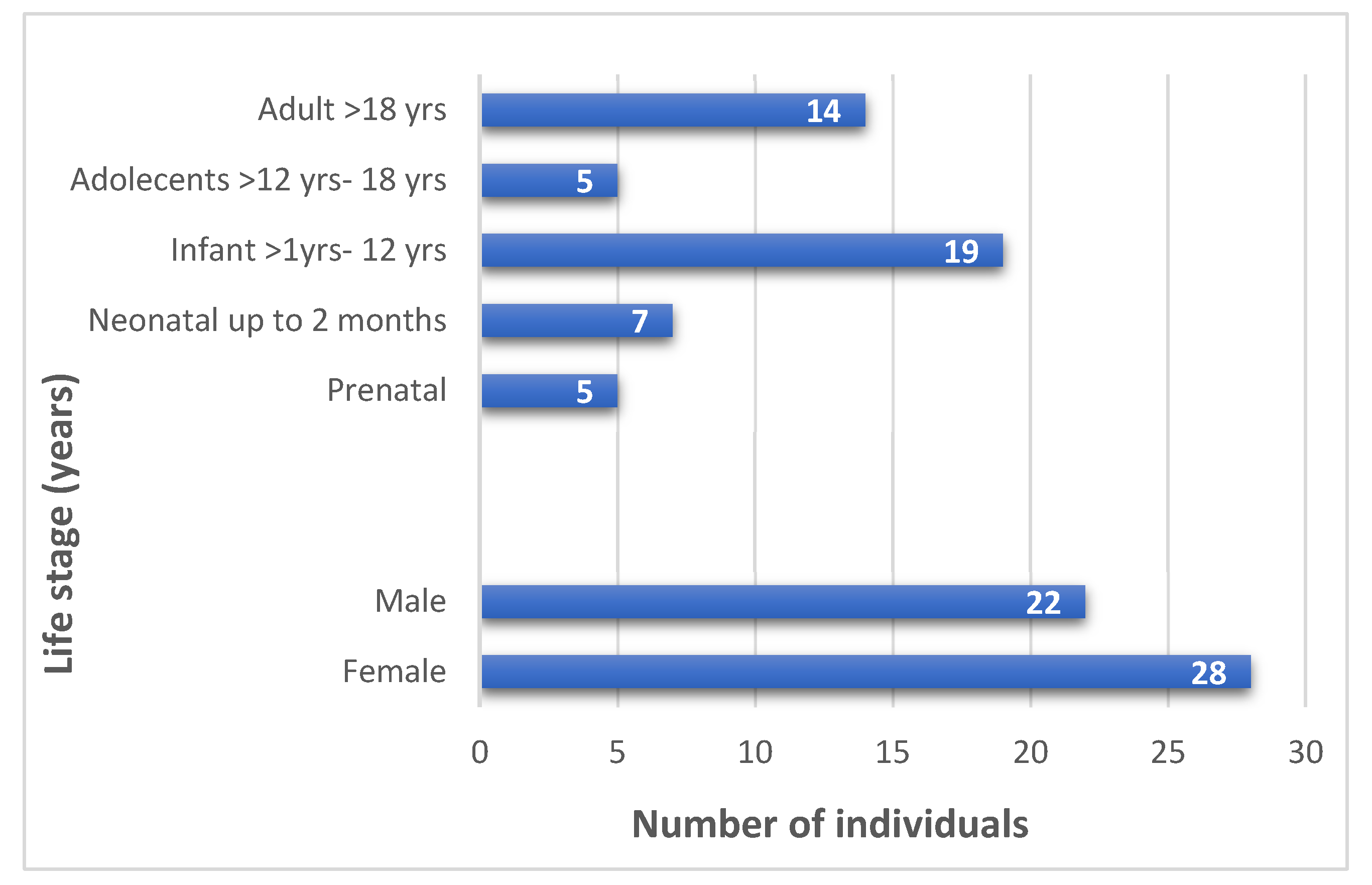
3.1. Clinical Outcomes Cohort Characterization
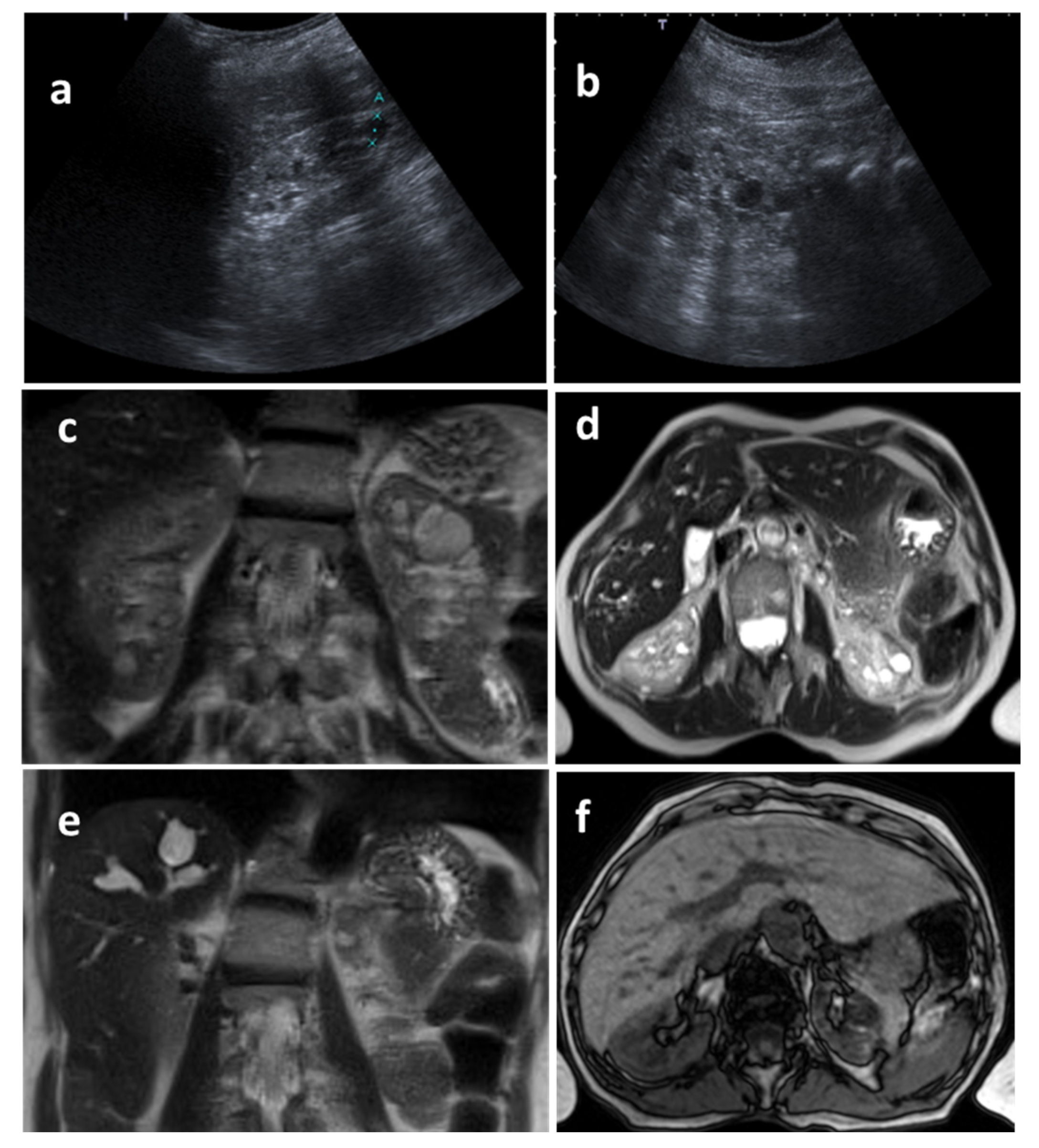
3.2. Imaging Characterization
Organ-Specific Findings
- Renal involvement
- Hepatic involvement
- Pulmonary involvement and early mortality
- Transplantation and therapeutic burden
3.3. Molecular Classification of the Cohort
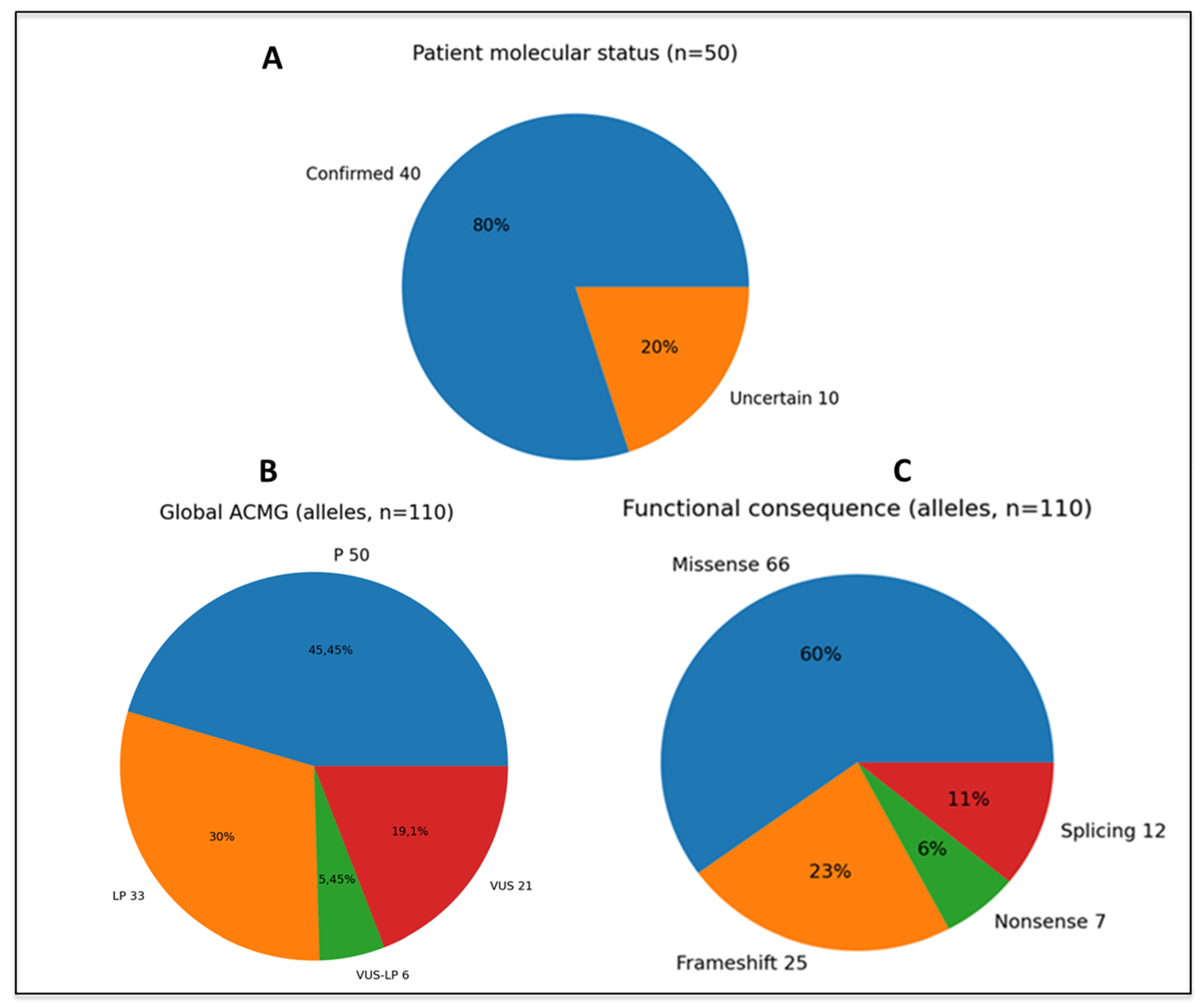
3.3.1. Functional Distribution of PKHD1 Alleles
3.3.2. Monoallelic Carriers
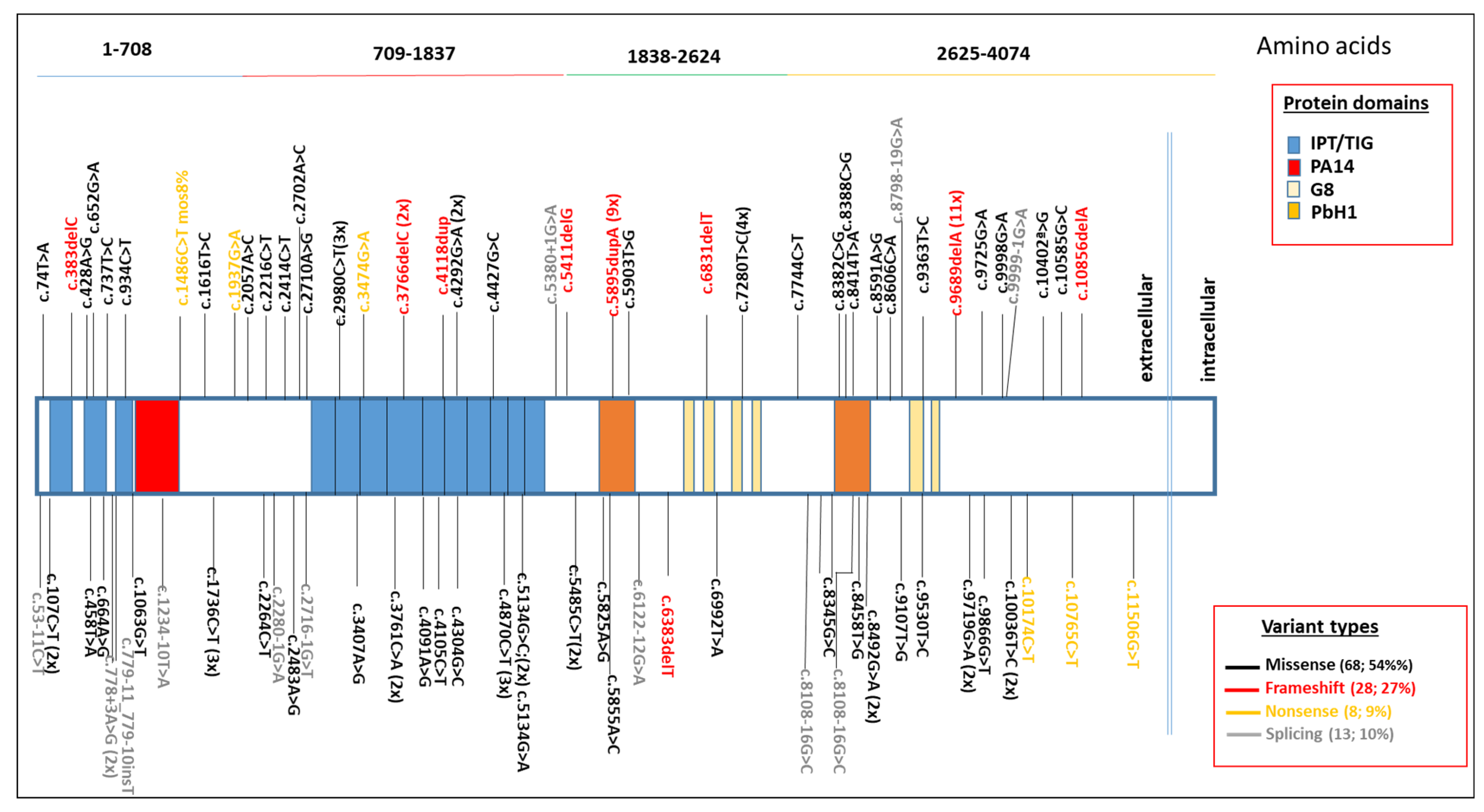
3.3.3. Whole-Cohort’s Allele Distribution
3.4. Genotype-Phenotype Correlations
3.5. Family History of Adult-Onset Disease
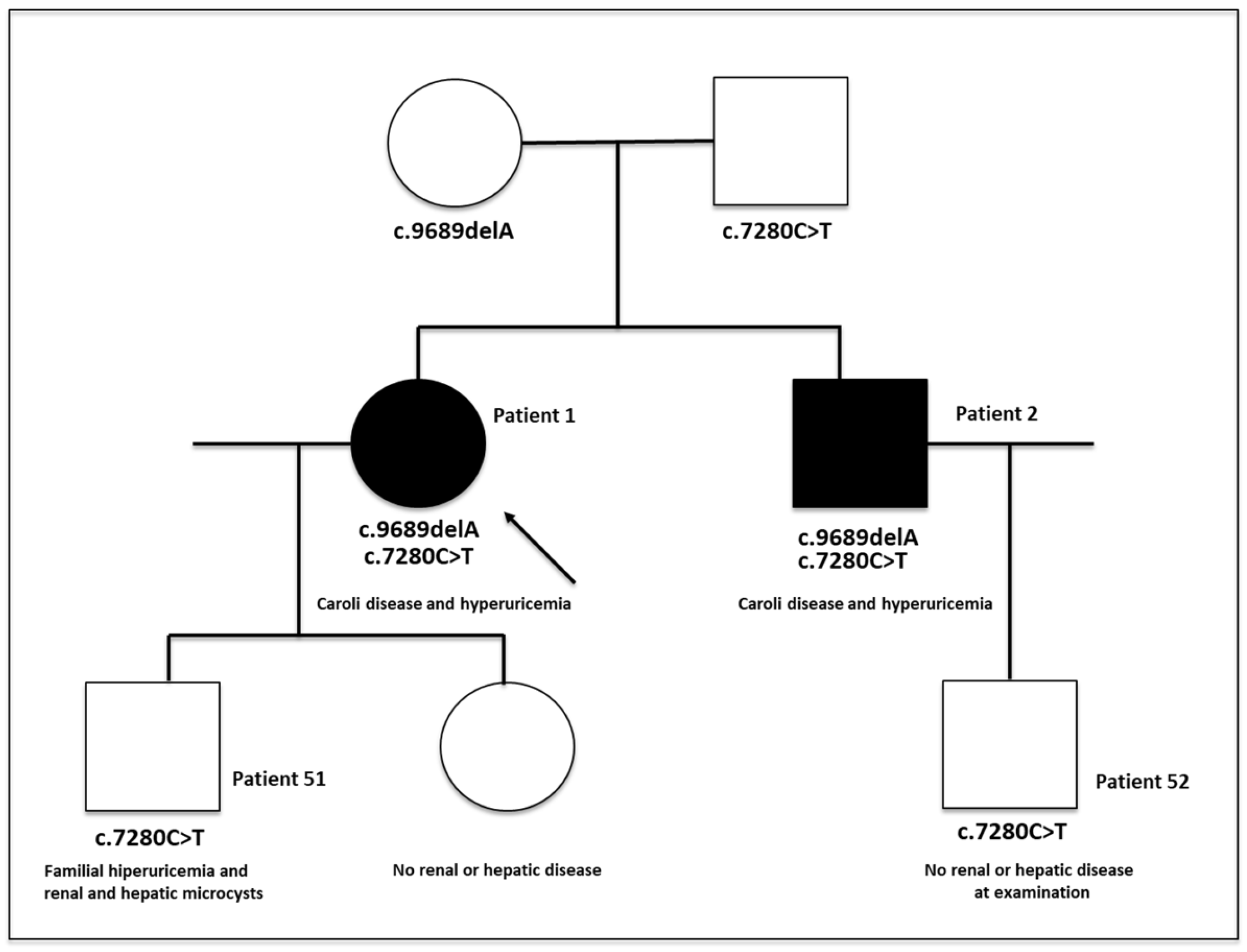
3.5.1. Patient 1 (Index)
3.5.2. Patient 2
3.5.3. Patient 51 (See Table S1)
3.5.4. Patient 52 (See Table S1)
4. Discussion
4.1. Clinical Spectrum and Survival Compared with Published Cohorts
4.2. Genotype–Phenotype Correlations in ARPKD
4.3. The Impact of NGS Targeted-Gene Panels in ARPKD
4.4. Strengths, Limitations, and Clinical Implications
4.5. Future Directions
5. Conclusions
Supplementary Materials
Author Contributions
Funding
Institutional Review Board Statement
Informed Consent Statement
Data Availability Statement
Acknowledgments
Conflicts of Interest
References
- Günay-Aygun, M.; Avner, E.D.; Bacallao, R.L.; Choyke, P.L.; Flynn, J.T.; Germino, G.G.; Guay-Woodford, L.; Harris, P.; Heller, T.; Ingelfinger, J.; et al. Autosomal recessive polycystic kidney disease and congenital hepatic fibrosis: Summary statement of a first National Institutes of health/office of Rare Diseases conference. J. Pediatr. 2006, 149, 159–164. [Google Scholar] [CrossRef] [PubMed]
- Sweeney, W.E., Jr.; Avner, E.D. Pathophysiology of childhood polycystic kidney diseases: New insights into disease-specific therapy. Pediatr. Res. 2013, 75, 148–157. [Google Scholar] [CrossRef]
- Dell, K.M. The spectrum of polycystic kidney disease in children. Adv. Chronic Kidney Dis. 2011, 18, 339–347. [Google Scholar] [CrossRef] [PubMed]
- Bergmann, C. Genetics of autosomal recessive polycystic kidney disease and its differential diagnosis. Front Pediatr. 2018, 5, 221. [Google Scholar] [CrossRef] [PubMed]
- Onuchic, L.F.; Furu, L.; Nagasawa, Y.; Hou, X.; Eggermann, T.; Ren, Z.; Bergmann, C.; Senderek, J.; Esquivel, E.; Zeltner, R.; et al. PKHD1, the polycystic kidney and hepatic disease 1 gene, encodes a novel large protein containing multiple immunoglobulinlike plexin-transcription-factor domains and parallel beta-helix repeats. Am. J. Hum. Genet. 2002, 70, 1305–1317. [Google Scholar] [CrossRef]
- Bergmann, C.; Senderek, J.; Küpper, F.; Schneider, F.; Dornia, C.; Windelen, E.; Eggermann, T.; Rudnik-Schöneborn, S.; Kirfel, J.; Furu, L.; et al. PKHD1 mutations in autosomal recessive polycystic kidney disease (ARPKD). Hum. Mutat. 2004, 23, 453–463. [Google Scholar] [CrossRef]
- Lu, H.; Galeano, M.C.R.; Ott, E.; Kaeslin, G.; Kausalya, P.J.; Kramer, C.; Ortiz-Brüchle, N.; Hilger, N.; Metzis, V.; Hiersche, M.; et al. Mutations in DZIP1L cause autosomal recessive polycystic kidney disease. Nat. Genet. 2017, 49, 1025–1034. [Google Scholar] [CrossRef]
- Sharp, A.M.; Messiaen, L.M.; Page, G.; Antignac, C.; Gubler, M.C.; Onuchic, L.F.; Somlo, S.; Guay-Woodford, L.M. Comprehensive genomic analysis of PKHD1 mutations in ARPKD cohorts. J. Med. Genet. 2005, 42, 336–349. [Google Scholar] [CrossRef]
- Medaglia, S.; Reig-Palou, J.; Bellés, A.; Moreno-Ruiz, N.; Rodríguez, J.; Armengol, X.; Aróstegui, J.I.; Armengol, L.; Guillén, J.J.; Laayouni, H.; et al. The excess of carriers in rare disorders suggests a non-pathogenic effect for most variants of uncertain significance. Clin. Genet. 2025, 107, 323–327. [Google Scholar] [CrossRef]
- Bergmann, C. ARPKD and early manifestations of ADPKD: The original polycystic kidney disease and phenocopies. Pediatr. Nephrol. 2015, 30, 15–30. [Google Scholar] [CrossRef]
- Harris, P.C.; Hopp, K. The mutation, a key determinant of phenotype in polycystic kidney disease. J. Am. Soc. Nephrol. 2013, 24, 868–870. [Google Scholar] [CrossRef]
- Halbritter, J.; Porath, J.D.; Diaz, K.A.; Braun, D.A.; Kohl, S.; Chaki, M.; Allen, S.J.; Soliman, N.A.; Hildebrandt, F. Identification of 99 novel mutations in PKHD1 in ARPKD patients. Hum. Genet. 2013, 132, 865–884. [Google Scholar] [CrossRef] [PubMed]
- Burgmaier, K.; Kilian, S.; Bammens, B.; Benzing, T.; Billing, H.; Büscher, A.; Büscher, A.; Galiano, M.; Grundmann, F.; Klaus, G.; et al. Clinical courses and complications in patients with autosomal recessive polycystic kidney disease. Sci. Rep. 2019, 9, 7919. [Google Scholar] [CrossRef] [PubMed]
- Gimpel, C.; Avni, F.E.; Breysem, L.; Burgmaier, K.; Caroli, A.; Cetiner, M.; Haffner, D.; Hartung, E.A.; Fanke, D.; König, J.; et al. Imaging of kidney and liver disease in autosomal recessive polycystic kidney disease. Radiology 2019, 290, 759–782. [Google Scholar]
- Schwartz, G.J.; Haycock, G.B.; Edelmann, C.M., Jr.; Spitzer, A. A simple estimate of glomerular filtration rate in children derived from body length and plasma creatinine. Pediatrics 1976, 58, 259–263. [Google Scholar] [CrossRef]
- Schwartz, G.J.; Muñoz, A.; Schneider, M.F.; Mak, R.H.; Kaskel, F.; Warady, B.A.; Furth, S.L. New equations to estimate GFR in children with chronic kidney disease. J. Am. Soc. Nephrol. 2009, 20, 629–637. [Google Scholar] [CrossRef]
- Levey, A.S.; Stevens, L.A.; Schmid, C.H.; Zhang, Y.L.; Castro, A.F.; Feldman, H.I.; Kusek, J.W.; Eggers, P.; Van Lente, F.; Greene, T.; et al. A new equation to estimate glomerular filtration rate. Ann. Intern. Med. 2009, 150, 604–612. [Google Scholar] [CrossRef]
- Inker, L.A.; Eneanya, N.D.; Coresh, J.; Tighiouart, H.; Wang, D.; Sang, Y.; Crews, D.C.; Doria, A.; Estrella, M.M.; Froissart, M.; et al. New creatinine- and cystatin C–based equations to estimate GFR without race. N. Engl. J. Med. 2021, 385, 1737–1749. [Google Scholar] [CrossRef]
- Flynn, J.T.; Kaelber, D.C.; Baker-Smith, C.M.; Blowey, D.; Carroll, A.E.; Daniels, S.R.; de Ferranti, S.D.; Dionne, J.M.; Falkner, B.; Flinn, S.K.; et al. Clinical practice guideline for screening and management of high blood pressure in children and adolescents. Pediatrics 2017, 140, e20171904. [Google Scholar] [CrossRef]
- Richards, S.; Aziz, N.; Bale, S.; Bick, D.; Das, S.; Gastier-Foster, J.; Grody, W.W.; Hegde, M.; Lyon, E.; Spector, E.; et al. Standards and guidelines for the interpretation of s quence variants: A joint consensus recommendation of the American College of Medical Genetics and Genomics and the Association for Molecular Pathology. Genet. Med. 2015, 17, 405–424. [Google Scholar] [CrossRef]
- Bergmann, C.; Senderek, J.; Sedlacek, B.; Pegiazoglou, I.; Puglia, P.; Eggermann, T.; Rudnik-Schöneborn, S.; Furu, L.; Onuchic, L.F.; de Baca, M.; et al. Spectrum of mutations in the gene for autosomal recessive polycystic kidney disease (ARPKD/PKHD1). J. Am. Soc. Nephrol. 2003, 14, 76–89. [Google Scholar] [CrossRef]
- Bergmann, C.; Senderek, J.; Windelen, E.; Küpper, F.; Middeldorf, I.; Schneider, F.; Dornia, C.; Rudnik-Schöneborn, S.; Konrad, M.; Schmitt, C.P.; et al. Clinical consequences of PKHD1 mutations in 164 patients with autosomal recessive polycystic kidney disease. Kidney Int. 2005, 67, 829–848. [Google Scholar] [CrossRef] [PubMed]
- Burgmaier, K.; Brinker, L.; Erger, F.; Gimpel, C.; Bergmann, C.; Boyer, O.G.; Collard, L.; Dafinger, C.; Fila, M.; Kowalewska, C.; et al. Refining genotype–phenotype correlations in 304 patients with autosomal recessive polycystic kidney disease and PKHD1 gene variants. Kidney Int. 2021, 100, 650–659. [Google Scholar] [CrossRef]
- Silverman, S.G.; Pedrosa, I.; Ellis, J.H.; Hindman, N.M.; Schieda, N.; Smith, A.D.; Remer, E.M.; Shinagare, A.B.; Curci, N.E.; Raman, S.S.; et al. Bosniak classification of cystic renal masses, version 2019: An update proposal and needs assessment. Radiology 2019, 292, 475–488. [Google Scholar] [CrossRef]
- Günay-Aygun, M.; Turkbey, B.I.; Bryant, J.; Daryanani, K.T.; Tuchman Gerstein, M.; Piwnica-Worms, K.; Choyke, P.; Heller, T.; Gahl, W.A. Hepatorenal findings in obligate heterozygotes for autosomal recessive polycystic kidney disease. Mol. Genet. Metab. 2011, 104, 677–681. [Google Scholar] [CrossRef] [PubMed]
- Chaki, M.; Hoefele, J.; Allen, S.; Ramaswami, G.; Janssen, S.; Bergmann, C.; Heckenlively, J.R.; Otto, E.A.; Hildebrandt, F. Genotype-phenotype correlation in 440 patients with NPHP-related ciliopathies. Kidney Int. 2011, 11, 1239–1245. [Google Scholar] [CrossRef] [PubMed]
- Rossetti, S.; Harris, P.C. Genotype–phenotype correlations in autosomal dominant and autosomal recessive polycystic kidney disease. J. Am. Soc. Nephrol. 2007, 18, 1374–1380. [Google Scholar] [CrossRef]
- Adeva, M.; El-Youssef, M.; Rossetti, S.; Kamath, P.S.; Kubly, V.; Consugar, M.; Milliner, D.S.; King, B.F.; Torres, V.E.; Harris, P.C. Clinical and molecular characterization defines a broadened spectrum of autosomal recessive polycystic kidney disease. Medicine 2006, 85, 1–21. [Google Scholar] [CrossRef]



| Feature | Patients | Frequency (%) |
|---|---|---|
| Hepatic findings | ||
| Intrahepatic biliary duct dilatations (Caroli D.) | 24/50 | 48 |
| Hepatic fibrosis | 13/50 | 26 |
| Splenomegaly | 13/50 | 26 |
| Portal hypertension | 12/50 | 24 |
| Esophageal varices | 5/50 | 10 |
| Hepatomegaly | 4/50 | 8 |
| Multiple biliary cysts | 2/50 | 4 |
| Diffuse hepatic echogenicity alteration | 2/50 | 4 |
| Mild choledochal dilation | 1/50 | 2 |
| Chronic thrombocytopenia | 1/50 | 2 |
| Cholangitis | 1/50 | 2 |
| Cholestasis | 1/50 | 2 |
| No hepatic manifestations | 17/50 | 34 |
| Renal findings | ||
| Bilateral renal cysts | 18/50 | 36 |
| Progressive eGFR decline | 14/50 | 28 |
| Increased echogenicity | 14/50 | 28 |
| Microcysts | 10/50 | 20 |
| Medullary cysts | 9/50 | 18 |
| Nephromegaly | 7/50 | 14 |
| Hypertension | 5/50 | 10 |
| Mild ectasia | 5/50 | 10 |
| Mild right pelvicalyceal dilatation | 4/50 | 8 |
| Increased renal volume | 4/50 | 8 |
| ESRD | 4/50 | 8 |
| Lithiasis | 3/50 | 6 |
| Hypouricemia | 3/50 | 6 |
| Moderate proteinuria | 2/50 | 4 |
| Prenatal renal dysplasia | 1/50 | 2 |
| Recurrent cystitis | 1/50 | 2 |
| Medullary sponge kidney | 1/50 | 2 |
| Bilateral medullar nephropathy | 1/50 | 2 |
| Absent renal manifestations | 1/50 | 2 |
| Non-available data | 7/50 | 14 |
| Pulmonary findings | ||
| Neonatal pulmonary hypoplasia | 4/50 | 8 |
| Asthma | 2/50 | 4 |
| History of pulmonary hypoplasia | 2/50 | 4 |
| Neonatal pneumothorax | 2/50 | 4 |
| Bilateral pleural effusion | 2/50 | 4 |
| Transient pulmonary hypertension | 1/50 | 2 |
| Episodes of bronchospasm | 1/50 | 2 |
| Absent pulmonary findings | 29/50 | 58 |
| Non-available data | 10/50 | 20 |
| Patients | PKHD1 (NM_138694.4) | Protein (p.) | Gender | Age at Diagnosis | Effect | Inheritance | ACMG |
|---|---|---|---|---|---|---|---|
| 1 | c.9689delA | p.Asp3230fs | Female | Adult | Frameshift | mat | P |
| c.7280T>C | p.Ile2427Thr | Missense | pat | P | |||
| 2 | c.9689delA | p.Asp3230fs | Male | Adult | Frameshift | mat | P |
| c.7280T>C | p.Ile2427Thr | Missense | pat | P | |||
| 3 | c.2710A>G | p.Thr904Ala | Female | Adult | Missense | ? | VUS |
| c.4105C>T | p.Arg1369Cys | Missense | ? | VUS | |||
| 4 | c.5134G>C | p.Gly1712Arg | Female | Infant | Missense | mat | LP |
| c.3474G>A | p.Trp1158fsTer | Nonsense | pat | P | |||
| 5 | c.1616T>C | p.Ile539Thr | Male | Infant | Missense | mat | LP |
| c.1063G>T | p.Val355Phe | Missense | pat | LP | |||
| 6 | c.1937G>A | p.Trp646fsTer | Female | Adult | Nonsense | pat | P |
| c.4427G>C | p.Cys1476Ser | Missense | mat | LP | |||
| 7 | c.9689delA | p.Asp3230fs | Female | Infant | Frameshift | pat | P |
| c.2980C>T | p.Arg994Trp | Missense | mat | LP | |||
| 8 | c.8414T>A | p.Val2805Asp | Female | Adult | Missense | de novo | LP |
| c.4870C>T | p.Arg1624Trp | Missense | mat | P | |||
| 9 | c.4292G>A | p.Cys1431Tyr | Male | Infant | Missense | pat | P |
| c.4870C>T | p.Arg1624Trp | Missense | mat | P | |||
| 10 | c.8458T>G | p.Leu2820Val | Male | Adult | Missense | mat | LP |
| c.2716-1G>T | p? | Non coding | pat | P | |||
| 11 | c.9107T>G | p.Val3036Gly | Female | Infant | Missense | pat | P |
| c.9689delA | p.Asp3230fsTer | Frameshift | mat | P | |||
| 12 | c.5134G>C | p.Gly1712Arg | Female | Infant | Missense | pat | LP |
| c.383delC | p.Thr128fsTer | Frameshift | mat | P | |||
| 13 | c.11215C>T | p.R3739W | Female | Infant | Missense | mat | LP |
| c.5895dupA | p.Leu1966fsTer | Frameshift | pat | P | |||
| 14 | c.5134G>C | p.Gly1712Arg | Female | Infant | Missense | pat | LP |
| c.107C>T | p.Thr36Met | Missense | mat | P | |||
| 15 | c.4118dupT | p.Met1373fsTer | Male | Infant | Frameshift | pat | P |
| c.1486C>T | p.Gln496fsTer | Nonsense | mat | P | |||
| 16 | c.5825A>G | p.Asp1942Gly | Female | Infant | Missense | mat | LP |
| c.6122-12G>A | p? | Splicing | pat | LP | |||
| c.11506G>T | p.G3836fsTer | Nonsense | mat | P | |||
| 17 | c.10036T>C | p.Cys3346Arg | Female | Adult | Missense | mat | P |
| c.8382C>G | p.Asp2794E | Missense | de novo | LP | |||
| 18 | c.5895dupA | p.Leu1966fsTer | Female | Adult | Frameshift | pat | P |
| c.8492G>A | p.Arg2831Lys | Missense | de novo | LP | |||
| 19 | c.2280-1G>A | p? | Male | Infant | Non-coding | pat | P |
| c.737T>C | p.Ile246Thr | Missense | mat | P | |||
| 20 | c.10856delA | p.Lys3619fsTer | Male | Infant | Frameshift | pat | P |
| c.428A>G | p.Tyr143Cys | Missense | mat | LP | |||
| 21 | c.8388C>G | p.(Ser2796Arg) | Female | Infant | Missense | pat | LP |
| c.458T>A | p.Ile153Lys | Missense | mat | LP | |||
| 22 | c.2414C>T | p.Pro805Leu | Female | Infant | Missense | pat | LP |
| c.9530T>C | p.Ile3177Thr | Missense | mat | LP | |||
| 23 | c.6831delT | p.Tyr2277fsTer | Male | Infant | Nonsense | pat | P |
| c.664A>G | p.Ile222Val | Missense | mat | P | |||
| 24 | c.10765C>T | p.Gln3589fsTer | Female | Infant | Nonsense | pat | P |
| c.74T>A | p.Ile25Asn | Missense | mat | LP | |||
| 25 | c.5895dupA | p.Leu1966fsTer | Female | Infant | Frameshift | mat | P |
| c.8492G>A | p.Arg2831Lys | Missense | pat | VUS-LP | |||
| 26 | c.3766delC mat | p.Gln1256fsTer | Male | Infant | Frameshift | mat | P |
| c.3761C>G mat | p.Ala1254Gly | Missense | mat | VUS-LB | |||
| c.5855A>C pat | p.Gln1952Pro | Missense | pat | LP | |||
| 27 | c.6383delT pat | p.Leu2128fsTer | Male | Infant | Frameshift | pat | P |
| c.4292G>A mat | p.Cys1431Tyr | Missense | mat | P | |||
| PKD1: C:8293C>T | p.Arg2765Cys | Missense | mat | hypomorphic | |||
| 28 | c.1736C>T | p.Thr579Met | Male | Adult | Missense | ? | VUS-LB |
| c.9689delA | p.Asp3230fs | Frameshift | ? | P | |||
| 29 | c.4091A>G | p.Tyr1364Cys | Female | Infant | Missense | mat | LP |
| c.5895dupA | p.Leu1966fsTer | Frameshift | pat | P | |||
| 30 | c.5895dupA | p.Leu1966fsTer | Male | Adult | Frameshift | mat | P |
| c.6992T>A | p.Ile2331Lys | Missense | pat | P | |||
| 31 | c.9719G>A | p.Arg3240Gln | Female | Neonatal | Missense | mat | LP |
| c.5895dupA | p.Leu1966fsTer | Frameshift | pat | P | |||
| c.6992T>A | p.Ile2331Lys | Missense | mat | P | |||
| 32 | c.5895dupA | p.Leu1966fsTer | Female | Adult | Frameshift | mat | P |
| c.4870C>T | p.Arg1624Trp | Missense | pat | P | |||
| 33 | c.9725G>A | p.Gly3242Asp | Female | Neonatal | Missense | pat | LP |
| c.9719G>A | p.Arg3240Gln | Missense | mat | LP | |||
| 34 | c.8440+6T>C | p? | Male | Infant | Splicing | mat | LP |
| c.8345G>C | p.Gly2782Ala | Missense | mat | VUS-LB | |||
| c.5411delG | p.Arg1804fsTer | Frameshift | pat | P | |||
| 35 | c.9689delA | p.Asp3230fsTer | Female | Prenatal | Frameshift | pat | P |
| c.778+3A>G | p.? | Non-coding | mat | LP | |||
| 36 | c.9689delA | p.Asp3230fsTer | Female | Prenatal | Frameshift | mat | P |
| c.778+3A>G | p.? | Splicing | pat | LP | |||
| 37 | c.2264C>T | p.(Pro755Leu) | Male | Infant | Missense | pat | P |
| c.2216C>T | p.Pro739Leu | Missense | mat | P | |||
| 38 | c.652G>A | p.Glu218Lys | Female | Infant | Missense | de novo | VUS-LP |
| c.53-11C>T | p? | Splicing | de novo | VUS-LB | |||
| 39 | c.934C>T | p.Arg312Trp | Male | Infant | Missense | mat | VUS-LP |
| c.107C>T | p.Thr36Met | Missense | pat | P | |||
| 40 | c.779-10_779-9insT | p? | Female | Infant | Non-coding | de novo | VUS-LP |
| c.9689delA | p.Asp3230fsTer | Frameshift | mat | P | |||
| 41 | c.9998G>A | p.Arg3333Lys | Female | Adult | Missense | mat | LP |
| c.5895dupA | p.Leu1966fster | Frameshift | pat | P | |||
| PKD2:c.2398A>T | p.M800L | misense | pat | hypomorphic | |||
| 42 | c.9689delA | p.Asp3230fsTer | Male | Infant | Frameshift | mat | P |
| c.2057A>C | p.His686Pro | Missense | pat | LP | |||
| 43 | c.10036T>C | p.Cys3346Arg | Male | Infant | Missense | pat | LP |
| c.4304G>C | p.Ser1435Thr | Missense | mat | VUS-LP | |||
| 44 | c.5895dupA | p.Leu1966fsTer | Female | Adult | Frameshift | mat | P |
| c.1234-10T>A | p.? | splicing? | de novo | VUS-LB | |||
| 45 | c.8581A>G | p.? | Female | Infant | Missense | mat | VUS modifier? |
| c.2980C>T | p.Arg994Trp | Missense | pat | VUS-LP | |||
| PKD1:c. 9338G>C | p.Gly3113Ala | Missense | mat | VUS-LB for PKD1 | |||
| 46 | c.10585G>T | p.Glu3529Gln | Female | Prenatal | Nonsense | pat | LP |
| c.1736C>T | p.Thr579Met | Missense | mat | VUS_LB | |||
| 47 | c.8108-16G>C | p? | Male | Infant | Non-coding | ? | VUS_LB splicing? |
| c.8798-19del | p? | Non-coding | ? | VUS_LB splicing? | |||
| PKD2:c.2411G>A | p.Ser804Asn | Missense | ? | Hypomorphic | |||
| 48 | c.7744C>T | p.Pro2582Ser | Male | Adult | Missense | de novo | VUS_LB |
| c.1736C>G | p.Thr579Arg | Missense | mat | VUS_LB | |||
| c.2093G>A | p.Gly698Asp | Missense | pat | VUS_LB | |||
| 49 | c.8606C>A | p.Thr2869Lys | Male | Adult | Missense | mat | VUS, modifier? |
| c.778+3A>G | p.? | Non-coding | de novo | LP | |||
| c.3407A>G | p.Y1136C | misense | mat | VUS-LB | |||
| 50 | c.8345G>C | p.Gly2782Ala | Female | Infant | Missense | mat | VUS-LB |
| c.5411delG | p.Arg1804fsTer | Frameshift | pat | P |
| Genotype Class | Definition | Patients (n) | Frequency (%) |
|---|---|---|---|
| LoF/LoF | Two truncating variants (frameshift, nonsense, or canonical splice) | 17 | 34 |
| LoF/non-LoF | One truncating + one missense or hypomorphic variant | 14 | 28 |
| non-LoF/non-LoF | Two missense or hypomorphic variants | 5 | 10 |
| Uncertain biallelic (≥1 VUS/LB) | At least one VUS, likely benign or conflicting allele | 14 | 28 |
| Total | 50 | 100 |
| Variable | LoF/LoF | LoF/Non-LoF | Non-LoF/Non-LoF | p-Value |
|---|---|---|---|---|
| Neonatal/infantile onset | 15 (88%) | 9 (56%) | 2 (29%) | <0.001 * |
| Childhood/adult onset | 2 (12%) | 7 (44%) | 5 (71%) | <0.001 * |
| Renal replacement therapy (RRT) | 11 (65%) | 5 (31%) | 0 (0%) | 0.002 * |
| Portal hypertension | 12 (71%) | 10 (63%) | 5 (71%) | >0.05 |
| Congenital hepatic fibrosis (CHF) | 14 (82%) | 11 (69%) | 5 (71%) | >0.05 |
| Genetic Features | This Study | Bergmann et al. [4,6,21,22] | Günay–Aygun et al. [1,25] | Sharp et al. [8] | Burgmaier et al. [13] |
|---|---|---|---|---|---|
| Total number of variants reported | 110 | >750 | 200 | 120 | 563 |
| Proportion of missense variants | ~61% | 35–45% | 45–55% | ~55% | ~69% |
| Proportion of truncating variants (frameshift/nonsense) | ~28% | 50–60% | 40–50% | 35–40% | 21% |
| Proportion of predicted splice-site variants | ~11% | 10–15% | 10–15% | ~10% | ~6% |
| Missense-enriched genotype architecture | Yes (dominant) | No | Emerging | Strong | Yes (dominant) |
| Presence of recurrent hotspot alleles | Present (moderate frequency) | Frequent, historically highest | Present | Present | Present |
| Patients carrying ≥3 PKHD1 variants | 16% (10/50) | Very rare (pre-NGS era) | <5% | 5–10% | 2.6% |
| Biallelic truncating (null/null) variants | Very rare; associated with severe early disease or neonatal demise (few patients) | Strongly associated with perinatal lethality | Rare in survivors; lethal forms enriched in null/null | Rare; usually absent from long-term survivors | Rare; 4.3% |
| Missense–truncating genotypes | Most common combination; broad spectrum from severe neonatal to adult-onset disease | Frequent; severity variable but often moderate–severe | Common; associated with classic ARPKD but broad variability | Very common; significant variability | Common; moderate variability |
| Missense–missense genotypes | Frequent; observed in both mild and severe patients | Moderate; some milder courses | Common in moderate survivors | Frequent; associated with mild–moderate renal disease | Common; variable |
| Presence of hypomorphic alleles | Multiple; associated with survival into adulthood and milder renal trajectory | Documented but fewer | Documented | Documented | Not specifically Documented |
| Variant heterogeneity | High | Very high | High | High | High |
| Evidence for allelic complexity (triallelic or modifier effect) | Strong signal (16% ≥3 variants) | Not systematically evaluated | Discussed | Emerging | As limitation |
| Consistency of allele combinations with phenotype | Incomplete correlation | Incomplete correlation | Incomplete correlation | Incomplete correlation | Incomplete correlation |
| Association of genotype with renal severity | Weak overall; preserved function in many missense-rich genotypes | Strong correlation only for null/null patients | Moderate; wide phenotypic range within same genotypes | Phenotype highly variable despite allele types | Strong correlation for null/null patients |
| Association of genotype with hepatobiliary severity | Strong trend: hepatobiliary disease common across all genotype classes; liver-predominant forms noted | Hepatic disease increases with survival, genotype correlation weak | Hepatic severity largely independent of genotype | Significant hepatic involvement in survivors | Missense in AA 1838-2624 presented better hepatic outcome, aa. 2635-4074 the worst one |
| Portal hypertension and genotype | Observed across all genotype classes; no strong correlation | Very common independent of genotype | Variable | Not tightly genotype-linked | |
| Patients with mild or “carrier-like” renal phenotype | Present even with biallelic variants | Rare | Reported | Reported | Not Reported |
| Patients with liver-predominant phenotype | Observed; may be linked to hypomorphic allele combinations | Rare in early severe cohorts | Increasingly documented | Reported | Discussed |
| Genotype predictiveness overall | Incomplete; phenotype cannot be reliably predicted from variant class | Incomplete | Incomplete | Incomplete | Incomplete |
Disclaimer/Publisher’s Note: The statements, opinions and data contained in all publications are solely those of the individual author(s) and contributor(s) and not of MDPI and/or the editor(s). MDPI and/or the editor(s) disclaim responsibility for any injury to people or property resulting from any ideas, methods, instructions or products referred to in the content. |
© 2026 by the authors. Licensee MDPI, Basel, Switzerland. This article is an open access article distributed under the terms and conditions of the Creative Commons Attribution (CC BY) license.
Share and Cite
Lapunzina-Soler, P.; Shabaka, A.; Peces, R.; Alonso, Á.; Cuesta, E.; Mena, R.; Espinosa-Román, L.; Melgosa, M.; Fernández, G.; Muñoz-GᵃPorrero, Y.; et al. Next-Generation Sequencing Defines a Molecularly Confirmed ARPKD Core Within the Broader PKHD1-Associated Disease Spectrum. Genes 2026, 17, 229. https://doi.org/10.3390/genes17020229
Lapunzina-Soler P, Shabaka A, Peces R, Alonso Á, Cuesta E, Mena R, Espinosa-Román L, Melgosa M, Fernández G, Muñoz-GᵃPorrero Y, et al. Next-Generation Sequencing Defines a Molecularly Confirmed ARPKD Core Within the Broader PKHD1-Associated Disease Spectrum. Genes. 2026; 17(2):229. https://doi.org/10.3390/genes17020229
Chicago/Turabian StyleLapunzina-Soler, Paloma, Amir Shabaka, Ramón Peces, Ángel Alonso, Emilio Cuesta, Rocío Mena, Laura Espinosa-Román, Marta Melgosa, Gema Fernández, Yolanda Muñoz-GᵃPorrero, and et al. 2026. "Next-Generation Sequencing Defines a Molecularly Confirmed ARPKD Core Within the Broader PKHD1-Associated Disease Spectrum" Genes 17, no. 2: 229. https://doi.org/10.3390/genes17020229
APA StyleLapunzina-Soler, P., Shabaka, A., Peces, R., Alonso, Á., Cuesta, E., Mena, R., Espinosa-Román, L., Melgosa, M., Fernández, G., Muñoz-GᵃPorrero, Y., Tenorio-Castaño, J., Lapunzina, P., & Nevado, J. (2026). Next-Generation Sequencing Defines a Molecularly Confirmed ARPKD Core Within the Broader PKHD1-Associated Disease Spectrum. Genes, 17(2), 229. https://doi.org/10.3390/genes17020229