Integrated Transcriptomic and Histological Analysis of TP53/CTNNB1 Mutations and Microvascular Invasion in Hepatocellular Carcinoma



Abstract
1. Introduction
2. Materials and Methods
2.1. Data Resource
2.2. Methodology
2.2.1. Differential Expression and Gene Signature Extraction
2.2.2. WSI Classification
- 1.
- Preprocessing and Tissue Segmentation
- 2.
- Feature Extraction
- 3.
- Attention-Based MIL Aggregation
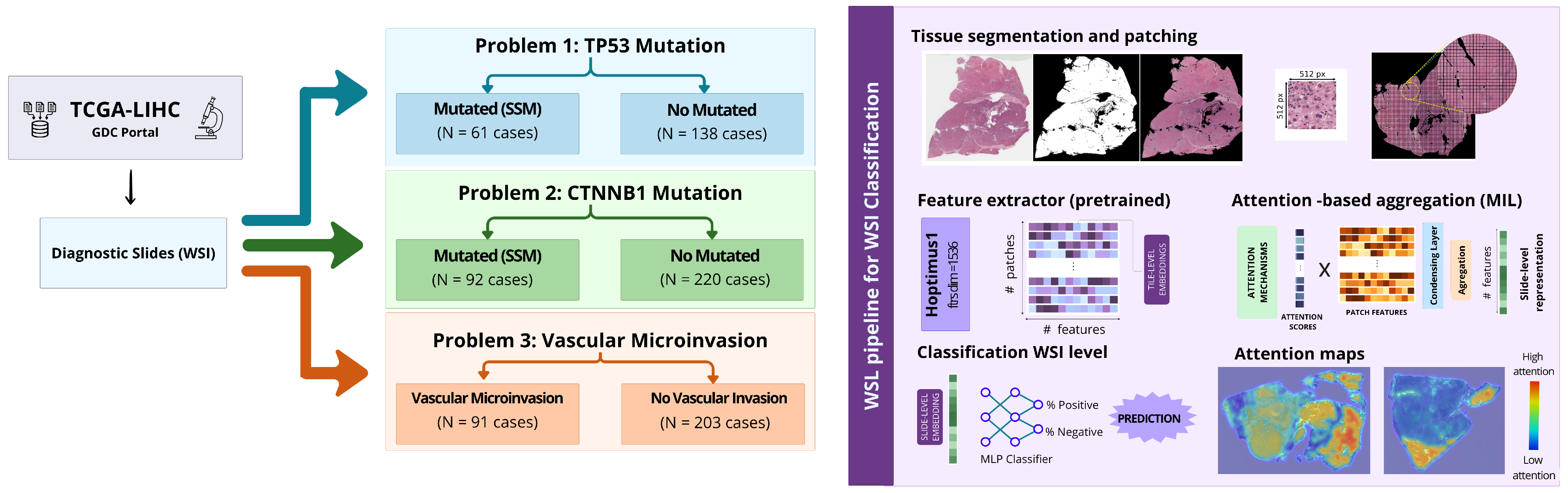
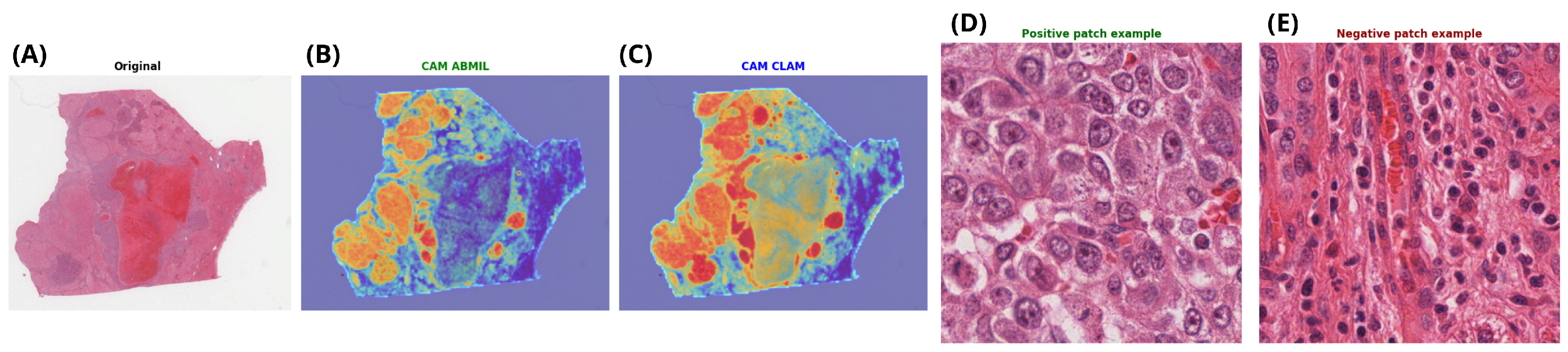
- ABMIL (Attention-Based MIL) [25]: Employs a gated attention mechanism to assign learnable importance weights to individual instances, enabling the model to focus on the most informative patches while preserving permutation invariance.
- TransMIL (Transformer-Based MIL) [26]: Utilizes a Transformer architecture to model global contextual relationships among instances, capturing long-range dependencies between patches within a slide.
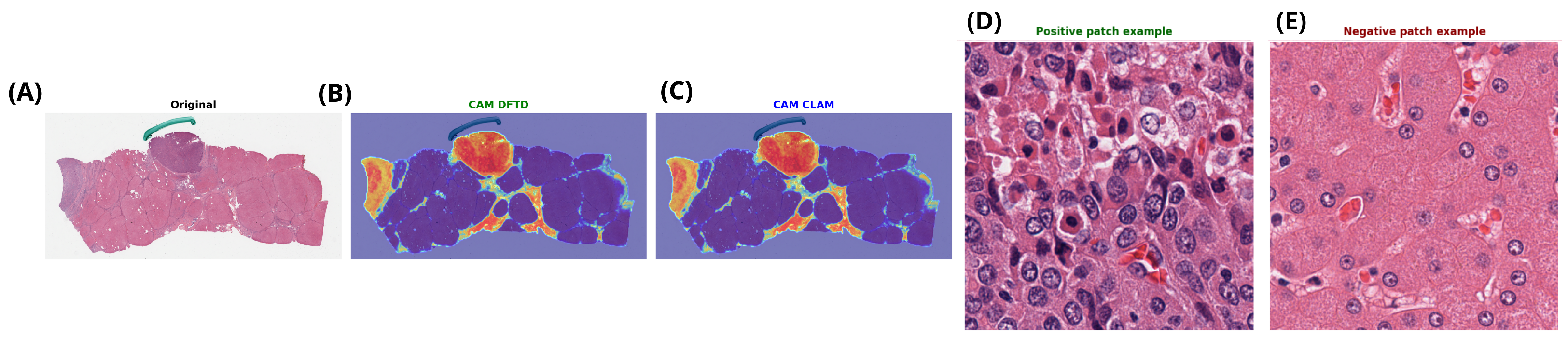
- DFTD (Dual-Feature Tokenization MIL) [27]: Decomposes each bag into complementary global and local feature representations, enabling the model to identify informative instances through interactions between discriminative features and contextual information, without explicitly constraining attention via clustering.
- CLAM (Clustering-Constrained Attention MIL) [28]: Introduces instance-level clustering to explicitly separate positive and negative evidence within a bag, guiding the attention mechanism toward discriminative regions.
- 4.
- Slide-Level Classification
- 5.
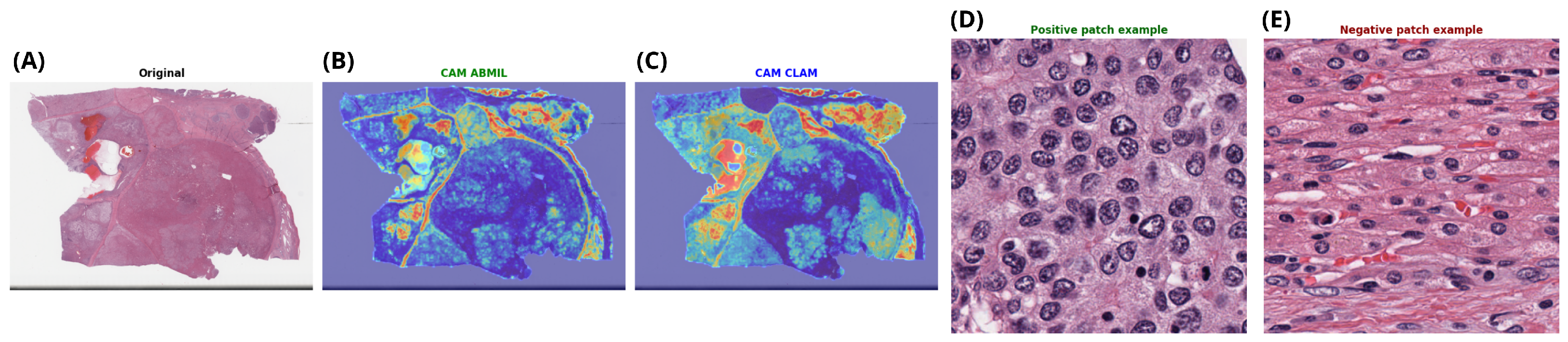
- Interpretability and Visualization
- 6.
- Evaluation Criteria
3. Results and Discussion
3.1. TP53 Mutations
3.1.1. Differential Expression Analysis
3.1.2. Gene Ontology Enrichment
3.1.3. Slides
3.2. CTNNB1 Mutation
3.2.1. Differential Expression Analysis
3.2.2. Gene Ontology Enrichment
3.2.3. Slides
3.3. Vascular Invasion
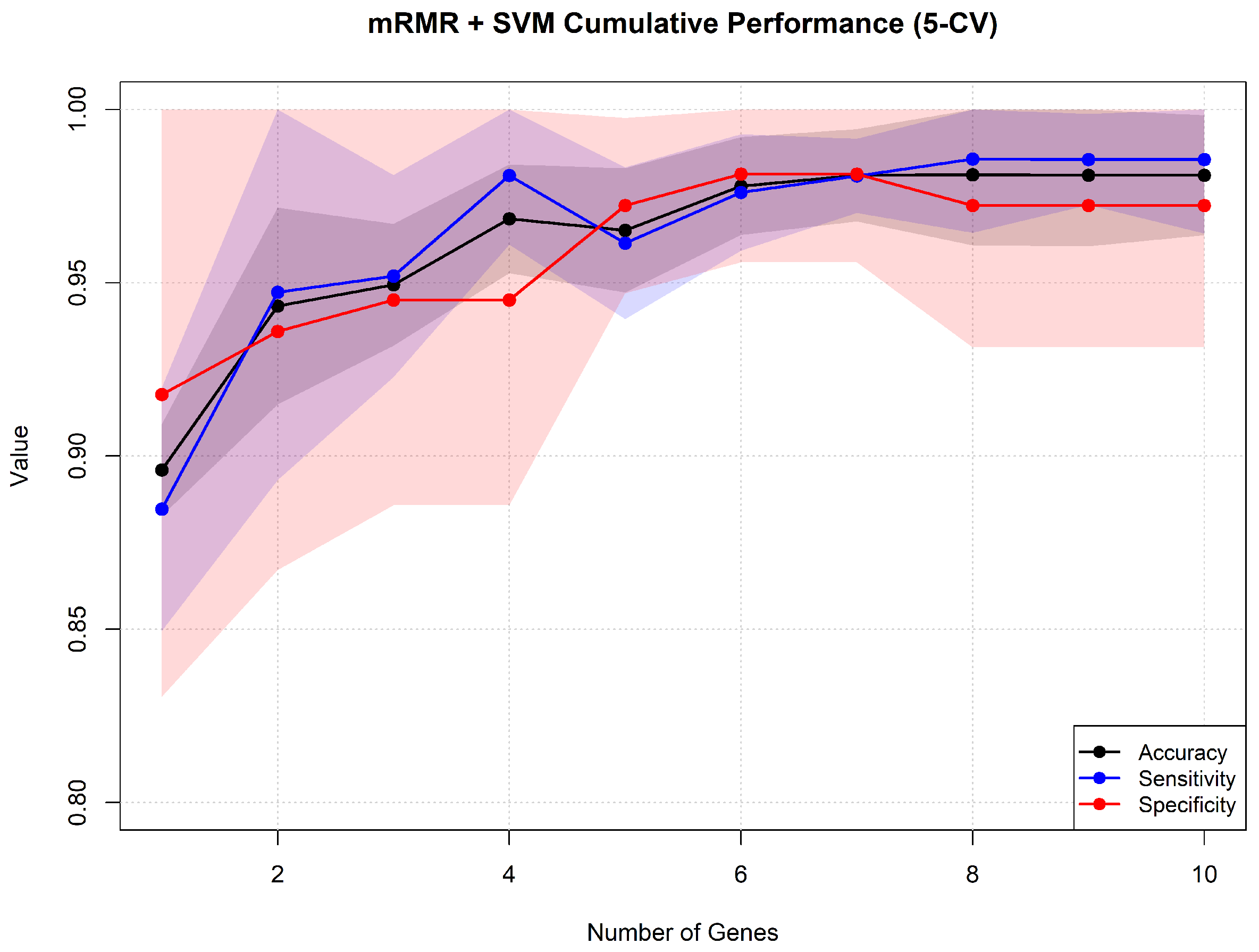
3.3.1. Gene Signature Identification via Machine Learning
3.3.2. Slides
3.4. Limitations and Generalizability
4. Conclusions
Author Contributions
Funding
Institutional Review Board Statement
Informed Consent Statement
Data Availability Statement
Acknowledgments
Conflicts of Interest
Abbreviations
| ABMIL | Attention-Based Multiple Instance Learning |
| AUC | Area Under the Curve |
| CLAM | Clustering-Constrained Attention Multiple Instance Learning |
| CV | Cross Validation |
| DFTD | Dual-Feature Tokenization Multiple Instance Learning |
| DEG | Differentially Expressed Gene |
| FDR | False Discovery Rate |
| GDC | Genomic Data Commons |
| GO | Gene Ontology |
| H&E | Hematoxylin and Eosin |
| HCC | Hepatocellular Carcinoma |
| MIL | Multiple Instance Learning |
| MLP | Multi-Layer Perceptron |
| mRMR | Minimum Redundancy Maximum Relevance |
| MVI | Microvascular Invasion |
| ROC | Receiver Operating Characteristic |
| ROI | Region of Interest |
| ROS | Reactive Oxygen Species |
| SSM | Single Somatic Mutation |
| SVM | Support Vector Machine |
| TCGA | The Cancer Genome Atlas |
| TransMIL | Transformer-based Multiple Instance Learning |
| WSI | Whole-Slide Image |
| WSL | Weakly Supervised Learning |
References
- Zheng, J.; Wang, S.; Xia, L.; Sun, Z.; Chan, K.M.; Bernards, R.; Qin, W.; Chen, J.; Xia, Q.; Jin, H. Hepatocellular carcinoma: Signaling pathways and therapeutic advances. Signal Transduct. Target. Ther. 2025, 10, 35. [Google Scholar] [CrossRef] [PubMed]
- Alvarez, C.S.; Ortiz, J.; Bendfeldt-Avila, G.; Xie, Y.; Wang, M.; Wu, D.; Higson, H.; Lee, E.; Teshome, K.; Barnoya, J.; et al. Analysis of TP53 aflatoxin signature mutation in hepatocellular carcinomas from Guatemala: A cross-sectional study (2016--2017). Health Sci. Rep. 2020, 3, e155. [Google Scholar] [CrossRef] [PubMed]
- Lee, C.C.; Liu, J.Y.; Lin, J.K.; Chu, J.S.; Shew, J.Y. p53 point mutation enhanced by hepatic regeneration in aflatoxin B1-induced rat liver tumors and preneoplastic lesions. Cancer Lett. 1998, 125, 1–7. [Google Scholar] [CrossRef] [PubMed]
- Kastenhuber, E.R.; Lowe, S.W. Putting p53 in Context. Cell 2017, 170, 1062–1078. [Google Scholar] [CrossRef]
- Xue, Y.; Tian, T.; Ottallah, M.; Mannan, M.; Barkin, J.; Jin-Smith, B.; Pi, L. Alcohol-Associated Hepatocarcinogenesis: Wnt/β-Catenin in Action. Am. J. Pathol. 2025, 196, 151–160. [Google Scholar] [CrossRef]
- Trépo, E.; Caruso, S.; Yang, J.; Imbeaud, S.; Couchy, G.; Bayard, Q.; Letouzé, E.; Ganne-Carrié, N.; Moreno, C.; Oussalah, A.; et al. Common genetic variation in alcohol-related hepatocellular carcinoma: A case-control genome-wide association study. Lancet Oncol. 2022, 23, 161–171. [Google Scholar] [CrossRef]
- Dantzer, C.; Dif, L.; Vaché, J.; Basbous, S.; Billottet, C.; Moreau, V. Specific features of ß-catenin-mutated hepatocellular carcinomas. Br. J. Cancer 2024, 131, 1871–1880. [Google Scholar] [CrossRef]
- Guichard, C.; Amaddeo, G.; Imbeaud, S.; Ladeiro, Y.; Pelletier, L.; Maad, I.B.; Calderaro, J.; Bioulac-Sage, P.; Letexier, M.; Degos, F.; et al. Integrated analysis of somatic mutations and focal copy-number changes identifies key genes and pathways in hepatocellular carcinoma. Nat. Genet. 2012, 44, 694–698. [Google Scholar] [CrossRef]
- Rodríguez-Perálvarez, M.; Luong, T.V.; Andreana, L.; Meyer, T.; Dhillon, A.P.; Burroughs, A.K. A systematic review of microvascular invasion in hepatocellular carcinoma: Diagnostic and prognostic variability. Ann. Surg. Oncol. 2013, 20, 325–339. [Google Scholar] [CrossRef]
- Lim, K.W.; Chow, P.K.H.; Allen, J.C.; Chia, G.S.; Lim, M.; Cheow, P.C.; Chung, A.; Ooi, L.; Tan, S.B. Microvascular invasion is a better predictor of tumor recurrence and overall survival following surgical resection for hepatocellular carcinoma compared to the Milan criteria. Ann. Surg. 2011, 254, 108. [Google Scholar] [CrossRef]
- Sumie, S.; Kuromatsu, R.; Okuda, K.; Ando, E.; Takata, A.; Fukushima, N.; Watanabe, Y.; Kojiro, M.; Sata, M. Microvascular Invasion in Patients with Hepatocellular Carcinoma and Its Predictable Clinicopathological Factors. J. Hepatol. 2008, 15, 1375–1382. [Google Scholar] [CrossRef]
- Wei, K.; Peng, C.; Ou, Y.; Wang, P.; Zhan, C.; Wei, H.; Na, J.; Zhang, Z. Decoding Hepatocellular Carcinoma Metastasis: Molecular Mechanisms, Targeted Therapies, and Potential Biomarkers. Curr. Issues Mol. Biol. 2025, 47, 263. [Google Scholar] [CrossRef] [PubMed]
- Huang, H.; Wu, F.; Yu, Y.; Xu, B.; Chen, D.; Huo, Y.; Li, S. Multi-transcriptomics analysis of microvascular invasion-related malignant cells and development of a machine learning-based prognostic model in hepatocellular carcinoma. Front. Immunol. 2024, 15, 1436131. [Google Scholar] [CrossRef] [PubMed]
- Álvarez, M.; Heredia, A.J.; Garach, I.; Rojas, I.; Herrera, L.J.; Ortuño, F.M. Machine Learning-Based Diagnosis and Staging of Liver Cancer Using RNA-Seq Data. In Bioinformatics and Biomedical Engineering, Proceedings of the 11th International Conference, IWBBIO 2025, Meloneras, Gran Canaria, Spain, 16–18 July 2025; Rojas, I., Ortuño, F., Rojas Ruiz, F., Herrera, L.J., Valenzuela, O., Escobar, J.J., Eds.; Springer Nature: Cham, Switzerland, 2026; pp. 220–234. [Google Scholar] [CrossRef]
- National Cancer Institute (NCI); National Institutes of Health (NIH). The Cancer Genome Atlas Program (TCGA). 2022. Available online: https://www.cancer.gov/tcga (accessed on 26 December 2025).
- Heath, A.P.; Ferretti, V.; Agrawal, S.; An, M.; Angelakos, J.C.; Arya, R.; Bajari, R.; Baqar, B.; Barnowski, J.H.B.; Burt, J.; et al. The NCI Genomic Data Commons. Nat. Genet. 2021, 53, 257–262. [Google Scholar] [CrossRef] [PubMed]
- Castillo-Secilla, D.; Gálvez, J.M.; Carrillo-Perez, F.; Verona-Almeida, M.; Redondo-Sánchez, D.; Ortuno, F.M.; Herrera, L.J.; Rojas, I. KnowSeq R-Bioc package: The automatic smart gene expression tool for retrieving relevant biological knowledge. Comput. Biol. Med. 2021, 133, 104387. [Google Scholar] [CrossRef]
- Leek, J.T.; Storey, J.D. Capturing Heterogeneity in Gene Expression Studies by Surrogate Variable Analysis. PLoS Genet. 2007, 3, e161. [Google Scholar] [CrossRef]
- Smyth, G.K. limma: Linear Models for Microarray Data. In Bioinformatics and Computational Biology Solutions Using R and Bioconductor; Gentleman, R., Carey, V.J., Huber, W., Irizarry, R.A., Dudoit, S., Eds.; Springer: New York, NY, USA, 2005; pp. 397–420. [Google Scholar] [CrossRef]
- Ding, C.; Peng, H. Minimum redundancy feature selection from microarray gene expression data. In Proceedings of the 2003 IEEE Bioinformatics Conference—CSB2003, Stanford, CA, USA, 11–14 August 2003; pp. 523–528. [Google Scholar] [CrossRef]
- Hearst, M.; Dumais, S.; Osuna, E.; Platt, J.; Scholkopf, B. Support vector machines. IEEE Intell. Syst. Their Appl. 1998, 13, 18–28. [Google Scholar] [CrossRef]
- Cawley, G.C.; Talbot, N.L. On Over-fitting in Model Selection and Subsequent Selection Bias in Performance Evaluation. J. Mach. Learn. Res. 2010, 11, 2079–2107. [Google Scholar]
- Otsu, N. A threshold selection method from gray-level histograms. IEEE Trans. Syst. Man. Cybern. 1979, 9, 62–66. [Google Scholar] [CrossRef]
- Bioptimus. H-optimus-1. Software, 2025. Available online: https://www.bioptimus.com (accessed on 26 December 2025).
- Ilse, M.; Tomczak, J.M.; Welling, M. Attention-based Deep Multiple Instance Learning. In Proceedings of the 35th International Conference on Machine Learning, Stockholm, Sweden, 10–15 July 2018. [Google Scholar]
- Shao, Z.; Bian, H.; Chen, Y.; Wang, Y.; Zhang, J.; Ji, X.; Zhang, Y. TransMIL: Transformer based Correlated Multiple Instance Learning for Whole Slide Image Classification. In Proceedings of the Advances in Neural Information Processing Systems 34: Annual Conference on Neural Information Processing Systems 2021, NeurIPS 2021, Virtual, 6–14 December 2021; Ranzato, M., Beygelzimer, A., Dauphin, Y., Liang, P., Vaughan, J.W., Eds.; Curran Associates, Inc.: Red Hook, NY, USA, 2021; Volume 34, pp. 2136–2147. [Google Scholar]
- Zhang, H.; Meng, Y.; Zhao, Y.; Qiao, Y.; Yang, X.; Coupland, S.E.; Zheng, Y. DTFD-MIL: Double-Tier Feature Distillation Multiple Instance Learning for Histopathology Whole Slide Image Classification. arXiv 2022, arXiv:2203.12081. [Google Scholar]
- Lu, M.Y.; Williamson, D.F.; Chen, T.Y.; Chen, R.J.; Barbieri, M.; Mahmood, F. Data-efficient and weakly supervised computational pathology on whole-slide images. Nat. Biomed. Eng. 2021, 5, 555–570. [Google Scholar] [CrossRef]
- Tanikawa, C.; Ri, C.; Kumar, V.; Nakamura, Y.; Matsuda, K. Crosstalk of EDA-A2/XEDAR in the p53 signaling pathway. Mol. Cancer Res. 2010, 8, 855–863. [Google Scholar] [CrossRef]
- Jiao, Y.; Ji, F.; Hou, L.; Zhang, J. A novel gene signature associated with anoikis predicts prognosis and unveils immune infiltration in breast cancer patients. Discov. Oncol. 2025, 16, 447. [Google Scholar] [CrossRef] [PubMed]
- Tanikawa, C.; Furukawa, Y.; Yoshida, N.; Arakawa, H.; Nakamura, Y.; Matsuda, K. XEDAR as a putative colorectal tumor suppressor that mediates p53-regulated anoikis pathway. Oncogene 2009, 28, 3081–3092. [Google Scholar] [CrossRef] [PubMed]
- Sugimura-Nagata, A.; Koshino, A.; Nagao, K.; Nagano, A.; Komura, M.; Ueki, A.; Ebi, M.; Ogasawara, N.; Tsuzuki, T.; Kasai, K.; et al. SPATA18 Expression Predicts Favorable Clinical Outcome in Colorectal Cancer. Int. J. Mol. Sci. 2022, 23, 2753. [Google Scholar] [CrossRef] [PubMed]
- Xie, L.; Liu, W.; Wang, Y.; Zhou, Y. High SPATA18 Expression and its Diagnostic and Prognostic Value in Clear Cell Renal Cell Carcinoma. Med. Sci. Monit. Int. Med. J. Exp. Clin. Res. 2023, 29, e938474. [Google Scholar] [CrossRef]
- Sargsyan, A.; Doridot, L.; Hannou, S.A.; Tong, W.; Srinivasan, H.; Ivison, R.; Monn, R.; Kou, H.H.; Haldeman, J.M.; Arlotto, M.; et al. HGFAC is a ChREBP-regulated hepatokine that enhances glucose and lipid homeostasis. JCI Insight 2022, 8, e153740. [Google Scholar] [CrossRef]
- Loughran, R.M.; Emerling, B.M. Mechanistic roles of mutant p53 governing lipid metabolism. Adv. Biol. Regul. 2022, 83, 100839. [Google Scholar] [CrossRef]
- Zou, Q.; Cao, S. miR-4270 suppresses hepatocellular carcinoma progression by inhibiting DNMT3A-mediated methylation of HGFAC promoter. PeerJ 2023, 11, e16566. [Google Scholar] [CrossRef]
- Yin, L.; Mu, Y.; Lin, Y.; Xia, Q. HGFAC expression decreased in liver cancer and its low expression correlated with DNA hypermethylation and poor prognosis. J. Cell. Biochem. 2019, 120, 9692–9699. [Google Scholar] [CrossRef]
- Zhu, L.; Yang, X.; Feng, J.; Mao, J.; Zhang, Q.; He, M.; Mi, Y.; Mei, Y.; Jin, G.; Zhang, H. CYP2E1 plays a suppressive role in hepatocellular carcinoma by regulating Wnt/Dvl2/β-catenin signaling. J. Transl. Med. 2022, 20, 194. [Google Scholar] [CrossRef] [PubMed]
- Roa-Colomo, A.; Lopez Garrido, M.A.; Molina-Vallejo, P.; Rojas, A.; Sanchez, M.G.; Aranda-Garcia, V.; Salmeron, J.; Romero-Gomez, M.; Muntane, J.; Padillo, J.; et al. Hepatocellular carcinoma risk-stratification based on ASGR1 in circulating epithelial cells for cancer interception. Front. Mol. Biosci. 2022, 9, 1074277. [Google Scholar] [CrossRef] [PubMed]
- Stockert, R.J. The asialoglycoprotein receptor: Relationships between structure, function, and expression. Physiol. Rev. 1995, 75, 591–609. [Google Scholar] [CrossRef] [PubMed]
- Gu, D.; Jin, H.; Jin, G.; Wang, C.; Wang, N.; Hu, F.; Luo, Q.; Chu, W.; Yao, M.; Qin, W. The asialoglycoprotein receptor suppresses the metastasis of hepatocellular carcinoma via LASS2-mediated inhibition of V-ATPase activity. Cancer Lett. 2016, 379, 107–116. [Google Scholar] [CrossRef]
- Bloomer, H.; Dame, H.B.; Parker, S.R.; Oudin, M.J. Neuronal mimicry in tumors: Lessons from neuroscience to tackle cancer. Cancer Metastasis Rev. 2025, 44, 31. [Google Scholar] [CrossRef]
- Zhang, Y.; Liao, Q.; Wen, X.; Fan, J.; Yuan, T.; Tong, X.; Jia, R.; Chai, P.; Fan, X. Hijacking of the nervous system in cancer: Mechanism and therapeutic targets. Mol. Cancer 2025, 24, 44. [Google Scholar] [CrossRef]
- Ben-Ari, Y. Excitatory actions of gaba during development: The nature of the nurture. Nat. Rev. Neurosci. 2002, 3, 728–739. [Google Scholar] [CrossRef]
- Liu, Y.; Li, Y.H.; Guo, F.J.; Wang, J.J.; Sun, R.L.; Hu, J.Y.; Li, G.C. Gamma-aminobutyric acid promotes human hepatocellular carcinoma growth through overexpressed gamma-aminobutyric acid A receptor alpha 3 subunit. World J. Gastroenterol. 2008, 14, 7175–7182. [Google Scholar] [CrossRef]
- Fischer, M.; Quaas, M.; Steiner, L.; Engeland, K. The p53-p21-DREAM-CDE/CHR pathway regulates G2/M cell cycle genes. Nucleic Acids Res. 2016, 44, 164–174. [Google Scholar] [CrossRef]
- Uxa, S.; Bernhart, S.H.; Mages, C.F.S.; Fischer, M.; Kohler, R.; Hoffmann, S.; Stadler, P.F.; Engeland, K.; Müller, G.A. DREAM and RB cooperate to induce gene repression and cell-cycle arrest in response to p53 activation. Nucleic Acids Res. 2019, 47, 9087–9103. [Google Scholar] [CrossRef]
- Wurzenberger, C.; Held, M.; Lampson, M.A.; Poser, I.; Hyman, A.A.; Gerlich, D.W. Sds22 and Repo-Man stabilize chromosome segregation by counteracting Aurora B on anaphase kinetochores. J. Cell Biol. 2012, 198, 173–183. [Google Scholar] [CrossRef]
- Long, Z.; Wu, T.; Tian, Q.; Carlson, L.A.; Wang, W.; Wu, G. Expression and prognosis analyses of BUB1, BUB1B and BUB3 in human sarcoma. Aging 2021, 13, 12395–12409. [Google Scholar] [CrossRef]
- Peng, B.; Zhang, J.; Xiang, Y. CDCA8 and its multifaceted role in tumorigenesis. Biomed. Pharmacother. 2025, 185, 117951. [Google Scholar] [CrossRef]
- Redman-Rivera, L.N.; Shaver, T.M.; Jin, H.; Marshall, C.B.; Schafer, J.M.; Sheng, Q.; Hongo, R.A.; Beckermann, K.E.; Wheeler, F.C.; Lehmann, B.D.; et al. Acquisition of aneuploidy drives mutant p53-associated gain-of-function phenotypes. Nat. Commun. 2021, 12, 5184. [Google Scholar] [CrossRef] [PubMed]
- Stancikova, J.; Krausova, M.; Kolar, M.; Fafilek, B.; Svec, J.; Sedlacek, R.; Neroldova, M.; Dobes, J.; Horazna, M.; Janeckova, L.; et al. NKD1 marks intestinal and liver tumors linked to aberrant Wnt signaling. Cell. Signal. 2015, 27, 245–256. [Google Scholar] [CrossRef] [PubMed][Green Version]
- Lu, W.; Tang, J.; Wang, Y.; Gu, X.; Zhang, H.; Liu, Y.; Xiao, Y.; Zhu, Q.; Deng, J.; Shen, Y.; et al. NKD1 enhances colon cancer progression by inhibiting the autophagic degradation of MYC. Cell Death Dis. 2025, 16, 532. [Google Scholar] [CrossRef]
- Faivre, J.; Shalhoub, H.; Nguyen, T.S.; Xie, H.; Moniaux, N. REG3A: A Multifunctional Antioxidant Lectin at the Crossroads of Microbiota Regulation, Inflammation, and Cancer. Cancers 2025, 17, 2395. [Google Scholar] [CrossRef] [PubMed]
- Yuan, R.H.; Jeng, Y.M.; Chen, H.L.; Hsieh, F.J.; Yang, C.Y.; Lee, P.H.; Hsu, H.C. Opposite Roles of Human Pancreatitis-Associated Protein and REG1A Expression in Hepatocellular Carcinoma: Association of Pancreatitis-Associated Protein Expression with Low-Stage Hepatocellular Carcinoma, β-Catenin Mutation, and Favorable Prognosis. Clin. Cancer Res. 2005, 11, 2568–2575. [Google Scholar] [CrossRef]
- Ye, Y.; Xiao, L.; Wang, S.J.; Yue, W.; Yin, Q.S.; Sun, M.Y.; Xia, W.; Shao, Z.Y.; Zhang, H. Up-regulation of REG3A in colorectal cancer cells confers proliferation and correlates with colorectal cancer risk. Oncotarget 2015, 7, 3921–3933. [Google Scholar] [CrossRef]
- Yamaguchi, K.; Horie, C.; Takane, K.; Ikenoue, T.; Nakagawa, S.; Isobe, Y.; Ota, Y.; Ushiku, T.; Tanaka, M.; Fujishiro, J.; et al. Identification of odontogenic ameloblast associated as a novel target gene of the Wnt/β-catenin signaling pathway. Cancer Sci. 2023, 114, 948–960. [Google Scholar] [CrossRef]
- Désert, R.; Rohart, F.; Canal, F.; Sicard, M.; Desille, M.; Renaud, S.; Turlin, B.; Bellaud, P.; Perret, C.; Clément, B.; et al. Human hepatocellular carcinomas with a periportal phenotype have the lowest potential for early recurrence after curative resection. Hepatology 2017, 66, 1502–1518. [Google Scholar] [CrossRef] [PubMed]
- Kestler, D.P.; Foster, J.S.; Bruker, C.T.; Prenshaw, J.W.; Kennel, S.J.; Wall, J.S.; Weiss, D.T.; Solomon, A. ODAM Expression Inhibits Human Breast Cancer Tumorigenesis. Breast Cancer Basic Clin. Res. 2011, 5, 73–85. [Google Scholar] [CrossRef] [PubMed]
- Krutsenko, Y.; Singhi, A.D.; Monga, S.P. β-Catenin Activation in Hepatocellular Cancer: Implications in Biology and Therapy. Cancers 2021, 13, 1830. [Google Scholar] [CrossRef] [PubMed]
- Raven, A.; Gilroy, K.; Jin, H.; Waldron, J.A.; Leslie, H.; Munro, J.; Hall, H.; Ridgway, R.A.; Ford, C.A.; Gulhan, D.C.; et al. Hepatic zonation determines tumorigenic potential of mutant β-catenin. Nature 2025, 649, 739–748. [Google Scholar] [CrossRef]
- Cederbaum, A.I. Nrf2 and antioxidant defense against CYP2E1 toxicity. Sub-Cell. Biochem. 2013, 67, 105–130. [Google Scholar] [CrossRef]
- Lehrich, B.M.; Tao, J.; Liu, S.; Hirsch, T.Z.; Yasaka, T.M.; Cao, C.; Delgado, E.R.; Guan, X.; Lu, S.; Pan, L.; et al. Development of mutated β-catenin gene signature to identify CTNNB1 mutations from whole and spatial transcriptomic data in patients with HCC. JHEP Rep. Innov. Hepatol. 2024, 6, 101186. [Google Scholar] [CrossRef]
- Calderaro, J.; Nault, J.C.; Bioulac-Sage, P.; Laurent, A.; Blanc, J.F.; Decaens, T.; Zucman-Rossi, J. ALDH3A1 is overexpressed in a subset of hepatocellular carcinoma characterised by activation of the Wnt/β-catenin pathway. Virchows Arch. Int. J. Pathol. 2014, 464, 53–60. [Google Scholar] [CrossRef]
- Marchitti, S.A.; Brocker, C.; Stagos, D.; Vasiliou, V. Non-P450 aldehyde oxidizing enzymes: The aldehyde dehydrogenase superfamily. Expert Opin. Drug Metab. Toxicol. 2008, 4, 697–720. [Google Scholar] [CrossRef]
- Pinyol, R.; Sia, D.; Llovet, J.M. Immune exclusion-Wnt/CTNNB1 class predicts resistance to immunotherapies in HCC. Clin. Cancer Res. Off. J. Am. Assoc. Cancer Res. 2019, 25, 2021–2023. [Google Scholar] [CrossRef]
- Li, M.J.; Wen, C.L.; Cheng, H.T.; Lyu, H.N.; Han, Y.Y. PANoptosis in hepatocellular carcinoma: Underlying mechanisms. World J. Hepatol. 2025, 17, 109051. [Google Scholar] [CrossRef]
- Arrè, V.; Negro, R.; Giannelli, G. The role of inflammasomes in hepatocellular carcinoma: Mechanisms and therapeutic insights. Ann. Hepatol. 2025, 30, 101772. [Google Scholar] [CrossRef]
- Hu, M.; Deng, F.; Song, X.; Zhao, H.; Yan, F. The crosstalk between immune cells and tumor pyroptosis: Advancing cancer immunotherapy strategies. J. Exp. Clin. Cancer Res. 2024, 43, 190. [Google Scholar] [CrossRef] [PubMed]
- Kinzler, M.N.; Bankov, K.; Bein, J.; Döring, C.; Schulze, F.; Reis, H.; Mahmoudi, S.; Koch, V.; Grünewald, L.D.; Stehle, A.; et al. CXCL1 and CXCL6 Are Potential Predictors for HCC Response to TACE. Curr. Oncol. 2023, 30, 3516–3528. [Google Scholar] [CrossRef] [PubMed]
- Treyer, A.; Müsch, A. Hepatocyte Polarity. Compr. Physiol. 2013, 3, 243–287. [Google Scholar] [CrossRef] [PubMed]
- Elferink, R.P.; Tytgat, G.N.; Groen, A.K. Hepatic canalicular membrane 1: The role of mdr2 P-glycoprotein in hepatobiliary lipid transport. FASEB J. Off. Publ. Fed. Am. Soc. Exp. Biol. 1997, 11, 19–28. [Google Scholar] [CrossRef]
- Feng, J.; Li, J.; Qie, P.; Li, Z.; Xu, Y.; Tian, Z. Long non-coding RNA (lncRNA) PGM5P4-AS1 inhibits lung cancer progression by up-regulating leucine zipper tumor suppressor (LZTS3) through sponging microRNA miR-1275. Bioengineered 2021, 12, 196–207. [Google Scholar] [CrossRef]
- Rajput, M.; Pandey, M.; Dixit, R.; Shukla, V.K. Is cross-species horizontal gene transfer responsible for gallbladder carcinogenesis. World J. Surg. Oncol. 2024, 22, 201. [Google Scholar] [CrossRef]
- Liu, Y.; Yang, B.; Su, Y.; Xiang, Q.; Li, Q. Downregulation of long noncoding RNA LINC00683 associated with unfavorable prognosis in prostate cancer based on TCGA. J. Cell. Biochem. 2019, 120, 14165–14174. [Google Scholar] [CrossRef]
- Li, M.; Tian, X.; Guo, H.; Xu, X.; Liu, Y.; Hao, X.; Fei, H. A novel lncRNA-mRNA-miRNA signature predicts recurrence and disease-free survival in cervical cancer. Braz. J. Med Biol. Res. 2021, 54, e11592. [Google Scholar] [CrossRef]
- Wang, P.; Zhuang, C.; Huang, D.; Xu, K. Downregulation of miR-377 contributes to IRX3 deregulation in hepatocellular carcinoma. Oncol. Rep. 2016, 36, 247–252. [Google Scholar] [CrossRef]
- Liu, K.Y.; Wang, L.T.; Hsu, S.H.; Wang, S.N. Homeobox Genes and Hepatocellular Carcinoma. Cancers 2019, 11, 621. [Google Scholar] [CrossRef]
- Yu, Y.; Ren, K. Five long non-coding RNAs establish a prognostic nomogram and construct a competing endogenous RNA network in the progression of non-small cell lung cancer. BMC Cancer 2021, 21, 457. [Google Scholar] [CrossRef]






| Comparison | FDR p-Value | DEGs Retained | |
|---|---|---|---|
| TP53 Mutant vs. Wild Type | 0.8 | 0.001 | 249 |
| CTNNB1 Mutant vs. Wild Type | 1.0 | 0.001 | 245 |
| Vascular Invasion Presence | 0.5 | 0.001 | 102 common |
| Gene | LogFC | Mechanistic Association in TP53 Mutant Context |
|---|---|---|
| PPP1R7 | Loss of p53-dependent mitotic control; resistance to apoptosis. | |
| EDA2R | Failure of p53-mediated anoikis signaling; facilitates metastasis. | |
| SPATA18 | Metabolic reprogramming; poor prognosis. | |
| HGFAC | Disrupts lipid and glucose homeostasis. | |
| CYP2E1 | Loss of ethanol and fatty acid metabolism; reduces oxidative stress. | |
| ASGR2 | Loss of glycoprotein clearance promotes metastasis. | |
| GABRA2 | GABAergic signaling; proliferation and neuronal mimicry. | |
| TOP2A | Derepression of the p53–p21–DREAM pathway. | |
| BUB1B | Aneuploidy and mitotic progression despite errors. |
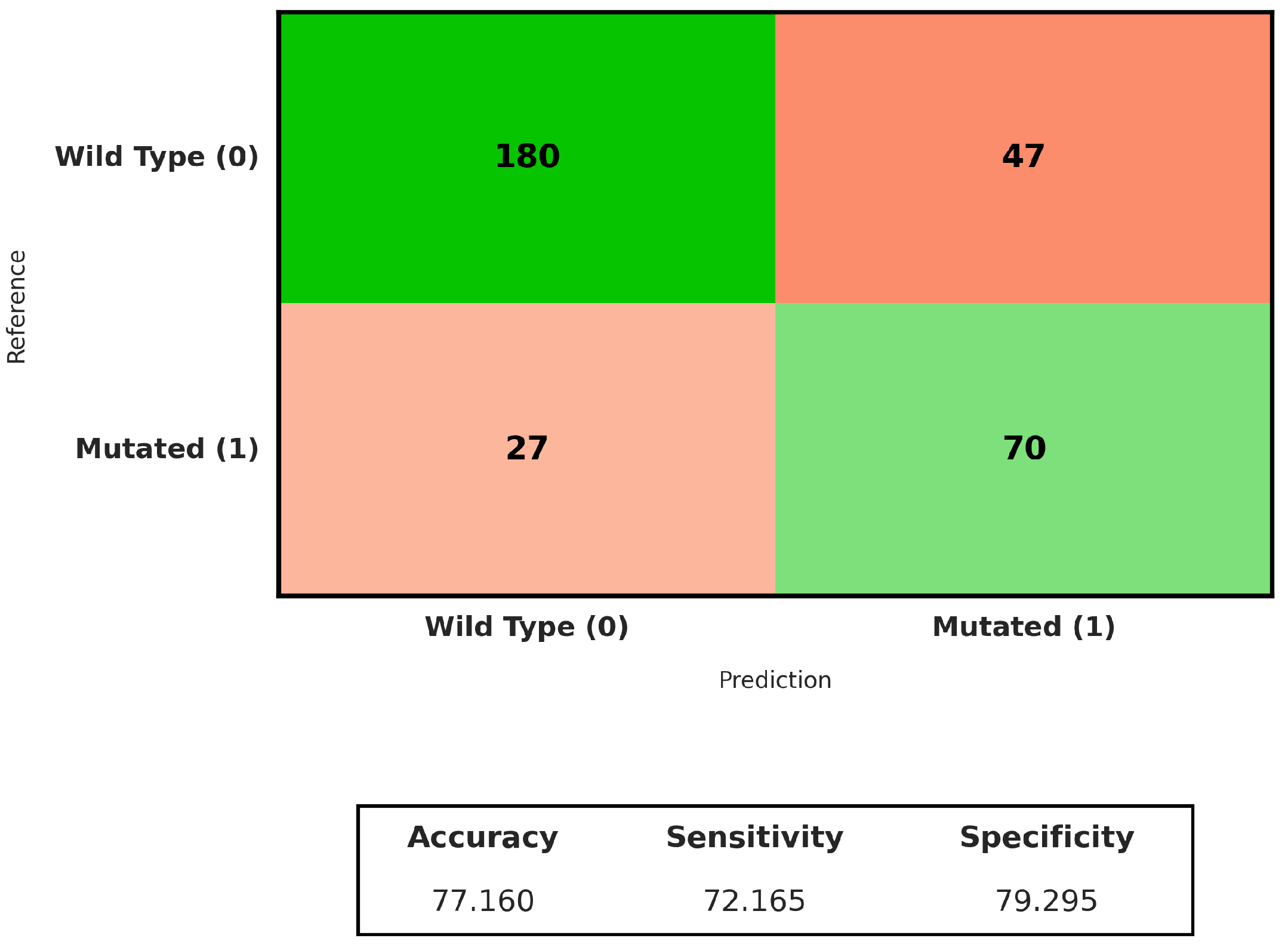
| Model | ROC-AUC (±std) | Sensitivity | F1-Score |
|---|---|---|---|
| ABMIL | 0.79 ± 0.07 | 0.72 | 0.63 |
| TransMIL | 0.73 ± 0.09 | 0.43 | 0.46 |
| DFTD | 0.75 ± 0.07 | 0.59 | 0.52 |
| CLAM | 0.82 ± 0.07 | 0.70 | 0.63 |
| Gene | LogFC | Mechanistic Association in CTNNB1 Mutant Context |
|---|---|---|
| CXCL1 | Limits neutrophil recruitment; weakens innate immunity. | |
| CXCL6 | Suppresses chemokine-mediated immune cell infiltration. | |
| CASP1 | Inhibition of inflammasome activation; immune escape. | |
| NKD1 | Negative feedback regulator of Wnt/- signaling; proliferation. | |
| REG3A | Resistance to apoptosis under oxidative or toxic stress. | |
| ODAM | Wnt/-catenin target in liver cancer; less aggressive phenotype. | |
| CYP2E1 | Metabolic reprogramming; increased oxidative stress. | |
| ALDH3A1 | Survival under stress; resistance to alkylating chemotherapies. |
| Model | ROC-AUC (±std) | Sensitivity | F1-Score |
|---|---|---|---|
| ABMIL | 0.79 ± 0.02 | 0.72 | 0.65 |
| TransMIL | 0.66 ± 0.05 | 0.47 | 0.43 |
| DFTD | 0.67 ± 0.04 | 0.56 | 0.49 |
| CLAM | 0.79 ± 0.05 | 0.65 | 0.62 |
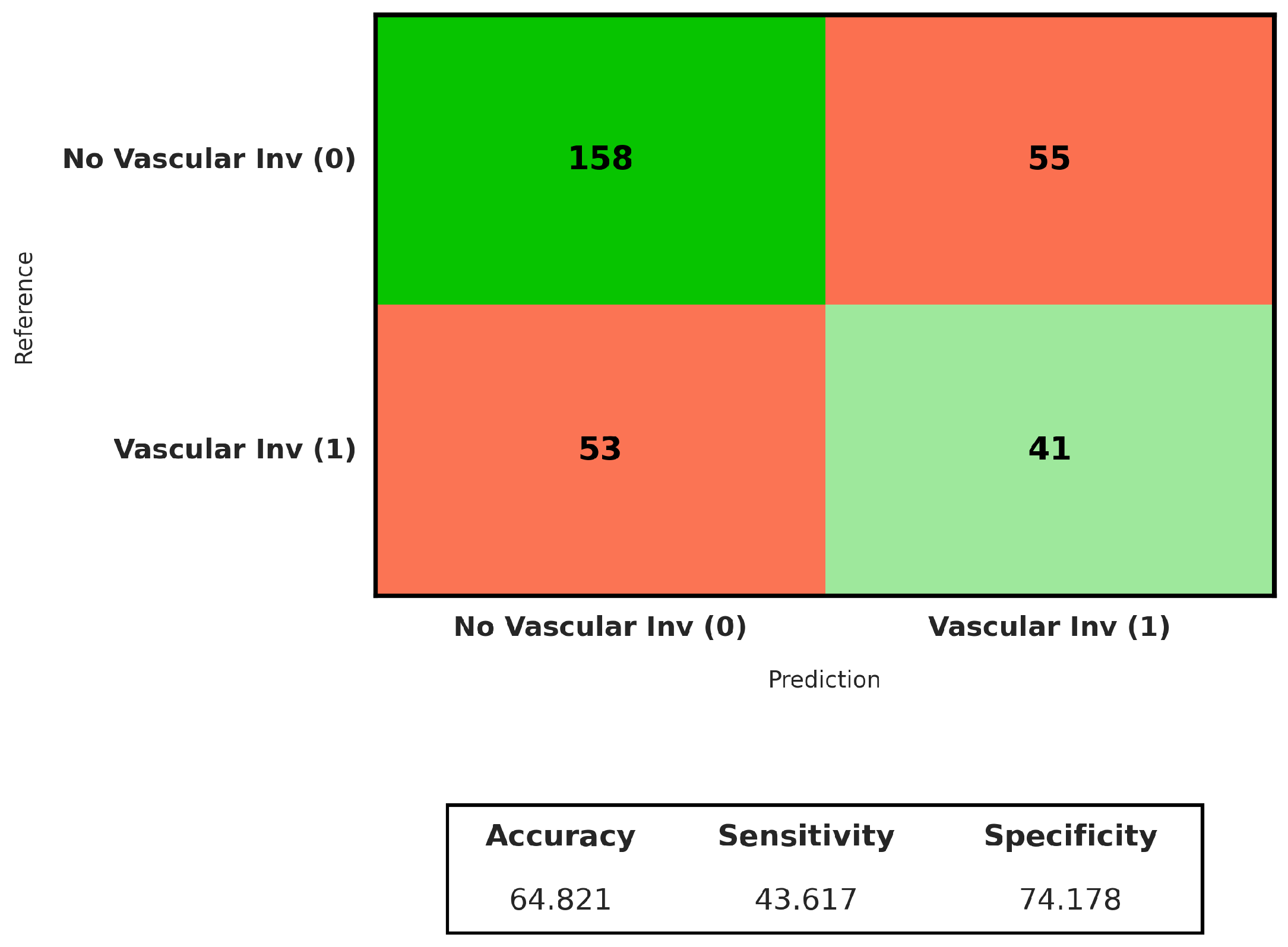
| Model | ROC-AUC (±std) | Sensitivity | F1-Score |
|---|---|---|---|
| ABMIL | 0.61 ± 0.10 | 0.52 | 0.45 |
| TransMIL | 0.60 ± 0.08 | 0.54 | 0.47 |
| DFTD | 0.57 ± 0.13 | 0.62 | 0.45 |
| CLAM | 0.66 ± 0.10 | 0.44 | 0.43 |
Disclaimer/Publisher’s Note: The statements, opinions and data contained in all publications are solely those of the individual author(s) and contributor(s) and not of MDPI and/or the editor(s). MDPI and/or the editor(s) disclaim responsibility for any injury to people or property resulting from any ideas, methods, instructions or products referred to in the content. |
© 2026 by the authors. Licensee MDPI, Basel, Switzerland. This article is an open access article distributed under the terms and conditions of the Creative Commons Attribution (CC BY) license.
Share and Cite
Garach, I.; Hernandez, N.; Herrera, L.J.; Ortuño, F.M.; Rojas, I. Integrated Transcriptomic and Histological Analysis of TP53/CTNNB1 Mutations and Microvascular Invasion in Hepatocellular Carcinoma. Genes 2026, 17, 190. https://doi.org/10.3390/genes17020190
Garach I, Hernandez N, Herrera LJ, Ortuño FM, Rojas I. Integrated Transcriptomic and Histological Analysis of TP53/CTNNB1 Mutations and Microvascular Invasion in Hepatocellular Carcinoma. Genes. 2026; 17(2):190. https://doi.org/10.3390/genes17020190
Chicago/Turabian StyleGarach, Ignacio, Nerea Hernandez, Luis J. Herrera, Francisco M. Ortuño, and Ignacio Rojas. 2026. "Integrated Transcriptomic and Histological Analysis of TP53/CTNNB1 Mutations and Microvascular Invasion in Hepatocellular Carcinoma" Genes 17, no. 2: 190. https://doi.org/10.3390/genes17020190
APA StyleGarach, I., Hernandez, N., Herrera, L. J., Ortuño, F. M., & Rojas, I. (2026). Integrated Transcriptomic and Histological Analysis of TP53/CTNNB1 Mutations and Microvascular Invasion in Hepatocellular Carcinoma. Genes, 17(2), 190. https://doi.org/10.3390/genes17020190