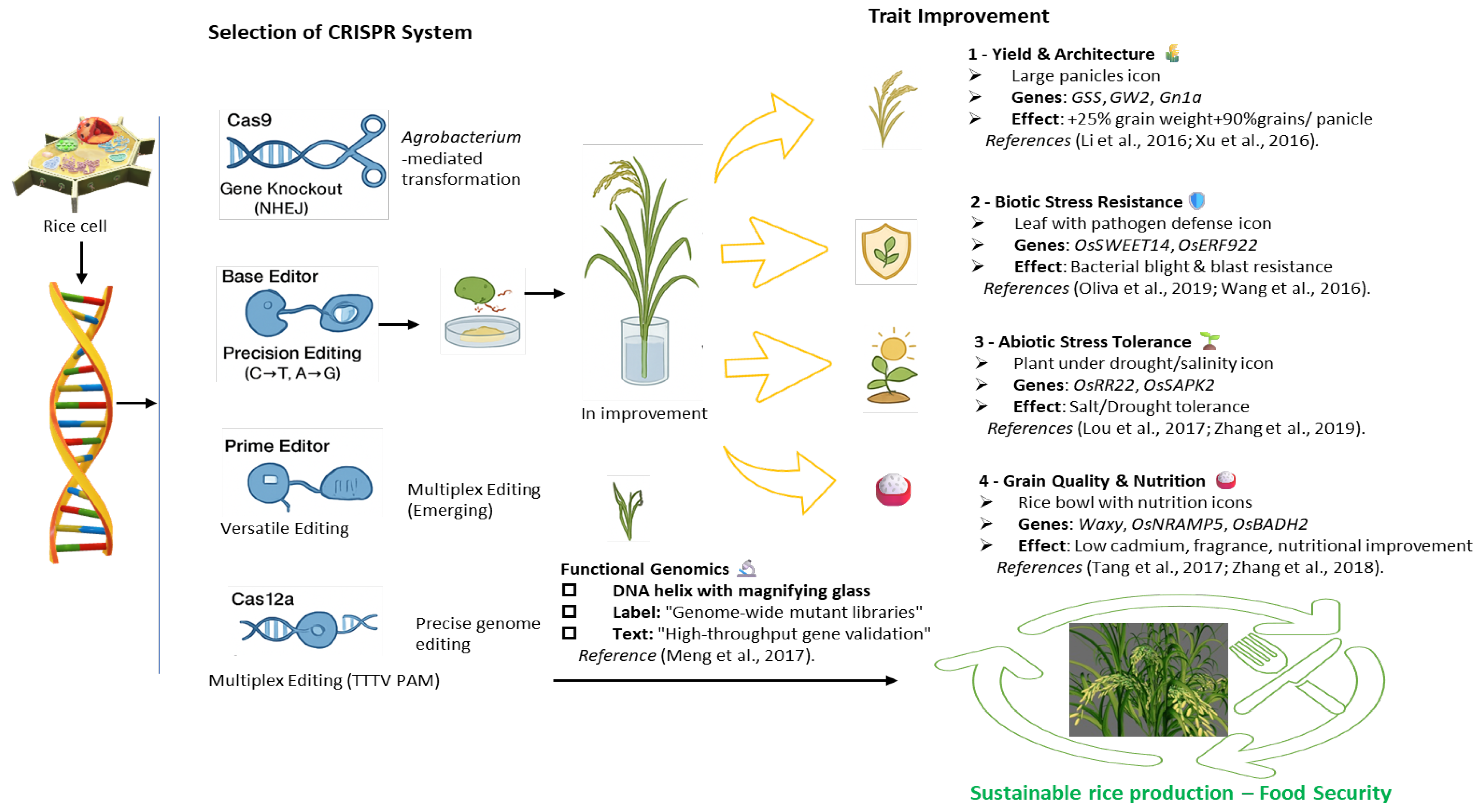
Precision Breeding for a Global Staple Food: A Systematic Review with a Strategic Framework for CRISPR-Cas Applications in Rice (Oryza sativa L.)


Abstract
1. Introduction
2. Materials and Methods
2.1. Literature Search Strategy and Study Selection
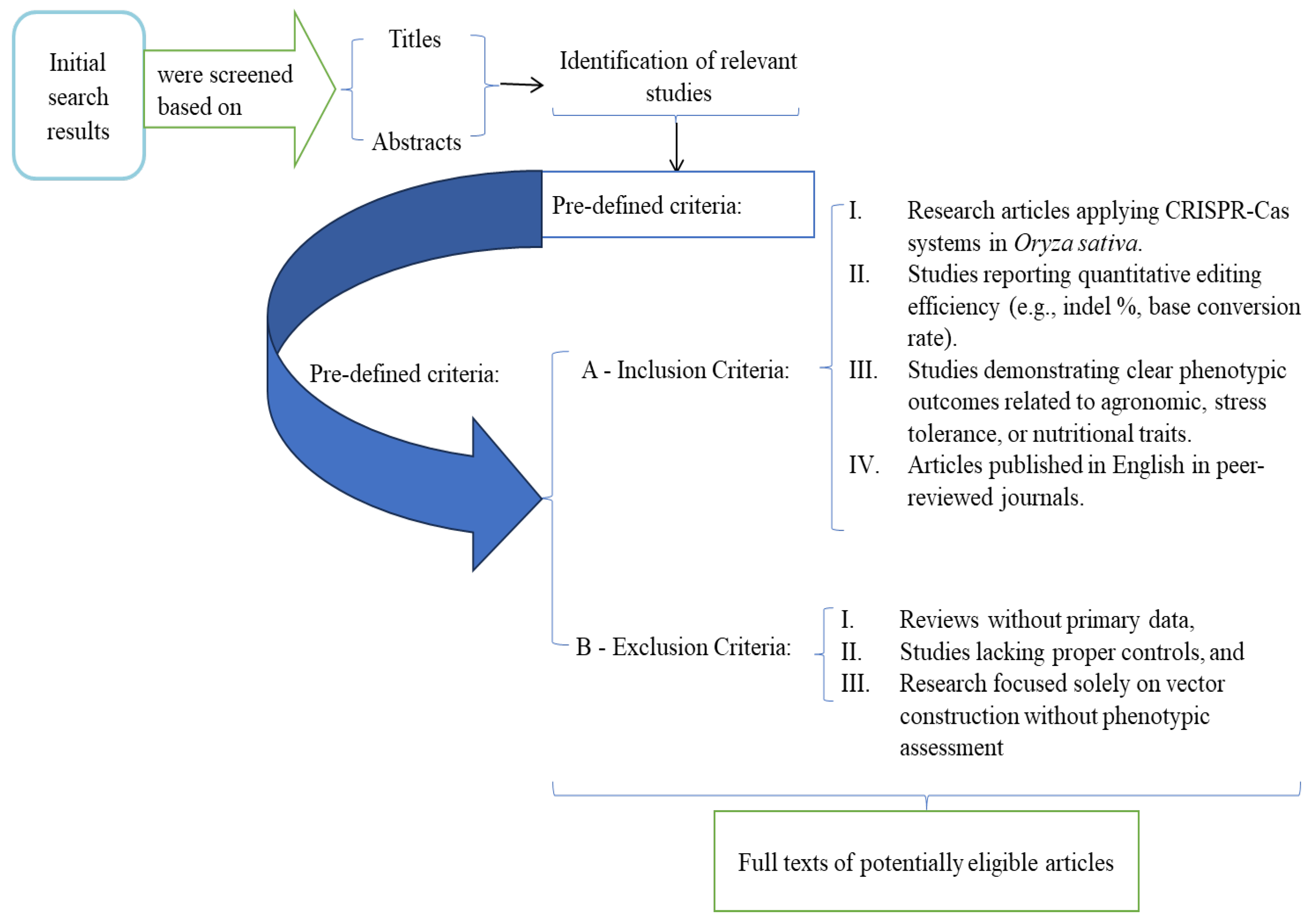
2.2. Eligibility Criteria and Screening Rationale
2.3. Data Extraction and Synthesis
Protocol and Registration
3. Results and Critical Analysis
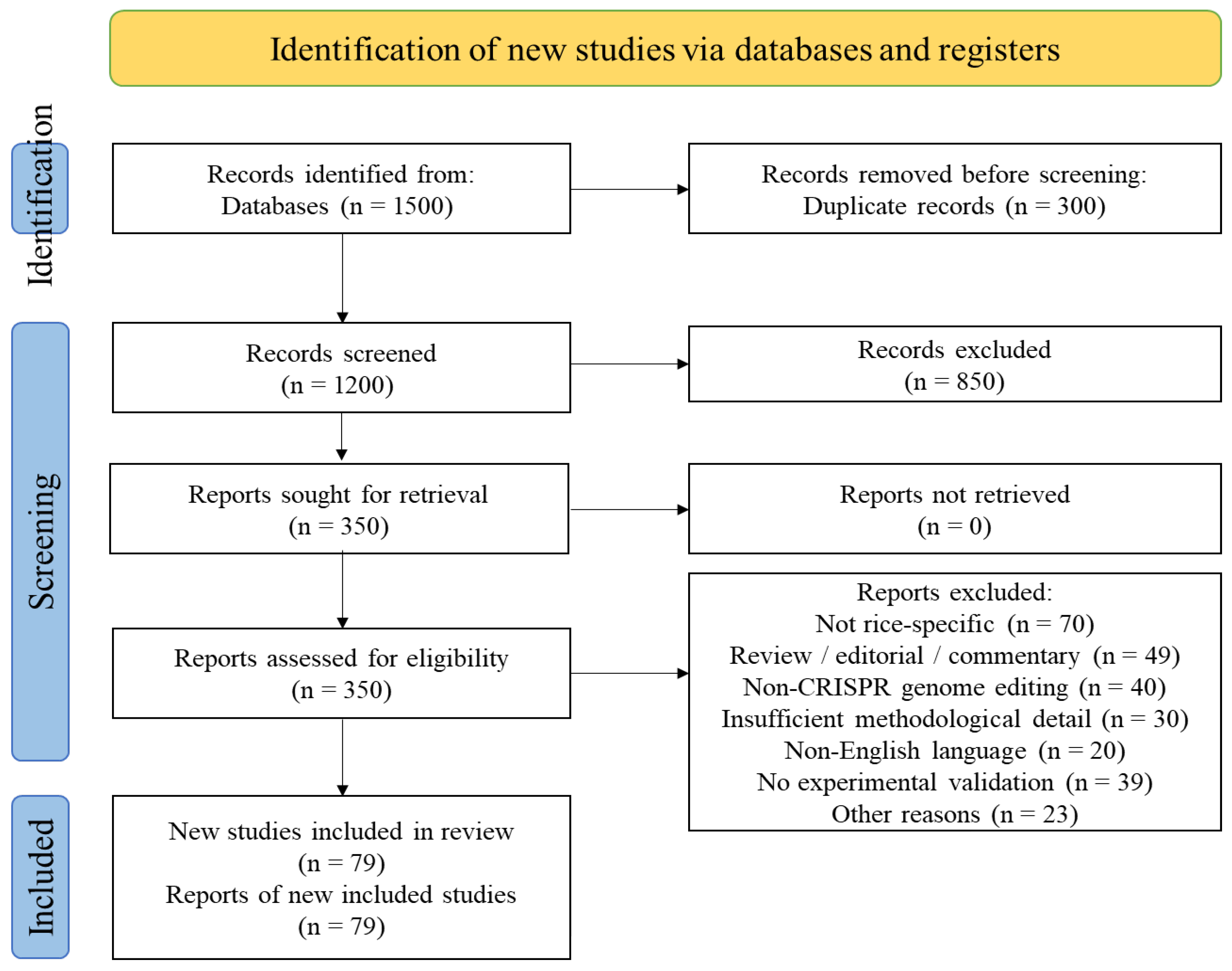
3.1. Study Selection and Characteristics
3.2. Comparative Analysis of Editing Modalities: Efficacy and Constraints
3.2.1. NHEJ-Mediated Knockouts
3.2.2. Base Editing (CBE/ABE)
3.2.3. Homology-Directed Repair (HDR)
3.2.4. Prime Editing

| Editing Modality | Primary Mechanism | Reported Efficiency | Representative Use Cases | Major Constraints | Sources |
|---|---|---|---|---|---|
| NHEJ-Mediated Knockout | Error-prone repair of DSBs generating indels that disrupt gene function | High (commonly >70% in rice; up to 75–90% in mammalian systems) | Loss-of-function traits, including knockout of negative regulators and susceptibility genes | Inherently error-prone; unpredictable indel size; genotype-dependent transformation efficiency | [5,6,7,8,10,11,12,13,14] |
| Base Editing (CBE/ABE) | Direct single-nucleotide conversion without DSB formation | High transformation efficiency (up to 100% in Nipponbare); variable editing frequency | Herbicide resistance alleles and precise amino acid substitutions | Restricted editing window; strict PAM requirement; limited to specific base transitions | [9,16,17,20,22] |
| HDR-mediated Editing | Donor-template-guided homology-directed repair | Low (generally <10%) | Precise gene replacement or targeted gene insertion | Extremely low donor DNA incorporation; strong competition with NHEJ; genotype dependence; technically demanding | [23,24,25,26,28,34] |
| Prime Editing | Reverse transcriptase-mediated DNA synthesis guided by pegRNA without DSBs | Highly variable: <1% in many studies; up to 77.08–88.5% at specific loci under optimized conditions | Precise base substitutions, small insertions, and deletions for molecular breeding | Low reproducibility; difficulty recovering stable transgenic lines; large construct size; extensive optimization required | [29,30,31,32,33,34] |
3.3. Analysis of Key Trait Categories and Editing Success
3.3.1. Yield and Grain Quality
3.3.2. Biotic Stress Resistance
3.3.3. Abiotic Stress Tolerance
3.3.4. Nutritional Biofortification
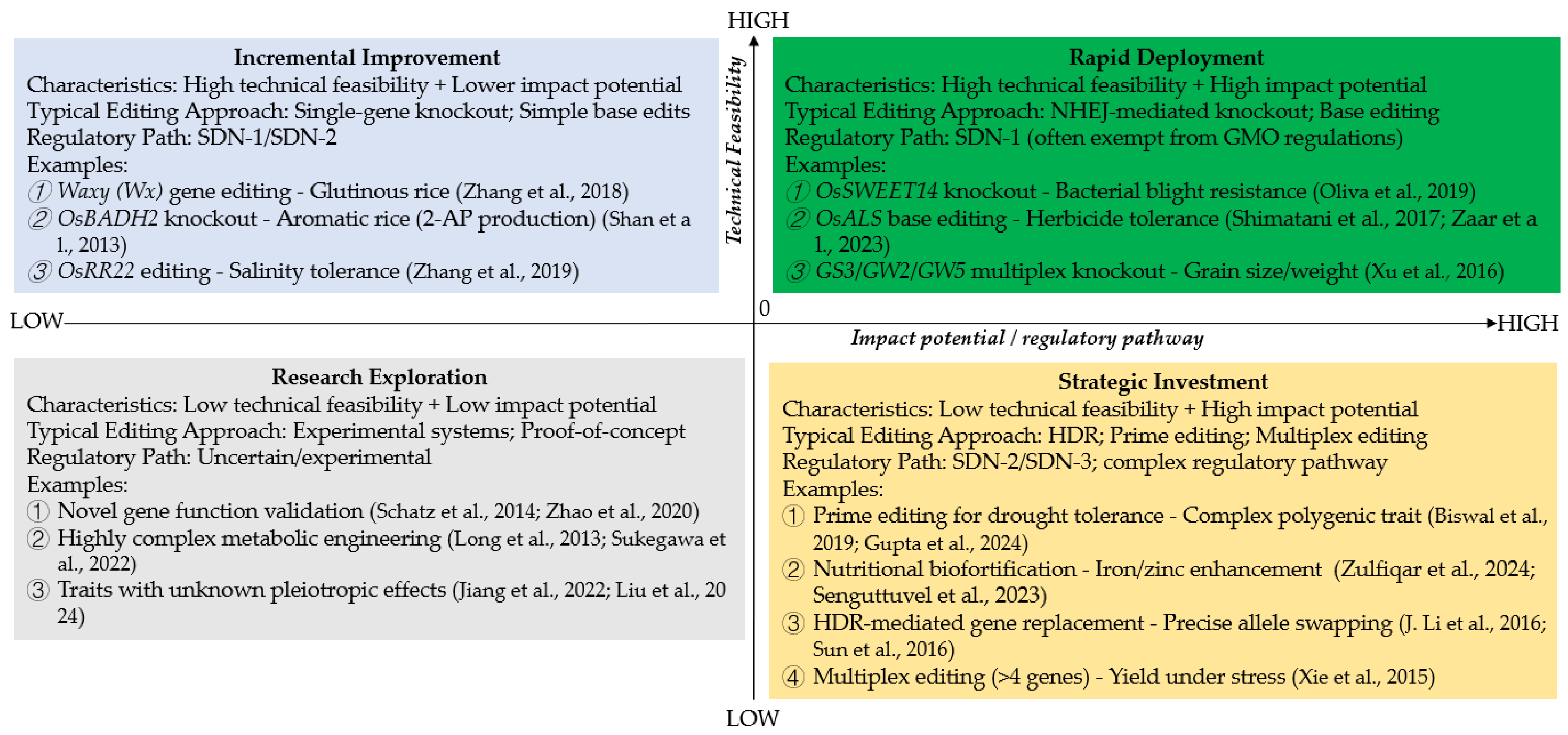
3.4. The CRISPR Trait Prioritization and Readiness Framework (CTPRF)
3.5. Application to Case Studies
3.5.1. Japan: Herbicide-Tolerant Rice
3.5.2. United States: High-Yield Rice
3.5.3. China: Disease-Resistant Rice
3.6. Technical Challenges and Recent Mitigation Strategies
3.6.1. Overcoming HDR Inefficiency
3.6.2. Addressing Genotype-Dependent Transformation
3.6.3. Manipulating Polygenic Traits
3.7. Regulatory Landscapes
4. Conclusions and Future Perspectives
Supplementary Materials
Author Contributions
Funding
Institutional Review Board Statement
Informed Consent Statement
Data Availability Statement
Acknowledgments
Conflicts of Interest
References
- Biswal, A.K.; Mangrauthia, S.K.; Reddy, M.R.; Yugandhar, P. CRISPR mediated genome engineering to develop climate smart rice: Challenges and opportunities. Semin. Cell Dev. Biol. 2019, 96, 100–106. [Google Scholar] [CrossRef]
- Romero, F.M.; Gatica-Arias, A. CRISPR/Cas9: Development and Application in Rice Breeding. Rice Sci. 2019, 26, 265–281. [Google Scholar] [CrossRef]
- Food and Agriculture Organization of the United Nations (FAO). Source for Population and Production Statistics; FAO: Rome, Italy, 2009. [Google Scholar]
- Kumar, A.; Dixit, S.; Ram, T.; Yadaw, R.B.; Mishra, K.K.; Mandal, N.P. Breeding high-yielding drought-tolerant rice: Genetic variations and conventional and molecular approaches. J. Exp. Bot. 2014, 65, 6265–6278. [Google Scholar] [CrossRef]
- Huang, L.; Li, Q.; Zhang, C.; Chu, R.; Gu, Z.; Tan, H.; Zhao, D.; Fan, X.; Liu, Q. Creating novel Wx alleles with fine-tuned amylose levels and improved grain quality in rice by promoter editing using CRISPR/Cas9 system. Plant Biotechnol. J. 2020, 18, 2164–2166. [Google Scholar] [CrossRef]
- Jiang, W.; Zhou, H.; Bi, H.; Fromm, M.; Yang, B.; Weeks, D.P. Demonstration of CRISPR/Cas9/sgRNA-Mediated Targeted Gene Modification in Arabidopsis, Tobacco, Sorghum and Rice. Nucleic Acids Res. 2013, 41, e188. [Google Scholar] [CrossRef] [PubMed]
- Usman, B.; Zhao, N.; Nawaz, G.; Qin, B.; Liu, F.; Liu, Y.; Li, R. CRISPR/Cas9 guided mutagenesis of grain size 3 confers increased rice (Oryza sativa L.) grain length by regulating cysteine proteinase inhibitor and ubiquitin-related proteins. Int. J. Mol. Sci. 2021, 22, 3225. [Google Scholar] [CrossRef]
- Zhang, A.; Liu, Y.; Wang, F.; Li, T.; Chen, Z.; Kong, D.; Bi, J.; Zhang, F.; Luo, X.; Wang, J.; et al. Enhanced rice salinity tolerance via CRISPR/Cas9-targeted mutagenesis of the OsRR22 gene. Mol. Breed. 2019, 39, 47. [Google Scholar] [CrossRef] [PubMed]
- Zhang, A.; Shan, T.; Sun, Y.; Chen, Z.; Hu, J.; Hu, Z.; Ming, Z.; Zhu, Z.; Li, X.; He, J.; et al. Directed evolution rice genes with randomly multiplexed sgRNAs assembly of base editors. Plant Biotechnol. J. 2023, 21, 2597–2610. [Google Scholar] [CrossRef] [PubMed]
- Song, B.; Yang, S.; Hwang, G.-H.; Yu, J.; Bae, S. Analysis of NHEJ-based DNA repair after CRISPR-mediated DNA cleavage. Int. J. Mol. Sci. 2021, 22, 6397. [Google Scholar] [CrossRef]
- Wang, H.; Yang, H.; Shivalila, C.S.; Dawlaty, M.M.; Cheng, A.W.; Zhang, F.; Jaenisch, R. One-step generation of mice carrying mutations in multiple genes by CRISPR/Cas-mediated genome engineering. Cell 2013, 153, 910–918. [Google Scholar] [CrossRef]
- Miao, J.; Guo, D.; Zhang, J.; Huang, Q.; Qin, G.; Zhang, X.; Wan, J.; Gu, H.; Qu, L.-J. Targeted mutagenesis in rice using CRISPR-Cas system. Cell Res. 2013, 23, 1233–1236. [Google Scholar] [CrossRef] [PubMed]
- Ata, H.; Ekstrom, T.L.; Martínez-Gálvez, G.; Mann, C.M.; Dvornikov, A.V.; Schaefbauer, K.J.; Ma, A.C.; Dobbs, D.; Clark, K.J.; Ekker, S.C. Robust activation of microhomology-mediated end joining for precision gene editing applications. PLoS Genet. 2018, 14, e1007652. [Google Scholar]
- Bétermier, M.; Bertrand, P.; Lopez, B.S. Is non-homologous end-joining really an inherently error-prone process? PLoS Genet. 2014, 10, e1004086. [Google Scholar] [CrossRef]
- Zeng, D.; Zheng, Z.; Liu, Y.; Liu, T.; Li, T.; Liu, J.; Luo, Q.; Xue, Y.; Li, S.; Chai, N.; et al. Exploring C-to-G and A-to-Y base editing in rice by using new vector tools. Int. J. Mol. Sci. 2022, 23, 7990. [Google Scholar] [PubMed]
- Shimatani, Z.; Kashojiya, S.; Takayama, M.; Terada, R.; Arazoe, T.; Ishii, H.; Teramura, H.; Yamamoto, T.; Komatsu, H.; Miura, K.; et al. Targeted base editing in rice and tomato using a CRISPR-Cas9 cytidine deaminase fusion. Nat. Biotechnol. 2017, 35, 441–443. [Google Scholar] [CrossRef] [PubMed]
- Zafar, K.; Khan, M.Z.; Amin, I.; Mukhtar, Z.; Zafar, M.; Mansoor, S. Employing template-directed CRISPR-based editing of the OsALS gene to create herbicide tolerance in Basmati rice. AoB Plants 2023, 15, plac059. [Google Scholar]
- Hao, L.; Ruiying, Q.; Xiaoshuang, L.; Shengxiang, L.; Rongfang, X.; Jianbo, Y.; Pengcheng, W. CRISPR/Cas9-mediated adenine base editing in rice genome. Rice Sci. 2019, 26, 125–128. [Google Scholar]
- Eid, A.; Alshareef, S.; Mahfouz, M.M. CRISPR base editors: Genome editing without double-stranded breaks. Biochem. J. 2018, 475, 1955–1964. [Google Scholar] [CrossRef]
- Komor, A.C.; Kim, Y.B.; Packer, M.S.; Zuris, J.A.; Liu, D.R. Programmable editing of a target base in genomic DNA without double-stranded DNA cleavage. Nature 2016, 533, 420–424. [Google Scholar] [CrossRef]
- Peng, H.; Li, J.; Sun, K.; Tang, H.; Huang, W.; Li, X.; Wang, S.; Ding, K.; Han, Z.; Li, Z.; et al. Advances and Applications of Plant Base Editing Technologies. Int. J. Mol. Sci. 2025, 26, 9452. [Google Scholar] [CrossRef]
- Gaudelli, N.M.; Komor, A.C.; Rees, H.A.; Packer, M.S.; Badran, A.H.; Bryson, D.I. Programmable base editing of A•T to G•C in genomic DNA without DNA cleavage. Nature 2017, 551, 464–471. [Google Scholar]
- Borphukan, B.; Khatun, M.; Fartyal, D.; James, D.; Reddy, M.K. A Gemini Virus-Derived Autonomously Replicating System for HDR-Mediated Genome Editing of the EPSP Synthase Gene in Indica Rice. Plants 2025, 14, 477. [Google Scholar] [CrossRef] [PubMed]
- Chen, J.; Li, S.; He, Y.; Li, J.; Xia, L. An update on precision genome editing by homology-directed repair in plants. Plant Physiol. 2022, 188, 1780–1794. [Google Scholar] [CrossRef] [PubMed]
- Li, J.; Meng, X.; Zong, Y.; Chen, K.; Zhang, H.; Liu, J.; Li, J. Gene replacements and insertions in rice by intron targeting using CRISPR–Cas9. Nat. Plants 2016, 2, 16139. [Google Scholar] [CrossRef] [PubMed]
- Sun, Y.; Zhang, X.; Wu, C.; He, Y.; Ma, Y.; Hou, H.; Guo, X.; Du, W.; Zhao, Y.; Xia, L. Engineering herbicide-resistant rice plants through CRISPR/Cas9-mediated homologous recombination of acetolactate synthase. Mol. Plant 2016, 9, 628–631. [Google Scholar]
- Liu, M.; Rehman, S.; Tang, X.; Gu, K.; Fan, Q.; Chen, D.; Ma, W. Methodologies for improving HDR efficiency. Front. Genet. 2019, 9, 691. [Google Scholar] [CrossRef]
- Gao, C. Genome engineering for crop improvement and future agriculture. Cell 2021, 184, 1621–1635. [Google Scholar] [CrossRef]
- Gupta, A.; Liu, B.; Chen, Q.J.; Yang, B. High-efficiency prime editing enables new strategies for broad-spectrum resistance to bacterial blight of rice. Plant Biotechnol. J. 2023, 21, 1454–1464. [Google Scholar] [CrossRef]
- Li, J.; Chen, L.; Liang, J.; Xu, R.; Jiang, Y.; Li, Y.; Ding, J.; Li, M.; Qin, R.; Wei, P. Development of a highly efficient prime editor 2 system in plants. Genome Biol. 2022, 23, 161. [Google Scholar] [CrossRef]
- Hua, K.; Jiang, Y.; Tao, X.; Zhu, J. Precision genome engineering in rice using prime editing system. Plant Biotechnol. J. 2020, 18, 2167. [Google Scholar] [CrossRef]
- Tang, X.; Sretenovic, S.; Ren, Q.; Jia, X.; Li, M.; Fan, T.; Yin, D.; Xiang, S.; Guo, Y.; Liu, L.; et al. Plant prime editors enable precise gene editing in rice cells. Mol. Plant 2020, 13, 667–670. [Google Scholar] [CrossRef]
- Stamos, J.L.; Lentzsch, A.M.; Lambowitz, A.M. Structure of a thermostable group II intron reverse transcriptase with template-primer and its functional and evolutionary implications. Mol. Cell 2017, 68, 926–939. [Google Scholar] [CrossRef]
- Li, J.; Qin, R.; Zhang, Y.; Xu, S.; Liu, X.; Yang, J.; Zhang, X.; Wei, P. Optimizing plant adenine base editor systems by modifying the transgene selection system. Plant Biotechnol. J. 2019, 18, 1495. [Google Scholar] [CrossRef]
- Rasheed, H.; Fiaz, S.; Khan, M.A.; Mehmood, S.; Ullah, F.; Saeed, S.; Khan, S.U.; Yaseen, T.; Hussain, R.M.; Qayyum, A. Characterization of functional genes GS3 and GW2 and their effect on the grain size of various landraces of rice (Oryza sativa). Mol. Biol. Rep. 2022, 49, 5397–5403. [Google Scholar] [CrossRef]
- Zeb, A.; Sohail, A.; Tang, S.; Sheng, Z.; Hu, P. CRISPR/Cas9-mediated mutations of GS3 and GW5 positively regulate grain size and grain width in rice (Oryza sativa Indica). Ecol. Genet. Genom. 2025, 35, 100362. [Google Scholar]
- Thiruppathi, A.; Salunkhe, S.R.; Ramasamy, S.P.; Palaniswamy, R.; Rajagopalan, V.R.; Rathnasamy, S.A.; Alagarswamy, S.; Swaminathan, M.; Manickam, S.; Muthurajan, R. Unleashing the Potential of CRISPR/Cas9 Genome Editing for Yield-Related Traits in Rice. Plants 2024, 13, 2972. [Google Scholar] [CrossRef]
- Xu, R.; Yang, Y.; Qin, R.; Li, H.; Qiu, C.; Li, L.; Wei, P.; Yang, J. Rapid improvement of grain weight via highly efficient CRISPR/Cas9-mediated multiplex genome editing in rice. J. Genet. Genom. = Yi Chuan Xue Bao 2016, 43, 529–532. [Google Scholar]
- Zhou, J.; Xin, X.; He, Y.; Chen, H.; Li, Q.; Tang, X.; Zhong, Z.; Deng, K.; Zheng, X.; Akher, S.A.; et al. Multiplex QTL editing of grain-related genes improves yield in elite rice varieties. Plant Cell Rep. 2019, 38, 475–485. [Google Scholar]
- Oliva, R.; Ji, C.; Atienza-Grande, G.; Huguet-Tapia, J.C.; Perez-Quintero, A.; Li, T.; Eom, J.-S.; Li, C.; Nguyen, H.; Liu, B.; et al. Broad-spectrum resistance to bacterial blight in rice using genome editing. Nat. Biotechnol. 2019, 37, 1344–1350. [Google Scholar] [CrossRef] [PubMed]
- Xu, Z.; Xu, X.; Gong, Q.; Li, Z.; Li, Y.; Wang, S.; Yang, Y.; Ma, W.; Liu, L.; Zhu, B.; et al. Engineering broad-spectrum bacterial blight resistance by simultaneously disrupting variable TALE-binding elements of multiple susceptibility genes in rice. Mol. Plant 2019, 12, 1434–1446. [Google Scholar]
- Zafar, K.; Khan, M.Z.; Amin, I.; Mukhtar, Z.; Yasmin, S.; Arif, M.; Ejaz, K.; Mansoor, S. Precise CRISPR-Cas9 mediated genome editing in super basmati rice for resistance against bacterial blight by targeting the major susceptibility gene. Front. Plant Sci. 2020, 11, 575. [Google Scholar] [CrossRef] [PubMed]
- Doucouré, H.; Pérez-Quintero, A.L.; Reshetnyak, G.; Tekete, C.; Auguy, F.; Thomas, E.; Koebnik, R.; Szurek, B.; Koita, O.; Verdier, V.; et al. Functional and genome sequence-driven characterization of tal effector gene repertoires reveals novel variants with altered specificities in closely related Malian Xanthomonas oryzae pv. oryzae strains. Front. Microbiol. 2018, 9, 1657. [Google Scholar] [CrossRef]
- Hutin, M.; Sabot, F.; Ghesquière, A.; Koebnik, R.; Szurek, B. A knowledge-based molecular screen uncovers a broad-spectrum Os SWEET 14 resistance allele to bacterial blight from wild rice. Plant J. 2015, 84, 694–703. [Google Scholar] [PubMed]
- Liu, C.; Wu, C.; Yuan, Z.; Tian, B.; Yu, P.; Xu, D.; Zheng, X.; Li, L. Multi-trait genome-wide association studies reveal novel pleiotropic loci associated with yield and yield-related traits in rice. J. Integr. Agric. 2024; in press. [Google Scholar] [CrossRef]
- Wang, W.-C.; Lin, T.-C.; Kieber, J.; Tsai, Y.-C. Response regulators 9 and 10 negatively regulate salinity tolerance in rice. Plant Cell Physiol. 2019, 60, 2549–2563. [Google Scholar] [CrossRef] [PubMed]
- Luo, C.; Akhtar, M.; Min, W.; Alam, Y.; Ma, T.; Shi, Y.; She, Y.; Lu, X. The suppressed expression of a stress responsive gene ‘OsDSR2’ enhances rice tolerance in drought and salt stress. J. Plant Physiol. 2023, 282, 153927. [Google Scholar] [PubMed]
- Xie, K.; Minkenberg, B.; Yang, Y. Boosting CRISPR/Cas9 multiplex editing capability with the endogenous tRNA-processing system. Proc. Natl. Acad. Sci. USA 2015, 112, 3570–3575. [Google Scholar]
- Xu, L.; Zhao, L.; Gao, Y.; Xu, J.; Han, R. Empower multiplex cell and tissue-specific CRISPR-mediated gene manipulation with self-cleaving ribozymes and tRNA. Nucleic Acids Res. 2017, 45, e28. [Google Scholar]
- Chang, J.-D.; Huang, S.; Konishi, N.; Wang, P.; Chen, J.; Huang, X.-Y.; Ma, J.F.; Zhao, F.-J. Overexpression of the manganese/cadmium transporter OsNRAMP5 reduces cadmium accumulation in rice grain. J. Exp. Bot. 2020, 71, 5705–5715. [Google Scholar]
- Tang, L.; Mao, B.; Li, Y.; Lv, Q.; Zhang, L.; Chen, C.; He, H.; Wang, W.; Zeng, X.; Shao, Y.; et al. Knockout of OsNramp5 using the CRISPR/Cas9 system produces low Cd-accumulating indica rice without compromising yield. Sci. Rep. 2017, 7, 14438. [Google Scholar]
- Yang, C.-H.; Zhang, Y.; Huang, C.-F. Reduction in cadmium accumulation in japonica rice grains by CRISPR/Cas9-mediated editing of OsNRAMP5. J. Integr. Agric. 2019, 18, 688–697. [Google Scholar]
- Kumara, R.; Maloa, K.; Lagoriyab, D.S.; Singh, A.K.; Tutlani, A. Advancing Nutritional Quality through Genome Editing for Biofortification: A Comprehensive Review. J. Adv. Biol. Biotechnol. 2025, 28, 744–760. [Google Scholar] [CrossRef]
- Kaur, R.; Das, S.; Bansal, S.; Singh, G.; Sardar, S.; Dhar, H.; Ram, H. Heavy metal stress in rice: Uptake, transport, signaling, and tolerance mechanisms. Physiol. Plant. 2021, 173, 430–448. [Google Scholar] [CrossRef]
- Kawakami, Y.; Bhullar, N.K. Molecular processes in iron and zinc homeostasis and their modulation for biofortification in rice. J. Integr. Plant Biol. 2018, 60, 1181–1198. [Google Scholar] [CrossRef]
- Li, M.; Li, X.; Zhou, Z.; Wu, P.; Fang, M.; Pan, X.; Lin, Q.; Luo, W.; Wu, G.; Li, H. Reassessment of the four yield-related genes Gn1a, DEP1, GS3, and IPA1 in rice using a CRISPR/Cas9 system. Front. Plant Sci. 2016, 7, 377. [Google Scholar]
- Wang, F.; Wang, C.; Liu, P.; Lei, C.; Hao, W.; Gao, Y.; Liu, Y.-G.; Zhao, K. Enhanced rice blast resistance by CRISPR/Cas9-targeted mutagenesis of the ERF transcription factor gene OsERF922. PLoS ONE 2016, 11, e0154027. [Google Scholar]
- Lou, D.; Wang, H.; Liang, G.; Yu, D. OsSAPK2 confers abscisic acid sensitivity and tolerance to drought stress in rice. Front. Plant Sci. 2017, 8, 993. [Google Scholar] [CrossRef] [PubMed]
- Zhang, J.; Zhang, H.; Botella, J.R.; Zhu, J. Generation of new glutinous rice by CRISPR/Cas9-targeted mutagenesis of the Waxy gene in elite rice varieties. J. Integr. Plant Biol. 2018, 60, 369–375. [Google Scholar]
- Meng, X.; Yu, H.; Zhang, Y.; Zhuang, F.; Song, X.; Gao, S.; Gao, C.; Li, J. Construction of a genome-wide mutant library in rice using CRISPR/Cas9. Mol. Plant 2017, 10, 1238–1241. [Google Scholar] [CrossRef]
- Shan, Q.; Wang, Y.; Li, J.; Zhang, Y.; Chen, K.; Liang, Z.; Zhang, K.; Liu, J.; Xi, J.J.; Qiu, J.-L.; et al. Targeted genome modification of crop plants using a CRISPR-Cas system. Nat. Biotechnol. 2013, 31, 686–688. [Google Scholar] [CrossRef]
- Schatz, M.C.; Maron, L.G.; Stein, J.C.; Wences, A.H.; Gurtowski, J.; Biggers, E.; Lee, H.; Kramer, M.; Antoniou, E.; Ghiban, E.; et al. Whole genome de novo assemblies of three divergent strains of rice, Oryza sativa, document novel gene space of aus and indica. Genome Biol. 2014, 15, 506. [Google Scholar] [PubMed]
- Zhao, Z.; Zhang, Z.; Ding, Z.; Meng, H.; Shen, R.; Tang, H.; Liu, Y.-G.; Chen, L. Public-transcriptome-database-assisted selection and validation of reliable reference genes for qRT-PCR in rice. Sci. China Life Sci. 2020, 63, 92–101. [Google Scholar] [CrossRef]
- Long, X.; Liu, Q.; Chan, M.; Wang, Q.; Sun, S.S.M. Metabolic engineering and profiling of rice with increased lysine. Plant Biotechnol. J. 2013, 11, 490–501. [Google Scholar] [CrossRef]
- Sukegawa, S.; Toki, S.; Saika, H. Genome editing technology and its application to metabolic engineering in rice. Rice 2022, 15, 21. [Google Scholar] [CrossRef]
- Jiang, L.; Zhong, H.; Jiang, X.; Zhang, J.; Huang, R.; Liao, F.; Deng, Y.; Liu, Q.; Huang, Y.; Wang, H.; et al. Identification and pleiotropic effect analysis of GSE5 on rice chalkiness and grain shape. Front. Plant Sci. 2022, 12, 814928. [Google Scholar] [CrossRef]
- Gupta, A.; Liu, B.; Raza, S.; Chen, Q.-J.; Yang, B. Modularly assembled multiplex prime editors for simultaneous editing of agronomically important genes in rice. Plant Commun. 2024, 5, 100741. [Google Scholar]
- Senguttuvel, P.; Padmavathi, G.; Jasmine, C.; Rao, D.S.; Cn, N.; Jaldhani, V.; Beulah, P.; Gobinath, R.; Kumar, J.A.; Sv, S.P.; et al. Rice biofortification: Breeding and genomic approaches for genetic enhancement of grain zinc and iron contents. Front. Plant Sci. 2023, 14, 1138408. [Google Scholar] [CrossRef] [PubMed]
- Zulfiqar, U.; Khokhar, A.; Maqsood, M.F.; Shahbaz, M.; Naz, N.; Sara, M.; Maqsood, S.; Sahar, S.; Hussain, S.; Ahmad, M. Genetic biofortification: Advancing crop nutrition to tackle hidden hunger. Funct. Integr. Genom. 2024, 24, 34. [Google Scholar] [CrossRef]
- Jones, M.G.K.; Fosu-Nyarko, J.; Iqbal, S.; Adeel, M.; Romero-Aldemita, R.; Arujanan, M.; Kasai, M.; Wei, X.; Prasetya, B.; Nugroho, S.; et al. Enabling trade in gene-edited produce in Asia and Australasia: The developing regulatory landscape and future perspectives. Plants 2022, 11, 2538. [Google Scholar] [CrossRef] [PubMed]
- Hoffman, N.E. Revisions to USDA biotechnology regulations: The SECURE rule. Proc. Natl. Acad. Sci. USA 2021, 118, e2004841118. [Google Scholar]
- Kang, Y.; Deng, H.; Pray, C.; Hu, R. Managers’ attitudes toward gene-editing technology and companies’ R&D investment in gene-editing: The case of Chinese seed companies. GM Crops Food 2022, 13, 309–326. [Google Scholar]
- Kim, J.H.; Yu, J.; Kim, H.K.; Kim, J.Y.; Kim, M.-S.; Cho, Y.-G.; Bae, S.; Kang, K.K.; Jung, Y.J. Genome editing of golden SNP-carrying lycopene epsilon-cyclase (LcyE) gene using the CRSPR-Cas9/HDR and geminiviral replicon system in rice. Int. J. Mol. Sci. 2022, 23, 10383. [Google Scholar] [CrossRef] [PubMed]
- Sridalla, K.; Woodhouse, M.V.; Hu, J.; Scheer, J.; Ferlez, B.; Crickard, J.B. The translocation activity of Rad54 reduces crossover outcomes during homologous recombination. Nucleic Acids Res. 2024, 52, 7031–7048. [Google Scholar] [CrossRef]
- Li, G.; Yang, X.; Luo, X.; Wu, Z.; Yang, H. Modulation of cell cycle increases CRISPR-mediated homology-directed DNA repair. Cell Biosci. 2023, 13, 215. [Google Scholar] [PubMed]
- Smirnikhina, S.A.; Zaynitdinova, M.I.; Sergeeva, V.A.; Lavrov, A.V. Improving homology-directed repair in genome editing experiments by influencing the cell cycle. Int. J. Mol. Sci. 2022, 23, 5992. [Google Scholar] [CrossRef]
- Chen, K.; Ye, C.; Guo, J.; Chen, D.-G.; Guo, T.; Liu, J.; Liu, C.-G.; Zhou, X.-Q. Agrobacterium-mediated transformation efficiency and grain phenotypes in six indica and japonica rice cultivars. Seed Biol. 2023, 2, 4. [Google Scholar] [CrossRef]
- Sundararajan, S.; Sivaraman, B.; Rajendran, V.; Ramalingam, S. Tissue culture and Agrobacterium-mediated genetic transformation studies in four commercially important indica rice cultivars. J. Crop Sci. Biotechnol. 2017, 20, 175–183. [Google Scholar]
- Zhou, G.; Liao, S.; Zhang, J.; Meng, Z.; Wang, Z.; Long, L.; Li, W.; Qiu, Y. Establishment of Agrobacterium-mediated transformation system for elite indica rice. Plant Biotechnol. Rep. 2024, 18, 693–704. [Google Scholar] [CrossRef]
- Lee, K.; Wang, K. Strategies for genotype-flexible plant transformation. Curr. Opin. Biotechnol. 2023, 79, 102848. [Google Scholar]
- Nelson-Vasilchik, K.; Hague, J.P.; Tilelli, M.; Kausch, A.P. Rapid transformation and plant regeneration of sorghum (Sorghum bicolor L.) mediated by altruistic Baby boom and Wuschel2. Vitr. Cell. Dev. Biol.-Plant 2022, 58, 331–342. [Google Scholar] [CrossRef]
- Kodaparthi, A.; Siddiqua, A.; Shravani, M.; Sheela, C.P.; Sindhu, P.; Sarsan, S.; Manne, R.R. Nanomaterial-Mediated Plant Gene Transformation for Genetically Modified Plants. In Plant-Based Nanoparticle Synthesis for Sustainable Agriculture; CRC Press: Boca Raton, FL, USA, 2025; pp. 61–78. [Google Scholar]
- Wu, K.; Xu, C.; Li, T.; Ma, H.; Gong, J.; Li, X.; Sun, X.; Hu, X. Application of nanotechnology in plant genetic engineering. Int. J. Mol. Sci. 2023, 24, 14836. [Google Scholar] [CrossRef]
- Čermák, T.; Curtin, S.J.; Gil-Humanes, J.; Čegan, R.; Kono, T.J.Y.; Konečná, E.; Belanto, J.J.; Starker, C.G.; Mathre, J.W.; Greenstein, R.L.; et al. A Multipurpose Toolkit to Enable Advanced Genome Engineering in Plants. Plant Cell 2017, 29, 1196–1217. [Google Scholar] [CrossRef] [PubMed]
- Lema, M.A. Regulatory aspects of gene editing in Argentina. Transgenic Res. 2019, 28, 147–150. [Google Scholar] [CrossRef] [PubMed]
- Eckerstorfer, M.F.; Engelhard, M.; Heissenberger, A.; Simon, S.; Teichmann, H. Plants developed by new genetic modification techniques—Comparison of existing regulatory frameworks in the EU and non-EU countries. Front. Bioeng. Biotechnol. 2019, 7, 26. [Google Scholar] [CrossRef]
- Gao, W.; Xu, W.-T.; Huang, K.-L.; Guo, M.-Z.; Luo, Y.-B. Risk analysis for genome editing-derived food safety in China. Food Control 2018, 84, 128–137. [Google Scholar] [CrossRef]
- Lee, S.-W. Current status on the modification of the scope for GMO regulation on the gene edited plants with no remnants of inserted foreign DNA fragments. J. Plant Biotechnol. 2019, 46, 137–142. [Google Scholar] [CrossRef]
- Page, M.J.; McKenzie, J.E.; Bossuyt, P.M.; Boutron, I.; Hoffmann, T.C.; Mulrow, C.D.; Shamseer, L.; Tetzlaff, J.M.; Akl, E.A.; Brennan, S.E.; et al. The PRISMA 2020 statement: An updated guideline for reporting systematic reviews. BMJ 2021, 372, n71. [Google Scholar] [CrossRef] [PubMed]


Disclaimer/Publisher’s Note: The statements, opinions and data contained in all publications are solely those of the individual author(s) and contributor(s) and not of MDPI and/or the editor(s). MDPI and/or the editor(s) disclaim responsibility for any injury to people or property resulting from any ideas, methods, instructions or products referred to in the content. |
© 2026 by the authors. Licensee MDPI, Basel, Switzerland. This article is an open access article distributed under the terms and conditions of the Creative Commons Attribution (CC BY) license.
Share and Cite
Machel Gica, N.G.; Gica, W.T.; La, H.; Mi, Y.; Zhou, Y. Precision Breeding for a Global Staple Food: A Systematic Review with a Strategic Framework for CRISPR-Cas Applications in Rice (Oryza sativa L.). Genes 2026, 17, 165. https://doi.org/10.3390/genes17020165
Machel Gica NG, Gica WT, La H, Mi Y, Zhou Y. Precision Breeding for a Global Staple Food: A Systematic Review with a Strategic Framework for CRISPR-Cas Applications in Rice (Oryza sativa L.). Genes. 2026; 17(2):165. https://doi.org/10.3390/genes17020165
Chicago/Turabian StyleMachel Gica, Nlhavat Gabriel, Wilard Tuto Gica, Honggui La, Yi Mi, and Yi Zhou. 2026. "Precision Breeding for a Global Staple Food: A Systematic Review with a Strategic Framework for CRISPR-Cas Applications in Rice (Oryza sativa L.)" Genes 17, no. 2: 165. https://doi.org/10.3390/genes17020165
APA StyleMachel Gica, N. G., Gica, W. T., La, H., Mi, Y., & Zhou, Y. (2026). Precision Breeding for a Global Staple Food: A Systematic Review with a Strategic Framework for CRISPR-Cas Applications in Rice (Oryza sativa L.). Genes, 17(2), 165. https://doi.org/10.3390/genes17020165