
Article

Genomic Identification and Characterization of the Cotton YABBY Gene Family
Anyang Key Laboratory of Bioinformatics, School of Biotechnology and Food Engineering, Anyang Institute of Technology, Anyang 455000, China
*
Author to whom correspondence should be addressed.
These authors contributed equally to this work.
Genes 2026, 17(1), 64; https://doi.org/10.3390/genes17010064
Submission received: 28 November 2025 / Revised: 29 December 2025 / Accepted: 30 December 2025 / Published: 6 January 2026
(This article belongs to the Section Plant Genetics and Genomics)

Abstract

Background: YABBY transcription factors play important roles in plant growth and development. Although this gene family has been characterized in many plant species, a comprehensive analysis in cotton remains unavailable. Methods: In this study, we investigated the YABBY gene family in cotton by integrating multiple bioinformatics methods. Results: YABBY genes were identified in the genomes of four cotton species (Gossypium hirsutum, Gossypium barbadense, Gossypium arboretum and Gossypium raimondii) and these identified genes were further classified into six groups. Following this classification, the expansion of the cotton YABBY gene family was examined, and we found that the family exhibits diverse expansion patterns during evolution, with segmental duplication acting as the primary driving force. In contrast, the notably larger repertoire of YABBY genes in G. raimondii is likely attributable to transposon activity. Regarding their evolutionary trajectory, Ka/Ks analysis showed that the YABBY gene family has undergone purifying selection. Beyond evolution, expression and cis-element analyses further demonstrated that YABBY genes possess diverse functions. In addition, we identified YABBY genes involved in different developmental stages of cotton fibers. Conclusions: We clarify the function and evolution of the cotton YABBY gene family in this work, and these results will provide a critical resource for further research on YABBY genes.

1. Introduction

The YABBY gene family is a group of plant-specific transcription factors that belongs to the zinc finger protein superfamily [1,2,3]. YABBY genes play critical roles in plant growth and development [2,3]. In Arabidopsis thaliana, six YABBY genes have been identified, each playing distinct roles in various developmental stages [1]. YABBY genes have been identified and characterized across diverse plant species. In total, 8 YABBY genes are found in Oryza sativa [4], 7 in Ananas comosus [5], 6 in Platycodon grandifloras [6], 24 in Dendrobium chrysotoxum [7], 7 in Solanum tuberosum [8] and 9 in Melastoma dodecandrum [9]. Studies of YABBY gene family in these species indicate that, beyond regulating growth and development, YABBY genes are also involved in various biological processes, including plant hormone responses [10], abiotic stress resistance and light response [11,12]. For example, the overexpression of rice YABBY1 causes a semi-dwarf phenotype by feedback-regulating gibberellin biosynthesis and metabolism [4]; the overexpression of pineapple YABBY4 can negatively regulate the salt tolerance of plants [5]. These studies indicate that the YABBY gene family has undergone species-specific expansion during evolution. This expansion has driven its functional diversification, which in turn contributes to the adaptation of plants to various environmental challenges.
Cotton is an important economic crop, globally cultivated and valued for its production of natural textile fibers. Cotton fiber is a kind of single cell that differentiates from the epidermis of the ovule. The fiber development can be divided into four distinct and overlapping stages, mainly in terms of days post-anthesis (DPA): cell initiation (−3 to 3 DPA), cell elongation (3 to 20 DPA), secondary cell wall synthesis (20 to 45 DPA) and dehydration maturation (45 to 50 DPA) [13]. The development of fiber has a significant impact on both its yield and quality. Despite the agronomic importance of this process, the YABBY gene family in cotton has not been extensively studied, and its specific functions in fiber development remain largely unknown. In this study, RNA-seq data will be employed to investigate the expression profiles of the YABBY gene family across different fiber developmental stages. The findings will contribute to a more comprehensive understanding of the underlying mechanisms and support the improvement of cotton yield and quality.
This study conducted a genome-wide identification of the YABBY gene family in cotton. We systematically analyzed the physicochemical properties, conserved domains, cis-acting elements, evolutionary trajectory, miRNA–mRNA regulatory networks and expression patterns of the identified genes. The results of this study provide new insights into the evolution and function of YABBY in cotton and offer valuable information for future studies on YABBY function [14].

2. Materials and Methods

2.1. Identification of YABBY Gene Family in Gossypium Species

The genome sequence and annotation files of G. hirsutum [15], G. barbadense [15], G. arboretum [16] and G. raimondii [17] were obtained from COTTONGEN (http://www.cottongen.org, accessed on 12 March 2025). The YABBY protein sequences of the A. thaliana and O. sativa were used as queries to perform a BLASTP 2.15 [18] search (E-value < 1 × 10⁻¹⁰). The hidden Markov model of the YABBY domain (PF04690) was used as a query for a homology search with HMMER 3.0 software [19] (E-value < 1 × 10⁻¹⁰). The candidate sequences were then submitted to the NCBI CDD (https://www.ncbi.nlm.nih.gov/cdd, accessed on 25 March 2025) to confirm the presence of the YABBY domain. Finally, the theoretical isoelectric point and molecular weight of the deduced proteins were predicted using the ExPASy tool [20] (https://web.expasy.org/compute_pi/, accessed on 28 March 2025).

2.2. Multiple Sequence Alignment and Phylogenetic Tree Construction

All the identified cotton YABBY proteins were aligned using ClustalW [21]. Based on this alignment, a maximum likelihood phylogenetic tree was constructed in MEGA12 [22] with 1000 bootstrap replicates, and subsequently visualized using the iTOL7.2 [23].

2.3. Gene Structure, Protein Motif and Cis-Element of Cotton YABBY Gene Family

The exon–intron structures of cotton YABBY genes were analyzed using the Gene Structure Display Server [24] (http://gsds.gao-lab.org/, accessed on 2 April 2025), and cis-elements within the 1500 bp promoter region upstream of all genes were predicted using PlantCARE [25]. The conserved motifs of cotton YABBY proteins were identified using the MEME suite 5.5.9 [26] (https://meme-suite.org/meme/, accessed on 2 April 2025).

2.4. Gene Duplication Analysis of Cotton YABBY Gene Family

Gene duplication events within a cotton genome and across the four Gossypium species (G. hirsutum, G. barbadense, G. arboretum and G. raimondii) were analyzed using MCScanX 1.0.0 [27] with default parameters. The collinear relationship was visualized using Circos 0.69-9 [28]. The synonymous substitution (Ks) and non-synonymous substitution (Ka) rates for duplicated gene pairs were calculated using the KaKs_Calculator 2.0 [29]. Divergence times of the duplicated gene pairs were estimated using Formula (1), with the divergence rate λ = 1.5 × 10⁻⁸ [30].
T = Ks/2λ

2.5. Transposable Elements Analysis of Cotton YABBY Gene Family

We detected the transposable elements within 5 kb flanking regions of cotton YABBY genes using RepeatMasker 4.1.6 [31] with RepBase; in addition, the abundance and types of the detected transposable elements were analyzed using Perl script.

2.6. Prediction of miRNA Targeting YABBY Genes

The CDS sequences of G. hirsutum YABBY genes were used to predict the miRNA target sites using psRNATarget (2017 release) [32] with default parameters (https://www.zhaolab.org/psRNATarget/, accessed on 12 April 2025). The resulting miRNA–target interactions were visualized using the R package ggalluvia 0.12.5.

2.7. Expression Analysis of Cotton YABBY Genes

RNA-seq data of G. hirsutum and G. barbadense were downloaded from the NCBI SRA database (http://www.ncbi.nlm.nih.gov/, accessed on 18 April 2025). The SRA data for multiple tissues, different fiber development stages (BioProject: PRJNA490626) and long-day and short-day conditions (BioProject: PRJNA529417) were converted to FASTQ format using the SRAToolkit 3.1.0 [33]. The resulting reads were then aligned to the respective reference genomes using HISAT2 [34], and gene expression levels were quantified in FPKM with Cufflinks 2.1.1 [35]. The expression matrix of the YABBY gene family was visualized as a heatmap using the R package of pheatmap 4.4.3.

3. Results

3.1. Identification of YABBY Gene Family in Cotton

A total of 23, 24, 12 and 37 YABBY genes were identified in the genomes of G. hirsutum, G. barbadense, G. arboretum and G. raimondii, respectively (Supplementary File S1, Table S1). The number of YABBY genes in the diploid G. arboretum genome was generally consistent with the number in rice (8) [4]; however, in diploid G. raimondii, there are many more YABBY genes than in diploid G. arboretum.
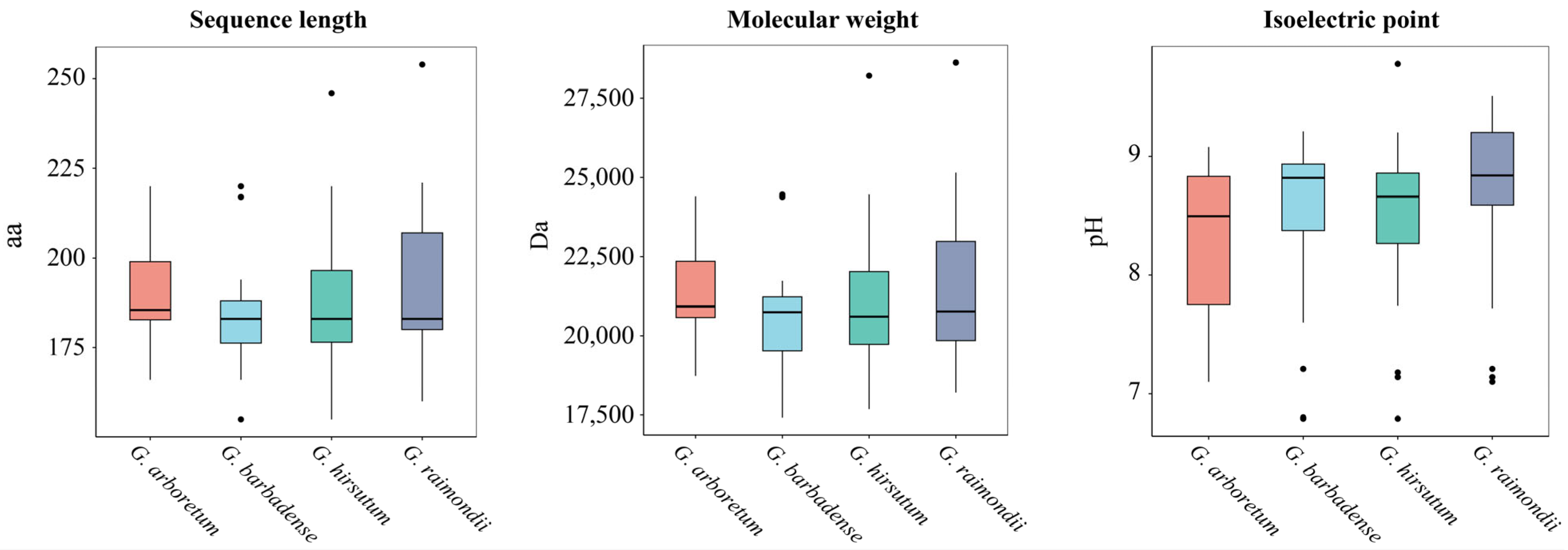
The physicochemical analysis showed that the length of the identified YABBY proteins ranged from 155 to 254 amino acids. The molecular weight of them ranged from 17,422.81 to 28,622.46 Da and the isoelectric point ranged from 6.79 to 9.78 (Figure 1, Supplementary File S1, Table S1).

3.2. Phylogenetic Analysis of the YABBY Gene Family

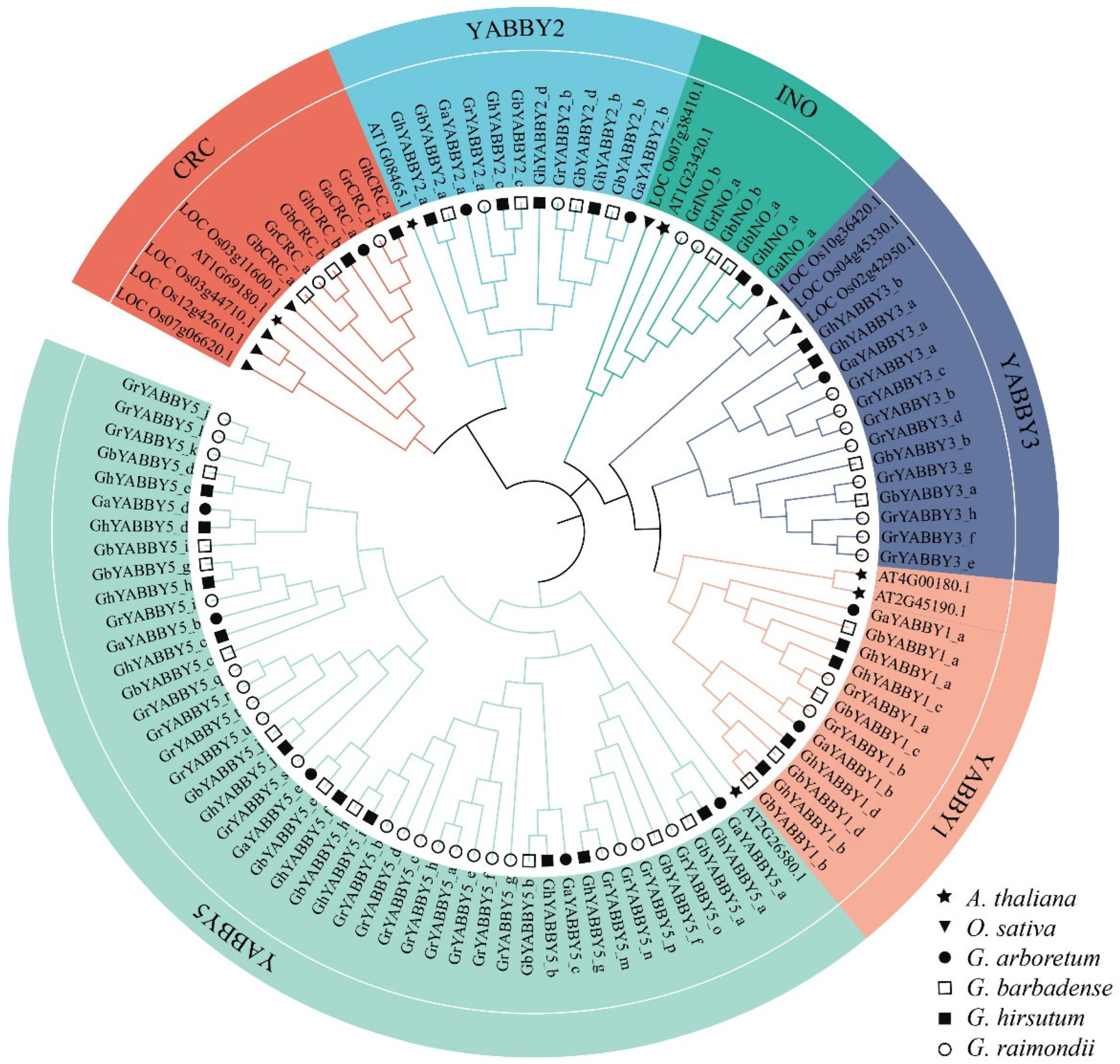
To investigate the evolutionary relationship of the YABBY gene family, a phylogenetic tree was constructed using the maximum likelihood method based on their protein sequences. According to previous studies, the YABBY family in A. thaliana is divided into six subgroups [1]. In this study, cotton YABBY genes were clustered with their closest homologs from A. thaliana and were accordingly classified into the same six groups: YABBY1 (FIL), YABBY2, YABBY3, YABBY4 (INO), YABBY5 and CRC. To facilitate clarity and consistency, cotton YABBY genes were renamed with a systematic nomenclature. Each gene identifier begins with a two-letter species code: Gh (G. hirsutum), Gb (G. barbadense), Ga (G. arboreum) and Gr (G. raimondii). The subsequent characters represent homology to A. thaliana YABBY genes, and the characters after the underscore represent sequential identifiers to distinguish different genes. Among the six groups, YABBY5 was the largest and included 46 YABBY genes, with 5 from G. arboretum, 10 from G. hirsutum, 10 from G. barbadense and 21 from G. raimondii. In both groups YABBY1 and YABBY2, each of the diploid species G. arboreum and G. raimondii contains two YABBY genes, while each of the tetraploid species G. hirsutum and G. barbadense contains four YABBY genes. Furthermore, in the group YABBY3, the number of YABBY genes in G. hirsutum increased significantly, whereas the other three cotton species showed almost no amplification. In contrast, the remaining groups exhibited a very small amplification in cotton compared to A. thaliana (Figure 2; Supplementary File S1, Table S1). In summary, during evolution, different groups of the cotton YABBY gene family experienced varying degrees of expansion, with Gr showing particularly unique amplification.

3.3. Gene Structure and Conserved Motif of Cotton YABBY Gene Family

Previous studies have revealed that the YABBY gene family contains two highly conserved domains: the N-terminal zinc finger domain and C-terminal YABBY domain [1,3]. In the A. thaliana CRC protein, the zinc finger domain corresponds to residues 26–53. In this study, a total of two conserved motifs were predicted in cotton YABBY proteins: N-terminal Motif 1 and C-terminal Motif 2 (Supplementary File S2, Figure S1). These two motifs are highly conserved and are present in almost all cotton YABBY proteins. Additionally, their positions are similar among proteins within the same group. Notably, Motif 1 was absent in two proteins of the YABBY1 groups in G. hirsutum (GhYABBY1_b and GhYABBY1_d) and G. barbadense (GbYABBY1_d and GbYABBY1_b), respectively, whereas five proteins (GhINO_a, GbINO_a, GbINO_b, GrINO_a and GrINO_b) of the INO group contained two copies of Motif 1 (Supplementary File S2, Figure S1). Motif 2 was universally present across all cotton YABBY proteins.
The exon number of the cotton YABBY gene family ranged from 5 to 15, and 85.4% (82/96) of the YABBY genes possessed 6~8 exons. The structure of the cotton YABBY genes was similar to that of Melastoma dodecandrum [9] and Cucumis sativus [11], suggesting that the YABBY gene structure was relatively conserved.

3.4. Key Cis-Element Analysis of Cotton YABBY Gene Family

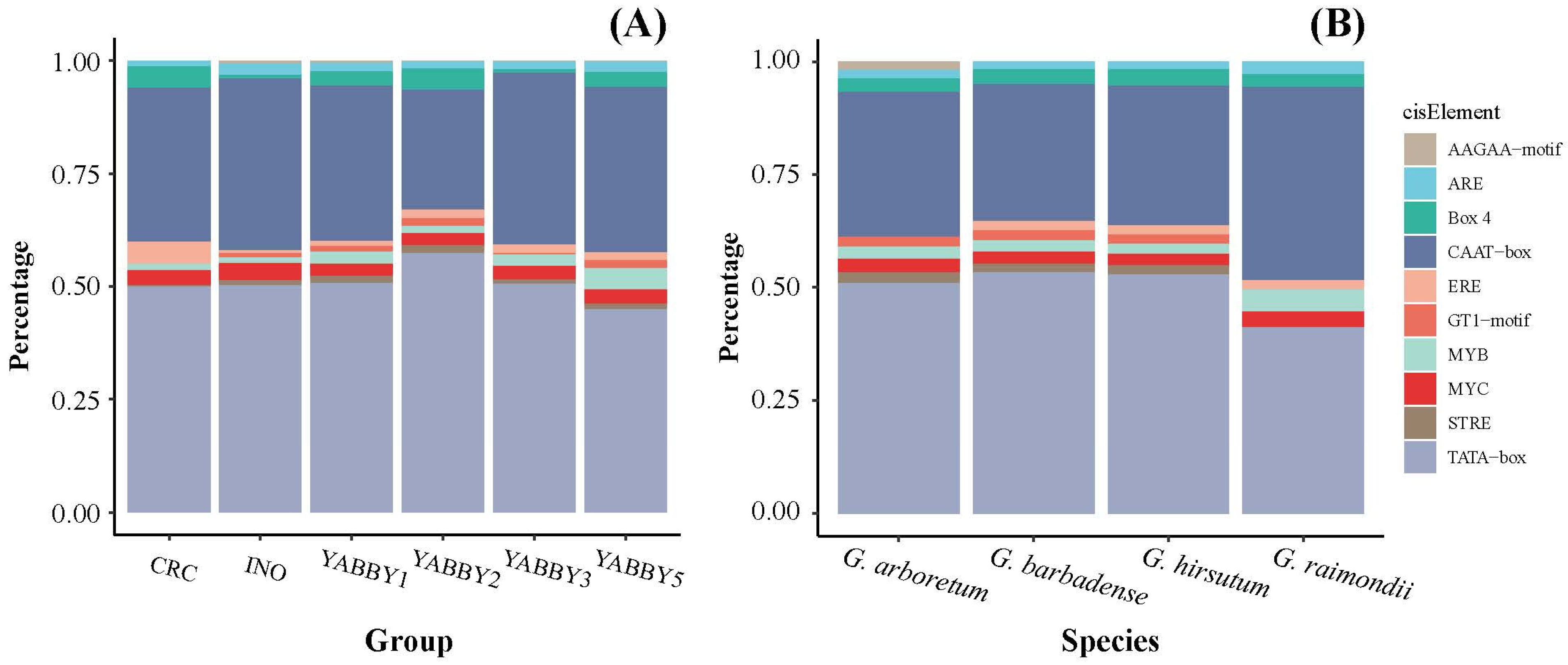
The cis-elements within the 1.5 kb upstream promoter region of cotton YABBY genes were predicted using PlantCARE. The result indicates that CAAT-box and TATA-box were the most abundant elements, which were common cis-acting elements in promoter regions [24]. After the exclusion of these common elements, cis-elements related to stress responses (MYB, MYC, STRE), light responsiveness (Box 4, GT1-motif) and others were also identified. Furthermore, the proportions of these cis-elements were similar across different species and groups (Figure 3), suggesting that the cis-element composition of YABBY genes has been highly conserved since the divergence of cotton species.

3.5. Gene Duplication Analysis of Cotton YABBY Gene Family

Gene duplication was the most important cause of gene family expansion during plant evolution. To elucidate the mechanism of YABBY gene amplification in cotton, we conducted a collinearity analysis. In G. arboretum, 7 out of 12 YABBY genes formed 6 duplicated pairs, while, in G. raimondii, only 9 out of 37 YABBY genes formed 5 duplicated pairs. Additionally, 11 YABBY genes from the diploid G. arboretum were syntenic with 11 YABBY genes from the diploid G. raimondii. These results suggest that segmental duplications played a crucial role in the expansion of the YABBY gene family in G. arboreum. However, despite having a significantly greater number of YABBY genes in G. raimondii, most of these genes were not generated through segment duplication.
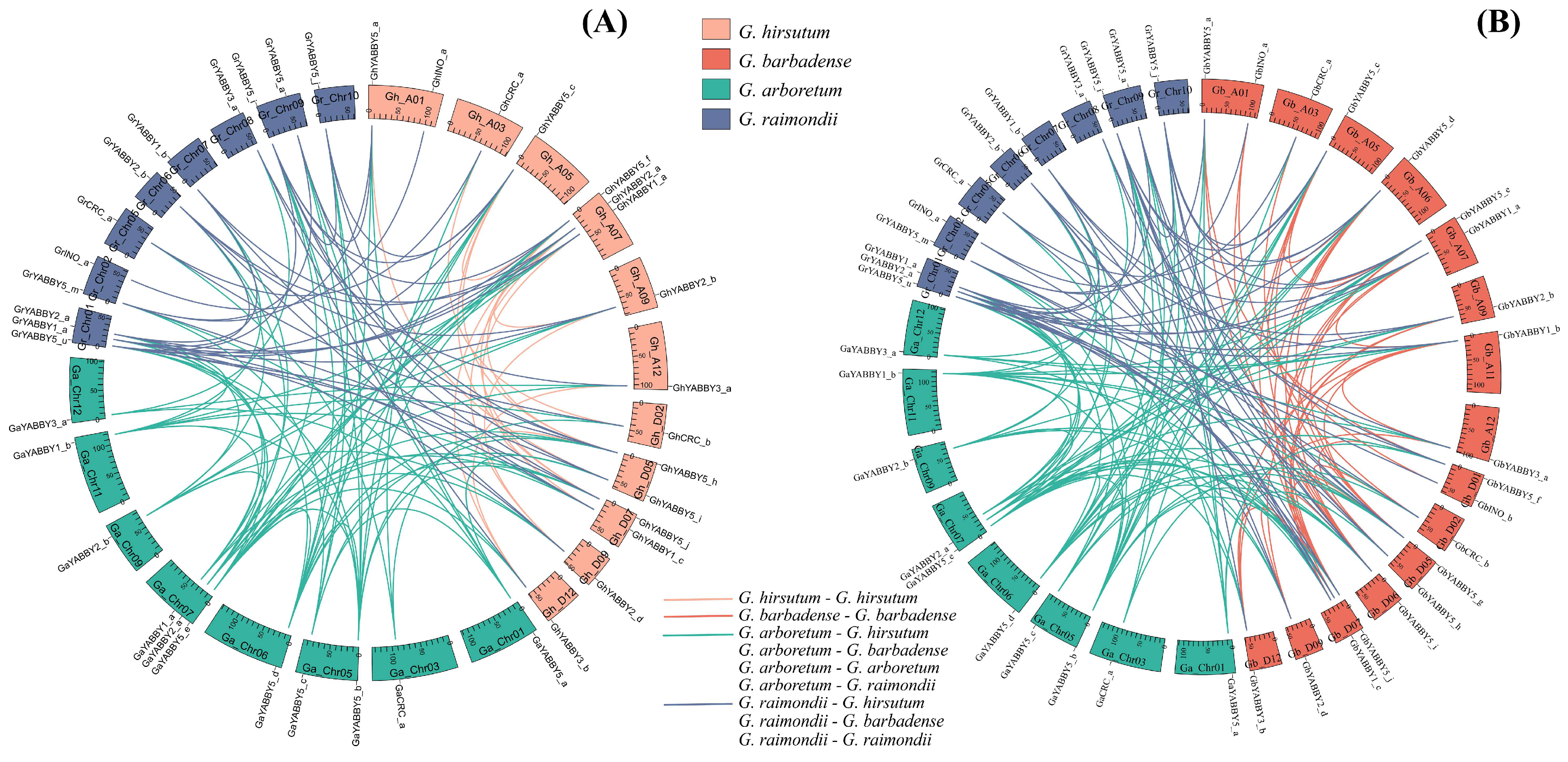
G. hirsutum (AtDt) and G. barbadense (AtDt) are typical allotetraploid species, which were derived from the hybridization of two diploid species resembling the ancestors of G. arboretum (AA) and G. raimondii (DD) [35]. In G. hirsutum, 15 of the 23 YABBY genes had orthologs in G. arboreum, and 16 genes had orthologs in G. raimondii; in addition, 15 genes had orthologs in both G. arboreum and G. raimondii, while 7 genes are lacking orthologs in both G. arboreum and G. raimondii. In G. barbadense, 19 of the 24 YABBY genes had orthologs in the G. arboreum genome, and 21 genes had orthologs in G. raimondii; 19 genes had orthologs in both G. arboreum and G. raimondii, while only 3 genes are lacking orthologs in both G. arboreum and G. raimondii (Figure 4).
According to the descriptions of Holub, a chromosomal region within 200 kb containing two or more genes is defined as a tandem duplication event [36]. Two YABBY genes (GrYABBY5_u and GrYABBY5_s) were clustered into a tandem duplication event region on chromosome 01 (NC_026929.1) of G. raimondii.

3.6. Transposable Element Analysis of Cotton YABBY Gene Family

In addition to segmental duplication and tandem duplication, transposable elements also contribute significantly to the expansion of gene families. In this study, we identified the transposable elements located within 10 kb upstream and downstream of the cotton YABBY genes. Our results indicate that 69.57% (16/23), 70.83% (17/24), 75.00% (9/12) and 89.19% (33/37) of YABBY genes are close to transposable elements in G. hirsutum, G. barbadense, G. arboretum and G. raimondii, respectively. Of these transposable elements, most of them are LTR retrotransposons and DNA transposon (Supplementary File S3, Table S2). These findings suggest that transposable element activity has played an important role in the expansion of the YABBY gene family in cotton.
As a diploid cotton species, G. raimondii was found to contain 37 YABBY genes, a number exceeding those in the allotetraploid species G. hirsutum and G. barbadense. The transposable element analysis results showed that the number of transposons around the YABBY genes of G. raimondii is significantly higher than the number in the other three cotton species. These results suggest that transposon activity is an important driver of YABBY gene family expansion in G. raimondii.

3.7. The Selection Pressure and Divergence Time of Cotton YABBY Gene Family

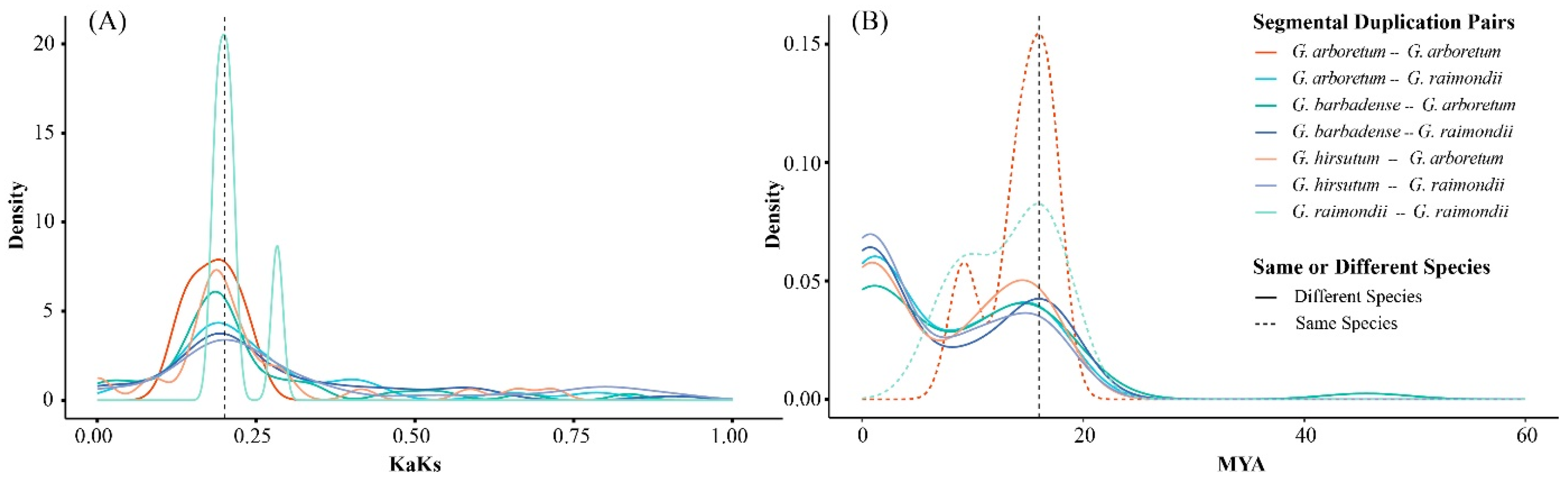
The ratio of non-synonymous (Ka) to synonymous (Ks) substitutions serves as an indicator of selection pressure on a gene family [37]. To assess the selection pressure on YABBY genes, we calculated the Ka/Ks ratios of duplicated gene pairs across different cotton species. The results revealed the that Ka/Ks ratios across different cotton species all ranged from 0.09 to 0.28 (Figure 5), indicating that cotton YABBY genes have undergone purifying selection during evolution.
Furthermore, we estimated the divergence time of the cotton YABBY gene family using Ks values. The majority of YABBY genes in diploid cotton genomes underwent segmental duplications approximately 7 to 21 MYA (Million Years Ago), while duplications between diploid cotton genomes, as well as between diploid and tetraploid genomes, occurred approximately 0 to 22 MYA (Figure 5).

3.8. The miRNA Targeting Analysis of G. hirsutum YABBY Genes

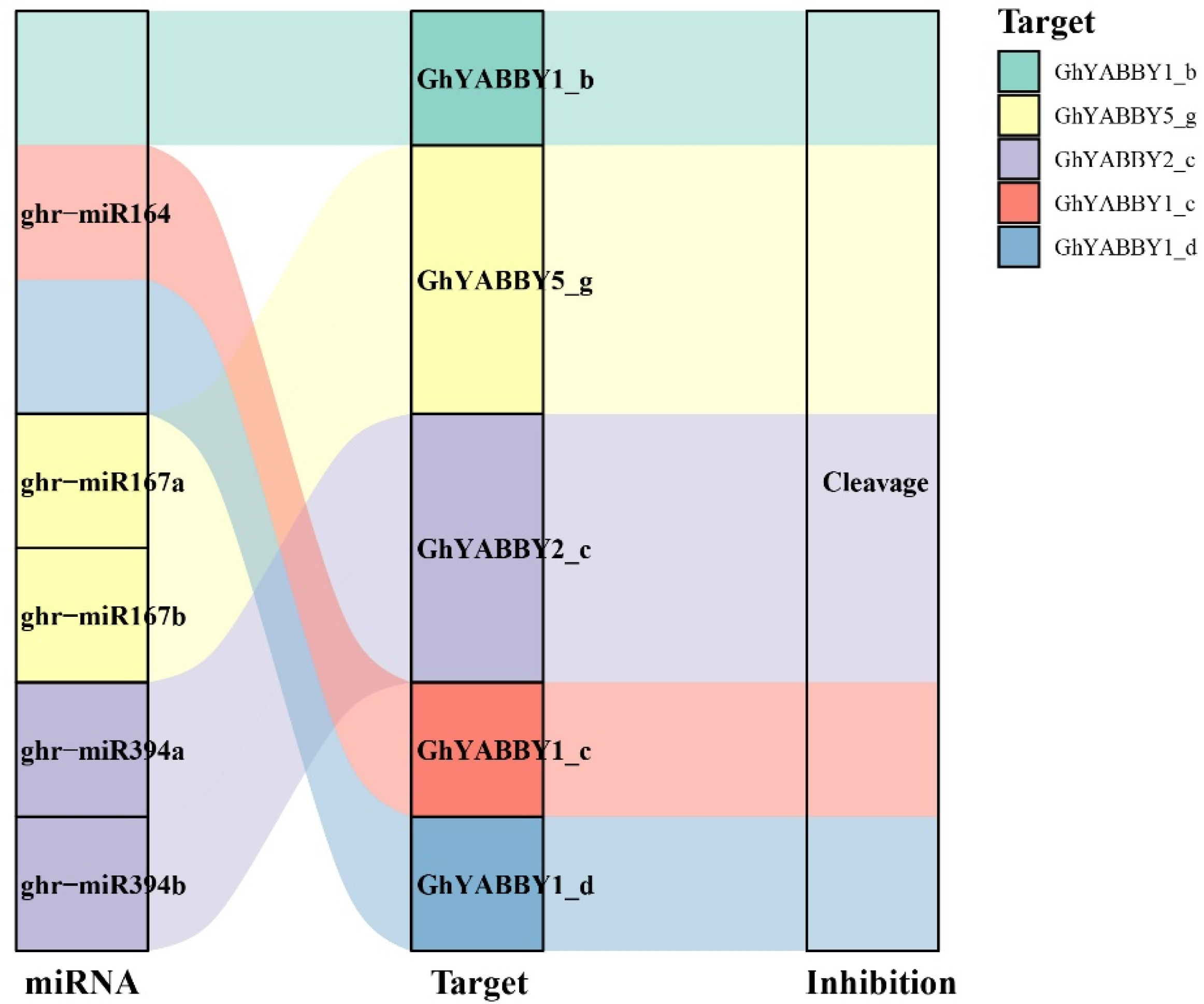
MicroRNAs (miRNAs) are crucial players in post-transcriptional regulation. To investigate the miRNA-mediated post-transcriptional regulation of YABBY genes in cotton, we identified five miRNAs targeting five G. hirsutum YABBY genes. The miRNA ghr-miR164 targeted three YABBY genes from group YABBY1 (GhYABBY1_b, GhYABBY1_c, GhYABBY1_d). Additionally, GhYABBY5_g was targeted by both ghr-miR167a and ghr-miR167b, and GhYABBY2_c was targeted by both ghr-miR394a and ghr-miR394b. Our results indicate that all of these miRNAs inhibit the expression of G. hirsutum YABBY genes by cleavage (Figure 6).

3.9. Expression of Cotton YABBY Genes in Different Tissues

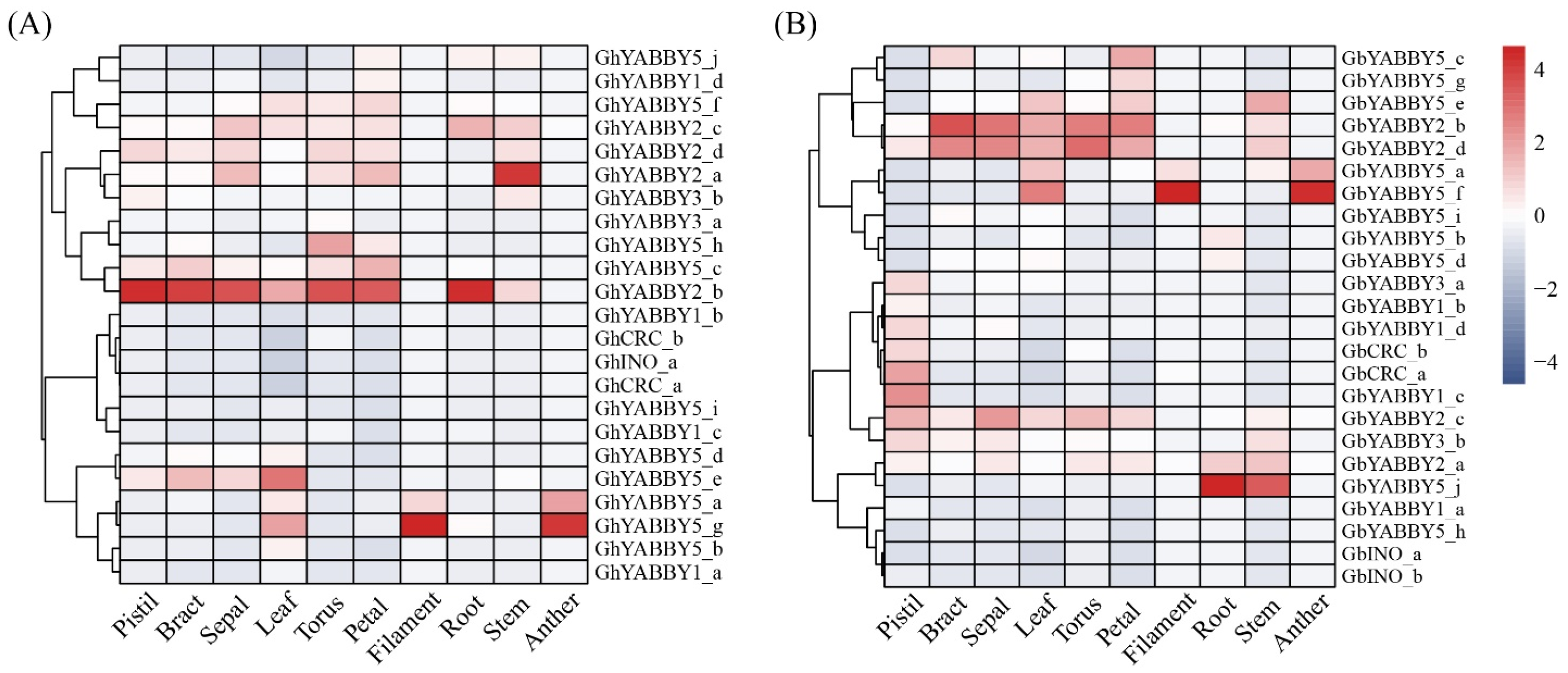
To investigate the tissue-specific expression profiles of the YABBY genes, we analyzed their expressions in the pistil, bract, sepal, leaf, torus, petal, filament, root, stem and anther of both G. hirsutum and G. barbadense. The genes showed differences in expression among tissues (Figure 7). Specifically, GhYABBY2_b of G. hirsutum and GbYABBY2_b and GbYABBY2_d of G. barbadense were highly expressed in the pistil, bract, sepal, leaf, torus and petal. In contrast, GhYABBY5_g and GbYABBY5_f showed the highest expression in the anther and filament. However, most other genes tend to be lowly expressed in the tested tissues. Furthermore, as can be seen from Figure 7, expression profiles varied even among genes within the same group. These data show that genes in the YABBY2 group are primarily expressed in the pistil, bract, sepal, leaf, torus and petal, while those in the YABBY5 group are mainly expressed in the anther and filament.

3.10. Expression Patterns of Cotton YABBY Genes at Different Stages of Fiber Development

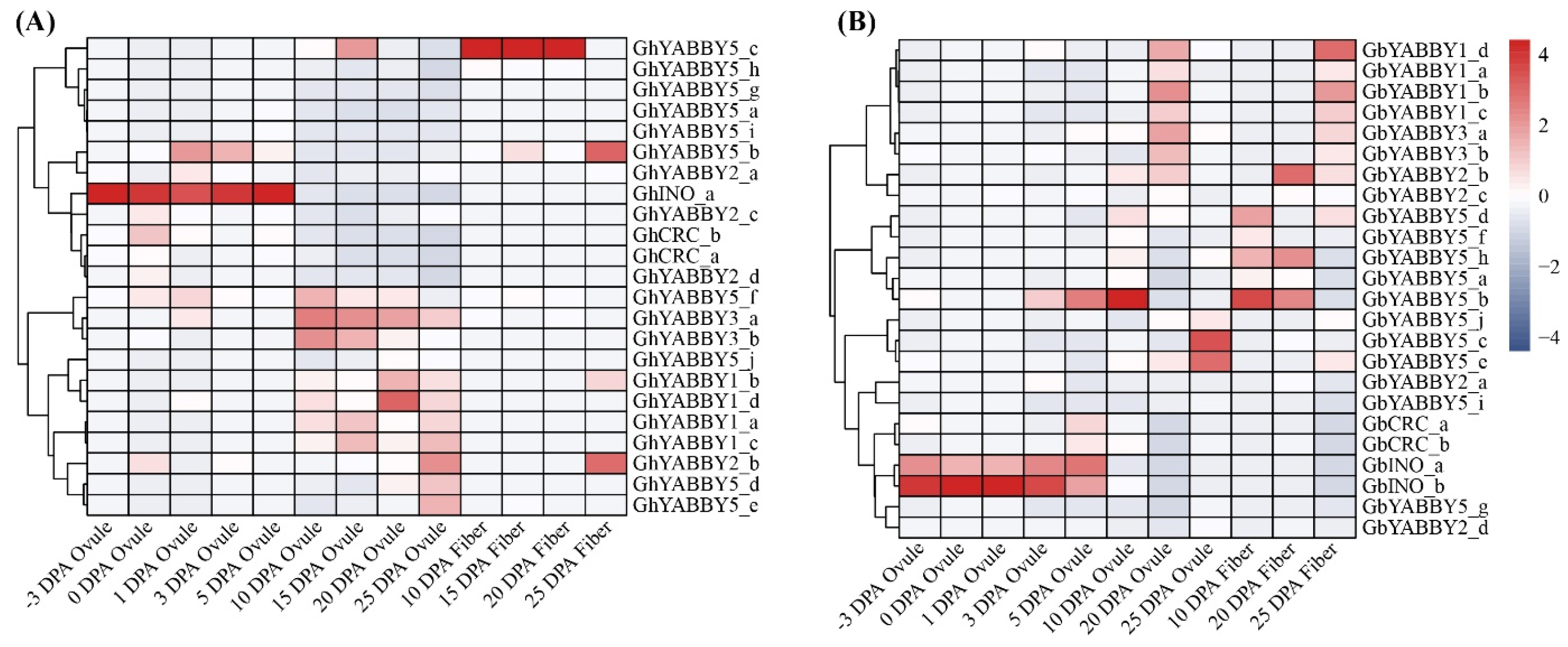
Cotton fibers are formed by a single ovule outer bead epidermal cell through a specialized process of initial differentiation, elongation, thickening and dehydration to form mature epidermal fibers [13]. To explore the potential roles of YABBY genes in fiber development, we investigated their expression patterns at different fiber development stages in allotetraploid cotton. In ovules, GhINO_a in G. hirsutum and GbINO_a and GbINO_b in G. barbadense exhibited high expression levels from –3 to 5 days post-anthesis (DPA). In addition, three members (GbYABBY5_b, GbYABBY5_c and GbYABBY5_e) of the YABBY5 group in G. barbadense, as well as some genes from the YABBY1, YABBY3 and YABBY5 groups in G. hirsutum, showed high expression levels between 10 and 25 DPA. Compared to the stage of −3 to 5 DPA, the expression level in this stage decreased, but more genes were expressed both in G. hirsutum and G. barbadense. In fiber, GhYABBY5_c in G. hirsutum was highly expressed from 10 to 20 DPA, followed by a sharp decline at 25 DPA. In contrast, only a weak expression was detected in G. barbadense during this period, involving genes of the YABBY5, YABBY2, YABBY3 and YABBY1 groups (Figure 8). These results suggest that, during the −3 to 5 DPA stage, only genes from group INO were highly expressed, whereas in subsequent stages the expression of more genes from other groups increased but remained lower than those in group INO. This expression pattern suggests that the YABBY gene family may have undergone functional divergence in regulating fiber development.

3.11. Expression Patterns of Cotton YABBY Genes in Long- and Short-Day Conditions

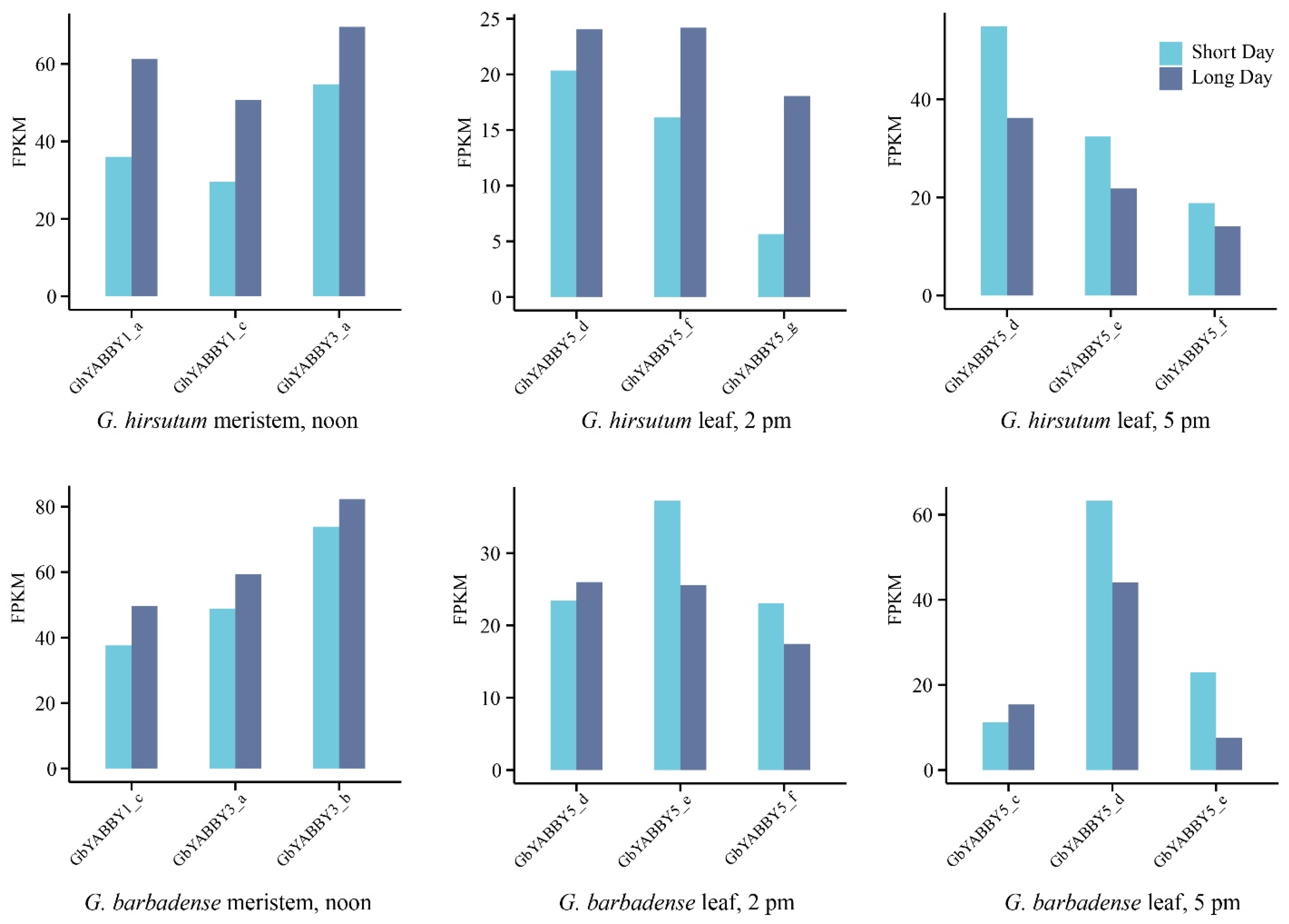
To investigate the molecular function of the YABBY family in long-day and short-day conditions, the transcriptome data from the leaf and meristem of G. hirsutum and G. barbadense were used to calculate the expression of YABBY genes. According to NCBI annotations (BioProject: PRJNA529417), leaf samples were collected at 2 pm and 5 pm for long- and short-day conditions, and meristem samples were collected at noon. The analysis of the transcriptome data revealed that GhYABBY1_a, GhYABBY1_c and GhYABBY3_a in G. hirsutum and GbYABBY1_c, GbYABBY3_a and GbYABBY3_b in G. barbadense were predominantly expressed in the meristem, and all of the expressions were higher in long-day than in short-day conditions (Figure 9). Members of the YABBY5 group were highly expressed in the leaves of both G. hirsutum and G. barbadense under long-day and short-day conditions. However, expression patterns diverged among specific genes: for instance, GhYABBY5_g and GhYABBY5_f exhibited a higher expression under long-day than short-day conditions, whereas the opposite pattern was observed for GbYABBY5_e and GhYABBY5_d (Figure 9). In general, long-day and short-day conditions mainly influence the expression of genes in the groups YABBY1 and YABBY3 and the group YABBY5.

4. Discussion

The YABBY domain-containing gene family has been shown to play a crucial role in diverse aspects of leaf, shoot and flower development [1,3]. Recently, extensive research has been conducted on the YABBY genes in different plant species [5,6,7,9]. In this study, we utilized the bioinformatics method to conduct a comprehensive and systematic analysis of the cotton YABBY gene family.
The distribution of introns and exons is a typical evolutionary markers of plant gene families [38]. In this study, we found that most YABBY genes in the same group contain similar gene structures, implying that they may have similar functions. Nevertheless, divergent gene structures can also be observed within the same group. This may be an important reason why YABBY gene family members play different roles in plants. Cis-elements in the promoter region play an important role in gene expression regulation [39]. Our analysis showed that common elements were highly abundant in the promoter of cotton YABBY genes. In addition, many other types of cis-elements were found, including elements related to stress response, light responsiveness and others (Figure 3). The result suggests that the cotton YABBY gene family was involved in a wide range of biological functions. In addition, the conserved motif analysis revealed that a small number of YABBY proteins exhibited variations in their motifs, which indicates that the YABBY gene family has undergone divergence during evolution.
Gene duplication serves as a pivotal source of genetic diversity for organisms. Through the processes of gene duplication, followed by mutations and selections, organisms can evolve novel gene functions and traits. It was suggested that the last common ancestor of extant seed plants had only one or two YABBY genes [40]. In this study, we identified 23, 24, 12 and 37 YABBY genes in G. hirsutum, G. barbadense, G. arboreum and G. raimondii, respectively. The number is significantly greater than that found in Arabidopsis [1] and rice [4]. Our results indicated that segment duplication was the primary driver of cotton YABBY gene family amplification. Indeed, this is similar to that of other cotton gene families, such as the ALOG [41,42] and ZF-HD families.
Interestingly, the number of YABBY genes in diploid G. raimondii is nearly three times that of diploid G. arboreum. However, our duplication analyses indicated that the number of YABBY genes in G. raimondii and G. arboreum should be similar. To gain deeper insights into this phenomena, we identified the transposable elements flanking YABBY genes in the four cotton species. We found that the number of transposable elements located near the YABBY genes of G. raimondii was significantly higher than that of the other three species. Therefore, it can be concluded that, in addition to segmental duplication, transposon activity has further contributed to the expansion of the YABBY gene family in G. raimondii.
As tetraploid cotton species (G. hirsutum and G. barbadense) originated from the hybridization of diploid G. arboretum (AA) and G. raimondii (DD) [35], the syntenic relationships between tetraploid and diploid cottons is crucial for tracing the origin of the YABBY gene family. By comparing syntenic gene pairs of G. hirsutumG. arboreum, G. hirsutumG. raimondii, G. barbadenseG. arboreum and G. barbadenseG. raimondii, we found that tetraploid species have a similar number of syntenic gene pairs in both the G. arboretum (AA) and G. raimondii (DD) genomes. Studies have shown that the A-derived subgenome was more active than the D-derived subgenome during the evolution of tetraploid cotton [43]. However, this is not the case for YABBY genes, underscoring the evolutionary diversity of gene families.
To study the biological functions of cotton YABBY genes, the expression profiles were analyzed. The results revealed that genes within the same group often exhibit similar expression patterns, indicating that they are conserved. Meanwhile, not all members within a group share the same expression pattern. These observations, combined with the results of duplication events, suggest that the cotton YABBY family has undergone functional diversification after its amplification.

5. Conclusions

In this study, we identified 96 YABBY genes from four cotton species. Our findings reveal that segmental duplication was the major driver of the family’s expansion. Furthermore, in G. raimondii, transposon activity provided an additional force for YABBY gene expansion, which accounts for its notably higher gene count. Gene structure, motifs, cis-elements and expression results indicated that the cotton YABBY gene family has undergone diversification during evolution. This diversification has consequently led to its diverse biological functions. These findings not only advance our understanding of the YABBY gene family but also highlight the potential of these genes as key players for improving cotton fiber yield and quality.

Supplementary Materials

The following supporting information can be downloaded at https://www.mdpi.com/article/10.3390/genes17010064/s1. Supplementary File S1, Table S1: Characteristics of cotton YABBY gene family. Supplementary File S2, Figure S1: Phylogenetic relationships, gene structure and conserved motifs of cotton YABBY gene family. Supplementary File S3, Table S2: Transposable elements around cotton YABBY gene family.

Author Contributions

G.Z. and Q.L. designed the experiments; Z.L. (Zhen Liu), M.X. and Z.L. (Zhixian Li) performed the experiments; Z.L. (Zhen Liu) analyzed the data and prepared figures; S.Z.: writing and editing the manuscript. All authors have read and agreed to the published version of the manuscript.

Funding

This research was funded by the Postgraduate Education Reform and Quality Improvement Project of Henan Province (YJS2025AL144); The College Student Innovation and Entrepreneurship Training Program in Henan Province (202511330019); Anyang Key Research and Development and Promotion Special Project (2023C01NY028); The National Natural Science Foundation of China (32272188).

Institutional Review Board Statement

Not applicable.

Informed Consent Statement

Not applicable. This study is not a clinical trial.

Data Availability Statement

All data generated or analyzed during this study are included in this published article and its Supplementary Information Files.

Conflicts of Interest

The authors declare that the research was conducted in the absence of any commercial or financial relationships that could be construed as potential conflicts of interest.

References

  1. Siegfried, K.R.; Eshed, Y.; Baum, S.F.; Otsuga, D.; Drews, G.N.; Bowman, J.L. Members of the YABBY gene family specify abaxial cell fate in Arabidopsis. Development 1999, 126, 4117–4128. [Google Scholar] [CrossRef] [PubMed]
  2. Yang, C.; Ma, Y.; Li, J. The rice YABBY4 gene regulates plant growth and development through modulating the gibberellin pathway. J. Exp. Bot. 2016, 67, 5545–5556. [Google Scholar] [CrossRef] [PubMed]
  3. Romanova, M.A.; Maksimova, A.I.; Pawlowski, K.; Voitsekhovskaja, O.V. YABBY Genes in the Development and Evolution of Land Plants. Int. J. Mol. Sci. 2021, 22, 4139. [Google Scholar] [CrossRef] [PubMed]
  4. Toriba, T.; Harada, K.; Takamura, A.; Nakamura, H.; Ichikawa, H.; Suzaki, T.; Hirano, H. Molecular characterization the YABBY gene family in Oryza sativa and expression analysis of OsYABBY1. Mol. Genet. Genom. 2007, 277, 457–468. [Google Scholar] [CrossRef]
  5. Li, Z.; Li, G.; Cai, M.; Priyadarshani, S.V.G.N.; Aslam, M.; Zhou, Q.; Huang, X.; Wang, X.; Liu, Y.; Qin, Y. Genome-Wide Analysis of the YABBY Transcription Factor Family in Pineapple and Functional Identification of AcYABBY4 Involvement in Salt Stress. Int. J. Mol. Sci. 2019, 20, 5863. [Google Scholar] [CrossRef]
  6. Kong, L.; Sun, J.; Jiang, Z.; Ren, W.; Wang, Z.; Zhang, M.; Liu, X.; Wang, L.; Ma, W.; Xu, J. Identification and expression analysis of YABBY family genes in Platycodon grandiflorus. Plant Signal. Behav. 2023, 18, 2163069. [Google Scholar] [CrossRef]
  7. Zheng, Q.; Zhao, X.; Huang, Y.; Zhang, M.M.; He, X.; Ke, S.; Li, Y.; Zhang, C.; Ahmad, S.; Lan, S.; et al. Genome-Wide Identification of the YABBY Gene Family in Dendrobium Orchids and Its Expression Patterns in Dendrobium chrysotoxum. Int. J. Mol. Sci. 2023, 24, 10165. [Google Scholar] [CrossRef]
  8. Mazhar, H.S.; Shafiq, M.; Ali, H.; Ashfaq, M.; Anwar, A.; Tabassum, J.; Ali, Q.; Jilani, G.; Awais, M.; Sahu, R.; et al. Genome-Wide Identification, and In-Silico Expression Analysis of YABBY Gene Family in Response to Biotic and Abiotic Stresses in Potato (Solanum tuberosum). Genes 2023, 14, 824. [Google Scholar] [CrossRef]
  9. Huang, J.; Chen, G.Z.; Ahmad, S.; Wang, Q.; Tu, S.; Shi, X.L.; Hao, Y.; Zhou, Y.Z.; Lan, S.R.; Liu, Z.J.; et al. Identification, Molecular Characteristics, and Evolution of YABBY Gene Family in Melastoma dodecandrum. Int. J. Mol. Sci. 2023, 24, 4174. [Google Scholar] [CrossRef]
  10. Zhao, S.; Lu, D.; Yu, T.; Ji, Y.; Zheng, W.; Zhang, S.; Chai, S.; Chen, Z.; Cui, X. Genome-wide analysis of the YABBY family in soybean and functional identification of GmYABBY10 involvement in high salt and drought stresses. Plant Physiol. Biochem. 2017, 119, 132–146. [Google Scholar] [CrossRef]
  11. Yin, S.; Li, S.; Gao, Y.; Bartholomew, E.S.; Wang, R.; Yang, H.; Liu, C.; Chen, X.; Wang, Y.; Liu, X.; et al. Genome-Wide Identification of YABBY Gene Family in Cucurbitaceae and Expression Analysis in Cucumber (Cucumis sativus L.). Genes 2022, 13, 467. [Google Scholar] [CrossRef]
  12. Inal, B.; Buyuk, I.; Ilhan, E.; Aras, S. Genome-wide analysis of Phaseolus vulgaris C2C2-YABBY transcription factors under salt stress conditions. 3 Biotech 2017, 7, 302. [Google Scholar] [CrossRef] [PubMed]
  13. Zhai, Z.; Zhang, K.; Fang, Y.; Yang, Y.; Cao, X.; Liu, L.; Tian, Y. Systematically and Comprehensively Understanding the Regulation of Cotton Fiber Initiation: A Review. Plants 2023, 12, 3771. [Google Scholar] [CrossRef] [PubMed]
  14. Wang, M.; Tu, L.; Yuan, D.; Zhu, D.; Shen, C.; Li, J.; Liu, F.; Pei, L.; Wang, P.; Zhao, G.; et al. Reference genome sequences of two cultivated allotetraploid cottons, Gossypium hirsutum and Gossypium barbadense. Nat. Genet. 2019, 51, 224–229. [Google Scholar] [CrossRef] [PubMed]
  15. Du, X.; Huang, G.; He, S.; Yang, Z.; Sun, G.; Ma, X.; Li, N.; Zhang, X.; Sun, J.; Liu, M.; et al. Resequencing of 243 diploid cotton accessions based on an updated A genome identifies the genetic basis of key agronomic traits. Nat. Genet. 2018, 50, 796–802. [Google Scholar] [CrossRef]
  16. Udall, J.A.; Long, E.; Hanson, C.; Yuan, D.; Ramaraj, T.; Conover, J.L.; Gong, L.; Arick, M.A.; Grover, C.E.; Peterson, D.G.; et al. De Novo Genome Sequence Assemblies of Gossypium raimondii and Gossypium turneri. G3-Genes Genomes Genet. 2019, 9, 3079–3085. [Google Scholar] [CrossRef]
  17. Nowicki, M.; Bzhalava, D.; Bala, P. Massively Parallel Implementation of Sequence Alignment with Basic Local Alignment Search Tool Using Parallel Computing in Java Library. J. Comput. Biol. 2018, 25, 871–881. [Google Scholar] [CrossRef]
  18. Finn, R.D.; Clements, J.; Eddy, S.R. HMMER web server: Interactive sequence similarity searching. Nucleic Acids Res. 2011, 39, W29–W37. [Google Scholar] [CrossRef]
  19. Bjellqvist, B.; Hughes, G.J.; Pasquali, C.; Paquet, N.; Ravier, F.; Sanchez, J.C.; Frutiger, S.; Hochstrasser, D. The focusing positions of polypeptides in immobilized pH gradients can be predicted from their amino acid sequences. Electrophoresis 1993, 14, 1023–1031. [Google Scholar] [CrossRef]
  20. Larkin, M.A.; Blackshields, G.; Brown, N.P.; Chenna, R.; Mcgettigan, P.A.; Mcwilliam, H.; Valentin, F.; Wallace, I.M.; Wilm, A.; Lopez, R.; et al. Clustal W and Clustal X version 2.0. Bioinformatics 2007, 23, 2947–2948. [Google Scholar] [CrossRef]
  21. Hall, B.G. Building phylogenetic trees from molecular data with MEGA. Mol. Biol. Evol. 2013, 30, 1229–1235. [Google Scholar] [CrossRef] [PubMed]
  22. Letunic, I.; Bork, P. Interactive Tree Of Life (iTOL) v5: An online tool for phylogenetic tree display and annotation. Nucleic Acids Res. 2021, 49, W293–W296. [Google Scholar] [CrossRef] [PubMed]
  23. Hu, B.; Jin, J.; Guo, A.Y.; Zhang, H.; Luo, J.; Gao, G. GSDS 2.0: An upgraded gene feature visualization server. Bioinformatics 2015, 31, 1296–1297. [Google Scholar] [CrossRef] [PubMed]
  24. Lescot, M.; Dehais, P.; Thijs, G.; Marchal, K.; Moreau, Y.; Van de Peer, Y.; Rouze, P.; Rombauts, S. PlantCARE, a database of plant cis-acting regulatory elements and a portal to tools for in silico analysis of promoter sequences. Nucleic Acids Res. 2002, 30, 325–327. [Google Scholar] [CrossRef]
  25. Bailey, T.L.; Boden, M.; Buske, F.A.; Frith, M.; Grant, C.E.; Clementi, L.; Ren, J.; Li, W.W.; Noble, W.S. MEME SUITE: Tools for motif discovery and searching. Nucleic Acids Res. 2009, 37, W202–W208. [Google Scholar] [CrossRef]
  26. Wang, Y.; Tang, H.; Debarry, J.D.; Tan, X.; Li, J.; Wang, X.; Lee, T.H.; Jin, H.; Marler, B.; Guo, H.; et al. MCScanX: A toolkit for detection and evolutionary analysis of gene synteny and collinearity. Nucleic Acids Res. 2012, 40, e49. [Google Scholar] [CrossRef]
  27. Krzywinski, M.; Schein, J.; Birol, I.; Connors, J.; Gascoyne, R.; Horsman, D.; Jones, S.J.; Marra, M.A. Circos: An information aesthetic for comparative genomics. Genome Res. 2009, 19, 1639–1645. [Google Scholar] [CrossRef]
  28. Wang, D.; Zhang, Y.; Zhang, Z.; Zhu, J.; Yu, J. KaKs_Calculator 2.0: A toolkit incorporating gamma-series methods and sliding window strategies. Genom. Proteom. Bioinform. 2010, 8, 77–80. [Google Scholar] [CrossRef]
  29. Koch, M.A.; Haubold, B.; Mitchell-Olds, T. Comparative evolutionary analysis of chalcone synthase and alcohol dehydrogenase loci in Arabidopsis, Arabis, and related genera (Brassicaceae). Mol. Biol. Evol. 2000, 17, 1483–1498. [Google Scholar] [CrossRef]
  30. Tempel, S. Using and understanding RepeatMasker. Methods Mol. Biol. 2012, 859, 29–51. [Google Scholar] [CrossRef]
  31. Dai, X.; Zhuang, Z.; Zhao, P.X. psRNATarget: A plant small RNA target analysis server (2017 release). Nucleic Acids Res. 2018, 46, W49–W54. [Google Scholar] [CrossRef] [PubMed]
  32. Sayers, E.W.; O’Sullivan, C.; Karsch-Mizrachi, I. Using GenBank and SRA. Methods Mol. Biol. 2022, 2443, 1–25. [Google Scholar] [CrossRef] [PubMed]
  33. Kim, D.; Langmead, B.; Salzberg, S.L. HISAT: A fast spliced aligner with low memory requirements. Nat. Methods 2015, 12, 357–360. [Google Scholar] [CrossRef] [PubMed]
  34. Ghosh, S.; Chan, C.K. Analysis of RNA-Seq Data Using TopHat and Cufflinks. Methods Mol. Bioinform. 2016, 1374, 339–361. [Google Scholar] [CrossRef]
  35. Wendel, J.F.; Cronn, R.C. Polyploidy and the evolutionary history of cotton. Adv. Agron. 2003, 78, 139–186. [Google Scholar]
  36. Holub, E.B. The arms race is ancient history in Arabidopsis, the wildflower. Nat. Rev. Genet. 2001, 2, 516–527. [Google Scholar] [CrossRef]
  37. Hurst, L.D. The Ka/Ks ratio: Diagnosing the form of sequence evolution. Trends Genet. 2002, 18, 486. [Google Scholar] [CrossRef]
  38. Roy, S.W.; Gilbert, W. The evolution of spliceosomal introns: Patterns, puzzles and progress. Nat. Rev. Genet. 2006, 7, 211–221. [Google Scholar] [CrossRef]
  39. Wittkopp, P.J.; Kalay, G. Cis-regulatory elements: Molecular mechanisms and evolutionary processes underlying divergence. Nat. Rev. Genet. 2011, 13, 59–69. [Google Scholar] [CrossRef]
  40. Bowman, J.L.; Smyth, D.R. CRABS CLAW, a gene that regulates carpel and nectary development in Arabidopsis, encodes a novel protein with zinc finger and helix-loop-helix domains. Development 1999, 126, 2387–2396. [Google Scholar] [CrossRef]
  41. Xing, L.; Peng, K.; Xue, S.; Yuan, W.; Zhu, B.; Zhao, P.; Wu, H.; Cheng, Y.; Fang, M.; Liu, Z. Genome-wide analysis of zinc finger-homeodomain (ZF-HD) transcription factors in diploid and tetraploid cotton. Funct. Integr. Genom. 2022, 22, 1269–1281. [Google Scholar] [CrossRef]
  42. Liu, Z.; Shen, S.; Cui, Z.; Wang, T.; Li, P.; Wei, Y.; Peng, R. Genome-wide evolution and function analysis of ALOG gene family in cotton. Front. Genet. 2025, 16, 1625634. [Google Scholar] [CrossRef]
  43. Gui, Y.; Fu, G.; Li, X.; Dai, Y. Identification and analysis of isoflavone reductase gene family in Gossypium hirsutum L. Sci. Rep. 2023, 13, 5703. [Google Scholar] [CrossRef]
Figure 1. Boxplots of sequence length, molecular weight and isoelectronic point of YABBY proteins in G. arboretum, G. barbadense, G. hirsutum and G. raimondii.
Genes 17 00064 g001
Figure 2. Phylogenetic tree of the cotton YABBY gene family.
Genes 17 00064 g002
Figure 3. Cis-element composition proportion of cotton YABBY gene. (A) Different group; (B) different species.
Genes 17 00064 g003
Figure 4. Collinearity analyses of YABBY genes in diploid and allotetraploid Gossypium species. (A) Diploid G. arboretum, G. raimondii and allotetraploid G. hirsutum. (B) Diploid G. arboretum, G. raimondii and allotetraploid G. barbadense.
Genes 17 00064 g004
Figure 5. The distribution of Ka/Ks ratio and divergence time of cotton YABBY duplication gene pairs. (A) The distribution of Ka/Ks ratio; (B) the distribution of divergence time.
Genes 17 00064 g005
Figure 6. Sankey diagram for the relationships of miRNA-targeting YABBY gene transcripts.
Genes 17 00064 g006
Figure 7. Expression profiles of the cotton YABBY genes in different tissues. (A) G. hirsutum; (B) G. barbadense.
Genes 17 00064 g007
Figure 8. Expression patterns of cotton YABBY genes at different stages of fiber development. (A) G. hirsutum; (B) G. barbadense.
Genes 17 00064 g008
Figure 9. Expression patterns of cotton YABBY genes in long- and short-day conditions.
Genes 17 00064 g009
Disclaimer/Publisher’s Note: The statements, opinions and data contained in all publications are solely those of the individual author(s) and contributor(s) and not of MDPI and/or the editor(s). MDPI and/or the editor(s) disclaim responsibility for any injury to people or property resulting from any ideas, methods, instructions or products referred to in the content.