Article

Molecular Evidence for Hybrid Origin and Phenotypic Variation of Rosa Section Chinenses


Beijing Key Laboratory of Ornamental Plants Germplasm Innovation & Molecular Breeding, National Engineering Research Center for Floriculture, Beijing Laboratory of Urban and Rural Ecological Environment, Key Laboratory of Genetics and Breeding in Forest Trees and Ornamental Plants of Ministry of Education, School of Landscape Architecture, Beijing Forestry University, Beijing 100083, China
*
Author to whom correspondence should be addressed.
Genes 2020, 11(9), 996; https://doi.org/10.3390/genes11090996
Submission received: 26 June 2020 / Revised: 1 August 2020 / Accepted: 18 August 2020 / Published: 25 August 2020
(This article belongs to the Section Plant Genetics and Genomics)

Abstract

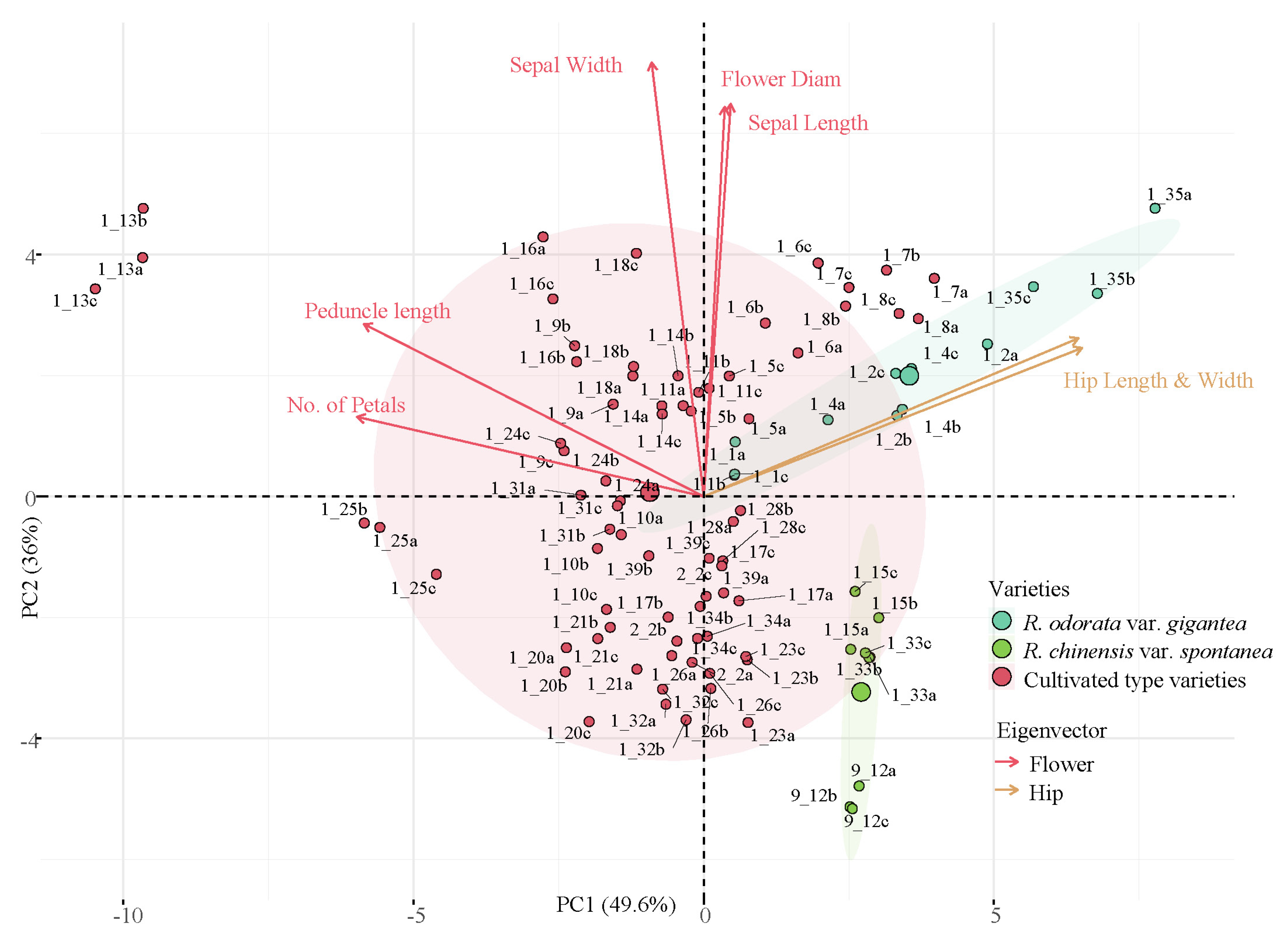
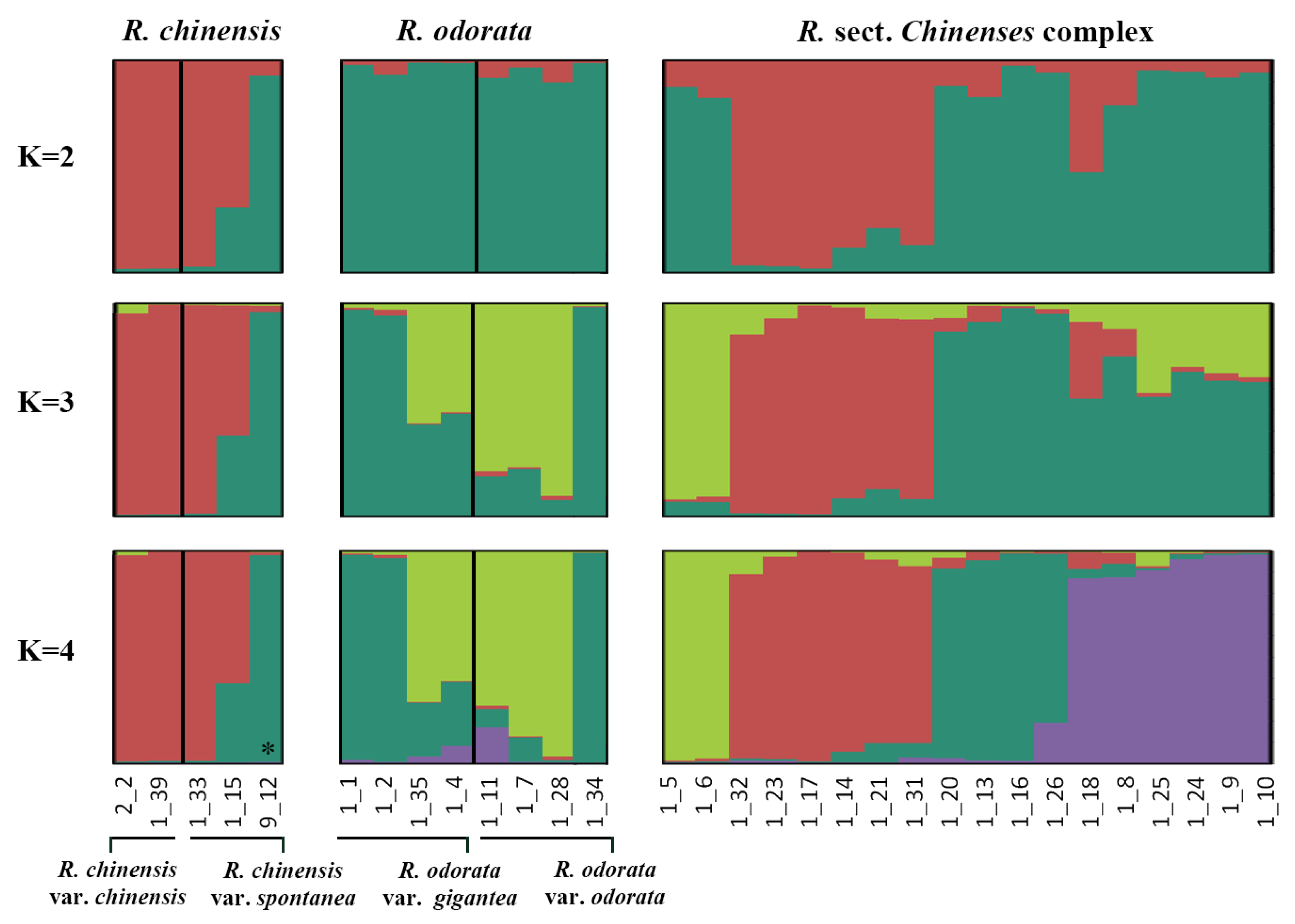
Rosa sect. Chinenses (Rosaceae) is an important parent of modern rose that is widely distributed throughout China and plays an important role in breeding and molecular biological research. R. sect. Chinenses has variable morphological traits and mixed germplasm. However, the taxonomic status and genetic background of sect. Chinenses varieties remain unclear. In this study, we collected germplasm resources from sect. Chinenses varieties with different morphological traits. Simple sequence repeat (SSR) markers, chloroplast markers, and single copy nuclear markers were used to explore the genetic background of these germplasm resources. We described the origin of hybridization of rose germplasm resources by combining different molecular markers. The results showed that the flower and hip traits of different species in R. sect. Chinenses were significantly different. The SSR analysis showed that the two wild type varieties have different genetic backgrounds. The double petal varieties of R. sect. Chinenses could be hybrids of two wild type varieties. A phylogenetic analysis showed that the maternal inheritance of sect. Chinenses varieties had two different origins. To some extent, variation in the morphological traits of double petal species of R. sect. Chinenses reflects the influence of cultivation process. This study emphasizes that different genetic markers vary in their characteristics. Therefore, analyzing different genetic markers in could provide an insight into highly heterozygous species.
Keywords: Rosa sect. Chinenses; China rose; morphological traits; molecular marker; genetic diversity; phylogenetic analysis Rosa sect. Chinenses; China rose; morphological traits; molecular marker; genetic diversity; phylogenetic analysis