Article

A Minimal Genetic Passkey to Unlock Many Legume Doors to Root Nodulation by Rhizobia


Microbiology Unit, Department of Botany and Plant Biology, Sciences III, University of Geneva, 30 quai Ernest-Ansermet, CH-1211 Geneva 4, Switzerland
*
Author to whom correspondence should be addressed.
Genes 2020, 11(5), 521; https://doi.org/10.3390/genes11050521
Submission received: 3 April 2020 / Revised: 30 April 2020 / Accepted: 4 May 2020 / Published: 7 May 2020
(This article belongs to the Special Issue Genetic Evolution of Root Nodule Symbioses)

Abstract

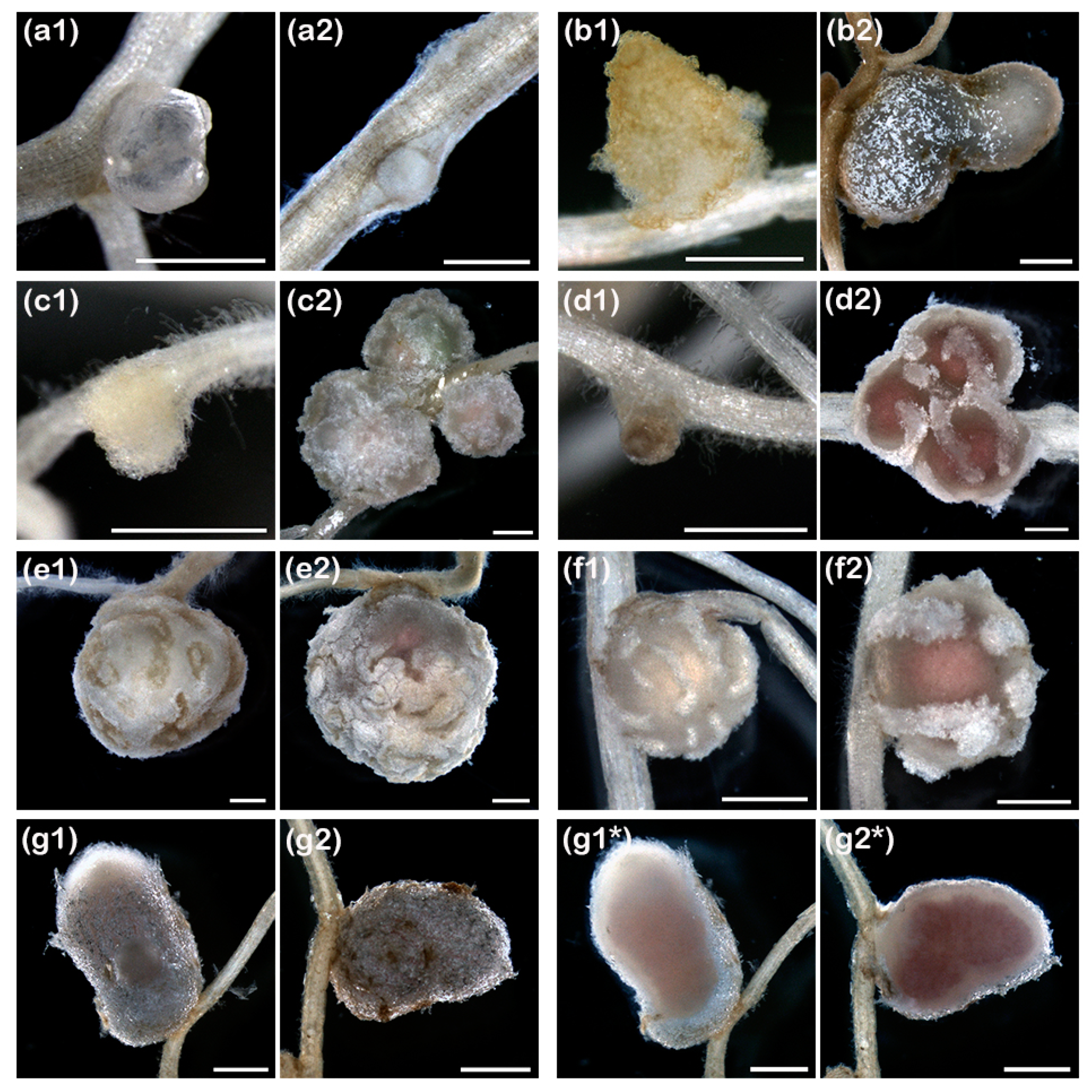
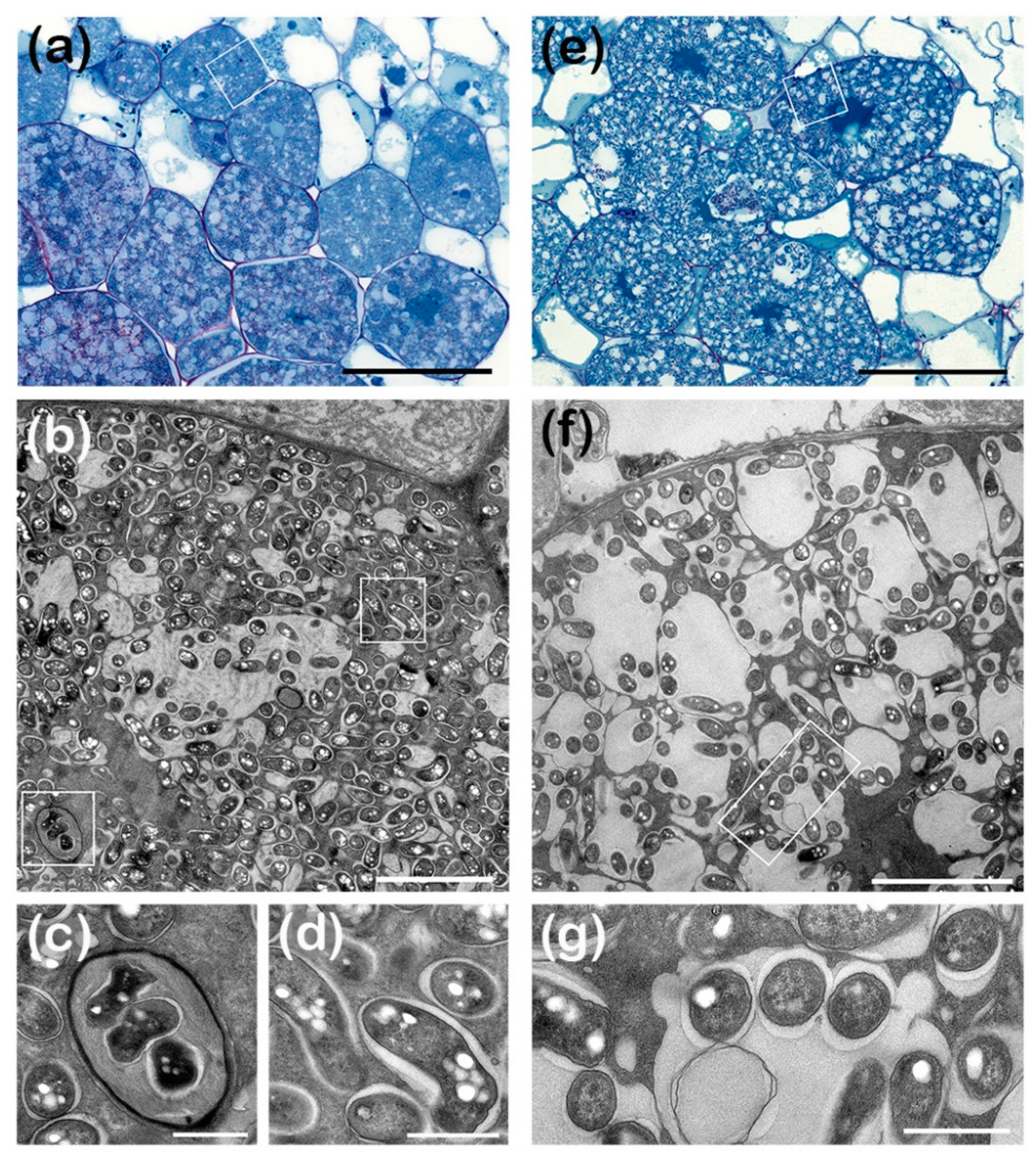
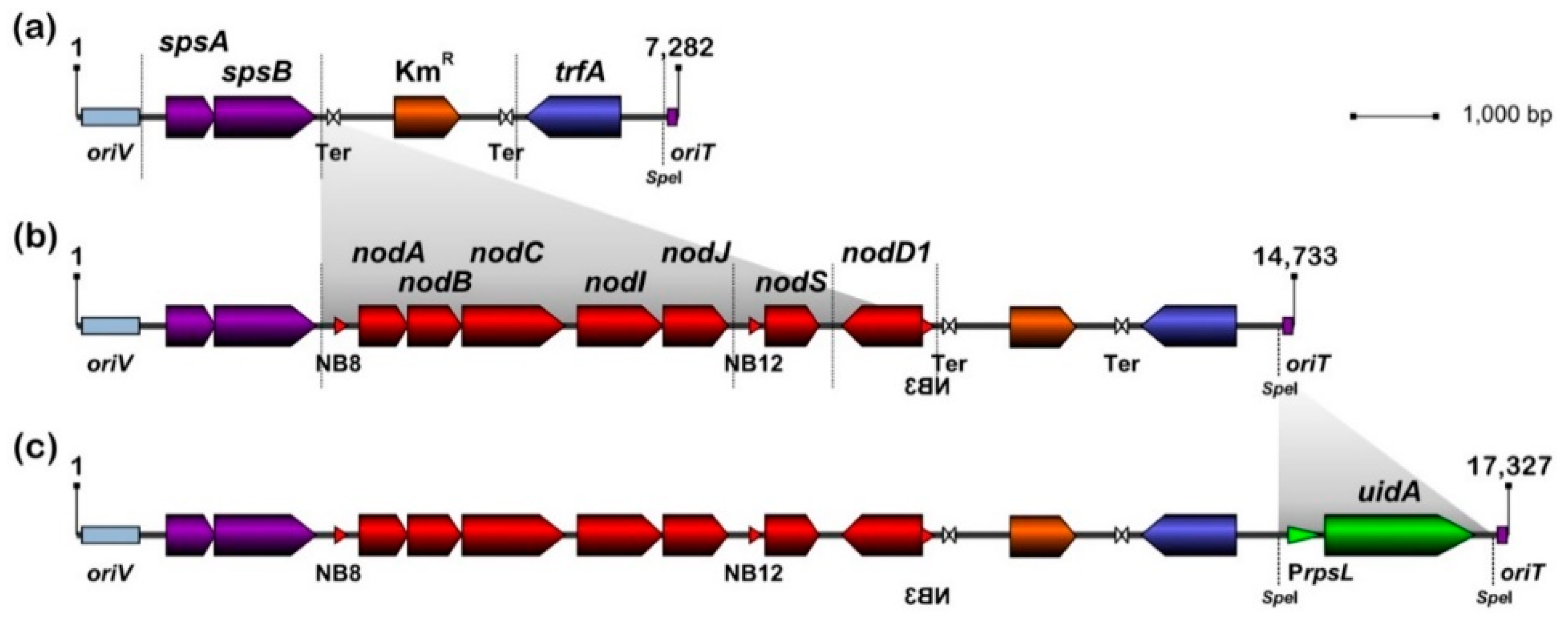
In legume crops, formation of developmentally mature nodules is a prerequisite for efficient nitrogen fixation by populations of rhizobial bacteroids established inside nodule cells. Development of root nodules, and concomitant microbial colonization of plant cells, are constrained by sets of recognition signals exchanged by infecting rhizobia and their legume hosts, with much of the specificity of symbiotic interactions being determined by the flavonoid cocktails released by legume roots and the strain-specific nodulation factors (NFs) secreted by rhizobia. Hence, much of Sinorhizobium fredii strain NGR234 symbiotic promiscuity was thought to stem from a family of >80 structurally diverse NFs and associated nodulation keys in the form of secreted effector proteins and rhamnose-rich surface polysaccharides. Here, we show instead that a mini-symbiotic plasmid (pMiniSym2) carrying only the nodABCIJ, nodS and nodD1 genes of NGR234 conferred promiscuous nodulation to ANU265, a derivative strain cured of the large symbiotic plasmid pNGR234a. The ANU265::pMiniSym2 transconjugant triggered nodulation responses on 12 of the 22 legumes we tested. On roots of Macroptilium atropurpureum, Leucaena leucocephala and Vigna unguiculata, ANU265::pMiniSym2 formed mature-like nodule and successfully infected nodule cells. While cowpea and siratro responded to nodule colonization with defense responses that eventually eliminated bacteria, L. leucocephala formed leghemoglobin-containing mature-like nodules inside which the pMiniSym2 transconjugant established persistent intracellular colonies. These data show seven nodulation genes of NGR234 suffice to trigger nodule formation on roots of many hosts and to establish chronic infections in Leucaena cells.
Keywords: legume–rhizobia symbioses; symbiotic promiscuity; synthetic replicon; plant immune responses legume–rhizobia symbioses; symbiotic promiscuity; synthetic replicon; plant immune responses