Letter

PheWAS-Based Systems Genetics Methods for Anti-Breast Cancer Drug Discovery

1
Hubei Key Laboratory of Agricultural Bioinformatics, College of Informatics, Huazhong Agricultural University, Wuhan 430070, China
2
School of Computer Science and Technology, Harbin Institute of Technology Shenzhen Graduate School, Shenzhen 518055, China
3
Lab of Epigenetics and Advanced Health Technology, Space Institute of Southern China, Shenzhen 518117, China
*
Author to whom correspondence should be addressed.
Genes 2019, 10(2), 154; https://doi.org/10.3390/genes10020154
Submission received: 13 December 2018 / Revised: 16 January 2019 / Accepted: 4 February 2019 / Published: 18 February 2019
(This article belongs to the Section Technologies and Resources for Genetics)

Abstract

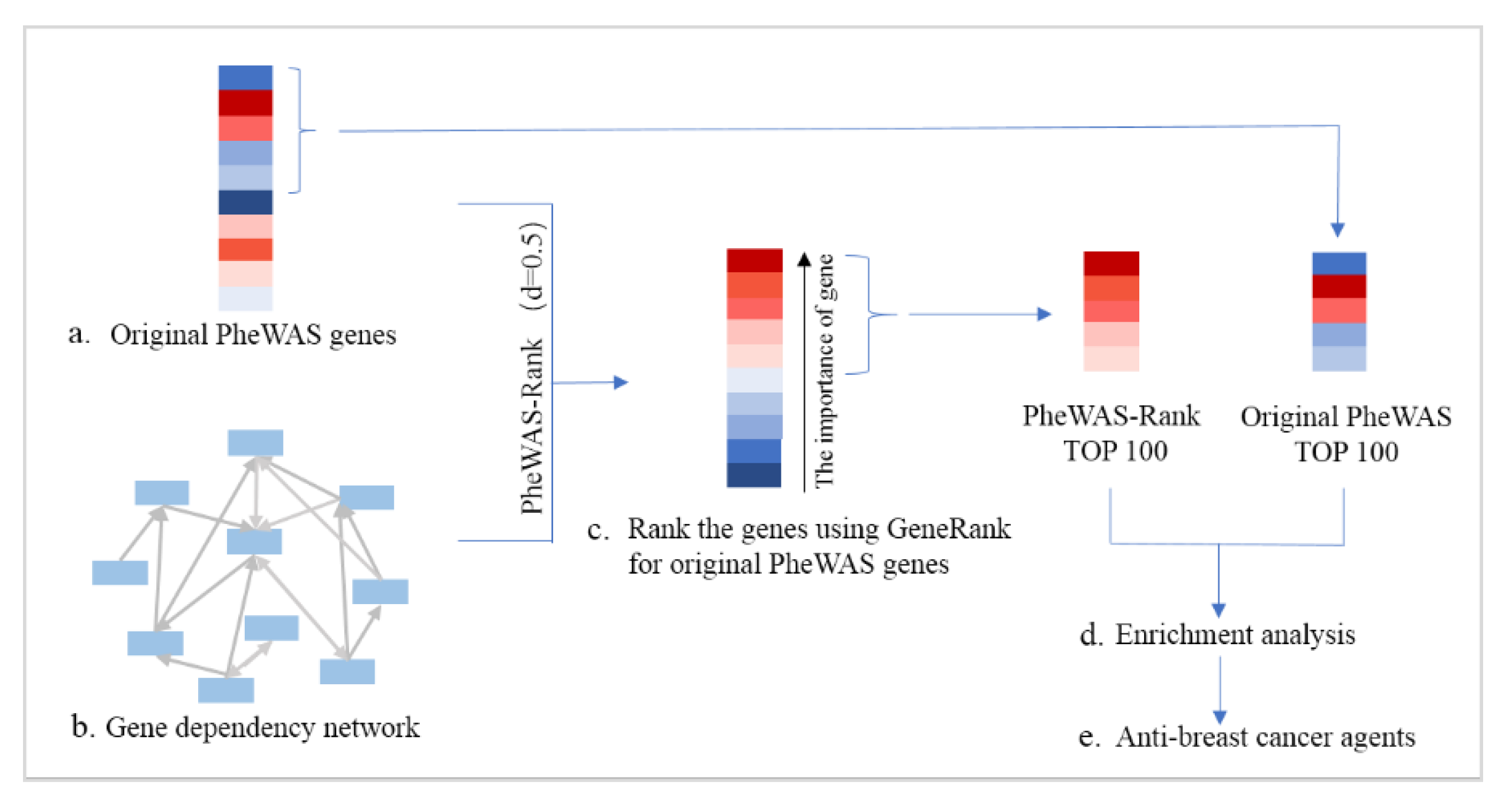
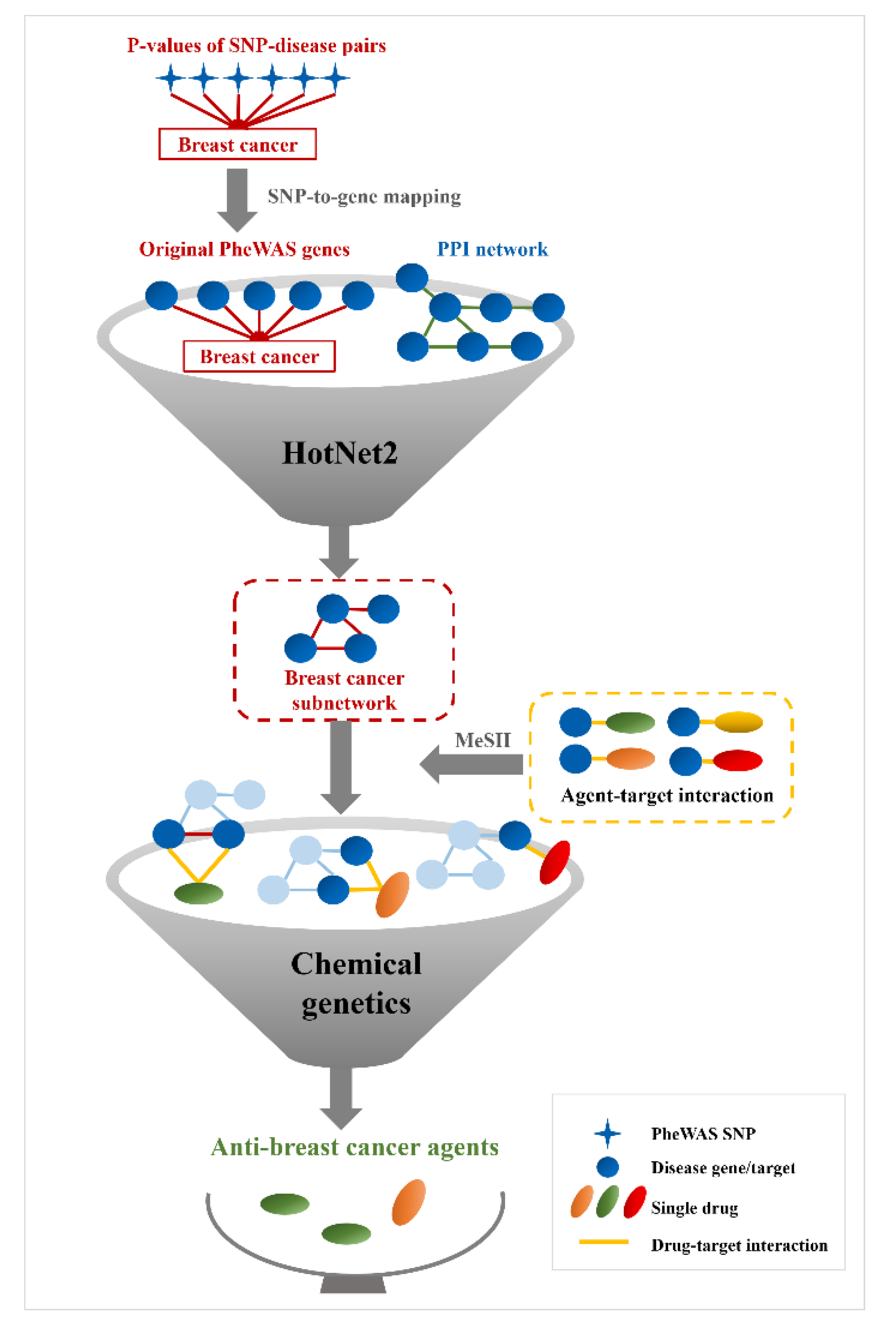
Breast cancer is a high-risk disease worldwide. For such complex diseases that are induced by multiple pathogenic genes, determining how to establish an effective drug discovery strategy is a challenge. In recent years, a large amount of genetic data has accumulated, particularly in the genome-wide identification of disorder genes. However, understanding how to use these data efficiently for pathogenesis elucidation and drug discovery is still a problem because the gene–disease links that are identified by high-throughput techniques such as phenome-wide association studies (PheWASs) are usually too weak to have biological significance. Systems genetics is a thriving area of study that aims to understand genetic interactions on a genome-wide scale. In this study, we aimed to establish two effective strategies for identifying breast cancer genes based on the systems genetics algorithm. As a result, we found that the GeneRank-based strategy, which combines the prognostic phenotype-based gene-dependent network with the phenotypic-related PheWAS data, can promote the identification of breast cancer genes and the discovery of anti-breast cancer drugs.
Keywords: PheWAS; drug discovery; breast cancer; systems genetics PheWAS; drug discovery; breast cancer; systems genetics