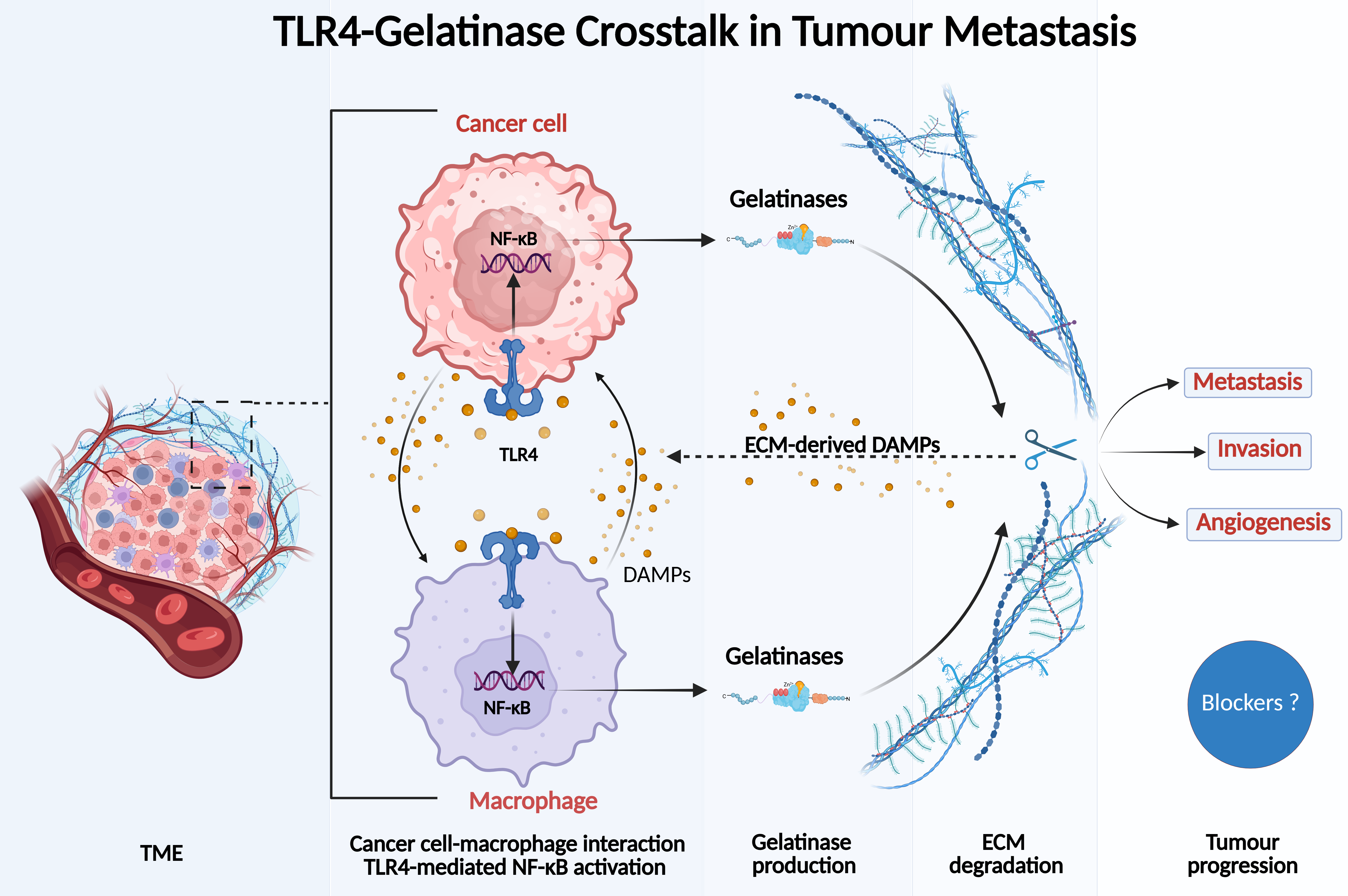
Interplay Between TLR4 and Gelatinases in Tumour Growth and Metastasis

Abstract
1. Introduction
2. Toll-like Receptor 4
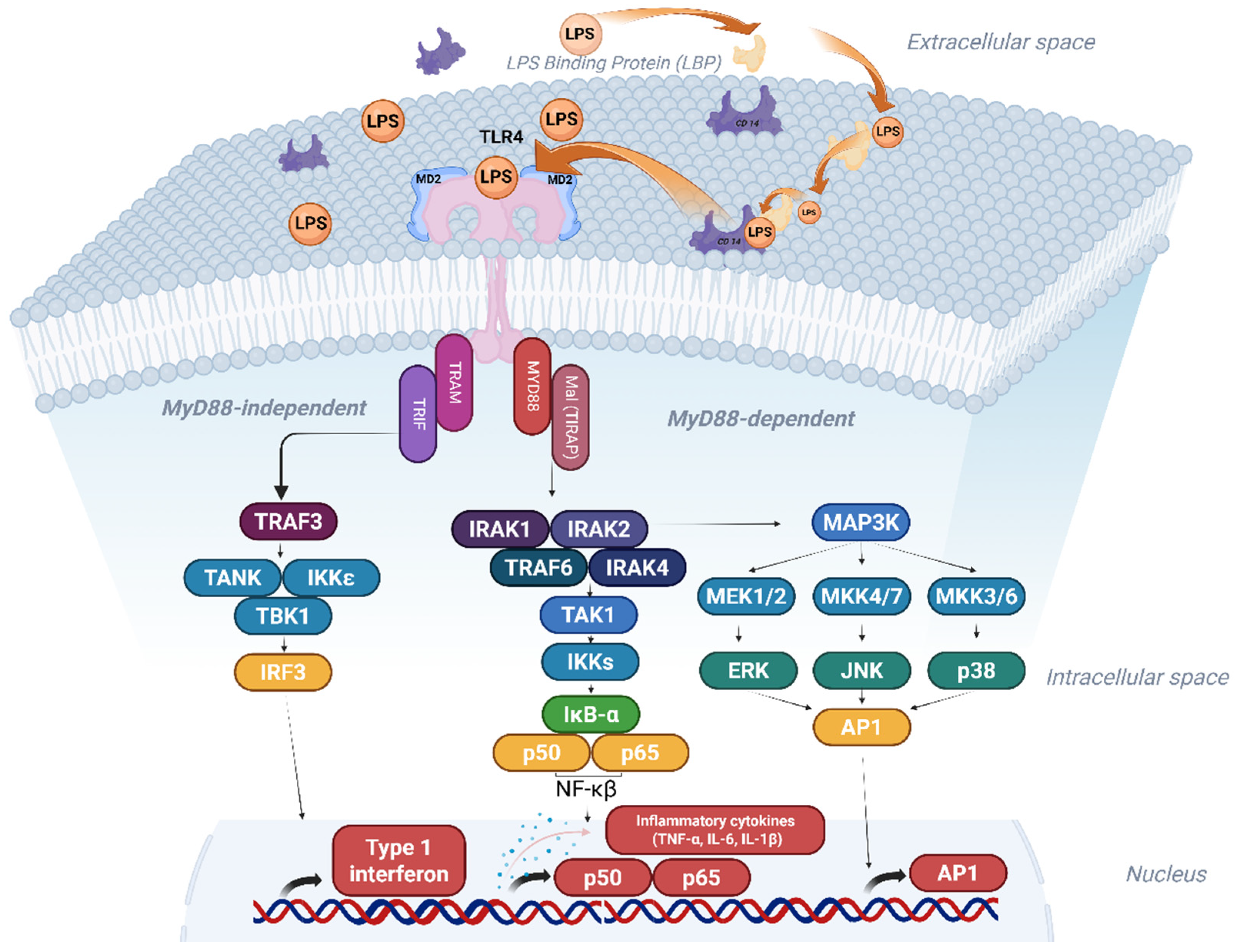
2.1. Toll-like Receptor 4: Biological Structure, Expression and Signalling Pathway
2.2. Toll-like Receptor 4: Expression and Function in Macrophages
2.3. Toll-like Receptor 4 in Cancer
3. Matrix Metalloproteinases
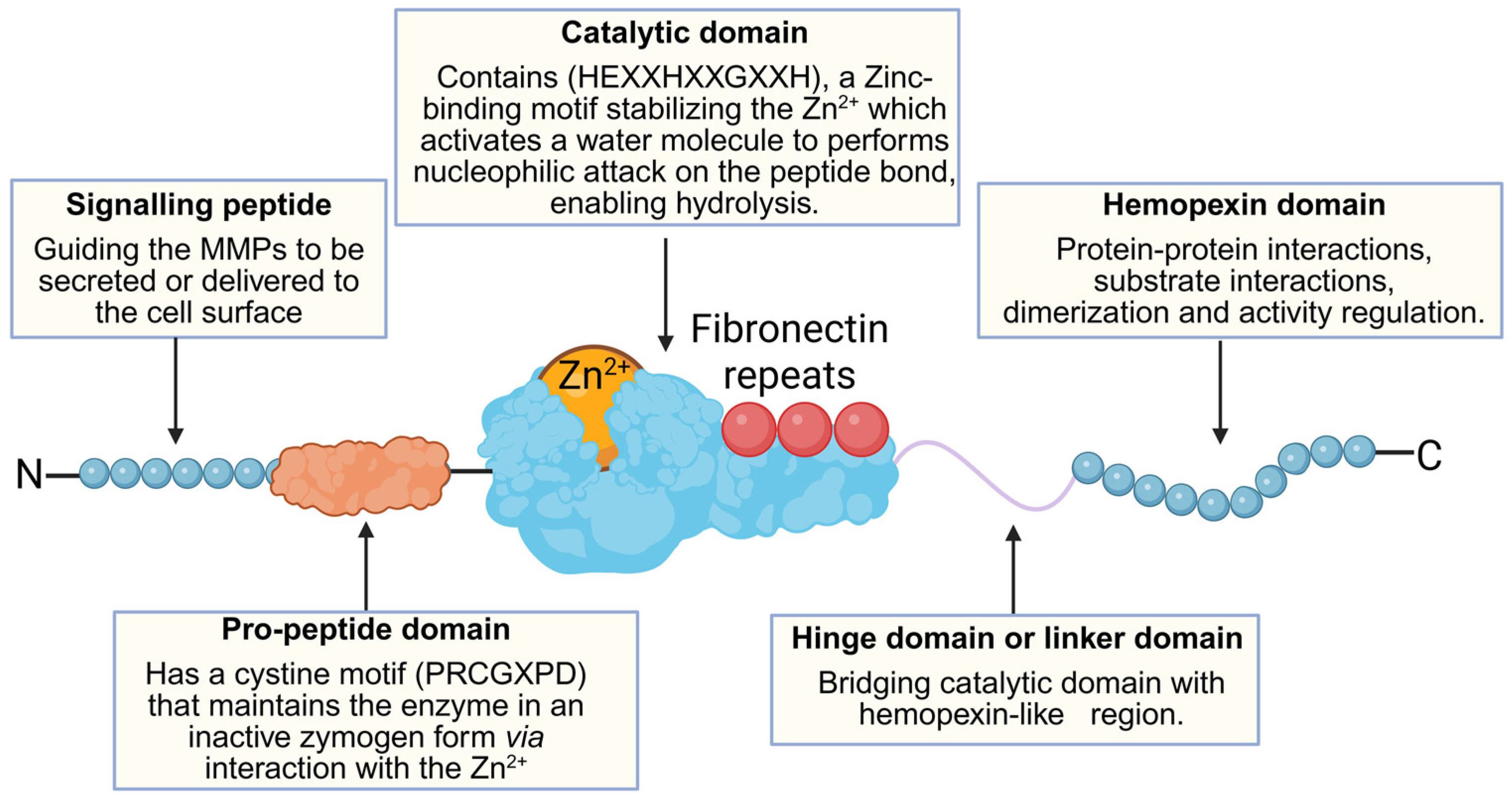
3.1. Matrix Metalloproteinases: Types and Functions
3.2. Matrix Metalloproteinases MMP2 and MMP9 in Cancer
4. Toll-like Receptor 4 and Gelatinases Crosstalk in Cancer
4.1. Activation of TLR4 Upregulates MMP9 in Macrophages
4.2. Effect of TLR4 on MMP9 in Cancer Cells
4.2.1. Pancreatic Cancer
4.2.2. Breast Cancer
4.2.3. Lung Cancer
4.2.4. Prostate Cancer
4.2.5. Ovarian Cancer
4.2.6. Liver Cancer
4.2.7. Melanoma
4.2.8. Colorectal Cancer
4.2.9. Glioblastoma
4.3. Macrophage-Cancer Cells Co-Culture Results in Upregulation of MMP9
4.4. Toll-like Receptor 4-MMPs in In Vivo Studies
5. Conclusions
Author Contributions
Funding
Institutional Review Board Statement
Informed Consent Statement
Data Availability Statement
Conflicts of Interest
Abbreviations
| TLR4 | Toll-like receptor 4 |
| ECM | Extracellular matrix |
| MMP | Matrix metalloproteinase |
| TIMPs | Tissue inhibitors of metalloproteinases |
| DAMPs | Damage-associated molecular patterns |
| PAMPs | Pathogen-associated molecular pattern. |
| LPS | Lipopolysaccharide |
| LBP | LPS-binding protein |
| TIR | Toll/interleukin-1-receptor |
| TIRAP | TIR domain-containing adaptor protein |
| MyD88 | Myeloid differentiation primary response protein 88 |
| IL | Interleukin |
| TRIF | TIR domain-containing adaptor inducing interferon-β |
| TRAM | TRIF-related adaptor molecule |
| NF-κB | Nuclear factor kappa b |
| TNF-α | Tumor necrosis factor alpha |
| iNOS | Inducible nitric oxide synthase |
| IFN-γ | Interferon gamma |
| PD-L1 | Programmed death-ligand 1. |
| CAR-T | Chimeric antigen receptor t cell therapy. |
| HMGB1 | High mobility group box 1. |
| ROS | Reactive oxygen species. |
| CRISPR-Cas9 | Clustered regularly interspaced short palindromic repeats and CRISPR-associated protein 9 |
| IHC | Immunohistochemistry |
| FIGO | International federation of gynecology and obstetrics |
| KIRC | Kidney renal clear cell carcinoma |
| ESCC | Osophageal squamous cell carcinoma |
| PFS | Progression-free survival |
| TMA | Tissue microarray |
| CALR | Calreticulin |
| ICD | Immunogenic cell death |
| GLA-SE | Glucopyranosyl lipid a in stable emulsion |
| MART-1 | Melanoma Antigen Recognied byT cells 1 |
| NSCLC | Non–small cell lung cancer |
| PD-1 | Programmed cell death protein 1 |
| TCGA | The cancer genome atlas |
| ELISA | Enzyme-linked immunosorbent assay |
| GBM | Glioblastoma |
| DMSO | Dimethyl sulfoxide |
| WB | White blood |
| CAM | Chorioallantoic membrane |
| RT-PCR | Reverse transcription polymerase chain reaction |
| PMA | Phorbol 12-myristate 13-acetate |
| ESCC | Esophageal squamous cell carcinoma |
| NPFF | Neuropeptide ff |
| STIP1 | Stress-induced phosphoprotein 1 |
| PFOA | Pollutant perfluorooctanoic acid |
| WHO | World health organization |
| siRNA | Small interfering RNA |
| TOPK | T-LAK cell-originated protein kinase |
| SNP | Single nucleotide polymorphism |
| HCC | Hepatocellular carcinoma |
| RAGE | Receptor for advanced glycation end products |
References
- Hanahan, D.; Weinberg, R.A. Hallmarks of cancer: The next generation. Cell 2011, 144, 646–674. [Google Scholar] [CrossRef]
- Lee, C.-J.; Jang, T.-Y.; Jeon, S.-E.; Yun, H.-J.; Cho, Y.-H.; Lim, D.-Y.; Nam, J.-S. The dysadherin/MMP9 axis modifies the extracellular matrix to accelerate colorectal cancer progression. Nat. Commun. 2024, 15, 10422. [Google Scholar] [CrossRef]
- Green, D.; Eyre, H.; Singh, A.; Taylor, J.T.; Chu, J.; Jeys, L.; Sumathi, V.; Coonar, A.; Rassl, D.; Babur, M.; et al. Targeting the MAPK7/MMP9 axis for metastasis in primary bone cancer. Oncogene 2020, 39, 5553–5569. [Google Scholar] [CrossRef] [PubMed]
- Wang, L.; Zhang, Z.G.; Zhang, R.L.; Gregg, S.R.; Hozeska-Solgot, A.; LeTourneau, Y.; Wang, Y.; Chopp, M. Matrix metalloproteinase 2 (MMP2) and MMP9 secreted by erythropoietin-activated endothelial cells promote neural progenitor cell migration. J. Neurosci. 2006, 26, 5996–6003. [Google Scholar] [CrossRef]
- Dong, C.; Lin, J.M.; Lu, X.; Zhu, J.; Lin, L.; Xu, J.; Du, J. Fibroblasts with high matrix metalloproteinase 2 expression regulate CD8+ T-cell residency and inflammation via CD100 in psoriasis. Br. J. Dermatol. 2024, 191, 405–418. [Google Scholar] [CrossRef] [PubMed]
- Jiguet-Jiglaire, C.; Boissonneau, S.; Denicolai, E.; Hein, V.; Lasseur, R.; Garcia, J.; Romain, S.; Appay, R.; Graillon, T.; Mason, W.; et al. Plasmatic MMP9 released from tumor-infiltrating neutrophils is predictive for bevacizumab efficacy in glioblastoma patients: An AVAglio ancillary study. Acta Neuropathol. Commun. 2022, 10, 1. [Google Scholar] [CrossRef] [PubMed]
- Eckhard, U.; Huesgen, P.F.; Schilling, O.; Bellac, C.L.; Butler, G.S.; Cox, J.H.; Dufour, A.; Goebeler, V.; Kappelhoff, R.; Keller, U.a.d.; et al. Active site specificity profiling of the matrix metalloproteinase family: Proteomic identification of 4300 cleavage sites by nine MMPs explored with structural and synthetic peptide cleavage analyses. Matrix Biol. 2016, 49, 37–60. [Google Scholar] [CrossRef]
- Shiryaev, S.A.; Remacle, A.G.; Golubkov, V.S.; Ingvarsen, S.; Porse, A.; Behrendt, N.; Cieplak, P.; Strongin, A.Y. A monoclonal antibody interferes with TIMP-2 binding and incapacitates the MMP-2-activating function of multifunctional, pro-tumorigenic MMP-14/MT1–MMP. Oncogenesis 2013, 2, e80. [Google Scholar] [CrossRef]
- Bastos, A.C.; Khayat, A.S.; Moraes, E.R.L.; Tavares, Á.T.M.; Mourão, R.M.d.S.; Moreira, F.C.; Casseb, S.M.M.; Demachki, S.; Ishak, G.; Barra, W.F.; et al. Analysis of the Matrix Metalloproteinases Family Profile in Gastric Cancer Suggests Key Matrix Metalloproteinases for Tumor Development and Their Clinical Impact. Mol. Carcinog. 2026, 65, 577–588. [Google Scholar] [CrossRef]
- Khabbazi, S.; Nassar, Z.D.; Goumon, Y.; Parat, M.O. Morphine decreases the pro-angiogenic interaction between breast cancer cells and macrophages in vitro. Sci. Rep. 2016, 6, 31572. [Google Scholar] [CrossRef]
- Nicotra, L.; Loram, L.C.; Watkins, L.R.; Hutchinson, M.R. Toll-like receptors in chronic pain. Exp. Neurol. 2012, 234, 316–329. [Google Scholar] [CrossRef]
- Kauppila, J.H.; Takala, H.; Selander, K.S.; Lehenkari, P.P.; Saarnio, J.; Karttunen, T.J. Increased Toll-like receptor 9 expression indicates adverse prognosis in oesophageal adenocarcinoma. Histopathology 2011, 59, 643–649. [Google Scholar] [CrossRef]
- Grimmig, T.; Matthes, N.; Hoeland, K.; Tripathi, S.; Chandraker, A.; Grimm, M.; Moench, R.; Moll, E.M.; Friess, H.; Tsaur, I.; et al. TLR7 and TLR8 expression increases tumor cell proliferation and promotes chemoresistance in human pancreatic cancer. Int. J. Oncol. 2015, 47, 857–866. [Google Scholar] [CrossRef] [PubMed]
- Hao, B.; Chen, Z.; Bi, B.; Yu, M.; Yao, S.; Feng, Y.; Yu, Y.; Pan, L.; Di, D.; Luo, G.; et al. Role of TLR4 as a prognostic factor for survival in various cancers: A meta-analysis. Oncotarget 2018, 9, 13088–13099. [Google Scholar] [CrossRef]
- Landen, N.X.; Li, D.; Stahle, M. Transition from inflammation to proliferation: A critical step during wound healing. Cell Mol. Life Sci. 2016, 73, 3861–3885. [Google Scholar] [CrossRef] [PubMed]
- Kagan, J.C.; Su, T.; Horng, T.; Chow, A.; Akira, S.; Medzhitov, R. TRAM couples endocytosis of Toll-like receptor 4 to the induction of interferon-β. Nat. Immunol. 2008, 9, 361–368. [Google Scholar] [CrossRef]
- Klaver, E.J.; van der Pouw Kraan, T.C.T.M.; Laan, L.C.; Kringel, H.; Cummings, R.D.; Bouma, G.; Kraal, G.; van Die, I. Trichuris suis soluble products induce Rab7b expression and limit TLR4 responses in human dendritic cells. Genes Immun. 2015, 16, 378–387. [Google Scholar] [CrossRef]
- Vaure, C.; Liu, Y. A comparative review of toll-like receptor 4 expression and functionality in different animal species. Front. Immunol. 2014, 5, 316. [Google Scholar] [CrossRef]
- Orecchioni, M.; Ghosheh, Y.; Pramod, A.B.; Ley, K. Macrophage polarization: Different gene signatures in M1(LPS+) vs. classically and M2(LPS-) vs. alternatively activated macrophages. Front. Immunol. 2019, 10, 1084. [Google Scholar] [CrossRef] [PubMed]
- Feng, Q.; Zhang, X.; Zhao, X.; Liu, J.; Wang, Q.; Yao, Y.; Xiao, H.; Zhu, Y.; Zhang, W.; Wang, L. Intranasal delivery of pure nanodrug loaded liposomes for Alzheimer’s disease treatment by efficiently regulating microglial polarization. Small 2024, 20, e2405781. [Google Scholar] [CrossRef]
- Zhou, J.; Cai, S.; Huang, H.; Yang, F.; Pan, K.; Sun, Z.; Fan, Y.; Wen, F.; Qin, L.; Zhang, Y. LPS/TLR4-activated M1-polarized macrophage-derived exosomes enhance IBV vaccine efficacy in chickens. J. Virol. 2025, 99, e0115625. [Google Scholar] [CrossRef]
- Orr, J.S.; Puglisi, M.J.; Ellacott, K.L.; Lumeng, C.N.; Wasserman, D.H.; Hasty, A.H. Toll-like receptor 4 deficiency promotes the alternative activation of adipose tissue macrophages. Diabetes 2012, 61, 2718–2727. [Google Scholar] [CrossRef]
- Tian, S.; Zhang, L.; Tang, J.; Guo, X.; Dong, K.; Chen, S.Y. HMGB1 exacerbates renal tubulointerstitial fibrosis through facilitating M1 macrophage phenotype at the early stage of obstructive injury. Am. J. Physiol. Ren. Physiol. 2015, 308, F69–F75. [Google Scholar] [CrossRef]
- Zhang, N.; Yang, X.; Liang, J.; Zhu, C.; Shen, G.; Luo, C.; Wu, W. Tanshinone IIA inhibits alveolar macrophage polarization, inflammation and mitochondrial damage by regulating the PARP-1 signaling pathway. Iran. J. Pharm. Res. 2025, 24, e166272. [Google Scholar] [CrossRef]
- Watkins, S.K.; Egilmez, N.K.; Suttles, J.; Stout, R.D. IL-12 rapidly alters the functional profile of tumor-associated and tumor-infiltrating macrophages in vitro and in vivo. J. Immunol. 2007, 178, 1357–1362. [Google Scholar] [CrossRef] [PubMed]
- Hu, Y.; Gu, Y.; Song, Y.; Zhao, Y.; Wang, J.; Ma, J.; Sui, F. Differential expression and prognostic value of TLR4 in kidney renal clear cell carcinoma. Mol. Cell Probes 2024, 75, 101959. [Google Scholar] [CrossRef] [PubMed]
- Herik Rodrigo, A.G.; Tomonobu, N.; Yoneda, H.; Kinoshita, R.; Mitsui, Y.; Sadahira, T.; Terawaki, S.I.; Gohara, Y.; Gede Yoni Komalasari, N.L.; Jiang, F.; et al. Toll-like receptor 4 promotes bladder cancer progression upon S100A8/A9 binding, which requires TIRAP-mediated TPL2 activation. Biochem. Biophys. Res. Commun. 2022, 634, 83–91. [Google Scholar] [CrossRef] [PubMed]
- Qian, Y.; Deng, J.; Geng, L.; Xie, H.; Jiang, G.; Zhou, L.; Wang, Y.; Yin, S.; Feng, X.; Liu, J.; et al. TLR4 signaling induces B7-H1 expression through MAPK pathways in bladder cancer cells. Cancer Investig. 2008, 26, 816–821. [Google Scholar] [CrossRef]
- Tang, X.; Zhu, Y. TLR4 signaling promotes immune escape of human colon cancer cells by inducing immunosuppressive cytokines and apoptosis resistance. Oncol. Res. 2012, 20, 15–24. [Google Scholar] [CrossRef]
- Lu, J.L.; Xia, Q.D.; Sun, Y.; Xun, Y.; Hu, H.L.; Liu, C.Q.; Sun, J.X.; Xu, J.Z.; Hu, J.; Wang, S.G. Toll-like receptor 4 as a favorable prognostic marker in bladder cancer: A multi-omics analysis. Front. Cell Dev. Biol. 2021, 9, 651560. [Google Scholar] [CrossRef]
- Li, Y.; Shi, J.; Liu, Z.; Lin, Y.; Xie, A.; Sun, W.; Liu, J.; Liang, J. Regulation of the migration of colorectal cancer stem cells via the TLR4/MyD88 signaling pathway by the novel surface marker CD14 following LPS stimulation. Oncol. Lett. 2024, 27, 60. [Google Scholar] [CrossRef]
- Liu, C.; Gao, F.; Li, B.; Mitchel, R.E.; Liu, X.; Lin, J.; Zhao, L.; Cai, J. TLR4 knockout protects mice from radiation-induced thymic lymphoma by downregulation of IL6 and miR-21. Leukemia 2011, 25, 1516–1519. [Google Scholar] [CrossRef] [PubMed]
- Yakovlev, P.G.; Gorbach, O.I.; Ostapchenko, L.I.; Garmanchuk, L.V.; Skachkova, O.V.; Khranovska, N.M.; Senchylo, N.V. Expression of TLR4 and major inflammatory cytokines in patients with bladder cancer of different grade and stage. Exp. Oncol. 2021, 43, 142–148. [Google Scholar] [CrossRef]
- Allhorn, S.; Böing, C.; Koch, A.A.; Kimmig, R.; Gashaw, I. TLR3 and TLR4 expression in healthy and diseased human endometrium. Reprod. Biol. Endocrinol. 2008, 6, 40. [Google Scholar] [CrossRef] [PubMed]
- Karkia, R.; Sisu, C.; Saravi, S.; Kyrou, I.; Randeva, H.S.; Chatterjee, J.; Karteris, E. Effects of Asprosin and role of TLR4 as a biomarker in endometrial cancer. Molecules 2025, 30, 3410. [Google Scholar] [CrossRef]
- Kusuhara, Y.; Daizumoto, K.; Kawai, K.; Hirayama, K.; Kowada, M.; Shintani, T.; Fukuhara, Y.; Dondoo, T.O.; Ozaki, K.; Tsuda, M.; et al. Low expression of toll-like receptor 4 is associated with poor prognosis in bladder cancer. Anticancer Res. 2019, 39, 703–711. [Google Scholar] [CrossRef] [PubMed]
- Tao, M.; Xue, M.; Zhou, D.; Zhang, L.; Hou, X.; Zhu, X.; Feng, S.; Yan, H.; Qian, X.; Wei, L.; et al. Lipopolysaccharide induces resistance to CAR-T cell therapy of colorectal cancer cells through TGF-β-mediated stemness enhancement. Mol. Pharm. 2025, 22, 1790–1803. [Google Scholar] [CrossRef]
- Dang, T.T.; Pham, V.N.; Tran, N.D.; Ngo, T.H.; Can, V.M.; Nguyen, H.H.; Nguyen, T.X.; Dang, T.C. TLR4/MyD88 expression patterns and novel genetic variants: Association with aggressive clinicopathological features in colorectal cancer. Front. Oncol. 2025, 15, 1568729. [Google Scholar] [CrossRef]
- Yu, Z.; Yue, B.; Gao, R.; Zhang, B.; Geng, X.; Lv, C.; Wang, H.; Wang, Z.; Wang, Z.; Dou, W. Gastrodin attenuates colitis and prevents tumorigenesis in mice by interrupting TLR4/MD2/NF-κB signaling transduction. Anticancer Agents Med. Chem. 2024, 24, 853–866. [Google Scholar] [CrossRef]
- Yang, P.; Li, Z.; Li, H.; Lu, Y.; Wu, H.; Li, Z. Pyruvate kinase M2 accelerates pro-inflammatory cytokine secretion and cell proliferation induced by lipopolysaccharide in colorectal cancer. Cell. Signal. 2015, 27, 1525–1532. [Google Scholar] [CrossRef]
- Song, W.; Tiruthani, K.; Wang, Y.; Shen, L.; Hu, M.; Dorosheva, O.; Qiu, K.; Kinghorn, K.A.; Liu, R.; Huang, L. Trapping of lipopolysaccharide to promote immunotherapy against colorectal cancer and attenuate liver metastasis. Adv. Mater. 2018, 30, 1805007. [Google Scholar] [CrossRef]
- Feng, Z.; Chen, G.; Huang, Y.; Zhang, K.; Wu, G.; Xing, W.; Wu, Y.; Zhou, Y.; Sun, C. TAK-242 inhibits glioblastoma invasion, migration, and proneural-mesenchymal transition by inhibiting TLR4 signaling. Exp. Cell Res. 2024, 439, 114091. [Google Scholar] [CrossRef]
- Lu, V.M.; Chandar, J.S.; Castro, J.R.; Seetharam, D.; Govindarajan, V.; Ramsoomair, C.K.; Desgraves, J.F.; Hudson, A.J.; Shah, A.H. Elucidating the association between TLR-4 expression and the clinical course of glioblastoma leptomeningeal disease. Br. J. Cancer 2025, 133, 723–731. [Google Scholar] [CrossRef]
- Qiu, H.; Shao, Z.; Wen, X.; Qu, D.; Liu, Z.; Chen, Z.; Zhang, X.; Ding, X.; Zhang, L. HMGB1/TREM2 positive feedback loop drives the development of radioresistance and immune escape of glioblastoma by regulating TLR4/Akt signaling. J. Transl. Med. 2024, 22, 688. [Google Scholar] [CrossRef] [PubMed]
- Wu, S.; Wang, J.; Liu, J.; Zhu, H.; Li, R.; Wan, X.; Lei, J.; Li, Y.; You, C.; Hu, F.; et al. Programmed cell death 10 increased blood-brain barrier permeability through HMGB1/TLR4 mediated downregulation of endothelial ZO-1 in glioblastoma. Cell Signal. 2023, 107, 110683. [Google Scholar] [CrossRef] [PubMed]
- da Cruz, L.L.P.; de Souza, P.O.; Dal Prá, M.; Falchetti, M.; de Abreu, A.M.; Azambuja, J.H.; Bertoni, A.P.S.; Paz, A.H.R.; Araújo, A.B.; Visioli, F.; et al. TLR4 expression and functionality are downregulated in glioblastoma cells and in tumor-associated macrophages: A new mechanism of immune evasion? Biochim. Biophys. Acta Mol. Basis Dis. 2021, 1867, 166155. [Google Scholar] [CrossRef]
- Huang, R.; Yu, H.; Tang, Z. Tussilagone suppresses triple-negative breast cancer progression by inhibiting the TLR4/NF-κB pathway and enhancing anti-tumor immunity. Immunopharmacol. Immunotoxicol. 2025, 47, 740–750. [Google Scholar] [CrossRef]
- Li, J.; Yin, J.; Shen, W.; Gao, R.; Liu, Y.; Chen, Y.; Li, X.; Liu, C.; Xiang, R.; Luo, N. promotes breast cancer metastasis via Akt/GSK3β/β-Catenin pathway upon LPS stimulation. Anat. Rec. 2017, 300, 1219–1229. [Google Scholar] [CrossRef] [PubMed]
- Paiva, L.; Teles, A.C.F.; Souza, J.D.S.; Oliveira, P.R.A.; Alves, B.E.S.; Coelho, M.T.B.; Cajado, A.G.; Maia, I.; Silva, P.G.B.; Cavalcante, D.I.M.; et al. Clinical significance and prognostic value of TLR4 and AGER in inflammatory breast cancer. Cancers 2025, 17, 2182. [Google Scholar] [CrossRef]
- Athaiya, S.; Volk-Draper, L.; Cox, E.; Robinson, K.; Zinkevich, N.; Ran, S. Bone marrow myeloid-lymphatic progenitors expand tumor lymphatic vasculature through cell fusion. Cancers 2025, 17, 1804. [Google Scholar] [CrossRef]
- Zaragoza, K.P.; Castillo-Sanchez, R.; Sanchez-Juarez, M.; Cortes-Reynosa, P.; Salazar, E.P. Linoleic acid induces migration and invasion through TLR4 in breast cancer cells. Tissue Cell 2025, 96, 103009. [Google Scholar] [CrossRef] [PubMed]
- Wang, L.; Chen, T.; Bai, H.; Wei, T.; Zhang, J. Effect of the PTPN4/TRAM/TLR4 signaling pathway on angiogenesis mediated by Rab27a-regulated miR-17-5p secretion in breast cancer exosomes. Am. J. Med. Sci. 2025, 370, 291–304. [Google Scholar] [CrossRef]
- Liu, Y.; Ma, P.; Liu, D.; Liu, Y.; Ran, Z.; Yang, L.; Xu, L.; Yin, W.; Chen, F.; Li, L.; et al. Gram-negative intratumoral bacteria mediate lymph node metastasis through LPS-TLR4/MAPK signaling pathway in cervical cancer. J. Infect. 2025, 91, 106532. [Google Scholar] [CrossRef] [PubMed]
- Morale, M.G.; Tamura, R.E.; Cintra, R.; Araújo, N.M.; Villa, L.L. TLR4 and SARM1 modulate survival and chemoresistance in an HPV-positive cervical cancer cell line. Sci. Rep. 2022, 12, 6714. [Google Scholar] [CrossRef] [PubMed]
- Yang, X.; Chen, G.T.; Wang, Y.Q.; Xian, S.; Zhang, L.; Zhu, S.M.; Pan, F.; Cheng, Y.X. TLR4 promotes the expression of HIF-1α by triggering reactive oxygen species in cervical cancer cells in vitro-implications for therapeutic intervention. Mol. Med. Rep. 2018, 17, 2229–2238. [Google Scholar] [CrossRef]
- Wang, Y.; Weng, Y.; Shi, Y.; Xia, X.; Wang, S.; Duan, H. Expression and functional analysis of Toll-like receptor 4 in human cervical carcinoma. J. Membr. Biol. 2014, 247, 591–599. [Google Scholar] [CrossRef]
- Yu, L.; Wang, L.; Li, M.; Zhong, J.; Wang, Z.; Chen, S. Expression of toll-like receptor 4 is down-regulated during progression of cervical neoplasia. Cancer Immunol. Immunother. 2010, 59, 1021–1028. [Google Scholar] [CrossRef]
- Shu, W.; Chen, G.; Zhang, J.; Dong, K.; Zhou, T.; Cheng, S.; Zhang, T.; Zhang, J.; Li, H.; Yao, Y.; et al. Bavachinin exerts anti-tumor effects by activating TLR4/STING axis-dependent PANoptosis and synergistically enhances chemosensitivity in endometrial cancer. Biochem. Pharmacol. 2025, 242, 117321. [Google Scholar] [CrossRef]
- Wojcik-Krowiranda, K.M.; Forma, E.; Bienkiewicz, A.; Cwonda, L.; Wronska-Stefaniak, J.; Brys, M. TLR family gene expression in relation to the HIF1α and the VEGFR pathway activation in endometrial cancer. Ginekol. Pol. 2020, 91, 439–446. [Google Scholar] [CrossRef]
- Kong, Q.; Liang, Y.; He, Q.; You, Y.; Wu, L.; Liang, L.; Liang, J. Autophagy inhibits TLR4-mediated invasiveness of oral cancer cells via the NF-κB pathway. Oral. Dis. 2020, 26, 1165–1174. [Google Scholar] [CrossRef]
- Mäkinen, L.K.; Ahmed, A.; Hagström, J.; Lehtonen, S.; Mäkitie, A.A.; Salo, T.; Haglund, C.; Atula, T. Toll-like receptors 2, 4, and 9 in primary, metastasized, and recurrent oral tongue squamous cell carcinomas. J. Oral. Pathol. Med. 2016, 45, 338–345. [Google Scholar] [CrossRef]
- Araújo, N.M.; Chanes, G.B.; da Cruz, K.A.S.; de Rubio, I.G.S.; Villa, L.L.; Tamura, R.E.; Morale, M.G. The antitumor effect of tlr4 inhibition in head and neck cancer cell lines. Sci. Rep. 2025, 15, 31681. [Google Scholar] [CrossRef] [PubMed]
- Tano, T.; Okamoto, M.; Kan, S.; Nakashiro, K.; Shimodaira, S.; Yamashita, N.; Kawakami, Y.; Hamakawa, H. Growth inhibition and apoptosis by an active component of OK-432, a streptococcal agent, via Toll-like receptor 4 in human head and neck cancer cell lines. Oral. Oncol. 2012, 48, 678–685. [Google Scholar] [CrossRef]
- Starska, K.; Forma, E.; Lewy-Trenda, I.; Stasikowska, O.; Bryś, M.; Krajewska, W.M.; Łukomski, M. The expression of SOCS1 and TLR4-NFkappaB pathway molecules in neoplastic cells as potential biomarker for the aggressive tumor phenotype in laryngeal carcinoma. Folia Histochem. Cytobiol. 2009, 47, 401–410. [Google Scholar] [CrossRef] [PubMed]
- Sasamori, R.; Sato, Y.; Nomura, K.; Wakita, A.; Nagaki, Y.; Kemuriyama, K.; Sasaki, Y.; Nozaki, S.; Takahashi, T.; Terata, K.; et al. Lipopolysaccharide induces CCL2 through TLR4 signaling and promotes esophageal squamous cell carcinoma cell proliferation. Am. J. Cancer Res. 2024, 14, 3497–3512. [Google Scholar] [CrossRef]
- Zhang, Z.; Wang, S.; Lu, Y.; Xia, D.; Liu, Y. TLR4 predicts patient prognosis and immunotherapy efficacy in clear cell renal cell carcinoma. J. Cancer 2023, 14, 2181–2197. [Google Scholar] [CrossRef]
- Wang, W.; Zhao, E.; Yu, Y.; Geng, B.; Zhang, W.; Li, X. MiR-216a exerts tumor-suppressing functions in renal cell carcinoma by targeting TLR4. Am. J. Cancer Res. 2018, 8, 476–488. [Google Scholar]
- Mao, S.; Yao, J.; Zhang, T.; Zhang, X.; Tan, W.; Li, C. Bilobalide attenuates lipopolysaccharide-induced HepG2 cell injury by inhibiting TLR4-NF-κB signaling via the PI3K/Akt pathway. Exp. Ther. Med. 2024, 27, 24. [Google Scholar] [CrossRef]
- Xu, Y.; Guo, Y.; Lu, C.; Yu, L.; Fang, C.; Li, C. Polygonatum sibiricum polysaccharide inhibited liver cancer in a simulated tumor microenvironment by eliminating TLR4/STAT3 pathway. Biol. Pharm. Bull. 2023, 46, 1249–1259. [Google Scholar] [CrossRef] [PubMed]
- Kim, M.J.; Choi, B.; Kim, J.Y.; Min, Y.; Kwon, D.H.; Son, J.; Lee, J.S.; Lee, J.S.; Chun, E.; Lee, K.Y. USP8 regulates liver cancer progression via the inhibition of TRAF6-mediated signal for NF-κB activation and autophagy induction by TLR4. Transl. Oncol. 2022, 15, 101250. [Google Scholar] [CrossRef]
- Haroun, R.; Rutihinda, C.; Diallo, A.H.; Ordonez, J.P.; Nassri, S.; Shams, A.; Pacheco, M.F.M.; Saidi, N.E.; Bouchard, L.; Turgeon, G.A.; et al. Toll-like receptor 4 inhibition sensitizes non-small cell lung cancer to radiotherapy. Cancer Biol. Ther. 2025, 26, 2590881. [Google Scholar] [CrossRef]
- Sha, G.; Wu, Z.; Wang, B.; Ding, Y.; Xiao, Z.; Zhang, W.; Zhou, J.; Zhou, Y.; Ji, G.; Tian, Z.; et al. Intratumorally specific microbial-derived lipopolysaccharide contributes to non-small cell lung cancer progression. Virulence 2025, 16, 2548626. [Google Scholar] [CrossRef] [PubMed]
- Zhu, H.; Guan, Y.; Wang, W.; Liu, X.; Wang, S.; Zheng, R.; Li, Y.; Liu, L.; Huang, H. Reniformin A suppresses non-small cell lung cancer progression by inducing TLR4/NLRP3/caspase-1/GSDMD-dependent pyroptosis. Int. Immunopharmacol. 2024, 133, 112068. [Google Scholar] [CrossRef] [PubMed]
- Wang, K.; Wang, J.; Liu, T.; Yu, W.; Dong, N.; Zhang, C.; Xia, W.; Wei, F.; Yang, L.; Ren, X. Morphine-3-glucuronide upregulates PD-L1 expression via TLR4 and promotes the immune escape of non-small cell lung cancer. Cancer Biol. Med. 2021, 18, 155–171. [Google Scholar] [CrossRef]
- Zhou, Y.; Han, H.; Li, P.; Wei, W. Chelidonine inhibits melanoma cell malignancy by inactivating TLR4/NF-κB and PI3K/AKT signaling pathways. Korean J. Physiol. Pharmacol. 2025, 29, 509–5159. [Google Scholar] [CrossRef]
- Scandura, G.; Giallongo, C.; Puglisi, F.; Romano, A.; Parrinello, N.L.; Zuppelli, T.; Longhitano, L.; Giallongo, S.; Di Rosa, M.; Musumeci, G.; et al. TLR4 signaling and heme oxygenase-1/carbon monoxide pathway crosstalk induces resiliency of myeloma plasma cells to bortezomib treatment. Antioxidants 2022, 11, 767. [Google Scholar] [CrossRef]
- Giallongo, C.; Tibullo, D.; Puglisi, F.; Barbato, A.; Vicario, N.; Cambria, D.; Parrinello, N.L.; Romano, A.; Conticello, C.; Forte, S.; et al. Inhibition of TLR4 signaling affects mitochondrial fitness and overcomes bortezomib resistance in myeloma plasma cells. Cancers 2020, 12, 1999. [Google Scholar] [CrossRef]
- Gao, H.; Wang, J. Andrographolide inhibits multiple myeloma cells by inhibiting the TLR4/NF-κB signaling pathway. Mol. Med. Rep. 2016, 13, 1827–1832. [Google Scholar] [CrossRef] [PubMed]
- Wu, Z.; Guo, J.; Zhang, Z.; Gao, S.; Huang, M.; Wang, Y.; Zhang, Y.; Li, Q.; Li, J. Bacteroidetes promotes esophageal squamous carcinoma invasion and metastasis through LPS-mediated TLR4/Myd88/NF-κB pathway and inflammatory changes. Sci. Rep. 2024, 14, 12827. [Google Scholar] [CrossRef]
- Peng, Z.; Wan, P.; Deng, Y.; Shen, W.; Liu, R. Lipopolysaccharide exacerbates to the migration, invasion, and epithelial-mesenchymal transition of esophageal cancer cells by TLR4/NF-κB axis. Environ. Toxicol. 2023, 38, 1090–1099. [Google Scholar] [CrossRef]
- Li, X.; Li, H.; Dong, X.; Wang, X.; Zhu, J.; Cheng, Y.; Fan, P. Expression of NF-κB and TLR-4 is associated with the occurrence, progression and prognosis of esophageal squamous cell carcinoma. Int. J. Clin. Exp. Pathol. 2018, 11, 5850–5859. [Google Scholar] [PubMed]
- Wu, K.; Yang, Y.; Liu, D.; Qi, Y.; Zhang, C.; Zhao, J.; Zhao, S. Activation of PPARγ suppresses proliferation and induces apoptosis of esophageal cancer cells by inhibiting TLR4-dependent MAPK pathway. Oncotarget 2016, 7, 44572–44582. [Google Scholar] [CrossRef] [PubMed]
- Bates, M.; Mullen, D.; Lee, E.; Costigan, D.; Heron, E.A.; Kernan, N.; Barry-O’Crowley, J.; Martin, C.; Keegan, H.; Malone, V.; et al. P53 and TLR4 expression are prognostic markers informing progression free survival of advanced stage high grade serous ovarian cancer. Pathol. Res. Pr. 2024, 253, 155020. [Google Scholar] [CrossRef]
- Xu, R.; Ruan, Y.; Zhang, L.; Gu, Y.; Liu, M. Fraxetin suppresses the proliferation, migration, and invasion of ovarian cancer cells by inhibiting the TLR4/STAT3 signaling pathway. Immunopharmacol. Immunotoxicol. 2023, 45, 287–294. [Google Scholar] [CrossRef]
- Kashani, B.; Zandi, Z.; Bashash, D.; Zaghal, A.; Momeny, M.; Poursani, E.M.; Pourbagheri-Sigaroodi, A.; Mousavi, S.A.; Ghaffari, S.H. Small molecule inhibitor of TLR4 inhibits ovarian cancer cell proliferation: New insight into the anticancer effect of TAK-242 (Resatorvid). Cancer Chemother. Pharmacol. 2020, 85, 47–59. [Google Scholar] [CrossRef]
- Huang, S.L.; Chang, T.C.; Chao, C.C.K.; Sun, N.K. TLR4/IL-6/IRF1 signaling regulates androgen receptor expression: A potential therapeutic target to overcome taxol resistance in ovarian cancer. Biochem. Pharmacol. 2021, 186, 114456. [Google Scholar] [CrossRef]
- Lau, T.S.; Chan, L.K.Y.; Man, G.C.W.; Wong, C.H.; Lee, J.H.S.; Yim, S.F.; Cheung, T.H.; McNeish, I.A.; Kwong, J. Paclitaxel induces immunogenic cell death in ovarian cancer via TLR4/IKK2/SNARE-dependent. Cancer Immunol. Res. 2020, 8, 1099–1111. [Google Scholar] [CrossRef]
- Kashani, B.; Zandi, Z.; Karimzadeh, M.R.; Bashash, D.; Nasrollahzadeh, A.; Ghaffari, S.H. Blockade of TLR4 using TAK-242 (resatorvid) enhances anti-cancer effects of chemotherapeutic agents: A novel synergistic approach for breast and ovarian cancers. Immunol. Res. 2019, 67, 505–516. [Google Scholar] [CrossRef]
- Ma, J.X.; Sun, Y.L.; Yu, Y.; Zhang, J.; Wu, H.Y.; Yu, X.F. Triptolide enhances the sensitivity of pancreatic cancer PANC-1 cells to gemcitabine by inhibiting TLR4/NF-κB signaling. Am. J. Transl. Res. 2019, 11, 3750–3760. [Google Scholar]
- Youn, S.E.; Jiang, F.; Won, H.Y.; Hong, D.E.; Kang, T.H.; Park, Y.Y.; Koh, S.S. PAUF induces migration of human pancreatic cancer cells exclusively via the TLR4/MyD88/NF-κB signaling pathway. Int. J. Mol. Sci. 2022, 23, 11414. [Google Scholar] [CrossRef] [PubMed]
- Xie, C.; Liu, D.; Chen, Q.; Yang, C.; Wang, B.; Wu, H. Soluble B7-H3 promotes the invasion and metastasis of pancreatic carcinoma cells through the TLR4/NF-κB pathway. Sci. Rep. 2016, 6, 27528. [Google Scholar] [CrossRef]
- Zhu, Z.; Yi, B.; Tang, Z.; Chen, X.; Li, M.; Xu, T.; Zhao, Z.; Tang, C. Lactobacillus casei combined with Lactobacillus reuteri alleviate pancreatic cancer by inhibiting TLR4 to promote macrophage M1 polarization and regulate gut microbial homeostasis. BMC Cancer 2023, 23, 1044. [Google Scholar] [CrossRef]
- Lv, Z.; Li, W.; Wei, X. S100A9 promotes prostate cancer cell invasion by activating TLR4/NF-κB/integrin β1/FAK signaling. Onco Targets Ther. 2020, 13, 6443–6452. [Google Scholar] [CrossRef]
- Li, L.; Zhang, X. MiR-135a-3p inhibits the progression of prostate cancer by targeting TLR4. Cancer Biol. Ther. 2025, 26, 2545653. [Google Scholar] [CrossRef]
- Deveci Ozkan, A.; Kaleli, S.; Onen, H.I.; Sarihan, M.; Guney Eskiler, G.; Kalayci Yigin, A.; Akdogan, M. Anti-inflammatory effects of nobiletin on TLR4/TRIF/IRF3 and TLR9/IRF7 signaling pathways in prostate cancer cells. Immunopharmacol. Immunotoxicol. 2020, 42, 93–100. [Google Scholar] [CrossRef] [PubMed]
- Li, Y.; Xu, L.; Lu, X.; Fu, B.; Jiang, Q.; Xiong, W.; Tang, W.; Wu, D. Helicobacter pylori lipopolysaccharide upregulates MDM2 via the TLR4/MAPK/AP-1 Pathway to promote gastric cancer progression. Dig. Dis. Sci. 2025. [Google Scholar] [CrossRef]
- Li, N.; Xu, H.; Ou, Y.; Feng, Z.; Zhang, Q.; Zhu, Q.; Cai, Z. LPS-induced CXCR7 expression promotes gastric Cancer proliferation and migration via the TLR4/MD-2 pathway. Diagn. Pathol. 2019, 14, 3. [Google Scholar] [CrossRef]
- Yuan, X.; Zhou, Y.; Wang, W.; Li, J.; Xie, G.; Zhao, Y.; Xu, D.; Shen, L. Activation of TLR4 signaling promotes gastric cancer progression by inducing mitochondrial ROS production. Cell Death Dis. 2013, 4, e794. [Google Scholar] [CrossRef] [PubMed]
- Daniele, S.; Zappelli, E.; Natali, L.; Martini, C.; Trincavelli, M.L. Modulation of A1 and A2B adenosine receptor activity: A new strategy to sensitise glioblastoma stem cells to chemotherapy. Cell Death Dis. 2014, 5, e1539. [Google Scholar] [CrossRef] [PubMed]
- Jube, S.; Rivera, Z.S.; Bianchi, M.E.; Powers, A.; Wang, E.; Pagano, I.; Pass, H.I.; Gaudino, G.; Carbone, M.; Yang, H. Cancer cell secretion of the DAMP protein HMGB1 supports progression in malignant mesothelioma. Cancer Res. 2012, 72, 3290–3301. [Google Scholar] [CrossRef]
- Vacchelli, E.; Ma, Y.; Baracco, E.E.; Sistigu, A.; Enot, D.P.; Pietrocola, F.; Yang, H.; Adjemian, S.; Chaba, K.; Semeraro, M.; et al. Chemotherapy-induced antitumor immunity requires formyl peptide receptor 1. Science 2015, 350, 972–978. [Google Scholar] [CrossRef]
- Bettum, I.J.; Vasiliauskaite, K.; Nygaard, V.; Clancy, T.; Pettersen, S.J.; Tenstad, E.; Mælandsmo, G.M.; Prasmickaite, L. Metastasis-associated protein S100A4 induces a network of inflammatory cytokines that activate stromal cells to acquire pro-tumorigenic properties. Cancer Lett. 2014, 344, 28–39. [Google Scholar] [CrossRef]
- Fini, M.A.; Orchard-Webb, D.; Kosmider, B.; Amon, J.D.; Kelland, R.; Shibao, G.; Wright, R.M. Migratory activity of human breast cancer cells is modulated by differential expression of xanthine oxidoreductase. J. Cell Biochem. 2008, 105, 1008–1026. [Google Scholar] [CrossRef]
- Ma, L.; Sun, P.; Zhang, J.C.; Zhang, Q.; Yao, S.L. Proinflammatory effects of S100A8/A9 via TLR4 and RAGE signaling pathways in BV-2 microglial cells. Int. J. Mol. Med. 2017, 40, 31–38. [Google Scholar] [CrossRef] [PubMed]
- Zhou, J.; Chen, X.; Gilvary, D.L.; Tejera, M.M.; Eksioglu, E.A.; Wei, S.; Djeu, J.Y. HMGB1 induction of clusterin creates a chemoresistant niche in human prostate tumor cells. Sci. Rep. 2015, 5, 15085. [Google Scholar] [CrossRef] [PubMed]
- Zheng, L.; Zhu, Q.; Xu, C.; Li, M.; Li, H.; Yi, P.Q.; Xu, F.F.; Cao, L.; Chen, J.Y. Glycyrrhizin mitigates radiation-induced acute lung injury by inhibiting the HMGB1/TLR4 signalling pathway. J. Cell Mol. Med. 2020, 24, 214–226. [Google Scholar] [CrossRef]
- Im, K.I.; Nam, Y.S.; Kim, N.; Song, Y.; Lee, E.S.; Lim, J.Y.; Jeon, Y.W.; Cho, S.G. Regulation of HMGB1 release protects chemoradiotherapy-associated mucositis. Mucosal Immunol. 2019, 12, 1070–1081. [Google Scholar] [CrossRef]
- Zhu, X.; Cong, J.; Lin, Z.; Sun, J.; Yang, B.; Li, A. Inhibition of HMGB1 overcomes resistance to radiation and chemotherapy in nasopharyngeal carcinoma. Onco Targets Ther. 2020, 13, 4189–4199. [Google Scholar] [CrossRef]
- Ma, L.; Xu, M.; Xu, S.; Guo, X.; Zong, W.; Zhao, X.; Yang, Z.; Liu, G.; Shen, L. HMGB1 downregulates DDX3 to activate the MAPK pathway, promoting the progression of colorectal cancer. Cancer Gene Ther. 2025, 32, 1307–1318. [Google Scholar] [CrossRef] [PubMed]
- Scaffidi, P.; Misteli, T.; Bianchi, M.E. Release of chromatin protein HMGB1 by necrotic cells triggers inflammation. Nature 2002, 418, 191–195. [Google Scholar] [CrossRef]
- McQuitty, C.E.; Williams, R.; Chokshi, S.; Urbani, L. Immunomodulatory role of the extracellular matrix within the liver disease microenvironment. Front. Immunol. 2020, 11, 574276. [Google Scholar] [CrossRef] [PubMed]
- Smiley, S.T.; King, J.A.; Hancock, W.W. Fibrinogen stimulates macrophage chemokine secretion through toll-like receptor 4. J. Immunol. 2001, 167, 2887–2894. [Google Scholar] [CrossRef] [PubMed]
- Schaefer, L.; Babelova, A.; Kiss, E.; Hausser, H.J.; Baliova, M.; Krzyzankova, M.; Marsche, G.; Young, M.F.; Mihalik, D.; Götte, M.; et al. The matrix component biglycan is proinflammatory and signals through Toll-like receptors 4 and 2 in macrophages. J. Clin. Investig. 2005, 115, 2223–2233. [Google Scholar] [CrossRef]
- Jonas, A.; Thiem, S.; Kuhlmann, T.; Wagener, R.; Aszodi, A.; Nowell, C.; Hagemeier, K.; Laverick, L.; Perreau, V.; Jokubaitis, V.; et al. Axonally derived matrilin-2 induces proinflammatory responses that exacerbate autoimmune neuroinflammation. J. Clin. Investig. 2014, 124, 5042–5056. [Google Scholar] [CrossRef]
- Gdynia, G.; Sauer, S.W.; Kopitz, J.; Fuchs, D.; Duglova, K.; Ruppert, T.; Miller, M.; Pahl, J.; Cerwenka, A.; Enders, M.; et al. The HMGB1 protein induces a metabolic type of tumour cell death by blocking aerobic respiration. Nat. Commun. 2016, 7, 10764. [Google Scholar] [CrossRef]
- Özbay Kurt, F.G.; Cicortas, B.A.; Balzasch, B.M.; De la Torre, C.; Ast, V.; Tavukcuoglu, E.; Ak, C.; Wohlfeil, S.A.; Cerwenka, A.; Utikal, J.; et al. S100A9 and HMGB1 orchestrate MDSC-mediated immunosuppression in melanoma through TLR4 signaling. J. Immunother. Cancer 2024, 1, e0095522. [Google Scholar] [CrossRef] [PubMed]
- Kang, R.; Zhang, Q.; Zeh, H.J., 3rd; Lotze, M.T.; Tang, D. HMGB1 in cancer: Good, bad, or both? Clin. Cancer Res. 2013, 19, 4046–4057. [Google Scholar] [CrossRef]
- Apetoh, L.; Ghiringhelli, F.; Tesniere, A.; Obeid, M.; Ortiz, C.; Criollo, A.; Mignot, G.; Maiuri, M.C.; Ullrich, E.; Saulnier, P.; et al. Toll-like receptor 4–dependent contribution of the immune system to anticancer chemotherapy and radiotherapy. Nat. Med. 2007, 13, 1050–1059. [Google Scholar] [CrossRef]
- Seo, Y.D.; Lu, H.; Black, G.; Smythe, K.; Yu, Y.; Hsu, C.; Ng, J.; Hermida de Viveiros, P.; Warren, E.H.; Schroeder, B.A.; et al. Toll-like receptor 4 agonist injection with concurrent radiotherapy in patients with metastatic soft tissue sarcoma: A phase 1 nonrandomized controlled trial. JAMA Oncol. 2023, 9, 1660–1668. [Google Scholar] [CrossRef]
- Grewal, E.P.; Erskine, C.L.; Nevala, W.K.; Allred, J.B.; Strand, C.A.; Kottschade, L.A.; McWilliams, R.R.; Dronca, R.S.; Yakovich, A.J.; Markovic, S.N.; et al. Peptide vaccine with glucopyranosyl lipid A-stable oil-in-water emulsion for patients with resected melanoma. Immunotherapy 2020, 12, 983–995. [Google Scholar] [CrossRef]
- Spalato-Ceruso, M.; Bouteiller, F.; Guegan, J.P.; Toulmonde, M.; Bessede, A.; Kind, M.; Cousin, S.; Buy, X.; Palussiere, J.; Le Loarer, F.; et al. Pembrolizumab combined with low-dose cyclophosphamide and intra-tumoral injection of the toll-like receptor 4 agonist G100 in patients with advanced pretreated soft tissue sarcoma: Results from the PEMBROSARC basket study. J. Hematol. Oncol. 2022, 15, 157. [Google Scholar] [CrossRef]
- Steeghs, N.; Hansen, A.R.; Hanna, G.J.; Garralda, E.; Park, H.; Strauss, J.; Adam, M.; Campbell, G.; Carver, J.; Easton, R.; et al. Manufacturing-dependent change in biological activity of the TLR4 agonist GSK1795091 and implications for lipid A analog development. Clin. Transl. Sci. 2022, 15, 2625–2639. [Google Scholar] [CrossRef]
- Hug, B.A.; Matheny, C.J.; Burns, O.; Struemper, H.; Wang, X.; Washburn, M.L. Safety, pharmacokinetics, and pharmacodynamics of the TLR4 agonist GSK1795091 in healthy individuals: Results from a randomized, double-blind, placebo-controlled, ascending dose study. Clin. Ther. 2020, 42, 1519–1534.e1533. [Google Scholar] [CrossRef]
- Bassiouni, W.; Ali, M.A.M.; Schulz, R. Multifunctional intracellular matrix metalloproteinases: Implications in disease. FEBS J. 2021, 288, 7162–7182. [Google Scholar] [CrossRef]
- Gonzalez-Avila, G.; Sommer, B.; García-Hernández, A.A.; Ramos, C. Matrix Metalloproteinases’ Role in Tumor Microenvironment. Adv. Exp. Med. Biol. 2020, 1245, 97–131. [Google Scholar] [CrossRef] [PubMed]
- Kwan, J.A.; Schulze, C.J.; Wang, W.; Leon, H.; Sariahmetoglu, M.; Sung, M.; Sawicka, J.; Sims, D.E.; Sawicki, G.; Schulz, R. Matrix metalloproteinase-2 (MMP-2) is present in the nucleus of cardiac myocytes and is capable of cleaving poly (ADP-ribose) polymerase (PARP) in vitro. FASEB J. 2004, 18, 690–692. [Google Scholar] [CrossRef] [PubMed]
- Aldonyte, R.; Brantly, M.; Block, E.; Patel, J.; Zhang, J. Nuclear localization of active matrix metalloproteinase-2 in cigarette smoke-exposed apoptotic endothelial cells. Exp. Lung Res. 2009, 35, 59–75. [Google Scholar] [CrossRef]
- Pompili, S.; Latella, G.; Gaudio, E.; Sferra, R.; Vetuschi, A. The Charming World of the Extracellular Matrix: A Dynamic and Protective Network of the Intestinal Wall. Front. Med. 2021, 8, 610189. [Google Scholar] [CrossRef]
- Khalid, U.; Dimov, D.; Vlaykova, T. Matrix metalloproteinases in COVID-19: Underlying significance. Biotechnol. Biotechnol. Equip. 2023, 37, 295–301. [Google Scholar] [CrossRef]
- Piperigkou, Z.; Mangani, S.; Kremmydas, S.; Koletsis, N.E.; Karamanos, N.K. A guide to the types, structures, and multifaceted functions of matrix metalloproteinases in cancer. FEBS J. 2025. early view. [Google Scholar] [CrossRef] [PubMed]
- Hey, S.; Linder, S. Matrix metalloproteinases at a glance. J. Cell Sci. 2024, 137, jcs261898. [Google Scholar] [CrossRef] [PubMed]
- Sorsa, T.; Hernandez, M.; Leppilahti, J.; Munjal, S.; Netuschil, L.; Mantyla, P. Detection of gingival crevicular fluid MMP-8 levels with different laboratory and chair-side methods. Oral. Dis. 2010, 16, 39–45. [Google Scholar] [CrossRef]
- Quintero-Fabián, S.; Arreola, R.; Becerril-Villanueva, E.; Torres-Romero, J.C.; Arana-Argáez, V.; Lara-Riegos, J.; Ramírez-Camacho, M.A.; Alvarez-Sánchez, M.E. Role of Matrix Metalloproteinases in Angiogenesis and Cancer. Front. Oncol. 2019, 9, 1370. [Google Scholar] [CrossRef] [PubMed]
- Li, H.; Zhang, Y.; Wang, Q.; Li, L.; Zheng, G.; Zheng, R.; Wang, T.; Yang, X.; Shi, Z.; Yang, F.; et al. Key toxicological targets identification for atherosclerosis induced by environmental hazardous substance nicotine exposure and its antagonists screening from active components of Dendrobium officinale. J. Hazard. Mater. 2026, 501, 140799. [Google Scholar] [CrossRef]
- Madzharova, E.; Kastl, P.; Sabino, F.; auf dem Keller, U. Post-Translational Modification-Dependent Activity of Matrix Metalloproteinases. Int. J. Mol. Sci. 2019, 20, 3077. [Google Scholar] [CrossRef]
- Mehner, C.; Hockla, A.; Miller, E.; Ran, S.; Radisky, D.C.; Radisky, E.S. Tumor cell-produced matrix metalloproteinase 9 (MMP-9) drives malignant progression and metastasis of basal-like triple negative breast cancer. Oncotarget 2014, 5, 2736–2749. [Google Scholar] [CrossRef] [PubMed]
- Hagemann, T.; Robinson, S.C.; Schulz, M.; Trümper, L.; Balkwill, F.R.; Binder, C. Enhanced invasiveness of breast cancer cell lines upon co-cultivation with macrophages is due to TNF-alpha dependent up-regulation of matrix metalloproteases. Carcinogenesis 2004, 25, 1543–1549. [Google Scholar] [CrossRef]
- Hiratsuka, S.; Nakamura, K.; Iwai, S.; Murakami, M.; Itoh, T.; Kijima, H.; Shipley, J.M.; Senior, R.M.; Shibuya, M. MMP9 induction by vascular endothelial growth factor receptor-1 is involved in lung-specific metastasis. Cancer Cell 2002, 2, 289–300. [Google Scholar] [CrossRef]
- Owyong, M.; Chou, J.; van den Bijgaart, R.J.; Kong, N.; Efe, G.; Maynard, C.; Talmi-Frank, D.; Solomonov, I.; Koopman, C.; Hadler-Olsen, E.; et al. MMP9 modulates the metastatic cascade and immune landscape for breast cancer anti-metastatic therapy. Life Sci. Alliance 2019, 2, e201800226. [Google Scholar] [CrossRef]
- Hallett, M.A.; Teng, B.; Hasegawa, H.; Schwab, L.P.; Seagroves, T.N.; Pourmotabbed, T. Anti-matrix metalloproteinase-9 DNAzyme decreases tumor growth in the MMTV-PyMT mouse model of breast cancer. Breast Cancer Res. 2013, 15, R12. [Google Scholar] [CrossRef]
- Jezierska, A.; Motyl, T. Matrix metalloproteinase-2 involvement in breast cancer progression: A mini-review. Med. Sci. Monit. 2009, 15, Ra32–Ra40. [Google Scholar]
- Talvensaari-Mattila, A.; Pääkkö, P.; Turpeenniemi-Hujanen, T. Matrix metalloproteinase-2 (MMP-2) is associated with survival in breast carcinoma. Br. J. Cancer 2003, 89, 1270–1275. [Google Scholar] [CrossRef] [PubMed]
- McGowan, P.M.; Duffy, M.J. Matrix metalloproteinase expression and outcome in patients with breast cancer: Analysis of a published database. Ann. Oncol. 2008, 19, 1566–1572. [Google Scholar] [CrossRef]
- Roy, D.M.; Walsh, L.A. Candidate prognostic markers in breast cancer: Focus on extracellular proteases and their inhibitors. Breast Cancer Targets Ther. 2014, 6, 81–91. [Google Scholar] [CrossRef]
- Sienel, W.; Hellers, J.; Morresi-Hauf, A.; Lichtinghagen, R.; Mutschler, W.; Jochum, M.; Klein, C.; Passlick, B.; Pantel, K. Prognostic impact of matrix metalloproteinase-9 in operable non-small cell lung cancer. Int. J. Cancer 2003, 103, 647–651. [Google Scholar] [CrossRef]
- Marawan, A.E.; Elmetwally, O.A.; Marwan, M.M.; El-Sokkary, M.M.A.; Abass, S.A.; Eissa, L.A. Diagnostic significance of gut Microbiome dysbiosis and biomarker expression in Egyptians with hepatocellular carcinoma. Sci. Rep. 2025, 15, 42932. [Google Scholar] [CrossRef]
- Heath, E.I.; Burtness, B.A.; Kleinberg, L.; Salem, R.R.; Yang, S.C.; Heitmiller, R.F.; Canto, M.I.; Knisely, J.P.; Topazian, M.; Montgomery, E.; et al. Phase II, parallel-design study of preoperative combined modality therapy and the matrix metalloprotease (mmp) inhibitor prinomastat in patients with esophageal adenocarcinoma. Investig. New Drugs 2006, 24, 135–140. [Google Scholar] [CrossRef] [PubMed]
- Scannevin, R.H.; Alexander, R.; Haarlander, T.M.; Burke, S.L.; Singer, M.; Huo, C.; Zhang, Y.M.; Maguire, D.; Spurlino, J.; Deckman, I.; et al. Discovery of a highly selective chemical inhibitor of matrix metalloproteinase-9 (MMP-9) that allosterically inhibits zymogen activation. J. Biol. Chem. 2017, 292, 17963–17974. [Google Scholar] [CrossRef]
- Park, S.Y.; Jin, M.L.; Kim, Y.H.; Lee, S.J.; Park, G. Sanguinarine inhibits invasiveness and the MMP-9 and COX-2 expression in TPA-induced breast cancer cells by inducing HO-1 expression. Oncol. Rep. 2014, 31, 497–504. [Google Scholar] [CrossRef]
- Kalva, S.; Azhagiya Singam, E.R.; Rajapandian, V.; Saleena, L.M.; Subramanian, V. Discovery of potent inhibitor for matrix metalloproteinase-9 by pharmacophore based modeling and dynamics simulation studies. J. Mol. Graph. Model. 2014, 49, 25–37. [Google Scholar] [CrossRef]
- Kim, J.M.; Noh, E.M.; Kwon, K.B.; Kim, J.S.; You, Y.O.; Hwang, J.K.; Hwang, B.M.; Kim, B.S.; Lee, S.H.; Lee, S.J.; et al. Curcumin suppresses the TPA-induced invasion through inhibition of PKCα-dependent MMP-expression in MCF-7 human breast cancer cells. Phytomedicine 2012, 19, 1085–1092. [Google Scholar] [CrossRef]
- Huang, L.; Lin, H.; Chen, Q.; Yu, L.; Bai, D. MPPa-PDT suppresses breast tumor migration/invasion by inhibiting Akt-NF-κB-dependent MMP-9 expression via ROS. BMC Cancer 2019, 19, 1159. [Google Scholar] [CrossRef]
- Yenmis, G.; Yaprak Sarac, E.; Besli, N.; Soydas, T.; Tastan, C.; Dilek Kancagi, D.; Yilanci, M.; Senol, K.; Karagulle, O.O.; Ekmekci, C.G.; et al. Anti-cancer effect of metformin on the metastasis and invasion of primary breast cancer cells through mediating NF-kB activity. Acta Histochem. 2021, 123, 151709. [Google Scholar] [CrossRef]
- Sinha, S.; Khan, S.; Shukla, S.; Lakra, A.D.; Kumar, S.; Das, G.; Maurya, R.; Meeran, S.M. Cucurbitacin B inhibits breast cancer metastasis and angiogenesis through VEGF-mediated suppression of FAK/MMP-9 signaling axis. Int. J. Biochem. Cell Biol. 2016, 77, 41–56. [Google Scholar] [CrossRef]
- Chen, L.; He, J. Diagnostic values of serum matrix metalloproteinase-9 and nuclear matrix protein 22 for bladder cancer. Arch. Esp. Urol. 2025, 78, 1254–1260. [Google Scholar] [CrossRef]
- Gallucci, F.P.; de Camargo, J.A.; Viana, N.I.; Pimenta, R.C.A.; Guimarães, V.R.; Candido, P.; Leite, K.R.M.; Nahas, W.C.; Dos Reis, S.T. CRISPR/Cas9-mediated MMP-9 silencing inhibits bladder cancer T24 cell invasion and migration in vitro. Clinics 2025, 80, 100842. [Google Scholar] [CrossRef] [PubMed]
- Nalkiran, I.; Sevim Nalkiran, H. Repurposing ProTAME for bladder cancer: A combined therapeutic approach targeting cell migration and MMP regulation. Biology 2025, 14, 263. [Google Scholar] [CrossRef] [PubMed]
- Fang, F.; Wu, T.; Wang, M.; Li, W.; You, Z.; Chen, M.; Guan, H. Matrix Metalloproteinase-9 is associated with tumor microenvironment remodeling of bladder cancer. Biol. Direct 2025, 20, 8. [Google Scholar] [CrossRef] [PubMed]
- Wang, Q.; Zhang, R.; He, Y.; Mao, G.; Kong, Z. Taraxasterol enhanced bladder cancer cells radiosensitivity via inhibiting the COX-2/PGE2/JAK2/STAT3/MMP pathway. Int. J. Radiat. Biol. 2024, 100, 791–801. [Google Scholar] [CrossRef]
- Kudelski, J.; Tokarzewicz, A.; Gudowska-Sawczuk, M.; Mroczko, B.; Chłosta, P.; Bruczko-Goralewska, M.; Mitura, P.; Młynarczyk, G. The Significance of Matrix Metalloproteinase 9 (MMP-9) and Metalloproteinase 2 (MMP-2) in Urinary Bladder Cancer. Biomedicines 2023, 11, 956. [Google Scholar] [CrossRef]
- Chou, K.Y.; Chang, A.C.; Tsai, T.F.; Lin, Y.C.; Chen, H.E.; Ho, C.Y.; Chen, P.C.; Hwang, T.I. MicroRNA-34a-5p serves as a tumor suppressor by regulating the cell motility of bladder cancer cells through matrix metalloproteinase-2 silencing. Oncol. Rep. 2021, 45, 911–920. [Google Scholar] [CrossRef]
- Fouad, H.; Salem, H.; Ellakwa, D.E.; Abdel-Hamid, M. MMP-2 and MMP-9 as prognostic markers for the early detection of urinary bladder cancer. J. Biochem. Mol. Toxicol. 2019, 33, e22275. [Google Scholar] [CrossRef] [PubMed]
- Zeng, F.C.; Cen, S.; Tang, Z.Y.; Kang, X.L. Elevated matrix metalloproteinase-9 expression may contribute to the pathogenesis of bladder cancer. Oncol. Lett. 2016, 11, 2213–2222. [Google Scholar] [CrossRef]
- Benoit, T.; Keller, E.X.; Wolfsgruber, P.; Hermanns, T.; Günthart, M.; Banzola, I.; Sulser, T.; Provenzano, M.; Poyet, C. High VEGF-D and Low MMP-2 serum levels predict nodal-positive disease in invasive bladder cancer. Med. Sci. Monit. 2015, 21, 2266–2274. [Google Scholar] [CrossRef]
- Hara, I.; Miyake, H.; Hara, S.; Arakawa, S.; Kamidono, S. Significance of matrix metalloproteinases and tissue inhibitors of metalloproteinase expression in the recurrence of superficial transitional cell carcinoma of the bladder. J. Urol. 2001, 165, 1769–1772. [Google Scholar] [CrossRef]
- Vasala, K.; Kuvaja, P.; Turpeenniemi-Hujanen, T. Low circulating levels of ProMMP-2 are associated with adverse prognosis in bladder cancer. Tumour Biol. 2008, 29, 279–286. [Google Scholar] [CrossRef]
- Yan, Y.; Liang, H.; Li, T.; Li, M.; Li, R.; Qin, X.; Li, S. The MMP-1, MMP-2, and MMP-9 gene polymorphisms and susceptibility to bladder cancer: A meta-analysis. Tumour Biol. 2014, 35, 3047–3052. [Google Scholar] [CrossRef] [PubMed]
- Ramón de Fata, F.; Ferruelo, A.; Andrés, G.; Gimbernat, H.; Sánchez-Chapado, M.; Angulo, J.C. The role of matrix metalloproteinase MMP-9 and TIMP-2 tissue inhibitor of metalloproteinases as serum markers of bladder cancer. Actas Urol. Esp. 2013, 37, 480–488. [Google Scholar] [CrossRef] [PubMed]
- Reis, S.T.; Leite, K.R.; Piovesan, L.F.; Pontes-Junior, J.; Viana, N.I.; Abe, D.K.; Crippa, A.; Moura, C.M.; Adonias, S.P.; Srougi, M.; et al. Increased expression of MMP-9 and IL-8 are correlated with poor prognosis of Bladder Cancer. BMC Urol. 2012, 12, 18. [Google Scholar] [CrossRef]
- Seiler, R.; Thalmann, G.N.; Fleischmann, A. MMP-2 and MMP-9 in lymph-node-positive bladder cancer. J. Clin. Pathol. 2011, 64, 1078–1082. [Google Scholar] [CrossRef]
- Parekh, N.; Patel, M.; Patel, P.; Patel, D.; Patel, K.; Thakkar, K.; Parmar, A.; Shah, U.; Panjvani, S.; Patel, S.; et al. Evaluation of the migrastatic properties of selective MMP-2 inhibitors in colorectal cancer: An in ovo approach. Drug Res. 2025, 76, 5–13. [Google Scholar] [CrossRef]
- Veljkovic, A.; Stanojevic, G.; Brankovic, B.; Roumeliotis, S.; Leivaditis, K.; Djordjevic, B.; Li, X.; Klisic, A.; Hadzi-Djokic, J.; Kocic, G. MMP-9 activation via ROS/NF-κB signaling in colorectal cancer progression: Molecular insights and prognostic-therapeutic perspectives. Curr. Issues Mol. Biol. 2025, 47, 557. [Google Scholar] [CrossRef]
- Mozooni, Z.; Amiri, K.K.; Golestani, N.; Shahmohammadi, A.; Minaeian, S.; Bahadorizadeh, L. Relationships between MMP-2, MMP-9, and ADAMDEC1 serum and tissue levels in patients with colorectal cancer. Ann. Coloproctol. 2025, 41, 136–144. [Google Scholar] [CrossRef] [PubMed]
- Wang, Y.; Wei, Y.; Huang, J.; Li, X.; You, D.; Wang, L.; Ma, X. Prognostic value of matrix metalloproteinase-2 protein and matrix metalloproteinase-9 protein in colorectal cancer: A meta-analysis. BMC Cancer 2024, 24, 1065. [Google Scholar] [CrossRef]
- Ibraheem, Q. The role of matrix metalloproteinase-2 (MMP2) in colorectal cancer progression: Correlation with clinicopathological features and impact on cellular processes. Cureus 2024, 16, e61941. [Google Scholar] [CrossRef]
- Zhang, Q.; Ye, Z.; Zhang, Y.; Liao, F. The expression and clinical significance of Ezrin and MMP-9 in colorectal cancer tissue. Altern. Ther. Health Med. 2024. online ahead of print. [Google Scholar]
- Mudatsir; Labeda, I.; Uwuratuw, J.A.; Hendarto, J.; Warsinggih; Lusikooy, R.E.; Mappincara; Sampetoding, S.; Kusuma, M.I.; Syarifuddin, E.; et al. Relationship between metalloproteinase-9 (MMP-9) expression and clinicopathology in colorectal cancer: A cross-sectional study. Ann. Med. Surg. 2023, 85, 4277–4282. [Google Scholar] [CrossRef] [PubMed]
- Farouk, S.; El-Shenawy, R.; Khairy, A.M.; Bader El-Din, N.G. Overexpression of miRNA 26a and 26b with MMP-9 are valuable diagnostic biomarkers for colorectal cancer patients. Biomark. Med. 2023, 17, 159–169. [Google Scholar] [CrossRef]
- Gu, Y.; Yu, J.; Ding, C.; Zhou, Y.; Yang, J.; Yu, W.; Zhang, X.; Huang, H. Flavonoid GL-V9 suppresses invasion and migration of human colorectal cancer cells by inhibiting PI3K/Akt and MMP-2/9 signaling. J. Cancer 2021, 12, 4542–4551. [Google Scholar] [CrossRef]
- Huang, X.; Lan, Y.; Li, E.; Li, J.; Deng, Q.; Deng, X. Diagnostic values of MMP-7, MMP-9, MMP-11, TIMP-1, TIMP-2, CEA, and CA19-9 in patients with colorectal cancer. J. Int. Med. Res. 2021, 49, 3000605211012570. [Google Scholar] [CrossRef]
- Barabás, L.; Hritz, I.; István, G.; Tulassay, Z.; Herszényi, L. The Behavior of MMP-2, MMP-7, MMP-9, and Their Inhibitors TIMP-1 and TIMP-2 in Adenoma-Colorectal Cancer Sequence. Dig. Dis. 2021, 39, 217–224. [Google Scholar] [CrossRef]
- Wang, W.; Li, D.; Xiang, L.; Lv, M.; Tao, L.; Ni, T.; Deng, J.; Gu, X.; Masatara, S.; Liu, Y.; et al. TIMP-2 inhibits metastasis and predicts prognosis of colorectal cancer via regulating MMP-9. Cell Adhes. Migr. 2019, 13, 273–284. [Google Scholar] [CrossRef] [PubMed]
- Liang, S.; Chang, L. Serum matrix metalloproteinase-9 level as a biomarker for colorectal cancer: A diagnostic meta-analysis. Biomark. Med. 2018, 12, 393–402. [Google Scholar] [CrossRef]
- Rašić, I.; Rašić, A.; Akšamija, G.; Radović, S.; Šehović, N. The association between the serum levels of matrix metalloproteinase 9 and colorectal cancer. Med. Glas. 2017, 14, 229–235. [Google Scholar] [CrossRef]
- Koskensalo, S.; Hagström, J.; Linder, N.; Lundin, M.; Sorsa, T.; Louhimo, J.; Haglund, C. Lack of MMP-9 expression is a marker for poor prognosis in Dukes’ B colorectal cancer. BMC Clin. Pathol. 2012, 12, 24. [Google Scholar] [CrossRef]
- Feldman, M.; Rotenberg, N.; Shifman, J.M. Engineered N-TIMP2 variant specifically targeting MMP-9 exhibits potent anti-glioblastoma activity. Biomolecules 2025, 15, 1470. [Google Scholar] [CrossRef] [PubMed]
- Wu, Z.; Yang, Y.; Chen, M.; Zha, Y. Matrix metalloproteinase 9 expression and glioblastoma survival prediction using machine learning on digital pathological images. Sci. Rep. 2024, 14, 15065. [Google Scholar] [CrossRef] [PubMed]
- Thanh, H.D.; Lee, S.; Nguyen, T.T.; Huu, T.N.; Ahn, E.J.; Cho, S.H.; Kim, M.S.; Moon, K.S.; Jung, C. Temozolomide promotes matrix metalloproteinase 9 expression through p38 MAPK and JNK pathways in glioblastoma cells. Sci. Rep. 2024, 14, 14341. [Google Scholar] [CrossRef]
- Chang, H.F.; Cheng, J.Y. Glioblastoma U-87 cell electrotaxis is hindered by doxycycline with a concomitant reduction in the matrix metallopeptidase-9 expression. Biochem. Biophys. Rep. 2024, 38, 101690. [Google Scholar] [CrossRef]
- Liu, W.; Li, Z. Diagnostic performance of perfusion-weighted imaging combined with serum MMP-2 and -9 levels in tumor recurrence after postoperative concomitant chemoradiotherapy of glioblastoma. J. Clin. Ultrasound 2023, 51, 563–570. [Google Scholar] [CrossRef]
- Rosario, L.V.D.E.O.; Rosa, B.G.D.A.; Goncalves, T.L.; Matias, D.I.L.; Freitas, C.; Ferrer, V.P. Glioblastoma factors increase the migration of human brain endothelial cells in vitro by increasing MMP-9/CXCR4 levels. Anticancer Res. 2020, 40, 2725–2737. [Google Scholar] [CrossRef]
- Mirabdaly, S.; Elieh Ali Komi, D.; Shakiba, Y.; Moini, A.; Kiani, A. Effects of temozolomide on U87MG glioblastoma cell expression of CXCR4, MMP2, MMP9, VEGF, anti-proliferatory cytotoxic and apoptotic properties. Mol. Biol. Rep. 2020, 47, 1187–1197. [Google Scholar] [CrossRef] [PubMed]
- Hsu, F.T.; Chiang, I.T.; Kuo, Y.C.; Hsia, T.C.; Lin, C.C.; Liu, Y.C.; Chung, J.G. Amentoflavone effectively blocked the tumor progression of glioblastoma via suppression of ERK/NF-κB signaling pathway. Am. J. Chin. Med. 2019, 47, 913–931. [Google Scholar] [CrossRef] [PubMed]
- Rocca, G.L.; Pucci-Minafra, I.; Marrazzo, A.; Taormina, P.; Minafra, S. Zymographic detection and clinical correlations of MMP-2 and MMP-9 in breast cancer sera. Br. J. Cancer 2004, 90, 1414–1421. [Google Scholar] [CrossRef]
- Scorilas, A.; Karameris, A.; Arnogiannaki, N.; Ardavanis, A.; Bassilopoulos, P.; Trangas, T.; Talieri, M. Overexpression of matrix-metalloproteinase-9 in human breast cancer: A potential favourable indicator in node-negative patients. Br. J. Cancer 2001, 84, 1488–1496. [Google Scholar] [CrossRef]
- Gautam, J.; Banskota, S.; Lee, H.; Lee, Y.-J.; Jeon, Y.H.; Kim, J.-A.; Jeong, B.-S. Down-regulation of cathepsin S and matrix metalloproteinase-9 via Src, a non-receptor tyrosine kinase, suppresses triple-negative breast cancer growth and metastasis. Exp. Mol. Med. 2018, 50, 1–14. [Google Scholar] [CrossRef]
- Hong, O.-Y.; Jang, H.-Y.; Lee, Y.-R.; Jung, S.H.; Youn, H.J.; Kim, J.-S. Inhibition of cell invasion and migration by targeting matrix metalloproteinase-9 expression via sirtuin 6 silencing in human breast cancer cells. Sci. Rep. 2022, 12, 12125. [Google Scholar] [CrossRef]
- Elmetwalli, A.; El-Sewedy, T.; Hassan, M.G.; Abdel-Monem, M.O.; Hassan, J.; Ismail, N.F.; Salama, A.F.; Fu, J.; Mousa, N.; Sabir, D.K.; et al. Gold nanoparticles mediate suppression of angiogenesis and breast cancer growth via MMP-9/NF-κB/mTOR and PD-L1/PD-1 signaling: Integrative in vitro validation and network pharmacology insights. Naunyn Schmiedebergs Arch. Pharmacol. 2025, 398, 7087–7105. [Google Scholar] [CrossRef]
- Fouad, F.A.; Khali, M.A.; Moaz, I.; Elmasry, H.; Gheta, N.; Abdeen, A.; Tantawi, M.; Elkholy, G.; Rihan, S.; Kamel, M.M.; et al. Prognostic impact of matrix metalloproteinase 2 (MMP-2) and matrix metalloproteinase 9 (MMP-9) in Egyptian breast cancer patients. Int. J. Immunopathol. Pharmacol. 2024, 38, 3946320241304911. [Google Scholar] [CrossRef]
- Rotenberg, N.; Feldman, M.; Shirian, J.; Hockla, A.; Radisky, E.S.; Shifman, J.M. Engineered TIMP2 with narrow MMP-9 specificity is an effective inhibitor of invasion and proliferation of triple-negative breast cancer cells. J. Biol. Chem. 2024, 300, 107867. [Google Scholar] [CrossRef] [PubMed]
- Rao, Q.; Yu, H.; Li, R.; He, B.; Wang, Y.; Guo, X.; Zhao, G.; Wu, F. Dihydroartemisinin inhibits angiogenesis in breast cancer via regulating VEGF and MMP-2/-9. Fundam. Clin. Pharmacol. 2024, 38, 113–125. [Google Scholar] [CrossRef]
- Tan, H.; Zhang, M.; Xu, L.; Zhang, X.; Zhao, Y. Gypensapogenin H suppresses tumor growth and cell migration in triple-negative breast cancer by regulating PI3K/AKT/NF-κB/MMP-9 signaling pathway. Bioorg. Chem. 2022, 126, 105913. [Google Scholar] [CrossRef]
- Ozdemir, K.; Zengin, I.; Guney Eskiler, G.; Kocer, H.B.; Ozkan, A.D.; Demiray, T.; Sahin, E.O. The predictive role of MMP-2, MMP-9, TIMP-1 and TIMP-2 serum levels in the complete response of the tumor to chemotherapy in breast cancer patients. J. Investig. Surg. 2022, 35, 1544–1550. [Google Scholar] [CrossRef]
- Izdebska, M.; Zielińska, W.; Krajewski, A.; Hałas-Wiśniewska, M.; Mikołajczyk, K.; Gagat, M.; Grzanka, A. Downregulation of MMP-9 enhances the anti-migratory effect of cyclophosphamide in MDA-MB-231 and MCF-7 breast cancer cell lines. Int. J. Mol. Sci. 2021, 22, 12783. [Google Scholar] [CrossRef] [PubMed]
- Yuan, J.; Xiao, C.; Lu, H.; Yu, H.; Hong, H.; Guo, C.; Wu, Z. Effects of various treatment approaches for treatment efficacy for late stage breast cancer and expression level of TIMP-1 and MMP-9. Cancer Biomark. 2018, 23, 1–7. [Google Scholar] [CrossRef]
- Li, H.; Qiu, Z.; Li, F.; Wang, C. The relationship between MMP-2 and MMP-9 expression levels with breast cancer incidence and prognosis. Oncol. Lett. 2017, 14, 5865–5870. [Google Scholar] [CrossRef]
- Chauhan, R.; Malhotra, L.; Gupta, A.; Dagar, G.; Mendiratta, M.; Masoodi, T.; Hashem, S.; Al Marzooqi, S.; Das, D.; Uddin, S.; et al. Bergenin inhibits growth of human cervical cancer cells by decreasing Galectin-3 and MMP-9 expression. Sci. Rep. 2024, 14, 15287. [Google Scholar] [CrossRef] [PubMed]
- Lee, C.Y.; Ho, Y.C.; Lin, C.W.; Hsin, M.C.; Wang, P.H.; Tang, Y.C.; Yang, S.F.; Hsiao, Y.H. EF-24 inhibits TPA-induced cellular migration and MMP-9 expression through the p38 signaling pathway in cervical cancer cells. Environ. Toxicol. 2023, 38, 451–459. [Google Scholar] [CrossRef]
- Guo, H.; Dai, Y.; Wang, A.; Wang, C.; Sun, L.; Wang, Z. Association between expression of MMP-7 and MMP-9 and pelvic lymph node and para-aortic lymph node metastasis in early cervical cancer. J. Obs. Gynaecol. Res. 2018, 44, 1274–1283. [Google Scholar] [CrossRef]
- Van Trappen, P.O.; Ryan, A.; Carroll, M.; Lecoeur, C.; Goff, L.; Gyselman, V.G.; Young, B.D.; Lowe, D.G.; Pepper, M.S.; Shepherd, J.H.; et al. A model for co-expression pattern analysis of genes implicated in angiogenesis and tumour cell invasion in cervical cancer. Br. J. Cancer 2002, 87, 537–544. [Google Scholar] [CrossRef] [PubMed]
- Li, X.; Zha, L.; Li, B.; Sun, R.; Liu, J.; Zeng, H. Clinical significance of MMP-9 overexpression in endometrial cancer: A PRISMA-compliant meta-analysis. Front. Oncol. 2022, 12, 925424. [Google Scholar] [CrossRef]
- Peres, G.F.; Spadoto-Dias, D.; Bueloni-Dias, F.N.; Leite, N.J.; Elias, L.V.; Domingues, M.A.C.; Padovani, C.R.; Dias, R. Immunohistochemical expression of hormone receptors, Ki-67, endoglin (CD105), claudins 3 and 4, MMP-2 and -9 in endometrial polyps and endometrial cancer type I. Onco Targets Ther. 2018, 11, 3949–3958. [Google Scholar] [CrossRef]
- Aglund, K.; Rauvala, M.; Puistola, U.; Angström, T.; Turpeenniemi-Hujanen, T.; Zackrisson, B.; Stendahl, U. Gelatinases A and B (MMP-2 and MMP-9) in endometrial cancer-MMP-9 correlates to the grade and the stage. Gynecol. Oncol. 2004, 94, 699–704. [Google Scholar] [CrossRef]
- Lin, M.; Ashraf, N.S.; Mahjabeen, I. Deregulation of MMP-2 and MMP-9 in laryngeal cancer: A retrospective observational study. Medicine 2024, 103, e38362. [Google Scholar] [CrossRef]
- Mao, W.; Sun, Y.; Zhang, H.; Cao, L.; Wang, J.; He, P. A combined modality of carboplatin and photodynamic therapy suppresses epithelial-mesenchymal transition and matrix metalloproteinase-2 (MMP-2)/MMP-9 expression in HEp-2 human laryngeal cancer cells via ROS-mediated inhibition of MEK/ERK signalling pathway. Lasers Med. Sci. 2016, 31, 1697–1705. [Google Scholar] [CrossRef]
- Zhang, W.; Liu, Y.; Wang, C.W. S100A4 promotes squamous cell laryngeal cancer Hep-2 cell invasion via NF-kB/MMP-9 signal. Eur. Rev. Med. Pharmacol. Sci. 2014, 18, 1361–1367. [Google Scholar]
- Yang, N.; Hui, L.; Wang, Y.; Yang, H.; Jiang, X. SOX2 promotes the migration and invasion of laryngeal cancer cells by induction of MMP-2 via the PI3K/Akt/mTOR pathway. Oncol. Rep. 2014, 31, 2651–2659. [Google Scholar] [CrossRef] [PubMed]
- Sun, Y.; Liu, M.; Yang, B.; Lu, J.; Li, B. Inhibition of laryngeal cancer cell invasion and growth with lentiviral-vector delivered short hairpin RNA targeting human MMP-9 gene. Cancer Investig. 2008, 26, 984–989. [Google Scholar] [CrossRef] [PubMed]
- Ibáñez Gaspar, V.; McMorrow, T. The curcuminoid EF24 in combination with TRAIL reduces human renal cancer cell migration by decreasing MMP-2/MMP-9 activity through a reduction in H2O2. Int. J. Mol. Sci. 2023, 24, 1043. [Google Scholar] [CrossRef]
- Chen, Y.S.; Hung, T.W.; Su, S.C.; Lin, C.L.; Yang, S.F.; Lee, C.C.; Yeh, C.F.; Hsieh, Y.H.; Tsai, J.P. MTA2 as a potential biomarker and its involvement in metastatic progression of human renal cancer by miR-133b targeting MMP-9. Cancers 2019, 11, 1851. [Google Scholar] [CrossRef] [PubMed]
- Młynarczyk, G.; Gudowska-Sawczuk, M.; Mroczko, B.; Bruczko-Goralewska, M.; Romanowicz, L.; Tokarzewicz, A. Higher content but no specific activity in gelatinase B (MMP-9) compared with gelatinase A (MMP-2) in human renal carcinoma. Cancers 2023, 15, 5475. [Google Scholar] [CrossRef]
- Kim, A.; Im, M.; Yim, N.-H.; Ma, J.Y. Reduction of metastatic and angiogenic potency of malignant cancer by Eupatorium fortunei via suppression of MMP-9 activity and VEGF production. Sci. Rep. 2014, 4, 6994. [Google Scholar] [CrossRef]
- Cheng, J.C.H.; Chou, C.H.; Kuo, M.L.; Hsieh, C.Y. Radiation-enhanced hepatocellular carcinoma cell invasion with MMP-9 expression through PI3K/Akt/NF-κB signal transduction pathway. Oncogene 2006, 25, 7009–7018. [Google Scholar] [CrossRef]
- Jang, J.W.; Park, S.T.; Kwon, J.H.; You, C.R.; Choi, J.Y.; Jung, C.-K.; Bae, S.H.; Yoon, S.K. Suppression of hepatic tumor growth and metastasis by metronomic therapy in a rat model of hepatocellular carcinoma. Exp. Mol. Med. 2011, 43, 305–312. [Google Scholar] [CrossRef]
- Ji, Y.; Xiao, Y.; Xu, L.; He, J.; Qian, C.; Li, W.; Wu, L.; Chen, R.; Wang, J.; Hu, R.; et al. Drug-bearing supramolecular MMP inhibitor nanofibers for inhibition of metastasis and growth of liver cancer. Adv. Sci. 2018, 5, 1700867. [Google Scholar] [CrossRef] [PubMed]
- Feng, Y.; Zu, L.L.; Zhang, L. MicroRNA-26b inhibits the tumor growth of human liver cancer through the PI3K/Akt and NF-κB/MMP-9/VEGF pathways. Oncol. Rep. 2018, 39, 2288–2296. [Google Scholar] [CrossRef]
- Chen, J.S.; Huang, X.H.; Wang, Q.; Huang, J.Q.; Zhang, L.J.; Chen, X.L.; Lei, J.; Cheng, Z.X. Sonic hedgehog signaling pathway induces cell migration and invasion through focal adhesion kinase/AKT signaling-mediated activation of matrix metalloproteinase (MMP)-2 and MMP-9 in liver cancer. Carcinogenesis 2013, 34, 10–19. [Google Scholar] [CrossRef]
- Li, L.; Lu, M.; Wang, H.; Ma, X.; Du, W.; Zhao, Y.; Zeng, S.; Peng, Y.; Zhang, G. A novel MMP-9 inhibitor exhibits selective inhibition in non-small-cell lung cancer harboring EGFR T790M mutation by blocking EGFR/STAT3 signaling pathway. Bioorg. Chem. 2025, 159, 108393. [Google Scholar] [CrossRef] [PubMed]
- Balla, M.M.S.; Desai, S.; Purwar, P.; Kumar, A.; Bhandarkar, P.; Shejul, Y.K.; Pramesh, C.S.; Laskar, S.; Pandey, B.N. Differential diagnosis of lung cancer, its metastasis and chronic obstructive pulmonary disease based on serum Vegf, Il-8 and MMP-9. Sci. Rep. 2016, 6, 36065. [Google Scholar] [CrossRef]
- Gao, L.; Dhilipkannah, P.; Jiang, F. Streptococcus pneumoniae infection is associated with matrix metalloproteinase-9 in lung cancer progression and brain metastases. Sci. Rep. 2025, 15, 37007. [Google Scholar] [CrossRef] [PubMed]
- Chetty, C.; Bhoopathi, P.; Joseph, P.; Chittivelu, S.; Rao, J.S.; Lakka, S. Adenovirus-mediated small interfering RNA against matrix metalloproteinase-2 suppresses tumor growth and lung metastasis in mice. Mol. Cancer Ther. 2006, 5, 2289–2299. [Google Scholar] [CrossRef]
- Chetty, C.; Bhoopathi, P.; Lakka, S.S.; Rao, J.S. MMP-2 siRNA induced Fas/CD95-mediated extrinsic II apoptotic pathway in the A549 lung adenocarcinoma cell line. Oncogene 2007, 26, 7675–7683. [Google Scholar] [CrossRef]
- Chou, C.H.; Teng, C.M.; Tzen, K.Y.; Chang, Y.C.; Chen, J.H.; Cheng, J.C.H. MMP-9 from sublethally irradiated tumor promotes Lewis lung carcinoma cell invasiveness and pulmonary metastasis. Oncogene 2012, 31, 458–468. [Google Scholar] [CrossRef]
- Wu, A.; He, Y.; Zhou, H.; Huang, N.; Xu, H.; Xia, J.; Zengbo, L.; Huang, M. Downregulation of MMP-9 by epicatechin can improve the radiosensitivity of non-small cell lung cancer. J. Cancer Res. Ther. 2024, 20, 1284–1292. [Google Scholar] [CrossRef]
- Wadowska, K.; Błasiak, P.; Rzechonek, A.; Śliwińska-Mossoń, M. Analysis of MMP-2-735C/T (rs2285053) and MMP-9-1562C/T (rs3918242) polymorphisms in the risk assessment of developing lung cancer. Int. J. Mol. Sci. 2023, 24, 10576. [Google Scholar] [CrossRef]
- Zhang, H.; Zhao, B.; Zhai, Z.G.; Zheng, J.D.; Wang, Y.K.; Zhao, Y.Y. Expression and clinical significance of MMP-9 and P53 in lung cancer. Eur. Rev. Med. Pharmacol. Sci. 2021, 25, 1358–1365. [Google Scholar] [CrossRef]
- Li, H.; Zhao, J.; Jia, X.; Zhang, Y.; Du, Y.; Li, H.; Ma, L.; Huang, J. miR-21 promotes growth, invasion and migration of lung cancer cells by AKT/P-AKT/cleaved-caspase 3/MMP-2/MMP-9 signaling pathway. Int. J. Clin. Exp. Pathol. 2020, 13, 692–700. [Google Scholar]
- Kang, H.R.; Moon, J.Y.; Ediriweera, M.K.; Song, Y.W.; Cho, M.; Kasiviswanathan, D.; Cho, S.K. Dietary flavonoid myricetin inhibits invasion and migration of radioresistant lung cancer cells (A549-IR) by suppressing MMP-2 and MMP-9 expressions through inhibition of the FAK-ERK signaling pathway. Food Sci. Nutr. 2020, 8, 2059–2067. [Google Scholar] [CrossRef] [PubMed]
- Hottinger, A.F.; Iwamoto, F.M.; Karimi, S.; Riedel, E.; Dantis, J.; Park, J.; Panageas, K.S.; Lassman, A.B.; Abrey, L.E.; Fleisher, M.; et al. YKL-40 and MMP-9 as serum markers for patients with primary central nervous system lymphoma. Ann. Neurol. 2011, 70, 163–169. [Google Scholar] [CrossRef] [PubMed]
- Ganor, Y.; Grinberg, I.; Reis, A.; Cooper, I.; Goldstein, R.S.; Levite, M. Human T-leukemia and T-lymphoma express glutamate receptor AMPA GluR3, and the neurotransmitter glutamate elevates the cancer-related matrix-metalloproteinases inducer CD147/EMMPRIN, MMP-9 secretion and engraftment of T-leukemia in vivo. Leuk. Lymphoma 2009, 50, 985–997. [Google Scholar] [CrossRef] [PubMed]
- Bozkurt, C.; Ertem, U.; Oksal, A.; Sahin, G.; Yüksek, N.; Birgen, D. Expression of matrix metalloproteinase-9 (MMP-9) and tissue inhibitor of matrix metalloproteinase (TIMP-1) in tissues with a diagnosis of childhood lymphoma. Pediatr. Hematol. Oncol. 2008, 25, 621–629. [Google Scholar] [CrossRef]
- Hosseini, F.; Ahmadi, A.; Hassanzade, H.; Gharedaghi, S.; Rassouli, F.B.; Jamialahmadi, K. Inhibition of melanoma cell migration and invasion by natural coumarin auraptene through regulating EMT markers and reducing MMP-2 and MMP-9 activity. Eur. J. Pharmacol. 2024, 971, 176517. [Google Scholar] [CrossRef]
- Azad, M.; Hosseini, F.; Hassanzade, H.; Gharedaghi, S.; Mahdipour, E.; Rassouli, F.B.; Jamialahmadi, K. Galbanic acid suppresses melanoma cell migration and invasion by reducing MMP activity and downregulating N-cadherin and fibronectin. Naunyn Schmiedebergs Arch. Pharmacol. 2024, 397, 5779–5788. [Google Scholar] [CrossRef]
- Roomi, M.W.; Kalinovsky, T.; Niedzwiecki, A.; Rath, M. Modulation of MMP-2 and -9 secretion by cytokines, inducers and inhibitors in human melanoma A-2058 cells. Oncol. Rep. 2017, 37, 3681–3687. [Google Scholar] [CrossRef]
- Guarneri, C.; Bevelacqua, V.; Polesel, J.; Falzone, L.; Cannavò, P.S.; Spandidos, D.A.; Malaponte, G.; Libra, M. NF-κB inhibition is associated with OPN/MMP-9 downregulation in cutaneous melanoma. Oncol. Rep. 2017, 37, 737–746. [Google Scholar] [CrossRef]
- Urbaniak-Kujda, D.; Kapelko-Slowik, K.; Prajs, I.; Dybko, J.; Wolowiec, D.; Biernat, M.; Slowik, M.; Kuliczkowski, K. Increased expression of metalloproteinase-2 and -9 (MMP-2, MMP-9), tissue inhibitor of metalloproteinase-1 and -2 (TIMP-1, TIMP-2), and EMMPRIN (CD147) in multiple myeloma. Hematology 2016, 21, 26–33. [Google Scholar] [CrossRef]
- Vande Broek, I.; Asosingh, K.; Allegaert, V.; Leleu, X.; Facon, T.; Vanderkerken, K.; Van Camp, B.; Van Riet, I. Bone marrow endothelial cells increase the invasiveness of human multiple myeloma cells through upregulation of MMP-9: Evidence for a role of hepatocyte growth factor. Leukemia 2004, 18, 976–982. [Google Scholar] [CrossRef] [PubMed]
- Sun, C.; Hu, Y.; Guo, T.; Wang, H.; Zhang, X.; He, W.; Tan, H. Resveratrol as a novel agent for treatment of multiple myeloma with matrix metalloproteinase inhibitory activity. Acta Pharmacol. Sin. 2006, 27, 1447–1452. [Google Scholar] [CrossRef]
- Li, J.; Xie, Y.; Wang, X.; Jiang, C.; Yuan, X.; Zhang, A.; Liu, C.; Pang, L.; Li, F.; Hu, J. Overexpression of VEGF-C and MMP-9 predicts poor prognosis in Kazakh patients with esophageal squamous cell carcinoma. PeerJ 2019, 7, e8182. [Google Scholar] [CrossRef] [PubMed]
- Hu, J.M.; Liu, K.; Hong Liu, J.; Li Jiang, X.; Li Wang, X.; Zhao Chen, Y.; Gang Li, S.; Zou, H.; Juan Pang, L.; Xia Liu, C.; et al. CD163 as a marker of M2 macrophage, contribute to predict aggressiveness and prognosis of Kazakh esophageal squamous cell carcinoma. Oncotarget 2017, 8, 21526–21538. [Google Scholar] [CrossRef] [PubMed]
- Mroczko, B.; Kozłowski, M.; Groblewska, M.; Łukaszewicz, M.; Nikliński, J.; Jelski, W.; Laudański, J.; Chyczewski, L.; Szmitkowski, M. The diagnostic value of the measurement of matrix metalloproteinase 9 (MMP-9), squamous cell cancer antigen (SCC) and carcinoembryonic antigen (CEA) in the sera of esophageal cancer patients. Clin. Chim. Acta 2008, 389, 61–66. [Google Scholar] [CrossRef]
- Wu, Z.; Jia, Q.; Liu, B.; Fang, L.; Leung, P.C.K.; Cheng, J.C. NPFF stimulates human ovarian cancer cell invasion by upregulating MMP-9 via ERK1/2 signaling. Exp. Cell Res. 2023, 430, 113693. [Google Scholar] [CrossRef]
- Jeleniewicz, W.; Cybulski, M.; Nowakowski, A.; Stenzel-Bembenek, A.; Guz, M.; Marzec-Kotarska, B.; Kotarski, J.; Stepulak, A. MMP-2 mRNA expression in ovarian cancer tissues predicts patients’ response to platinum-taxane chemotherapy. Anticancer Res. 2019, 39, 1821–1827. [Google Scholar] [CrossRef]
- Ji, H.; Liu, N.; Yin, Y.; Wang, X.; Chen, X.; Li, J.; Li, J. Oxytocin inhibits ovarian cancer metastasis by repressing the expression of MMP-2 and VEGF. J. Cancer 2018, 9, 1379–1384. [Google Scholar] [CrossRef] [PubMed]
- Li, X.; Bao, C.; Ma, Z.; Xu, B.; Ying, X.; Liu, X.; Zhang, X. Perfluorooctanoic acid stimulates ovarian cancer cell migration, invasion via ERK/NF-κB/MMP-2/-9 pathway. Toxicol. Lett. 2018, 294, 44–50. [Google Scholar] [CrossRef]
- Jing, Y.; Liang, W.; Liu, J.; Zhang, L.; Wei, J.; Zhu, Y.; Yang, J.; Ji, K.; Zhang, Y.; Huang, Z. Stress-induced phosphoprotein 1 promotes pancreatic cancer progression through activation of the FAK/AKT/MMP signaling axis. Pathol. Res. Pr. 2019, 215, 152564. [Google Scholar] [CrossRef]
- Grünwald, B.; Vandooren, J.; Gerg, M.; Ahomaa, K.; Hunger, A.; Berchtold, S.; Akbareian, S.; Schaten, S.; Knolle, P.; Edwards, D.R.; et al. Systemic ablation of MMP-9 triggers invasive growth and metastasis of pancreatic cancer via deregulation of IL6 expression in the bone marrow. Mol. Cancer Res. 2016, 14, 1147–1158. [Google Scholar] [CrossRef]
- Liu, H.; Xu, X.F.; Zhao, Y.; Tang, M.C.; Zhou, Y.Q.; Gao, F.H. NS-398 promotes pancreatic cancer cell invasion by CD147 and MMP-2 via the activation of P38. Mol. Med. Rep. 2016, 13, 2208–2214. [Google Scholar] [CrossRef] [PubMed]
- Xu, Y.; Li, Z.; Jiang, P.; Wu, G.; Chen, K.; Zhang, X.; Li, X. The co-expression of MMP-9 and Tenascin-C is significantly associated with the progression and prognosis of pancreatic cancer. Diagn. Pathol. 2015, 10, 211. [Google Scholar] [CrossRef]
- Martino, T.; Bem, G.F.D.E.; Santos, S.V.M.; Coelho, M.G.P.; Resende, A.C.; Netto, C.; Costa, P.R.R.; Justo, G.; Sabino, K.C.C. LQB-118 suppresses migration and invasion of prostate cancer cells by modulating the Akt/GSK3β pathway and MMP-9/Reck gene expression. Anticancer Res. 2023, 43, 359–367. [Google Scholar] [CrossRef] [PubMed]
- Eryilmaz, I.E.; Aytac Vuruskan, B.; Kaygısız, O.; Egeli, U.; Tunca, B.; Kordan, Y.; Cecener, G. RNA-based markers in biopsy cores with atypical small acinar proliferation: Predictive effect of T2E fusion positivity and MMP-2 upregulation for a subsequent prostate cancer diagnosis. Prostate 2019, 79, 195–205. [Google Scholar] [CrossRef]
- Xu, M.; Jiang, H.; Wang, H.; Liu, J.; Liu, B.; Guo, Z. SB225002 inhibits prostate cancer invasion and attenuates the expression of BSP, OPN and MMP-2. Oncol. Rep. 2018, 40, 726–736. [Google Scholar] [CrossRef] [PubMed]
- Burlaka, A.P.; Ganusevich, I.I.; Gafurov, M.R.; Lukin, S.M.; Sidorik, E.P. Stomach Cancer: Interconnection between the Redox State, Activity of MMP-2, MMP-9 and Stage of Tumor Growth. Cancer Microenviron. 2016, 9, 27–32. [Google Scholar] [CrossRef] [PubMed]
- Shan, Y.Q.; Ying, R.C.; Zhou, C.H.; Zhu, A.K.; Ye, J.; Zhu, W.; Ju, T.F.; Jin, H.C. MMP-9 is increased in the pathogenesis of gastric cancer by the mediation of HER2. Cancer Gene Ther. 2015, 22, 101–107. [Google Scholar] [CrossRef]
- Kubben, F.J.G.M.; Sier, C.F.M.; van Duijn, W.; Griffioen, G.; Hanemaaijer, R.; van de Velde, C.J.H.; van Krieken, J.H.J.M.; Lamers, C.B.H.W.; Verspaget, H.W. Matrix metalloproteinase-2 is a consistent prognostic factor in gastric cancer. Br. J. Cancer 2006, 94, 1035–1040. [Google Scholar] [CrossRef]
- Brown, P.D. Ongoing trials with matrix metalloproteinase inhibitors. Expert. Opin. Investig. Drugs 2000, 9, 2167–2177. [Google Scholar] [CrossRef]
- Bramhall, S.R.; Rosemurgy, A.; Brown, P.D.; Bowry, C.; Buckels, J.A. Marimastat as first-line therapy for patients with unresectable pancreatic cancer: A randomized trial. J. Clin. Oncol. 2001, 19, 3447–3455. [Google Scholar] [CrossRef] [PubMed]
- Sparano, J.A.; Bernardo, P.; Stephenson, P.; Gradishar, W.J.; Ingle, J.N.; Zucker, S.; Davidson, N.E. Randomized phase III trial of marimastat versus placebo in patients with metastatic breast cancer who have responding or stable disease after first-line chemotherapy: Eastern cooperative oncology group trial E2196. J. Clin. Oncol. 2004, 22, 4683–4690. [Google Scholar] [CrossRef]
- Lutz, J.; Yao, Y.; Song, E.; Antus, B.; Hamar, P.; Liu, S.; Heemann, U. Inhibition of matrix metalloproteinases during chronic allograft nephropathy in rats. Transplantation 2005, 79, 655–661. [Google Scholar] [CrossRef]
- Sorsa, T.; Tjäderhane, L.; Konttinen, Y.T.; Lauhio, A.; Salo, T.; Lee, H.M.; Golub, L.M.; Brown, D.L.; Mäntylä, P. Matrix metalloproteinases: Contribution to pathogenesis, diagnosis and treatment of periodontal inflammation. Ann. Med. 2006, 38, 306–321. [Google Scholar] [CrossRef]
- Almutairi, S.; Kalloush, H.M.; Manoon, N.A.; Bardaweel, S.K. Matrix metalloproteinases inhibitors in cancer treatment: An updated review (2013–2023). Molecules 2023, 28, 5567. [Google Scholar] [CrossRef] [PubMed]
- Coussens, L.M.; Fingleton, B.; Matrisian, L.M. Matrix metalloproteinase inhibitors and cancer: Trials and tribulations. Science 2002, 295, 2387–2392. [Google Scholar] [CrossRef]
- Winer, A.; Adams, S.; Mignatti, P. Matrix metalloproteinase inhibitors in cancer therapy: Turning past failures into future successes. Mol. Cancer Ther. 2018, 17, 1147–1155. [Google Scholar] [CrossRef]
- Zi, J.; Wang, F.; Liu, Z.; Wang, Y.; Qiu, L.; Zhu, G.; Li, H. Impact of Toll-like receptor 4 expression on inflammatory responses related to premature membrane rupture induced by lipopolysaccharide. Discov. Med. 2023, 35, 429–435. [Google Scholar] [CrossRef]
- Xue, X.; Lai, K.T.; Huang, J.F.; Gu, Y.; Karlsson, L.; Fourie, A. Anti-inflammatory activity in vitro and in vivo of the protein farnesyltransferase inhibitor tipifarnib. J. Pharmacol. Exp. Ther. 2006, 317, 53–60. [Google Scholar] [CrossRef]
- Shannan, B.; Seifert, M.; Leskov, K.; Willis, J.; Boothman, D.; Tilgen, W.; Reichrath, J. Challenge and promise: Roles for clusterin in pathogenesis, progression and therapy of cancer. Cell Death Differ. 2006, 13, 12–19. [Google Scholar] [CrossRef] [PubMed]
- Rizzi, F.; Bettuzzi, S. The clusterin paradigm in prostate and breast carcinogenesis. Endocr. Relat. Cancer 2010, 17, R1–R17. [Google Scholar] [CrossRef]
- Shim, Y.-J.; Kang, B.-H.; Jeon, H.-S.; Park, I.-S.; Lee, K.-U.; Lee, I.-K.; Park, G.-H.; Lee, K.-M.; Schedin, P.; Min, B.-H. Clusterin induces matrix metalloproteinase-9 expression via ERK1/2 and PI3K/Akt/NF-κB pathways in monocytes/macrophages. J. Leukoc. Biol. 2011, 90, 761–769. [Google Scholar] [CrossRef]
- Miller, Y.I.; Navia-Pelaez, J.M.; Corr, M.; Yaksh, T.L. Lipid rafts in glial cells: Role in neuroinflammation and pain processing. J. Lipid Res. 2020, 61, 655–666. [Google Scholar] [CrossRef] [PubMed]
- Shim, Y.J.; Tae, Y.K.; Kang, B.H.; Park, J.S.; Jeon, S.Y.; Min, B.H. Toll-like receptor 4 signaling is required for clusterin-induced tumor necrosis factor-α secretion in macrophage. Biochem. Biophys. Res. Commun. 2017, 482, 1407–1412. [Google Scholar] [CrossRef] [PubMed]
- Grenier, D.; Grignon, L. Response of human macrophage-like cells to stimulation by Fusobacterium nucleatum ssp. nucleatum lipopolysaccharide. Oral. Microbiol. Immunol. 2006, 21, 190–196. [Google Scholar] [CrossRef] [PubMed]
- Zhang, J.J.; Wu, H.S.; Wang, L.; Tian, Y.; Zhang, J.H.; Wu, H.L. Expression and significance of TLR4 and HIF-1alpha in pancreatic ductal adenocarcinoma. World J. Gastroenterol. 2010, 16, 2881–2888. [Google Scholar] [CrossRef]
- Zhang, Y.; Wang, Y.; Yuan, J.; Qin, W.; Liu, F.; Wang, F.; Zhang, G.; Yang, X. Toll-like receptor 4 ligation confers chemoresistance to docetaxel on PC-3 human prostate cancer cells. Cell Biol. Toxicol. 2012, 28, 269–277. [Google Scholar] [CrossRef]
- Binker-Cosen, M.J.; Richards, D.; Oliver, B.; Gaisano, H.Y.; Binker, M.G.; Cosen-Binker, L.I. Palmitic acid increases invasiveness of pancreatic cancer cells AsPC-1 through TLR4/ROS/NF-κB/MMP-9 signaling pathway. Biochem. Biophys. Res. Commun. 2017, 484, 152–158. [Google Scholar] [CrossRef]
- Ikebe, M.; Kitaura, Y.; Nakamura, M.; Tanaka, H.; Yamasaki, A.; Nagai, S.; Wada, J.; Yanai, K.; Koga, K.; Sato, N.; et al. Lipopolysaccharide (LPS) increases the invasive ability of pancreatic cancer cells through the TLR4/MyD88 signaling pathway. J. Surg. Oncol. 2009, 100, 725–731. [Google Scholar] [CrossRef]
- Yang, H.; Wang, B.; Wang, T.; Xu, L.; He, C.; Wen, H.; Yan, J.; Su, H.; Zhu, X. Toll-like receptor 4 prompts human breast cancer cells invasiveness via lipopolysaccharide stimulation and is overexpressed in patients with lymph node metastasis. PLoS ONE 2014, 9, e109980. [Google Scholar] [CrossRef] [PubMed]
- Seol, M.A.; Park, J.H.; Jeong, J.H.; Lyu, J.; Han, S.Y.; Oh, S.M. Role of TOPK in lipopolysaccharide-induced breast cancer cell migration and invasion. Oncotarget 2017, 8, 40190–40203. [Google Scholar] [CrossRef]
- Lee, J.; Choi, J.; Chung, S.; Park, J.; Kim, J.E.; Sung, H.; Han, W.; Lee, J.W.; Park, S.K.; Kim, M.K.; et al. Genetic predisposition of polymorphisms in HMGB1-related genes to breast cancer prognosis in Korean women. J. Breast Cancer 2017, 20, 27–34. [Google Scholar] [CrossRef] [PubMed]
- Liu, P.L.; Tsai, J.R.; Hwang, J.J.; Chou, S.H.; Cheng, Y.J.; Lin, F.Y.; Chen, Y.L.; Hung, C.Y.; Chen, W.C.; Chen, Y.H.; et al. High-mobility group box 1-mediated matrix metalloproteinase-9 expression in non-small cell lung cancer contributes to tumor cell invasiveness. Am. J. Respir. Cell Mol. Biol. 2010, 43, 530–538. [Google Scholar] [CrossRef]
- Zhang, J.; Zheng, X.; Zhang, H.; Chen, J. MiR-216a-5p protects against high glucose-induced HMC injury by targeting the HMGB1/RAGE signaling pathway. Front. Endocrinol. 2025, 16, 1669791. [Google Scholar] [CrossRef]
- Kim, H.I.; Kim, K.H.; Cho, S.; Choi, Y.S.; Lee, B.S.; Chon, S.J.; Yun, B.H. HMGB-1 Increases proinflammatory reaction via tlr4 in human granulosa cells of endometriosis. J. Clin. Med. 2025, 14, 7532. [Google Scholar] [CrossRef]
- Wang, C.; Fei, G.; Liu, Z.; Li, Q.; Xu, Z.; Ren, T. HMGB1 was a pivotal synergistic effecor for CpG oligonucleotide to enhance the progression of human lung cancer cells. Cancer Biol. Ther. 2012, 13, 727–736. [Google Scholar] [CrossRef]
- Wang, W.; Wang, J. Toll-like receptor 4 (TLR4)/cyclooxygenase-2 (COX-2) regulates prostate cancer cell proliferation, migration, and invasion by NF-κB activation. Med. Sci. Monit. 2018, 24, 5588–5597. [Google Scholar] [CrossRef]
- Park, G.B.; Chung, Y.H.; Kim, D. Induction of galectin-1 by TLR-dependent PI3K activation enhances epithelial-mesenchymal transition of metastatic ovarian cancer cells. Oncol. Rep. 2017, 37, 3137–3145. [Google Scholar] [CrossRef]
- Wei, X.; Liu, H.; Li, X.; Liu, X. Over-expression of MiR-122 promotes apoptosis of hepatocellular carcinoma via targeting TLR4. Ann. Hepatol. 2019, 18, 869–878. [Google Scholar] [CrossRef] [PubMed]
- Hsiao, C.C.; Kao, Y.H.; Huang, S.C.; Chuang, J.H. Toll-like receptor-4 agonist inhibits motility and invasion of hepatoblastoma HepG2 cells in vitro. Pediatr. Blood Cancer 2013, 60, 248–253. [Google Scholar] [CrossRef] [PubMed]
- Voelcker, V.; Gebhardt, C.; Averbeck, M.; Saalbach, A.; Wolf, V.; Weih, F.; Sleeman, J.; Anderegg, U.; Simon, J. Hyaluronan fragments induce cytokine and metalloprotease upregulation in human melanoma cells in part by signalling via TLR4. Exp. Dermatol. 2008, 17, 100–107. [Google Scholar] [CrossRef]
- Zhang, D.; Li, Y.H.; Mi, M.; Jiang, F.L.; Yue, Z.G.; Sun, Y.; Fan, L.; Meng, J.; Zhang, X.; Liu, L.; et al. Modified apple polysaccharides suppress the migration and invasion of colorectal cancer cells induced by lipopolysaccharide. Nutr. Res. 2013, 33, 839–848. [Google Scholar] [CrossRef] [PubMed]
- Sarrazy, V.; Vedrenne, N.; Billet, F.; Bordeau, N.; Lepreux, S.; Vital, A.; Jauberteau, M.O.; Desmoulière, A. TLR4 signal transduction pathways neutralize the effect of Fas signals on glioblastoma cell proliferation and migration. Cancer Lett. 2011, 311, 195–202. [Google Scholar] [CrossRef]
- Liu, C.Y.; Xu, J.Y.; Shi, X.Y.; Huang, W.; Ruan, T.Y.; Xie, P.; Ding, J.L. M2-polarized tumor-associated macrophages promoted epithelial-mesenchymal transition in pancreatic cancer cells, partially through TLR4/IL-10 signaling pathway. Lab. Investig. 2013, 93, 844–854. [Google Scholar] [CrossRef]
- Wang, X.; Gao, S.; Song, L.; Liu, M.; Sun, Z.; Liu, J. Astragaloside IV antagonizes M2 phenotype macrophage polarization-evoked ovarian cancer cell malignant progression by suppressing the HMGB1-TLR4 axis. Mol. Immunol. 2021, 130, 113–121. [Google Scholar] [CrossRef]
- Wen, J.; Yin, P.; Su, Y.; Gao, F.; Wu, Y.; Zhang, W.; Chi, P.; Chen, J.; Zhang, X. Knockdown of HMGB1 inhibits the crosstalk between oral squamous cell carcinoma cells and tumor-associated macrophages. Int. Immunopharmacol. 2023, 119, 110259. [Google Scholar] [CrossRef] [PubMed]
- Ter, L.I.; Yamada, A.; do Nascimento Martins Basilio, A.; López, R.V.M.; Hsing, W.T. Acupuncture for peripheral neuropathy induced by paclitaxel in early-stage breast cancer: A randomized, parallel, controlled, blinded study in a Brazilian Oncologic Center (PACLILIN Study). Support. Care Cancer 2026, 34, 102. [Google Scholar] [CrossRef] [PubMed]
- Hammad, A.S.A.; Sayed-Ahmed, M.M.; Abdel Hafez, S.M.N.; Ibrahim, A.R.N.; Khalifa, M.M.A.; El-Daly, M. Trimetazidine alleviates paclitaxel-induced peripheral neuropathy through modulation of TLR4/p38/NF-κB and klotho protein expression. Chem. Biol. Interact. 2023, 376, 110446. [Google Scholar] [CrossRef] [PubMed]
- Song, C.; Gao, C.; Wang, Z. Grape-seed-derived procyanidin attenuates chemotherapy-induced cognitive impairment by suppressing MMP-9 activity and related blood-brain-barrier damage. Brain Sci. 2022, 12, 571. [Google Scholar] [CrossRef]



| Type of Cancer | TLR4 Expression Variations and/or TLR4-Mediated Effect |
|---|---|
| Bladder cancer |
|
| Colorectal cancer |
|
| Brain cancer |
|
| Breast cancer |
|
| Cervical cancer |
|
| Endometrial cancer |
|
| Head and neck cancer |
|
| Kidney cancer |
|
| Liver cancer |
|
| Lung cancer |
|
| Lymphoma |
|
| Melanoma of the skin |
|
| Myeloma |
|
| Oesophageal cancer |
|
| Ovarian cancer |
|
| Pancreatic cancer |
|
| Prostate cancer | |
| Stomach cancer |
|
| NCT Number | Conditions | Interventions | Sponsor | Outcome |
|---|---|---|---|---|
| NCT02180698 | Stage III and IV Adult Soft Tissue Sarcoma | Combined treatment of radiation and synthetic TLR4 agonist glucopyranosyl lipid A-stable-emulsion (GLA-SE) for treating unresectable and metastatic soft tissue sarcoma. | Fred Hutchinson Cancer Center | Simultaneous radiotherapy and intratumoural GLA-SE enhance durable local control of metastatic sarcoma, and the expansion of intratumoural T-cells. The study has low number of patients as a limitation to evaluate the clinical efficacy with no placebo control [119]. |
| NCT02320305 | Stage IIA IIB IIC IIIA IIIB IIIC and IV Skin Melanoma | Combined treatment of melanoma antigen recognised by T-cells 1 (MART-1) antigen (peptide vaccine) with GLA-SE or SE alone as control for treating stage II-IV resected melanoma. | Mayo Clinic | The use of GLA-SE with vaccine is well-tolerated. No significant difference between GLA-SE and SE in antigen-specific immune response. However, higher proinflammatory cytokines were produced in SE compared to GLA-SE group [120]. |
| NCT02015416 | Melanoma, Ovarian Cancer, Sarcoma, Non-small Cell Lung Cancer, Breast Cancer | Combined treatment of recombinant NY-ESO-1 antigen and GLA-SE for treatment of melanoma, ovarian cancer, sarcoma, NSCLC, and breast cancer. | Immune Design, a subsidiary of Merck & Co., Inc. (Rahway, NJ, USA) | Not available yet |
| NCT02035657 | Merkel Cell Carcinoma | Synthetic intratumoural administration of TLR4 agonist Glucopyranosyl Lipid A—Stable Emulsion (GLA-SE). | Immune Design, a subsidiary of Merck & Co., Inc. (Rahway, NJ, USA) | Not available yet |
| NCT02406781 | Sarcoma | Combined treatment pembrolizumab, TLR4 agonist G100 (synthetic lipid A derivative) intratumoural injection, and cyclophosphamide in patients with advanced pretreated soft tissue sarcoma. | Institut Bergonie | Limited clinical activity when combined with PD1 inhibitor, with no clear association between tumour shrinkage and the increased inflammatory status after TLR4 activation via G100. Furthermore, the first endpoint of the study (6-month non-progression rate was not reached) [121]. |
| NCT03447314 | Neoplasms | Combined treatment of GSK1795091 (synthetic lipid A analogue TLR agonist) and Immunotherapies (anti-OX40 monoclonal antibody, anti-ICOS monoclonal antibody or pemrolizumab) in advanced solid tumour subjects. | GlaxoSmithKline | Conclusions regarding anti-tumour effect of TLR4 agonist cannot be reached as the manufacturing formula of the TLR4 agonist was modified during the trial [122]. |
| NCT02798978 | Healthy volunteers | GSK1795091 (TLR4 agonist) vs. placebo in healthy volunteers. A phase 1 two-parts study, part 1: dose escalation, part 2: a parallel group. | GlaxoSmithKline | IV administration of TLR4 agonist is well tolerated in healthy volunteers with no serious adverse events, favourable pharmacokinetics and dose-dependent stimulatory effect of immune cell [123]. |
| Cancer Type | Gelatinase Observed Effect |
|---|---|
| Bladder cancer |
|
| Colorectal cancer |
|
| Brain cancer |
|
| Breast cancer |
|
| Cervical cancer |
|
| Endometrial cancer |
|
| Head and neck cancer |
|
| Kidney cancer |
|
| Liver cancer |
|
| Lung cancer |
|
| Lymphoma |
|
| Melanoma of the skin |
|
| Myeloma |
|
| Oesophageal cancer |
|
| Ovarian cancer |
|
| Pancreatic cancer |
|
| Prostate cancer |
|
| Stomach cancer |
|
Disclaimer/Publisher’s Note: The statements, opinions and data contained in all publications are solely those of the individual author(s) and contributor(s) and not of MDPI and/or the editor(s). MDPI and/or the editor(s) disclaim responsibility for any injury to people or property resulting from any ideas, methods, instructions or products referred to in the content. |
© 2026 by the authors. Licensee MDPI, Basel, Switzerland. This article is an open access article distributed under the terms and conditions of the Creative Commons Attribution (CC BY) license.
Share and Cite
Al-Kadash, A.; Moyle, P.M.; Parat, M.-O. Interplay Between TLR4 and Gelatinases in Tumour Growth and Metastasis. Cells 2026, 15, 822. https://doi.org/10.3390/cells15090822
Al-Kadash A, Moyle PM, Parat M-O. Interplay Between TLR4 and Gelatinases in Tumour Growth and Metastasis. Cells. 2026; 15(9):822. https://doi.org/10.3390/cells15090822
Chicago/Turabian StyleAl-Kadash, Abdulfattah, Peter Michael Moyle, and Marie-Odile Parat. 2026. "Interplay Between TLR4 and Gelatinases in Tumour Growth and Metastasis" Cells 15, no. 9: 822. https://doi.org/10.3390/cells15090822
APA StyleAl-Kadash, A., Moyle, P. M., & Parat, M.-O. (2026). Interplay Between TLR4 and Gelatinases in Tumour Growth and Metastasis. Cells, 15(9), 822. https://doi.org/10.3390/cells15090822