Surface Engineering of NK Cells with Poly-L-Glutamic Acid Enhances Tumor-Selective Immunotherapy Against Ovarian Cancer

 ,
,
Highlights
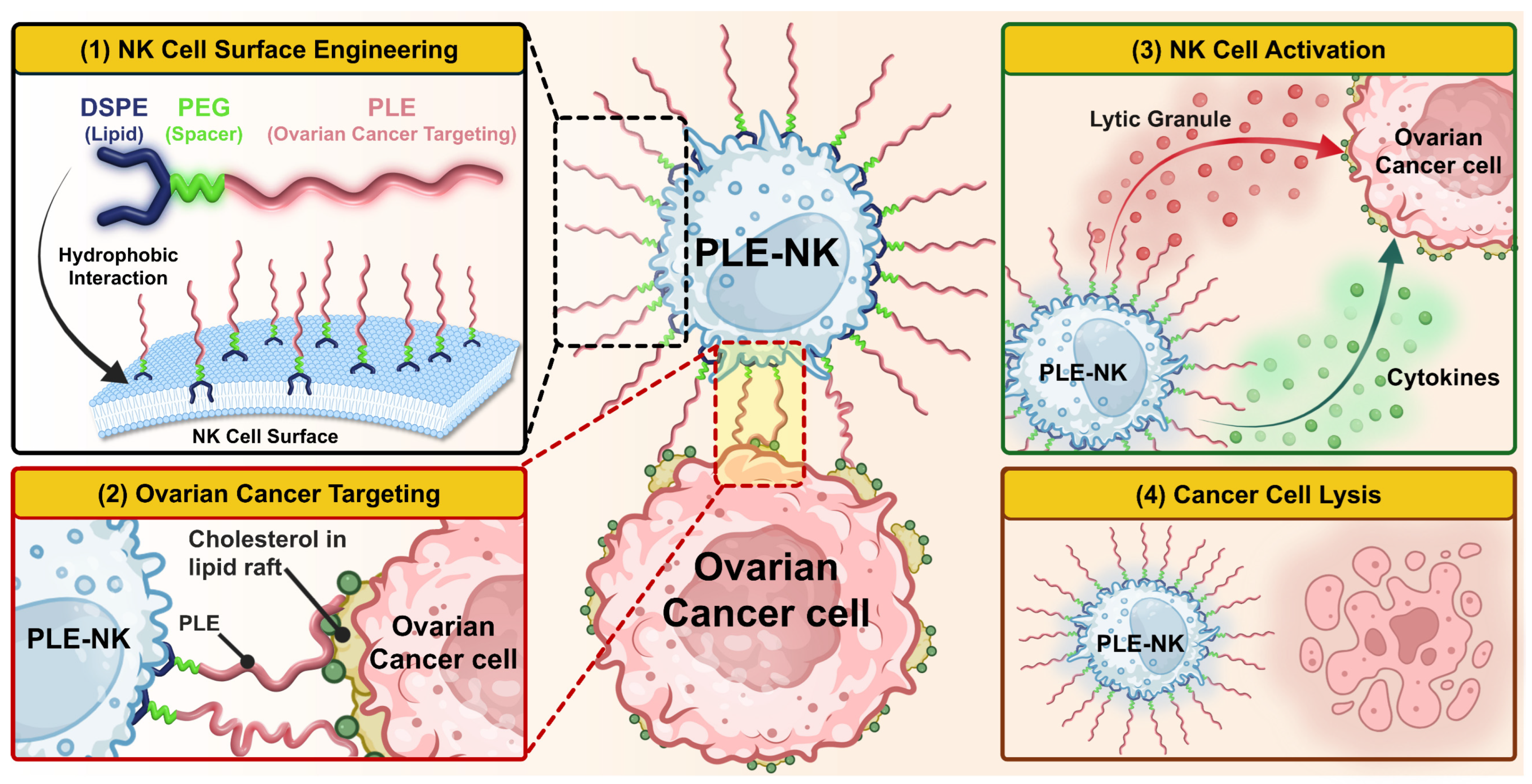
- Lipid-mediated surface engineering of NK cells with poly-L-glutamic acid (PLE) significantly enhanced effector–target interactions with ovarian cancer cells via cholesterol-associated membrane binding.
- PLE-coated NK cells exhibited markedly improved tumor-specific cytotoxicity without increasing off-target killing against normal fibroblasts.
- This receptor-independent membrane targeting strategy provides a versatile approach to enhance NK cell recognition of solid tumors.
- PLE-based surface engineering offers a simple and scalable platform to improve the efficacy and selectivity of NK cell-based cancer immunotherapy.
Abstract
1. Introduction
2. Materials and Methods
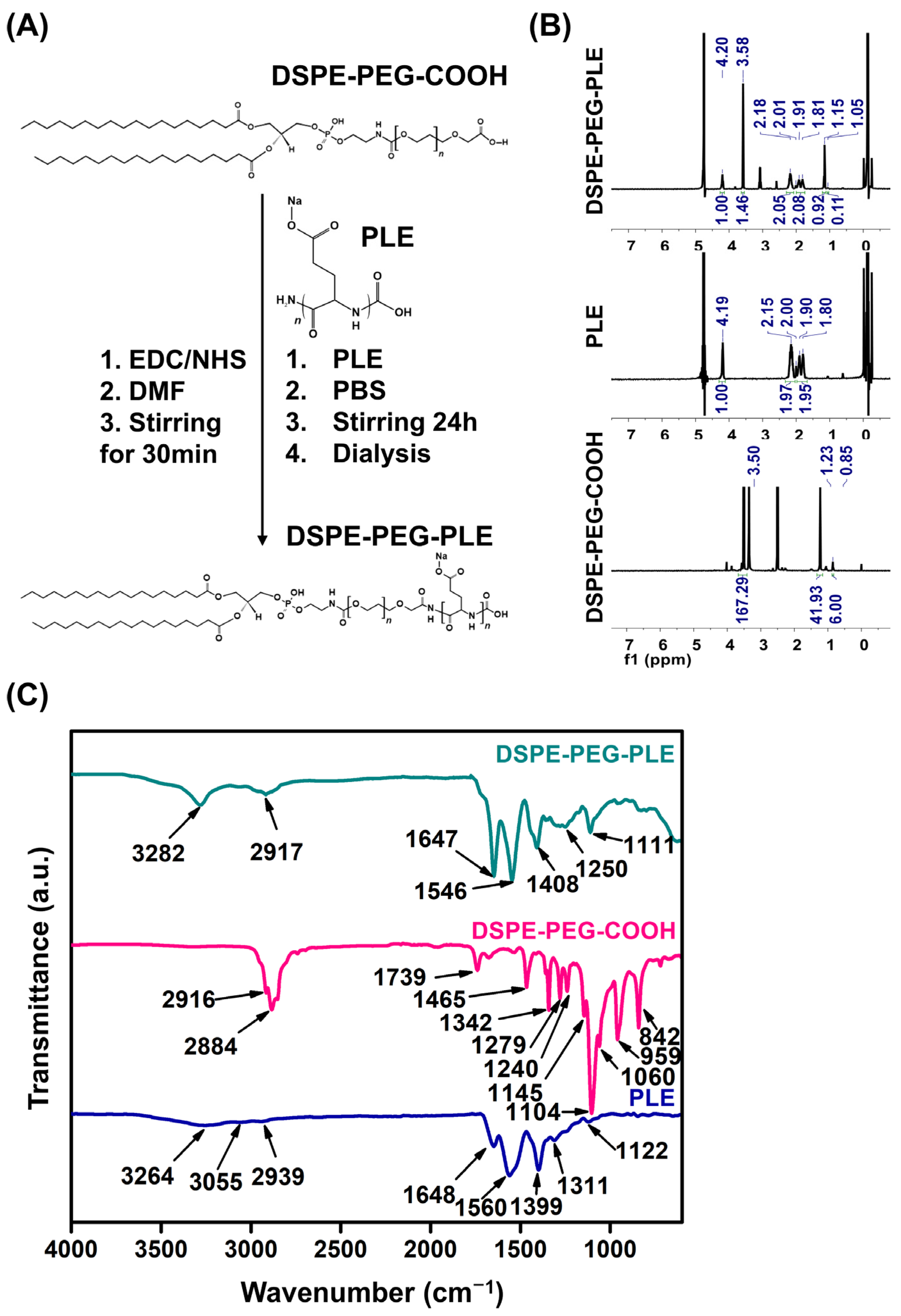
2.1. Synthesis of the Lipid-PLE Biomaterials
2.2. Cell Culture
2.3. Surface Engineering and Characterization of NK Cells
2.4. Cell Coating Maintenance
2.5. Coating Efficacy
2.6. Viability and Proliferation Capacity of NK Cells
2.7. Surface Ligand/Receptor Availability
2.8. E:T Cluster Formation
2.9. Anticancer Assay
2.10. Quantification of Cytokine
2.11. Spheroid Formation and Anticancer Testing
2.12. Statistical Analysis
3. Results
3.1. Characterization of PLE-Lipid and PLE-NK Cells
3.2. Biomaterial-Mediated Ex Vivo NK Cell Surface Engineering
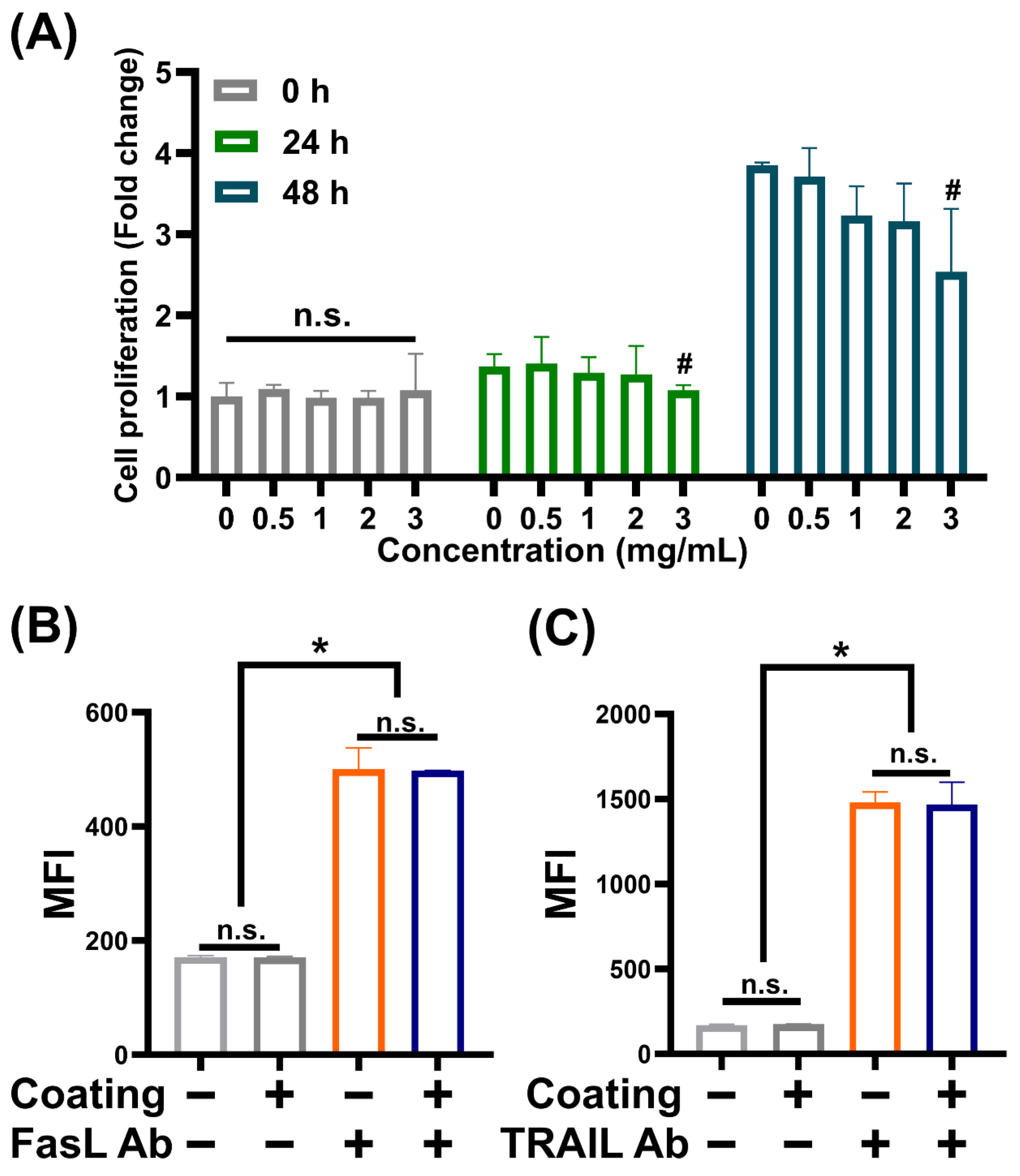
3.3. Intrinsic Properties of NK Cells Coated with PLE-Lipid
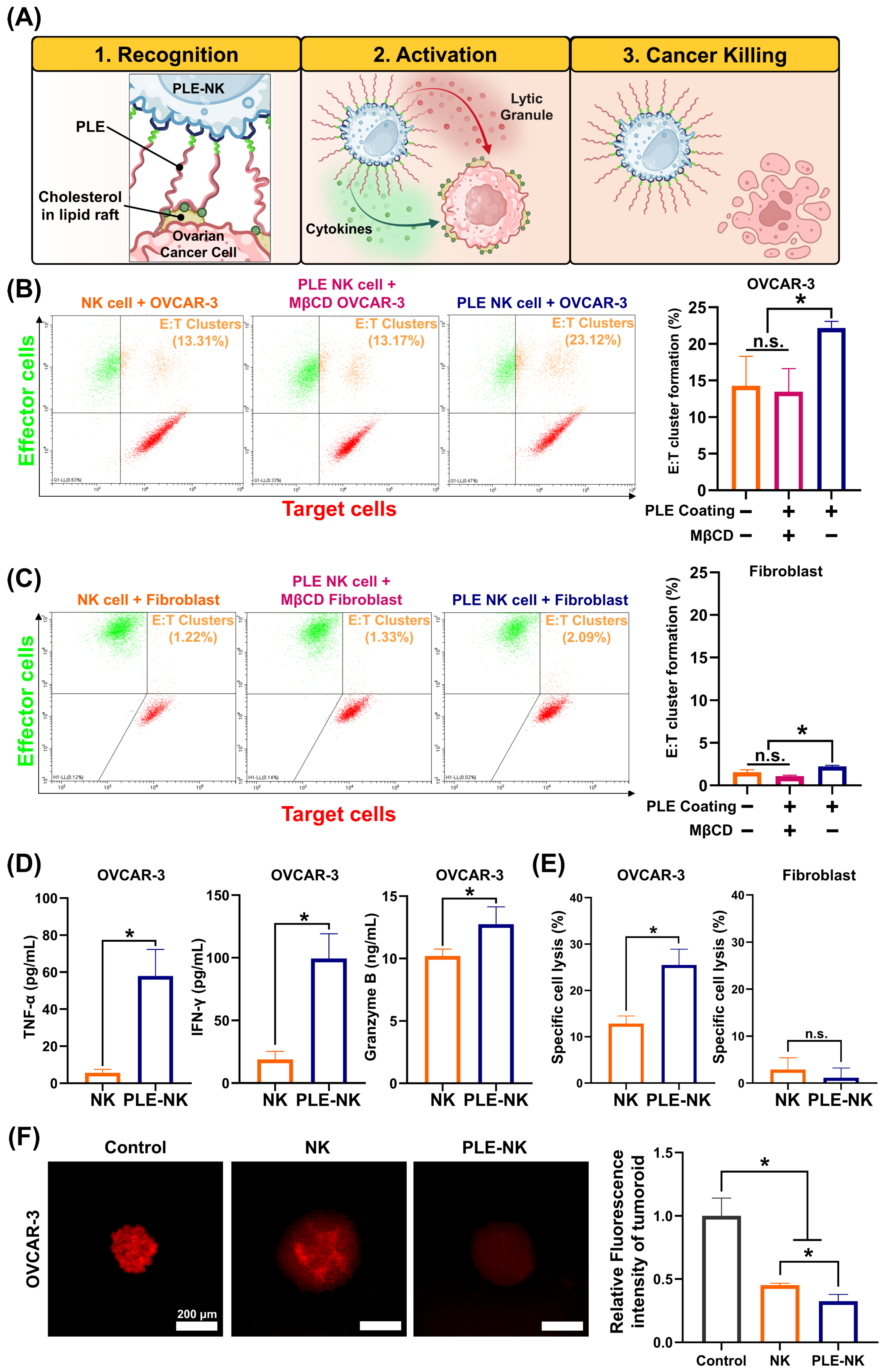
3.4. Target Recognition and Anticancer Efficacy of PLE-NK Cells
3.4.1. Enhanced Target Recognition of PLE-NK Cells
3.4.2. Enhanced Anticancer Activity of PLE-NK Cells
4. Discussion
Author Contributions
Funding
Institutional Review Board Statement
Informed Consent Statement
Data Availability Statement
Acknowledgments
Conflicts of Interest
Abbreviations
| NK | Natural killer cells |
| PLE | Poly-L-glutamic acid |
| DSPE | 1,2-distearoyl-sn-glycero-3-phosphoethanolamine |
| HGSOC | High-grade serous ovarian carcinoma |
| PEG | Polyethylene glycol |
| PLE-Lipid | Poly-L-glutamic acid–lipid conjugate |
| PLE-Lipid-FL | Fluorescently labeled poly-L-glutamic acid–lipid conjugate |
| PLE-NK | PLE-Lipid-coated NK cells |
| E:T | Effector-to-target |
| MFI | Mean fluorescence intensity |
| TME | Tumor microenvironment |
| OVCAR-3 | Human ovarian carcinoma cell line |
| FITC | Fluorescein isothiocyanate |
| PBS | Phosphate-buffered saline |
| FBS | Fetal bovine serum |
| RIPA | Radioimmunoprecipitation assay buffer |
| WST-1 | Water-soluble tetrazolium-1 assay |
| ANOVA | Analysis of variance |
| MβCD | Methyl-β-cyclodextrin |
| FasL | Fas ligand |
| TRAIL | Tumor necrosis factor-related apoptosis-inducing ligand |
| MUC1 | Mucin 1 |
| MUC16 | Mucin 16 |
| HA | Hyaluronic acid |
| FA | Folic acid |
| LBL | Layer-by-layer |
| CAR | Chimeric antigen receptor |
| NMR | Nuclear magnetic resonance |
| FT-IR | Fourier transform infrared spectroscopy |
| IFN-γ | Interferon-gamma |
| TNF-α | Tumor necrosis factor-alpha |
References
- Wang, L.; Zhang, Q.; Wang, X.; Dong, Z.; Liu, S.; Wang, Q.; Zhang, Z.; Xing, J. Therapeutic landscape of ovarian cancer: Recent advances and emerging therapies. Biomark. Res. 2025, 13, 103. [Google Scholar] [CrossRef]
- Hong, M.K.; Ding, D.C. Early Diagnosis of Ovarian Cancer: A Comprehensive Review of the Advances, Challenges, and Future Directions. Diagnostics 2025, 15, 406. [Google Scholar] [CrossRef]
- Deng, M.; Yang, R.; Jiang, J.; Zhang, J.; He, J.; Miao, J. The silent spread: Exploring diverse metastatic pathways in high-grade serous ovarian cancer. Front. Med. 2025, 12, 1539024. [Google Scholar] [CrossRef]
- Rose, P.G. First-Line Chemotherapy for Ovarian Cancer: Inferences From Recent Studies. Oncologist 2016, 21, 1286–1290. [Google Scholar] [CrossRef][Green Version]
- Huo, X.; Tian, T.; Zhang, X.; Zhou, N. Comparative effectiveness and safety of treatment regimens for recurrent advanced ovarian cancer: A systematic review and network meta-analysis. World J. Surg. Oncol. 2025, 23, 134. [Google Scholar] [CrossRef]
- Narayana, R.V.L.; Gupta, R. Exploring the therapeutic use and outcome of antibody-drug conjugates in ovarian cancer treatment. Oncogene 2025, 44, 2343–2356. [Google Scholar] [CrossRef] [PubMed]
- Chelariu-Raicu, A.; Vu, T.C.; Umamaheswaran, S.; Stur, E.; Hanjra, P.; Han, Y.; Hu, M.; Lin, J.; Lawson, B.C.; Liu, J.; et al. IMGN853 Induces Autophagic Cell Death in Combination Therapy for Ovarian Cancer. Cancer Res. Commun. 2025, 5, 512–526. [Google Scholar] [CrossRef]
- Coelho, R.; Ricardo, S.; Amaral, A.L.; Huang, Y.L.; Nunes, M.; Neves, J.P.; Mendes, N.; Lopez, M.N.; Bartosch, C.; Ferreira, V.; et al. Regulation of invasion and peritoneal dissemination of ovarian cancer by mesothelin manipulation. Oncogenesis 2020, 9, 61. [Google Scholar] [CrossRef]
- Li, S.; Zhao, X.; Fu, K.; Zhu, S.; Pan, C.; Yang, C.; Wang, F.; To, K.K.W.; Fu, L. Resistance to antibody-drug conjugates: A review. Acta Pharm. Sin. B 2025, 15, 737–756. [Google Scholar] [CrossRef] [PubMed]
- Meza Guzman, L.G.; Keating, N.; Nicholson, S.E. Natural Killer Cells: Tumor Surveillance and Signaling. Cancers 2020, 12, 952. [Google Scholar] [CrossRef] [PubMed]
- Raulet, D.H. Missing self recognition and self tolerance of natural killer (NK) cells. Semin. Immunol. 2006, 18, 145–150. [Google Scholar] [CrossRef] [PubMed]
- Dhar, P.; Wu, J.D. NKG2D and its ligands in cancer. Curr. Opin. Immunol. 2018, 51, 55–61. [Google Scholar] [CrossRef]
- Prager, I.; Watzl, C. Mechanisms of natural killer cell-mediated cellular cytotoxicity. J. Leukoc. Biol. 2019, 105, 1319–1329. [Google Scholar] [CrossRef]
- Budagova, T.; Efremova, A.; Maiak, M.; Goldshtein, D. Strategies for the Development of NK Cell-Based Therapies for Cancer Treatment. Cells 2025, 14, 1858. [Google Scholar] [CrossRef]
- Melaiu, O.; Lucarini, V.; Cifaldi, L.; Fruci, D. Influence of the Tumor Microenvironment on NK Cell Function in Solid Tumors. Front. Immunol. 2019, 10, 3038. [Google Scholar] [CrossRef]
- Liu, S.; Galat, V.; Galat, Y.; Lee, Y.K.A.; Wainwright, D.; Wu, J. NK cell-based cancer immunotherapy: From basic biology to clinical development. J. Hematol. Oncol. 2021, 14, 7. [Google Scholar] [CrossRef]
- Noh, K.M.; Park, J.; Kim, S.; Kim, K. Mild Reduction-Mediated NK Cell Membrane Modification for ROS Scavenging Efficacy Overcome Immunosuppressive Tumor Microenvironment. Biotechnol. J. 2025, 20, e70170. [Google Scholar] [CrossRef] [PubMed]
- Jangid, A.K.; Kim, S.; Kim, K. Hybrid nanoparticle-immune cell conjugates for augmented anticancer efficacy. Colloids Surf. B Biointerfaces 2026, 257, 115181. [Google Scholar] [CrossRef]
- Ryu, M.; Kim, E.; Kim, S.; Kim, K. Natural killer cell membrane manipulation for augmented immune synapse and anticancer efficacy. Mater. Today Bio 2025, 33, 101965. [Google Scholar] [CrossRef]
- Park, J.; Noh, K.M.; Kim, K. Lipid-based polymeric biomaterial-mediated ex vivo natural killer cell surface engineering. Biomater. Sci. 2025, 13, 4576–4596. [Google Scholar] [CrossRef] [PubMed]
- Jangid, A.K.; Kim, K. Phenylboronic acid-functionalized biomaterials for improved cancer immunotherapy via sialic acid targeting. Adv. Colloid Interface Sci. 2024, 333, 103301. [Google Scholar] [CrossRef]
- Jangid, A.K.; Kim, S.; Kim, K. Polymeric biomaterial-inspired cell surface modulation for the development of novel anticancer therapeutics. Biomater. Res. 2023, 27, 59. [Google Scholar] [CrossRef]
- Kim, S.; Kim, K. Lipid-mediated ex vivo cell surface engineering for augmented cellular functionalities. Biomater. Adv. 2022, 140, 213059. [Google Scholar] [CrossRef]
- Noh, K.M.; Jangid, A.K.; Park, J.; Kim, S.; Kim, K. Membrane-immobilized gemcitabine for cancer-targetable NK cell surface engineering. J. Mater. Chem. B 2024, 12, 12087–12102. [Google Scholar] [CrossRef]
- Kim, S.; Li, S.; Jangid, A.K.; Park, H.W.; Lee, D.J.; Jung, H.S.; Kim, K. Surface Engineering of Natural Killer Cells with CD44-targeting Ligands for Augmented Cancer Immunotherapy. Small 2024, 20, e2306738. [Google Scholar] [CrossRef] [PubMed]
- Kim, S.; Li, S.; Gajendiran, M.; Jangid, A.K.; Lee, D.J.; Jung, H.S.; Kim, K. Lipid anchor-mediated NK cell surface engineering for enhanced cancer immunotherapy. Chem. Eng. J. 2023, 473, 145211. [Google Scholar] [CrossRef]
- Arroyo-Crespo, J.J.; Arminan, A.; Charbonnier, D.; Balzano-Nogueira, L.; Huertas-Lopez, F.; Marti, C.; Tarazona, S.; Forteza, J.; Conesa, A.; Vicent, M.J. Tumor microenvironment-targeted poly-L-glutamic acid-based combination conjugate for enhanced triple negative breast cancer treatment. Biomaterials 2018, 186, 8–21. [Google Scholar] [CrossRef]
- Barberio, A.E.; Smith, S.G.; Correa, S.; Nguyen, C.; Nhan, B.; Melo, M.; Tokatlian, T.; Suh, H.; Irvine, D.J.; Hammond, P.T. Cancer Cell Coating Nanoparticles for Optimal Tumor-Specific Cytokine Delivery. ACS Nano 2020, 14, 11238–11253. [Google Scholar] [CrossRef] [PubMed]
- Pires, I.S.; Covarrubias, G.; Gomerdinger, V.F.; Backlund, C.; Nombera Bueno, E.; Billingsley, M.M.; Pryor, M.; Shanker, A.; Gordon, E.; Wu, S.; et al. IL-12-releasing nanoparticles for effective immunotherapy of metastatic ovarian cancer. Nat. Mater. 2026, 25, 322–334. [Google Scholar] [CrossRef]
- Correa, S.; Boehnke, N.; Barberio, A.E.; Deiss-Yehiely, E.; Shi, A.; Oberlton, B.; Smith, S.G.; Zervantonakis, I.; Dreaden, E.C.; Hammond, P.T. Tuning Nanoparticle Interactions with Ovarian Cancer through Layer-by-Layer Modification of Surface Chemistry. ACS Nano 2020, 14, 2224–2237. [Google Scholar] [CrossRef] [PubMed]
- Park, S.B.; Sung, M.H.; Uyama, H.; Han, D.K. Poly(glutamic acid): Production, composites, and medical applications of the next-generation biopolymer. Prog. Polym. Sci. 2021, 113, 101341. [Google Scholar] [CrossRef]
- Xiao, M.; Xu, J.; Wang, W.; Zhang, B.; Liu, J.; Li, J.; Xu, H.; Zhao, Y.; Yu, X.; Shi, S. Functional significance of cholesterol metabolism in cancer: From threat to treatment. Exp. Mol. Med. 2023, 55, 1982–1995. [Google Scholar] [CrossRef] [PubMed]
- Guo, L.; He, Y.; Xin, H. GDF15 promotes the resistance of epithelial ovarian cancer cells to gemcitabine via DHCR24-mediated cholesterol metabolism to elevate ABCB1 and ABCC1 levels in lipid rafts. Am. J. Cancer Res. 2025, 15, 452–469. [Google Scholar] [CrossRef]
- Olaret, E.; Balanuca, B.; Onas, A.M.; Serafim, A. Screening of carboxylated nanodiamonds interactions with porcine gastric mucin and its methacryloyl derivative. Mater. Lett. 2023, 337, 134012. [Google Scholar] [CrossRef]
- Patel, M.M.; Smart, J.D.; Nevell, T.G.; Ewen, R.J.; Eaton, P.J.; Tsibouklis, J. Mucin/poly(acrylic acid) interactions: A spectroscopic investigation of mucoadhesion. Biomacromolecules 2003, 4, 1184–1190. [Google Scholar] [CrossRef] [PubMed]
- Budiu, R.A.; Elishaev, E.; Brozick, J.; Lee, M.; Edwards, R.P.; Kalinski, P.; Vlad, A.M. Immunobiology of human mucin 1 in a preclinical ovarian tumor model. Oncogene 2013, 32, 3664–3675. [Google Scholar] [CrossRef]
- Park, H.W.; Lee, W.; Kim, S.; Jangid, A.K.; Park, J.; Lee, C.E.; Kim, K. Optimized Design of Hyaluronic Acid-Lipid Conjugate Biomaterial for Augmenting CD44 Recognition of Surface-Engineered NK Cells. Biomacromolecules 2024, 25, 1959–1971. [Google Scholar] [CrossRef]
- Lee, C.E.; Kim, S.; Park, H.W.; Lee, W.J.; Jangid, A.K.; Choi, Y.; Jeong, W.J.; Kim, K. Tailoring tumor-recognizable hyaluronic acid-lipid conjugates to enhance anticancer efficacies of surface-engineered natural killer cells. Nano Converg. 2023, 10, 56. [Google Scholar] [CrossRef]
- Mikhailova, V.A.; Sokolov, D.I.; Grebenkina, P.V.; Bazhenov, D.O.; Nikolaenkov, I.P.; Kogan, I.Y.; Totolian, A.A. Apoptotic Receptors and CD107a Expression by NK Cells in an Interaction Model with Trophoblast Cells. Curr. Issues Mol. Biol. 2024, 46, 8945–8957. [Google Scholar] [CrossRef]
- Orange, J.S. Formation and function of the lytic NK-cell immunological synapse. Nat. Rev. Immunol. 2008, 8, 713–725. [Google Scholar] [CrossRef]
- Kovacs, T.; Nagy, P.; Panyi, G.; Szente, L.; Varga, Z.; Zakany, F. Cyclodextrins: Only Pharmaceutical Excipients or Full-Fledged Drug Candidates? Pharmaceutics 2022, 14, 2559. [Google Scholar] [CrossRef]
- Christian, A.E.; Haynes, M.P.; Phillips, M.C.; Rothblat, G.H. Use of cyclodextrins for manipulating cellular cholesterol content. J. Lipid Res. 1997, 38, 2264–2272. [Google Scholar] [CrossRef]
- Midgley, A.C.; Rogers, M.; Hallett, M.B.; Clayton, A.; Bowen, T.; Phillips, A.O.; Steadman, R. Transforming growth factor-beta1 (TGF-beta1)-stimulated fibroblast to myofibroblast differentiation is mediated by hyaluronan (HA)-facilitated epidermal growth factor receptor (EGFR) and CD44 co-localization in lipid rafts. J. Biol. Chem. 2013, 288, 14824–14838. [Google Scholar] [CrossRef] [PubMed]
- Ramirez-Labrada, A.; Pesini, C.; Santiago, L.; Hidalgo, S.; Calvo-Perez, A.; Onate, C.; Andres-Tovar, A.; Garzon-Tituana, M.; Uranga-Murillo, I.; Arias, M.A.; et al. All About (NK Cell-Mediated) Death in Two Acts and an Unexpected Encore: Initiation, Execution and Activation of Adaptive Immunity. Front. Immunol. 2022, 13, 896228. [Google Scholar] [CrossRef] [PubMed]
- Kuznetsova, A.V.; Glukhova, X.A.; Beletsky, I.P.; Ivanov, A.A. NK cell activity in the tumor microenvironment. Front. Cell Dev. Biol. 2025, 13, 1609479. [Google Scholar] [CrossRef]
- Capuano, C.; Pighi, C.; Battella, S.; De Federicis, D.; Galandrini, R.; Palmieri, G. Harnessing CD16-Mediated NK Cell Functions to Enhance Therapeutic Efficacy of Tumor-Targeting mAbs. Cancers 2021, 13, 2500. [Google Scholar] [CrossRef]
- Ma, S.; Xu, Y.; Song, W. Functional bionanomaterials for cell surface engineering in cancer immunotherapy. APL Bioeng. 2021, 5, 021506. [Google Scholar] [CrossRef] [PubMed]
- Stephan, M.T.; Moon, J.J.; Um, S.H.; Bershteyn, A.; Irvine, D.J. Therapeutic cell engineering with surface-conjugated synthetic nanoparticles. Nat. Med. 2010, 16, 1035–1041. [Google Scholar] [CrossRef]
- Tao, B.; Du, R.; Zhang, X.; Jia, B.; Gao, Y.; Zhao, Y.; Liu, Y. Engineering CAR-NK cell derived exosome disguised nano-bombs for enhanced HER2 positive breast cancer brain metastasis therapy. J. Control. Release 2023, 363, 692–706. [Google Scholar] [CrossRef]
- Lee, J.; Shin, D.; Son, C.Y.; Kang, H.; Choi, J.H.; Park, H.S.; Bang, S.; Kim, L.; Lee, T.H.; Eun, H.S.; et al. Avidity-Based Capture of PD-L1-Expressing Exosomes via Dendrimer-Peptide Conjugates: A Nanoengineered Platform for Enhanced Prediction of Immunotherapy Response. Adv. Sci. 2025, 12, e09270. [Google Scholar] [CrossRef]
- Jangid, A.K.; Lee, C.E.; Ryu, M.; Kim, S.; Kim, K. Development of Natural Killer Cell–Drug Conjugates via Membrane-Installed Liposomes for Pancreatic Cancer Treatment. Biomater. Res. 2025, 29, 0285. [Google Scholar] [CrossRef]
- Huang, T.; Sato, Y.; Kuramochi, A.; Ohba, Y.; Sano, M.; Miyagishi, M.; Tateno, H.; Wadhwa, R.; Kawasaki, K.; Uchida, T.; et al. Surface modulation of extracellular vesicles with cell-penetrating peptide-conjugated lipids for improvement of intracellular delivery to endothelial cells. Regen. Ther. 2023, 22, 90–98. [Google Scholar] [CrossRef]
- Kim, E.; Jangid, A.K.; Kim, K. Optimization of lipid variants in lipid-PEG conjugates for triple-negative breast cancer cell surface modification. Macromol. Res. 2025, 33, 1601–1612. [Google Scholar] [CrossRef]
- Siegler, E.L.; Kim, Y.J.; Chen, X.; Siriwon, N.; Mac, J.; Rohrs, J.A.; Bryson, P.D.; Wang, P. Combination Cancer Therapy Using Chimeric Antigen Receptor-Engineered Natural Killer Cells as Drug Carriers. Mol. Ther. 2017, 25, 2607–2619. [Google Scholar] [CrossRef] [PubMed]
- Uong, T.N.T.; Lee, K.H.; Ahn, S.J.; Kim, K.W.; Min, J.J.; Hyun, H.; Yoon, M.S. Real-Time Tracking of Ex Vivo-Expanded Natural Killer Cells Toward Human Triple-Negative Breast Cancers. Front. Immunol. 2018, 9, 825. [Google Scholar] [CrossRef]
- Yang, J.; Li, J.; Li, X.; Wang, X.; Yang, Y.; Kawazoe, N.; Chen, G. Nanoencapsulation of individual mammalian cells with cytoprotective polymer shell. Biomaterials 2017, 133, 253–262. [Google Scholar] [CrossRef]
- Smyth, M.J.; Cretney, E.; Kelly, J.M.; Westwood, J.A.; Street, S.E.; Yagita, H.; Takeda, K.; van Dommelen, S.L.; Degli-Esposti, M.A.; Hayakawa, Y. Activation of NK cell cytotoxicity. Mol. Immunol. 2005, 42, 501–510. [Google Scholar] [CrossRef]
- Kim, S.; Lee, D.H.; Park, H.W.; Noh, K.M.; Jangid, A.K.; Park, H.; Kim, G.J.; Kim, K. Amphiphilic lipid conjugate-mediated surface engineering of placenta-derived mesenchymal stem cells for alleviating liver damage and fibrosis. Chem. Eng. J. 2025, 503, 158313. [Google Scholar] [CrossRef]
- Fisher, R.; Pusztai, L.; Swanton, C. Cancer heterogeneity: Implications for targeted therapeutics. Br. J. Cancer 2013, 108, 479–485. [Google Scholar] [CrossRef] [PubMed]
- Chauhan, S.C.; Kumar, D.; Jaggi, M. Mucins in ovarian cancer diagnosis and therapy. J. Ovarian Res. 2009, 2, 21. [Google Scholar] [CrossRef]
- Solomonidou, D.; Cremer, K.; Krumme, M.; Kreuter, J. Effect of carbomer concentration and degree of neutralization on the mucoadhesive properties of polymer films. J. Biomater. Sci. Polym. Ed. 2001, 12, 1191–1205. [Google Scholar] [CrossRef]
- Chen, S.; Zhu, H.; Jounaidi, Y. Comprehensive snapshots of natural killer cells functions, signaling, molecular mechanisms and clinical utilization. Signal Transduct. Target. Ther. 2024, 9, 302. [Google Scholar] [CrossRef]
- Lin, S.J.; Kuo, M.L.; Hsiao, H.S.; Lee, P.T.; Lee, W.I.; Chen, J.Y.; Huang, J.L. Cytotoxic Function and Cytokine Production of Natural Killer Cells and Natural Killer T-Like Cells in Systemic Lupus Erythematosis Regulation with Interleukin-15. Mediat. Inflamm. 2019, 2019, 4236562. [Google Scholar] [CrossRef] [PubMed]
- Valenzuela Cardenas, M.; Nowicki, T.S. TNF-alpha: Roles in pathogenesis and therapeutics in cancer. J. Biol. Chem. 2026, 302, 111251. [Google Scholar] [CrossRef]
- Liu, X. The paradoxical role of IFN-gamma in cancer: Balancing immune activation and immune evasion. Pathol. Res. Pract. 2025, 272, 156046. [Google Scholar] [CrossRef] [PubMed]
- Trapani, J.A.; Smyth, M.J. Functional significance of the perforin/granzyme cell death pathway. Nat. Rev. Immunol. 2002, 2, 735–747. [Google Scholar] [CrossRef] [PubMed]
- Goping, I.S.; Barry, M.; Liston, P.; Sawchuk, T.; Constantinescu, G.; Michalak, K.M.; Shostak, I.; Roberts, D.L.; Hunter, A.M.; Korneluk, R.; et al. Granzyme B-induced apoptosis requires both direct caspase activation and relief of caspase inhibition. Immunity 2003, 18, 355–365. [Google Scholar] [CrossRef]
- Yang, S.; Wen, J.; Li, H.; Xu, L.; Liu, Y.; Zhao, N.; Zeng, Z.; Qi, J.; Jiang, W.; Han, W.; et al. Aptamer-Engineered Natural Killer Cells for Cell-Specific Adaptive Immunotherapy. Small 2019, 15, e1900903. [Google Scholar] [CrossRef]
- Hur, Y.M.; Min, K.I. Harnessing Amino Acid Modularity for Programmable Function in Covalent Peptide Assemblies. Adv. Mater. 2025, 37, e2419941. [Google Scholar] [CrossRef]
- Franzen, A.S.; Boulifa, A.; Radecke, C.; Stintzing, S.; Raftery, M.J.; Pecher, G. Next-Generation CEA-CAR-NK-92 Cells against Solid Tumors: Overcoming Tumor Microenvironment Challenges in Colorectal Cancer. Cancers 2024, 16, 388. [Google Scholar] [CrossRef]
- Tofani, L.B.; Abriata, J.P.; Luiz, M.T.; Marchetti, J.M.; Swiech, K. Establishment and characterization of an in vitro 3D ovarian cancer model for drug screening assays. Biotechnol. Prog. 2020, 36, e3034. [Google Scholar] [CrossRef] [PubMed]




Disclaimer/Publisher’s Note: The statements, opinions and data contained in all publications are solely those of the individual author(s) and contributor(s) and not of MDPI and/or the editor(s). MDPI and/or the editor(s) disclaim responsibility for any injury to people or property resulting from any ideas, methods, instructions or products referred to in the content. |
© 2026 by the authors. Licensee MDPI, Basel, Switzerland. This article is an open access article distributed under the terms and conditions of the Creative Commons Attribution (CC BY) license.
Share and Cite
Park, Y.; Jangid, A.K.; Noh, K.M.; Kim, E.; Lee, C.E.; Kim, K. Surface Engineering of NK Cells with Poly-L-Glutamic Acid Enhances Tumor-Selective Immunotherapy Against Ovarian Cancer. Cells 2026, 15, 800. https://doi.org/10.3390/cells15090800
Park Y, Jangid AK, Noh KM, Kim E, Lee CE, Kim K. Surface Engineering of NK Cells with Poly-L-Glutamic Acid Enhances Tumor-Selective Immunotherapy Against Ovarian Cancer. Cells. 2026; 15(9):800. https://doi.org/10.3390/cells15090800
Chicago/Turabian StylePark, Yoonbum, Ashok Kumar Jangid, Kyung Mu Noh, Eunha Kim, Chae Eun Lee, and Kyobum Kim. 2026. "Surface Engineering of NK Cells with Poly-L-Glutamic Acid Enhances Tumor-Selective Immunotherapy Against Ovarian Cancer" Cells 15, no. 9: 800. https://doi.org/10.3390/cells15090800
APA StylePark, Y., Jangid, A. K., Noh, K. M., Kim, E., Lee, C. E., & Kim, K. (2026). Surface Engineering of NK Cells with Poly-L-Glutamic Acid Enhances Tumor-Selective Immunotherapy Against Ovarian Cancer. Cells, 15(9), 800. https://doi.org/10.3390/cells15090800