1. Introduction
Cancer progression is supported by the crosstalk between tumor cells and the surrounding stroma. In this context, it is known that senescent stromal cells contribute to the development of a pro-inflammatory milieu and the acquisition of aggressive traits by cancer cells [
1]. In addition to classic senescence inducers, such as telomere shortening, oncogene activation, DNA damage, epigenetic changes, or oxidative stress [
2], it has been shown that anticancer treatments can also induce cellular senescence (known as therapy-induced senescence, TIS) in both tumor and non-cancerous cells, thus contributing to many detrimental side effects of therapies [
3]. In this context, the senescence-associated secretory phenotype (SASP), which comprises a broad spectrum of cytokines, chemokines, growth factors, proteases, and metabolites, profoundly influences the tumor microenvironment (TME) by modulating inflammation, remodeling the extracellular matrix, and altering the behavior of neighboring cells [
4]. While initially senescence acts as a tumor-suppressive mechanism by halting the proliferation of damaged cells, the SASP can paradoxically promote tumor progression at later stages of the disease. In particular, factors released by senescent fibroblasts promote cancer cell proliferation, angiogenesis, immune evasion, enhance phenotypic plasticity, by fostering traits such as epithelial-to-mesenchymal transition (EMT) and stemness, which are associated with metastasis and therapy resistance [
5,
6].
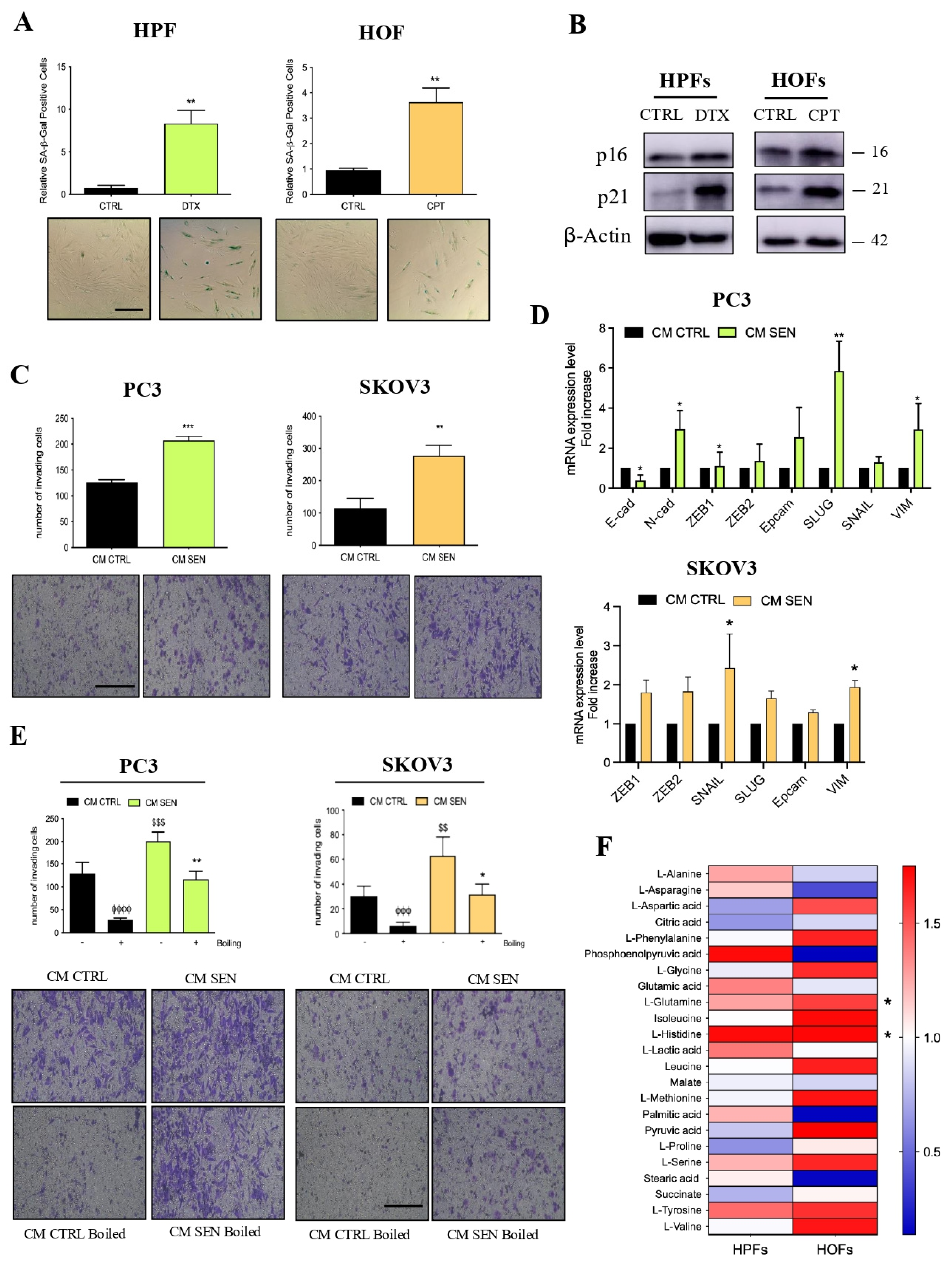
Previously, we investigated the effects of chemotherapy on the stromal compartment of prostate and ovarian cancers, and demonstrated that anticancer chemotherapeutics, regardless of their specific mechanism of action, induce a senescent phenotype in patient-derived stromal prostate and ovarian fibroblasts thereby promoting the invasive potential of tumor cells through the SASP [
7]. Given that senescent cells undergo extensive metabolic reprogramming to support survival and increased secretion of SASP factors [
8], here we focused on a possible involvement of SASP-associated metabolic components in regulating tumor progression, which to date remains poorly explored. Beyond soluble factors and cytokines, extracellular metabolites released by the tumor stroma are increasingly recognized as key regulators of cancer progression, promoting proliferation, immune escape, and metastases [
9,
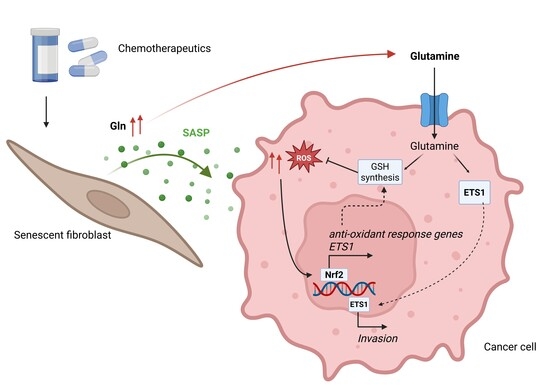
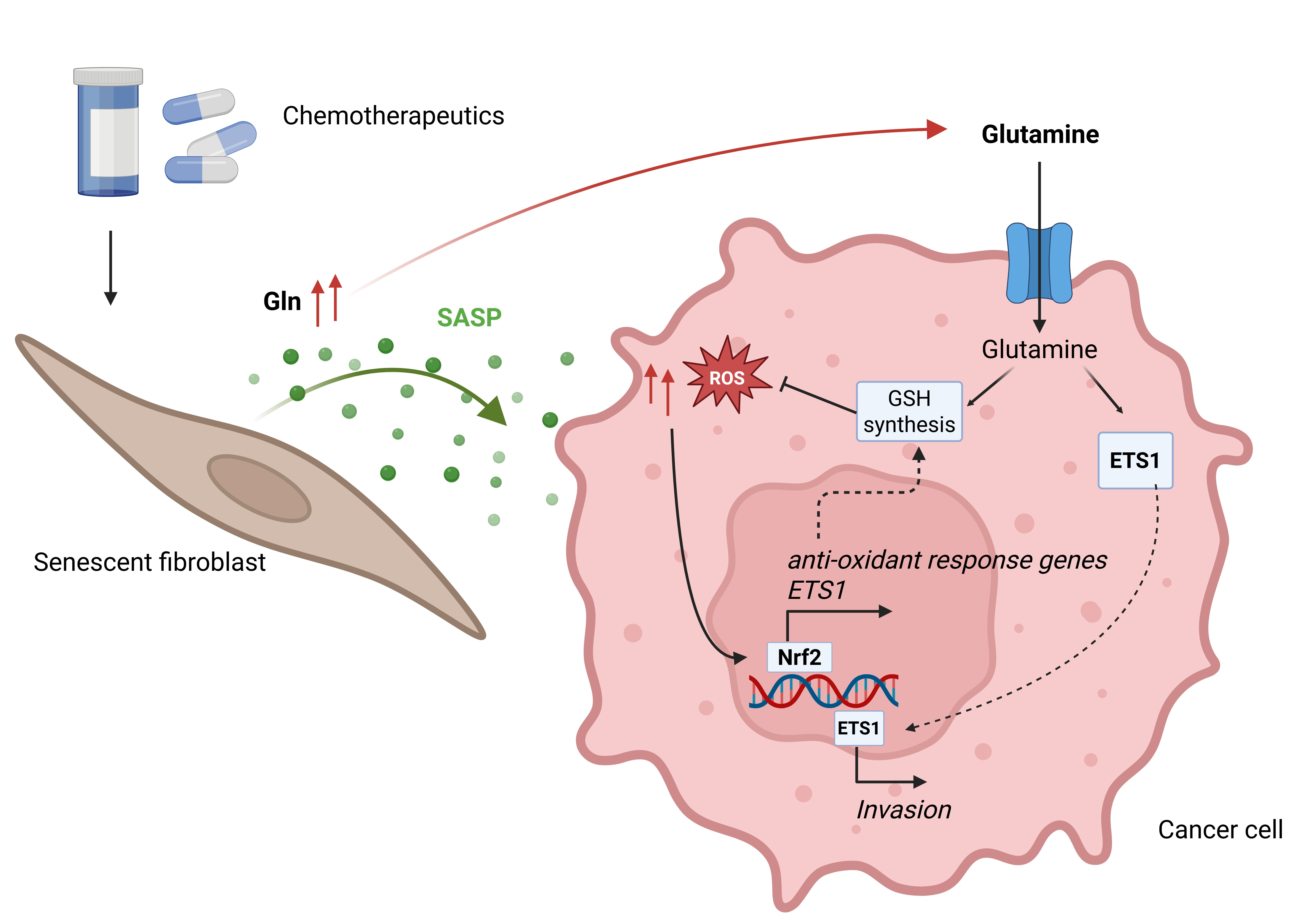
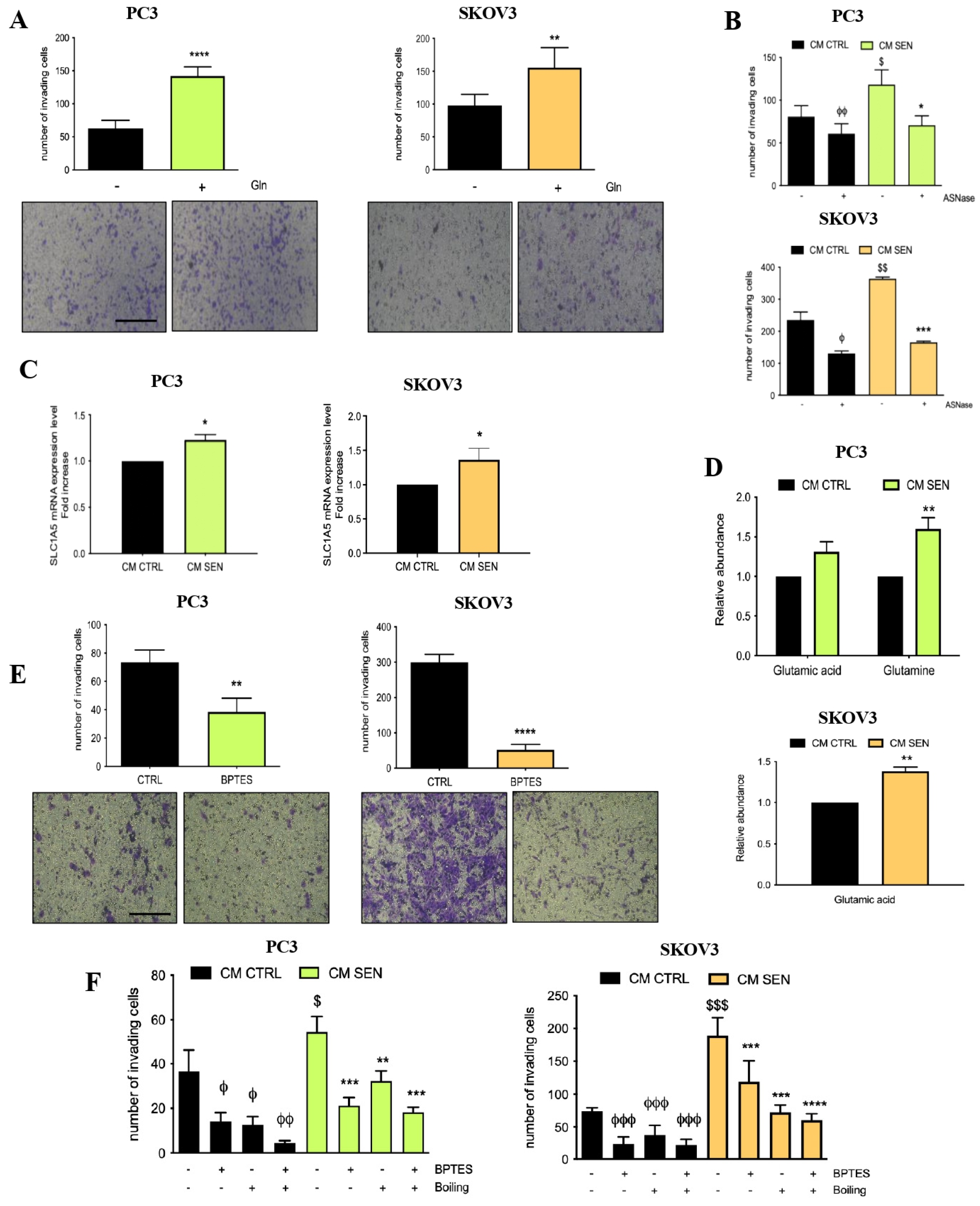
10]. In this context, we found that the amino acid Glutamine (Gln) is enriched in the conditioned media (CM) of TIS stromal senescent cells. Given the established role of Gln in fueling cancer metabolism and supporting anabolic processes [
11], we hypothesized that stromal-derived Gln might contribute to the acquisition of aggressive traits in cancer cells. Accordingly, we demonstrated that the utilization of senescent-stromal-derived Gln by ovarian and prostate cancer cells is associated with increased metastatic potential and stem-like traits. Overall, our findings uncover a previously uncharacterized role of the metabolic component of the SASP, specifically Gln, in driving cancer cell invasion and stemness. These results identify TIS-derived Gln as a critical factor in tumor progression and highlight metabolic crosstalk between tumor and stroma as a potential therapeutic vulnerability.
2. Materials and Methods
2.1. Cell Lines
Human prostate (PC3) and ovarian (SKOV3) cancer cell lines were obtained from ATCC (PC3: CVCL_E2RM; SKOV3: CVCL_0532). Human Prostate Fibroblasts (HPFs) were obtained from tissue samples isolated during surgery from patients (average age 70) who underwent surgical treatment for lower urinary tract symptoms caused by benign prostatic hyperplasia (BPH). Human Ovarian Fibroblasts (HOFs) were extracted from healthy peritoneal tissue samples collected during cytoreductive surgery performed on patients (average age 66) with advanced ovarian cancer. Surgical explants were obtained in accordance with the Ethics Committee of the Azienda Ospedaliera Universitaria Careggi (Florence, Italy), for prostate tissues: num 16583_bio; for ovarian tissues: num 14780.
All cells were cultured in Dulbecco’s Modified Eagle Medium (DMEM) high glucose (4.5 g/L) (Euroclone, Pero, Italy), supplemented with 10% Fetal Bovine Serum (Euroclone), 2 mM L-Gln (Euroclone), 1% penicillin, and streptomycin (Euroclone). Cells were routinely grown at 37 °C in humidified atmosphere with 5% CO2.
To obtain HPFs and HOFs, a fragment of surgical explant was transferred into a Petri dish and cut into small pieces about 0.2 cm. Then, tissue fragments were transferred into a new cell culture dish and placed in a central stripe under the pressure of a sterilized slide. DMEM high glucose supplemented with 20% FBS, 2 mM L-Gln, 2% Penicillin/Streptomycin, 100 μg/mL Kanamycin (Merck Sigma, Darmstadt, Germany), and 2.5 μg/mL Amphotericin B (Euroclone) was added. After 20 days fibroblasts that had formed a monolayer were detached by trypsinization and routinely cultured.
2.2. Cell Treatments and Preparation of CM
To induce senescence, HPFs and HOFs were exposed to either 5 nM Docetaxel (MedChemExpress, Monmouth Junction, NJ, USA, HY-B0011) in dimethyl sulfoxide (DMSO) or 20 μM Cisplatin (Merck Sigma #5663-27-1) in H2O, respectively for 24 h, while DMSO or H2O was added in control samples. Then, the culture medium was changed, and cells were maintained in a complete medium for additional 6 days before experiments were conducted, unless noted otherwise. To collect CM, senescent and control cells obtained as previously described, were incubated for 24 h in starvation medium: DMEM high glucose (4.5 g/L) (Euroclone), 1% penicillin, and streptomycin (Euroclone). CM was collected, clarified by centrifugation for 10 min at 1000 rpm and used freshly or stored at −80 °C until use. Prostate and ovarian cancer cells were then incubated for 72 h with CM from HPFs or HOFs, respectively. To treat cancer cells, CM were normalized on HPFs or HOFs cell number. For boiled CM preparation, CM were collected from HPFs or HOFs, then boiled for 20 min and clarified by centrifugation for 10 min at 1000 rpm.
2.3. Senescence-Associated β-Galactosidase Staining
Fibroblasts were first fixed with 3% paraformaldehyde in PBS for 5 min followed by three washes in PBS. Subsequently, cells were incubated with Senescence-Associated β-Galactosidase (SA-β-Gal) staining solution containing 5 mM potassium ferrocyanide, 5 nM potassium ferricyanide, 150 mM NaCl, 2 mM MgCl2, 40 mM citric acid monohydrate, 1 mg/mL 5-bromo-4-chloro-3-indolyl β-D-galactopyranoside (Merck Sigma #B4252), adjusted to pH 6.0. The staining was carried out for 12 to 18 h at 37 °C in a non-humidified incubator under atmospheric CO2 conditions. Images were acquired from five randomly chosen fields and cells positive to (SA-β-Gal) staining were detected by the presence of an insoluble blue intracellular precipitate. Total and positive cells were counted using ImageJ imaging system (version 1.54s). Data show the ratio between positive SA-β-Gal cells and total cells per field.
2.4. Western Blotting
Cells were lysed at 4 °C with RIPA buffer (Thermo Fisher Scientific, Waltham, MA, USA, #89900) and supplemented with protease and phosphatase cocktail inhibitors (Merck Sigma). Following 20 min of lysis, cellular extracts were centrifuged for 10 min at 14,000 rpm and protein concentration quantified using Bicinchoninic Acid (BCA) assay (Euroclone). Equal amounts of total protein (20–30 μg) were separated by SDS-PAGE gels (BioRad, Hercules, CA, USA ) and transferred to PVDF membranes (BioRad). Membranes were blocked for 1 h at room temperature (RT) in 5% non-fat dry milk (Santa Cruz Biotechnology, Paso Robles, TX, USA) in PBS-Tween 0.1% and then incubated overnight at 4 °C with primary antibody against p21 (Santa Cruz Biotechnology, sc-271610), p16 (Santa Cruz Biotechnology, sc-56330), Gln synthetase (GS) (Cell Signaling, Danvers, MA, USA, D203F), NRF2 (Santa Cruz Biotechnology, sc-365949), ETS1 (Cell Signaling, B808A), HSP90 (Santa Cruz Biotechnology, sc-69703), β-Actin (Santa Cruz Biotechnology, sc-47778), Vinculin (Merck Sigma V9264). After washing, membranes were incubated for 1 h at RT with antirabbit horseradish peroxidase-conjugated (Santa Cruz Biotechnology #2357) or antimouse horseradish peroxidase-conjugated (Santa Cruz Biotechnology #516102). Proteins were visualized using Clarity Western ECL Substrate (BioRad) and images acquired using Amersham Imager 600 (GE Healthcare, Chicago, IL, USA). HSP90 or β-Actin was used as loading control. All western blot images are representative of at least three independent experiments. The densitometric analysis of all western blots reported in the Results (three independent experiments) is presented in
Supplementary Figure S1.
2.5. Invasion Assay
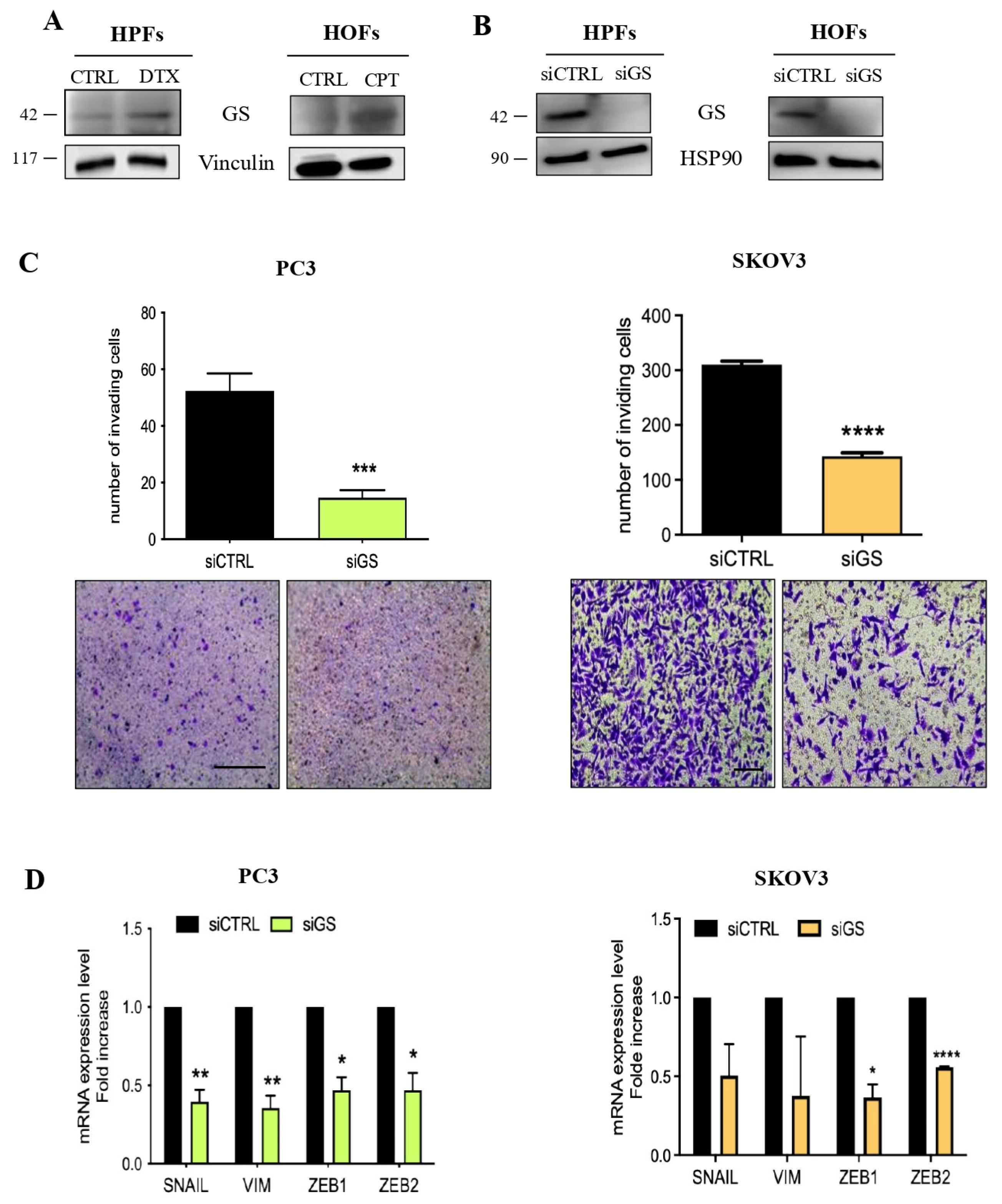
Prostate cancer cells (8 × 10⁴) and ovarian cancer cells (10 × 104) were seeded in 200 μL of starvation medium in the upper chamber of 8 μm pore Transwell (Greiner Bio-One, Kremsmünster, Austria) coated with 50 μg/cm2 Matrigel (Corning, New York, NY, USA). The lower chamber was filled with a complete medium containing 10% FBS as chemoattractant. After 16 h, cells that have invaded toward the lower surface of the filters were fixed and stained with Crystal Violet (Merck Sigma). Invasive capacity was quantified by counting the number of stained cells in 5 randomly selected microscopic fields, and results are presented as the mean number of invading cells per field.
2.6. Real-Time PCR
Total RNA was extracted from cells using RNeasy Plus Mini Kit (Qiagen, Hilden, Germany, #74134) according to the manufacturer’s instruction and quantified with NanoDrop Microvolume Spectrophotometer (NanoDrop Technologies LLC, Wilmington, DE, USA) and Fluorometer (Thermo Fisher Scientific). cDNA synthesis was obtained by incubating 1 μg of total RNA with High-Capacity cDNA Reverse Transcription Kit (Thermo Fisher Scientific) according to the manufacturer’s instructions. mRNA expression levels were quantified by Real-Time PCR using Luna Universal qPCR Master Mix (New England Biolabs, Ipswich, MA, USA).
The nucleotide sequences of the specific primers (Thermo Fisher Scientific) used were: EpCAM-FW 5′-TGTGGTGATAGCAGTTGTTGC-3′, EpCAM-REV 5′-CTATGCATCTCACCCATCTCC-3′; ECAD-FW 5′-AGGCCAAGCAGCAGTACATT-3′, ECAD-REV 5′-ATTCACATCCAGCACATCCA-3′; NCAD-FW 5′-CCTCCAGAGTTTACTGCCATGAC-3′, NCAD-REV 5′-GTAGGATCTCCGCCACTGATTC-3′; VIM-FW 5′-ACACCCTGCAATCTTTCAGACA-3′, VIM-REV 5′-GATTCCACTTTGCGTTCAAGGT-3′; ZEB1-FW 5′-AAGAAAGTGTTACAGATGCAGCTG-3′, ZEB1-REV 5′-CCCTGGTAACACTGTCTGGTC-3′; ZEB2-FW 5′-AGGGACAGA TCAGCACCAAA-3′; ZEB2-REV 5′-GTGCGAACTGTAGGAACCAG-3′; SNAIL-FW 5′-CCTCCCTGTCAGATGAGGAC-3′, SNAIL-REV 5′-CAAGGAATACCTCAGCCTGG-3′; SLUG-FW 5′-ACAGCGAACTGGACACACAT-3′, SLUG-REV 5′-GATGGGGCTGTATGCTCCT-3′; B2M-FW 5′-AGTATGCCTGCCGTGTGAAC-3′, B2M-REV 5′-GCGGCATCTTCAAACCTCCA-3′.
qRT-PCR was performed using CFX96 Real-Time PCR System (BioRad). Data were reported as relative quantity with respect to the reference samples using 2−ΔΔCt. Data were normalized on β2-microglobulin.
2.7. Total ROS Quantification
Intracellular reactive oxygen species (ROS) levels were assessed using the fluorescent probe 2′,7′–dichlorofluorescin diacetate (DCFDA, Merck Sigma, #287810). Cells were detached, pelleted by centrifugation, and resuspended in a staining solution containing 5 µM DCFDA. Samples were incubated for 30 min at 37 °C protected from light. Following incubation, cells were washed to remove excess dye and resuspended in PBS. Flow cytometry analysis was performed using a BD FACS Canto II cytometer (BD Biosciences, Franklin Lakes, NJ, USA). The viable cell population was gated based on morphological parameters using Forward Scatter (FSC) and Side Scatter (SSC). Fluorescence was detected in the FITC channel (488 nm excitation laser; 530/30 nm bandpass filter). Background fluorescence was determined using unstained controls to define the threshold for positivity. Data were acquired and analyzed as both the percentage of positive cells and the Mean Fluorescence Intensity (MFI).
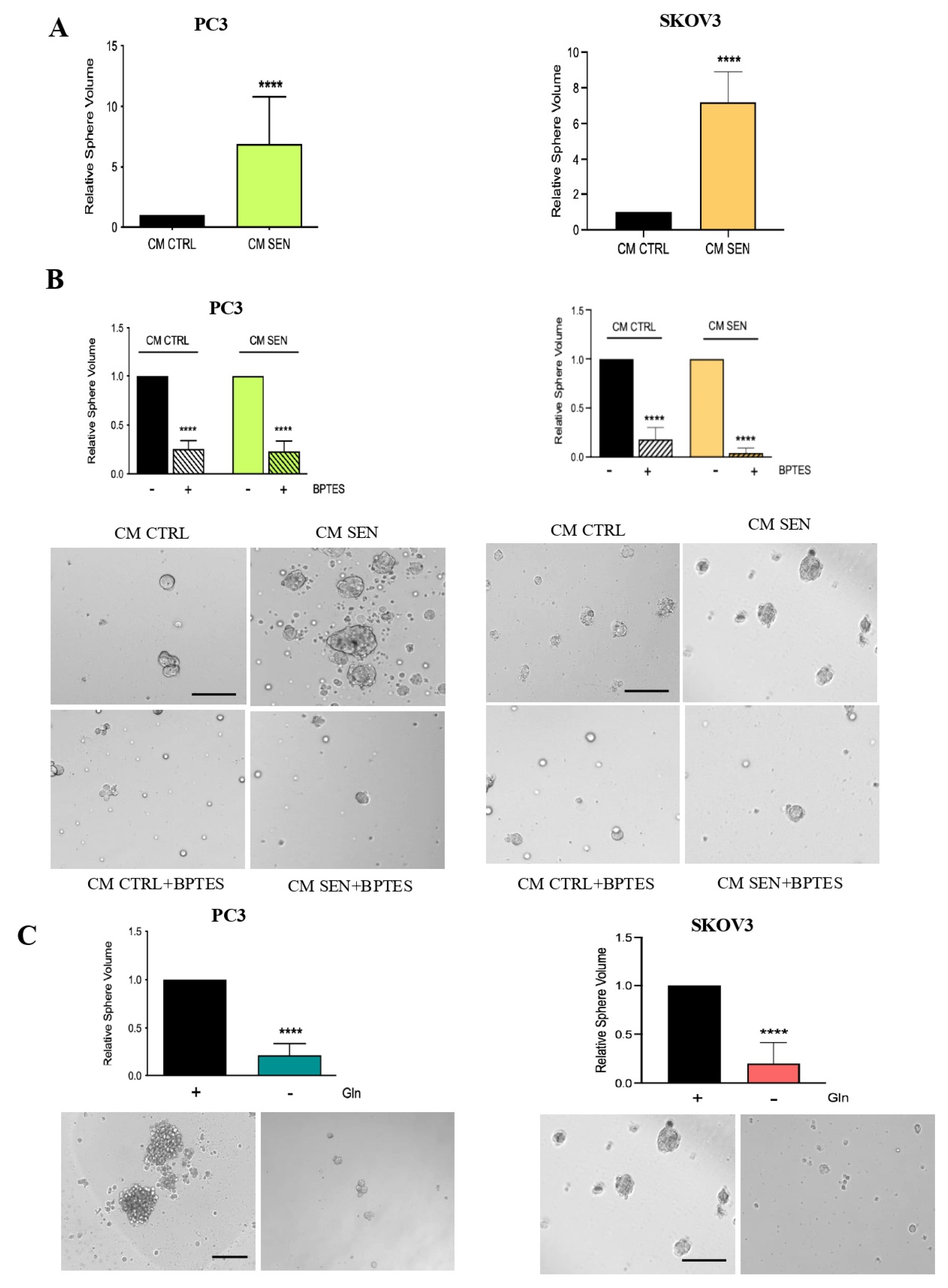
2.8. Prostate and Ovarian Sphere Formation
Cells were grown in anchorage-independent conditions in poly-hydroxyethylmethacrylate (poly-HEMA)-coated dishes (Merck Sigma, #P3932) with selective serum-free DMEM/F12 medium supplemented with 50× B27 (Gibco, Waltham, MA, USA), 20 ng/mL bFGF (Bio-Techne, Minneapolis, MN, USA), 20 ng/mL EGF (Relia Tech, Wolfenbüttel, Germany). For PC3, sphere medium was also supplemented with N2 Supplement 100× (Gibco, #17502-048). Cancer cells were incubated for 72 h with CM from HPFs and HOFs, then 700 cells/well (PC3) or 1000 cells/well (SKOV3) were seeded in a 96-well plate precoated with poly-HEMA. After 7 days, photos were taken to determine the volume of spheres. Data were reported as the average volume of formed spheres/field, in at least 5 randomly chosen fields. Spheroids volume was calculated measuring length (L) and height (H) with ImageJ using the following formula: V = (L
2 × H)/2, as previously reported [
12].
2.9. Cell Transfection
Control siRNA (SIC001) and GS siRNA (#HS02_00307974) were purchased from Merck Sigma. Senescent cells were transfected with 45 nM siRNAs at approximately 70% confluence with RNAiMAX (Thermo Fisher Scientific) according to manufacturer’s instructions. GS expression was assessed by western blotting 48 h after transfection.
2.10. Cell Viability
Cells (6 × 10³) were seeded in 100 μL of complete culture medium in 96-well plates and allowed to adhere for 24 h prior to treatment. After the treatment, cells were washed with PBS and 5 mmol/L MTT (3-(4,5-Dimethylthiazol 2-yl)-2,5-diphenyltetrazolium bromide, Merck Sigma) was added for 1 h at 37 °C. The resulting formazan crystals were dissolved in 200 µL of DMSO, and absorbance was measured at 595 nm using a spectrophotometer MULTISKAN FC (Thermo Fisher Scientific).
To evaluate the effect of Gln deprivation, 15 × 104 cells were seeded in 35 mm dishes and incubated with or without 2 mM Gln (Euroclone) for 72 h. Then cells were detached and incubated with LIVE/DEAD Violet Kit (Thermo Fisher Scientific, #L34964A) for 30 min at RT according to the manufacturer’s protocol. The dye was reconstituted in 50 µL of DMSO and diluted 1:500 in PBS to create a working solution. Following a single wash with PBS, samples were analyzed via flow cytometry using a BD FACSCanto II. The violet dye (excitation 405 nm; emission 450 nm) was detected using a BV421/DAPI filter, allowing for clear discrimination between unstained live cells and stained dead cells.
2.11. Determination of GSH/GSSG
The intracellular reduced (GSH) and oxidized (GSSG) glutathione levels were measured using the GSH/GSSG-Glo™ Assay (Promega, Fitchburg, WI, USA V6611), according to the manufacturer’s instructions. Briefly, cells were lysed and total glutathione (GSH + GSSG) was quantified through the conversion of a GSH probe, Luciferin-NT, to luciferin by a glutathione S-transferase enzyme. To selectively measure GSSG, GSH was first derivatized using the provided masking reagent, allowing specific detection of GSSG. Luminescence was measured using a Sinergy H1 plate reader (BioTek Winooski, Winooski, VT, USA), and GSH concentrations were calculated from standard curves. Values were normalized to protein content.
2.12. Determination of Gln and Ammonium Levels
Gln and ammonium levels were determined using the L-Glutamine/Ammonia Assay Kit (Rapid) (Megazyme, Bray, Ireland, K-GLNAM), according to the manufacturer’s instructions. Briefly, the Gln levels were measured in culture media through an enzymatic conversion of Gln to glutamate (Glu) and ammonium by glutaminase (GLS). Ammonium was subsequently quantified through a glutamate dehydrogenase–coupled reaction by monitoring NADPH consumption as a decrease in absorbance at 340 nm with an uv-1800 shimadzu (Shimadzu Corporation, Kyoto, Japan) spectrophotometer.
2.13. Gas Chromatography–Mass Spectrometry (GC–MS) Analysis
For total metabolites quantification, media from HPFs and HOFs were collected, and 50 μL were mixed with 50 μL of cold 80% methanol in HPLC-grade water containing internal standards (1 µg/mL norvaline and 1.25 µg/mL glutaric acid).
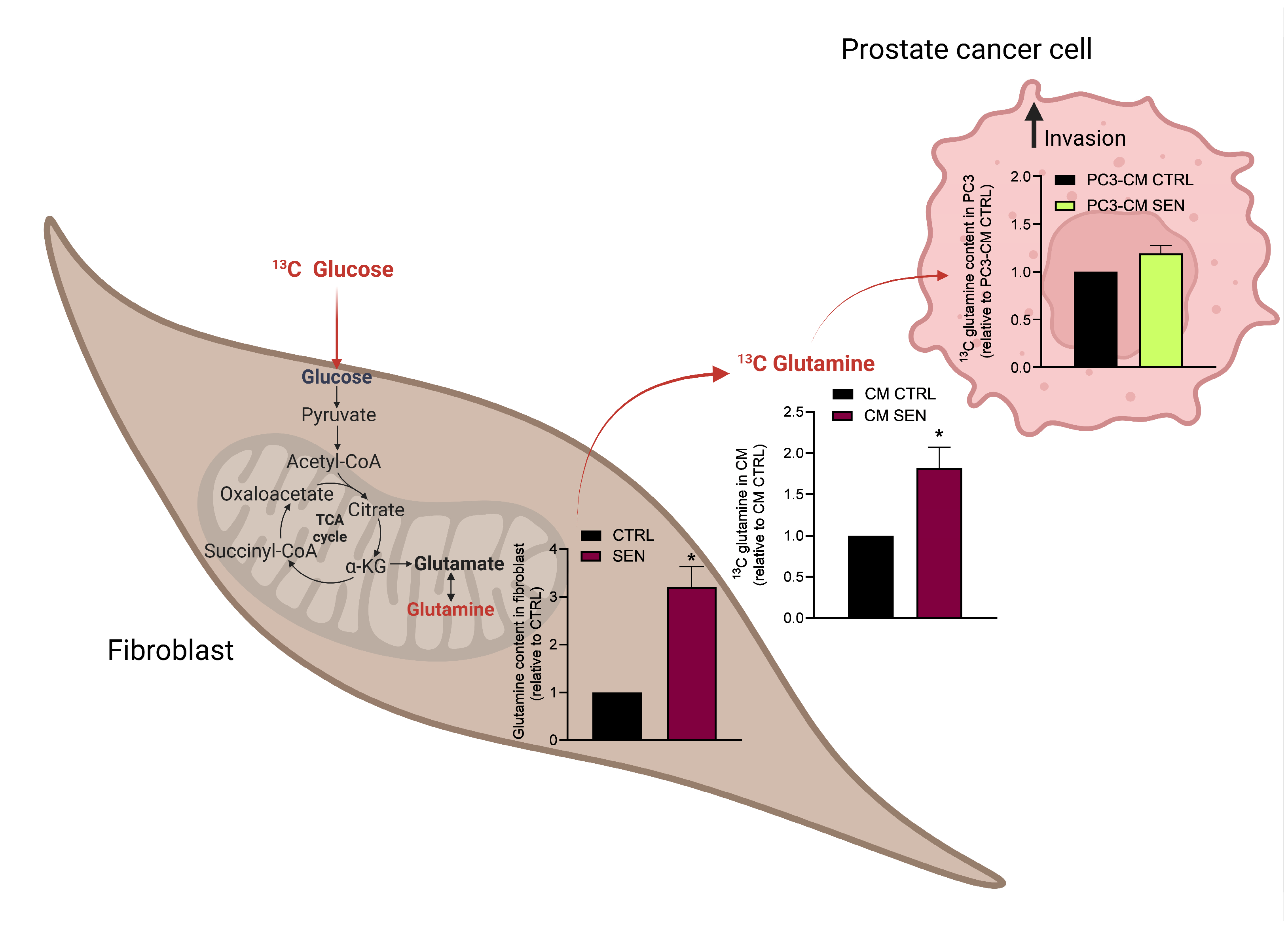
For isotope tracing experiments, fibroblasts were cultured in MEM (Gibco) supplemented with 1% MEM vitamins (Merck Sigma), 1% penicillin-streptomycin (Euroclone), 0.4 mM glycine (Merck Sigma), 0.4 mM serine (Merck Sigma), and 17 mM [U − 13C] glucose (Cambridge Isotope Laboratories, Inc. Andover, MA, USA). After 24 h, CM was collected. One aliquot of CM was used for metabolites extraction and GC–MS analysis, as described above. Metabolites were also extracted from fibroblast cell lysates.
The remaining labeled CM was used to treat PC3 cells for 24 h, after which metabolites were extracted from PC3 cells for downstream analysis. To extract intracellular metabolites, fibroblasts and PC3 cells were washed twice with 0.9% NaCl at 4 °C and scraped in 400 µL of cold 80% methanol in HPLC water containing 1 µg/mL norvaline and 1.25 µg/mL glutaric acid as internal standards. Samples were sonicated on ice for 5 s for three times with a 5 s interval at 70% amplitude, centrifugated at 14,000 rpm, 4 °C for 10 min, and supernatants were collected. Samples were dried by using a vacuum concentrator (Labconco, Kansas City, MO, USA). Dried extracts were derivatized with 10 µL of 40 mg/mL methoxyamine hydrochloride (Merck #226904) in pyridine (Merck #270970) for 90 min at 37 °C. Then, 50 µL of N-(tert-butyldimethylsilyl)-N-methyl-trifluoroacetamide, with 1% tert-butyldimethylchlorosilane (Merck Sigma #375934) were added and samples were incubated for an additional 30 min at 60 °C. GC-MS runs were performed by using an Intuvo 9000 GC/5977B MS System (Agilent Technologies, Folsom, CA, USA) equipped with an HP-5MS capillary column (30 m × 0.25 mm × 0.25 µm). 1 µL of each sample was injected in splitless mode using an inlet liner temperature of 240 °C. GC runs were performed with helium as carrier gas at 1 mL/min. The GC oven temperature ramp was from 70 °C to 280 °C. The temperature of 70 °C was held for 2 min. Then, the first temperature ramp was from 70 °C to 140 °C at 3 °C/min. The second ramp was from 140 °C to 150 °C at 1 °C/min. The third temperature ramp was from 150 °C to 280 °C at 3 °C/min. Metabolites were detected using electron impact ionization at 70 eV using a SIM mode. The ion source and transfer line temperature were set to 230 °C and 290 °C, respectively.
Quantitative analysis was performed using MS Quantitative Analysis software (Agilent Technologies, version 10.2). Relative metabolite abundances were calculated by integrating the signal of selected ion for each metabolite and normalizing to the signal of the internal standards (norvaline or glutaric acid) and to protein content. For isotopic labeling experiments, all the measured values were corrected for
13C natural abundance by using IsoCorrectoR [
13].
2.14. Confocal Immunofluorescence
Sub-confluent PC3 and SKOV3 cells were cultured on glass coverslips and exposed for 72 h to CM derived from HPFs or HOFs. Where indicated, the GLS1 inhibitor BPTES (Bis-2-(5-phenylacetamido-1,2,4-thiadiazol-2-yl) ethyl sulfide) was added at a final concentration of 1 µM during the final 16 h of incubation. At the end of the incubation period, nuclei were stained with DAPI (Sigma Aldrich, D9542) for 20 min at 37 °C. ETS1 protein was detected using a rabbit monoclonal anti-ETS1 (1:1000, Cell Signaling, #14069), followed by antirabbit Alexa Fluor 568-conjugated secondary antibodies (Thermo Fisher Scientific, A-11011, red channel). Cell fluorescence was imaged using a Leica TCS SP8 confocal scanning microscope (Leica, Mannheim, Germany; Durham, NC, USA; Danaher, Washington, DC, USA). Observations were made with a Leica HC PL Apo CS2 X63 oil immersion objective. Images reconstruction and signal fluorescence quantification was obtained using Image J Fiji software [
14].
2.15. Statistical Analysis
Statistical analysis of the data was performed using unpaired, two-tailed Student t-test or one-way ANOVA followed by Tukey’s post hoc test for multiple comparisons, with GraphPad Prism version 8.0 (GraphPad Software). Data were expressed as the mean ± SEM. A p-value ≤ 0.05 was considered statistically significant. All the statistical analyses were carried out on three biological replicates. Statistical analysis of gene expression datasets from ovarian cancer patients was performed using a paired, two-tailed Wilcoxon signed-rank test.
4. Discussion
Senescent stroma is increasingly recognized as a key player in modulating cancer progression across several tumor types [
25]. Although anticancer therapies can initially restrain tumor growth, relapse is unfortunately common, and recurrent tumors often exhibit a more aggressive phenotype characterized by increased invasiveness, therapy resistance, and metastatic potential. Mounting evidence suggests that TIS-fibroblasts significantly contribute to this unfavorable evolution, as they persist in the TME and, through the acquisition of SASP, create a permissive niche that fosters tumor cell survival and disease progression. While the SASP was originally defined as a complex mixture of secreted proteins, recent evidence indicates that it also includes non-protein factors, such as metabolites and extracellular vesicles, which collectively broaden its impact on the TME.
Here, using metabolic profiling, we identified Gln secreted by TIS fibroblasts as a central non-protein component of the SASP able to enhance invasive and stem-like features in prostate and ovarian cancer cells. To our knowledge, this is the first report showing that TIS fibroblasts are a significant source of extracellular Gln in the TME, highlighting a previously unexplored metabolic mechanism contributing to cancer aggressiveness. Gln is a well-established metabolic driver of tumor progression, with many cancer types described as “Gln-addicted” due to their reliance on this amino acid for energy production, redox balance, and biosynthetic processes [
17,
26,
27]. In addition, Gln metabolism can support resistance to apoptosis [
28] and contribute to generate an immunosuppressive tumor microenvironment [
11]. Indeed, while previous studies have largely focused on tumor-intrinsic Gln metabolism [
15,
23,
29] and stroma-derived Gln in supporting tumor progression [
16,
30,
31], no data are available regarding the contribution of TIS fibroblasts to Gln availability within the TME. In this context, Gln may represent a paracrine metabolic determinant originating from a therapy-altered microenvironment. Previous data from our lab showed that CM from senescent stroma drives tumor aggressiveness through cytokine-mediated signaling, [
7]; here, we extend these findings by uncovering a previously underexplored metabolic dimension of the SASP.
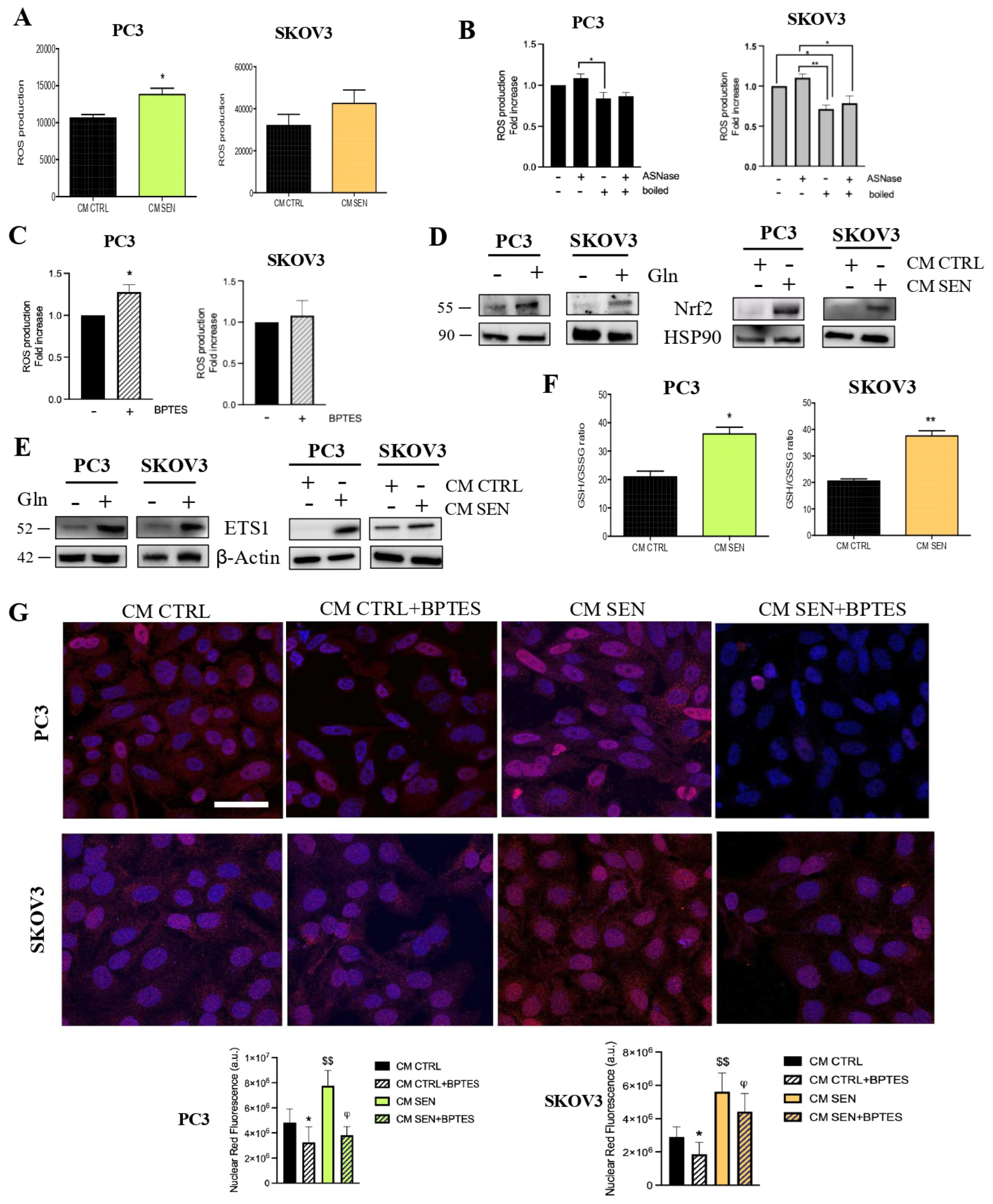
Indeed, our results show that Gln emerged as a metabolite consistently produced across both prostate and ovarian senescent stromal models, pointing to its potential as a shared and functionally relevant metabolic mediator of pro-tumoral roles of TIS fibroblasts. Cancer cell dependency from senescent stroma-derived Gln was confirmed by GS silencing in fibroblasts, Gln depletion in CM or pharmacological inhibition of GLS1 in cancer cells, all of which are associated with reduce invasive capacity without affecting viability. Mechanistically, we showed that senescent CM promotes the expression of the Gln transporter SLC1A5, enhances Gln uptake and its intracellular availability, thereby triggering metabolic reprogramming and inducing EMT and stem-like traits—effects. Moreover, Gln may act as a precursor of GSH: indeed, we observed an increased level of the GSH/GSSG ratio following treatment of cancer cells with senescent CM, suggesting that stromal-derived Gln contributes to maintaining redox balance. The observed changes in NRF2 and ETS1 levels [
21,
32] provides correlative evidence suggesting a potential involvement of this pathway in promoting invasive traits.
Senescent CM elevates ROS levels in cancer cells, primarily through the cytokine/protein components. The concomitant presence of Gln in the CM appears to be associated with a modulation of this oxidative stress, accompanied by an antioxidant response via NRF2 activation/ETS1 expression and its nuclear translocation in a Gln-dependent manner [
22]. Given that ETS1 has previously been reported to be involved in EMT, migration, and invasion [
33,
34], our data suggest a possible association between Gln availability and a redox-sensitive transcriptional programs that may be linked to cancer cell invasion. In keeping, in our model BPTES treatment prevents ETS1 nuclear translocation, suggesting a possible association between senescent stroma-derived Gln and cancer cell invasion, potentially involving the NRF2/ETS1 axis.
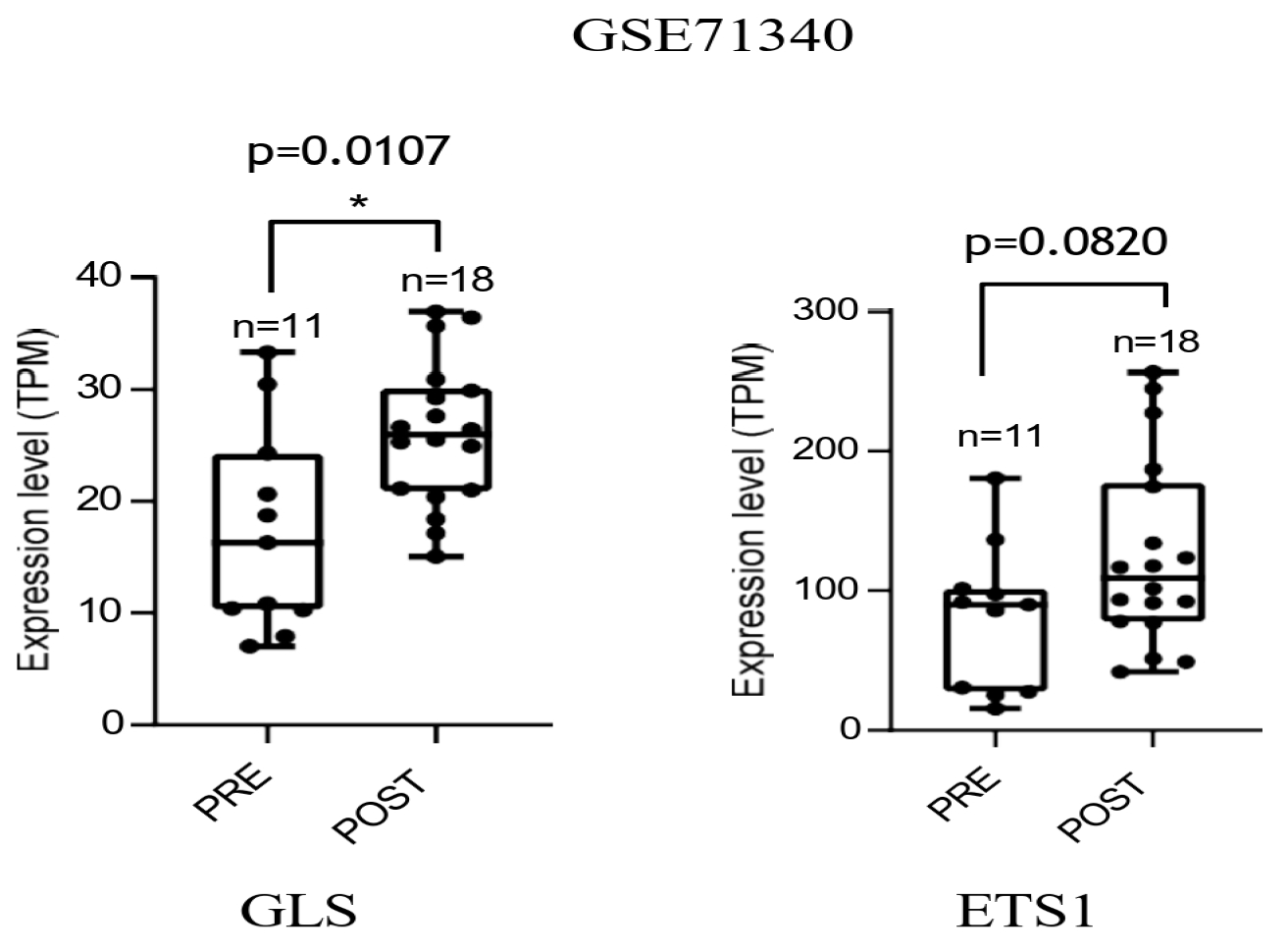
Of note, a limitation of the present study is that the selected cancer cell lines are highly aggressive. For this reason, the reported effects of senescent stroma-derived Gln on invasion may not entirely reflect the behavior of earlier-stage or more heterogeneous tumors. Extending these experiments to less aggressive cell lines, patient-derived primary cancer cells, or in vivo models will be critical to confirm the generalizability of our findings. However, the clinical relevance of our findings is in part sustained by results obtained from publicly available datasets of tissues from ovarian cancer patients. This analysis revealed that samples collected post platinum-based neoadjuvant chemotherapy display a trend to increase the expression of GLS1 and ETS1 compared to corresponding tissues collected before therapy intervention. Although they provide only partial clinical validation, these data are consistent with our mechanistic observations. Further validation in independent clinical samples will be required to confirm these findings and strengthen their translational relevance.
Given the emerging interest in targeting Gln metabolism to halt cancer progression (particularly through GLS inhibitors currently in clinical trials) [
35], our findings suggest that modulating stromal-derived Gln availability might influence tumor cell aggressiveness. These observations warrant further investigation in preclinical co-culture or in vivo models to assess whether targeting stromal Gln could mitigate the pro-tumorigenic effects of TIS.




 ,
,