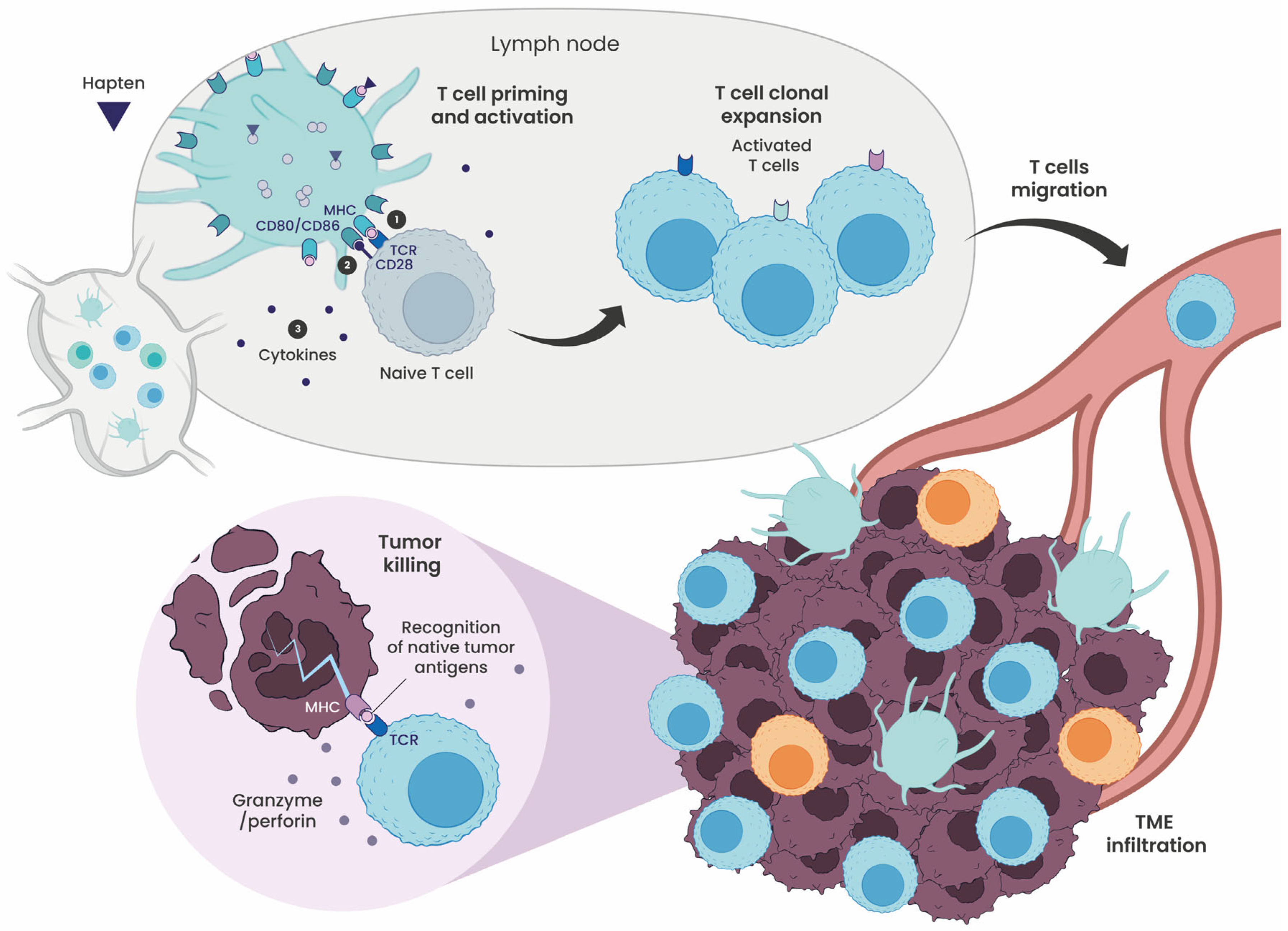
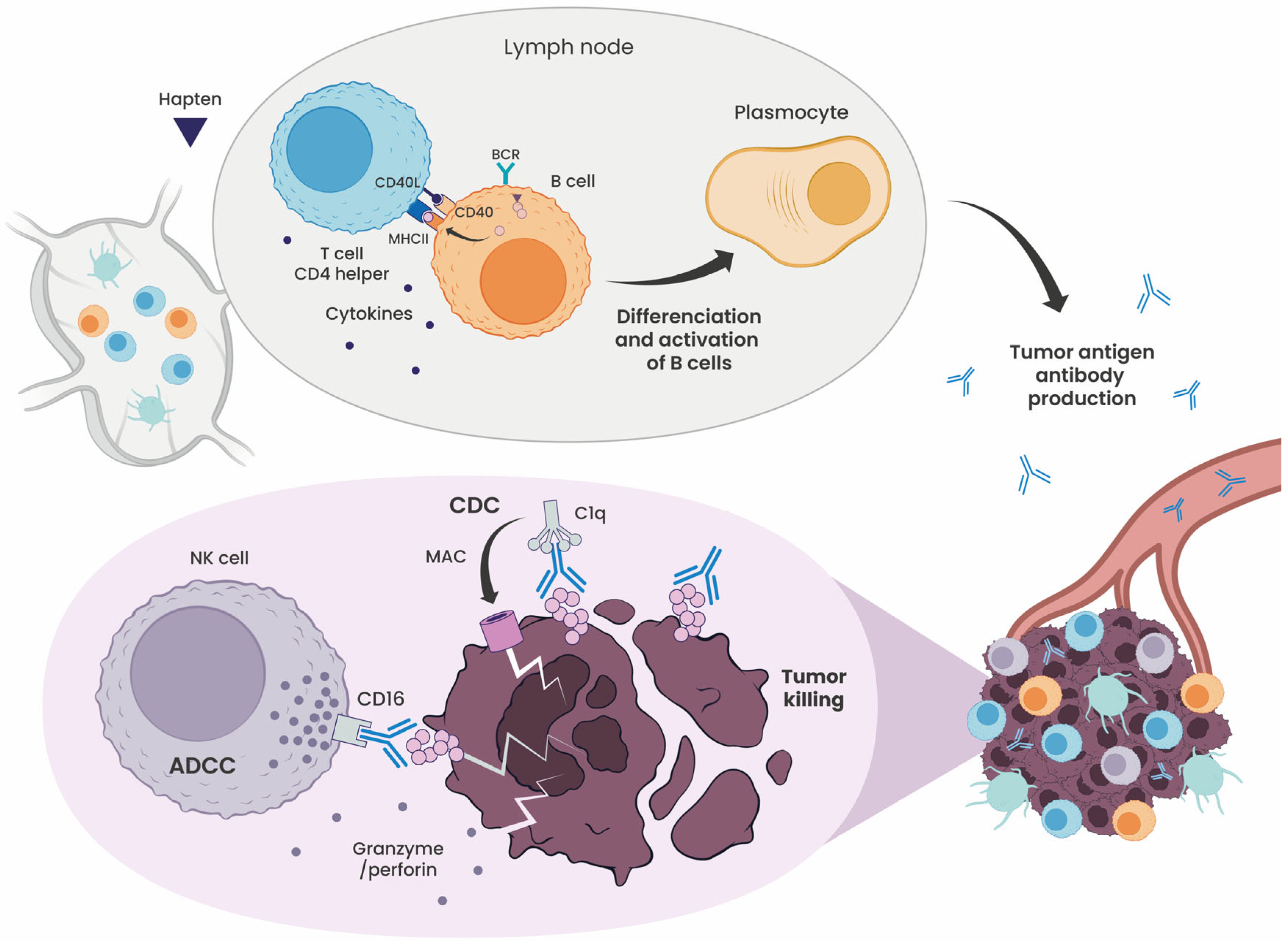
Hapten-Based Cancer Immunotherapy: From Immune Activation to Antitumor Activity

 ,
, 

Highlights
- Haptenation reprograms immune-silent tumors by generating neoepitopes and enhancing antigen presentation, leading to robust CD4+ and CD8+ T-cell activation and durable antitumor immunity.
- Preclinical and clinical evidence demonstrate that hapten-based cancer immunotherapies induce strong delayed-type hypersensitivity (DTH) responses, clonal T-cell expansion, and tumor regression, while being well tolerated with generally favorable safety profile, with mostly local reactions and rare systemic toxicity.
- Hapten-based immunotherapies represent a promising strategy to overcome immune resistance in “cold” tumors and improve responses to immune checkpoint inhibitors.
- Hapten-based immunotherapies support the development of next-generation cancer immunotherapies, including personalized autologous and off-the-shelf allogeneic platforms with broad therapeutic applicability.
Abstract
1. Introduction
2. Hapten-Based Immunotherapies: Historical Perspective
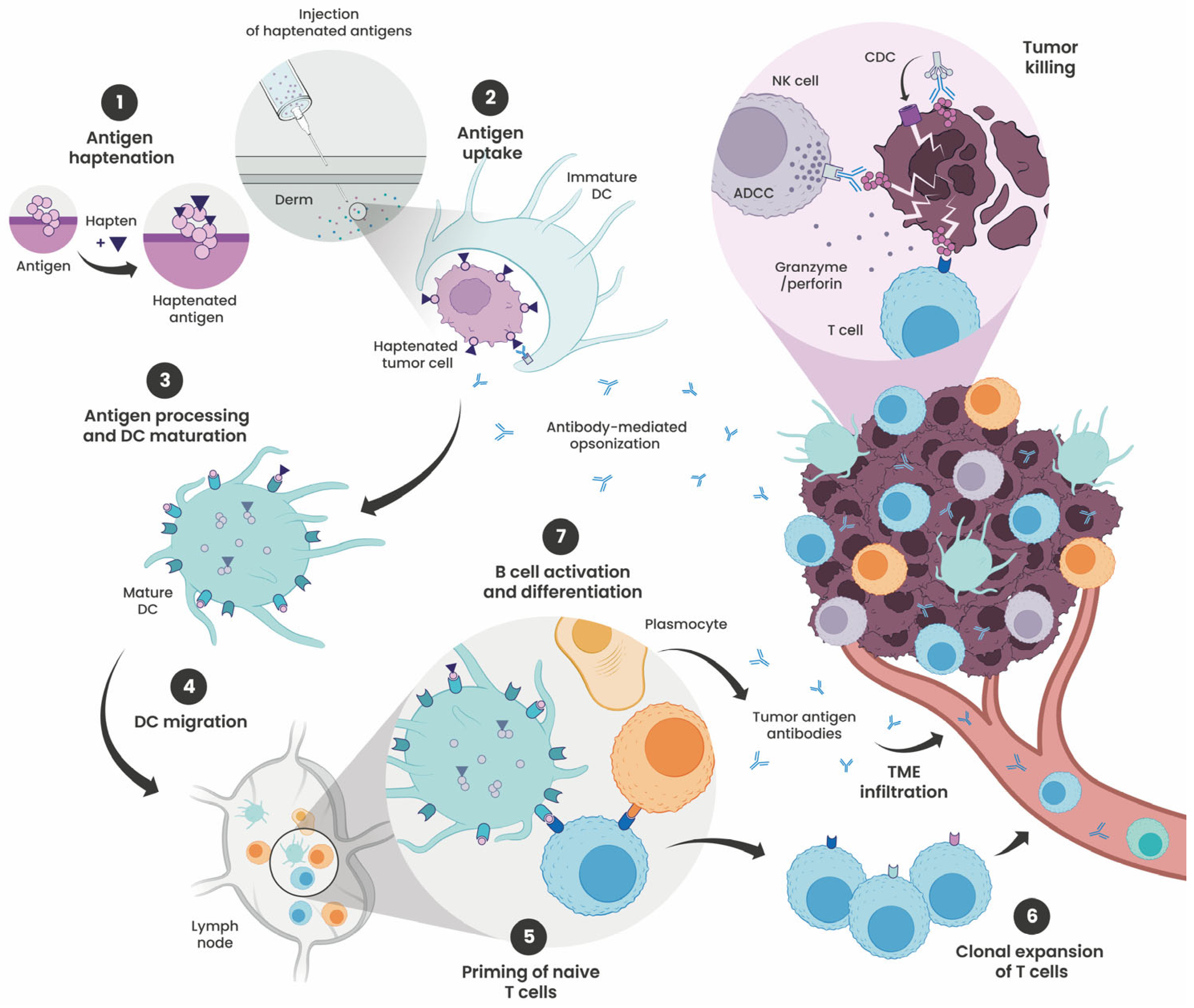
3. Mechanisms of Hapten-Mediated Immune Activation

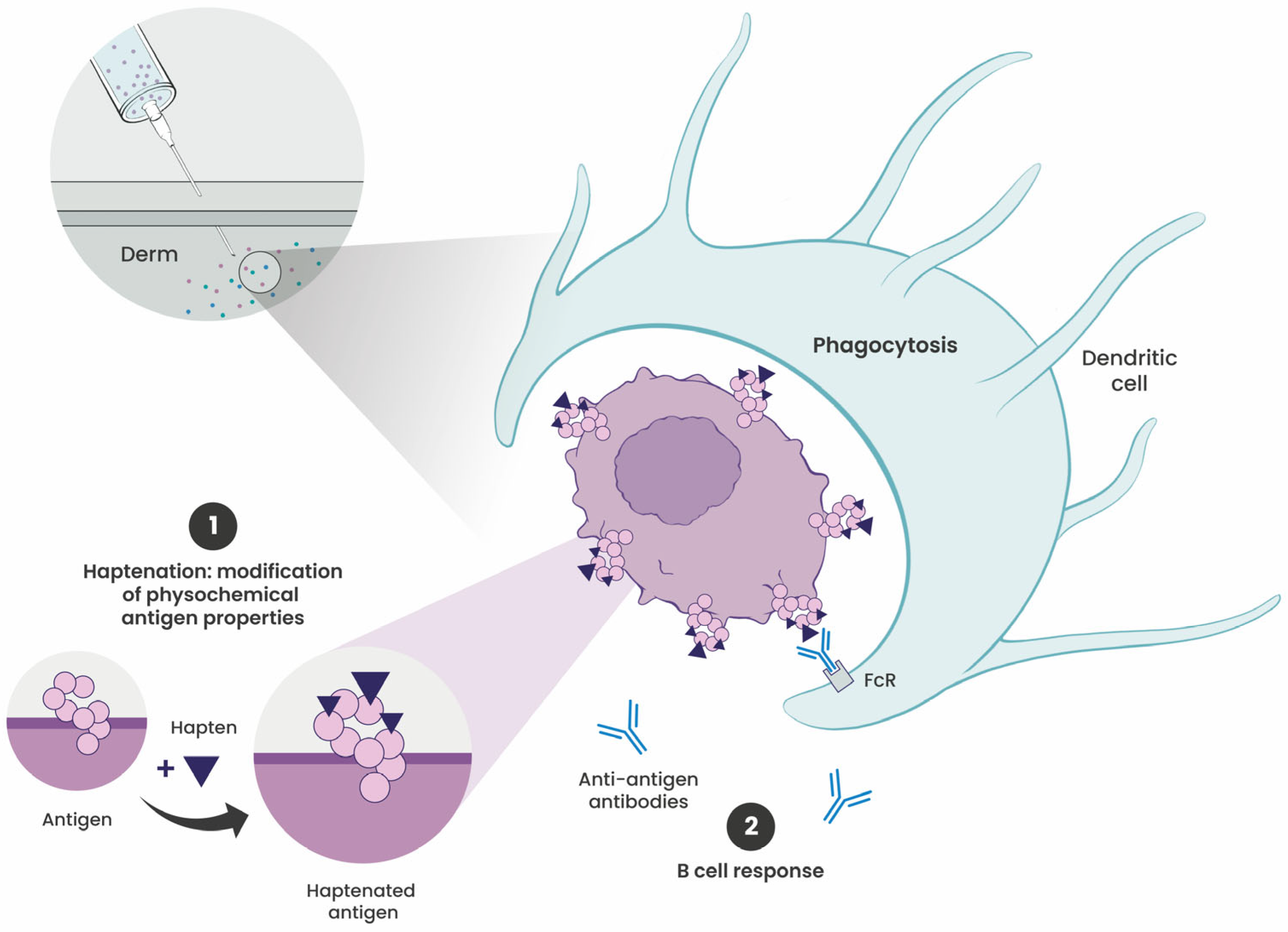
3.1. Antigen Capture and Uptake

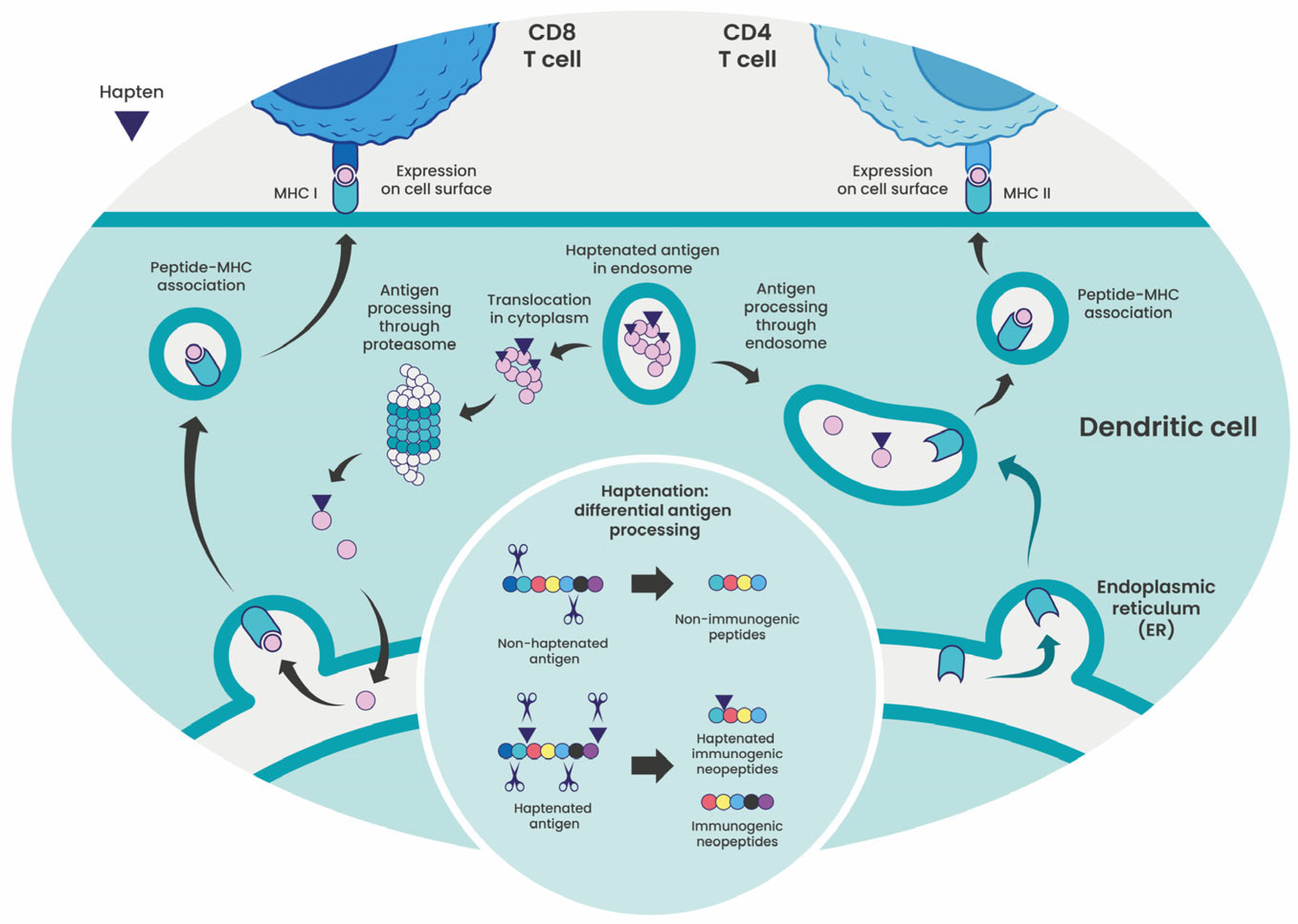
3.2. Antigen Processing and Presentation

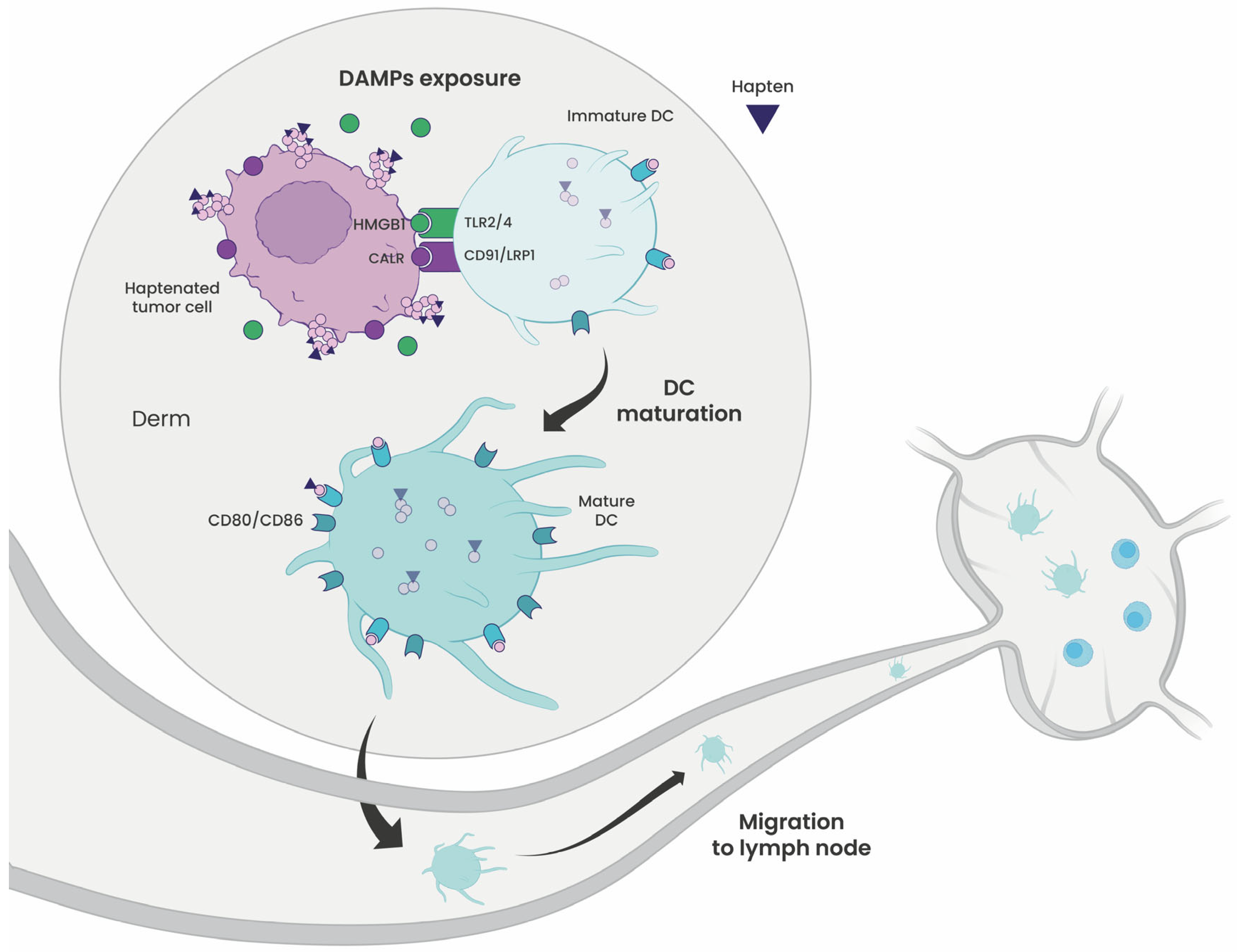
3.3. Dendritic Cell Maturation to Induce Effective T-Cell Priming


3.4. B-Cell Activation and Antibody Production

4. Translational Evidence and Clinical Applications
4.1. Preclinical Evidence for Hapten-Based Immunotherapies
4.2. Clinical Trials and Emerging Therapeutic Applications
5. Challenges and Future Directions in Hapten-Based Cancer Immunotherapy
6. Conclusions
Supplementary Materials
Author Contributions
Funding
Institutional Review Board Statement
Informed Consent Statement
Data Availability Statement
Acknowledgments
Conflicts of Interest
Abbreviations
| 1CL-SH | Single-cell-line treatment |
| 3CL-SH | Three-cell-line treatment |
| ADCC | Antibody-dependent cellular cytotoxicity |
| ADCP | Antibody-dependent cellular phagocytosis |
| APCs | Antigen-presenting cells |
| ATC | Autologous tumor cell |
| BCR | B-cell receptor |
| BCG | Bacillus Calmette–Guérin |
| BSA | Bovine serum albumin |
| CDC | Complement-dependent cytotoxicity |
| CRC | Colorectal cancer |
| CTA | Cancer-testis antigen |
| CTL | Cytotoxic T lymphocyte |
| CY | Cyclophosphamide |
| DAMP | Damage-associated molecular patterns |
| DC | Dendritic cell |
| DFS | Disease-free survival |
| DNFB | Dinitrofluorobenzene |
| DNP | Dinitrophenyl |
| DTH | Delayed-type hypersensitivity |
| FcγR | Fc-gamma receptor |
| FITC | Fluorescein isothiocyanate |
| GM-CSF | Granulocyte-macrophage colony-stimulating factor |
| H | Haptenation |
| HSA | Human serum albumin |
| HLA | Human leukocyte antigen |
| iDCs | Immature DCs |
| IFN | Interferon |
| IL | Interleukin |
| LLDCs | Langerhans-like DCs |
| MAC | Membrane attack complex |
| MHC | Major histocompatibility complex |
| moDCs | Monocyte-derived dendritic cells |
| NK | Natural killer |
| ORR | Objective response rate |
| OS | Overall survival |
| PBMCs | Peripheral blood mononuclear cells |
| PD-1 | Programmed cell death-1 |
| RFS | Relapse-free survival |
| rGBM | Recurrent glioblastoma |
| S | Stressed |
| STC | Stimulated tumor cells |
| TAA | Tumor-associated antigens |
| TAgD-TVac | Targeted antigen degradation-based tumor vaccine |
| TAP | Transporter associated with antigen processing |
| TCR | T-cell receptor |
| TILs | Tumor-infiltrating lymphocytes |
| TME | Tumor microenvironment |
| TNCB | Trinitrochlorobenzene |
| TNF | Tumor necrosis factor |
| TNP | Trinitrophenyl |
| TSA | Tumor-specific antigen |
References
- Janes, M.E.; Gottlieb, A.P.; Park, K.S.; Zhao, Z.; Mitragotri, S. Cancer Vaccines in the Clinic. Bioeng. Transl. Med. 2024, 9, e10588. [Google Scholar] [CrossRef]
- Zaidi, N.; Jaffee, E.M.; Yarchoan, M. Recent Advances in Therapeutic Cancer Vaccines. Nat. Rev. Cancer 2025, 25, 517–533. [Google Scholar] [CrossRef]
- Jones, L.H. Recent Advances in the Molecular Design of Synthetic Vaccines. Nat. Chem. 2015, 7, 952–960. [Google Scholar] [CrossRef] [PubMed]
- Chipinda, I.; Hettick, J.M.; Siegel, P.D. Haptenation: Chemical Reactivity and Protein Binding. J. Allergy 2011, 2011, 1–11. [Google Scholar] [CrossRef]
- Redeby, T.; Nilsson, U.; Altamore, T.M.; Ilag, L.; Ambrosi, A.; Broo, K.; Börje, A.; Karlberg, A.-T. Specific Adducts Formed through a Radical Reaction between Peptides and Contact Allergenic Hydroperoxides. Chem. Res. Toxicol. 2010, 23, 203–210. [Google Scholar] [CrossRef]
- Montañez, M.I.; Mayorga, C.; Torres, M.J.; Ariza, A.; Blanca, M.; Perez-Inestrosa, E. Synthetic Approach to Gain Insight into Antigenic Determinants of Cephalosporins: In Vitro Studies of Chemical Structure−IgE Molecular Recognition Relationships. Chem. Res. Toxicol. 2011, 24, 706–717. [Google Scholar] [CrossRef]
- Megherbi, R.; Kiorpelidou, E.; Foster, B.; Rowe, C.; Naisbitt, D.J.; Goldring, C.E.; Park, B.K. Role of Protein Haptenation in Triggering Maturation Events in the Dendritic Cell Surrogate Cell Line THP-1. Toxicol. Appl. Pharmacol. 2009, 238, 120–132. [Google Scholar] [CrossRef]
- Maso, L.; Mosure, S.A.; Rodriguez-Aponte, S.A.; Pizzo, A.; Mensah, D.N.; Southard, M.; Sze, S.; Ahmed, T.; Vash, B.; Hattori, T.; et al. Engineered Antibodies That Stabilize Drug-Modified KRASG12C Neoantigens Enable Selective and Potent Cross-HLA Immunotherapy. Nat. Commun. 2025, 16, 11264. [Google Scholar] [CrossRef]
- Berd, D.; Maguire, H.C.; Mastrangelo, M.J.; Murphy, G. Activation Markers on T Cells Infiltrating Melanoma Metastases after Therapy with Dinitrophenyl-Conjugated Vaccine. Cancer Immunol. Immunother. 1994, 39, 141–147. [Google Scholar] [CrossRef]
- Sato, T.; Bullock, T.N.J.; Eisenlohr, L.C.; Mastrangelo, M.J.; Berd, D. Dinitrophenyl-Modified Autologous Melanoma Vaccine Induces a T Cell Response to Hapten-Modified, Melanoma Peptides. Clin. Immunol. Immunopathol. 1997, 85, 265–272. [Google Scholar] [CrossRef]
- Dubrovska, A.; Kim, C.; Elliott, J.; Shen, W.; Kuo, T.-H.; Koo, D.-I.; Li, C.; Tuntland, T.; Chang, J.; Groessl, T.; et al. A Chemically Induced Vaccine Strategy for Prostate Cancer. ACS Chem. Biol. 2011, 6, 1223–1231. [Google Scholar] [CrossRef] [PubMed]
- Yu, B.; Ma, W. Haptens-Based Cancer Immunotherapy: From Biomarkers to Translational Advances. Biomed. Pharmacother. 2025, 189, 118240. [Google Scholar] [CrossRef]
- Landsteiner, K.; van der Scheer, J. On Cross Reactions of Immune Sera to Azoproteins. J. Exp. Med. 1936, 63, 325–339. [Google Scholar] [CrossRef]
- Weigle, W.O. The Production of Thyroiditis and Antibody Following Injection of Unaltered Thyroglobulin Without Adjuvant into Rabbits Previously Stimulated with Altered Thyroglobulin. J. Exp. Med. 1965, 122, 1049–1062. [Google Scholar] [CrossRef]
- Shearer, G.M. Cell-Mediated Cytotoxicity to Trinitrophenyl-Modified Syngeneic Lymphocytes. Eur. J. Immunol. 1974, 4, 527–533. [Google Scholar] [CrossRef]
- Tarcic, N.; David, C.S.; Naor, D. Auto-Delayed-Type Hypersensitivity Induced in Immunodeficient Mice with Modified Self-Antigens. V. Cellular Autoreactivity Directed against Self-H-2Dd Subregion Mediates the Inflammatory Responses. Immunology 1989, 67, 184–190. [Google Scholar]
- Gefen, T.; Vaya, J.; Khatib, S.; Rapoport, I.; Lupo, M.; Barnea, E.; Admon, A.; Heller, E.D.; Aizenshtein, E.; Pitcovski, J. The Effect of Haptens on Protein-Carrier Immunogenicity. Immunology 2015, 144, 116–126. [Google Scholar] [CrossRef]
- Schrand, B.; Clark, E.; Levay, A.; Capote, A.R.; Martinez, O.; Brenneman, R.; Castro, I.; Gilboa, E. Hapten-Mediated Recruitment of Polyclonal Antibodies to Tumors Engenders Antitumor Immunity. Nat. Commun. 2018, 9, 3348. [Google Scholar] [CrossRef] [PubMed]
- Sun, X.; Stefanetti, G.; Berti, F.; Kasper, D.L. Polysaccharide Structure Dictates Mechanism of Adaptive Immune Response to Glycoconjugate Vaccines. Proc. Natl. Acad. Sci. USA 2019, 116, 193–198. [Google Scholar] [CrossRef] [PubMed]
- Pandey, A.; Rohweder, P.J.; Chan, L.M.; Ongpipattanakul, C.; Chung, D.H.; Paolella, B.; Quimby, F.M.; Nguyen, N.; Verba, K.A.; Evans, M.J.; et al. Therapeutic Targeting and Structural Characterization of a Sotorasib-Modified KRAS G12C–MHC I Complex Demonstrate the Antitumor Efficacy of Hapten-Based Strategies. Cancer Res. 2025, 85, 329–341. [Google Scholar] [CrossRef]
- Linette, G.P.; Bear, A.S.; Carreno, B.M. Facts and Hopes in Immunotherapy Strategies Targeting Antigens Derived from KRAS Mutations. Clin. Cancer Res. 2024, 30, 2017–2024. [Google Scholar] [CrossRef] [PubMed]
- Thomson, P.; Hammond, S.; Meng, X.; Naisbitt, D.J. What’s Been Hapten-Ing over the Last 88 Years? Med. Chem. Res. 2023, 32, 1950–1971. [Google Scholar] [CrossRef]
- Zhao, Y.; Song, D.; Wang, Z.; Huang, Q.; Huang, F.; Ye, Z.; Wich, D.; Chen, M.; Khirallah, J.; Gao, S.; et al. Antitumour Vaccination via the Targeted Proteolysis of Antigens Isolated from Tumour Lysates. Nat. Biomed. Eng. 2025, 9, 234–248. [Google Scholar] [CrossRef] [PubMed]
- Fang, H.; Ang, B.; Xu, X.; Huang, X.; Wu, Y.; Sun, Y.; Wang, W.; Li, N.; Cao, X.; Wan, T. TLR4 Is Essential for Dendritic Cell Activation and Anti-Tumor T-Cell Response Enhancement by DAMPs Released from Chemically Stressed Cancer Cells. Cell. Mol. Immunol. 2014, 11, 150–159. [Google Scholar] [CrossRef]
- Lee, K.-W.; Yam, J.W.P.; Mao, X. Dendritic Cell Vaccines: A Shift from Conventional Approach to New Generations. Cells 2023, 12, 2147. [Google Scholar] [CrossRef]
- Arimoto, K.; Miyauchi, S.; Liu, M.; Zhang, D.-E. Emerging Role of Immunogenic Cell Death in Cancer Immunotherapy. Front. Immunol. 2024, 15, 1390263. [Google Scholar] [CrossRef]
- Rougier, N.; Redziniak, G.; Mougin, D.; Schmitt, D.; Vincent, C. In Vitro Evaluation of the Sensitization Potential of Weak Contact Allergens Using Langerhans-like Dendritic Cells and Autologous T Cells. Toxicology 2000, 145, 73–82. [Google Scholar] [CrossRef]
- Guironnet, G.; Dalbiez-Gauthier, C.; Rousset, F.; Schmitt, D.; Péguet-Navarro, J. In Vitro Human T Cell Sensitization to Haptens by Monocyte-Derived Dendritic Cells. Toxicol. In Vitro 2000, 14, 517–522. [Google Scholar] [CrossRef]
- Dietz, L.; Esser, P.R.; Schmucker, S.S.; Goette, I.; Richter, A.; Schnölzer, M.; Martin, S.F.; Thierse, H.-J. Tracking Human Contact Allergens: From Mass Spectrometric Identification of Peptide-Bound Reactive Small Chemicals to Chemical-Specific Naive Human T-Cell Priming. Toxicol. Sci. 2010, 117, 336–347. [Google Scholar] [CrossRef]
- Bechara, R.; Feray, A.; Pallardy, M. Drug and Chemical Allergy: A Role for a Specific Naive T-Cell Repertoire? Front. Immunol. 2021, 12, 653102. [Google Scholar] [CrossRef]
- Gagnon, S.J.; Borbulevych, O.Y.; Davis-Harrison, R.L.; Baxter, T.K.; Clemens, J.R.; Armstrong, K.M.; Turner, R.V.; Damirjian, M.; Biddison, W.E.; Baker, B.M. Unraveling a Hotspot for TCR Recognition on HLA-A2: Evidence Against the Existence of Peptide-Independent TCR Binding Determinants. J. Mol. Biol. 2005, 353, 556–573. [Google Scholar] [CrossRef]
- Matos, T.J.; Duarte, C.B.; Gonçalo, M.; Lopes, M.C. DNFB Activates MAPKs and Upregulates CD40 in Skin-Derived Dendritic Cells. J. Dermatol. Sci. 2005, 39, 113–123. [Google Scholar] [CrossRef]
- Shreedhar, V.; Moodycliffe, A.M.; Ullrich, S.E.; Bucana, C.; Kripke, M.L.; Flores-Romo, L. Dendritic Cells Require T Cells for Functional Maturation in Vivo. Immunity 1999, 11, 625–636. [Google Scholar] [CrossRef]
- Tarcic, N.; Naor, D. Delayed-type Hypersensitivity Induced in Immunodeficient Mice with Syngeneic Modified Self Antigens: A Suggestive Model of Autoimmune Response. Eur. J. Immunol. 1982, 12, 961–966. [Google Scholar] [CrossRef]
- Sensi, M.; Farina, C.; Maccalli, C.; Lupetti, R.; Nicolini, G.; Anichini, A.; Parmiani, G.; Berd, D. Clonal Expansion of T Lymphocytes in Human Melanoma Metastases after Treatment with a Hapten-Modified Autologous Tumor Vaccine. J. Clin. Investig. 1997, 99, 710–717. [Google Scholar] [CrossRef]
- Manne, J.; Mastrangelo, M.J.; Sato, T.; Berd, D. TCR Rearrangement in Lymphocytes Infiltrating Melanoma Metastases After Administration of Autologous Dinitrophenyl-Modified Vaccine1. J. Immunol. 2002, 169, 3407–3412. [Google Scholar] [CrossRef] [PubMed]
- Karnell, J.L.; Rieder, S.A.; Ettinger, R.; Kolbeck, R. Targeting the CD40-CD40L Pathway in Autoimmune Diseases: Humoral Immunity and Beyond. Adv. Drug Deliv. Rev. 2019, 141, 92–103. [Google Scholar] [CrossRef] [PubMed]
- Kinker, G.S.; Vitiello, G.A.F.; Ferreira, W.A.S.; Chaves, A.S.; Cordeiro de Lima, V.C.; Medina, T.d.S. B Cell Orchestration of Anti-Tumor Immune Responses: A Matter of Cell Localization and Communication. Front. Cell Dev. Biol. 2021, 9, 678127. [Google Scholar] [CrossRef]
- Rastogi, I.; Jeon, D.; Moseman, J.E.; Muralidhar, A.; Potluri, H.K.; McNeel, D.G. Role of B Cells as Antigen Presenting Cells. Front. Immunol. 2022, 13, 954936. [Google Scholar] [CrossRef]
- Laumont, C.M.; Nelson, B.H. B Cells in the Tumor Microenvironment: Multi-Faceted Organizers, Regulators, and Effectors of Anti-Tumor Immunity. Cancer Cell 2023, 41, 466–489. [Google Scholar] [CrossRef]
- Galili, U. Anti-Gal: An Abundant Human Natural Antibody of Multiple Pathogeneses and Clinical Benefits. Immunology 2013, 140, 1–11. [Google Scholar] [CrossRef]
- Yu, B.; Zhang, J.; Fu, Q.; Han, Y.; Zhang, J.; Gao, F.; Jing, P.; Zhang, P.; Zheng, G. Successful Targeting in Situ of an Oncogenic Nuclear Antigen by Hapten Induced Tumor Associated Autoantibodies (ITAA). Sci. Rep. 2023, 13, 9902. [Google Scholar] [CrossRef]
- Fujiwara, H.; Moriyama, Y.; Suda, T.; Tsuchida, T.; Shearer, G.M.; Hamaoka, T. Enhanced TNP-Reactive Helper T Cell Activity and Its Utilization in the Induction of Amplified Tumor Immunity That Results in Tumor Regression. J. Immunol. 1984, 132, 1571–1577. [Google Scholar] [CrossRef]
- Sojka, D.K.; Felnerova, D.; Mokyr, M.B. Anti-Metastatic Activity of Hapten-Modified Autologous Tumor Cell Vaccine in an Animal Tumor Model. Cancer Immunol. Immunother. 2002, 51, 200–208. [Google Scholar] [CrossRef]
- Alzeeb, G.; Tortorelli, C.; Taleb, J.; De Luca, F.; Berge, B.; Bardet, C.; Limagne, E.; Brun, M.; Chalus, L.; Pinteur, B.; et al. Efficacy of Novel Allogeneic Cancer Cells Vaccine to Treat Colorectal Cancer. Front. Oncol. 2024, 14, 1427428. [Google Scholar] [CrossRef] [PubMed]
- Alzeeb, G.; Richard, C.; Marteau, P.; Chalus, L.; Brun, M.; Bardet, C.; Tortorelli, C.; Pinteur, B.; Bravetti, P.; Boidot, R.; et al. 1432 Stimulated Tumor Cells (STC) Vaccines: Pioneering the Future of Cancer Immunotherapy. In Proceedings of the Regular and Young Investigator Award Abstracts; BMJ Publishing Group Ltd.: London, UK, 2024; p. A1602. [Google Scholar]
- Berd, D.; Murphy, G.; Maguire, H.C., Jr.; Mastrangelo, M.J. Immunization with Haptenized, Autologous Tumor Cells Induces Inflammation of Human Melanoma Metastases. Cancer Res. 1991, 51, 2731–2734. [Google Scholar] [PubMed]
- Berd, D. M-Vax: An Autologous, Hapten-Modified Vaccine for Human Cancer. Expert Opin. Biol. Ther. 2002, 2, 335–342. [Google Scholar] [CrossRef] [PubMed]
- Berd, D.; Sato, T.; Maguire, H.C.; Kairys, J.; Mastrangelo, M.J. Immunopharmacologic Analysis of an Autologous, Hapten-Modified Human Melanoma Vaccine. J. Clin. Oncol. 2004, 22, 403–415. [Google Scholar] [CrossRef]
- Berd, D.; Sato, T.; Mastrangelo, M. Effect of the Dose and Composition of an Autologous Hapten-Modified Melanoma Vaccine on the Development of Delayed-Type Hypersensitivity Responses. Cancer Immunol. Immunother. 2002, 51, 320–326. [Google Scholar] [CrossRef]
- Sato, T.; Maguire, H.C.; Mastrangelo, M.J.; Berd, D. Human Immune Response to DNP-Modified Autologous Cells after Treatment with a DNP-Conjugated Melanoma Vaccine. Clin. Immunol. Immunopathol. 1995, 74, 35–43. [Google Scholar] [CrossRef]
- Lotem, M.; Shiloni, E.; Pappo, I.; Drize, O.; Hamburger, T.; Weitzen, R.; Isacson, R.; Kaduri, L.; Merims, S.; Frankenburg, S.; et al. Interleukin-2 Improves Tumour Response to DNP-Modified Autologous Vaccine for the Treatment of Metastatic Malignant Melanoma. Br. J. Cancer 2004, 90, 773–780. [Google Scholar] [CrossRef]
- Lotem, M.; Merims, S.; Frank, S.; Hamburger, T.; Nissan, A.; Kadouri, L.; Cohen, J.; Straussman, R.; Eisenberg, G.; Frankenburg, S.; et al. Adjuvant Autologous Melanoma Vaccine for Macroscopic Stage III Disease: Survival, Biomarkers, and Improved Response to CTLA-4 Blockade. J. Immunol. Res. 2016, 2016, 1–12. [Google Scholar] [CrossRef]
- Lotem, M.; Peretz, T.; Drize, O.; Gimmon, Z.; Ad El, D.; Weitzen, R.; Goldberg, H.; Ben David, I.; Prus, D.; Hamburger, T.; et al. Autologous Cell Vaccine as a Post Operative Adjuvant Treatment for High-Risk Melanoma Patients (AJCC Stages III and IV). The New American Joint Committee on Cancer. Br. J. Cancer 2002, 86, 1534–1539. [Google Scholar] [CrossRef]
- Lotem, M.; Machlenkin, A.; Hamburger, T.; Nissan, A.; Kadouri, L.; Frankenburg, S.; Gimmon, Z.; Elias, O.; David, I.B.; Kuznetz, A.; et al. Autologous Melanoma Vaccine Induces Antitumor and Self-Reactive Immune Responses That Affect Patient Survival and Depend on MHC Class II Expression on Vaccine Cells. Clin. Cancer Res. 2009, 15, 4968–4977. [Google Scholar] [CrossRef] [PubMed]
- Bota, D.A.; Chung, J.; Dandekar, M.; Carrillo, J.A.; Kong, X.-T.; Fu, B.D.; Hsu, F.P.; Schönthal, A.H.; Hofman, F.M.; Chen, T.C.; et al. Phase II Study of ERC1671 plus Bevacizumab versus Bevacizumab plus Placebo in Recurrent Glioblastoma: Interim Results and Correlations with CD4+ T-Lymphocyte Counts. CNS Oncol. 2018, 7. [Google Scholar] [CrossRef]
- Bota, D.A.; Taylor, T.H.; Lomeli, N.; Kong, X.-T.; Fu, B.D.; Schönthal, A.H.; Singer, S.; Blumenthal, D.T.; Senecal, F.M.; Linardou, H.; et al. A Prospective, Cohort Study of SITOIGANAP to Treat Glioblastoma When Given in Combination With Granulocyte-Macrophage Colony-Stimulating Factor/Cyclophosphamide/Bevacizumab/Nivolumab or Granulocyte-Macrophage Colony-Stimulating Factor/Cyclophosphamide/Bevacizumab/Pembrolizumab in Patients Who Failed Prior Treatment with Surgical Resection, Radiation, and Temozolomide. Front. Oncol. 2022, 12, 934638. [Google Scholar] [CrossRef]
- Berd, D.; Maguire, H.C., Jr.; Mastrangelo, M.J. Induction of Cell-Mediated Immunity to Autologous Melanoma Cells and Regression of Metastases after Treatment with a Melanoma Cell Vaccine Preceded by Cyclophosphamide. Cancer Res. 1986, 46, 2572–2577. [Google Scholar] [PubMed]
- U.S. National Library of Medicine. First-in-Human Trial of STC-1010, an Immunotherapy, in Patients with Unresectable Locally Advanced or Metastatic Colorectal Cancer. Available online: https://clinicaltrials.gov/study/NCT06934538 (accessed on 13 April 2026).
- Yu, B.; Han, Y.; Fu, Q.; Gao, F.; Jing, P.; Guoqin, Z.; Zhang, P.; Huang, J.; Zhang, J. Awaken Immune Cells by Hapten Enhanced Intratumoral Chemotherapy with Penicillin Prolong Pancreatic Cancer Survival. J. Cancer 2023, 14, 1282–1292. [Google Scholar] [CrossRef]
- Gao, F.; Jing, P.; Liu, J.; Lu, Y.; Zhang, P.; Han, W.; Liu, G.; Ru, N.; Cui, G.; Sun, C.; et al. Hapten-Enhanced Overall Survival Time in Advanced Hepatocellular Carcinoma by Ultro-Minimum Incision Personalized Intratumoral Chemoimmunotherapy. J. Hepatocell. Carcinoma 2015, 2, 57–68. [Google Scholar] [CrossRef][Green Version]
- Yu, B.; Lu, Y.; Gao, F.; Jing, P.; Wei, H.; Zhang, P.; Liu, G.; Ru, N.; Cui, G.; Xu, X.; et al. Hapten-Enhanced Therapeutic Effect in Advanced Stages of Lung Cancer by Ultra-Minimum Incision Personalized Intratumoral Chemoimmunotherapy Therapy. Lung Cancer 2015, 6, 1–11. [Google Scholar] [CrossRef][Green Version]
- Pallardy, M.; Bechara, R.; Whritenour, J.; Mitchell-Ryan, S.; Herzyk, D.; Lebrec, H.; Merk, H.; Gourley, I.; Komocsar, W.J.; Piccotti, J.R.; et al. Drug Hypersensitivity Reactions: Review of the State of the Science for Prediction and Diagnosis. Toxicol. Sci. 2024, 200, 11–30. [Google Scholar] [CrossRef] [PubMed]
- Fan, T.; Zhang, M.; Yang, J.; Zhu, Z.; Cao, W.; Dong, C. Therapeutic Cancer Vaccines: Advancements, Challenges and Prospects. Signal Transduct. Target. Ther. 2023, 8, 450. [Google Scholar] [CrossRef] [PubMed]
- Yao, L.; Wang, Q.; Ma, W. Navigating the Immune Maze: Pioneering Strategies for Unshackling Cancer Immunotherapy Resistance. Cancers 2023, 15, 5857. [Google Scholar] [CrossRef] [PubMed]

| Model | Treatment Type | Outcome Measures | Key Findings | Ref. |
|---|---|---|---|---|
| X5563 plasmacytoma in C3H/HeN mice Mouse (syngeneic) | In situ haptenation of tumor cells via intratumoral TNCB injection Pre-treatment: TNP-D-GL or CY (to eliminate suppressor T cells) TNCB skin sensitization | Tumor regression CTL and Th cell activity DTH response Resistance to tumor rechallenge | Pretreatment with TNP-D-GL or CY (each independently): amplified hapten-specific Th activity by eliminating suppressor T cells. Intratumoral TNCB injection in pre-treated mice: complete tumor regression in a significantly higher proportion of animals. 90% of mice with regressed tumors: complete resistance to rechallenge | [43] |
| Autologous melanoma model; EBV-transformed autologous B lymphoblasts as APCs Human (ex vivo) | DNP-modified autologous melanoma cells CY prior to vaccination; BCG as adjuvant | IFN-γ production (functional assay) Mass spectrometric identification of DNP-modified peptides | T cells specifically recognized a single DNP-modified peptide fraction (MHC class I-restricted); no response to unmodified peptides. Mass spectrometry confirmed DNP incorporation exclusively in the immunogenic fraction, identifying hapten-modified MHC-associated peptides as the immunogenic target. | [10] |
| 410.4 murine mammary carcinoma (post-surgical excision model) Mouse (syngeneic) | DNP-modified, irradiated, autologous 410.4 tumor cells (ATC) CY prior to vaccination; BCG as adjuvant | RFS T-cell subset dependency Cytokine dependency (IFN-γ, TNF) | CY + DNP-ATC + BCG significantly improved RFS vs. unmodified ATC or saline control. Both CD4+/CD8+ T cells were required for therapeutic benefit. IFN-γ and TNF were functionally essential mediators of the anti-metastatic effect | [44] |
| CT26 colorectal carcinoma; MC38 anti-PD-1 resistant model Mouse (syngeneic) | Allogeneic, haptenated physically stressed tumor cells: 1 cell line (1CL) or 3 cell lines (3CL) Combined with immunostimulants: CY + GM-CSF | Tumor growth OS Proteomic antigen diversity Immune cell infiltration (CD8+ T-cells, M1 macrophages) | In CT26, 3CL + IS provided superior tumor control and survival vs. 1CL or control. 3CL vaccine covered a wider range of tumor-related proteins, supporting a multi-specific antitumor immune response. In anti-PD-1-resistant MC38, 3CL + IS improved OS and increased intratumoral CD8+ T cell and M1 macrophage. Treatment was well tolerated with no local or systemic toxicity. | [45] |
| mDCs and CD8+ T cells from independent donors; CRC target cell lines Human (ex vivo) | STC-1010: allogeneic, haptenated, multiply stressed CRC cell lines (serum depletion, irradiation, heat-shock, chemotherapy) | DC antigen uptake and haptenized epitope presentation Cytokine secretion Tumor cell apoptosis | STC-1010 induced IL-8 and IL-12 secretion and reduced IL-10 during mDC maturation; mDCs presented haptenized epitopes after co-culture. CD8+ T cell primed with STC-1010 treated mDC induce apoptosis of cancer cells Preliminary data suggested batch-to-batch consistency across four production batches | [46] * |
| Platform | Study Design and Indication | Main Clinical Outcomes | Safety | Key Findings | Key Ref. |
|---|---|---|---|---|---|
| Hapten-modified autologous melanoma vaccine (M-Vax/DNP vaccine) mixed with BCG | Phase I/II; single arm; no randomized control Metastatic and resected stage III–IV melanoma |
| DTH
| [36,47,48,49,50,51] | |
| Hapten-modified autologous melanoma vaccine combined with IL-2, checkpoint blockade (ipilimumab) | Phase II; single-arm (IL-2 combination [52]); retrospective comparison with non-vaccinated cohort (ipilimumab combination [53]); no randomized placebo control High-risk resected stage III and metastatic stage IV melanoma (adjuvant and therapeutic settings) | DTH
| [52,53,54,55] | ||
| Allogeneic/autologous haptenated tumor cell vaccine (SITOIGANAP/ERC1671/Gliovac™) combined with bevacizumab ± nivolumab or pembrolizumab | Phase II, randomized vs. placebo + bevacizumab [56]; prospective single-arm cohort study; no haptenated vs. non-haptenated control arm Recurrent glioblastoma (rGBM) |
| [56,57] |
Disclaimer/Publisher’s Note: The statements, opinions and data contained in all publications are solely those of the individual author(s) and contributor(s) and not of MDPI and/or the editor(s). MDPI and/or the editor(s) disclaim responsibility for any injury to people or property resulting from any ideas, methods, instructions or products referred to in the content. |
© 2026 by the authors. Licensee MDPI, Basel, Switzerland. This article is an open access article distributed under the terms and conditions of the Creative Commons Attribution (CC BY) license.
Share and Cite
Richert, I.; Chalus, L.; Pinteur, B.; Bravetti, P.; Tortorelli, C.; Alzeeb, G.; Ghiringhelli, F. Hapten-Based Cancer Immunotherapy: From Immune Activation to Antitumor Activity. Cells 2026, 15, 741. https://doi.org/10.3390/cells15090741
Richert I, Chalus L, Pinteur B, Bravetti P, Tortorelli C, Alzeeb G, Ghiringhelli F. Hapten-Based Cancer Immunotherapy: From Immune Activation to Antitumor Activity. Cells. 2026; 15(9):741. https://doi.org/10.3390/cells15090741
Chicago/Turabian StyleRichert, Iseulys, Lionel Chalus, Benoit Pinteur, Paul Bravetti, Corinne Tortorelli, George Alzeeb, and François Ghiringhelli. 2026. "Hapten-Based Cancer Immunotherapy: From Immune Activation to Antitumor Activity" Cells 15, no. 9: 741. https://doi.org/10.3390/cells15090741
APA StyleRichert, I., Chalus, L., Pinteur, B., Bravetti, P., Tortorelli, C., Alzeeb, G., & Ghiringhelli, F. (2026). Hapten-Based Cancer Immunotherapy: From Immune Activation to Antitumor Activity. Cells, 15(9), 741. https://doi.org/10.3390/cells15090741