Article

Maternal Inflammation Alters Nuclear and Mitochondrial DNA Methylation Patterns in Neonatal Brain Monocytes

1
Division of Neurology, Nemours Children’s Hospital, Wilmington, DE 19803, USA
2
Division of Biomedical Research, Nemours Children’s Health, Wilmington, DE 19803, USA
3
Sidney Kimmel Medical College, Thomas Jefferson University, Philadelphia, PA 19107, USA
4
Medical and Molecular Sciences, University of Delaware, Newark, DE 19707, USA
5
Delaware Data Science Institute, Center for Bioinformatics and Computational Biology, University of Delaware, Newark, DE 19716, USA
6
School of Marine Science and Policy, University of Delaware, Newark, DE 19107, USA
7
Psychological and Brain Sciences, University of Delaware, Newark, DE 19107, USA
*
Author to whom correspondence should be addressed.
Cells 2026, 15(8), 714; https://doi.org/10.3390/cells15080714
Submission received: 3 March 2026 / Revised: 8 April 2026 / Accepted: 16 April 2026 / Published: 18 April 2026

Highlights

What are the main findings?
  • Widespread DNA methylation changes occur in brain monocytes of newborn mice after exposure to maternal immune activation in utero.
  • Mitochondrial DNA is hypermethylated in offspring’s brain monocytes after exposure to maternal immune activation in utero.
  • Nuclear genes are predominantly hypermethylated after maternal immune activation, and gene ontology analysis reveals these genes are important for neurodevelopment, immune response, and structural development.
What are the implications of the main findings?
  • Altered methylation of nuclear and mitochondrial DNA in brain monocytes may increase neurodevelopmental risk in offspring after maternal immune activation in utero.

Abstract
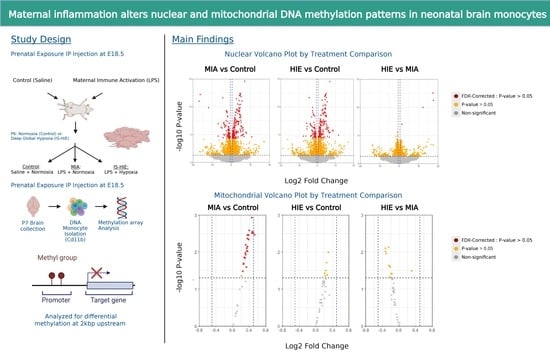
Neonatal hypoxic ischemic encephalopathy (HIE) is a common birth complication that can cause death or lifelong disabling conditions like cerebral palsy, epilepsy, and autism. It is well established that maternal infection and inflammation are significant risk factors for HIE but reasons for this increase in neurological risk to the offspring remain unknown. Inflammation or infection are associated with epigenetic changes and may contribute to the increased risk of neurodevelopmental disability in exposed offspring. Here, we analyzed and compared DNA methylation patterns in brain monocytes isolated from control, maternal immune activation (MIA), and an inflammation sensitized HIE (IS-HIE) CF-1 mouse model at postnatal day 7. We found that maternal inflammation induced significant methylation differences in neonates relative to control samples in both MIA and IS-HIE samples with no significant differences identified between the MIA and IS-HIE groups. MIA samples showed hypermethylation at loci involving craniofacial development and transcription factors important for regulating neurodevelopment and immune function. MIA samples also demonstrated significant hypermethylation at multiple mitochondrial genome CpGs. These findings suggest that maternal inflammation induces epigenetic alterations in fetal brain immune cells that are detectable in neonates. These changes may contribute to heightened neurodevelopmental risk in offspring following hypoxic injury, highlighting potential molecular pathways for future therapeutic targeting.

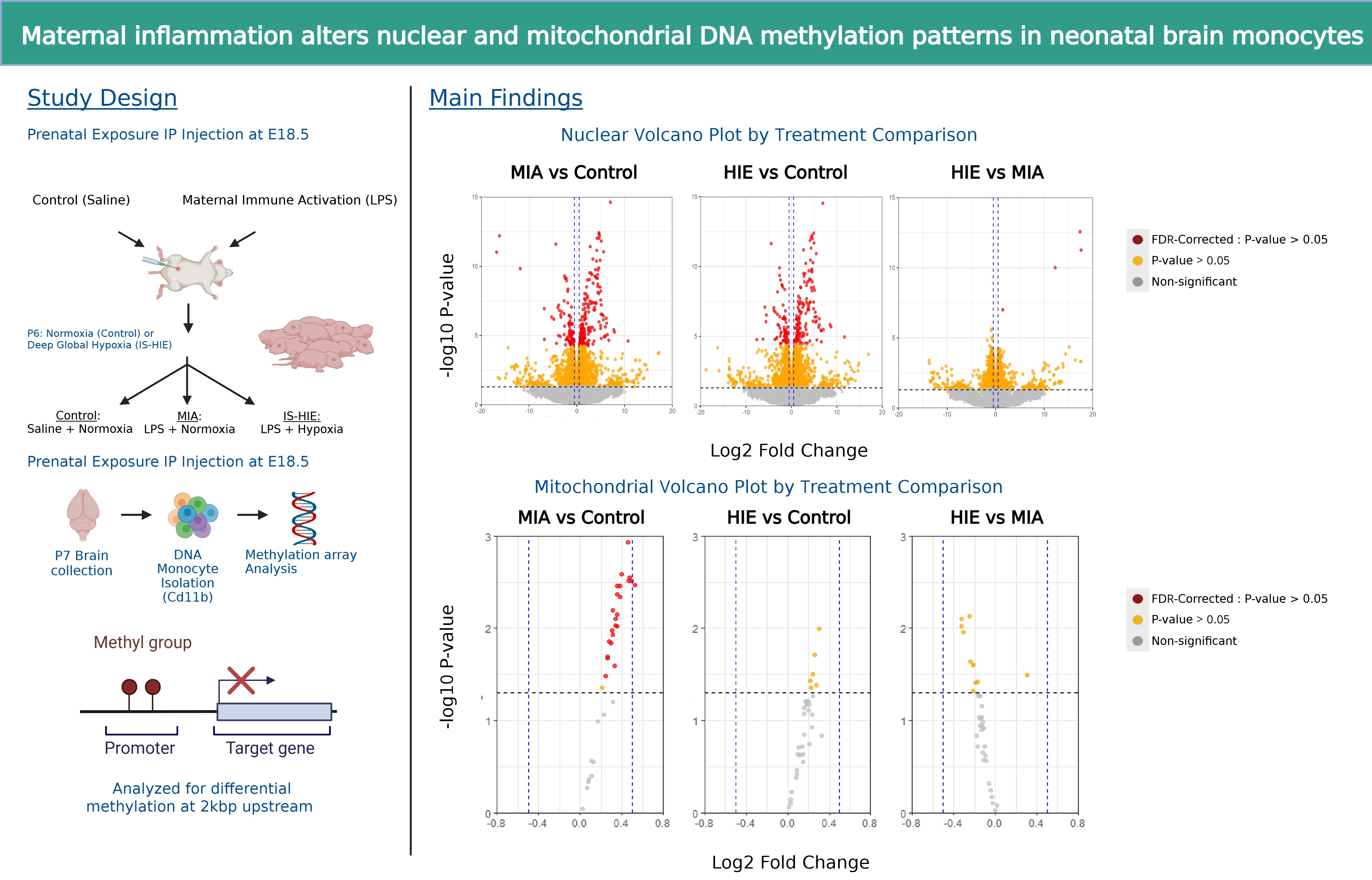
Graphical Abstract

1. Introduction

Neonatal hypoxic ischemic encephalopathy (HIE) is a common neurologic condition caused by insufficient oxygen and blood flow to the brain around the time of birth [1]. Neonatal HIE occurs in approximately 1–3 per 1000 births in developed countries, with up to 15–20 times higher incidence in low- and middle-income countries [2,3]. Neonatal HIE can result in death, physical, and/or mental disabilities, such as cerebral palsy, epilepsy, developmental delay, intellectual disability, and autism [4]. Currently, therapeutic hypothermia is the only effective treatment for neonates with HIE [5]. However, this treatment is constrained by a narrow window, only 6 h after birth, in which the therapy must be initiated [6]. Furthermore, it has proven ineffective in low- and middle-income countries, where the incidence of neonatal HIE is highest [7].
Maternal immune activation (MIA) resulting from infection or inflammation is a major risk factor for neonatal HIE. MIA increases the likelihood of diagnosis of HIE by up to 8-fold [8,9,10,11,12]. In addition, preceding MIA increases the risk of neurodevelopmental deficits. For example, the risk of cerebral palsy increases by 4.7-fold in neonates with HIE where there is preceding inflammation or infection [8,9,13,14,15,16]. The mechanisms underlying this increased neurologic risk after MIA remain poorly understood, but recent studies implicate epigenetic pathways. Chorioamnionitis, an intraamniotic infection, has been associated with DNA methylation changes in the cord blood of human offspring [17], and stable methylation changes have been found in both peripheral mononuclear cells and skeletal muscle of children with cerebral palsy [18,19]. These findings implicate DNA methylation in neurologic risk and suggest that widespread gene expression changes may be occurring. In a mouse model of inflammation sensitized HIE (IS-HIE), our group previously identified upregulation of epigenetic regulatory pathways infiltrating brain macrophages [20]. Intrinsic microglia and infiltrating macrophages are the primary initial responders to brain insults such as hypoxia or inflammation and direct the downstream response to injury largely via phagocytosis and recruitment of additional inflammatory cells [21]. Given these findings, we hypothesized that exposure to in utero inflammation increases neurologic risk due to functional immunological changes in the offspring driven by epigenetic changes in brain monocytes.
Epigenetics describe the regulatory process by which gene transcriptional activity is enhanced or inhibited without changing the underlying DNA sequence. Epigenetic mechanisms of gene transcription regulation include histone modifications, DNA methylation, and RNA interference. Histone modifications chemically alter the histone proteins involved in chromatin, altering access to DNA sequences. DNA methylation occurs when a methyl group is covalently added to nucleotides by DNA methyltransferases (DMNTs). Some of these DNA methylation patterns can be lasting and heritable across generations, however, most methylation events are transient phenomenon, particularly those involved in regulating neurodevelopment in response to environmental stressors [22].
In this study, we used a previously developed model of HIE that combines MIA in utero with a deep global hypoxia in mouse pups at postnatal day 6 (P6) with isolation of brain monocytes at P7 [20]. Maternal lipopolysaccharide (LPS) exposure mimics inflammatory signals such as those that occur in chorioamnionitis, a common perinatal condition that predisposes to HIE [10]. MIA exposure preceding hypoxia creates similar pathologic conditions as would be experienced in a majority of pregnancies resulting in HIE diagnosis [23]. This approach allowed us to investigate the epigenetic mechanisms impacted by exposure to intrauterine inflammation.

2. Materials and Methods

Animals. CF-1 (Charles River International Laboratories, Malvern, PA, USA) timed pregnant dams and their offspring were used. Mice had a 12-h light-dark cycle with free access to food and water. The Nemours Institutional Animal Care and Use Committee approved all procedures (RSP21-27351-002).
Study design. Experimental groups included maternal immune activation (MIA), inflammation sensitized HIE (IS-HIE). The control group was exposed to maternal saline injection and normoxia. All cells isolated from an individual mouse brain were considered an experimental unit. Four experimental units with equal males and females were allocated to each group. The total number of animals used in this study was 12. Sample size was not determined a priori. All animals and data points were included in analysis. Animals in the control group were from a single litter. Animals in the MIA and IS-HIE group were from a single litter. No inclusion or exclusion criteria were set a priori. There were no excluded animals or data. Confounders such as the order of treatments or measurements and animal cage location were not controlled. Outcome measure was differences in methylation.
Maternal immune activation. Timed pregnant dams were exposed to low dose lipopolysaccharide (LPS) as previously described [20]. Briefly, dams were given 50 ug/kg LPS or 0.05 mL 0.9% saline via intraperitoneal injection at embryonic day 18.5 (E18.5).
Hypoxia exposure. Mice were subjected to deep global hypoxia on P6 as previously described [20]. Briefly, mice were subjected to 8 min of progressive hypoxia from 21% to 0% oxygen or normoxia (21% oxygen) using a hypoxia chamber (Biospheryx, Parish, NY, USA).
Cell dissociation. Whole brains were collected from male and female pups on P7 and dissociated into a single cell solution using the Adult Brain Dissociation Kit and gentleMACS Octo Dissociator (Miltenyi Biotec, Gaithersburg, MD, USA) according to the manufacturer protocol.
Monocyte isolation. Brain monocytes were enriched via magnetic CD11b-coated beads (Miltenyi Biotec, Gaithersburg, MD, USA) according to manufacturer protocol. Cell pellets were flash frozen and stored at −80 °C until genomic DNA extraction.
Methylation sequencing. Genomic DNA was extracted using the DNeasy Blood & Tissue Kit (QIAGEN, Germantown, MD, USA). Infinium Mouse Methylation Bead Chip Assay (Illumina, San Diego, CA, USA) was performed by CD Genomics (Shirley, NY, USA).
Methylation analysis. Methylation loads were provided by CD Genomics following a standard pipeline as β values. Quality control, methylation calling, statistical analyses and visualization were performed using a standardized pipeline conducted in R version 4.5.0 (R Core Team). The data was merged with the Mouse Infinium Methylation BeadChip manifest file obtained from CD Genomics to ensure accurate annotation and genomic alignment of CpG sites for downstream analyses. Statistical testing was conducted using minfi (version 1.56.0) [24], limma (version 3.66.0) [25], dplyr (version 1.1.4) [26], tidyverse (version 2.0.0) [27], openxlsx (version 4.2.8.1) [28], readr (version 2.1.6) [29], ENmix (version 1.46.0) [30], and GenomicRanges (version 1.62.1) [31], visualizations utilized ggplot2 (version 4.0.1) [32], circlize (version 0.4.17) [33], geneplotter (version 1.88.0) [34], treemap (version 2.4.4) [35], colorspace (version 2.1.2) patchwork (version 1.3.2), and sesame (version 3.9) [24,25,31,33,36,37]. Annotation was handled by annotatr (version 1.36.0) [38], biomaRt (version 2.66.0) via Ensembl [39].
Principal Component Analysis was performed in R and plotted with ggplot2 [32,40], to plot the largest sources of variation in the methylation profiles.
M = Log2((β+ε)/(1−β+ε)),
EQ1: Equation describing the conversion from beta values of methylation to M values.
β values were logit transformed to M-values using EQ1 [41] where ε was set to 1 × 10⁻⁶ to account for infinities generated in instances of complete methylation or complete demethylation. The samples were assigned into three treatment groups “HIE”, “MIA” and “Control”. We then performed linear modeling and empirical bayes calculation for differential methylation [42]. Benjamini-Hochberg False-Discovery-Rate correction was then performed, identifying CpG loci that are differentially methylated. Data, including false-discovery-rate-corrected and uncorrected p-values of differential methylation were imported and processed with dplyr. Volcano Plots were generated using ggplot2 and limma to visualize the statistical significance of the CpGs, displaying log2 fold changes against –log10(p-values).
Circos plots were generated to visualize the genome-wide methylation changes and their contexts. We assessed CpGs that fall within the gene, or up to 2000 base pairs upstream of the transcription start site to capture promotor regulatory CpGs that may influence transcription. Genomic overlaps were identified between differentially methylated CpGs and protein-coding genes in BiomaRt. A Circos plot was generated to show differences in methylation β values of all CpGs, listing genes with differentially methylated CpG loci that are statistically significant. Gene labels were adjusted using Adobe Illustrator (version 2023) to improve readability. Genes determined to have at least one differentially methylated CpG were then used to perform Gene Ontology (GO) enrichment analysis using the Mouse Genome Informatics’ Visual Annotation Display (VLAD) tool to analyze GO Terms and IDs in differentially methylated genes [43]. A Revigo analysis was then performed to create a TreeMap that summarizes the functional analysis from the enriched GO Terms [44].
DNA methylation in mitochondrial DNA was assessed in the murine model. Features were first limited to only those CpGs that match mitochondrial loci. Differential methylation was calculated as described above and a volcano plot was generated to compare both the MIA and the HIE groups to control. A Circos plot was generated to highlight differential methylation loci on the mitochondrial genome.
To compare results of mitochondrial DNA analysis to maternal immune activation in humans, data were acquired from the Gene Expression Omnibus from a cohort of neonates with histologic chorioamnionitis (HCA) and control cord blood samples [17]. In this data set, methylation data were obtained from cord blood monocytes. After pre-processing and feature pruning to only mitochondrial CpGs, minfi’s dmpFinder was used to identify differentially methylated loci [45].

3. Results

3.1. MIA Is a Major Contributor to Variation in Gene Methylation Changes in Brain Monocytes

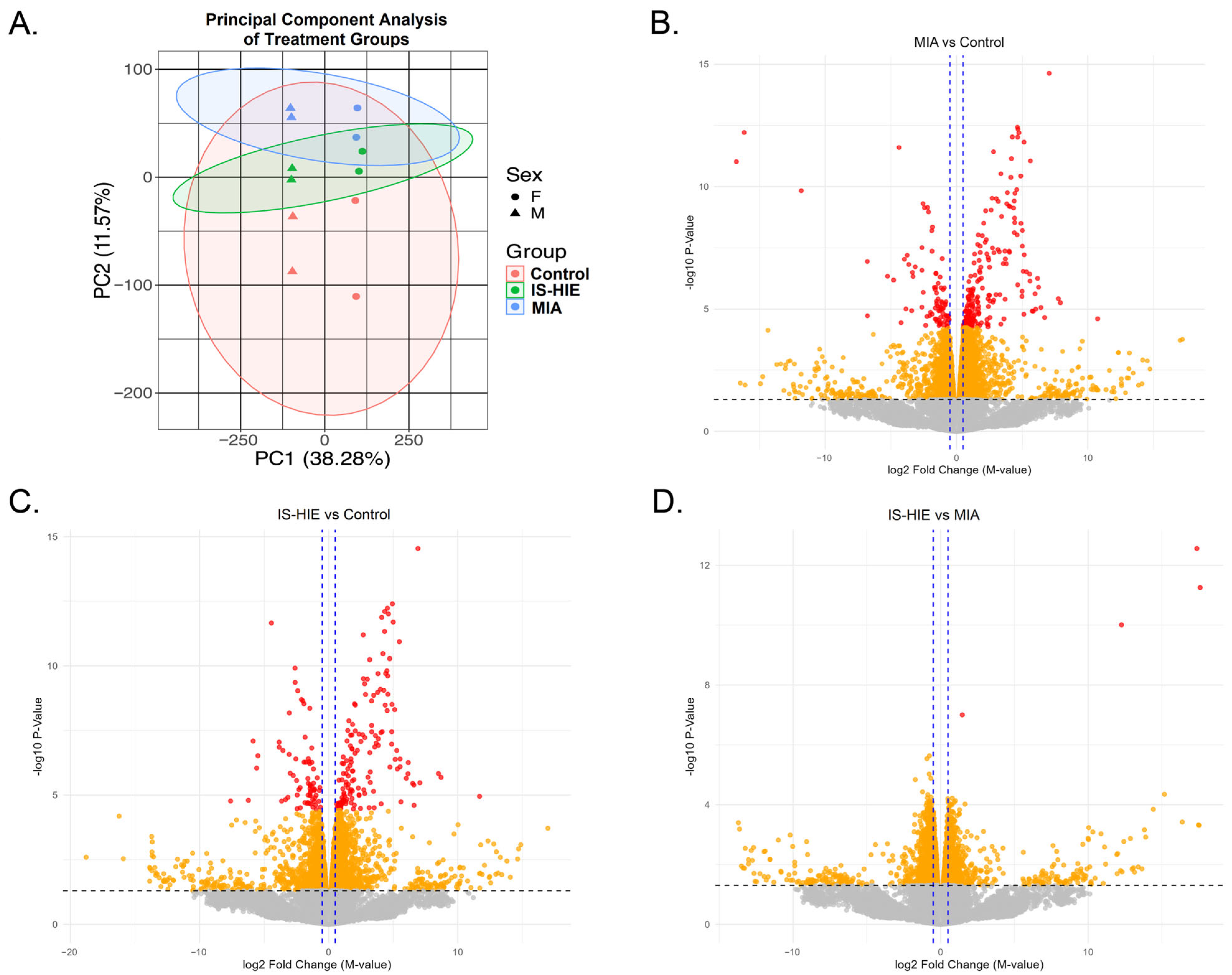
Differential methylation analysis was performed on brain monocyte isolates collected at postnatal day 7 (P7). Principal component analysis was performed to demonstrate group separation by exposure (Figure 1A). The first principal component (PC1) accounted for 38.3% of the total variance, which clustered by sex (Figure 1B). The second component (PC2) accounted for 11.6% of the total variance, which clustered by exposure group. Combined, a variance of 49.8% was captured across the first two principal components. To characterize the CpG-level differential methylation, we generated Volcano plots to compare MIA vs. control (Figure 1B), and MIA vs. IS-HIE CpGs (Figure 1D). CpG sites were plotted based on the log2 fold-change in methylation and statistical significance, with raw p-value and FDR-adjusted significance thresholds indicated for comparison. We observed both hypermethylation and hypomethylation with a predominance of hypermethylated CpG sites in the MIA samples (Figure 1C) relative to control. Statistics are available in Supplementary Tables S1–S3.
Comparison of MIA vs. IS-HIE yielded four differentially methylated CpG sites (Figure 1D, Table 1). The UCSC Genome Browser was used to identify the genomic location and associated gene annotations for these CpG sites [46]. Two CpG sites did not map to a gene or known genomic features. One CpG site mapped to two genomic locations represented by Dph3 and Oxnad1. Another CpG site mapped to a candidate cis-regulatory element. Given the lack of significant DNA methylation changes between MIA and IS-HIE, we concluded that most DNA methylation differences in IS-HIE samples were due to the preceding MIA exposure.

3.2. Differentially Methylated Genes in MIA Are Involved in Craniofacial Suturing, Development, and Immune Function

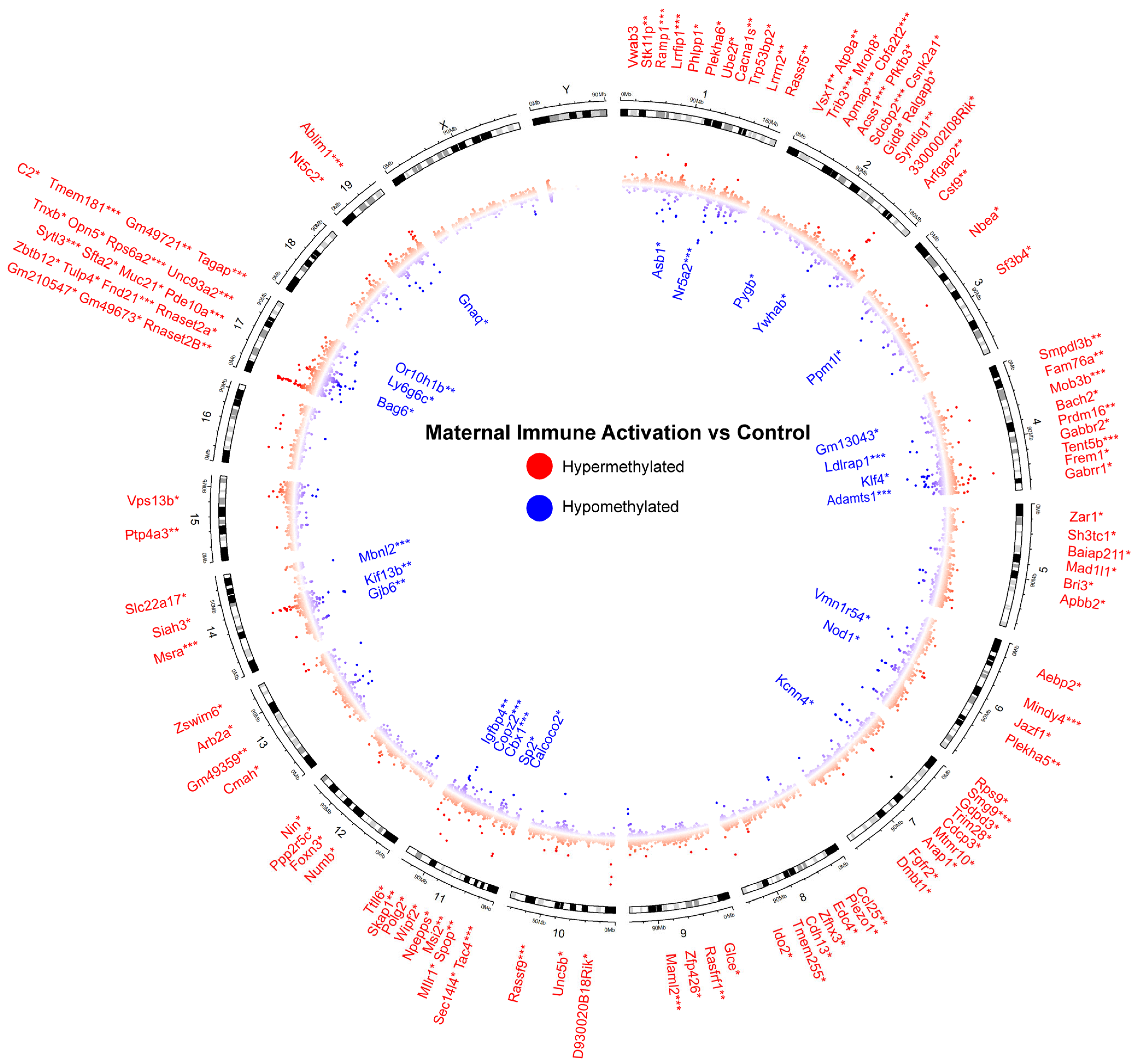
Differential methylation between control and MIA was visualized with a Circos plot generated to assess the broad distribution of CpG site methylation, restricted to Autosomal and Sex chromosomes (Figure 2). Genes were classified as differentially methylated if there was at least one or more associated CpG sites which reached FDR-adjusted significance (FDR < 0.05). Using this criterion, a total of 140 genes were identified in the MIA vs. Control comparison including 24 hypomethylated and 116 hypermethylated genes. (Supplementary Table S4). A considerable number of enriched genes were located on chromosomes 2 (18 genes), 4 (15 genes), and 17 (21 genes).
To assess functional enrichment among the genes identified in MIA vs. Control, a Gene Ontology (GO) enrichment analysis was performed using the Mouse Genome Informatics Visual Annotation Display (VLAD) tool. GO biological process terms associated with FDR-significant genes were summarized using the REVIGO TreeMaps function to visualize functional relationships (Table 1). Using a significance threshold of FDR p < 0.05, enriched GO terms clustered into distinct functional themes, with prominent representation of regulation of cellular processes and craniofacial suturing pathways (Table 2). To explore broader functional trends, we also conducted REVIGO analysis using a threshold of p ≤ 0.1 to capture additional enriched GO terms (Figure 3). All GO Term descriptions and Genes are reported in Supplementary Table S5.
Differentially methylated genes associated with immune signaling, transcriptional regulation, neurodevelopment, and morphogenesis were identified in the MIA vs. control comparison. Among those genes related to immune function and inflammatory signaling we found differential methylation in Ido2, which has been implicated in microglial activation and seizures [47]; Lrrfip1, a nuclear regulator of TNF and innate immune system protein involved in wound repair and oncogenesis [48,49]; Phlpp1, a known counter-regulator of STAT1-mediated inflammatory signaling [50]; Kcnn4, a critical mediator of T cell activation and microglia migration [51]; and Ccl25, a chemokine involved in TH17 response in multiple organ systems [52,53]. Foxn3 and MsrA were also differentially methylated in MIA. Foxn3 regulates NF-kB transcriptional activity and ameliorates MsrA-associated oxidative stress responses [54]. MsrA exerts a neuroprotective influence on embryonic stem cells against ischemic and reperfusion stress by reversing oxidized proteins to their functional configuration [55].
Several transcription factors and transcriptional regulators that are critical to neurodevelopment were also identified such as Klf4, a transcription factor essential for neural differentiation and linked to hydrocephalus when dysregulated [56]; Bach2, an oxidative stress regulating transcription factor for neuronal cell survival [57]; and Zfhx3, important for neurodevelopment and cell differentiation [58]. Also identified were Trim28, which regulates transposable elements in the developing brain [59]; Prdm16, required for neural stem and progenitor cell differentiation [60]; Aebp2, a transcriptional regulator of neural crest cell development [61]; and Sp2, a transcriptional regulator for a myriad of critical cellular processes [62].
Genes associated with developmental processes and structural organization were also identified. These include Numb, which is involved in asymmetric cell division and cell fate determination [63]; Fgfr2, critical for cranial skeleton development and wound healing [64]; Pfkfb3, a potential therapeutic target for cerebral ischemia-reperfusion injury given its role in regeneration of NADPH [65]; and Frem1, essential for extracellular matrix organization and basement membrane structure, therefore, associated with multiple congenital malformations [66]. Polg2, critical for mammalian embryogenesis and mitochondrial DNA replication, was identified as differentially methylated [67].
We also found that Nr5a2 was hypomethylated in MIA. Polymorphisms in this gene are associated with increased risk of premature delivery, a known risk factor for adverse neurologic outcomes [66]. This is particularly interesting given the significantly increased risk of premature delivery in pregnancies complicated by chorioamnionitis [68].

3.3. Mitochondrial DNA Exhibits Consistent Hypermethylation Following Inflammatory Insult

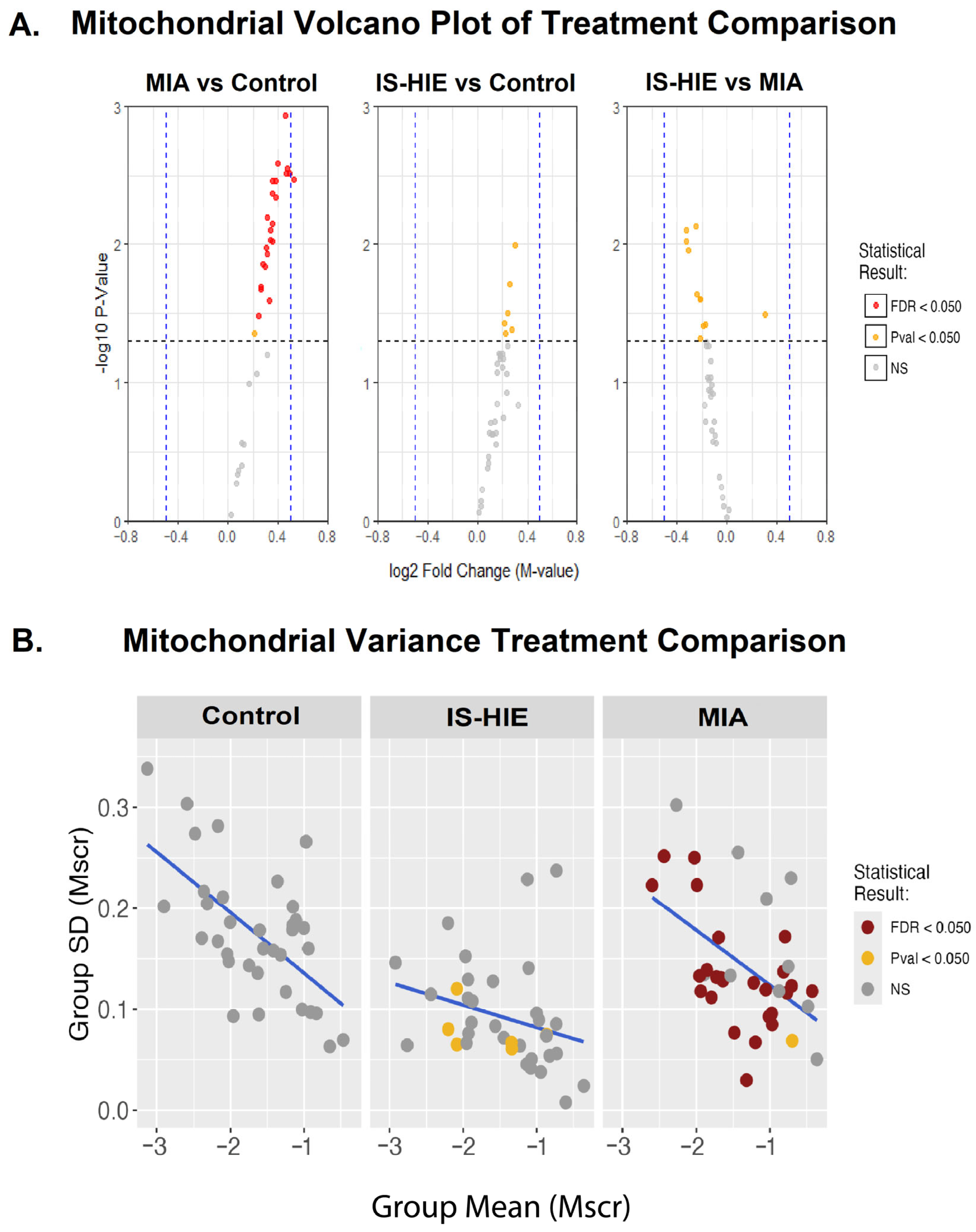
To investigate methylation changes that may influence mitochondrial function, we analyzed mitochondrial CpG methylation differences in MIA compared to control. Notably, 25 of 36 identified mitochondrial CpG sites had statistically significant values of differential methylation in MIA, all of which were hypermethylated in MIA relative to control (Figure 3A, Table 2). IS-HIE also demonstrates a trend toward hypermethylation relative to control, although no CpG loci are statistically differentially methylated after false discovery rate correction (Figure 3A). MIA and IS-HIE mitochondrial DNA methylation did not have statistically significant differences after FDR correction (Figure 3A). Due to the contrast between MIA and IS-HIE mitochondrial methylation, we assessed variance of methylation in the mitochondrial CpGs in control, MIA, and IS-HIE (Figure 3B). Interestingly, variance is highest in control samples but is similar between control and MIA. In IS-HIE, however, overall variance is reduced, suggesting the possibility of selection bias after exposure to hypoxia.
To determine whether mitochondrial CpGs are differentially methylated in human maternal immune activation exposure, we used previously reported neonatal human cord blood histologic chorioamnionitis data [17] available in the gene expression omnibus (GEO accession number GSE153668). Data were pre-processed and filtered to include only mitochondrial DNA, using a custom manifest with mitochondrial DNA [45]. Statistically significant hypermethylation was identified in one CpG (exon 1 of mt-CO1) of twelve that were identifiable in the dataset. Of note, mt-CO1 was not among the differentially methylated genes found in mouse MIA (Table 3).

4. Discussion

MIA is a significant risk factor for adverse neurodevelopmental outcomes, particularly in combination with HIE [8,9,13,14,15,16]. In this study, we demonstrate that MIA induces widespread DNA methylation differences in brain monocytes. We identified differentially methylated transcription factors that mediate neurodevelopment, providing a potential mechanism for the increased neurodevelopmental risk imparted by MIA. We also identified differentially methylated genes involved in immunological function, inflammatory signaling, transcriptional regulation, and neurodevelopmental processes. Overall, we found that MIA exerts a considerable influence on the neonatal epigenetic profile in brain monocytes.
Principal component analysis (Figure 1A) demonstrates that MIA and IS-HIE samples overlap, while both are distinct from the control samples, suggesting that DNA methylation changes in HIE and MIA are similar. We observed minimal variation between DNA methylation patterns in MIA and HIE, with only 4 significant CpGs, only one of which is associated with the coding region of a gene. The limited number of differentially methylated CpGs in the IS-HIE vs. MIA comparison, combined with only a single CpG site per gene raises concerns about the biological validity of the differentially methylated loci we identified in IS-HIE. However, the small sample size in our study may limit the generalizability of this finding. In total, we identified 140 differentially methylated nuclear genes in the MIA vs. control comparison, containing at least one differentially methylated CpG with an FDR-adjusted p-value significance less than 0.05. Of these, 116 genes were hypermethylated, while 24 genes were hypomethylated.
While investigating the comparisons between IS-HIE and MIA treatments, only four hypermethylated CpG loci were reported to be significant with FDR-corrected p-values. To assess the biological relevance of these four CpG sites, we used the UCSC Genome Browser to annotate genomic features. Notably, Cg41388844 (two probes) did not map any known annotations in mm10. Cg40977002 was localized at the site of two overlapping genes; Dph3 at the Exon 1 coding region and Oxnad1 at the 5′ untranslated region. Dph3 is essential for diphthamide synthesis which modifies elongation factor 2 (EEF2), a key post-translational modification involved in translational integrity. Although not directly associated with this CpG site, Fam76a-reported in our MIA vs. Control gene list and not associated with this CpG loci- may also regulate the ratio of Dph3 transcript in response to intermittent hypoxia [69]. Dph3 is also reported to be regulated by parental noncoding RNA molecules with downstream regulation in oocytes [69]. Oxnad1 is involved in oxidoreductase activity. Hypermethylation may enhance or reduce transcription or exon usage, potentially impacting cell growth (mTOR) pathways [70] and maternal-fetal cellular stress response [71]. Furthermore, Cg40977002 is a predicted candidate for cCRE and likely involved in learning and memory, chromatin organization, and transcriptional regulation [72]. CTCF-mediation and enhancer promoter interactions are critical for genome organization and can cause a variety of developmental disorders with intellectual disabilities [73].
Gene Ontology analysis reveals possible mechanisms underlying the increased neurologic risk imparted by maternal immune activation in utero. This analysis highlighted immunological functioning changes, increased inflammatory signaling, stress response signaling, programmed cell death and differentiation, neurodevelopmental and morphological processes. Inflammatory and immunological gene regulation fit with the primary functions of brain monocytes, which include intrinsic microglia and infiltrating macrophages. These monocytes are the primary initial cellular responders to brain injury or inflammation. Alterations in inflammatory and immunological gene regulation after MIA may alter the response of brain monocytes to exacerbate neuronal or glial phagocytosis, resulting in poorer long term functional outcome. However, additional studies are needed to definitively link these methylation changes to gene transcriptional differences and functional monocyte changes in response to MIA. The significant number of transcriptional regulators that demonstrate altered methylation after MIA is notable, given the possibility of broad downstream gene regulation changes conveyed by altered expression of transcription factors.
Surprisingly, we identified statistically significant hypermethylation in the majority of CpG sites in the mitochondrial genome after MIA exposure. Previous studies have shown that differential methylation in mitochondrial DNA regulates mitochondrial gene expression and cellular metabolism, crucial for neurodevelopment and brain function [74,75]. Our findings suggest that MIA may impact mitochondrial gene expression and may increase the risk of failure of oxidative phosphorylation. Notably, IS-HIE mitochondria did not demonstrate the same degree of statistically significant difference seen in MIA mitochondria. Variance analysis reveals that IS-HIE mitochondrial methylation has significantly lower variance compared to control and MIA mitochondria CpG sites. This raises the possibility that mitochondria are under selection pressure conferred by the combined exposure to MIA and subsequent hypoxia that results in loss of metabolically “at risk” mitochondria or increased biogenesis of metabolically stable mitochondria. Analysis of previously published human data from cord blood samples from neonates with chorioamnionitis exposure also identified hypermethylation in mitochondrial DNA, however, the limited number of patients included in this analysis and limitations of detection of mitochondrial CpGs using Illumina sequencing likely limit definitive conclusions that can be drawn from this data. However, this data suggests that mitochondrial DNA methylation may be an important and clinically relevant direction for future research into the mechanisms of neurologic risk conveyed by MIA in humans.
One limitation of our study is the selective focus on brain monocytes which limits our conclusions regarding widespread DNA methylation changes to the immune cells within the brain. However, brain monocytes are the primary responders to brain insult or injury and play a key role in dictating the response and remodeling of the injured tissue [21,76]. Future studies investigating DNA methylation changes in neural or glial cells will help determine whether these effects are unique to the brain monocyte population or are more broadly shared among brain cell types. Another potential limitation is the absence of a hypoxia exposure group to confirm whether hypoxia alone induces DNA methylation. However, hypoxia was intentionally omitted in this study as our primary goal was to investigate the mechanisms of neural risk conveyed by MIA. The small sample size in this study, with four biological replicates per group, likely limits identification of smaller variations in DNA methylation. Statistical limitations are also likely given that biological replicates were siblings with similar in utero exposures. Given the small sample size, we did not analyze sex effects on DNA methylation differences between groups. Future studies can use this data for sample size estimation to determine both small and large effects.

5. Conclusions

Our findings demonstrate widespread DNA methylation changes in brain monocytes after MIA or IS-HIE in genes that are important for immune activation, neurodevelopment, craniofacial development, and mitochondrial function, underscoring the need for future investigation into the transcriptional and functional mechanisms conveyed by these methylation differences.

Supplementary Materials

The following supporting information can be downloaded at: https://www.mdpi.com/article/10.3390/cells15080714/s1, Table S1: MIA vs. Control Differential Methylation and Log Fold Change statistics. Table S2: HIE vs. Control Differential Methylation and Log Fold Change statistics. Table S3: HIE vs. MIA Differential Methylation and Log Fold Change statistics. Table S4: Methylated Gene Table: MIA vs. Control; Table S5: Revigo Plot GO Term Associations.

Author Contributions

Conceptualization, E.W.-J., M.B., R.A. and A.M.; methodology, A.T.E., J.R.H., B.H., M.B., R.A., A.M. and E.W.-J.; software, A.T.E. and J.R.H.; validation, A.T.E., J.R.H., R.A. and A.M.; formal analysis, A.T.E., J.R.H., B.H., M.B., R.A., A.M. and E.W.-J.; investigation, A.T.E., J.R.H. and B.H.; resources, E.W.-J.; data curation, A.T.E. and J.R.H.; writing—original draft preparation, A.T.E., J.R.H., B.H. and A.H.; writing—review and editing, A.T.E., J.R.H., B.H., A.H., M.B., R.A., A.M. and E.W.-J.; visualization, A.T.E. and J.R.H.; supervision, E.W.-J., M.B., R.A. and A.M.; project administration, E.W.-J., funding acquisition, E.W.-J. All authors have read and agreed to the published version of the manuscript.

Funding

This work was funded by The Nemours Foundation, Thomas Jefferson University, and NIH 3P20GM103446-23S8.

Institutional Review Board Statement

The animal study protocol was approved by the Institutional Animal Care and Use Committee of Nemours Children’s Health (protocol RSP21-27351-002 original approval 7 July 2021 most recent approval 6 February 2026) for studies involving animals.

Informed Consent Statement

Not applicable.

Data Availability Statement

The data presented in this study are openly available in [NCBI GEO accession number GSE319589].

Acknowledgments

We would like to acknowledge Nicholas Felter for his useful comments during manuscript editing. The authors have reviewed and edited the manuscript and take full responsibility for the content of this publication.

Conflicts of Interest

The authors declare no conflicts of interest. The funders had no role in the design of the study; in the collection, analyses, or interpretation of data; in the writing of the manuscript; or in the decision to publish the results.

Abbreviations

The following abbreviations are used in this manuscript:
FDRFalse discovery rate
GOGene ontology
HIEHypoxic ischemic encephalopathy
LPSLipopolysaccharide
IS-HIEInflammation sensitized HIE
MIAMaternal immune activation
PCAPrincipal component analysis

References

  1. Chan, N.H.; Hawkins, C.C.; Rodrigues, B.V.; Cornet, M.; Gonzalez, F.F.; Wu, Y.W. Neuroprotection for neonatal hypoxic-ischemic encephalopathy: A review of novel therapies evaluated in clinical studies. Dev. Med. Child Neurol. 2025, 67, 591–599. [Google Scholar] [CrossRef] [PubMed] [PubMed Central]
  2. Kurinczuk, J.J.; White-Koning, M.; Badawi, N. Epidemiology of neonatal encephalopathy and hypoxic-ischaemic encephalopathy. Early Hum. Dev. 2010, 86, 329–338. [Google Scholar] [CrossRef] [PubMed]
  3. Lee, A.C.; Kozuki, N.; Blencowe, H.; Vos, T.; Bahalim, A.; Darmstadt, G.L.; Niermeyer, S.; Ellis, M.; Robertson, N.J.; Cousens, S.; et al. Intrapartum-related neonatal encephalopathy incidence and impairment at regional and global levels for 2010 with trends from 1990. Pediatr. Res. 2013, 74, 50–72. [Google Scholar] [CrossRef] [PubMed] [PubMed Central]
  4. Natarajan, G.; Pappas, A.; Shankaran, S. Outcomes in childhood following therapeutic hypothermia for neonatal hypoxic-ischemic encephalopathy (hie). Semin. Perinatol. 2016, 40, 549–555. [Google Scholar] [CrossRef] [PubMed] [PubMed Central]
  5. Davidson, J.O.; Ewassink, G.; van den Heuij, L.G.; Bennet, L.; Gunn, A.J. Therapeutic hypothermia for neonatal hypoxic-ischemic encephalopathy—Where to from here? Front. Neurol. 2015, 6, 198. [Google Scholar] [CrossRef] [PubMed] [PubMed Central]
  6. Wassink, G.; Davidson, J.O.; Dhillon, S.K.; Zhou, K.; Bennet, L.; Thoresen, M.; Gunn, A.J. Therapeutic hypothermia in neonatal hypoxic-ischemic encephalopathy. Curr. Neurol. Neurosci. Rep. 2019, 19, 2. [Google Scholar] [CrossRef] [PubMed]
  7. Bellos, I.; Devi, U.; Pandita, A. Therapeutic hypothermia for neonatal encephalopathy in low- and middle-income countries: A meta-analysis. Neonatology 2022, 119, 300–310. [Google Scholar] [CrossRef] [PubMed]
  8. Wang, Y.; Luo, S.; Wang, K.; Hou, Y.; Yan, H.; Zhang, Y. Maternal and neonatal exposure to risk factors for neonates with moderate or severe hypoxic ischemic encephalopathy: A cross-sectional study. Ital. J. Pediatr. 2022, 48, 188. [Google Scholar] [CrossRef] [PubMed] [PubMed Central]
  9. Mir, I.N.; Johnson-Welch, S.F.; Nelson, D.B.; Brown, L.S.; Rosenfeld, C.R.; Chalak, L.F. Placental pathology is associated with severity of neonatal encephalopathy and adverse developmental outcomes following hypothermia. Am. J. Obstet. Gynecol. 2015, 213, 849.e1–849.e7. [Google Scholar] [CrossRef] [PubMed]
  10. Novak, C.M.; Eke, A.C.; Ozen, M.; Burd, I.; Graham, E.M. Risk factors for neonatal hypoxic-ischemic encephalopathy in the absence of sentinel events. Am. J. Perinatol. 2019, 36, 27–33. [Google Scholar] [CrossRef] [PubMed]
  11. Parker, S.J.; Kuzniewicz, M.; Niki, H.; Wu, Y.W. Antenatal and intrapartum risk factors for hypoxic-ischemic encephalopathy in a us birth cohort. J. Pediatr. 2018, 203, 163–169. [Google Scholar] [CrossRef] [PubMed]
  12. Ravichandran, L.; Allen, V.M.; Allen, A.C.; Vincer, M.; Baskett, T.F.; Woolcott, C.G. Incidence, intrapartum risk factors, and prognosis of neonatal hypoxic-ischemic encephalopathy among infants born at 35 weeks gestation or more. J. Obstet. Gynaecol. Can. 2020, 42, 1489–1497. [Google Scholar] [CrossRef] [PubMed]
  13. Mcintyre, S.; Taitz, D.; Keogh, J.; Goldsmith, S.; Badawi, N.; Blair, E. A systematic review of risk factors for cerebral palsy in children born at term in developed countries. Dev. Med. Child Neurol. 2013, 55, 499–508. [Google Scholar] [CrossRef] [PubMed]
  14. Neufeld, M.D.; Frigon, C.; Graham, A.S.; Mueller, A.B. Maternal infection and risk of cerebral palsy in term and preterm infants. J. Perinatol. 2005, 25, 108–113. [Google Scholar] [CrossRef] [PubMed]
  15. Wu, Y.W.; Colford, J.M., Jr. Chorioamnionitis as a risk factor for cerebral palsy: A meta-analysis. JAMA 2000, 284, 1417–1424. [Google Scholar] [CrossRef] [PubMed]
  16. Wu, Y.W.; Escobar, G.J.; Grether, J.K.; Croen, L.A.; Greene, J.D.; Newman, T.B. Chorioamnionitis and cerebral palsy in term and near-term infants. JAMA 2003, 290, 2677–2684. [Google Scholar] [CrossRef] [PubMed]
  17. Fong, G.; Betal, S.G.N.; Murthy, S.; Favara, M.; Chan, J.S.Y.; Addya, S.; Shaffer, T.H.; Greenspan, J.; Bhandari, V.; Li, D.; et al. DNA methylation profile in human cord blood mononuclear leukocytes from term neonates: Effects of histological chorioamnionitis. Front. Pediatr. 2020, 8, 437. [Google Scholar] [CrossRef] [PubMed]
  18. Crowgey, E.L.; Marsh, A.G.; Robinson, K.G.; Yeager, S.K.; Akins, R.E. Epigenetic machine learning: Utilizing DNA methylation patterns to predict spastic cerebral palsy. BMC Bioinform. 2018, 19, 225. [Google Scholar] [CrossRef] [PubMed] [PubMed Central]
  19. Robinson, K.G.; Marsh, A.G.; Lee, S.K.; Hicks, J.; Romero, B.; Batish, M.; Crowgey, E.L.; Shrader, M.W.; Akins, R.E. DNA methylation analysis reveals distinct patterns in satellite cell-derived myogenic progenitor cells of subjects with spastic cerebral palsy. J. Pers. Med. 2022, 12, 1978. [Google Scholar] [CrossRef] [PubMed] [PubMed Central]
  20. Lemanski, E.A.; Collins, B.A.; Ebenezer, A.T.; Anilkumar, S.; Langdon, V.A.; Zheng, Q.; Ding, S.; Franke, K.R.; Schwarz, J.M.; Wright-Jin, E.C. A novel non-invasive murine model of neonatal hypoxic-ischemic encephalopathy demonstrates developmental delay and motor deficits with activation of inflammatory pathways in monocytes. Cells 2024, 13, 1551. [Google Scholar] [CrossRef] [PubMed]
  21. Colonna, M.; Butovsky, O. Microglia function in the central nervous system during health and neurodegeneration. Annu. Rev. Immunol. 2017, 35, 441–468. [Google Scholar] [CrossRef] [PubMed] [PubMed Central]
  22. Ma, Q.; Zhang, L. Epigenetic programming of hypoxic-ischemic encephalopathy in response to fetal hypoxia. Prog. Neurobiol. 2015, 124, 28–48. [Google Scholar] [CrossRef] [PubMed] [PubMed Central]
  23. Acun, C.; Karnati, S.; Padiyar, S.; Puthuraya, S.; Aly, H.; Mohamed, M. Trends of neonatal hypoxic-ischemic encephalopathy prevalence and associated risk factors in the united states, 2010 to 2018. Am. J. Obstet. Gynecol. 2022, 227, 751.e1–751.e10. [Google Scholar] [CrossRef] [PubMed]
  24. Fortin, J.P.; Triche, T.J., Jr.; Hansen, K.D. Preprocessing, normalization and integration of the illumina humanmethylationepic array with minfi. Bioinformatics 2017, 33, 558–560. [Google Scholar] [CrossRef] [PubMed] [PubMed Central]
  25. Ritchie, M.E.; Phipson, B.; Wu, D.; Hu, Y.; Law, C.W.; Shi, W.; Smyth, G.K. Limma powers differential expression analyses for rna-sequencing and microarray studies. Nucleic Acids Res. 2015, 43, e47. [Google Scholar] [CrossRef] [PubMed] [PubMed Central]
  26. Wickham, H. Dplyr: A Grammar of Data Manipulation. Available online: https://CRAN.R-project.org/package=dplyr (accessed on 26 February 2026).
  27. Wickham, H.; Averick, M.; Bryan, J.; Chang, W.; McGowan, L.D.A.; François, R.; Grolemund, G.; Hayes, A.; Henry, L.; Hester, J.; et al. Welcome to the tidyverse. J. Open Source Softw. 2019, 4, 1686. [Google Scholar] [CrossRef]
  28. Openxlsx: Read, Write and Edit Xlsx Files. Available online: https://CRAN.R-project.org/package=openxlsx (accessed on 26 February 2026).
  29. Readr: Read Rectangular Text Data. Available online: https://CRAN.R-project.org/package=readr (accessed on 26 February 2026).
  30. Xu, Z.; Niu, L.; Li, L.; Taylor, J.A. Enmix: A novel background correction method for illumina humanmethylation450 beadchip. Nucleic Acids Res. 2016, 44, e20. [Google Scholar] [CrossRef] [PubMed] [PubMed Central]
  31. Lawrence, M.; Huber, W.; Pagès, H.; Aboyoun, P.; Carlson, M.; Gentleman, R.; Morgan, M.T.; Carey, V.J. Software for computing and annotating genomic ranges. PLoS Comput. Biol. 2013, 9, e1003118. [Google Scholar] [CrossRef] [PubMed] [PubMed Central]
  32. Slowikowski, K. Ggrepel: Automatically Position Non-Overlapping Text Labels with ‘ggplot2’. 2026. Available online: https://CRAN.R-project.org/package=ggrepel (accessed on 26 February 2026).
  33. Gu, Z.; Gu, L.; Eils, R.; Schlesner, M.; Brors, B. Circlize implements and enhances circular visualization in r. Bioinformatics 2014, 30, 2811–2812. [Google Scholar] [CrossRef] [PubMed]
  34. Geneplotter. Available online: https://bioconductor.org/packages/release/bioc/html/geneplotter.html (accessed on 26 February 2026).
  35. Treemap: Treemap Visualization. Available online: https://CRAN.R-project.org/package=treemap (accessed on 26 February 2026).
  36. Stauffer, R.; Mayr, G.J.; Dabernig, M.; Zeileis, A. Somewhere over the rainbow: How to make effective use of colors in meteorological visualizations. Bull. Am. Meteorol. Soc. 2009, 96, 203–216. [Google Scholar] [CrossRef]
  37. Pederson, T.L. Patchwork: The Composer of Plots. Available online: https://cran.r-project.org/package=patchwork (accessed on 26 February 2026).
  38. Cavalcante, R.G.; Sartor, M.A. Annotatr: Genomic regions in context. Bioinformatics 2017, 33, 2381–2383. [Google Scholar] [CrossRef] [PubMed] [PubMed Central]
  39. Durinck, S.; Spellman, P.T.; Birney, E.; Huber, W. Mapping identifiers for the integration of genomic datasets with the r/bioconductor package biomart. Nat. Protoc. 2009, 4, 1184–1191. [Google Scholar] [CrossRef] [PubMed] [PubMed Central]
  40. Wickham, H. Ggplot2: Elegant Graphics for Data Analysis; Springer: New York, NY, USA, 2016. [Google Scholar]
  41. Du, P.; Zhang, X.; Huang, C.-C.; Jafari, N.; Kibbe, A.W.; Hou, L.; Lin, S.M. Comparison of beta-value and m-value methods for quantifying methylation levels by microarray analysis. BMC Bioinform. 2010, 11, 587. [Google Scholar] [CrossRef] [PubMed] [PubMed Central]
  42. Maksimovic, J.; Phipson, B.; Oshlack, A. A cross-package bioconductor workflow for analysing methylation array data. F1000Research 2016, 5, 1281. [Google Scholar] [CrossRef] [PubMed] [PubMed Central]
  43. Richardson, J.E.; Bult, C.J. Visual annotation display (vlad): A tool for finding functional themes in lists of genes. Mamm. Genome 2015, 26, 567–573. [Google Scholar] [CrossRef] [PubMed] [PubMed Central]
  44. Supek, F.; Bošnjak, M.; Škunca, N.; Šmuc, T. Revigo summarizes and visualizes long lists of gene ontology terms. PLoS ONE 2011, 6, e21800. [Google Scholar] [CrossRef] [PubMed] [PubMed Central]
  45. Zhou, W.; Laird, P.W.; Shen, H. Comprehensive characterization, annotation and innovative use of infinium DNA methylation beadchip probes. Nucleic Acids Res. 2017, 45, e22. [Google Scholar] [CrossRef] [PubMed] [PubMed Central]
  46. Casper, J.; Speir, M.L.; Raney, B.J.; Perez, G.; Nassar, L.R.; Lee, C.M.; Hinrichs, A.S.; Gonzalez, J.N.; Fischer, C.; Diekhans, M.; et al. The ucsc genome browser database: 2026 update. Nucleic Acids Res. 2026, 54, D1331–D1335. [Google Scholar] [CrossRef] [PubMed] [PubMed Central]
  47. Kaswan, Z.A.M.; Brooks, A.K.; Hurtado, M.; Chen, E.Y.; Steelman, A.J.; McCusker, R.H. Microglia-specific ido2 deficiency attenuates ictogenesis in the tmev model of viral encephalitis. Brain Behav. Immun. 2025, 129, 839–856. [Google Scholar] [CrossRef] [PubMed]
  48. Dai, P.; Jeong, S.Y.; Yu, Y.; Leng, T.; Wu, W.; Xie, L.; Chen, X. Modulation of tlr signaling by multiple myd88-interacting partners including leucine-rich repeat fli-i-interacting proteins. J. Immunol. 2009, 182, 3450–3460. [Google Scholar] [CrossRef] [PubMed]
  49. Li, J.; Tuo, D.; Guo, G.; Gao, Y.; Gan, J. The clinical significance and oncogenic function of lrrfip1 in pancreatic cancer. Discov. Oncol. 2024, 15, 123. [Google Scholar] [CrossRef] [PubMed] [PubMed Central]
  50. Katsenelson, K.C.; Stender, J.D.; Kawashima, A.T.; Lordén, G.; Uchiyama, S.; Nizet, V.; Glass, C.K.; Newton, A.C. Phlpp1 counter-regulates stat1-mediated inflammatory signaling. eLife 2019, 8, e48609. [Google Scholar] [CrossRef] [PubMed] [PubMed Central]
  51. Ferreira, R.; Lively, S.; Schlichter, L.C. Il-4 type 1 receptor signaling up-regulates kcnn4 expression, and increases the kca3.1 current and its contribution to migration of alternative-activated microglia. Front. Cell. Neurosci. 2014, 8, 183. [Google Scholar] [CrossRef] [PubMed] [PubMed Central]
  52. Otero, A.M.; Antonson, A.M. At the crux of maternal immune activation: Viruses, microglia, microbes, and il-17a. Immunol. Rev. 2022, 311, 205–223. [Google Scholar] [CrossRef] [PubMed] [PubMed Central]
  53. Zhang, Y.; Han, J.; Wu, M.; Xu, L.; Wang, Y.; Yuan, W.; Hua, F.; Fan, H.; Dong, F.; Qu, X.; et al. Toll-like receptor 4 promotes th17 lymphocyte infiltration via ccl25/ccr9 in pathogenesis of experimental autoimmune encephalomyelitis. J. Neuroimmune Pharmacol. 2019, 14, 493–502. [Google Scholar] [CrossRef] [PubMed]
  54. Zhu, X.; Huang, B.; Zhao, F.; Lian, J.; He, L.; Zhang, Y.; Ji, L.; Zhang, J.; Yan, X.; Zeng, T.; et al. P38-mediated foxn3 phosphorylation modulates lung inflammation and injury through the nf-kappab signaling pathway. Nucleic Acids Res. 2023, 51, 2195–2214. [Google Scholar] [CrossRef] [PubMed] [PubMed Central]
  55. Zhang, C.; Jia, P.; Jia, Y.; Weissbach, H.; Webster, K.A.; Huang, X.; Lemanski, S.L.; Achary, M.; Lemanski, L.F. Methionine sulfoxide reductase a (msra) protects cultured mouse embryonic stem cells from h2o2-mediated oxidative stress. J. Cell. Biochem. 2010, 111, 94–103. [Google Scholar] [CrossRef] [PubMed] [PubMed Central]
  56. Qin, S.; Liu, M.; Niu, W.; Zhang, C.L. Dysregulation of kruppel-like factor 4 during brain development leads to hydrocephalus in mice. Proc. Natl. Acad. Sci. USA 2011, 108, 21117–21121. [Google Scholar] [CrossRef] [PubMed] [PubMed Central]
  57. Hoshino, H.; Igarashi, K. Expression of the oxidative stress-regulated transcription factor bach2 in differentiating neuronal cells. J. Biochem. 2002, 132, 427–431. [Google Scholar] [CrossRef] [PubMed]
  58. Del Rocio Perez Baca, M.; Jacobs, E.Z.; Vantomme, L.; Leblanc, P.; Bogaert, E.; Dheedene, A.; De Cock, L.; Haghshenas, S.; Foroutan, A.; Levy, M.A.; et al. A novel neurodevelopmental syndrome caused by loss-of-function of the zinc finger homeobox 3 (zfhx3) gene. medRxiv 2023. [Google Scholar] [CrossRef] [PubMed] [PubMed Central]
  59. Grassi, D.A.; Jönsson, M.E.; Brattås, P.L.; Jakobsson, J. Trim28 and the control of transposable elements in the brain. Brain Res. 2019, 1705, 43–47. [Google Scholar] [CrossRef] [PubMed]
  60. Shimada, I.S.; Acar, M.; Burgess, R.J.; Zhao, Z.; Morrison, S.J. Prdm16 is required for the maintenance of neural stem cells in the postnatal forebrain and their differentiation into ependymal cells. Genes Dev. 2017, 31, 1134–1146. [Google Scholar] [CrossRef] [PubMed] [PubMed Central]
  61. Kim, H.; Kang, K.; Ekram, M.B.; Roh, T.-Y.; Kim, J. Aebp2 as an epigenetic regulator for neural crest cells. PLoS ONE 2011, 6, e25174. [Google Scholar] [CrossRef] [PubMed] [PubMed Central]
  62. Terrados, G.; Finkernagel, F.; Stielow, B.; Sadic, D.; Neubert, J.; Herdt, O.; Krause, M.; Scharfe, M.; Jarek, M.; Suske, G. Genome-wide localization and expression profiling establish sp2 as a sequence-specific transcription factor regulating vitally important genes. Nucleic Acids Res. 2012, 40, 7844–7857. [Google Scholar] [CrossRef] [PubMed] [PubMed Central]
  63. Guo, M.; Jan, L.Y.; Jan, Y.N. Control of daughter cell fates during asymmetric division: Interaction of numb and notch. Neuron 1996, 17, 27–41. [Google Scholar] [CrossRef] [PubMed]
  64. Azoury, S.C.; Reddy, S.; Shukla, V.; Deng, C.X. Fibroblast growth factor receptor 2 (fgfr2) mutation related syndromic craniosynostosis. Int. J. Biol. Sci. 2017, 13, 1479–1488. [Google Scholar] [CrossRef] [PubMed] [PubMed Central]
  65. Burmistrova, O.; Olias-Arjona, A.; Lapresa, R.; Jimenez-Blasco, D.; Eremeeva, T.; Shishov, D.; Romanov, S.; Zakurdaeva, K.; Almeida, A.; Fedichev, P.O.; et al. Targeting pfkfb3 alleviates cerebral ischemia-reperfusion injury in mice. Sci. Rep. 2019, 9, 11670. [Google Scholar] [CrossRef] [PubMed] [PubMed Central]
  66. Kaluarachchi, D.C.; Momany, A.M.; Busch, T.D.; Gimenez, L.G.; Saleme, C.; Cosentino, V.; Christensen, K.; Dagle, J.M.; Ryckman, K.K.; Murray, J.C. Polymorphisms in nr5a2, gene encoding liver receptor homolog-1 are associated with preterm birth. Pediatr. Res. 2016, 79, 776–780. [Google Scholar] [CrossRef] [PubMed] [PubMed Central]
  67. Humble, M.M.; Young, M.J.; Foley, J.F.; Pandiri, A.R.; Travlos, G.S.; Copeland, W.C. Polg2 is essential for mammalian embryogenesis and is required for mtdna maintenance. Hum. Mol. Genet. 2013, 22, 1017–1025. [Google Scholar] [CrossRef] [PubMed] [PubMed Central]
  68. Jain, V.G.; Willis, K.A.; Jobe, A.; Ambalavanan, N. Chorioamnionitis and neonatal outcomes. Pediatr. Res. 2022, 91, 289–296. [Google Scholar] [CrossRef] [PubMed] [PubMed Central]
  69. Liu, C.; Qu, D.; Li, C.; Pu, W.; Li, J.; Cai, L. Mir-448-3p/mir-1264-3p participates in intermittent hypoxic response in hippocampus by regulating fam76b/hnrnpa2b1. CNS Neurosci. Ther. 2025, 31, e70239. [Google Scholar] [CrossRef] [PubMed] [PubMed Central]
  70. Rosario, F.J.; Kelly, A.C.; Gupta, M.B.; Powell, T.L.; Cox, L.; Jansson, T. Mechanistic target of rapamycin complex 2 regulation of the primary human trophoblast cell transcriptome. Front. Cell Dev. Biol. 2021, 9, 670980. [Google Scholar] [CrossRef] [PubMed] [PubMed Central]
  71. Littlejohn, B.P.; Price, D.M.; Neuendorff, A.D.; Carroll, A.J.; Vann, R.C.; Riggs, P.K.; Riley, D.G.; Long, C.R.; Welsh, T.H.; Randel, R.D. Prenatal transportation stress alters genome-wide DNA methylation in suckling brahman bull calves. J. Anim. Sci. 2018, 96, 5075–5099. [Google Scholar] [CrossRef] [PubMed] [PubMed Central]
  72. Sams, D.S.; Nardone, S.; Getselter, D.; Raz, D.; Tal, M.; Rayi, P.R.; Kaphzan, H.; Hakim, O.; Elliott, E. Neuronal ctcf is necessary for basal and experience-dependent gene regulation, memory formation, and genomic structure of bdnf and arc. Cell Rep. 2016, 17, 2418–2430. [Google Scholar] [CrossRef] [PubMed]
  73. Gregor, A.; Oti, M.; Kouwenhoven, E.N.; Hoyer, J.; Sticht, H.; Ekici, A.B.; Kjaergaard, S.; Rauch, A.; Stunnenberg, H.G.; Uebe, S.; et al. De novo mutations in the genome organizer ctcf cause intellectual disability. Am. J. Hum. Genet. 2013, 93, 124–131. [Google Scholar] [CrossRef] [PubMed] [PubMed Central]
  74. Coppede, F. Mitochondrial DNA methylation and mitochondria-related epigenetics in neurodegeneration. Neural Regen. Res. 2024, 19, 405–406. [Google Scholar] [CrossRef] [PubMed] [PubMed Central]
  75. Devall, M.; Roubroeks, J.; Mill, J.; Weedon, M.; Lunnon, K. Epigenetic regulation of mitochondrial function in neurodegenerative disease: New insights from advances in genomic technologies. Neurosci. Lett. 2016, 625, 47–55. [Google Scholar] [CrossRef] [PubMed] [PubMed Central]
  76. Chen, H.R.; Chen, C.W.; Kuo, Y.M.; Chen, B.; Kuan, I.S.; Huang, H.; Lee, J.; Anthony, N.; Kuan, C.Y.; Sun, Y.Y. Monocytes promote acute neuroinflammation and become pathological microglia in neonatal hypoxic-ischemic brain injury. Theranostics 2022, 12, 512–529. [Google Scholar] [CrossRef] [PubMed] [PubMed Central]
Figure 1. Epigenetic changes after MIA and IS-HIE. (A) Principal component analysis demonstrates 49.8% of total variance. PC1 indicates biological variability attributed to sex of the animal (circle, female; triangle, male). PC2 indicates biological variability attributed to exposure group (control, red; IS-HIE, green; MIA, blue). (B) Volcano plot demonstrates differential DNA methylation between MIA and control. X-axis indicates a log2 fold-change in methylation and the Y-axis; −log10(p-value). Dashed horizontal line denotes the significance threshold p = 0.05. All CpG points are plotted based on the log(p) values. Points in grey are non-significant CpGs; orange indicates significant p-values; red indicates significant FDR adjusted p-values. Dashed vertical lines indicate a threshold for differential methylation by fold-change. (C) Volcano plot demonstrates differential DNA methylation between IS-HIE and control. (D) Volcano plot demonstrates differential methylation between MIA and IS-HIE.
Cells 15 00714 g001
Figure 2. Genomic locations of genes differentially methylated in MIA. Circos plot demonstrating differential DNA methylation across mouse autosomal (1–19) and sex (X and Y) chromosomes. Each point is a CpG methylation score using the mean differential of raw beta-values located at the genomic location. Red denotes hypermethylation and blue denotes hypomethylation in MIA relative to the control. Genes were considered significant if at least one associated CpG site reached FDR-adjusted significance (FDR < 0.05). * denotes FDR adjusted p-value of 0.05, ** denotes FDR adjusted p-value of 0.01, *** denotes FDR adjusted p-value of 0.001.
Cells 15 00714 g002
Figure 3. Mitochondrial DNA methylation changes after MIA and HIE. (A) Volcano plot demonstrates differential DNA methylation between comparisons of exposure groups in the mitochondrial CpG sites. X-axis indicates a log2 fold-change in methylation and the Y-axis; −log10(p-value). Dashed horizontal line denotes the significance threshold −log10(p = 0.05). All CpG points are plotted based on the log(p) values. Points in grey are non-significant CpGs; orange indicates significant p-values; red indicates significant FDR adjusted p-values. Dashed vertical lines indicate a threshold for differential methylation by fold-change. (B) Plot of variance across mitochondrial CpG sites in each exposure group.
Cells 15 00714 g003
Table 1. Biological Features of CpG probes differentially methylated in IS-HIE and not in MIA.
CpGGenomic LocationBiological Feature
cg41388844 (2 probes)Chromosome 4:
124,110,885–124,110,886
Unannotated in mm10 (GRC38)
cg40977002Chromosome 14:
32,085,502–32,085,503
Exon 1 (coding region) of Dph3
5′ Untranslated region of Oxnad1
cg40977002Chromosome 4:
63,622,662–63,622,663
Candidate for cis-regulatory elements (cCRE); predicted in pELS/CTCF-bound site
Table 2. Biological processes of differentially methylated genes after MIA exposure.
GO Term IDTerm DescriptionFDR-Adjusted p-ValueGene Symbols
GO:0051253Negative regulation of RNA metabolic process4.30 × 10−2Aebp2, Apbb2, Bach2, Cbfa2t2, Cbx1, Fgfr2, Foxn3, Gm13043, Jazf1, Klf4, Lrrfip1, Prdm16, Sp2, Spop, Tent5b, Trib3, Trim28, Ywhab, Zar1, Zbtb12, Zfhx3
GO:0045934Negative regulation of nucleobase-containing compound metabolic process4.30 × 10−2Aebp2, Apbb2, Bach2, Cbfa2t2, Cbx1, Csnk2a1, Fgfr2, Foxn3, Gm13043, Jazf1, Klf4, Lrrfip1, Prdm16, Sp2, Spop, Tent5b, Trib3, Trim28, Ywhab, Zar1, Zbtb12, Zfhx3
GO:0097094Craniofacial suture morphogenesis4.65 × 10−2Fgfr2, Foxn3, Frem1
GO:0045892Negative regulation of DNA-templated transcription4.65 × 10−2Aebp2, Apbb2, Bach2, Cbfa2t2, Cbx1, Fgfr2, Foxn3, Gm13043, Jazf1, Klf4, Lrrfip1, Prdm16, Sp2, Spop, Trib3, Trim28, Ywhab, Zbtb12, Zfhx3
GO:1902679Negative regulation of RNA biosynthetic process4.65 × 10−2Aebp2, Apbb2, Bach2, Cbfa2t2, Cbx1, Fgfr2, Foxn3, Gm13043, Jazf1, Klf4, Lrrfip1, Prdm16, Sp2, Spop, Trib3, Trim28, Ywhab, Zbtb12, Zfhx3
GO:0050794Regulation of cellular process4.65 × 10−23300002I08Rik, Ablim1, Aebp2, Apbb2, Arap1, Arb2a, Asb1, Atp9a, Bach2, Bag6, Baiap2l1, C2, Cacna1s, Calcoco2, Cbfa2t2, Cbx1, Ccl25, Cdh13, Cmah, Csnk2a1, Dmbt1, Edc4, Fgfr2, Fndc1, Foxn3, Gabbr2, Gabrr1, Gid8, Gjb6, Glce, Gm13043, Gm49359, Gnaq, Igfbp4, Jazf1, Kcnn4, Kif13b, Klf4, Ldlrap1, Lrrfip1, Mad1l1, Maml2, Mbnl2, Milr1, Mob3b, Msi2, Muc21, Nbea, Nin, Nod1, Nr5a2, Numb, Opn5, Or10h1b, Pde10a, Phlpp1, Piezo1, Polg2, Ppm1l, Ppp2r5c, Prdm16, Ptp4a3, Ralgapb, Ramp1, Rasgrf1, Rassf5, Rassf9, Rps6ka2, Skap1, Smg9, Smpdl3b, Sp2, Spop, Syndig1, Tac4, Tagap, Tent5b, Tnxb, Trib3, Trim28, Ttll6, Unc5b, Vmn1r54, Vsx1, Ywhab, Zar1, Zbtb12, Zfhx3, Zswim6
GO:0048519Negative regulation of biological process4.65 × 10−2Aebp2, Apbb2, Arap1, Arb2a, Atp9a, Bach2, Bag6, Cacna1s, Cbfa2t2, Cbx1, Ccl25, Cdh13, Csnk2a1, Edc4, Fgfr2, Foxn3, Gjb6, Glce, Gm13043, Gnaq, Jazf1, Kcnn4, Klf4, Lrrfip1, Mad1l1, Milr1, Muc21, Nin, Nr5a2, Nt5c2, Numb, Pde10a, Phlpp1, Ppp2r5c, Prdm16, Rassf5, Rps6ka2, Siah3, Smg9, Smpdl3b, Sp2, Spop, Tac4, Tent5b, Trib3, Trim28, Unc5b, Ywhab, Zar1, Zbtb12, Zfhx3
GO:0050789Regulation of biological process4.65 × 10−23300002I08Rik, Ablim1, Aebp2, Apbb2, Arap1, Arb2a, Asb1, Atp9a, Bach2, Bag6, Baiap2l1, C2, Cacna1s, Calcoco2, Cbfa2t2, Cbx1, Ccl25, Cdh13, Cmah, Csnk2a1, Dmbt1, Edc4, Fgfr2, Fndc1, Foxn3, Gabbr2, Gabrr1, Gid8, Gjb6, Glce, Gm13043, Gm49359, Gnaq, Igfbp4, Jazf1, Kcnn4, Kif13b, Klf4, Ldlrap1, Lrrfip1, Mad1l1, Maml2, Mbnl2, Milr1, Mob3b, Msi2, Muc21, Nbea, Nin, Nod1, Nr5a2, Nt5c2, Numb, Opn5, Or10h1b, Pde10a, Phlpp1, Piezo1, Polg2, Ppm1l, Ppp2r5c, Prdm16, Ptp4a3, Ralgapb, Ramp1, Rasgrf1, Rassf5, Rassf9, Rps6ka2, Siah3, Skap1, Smg9, Smpdl3b, Sp2, Spop, Syndig1, Tac4, Tagap, Tent5b, Tnxb, Trib3, Trim28, Ttll6, Unc5b, Vmn1r54, Vsx1, Ywhab, Zar1, Zbtb12, Zfhx3, Zswim6
Table 3. Differentially methylated mitochondrial genes after MIA exposure.
GeneFDR-Adjusted p-ValueDirection of Change
Rnr-11.26 × 10⁻²Hypermethylated (MIA > Control)
Rnr-21.26 × 10⁻²Hypermethylated (MIA > Control)
Nd-11.26 × 10⁻²Hypermethylated (MIA > Control)
Tm1.26 × 10−2Hypermethylated (MIA > Control)
Nd-22.51 × 10⁻²Hypermethylated (MIA > Control)
Nd-41.26 × 10⁻²Hypermethylated (MIA > Control)
Nd51.90 × 10−2Hypermethylated (MIA > Control)
CytB1.26 × 10−2Hypermethylated (MIA > Control)
Disclaimer/Publisher’s Note: The statements, opinions and data contained in all publications are solely those of the individual author(s) and contributor(s) and not of MDPI and/or the editor(s). MDPI and/or the editor(s) disclaim responsibility for any injury to people or property resulting from any ideas, methods, instructions or products referred to in the content.