


Abstract
Diabetes mellitus remains a leading cause of morbidity worldwide, driven in type 1 diabetes by autoimmune destruction of pancreatic β-cells and in advanced type 2 diabetes by progressive β-cell dysfunction and failure. Diabetes affects around 830 million people globally, with the vast majority residing within low- and middle-income nations. Over the last few decades, the numbers of people who have diabetes and those with untreated diabetes have consistently increased. Although current pharmacologic therapies improve glycemic control, they do not restore functional β-cell mass. Consequently, strategies aimed at protecting, regenerating, or replacing insulin-producing cells have emerged as a major focus of regenerative medicine. Stem cell-based approaches offer the potential to generate renewable sources of glucose-responsive β-like cells, but challenges remain in achieving full functional maturation, immune protection, scalable manufacturing, and durable clinical engraftment. This review examines advances in engineering stem cell-derived insulin-producing cells for islet replacement therapy, with an emphasis on differentiation strategies, immunoprotective approaches, and the translational barriers that must be addressed for durable β-cell replacement.
1. Introduction
Pancreatic islets are multicellular endocrine clusters that maintain glucose homeostasis through coordinated secretion of insulin and glucagon. Type 1 diabetes (T1D) results from autoimmune destruction of β-cells, leading to absolute insulin deficiency, whereas advanced type 2 diabetes is characterized by progressive β-cell dysfunction superimposed on insulin resistance [1]. Clinical islet allotransplantation is a promising cell replacement therapy that has demonstrated that restoration of β-cell mass can improve glycemic control and reduce severe hypoglycemia in select T1D patients. However, durable graft function requires lifelong systemic immunosuppression, which carries risks of infection, toxicity, and other adverse effects.
Despite clinical proof of concept for β-cell replacement, islet transplantation remains limited by donor organ scarcity, immune-mediated graft rejection, and the toxicities associated with chronic immunosuppression. These constraints have driven the development of alternative strategies aimed at generating renewable, functional insulin-producing cells through stem cell engineering. Advances in pluripotent stem cell (PSC) differentiation, adult progenitor expansion, and bioengineered transplantation platforms now offer the potential to overcome many of the limitations inherent to donor-derived islet transplantation [2].
Insulin is the central regulator of systemic energy metabolism, coordinating glucose uptake, storage, and utilization across multiple tissues. In response to elevated blood glucose, pancreatic β-cells secrete insulin, promoting glucose uptake in muscle and adipose tissue while stimulating glycogen synthesis in the liver and suppressing lipolysis and proteolysis. Conversely, during hypoglycemia, insulin secretion decreases, and glucagon release from α cells counterbalances falling glucose levels to maintain metabolic homeostasis [3].
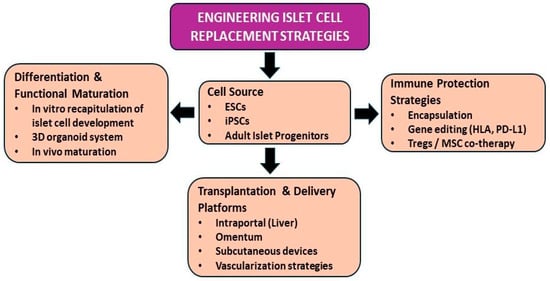
Advances in diabetes technology, including continuous glucose monitoring and hybrid closed-loop insulin delivery systems, have significantly improved glycemic control and reduced hypoglycemia in many patients. However, even the most advanced artificial pancreas systems cannot fully replicate the real-time, cell-intrinsic sensing and pulsatile insulin secretion provided by endogenous β-cells, nor do they eliminate the long-term burden of device dependence and metabolic variability. Restoration of functional β-cell mass, therefore, remains a compelling therapeutic objective. Whole-organ pancreas transplantation achieves high rates of durable insulin independence in appropriately selected patients but is limited by surgical risk and donor availability. Islet transplantation offers a less invasive alternative and has demonstrated meaningful improvements in glycemic control and reduction in severe hypoglycemia, although long-term insulin independence rates are generally lower. Together, these clinical experiences validate β-cell replacement as a biologically effective strategy while underscoring limitations in scalability and immune durability. These constraints have driven intense efforts to engineer renewable insulin-producing cells and develop protective transplantation platforms capable of achieving durable engraftment (Figure 1).
Figure 1.
Conceptual framework of engineered islet cell replacement strategies. Stem cell-based islet replacement integrates four interconnected domains: (1) selection of appropriate cell sources, including pluripotent stem cells and adult pancreatic progenitor populations; (2) differentiation and functional maturation through in vitro recapitulation of islet cell development, 3D organoid systems, and in vivo maturation to establish multi-endocrine architecture; (3) immune protection strategies, including encapsulation and genetic immune engineering to mitigate allo- and autoimmune responses; and (4) optimization of transplantation and delivery platforms, such as intraportal, omental, and subcutaneous sites, to promote vascularization and durable engraftment.
In current clinical practice, β-cell replacement therapy is utilized not only for selected individuals with T1D but also in patients undergoing total pancreatectomy with islet autotransplantation for severe chronic pancreatitis. In this setting, autologous islets are infused intraportally to mitigate postoperative diabetes; however, many patients continue to require exogenous insulin due to limited islet mass and graft attrition. These limitations further underscore the need for renewable and functionally robust insulin-producing cell sources. Stem cell-based strategies aim to generate scalable, glucose-responsive β-like cells capable of overcoming donor scarcity and immune barriers inherent in traditional transplantation approaches.
In this review, we ask what the dominant rate-limiting steps to durable clinical engraftment of engineered islet grafts are and how do current stem cell and bioengineering platforms address them. We organize advances in cell source selection, differentiation and maturation, immunoprotection, and clinical translation around this central question, emphasizing where mechanistic progress has translated into durable function and where key barriers remain for widespread clinical adoption. Several recent reviews have considered stem cell-derived islets, encapsulation devices, or immune engineering separately. In contrast, we integrate these domains into a rate-limiting step framework centered on durable clinical engraftment. By comparing major platforms against shared translational endpoints intrinsic graft potency, long-term immune protection without chronic immunosuppression, safety, and scalable manufacturing. We aim to provide a critical, cross-platform synthesis rather than a purely descriptive overview.
2. Cell Sources, Scalability and Immunogenicity
2.1. Embryonic Stem Cells
Embryonic stem cells (ESCs) are pluripotent cells capable of differentiating into all somatic lineages, including pancreatic endocrine cells. Their unlimited proliferative capacity makes them an attractive source for generating insulin-producing cells at scale. However, clinical translation is constrained by concerns regarding teratoma formation, residual undifferentiated cells, and ethical considerations associated with embryo-derived cell lines [4,5]. Despite these challenges, ESCs have served as a foundational platform for the development of directed differentiation protocols aimed at producing functional β-like cells.
2.1.1. Induced Pluripotent Stem Cells
Induced pluripotent stem cells (iPSCs) are generated through the reprogramming of somatic cells into a pluripotent state, thereby acquiring differentiation potential comparable to ESCs. iPSCs offer the advantage of patient-specific derivation, reducing ethical concerns and enabling potential autologous applications. Similar to ESCs, iPSCs possess extensive proliferative capacity, but concerns remain regarding genomic stability, epigenetic memory, and tumorigenicity following transplantation.
2.1.2. Reprogramming Somatic Cells into Induced Pluripotent Stem Cells
Reprogramming of somatic cells into iPSCs is achieved through ectopic expression of defined pluripotency-associated transcription factors, enabling acquisition of ESC-like self-renewal and differentiation capacity. Advances in nonintegrating reprogramming methods have improved safety profiles and reduced the risk of insertional mutagenesis, enhancing translational feasibility.
2.1.3. Advantages of Induced Pluripotent Stem Cells over Embryonic Stem Cells
iPSCs have significant benefits over ESCs. The iPSCs are derived from adult somatic cells, avoiding ethical concerns associated with ESCs. They can be generated from a patient’s own cells, reducing the risk of immune rejection in therapies. Additionally, iPSCs can be created in large quantities, enabling personalized medicine and disease modeling. They also hold promise for regenerative medicine and drug testing, offering a versatile and ethically more acceptable alternative to ESCs in research and clinical applications [6]. iPSCs possess the ability to self-renew and differentiate into various cell types, similar to ESCs. However, they can be patient-specific, offering the potential for autologous therapies and reduced immune rejection risks. Furthermore, iPSCs facilitate personalized medicine, allowing the study of genetic diseases and drug responses in vitro [7,8]. Nevertheless, autologous iPSC-derived β-like cells would remain susceptible to autoimmune recurrence in T1D, and large-scale manufacturing challenges are comparable to those encountered with ESC-based platforms. Consequently, both ESC and iPSC systems are being pursued in parallel for the generation of stem cell-derived islet cells.
2.2. Adult Stem Cells
Adult stem cells are tissue-resident progenitor populations that typically exhibit multipotent differentiation capacity and contribute to tissue maintenance and repair. Unlike PSCs, adult stem cells are generally lineage-restricted, limiting their differentiation potential but potentially reducing tumorigenic risk. In the context of islet regeneration, adult-derived cell populations have been investigated both as supportive immunomodulatory cells and as potential sources of pancreatic endocrine progenitors. Mesenchymal stem/stromal cells (MSCs) have been explored in islet transplantation primarily for their immunomodulatory, anti-inflammatory, and pro-angiogenic properties. Co-transplantation of MSCs with islets may enhance graft survival and vascularization; however, MSCs themselves have not demonstrated robust or reproducible differentiation into functional insulin-producing cells. Hematopoietic stem cell-based immune modulation strategies have also been investigated in autoimmune diabetes but do not directly address β-cell replacement. In contrast to broadly multipotent adult stem cells, increasing attention has focused on pancreas-derived progenitor populations that retain endocrine lineage potential. Such populations may offer a tissue-specific alternative to PSC platforms for generating functional islet-like structures.
3. Differentiation Engineering Towards Clinically Competent β-like Cells
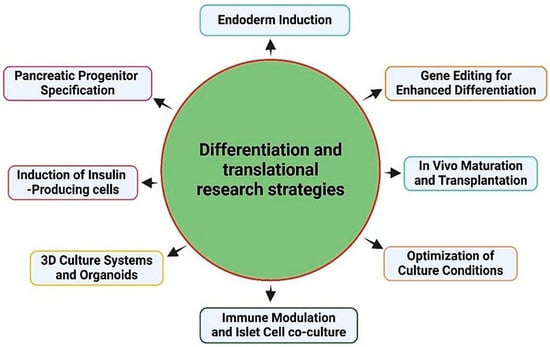
Stem cells can be differentiated into islet-like cells and may be used for β-cell replacement therapy for T1D. Several strategies, such as using PSCs, act similarly to the natural developmental processes of pancreatic islet cells. Based on the environmental factors that promote differentiation and maturation, differentiation strategies are used in stem cell engineering for islet replacement therapy. The mechanism of pancreatic endoderm induction is significant, as it distinguishes the pancreatic lineage from that of other organs that emerge from the endoderm. Diabetes therapeutics are being developed using stem cell-based techniques that mimic the process of pancreatic endoderm development (Figure 2).
Figure 2.
Differentiation and translational strategies used for the generation of islet-like cells to treat diabetes.
Activin, bone morphogenetic protein, or retinoic acid signaling is sufficient to stimulate PDX1 expression in the endoderm before the pancreas. The lateral plate mesoderm appears to pattern the endoderm in a posterior-dominant manner, as seen previously in neural tube design at the same embryonic phase. These results support the mesoderm’s important function in coordinating the A-P pattern throughout all three major germ cells [9,10,11].
To obtain insulin-producing cells, various methods have been used, including impulsive differentiation with the selection of Nestin + progenitor cells [12]; restriction of phosphatidylinositol-3-kinase [13]; mimicking of the in vivo development process by incorporating differentiation components [14,15] during co-culture with embryonic pancreatic buds or culture in the presence of fetal pancreas-conditioned medium; and use of transgenic levels of pancreas-specific transcription factors, like neuroD1, ngn3, pax4, NKX6.1, foxa2, ptf1a, and PDX1 [12,16,17].
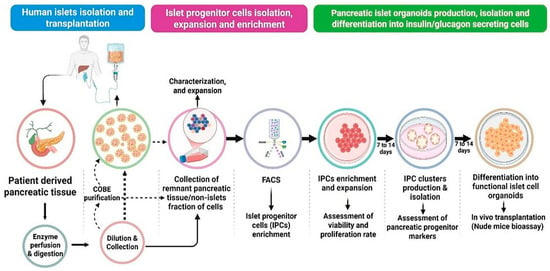
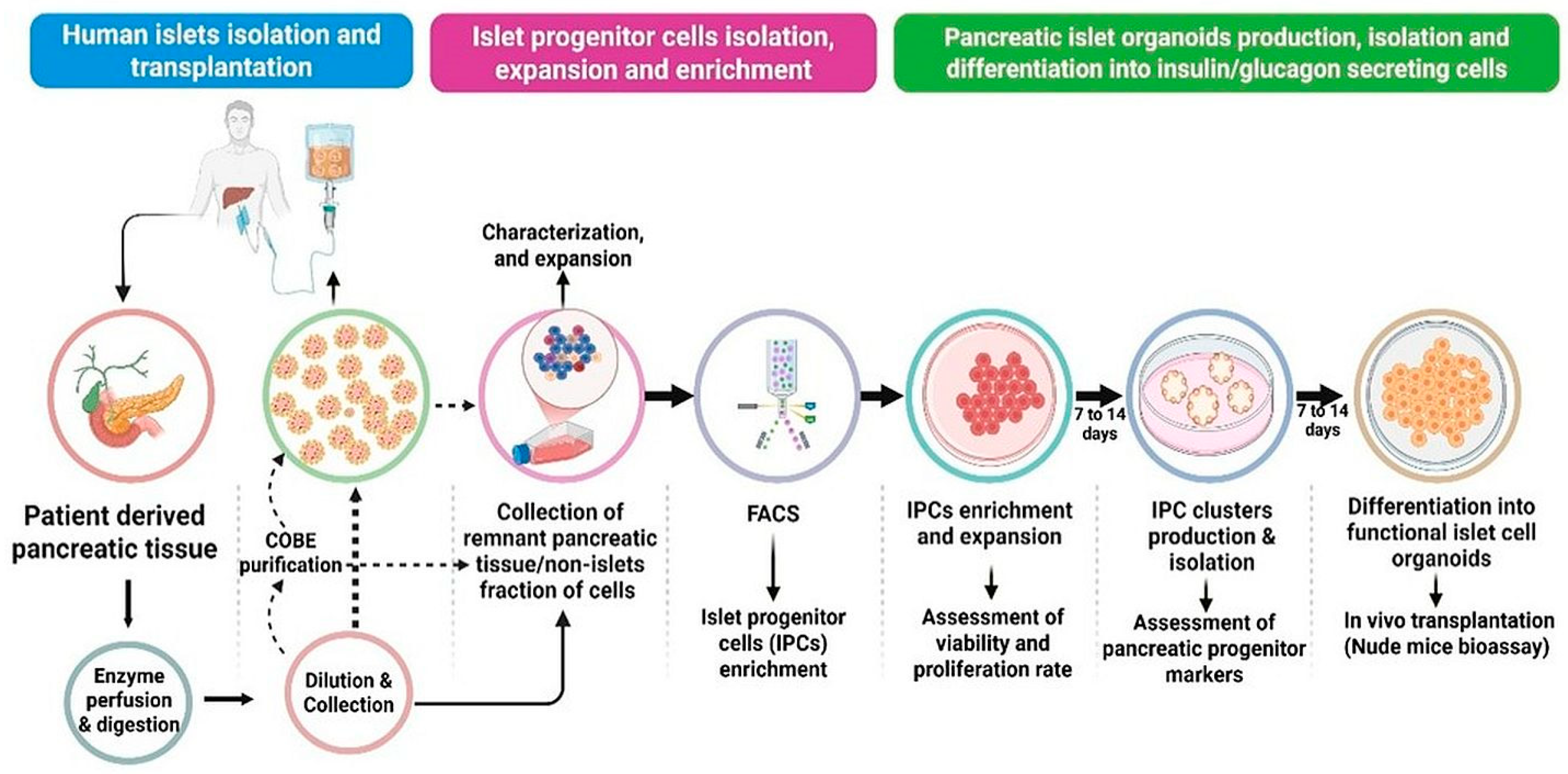
Our research team conducted a thorough study to isolate and expand patient-derived multipotent adult islet progenitor cells. Our goal was to generate functional islet cell organoids in vitro, creating a renewable source of tissue for islet cell replacement therapy (Figure 3). To achieve this, we used non-islet recombination, wash, and COBE fractions obtained during good manufacturing practice-compliant isolation procedures from patients undergoing total pancreatectomy with islet autotransplantation. We isolated adult islet progenitors through flow-activated cell sorting and expanded them to clonal density, which allowed for the formation of organoids. We then differentiated them into mature islet cell organoids by culturing them in differentiation medium for 2 to 14 days. We characterized the resulting islet cell organoids using 10× Genomics single-cell transcriptomics, along with assessments of islet endocrine markers and functional properties. Single-cell RNA sequencing showed that organoids from adult islet progenitor cells became transcriptionally similar to islet cells isolated from cadaveric donors within 8 to 10 days of differentiation. Quantitative polymerase chain reaction validation confirmed strong expression of key α- and β-cell-specific transcription factors such as PDX1, NKX2.2, MafA, MafB, Pax6, Arx, and NKX6.1. We also observed markers of β-cell maturation, including glucokinase, GLUT2, proprotein convertase 1/3, and chromogranin A. Functionally, fully differentiated islet cell organoids consisted of mono-hormonal endocrine cells that showed strong glucose-responsive hormone secretion in a static glucose-stimulated insulin secretion (GSIS) assay. They released insulin in response to high glucose levels and glucagon in response to low glucose levels, under the specific in vitro conditions tested. Although donor variability, and long-term stability were not established. These results suggest at least comparable functional capacity in vitro but do not yet establish superiority over native islets in vivo. These findings show that we can successfully harvest multipotent islet progenitor cells from patient-derived pancreatic tissue and differentiate them into islet cell organoids with functional features similar to those of native human islets. This new method offers budding future for providing an unlimited source of patient-specific islet organoid tissue, which could either replace lost islet cells or support autologous islet transplantation after pancreatectomy [18,19].
Figure 3.
Key steps in the study, from patient-derived pancreatic tissue collection through progenitor cell isolation, expansion, differentiation into islet cell organoids, molecular characterization, and functional assessment.
These findings demonstrate that adult islet progenitor-derived organoids can acquire transcriptional and functional features of human islets in vitro and represent a promising autologous or lineage restricted platform. However, compared with pluripotent stem cell-derived islets, adult progenitor strategies currently have more limited manufacturing experience and are most realistically suited to niche indications such as TPIAT rather than broad allogeneic deployment. Direct head-to-head comparisons with PSC-derived products in relevant in vivo models will be required to define their specific translational significance.
A 3D culture system is useful for cellular expansion and differentiation, as well as for simulating the natural environment. It causes identical islet gene expression profiles throughout differentiation processes, but it greatly lowers cell loss and increases the survival of endocrine clusters. Orbital shaker-based suspension culture techniques have also been widely used to differentiate human PSC-derived pancreatic progenitors into islet-like clusters during endocrine induction stages. Yet reproducibility between experiments is impeded by varying degrees of cell loss in shaking cultures, resulting in varied differentiation rates. The static culture approach produces more repeatable and efficient human PSC islets that respond to glucose and secrete insulin. The successful differentiation and well-to-well consistency in 96-well plates demonstrate that the static 3D culture method can be used as a platform for small-scale compound screening research while also facilitating additional procedural improvements [20,21].
The induction of insulin-producing cells is usually accomplished by influencing stem cells or progenitor cells in a laboratory environment, employing specific chemical stimuli like activins, retinoic acid, or nicotinamide to direct their differentiation into functioning β-cells that manage insulin production in the pancreas [22]. Scientists frequently utilize ESCs or iPSCs as foundational materials for creating insulin-producing cells. Activin A, nicotinamide, exendin-4, and retinoic acid are commonly used in the growth medium to guide the differentiation of the stem cells into β-like cells [23,24].
CRISPR-Cas9 (clustered regularly interspaced short palindromic repeats–CRISPR-associated protein 9) is an emerging gene-editing tool that can be utilized to transform other cells into insulin-producing cells [25]. This technology enables scientists to precisely change the genetic information within these cells, which could facilitate the advancement of therapies for T1D by either generating functioning insulin-producing cells from stem cells or simply altering remaining β-cells to enhance their function. This is frequently accomplished by activating or inhibiting specific genes associated with insulin production and immune evasion to avoid rejection following transplantation. CRISPR is used to modify the genes of PSCs, directing them to develop into insulin-producing β-cells that can be implanted into individuals with diabetes [26]. It also corrects genetic abnormalities in preexisting β-cells that cause poor insulin production, potentially restoring their normal function. Investigators may be able to design β-cells to be less immunogenic, thus lowering the likelihood of rejection following transplantation in patients with T1D [27,28].
To improve the functionality of differentiated insulin-producing cells, co-culture techniques are currently being used, in which stem cell-derived β-cells are grown with other islet cell types such as α and δ cells [29]. Combining β-cells with α cells in predetermined ratios can enhance β-cell functioning by improving glucose sensing and the release of insulin [30]. To reduce immunological rejection following transplantation, some treatments use genetic modification to establish immunological tolerance in differentiated islet cells. This includes removing major histocompatibility complex genes, which may expose these cells to immunological assault [31,32].
One of the most challenging aspects of in vivo maturation and transplantation is ensuring that differentiated cells reach complete maturation prior to transplantation. As a result, some investigators prefer in vivo maturation, in which stem cell-derived cells are implanted into an animal model to undergo additional maturation to attain capacities of modified stem cell-derived islet-like cells. Transplanting stem cell-derived progenitors into animal models like mice or pigs allows the cells to develop within a living organism, which is comparable to how β-cells mature in genuine pancreatic islets. After transplantation into diabetic mice, in vivo maturation can enhance cell functionality by increasing insulin secretion and glucose-detecting capabilities [33,34].
Optimizing an appropriate nutrient-rich medium, including key nutrients such as amino acids, vitamins, and growth factors, can aid in the successful differentiation of engineered stem cells into insulin-producing cells. The culture conditions, such as oxygen levels, nourishment, and cell density, have a substantial impact on differentiation. Researchers modified these settings to boost differentiation efficiency and β-cell activity suitable for clinical application [35,36].
Across protocols, a key trade off emerges between fully differentiated β-like cells and implantation of pancreatic progenitors. Fully differentiated products offer more predictable phenotypes at the time of implantation but may remain functionally immature, whereas progenitor implantation leverages in vivo cues for final maturation at the cost of less control and potentially greater heterogeneity. Static 3D cultures improve reproducibility and are amenable to small scale screening, while suspension systems enable scale-up but can suffer from variable cluster loss and differentiation efficiency. These differences have direct implications for scalability, safety, and batch-to-batch consistency in a clinical manufacturing context.
A key unresolved question is whether optimal diabetes cell therapy requires reconstitution of islet-like organoids containing multiple endocrine cell types and native-like architecture, or whether β-cell-enriched preparations are sufficient. PSC-based protocols increasingly generate 3D clusters that include α and δ cells, with evidence that paracrine glucagon and somatostatin signaling can enhance glucose sensing and dynamic insulin secretion. By contrast, some differentiation approaches and many adult progenitor strategies tend to yield more β-cell dominant populations. While organoid-like islet structures may better recapitulate physiology, they also introduce additional complexity in manufacturing and quality control. Direct head-to-head comparisons of multi-endocrine organoids versus β-cell focused products on clinically relevant models are needed to determine how much added benefit full islet organization provides for long-term glycemic control and safety.
4. Functional Maturation of Engineered β-like Cells
Achieving functional maturity remains a central challenge in engineered β-cell replacement. Although directed differentiation protocols generate insulin-producing cells expressing canonical β-cell transcription factors, these cells frequently exhibit immature transcriptional profiles and suboptimal GSIS compared to adult human islets.
4.1. In Vitro Maturation
In vitro maturation strategies focus on optimizing culture architecture, metabolic conditioning, and endocrine cell composition. Three-dimensional organoid systems enhance cell–cell interactions and improve endocrine specification relative to two-dimensional culture. Adjustments in nutrient composition, oxygen tension, extracellular matrix scaffolding, and endocrine cluster size have all been shown to improve insulin content and GSIS dynamics. Incorporation of additional endocrine cell types, including α and δ cells, may further promote physiologic glucose responsiveness through the restoration of paracrine signaling networks.
4.2. In Vivo Maturation
Transplantation into immunodeficient animal models consistently enhances functional maturation. Exposure to physiologic vascularization, extracellular matrix cues, and systemic metabolic regulation improves insulin secretion kinetics and dynamic glucose responsiveness. These findings suggest that complete functional competency may require a combination of engineered in vitro differentiation and in vivo conditioning.
In vitro maturation strategies (3D cell culture, organoids, optimized media, and co-culture with α and δ cells) have improved insulin content and GSIS dynamics but largely remain unable to fully recapitulate adult human islet function. In vivo maturation following implantation into immunodeficient models further enhances dynamic glucose responsiveness yet introduces additional variables related to transplantation site and host physiology. A major unmet need is the definition of standardized phenotypic and functional benchmarks that predict long-term insulin independence in humans and allow rigorous comparison between in vitro and in vivo maturation-based platforms.
4.3. Transcriptomic and Functional Maturity Gaps
Despite progress, stem cell-derived β-like cells often retain partial fetal-like transcriptional signatures. Continued refinement of differentiation timing, endocrine cluster composition, and metabolic programming will be necessary to bridge the remaining maturity gap between engineered grafts and native adult islets.
5. Engineering Durable Immune Protection Beyond Systemic Immunosuppression
5.1. Precision Engineering of Islet Surfaces to Suppress Acute Inflammatory and Autoimmune Responses
Durable β-cell replacement requires protection from both alloimmune rejection and recurrent autoimmunity. As shown in islet transplantation reports, the stem cell-derived islet-like cells will also be subjected to innate immune responses [37]. Our team has identified toll-like receptor-4 as a major mediator of inflammatory response against transplanted islets [38]. We evaluated the efficacy of the TLR4 selective inhibitor TAK-242 to suppress innate and adaptive responses to allogeneic islets. Our data provided evidence that blockade of TLR4 signaling in both islets and local innate immune cells can suppress the acute inflammatory response and downstream proliferation and activation of CD8-positive T cells in an in vitro mixed lymphocyte reaction with islets and peripheral blood mononuclear cells [39]. We recently used click-chemistry to create a TAK-242-eluting islet cell product that could suppress inflammation and improve islet viability and function in an autologous model [38]. Our method of nanocoating TAK-242 on the cell surface does not increase the transplantable islet volume and retains cell viability and function for a prolonged period. Engineering strategies now extend beyond systemic immunosuppression to include biomaterial encapsulation and genetic immune modulation.
Our TLR4 targeted nanocoating illustrates how surface directed anti-inflammatory strategies can be layered onto both donor-derived and stem cell-derived islets without increasing implant volume. Nonetheless, these data remain preclinical, and the relative benefits of local TLR4 blockade versus systemic immunosuppression or alternative innate immune targets will need to be established in standardized comparative studies.
5.2. Encapsulation Approaches
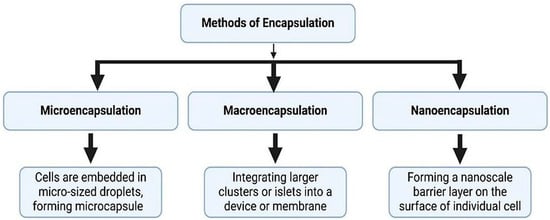
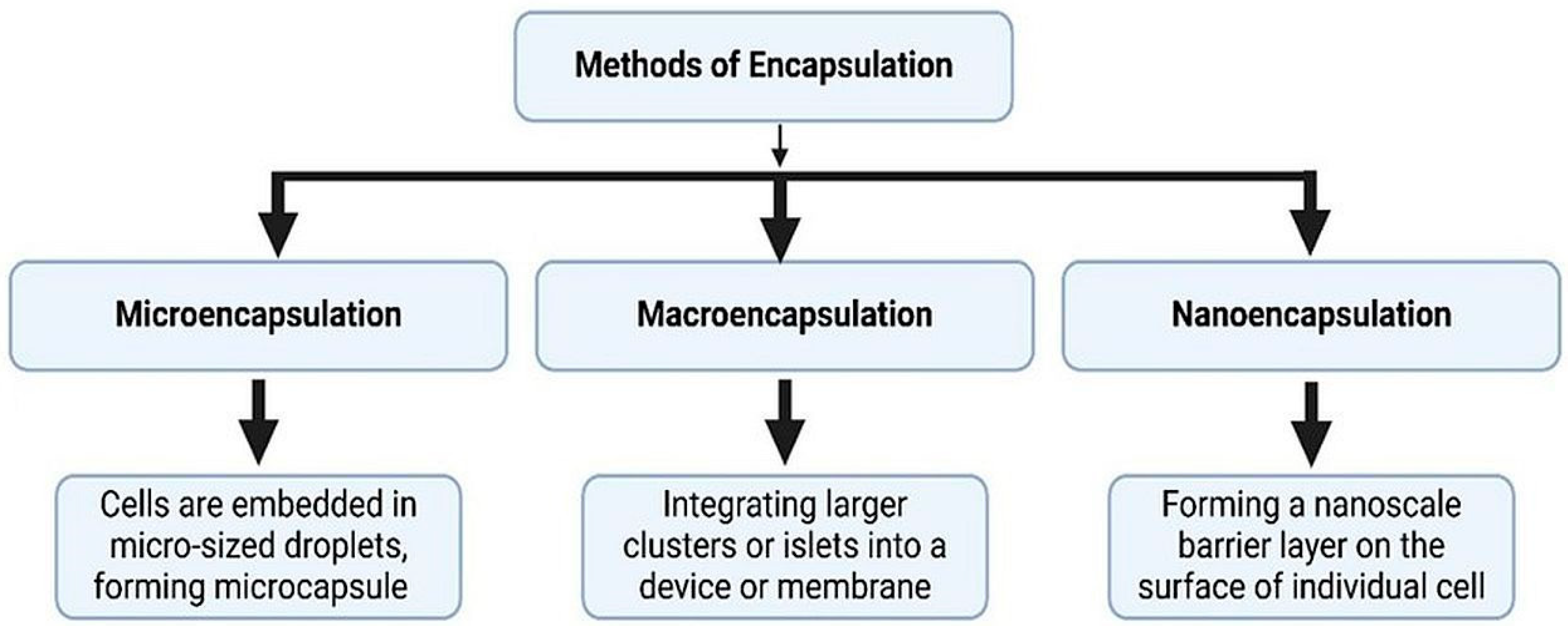
Encapsulation platforms aim to provide physical immune isolation while permitting oxygen and nutrient exchange (Figure 4). Microencapsulation encloses individual islet clusters within semipermeable hydrogels. Macroencapsulation devices house larger cell populations within retrievable implantable scaffolds. Nano-engineered coatings seek to reduce inflammatory activation and fibrotic overgrowth. While encapsulation may reduce dependence on systemic immunosuppression, challenges persist regarding long-term oxygen diffusion, fibrosis, and sustaining endocrine function.
Figure 4.
Different types of encapsulation methods are used for islet and engineered stem cells for protection against immunological rejection while preserving their function.
5.3. Genetic Immune Engineering
Genome editing technologies such as CRISPR-Cas systems have enabled targeted modulation of immune recognition pathways. Strategies include HLA class I/II modification to reduce alloimmune detection, overexpression of immune checkpoint regulators such as PD-L1, engineering of hypoimmunogenic stem cell lines, and cytokine pathway modulation to reduce inflammatory signaling. Balancing immune evasion with oncologic safety remains critical.
Device-based immune isolation (macro, micro and nano-encapsulation, conformal coatings) offers the advantages of physical retrievability and containment of graft-related adverse events. Still, it is limited by diffusion constraints, fibrosis, and challenges in scaling cell dose. Genetic hypoimmunogenic engineering directly reduces allogeneic and autologous recognition and may ultimately obviate chronic immunosuppression, yet it raises concerns about infection surveillance, oncologic risk, and irretrievability once cells engraft. These complementary approaches are at different stages of validation, with encapsulation tested in early clinical trials and most hypoimmune cells remaining at the preclinical or early stages of clinical trials.
5.4. Immune Tolerance Induction
Since patients with T1D have preexisting autoimmunity and will develop an allogenic response post-transplant, inducing immune tolerance is another key strategy for improving the success of cell transplantation. Instead of relying on encapsulation or immunosuppressive drugs, immune tolerance induction aims to “train” the recipient’s immune system to accept the transplanted cells as self, preventing rejection [40].
5.5. Approaches to Induce Immune Tolerance
Adjunct immunomodulatory strategies aim to create a permissive microenvironment for graft survival. Approaches include regulatory T cell (Treg) therapy, MSC co-transplantation, and hematopoietic chimerism induction. Although promising, these methods require further validation for durability and safety in clinical settings. Among tolerance induction strategies, Treg therapies and MSC co-transplantation have demonstrated the most consistent capacity to modulate allogeneic and autoimmunity in rodent models, with emerging but still limited experience in human islet and solid organ transplantation. Mixed chimerism can achieve robust tolerance but requires intensive conditioning and carries significant procedural risk, limiting its applicability to routine T1D therapy. Key barriers to clinical deployment include scalability of cell-based immunotherapies, durability of tolerance once adjunctive immunosuppression is withdrawn, and the risk of generalized immunosuppression or off-target immune effects.
6. Transplantation Site Considerations
The choice of implantation site significantly influences engraftment efficiency, vascularization, and long-term function. The intraportal hepatic route remains the most established clinical approach, although it is associated with instant blood-mediated inflammatory reactions and limited graft retrievability. Alternative sites under investigation include the omentum, subcutaneous space with vascularizing scaffolds, and preperitoneal compartments. Emerging strategies integrate biomaterial scaffolds to enhance oxygen delivery and vascular integration across diverse anatomical sites. An optimal site must balance vascular access, immune monitoring, mechanical stability, and retrievability.
7. Preclinical Models of Engineered Islet Therapy
Preclinical models remain essential for evaluating functional efficacy and immune resilience. Diabetic rodent transplantation models are routinely used to assess glycemic normalization and GSIS kinetics. Large animal models provide insight into scale-up feasibility, transplantation site optimization, and long-term durability.
Collectively, preclinical studies demonstrate that engineered islet-like cells can restore normoglycemia under immunodeficient or immunosuppressed conditions (Table 1). However, durable immune protection and scalable manufacturing remain active areas of investigation.
Table 1.
Preclinical studies investigating engineered stem cell-based strategies for pancreatic islet replacement in diabetes models.
8. Clinical Translation of Engineered Stem Cell Therapies
8.1. Encapsulation-Based Trials
Encapsulation platforms, including those developed by ViaCyte (San Diego, CA, USA), Sernova (London, ON, USA), and Beta-O2 (Rosh HaAyin, Israel), have demonstrated safety and engraftment feasibility. While insulin independence has been variable, these studies validate device-based cell delivery strategies. Xenotransplantation of encapsulated swine islets has shown variable safety and effectiveness in clinical trials. In one trial, a collagen-covered islet encapsulation device enabled six out of twelve patients to reduce their insulin needs for four years. This device, which combined pig islets with Sertoli cells for protection, was implanted subcutaneously without the use of immunosuppressive medications [56]. ViaCyte’s Phase 1/2 clinical trial (VC-01; NCT04678557) assessed hPSC-derived pancreatic progenitor cells (PEC-01™) implanted subcutaneously in the Encaptra® device (ViaCyte, Inc., San Diego, CA, USA). Consequently, ViaCyte launched a second Phase 1/2 study (VC-02; NCT03163511), utilizing PEC-01 cells in an open device to facilitate vascularization alongside systemic anti-inflammatory and immunosuppressive therapy (Table 2) [57,58].
Table 2.
Summary of key clinical programs in islet and stem cell-derived islet replacement, highlighting how differences in cell source, delivery strategy, and immune protection translate into distinct regulatory trajectories and clinical outcomes.
To assess the safety and effectiveness of pancreatic endoderm cells (PECs) in establishing normoglycemia, PECs were strategically transplanted in T1D patients as part of a phase 1/2 clinical trial utilizing a non-immunoprotective macro-encapsulation technology. According to the one-year follow-up results, the initial cohort of 15 patients representing a single trial location got subcutaneous cell product transplantation in conjunction with an immunosuppressive regimen. Explanted grafts included mature β-cells that had been immunoreactive to insulin, IAPP, and MAFA. These results provide the first proof of meal-regulated insulin production by differentiated stem cells in humans [59].
Sernova created the Cell Pouch device, which features pre-vascularized polypropylene chambers for islet transplantation without the requirement for immunoprotection. In a 2012 experiment (NCT01652911), islets were implanted using vascularized pouches into three recipients who were simultaneously receiving immunosuppression. This resulted in a temporary increase in C-peptide levels (NCT03513939) [60,61,62].
The beta O2 βAir device, loaded with human islets, was placed subcutaneously in T1D patients (NCT02064309). While raising the total number of islets may improve their function, it is crucial to remember that the constant dependency on oxygen raises the possibility of infection, in spite of attempts to improve the longevity of encapsulated islets [63]. Semma Therapeutics (Cambridge, MA, USA)/Vertex (Boston, MA, USA) conducted clinical trials with differentiated stem cell-derived islet cell clusters. Semma developed these stem cells into two semipermeable polyvinylidene fluoride (PVDF) membranes that are intended for subcutaneous transplantation (NCT04786262) [64].
8.2. Fully Differentiated Stem Cell-Derived Islets
Fully differentiated stem cell-derived islet products have shown promising metabolic outcomes in early phase trials. Programs such as Vertex Pharmaceuticals shared positive results from Phase 1/2/3 clinical trials for Zimislecel (formerly VX-880), which is a type of pancreatic islet cell replacement therapy made from embryonic stem cells. This therapy is intended for people with type 1 diabetes who are receiving standard immunosuppression treatment. Recent studies are looking into the safety and effectiveness of Zimislecel for treating type 1 diabetes. In a phase 1-2 study, Zimislecel was given along with immunosuppressive therapy that does not include glucocorticoids, at different doses to 14 participants. Most of the participants, specifically 83% (which includes parts B and C, with 10 out of 12 participants), saw significant decreases in severe hypoglycemic episodes and became more independent from exogenous insulin over 12 months. All participants showed that the cells were successfully engrafted and began functioning like normal islet cells after receiving the treatment [65,66,67].
8.3. Gene-Edited Clinical Efforts
Emerging clinical strategies incorporate gene-edited or immune-modified cell lines designed to reduce rejection risk. CRISPR-modified and lentiviral-engineered platforms aim to improve graft persistence while minimizing systemic immunosuppression requirements. In 2025, researchers successfully transplanted genetically modified donor islet cells into a patient with long-standing type 1 diabetes, without the need for immunosuppressive therapy. The cells were genetically modified to prevent rejection using lentiviral transduction and clustered regularly interspaced short palindromic repeats (CRISPR)–CRISPR-associated protein 12b (Cas12b) editing technology. Twelve weeks after transplantation, the recipient had no immunological reaction against the gene-edited cells and had not been administered any immunosuppressive medications [68].
8.4. Food and Drug Administration-Approved Islet Cell Therapy
The US FDA approved Lantidra (Donislecel-jujn), the first single-donor-derived human pancreatic islet cellular suspension for infusion, targeting individuals with T1D experiencing inadequate insulin management and hypoglycemia unawareness. Manufactured by CellTrans Inc (Chicago, IL, USA)., its approval is based on Phase I/II studies showing graft survival in all ten patients, with 60% achieving insulin independence after five years. A Phase III trial revealed 21 patients had no hypoglycemia and maintained HbA1c < 6.5% over one year. Common side effects included nausea and fatigue, while some required discontinuation of immunosuppressive treatment, affecting islet functionality. This approval marks progress in T1D care amidst ongoing discussions about the classification of islets as medications rather than mini-organs, which may impact patient access [69,70,71,72].
9. Challenges and Limitations
Despite encouraging progress, several barriers must be addressed:
- Tumorigenicity and safety. Residual undifferentiated cells and long-term oncologic risk remain concerns.
- Scale and manufacturing. GMP-compliant large-scale production with consistent differentiation efficiency remains complex.
- Immune rejection and autoimmunity. Achieving durable immune protection without lifelong systemic immunosuppression is a central objective.
- Cost and accessibility. Manufacturing complexity and immunosuppression requirements may limit broad clinical accessibility. Addressing these domains will determine the scalability of engineered islet replacement.
9.1. Tumorigenicity and Safety Concerns
Tumorigenicity remains a major safety concern in the clinical application of stem cell-based therapies. Pluripotent stem cells (PSCs), including embryonic stem cells (ESCs) and induced pluripotent stem cells (iPSCs), possess extensive proliferative and differentiation capacity, which increases the risk that residual undifferentiated cells may form teratomas or other ectopic tissues following transplantation. If differentiation is incomplete prior to implantation, PSCs may generate tissues unrelated to the intended transplant site, posing significant clinical risks. Because stem cell-derived islet therapies involve long-term engraftment of proliferative cells, careful evaluation of tumorigenic potential and stringent purification of differentiated β-cell populations are essential prerequisites for clinical use [73,74].
9.2. Strategies to Ensure Safety
Several strategies have been developed to mitigate tumorigenicity and enhance the safety of stem cell-derived islet products. Controlled, stage-wise differentiation protocols are designed to efficiently direct PSCs toward pancreatic endocrine lineages while minimizing the persistence of undifferentiated cells. Sensitive quality control assays are increasingly implemented to detect rare pluripotent contaminants before transplantation. In parallel, genetic safeguards such as inducible “suicide switches” or drug-activated kill genes have been proposed to allow selective elimination of transplanted cells in the event of uncontrolled proliferation. Improvements in stem cell culture conditions and differentiation technologies have further enhanced the generation of functional insulin-producing β-cells while reducing pluripotent cell contamination. Despite these advances, long-term post-transplant surveillance remains essential to monitor potential tumor formation or ectopic tissue development [75].
9.3. Scale-Up and Manufacturing
The large-scale production of stem cell-derived β-cells represents a major translational challenge. Generating clinically relevant numbers of functional cells requires complex, multi-step differentiation protocols and tightly controlled culture conditions. Stem cells must be maintained in specialized media and environmental conditions to preserve their developmental potential and promote lineage-specific differentiation. Advanced culture systems, including three-dimensional platforms and bioreactors, are increasingly being explored to support efficient expansion and maturation of cells. However, ensuring consistent cell identity, purity, potency, and viability during large-scale manufacturing remains difficult, highlighting the need for standardized production processes and optimized bioprocessing technologies [76,77].
9.4. Challenges in Large-Scale Production
Despite significant progress in stem cell differentiation technologies, scaling up production for clinical applications remains complex. The cultivation of PSCs requires carefully controlled conditions, specialized media, and strict monitoring to maintain cell quality and functionality. Multi-stage differentiation into insulin-producing β-cells further increases production complexity, as each stage requires precise regulation of signaling pathways and culture environments. Achieving reproducibility at industrial scale is therefore challenging, particularly when large quantities of homogeneous, functional cells are required. Additionally, stringent quality control measures must be implemented to ensure uniformity in cell populations and prevent contamination with undifferentiated cells. These technical and logistical challenges often make large-scale production resource-intensive and may limit the rapid clinical translation of stem cell-based therapies [76,77].
9.5. Regulatory Hurdles
Regulatory approval of stem cell-derived therapies requires rigorous evaluation of safety, quality, and clinical efficacy. Agencies such as the U.S. Food and Drug Administration (FDA) and the European Medicines Agency (EMA) have established frameworks for advanced cellular therapies; however, regulatory pathways for complex precursor cell-based products are still evolving. Compliance with stringent chemistry, manufacturing, and controls (CMC) requirements is essential. Robust release criteria must be defined to assess product quality and functional potency, including assays for glucose-stimulated insulin secretion, evaluation of cellular composition, detection of residual pluripotent cells, and verification of genetic stability. For gene-edited or hypoimmunogenic cell lines, additional regulatory expectations include comprehensive characterization of genome edits, assessment of potential off-target effects, and implementation of long-term monitoring strategies for delayed adverse events [78].
9.6. Cost and Accessibility
The high cost associated with stem cell-derived therapies remain a significant barrier to their widespread clinical implementation. Manufacturing processes involve multi-stage differentiation protocols, specialized infrastructure, and extensive quality control testing, all of which contribute to substantial production costs. Additional expenses may arise from specialized transplantation procedures, long-term clinical monitoring, and the potential need for immunosuppressive therapy or implantable delivery devices. These economic factors may limit the availability of stem cell-based therapies unless scalable and cost-efficient production methods are developed.
9.7. Ensuring Accessibility to Patients
Improving patient access to stem cell-derived therapies will require advances in manufacturing scalability, cost reduction, and healthcare integration. Approaches such as automated bioprocessing systems, standardized manufacturing platforms, and the development of allogeneic “off-the-shelf” stem cell products may help reduce production costs and increase scalability. In addition, collaboration among academic institutions, industry partners, healthcare providers, and regulatory agencies will be critical to establish sustainable manufacturing pipelines and reimbursement strategies. Expanding clinical infrastructure and integrating stem cell therapies into healthcare systems will further support broader patient access. Ultimately, balancing technological innovation with affordability and regulatory compliance will determine whether stem cell-derived islet replacement therapies can become widely accessible treatments for diabetes.
10. Future Directions
Future progress will likely depend on convergence across multiple engineering domains:
- Development of universal donor stem cell lines.
- Immune stealth and hypoimmunogenic engineering.
- Biomaterial-integrated vascularizing scaffolds.
- Autologous iPSC and adult progenitor-based strategies.
- Precision medicine approaches tailored to disease subtype.
The field is transitioning from proof-of-concept differentiation toward integrated, systems-level engineering of durable, immune-resilient endocrine grafts. Continued interdisciplinary collaboration will be essential to translate these advances into scalable clinical therapies.
10.1. Next-Generation Stem Cell Technologies
10.1.1. Advances in Genetic Editing and Synthetic Biology
Using genetic editing tools, like CRISPR-Cas9, to alter stem cells for therapeutic purposes is one of the most intriguing developments in stem cell research. With the use of this technology, scientists may precisely alter the genome, producing stem cells with certain genetic characteristics that increase their potential for therapeutic use. Gene editing, for instance, might be used to improve the differentiation of stem cells into specialized cell types, such as insulin-producing β-cells, or to fix genetic flaws in patient-specific stem cells. Additionally, methods from synthetic biology are being investigated to create stem cells with improved capabilities. To make stem cells better suited for therapeutic uses like the treatment of diabetes, for instance, synthetic gene circuits can be incorporated into them to give them the capacity to react to environmental conditions like variations in glucose levels [79].
10.1.2. Development of Universal Donor Stem Cells
The creation of universal donor stem cells is another exhilarating field of stem cell research. These cells have undergone genetic modification to remove antigens that ordinarily cause recipients to mount an immunological defense. Allogeneic transplants using universal donor stem cells may lessen the requirement for immunosuppressive medications and increase the range of applications for stem cell treatments. At the heart of this endeavor are methods like gene editing and the utilization of iPSCs obtained from healthy donors. The resistance of universal donor stem cells to autoimmune response by the recipient needs to be addressed [80]. In the near future, universal donor or HLA-engineered allogeneic lines are the most plausible route to broad access, as they enable standardized, large-scale manufacturing.
10.2. Integration with Bioengineering and Biomaterials
Use of Smart Biomaterials for Islet Cell Delivery
The advancement of stem cell therapies heavily relies on bioengineering and biomaterials. Hydrogels and scaffolds are examples of smart biomaterials that are being developed to distribute stem cells to target organs in a controlled manner. To release cells in a regulated way, these materials can be designed to react to particular physiological stimuli, such as variations in pH or temperature. For instance, islet cells encapsulated in these materials can be sent to the pancreas for the treatment of diabetes, and the biological material also promotes the survival and functionality of the cells. The function of islets is preserved in the presence of the three-dimensional scaffolds [81].
10.3. Personalized Medicine Approaches
10.3.1. Tailoring Therapies Based on Patient-Specific Factors
The future of stem cell-based treatments depends heavily on personalized medicine techniques. It is feasible to optimize therapeutic efficacy and reduce potential negative effects by customizing therapies for each patient. Using patient-specific iPSCs made from their own tissues, which can then develop into the appropriate cell types for transplantation, is one example of a personalized method. This might ensure that the cells being transplanted are the most appropriate for the patient’s particular requirements while preventing immunological rejection [82].
10.3.2. Use of Patient-Derived Induced Pluripotent Stem Cells
There are several benefits to using patient-derived iPSCs in individualized therapy. Researchers can simulate diseases in vitro and determine the best treatment strategies using these cells, which are produced by reprogramming a patient’s somatic cells. Personalized therapies that target the root causes of illness at the cellular level can be created by employing iPSCs from individuals with certain genetic disorders [83]. Patient-derived iPSCs will likely remain most relevant for select indications such as monogenic diabetes, complex immunologic histories, or specific research and personalized disease modelling applications rather than for routine cell replacement therapy in the general T1D population.
11. Summary and Conclusions
The pursuit of stem cell-based islet replacement has evolved from early differentiation experiments to a multidisciplinary engineering endeavor integrating developmental biology, genome editing, biomaterials science, and translational immunology. Significant progress has been made in generating insulin-producing cells with increasingly robust glucose responsiveness, validating the feasibility of restoring functional β-cell mass through engineered platforms.
PSC-derived islets provide scalability and manufacturing consistency, supporting standardized clinical deployment. In parallel, adult pancreatic progenitor-based strategies offer a lineage-restricted alternative that may leverage intrinsic endocrine programming while potentially mitigating tumorigenic concerns associated with pluripotency. These approaches should not be viewed as competing paradigms but as complementary engineering solutions aimed at achieving durable endocrine restoration.
Despite substantial advances, durable immune protection, complete functional maturation, scalable GMP production, and broad accessibility remain central challenges. Continued refinement of immune-stealth engineering, encapsulation technologies, optimized transplantation sites, and physiologic maturation strategies will be essential to achieving sustained insulin independence without excessive systemic immunosuppression.
The field now stands at a pivotal stage in which proof of concept has transitioned into early clinical validation. The continued convergence of stem cell biology and precision bioengineering holds the potential to redefine treatment paradigms for insulin-dependent diabetes, moving beyond exogenous insulin replacement toward restoration of coordinated, physiologic islet function.
Author Contributions
Conceptualization & writing: J.K. (Jayachandra Kuncha); Writing & original draft preparation, J.K. (Jayachandra Kuncha) and S.D.V.; review and editing, B.N., C.M.D., J.K. (Jeffrey Kirkland), M.C.L. and J.S.D. All authors have read and agreed to the published version of the manuscript.
Funding
Financial support by BreakthroughT1D (Grant#3-SRA-2025-1633-S-B to BN) is gratefully acknowledged.
Institutional Review Board Statement
Not applicable.
Informed Consent Statement
Not applicable.
Data Availability Statement
No new data were created or analyzed in this study.
Acknowledgments
The authors are thankful to the management of Baylor Scott and White Research Institute, Dallas, Texas, USA.
Conflicts of Interest
The authors declare that they have no conflicts of interest.
References
- Foster, E.D.; Bridges, N.D.; Feurer, I.D.; Eggerman, T.L.; Hunsicker, L.G.; Alejandro, R.; Clinical Islet Transplantation Consortium. Improved Health-Related Quality of Life in a Phase 3 Islet Transplantation Trial in Type 1 Diabetes Complicated by Severe Hypoglycemia. Diabetes Care 2018, 41, 1001–1008. [Google Scholar] [CrossRef] [Scilit]
- Abadpour, S.; Wang, C.; Niemi, E.M.; Scholz, H. Tissue Engineering Strategies for Improving Beta Cell Transplantation Outcome. Curr. Transpl. Rep. 2021, 8, 205–219. [Google Scholar] [CrossRef] [Scilit]
- Zhao, L.; Wang, L.; Zhang, Y.; Xiao, S.; Bi, F.; Zhao, J.; Gai, G.; Ding, J. Glucose Oxidase-Based Glucose-Sensitive Drug Delivery for Diabetes Treatment. Polymers 2017, 9, 255. [Google Scholar] [CrossRef] [Scilit]
- Vazin, T.; Freed, W.J. Human Embryonic Stem Cells: Derivation, Culture, and Differentiation: A Review. Restor. Neurol. Neurosci. 2010, 28, 589–603. [Google Scholar] [CrossRef] [Scilit] [PubMed]
- Assen, L.S.; Jongsma, K.R.; Isasi, R.; Tryfonidou, M.A.; Bredenoord, A.L. Recognizing the Ethical Implications of Stem Cell Research: A Call for Broadening the Scope. Stem Cell Rep. 2021, 16, 1656–1661. [Google Scholar] [CrossRef] [Scilit] [PubMed]
- Takahashi, K.; Yamanaka, S. Induction of Pluripotent Stem Cells from Mouse Embryonic and Adult Fibroblast Cultures by Defined Factors. Cell 2006, 126, 663–676. [Google Scholar] [CrossRef] [Scilit]
- Yamanaka, S. Induced Pluripotent Stem Cells: Past, Present, and Future. Cell Stem Cell 2012, 10, 678–684. [Google Scholar] [CrossRef] [Scilit] [PubMed]
- Rosado-de-Castro, P.H.; Schmidt, F.R.; Battistella, V.; Lopes De Souza, S.A.; Gutfilen, B.; Goldenberg, R.C.; Kasai-Brunswick, T.H.; Vairo, L.; Silva, R.M.; Wajnberg, E.; et al. Biodistribution of Bone Marrow Mononuclear Cells After Intra-Arterial or Intravenous Transplantation in Subacute Stroke Patients. Regen. Med. 2013, 8, 145–155. [Google Scholar] [CrossRef] [Scilit]
- Hogrebe, N.J.; Maxwell, K.G.; Augsornworawat, P.; Millman, J.R. Generation of Insulin-Producing Pancreatic β-cells from Multiple Human Stem Cell Lines. Nat. Protoc. 2021, 16, 4109–4143. [Google Scholar] [CrossRef] [Scilit]
- Kumar, M.; Jordan, N.; Melton, D.; Grapin-Botton, A. Signals from Lateral Plate Mesoderm Instruct Endoderm toward a Pancreatic Fate. Dev. Biol. 2003, 259, 109–122. [Google Scholar] [CrossRef] [Scilit]
- Seymour, P.A.; Serup, P. Mesodermal Induction of Pancreatic Fate Commitment. Semin. Cell Dev. Biol. 2019, 92, 77–88. [Google Scholar] [CrossRef] [Scilit]
- Lumelsky, N.; Blondel, O.; Laeng, P.; Velasco, I.; Ravin, R.; McKay, R. Differentiation of Embryonic Stem Cells to Insulin-Secreting Structures Similar to Pancreatic Islets. Science 2001, 292, 1389–1394. [Google Scholar] [CrossRef] [Scilit]
- Ptasznik, A.; Beattie, G.M.; Mally, M.I.; Cirulli, V.; Lopez, A.; Hayek, A. Phosphatidylinositol 3-Kinase Is a Negative Regulator of Cellular Differentiation. J. Cell Biol. 1997, 137, 1127–1136. [Google Scholar] [CrossRef] [Scilit] [PubMed]
- D’Amour, K.A.; Bang, A.G.; Eliazer, S.; Kelly, O.G.; Agulnick, A.D.; Smart, N.G.; Moorman, M.A.; Kroon, E.; Carpenter, M.K.; Baetge, E.E. Production of Pancreatic Hormone–Expressing Endocrine Cells from Human Embryonic Stem Cells. Nat. Biotechnol. 2006, 24, 1392–1401. [Google Scholar] [CrossRef] [Scilit] [PubMed]
- Pagliuca, F.W.; Millman, J.R.; Gürtler, M.; Segel, M.; Van Dervort, A.; Ryu, J.H.; Peterson, Q.P.; Greiner, D.; Melton, D.A. Generation of Functional Human Pancreatic β-cells In Vitro. Cell 2014, 159, 428–439. [Google Scholar] [CrossRef] [Scilit]
- Schroeder, I.S. Potential of Pluripotent Stem Cells for Diabetes Therapy. Curr. Diab. Rep. 2012, 12, 490–498. [Google Scholar] [CrossRef] [Scilit]
- Braam, M.J.S.; Zhao, J.; Liang, S.; Ida, S.; Kloostra, N.K.; Iworima, D.G.; Tang, M.; Baker, R.K.; Quiskamp, N.; Piret, J.M.; et al. Protocol Development to Further Differentiate and Transition Stem Cell-Derived Pancreatic Progenitors from a Monolayer into Endocrine Cells in Suspension Culture. Sci. Rep. 2023, 13, 8877. [Google Scholar] [CrossRef] [Scilit] [PubMed]
- Kuncha, J.; Darden, C.M.; KIrkland, J.T.; Naziruddin, B.; Lawrence, M.C. Generation of Functional Islet Cell Organoids from Adult Multipotent Islet Progenitor Cells Captured during Islet Cell Isolation Procedures. Am. J. Transplant. 2025, 25, S74–S75. [Google Scholar] [CrossRef] [Scilit]
- Darden, C.M.; Kuncha, J.; Kirkland, J.T.; Mattke, J.; Vasu, S.; Saravanan, P.B.; Naziruddin, B.; Lawrence, M.C. Mechanisms Inducing Differentiation of Adult Islet Progenitor-like Cells into Functional Islet-like Organoids. Front. Transplant. 2026, 5, 1740314. [Google Scholar] [CrossRef] [Scilit]
- Liang, S.; Zhao, J.; Baker, R.K.; Tran, E.; Zhan, L.; Kieffer, T.J. Differentiation of Stem Cell-Derived Pancreatic Progenitors into Insulin-Secreting Islet Clusters in a Multiwell-Based Static 3D Culture System. Cell Rep. Methods 2023, 3, 100466. [Google Scholar] [CrossRef] [Scilit]
- Xu, B.; Fan, D.; Zhao, Y.; Li, J.; Wang, Z.; Wang, J.; Wang, X.; Guan, Z.; Niu, B. Three-Dimensional Culture Promotes the Differentiation of Human Dental Pulp Mesenchymal Stem Cells into Insulin-Producing Cells for Improving the Diabetes Therapy. Front. Pharmacol. 2020, 10, 1576. [Google Scholar] [CrossRef] [Scilit]
- Silva, I.B.B.; Kimura, C.H.; Colantoni, V.P.; Sogayar, M.C. Stem Cells Differentiation into Insulin-Producing Cells (IPCs): Recent Advances and Current Challenges. Stem Cell Res. Ther. 2022, 13, 309. [Google Scholar] [CrossRef] [Scilit]
- Jiang, W.; Shi, Y.; Zhao, D.; Chen, S.; Yong, J.; Zhang, J.; Qing, T.; Sun, X.; Zhang, P.; Ding, M.; et al. In Vitro Derivation of Functional Insulin-Producing Cells from Human Embryonic Stem Cells. Cell Res. 2007, 17, 333–344. [Google Scholar] [CrossRef] [Scilit]
- Kunisada, Y.; Tsubooka-Yamazoe, N.; Shoji, M.; Hosoya, M. Small Molecules Induce Efficient Differentiation into Insulin-Producing Cells from Human Induced Pluripotent Stem Cells. Stem Cell Res. 2012, 8, 274–284. [Google Scholar] [CrossRef] [Scilit]
- Hollander, N.H.M.D.; Roep, B.O. From Disease and Patient Heterogeneity to Precision Medicine in Type 1 Diabetes. Front. Med. 2022, 9, 932086. [Google Scholar] [CrossRef] [Scilit]
- El Nahas, R.; Al-Aghbar, M.A.; Herrero, L.; van Panhuys, N.; Espino-Guarch, M. Applications of Genome-Editing Technologies for Type 1 Diabetes. Int. J. Mol. Sci. 2023, 25, 344. [Google Scholar] [CrossRef] [Scilit]
- Ma, S.; Viola, R.; Sui, L.; Cherubini, V.; Barbetti, F.; Egli, D. β-cell Replacement after Gene Editing of a Neonatal Diabetes-Causing Mutation at the Insulin Locus. Stem Cell Rep. 2018, 11, 1407–1415. [Google Scholar] [CrossRef] [Scilit]
- Cheng, Y.; Wang, H.; Li, M. The Promise of CRISPR/Cas9 Technology in Diabetes Mellitus Therapy: How Gene Editing Is Revolutionizing Diabetes Research and Treatment. J. Diabetes Its Complicat. 2023, 37, 108524. [Google Scholar] [CrossRef] [Scilit]
- De Souza, B.M.; Bouças, A.P.; Oliveira, F.D.S.D.; Reis, K.P.; Ziegelmann, P.; Bauer, A.C.; Crispim, D. Effect of Co-Culture of Mesenchymal Stem/Stromal Cells with Pancreatic Islets on Viability and Function Outcomes: A Systematic Review and Meta-Analysis. Islets 2017, 9, 30–42. [Google Scholar] [CrossRef] [Scilit]
- Hubber, E.L.; Rackham, C.L.; Jones, P.M. Protecting Islet Functional Viability Using Mesenchymal Stromal Cells. Stem Cells Transl. Med. 2021, 10, 674–680. [Google Scholar] [CrossRef] [Scilit]
- Gerace, D.; Zhou, Q.; Kenty, J.H.-R.; Veres, A.; Sintov, E.; Wang, X.; Boulanger, K.R.; Li, H.; Melton, D.A. Engineering Human Stem Cell-Derived Islets to Evade Immune Rejection and Promote Localized Immune Tolerance. Cell Rep. Med. 2023, 4, 100879. [Google Scholar] [CrossRef] [Scilit]
- Parent, A.V.; Faleo, G.; Chavez, J.; Saxton, M.; Berrios, D.I.; Kerper, N.R.; Tang, Q.; Hebrok, M. Selective Deletion of Human Leukocyte Antigens Protects Stem Cell-Derived Islets from Immune Rejection. Cell Rep. 2021, 36, 109538. [Google Scholar] [CrossRef] [Scilit]
- Hogrebe, N.J.; Ishahak, M.; Millman, J.R. Developments in Stem Cell-Derived Islet Replacement Therapy for Treating Type 1 Diabetes. Cell Stem Cell 2023, 30, 530–548. [Google Scholar] [CrossRef] [Scilit]
- Augsornworawat, P.; Hogrebe, N.J.; Ishahak, M.; Marquez, E.; Maestas, M.M.; Schmidt, M.D.; Veronese-Paniagua, D.A.; Gale, S.E.; Miller, J.R.; Velazco-Cruz, L.; et al. Defining the Chromatin and Transcriptional Landscape of Stem Cell-Derived Islets. BioRxiv 2022. [Google Scholar] [CrossRef] [Scilit]
- Helman, A.; Cangelosi, A.L.; Davis, J.C.; Pham, Q.; Rothman, A.; Faust, A.L.; Straubhaar, J.R.; Sabatini, D.M.; Melton, D.A. A Nutrient-Sensing Transition at Birth Triggers Glucose-Responsive Insulin Secretion. Cell Metab. 2020, 31, 1004–1016.e5. [Google Scholar] [CrossRef] [Scilit]
- Lu, V.; Roy, I.J.; Teitell, M.A. Nutrients in the Fate of Pluripotent Stem Cells. Cell Metab. 2021, 33, 2108–2121. [Google Scholar] [CrossRef] [Scilit]
- Kanak, M.A.; Takita, M.; Kunnathodi, F.; Lawrence, M.C.; Levy, M.F.; Naziruddin, B. Inflammatory Response in Islet Transplantation. Int. J. Endocrinol. 2014, 2014, 451035. [Google Scholar] [CrossRef] [Scilit]
- Chang, C.A.; Murphy, K.; Kane, R.R.; Lawrence, M.C.; Naziruddin, B. Early TLR4 Blockade Attenuates Sterile Inflammation-Mediated Stress in Islets During Isolation and Promotes Successful Transplant Outcomes. Transplantation 2018, 102, 1505–1513. [Google Scholar] [CrossRef] [Scilit]
- Mattke, J.; Darden, C.M.; Vasu, S.; Lawrence, M.C.; Kirkland, J.; Kane, R.R.; Naziruddin, B. Inhibition of Toll-like Receptor 4 Using Small Molecule, TAK-242, Protects Islets from Innate Immune Responses. Cells 2024, 13, 416. [Google Scholar] [CrossRef] [Scilit]
- Gould, H.J.; Sutton, B.J. IgE in Allergy and Asthma Today. Nat. Rev. Immunol. 2008, 8, 205–217. [Google Scholar] [CrossRef] [Scilit]
- Vegas, A.J.; Veiseh, O.; Gürtler, M.; Millman, J.R.; Pagliuca, F.W.; Bader, A.R.; Doloff, J.C.; Li, J.; Chen, M.; Olejnik, K.; et al. Long-Term Glycemic Control Using Polymer-Encapsulated Human Stem Cell–Derived Beta Cells in Immune-Competent Mice. Nat. Med. 2016, 22, 306–311. [Google Scholar] [CrossRef] [Scilit]
- Stock, A.A.; Manzoli, V.; De Toni, T.; Abreu, M.M.; Poh, Y.-C.; Ye, L.; Roose, A.; Pagliuca, F.W.; Thanos, C.; Ricordi, C.; et al. Conformal Coating of Stem Cell-Derived Islets for β-cell Replacement in Type 1 Diabetes. Stem Cell Rep. 2020, 14, 91–104. [Google Scholar] [CrossRef] [Scilit]
- Manzoli, V.; Villa, C.; Bayer, A.L.; Morales, L.C.; Molano, R.D.; Torrente, Y.; Ricordi, C.; Hubbell, J.A.; Tomei, A.A. Immunoisolation of Murine Islet Allografts in Vascularized Sites through Conformal Coating with Polyethylene Glycol. Am. J. Transplant. 2018, 18, 590–603. [Google Scholar] [CrossRef] [Scilit]
- Bruin, J.E.; Rezania, A.; Xu, J.; Narayan, K.; Fox, J.K.; O’Neil, J.J.; Kieffer, T.J. Maturation and Function of Human Embryonic Stem Cell-Derived Pancreatic Progenitors in Macroencapsulation Devices Following Transplant into Mice. Diabetologia 2013, 56, 1987–1998. [Google Scholar] [CrossRef] [Scilit]
- Forbes, S.; Bond, A.R.; Thirlwell, K.L.; Burgoyne, P.; Samuel, K.; Noble, J.; Borthwick, G.; Colligan, D.; McGowan, N.W.A.; Lewis, P.S.; et al. Human Umbilical Cord Perivascular Cells Improve Human Pancreatic Islet Transplant Function by Increasing Vascularization. Sci. Transl. Med. 2020, 12, eaan5907. [Google Scholar] [CrossRef] [Scilit]
- Najjar, M.; Manzoli, V.; Abreu, M.; Villa, C.; Martino, M.M.; Molano, R.D.; Torrente, Y.; Pileggi, A.; Inverardi, L.; Ricordi, C.; et al. Fibrin Gels Engineered with Pro-angiogenic Growth Factors Promote Engraftment of Pancreatic Islets in Extrahepatic Sites in Mice. Biotech. Bioeng. 2015, 112, 1916–1926. [Google Scholar] [CrossRef] [Scilit]
- Weaver, J.D.; Headen, D.M.; Aquart, J.; Johnson, C.T.; Shea, L.D.; Shirwan, H.; García, A.J. Vasculogenic Hydrogel Enhances Islet Survival, Engraftment, and Function in Leading Extrahepatic Sites. Sci. Adv. 2017, 3, e1700184. [Google Scholar] [CrossRef] [Scilit]
- Staels, W.; Verdonck, Y.; Heremans, Y.; Leuckx, G.; De Groef, S.; Heirman, C.; De Koning, E.; Gysemans, C.; Thielemans, K.; Baeyens, L.; et al. Vegf-A mRNA Transfection as a Novel Approach to Improve Mouse and Human Islet Graft Revascularisation. Diabetologia 2018, 61, 1804–1810. [Google Scholar] [CrossRef] [Scilit]
- Shin, J.; Kim, J.; Min, B.; Yoon, I.H.; Kim, H.J.; Kim, J.; Kim, Y.; Kang, S.; Kim, J.; Kang, H.; et al. Pre-clinical Results in Pig-to-non-human Primate Islet Xenotransplantation Using Anti-CD 40 Antibody (2C10R4)-based Immunosuppression. Xenotransplantation 2018, 25, e12356. [Google Scholar] [CrossRef] [Scilit]
- Anwar, I.J.; Berman, D.M.; DeLaura, I.; Gao, Q.; Willman, M.A.; Miller, A.; Gill, A.; Gill, C.; Perrin, S.; Ricordi, C.; et al. The Anti-CD40L Monoclonal Antibody AT-1501 Promotes Islet and Kidney Allograft Survival and Function in Nonhuman Primates. Sci. Transl. Med. 2023, 15, eadf6376. [Google Scholar] [CrossRef] [Scilit]
- Hogrebe, N.J.; Augsornworawat, P.; Maxwell, K.G.; Velazco-Cruz, L.; Millman, J.R. Targeting the Cytoskeleton to Direct Pancreatic Differentiation of Human Pluripotent Stem Cells. Nat. Biotechnol. 2020, 38, 460–470. [Google Scholar] [CrossRef] [Scilit]
- Sun, A.; Singh, M.; Bamrah, M.; Li, W.; Aguirre, A.; Wang, P. Transplantation of Islet Organoids into Brown Adipose Tissue in a Diabetic Mouse Model. In Methods in Molecular Biology; Springer: New York, NY, USA, 2025. [Google Scholar]
- Castro-Gutierrez, R.; Alkanani, A.; Mathews, C.E.; Michels, A.; Russ, H.A. Protecting Stem Cell Derived Pancreatic Beta-Like Cells from Diabetogenic T Cell Recognition. Front. Endocrinol. 2021, 12, 707881. [Google Scholar] [CrossRef] [Scilit]
- Augsornworawat, P.; Maxwell, K.G.; Velazco-Cruz, L.; Millman, J.R. Single-Cell Transcriptome Profiling Reveals β-cell Maturation in Stem Cell-Derived Islets after Transplantation. Cell Rep. 2021, 34, 108850. [Google Scholar] [CrossRef] [Scilit]
- Ellis, C.E.; Mojibian, M.; Ida, S.; Fung, V.C.W.; Skovsø, S.; McIver, E.; O’Dwyer, S.; Webber, T.D.; Braam, M.J.S.; Saber, N.; et al. Human A2-CAR T Cells Reject HLA-A2+ Human Islets Transplanted into Mice Without Inducing Graft-Versus-Host Disease. Transplantation 2023, 107, e222–e233. [Google Scholar] [CrossRef] [Scilit] [PubMed]
- Valdés-González, R.A.; Dorantes, L.M.; Garibay, G.N.; Bracho-Blanchet, E.; Mendez, A.J.; Dávila-Pérez, R.; Elliott, R.B.; Terán, L.; White, D.J.G. Xenotransplantation of Porcine Neonatal Islets of Langerhans and Sertoli Cells: A 4-Year Study. Eur. J. Endocrinol. 2005, 153, 419–427. [Google Scholar] [CrossRef] [Scilit] [PubMed]
- Henry, R.R.; Pettus, J.; Wilensky, J.; Shapiro, A.M.J.; Senior, P.A.; Roep, B.; Wang, R.; Kroon, E.J.; Scott, M.; D’Amour, K.; et al. Initial Clinical Evaluation of VC-01TM Combination Product—A Stem Cell–Derived Islet Replacement for Type 1 Diabetes (T1D). Diabetes 2018, 67, 138-OR. [Google Scholar] [CrossRef] [Scilit]
- Pullen, L.C. Stem Cell–Derived Pancreatic Progenitor Cells Have Now Been Transplanted into Patients: Report from IPITA 2018. Am. J. Transplant. 2018, 18, 1581–1582. [Google Scholar] [CrossRef] [Scilit]
- Ramzy, A.; Thompson, D.M.; Ward-Hartstonge, K.A.; Ivison, S.; Cook, L.; Garcia, R.V.; Loyal, J.; Kim, P.T.W.; Warnock, G.L.; Levings, M.K.; et al. Implanted Pluripotent Stem-Cell-Derived Pancreatic Endoderm Cells Secrete Glucose-Responsive C-Peptide in Patients with Type 1 Diabetes. Cell Stem Cell 2021, 28, 2047–2061.e5. [Google Scholar] [CrossRef] [Scilit]
- Sernova Corp Presents Positive Preliminary Safety and Efficacy Data in Its Phase I/II Clinical Trial for Type-1 Diabetes. Available online: https://www.biospace.com/sernova-corp-presents-positive-preliminary-safety-and-efficacy-data-in-its-phase-i-ii-clinical-trial-for-type-1-diabetes (accessed on 28 January 2025).
- Sernova Announces Positive Ongoing Interim Phase 1/2 Clinical Data for the Cell Pouch SystemTM for Type 1 Diabetes Trial at the 2023 IPITA, IXA, and CTRMS Joint Congress. Available online: https://www.biospace.com/sernova-announces-positive-ongoing-interim-phase-1-2-clinical-data-for-the-cell-pouch-system-for-type-1-diabetes-trial-at-the-2023-ipita-ixa-and-ctrms-joint-congress (accessed on 28 January 2025).
- Sernova Announces New Positive Data from Phase I/II Trial Regarding Islet Survival and Function. Available online: https://www.biospace.com/press-releases/sernova-announces-new-positive-data-from-phase-i-ii-trial-regarding-islet-survival-and-function (accessed on 28 January 2025).
- Dang, H.P.; Chen, H.; Dargaville, T.R.; Tuch, B.E. Cell Delivery Systems: Toward the next Generation of Cell Therapies for Type 1 Diabetes. J. Cell. Mol. Med. 2022, 26, 4756–4767. [Google Scholar] [CrossRef] [Scilit]
- Semma Therapeutics Announces Pre-Clinical Proof-of-Concept in Two Lead Programs in Type 1 Diabetes. Available online: https://www.biospace.com/semma-therapeutics-announces-pre-clinical-proof-of-concept-in-two-lead-programs-in-type-1-diabetes (accessed on 28 January 2025).
- Kolata, G. A Cure for Type 1 Diabetes? For One Man, It Seems to Have Worked. The New York Times, 27 November 2021.
- Peters, A.L. A Cure for Type 1 Diabetes? Not Yet, But We’re Getting Closer. Medscape, 30 December 2021.
- Reichman, T.W.; Markmann, J.F.; Odorico, J.; Witkowski, P.; Fung, J.J.; Wijkstrom, M.; Kandeel, F.; De Koning, E.J.P.; Peters, A.L.; Mathieu, C.; et al. Stem Cell–Derived, Fully Differentiated Islets for Type 1 Diabetes. N. Engl. J. Med. 2025, 393, 858–868. [Google Scholar] [CrossRef] [Scilit]
- Carlsson, P.-O.; Hu, X.; Scholz, H.; Ingvast, S.; Lundgren, T.; Scholz, T.; Eriksson, O.; Liss, P.; Yu, D.; Deuse, T.; et al. Survival of Transplanted Allogeneic Beta Cells with No Immunosuppression. N. Engl. J. Med. 2025, 393, 887–894. [Google Scholar] [CrossRef] [Scilit] [PubMed]
- Affan, M.; Dar, M.S. Donislecel-the First Approved Pancreatic Islet Cell Therapy Medication for Type 1 Diabetes: A Letter to the Editor. Ir. J. Med. Sci. 2024, 193, 231–232. [Google Scholar] [CrossRef] [Scilit] [PubMed]
- Commissioner, O. FDA Approves First Cellular Therapy to Treat Patients with Type 1 Diabetes. Available online: https://www.fda.gov/news-events/press-announcements/fda-approves-first-cellular-therapy-treat-patients-type-1-diabetes (accessed on 27 January 2025).
- Harris, E. FDA Greenlights First Cell Therapy for Adults with Type 1 Diabetes. JAMA 2023, 330, 402. [Google Scholar] [CrossRef] [Scilit] [PubMed]
- Mullard, A. FDA Approves First Cell Therapy for Type 1 Diabetes. Nat. Rev. Drug Discov. 2023, 22, 611. [Google Scholar] [CrossRef] [Scilit]
- Babina, I.S.; Turner, N.C. Advances and Challenges in Targeting FGFR Signalling in Cancer. Nat. Rev. Cancer 2017, 17, 318–332. [Google Scholar] [CrossRef] [Scilit]
- Scatena, R.; Bottoni, P.; Giardina, B. Circulating Tumour Cells and Cancer Stem Cells: A Role for Proteomics in Defining the Interrelationships between Function, Phenotype and Differentiation with Potential Clinical Applications. Biochim. Biophys. Acta (BBA)—Rev. Cancer 2013, 1835, 129–143. [Google Scholar] [CrossRef] [Scilit]
- Kizilay Mancini, Ö.; Lora, M.; Shum-Tim, D.; Nadeau, S.; Rodier, F.; Colmegna, I. A Proinflammatory Secretome Mediates the Impaired Immunopotency of Human Mesenchymal Stromal Cells in Elderly Patients with Atherosclerosis. Stem Cells Transl. Med. 2017, 6, 1132–1140. [Google Scholar] [CrossRef] [Scilit]
- Hendi, S.S.; Gholami, L.; Saidijam, M.; Mahmoudi, R.; Arkian, A.A.; Bakhtiyar, H.; Hasani, N.H.; Afshar, S. Photobiomodulation of Inflamed Dental Pulp Stem Cells Under Different Nutritional Conditions. Regen. Med. 2022, 17, 69–80. [Google Scholar] [CrossRef] [Scilit]
- Lee, B.; Jung, S.; Hashimura, Y.; Lee, M.; Borys, B.S.; Dang, T.; Kallos, M.S.; Rodrigues, C.A.V.; Silva, T.P.; Cabral, J.M.S. Cell Culture Process Scale-Up Challenges for Commercial-Scale Manufacturing of Allogeneic Pluripotent Stem Cell Products. Bioengineering 2022, 9, 92. [Google Scholar] [CrossRef] [Scilit]
- Takizawa, H.; Fritsch, K.; Kovtonyuk, L.V.; Saito, Y.; Yakkala, C.; Jacobs, K.; Ahuja, A.K.; Lopes, M.; Hausmann, A.; Hardt, W.-D.; et al. Pathogen-Induced TLR4-TRIF Innate Immune Signaling in Hematopoietic Stem Cells Promotes Proliferation but Reduces Competitive Fitness. Cell Stem Cell 2020, 27, 177. [Google Scholar] [CrossRef] [Scilit] [PubMed]
- Ren, D. Advancing Mass Spectrometry Technology in cGMP Environments. Trends Biotechnol. 2020, 38, 1051–1053. [Google Scholar] [CrossRef] [Scilit]
- Russo, G.L.; Sonsalla, G.; Natarajan, P.; Breunig, C.T.; Bulli, G.; Merl-Pham, J.; Schmitt, S.; Giehrl-Schwab, J.; Giesert, F.; Jastroch, M.; et al. CRISPR-Mediated Induction of Neuron-Enriched Mitochondrial Proteins Boosts Direct Glia-to-Neuron Conversion. Cell Stem Cell 2021, 28, 584. [Google Scholar] [CrossRef] [Scilit] [PubMed]
- Kucera, D.; Novackova, I.; Pernicova, I.; Sedlacek, P.; Obruca, S. Biotechnological Production of Poly(3-Hydroxybutyrate-Co-4-Hydroxybutyrate-Co-3-Hydroxyvalerate) Terpolymer by Cupriavidus sp. DSM 19379. Bioengineering 2019, 6, 74. [Google Scholar] [CrossRef] [Scilit] [PubMed]
- Marei, H.E. Stem Cell Therapy: A Revolutionary Cure or a Pandora’s Box. Stem Cell Res. Ther. 2025, 16, 255. [Google Scholar] [CrossRef] [Scilit] [PubMed]
- Lattanzi, W.; Ripoli, C.; Greco, V.; Barba, M.; Iavarone, F.; Minucci, A.; Urbani, A.; Grassi, C.; Parolini, O. Basic and Preclinical Research for Personalized Medicine. J. Pers. Med. 2021, 11, 354. [Google Scholar] [CrossRef] [Scilit]

Disclaimer/Publisher’s Note: The statements, opinions and data contained in all publications are solely those of the individual author(s) and contributor(s) and not of MDPI and/or the editor(s). MDPI and/or the editor(s) disclaim responsibility for any injury to people or property resulting from any ideas, methods, instructions or products referred to in the content. |
© 2026 by the authors. Licensee MDPI, Basel, Switzerland. This article is an open access article distributed under the terms and conditions of the Creative Commons Attribution (CC BY) license.