Chloroplast–Thylakoid Organisation Is More Important than Carotenoid Accumulation for Optimum Photosynthetic Quantum Yield and Carbon Gain in Variegated Epipremnum aureum

 ,
,  , , and
Highlights
- CO2 yield per absorbed photon and carbon gain track chloroplast–thylakoid/grana organisation more than carotenoid accumulation.
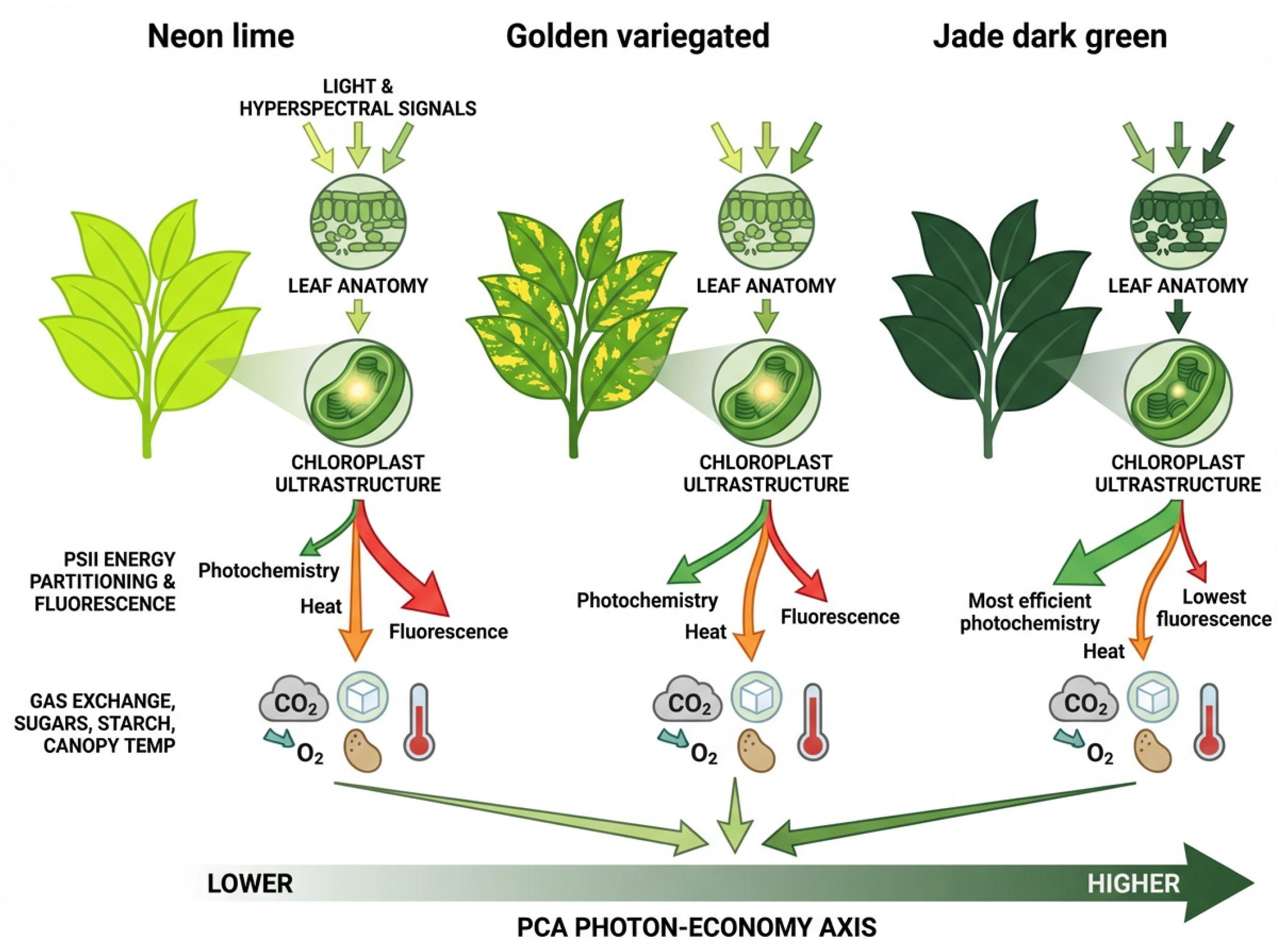
- ‘Neon’ overloads fewer photosystem II centres (low quenching, carbon-poor); ‘Jade’ spreads excitation (carbon-rich, cool), while ‘Golden’ maximises water-use efficiency.
- Thylakoid abundance sets a structural ceiling for photoprotection and CO2 yield, so pigment ratios alone can be misleading.
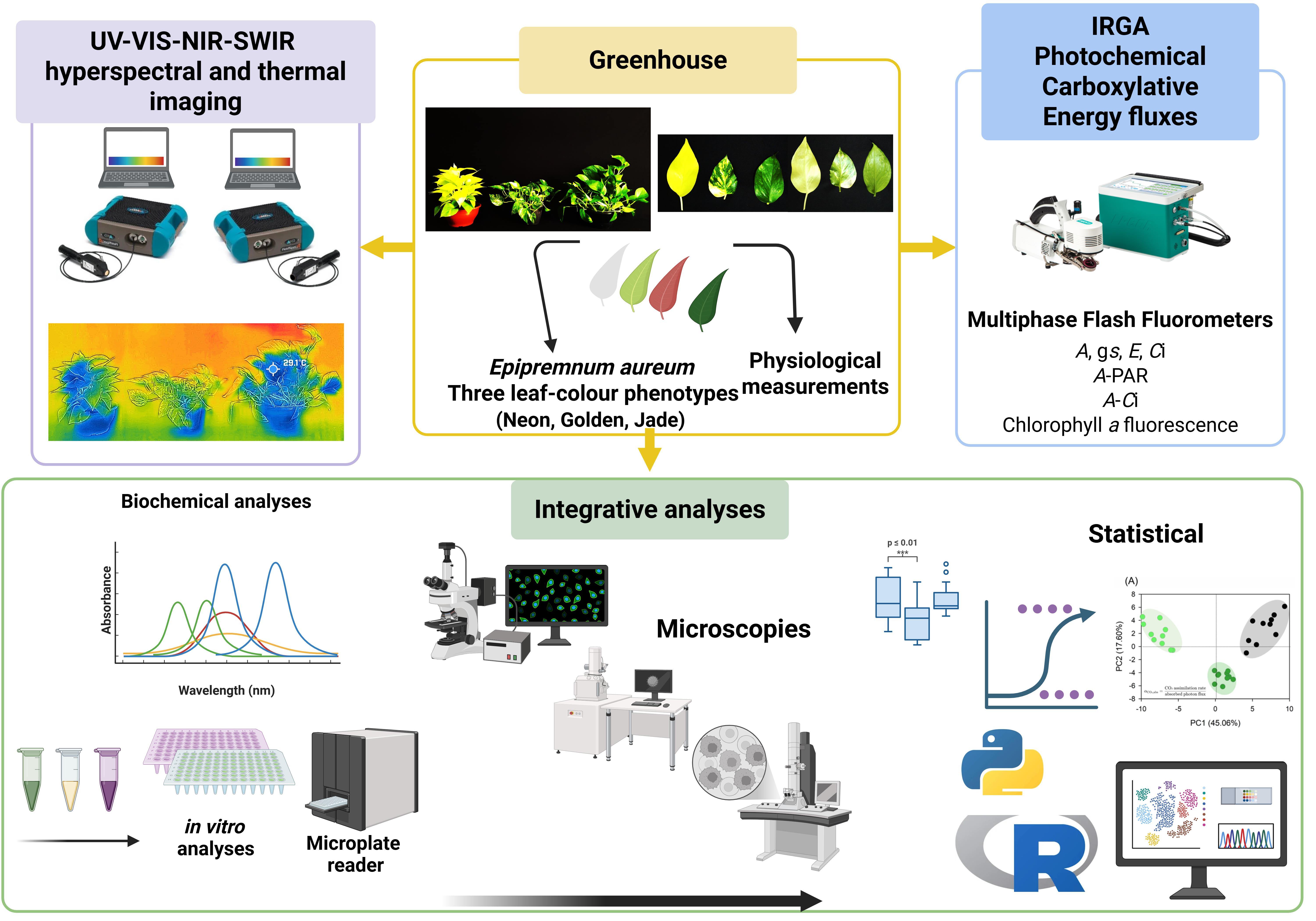
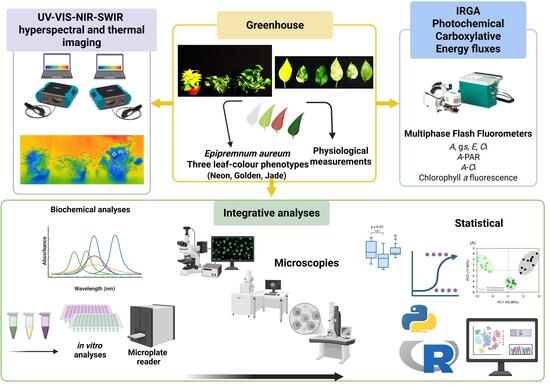
- Hyperspectral, fluorescence and thermal imaging can non-destructively phenotype leaves, linking chloroplast structural state to photosynthetic efficiency, canopy temperature and water-use economy.
Abstract
1. Introduction
2. Material and Methods
2.1. Plant Material and Experimental Design
2.2. Hyperspectral and Thermal Optical Leaf Properties
2.3. Biochemical Analyses
2.4. Cell Wall Composition Analyses
2.4.1. Lignin Quantification
2.4.2. Cellulose Quantification
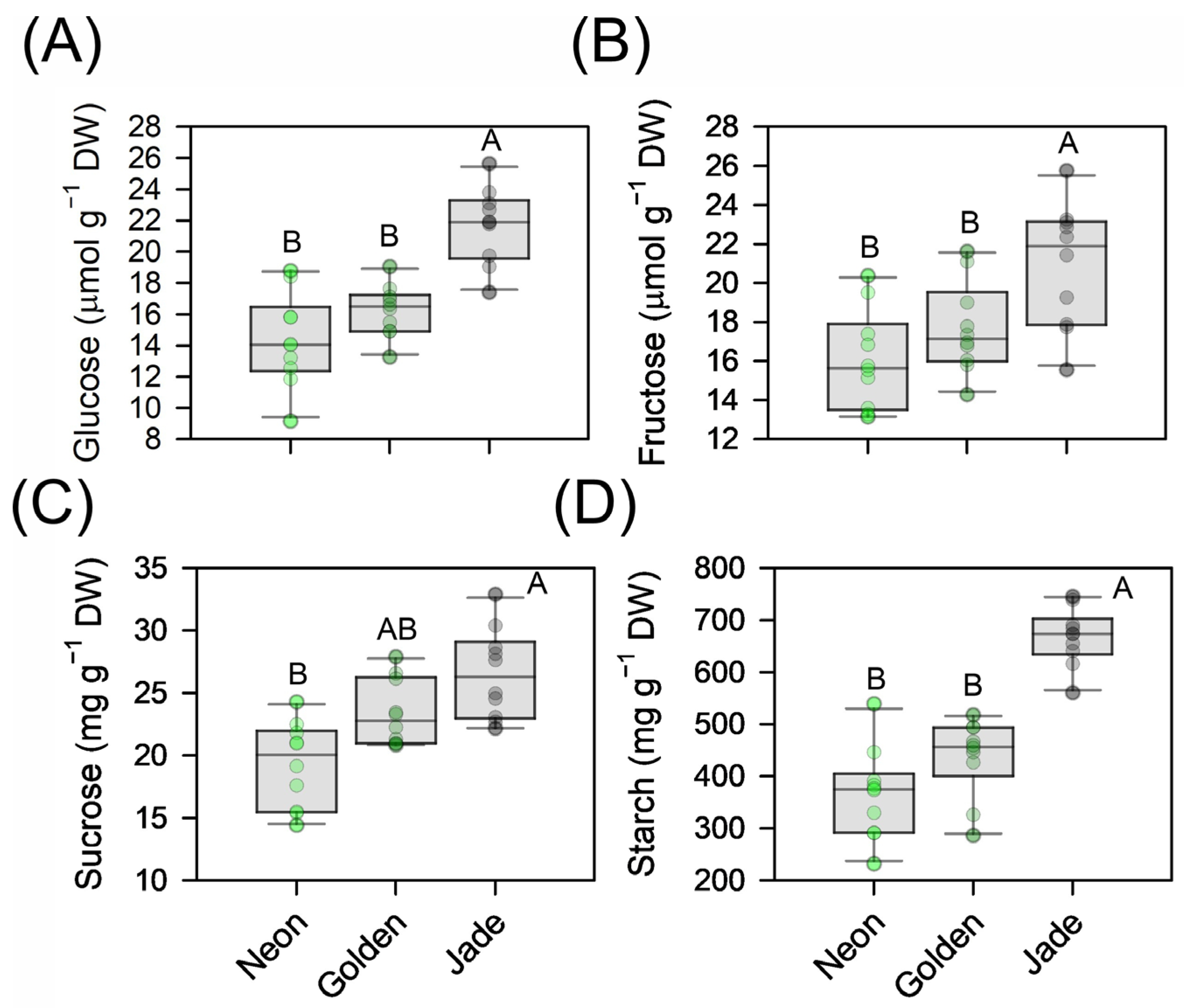
2.5. Soluble Sugar and Starch Extraction and Quantification
2.6. Gas-Exchange and Chlorophyll Fluorescence Measurements
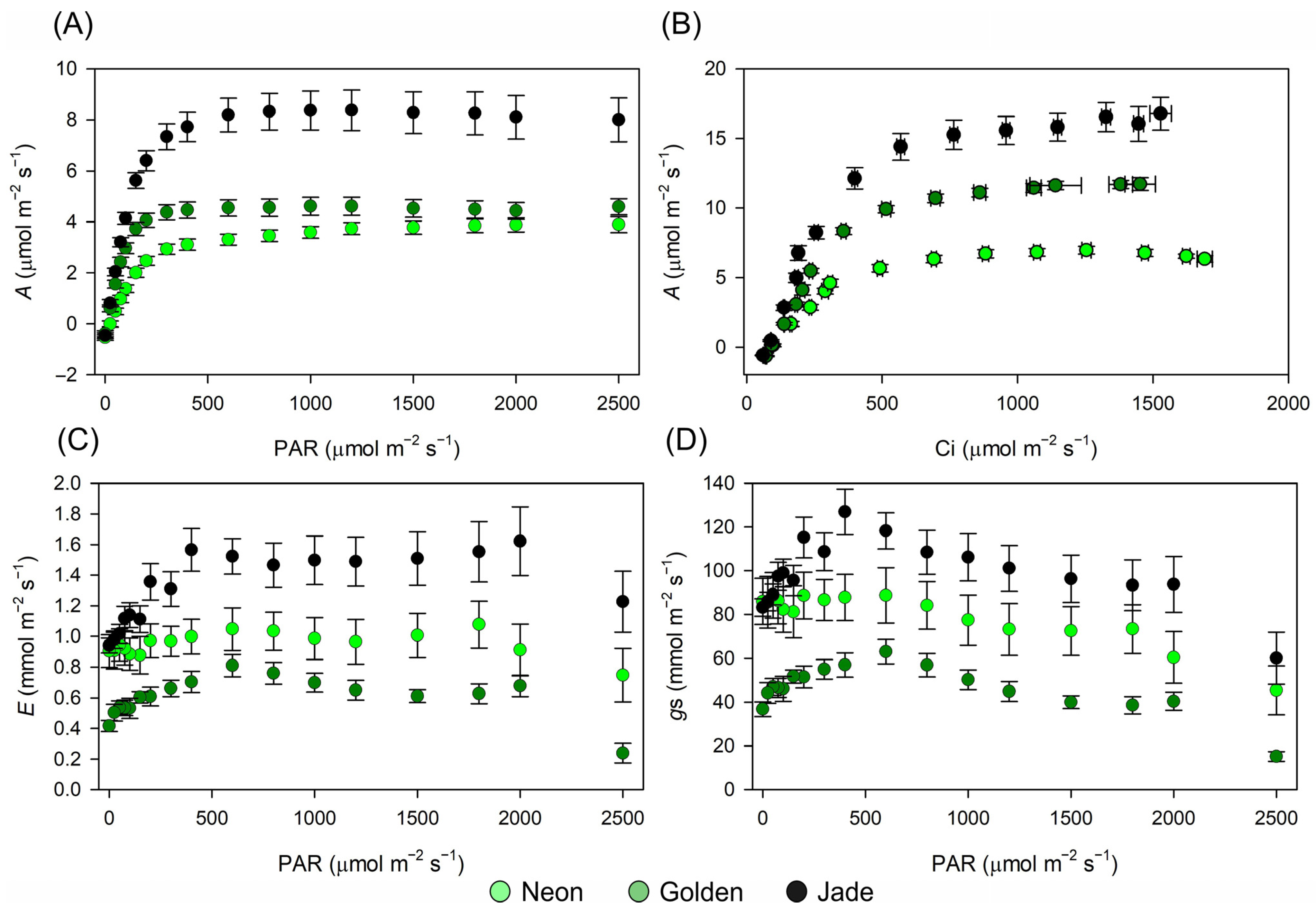
2.6.1. Light–Response (A–PAR) Curves
2.6.2. CO2-Response (A–Ci) Curves and Photosynthetic Capacity
2.6.3. Fast OJIP Transients and JIP-Test Parameters
2.6.4. Non-Steady-State Chlorophyll a Fluorescence Under Actinic Light
2.7. Microscopic Sample Preparation and Analyses
2.7.1. Sample Preparation
2.7.2. Optical Microscopy Analyses
2.7.3. Stomatal and Guard-Cell Chloroplast Imaging
2.7.4. Scanning Electron Microscopy Analyses
2.7.5. Transmission Electron Microscopy Analyses
2.7.6. Quantification of Anatomical and Ultrastructural Traits
2.8. Statistical Analyses
2.8.1. Univariate Analyses
2.8.2. Multivariate Analysis
3. Results
3.1. Leaf Construction and Pigment Pattern Define Three Photon-Capture Strategies
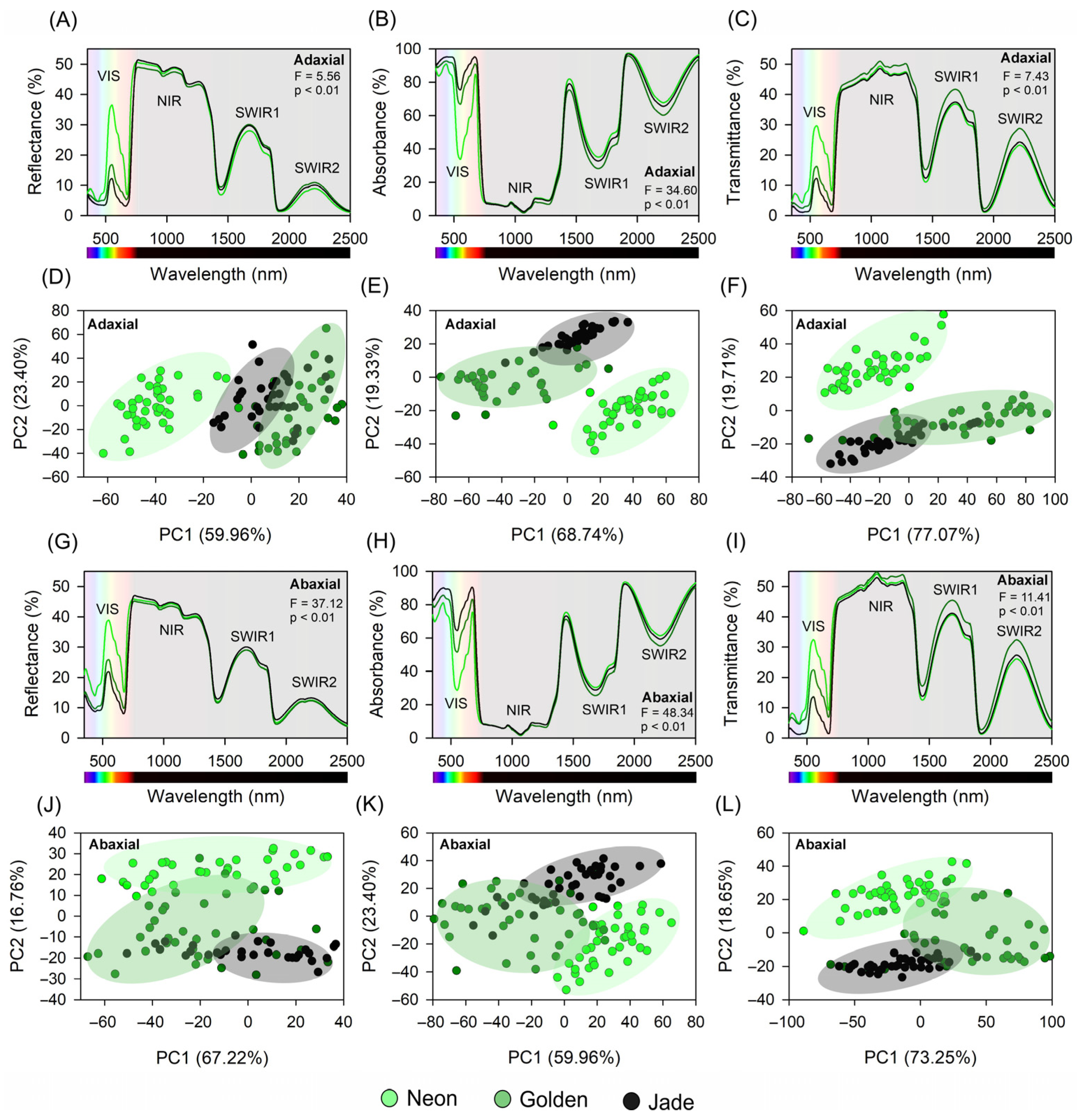
3.2. Optical Fingerprints Report Internal Pigment Gradients and Mesophyll Structure
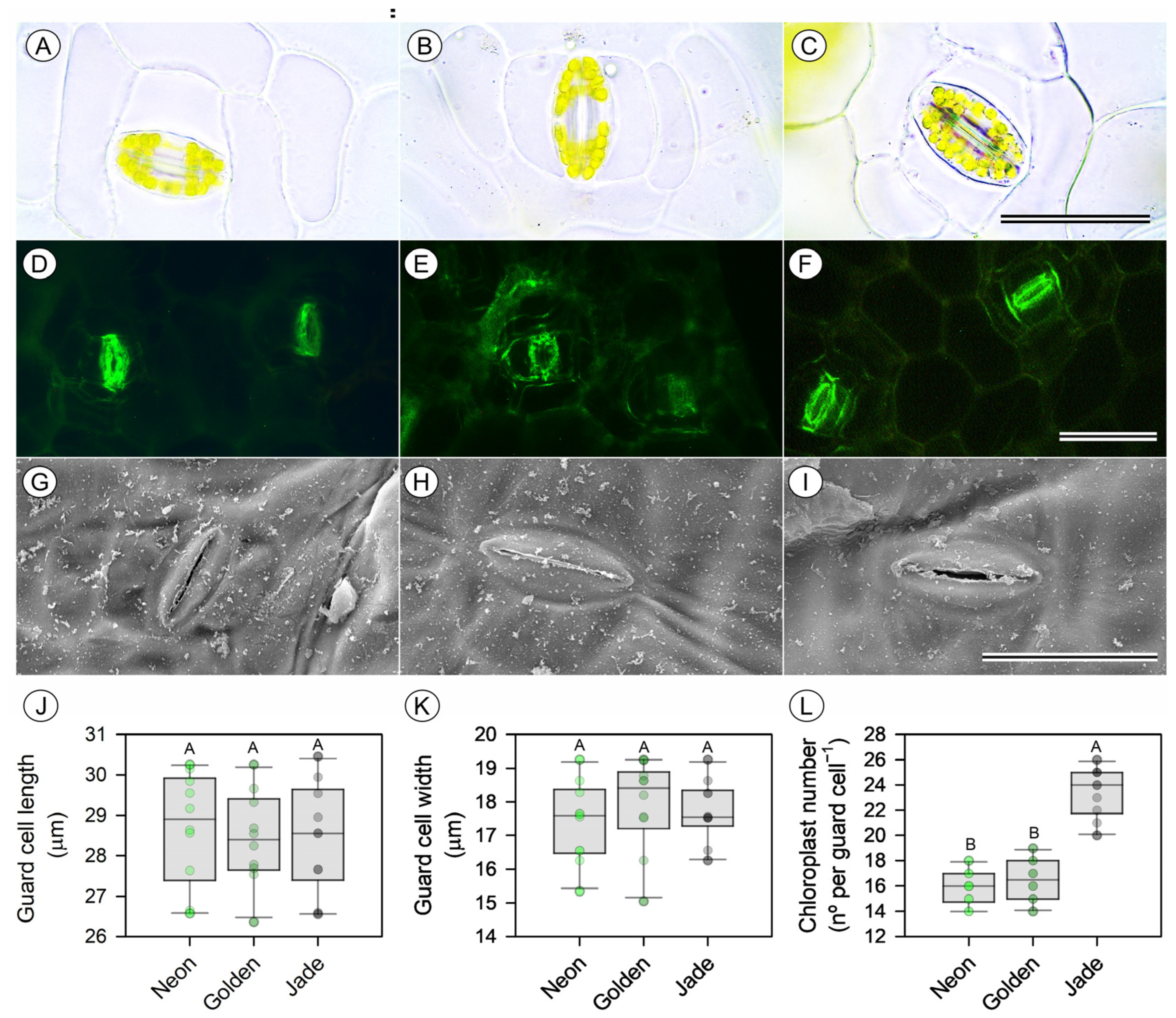
3.3. Leaf Tissue Organisation and Stomatal Anatomical
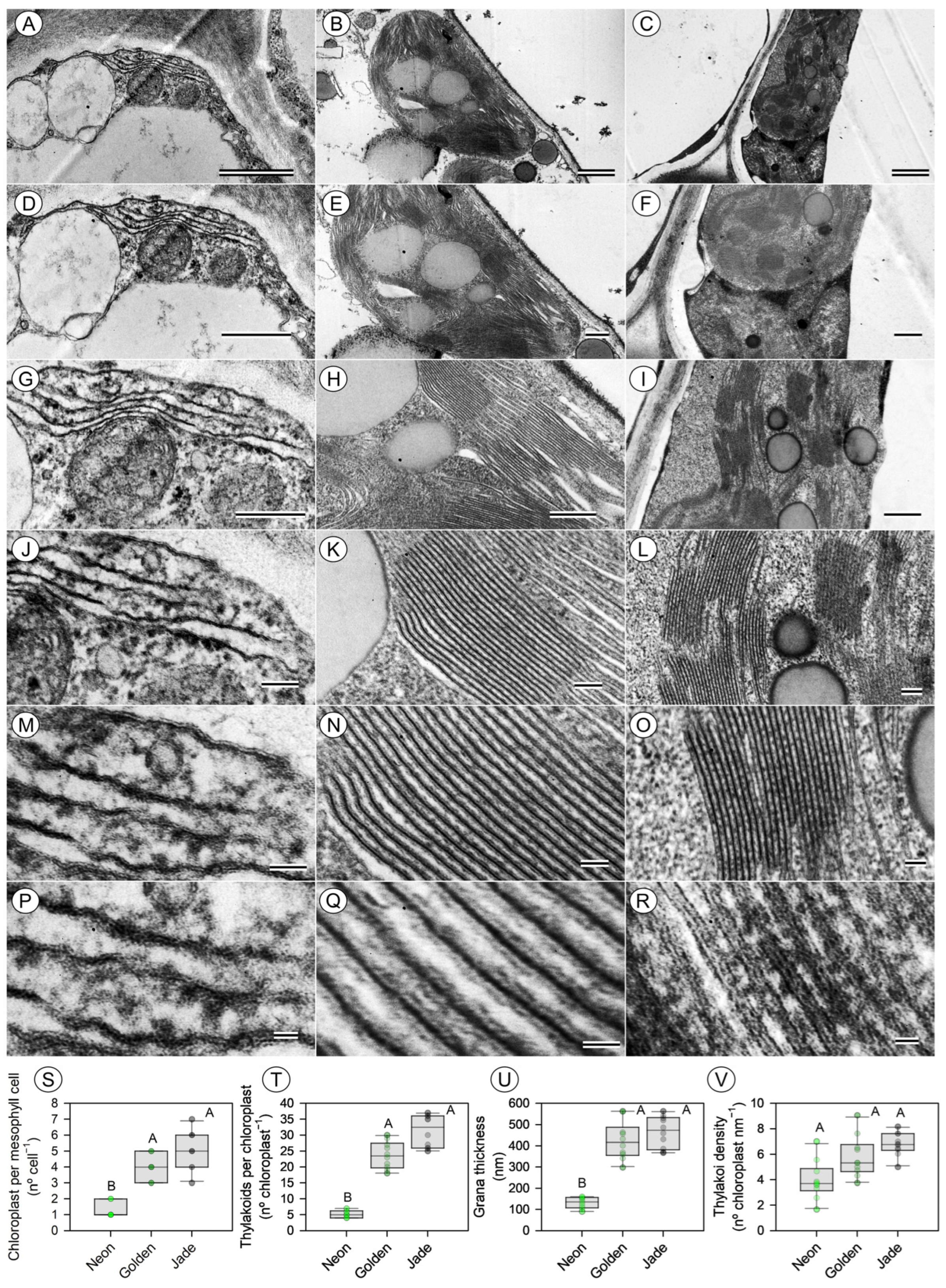
3.4. Chloroplast Density and Thylakoid Architecture Diverge Strongly Among Cultivars
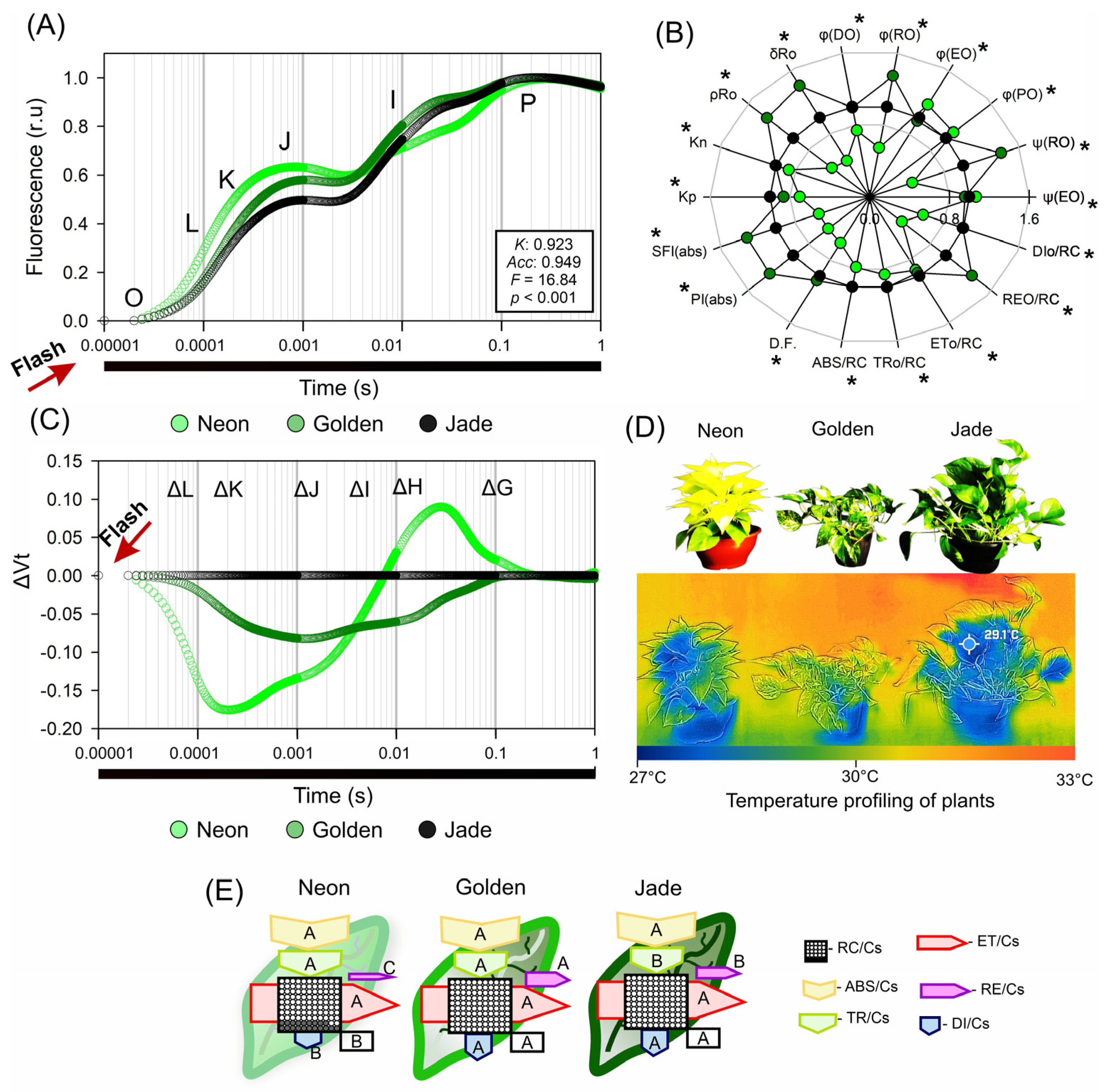
3.5. PSII Units in Chlorophyll-Poor Leaves Work Harder and Dissipate More Energy per Reaction Centre
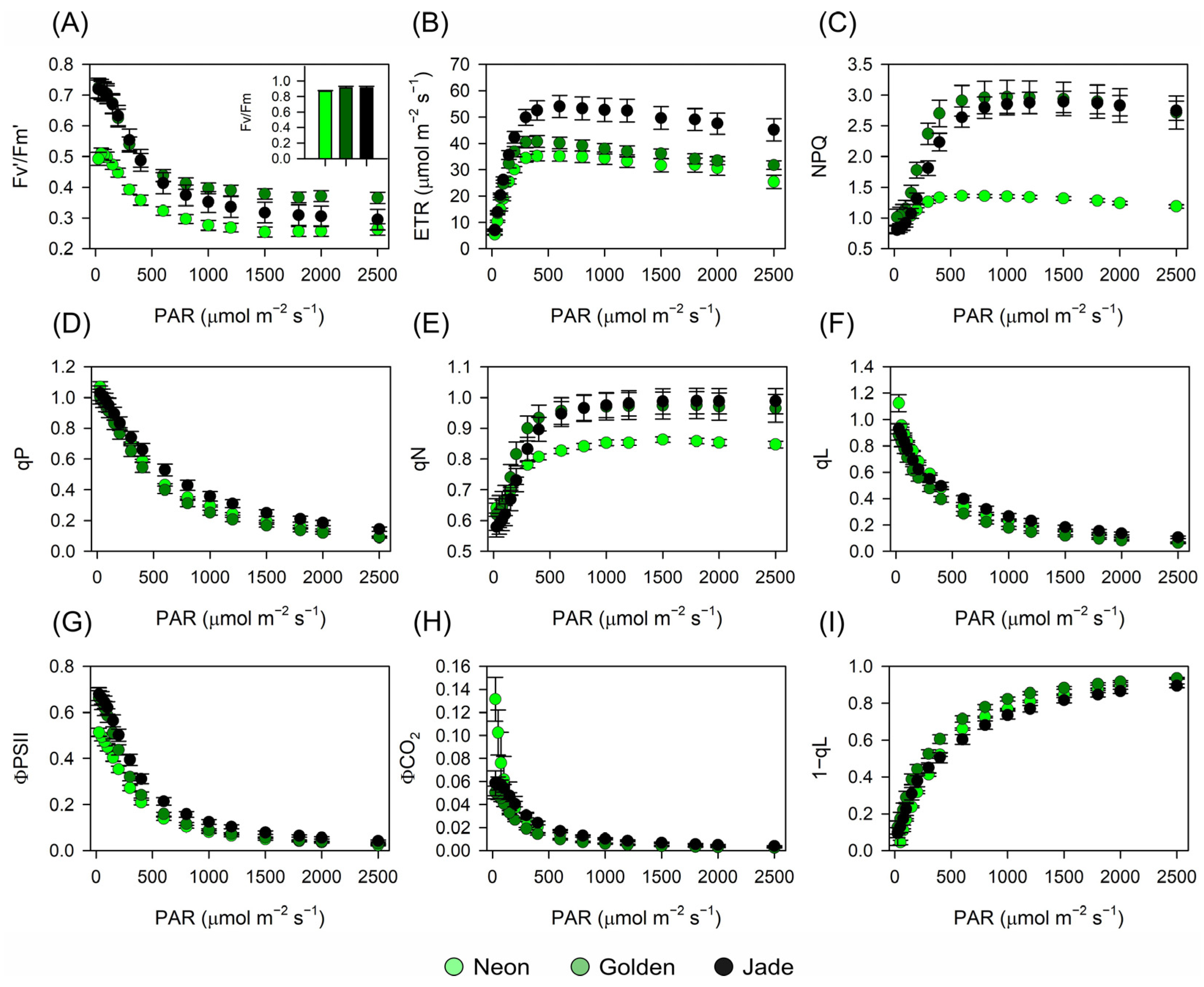
3.6. Dynamic Fluorescence Links Thylakoid Architecture to Non-Photochemical Quenching and Water-Use Efficiency
3.7. Variegation Uncouples CO2 Diffusion, Biochemical Capacity and Carbon Storage
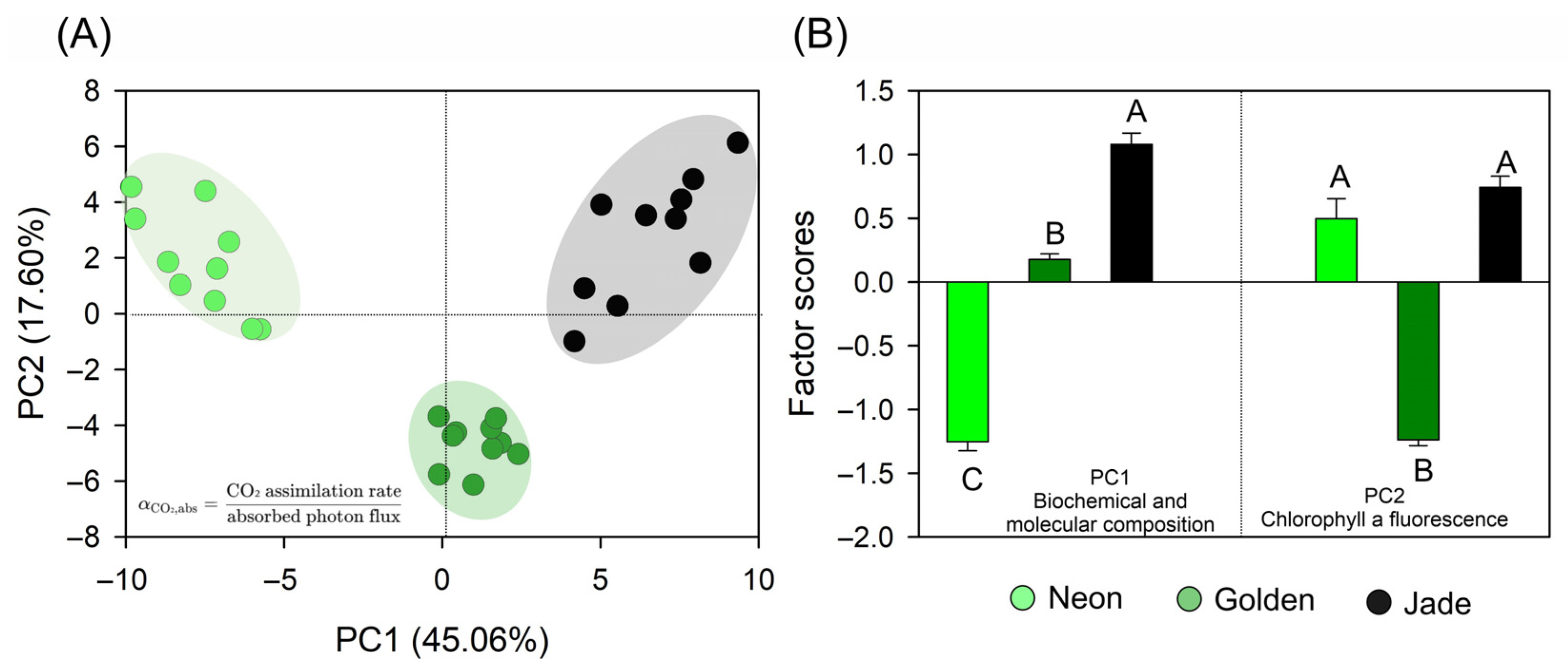
3.8. Multivariate Integration and Latent Axis of Photon Economy
4. Discussion
5. Conclusions
Supplementary Materials
Author Contributions
Funding
Institutional Review Board Statement
Informed Consent Statement
Data Availability Statement
Acknowledgments
Conflicts of Interest
Abbreviations
References
- Mahapatra, K.; Mukherjee, A.; Suyal, S.; Dar, M.A.; Bhagavatula, L.; Datta, S. Regulation of chloroplast biogenesis, development, and signaling by endogenous and exogenous cues. Physiol. Mol. Biol. Plants 2024, 30, 167–183. [Google Scholar] [CrossRef]
- Sun, Y.; Bakhtiari, S.; Valente-Paterno, M.; Wu, Y.; Nishimura, Y.; Shen, W.; Law, C.; Dhaliwal, J.; Dai, D.; Bui, K.H.; et al. Chloroplast biogenesis involves spatial coordination of nuclear and organellar gene expression in Chlamydomonas. Plant Physiol. 2024, 196, 112–123. [Google Scholar] [CrossRef]
- Loudya, N.; Barkan, A.; López-Juez, E. Plastid retrograde signaling: A developmental perspective. Plant Cell 2024, 36, 3903–3913. [Google Scholar] [CrossRef]
- Lee, K.P.; Kim, C. Photosynthetic ROS and retrograde signaling pathways. New Phytol. 2024, 244, 1183–1198. [Google Scholar] [CrossRef]
- Hernández-Verdeja, T. Regulation of chloroplast biogenesis and differentiation. J. Exp. Bot. 2025, eraf530. [Google Scholar] [CrossRef] [PubMed]
- Jeran, N.; Mercier, M.; Pesaresi, P.; Tadini, L. Proteostasis and protein quality control in chloroplasts: Mechanisms and novel insights related to protein mislocalization. J. Exp. Bot. 2025, 76, 4294–4312. [Google Scholar] [CrossRef] [PubMed]
- Adamiec, M.; Pietrowska-Borek, M.; Luciński, R. The influence of environmental conditions on chloroplast functioning and development. Front. Plant Sci. 2024, 15, 1517094. [Google Scholar] [CrossRef]
- Zheng, M.; Wang, X.; Luo, J.; Ma, B.; Li, D.; Chen, X. The pleiotropic functions of ‘GOLDEN’2-LIKE transcription factors in plants. Front. Plant Sci. 2024, 15, 1445875. [Google Scholar] [CrossRef]
- Hung, C.-Y.; Zhang, J.; Bhattacharya, C.; Li, H.; Kittur, F.S.; Oldham, C.E.; Wei, X.; Burkey, K.O.; Chen, J.; Xie, J. Transformation of long-lived albino Epipremnum aureum ‘‘Golden’ pothos’ and restoring chloroplast development. Front. Plant Sci. 2021, 12, 647507. [Google Scholar] [CrossRef]
- Mochizuki, N.; Brusslan, J.A.; Larkin, R.; Nagatani, A.; Chory, J. Arabidopsis genomes uncoupled 5 (GUN5) mutant reveals the involvement of Mg-chelatase H subunit in plastid-to-nucleus signal transduction. Proc. Natl. Acad. Sci. USA 2001, 98, 2053–2058. [Google Scholar] [CrossRef]
- Sun, T.; Hazra, A.; Lui, A.; Zeng, S.; Wang, X.; Rao, S.; Owens, L.A.; Fei, Z.; Zhao, Y.; Mazourek, M.; et al. GLKs directly regulate carotenoid biosynthesis via interacting with GBFs in plants. New Phytol. 2025, 246, 645–665. [Google Scholar] [CrossRef]
- Sullivan, C.N.; Koski, M.H. The role of photosynthetic response to environmental variation in shaping an elevational cline in leaf variegation. Environ. Exp. Bot. 2025, 231, 106100. [Google Scholar] [CrossRef]
- Liu, M.; Chen, L.; Gu, S.; Zhang, A.; Tong, M.; Wang, S.; Wang, J.; Zhu, Y.; Zhang, J.; Sun, Y.; et al. Arabidopsis TIC236 contributes to proplastid development and chloroplast biogenesis during embryogenesis. Front. Plant Sci. 2024, 15, 1424994. [Google Scholar] [CrossRef]
- Niu, Y.; Lazár, D.; Holzwarth, A.R.; Kramer, D.M.; Matsubara, S.; Fiorani, F.; Poorter, H.; Schrey, S.D.; Nedbal, L. Plants cope with fluctuating light by frequency-dependent nonphotochemical quenching and cyclic electron transport. New Phytol. 2023, 239, 1869–1886. [Google Scholar] [CrossRef]
- van Amerongen, H.; Croce, R. Nonphotochemical quenching in plants: Mechanisms and mysteries. Plant Cell 2025, 37, koaf240. [Google Scholar] [CrossRef]
- Van Dingenen, J.; Blomme, J.; Gonzalez, N.; Inzé, D. Plants grow with a little help from their organelle friends. J. Exp. Bot. 2016, 67, 6267–6281. [Google Scholar] [CrossRef]
- Sierra, J.; Escobar-Tovar, L.; Leon, P. Plastids: Diving into their diversity, their functions, and their role in plant development. J. Exp. Bot. 2023, 74, 2508–2526. [Google Scholar] [CrossRef]
- Renna, L.; Papini, A.; Mancuso, S.; Brandizzi, F.; Stefano, G. Plant plastids: From evolutionary origins to functional specialization and organelle interactions. J. Exp. Bot. 2025, 77, 63–85. [Google Scholar] [CrossRef] [PubMed]
- Corbin, J.P.M.; Best, R.J.; Garthwaite, I.J.; Cooper, H.F.; Doughty, C.E.; Gehring, C.A.; Hultine, K.R.; Allan, G.J.; Whitham, T.G. Hyperspectral leaf reflectance detects interactive genetic and environmental effects on tree phenotypes, enabling large-scale monitoring and restoration planning under climate change. Plant Cell Environ. 2025, 48, 1842–1857. [Google Scholar] [CrossRef]
- Magney, T.S. Hyperspectral reflectance integrates key traits for predicting leaf metabolism. New Phytol. 2025, 246, 383–385. [Google Scholar] [CrossRef]
- Song, Y.; Sapes, G.; Chang, S.; Chowdhry, R.; Mejia, T.; Hampton, A.; Kucharski, S.; Sazzad, T.M.S.; Zhang, Y.; Tillman, B.L.; et al. Hyperspectral signals in the soil: Plant–soil hydraulic connection and disequilibrium as mechanisms of drought tolerance and rapid recovery. Plant Cell Environ. 2024, 47, 4171–4187. [Google Scholar] [CrossRef]
- Hammami, Z.; Tounsi-Hammami, S.; Nhamo, N.; Rezgui, S.; Trifa, Y. The efficiency of chlorophyll fluorescence as a selection criterion for salinity and climate aridity tolerance in barley genotypes. Front. Plant Sci. 2024, 15, 1324388. [Google Scholar] [CrossRef]
- Peco, J.D.; Centeno, A.; Moratiel, R.; Villena, J.; López-Perales, J.A.; Moreno, M.M.; Pérez-López, D. Intermittent versus continuous drought: Chlorophyll a fluorescence reveals photosystem resilience in tomato. Front. Plant Sci. 2025, 16, 1699777. [Google Scholar] [CrossRef]
- Busch, F.A.; Ainsworth, E.A.; Amtmann, A.; Cavanagh, A.P.; Driever, S.M.; Ferguson, J.N.; Kromdijk, J.; Lawson, T.; Leakey, A.D.B.; Matthews, J.S.A.; et al. A guide to photosynthetic gas exchange measurements: Fundamental principles, best practice and potential pitfalls. Plant Cell Environ. 2024, 47, 3344–3364. [Google Scholar] [CrossRef]
- Huber, M.; de Boer, H.J.; Romanowski, A.; van Veen, H.; Buti, S.; Kahlon, P.S.; van der Meijden, J.; Koch, J.; Pierik, R. Far-red light enrichment affects gene expression and architecture as well as growth and photosynthesis in rice. Plant Cell Environ. 2024, 47, 2936–2953. [Google Scholar] [CrossRef]
- Shah, G.; Bhatt, U.; Singh, H.; Chaudhary, H.D.; Soni, V. Phytotoxic effects of cigarette smoke on indoor plant Epipremnum aureum: In vivo analysis using chlorophyll a fluorescence transients. Front. Plant Sci. 2025, 16, 1595713. [Google Scholar] [CrossRef] [PubMed]
- Narra, M.; Nakazato, I.; Polley, B.; Arimura, S.; Woronuk, G.N.; Bhowmik, P.K. Recent trends and advances in chloroplast engineering and transformation methods. Front. Plant Sci. 2025, 16, 1526578. [Google Scholar] [CrossRef] [PubMed]
- Castillo-Argaez, R.; Sapes, G.; Mallen, N.; Lippert, A.; John, G.P.; Zare, A.; Hammond, W.M. Spectral ecophysiology: Hyperspectral pressure–volume curves to estimate leaf turgor loss. New Phytol. 2024, 242, 935–946. [Google Scholar] [CrossRef]
- Wang, X.; Zhou, Y.; Chen, S.; Lu, M.; Guan, C.; He, R.; Yu, Y.; Yan, H.; Liu, W.; Li, S.; et al. Identification and transcriptome analysis of a photosynthesis-deficient mutant of Populus davidiana Dode. Plant Sci. 2024, 347, 112182. [Google Scholar] [CrossRef]
- Villwock, S.S.; Li, L.; Jannink, J.-L. Carotenoid-carbohydrate crosstalk: Evidence for genetic and physiological interactions in storage tissues across crop species. New Phytol. 2024, 244, 1709–1722. [Google Scholar] [CrossRef]
- Falcioni, R.; Moriwaki, T.; Pattaro, M.; Herrig Furlanetto, R.; Nanni, M.R.; Antunes, W.C. High resolution leaf spectral signature as a tool for foliar pigment estimation displaying potential for species differentiation. J. Plant Physiol. 2020, 249, 153161. [Google Scholar] [CrossRef]
- Gitelson, A.; Solovchenko, A. Non-invasive quantification of foliar pigments: Possibilities and limitations of reflectance- and absorbance-based approaches. J. Photochem. Photobiol. B 2018, 178, 537–544. [Google Scholar] [CrossRef]
- Moreira-Vilar, F.C.; Siqueira-Soares, R.D.C.; Finger-Teixeira, A.; de Oliveira, D.M.; Ferro, A.P.; Da Rocha, G.J.; Ferrarese, M.D.L.L.; Dos Santos, W.D.; Ferrarese-Filho, O. The acetyl bromide method is faster, simpler and presents best recovery of lignin in different herbaceous tissues than Klason and thioglycolic acid methods. PLoS ONE 2014, 9, e110000. [Google Scholar] [CrossRef]
- Falcioni, R.; de Oliveira, C.A.; Vedana, N.G.; Mendonça, W.A.; Gonçalves, J.V.F.; da Silva Haubert, D.F.; de Matos, D.H.S.; Reis, A.S.; Antunes, W.C.; Crusiol, L.G.T.; et al. Progressive water deficit impairs soybean growth, alters metabolic profiles, and decreases photosynthetic efficiency. Plants 2025, 14, 2615. [Google Scholar] [CrossRef] [PubMed]
- Trethewey, R.N.; Geigenberger, P.; Riedel, K.; Hajirezaei, M.R.; Sonnewald, U.; Stitt, M.; Riesmeier, J.W.; Willmitzer, L. Combined expression of glucokinase and invertase in potato tubers leads to a dramatic reduction in starch accumulation and a stimulation of glycolysis. Plant J. 1998, 15, 109–118. [Google Scholar] [CrossRef] [PubMed]
- Daloso, D.M.; Antunes, W.C.; Pinheiro, D.P.; Waquim, J.P.; Araújo, W.L.; Loureiro, M.E.; Fernie, A.R.; Williams, T.C.R. Tobacco guard cells fix CO2 by both Rubisco and PEPcase while sucrose acts as a substrate during light-induced stomatal opening. Plant Cell Environ. 2015, 38, 2353–2371. [Google Scholar] [CrossRef]
- Lochocki, E.B.; Salesse-Smith, C.E.; McGrath, J.M. Photogea: An R package for closer fitting of photosynthetic gas exchange data with non-Gaussian confidence interval estimation. Plant Cell Environ. 2025, 48, 5104–5119. [Google Scholar] [CrossRef]
- Vilfan, N.; van der Tol, C.; Verhoef, W. Estimating photosynthetic capacity from leaf reflectance and chl fluorescence by coupling radiative transfer to a model for photosynthesis. New Phytol. 2019, 223, 487–500. [Google Scholar] [CrossRef]
- Zhuang, J.; Wang, Q. Estimating Leaf Chlorophyll Fluorescence Parameters Using Partial Least Squares Regression with Fractional-Order Derivative Spectra and Effective Feature Selection. Remote Sens. 2025, 17, 833. [Google Scholar] [CrossRef]
- Farquhar, G.D.; von Caemmerer, S.; Berry, J.A. A biochemical model of photosynthetic CO2 assimilation in leaves of C3 species. Planta 1980, 149, 78–90. [Google Scholar] [CrossRef] [PubMed]
- Sharkey, T.D.; Bernacchi, C.J.; Farquhar, G.D.; Singsaas, E.L. Fitting photosynthetic carbon dioxide response curves for C3 leaves. Plant Cell Environ. 2007, 30, 1035–1040. [Google Scholar] [CrossRef] [PubMed]
- Tsimilli-Michael, M.; Strasser, R.J. In vivo assessment of stress impact on plant’s vitality: Applications in detecting and evaluating the beneficial role of mycorrhization on host plants. In Mycorrhiza: State of the Art, Genetics and Molecular Biology, Eco-Function, Biotechnology, Eco-Physiology, Structure and Systematics; Varma, A., Ed.; Springer: Berlin/Heidelberg, Germany, 2008; pp. 679–703. [Google Scholar] [CrossRef]
- Strasser, R.J.; Srivastava, A.; Tsimilli-Michael, M. The fluorescence transient as a tool to characterize and screen photosynthetic samples. In Probing Photosynthesis: Mechanism, Regulation and Adaptation; Yunus, M., Pathre, U., Mohanty, P., Eds.; Taylor & Francis: London, UK, 2000; pp. 443–480. [Google Scholar]
- Strasser, R.J.; Tsimilli-Michael, M.; Srivastava, A. Analysis of the chlorophyll a fluorescence transient. In Chlorophyll a Fluorescence: A Signature of Photosynthesis; Papageorgiou, G.C., Govindjee, Eds.; Springer: Dordrecht, The Netherlands, 2004; Volume 19, pp. 321–362. [Google Scholar] [CrossRef]
- Maxwell, K.; Johnson, G.N. Chlorophyll fluorescence—A practical guide. J. Exp. Bot. 2000, 51, 659–668. [Google Scholar] [CrossRef]
- Baker, N.R. Chlorophyll fluorescence: A probe of photosynthesis in vivo. Annu. Rev. Plant Biol. 2008, 59, 89–113. [Google Scholar] [CrossRef]
- Karnovsky, M.J. A formaldehyde-glutaraldehyde fixative of high osmolarity for use in electron microscopy. J. Cell Biol. 1965, 27, 137A. [Google Scholar]
- Reynolds, E.S. The use of lead citrate at high pH as an electron-opaque stain in electron microscopy. J. Cell Biol. 1963, 17, 208–212. [Google Scholar] [CrossRef] [PubMed]
- Zar, J.H. Biostatistical Analysis, 5th ed.; Pearson: Upper Saddle River, NJ, USA, 2010. [Google Scholar]
- Jolliffe, I.T. Principal Component Analysis, 2nd ed.; Springer: New York, NY, USA, 2002. [Google Scholar]
- Jolliffe, I.; Cadima, J. Principal component analysis: A review and recent developments. Philos. Trans. R. Soc. A 2016, 374, 20150202. [Google Scholar] [CrossRef]
- Anderson, C.M.; Mattoon, E.M.; Zhang, N.; Becker, E.; McHargue, W.; Yang, J.; Patel, D.; Dautermann, O.; McAdam, S.A.M.; Tarin, T.; et al. High light and temperature reduce photosynthetic efficiency through different mechanisms in the C4 model Setaria viridis. Commun. Biol. 2021, 4, 1092. [Google Scholar] [CrossRef] [PubMed]
- Zuo, G. Non-photochemical quenching (NPQ) in photoprotection: Insights into NPQ levels required to avoid photoinactivation and photoinhibition. New Phytol. 2025, 246, 1967–1974. [Google Scholar] [CrossRef]
- Ramakers, L.A.I.; Harbinson, J.; Wientjes, E.; van Amerongen, H. Unravelling the different components of nonphotochemical quenching using a novel analytical pipeline. New Phytol. 2025, 245, 625–636. [Google Scholar] [CrossRef]
- Kitajima, K.; Hogan, K.P. Increases of chlorophyll a/b ratios during acclimation of tropical woody seedlings to nitrogen limitation and high light. Plant Cell Environ. 2003, 26, 857–865. [Google Scholar] [CrossRef]
- Vialet-Chabrand, S.R.; Matthews, J.S.; Simkin, A.; Raines, C.A.; Lawson, T. Importance of fluctuations in light on plant photosynthetic acclimation. Plant Physiol. 2017, 173, 2163–2179. [Google Scholar] [CrossRef]
- Faralli, M.; Bontempo, L.; Bianchedi, P.L.; Moser, C.; Bertamini, M.; Lawson, T.; Camin, F.; Stefanini, M.; Varotto, C. Natural variation in stomatal dynamics drives divergence in heat stress tolerance and contributes to seasonal intrinsic water-use efficiency in Vitis vinifera (subsp. sativa and sylvestris). J. Exp. Bot. 2022, 73, 3238–3250. [Google Scholar] [CrossRef] [PubMed]
- Pankasem, N.; Hsu, P.-K.; Lopez, B.N.K.; Franks, P.J.; Schroeder, J.I. Warming triggers stomatal opening by enhancement of photosynthesis and ensuing guard cell CO2 sensing, whereas higher temperatures induce a photosynthesis-uncoupled response. New Phytol. 2024, 244, 1847–1863. [Google Scholar] [CrossRef] [PubMed]
- Li, L.; Huang, G.; Wu, J.; Yu, Y.; Zhang, G.; Su, Y.; Wang, X.; Chen, H.; Wang, Y.; Wu, D. Combine photosynthetic characteristics and leaf hyperspectral reflectance for early detection of water stress. Front. Plant Sci. 2025, 16, 1520304. [Google Scholar] [CrossRef]
- Lawlor, D.W.; Tezara, W. Causes of decreased photosynthetic rate and metabolic capacity in water-deficient leaf cells: A critical evaluation of mechanisms and integration of processes. Ann. Bot. 2009, 103, 561–579. [Google Scholar] [CrossRef]
- Lev-Yadun, S. The phenomenon of red and yellow autumn leaves: Hypotheses, agreements and disagreements. J. Evol. Biol. 2022, 35, 1245–1282. [Google Scholar] [CrossRef]
- Longoni, P.; Samol, I.; Goldschmidt-Clermont, M. The kinase STATE TRANSITION 8 phosphorylates light harvesting complex II and contributes to light acclimation in Arabidopsis thaliana. Front. Plant Sci. 2019, 10, 1156. [Google Scholar] [CrossRef]
- Bag, P.; Chukhutsina, V.; Zhang, Z.; Paul, S.; Ivanov, A.G.; Shutova, T.; Croce, R.; Holzwarth, A.R.; Jansson, S. Direct energy transfer from photosystem II to photosystem I confers winter sustainability in Scots pine. Nat. Commun. 2020, 11, 6388. [Google Scholar] [CrossRef] [PubMed]
- Russo, M.; Casazza, A.P.; Cerullo, G.; Santabarbara, S.; Maiuri, M. Direct Evidence for Excitation Energy Transfer Limitations Imposed by Low-Energy Chlorophylls in Photosystem I–Light Harvesting Complex I of Land Plants. J. Phys. Chem. B 2021, 125, 3791–3802. [Google Scholar] [CrossRef]
- Silva, L.A.S.; Sampaio, V.F.; Barbosa, L.C.S.; Machado, M.; Flores-Borges, D.N.A.; Sales, J.F.; De Oliveira, D.C.; Mayer, J.L.S.; Kuster, V.C.; Rocha, D.I. Albinism in plants—Far beyond the loss of chlorophyll: Structural and physiological aspects of wild-type and albino royal poinciana (Delonix regia) seedlings. Plant Biol. 2020, 22, 761–768. [Google Scholar] [CrossRef]
- Staehelin, L.A.; Paolillo, D.J. A brief history of how microscopic studies led to the elucidation of the 3D architecture and macromolecular organization of higher plant thylakoids. Photosynth. Res. 2020, 145, 237–258. [Google Scholar] [CrossRef]
- Wójtowicz, J.; Grzyb, J.; Szach, J.; Mazur, R.; Gieczewska, K.B. Bean and pea plastoglobules change in response to chilling stress. Int. J. Mol. Sci. 2021, 22, 11895. [Google Scholar] [CrossRef]
- Espinoza-Corral, R.; Lundquist, P.K. The plastoglobule-localized protein AtABC1K6 is a Mn2+-dependent kinase necessary for timely transition to reproductive growth. J. Biol. Chem. 2022, 298, 101762. [Google Scholar] [CrossRef] [PubMed]







| Parameters | ‘Neon’ | ‘Golden’ | ‘Jade’ | |
|---|---|---|---|---|
| Photochemical variables (A–PAR) | Rd | 0.58 ± 0.13 C | 0.38 ± 0.10 B | 0.45 ± 0.11 A |
| LCP | 20.69 ± 2.29 A | 9.91 ± 3.17 B | 8.81 ± 2.35 B | |
| LSP | 407.01 ± 36.42 A | 200.89 ± 30.99 B | 391.33 ± 37.97 A | |
| PNMAX | 3.96 ± 0.28 C | 4.78 ± 0.31 B | 8.63 ± 0.69 A | |
| AMAX | 4.58 ± 0.27 C | 5.01 ± 0.28 B | 9.00 ± 0.77 A | |
| α | 0.026 ± 0.001 C | 0.043 ± 0.003 B | 0.053 ± 0.002 A | |
| ATP | 13.49 ± 0.69 C | 15.35 ± 0.80 B | 20.46 ± 1.44 A | |
| NADPH | 8.99 ± 0.46 C | 10.23 ± 0.53 B | 13.64 ± 0.96 A | |
| iWUE | 50.86 ± 4.86 C | 93.97 ± 3.72 A | 82.30 ± 5.34 B | |
| Carboxylative CO2 assimilation (A–Ci) | Rd*CO2 | 1.31 ± 0.10 C | 2.72 ± 0.32 A | 1.74 ± 0.21 B |
| VcMAX | 22.11 ± 1.21 B | 45.55 ± 6.24 A | 45.67 ± 3.13 A | |
| TPU | 3.57 ± 0.77 C | 4.96 ± 0.15 B | 12.21 ± 3.53 A | |
| JMAX | 38.00 ± 1.87 C | 67.03 ± 2.76 B | 79.54 ± 4.56 A | |
| gs | 86.13 ± 9.09 A | 45.61 ± 3.39 B | 83.69 ± 5.85 A | |
| gm | 385.80 ± 126.57 B | 354.82 ± 113.76 B | 648.92 ± 66.27 A | |
| Cc | 213.73 ± 12.42 A | 175.66 ± 10.54 B | 178.37 ± 10.95 B | |
| Γ | 91.44 ± 4.25 A | 92.71 ± 2.97 A | 73.62 ± 3.51 B | |
| CiSAT | 658.06 ± 47.04 B | 696.28 ± 55.51 B | 793.40 ± 24.74 A | |
| ATPCO2 | 14.25 ± 0.70 C | 25.14 ± 1.03 B | 29.83 ± 1.71 A | |
| NADPHCO2 | 9.50 ± 0.47 C | 16.76 ± 0.69 B | 19.88 ± 1.14 A | |
| Chlorophyll a fluorescence—PSII energy partitioning at 1200 µmol photons m−2 s−1 | Fv′/Fm′ | 0.28 ± 0.01 C | 0.40 ± 0.02 A | 0.35 ± 0.02 B |
| ETR | 34.38 ± 2.23 C | 37.98 ± 1.91 B | 52.66 ± 4.19 A | |
| NPQ | 1.35 ± 0.03 B | 2.97 ± 0.25 A | 2.85 ± 0.17 A | |
| qP | 0.296 ± 0.005 B | 0.254 ± 0.014 C | 0.352 ± 0.023 A | |
| qN | 0.85 ± 0.01 B | 0.97 ± 0.04 A | 0.97 ± 0.04 A | |
| qL | 0.232 ± 0.004 B | 0.178 ± 0.011 C | 0.265 ± 0.020 A | |
| ΦPSII | 0.082 ± 0.003 C | 0.090 ± 0.004 B | 0.125 ± 0.010 A | |
| ΦCO2 | 0.0088 ± 0.0019 B | 0.0060 ± 0.0003 C | 0.0104 ± 0.0009 A | |
| 1 − qL | 0.768 ± 0.004 B | 0.822 ± 0.011 A | 0.735 ± 0.020 C | |
| Groups | PC1 (%) | PC2 (%) |
|---|---|---|
| Biochemical and molecular composition | 25.44 | 6.18 |
| Structure and ultrastructure | 11.42 | 14.31 |
| Photochemical variables (A-PAR) | 11.68 | 17.09 |
| Carboxylative CO2 assimilation | 11.00 | 10.41 |
| Chlorophyll a fluorescence—PSII energy partitioning | 7.38 | 22.22 |
| JIP-parameters | 16.80 | 17.41 |
| Phenomenological fluxes | 16.27 | 12.38 |
| TOTAL | 100 | 100 |
Disclaimer/Publisher’s Note: The statements, opinions and data contained in all publications are solely those of the individual author(s) and contributor(s) and not of MDPI and/or the editor(s). MDPI and/or the editor(s) disclaim responsibility for any injury to people or property resulting from any ideas, methods, instructions or products referred to in the content. |
© 2026 by the authors. Licensee MDPI, Basel, Switzerland. This article is an open access article distributed under the terms and conditions of the Creative Commons Attribution (CC BY) license.
Share and Cite
Falcioni, R.; Antunes, W.C.; Chicati, M.L.; Demattê, J.A.M.; Nanni, M.R. Chloroplast–Thylakoid Organisation Is More Important than Carotenoid Accumulation for Optimum Photosynthetic Quantum Yield and Carbon Gain in Variegated Epipremnum aureum. Cells 2026, 15, 514. https://doi.org/10.3390/cells15060514
Falcioni R, Antunes WC, Chicati ML, Demattê JAM, Nanni MR. Chloroplast–Thylakoid Organisation Is More Important than Carotenoid Accumulation for Optimum Photosynthetic Quantum Yield and Carbon Gain in Variegated Epipremnum aureum. Cells. 2026; 15(6):514. https://doi.org/10.3390/cells15060514
Chicago/Turabian StyleFalcioni, Renan, Werner Camargos Antunes, Marcelo Luiz Chicati, José Alexandre M. Demattê, and Marcos Rafael Nanni. 2026. "Chloroplast–Thylakoid Organisation Is More Important than Carotenoid Accumulation for Optimum Photosynthetic Quantum Yield and Carbon Gain in Variegated Epipremnum aureum" Cells 15, no. 6: 514. https://doi.org/10.3390/cells15060514
APA StyleFalcioni, R., Antunes, W. C., Chicati, M. L., Demattê, J. A. M., & Nanni, M. R. (2026). Chloroplast–Thylakoid Organisation Is More Important than Carotenoid Accumulation for Optimum Photosynthetic Quantum Yield and Carbon Gain in Variegated Epipremnum aureum. Cells, 15(6), 514. https://doi.org/10.3390/cells15060514