Re-Tooling of γδ T Cells for Cancer Immunotherapy Using Advanced Manufacturing and Genetic Engineering


Highlights
- Vδ2 cells are the predominant circulatory subtype.
- Vδ1 cells are highly tissue tropic.
- Allogeneic γδ T cells are under development for cancer immunotherapy
- Innovative genetic engineering and manufacturing strategies may be used to boost potency.
Abstract
1. Introduction
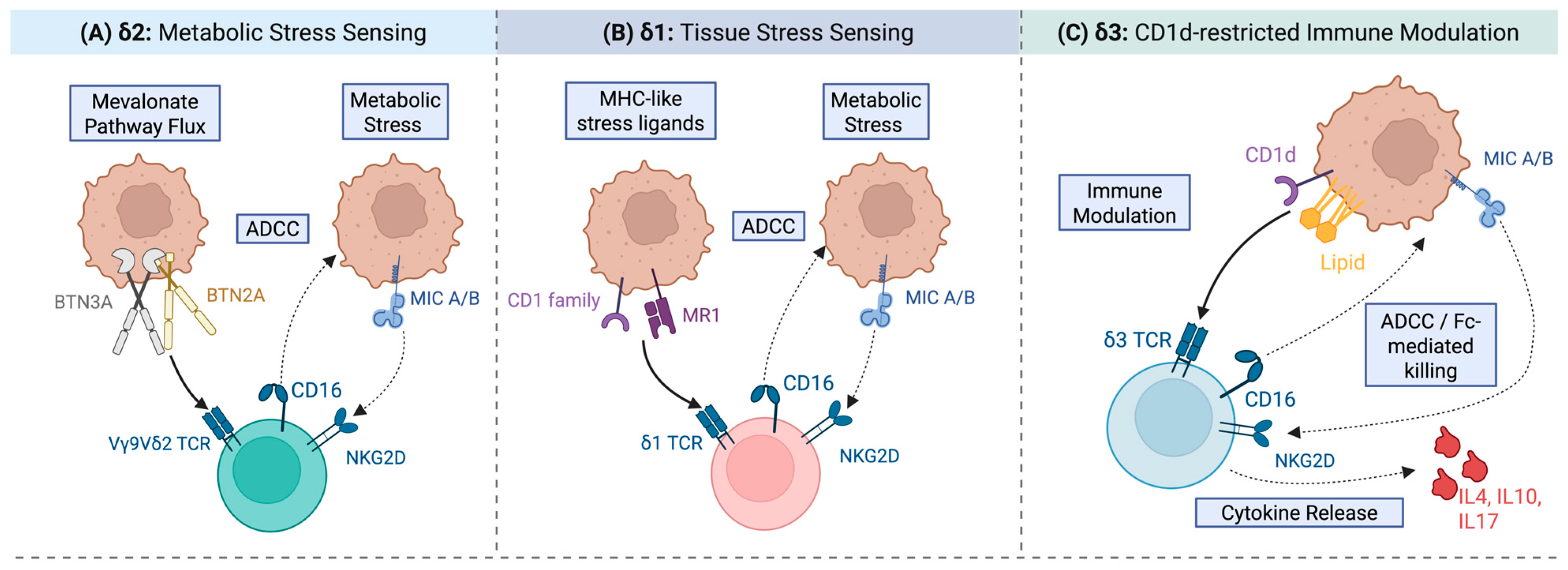
2. γδ T Cell Subsets
3. Expansion Methods for γδ T Cells
3.1. Expansion of Vδ2 T Cells Using Synthetic Phosphoantigens and Aminobisphosphonates
3.2. Expansion of Vδ2 Cells Using Butyrophilin Agonists
3.3. Expansion of Vδ2 Cells in the Presence of Transforming Growth Factor β
3.4. Vδ1 T Cell Expansion
3.5. Expansion of γδ T Cells Using Artificial Antigen-Presenting Cells
3.6. Antibody-Based Expansion of γδ T Cells
3.7. Genetic Engineering of γδ T Cells
3.8. Scalable and Automated Manufacturing Platforms for CAR γδ T Cells
3.9. Donor Selection
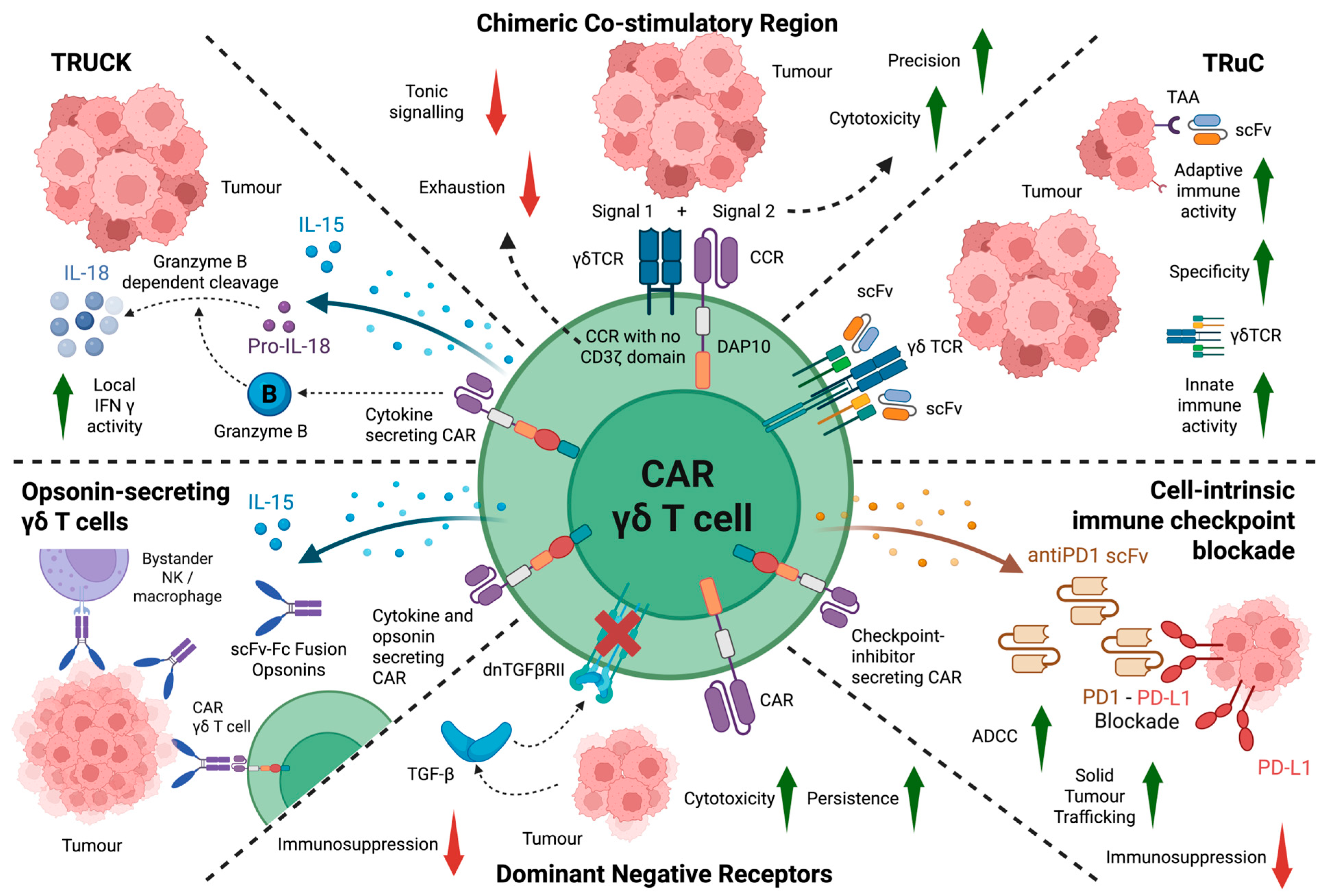
4. Novel Genetic Engineering Strategies for γδ T Cells
4.1. CAR Signalling Architecture for γδ T Cell Therapy
4.2. Novel γδ T Cell CAR Architectures
4.3. Cytokine Armouring of γδ T Cells
4.4. Opsonin-Secreting γδ T Cells
4.5. Dominant Negative Receptors
4.6. Cell-Intrinsic Immune Checkpoint Blockade
4.7. CAR Alternatives
4.8. Chemotherapy-Resistant Vδ2 Cells
5. Clinical Experience of Engineered γδ T Cell Therapy in Cancer

| Year Opened | Trial ID | Status | Phase | Target Antigen | Indication | γδ Subset | Source | Reference |
|---|---|---|---|---|---|---|---|---|
| 2017 | NCT02656147 | Unknown | 1 | CD19 | R/R CD19+ malignancies | Unspec. 2 | Allo | N/A |
| 2019 | NCT03885076 | Unknown | Ob. | Unspec. | AML | Unspec. | Auto | N/A |
| 2019 | NCT04107142 | Unknown | 1 | NKG2DL | R/R solid tumours | Unspec. | Allo | N/A |
| 2020 | NCT04165941 | Active, not recruiting | 1 | N/A | Glioblastoma | Vδ2 | Auto | [134] |
| 2020 | NCT04702841 | Unknown | 1 | CD7 | CD7+ T cell malignancy | Unspec. | Unspec. | N/A |
| 2021 | NCT04735471 | Terminated (commercial decision, pivot to autoimmunity) | 1 | CD20 | B cell Malignancies | Unspec. | Allo | [136] |
| 2022 | NCT05554939 | Recruiting | 1/2 | CD19 | R/R B-cell NHL | Unspec. | Allo | N/A |
| 2022 | NCT05388305 | Unknown | N/A | Unspec. | R/R post-transplant AML | Unspec. | Unspec. | N/A |
| 2023 | NCT05664243 | Active, not recruiting | 2 | N/A | Glioblastoma | Vδ2 | Auto/Allo | [135] |
| 2023 | NCT06372236 | Completed | 1 | B7-H3 | Advanced solid tumours | Vδ1 | Allo | N/A |
| 2023 | NCT06056752 | Recruiting | 1 | CD19 | CD19+ B-ALL | Unspec. | Allo | N/A |
| 2023 | NCT06092047 | Recruiting | 1 | CD19 | CD19+ B cell malignancy | Unspec. | Allo | N/A |
| 2024 | NCT05302037 | Recruiting | 1 | NKG2DL | Advanced malignancies | Unspec. | Allo | [137] |
| 2024 | NCT06018363 | Recruiting | 1/2 | B7-H3 | Malignant brain glioma | Unspec. | Allo | [138] |
| 2024 | NCT06150885 | Recruiting | 1/2 | HLA-G 3 | R/R NSCLC, TNBC, CRC, GBM | Vδ2 | Allo | N/A |
| 2024 | NCT06193486 | Recruiting | 1 | PSCA | mCRPC | γδ-enriched | Auto | [139] |
| 2024 | NCT06480565 | Active, not recruiting | 1/2 | CD70 | Clear Cell Renal Cell Carcinoma | Vδ1 | Allo | [140] |
| 2024 | NCT06592092 | Recruiting | N/A | B7H3 | Meningeal metastases from B7H3+ solid tumours | Unspec. | Allo | [141] |
| 2025 | NCT06838832 | Recruiting | 1/2 | CD19 | R/R B-NHL | Unspec. | Allo | N/A |
| N/A | NCT07120607 | Not yet recruiting | 1 | CD7 | R/R CD7+ leukaemia/lymphoma | Unspec. | Allo | N/A |
6. Lessons Learned from Clinical Experience to Date
7. Future Directions and Outstanding Questions
8. Conclusions
Author Contributions
Funding
Institutional Review Board Statement
Informed Consent Statement
Data Availability Statement
Conflicts of Interest
Abbreviations
| aAPC | Artificial antigen-presenting cell |
| AAV | Adeno-associated virus |
| ADCC | Antibody-dependent cellular cytotoxicity |
| AICD | Activation-induced cell death |
| Allo | Allogeneic |
| AML | Acute myeloid leukaemia |
| AMPK | AMP-activated protein kinase |
| Auto | Autologous |
| BrHPP | Bromohydrin pyrophosphate |
| BTN | Butyrophilin |
| CAR | Chimeric antigen receptor |
| CCR | Chimeric co-stimulatory domain |
| CISH | Cytokine-inducible SH2 containing protein |
| CRC | Colorectal carcinoma |
| CRISPR | Clustered regularly interspaced short palindromic repeats |
| DC | Dendritic cell |
| dnTGFβRII | Dominant-negative TGF-β receptor II |
| DNAM-1 | DNAX accessory molecule-1 |
| DOT | Delta one T cell |
| FDA | U.S. Food and Drug Administration |
| GBM | Glioblastoma |
| GMP | Good Manufacturing Practice |
| G-Rex® | Gas-permeable rapid expansion |
| GvHD | Graft versus host disease |
| HIF | Hypoxia-inducible factor |
| IFN | Interferon |
| IL | Interleukin |
| MACS® | Magnetic cell separation |
| Mb | Membrane bound |
| mCRPC | Metastatic castrate-resistant prostate carcinoma |
| MDSC | Myeloid-derived suppressor cells |
| MGMT | O(6)-methylguanine DNA methyltransferase |
| MHC | Major histocompatibility complex |
| N/A | Not available |
| N-BP | Aminobisphosphonate |
| NFAT | Nuclear factor of activated T cells |
| NHL | Non-Hodgkin lymphoma |
| NK | Natural killer |
| NKG2DL | Natural killer group 2 D receptor ligands |
| NSCLC | Non-small cell lung carcinoma |
| Ob. | Observational |
| pAg | Phosphoantigen |
| PBMC | Peripheral blood mononuclear cell |
| PD-L1 | Programmed death ligand 1 (PD-L1) |
| PSCA | Prostate stem cell antigen |
| R/R | Relapsed/refractory |
| scFv | Single-chain variable fragment |
| TCR | T cell receptor |
| TGF-β | Transforming growth factor β |
| TME | Tumour microenvironment |
| TNBC | Triple-negative breast carcinoma |
| TNF-α | Tumour necrosis factor α |
| TRAIL | TNF-related apoptosis-inducing ligand |
| TRuC | T cell receptor fusion construct |
| TRUCK | T cells redirected for universal cytokine-mediated killing |
| Unspec. | Unspecified |
| ZOL | Zolendronic acid |
References
- Mobark, N.; Hull, C.M.; Maher, J. Optimising CAR T therapy for the treatment of solid tumors. Expert. Rev. Anticancer. Ther. 2025, 25, 9–25. [Google Scholar] [CrossRef]
- Finney, H.M.; Lawson, A.D.; Bebbington, C.R.; Weir, A.N. Chimeric receptors providing both primary and costimulatory signaling in T cells from a single gene product. J. Immunol. 1998, 161, 2791–2797. [Google Scholar] [CrossRef]
- Finney, H.M.; Akbar, A.N.; Lawson, A.D. Activation of resting human primary T cells with chimeric receptors: Costimulation from CD28, inducible costimulator, CD134, and CD137 in series with signals from the TCR zeta chain. J. Immunol. 2004, 172, 104–113. [Google Scholar] [CrossRef]
- Halim, L.; Maher, J. CAR T-cell immunotherapy of B-cell malignancy: The story so far. Ther. Adv. Vaccines Immunother. 2020, 8, 2515135520927164. [Google Scholar] [CrossRef]
- Guzman, G.; Reed, M.R.; Bielamowicz, K.; Koss, B.; Rodriguez, A. CAR-T Therapies in Solid Tumors: Opportunities and Challenges. Curr. Oncol. Rep. 2023, 25, 479–489. [Google Scholar] [CrossRef]
- Maher, J.; Davies, D.M. CAR-Based Immunotherapy of Solid Tumours-A Survey of the Emerging Targets. Cancers 2023, 15, 1171. [Google Scholar] [CrossRef]
- Martinez, M.; Moon, E.K. CAR T Cells for Solid Tumors: New Strategies for Finding, Infiltrating, and Surviving in the Tumor Microenvironment. Front. Immunol. 2019, 10, 128. [Google Scholar] [CrossRef]
- Maher, J. Solid tumours: Building bridges to CAR-T success. Clin. Transl. Discov. 2023, 3, e179. [Google Scholar] [CrossRef]
- Buck, M.D.; Sowell, R.T.; Kaech, S.M.; Pearce, E.L. Metabolic Instruction of Immunity. Cell 2017, 169, 570–586. [Google Scholar] [CrossRef] [PubMed]
- Lindau, D.; Gielen, P.; Kroesen, M.; Wesseling, P.; Adema, G.J. The immunosuppressive tumour network: Myeloid-derived suppressor cells, regulatory T cells and natural killer T cells. Immunology 2013, 138, 105–115. [Google Scholar] [CrossRef] [PubMed]
- Gajewski, T.F.; Schreiber, H.; Fu, Y.X. Innate and adaptive immune cells in the tumor microenvironment. Nat. Immunol. 2013, 14, 1014–1022. [Google Scholar] [CrossRef]
- Batlle, E.; Massague, J. Transforming Growth Factor-beta Signaling in Immunity and Cancer. Immunity 2019, 50, 924–940. [Google Scholar] [CrossRef]
- Chen, D.S.; Mellman, I. Elements of cancer immunity and the cancer-immune set point. Nature 2017, 541, 321–330. [Google Scholar] [CrossRef] [PubMed]
- McGowan, E.; Lin, Q.; Ma, G.; Yin, H.; Chen, S.; Lin, Y. PD-1 disrupted CAR-T cells in the treatment of solid tumors: Promises and challenges. Biomed. Pharmacother. 2020, 121, 109625. [Google Scholar] [CrossRef] [PubMed]
- Wherry, E.J.; Kurachi, M. Molecular and cellular insights into T cell exhaustion. Nat. Rev. Immunol. 2015, 15, 486–499. [Google Scholar] [CrossRef] [PubMed]
- Kabelitz, D.; Serrano, R.; Kouakanou, L.; Peters, C.; Kalyan, S. Cancer immunotherapy with gammadelta T cells: Many paths ahead of us. Cell Mol. Immunol. 2020, 17, 925–939. [Google Scholar] [CrossRef]
- Gentles, A.J.; Newman, A.M.; Liu, C.L.; Bratman, S.V.; Feng, W.; Kim, D.; Nair, V.S.; Xu, Y.; Khuong, A.; Hoang, C.D.; et al. The prognostic landscape of genes and infiltrating immune cells across human cancers. Nat. Med. 2015, 21, 938–945. [Google Scholar] [CrossRef]
- Saura-Esteller, J.; de Jong, M.; King, L.A.; Ensing, E.; Winograd, B.; de Gruijl, T.D.; Parren, P.; van der Vliet, H.J. Gamma Delta T-Cell Based Cancer Immunotherapy: Past-Present-Future. Front. Immunol. 2022, 13, 915837. [Google Scholar] [CrossRef]
- Imbert, C.; Olive, D. gammadelta T Cells in Tumor Microenvironment. Adv. Exp. Med. Biol. 2020, 1273, 91–104. [Google Scholar] [CrossRef]
- Tan, G.; Spillane, K.M.; Maher, J. The Role and Regulation of the NKG2D/NKG2D Ligand System in Cancer. Biology 2023, 12, 1079. [Google Scholar] [CrossRef]
- Correia, D.V.; Lopes, A.; Silva-Santos, B. Tumor cell recognition by gammadelta T lymphocytes: T-cell receptor vs. NK-Cell receptors. Oncoimmunology 2013, 2, e22892. [Google Scholar] [CrossRef]
- Adams, E.J.; Gu, S.; Luoma, A.M. Human gamma delta T cells: Evolution and ligand recognition. Cell Immunol. 2015, 296, 31–40. [Google Scholar] [CrossRef]
- Willcox, C.R.; Mohammed, F.; Willcox, B.E. The distinct MHC-unrestricted immunobiology of innate-like and adaptive-like human gammadelta T cell subsets-Nature’s CAR-T cells. Immunol. Rev. 2020, 298, 25–46. [Google Scholar] [CrossRef]
- Hayday, A.C. Gammadelta T cells and the lymphoid stress-surveillance response. Immunity 2009, 31, 184–196. [Google Scholar] [CrossRef] [PubMed]
- Brandes, M.; Willimann, K.; Moser, B. Professional antigen-presentation function by human gammadelta T Cells. Science 2005, 309, 264–268. [Google Scholar] [CrossRef] [PubMed]
- Brandes, M.; Willimann, K.; Bioley, G.; Levy, N.; Eberl, M.; Luo, M.; Tampe, R.; Levy, F.; Romero, P.; Moser, B. Cross-presenting human gammadelta T cells induce robust CD8+ alphabeta T cell responses. Proc. Natl. Acad. Sci. USA 2009, 106, 2307–2312. [Google Scholar] [CrossRef]
- Capsomidis, A.; Benthall, G.; Van Acker, H.H.; Fisher, J.; Kramer, A.M.; Abeln, Z.; Majani, Y.; Gileadi, T.; Wallace, R.; Gustafsson, K.; et al. Chimeric Antigen Receptor-Engineered Human Gamma Delta T Cells: Enhanced Cytotoxicity with Retention of Cross Presentation. Mol. Ther. 2018, 26, 354–365. [Google Scholar] [CrossRef] [PubMed]
- Jing, Y.; Wu, Y.; Hu, Q.; Wu, W.; Li, D.; Hu, W.; Li, H.; Fu, M.; Huang, X.; Hu, Y. Remodelling hypoxic TNBC microenvironment restores antitumor efficacy of Vgamma9Vdelta2 T cell therapy. Br. J. Cancer 2025, 133, 365–380. [Google Scholar] [CrossRef]
- Fiala, G.J.; Lucke, J.; Huber, S. Pro- and antitumorigenic functions of gammadelta T cells. Eur. J. Immunol. 2024, 54, e2451070. [Google Scholar] [CrossRef]
- Harmon, C.; Zaborowski, A.; Moore, H.; St Louis, P.; Slattery, K.; Duquette, D.; Scanlan, J.; Kane, H.; Kunkemoeller, B.; McIntyre, C.L.; et al. gammadelta T cell dichotomy with opposing cytotoxic and wound healing functions in human solid tumors. Nat. Cancer 2023, 4, 1122–1137. [Google Scholar] [CrossRef]
- Azimnasab-Sorkhabi, P.; Soltani-Asl, M.; Soleiman Ekhtiyari, M.; Kfoury Junior, J.R. Landscape of unconventional gammadelta T cell subsets in cancer. Mol. Biol. Rep. 2024, 51, 238. [Google Scholar] [CrossRef]
- Dimova, T.; Brouwer, M.; Gosselin, F.; Tassignon, J.; Leo, O.; Donner, C.; Marchant, A.; Vermijlen, D. Effector Vgamma9Vdelta2 T cells dominate the human fetal gammadelta T-cell repertoire. Proc. Natl. Acad. Sci. USA 2015, 112, E556–E565. [Google Scholar] [CrossRef]
- Morita, C.T.; Mariuzza, R.A.; Brenner, M.B. Antigen recognition by human γδ T cells: Pattern recognition by the adaptive immune system. Springer Semin. Immunopathol. 2000, 22, 191–217. [Google Scholar] [CrossRef]
- Morita, C.T.; Jin, C.; Sarikonda, G.; Wang, H. Nonpeptide antigens, presentation mechanisms, and immunological memory of human Vgamma2Vdelta2 T cells: Discriminating friend from foe through the recognition of prenyl pyrophosphate antigens. Immunol. Rev. 2007, 215, 59–76. [Google Scholar] [CrossRef] [PubMed]
- Morita, C.T.; Beckman, E.M.; Bukowski, J.F.; Tanaka, Y.; Band, H.; Bloom, B.R.; Golan, D.E.; Brenner, M.B. Direct presentation of nonpeptide prenyl pyrophosphate antigens to human gamma delta T cells. Immunity 1995, 3, 495–507. [Google Scholar] [CrossRef]
- Yuan, L.; Ma, X.; Yang, Y.; Qu, Y.; Li, X.; Zhu, X.; Ma, W.; Duan, J.; Xue, J.; Yang, H.; et al. Phosphoantigens glue butyrophilin 3A1 and 2A1 to activate Vgamma9Vdelta2 T cells. Nature 2023, 621, 840–848. [Google Scholar] [CrossRef]
- Mohammed, F.; Willcox, C.R.; Willcox, B.E. A Brief Molecular History of Vgamma9Vdelta2 TCR-Mediated Phosphoantigen Sensing. Immunol. Rev. 2025, 331, e70023. [Google Scholar] [CrossRef]
- Sandstrom, A.; Peigne, C.M.; Leger, A.; Crooks, J.E.; Konczak, F.; Gesnel, M.C.; Breathnach, R.; Bonneville, M.; Scotet, E.; Adams, E.J. The intracellular B30.2 domain of butyrophilin 3A1 binds phosphoantigens to mediate activation of human Vgamma9Vdelta2 T cells. Immunity 2014, 40, 490–500. [Google Scholar] [CrossRef]
- Juarez, D.; Fruman, D.A. Targeting the Mevalonate Pathway in Cancer. Trends Cancer 2021, 7, 525–540. [Google Scholar] [CrossRef] [PubMed]
- van Beek, E.; Pieterman, E.; Cohen, L.; Lowik, C.; Papapoulos, S. Farnesyl pyrophosphate synthase is the molecular target of nitrogen-containing bisphosphonates. Biochem. Biophys. Res. Commun. 1999, 264, 108–111. [Google Scholar] [CrossRef] [PubMed]
- Parente-Pereira, A.C.; Shmeeda, H.; Whilding, L.M.; Zambirinis, C.P.; Foster, J.; van der Stegen, S.J.; Beatson, R.; Zabinski, T.; Brewig, N.; Sosabowski, J.K.; et al. Adoptive immunotherapy of epithelial ovarian cancer with Vgamma9Vdelta2 T cells, potentiated by liposomal alendronic acid. J. Immunol. 2014, 193, 5557–5566. [Google Scholar] [CrossRef] [PubMed]
- Mamedov, M.R.; Vedova, S.; Freimer, J.W.; Sahu, A.D.; Ramesh, A.; Arce, M.M.; Meringa, A.D.; Ota, M.; Chen, P.A.; Hanspers, K.; et al. CRISPR screens decode cancer cell pathways that trigger gammadelta T cell detection. Nature 2023, 621, 188–195. [Google Scholar] [CrossRef] [PubMed]
- Hou, H.Y.; Chu, X.; Cheng, G.D.; Li, Z.Y.; Liu, Y.; Li, S.L. A Sandwich-like metabolic regulator activated gammadelta T cells for dual immunotherapy. J. Control. Release 2026, 389, 114473. [Google Scholar] [CrossRef]
- Luo, X.; Lv, Y.; Yang, J.; Long, R.; Qiu, J.; Deng, Y.; Tang, G.; Zhang, C.; Li, J.; Zuo, J. Gamma delta T cells in cancer therapy: From tumor recognition to novel treatments. Front. Med. 2024, 11, 1480191. [Google Scholar] [CrossRef] [PubMed]
- You, H.; Zhang, X.; Chen, H.; Liu, C.; Teng, D.; Han, J.; Chen, M.; Pang, Y.; Zhang, J.; Cai, M.; et al. gammadelta T-cell autoresponses to ectopic membrane proteins: A new type of pattern recognition. Cell Mol. Immunol. 2025, 22, 356–370. [Google Scholar] [CrossRef]
- Wiesheu, R.; Coffelt, S.B. From backstage to the spotlight: γδT cells in cancer. Cancer Cell 2024, 42, 1637–1642. [Google Scholar] [CrossRef]
- Wu, Y.; Kyle-Cezar, F.; Woolf, R.T.; Naceur-Lombardelli, C.; Owen, J.; Biswas, D.; Lorenc, A.; Vantourout, P.; Gazinska, P.; Grigoriadis, A.; et al. An innate-like Vdelta1(+) gammadelta T cell compartment in the human breast is associated with remission in triple-negative breast cancer. Sci. Transl. Med. 2019, 11, eaax9364. [Google Scholar] [CrossRef]
- Wu, Y.; Biswas, D.; Usaite, I.; Angelova, M.; Boeing, S.; Karasaki, T.; Veeriah, S.; Czyzewska-Khan, J.; Morton, C.; Joseph, M.; et al. A local human Vdelta1 T cell population is associated with survival in nonsmall-cell lung cancer. Nat. Cancer 2022, 3, 696–709. [Google Scholar] [CrossRef]
- Castenmiller, S.M.; Borst, A.L.; Wardak, L.; Molenaar, J.J.; Papadopoulou, M.; de Krijger, R.R.; van der Steeg, A.F.; van Noesel, M.M.; Vermijlen, D.; de Groot, R.; et al. gammadelta T cells are the prime antitumoral T cells in pediatric neuroblastoma. Life Sci. Alliance 2025, 8, e202503249. [Google Scholar] [CrossRef]
- Siegers, G.M.; Lamb, L.S., Jr. Cytotoxic and regulatory properties of circulating Vdelta1+ gammadelta T cells: A new player on the cell therapy field? Mol. Ther. 2014, 22, 1416–1422. [Google Scholar] [CrossRef]
- Van Rhijn, I.; Le Nours, J. CD1 and MR1 recognition by human gammadelta T cells. Mol. Immunol. 2021, 133, 95–100. [Google Scholar] [CrossRef]
- Xu, C.; Li, S.; Fulford, T.S.; Christo, S.N.; Mackay, L.K.; Gray, D.H.; Uldrich, A.P.; Pellicci, D.G.; Dale, I.G.; Koay, H.F. Expansion of MAIT cells in the combined absence of NKT and gammadelta-T cells. Mucosal Immunol. 2023, 16, 446–461. [Google Scholar] [CrossRef]
- Marlin, R.; Pappalardo, A.; Kaminski, H.; Willcox, C.R.; Pitard, V.; Netzer, S.; Khairallah, C.; Lomenech, A.M.; Harly, C.; Bonneville, M.; et al. Sensing of cell stress by human gammadelta TCR-dependent recognition of annexin A2. Proc. Natl. Acad. Sci. USA 2017, 114, 3163–3168. [Google Scholar] [CrossRef]
- Harly, C.; Joyce, S.P.; Domblides, C.; Bachelet, T.; Pitard, V.; Mannat, C.; Pappalardo, A.; Couzi, L.; Netzer, S.; Massara, L.; et al. Human gammadelta T cell sensing of AMPK-dependent metabolic tumor reprogramming through TCR recognition of EphA2. Sci. Immunol. 2021, 6, eaba9010. [Google Scholar] [CrossRef]
- Hu, Y.; Hu, Q.; Li, Y.; Lu, L.; Xiang, Z.; Yin, Z.; Kabelitz, D.; Wu, Y. gammadelta T cells: Origin and fate, subsets, diseases and immunotherapy. Signal Transduct. Target. Ther. 2023, 8, 434. [Google Scholar] [CrossRef]
- de Vries, N.L.; van de Haar, J.; Veninga, V.; Chalabi, M.; Ijsselsteijn, M.E.; van der Ploeg, M.; van den Bulk, J.; Ruano, D.; van den Berg, J.G.; Haanen, J.B.; et al. gammadelta T cells are effectors of immunotherapy in cancers with HLA class I defects. Nature 2023, 613, 743–750. [Google Scholar] [CrossRef]
- Peters, C.; Kouakanou, L.; Oberg, H.H.; Wesch, D.; Kabelitz, D. In vitro expansion of Vgamma9Vdelta2 T cells for immunotherapy. Methods Enzymol. 2020, 631, 223–237. [Google Scholar] [CrossRef] [PubMed]
- Salot, S.; Laplace, C.; Saiagh, S.; Bercegeay, S.; Tenaud, I.; Cassidanius, A.; Romagne, F.; Dreno, B.; Tiollier, J. Large scale expansion of gamma 9 delta 2 T lymphocytes: Innacell gamma delta cell therapy product. J. Immunol. Methods 2007, 326, 63–75. [Google Scholar] [CrossRef] [PubMed]
- Kondo, M.; Izumi, T.; Fujieda, N.; Kondo, A.; Morishita, T.; Matsushita, H.; Kakimi, K. Expansion of human peripheral blood gammadelta T cells using zoledronate. J. Vis. Exp. 2011, e3182. [Google Scholar] [CrossRef]
- Kondo, M.; Sakuta, K.; Noguchi, A.; Ariyoshi, N.; Sato, K.; Sato, S.; Sato, K.; Hosoi, A.; Nakajima, J.; Yoshida, Y.; et al. Zoledronate facilitates large-scale ex vivo expansion of functional gammadelta T cells from cancer patients for use in adoptive immunotherapy. Cytotherapy 2008, 10, 842–856. [Google Scholar] [CrossRef]
- Harrer, D.C.; Simon, B.; Fujii, S.I.; Shimizu, K.; Uslu, U.; Schuler, G.; Gerer, K.F.; Hoyer, S.; Dorrie, J.; Schaft, N. RNA-transfection of gamma/delta T cells with a chimeric antigen receptor or an alpha/beta T-cell receptor: A safer alternative to genetically engineered alpha/beta T cells for the immunotherapy of melanoma. BMC Cancer 2017, 17, 551. [Google Scholar] [CrossRef] [PubMed]
- Becker, S.A.; Petrich, B.G.; Yu, B.; Knight, K.A.; Brown, H.C.; Raikar, S.S.; Doering, C.B.; Spencer, H.T. Enhancing the effectiveness of gammadelta T cells by mRNA transfection of chimeric antigen receptors or bispecific T cell engagers. Mol. Ther. Oncolytics 2023, 29, 145–157. [Google Scholar] [CrossRef] [PubMed]
- Rischer, M.; Pscherer, S.; Duwe, S.; Vormoor, J.; Jurgens, H.; Rossig, C. Human gammadelta T cells as mediators of chimaeric-receptor redirected anti-tumour immunity. Br. J. Haematol. 2004, 126, 583–592. [Google Scholar] [CrossRef]
- Bold, A.; Gross, H.; Holzmann, E.; Knop, S.; Hoeres, T.; Wilhelm, M. An optimized cultivation method for future in vivo application of gammadelta T cells. Front. Immunol. 2023, 14, 1185564. [Google Scholar] [CrossRef] [PubMed]
- Kouakanou, L.; Xu, Y.; Peters, C.; He, J.; Wu, Y.; Yin, Z.; Kabelitz, D. Vitamin C promotes the proliferation and effector functions of human gammadelta T cells. Cell Mol. Immunol. 2020, 17, 462–473. [Google Scholar] [CrossRef]
- Burnham, R.E.; Zoine, J.T.; Story, J.Y.; Garimalla, S.N.; Gibson, G.; Rae, A.; Williams, E.; Bixby, L.; Archer, D.; Doering, C.B.; et al. Characterization of Donor Variability for gammadelta T Cell ex vivo Expansion and Development of an Allogeneic gammadelta T Cell Immunotherapy. Front. Med. 2020, 7, 588453. [Google Scholar] [CrossRef]
- Dokouhaki, P.; Han, M.; Joe, B.; Li, M.; Johnston, M.R.; Tsao, M.S.; Zhang, L. Adoptive immunotherapy of cancer using ex vivo expanded human gammadelta T cells: A new approach. Cancer Lett. 2010, 297, 126–136. [Google Scholar] [CrossRef] [PubMed]
- Van Acker, H.H.; Anguille, S.; Willemen, Y.; Van den Bergh, J.M.; Berneman, Z.N.; Lion, E.; Smits, E.L.; Van Tendeloo, V.F. Interleukin-15 enhances the proliferation, stimulatory phenotype, and antitumor effector functions of human gamma delta T cells. J. Hematol. Oncol. 2016, 9, 101. [Google Scholar] [CrossRef]
- Li, W.; Kubo, S.; Okuda, A.; Yamamoto, H.; Ueda, H.; Tanaka, T.; Nakamura, H.; Yamanishi, H.; Terada, N.; Okamura, H. Effect of IL-18 on expansion of gammadelta T cells stimulated by zoledronate and IL-2. J. Immunother. 2010, 33, 287–296. [Google Scholar] [CrossRef]
- Sanz, M.; Mann, B.T.; McMahon, E.K.; Bosque, A.; Simmens, S.; Soriano-Sarabia, N. Targeted expansion of cytotoxic T cells using IL-12 and CD137L supplementation enhances antitumor efficacy. Mol. Ther. Oncol. 2025, 33, 200996. [Google Scholar] [CrossRef]
- Ferrarini, M.; Delfanti, F.; Gianolini, M.; Rizzi, C.; Alfano, M.; Lazzarin, A.; Biswas, P. NF-kappa B modulates sensitivity to apoptosis, proinflammatory and migratory potential in short- versus long-term cultured human gamma delta lymphocytes. J. Immunol. 2008, 181, 5857–5864. [Google Scholar] [CrossRef] [PubMed]
- Suen, T.K.; Al, B.; Ulas, T.; Reusch, N.; Bahrar, H.; Bekkering, S.; Bhat, J.; Kabelitz, D.; Schultze, J.L.; van de Veerdonk, F.L.; et al. Human gammadelta T Cell Function Is Impaired Upon Mevalonate Pathway Inhibition. Immunology 2025, 175, 300–322. [Google Scholar] [CrossRef] [PubMed]
- Harly, C.; Guillaume, Y.; Nedellec, S.; Peigne, C.M.; Monkkonen, H.; Monkkonen, J.; Li, J.; Kuball, J.; Adams, E.J.; Netzer, S.; et al. Key implication of CD277/butyrophilin-3 (BTN3A) in cellular stress sensing by a major human gammadelta T-cell subset. Blood 2012, 120, 2269–2279. [Google Scholar] [CrossRef]
- Benyamine, A.; Le Roy, A.; Mamessier, E.; Gertner-Dardenne, J.; Castanier, C.; Orlanducci, F. BTN3A molecules considerably improve Vγ9Vδ2 T cells-based immunotherapy in acute myeloid leukemia. Oncoimmunology 2016, 5, e1146843. [Google Scholar] [CrossRef]
- Fisher, J.; Anderson, J. Engineering Approaches in Human Gamma Delta T Cells for Cancer Immunotherapy. Front. Immunol. 2018, 9, 1409. [Google Scholar] [CrossRef] [PubMed]
- Lai, A.Y.; Patel, A.; Brewer, F.; Evans, K.; Johannes, K.; Gonzalez, L.E.; Yoo, K.J.; Fromm, G.; Wilson, K.; Schreiber, T.H.; et al. Cutting Edge: Bispecific gammadelta T Cell Engager Containing Heterodimeric BTN2A1 and BTN3A1 Promotes Targeted Activation of Vgamma9Vdelta2(+) T Cells in the Presence of Costimulation by CD28 or NKG2D. J. Immunol. 2022, 209, 1475–1480. [Google Scholar] [CrossRef] [PubMed]
- Casetti, R.; Agrati, C.; Wallace, M.; Sacchi, A.; Martini, F.; Martino, A.; Rinaldi, A.; Malkovsky, M. Cutting edge: TGF-beta1 and IL-15 Induce FOXP3+ gammadelta regulatory T cells in the presence of antigen stimulation. J. Immunol. 2009, 183, 3574–3577. [Google Scholar] [CrossRef]
- Kouakanou, L.; Peters, C.; Sun, Q.; Floess, S.; Bhat, J.; Huehn, J.; Kabelitz, D. Vitamin C supports conversion of human gammadelta T cells into FOXP3-expressing regulatory cells by epigenetic regulation. Sci. Rep. 2020, 10, 6550. [Google Scholar] [CrossRef]
- Peters, C.; Hasler, R.; Wesch, D.; Kabelitz, D. Human Vdelta2 T cells are a major source of interleukin-9. Proc. Natl. Acad. Sci. USA 2016, 113, 12520–12525. [Google Scholar] [CrossRef]
- Peters, C.; Meyer, A.; Kouakanou, L.; Feder, J.; Schricker, T.; Lettau, M.; Janssen, O.; Wesch, D.; Kabelitz, D. TGF-beta enhances the cytotoxic activity of Vdelta2 T cells. Oncoimmunology 2019, 8, e1522471. [Google Scholar] [CrossRef] [PubMed]
- Beatson, R.E.; Parente-Pereira, A.C.; Halim, L.; Cozzetto, D.; Hull, C.; Whilding, L.M.; Martinez, O.; Taylor, C.A.; Obajdin, J.; Luu Hoang, K.N.; et al. TGF-beta1 potentiates Vgamma9Vdelta2 T cell adoptive immunotherapy of cancer. Cell Rep. Med. 2021, 2, 100473. [Google Scholar] [CrossRef]
- Parente-Pereira, A.C.; Beatson, R.E.; Davies, D.M.; Hull, C.; Whilding, L.M.; Porter, J.C.; Maher, J. Generation and application of TGFbeta-educated human Vgamma9Vdelta2 T cells. STAR Protoc. 2022, 3, 101319. [Google Scholar] [CrossRef]
- Rafia, C.; Loizeau, C.; Renoult, O.; Harly, C.; Pecqueur, C.; Joalland, N.; Scotet, E. The antitumor activity of human Vgamma9Vdelta2 T cells is impaired by TGF-beta through significant phenotype, transcriptomic and metabolic changes. Front. Immunol. 2022, 13, 1066336. [Google Scholar] [CrossRef]
- Silva, J.A.; Gunasinghe, K.; Jonus, H.C.; Branella, G.M.; Schiaffino Bustamante, A.Y.; Okalova, J.; Yustein, J.T.; Spencer, H.T. Central memory-enriched Vgamma9Vdelta2 gammadelta T cells via TGF-beta expansion demonstrate enhanced in vivo efficacy against metastatic osteosarcoma. Front. Immunol. 2025, 16, 1657760. [Google Scholar] [CrossRef] [PubMed]
- Siegers, G.M.; Dhamko, H.; Wang, X.H.; Mathieson, A.M.; Kosaka, Y.; Felizardo, T.C.; Medin, J.A.; Tohda, S.; Schueler, J.; Fisch, P.; et al. Human Vdelta1 gammadelta T cells expanded from peripheral blood exhibit specific cytotoxicity against B-cell chronic lymphocytic leukemia-derived cells. Cytotherapy 2011, 13, 753–764. [Google Scholar] [CrossRef] [PubMed]
- Almeida, A.R.; Correia, D.V.; Fernandes-Platzgummer, A.; da Silva, C.L.; da Silva, M.G.; Anjos, D.R.; Silva-Santos, B. Delta One T Cells for Immunotherapy of Chronic Lymphocytic Leukemia: Clinical-Grade Expansion/Differentiation and Preclinical Proof of Concept. Clin. Cancer Res. 2016, 22, 5795–5804. [Google Scholar] [CrossRef]
- Sanchez Martinez, D.; Tirado, N.; Mensurado, S.; Martinez-Moreno, A.; Romecin, P.; Gutierrez Aguera, F.; Correia, D.V.; Silva-Santos, B.; Menendez, P. Generation and proof-of-concept for allogeneic CD123 CAR-Delta One T (DOT) cells in acute myeloid leukemia. J. Immunother. Cancer 2022, 10, e005400. [Google Scholar] [CrossRef]
- Ferry, G.M.; Agbuduwe, C.; Forrester, M.; Dunlop, S.; Chester, K.; Fisher, J.; Anderson, J.; Barisa, M. A simple and robust single-step method for CAR-Vdelta1 γδ T cell expansion and transduction for cancer immunotherapy. Front. Immunol. 2022, 13, 863155. [Google Scholar] [CrossRef] [PubMed]
- Nishimoto, K.P.; Barca, T.; Azameera, A.; Makkouk, A.; Romero, J.M.; Bai, L.; Brodey, M.M.; Kennedy-Wilde, J.; Shao, H.; Papaioannou, S.; et al. Allogeneic CD20-targeted gammadelta T cells exhibit innate and adaptive antitumor activities in preclinical B-cell lymphoma models. Clin. Transl. Immunol. 2022, 11, e1373. [Google Scholar] [CrossRef]
- Deniger, D.C.; Maiti, S.N.; Mi, T.; Switzer, K.C.; Ramachandran, V.; Hurton, L.V.; Ang, S.; Olivares, S.; Rabinovich, B.A.; Huls, M.H.; et al. Activating and propagating polyclonal gamma delta T cells with broad specificity for malignancies. Clin. Cancer Res. 2014, 20, 5708–5719. [Google Scholar] [CrossRef]
- Cho, H.W.; Kim, S.Y.; Sohn, D.H.; Lee, M.J.; Park, M.Y.; Sohn, H.J.; Cho, H.I.; Kim, T.G. Triple costimulation via CD80, 4-1BB, and CD83 ligand elicits the long-term growth of Vgamma9Vdelta2 T cells in low levels of IL-2. J. Leukoc. Biol. 2016, 99, 521–529. [Google Scholar] [CrossRef] [PubMed]
- Xiao, L.; Chen, C.; Li, Z.; Zhu, S.; Tay, J.C.; Zhang, X.; Zha, S.; Zeng, J.; Tan, W.K.; Liu, X.; et al. Large-scale expansion of Vgamma9Vdelta2 T cells with engineered K562 feeder cells in G-Rex vessels and their use as chimeric antigen receptor-modified effector cells. Cytotherapy 2018, 20, 420–435. [Google Scholar] [CrossRef]
- Rushworth, D.; Jena, B.; Olivares, S.; Maiti, S.; Briggs, N.; Somanchi, S.; Dai, J.; Lee, D.; Cooper, L.J. Universal artificial antigen presenting cells to selectively propagate T cells expressing chimeric antigen receptor independent of specificity. J. Immunother. 2014, 37, 204–213. [Google Scholar] [CrossRef]
- Portillo, A.L.; Mehboob, M.; Snyder, G.; Moinuddin, A.; Ritchie, T.M.; Balint, E.; Moore, A.E.; Sookhaklari, M.; Bramson, J.L.; Lee, D.A.; et al. IL-21-reprogrammed Vdelta1 T cells exert killing against solid tumors which is enhanced by CAR arming for off-the-shelf immunotherapy. Oncoimmunology 2025, 14, 2562210. [Google Scholar] [CrossRef]
- Salot, S.; Bercegeay, S.; Dreno, B.; Saiagh, S.; Scaglione, V.; Bonnafous, C.; Sicard, H. Large scale expansion of Vgamma9Vdelta2 T lymphocytes from human peripheral blood mononuclear cells after a positive selection using MACS “TCR gamma/delta+ T cell isolation kit”. J. Immunol. Methods 2009, 347, 12–18. [Google Scholar] [CrossRef] [PubMed]
- Verkerk, T.; Pappot, A.T.; Jorritsma, T.; King, L.A.; Duurland, M.C.; Spaapen, R.M.; van Ham, S.M. Isolation and expansion of pure and functional gammadelta T cells. Front. Immunol. 2024, 15, 1336870. [Google Scholar] [CrossRef] [PubMed]
- Jiang, L.; You, F.; Wu, H.; Qi, C.; Xiang, S.; Zhang, P.; Meng, H.; Wang, M.; Huang, J.; Li, Y.; et al. B7-H3-Targeted CAR-Vdelta1T Cells Exhibit Potent Broad-Spectrum Activity against Solid Tumors. Cancer Res. 2024, 84, 4066–4080. [Google Scholar] [CrossRef] [PubMed]
- Bridge, J.; Johnson, M.J.; Kim, J.; Wenthe, S.; Krueger, J.; Wick, B.; Kluesner, M.; Crane, A.T.; Bell, J.; Skeate, J.G.; et al. Efficient multiplex non-viral engineering and expansion of polyclonal γδ CAR-T cells for immunotherapy. bioRxiv 2024. [Google Scholar] [CrossRef]
- Pinot, L.; Sassor, A.; Moker, N.; Zhang, C.; Verhoeyen, E.; Hidalgo, J.V.; Orentas, R.J. Transduction of gammadelta T cells with Baboon envelope pseudotyped lentiviral vector encoding chimeric antigen receptors for translational and clinical applications. Front. Immunol. 2025, 16, 1548630. [Google Scholar] [CrossRef]
- Juraske, C.; Krissmer, S.M.; Teuber, E.S.; Parigiani, M.A.; Strietz, J.; Wesch, D.; Kabelitz, D.; Minguet, S.; Schamel, W.W. Reprogramming of human γδ T cells by expression of an anti-CD19 TCR fusion construct (εTRuC) to enhance tumor killing. J. Leukoc. Biol. 2024, 115, 293–305. [Google Scholar] [CrossRef]
- Snyder, G.; Martin, A.K.; Sezgin, Y.; Maguire, C.; Moriarity, B.S.; Webber, B.R.; Cross, E.; Pereira, M.S.F.; Saljoughian, N.; Portillo, A.L.; et al. Off-the-shelf allogeneic polyclonal CD38KO/CD38-CAR γδT cells for the treatment of T cell malignancies. bioRxiv 2025. [Google Scholar] [CrossRef]
- Vormittag, P.; Gunn, R.; Ghorashian, S.; Veraitch, F.S. A guide to manufacturing CAR T cell therapies. Curr. Opin. Biotechnol. 2018, 53, 164–181. [Google Scholar] [CrossRef]
- Langford, S.; Bowersock, J.; Pillai, S.; Saad, A.; Lamb, L. Manufacturing of expanded/activated γδ T cells using the Miltenyi Prodigy® bioreactor system. Cytotherapy 2017, 19, S116. [Google Scholar] [CrossRef]
- Trainor, N.; Purpura, K.A.; Middleton, K.; Fargo, K.; Hails, L.; Vicentini-Hogan, M.; McRobie, C.; Daniels, R.; Densham, P.; Gardin, P.; et al. Automated production of gene-modified chimeric antigen receptor T cells using the Cocoon Platform. Cytotherapy 2023, 25, 1349–1360. [Google Scholar] [CrossRef]
- Bajgain, P.; Mucharla, R.; Wilson, J.; Welch, D.; Anurathapan, U.; Liang, B.; Lu, X.; Ripple, K.; Centanni, J.M.; Hall, C.; et al. Optimizing the production of suspension cells using the G-Rex “M” series. Mol. Ther. Methods Clin. Dev. 2014, 1, 14015. [Google Scholar] [CrossRef] [PubMed]
- Lee, D.; Dunn, Z.S.; Guo, W.; Rosenthal, C.J.; Penn, N.E.; Yu, Y.; Zhou, K.; Li, Z.; Ma, F.; Li, M.; et al. Unlocking the potential of allogeneic Vdelta2 T cells for ovarian cancer therapy through CD16 biomarker selection and CAR/IL-15 engineering. Nat. Commun. 2023, 14, 6942. [Google Scholar] [CrossRef] [PubMed]
- Fisher, J.P.; Flutter, B.; Wesemann, F.; Frosch, J.; Rossig, C.; Gustafsson, K.; Anderson, J. Effective combination treatment of GD2-expressing neuroblastoma and Ewing’s sarcoma using anti-GD2 ch14.18/CHO antibody with Vgamma9Vdelta2+ gammadeltaT cells. Oncoimmunology 2016, 5, e1025194. [Google Scholar] [CrossRef]
- Fisher, J.P.; Yan, M.; Heuijerjans, J.; Carter, L.; Abolhassani, A.; Frosch, J.; Wallace, R.; Flutter, B.; Capsomidis, A.; Hubank, M.; et al. Neuroblastoma killing properties of Vdelta2 and Vdelta2-negative gammadeltaT cells following expansion by artificial antigen-presenting cells. Clin. Cancer Res. 2014, 20, 5720–5732. [Google Scholar] [CrossRef]
- You, H.; Zhu, H.; Zhao, Y.; Guo, J.; Gao, Q. TIGIT-expressing zoledronate-specific gammadelta T cells display enhanced antitumor activity. J. Leukoc. Biol. 2022, 112, 1691–1700. [Google Scholar] [CrossRef] [PubMed]
- Bold, A.; Gross, H.; Bardenbacher, M.; Holzmann, E.; Knop, S.; Wilhelm, M. Characterization of Stimulated gammadelta T Cells: Phenotypic Analysis and Implications for Allogeneic Cellular Immunotherapy. Cells 2025, 14, 1917. [Google Scholar] [CrossRef]
- Li, Z.; Liu, N.; Shah, Z.; Jin, L.; Tian, L.; Sun, X.; Zhang, J.; Li, Z.; Caligiuri, M.A.; Yu, J. Comparative efficacy and safety of PSCA CAR-engineered Vdelta1 gammadelta T cells for immunotherapy of pancreatic cancer. J. Immunother. Cancer 2025, 13, e011890. [Google Scholar] [CrossRef]
- Fang, X.; Yan, S.; He, L.; Deng, C. CAR-γδ T cells: A new paradigm of programmable innate immune sentinels and their systemic applications in cancer and beyond. Front. Immunol. 2025, 16, 1735763. [Google Scholar] [CrossRef]
- Ajina, A.; Maher, J. Strategies to Address Chimeric Antigen Receptor Tonic Signaling. Mol. Cancer Ther. 2018, 17, 1795–1815. [Google Scholar] [CrossRef]
- Fisher, J.; Sharma, R.; Don, D.W.; Barisa, M.; Hurtado, M.O.; Abramowski, P.; Porter, L.; Day, W.; Borea, R.; Inglott, S.; et al. Engineering γδT cells limits tonic signaling associated with chimeric antigen receptors. Sci. Signal. 2019, 12, eaax1872. [Google Scholar] [CrossRef]
- Fisher, J.; Abramowski, P.; Wisidagamage Don, N.D.; Flutter, B.; Capsomidis, A.; Cheung, G.W.; Gustafsson, K.; Anderson, J. Avoidance of On-Target Off-Tumor Activation Using a Co-stimulation-Only Chimeric Antigen Receptor. Mol. Ther. 2017, 25, 1234–1247. [Google Scholar] [CrossRef] [PubMed]
- Ding, L.; Li, Y.; Haak, M.T.; Lamb, L. Abstract 1777: A non-signaling CAR for gamma-delta (γδ) T cells to preserve healthy tissues. Cancer Res. 2023, 83, 1777. [Google Scholar] [CrossRef]
- Chmielewski, M.; Abken, H. CAR T cells transform to trucks: Chimeric antigen receptor-redirected T cells engineered to deliver inducible IL-12 modulate the tumour stroma to combat cancer. Cancer Immunol. Immunother. 2012, 61, 1269–1277. [Google Scholar] [CrossRef] [PubMed]
- Makkouk, A.; Yang, X.; Barca, T.; Lucas, A.; Turkoz, M.; Wong, J.; Nishimoto, K.; Brody, M.; Tabrizizad, M.; Gundurao, S.; et al. 119 ADI-002: An IL-15 armored allogeneic ‘off-the-shelf’ Vδ1 gamma delta CAR T cell therapy for solid tumors targeting glypican-3 (GPC3). J. Immunother. Cancer 2021, 9, 119. [Google Scholar] [CrossRef]
- Ding, L.; Li, Y.; Li, J.; ter Haak, M.; Lamb, L.S. Gamma-Delta (γδ) CAR-T Cells Lacking the CD3z Signaling Domain Enhance Targeted Killing of Tumor Cells and Preserve Healthy Tissues. Blood 2023, 142, 6835. [Google Scholar] [CrossRef]
- Fowler, D.; Barisa, M.; Southern, A.; Nattress, C.; Hawkins, E.; Vassalou, E.; Kanouta, A.; Counsell, J.; Rota, E.; Vlckova, P.; et al. Payload-delivering engineered γδ T cells display enhanced cytotoxicity, persistence, and efficacy in preclinical models of osteosarcoma. Sci. Transl. Med. 2024, 16, eadg9814. [Google Scholar] [CrossRef]
- Vicenova, P.; Maher, J. How can we balance risk and benefit of interleukin-18 armored T cell therapies. Exp. Biol. Med. 2026; in press. [Google Scholar]
- Chmielewski, M.; Abken, H. CAR T Cells Releasing IL-18 Convert to T-Bet(high) FoxO1(low) Effectors that Exhibit Augmented Activity against Advanced Solid Tumors. Cell Rep. 2017, 21, 3205–3219. [Google Scholar] [CrossRef]
- Hull, C.M.; Larcombe-Young, D.; Mazza, R.; George, M.; Davies, D.M.; Schurich, A.; Maher, J. Granzyme B-activated IL-18 potentiates alpha beta and γδ CAR T cell immunotherapy in a tumor-dependent manner. Mol. Ther. 2024, 32, 2373–2392. [Google Scholar] [CrossRef]
- van Renterghem, A.W.J.; Parra-Martinez, M.; Witsen, M.; Verkerk, K.; Steur, M.; Zeverijn, L.J.; Dijkstra, K.K.; Akkari, L.; Voest, E.E. Liver metastases dampen IL18-driven gammadelta T cell activity and immunotherapy responsiveness in colorectal cancer. Cell Rep. Med. 2026, 7, 102579. [Google Scholar] [CrossRef]
- Yi, Y.; He, H.W.; Wang, J.X.; Cai, X.Y.; Li, Y.W.; Zhou, J.; Cheng, Y.F.; Jin, J.J.; Fan, J.; Qiu, S.J. The functional impairment of HCC-infiltrating gammadelta T cells, partially mediated by regulatory T cells in a TGFbeta- and IL-10-dependent manner. J. Hepatol. 2013, 58, 977–983. [Google Scholar] [CrossRef] [PubMed]
- Nishimoto, K.P.; Lamture, G.; Chanthery, Y.; Teague, A.G.; Verma, Y.; Au, M.; Smith-Boeck, M.; Salum, M.; Murthy, P.; Gundurao, S.R.Y.; et al. ADI-270: An armored allogeneic gamma delta T cell therapy designed to target CD70-expressing solid and hematologic malignancies. J. Immunother. Cancer 2025, 13, e011704. [Google Scholar] [CrossRef]
- Ribas, A.; Wolchok, J.D. Cancer immunotherapy using checkpoint blockade. Science 2018, 359, 1350–1355. [Google Scholar] [CrossRef] [PubMed]
- Rossi, C.; Gravelle, P.; Decaup, E.; Bordenave, J.; Poupot, M.; Tosolini, M.; Franchini, D.M.; Laurent, C.; Morin, R.; Lagarde, J.M.; et al. Boosting γδ T cell-mediated antibody-dependent cellular cytotoxicity by PD-1 blockade in follicular lymphoma. Oncoimmunology 2019, 8, 1554175. [Google Scholar] [CrossRef] [PubMed]
- Zhang, D.; Tang, Y.; Sun, W.; Guan, Y.; Cheng, Y.; Zhu, Y.; Zhao, X.; Yang, X.; Zhu, H. Validation of CCL20-driven CAR--γδ T secreting PD-1 blockade with enhanced trafficking into solid tumor. iScience 2025, 28, 113463. [Google Scholar] [CrossRef] [PubMed]
- Kitidee, K.; Amonyingcharoen, S.; Preedagasamzin, S.; Atjanasuppat, K.; Sawaisorn, P.; Srimorkun, P.; Petvises, S.; Chaicumpa, W.; Borwornpinyo, S.; Anurathapan, U.; et al. Combining CD3/GD2 bispecific T cell engager with human Vgamma9Vdelta2 T cells facilitates neuroblastoma cell targeting and killing in vitro. PLoS ONE 2025, 20, e0325389. [Google Scholar] [CrossRef]
- Huang, S.W.; Pan, C.M.; Lin, Y.C.; Chen, M.C.; Chen, Y.; Jan, C.I.; Wu, C.C.; Lin, F.Y.; Wang, S.T.; Lin, C.Y.; et al. BiTE-Secreting CAR-gammadeltaT as a Dual Targeting Strategy for the Treatment of Solid Tumors. Adv. Sci. 2023, 10, e2206856. [Google Scholar] [CrossRef]
- Lamb, L.S.; Pereboeva, L.; Youngblood, S.; Gillespie, G.Y.; Nabors, L.B.; Markert, J.M.; Dasgupta, A.; Langford, C.; Spencer, H.T. A combined treatment regimen of MGMT-modified gammadelta T cells and temozolomide chemotherapy is effective against primary high grade gliomas. Sci. Rep. 2021, 11, 21133. [Google Scholar] [CrossRef]
- Xu, Y.; Xiang, Z.; Alnaggar, M.; Kouakanou, L.; Li, J.; He, J.; Yang, J.; Hu, Y.; Chen, Y.; Lin, L.; et al. Allogeneic Vgamma9Vdelta2 T-cell immunotherapy exhibits promising clinical safety and prolongs the survival of patients with late-stage lung or liver cancer. Cell Mol. Immunol. 2021, 18, 427–439. [Google Scholar] [CrossRef]
- Nabors, L.B.; Lamb, L.S.; Goswami, T.; Rochlin, K.; Youngblood, S.L. Adoptive cell therapy for high grade gliomas using simultaneous temozolomide and intracranial mgmt-modified gammadelta t cells following standard post-resection chemotherapy and radiotherapy: Current strategy and future directions. Front. Immunol. 2024, 15, 1299044. [Google Scholar] [CrossRef]
- Chen, G.; Silletti, M.; Lamb, L.; Rochlin, K.M. INB-400 Deltex Drug Resistant Immunotherapy (DRI) Multi-Center Clinical Trial Product Logistics Management. Cytotherapy 2024, 26, S131–S132. [Google Scholar] [CrossRef]
- Neelapu, S.S.; Hamadani, M.; Miklos, D.B.; Holmes, H.; Hinkle, J.; Kennedy-Wilde, J.; Maller, O.; Weinstein, M.; Galimi, F.; Lai, R.; et al. A phase 1 study of ADI-001: Anti-CD20 CAR-engineered allogeneic gamma delta (γδ) T cells in adults with B cell malignancies. J. Clin. Oncol. 2022, 40, 7509. [Google Scholar] [CrossRef]
- Choo, J.; Tan, W.K.; Luk, L.; Zeng, J.; Soh, T.G.; Soon, S.Y.; Lieow, J.; Wong, C.; Pang, M.Y.; Bari, S.; et al. Abstract CT160: A phase I trial to evaluate allogeneic NKG2DL-targeting chimeric antigen receptor-grafted γδ T cells in subjects with advanced solid tumors or hematological malignancies (the ANGELICA Trial). Cancer Res. 2024, 84, CT160. [Google Scholar] [CrossRef]
- Li, X.; Ma, W.; Gu, Y.; Sui, Y.; Zhang, X.; Wang, C.; Gan, W.; Chen, J.; Wang, L.; Zhang, Y.; et al. A phase I clinical trial of intrathecal injection of allogeneic CAR-gdT cells targeting B7H3 for the treatment of patients with recurrent glioblastoma. Ann. Oncol. 2024, 35, 4420. [Google Scholar] [CrossRef]
- Zhang, J.; Tordesillas, L.; Kim, Y.; Snedal, S.; Marques Rossetti, R.A.; Cox, C.; Karyampudi, L.; Abate-Daga, D. 639 Phase I clinical trial of autologous gamma/delta-enriched chimeric antigen receptor (CAR)-T cells to target prostate stem cell antigen (PSCA) in patients with bone metastatic prostate cancer. J. Immunother. Cancer 2024, 12, 639. [Google Scholar] [CrossRef]
- Pal, S.K.; Garmezy, B.; Budworth, H.; Du, X.; Green, S.; Nishimoto, K.; Kennedy-Wilde, J.; Aftab, B.T.; Maltzman, J.; Vosganian, G.S.; et al. Abstract CT187: A phase 1/2 first in human study of ADI-270, an armored allogeneic anti-CD70 chimeric antigen receptor (CAR)γδT cell therapy, in patients (pts) with relapsed or refractory (R/R) clear cell renal cell carcinoma (ccRCC) (trial in progress). Cancer Res. 2025, 85, CT187. [Google Scholar] [CrossRef]
- Ma, P.; Wang, S.; Ma, W.; Wang, Y.C.; Sui, Y.; Zhao, L.; Zhang, Y.; Li, N. Targeting cancer leptomeningeal metastasis with allogeneic chimeric antigen receptor γδ T-cell therapy. J. Clin. Oncol. 2025, 43, 2533. [Google Scholar] [CrossRef]
- Osborne, M.; Maher, J. Prospects for Development and Commercialisation of Allogeneic CAR-Based Therapies for Autoimmune Disease. Biology 2025, 14, 1790. [Google Scholar] [CrossRef] [PubMed]
- Li, Y.R.; Zhou, K.; Zhu, Y.; Halladay, T.; Yang, L. Breaking the mold: Unconventional T cells in cancer therapy. Cancer Cell 2025, 43, 317–322. [Google Scholar] [CrossRef] [PubMed]
- Li, Y.R.; Zhu, Y.; Chen, Y.; Yang, L. The clinical landscape of CAR-engineered unconventional T cells. Trends Cancer 2025, 11, 520–539. [Google Scholar] [CrossRef]
- Mei, A.; Letscher, K.P.; Reddy, S. Engineering next-generation chimeric antigen receptor-T cells: Recent breakthroughs and remaining challenges in design and screening of novel chimeric antigen receptor variants. Curr. Opin. Biotechnol. 2024, 90, 103223. [Google Scholar] [CrossRef]
- Williams, A.M.; Mbofung, R.M.; Morales-Mantilla, D.; Groff, B.; Pan, Y.; Jelcic, M.; Lee, T.T.; Malmberg, K.-J.; Mamonkin, M.; Goulding, J.; et al. 336 Alloimmune defense receptor with genetic ablation of adhesion ligand CD58 promotes functional persistence of allogeneic cell therapies without conditioning chemotherapy. J. Immunother. Cancer 2024, 12, 336. [Google Scholar] [CrossRef]


Disclaimer/Publisher’s Note: The statements, opinions and data contained in all publications are solely those of the individual author(s) and contributor(s) and not of MDPI and/or the editor(s). MDPI and/or the editor(s) disclaim responsibility for any injury to people or property resulting from any ideas, methods, instructions or products referred to in the content. |
© 2026 by the authors. Licensee MDPI, Basel, Switzerland. This article is an open access article distributed under the terms and conditions of the Creative Commons Attribution (CC BY) license.
Share and Cite
Lim, B.J.L.; Maher, J. Re-Tooling of γδ T Cells for Cancer Immunotherapy Using Advanced Manufacturing and Genetic Engineering. Cells 2026, 15, 494. https://doi.org/10.3390/cells15060494
Lim BJL, Maher J. Re-Tooling of γδ T Cells for Cancer Immunotherapy Using Advanced Manufacturing and Genetic Engineering. Cells. 2026; 15(6):494. https://doi.org/10.3390/cells15060494
Chicago/Turabian StyleLim, Benjamin J. L., and John Maher. 2026. "Re-Tooling of γδ T Cells for Cancer Immunotherapy Using Advanced Manufacturing and Genetic Engineering" Cells 15, no. 6: 494. https://doi.org/10.3390/cells15060494
APA StyleLim, B. J. L., & Maher, J. (2026). Re-Tooling of γδ T Cells for Cancer Immunotherapy Using Advanced Manufacturing and Genetic Engineering. Cells, 15(6), 494. https://doi.org/10.3390/cells15060494