Temporal and Spatial Gene Expression Dynamics in Neonatal HI Hippocampus with Focus on Arginase

 , , ,
, , ,  ,
,
Highlights
- This study defines the temporal cellular architecture of the neonatal hippocampal response to hypoxic–ischemic injury by integrating cell-type-resolved transcriptomics and spatial mapping at Day 1 and Day 5.
- Early microglia display an efferocytic and inflammatory-resolving program, whereas subacute microglia shift toward extracellular matrix remodeling and fibrotic pathways.
- These findings identify distinct phases of microglial activation and highlight therapeutic windows for modulating reparative microglial states.
Abstract
1. Introduction
2. Methods
2.1. Animals
2.2. Induction of Hypoxia–Ischemia
2.3. Tissue Preparation
Spatial Genomics Gene Positioning System (GenePS)
2.4. Data Analysis
3. Results
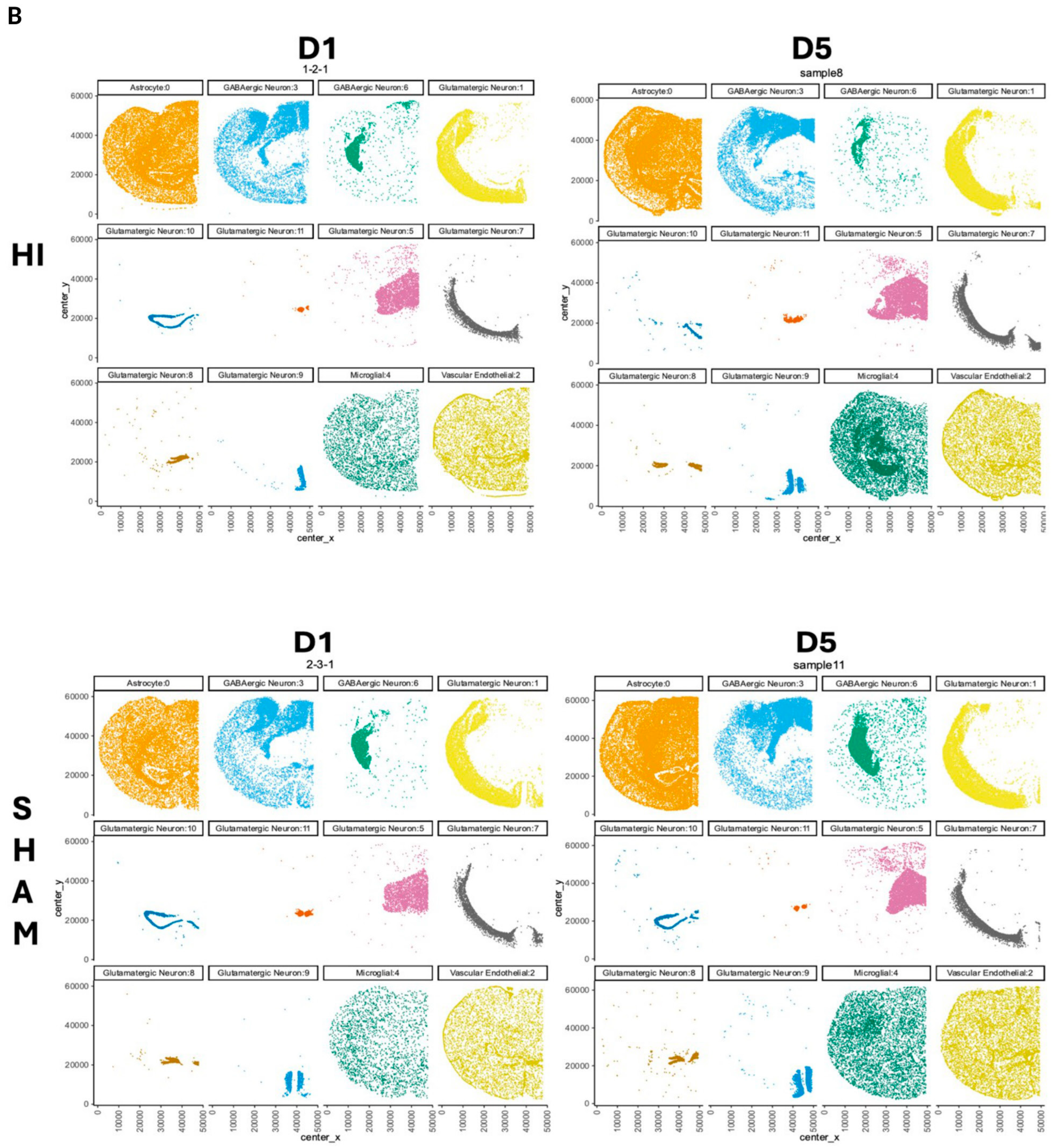
3.1. Spatial Transcriptomics Reveals a Global Architecture with Region-Specific Responses Post-HI
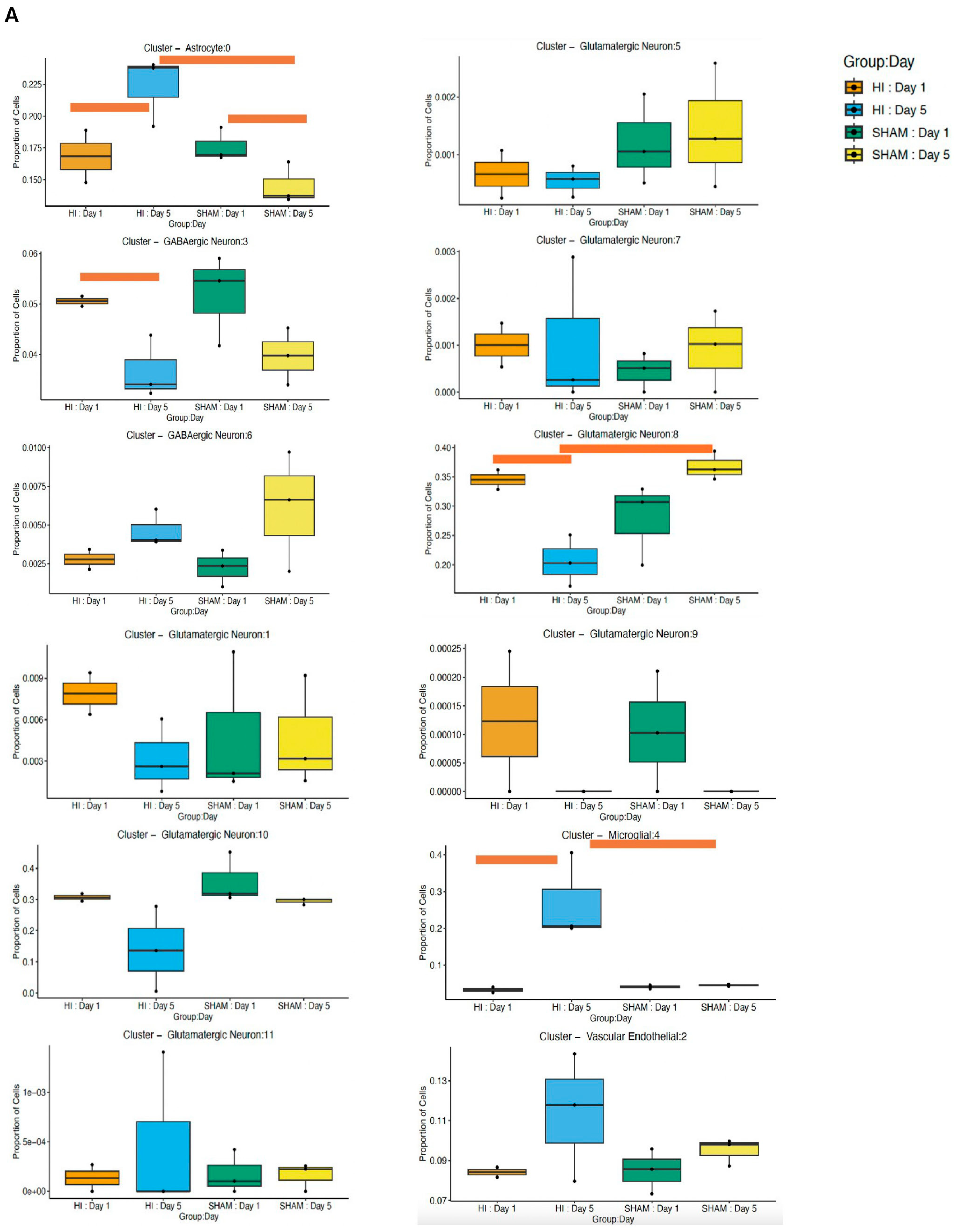
3.2. Cell-Type-Specific Population Dynamics in Hippocampus Post-HI
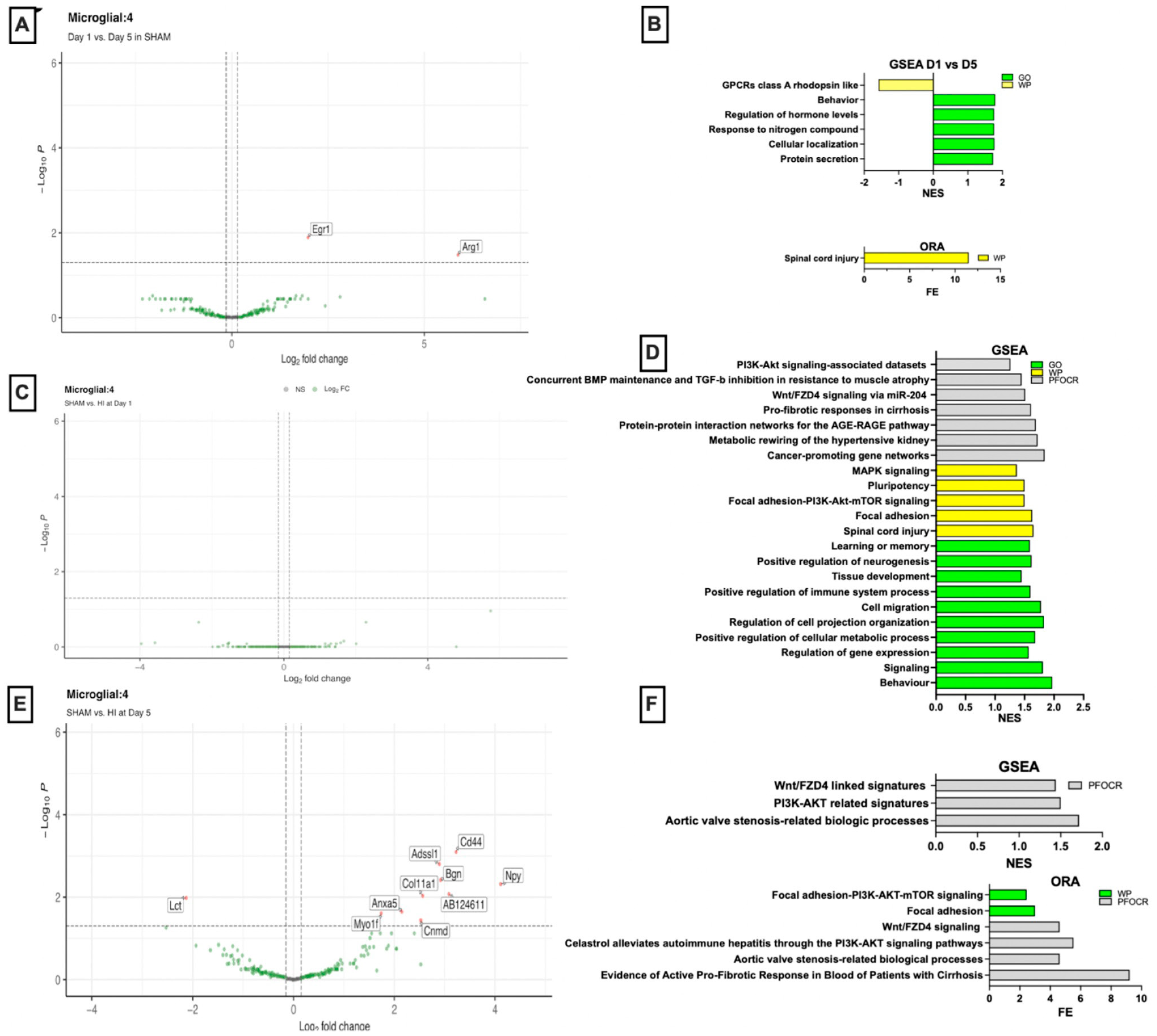
3.3. Developmental Transcriptomic Changes in Microglia in P10 and P15 Sham Mice
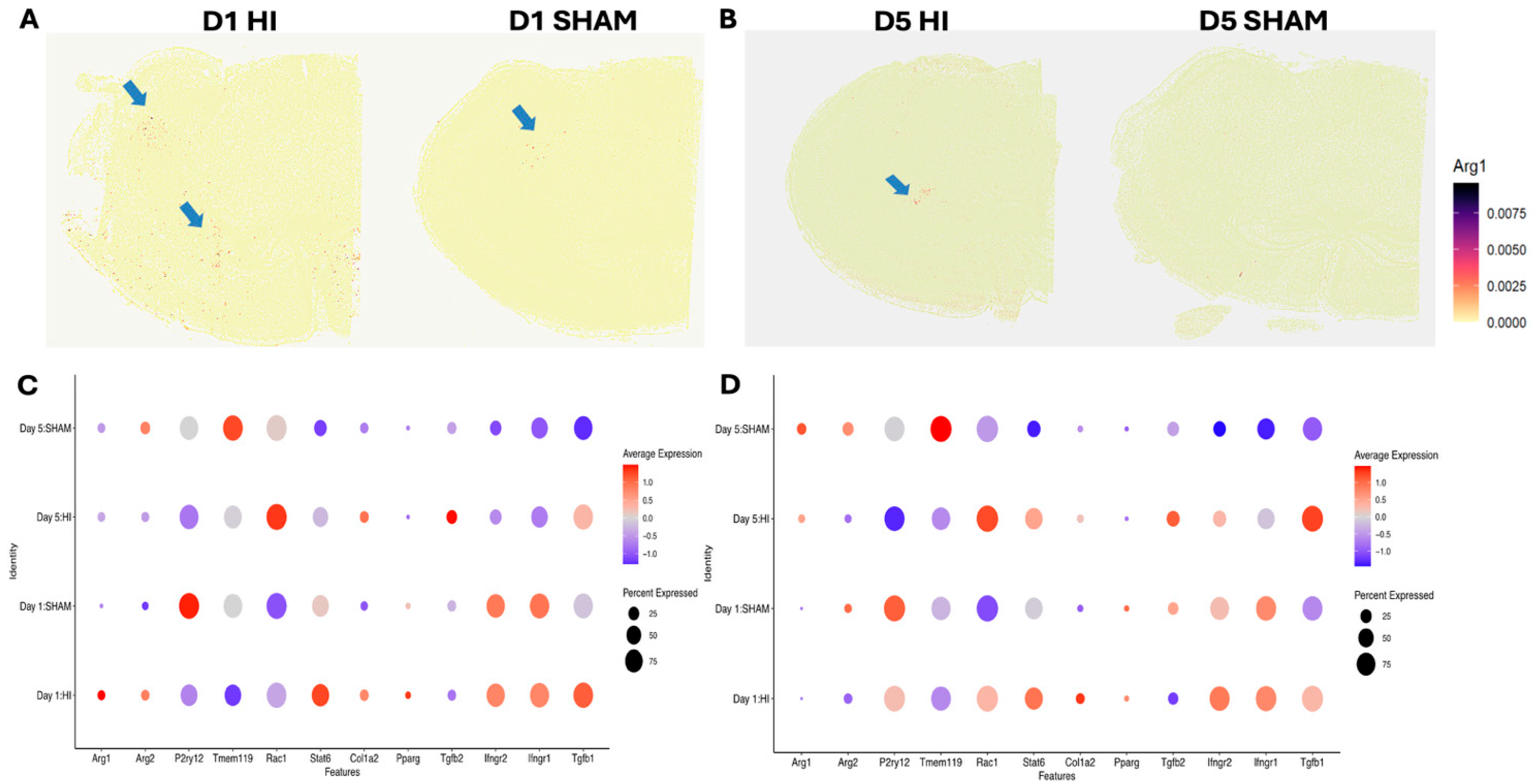
3.4. Early Transcriptomic Changes in Microglia on D1 Post-HI
3.5. Microglial Signatures on D5 Microglia Post-HI
4. Discussion
5. Conclusions
Supplementary Materials
Author Contributions
Funding
Institutional Review Board Statement
Informed Consent Statement
Data Availability Statement
Acknowledgments
Conflicts of Interest
References
- Tetorou, K.; Sisa, C.; Iqbal, A.; Dhillon, K.; Hristova, M. Current Therapies for Neonatal Hypoxic-Ischaemic and Infection-Sensitised Hypoxic-Ischaemic Brain Damage. Front. Synaptic Neurosci. 2021, 13, 709301. [Google Scholar] [CrossRef] [PubMed]
- Gao, L.; Manaenko, A.; Zeng, F.; Li, J.; Liu, L.; Xie, R.; Zhang, X.; Zhang, J.H.; Mei, Q.; Tang, J.; et al. Efferocytosis: A new therapeutic target for stroke. Chin. Med. J. 2024, 137, 2843–2850. [Google Scholar] [CrossRef]
- Bolini, L.; Campos, R.M.P.; Spiess, D.A.; Lima-Rosa, F.L.; Dantas, D.P.; Conde, L.; Mendez-Otero, R.; Vale, A.M.; Pimentel-Coelho, P.M. Long-term recruitment of peripheral immune cells to brain scars after a neonatal insult. Glia 2024, 72, 546–567. [Google Scholar] [CrossRef] [PubMed]
- Caldwell, R.W.; Rodriguez, P.C.; Toque, H.A.; Narayanan, S.P.; Caldwell, R.B. Arginase: A Multifaceted Enzyme Important in Health and Disease. Physiol. Rev. 2018, 98, 641–665. [Google Scholar] [CrossRef] [PubMed]
- Rath, M.; Müller, I.; Kropf, P.; Closs, E.I.; Munder, M. Metabolism via Arginase or Nitric Oxide Synthase: Two Competing Arginine Pathways in Macrophages. Front. Immunol. 2014, 5, 532. [Google Scholar] [CrossRef]
- Aratake, T.; Higashi, Y.; Ueba, Y.; Hamada, T.; Shimizu, T.; Shimizu, S.; Yawata, T.; Ueba, T.; Saito, M. The inhibitory role of intracellular free zinc in the regulation of Arg-1 expression in interleukin-4-induced activation of M2 microglia. Metallomics 2018, 10, 1501–1509. [Google Scholar] [CrossRef]
- Yang, Z.; Ming, X.F. Arginase: The emerging therapeutic target for vascular oxidative stress and inflammation. Front. Immunol. 2013, 4, 149. [Google Scholar] [CrossRef]
- Estévez, A.G.; Sahawneh, M.A.; Lange, P.S.; Bae, N.; Egea, M.; Ratan, R.R. Arginase 1 regulation of nitric oxide production is key to survival of trophic factor-deprived motor neurons. J. Neurosci. 2006, 26, 8512–8516. [Google Scholar] [CrossRef]
- Yurdagul, A., Jr.; Subramanian, M.; Wang, X.; Crown, S.B.; Ilkayeva, O.R.; Darville, L.; Kolluru, G.K.; Rymond, C.C.; Gerlach, B.D.; Zheng, Z.; et al. Macrophage Metabolism of Apoptotic Cell-Derived Arginine Promotes Continual Efferocytosis and Resolution of Injury. Cell Metab. 2020, 31, 518–533.e510. [Google Scholar] [CrossRef]
- He, H.; Deng, K.; Siddiq, M.M.; Pyie, A.; Mellado, W.; Hannila, S.S.; Filbin, M.T. Cyclic AMP and Polyamines Overcome Inhibition by Myelin-Associated Glycoprotein through eIF5A-Mediated Increases in p35 Expression and Activation of Cdk5. J. Neurosci. 2016, 36, 3079–3091. [Google Scholar] [CrossRef]
- Szondi, D.C.; Wong, J.K.; Vardy, L.A.; Cruickshank, S.M. Arginase Signaling as a Key Player in Chronic Wound Pathophysiology and Healing. Front. Mol. Biosci. 2021, 8, 773866. [Google Scholar] [CrossRef]
- Fenn, A.M.; Hall, J.C.E.; Gensel, J.C.; Popovich, P.G.; Godbout, J.P. IL-4 Signaling Drives a Unique Arginase+/IL-1β+ Microglia Phenotype and Recruits Macrophages to the Inflammatory CNS: Consequences of Age-Related Deficits in IL-4Rα after Traumatic Spinal Cord Injury. J. Neurosci. 2014, 34, 8904–8917. [Google Scholar] [CrossRef]
- Stratoulias, V.; Ruiz, R.; Kanatani, S.; Osman, A.M.; Armengol, J.A.; Rodríguez-Moreno, A.; Murgoci, A.-N.; García-Domínguez, I.; Keane, L.; Vázquez-Cabrera, G.; et al. ARG1+ microglia are critical for shaping cognition in female mice. bioRxiv 2021. [Google Scholar] [CrossRef]
- Mike, J.K.; Pathipati, P.; Sheldon, R.A.; Ferriero, D.M. Changes in arginase isoforms in a murine model of neonatal brain hypoxia-ischemia. Pediatr. Res. 2021, 89, 830–837. [Google Scholar] [CrossRef]
- Einenkel, A.-M.; Salameh, A. Selective vulnerability of hippocampal CA1 and CA3 pyramidal cells: What are possible pathomechanisms and should more attention be paid to the CA3 region in future studies? J. Neurosci. Res. 2024, 102, e25276. [Google Scholar] [CrossRef]
- Lee, B.L.; Glass, H.C. Cognitive outcomes in late childhood and adolescence of neonatal hypoxic-ischemic encephalopathy. Clin. Exp. Pediatr. 2021, 64, 608–618. [Google Scholar] [CrossRef] [PubMed]
- Cai, W.; Dai, X.; Chen, J.; Zhao, J.; Xu, M.; Zhang, L.; Yang, B.; Zhang, W.; Rocha, M.; Nakao, T.; et al. STAT6/ARG1 promotes microglia/macrophage efferocytosis and inflammation resolution in stroke mice. JCI Insight 2019, 4, e131355. [Google Scholar] [CrossRef] [PubMed]
- Zhang, W.; Zhao, J.; Wang, R.; Jiang, M.; Ye, Q.; Smith, A.D.; Chen, J.; Shi, Y. Macrophages reprogram after ischemic stroke and promote efferocytosis and inflammation resolution in the mouse brain. CNS Neurosci. Ther. 2019, 25, 1329–1342. [Google Scholar] [CrossRef]
- Mike, J.K.; Ferriero, D.M. Efferocytosis Mediated Modulation of Injury after Neonatal Brain Hypoxia-Ischemia. Cells 2021, 10, 1025. [Google Scholar] [CrossRef]
- Biernacka, A.; Dobaczewski, M.; Frangogiannis, N.G. TGF-β signaling in fibrosis. Growth Factors 2011, 29, 196–202. [Google Scholar] [CrossRef] [PubMed]
- Boutard, V.; Havouis, R.; Fouqueray, B.; Philippe, C.; Moulinoux, J.P.; Baud, L. Transforming growth factor-beta stimulates arginase activity in macrophages. Implications for the regulation of macrophage cytotoxicity. J. Immunol. 1995, 155, 2077–2084. [Google Scholar] [CrossRef]
- Hamanaka, R.B.; Shin, K.W.D.; Atalay, M.V.; Cetin-Atalay, R.; Shah, H.; Szafran, J.C.H.; Woods, P.S.; Meliton, A.Y.; Shamaa, O.R.; Tian, Y.; et al. Role of Arginine and its Metabolism in TGF-β-Induced Activation of Lung Fibroblasts. bioRxiv 2024. [Google Scholar] [CrossRef]
- Durante, W.; Liao, L.; Reyna, S.V.; Peyton, K.J.; Schafer, A.I. Transforming Growth Factor-beta(1) Stimulates L-Arginine Transport and Metabolism in Vascular Smooth Muscle Cells. Circulation 2001, 103, 1121–1127. [Google Scholar] [CrossRef] [PubMed]
- Krystofova, J.; Pathipati, P.; Russ, J.; Sheldon, A.; Ferriero, D. The Arginase Pathway in Neonatal Brain Hypoxia-Ischemia. Dev. Neurosci. 2018, 40, 437–450. [Google Scholar] [CrossRef]
- Györfi, A.H.; Matei, A.-E.; Distler, J.H.W. Targeting TGF-β signaling for the treatment of fibrosis. Matrix Biol. 2018, 68–69, 8–27. [Google Scholar] [CrossRef]
- Yurdagul, A., Jr. Crosstalk Between Macrophages and Vascular Smooth Muscle Cells in Atherosclerotic Plaque Stability. Arterioscler. Thromb. Vasc. Biol. 2022, 42, 372–380. [Google Scholar] [CrossRef]
- Senavirathna, L.K.; Liang, Y.; Huang, C.; Yang, X.; Bamunuarachchi, G.; Xu, D.; Dang, Q.; Sivasami, P.; Vaddadi, K.; Munteanu, M.C.; et al. Long Noncoding RNA FENDRR Inhibits Lung Fibroblast Proliferation via a Reduction of β-Catenin. Int. J. Mol. Sci. 2021, 22, 8536. [Google Scholar] [CrossRef] [PubMed]
- Pimentel-Coelho, P.M. Brain scarring in infants: Immunological insights from a neonatal hypoxic-ischemic encephalopathy model. Neural Regen. Res. 2025, 20, 2909–2910. [Google Scholar] [CrossRef]
- Hao, Y.; Hao, S.; Andersen-Nissen, E.; Mauck, W.M., 3rd; Zheng, S.; Butler, A.; Lee, M.J.; Wilk, A.J.; Darby, C.; Zager, M.; et al. Integrated analysis of multimodal single-cell data. Cell 2021, 184, 3573–3587.e3529. [Google Scholar] [CrossRef] [PubMed]
- Crowell, H.L.; Soneson, C.; Germain, P.-L.; Calini, D.; Collin, L.; Raposo, C.; Malhotra, D.; Robinson, M.D. On the discovery of subpopulation-specific state transitions from multi-sample multi-condition single-cell RNA sequencing data. bioRxiv 2020. [Google Scholar] [CrossRef]
- Breiman, L. Random Forests. Mach. Learn. 2001, 45, 5–32. [Google Scholar] [CrossRef]
- George, A.F.; Luo, X.; Neidleman, J.; Hoh, R.; Vohra, P.; Thomas, R.; Shin, M.G.; Lee, M.J.; Blish, C.A.; Deeks, S.G.; et al. Deep Phenotypic Analysis of Blood and Lymphoid T and NK Cells From HIV+ Controllers and ART-Suppressed Individuals. Front. Immunol. 2022, 13, 803417. [Google Scholar] [CrossRef]
- Duclot, F.; Kabbaj, M. The Role of Early Growth Response 1 (EGR1) in Brain Plasticity and Neuropsychiatric Disorders. Front. Behav. Neurosci. 2017, 11, 35. [Google Scholar] [CrossRef]
- Koldamova, R.; Schug, J.; Lefterova, M.; Cronican, A.A.; Fitz, N.F.; Davenport, F.A.; Carter, A.; Castranio, E.L.; Lefterov, I. Genome-wide approaches reveal EGR1-controlled regulatory networks associated with neurodegeneration. Neurobiol. Dis. 2014, 63, 107–114. [Google Scholar] [CrossRef]
- Holtman, I.R.; Skola, D.; Glass, C.K. Transcriptional control of microglia phenotypes in health and disease. J. Clin. Investig. 2017, 127, 3220–3229. [Google Scholar] [CrossRef] [PubMed]
- Stratoulias, V.; Ruiz, R.; Kanatani, S.; Osman, A.M.; Keane, L.; Armengol, J.A.; Rodríguez-Moreno, A.; Murgoci, A.N.; García-Domínguez, I.; Alonso-Bellido, I.; et al. ARG1-expressing microglia show a distinct molecular signature and modulate postnatal development and function of the mouse brain. Nat. Neurosci. 2023, 26, 1008–1020. [Google Scholar] [CrossRef] [PubMed]
- Wahane, S.; Zhou, X.; Zhou, X.; Guo, L.; Friedl, M.-S.; Kluge, M.; Ramakrishnan, A.; Shen, L.; Friedel, C.C.; Zhang, B.; et al. Diversified transcriptional responses of myeloid and glial cells in spinal cord injury shaped by HDAC3 activity. Sci. Adv. 2021, 7, eabd8811. [Google Scholar] [CrossRef]
- Chen, Y.; Kou, Y.; Ni, Y.; Yang, H.; Xu, C.; Fan, H.; Liu, H. Microglia efferocytosis: An emerging mechanism for the resolution of neuroinflammation in Alzheimer’s disease. J. Neuroinflamm. 2025, 22, 96. [Google Scholar] [CrossRef]
- Bradford, B.M.; Walmsley-Rowe, L.; Reynolds, J.; Verity, N.; Mabbott, N.A. Cell adhesion molecule CD44 is dispensable for reactive astrocyte activation during prion disease. Sci. Rep. 2024, 14, 13749. [Google Scholar] [CrossRef]
- Li, L.; Sun, B.; Harris, O.A.; Luo, J. TGF-β Signaling in Microglia: A Key Regulator of Development, Homeostasis and Reactivity. Biomedicines 2024, 12, 2468. [Google Scholar] [CrossRef] [PubMed]
- Tang, W.; Cheng, R.; Gao, M.Y.; Hu, M.J.; Zhang, L.; Wang, Q.; Li, X.Y.; Yan, W.; Wang, X.Y.; Yang, H.M.; et al. A novel annexin dimer targets microglial phagocytosis of astrocytes to protect the brain-blood barrier after cerebral ischemia. Acta Pharmacol. Sin. 2025, 46, 852–866. [Google Scholar] [CrossRef]
- Li, Z.-R.; Wang, Y.-Y.; Wang, Z.-H.; Qin, Q.-L.; Huang, C.; Shi, G.-S.; He, H.-Y.; Deng, Y.-H.; He, X.-Y.; Zhao, X.-M. The positive role of transforming growth factor-β1 in ischemic stroke. Cell. Signal. 2024, 121, 111301. [Google Scholar] [CrossRef]
- Liu, J.; Jin, Z.; Wang, X.; Jakoš, T.; Zhu, J.; Yuan, Y. RAGE pathways play an important role in regulation of organ fibrosis. Life Sci. 2023, 323, 121713. [Google Scholar] [CrossRef]
- Rojas, A.; Lindner, C.; Schneider, I.; Gonzalez, I.; Uribarri, J. The RAGE Axis: A Relevant Inflammatory Hub in Human Diseases. Biomolecules 2024, 14, 412. [Google Scholar] [CrossRef] [PubMed]
- Clarkson-Paredes, C.; Karl, M.T.; Popratiloff, A.; Miller, R.H. A unique cell population expressing the Epithelial-Mesenchymal Transition-transcription factor Snail moderates microglial and astrocyte injury responses. PNAS Nexus 2023, 2, pgad334. [Google Scholar] [CrossRef] [PubMed]
- Piersma, B.; Bank, R.A.; Boersema, M. Signaling in Fibrosis: TGF-β, WNT, and YAP/TAZ Converge. Front. Med. 2015, 2, 59. [Google Scholar] [CrossRef] [PubMed]
- Nallanthighal, S.; Heiserman, J.P.; Cheon, D.J. Collagen Type XI Alpha 1 (COL11A1): A Novel Biomarker and a Key Player in Cancer. Cancers 2021, 13, 935. [Google Scholar] [CrossRef]
- Al-Koussa, H.; El Mais, N.; Maalouf, H.; Abi-Habib, R.; El-Sibai, M. Arginine deprivation: A potential therapeutic for cancer cell metastasis? A review. Cancer Cell Int. 2020, 20, 150. [Google Scholar] [CrossRef]
- Wright, B.; King, S.; Suphioglu, C. The Importance of Phosphoinositide 3-Kinase in Neuroinflammation. Int. J. Mol. Sci. 2024, 25, 11638. [Google Scholar] [CrossRef]
- Sennello, J.A.; Flozak, A.S.; Misharin, A.V.; Gottardi, C.J.; Lam, A.P. Arginase 1 is negatively regulated by β-catenin signaling in the lung. bioRxiv 2017. [Google Scholar] [CrossRef]
- Nakagawa, S.; Yamaguchi, K.; Takane, K.; Tabata, S.; Ikenoue, T.; Furukawa, Y. Wnt/β-catenin signaling regulates amino acid metabolism through the suppression of CEBPA and FOXA1 in liver cancer cells. Commun. Biol. 2024, 7, 510. [Google Scholar] [CrossRef]
- Yang, Y.; Zhang, Z. Microglia and Wnt Pathways: Prospects for Inflammation in Alzheimer’s Disease. Front. Aging Neurosci. 2020, 12, 110. [Google Scholar] [CrossRef]
- Butler, T.L.; Kassed, C.A.; Sanberg, P.R.; Willing, A.E.; Pennypacker, K.R. Neurodegeneration in the rat hippocampus and striatum after middle cerebral artery occlusion. Brain Res. 2002, 929, 252–260. [Google Scholar] [CrossRef]
- Li, T.; Zhao, J.; Gao, H. Depletion of ARG1-Positive Microglia/Macrophages Exacerbates Cerebral Ischemic Damage by Facilitating the Inflammatory Response. Int. J. Mol. Sci. 2022, 23, 13055. [Google Scholar] [CrossRef]
- Dowling, J.K.; Afzal, R.; Gearing, L.J.; Cervantes-Silva, M.P.; Annett, S.; Davis, G.M.; De Santi, C.; Assmann, N.; Dettmer, K.; Gough, D.J.; et al. Mitochondrial arginase-2 is essential for IL-10 metabolic reprogramming of inflammatory macrophages. Nat. Commun. 2021, 12, 1460. [Google Scholar] [CrossRef] [PubMed]
- Kim, H.S.; Jee, S.A.; Einisadr, A.; Seo, Y.; Seo, H.G.; Jang, B.S.; Park, H.H.; Chung, W.-S.; Kim, B.G. Detrimental influence of Arginase-1 in infiltrating macrophages on poststroke functional recovery and inflammatory milieu. Proc. Natl. Acad. Sci. USA 2025, 122, e2413484122. [Google Scholar] [CrossRef]
- Chen, H.-R.; Sun, Y.-Y.; Chen, C.-W.; Kuo, Y.-M.; Kuan, I.S.; Tiger Li, Z.-R.; Short-Miller, J.C.; Smucker, M.R.; Kuan, C.-Y. Fate mapping via CCR2-CreER mice reveals monocyte-to-microglia transition in development and neonatal stroke. Sci. Adv. 2020, 6, eabb2119. [Google Scholar] [CrossRef] [PubMed]
- Ewing-Crystal, N.A.; Mroz, N.M.; Larpthaveesarp, A.; Lizama, C.O.; Pennington, R.; Chiaranunt, P.; Dennis, J.I.; Chang, A.A.; Merrill, E.D.; Caryotakis, S.E.; et al. Dynamic fibroblast–immune interactions shape recovery after brain injury. Nature 2025, 646, 934–944. [Google Scholar] [CrossRef] [PubMed]
- Mortensen, L.S.; Park, S.J.H.; Ke, J.B.; Cooper, B.H.; Zhang, L.; Imig, C.; Löwel, S.; Reim, K.; Brose, N.; Demb, J.B.; et al. Complexin 3 Increases the Fidelity of Signaling in a Retinal Circuit by Regulating Exocytosis at Ribbon Synapses. Cell Rep. 2016, 15, 2239–2250. [Google Scholar] [CrossRef]
- Pan, J.; Ma, N.; Yu, B.; Zhang, W.; Wan, J. Transcriptomic profiling of microglia and astrocytes throughout aging. J. Neuroinflamm. 2020, 17, 97. [Google Scholar] [CrossRef]
- Hsiao, C.-C.; Sankowski, R.; Prinz, M.; Smolders, J.; Huitinga, I.; Hamann, J. GPCRomics of Homeostatic and Disease-Associated Human Microglia. Front. Immunol. 2021, 12, 674189. [Google Scholar] [CrossRef] [PubMed]
- Bu, F.; Munshi, Y.; Furr, J.W.; Min, J.W.; Qi, L.; Patrizz, A.; Spahr, Z.R.; Urayama, A.; Kofler, J.K.; McCullough, L.D.; et al. Activation of neuronal Ras-related C3 botulinum toxin substrate 1 (Rac1) improves post-stroke recovery and axonal plasticity in mice. J. Neurochem. 2021, 157, 1366–1376. [Google Scholar] [CrossRef] [PubMed]
- Gómez Morillas, A.; Besson, V.C.; Lerouet, D. Microglia and Neuroinflammation: What Place for P2RY12? Int. J. Mol. Sci. 2021, 22, 1636. [Google Scholar] [CrossRef]
- Mercurio, D.; Fumagalli, S.; Schafer, M.K.; Pedragosa, J.; Ngassam, L.D.C.; Wilhelmi, V.; Winterberg, S.; Planas, A.M.; Weihe, E.; De Simoni, M.G. Protein Expression of the Microglial Marker Tmem119 Decreases in Association with Morphological Changes and Location in a Mouse Model of Traumatic Brain Injury. Front. Cell. Neurosci. 2022, 16, 820127. [Google Scholar] [CrossRef]
- Kamath, V.V.; Krishnamurthy, S.; Satelur, K.P.; Rajkumar, K. Transforming growth factor-β1 and TGF-β2 act synergistically in the fibrotic pathway in oral submucous fibrosis: An immunohistochemical observation. Indian J. Med. Paediatr. Oncol. 2015, 36, 111–116. [Google Scholar] [CrossRef]
- Yu, X.; Buttgereit, A.; Lelios, I.; Utz, S.G.; Cansever, D.; Becher, B.; Greter, M. The Cytokine TGF-β Promotes the Development and Homeostasis of Alveolar Macrophages. Immunity 2017, 47, 903–912.e904. [Google Scholar] [CrossRef]
- Inagaki, Y.; Truter, S.; Ramirez, F. Transforming growth factor-beta stimulates alpha 2(I) collagen gene expression through a cis-acting element that contains an Sp1-binding site. J. Biol. Chem. 1994, 269, 14828–14834. [Google Scholar] [CrossRef]
- Ying, W.; Weng, W.; Wang, P.; Pan, C.; Qiu, J.; Huang, Q.; Zhan, G.; Chen, X. N-Lactoyl-Phenylalanine modulates lipid metabolism in microglia/macrophage via the AMPK-PGC1α-PPARγ pathway to promote recovery in mice with spinal cord injury. J. Neuroinflamm. 2025, 22, 167. [Google Scholar] [CrossRef] [PubMed]


Disclaimer/Publisher’s Note: The statements, opinions and data contained in all publications are solely those of the individual author(s) and contributor(s) and not of MDPI and/or the editor(s). MDPI and/or the editor(s) disclaim responsibility for any injury to people or property resulting from any ideas, methods, instructions or products referred to in the content. |
© 2026 by the authors. Licensee MDPI, Basel, Switzerland. This article is an open access article distributed under the terms and conditions of the Creative Commons Attribution (CC BY) license.
Share and Cite
Smith, M.A.; Natarajan, E.; Lizama-Valenzuela, C.; Arnold, T.; Stroud, D.; Larpthaveesarp, A.; Alvira, C.; Fineman, J.R.; Ferriero, D.M.; Maltepe, E.; et al. Temporal and Spatial Gene Expression Dynamics in Neonatal HI Hippocampus with Focus on Arginase. Cells 2026, 15, 253. https://doi.org/10.3390/cells15030253
Smith MA, Natarajan E, Lizama-Valenzuela C, Arnold T, Stroud D, Larpthaveesarp A, Alvira C, Fineman JR, Ferriero DM, Maltepe E, et al. Temporal and Spatial Gene Expression Dynamics in Neonatal HI Hippocampus with Focus on Arginase. Cells. 2026; 15(3):253. https://doi.org/10.3390/cells15030253
Chicago/Turabian StyleSmith, Michael A., Eesha Natarajan, Carlos Lizama-Valenzuela, Thomas Arnold, David Stroud, Amara Larpthaveesarp, Cristina Alvira, Jeffrey R. Fineman, Donna M. Ferriero, Emin Maltepe, and et al. 2026. "Temporal and Spatial Gene Expression Dynamics in Neonatal HI Hippocampus with Focus on Arginase" Cells 15, no. 3: 253. https://doi.org/10.3390/cells15030253
APA StyleSmith, M. A., Natarajan, E., Lizama-Valenzuela, C., Arnold, T., Stroud, D., Larpthaveesarp, A., Alvira, C., Fineman, J. R., Ferriero, D. M., Maltepe, E., Gonzalez, F., & Mike, J. K. (2026). Temporal and Spatial Gene Expression Dynamics in Neonatal HI Hippocampus with Focus on Arginase. Cells, 15(3), 253. https://doi.org/10.3390/cells15030253