Reduced Cerebral Infarct Volume in Young UCP2−/− Mice and Preserved Synaptic Transmission by Genipin
 , , and
Highlights
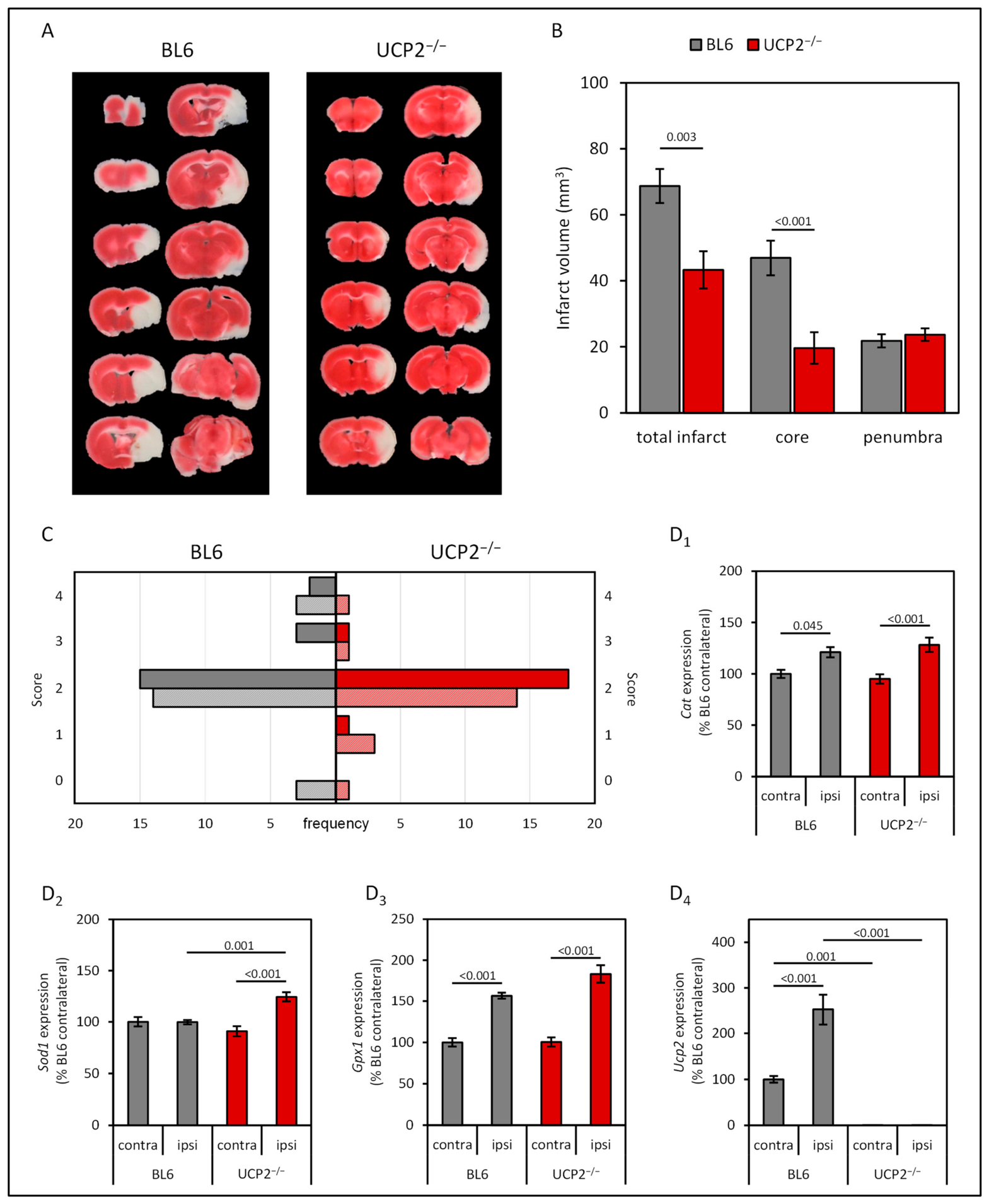
- After transient occlusion of the middle cerebral artery, UCP2−/− mice at the age of 6 months had a reduced infarct volume, mainly in the core area.
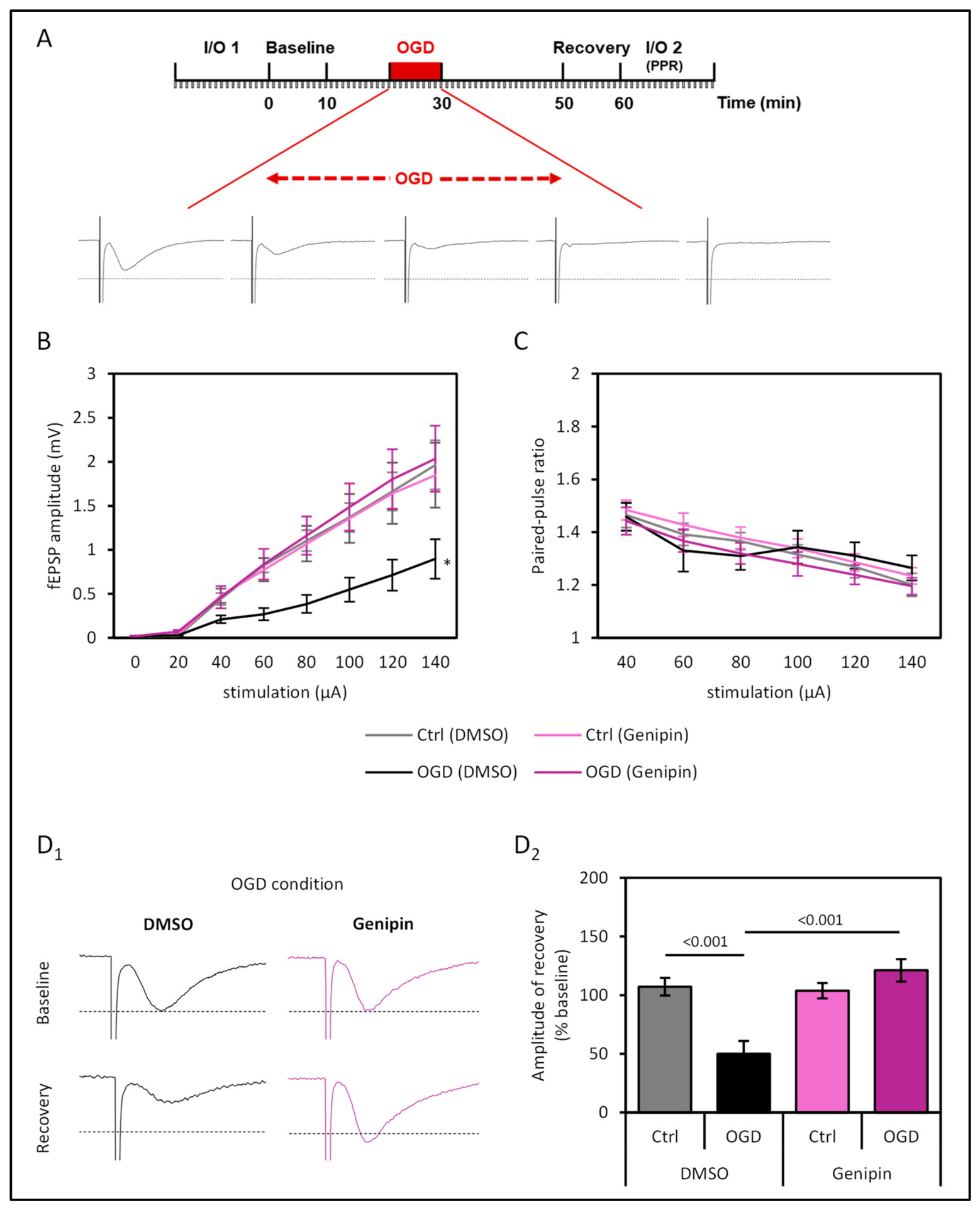
- UCP2 inhibitor genipin preserved synaptic transmission in the hippocampal formation under oxygen-glucose deprivation.
- Mild persistent oxidative stress may help to diminish ischemia-reperfusion injury.
- Genipin may act in a neuroprotective manner under hypoxia and reperfusion.
Abstract
1. Introduction
2. Materials and Methods
2.1. Animal Models
2.2. Morris Water Maze
2.3. Focal Stroke Model—Transient Occlusion of the Middle Cerebral Artery
2.4. Neurological Scoring
2.5. Gene Expression Analysis
2.6. Infarct Volume Determination
2.7. Slice Preparation for Electrophysiological Analysis
2.8. In Vitro Oxygen-Glucose Deprivation and Electrophysiological Recordings
2.9. Statistical Analysis
3. Results
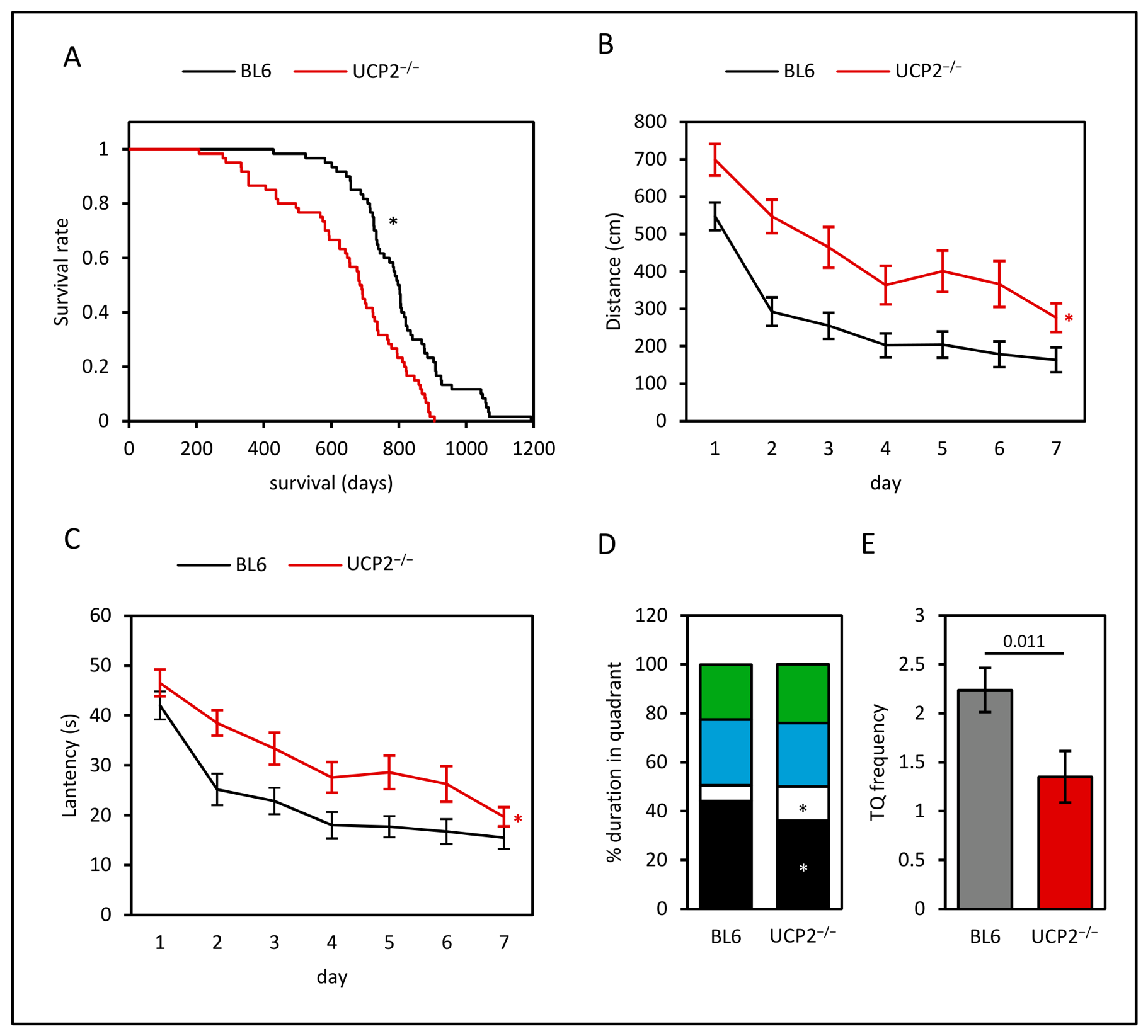
3.1. Reduced Survival and Cognitive Impairment of Ucp2−/− Mice
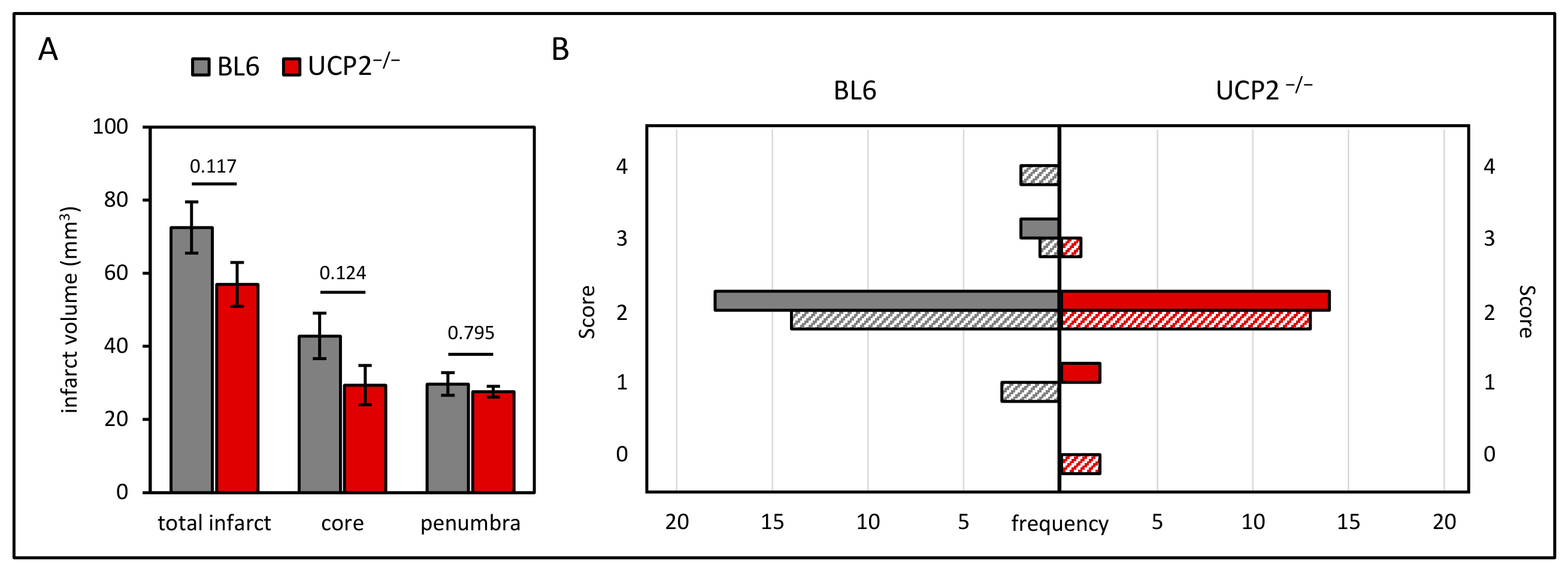
3.2. Effects of UCP2-Knockout on Ischemic Infarct Volume and Response to Oxidative Stress
3.3. Preserved Synaptic Transmission by the UCP2 Inhibitor Genipin in an Ex Vivo Model of Ischemic Reperfusion
4. Discussion
5. Conclusions
Supplementary Materials
Author Contributions
Funding
Institutional Review Board Statement
Data Availability Statement
Acknowledgments
Conflicts of Interest
Abbreviations
| aCSF | artificial cerebrospinal fluid |
| fEPSP | field excitatory postsynaptic potentials |
| MCAO | middle cerebral artery occlusion |
| ROS | reactive oxygen species |
| TG | target quadrant |
| TTC | 2,3,5-triphenyltetrazolium chloride |
| UCP2 | uncoupling protein 2 |
References
- GBD 2023 Causes of Death Collaborators. Global burden of 292 causes of death in 204 countries and territories and 660 subnational locations, 1990–2023: A systematic analysis for the Global Burden of Disease Study 2023. Lancet 2025, 406, 1811–1872. [Google Scholar] [CrossRef] [Scilit] [PubMed]
- Vanacker, P.; Lambrou, D.; Eskandari, A.; Mosimann, P.J.; Maghraoui, A.; Michel, P. Eligibility and Predictors for Acute Revascularization Procedures in a Stroke Center. Stroke 2016, 47, 1844–1849. [Google Scholar] [CrossRef] [Scilit] [PubMed]
- Sun, Y.; Jou, E.; Nguyen, T.N.; Mofatteh, M.; Liang, Q.; Abdalkader, M.; Yan, Z.; Feng, M.; Li, X.; Li, G.; et al. Predictors of futile recanalization after endovascular treatment in acute ischemic stroke: A multi-center study. Front. Neurosci. 2023, 17, 1279366. [Google Scholar] [CrossRef] [Scilit] [PubMed]
- Jurcau, A.; Ardelean, A.I. Oxidative Stress in Ischemia/Reperfusion Injuries following Acute Ischemic Stroke. Biomedicines 2022, 10, 574. [Google Scholar] [CrossRef] [Scilit] [PubMed]
- Zhang, M.; Liu, Q.; Meng, H.; Duan, H.; Liu, X.; Wu, J.; Gao, F.; Wang, S.; Tan, R.; Yuan, J. Ischemia-reperfusion injury: Molecular mechanisms and therapeutic targets. Signal Transduct. Target. Ther. 2024, 9, 12. [Google Scholar] [CrossRef] [Scilit] [PubMed]
- Wu, L.; Xiong, X.; Wu, X.; Ye, Y.; Jian, Z.; Zhi, Z.; Gu, L. Targeting Oxidative Stress and Inflammation to Prevent Ischemia-Reperfusion Injury. Front. Mol. Neurosci. 2020, 13, 28. [Google Scholar] [CrossRef] [Scilit] [PubMed]
- Yu, Q.; Zhang, Y.; Wu, Y.; Ma, X.; Chen, Y. Advanced Insights of Oxidative Stress in Ischemic Stroke: Pathogenesis, Diagnosis and Treatment. In Neurological Problems in the Elderly—Bridging Current State and New Outlooks; IntechOpen: London, UK, 2025. [Google Scholar] [CrossRef] [Scilit]
- Fang, S.; Huang, W.; Qu, X.; Chai, W. The mitochondria as a potential therapeutic target in cerebral I/R injury. Front. Neurosci. 2024, 18, 1500647. [Google Scholar] [CrossRef] [Scilit] [PubMed]
- Meng, X.; Zheng, Z.; Yang, L.; Yang, C.; Li, X.; Hao, Y. Dynamic mechanisms and targeted interventions in cerebral ischemia-reperfusion injury: Pathological cascade from ischemia to reperfusion and promising therapeutic strategies. Front. Neurosci. 2025, 19, 1649533. [Google Scholar] [CrossRef] [Scilit] [PubMed]
- Zhou, Y.; Luo, B.; Shang, T.; Wei, Z.; Zou, W. Cerebral Ischemia-Reperfusion Injury: Unraveling the Mitophagy-Oxidative Stress Axis for Neuroprotective Strategies. Int. J. Mol. Sci. 2026, 27, 2448. [Google Scholar] [CrossRef] [Scilit] [PubMed]
- Nesci, S.; Rubattu, S. UCP2, a Member of the Mitochondrial Uncoupling Proteins: An Overview from Physiological to Pathological Roles. Biomedicines 2024, 12, 1307. [Google Scholar] [CrossRef] [Scilit] [PubMed]
- Hass, D.T.; Barnstable, C.J. Uncoupling proteins in the mitochondrial defense against oxidative stress. Prog. Retin. Eye Res. 2021, 83, 100941. [Google Scholar] [CrossRef] [Scilit] [PubMed]
- Sreedhar, A.; Cassell, T.; Smith, P.; Lu, D.; Nam, H.W.; Lane, A.N.; Zhao, Y. UCP2 Overexpression Redirects Glucose into Anabolic Metabolic Pathways. Proteomics 2019, 19, e1800353. [Google Scholar] [CrossRef] [Scilit] [PubMed]
- Vozza, A.; Parisi, G.; De Leonardis, F.; Lasorsa, F.M.; Castegna, A.; Amorese, D.; Marmo, R.; Calcagnile, V.M.; Palmieri, L.; Ricquier, D.; et al. UCP2 transports C4 metabolites out of mitochondria, regulating glucose and glutamine oxidation. Proc. Natl. Acad. Sci. USA 2014, 111, 960–965. [Google Scholar] [CrossRef] [Scilit] [PubMed]
- Nicholls, D.G. Mitochondrial proton leaks and uncoupling proteins. Biochim. Biophys. Acta Bioenerg. 2021, 1862, 148428. [Google Scholar] [CrossRef] [Scilit] [PubMed]
- Nakase, T.; Yoshida, Y.; Nagata, K. Amplified expression of uncoupling proteins in human brain ischemic lesions. Neuropathology 2007, 27, 442–447. [Google Scholar] [CrossRef] [Scilit] [PubMed]
- Pecqueur, C.; Alves-Guerra, M.C.; Gelly, C.; Levi-Meyrueis, C.; Couplan, E.; Collins, S.; Ricquier, D.; Bouillaud, F.; Miroux, B. Uncoupling protein 2, in vivo distribution, induction upon oxidative stress, and evidence for translational regulation. J. Biol. Chem. 2001, 276, 8705–8712. [Google Scholar] [CrossRef] [Scilit] [PubMed]
- Richard, D.; Rivest, R.; Huang, Q.; Bouillaud, F.; Sanchis, D.; Champigny, O.; Ricquier, D. Distribution of the uncoupling protein 2 mRNA in the mouse brain. J. Comp. Neurol. 1998, 397, 549–560. [Google Scholar] [CrossRef] [Scilit] [PubMed]
- Simon-Areces, J.; Dietrich, M.O.; Hermes, G.; Garcia-Segura, L.M.; Arevalo, M.A.; Horvath, T.L. UCP2 induced by natural birth regulates neuronal differentiation of the hippocampus and related adult behavior. PLoS ONE 2012, 7, e42911. [Google Scholar] [CrossRef] [Scilit] [PubMed]
- Haines, B.A.; Mehta, S.L.; Pratt, S.M.; Warden, C.H.; Li, P.A. Deletion of mitochondrial uncoupling protein-2 increases ischemic brain damage after transient focal ischemia by altering gene expression patterns and enhancing inflammatory cytokines. J. Cereb. Blood Flow. Metab. 2010, 30, 1825–1833. [Google Scholar] [CrossRef] [Scilit] [PubMed]
- He, M.; Zhang, T.; Fan, Y.; Ma, Y.; Zhang, J.; Jing, L.; Li, P.A. Deletion of mitochondrial uncoupling protein 2 exacerbates mitophagy and cell apoptosis after cerebral ischemia and reperfusion injury in mice. Int. J. Med. Sci. 2020, 17, 2869–2878. [Google Scholar] [CrossRef] [Scilit] [PubMed]
- Wang, L.; Li, X.; Chen, L.; Mei, S.; Shen, Q.; Liu, L.; Liu, X.; Liao, S.; Zhao, B.; Chen, Y.; et al. Mitochondrial Uncoupling Protein-2 Ameliorates Ischemic Stroke by Inhibiting Ferroptosis-Induced Brain Injury and Neuroinflammation. Mol. Neurobiol. 2025, 62, 501–517. [Google Scholar] [CrossRef] [Scilit] [PubMed]
- de Bilbao, F.; Arsenijevic, D.; Vallet, P.; Hjelle, O.P.; Ottersen, O.P.; Bouras, C.; Raffin, Y.; Abou, K.; Langhans, W.; Collins, S.; et al. Resistance to cerebral ischemic injury in UCP2 knockout mice: Evidence for a role of UCP2 as a regulator of mitochondrial glutathione levels. J. Neurochem. 2004, 89, 1283–1292. [Google Scholar] [CrossRef] [Scilit] [PubMed]
- Cho, Y.S. Genipin, an Inhibitor of UCP2 as a Promising New Anticancer Agent: A Review of the Literature. Int. J. Mol. Sci. 2022, 23, 5637. [Google Scholar] [CrossRef] [Scilit] [PubMed]
- Zhang, C.Y.; Parton, L.E.; Ye, C.P.; Krauss, S.; Shen, R.; Lin, C.T.; Porco, J.A.; Lowell, B.B. Genipin inhibits UCP2-mediated proton leak and acutely reverses obesity- and high glucose-induced beta cell dysfunction in isolated pancreatic islets. Cell Metab. 2006, 3, 417–427. [Google Scholar] [CrossRef] [Scilit] [PubMed]
- Zhao, B.; Sun, L.K.; Jiang, X.; Zhang, Y.; Kang, J.; Meng, H.; Li, H.; Su, J. Genipin protects against cerebral ischemia-reperfusion injury by regulating the UCP2-SIRT3 signaling pathway. Eur. J. Pharmacol. 2019, 845, 56–64. [Google Scholar] [CrossRef] [Scilit] [PubMed]
- Ristow, M.; Schmeisser, K. Mitohormesis: Promoting Health and Lifespan by Increased Levels of Reactive Oxygen Species (ROS). Dose Response 2014, 12, 288–341. [Google Scholar] [CrossRef] [Scilit]
- Yun, J.; Finkel, T. Mitohormesis. Cell Metab. 2014, 19, 757–766. [Google Scholar] [CrossRef] [Scilit] [PubMed]
- Lv, J.; Guan, W.; You, Q.; Deng, L.; Zhu, Y.; Guo, K.; Gao, X.; Kong, J.; Yang, C. RIPC provides neuroprotection against ischemic stroke by suppressing apoptosis via the mitochondrial pathway. Sci. Rep. 2020, 10, 5361. [Google Scholar] [CrossRef] [Scilit] [PubMed]
- Motomura, A.; Shimizu, M.; Kato, A.; Motomura, K.; Yamamichi, A.; Koyama, H.; Ohka, F.; Nishikawa, T.; Nishimura, Y.; Hara, M.; et al. Remote ischemic preconditioning protects human neural stem cells from oxidative stress. Apoptosis 2017, 22, 1353–1361. [Google Scholar] [CrossRef] [Scilit] [PubMed]
- Otsuka, S.; Itashiki, Y.; Tani, A.; Matsuoka, T.; Takada, S.; Matsuzaki, R.; Nakanishi, K.; Norimatsu, K.; Tachibe, Y.; Kitazato, R.; et al. Effects of different remote ischemia perconditioning methods on cerebral infarct volume and neurological impairment in rats. Sci. Rep. 2023, 13, 2158. [Google Scholar] [CrossRef] [Scilit] [PubMed]
- Cheng, F.; Yan, B.; Liao, P.; Gao, H.; Yin, Z.; Li, D.; Lei, P. Ischemic Stroke and the Biological Hallmarks of Aging. Aging Dis. 2024, 16, 2908–2936. [Google Scholar] [CrossRef] [Scilit] [PubMed]
- Hirose, M.; Schilf, P.; Lange, F.; Mayer, J.; Reichart, G.; Maity, P.; Jöhren, O.; Schwaninger, M.; Scharffetter-Kochanek, K.; Sina, C.; et al. Uncoupling protein 2 protects mice from aging. Mitochondrion 2016, 30, 42–50. [Google Scholar] [CrossRef] [Scilit] [PubMed]
- Reichart, G.; Mayer, J.; Tokay, T.; Kirschstein, T.; Lange, F.; Köhling, R. Mitochondrial ATP synthase 8 single-nucleotide polymorphism affects oxidative stress and survival of mice. Pflug. Arch. 2025, 477, 1343–1357. [Google Scholar] [CrossRef] [Scilit] [PubMed]
- Koizumi Jichi Yoshida, Y.; Nakazawa, T.; Ooneda, G. Experimental studies of ischemic brain edema. Jpn. J. Stroke 1986, 8, 1–8. [Google Scholar] [CrossRef] [Scilit]
- Dirnagl, U.; Members of the MCAO-SOP Group. Standard operating procedures (SOP) in experimental stroke research: SOP for middle cerebral artery occlusion in the mouse. Nat. Preced. 2012. [Google Scholar] [CrossRef] [Scilit]
- Longa, E.Z.; Weinstein, P.R.; Carlson, S.; Cummins, R. Reversible middle cerebral artery occlusion without craniectomy in rats. Stroke 1989, 20, 84–91. [Google Scholar] [CrossRef] [Scilit] [PubMed]
- Andrews, Z.B.; Horvath, T.L. Uncoupling protein-2 regulates lifespan in mice. Am. J. Physiol. Endocrinol. Metab. 2009, 296, E621–E627. [Google Scholar] [CrossRef] [Scilit] [PubMed]
- Conti, B.; Sanchez-Alavez, M.; Winsky-Sommerer, R.; Morale, M.C.; Lucero, J.; Brownell, S.; Fabre, V.; Huitron-Resendiz, S.; Henriksen, S.; Zorrilla, E.P.; et al. Transgenic mice with a reduced core body temperature have an increased life span. Science 2006, 314, 825–828. [Google Scholar] [CrossRef] [Scilit] [PubMed]
- Fridell, Y.W.C.; Sánchez-Blanco, A.; Silvia, B.A.; Helfand, S.L. Targeted expression of the human uncoupling protein 2 (hUCP2) to adult neurons extends life span in the fly. Cell Metab. 2005, 1, 145–152. [Google Scholar] [CrossRef] [Scilit] [PubMed]
- Reichart, G.; Mayer, J.; Zehm, C.; Kirschstein, T.; Tokay, T.; Lange, F.; Baltrusch, S.; Tiedge, M.; Fuellen, G.; Ibrahim, S.; et al. Mitochondrial complex IV mutation increases reactive oxygen species production and reduces lifespan in aged mice. Acta Physiol. 2019, 225, e13214. [Google Scholar] [CrossRef] [Scilit] [PubMed]
- Hermes, G.; Nagy, D.; Waterson, M.; Zsarnovszky, A.; Varela, L.; Hajos, M.; Horvath, T.L. Role of mitochondrial uncoupling protein-2 (UCP2) in higher brain functions, neuronal plasticity and network oscillation. Mol. Metab. 2016, 5, 415–421. [Google Scholar] [CrossRef] [Scilit] [PubMed]
- Haines, B.; Li, P.A. Overexpression of mitochondrial uncoupling protein 2 inhibits inflammatory cytokines and activates cell survival factors after cerebral ischemia. PLoS ONE 2012, 7, e31739. [Google Scholar] [CrossRef] [Scilit] [PubMed]
- Mattiasson, G.; Shamloo, M.; Gido, G.; Mathi, K.; Tomasevic, G.; Yi, S.; Warden, C.H.; Castilho, R.F.; Melcher, T.; Gonzalez-Zulueta, M.; et al. Uncoupling protein-2 prevents neuronal death and diminishes brain dysfunction after stroke and brain trauma. Nat. Med. 2003, 9, 1062–1068. [Google Scholar] [CrossRef] [Scilit] [PubMed]
- Rubattu, S.; Stanzione, R.; Bianchi, F.; Cotugno, M.; Forte, M.; Della Ragione, F.; Fioriniello, S.; D’Esposito, M.; Marchitti, S.; Madonna, M.; et al. Reduced brain UCP2 expression mediated by microRNA-503 contributes to increased stroke susceptibility in the high-salt fed stroke-prone spontaneously hypertensive rat. Cell Death Dis. 2017, 8, e2891. [Google Scholar] [CrossRef] [Scilit] [PubMed]
- Ristow, M.; Zarse, K. How increased oxidative stress promotes longevity and metabolic health: The concept of mitochondrial hormesis (mitohormesis). Exp. Gerontol. 2010, 45, 410–418. [Google Scholar] [CrossRef] [Scilit] [PubMed]
- Buga, A.M.; Sascau, M.; Pisoschi, C.; Herndon, J.G.; Kessler, C.; Popa-Wagner, A. The genomic response of the ipsilateral and contralateral cortex to stroke in aged rats. J. Cell. Mol. Med. 2008, 12, 2731–2753. [Google Scholar] [CrossRef] [Scilit] [PubMed]
- Ke, Q.; Yuan, Q.; Qin, N.; Shi, C.; Luo, J.; Fang, Y.; Xu, L.; Sun, Q.; Zen, K.; Jiang, L.; et al. UCP2-induced hypoxia promotes lipid accumulation and tubulointerstitial fibrosis during ischemic kidney injury. Cell Death Dis. 2020, 11, 26. [Google Scholar] [CrossRef] [Scilit] [PubMed]
- Rigaud, V.O.C.; Zarka, C.; Kurian, J.; Harlamova, D.; Elia, A.; Kasatkin, N.; Johnson, J.; Behanan, M.; Kraus, L.; Pepper, H.; et al. UCP2 modulates cardiomyocyte cell cycle activity, acetyl-CoA, and histone acetylation in response to moderate hypoxia. JCI Insight 2022, 7, e155475. [Google Scholar] [CrossRef] [Scilit] [PubMed]
- Müller, S.; Kaiser, H.; Krüger, B.; Fitzner, B.; Lange, F.; Bock, C.N.; Nizze, H.; Ibrahim, S.M.; Fuellen, G.; Wolkenhauer, O.; et al. Age-dependent effects of UCP2 deficiency on experimental acute pancreatitis in mice. PLoS ONE 2014, 9, e94494. [Google Scholar] [CrossRef] [Scilit] [PubMed]
- Chen, J.; Li, Y.; Wang, L.; Lu, M.; Zhang, X.; Chopp, M. Therapeutic benefit of intracerebral transplantation of bone marrow stromal cells after cerebral ischemia in rats. J. Neurol. Sci. 2001, 189, 49–57. [Google Scholar] [CrossRef] [Scilit] [PubMed]
- Ruan, J.; Yao, Y. Behavioral tests in rodent models of stroke. Brain Hemorrhages 2020, 1, 171–184. [Google Scholar] [CrossRef] [Scilit] [PubMed]
- Li, J.; Jiang, R.; Cong, X.; Zhao, Y. UCP2 gene polymorphisms in obesity and diabetes, and the role of UCP2 in cancer. FEBS Lett. 2019, 593, 2525–2534. [Google Scholar] [CrossRef] [Scilit] [PubMed]
- Sobolewska, D.; Galanty, A.; Grabowska, K.; Makowska-Wąs, J.; Podolak, I.; Wróbel-Biedrawa, D. Genipin-Simple but Significant Bioactive Iridoid for Therapeutical Application and Beyond: A Review. Life 2025, 15, 159. [Google Scholar] [CrossRef] [Scilit] [PubMed]
- Kreiter, J.; Rupprecht, A.; Zimmermann, L.; Moschinger, M.; Rokitskaya, T.I.; Antonenko, Y.N.; Gille, L.; Fedorova, M.; Pohl, E.E. Molecular Mechanisms Responsible for Pharmacological Effects of Genipin on Mitochondrial Proteins. Biophys. J. 2019, 117, 1845–1857. [Google Scholar] [CrossRef] [Scilit] [PubMed]
- Jo, M.J.; Jeong, S.; Yun, H.K.; Kim, D.Y.; Kim, B.R.; Kim, J.L.; Na, Y.J.; Park, S.H.; Jeong, Y.A.; Kim, B.G.; et al. Genipin induces mitochondrial dysfunction and apoptosis via downregulation of Stat3/mcl-1 pathway in gastric cancer. BMC Cancer 2019, 19, 739. [Google Scholar] [CrossRef] [Scilit] [PubMed]
- Kim, B.R.; Jeong, Y.A.; Na, Y.J.; Park, S.H.; Jo, M.J.; Kim, J.L.; Jeong, S.; Lee, S.-Y.; Kim, H.J.; Oh, S.C.; et al. Genipin suppresses colorectal cancer cells by inhibiting the Sonic Hedgehog pathway. Oncotarget 2017, 8, 101952–101964. [Google Scholar] [CrossRef] [Scilit] [PubMed]
- Lee, J.C.; Ahn, K.S.; Jeong, S.J.; Jung, J.H.; Kwon, T.R.; Rhee, Y.H.; Kim, S.; Yoon, H.; Zhu, S.; Chen, C.; et al. Signal transducer and activator of transcription 3 pathway mediates genipin-induced apoptosis in U266 multiple myeloma cells. J. Cell. Biochem. 2011, 112, 1552–1562. [Google Scholar] [CrossRef] [Scilit] [PubMed]
- Su, W.P.; Lo, Y.C.; Yan, J.J.; Liao, I.C.; Tsai, P.J.; Wang, H.C.; Yeh, H.-H.; Lin, C.-C.; Chen, H.H.; Lai, W.-W.; et al. Mitochondrial uncoupling protein 2 regulates the effects of paclitaxel on Stat3 activation and cellular survival in lung cancer cells. Carcinogenesis 2012, 33, 2065–2075. [Google Scholar] [CrossRef] [Scilit] [PubMed]
- Lapp, D.W.; Zhang, S.S.; Barnstable, C.J. Stat3 mediates LIF-induced protection of astrocytes against toxic ROS by upregulating the UPC2 mRNA pool. Glia 2014, 62, 159–170. [Google Scholar] [CrossRef] [Scilit] [PubMed]
- Hughes, R.H.; Silva, V.A.; Ahmed, I.; Shreiber, D.I.; Morrison, B. Neuroprotection by genipin against reactive oxygen and reactive nitrogen species-mediated injury in organotypic hippocampal slice cultures. Brain Res. 2014, 1543, 308–314. [Google Scholar] [CrossRef] [Scilit] [PubMed]
- Ahani, N.; Sangtarash, M.H.; Houshmand, M.; Eskandani, M.A. Genipin induces cell death via intrinsic apoptosis pathways in human glioblastoma cells. J. Cell. Biochem. 2019, 120, 2047–2057. [Google Scholar] [CrossRef] [Scilit] [PubMed]
- Liu, X.; Zhou, C.; Cheng, B.; Xiong, Y.; Zhou, Q.; Wan, E.; He, Y. Genipin promotes the apoptosis and autophagy of neuroblastoma cells by suppressing the PI3K/AKT/mTOR pathway. Sci. Rep. 2024, 14, 20231. [Google Scholar] [CrossRef] [Scilit] [PubMed]
- Bondarenko, A.I.; Parichatikanond, W.; Madreiter, C.T.; Rost, R.; Waldeck-Weiermair, M.; Malli, R.; Graier, W.F. UCP2 modulates single-channel properties of a MCU-dependent Ca2+ inward current in mitochondria. Pflug. Arch. 2015, 467, 2509–2518. [Google Scholar] [CrossRef] [Scilit] [PubMed]
- Koshenov, Z.; Oflaz, F.E.; Hirtl, M.; Bachkoenig, O.A.; Rost, R.; Osibow, K.; Gottschalk, B.; Madreiter-Sokolowski, C.T.; Waldeck-Weiermair, M.; Malli, R.; et al. The contribution of uncoupling protein 2 to mitochondrial Ca2+ homeostasis in health and disease—A short revisit. Mitochondrion 2020, 55, 164–173. [Google Scholar] [CrossRef] [Scilit] [PubMed]
- Luo, L.; Li, D.; Xu, X.; Jia, Q.; Li, Z.; Xu, R.; Chen, Z.; Zhao, Y. Synthesis and neuroprotective effects of new genipin derivatives against glutamate-induced oxidative damage. Fitoterapia 2023, 169, 105616. [Google Scholar] [CrossRef] [Scilit] [PubMed]


| Strain | Sex | n | Median Survival (Days) | 95% CI (Days) | Mean Survival ± SEM (Days) |
|---|---|---|---|---|---|
| BL6 | female | 19 | 820 | 772–868 | 800 ± 30 |
| male | 41 | 772 | 709–835 | 805 ± 23 | |
| total | 60 | 797 | 775–819 | 804 ± 18 | |
| UCP2−/− | female | 34 | 655 | 594–716 | 632 ± 31 |
| male | 26 | 704 | 645–763 | 677 ± 37 | |
| total | 60 | 684 | 663–706 | 652 ± 24 |
Disclaimer/Publisher’s Note: The statements, opinions and data contained in all publications are solely those of the individual author(s) and contributor(s) and not of MDPI and/or the editor(s). MDPI and/or the editor(s) disclaim responsibility for any injury to people or property resulting from any ideas, methods, instructions or products referred to in the content. |
© 2026 by the authors. Licensee MDPI, Basel, Switzerland. This article is an open access article distributed under the terms and conditions of the Creative Commons Attribution (CC BY) license.
Share and Cite
Reichart, G.; Koch, H.; Sellmann, T.; Einsle, A.; Mayer, J.; Jaster, R.; Kirschstein, T.; Lange, F.; Köhling, R. Reduced Cerebral Infarct Volume in Young UCP2−/− Mice and Preserved Synaptic Transmission by Genipin. Cells 2026, 15, 1299. https://doi.org/10.3390/cells15141299
Reichart G, Koch H, Sellmann T, Einsle A, Mayer J, Jaster R, Kirschstein T, Lange F, Köhling R. Reduced Cerebral Infarct Volume in Young UCP2−/− Mice and Preserved Synaptic Transmission by Genipin. Cells. 2026; 15(14):1299. https://doi.org/10.3390/cells15141299
Chicago/Turabian StyleReichart, Gesine, Henrieke Koch, Tina Sellmann, Anne Einsle, Johannes Mayer, Robert Jaster, Timo Kirschstein, Falko Lange, and Rüdiger Köhling. 2026. "Reduced Cerebral Infarct Volume in Young UCP2−/− Mice and Preserved Synaptic Transmission by Genipin" Cells 15, no. 14: 1299. https://doi.org/10.3390/cells15141299
APA StyleReichart, G., Koch, H., Sellmann, T., Einsle, A., Mayer, J., Jaster, R., Kirschstein, T., Lange, F., & Köhling, R. (2026). Reduced Cerebral Infarct Volume in Young UCP2−/− Mice and Preserved Synaptic Transmission by Genipin. Cells, 15(14), 1299. https://doi.org/10.3390/cells15141299