Prolonged Ischemia Induces Cellular Stress, Stimulates Extracellular Matrix Remodeling and Compromises the Viability of Human Cancellous Bone Grafts

 ,
,  , , , , and
Abstract
1. Introduction
2. Material and Methods
2.1. Ethics
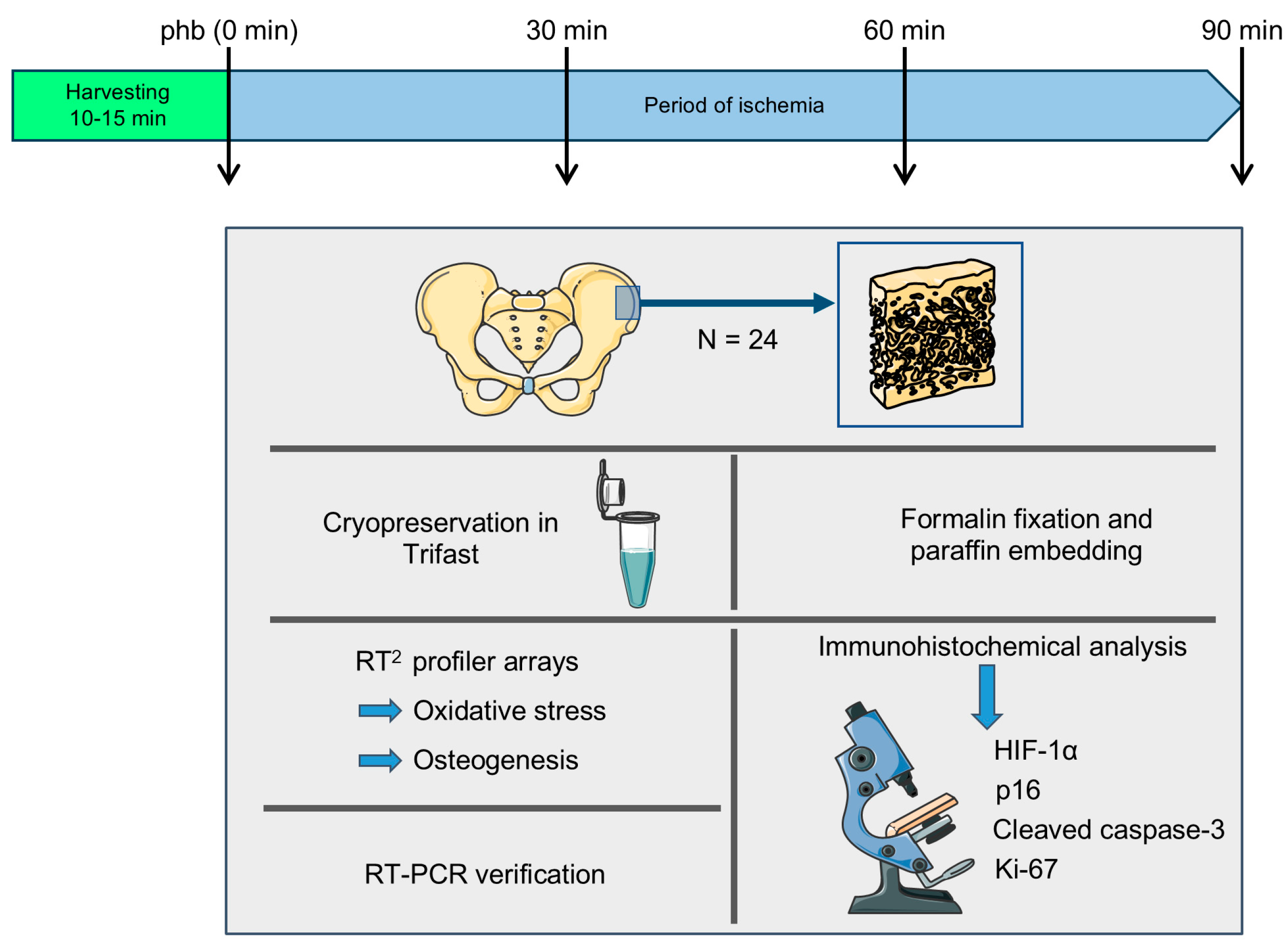
2.2. Graft Retrieval and Experimental Protocol
2.3. RT2 Profiler™ PCR Array Human Osteogenesis and Oxidative Stress
2.4. RT-PCR
2.5. Immunohistochemistry
2.6. Blood Coagulation Analysis
2.7. Statistical Analysis
3. Results
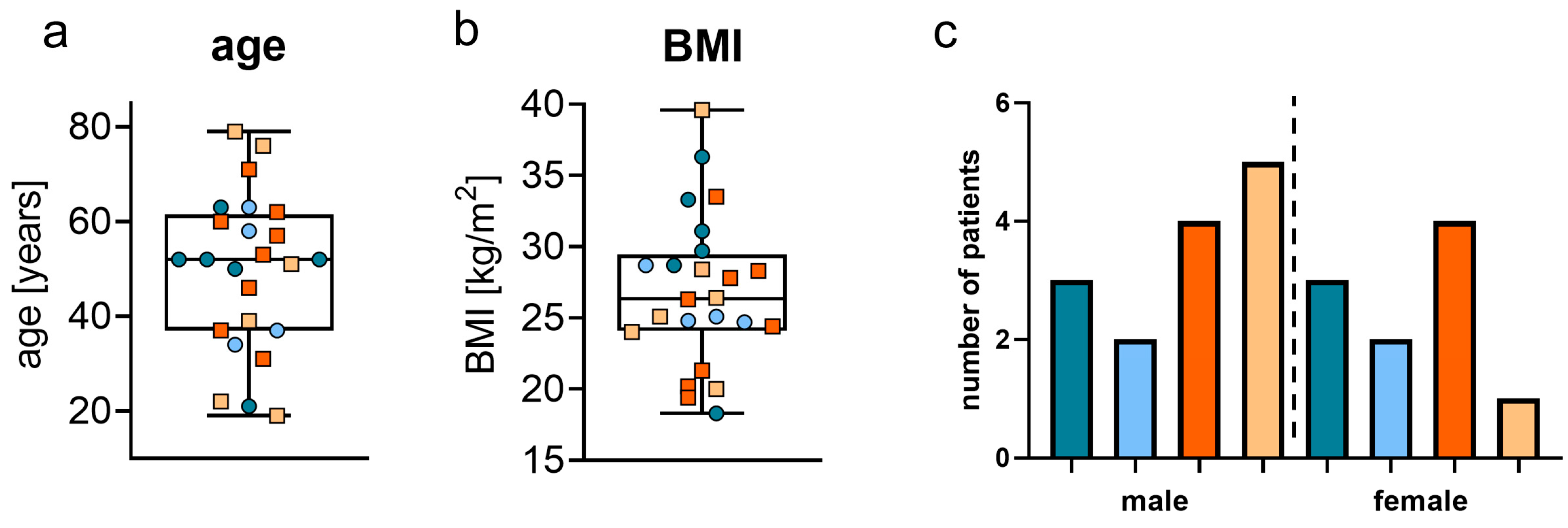
3.1. Patients’ Characteristics
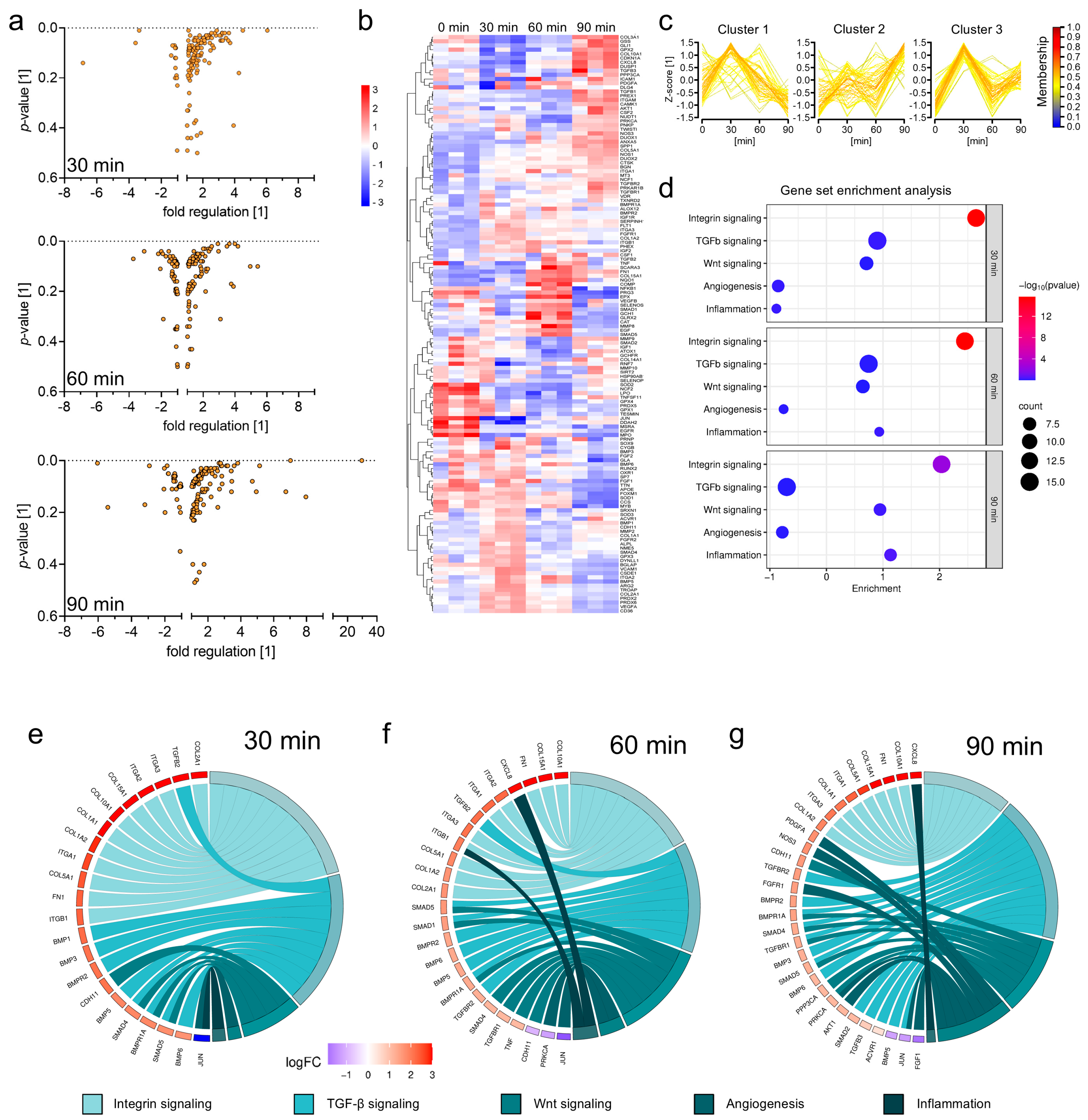
3.2. Profiler Arrays for Oxidative Stress and Osteogenesis
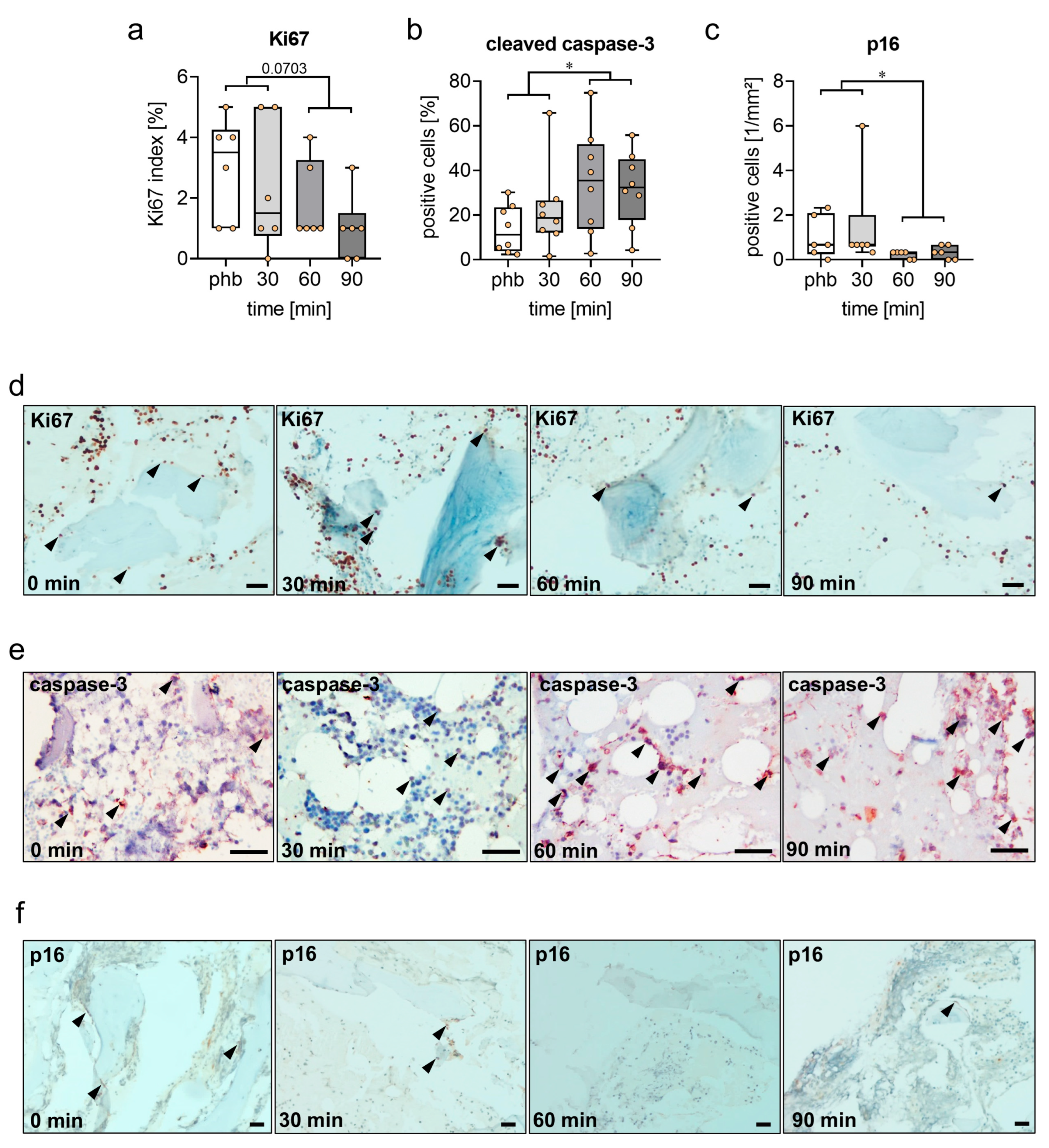
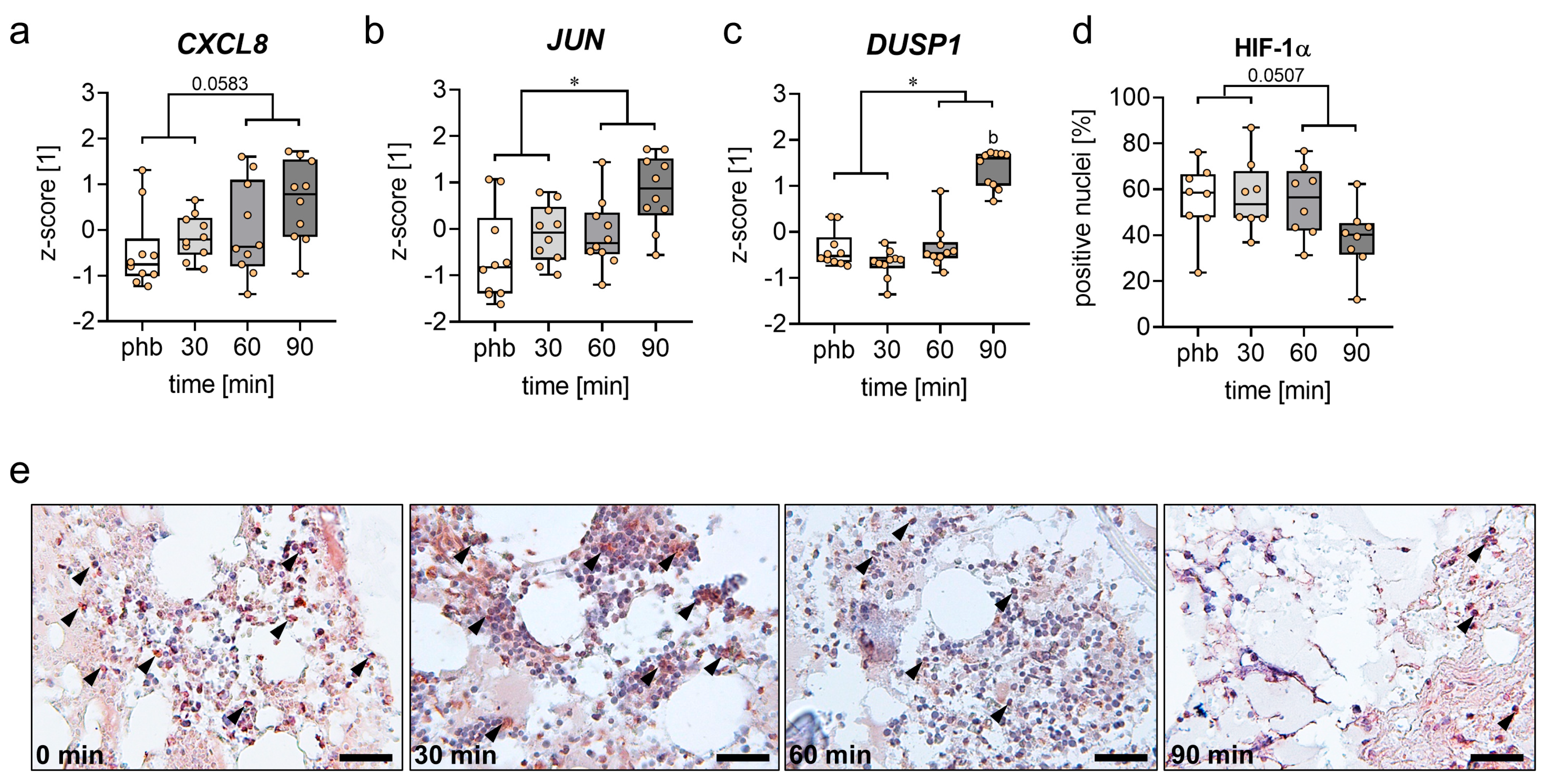
3.3. Inflammation and Cellular Stress Within Cancellous Bone Grafts
3.4. Viability of Cancellous Bone Grafts
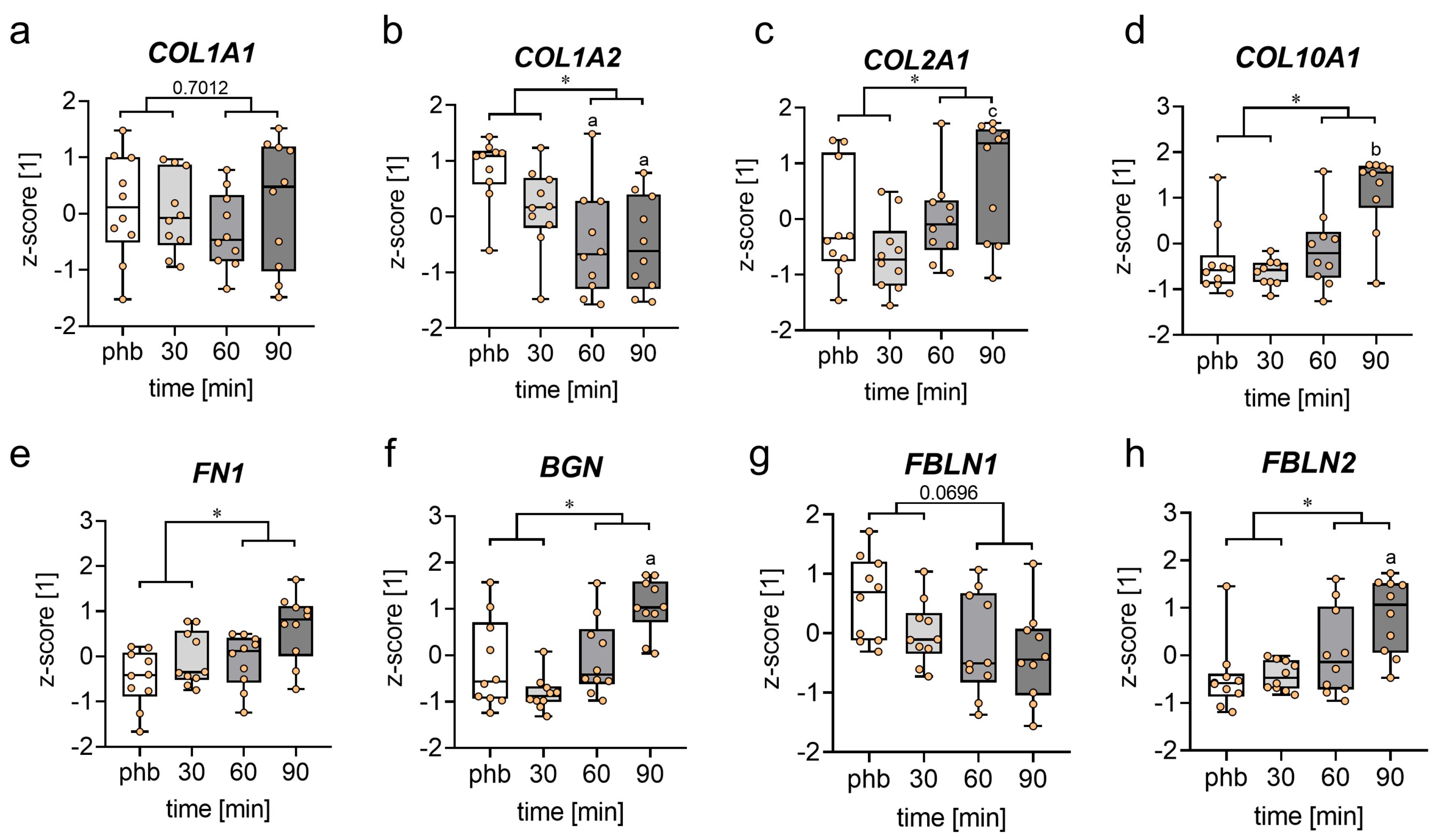
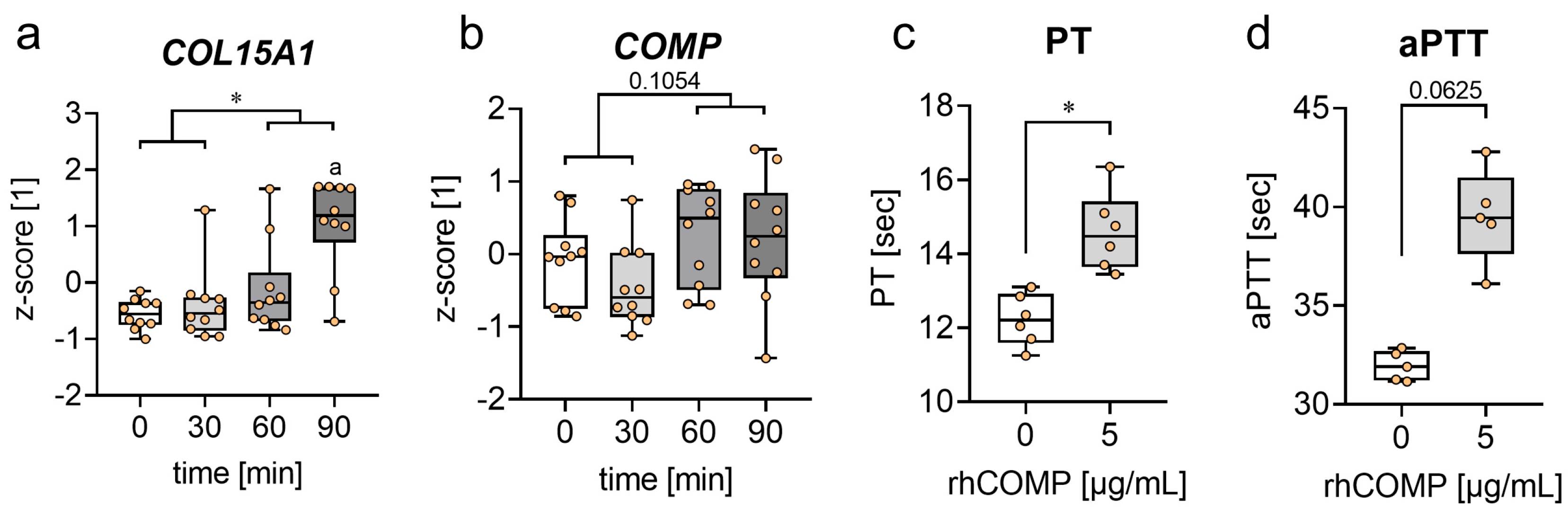
3.5. Gene Expression of ECM in Autologous Bone Grafts
3.6. Effects of COMP on Blood Coagulation
4. Discussion
5. Conclusions
Author Contributions
Funding
Institutional Review Board Statement
Informed Consent Statement
Data Availability Statement
Acknowledgments
Conflicts of Interest
References
- Einhorn, T.A.; Gerstenfeld, L.C. Fracture healing: Mechanisms and interventions. Nat. Rev. Rheumatol. 2015, 11, 45–54. [Google Scholar] [CrossRef] [Scilit] [PubMed]
- Mills, L.A.; Aitken, S.A.; Simpson, A. The risk of non-union per fracture: Current myths and revised figures from a population of over 4 million adults. Acta Orthop. 2017, 88, 434–439. [Google Scholar] [CrossRef] [Scilit] [PubMed]
- Victoria, G.; Petrisor, B.; Drew, B.; Dick, D. Bone stimulation for fracture healing: What’s all the fuss? Indian J. Orthop. 2009, 43, 117–120. [Google Scholar] [CrossRef] [Scilit] [PubMed]
- Hak, D.J.; Fitzpatrick, D.; Bishop, J.A.; Marsh, J.L.; Tilp, S.; Schnettler, R.; Simpson, H.; Alt, V. Delayed union and nonunions: Epidemiology, clinical issues, and financial aspects. Injury 2014, 45, S3–S7. [Google Scholar] [CrossRef] [Scilit] [PubMed]
- Azi, M.L.; Aprato, A.; Santi, I.; Kfuri, M., Jr.; Masse, A.; Joeris, A. Autologous bone graft in the treatment of post-traumatic bone defects: A systematic review and meta-analysis. BMC Musculoskelet. Disord. 2016, 17, 465. [Google Scholar] [CrossRef] [Scilit] [PubMed]
- Schmidt, A.H. Autologous bone graft: Is it still the gold standard? Injury 2021, 52, S18–S22. [Google Scholar] [CrossRef] [Scilit] [PubMed]
- Fillingham, Y.; Jacobs, J. Bone grafts and their substitutes. Bone Jt. J. 2016, 98, 6–9. [Google Scholar] [CrossRef] [Scilit] [PubMed]
- Khan, S.N.; Cammisa, F.P., Jr.; Sandhu, H.S.; Diwan, A.D.; Girardi, F.P.; Lane, J.M. The biology of bone grafting. J. Am. Acad. Orthop. Surg. 2005, 13, 77–86. [Google Scholar] [CrossRef] [Scilit] [PubMed]
- Kamal, M.; Gremse, F.; Rosenhain, S.; Bartella, A.K.; Holzle, F.; Kessler, P.; Lethaus, B. Comparison of Bone Grafts From Various Donor Sites in Human Bone Specimens. J. Craniofacial Surg. 2018, 29, 1661–1665. [Google Scholar] [CrossRef] [Scilit] [PubMed]
- Hassanein, A.H.; Greene, A.K.; Arany, P.R.; Padwa, B.L. Intraoperative cooling of iliac bone graft: An experimental evaluation of cell viability. J. Oral Maxillofac. Surg. 2012, 70, 1633–1635. [Google Scholar] [CrossRef] [Scilit] [PubMed]
- Steiner, M.; Ramp, W.K. Short-term storage of freshly harvested bone. J. Oral Maxillofac. Surg. 1988, 46, 868–871. [Google Scholar] [CrossRef] [Scilit] [PubMed]
- Maus, U.; Andereya, S.; Gravius, S.; Siebert, C.H.; Schippmann, T.; Ohnsorge, J.A.; Niedhart, C. How to store autologous bone graft perioperatively: An in vitro study. Arch. Orthop. Trauma Surg. 2008, 128, 1007–1011. [Google Scholar] [CrossRef] [Scilit] [PubMed]
- Kantor, A.H.; Uffmann, W.; Marchand, L.S.; Haller, J.M.; Higgins, T.F.; Rothberg, D.L. What Happens on the Back Table? Viability and Osteogenic Potential of Reamed Autogenous Bone Graft as a Function of Time and Temperature-A Pilot Study. J. Orthop. Trauma 2022, 36, S28–S31. [Google Scholar] [CrossRef] [Scilit] [PubMed]
- Eltzschig, H.K.; Eckle, T. Ischemia and reperfusion--from mechanism to translation. Nat. Med. 2011, 17, 1391–1401. [Google Scholar] [CrossRef] [Scilit] [PubMed]
- Bankhead, P.; Loughrey, M.B.; Fernandez, J.A.; Dombrowski, Y.; McArt, D.G.; Dunne, P.D.; McQuaid, S.; Gray, R.T.; Murray, L.J.; Coleman, H.G.; et al. QuPath: Open source software for digital pathology image analysis. Sci. Rep. 2017, 7, 16878. [Google Scholar] [CrossRef] [Scilit] [PubMed]
- Choube, A.; Astekar, M.; Choube, A.; Sapra, G.; Agarwal, A.; Rana, A. Comparison of decalcifying agents and techniques for human dental tissues. Biotech. Histochem. 2018, 93, 99–108. [Google Scholar] [CrossRef] [Scilit] [PubMed]
- Steinestel, K.; Bruderlein, S.; Steinestel, J.; Markl, B.; Schwerer, M.J.; Arndt, A.; Kraft, K.; Propper, C.; Moller, P. Expression of Abelson interactor 1 (Abi1) correlates with inflammation, KRAS mutation and adenomatous change during colonic carcinogenesis. PLoS ONE 2012, 7, e40671. [Google Scholar] [CrossRef] [Scilit] [PubMed]
- Pape, H.C.; Evans, A.; Kobbe, P. Autologous bone graft: Properties and techniques. J. Orthop. Trauma 2010, 24, S36–S40. [Google Scholar] [CrossRef] [Scilit] [PubMed]
- Sun, Q.; Li, Z.; Liu, B.; Yuan, X.; Guo, S.; Helms, J.A. Improving intraoperative storage conditions for autologous bone grafts: An experimental investigation in mice. J. Tissue Eng. Regen. Med. 2019, 13, 2169–2180. [Google Scholar] [CrossRef] [Scilit] [PubMed]
- Liu, Q.; Li, A.; Tian, Y.; Wu, J.D.; Liu, Y.; Li, T.; Chen, Y.; Han, X.; Wu, K. The CXCL8-CXCR1/2 pathways in cancer. Cytokine Growth Factor Rev. 2016, 31, 61–71. [Google Scholar] [CrossRef] [Scilit] [PubMed]
- Hoffmann, E.; Dittrich-Breiholz, O.; Holtmann, H.; Kracht, M. Multiple control of interleukin-8 gene expression. J. Leukoc. Biol. 2002, 72, 847–855. [Google Scholar] [CrossRef] [Scilit] [PubMed]
- Brat, D.J.; Bellail, A.C.; Van Meir, E.G. The role of interleukin-8 and its receptors in gliomagenesis and tumoral angiogenesis. Neuro-Oncology 2005, 7, 122–133. [Google Scholar] [CrossRef] [Scilit] [PubMed]
- Cambier, S.; Gouwy, M.; Proost, P. The chemokines CXCL8 and CXCL12: Molecular and functional properties, role in disease and efforts towards pharmacological intervention. Cell. Mol. Immunol. 2023, 20, 217–251. [Google Scholar] [CrossRef] [Scilit] [PubMed]
- Klimiec-Moskal, E.; Koceniak, P.; Weglarczyk, K.; Slowik, A.; Siedlar, M.; Dziedzic, T. Circulating Chemokines and Short- and Long-Term Outcomes After Ischemic Stroke. Mol. Neurobiol. 2025, 62, 421–428. [Google Scholar] [CrossRef] [Scilit] [PubMed]
- Villa, P.; Triulzi, S.; Cavalieri, B.; Di Bitondo, R.; Bertini, R.; Barbera, S.; Bigini, P.; Mennini, T.; Gelosa, P.; Tremoli, E.; et al. The interleukin-8 (IL-8/CXCL8) receptor inhibitor reparixin improves neurological deficits and reduces long-term inflammation in permanent and transient cerebral ischemia in rats. Mol. Med. 2007, 13, 125–133. [Google Scholar] [CrossRef] [Scilit]
- Verleden, S.E.; Ruttens, D.; Vos, R.; Vandermeulen, E.; Moelants, E.; Mortier, A.; Van Raemdonck, D.E.; Proost, P.; Schols, D.; Verleden, G.M.; et al. Differential cytokine, chemokine and growth factor expression in phenotypes of chronic lung allograft dysfunction. Transplantation 2015, 99, 86–93. [Google Scholar] [CrossRef] [Scilit] [PubMed]
- Shvedova, M.; Anfinogenova, Y.; Atochina-Vasserman, E.N.; Schepetkin, I.A.; Atochin, D.N. c-Jun N-Terminal Kinases (JNKs) in Myocardial and Cerebral Ischemia/Reperfusion Injury. Front. Pharmacol. 2018, 9, 715. [Google Scholar] [CrossRef] [Scilit] [PubMed]
- Dhanasekaran, D.N.; Reddy, E.P. JNK signaling in apoptosis. Oncogene 2008, 27, 6245–6251. [Google Scholar] [CrossRef] [Scilit] [PubMed]
- Panneer Selvam, S.; Roth, B.M.; Nganga, R.; Kim, J.; Cooley, M.A.; Helke, K.; Smith, C.D.; Ogretmen, B. Balance between senescence and apoptosis is regulated by telomere damage-induced association between p16 and caspase-3. J. Biol. Chem. 2018, 293, 9784–9800. [Google Scholar] [CrossRef] [Scilit] [PubMed]
- Wang, D.; Liu, Y.; Zhang, R.; Zhang, F.; Sui, W.; Chen, L.; Zheng, R.; Chen, X.; Wen, F.; Ouyang, H.W.; et al. Apoptotic transition of senescent cells accompanied with mitochondrial hyper-function. Oncotarget 2016, 7, 28286–28300. [Google Scholar] [CrossRef] [Scilit] [PubMed]
- Liu, Y.X.; Wang, J.; Guo, J.; Wu, J.; Lieberman, H.B.; Yin, Y. DUSP1 is controlled by p53 during the cellular response to oxidative stress. Mol. Cancer Res. 2008, 6, 624–633. [Google Scholar] [CrossRef] [Scilit] [PubMed]
- Hammer, M.; Mages, J.; Dietrich, H.; Servatius, A.; Howells, N.; Cato, A.C.; Lang, R. Dual specificity phosphatase 1 (DUSP1) regulates a subset of LPS-induced genes and protects mice from lethal endotoxin shock. J. Exp. Med. 2006, 203, 15–20. [Google Scholar] [CrossRef] [Scilit] [PubMed]
- Selvaraj, V.; Sekaran, S.; Dhanasekaran, A.; Warrier, S. Type 1 collagen: Synthesis, structure and key functions in bone mineralization. Differentiation 2024, 136, 100757. [Google Scholar] [CrossRef] [Scilit] [PubMed]
- Marini, J.C.; Blissett, A.R. New genes in bone development: What’s new in osteogenesis imperfecta. J. Clin. Endocrinol. Metab. 2013, 98, 3095–3103. [Google Scholar] [CrossRef] [Scilit] [PubMed]
- Marom, R.; Rabenhorst, B.M.; Morello, R. Osteogenesis imperfecta: An update on clinical features and therapies. Eur. J. Endocrinol. 2020, 183, R95–R106. [Google Scholar] [CrossRef] [Scilit] [PubMed]
- Besio, R.; Maruelli, S.; Battaglia, S.; Leoni, L.; Villani, S.; Layrolle, P.; Rossi, A.; Trichet, V.; Forlino, A. Early Fracture Healing is Delayed in the Col1a2+/G610C Osteogenesis Imperfecta Murine Model. Calcif. Tissue Int. 2018, 103, 653–662. [Google Scholar] [CrossRef] [Scilit] [PubMed]
- Gelse, K.; Poschl, E.; Aigner, T. Collagens--structure, function, and biosynthesis. Adv. Drug Deliv. Rev. 2003, 55, 1531–1546. [Google Scholar] [CrossRef] [Scilit] [PubMed]
- Wang, Y.; Ni, H. Fibronectin maintains the balance between hemostasis and thrombosis. Cell. Mol. Life Sci. 2016, 73, 3265–3277. [Google Scholar] [CrossRef] [Scilit] [PubMed]
- Konstandin, M.H.; Toko, H.; Gastelum, G.M.; Quijada, P.; De La Torre, A.; Quintana, M.; Collins, B.; Din, S.; Avitabile, D.; Volkers, M.; et al. Fibronectin is essential for reparative cardiac progenitor cell response after myocardial infarction. Circ. Res. 2013, 113, 115–125. [Google Scholar] [CrossRef] [Scilit] [PubMed]
- Chang, S.S.; Cheng, C.C.; Chen, Y.R.; Chen, F.W.; Cheng, Y.M.; Wang, J.M. Epithelial CEBPD activates fibronectin and enhances macrophage adhesion in renal ischemia-reperfusion injury. Cell Death Discov. 2024, 10, 328. [Google Scholar] [CrossRef] [Scilit] [PubMed]
- Poluzzi, C.; Nastase, M.V.; Zeng-Brouwers, J.; Roedig, H.; Hsieh, L.T.; Michaelis, J.B.; Buhl, E.M.; Rezende, F.; Manavski, Y.; Bleich, A.; et al. Biglycan evokes autophagy in macrophages via a novel CD44/Toll-like receptor 4 signaling axis in ischemia/reperfusion injury. Kidney Int. 2019, 95, 540–562, Erratum in Kidney Int. 2026, 109, 1048–1049. https://doi.org/10.1016/j.kint.2026.02.005. [Google Scholar] [CrossRef] [Scilit] [PubMed]
- Ahmed, M.S.; Oie, E.; Vinge, L.E.; Yndestad, A.; Andersen, G.G.; Andersson, Y.; Attramadal, T.; Attramadal, H. Induction of myocardial biglycan in heart failure in rats--an extracellular matrix component targeted by AT1 receptor antagonism. Cardiovasc. Res. 2003, 60, 557–568. [Google Scholar] [CrossRef] [Scilit] [PubMed]
- Schaefer, L.; Babelova, A.; Kiss, E.; Hausser, H.J.; Baliova, M.; Krzyzankova, M.; Marsche, G.; Young, M.F.; Mihalik, D.; Gotte, M.; et al. The matrix component biglycan is proinflammatory and signals through Toll-like receptors 4 and 2 in macrophages. J. Clin. Investig. 2005, 115, 2223–2233. [Google Scholar] [CrossRef] [Scilit] [PubMed]
- Cooley, M.A.; Harikrishnan, K.; Oppel, J.A.; Miler, S.F.; Barth, J.L.; Haycraft, C.J.; Reddy, S.V.; Scott Argraves, W. Fibulin-1 is required for bone formation and Bmp-2-mediated induction of Osterix. Bone 2014, 69, 30–38. [Google Scholar] [CrossRef] [Scilit] [PubMed]
- Khan, S.A.; Dong, H.; Joyce, J.; Sasaki, T.; Chu, M.L.; Tsuda, T. Fibulin-2 is essential for angiotensin II-induced myocardial fibrosis mediated by transforming growth factor (TGF)-beta. Lab. Investig. 2016, 96, 773–783. [Google Scholar] [CrossRef] [Scilit] [PubMed]
- Ghorbani, S.; Li, C.; Lozinski, B.M.; Moezzi, D.; D’Mello, C.; Dong, Y.; Visser, F.; Li, H.; Silva, C.; Khakpour, M.; et al. Fibulin-2 is an extracellular matrix inhibitor of oligodendrocytes relevant to multiple sclerosis. J. Clin. Investig. 2024, 134, e176910. [Google Scholar] [CrossRef] [Scilit] [PubMed]
- Balog, S.; Fujiwara, R.; Pan, S.Q.; El-Baradie, K.B.; Choi, H.Y.; Sinha, S.; Yang, Q.; Asahina, K.; Chen, Y.; Li, M.; et al. Emergence of highly profibrotic and proinflammatory Lrat+Fbln2+ HSC subpopulation in alcoholic hepatitis. Hepatology 2023, 78, 212–224. [Google Scholar] [CrossRef] [Scilit] [PubMed]
- Sasaki, T.; Larsson, H.; Tisi, D.; Claesson-Welsh, L.; Hohenester, E.; Timpl, R. Endostatins derived from collagens XV and XVIII differ in structural and binding properties, tissue distribution and anti-angiogenic activity. J. Mol. Biol. 2000, 301, 1179–1190. [Google Scholar] [CrossRef] [Scilit] [PubMed]
- Menger, M.M.; Laschke, M.W.; Orth, M.; Pohlemann, T.; Menger, M.D.; Histing, T. Vascularization Strategies in the Prevention of Nonunion Formation. Tissue Eng. Part B Rev. 2021, 27, 107–132. [Google Scholar] [CrossRef] [Scilit] [PubMed]
- Ledwon, J.K.; Kelsey, L.J.; Vaca, E.E.; Gosain, A.K. Transcriptomic analysis reveals dynamic molecular changes in skin induced by mechanical forces secondary to tissue expansion. Sci. Rep. 2020, 10, 15991. [Google Scholar] [CrossRef] [Scilit] [PubMed]
- Ott, C.E.; Bauer, S.; Manke, T.; Ahrens, S.; Rodelsperger, C.; Grunhagen, J.; Kornak, U.; Duda, G.; Mundlos, S.; Robinson, P.N. Promiscuous and depolarization-induced immediate-early response genes are induced by mechanical strain of osteoblasts. J. Bone Miner. Res. 2009, 24, 1247–1262. [Google Scholar] [CrossRef] [Scilit] [PubMed]
- Fitzgerald, J.B.; Jin, M.; Dean, D.; Wood, D.J.; Zheng, M.H.; Grodzinsky, A.J. Mechanical compression of cartilage explants induces multiple time-dependent gene expression patterns and involves intracellular calcium and cyclic AMP. J. Biol. Chem. 2004, 279, 19502–19511. [Google Scholar] [CrossRef] [Scilit] [PubMed]
- Liang, Y.; Fu, Y.; Qi, R.; Wang, M.; Yang, N.; He, L.; Yu, F.; Zhang, J.; Yun, C.H.; Wang, X.; et al. Cartilage oligomeric matrix protein is a natural inhibitor of thrombin. Blood 2015, 126, 905–914. [Google Scholar] [CrossRef] [Scilit] [PubMed]




| Target | GenBank Accession Number | Sequence Forward Primer | Sequence Reverse Primer | Ta [°C] | # of Cycles | Amplicon Size [bp] |
|---|---|---|---|---|---|---|
| 18S | NR_003286 | GGACAGGATTGACAGATTGAT | AGTCTCGTTCGTTATCGGAAT | 56 | 25 | 111 |
| CXCL8 (Interleukin-8) | NM_000584.3 | TAGCAAAATTGAGGCCAAGG | AAACCAAGGCACAGTGGAAC | 60 | 40 | 227 |
| DUSP1 | NM_004417.4 | CTGTCAACGTGCGCTTCAG | GAAAACGCTTCGTATCCTCCTTTG | 63 | 40 | 258 |
| JUN | NM_002228.4 | GTGCCGAAAAAGGAAGCTGG | CTGCGTTAGCATGAGTTGGC | 63 | 35 | 175 |
| COL1A1 | NM_000088.3 | CAGCCGCTTCACCTACAGC | TTTTGTATTCAATCACTGTCTTGCC | 56 | 40 | 83 |
| COL1A2 | NM_000089.4 | GGCCCTCAAGGTTTCCAAGG | CACCCTGTGGTCCAACAACTC | 60 | 35 | 166 |
| COL2A1 | NM_001844.4 | TGGATGCCACACTCAAGTCC | GCTGCTCCACCAGTTCTTCT | 63 | 40 | 254 |
| COL10A1 | NM_000493.3 | AAACCTGGACAACAGGGACC | CGACCAGGAGCACCATATCC | 63 | 40 | 125 |
| BGN | NM_001711.5 | CGCCTCGTGTCTCTGCTGGC | TGGCTGAAGGAACAGCTGAG | 58 | 40 | 194 |
| FBLN1 | NM_006487.3 | GAACGCGCTGTGTTGATGTG | ATCCTGCTGATGCCGTCAAA | 63 | 40 | 136 |
| FBLN2 | NM_001004019.2 | GCCCCGCGGGTCTTAC | CGCCTCCTCAATGCAGTTCT | 63 | 40 | 193 |
| COMP | NM_000095.3 | CCCAAGTGGGCTACATCAGG | GGTGTCATTGCAGCGGTAA | 60 | 35 | 164 |
| COL15A1 | NM_001855.5 | CGCCGCCTTTGTTCCCTG | TGTTCCTCCTTGGTGCCATC | 60 | 40 | 147 |
Disclaimer/Publisher’s Note: The statements, opinions and data contained in all publications are solely those of the individual author(s) and contributor(s) and not of MDPI and/or the editor(s). MDPI and/or the editor(s) disclaim responsibility for any injury to people or property resulting from any ideas, methods, instructions or products referred to in the content. |
© 2026 by the authors. Licensee MDPI, Basel, Switzerland. This article is an open access article distributed under the terms and conditions of the Creative Commons Attribution (CC BY) license.
Share and Cite
Menger, M.M.; Histing, T.; Poeske, F.; Schäfer, L.P.; Steinestel, K.; Löwer-Kiem, L.-M.; Menger, M.D.; Laschke, M.W.; Münzer, P.; Borst, O.; et al. Prolonged Ischemia Induces Cellular Stress, Stimulates Extracellular Matrix Remodeling and Compromises the Viability of Human Cancellous Bone Grafts. Cells 2026, 15, 1261. https://doi.org/10.3390/cells15141261
Menger MM, Histing T, Poeske F, Schäfer LP, Steinestel K, Löwer-Kiem L-M, Menger MD, Laschke MW, Münzer P, Borst O, et al. Prolonged Ischemia Induces Cellular Stress, Stimulates Extracellular Matrix Remodeling and Compromises the Viability of Human Cancellous Bone Grafts. Cells. 2026; 15(14):1261. https://doi.org/10.3390/cells15141261
Chicago/Turabian StyleMenger, Maximilian M., Tina Histing, Franziska Poeske, Lina P. Schäfer, Konrad Steinestel, Lena-Maria Löwer-Kiem, Michael D. Menger, Matthias W. Laschke, Patrick Münzer, Oliver Borst, and et al. 2026. "Prolonged Ischemia Induces Cellular Stress, Stimulates Extracellular Matrix Remodeling and Compromises the Viability of Human Cancellous Bone Grafts" Cells 15, no. 14: 1261. https://doi.org/10.3390/cells15141261
APA StyleMenger, M. M., Histing, T., Poeske, F., Schäfer, L. P., Steinestel, K., Löwer-Kiem, L.-M., Menger, M. D., Laschke, M. W., Münzer, P., Borst, O., Braun, B. J., Ehnert, S., & Herath, S. C. (2026). Prolonged Ischemia Induces Cellular Stress, Stimulates Extracellular Matrix Remodeling and Compromises the Viability of Human Cancellous Bone Grafts. Cells, 15(14), 1261. https://doi.org/10.3390/cells15141261