The Architecture of Immune Escape in Neuroblastoma: Plasticity, Silence and Escape Engineer Immune Blindness

 ,
, 
Abstract
1. Introduction
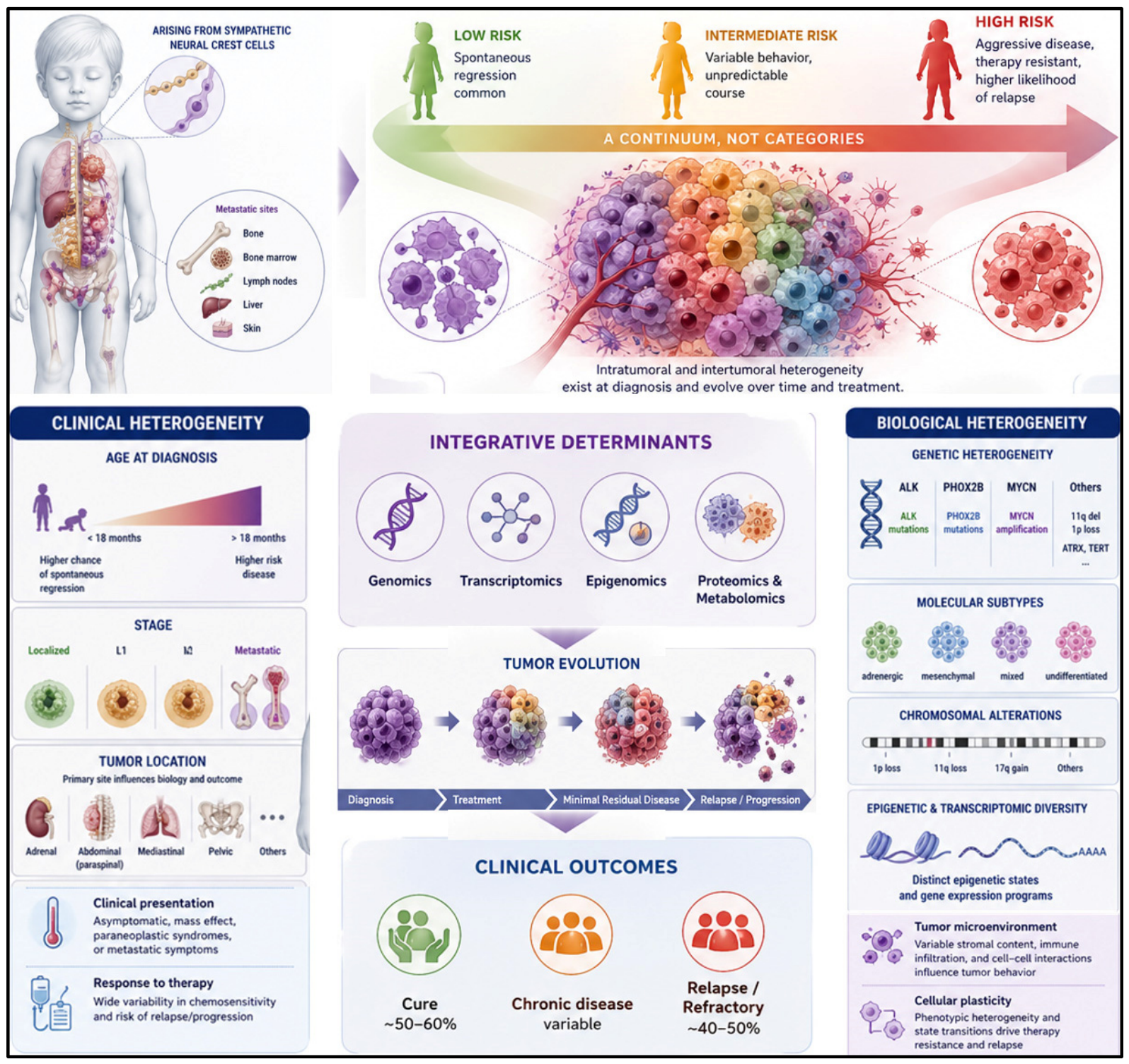
Neuroblastoma Clinical Heterogeneity
2. IMT and the Challenge of Immune Evasion in NB
2.1. IMT as a Critical Advancement in NB Treatment
2.2. Biological Basis of Immune Evasion in NB
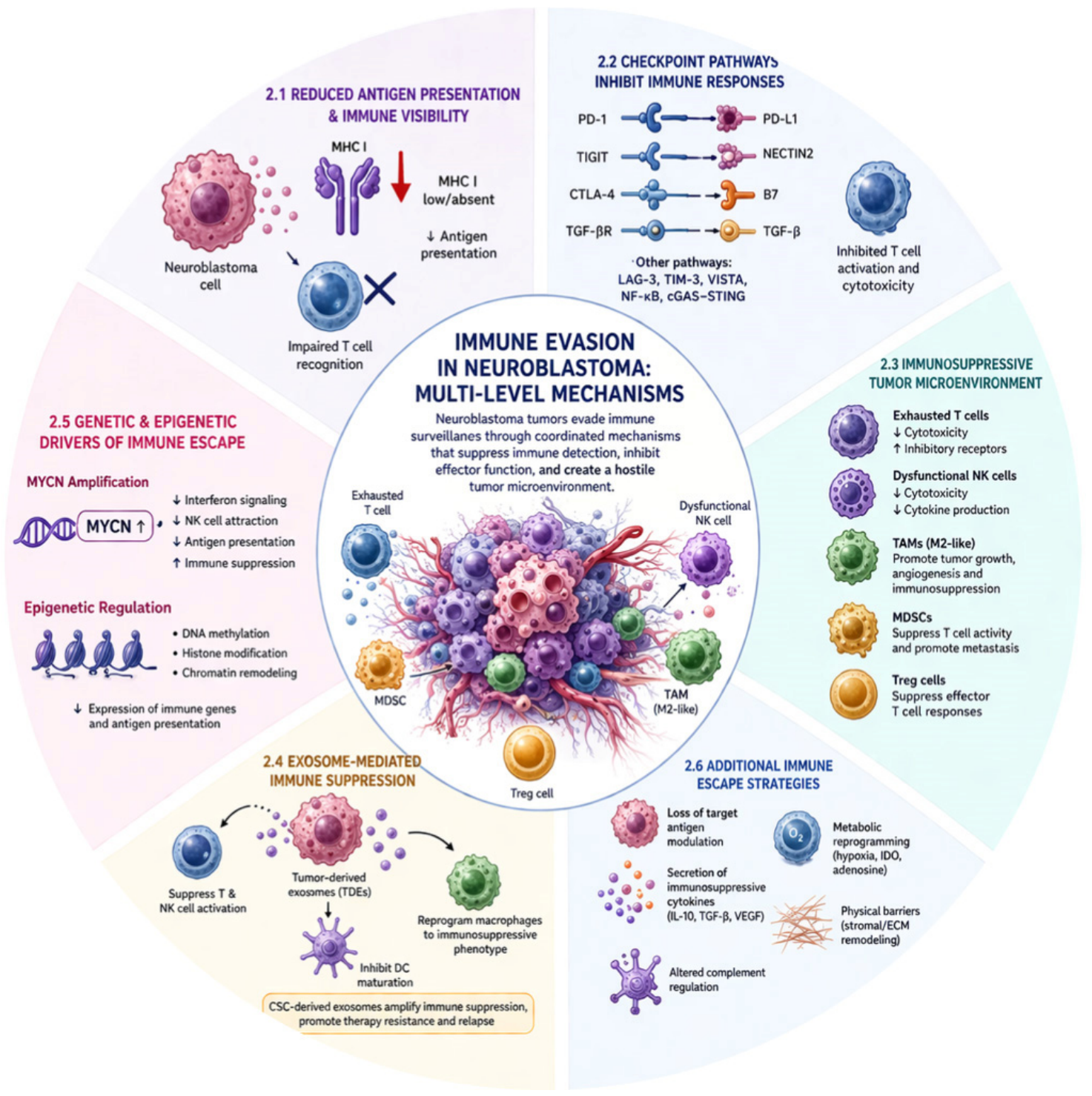
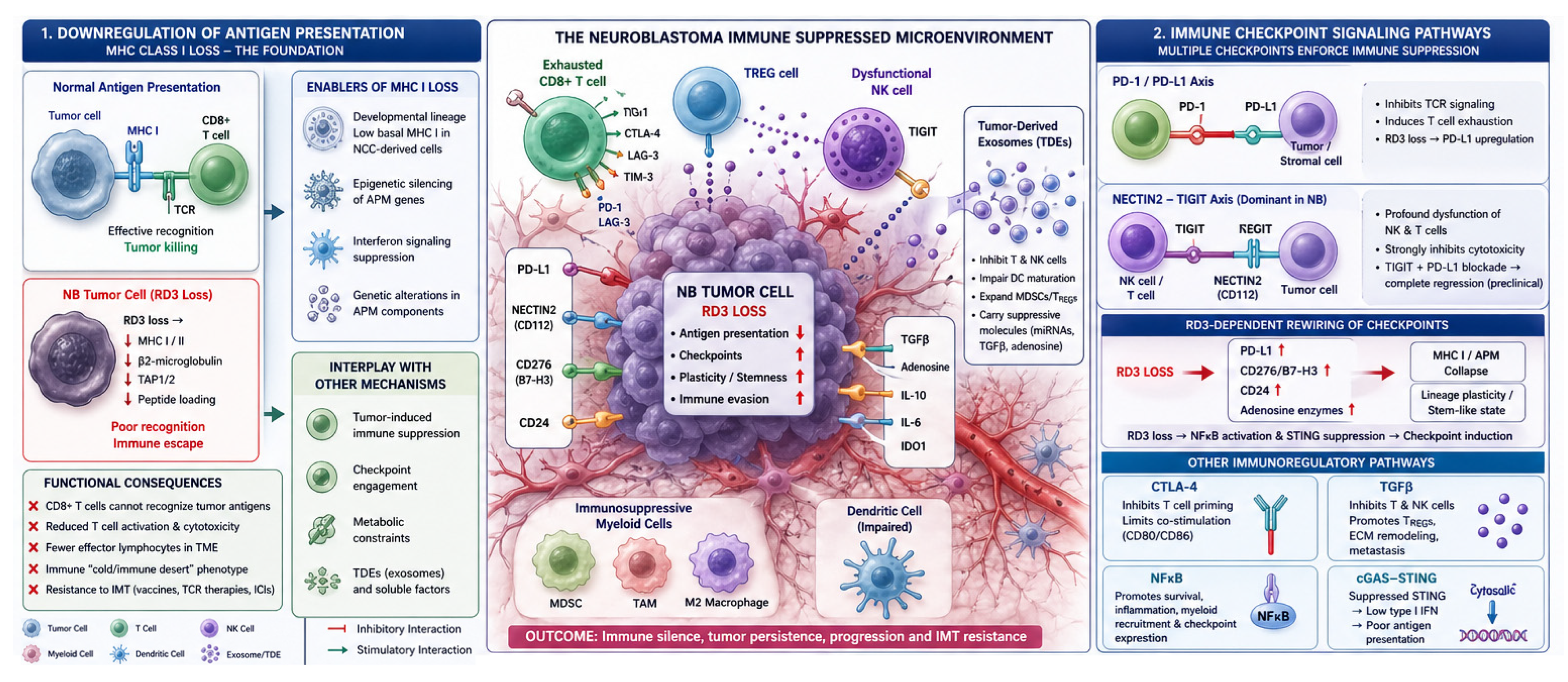
- Reduced Antigen Presentation and Immune Visibility: One of the most widely recognized immune-evasion strategies involves the downregulation of antigen presentation machinery, including major histocompatibility complex (MHC) class I molecules. Although NB is traditionally considered to express low levels of MHC-I even in early development, tumor-driven suppression further reduces Tc recognition. In addition, IL-10 contributes to immunosuppressive TME by inhibiting antigen presentation and suppressing effector Tc responses, thereby facilitating immune escape. These mechanisms mirrors broader themes identified in cancer biology, where antigen-presentation loss is a hallmark of reduced immune surveillance [14].
- Immune Checkpoint Engagement as a Barrier to Cytotoxic Responses: NB cells also leverage multiple inhibitory checkpoint pathways to dampen immune activity. While the PD-1/PD-L1 axis is well established, recent mechanistic analyses reveal that other checkpoint circuits (e.g., NECTIN2–TIGIT axis) are particularly important in NB (Table 1) [12]. A landmark bed-to-bench study identified Retinal degeneration protein 3 (RD3) as a dominant immune-suppressive pathway in NB, where therapy-pressure steered RD3-depletion determines immune cell type composition in the NB-TME [15]. RD3-dependent 27-gene signature dramatically improving immune-mediated tumor clearance in preclinical models, and RD3-loss contributed to the TIME with impeded homing of activated-CD4+ and -CD8+ Tc [15]. More broadly, other immunosuppressive pathways (CTLA-4, TGF-β, NFκB, cGAS–STING axis), have been implicated in shaping the local immune environment and reinforcing tumor tolerance. In addition, IL-2 is important for T-cell proliferation and activation and has been used clinically to enhance anti-tumor immune responses, particularly in combination with IMTs such as anti-GD2 antibodies. These findings, although not all are equally dominant, not only contribute to the layered network of immune suppression that challenges IMT efficacy, but also, underscore the essential role of immune checkpoint interactions in NB immune evasion and highlight the need for combination-based IMT [12,14].
2.3. Immunosuppressive TME in NB
2.4. Genetic and Epigenetic Influences on Immune Escape
2.5. The Clinical Consequences of Immune Evasion in NB
3. NB TME and Immune Landscape
3.1. Cellular Components of the NB TME
3.1.1. NK Cells
3.1.2. T Cells
3.1.3. B Cells
3.1.4. Myeloid (TAMs, MDSCs, DCs) Cells
- TAMs: NB tumors contain abundant TAMs that support tumor growth, angiogenesis, metastasis, and immunosuppression. In the NB TME, macrophages are frequently polarized toward an M2-like immunosuppressive phenotype, characterized by secretion of anti-inflammatory cytokines (IL-10, TGF-β), promotion of tumor cell survival and invasion and suppression of effector Tc responses. scRNA-seq studies confirm the presence of strong immunosuppressive myeloid signatures across NB tumors, contributing to dysfunctional antitumor immunity [19].
- MDSCs: MDSCs are potent immune suppressors that inhibit Tc, NK cells, and antigen-presenting cells. Their recruitment and expansion in NB are supported by TDEs, inflammatory factors, and metabolic alterations. MDSCs impair multiple arms of the immune response by producing nitric oxide (NO) and ROS, secreting arginase-1 and depleting nutrients essential for lymphocyte activation and promoting Bc exhaustion [10].
- DCs: In NB, TDEs inhibit DC maturation, which prevents effective antigen presentation and Tc priming. This effect creates a bottleneck in adaptive immunity, further contributing to tolerogenic TME. Studies highlight that blocking the release or uptake of TDEs can partially restore DC function and enhance IMT effectiveness [29].
3.2. Immunosuppressive Features of the NB TME
3.2.1. Immune Checkpoint Signaling and Ligand–Receptor Suppression
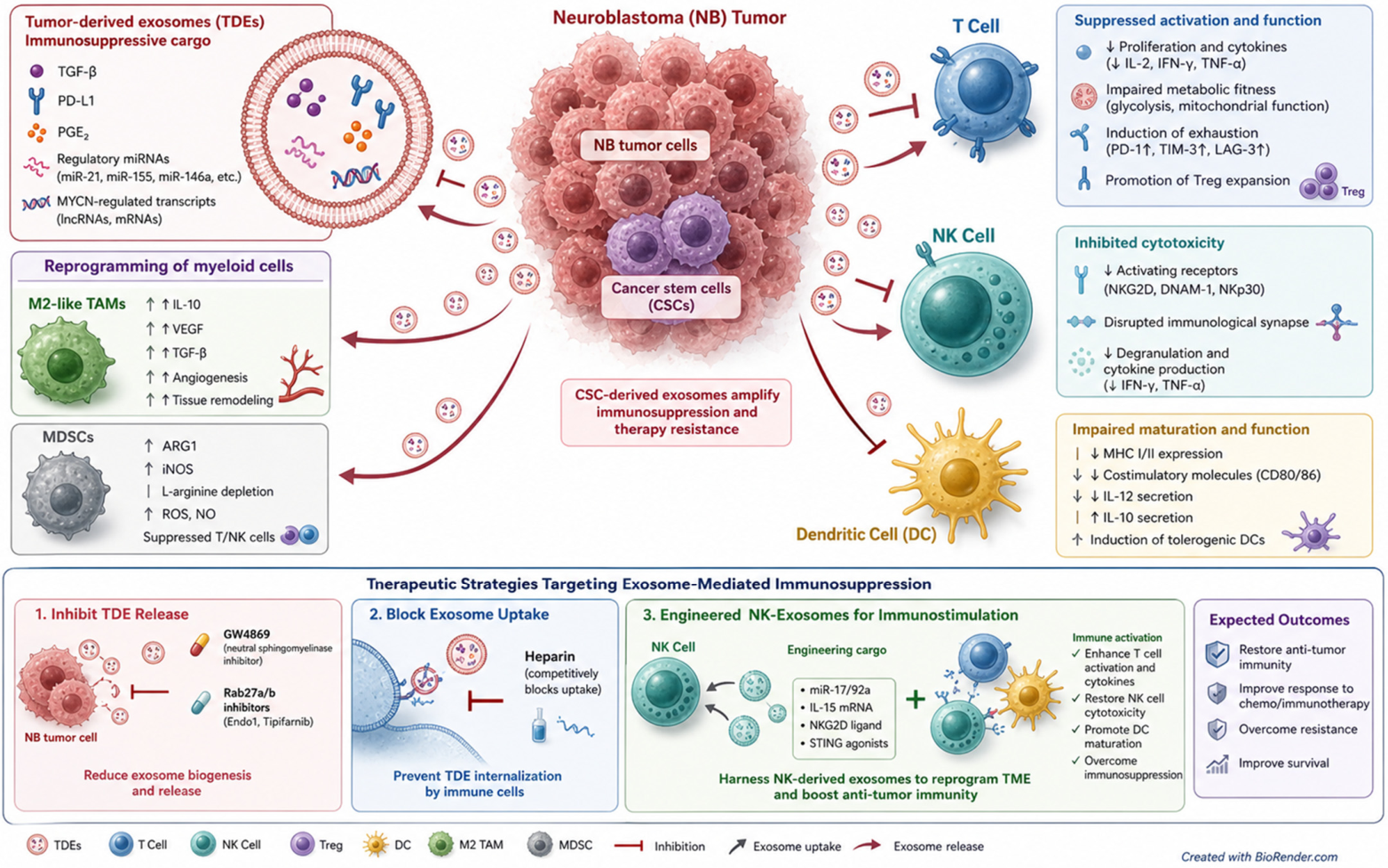
3.2.2. TDEs and Vesicle-Mediated Immunosuppression
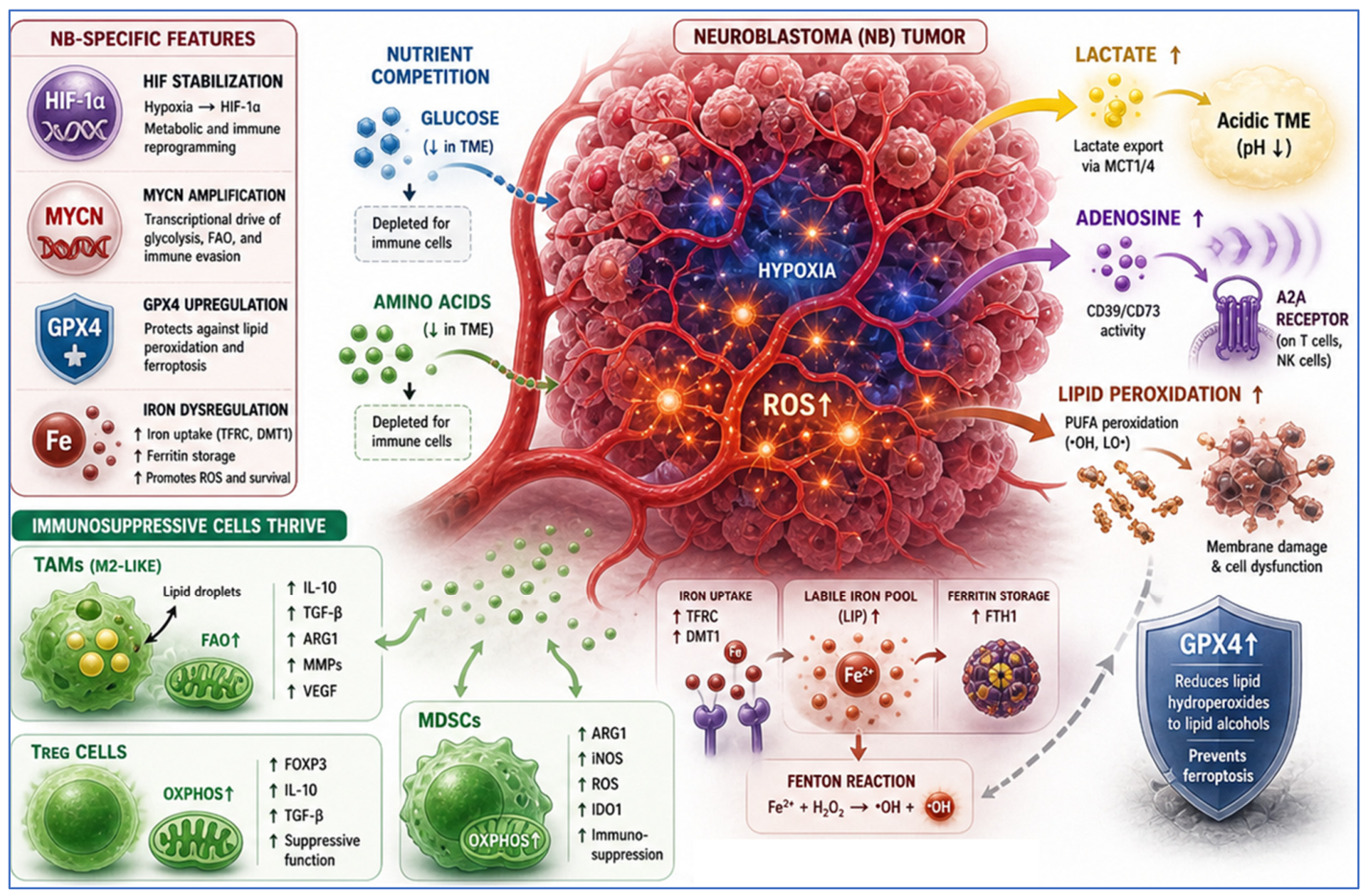
3.2.3. Metabolic Suppression and Hypoxic Microenvironments
3.2.4. CT-Induced Immune Remodeling
3.2.5. Immune Cell Trafficking
4. Mechanisms of Tumor Immune Evasion in NB
4.1. Downregulation of Antigen Presentation Machinery
4.1.1. MHC Class I Downregulation in NB as a Foundational Immune Evasion Strategy
4.1.2. MHC Class I Downregulation in NB
4.1.3. Functional Consequences for TC-Mediated Tumor Recognition
4.1.4. Interplay Between MHC-I Loss and Other Immune Evasion Mechanisms
- Tumor-Induced Immune Suppression—NB tumors create highly immunosuppressive TME through cytokines, metabolic remodeling, and regulatory immune cells. Such suppression dampens interferon-γ signaling, which would otherwise promote MHC-I upregulation. This feedback loop strengthens the tumor’s ability to resist CTL killing [14,63].
- Genetic and Epigenetic Modifiers—Cancer cells may epigenetically silence APM genes or mutation-inactivate components of the MHC-I presentation pathway and serves as the core driver of immune escape [64].
4.1.5. Therapeutic Implications
- Enhancing MHC-I Expression—Strategies to upregulate MHC-I, such as interferon-based therapies, epigenetic modulators, or agents that boost antigen processing, may sensitize NB tumors to TC-based therapies [59]. The RD3–MHC axis offers a compelling therapeutic entry point in NB. Because RD3 loss collapses MHC-I antigen presentation and creates an immune-silent state, restoring this axis could resensitize tumors to TC-based therapies. Strategies that establish RD3 function, stabilize its downstream transcriptional programs may reverse immune escape [15,37]. This creates opportunities to combine RD3-restorative approaches with checkpoint blockade, adoptive Tc therapies, or tumor vaccines. Targeting the plastic, RD3-deficient state itself, through differentiation agents or inhibitors of stemness pathways, may further re-enable antigen presentation.
- Leveraging NK Cell-Based Therapies—Because NK cells are programmed to kill cells with low MHC-I (“missing-self recognition”), therapies that enhance NK cell activity may compensate for reduced CTL surveillance. This rationale is strongly supported by NB studies revealing compromised NK function in HR disease and highlighting checkpoint mechanisms such as TIGIT that restrain NK cytotoxicity [12,36].
- Combination IMTs—Studies have stressed the importance of personalized combination approaches to overcome immune evasion mechanisms, integrating multi-omics data to rationally design therapies that target multiple escape pathways simultaneously. For NB, this may include combining NK-activating agents, checkpoint inhibitors, and antigen-presentation modulators [14].
4.2. Immune Checkpoint Signaling Pathways in NB
4.2.1. PD-1/PD-L1 Axis in NB
4.2.2. NECTIN2–TIGIT Axis in NB
4.2.3. RD3-Dependent Rewiring of Immune Checkpoint Signaling in NB
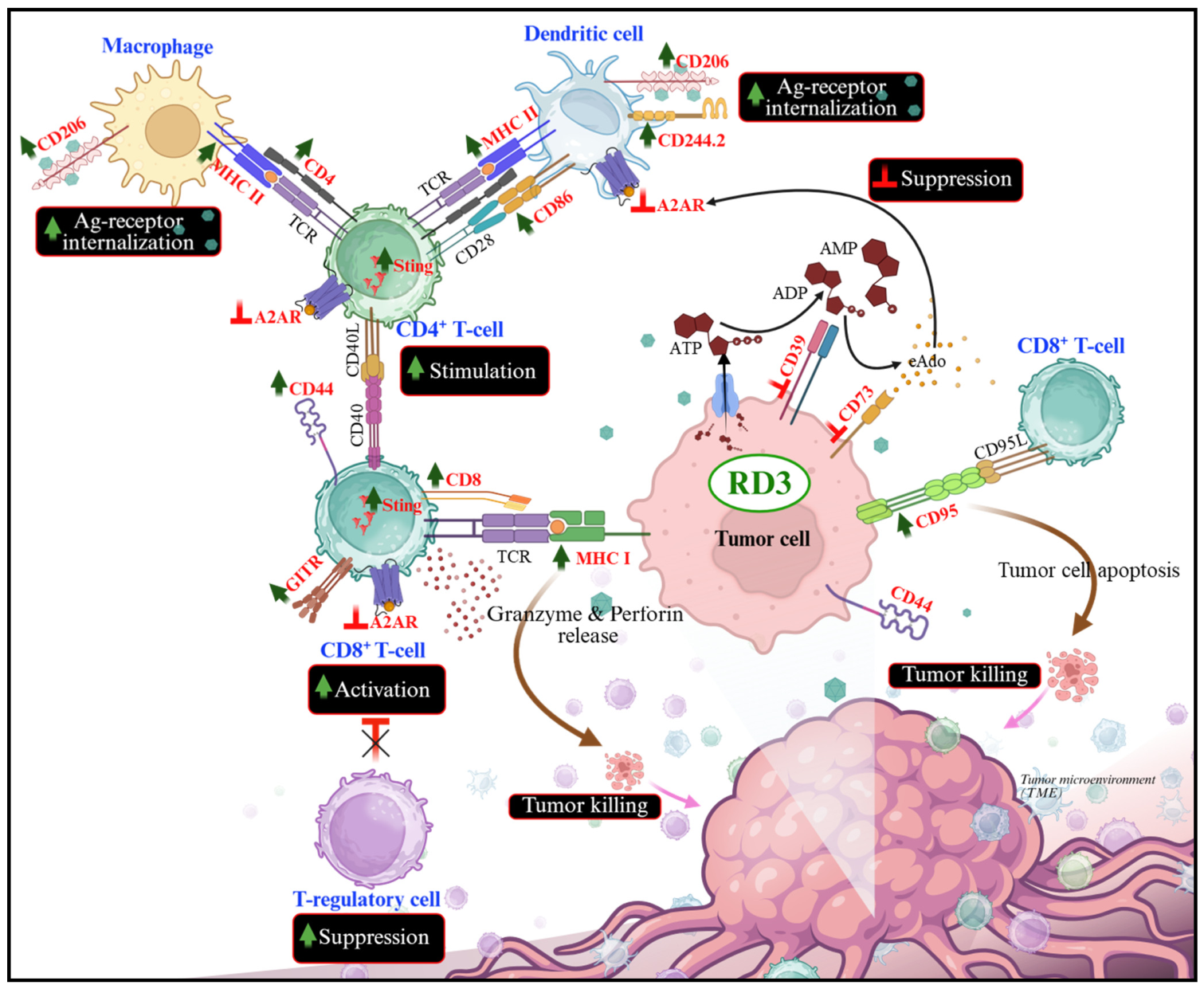
- Axis I: RD3-loss Adenosine-A2AR Signaling Rewires Metabolic Immune Suppression: RD3-controlled purinergic signaling is centered on ectonucleotidase modulation (CD39/CD73) and extracellular adenosine (eAdo) flux. Tumor-associated RD3 loss alters ATP processing, shifting the balance from immunostimulatory toward immunosuppressive adenosine accumulation. Elevated adenosine engages A2A receptors (A2AR) on CD4+, CD8+ Tc, macrophages, etc. This axis imposes a metabolic checkpoint that dampens TCR signaling, suppresses STING activation, and reduces granzyme/perforin release despite preserved antigen recognition. Crucially, RD3-loss driven adenosine signaling does not eliminate immune cells; instead, it locks them into a hyporesponsive state, explaining why infiltrating Tc fails to translate presence into tumor control. The downregulation of A2AR signaling shown upon RD3 presence thus represents a metabolic “unlocking” of effector competence rather than classical immune recruitment [37].
- Axis II: RD3-loss and Antigen Presentation Decoupling Recognition from Response: RD3 preserved or enhanced MHC I and MHC II expression on tumor cells and antigen-presenting cells (APCs), yet downstream suppression persists. This paradox suggests RD3-loss does not primarily drive immune evasion through antigen loss but through functional disconnection of antigen presentation from co-stimulation. In DCs and macrophages, RD3 reprogramming increases antigen receptor internalization while skewing surface marker expression (CD206, CD244.2). These features resemble tolerogenic or exhausted APC states, cells that efficiently ingest antigen but fail to license productive Tc activation. Despite intact TCR-MHC engagement, insufficient CD28-CD86 signaling and dominant suppressive cues blunt adaptive priming. Thus, RD3 loss enforces a “presentation-without-activation” phenotype, enabling tumor persistence under immune surveillance while avoiding overt immune elimination pressures [37].
- Axis III: RD3–loss Innate Sensing Crosstalk–STING Dampening Without Inflammation Loss: STING appears centrally positioned in both CD4+ and CD8+ Tc, emphasizing innate immune signaling as a convergence point. RD3-loss suppresses effective STING pathway activation. This selective attenuation is particularly consequential: STING is required not only for type I interferon production but also for sustaining CTL persistence, antigen spreading, and dendritic cell licensing. RD3 loss’s ability to mute STING signaling without eliminating immune infiltration creates a silent immune landscape, one where signaling thresholds are never crossed. Importantly, restoration of STING signaling upon RD3 reinforcement emerges as a mechanistic explanation for the observed increase in immune stimulation and tumor killing illustrated downstream. This positions RD3 as a molecular switch, regulating inflammatory amplitude rather than immune cell numbers [37].
- Axis IV: RD3-loss Skews CD4+ Tc Fate Toward Suppression and Help Attrition: CD4+ Tc acts as a pivotal node of RD3-loss mediated control. RD3 deficiency reduces CD44-driven activation while favoring Tregs expansion and suppressive dominance. This shift deprives CD8+ TC of essential helper signals required for sustained cytotoxicity, memory formation, and resistance to exhaustion. This mechanism is particularly relevant in NB, where CD4+ Tc often infiltrate tumors but fail to provide durable support. RD3-loss driven skewing explains the coexistence of immune infiltration with functional paralysis and highlights why IMTs alone have limited benefit unless helper compartment reprogramming is addressed [15].
- Axis V: RD3-loss Impairs Cytotoxic Execution Despite Preserved CD8+ Engagement: On the cytotoxic front, RD3 loss does not prevent CD8+ Tc from forming immune synapses with NB cells. However, granzyme and perforin release are functionally suppressed, while death receptor signaling (CD95/CD95L) is rendered ineffective. This decoupling of recognition and killing results in abortive immune synapses, contacts that fail to trigger apoptosis despite proximity. RD3-loss thereby converts CD8+ Tc into passive witnesses rather than executioners, further reinforcing immune escape without requiring antigen loss or checkpoint upregulation alone [15].
- Axis VI: RD3-loss Shapes Myeloid Plasticity Toward Immune Dampening: Macrophages and dendritic cells exhibit enhanced CD206 expression, indicative of alternatively polarized or tolerogenic states. RD3-loss influences myeloid plasticity while suppressing inflammatory instruction. This results in efficient clearance of immunogenic debris without propagation of danger signals, blunting epitope spreading and adaptive amplification. This axis underscores RD3-loss as a myeloid conditioning factor, capable of instructing innate cells to serve tumor persistence rather than immune defense [15,37].
4.2.4. Other Immune Checkpoints Relevant to NB
CTLA-4 Signaling
TGF-β Signaling
NFκB Pathway
cGAS–STING Pathway
Membrane Signaling and ECM Dynamics
5. Metabolic Reprogramming and Immune Suppression in NB
5.1. Metabolic Reprogramming in Cancer and Its Impact on Tc and NK Cell Function
5.1.1. Nutrient Competition and Metabolic Deprivation
5.1.2. Toxic Metabolite Accumulation: Lactate, Adenosine, and Lipid Byproducts
5.1.3. Preference of Immunosuppressive Cells for Alternative Metabolic Programs
5.2. Hypoxia, ROS, and Metabolic Stress in the NB TME
Hypoxia as a Fundamental Driver of NB Immune Suppression
5.3. ROS Accumulation and Oxidative Stress in NB
5.4. Ferroptosis-Associated Metabolic Pathways in HRNB
5.5. Macrophage–Tumor Interactions and Metabolic Rewiring
6. Epigenetic Regulation of Immune Evasion
6.1. Epigenetic Alterations Underlying NB Progression and Immune Resistance
6.1.1. Epigenetic Rewiring as a Driver of NB Progression
6.1.2. Epigenetic Suppression of Immune-Related Gene Expression
6.1.3. Epigenetic Regulation of the TME
- Suppression of immune cell activation—Epigenetic downregulation of cytokines and co-stimulatory molecules reduces immune infiltration and weakens effector cell function. NK cells and Tc encountering NB cells often face an environment lacking proper activating signals due to epigenetic silence [31,64].
- Induction of immunosuppressive populations—Altered tumor-secreted factors, regulated epigenetically, promote expansion of suppressive cell types such as Tregs, MDSCs, and TAMs [10].
- Remodeling of ECM and Stromal Compartments—Epigenetic regulators modulate genes involved in ECM deposition and stromal remodeling, which in turn affects immune cell trafficking and antigen presentation [129].
6.2. MYCN and Epigenetic Programming in NB-TIME
6.3. Epigenetic Alterations Contributing to Treatment Resistance
6.4. Potential Epigenetic Therapeutic Targets in NB
6.4.1. Histone Deacetylase (HDAC) Inhibitors
6.4.2. DNA Methyltransferase (DNMT) Inhibitors
6.4.3. Bromodomain and Extraterminal Domain (BET) Protein Inhibitors
6.4.4. Enhancer of Zeste Homolog 2 (EZH2) Inhibitors
6.4.5. Lysine Specific Demethylase 1 (LSD1) Inhibitors
6.4.6. Polycomb Repressive Complex 1 (PRC1) Inhibitors
6.4.7. Histone Acetyltransferase (HAT) Activators
6.4.8. Protein Degraders (e.g., PROTACs)
6.5. Combining Epigenetic Therapy with IMT
7. Exosome-Mediated Immune Modulation
7.1. Biological Basis of Exosome-Mediated Communication in NB
7.2. TDEs and Their Role in Immune Suppression
7.2.1. Suppression of Tc Activity by NB-Derived Exosomes
7.2.2. Inhibition of Tc Proliferation and Cytokine Production
7.2.3. Disruption of Tc Metabolic Fitness
7.2.4. Expansion of Immunosuppressive Tc Subsets
7.2.5. NK Cell Suppression by TDEs
7.2.6. Downregulation of NK Cell Activating Receptors
7.2.7. Interference with NK–Tumor Immunological Synapse Formation
7.3. Inhibition of DC Maturation by TDEs
7.3.1. Impaired Antigen Presentation
7.3.2. Reprogramming of DC Cytokine Output
7.3.3. Expansion of Tolerogenic Dendritic Cell Phenotypes
7.4. TDE-Mediated Expansion and Reprogramming of Myeloid Populations
7.4.1. TAMs
7.4.2. MDSCs
7.5. CSC-Derived Exosomes in NB: Amplifying Immune Suppression
7.5.1. CSC-Exos Promote Deep Immune Reprogramming
7.5.2. CSC-Exos and Immune Plasticity
7.5.3. CSC-Exos Enhance Resistance to IMT
7.6. Exosome-Targeted Therapeutic Approaches
7.6.1. Inhibition of TDE Release
7.6.2. Blocking Exosome Uptake
7.6.3. Engineering NK-Derived Exosomes for IMT
7.6.4. Therapeutic Roles of Normal-Tissue-Derived Exosomes (NDE)
7.6.5. Biomarker and Precision Medicine Applications
8. Tumor–Immune Cell Interactions in NB
8.1. NK Cell Dysfunction
8.1.1. Reduced Cytotoxicity
8.1.2. Altered NK-Cell Phenotype
8.2. Tc Exhaustion and Dysfunctional Profiles
8.2.1. Tc Exhaustion Pre-CT
8.2.2. Impact of CT on TC Profiles
8.3. MDSCs and TAMs
8.3.1. Myeloid Cell-Mediated Immune Suppression
8.3.2. TAMs
8.3.3. MDSCs
8.3.4. Myeloid Reprogramming After CT
9. Influence of Genetic and Molecular Drivers on Immune Evasion in NB
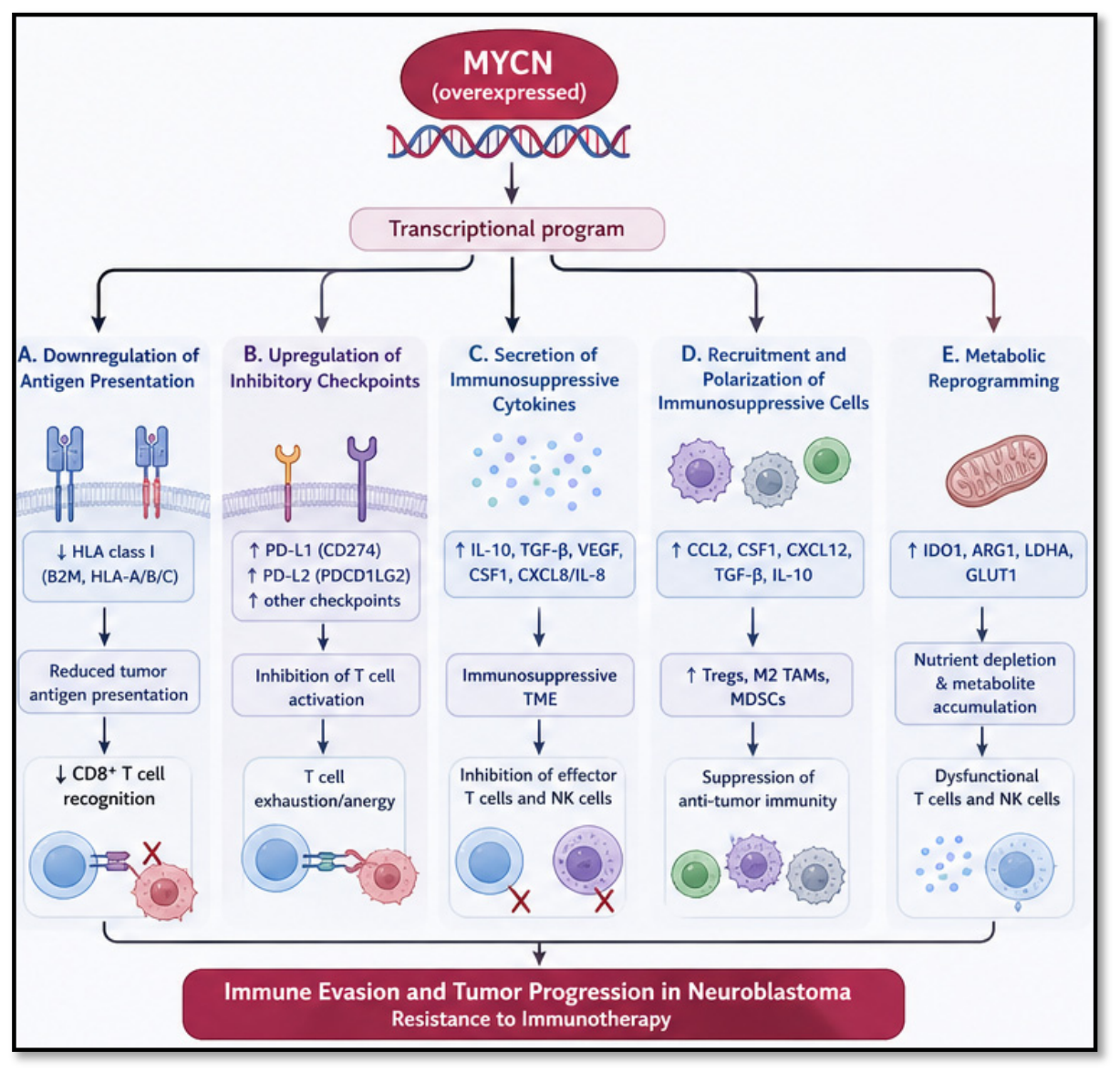
9.1. MYCN Amplification and Immune Suppression
- Suppression of Antigen Presentation—MYCN-amplified NB cells downregulate antigen-processing and presentation machinery, reducing MHC-I expression and limiting CD8+ T-cell recognition [24].
- Interference With NK-Cell Surveillance—Because MYCN-amplified tumors display low MHC-I, they might normally be more susceptible to NK-cell cytotoxicity. Further, MYCN promotes additional downstream changes, such as altered GD2 and immune-repressive signaling, that blunt NK-cell activation. This contributes to poor responsiveness to NK-based IMTs [24,161].
- Promotion of an Immunosuppressive TME—MYCN hyperactivation stimulates tumor-associated stromal remodeling, creating niches enriched for immunosuppressive cells such as TAMs. These niches support tumor angiogenesis and ECM restructuring while releasing factors that suppress cytotoxic immunity [162].
- Metabolic Immune Suppression—MYCN regulates metabolic pathways that influence immune cell viability and function. By shifting cellular metabolism toward glycolysis and altering mitochondrial networks, MYCN creates conditions in which immune effector cells are metabolically disadvantaged [162].
9.2. ALK Signaling and Immune Resistance in NB
9.3. PI3K/AKT/mTOR Pathway and Immune Modulation
9.4. RAS–MAPK Pathway and Immune Evasion
10. IMTs for NB
10.1. Anti-GD2 Therapy
10.2. CAR-T Cell Therapy in NB
10.3. Immune Checkpoint Blockade
10.3.1. TIGIT + PD-L1 Synergy and Its Limitations
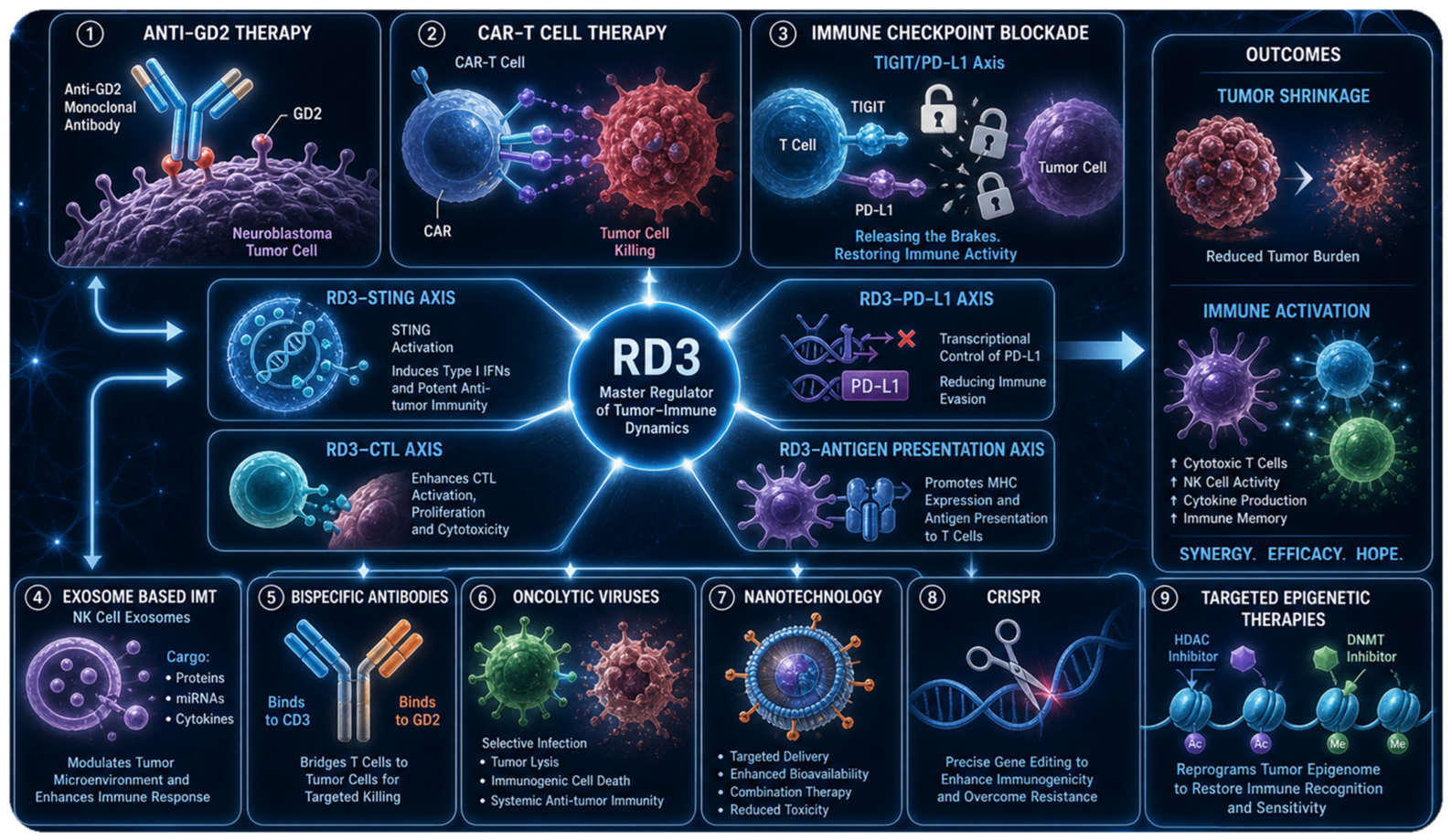
10.3.2. RD3-Centered Immune Checkpoint Blockade
RD3–STING Axis: Coupling Innate Immune Sensing to Tumor Immunogenicity
RD3–PD-L1 Axis: Transcriptional Control of Immune Checkpoint Dominance
RD3–CTL Axis: Reinstating CTL Function
RD3-Antigen Presentation Axis: Preserving Tumor Visibility
10.4. Exosome-Based IMT Approaches: Engineering NK-Cell-Derived Exosomes
10.5. Cytokine Therapy
11. Emerging Therapeutic Strategies to Overcome Immune Evasion in NB
11.1. Bispecific Antibodies
11.2. Oncolytic Viruses
11.3. Nanotechnology-Driven Approaches
11.3.1. CRISPR-Based Therapeutic Strategies
11.3.2. Targeted Epigenetic Therapies
12. Integration of Multi-Omics and Single-Cell Technologies in Understanding Immune Escape
12.1. Insights from Single-Cell RNA-Sequencing Studies
12.2. Multi-Omics Approaches Shaping Future IMT
13. Limitations
14. Conclusions
Author Contributions
Funding
Data Availability Statement
Conflicts of Interest
Abbreviations
| NB | Neuroblastoma |
| TIME | Tumor Immune Evasion |
| HR-NB | High-risk Neuroblastoma |
| NCC | Neural Crest Cells |
| TME | Tumor Microenvironment |
| TAMs | Tumor-associated Macrophages |
| MDSCs | Myeloid-Derived Suppressor Cells |
| Tc | T Lymphoid cells |
| DC | Dendritic Cells |
| NK | Natural Killer Cells |
| TDE | Tumor-Derived Exosomes |
| CT | Chemotherapy |
| RT | Radiotherapy |
| ASCT | Autologous Stem Cell Rescue |
| IMT | Incorporation of Immunotherapy |
| OS | Overall Survival |
| MRD | Minimal Residual Disease |
| MHC | Major Histocompatibility Complex |
| CSC | Cancer Stem Cell |
| scRNA-seq | Single Cell RNA Sequence |
| NO | Nitric Oxide |
| TCR | T Lymphoid cells Receptor |
| HIF | Hypoxia-Inducible Factor |
| CTL | Cytotoxic T Lymphocyte |
| APM | Antigen Processing Machinery |
| eAdo | Extracellular Adenosine |
| A2AR | A2A Adenosine Receptor |
| APCs | Antigen-Presenting Cells |
| Treg | T-regulatory cell |
| FAO | Fatty Acid Oxidation |
| OXPHOS | Oxidative Phosphorylation |
| GPX4 | Glutathione Peroxidase 4 |
| HDAC | Histone Deacetylase |
| HDACi | HDAC inhibitors |
| DNMT | DNA Methyltransferase |
| DNMTi | DNMT inhibitors |
| BET | Bromodomain and extraterminal domain |
| BETi | BET inhibitors |
| LSD1 | Lysine specific demethylase 1 |
| LSD1i | LSD1 inhibitors |
| PRC1 | Polycomb Repressive Complex 1 |
| HAT | Histone Acetyltransferase |
| PROTACs | Proteolysis-Targeting Chimeras |
| EVs | Extracellular Vehicles |
| MVB | Endosomal-Multivesicular Body |
| IL-2 | Interleukin-2 |
| PGE2 | Prostaglandin E2 |
| ARG1 | Arginase-1 |
| iNOS | Inducible Nitric Oxide Synthase |
| CSC-Exos | CSC-derived Exosomes |
| ADCC | Antibody-Dependent Cellular Cytotoxicity |
| CAR | Chimeric Antigen Receptor |
| NK-Exos | NK-cell-derived Exosomes |
| BsAbs | Bispecific Antibodies |
| Ovs | Oncolytic Viruses |
References
- De Bona, A.; Barbieri, M.; Rinaldi, N.; Esposito, S. Neuroblastoma in Childhood: Biological Insights, Risk Stratification, and Advances in Multimodal Therapy. J. Clin. Med. 2026, 15, 1101. [Google Scholar] [CrossRef]
- Johnsen, J.I.; Dyberg, C.; Wickström, M. Neuroblastoma-A Neural Crest Derived Embryonal Malignancy. Front. Mol. Neurosci. 2019, 12, 9. [Google Scholar] [CrossRef] [PubMed]
- Körber, V.; Stainczyk, S.A.; Kurilov, R.; Henrich, K.O.; Hero, B.; Brors, B.; Westermann, F.; Höfer, T. Neuroblastoma arises in early fetal development and its evolutionary duration predicts outcome. Nat. Genet. 2023, 55, 619–630. [Google Scholar] [CrossRef] [PubMed]
- Dzieran, J.; Rodriguez Garcia, A.; Westermark, U.K.; Henley, A.B.; Eyre Sánchez, E.; Träger, C.; Johansson, H.J.; Lehtiö, J.; Arsenian-Henriksson, M. MYCN-amplified neuroblastoma maintains an aggressive and undifferentiated phenotype by deregulation of estrogen and NGF signaling. Proc. Natl. Acad. Sci. USA 2018, 115, E1229–E1238. [Google Scholar] [CrossRef]
- Paolini, L.; Hussain, S.; Galardy, P.J. Chromosome instability in neuroblastoma: A pathway to aggressive disease. Front. Oncol. 2022, 12, 988972. [Google Scholar] [CrossRef]
- Mlakar, V.; Morel, E.; Mlakar, S.J.; Ansari, M.; Gumy-Pause, F. A review of the biological and clinical implications of RAS-MAPK pathway alterations in neuroblastoma. J. Exp. Clin. Cancer Res. 2021, 40, 189. [Google Scholar] [CrossRef] [PubMed]
- Thakur, A.; Dijkstra, A. Hallmarks of Neuroblastoma—Pathophysiology, Diagnosis, and Therapeutic Interventions. Cancer Nexus 2025, 1, e70007. [Google Scholar] [CrossRef]
- Joshi, S. Targeting the Tumor Microenvironment in Neuroblastoma: Recent Advances and Future Directions. Cancers 2020, 12, 2057. [Google Scholar] [CrossRef]
- Feng, C.; Li, T.; Xiao, J.; Wang, J.; Meng, X.; Niu, H.; Jiang, B.; Huang, L.; Deng, X.; Yan, X.; et al. Tumor Microenvironment Profiling Identifies Prognostic Signatures and Suggests Immunotherapeutic Benefits in Neuroblastoma. Front. Cell Dev. Biol. 2022, 10, 814836. [Google Scholar] [CrossRef]
- Choo, H.S.; Yu, T.; Pham, T.; Singh, N.; Joshi, S. Myeloid derived suppressor cells in neuroblastoma: Mechanisms of immune evasion and therapeutic opportunities. Front. Immunol. 2026, 17, 1773622. [Google Scholar] [CrossRef]
- Qiu, S.; Hu, Y.; Wang, Y.; Xian, H.; Yin, Q. Integrative analysis of single-cell and bulk RNA sequencing data for discovery of senescent TAMs prognostic characteristics in neuroblastoma. BMC Cancer 2026, 26, 180. [Google Scholar] [CrossRef]
- Wienke, J.; Visser, L.L.; Kholosy, W.M.; Keller, K.M.; Barisa, M.; Poon, E.; Munnings-Tomes, S.; Himsworth, C.; Calton, E.; Rodriguez, A.; et al. Integrative analysis of neuroblastoma by single-cell RNA sequencing identifies the NECTIN2-TIGIT axis as a target for immunotherapy. Cancer Cell 2024, 42, 283–300.e8. [Google Scholar] [CrossRef]
- Rivera, Z.; Escutia, C.; Madonna, M.B.; Gupta, K.H. Biological Insight and Recent Advancement in the Treatment of Neuroblastoma. Int. J. Mol. Sci. 2023, 24, 8470. [Google Scholar] [CrossRef]
- Tufail, M.; Jiang, C.H.; Li, N. Immune evasion in cancer: Mechanisms and cutting-edge therapeutic approaches. Signal Transduct. Target. Ther. 2025, 10, 227. [Google Scholar] [CrossRef]
- Subramanian, P.; Mohanvelu, S.; Somasundaram, D.B.; Aravindan, S.; Aravindan, N. Acquired RD3 loss regulates immune surveillance in high-risk and therapy defying progressive neuroblastoma. Cancer Commun. 2024, 44, 1427–1430. [Google Scholar] [CrossRef] [PubMed]
- Menard, M.; Yoda, H.; Nasholm, N.; Barata, M.J.; Wang, L.; Simonds, E.F.; Lu, E.D.; Wong-Michalak, S.; McHenry, L.; Farrel, A.; et al. Myeloid-targeting immunotherapies overcome inhibitory barriers in immune-evasive neuroblastoma. J. Exp. Med. 2025, 222, e20231417. [Google Scholar] [CrossRef] [PubMed]
- Srinivasan, P.; Wu, X.; Basu, M.; Rossi, C.; Sandler, A.D. PD-L1 checkpoint inhibition and anti-CTLA-4 whole tumor cell vaccination counter adaptive immune resistance: A mouse neuroblastoma model that mimics human disease. PLoS Med. 2018, 15, e1002497. [Google Scholar] [CrossRef] [PubMed]
- Zhang, H.; Dai, Z.; Wu, W.; Wang, Z.; Zhang, N.; Zhang, L.; Zeng, W.J.; Liu, Z.; Cheng, Q. Regulatory mechanisms of immune checkpoints PD-L1 and CTLA-4 in cancer. J. Exp. Clin. Cancer Res. 2021, 40, 184. [Google Scholar] [CrossRef]
- Du, X.; Dong, R.; Dong, K. Factors Influencing Immunotherapy Response in Neuroblastoma: From Tumor Microenvironment to Combination Strategies. Cells 2026, 15, 441. [Google Scholar] [CrossRef]
- Schuurmans, F.; Wittner, A.; van den Bijgaart, R.J.E.; Tahk, S.; Boros, M.G.M.; Looman, M.W.G.; Fenn, N.C.; Humpe, A.; Hopfner, K.P.; Adema, G.J. Development of aGD2-SIRPalpha Fusion Antibodies Targeting Neuroblastoma and the Innate Immune Checkpoint Receptor CD47. Mol. Cancer Ther. 2026, 25, 799–813. [Google Scholar] [CrossRef]
- Kennedy, P.T.; Zannoupa, D.; Son, M.H.; Dahal, L.N.; Woolley, J.F. Neuroblastoma: An ongoing cold front for cancer immunotherapy. J. Immunother. Cancer 2023, 11, e007798. [Google Scholar] [CrossRef]
- Wang, X.; He, J.; Ding, G.; Tang, Y.; Wang, Q. Overcoming resistance to PD-1 and CTLA-4 blockade mechanisms and therapeutic strategies. Front. Immunol. 2025, 16, 1688699. [Google Scholar] [CrossRef]
- Maggi, E.; Landolina, N.; Munari, E.; Mariotti, F.R.; Tumino, N.; Vacca, P.; Azzarone, B.; Moretta, L. T cells in the microenvironment of solid pediatric tumors: The case of neuroblastoma. Front. Immunol. 2025, 16, 1544137. [Google Scholar] [CrossRef]
- Raieli, S.; Di Renzo, D.; Lampis, S.; Amadesi, C.; Montemurro, L.; Pession, A.; Hrelia, P.; Fischer, M.; Tonelli, R. MYCN Drives a Tumor Immunosuppressive Environment Which Impacts Survival in Neuroblastoma. Front. Oncol. 2021, 11, 625207. [Google Scholar] [CrossRef]
- Li, Y.; Lan, T.; Liang, R.; Liu, L. Inhibition of CDK1 Promotes Immunogenic Cell Death in Neuroblastoma. Cancer Manag. Res. 2026, 18, 569214. [Google Scholar] [CrossRef] [PubMed]
- Lee, C.F.; Pienta, K.J.; Amend, S.R. The involvement of cyclin-dependent kinase 7 (CDK7) and 9 (CDK9) in coordinating transcription and cell cycle checkpoint regulation. Cell Cycle 2024, 23, 962–974. [Google Scholar] [CrossRef]
- Song, G.; Liu, J.; Tang, X.; Zhong, J.; Zeng, Y.; Zhang, X.; Zhou, J.; Zhou, J.; Cao, L.; Zhang, Q.; et al. Cell cycle checkpoint revolution: Targeted therapies in the fight against malignant tumors. Front. Pharmacol. 2024, 15, 1459057. [Google Scholar] [CrossRef] [PubMed]
- Mao, C.; Poimenidou, M.; Craig, B.T. Current Knowledge and Perspectives of Immunotherapies for Neuroblastoma. Cancers 2024, 16, 2865. [Google Scholar] [CrossRef] [PubMed]
- Morini, M.; Vitale, C.; Ardito, M.; Dondero, A.; Cortese, K.; Bottino, C.; Castriconi, R. Exosomes and immune modulation: Implications for neuroblastoma immunotherapy. Front. Immunol. 2025, 16, 1600062. [Google Scholar] [CrossRef]
- Song, L.; Ara, T.; Wu, H.W.; Woo, C.W.; Reynolds, C.P.; Seeger, R.C.; DeClerck, Y.A.; Thiele, C.J.; Sposto, R.; Metelitsa, L.S. Oncogene MYCN regulates localization of NKT cells to the site of disease in neuroblastoma. J. Clin. Investig. 2007, 117, 2702–2712. [Google Scholar] [CrossRef]
- Jiménez, C.; Moreno, L.; Segura, M.F. Epigenetic therapies for neuroblastoma: Immunogenicity awakens. Mol. Oncol. 2023, 17, 718–721. [Google Scholar] [CrossRef]
- Vanichapol, T.; Chutipongtanate, S.; Anurathapan, U.; Hongeng, S. Immune Escape Mechanisms and Future Prospects for Immunotherapy in Neuroblastoma. Biomed. Res. Int. 2018, 2018, 1812535. [Google Scholar] [CrossRef] [PubMed]
- Uemura, S.; Ishida, T.; Thwin, K.K.M.; Yamamoto, N.; Tamura, A.; Kishimoto, K.; Hasegawa, D.; Kosaka, Y.; Nino, N.; Lin, K.S.; et al. Dynamics of Minimal Residual Disease in Neuroblastoma Patients. Front. Oncol. 2019, 9, 455. [Google Scholar] [CrossRef] [PubMed]
- Verhoeven, B.M.; Mei, S.; Olsen, T.K.; Gustafsson, K.; Valind, A.; Lindstrom, A.; Gisselsson, D.; Fard, S.S.; Hagerling, C.; Kharchenko, P.V.; et al. The immune cell atlas of human neuroblastoma. Cell Rep. Med. 2022, 3, 100657. [Google Scholar] [CrossRef]
- Pelosi, A.; Fiore, P.F.; Di Matteo, S.; Veneziani, I.; Caruana, I.; Ebert, S.; Munari, E.; Moretta, L.; Maggi, E.; Azzarone, B. Pediatric Tumors-Mediated Inhibitory Effect on NK Cells: The Case of Neuroblastoma and Wilms’ Tumors. Cancers 2021, 13, 2374. [Google Scholar] [CrossRef]
- Rados, M.; Landegger, A.; Schmutzler, L.; Rabidou, K.; Taschner-Mandl, S.; Fetahu, I.S. Natural killer cells in neuroblastoma: Immunological insights and therapeutic perspectives. Cancer Metastasis Rev. 2024, 43, 1401–1417. [Google Scholar] [CrossRef]
- Subramanian, P.; Mohanvelu, S.; Aravindan, S.; Jahir Hussain, A.P.; Narayanan, S.; Salim, S.; Periyasamy, L.; Aravindan, N. Cellular Identity Crisis: RD3 Loss Fuels Plasticity and Immune Silence in Progressive Neuroblastoma. Adv. Sci. 2026, 13, e19586. [Google Scholar] [CrossRef]
- Chen, J.; Zhai, X.; Kuang, H.; Zhang, A. Prediction of neuroblastoma prognosis with a novel T-cell exhaustion-related gene signature. Sci. Rep. 2025, 15, 17885. [Google Scholar] [CrossRef] [PubMed]
- Melaiu, O.; Chierici, M.; Gragera, P.; Lazzaro, N.; Petrilli, L.L.; Wienke, J.; Bergsma, F.J.; Verhoeven, B.M.; De Stefanis, C.; D’Oria, V.; et al. Mapping B cells and the immune landscape of tertiary lymphoid structures reveals their clinical impact in neuroblastoma. J. Immunother. Cancer 2025, 13, e012860. [Google Scholar] [CrossRef]
- Schaafsma, E.; Jiang, C.; Cheng, C. B cell infiltration is highly associated with prognosis and an immune-infiltrated tumor microenvironment in neuroblastoma. J. Cancer Metastasis Treat. 2021, 7, 34. [Google Scholar] [CrossRef]
- Dondero, A.; Pastorino, F.; Della Chiesa, M.; Corrias, M.V.; Morandi, F.; Pistoia, V.; Olive, D.; Bellora, F.; Locatelli, F.; Castellano, A.; et al. PD-L1 expression in metastatic neuroblastoma as an additional mechanism for limiting immune surveillance. Oncoimmunology 2016, 5, e1064578. [Google Scholar] [CrossRef]
- Shokouhfar, M.; Darzi, A.; Ameli, F.; Nami, M.T.; Khorasani, S.K.; Eini, P.; Vanan, A.G.; Bahrami, N. Immunotherapeutic advances in pediatric neuroblastoma: Overcoming resistance through biomarker-guided combinations. Biomed. Pharmacother. 2026, 196, 119020. [Google Scholar] [CrossRef]
- Dhamdhere, M.R.; Spiegelman, V.S. Extracellular vesicles in neuroblastoma: Role in progression, resistance to therapy and diagnostics. Front. Immunol. 2024, 15, 1385875. [Google Scholar] [CrossRef]
- Nakata, R.; Shimada, H.; Fernandez, G.E.; Fanter, R.; Fabbri, M.; Malvar, J.; Zimmermann, P.; DeClerck, Y.A. Contribution of neuroblastoma-derived exosomes to the production of pro-tumorigenic signals by bone marrow mesenchymal stromal cells. J. Extracell. Vesicles 2017, 6, 1332941. [Google Scholar] [CrossRef]
- Morrissey, S.M.; Zhang, F.; Ding, C.; Montoya-Durango, D.E.; Hu, X.; Yang, C.; Wang, Z.; Yuan, F.; Fox, M.; Zhang, H.; et al. Tumor-derived exosomes drive immunosuppressive macrophages in a pre-metastatic niche through glycolytic dominant metabolic reprogramming. Cell Metab. 2021, 33, 2040–2058.e2010. [Google Scholar] [CrossRef]
- Huertas-Castaño, C.; Gómez-Muñoz, M.A.; Pardal, R.; Vega, F.M. Hypoxia in the Initiation and Progression of Neuroblastoma Tumours. Int. J. Mol. Sci. 2019, 21, 39. [Google Scholar] [CrossRef] [PubMed]
- Påhlman, S.; Mohlin, S. Hypoxia and hypoxia-inducible factors in neuroblastoma. Cell Tissue Res. 2018, 372, 269–275. [Google Scholar] [CrossRef]
- Kennedy, P.R.; Arvindam, U.S.; Phung, S.K.; Ettestad, B.; Feng, X.; Li, Y.; Kile, Q.M.; Hinderlie, P.; Khaw, M.; Huang, R.S.; et al. Metabolic programs drive function of therapeutic NK cells in hypoxic tumor environments. Sci. Adv. 2024, 10, eadn1849. [Google Scholar] [CrossRef] [PubMed]
- Yu, W.; Biyik-Sit, R.; Uzun, Y.; Chen, C.-H.; Thadi, A.; Sussman, J.H.; Pang, M.; Wu, C.-Y.; Grossmann, L.D.; Gao, P. Longitudinal single-cell multiomic atlas of high-risk neuroblastoma reveals chemotherapy-induced tumor microenvironment rewiring. Nat. Genet. 2025, 57, 1142–1154. [Google Scholar] [CrossRef]
- Ma, Y.; Su, Y.; Huang, J.; Zhao, W.; Huang, C.; Qin, J.; You, S.; Hu, Y.; Ni, X. The changes of immune function after neuroblastoma chemotherapy and the prediction of potential immune targets. BMC Med. Genom. 2025, 18, 132. [Google Scholar] [CrossRef] [PubMed]
- Gershan, J.A.; Barr, K.M.; Weber, J.J.; Jing, W.; Johnson, B.D. Immune modulating effects of cyclophosphamide and treatment with tumor lysate/CpG synergize to eliminate murine neuroblastoma. J. Immunother. Cancer 2015, 3, 24. [Google Scholar] [CrossRef]
- Seier, J.A.; Reinhardt, J.; Saraf, K.; Ng, S.S.; Layer, J.P.; Corvino, D.; Althoff, K.; Giordano, F.A.; Schramm, A.; Fischer, M.; et al. Druggable epigenetic suppression of interferon-induced chemokine expression linked to MYCN amplification in neuroblastoma. J. Immunother. Cancer 2021, 9, e001335. [Google Scholar] [CrossRef]
- Giudice, A.M.; Roth, S.L.; Matlaga, S.; Cresswell-Clay, E.; Mishra, P.; Schurch, P.M.; Boateng-Antwi, K.A.M.; Samanta, M.; Pascual-Pasto, G.; Zecchino, V.; et al. Reprogramming the neuroblastoma tumor immune microenvironment to enhance GPC2 CAR T cells. Mol. Ther. 2025, 33, 4552–4569. [Google Scholar] [CrossRef]
- Muhlethaler-Mottet, A.; Liberman, J.; Ascencao, K.; Flahaut, M.; Balmas Bourloud, K.; Yan, P.; Jauquier, N.; Gross, N.; Joseph, J.M. The CXCR4/CXCR7/CXCL12 Axis Is Involved in a Secondary but Complex Control of Neuroblastoma Metastatic Cell Homing. PLoS ONE 2015, 10, e0125616. [Google Scholar] [CrossRef]
- Pistoia, V.; Morandi, F.; Bianchi, G.; Pezzolo, A.; Prigione, I.; Raffaghello, L. Immunosuppressive microenvironment in neuroblastoma. Front. Oncol. 2013, 3, 167. [Google Scholar] [CrossRef]
- Valind, A.; Gisselsson, D. Immune checkpoint inhibitors in Wilms’ tumor and Neuroblastoma: What now? Cancer Rep. 2021, 4, e1397. [Google Scholar] [CrossRef]
- Taylor, B.C.; Balko, J.M. Mechanisms of MHC-I Downregulation and Role in Immunotherapy Response. Front. Immunol. 2022, 13, 844866. [Google Scholar] [CrossRef]
- Leone, P.; Shin, E.-C.; Perosa, F.; Vacca, A.; Dammacco, F.; Racanelli, V. MHC Class I Antigen Processing and Presenting Machinery: Organization, Function, and Defects in Tumor Cells. JNCI J. Natl. Cancer Inst. 2013, 105, 1172–1187. [Google Scholar] [CrossRef]
- Shklovskaya, E.; Rizos, H. MHC Class I Deficiency in Solid Tumors and Therapeutic Strategies to Overcome It. Int. J. Mol. Sci. 2021, 22, 6741. [Google Scholar] [CrossRef]
- Spel, L.; Schiepers, A.; Boes, M. NFκB and MHC-1 Interplay in Neuroblastoma and Immunotherapy. Trends Cancer 2018, 4, 715–717. [Google Scholar] [CrossRef]
- Dhatchinamoorthy, K.; Colbert, J.D.; Rock, K.L. Cancer Immune Evasion Through Loss of MHC Class I Antigen Presentation. Front. Immunol. 2021, 12, 636568. [Google Scholar] [CrossRef]
- Sari, G.; Rock, K.L. Tumor immune evasion through loss of MHC class-I antigen presentation. Curr. Opin. Immunol. 2023, 83, 102329. [Google Scholar] [CrossRef]
- Reid, G.S.; Shan, X.; Coughlin, C.M.; Lassoued, W.; Pawel, B.R.; Wexler, L.H.; Thiele, C.J.; Tsokos, M.; Pinkus, J.L.; Pinkus, G.S.; et al. Interferon-gamma-dependent infiltration of human T cells into neuroblastoma tumors in vivo. Clin. Cancer Res. 2009, 15, 6602–6608. [Google Scholar] [CrossRef]
- Cornel, A.M.; Dunnebach, E.; Hofman, D.A.; Das, S.; Sengupta, S.; van den Ham, F.; Wienke, J.; Strijker, J.G.M.; van den Beemt, D.; Essing, A.H.W.; et al. Epigenetic modulation of neuroblastoma enhances T cell and NK cell immunogenicity by inducing a tumor-cell lineage switch. J. Immunother. Cancer 2022, 10, e005002. [Google Scholar] [CrossRef]
- Wagner, L.M.; Adams, V.R. Targeting the PD-1 pathway in pediatric solid tumors and brain tumors. Onco Targets Ther. 2017, 10, 2097–2106. [Google Scholar] [CrossRef]
- Mimura, K.; Teh, J.L.; Okayama, H.; Shiraishi, K.; Kua, L.F.; Koh, V.; Smoot, D.T.; Ashktorab, H.; Oike, T.; Suzuki, Y.; et al. PD-L1 expression is mainly regulated by interferon gamma associated with JAK-STAT pathway in gastric cancer. Cancer Sci. 2018, 109, 43–53. [Google Scholar] [CrossRef]
- Chauvin, J.-M.; Zarour, H.M. TIGIT in cancer immunotherapy. J. Immunother. Cancer 2020, 8, e000957. [Google Scholar] [CrossRef]
- Cui, H.; Hamad, M.; Elkord, E. TIGIT in cancer: From mechanism of action to promising immunotherapeutic strategies. Cell Death Dis. 2025, 16, 664. [Google Scholar] [CrossRef]
- El-Hajjar, M.; Gerhardt, L.; Hong, M.M.Y.; Krishnamoorthy, M.; Figueredo, R.; Zheng, X.; Koropatnick, J.; Maleki Vareki, S. Inducing mismatch repair deficiency sensitizes immune-cold neuroblastoma to anti-CTLA4 and generates broad anti-tumor immune memory. Mol. Ther. 2023, 31, 535–551. [Google Scholar] [CrossRef]
- Borriello, L.; Seeger, R.C.; Asgharzadeh, S.; DeClerck, Y.A. More than the genes, the tumor microenvironment in neuroblastoma. Cancer Lett. 2016, 380, 304–314. [Google Scholar] [CrossRef]
- Burga, R.A.; Yvon, E.; Chorvinsky, E.; Fernandes, R.; Cruz, C.R.Y.; Bollard, C.M. Engineering the TGFβ Receptor to Enhance the Therapeutic Potential of Natural Killer Cells as an Immunotherapy for Neuroblastoma. Clin. Cancer Res. 2019, 25, 4400–4412. [Google Scholar] [CrossRef]
- Hoffmann, A.; Cheng, G.; Baltimore, D. NF-κB: Master regulator of cellular responses in health and disease. Immun. Inflamm. 2025, 1, 2. [Google Scholar] [CrossRef]
- Peggion, S.; Najem, S.; Kolman, J.P.; Reinshagen, K.; Pagerols Raluy, L. Revisiting Neuroblastoma: Nrf2, NF-kappaB and Phox2B as a Promising Network in Neuroblastoma. Curr. Issues Mol. Biol. 2024, 46, 3193–3208. [Google Scholar] [CrossRef]
- Wang-Bishop, L.; Wehbe, M.; Shae, D.; James, J.; Hacker, B.C.; Garland, K.; Chistov, P.P.; Rafat, M.; Balko, J.M.; Wilson, J.T. Potent STING activation stimulates immunogenic cell death to enhance antitumor immunity in neuroblastoma. J. Immunother. Cancer 2020, 8, e000282. [Google Scholar] [CrossRef]
- Ren, M.; Ai, Z.E.; Zhang, Y.; Shi, L.; Liu, Y.; Liu, H.; Shen, H.; Yao, X.; Yan, Z. cGAS-STING signaling in the tumor microenvironment induces myeloid cell activation and favors T cell-mediated antitumor immunity. Cancer Biol. Ther. 2025, 26, 2585562. [Google Scholar] [CrossRef]
- Riitano, G.; Manganelli, V.; Capozzi, A.; Mattei, V.; Recalchi, S.; Martellucci, S.; Longo, A.; Misasi, R.; Garofalo, T.; Sorice, M. LRP6 mediated signal transduction pathway triggered by tissue plasminogen activator acts through lipid rafts in neuroblastoma cells. J. Cell Commun. Signal 2020, 14, 315–323. [Google Scholar] [CrossRef]
- Manganelli, V.; Misasi, R.; Riitano, G.; Capozzi, A.; Mattei, V.; Caglar, T.R.; Ialongo, D.; Madia, V.N.; Messore, A.; Costi, R.; et al. Role of a Novel Heparanase Inhibitor on the Balance between Apoptosis and Autophagy in U87 Human Glioblastoma Cells. Cells 2023, 12, 1891. [Google Scholar] [CrossRef]
- Masih, K.E.; Wei, J.S.; Milewski, D.; Khan, J. Exploring and Targeting the Tumor Immune Microenvironment of Neuroblastoma. J. Cell. Immunol. 2021, 3, 305–316. [Google Scholar] [CrossRef]
- Cerezo, M.; Rocchi, S. Cancer cell metabolic reprogramming: A keystone for the response to immunotherapy. Cell Death Dis. 2020, 11, 964. [Google Scholar] [CrossRef]
- Wang, X.; Yang, J.; Bian, H.; Yang, H. Development of A novel ferroptosis-related prognostic signature with multiple significance in paediatric neuroblastoma. Front. Pediatr. 2023, 11, 1067187. [Google Scholar] [CrossRef]
- Tu, C.; Tan, C.W.; Monkman, J.; Almeida, A.C.; Antonio-Carreon, G.; Omer, N.; Hull, G.; Chung, K.; Mehdi, A.M.; Salerno, A.; et al. Spatial multi-omics characterization of neuroblastoma reveals ferroptosis-associated metabolic features in high-risk tumors. Genome Med. 2026, 18, 35. [Google Scholar] [CrossRef]
- Chang, C.H.; Qiu, J.; O’Sullivan, D.; Buck, M.D.; Noguchi, T.; Curtis, J.D.; Chen, Q.; Gindin, M.; Gubin, M.M.; van der Windt, G.J.; et al. Metabolic Competition in the Tumor Microenvironment Is a Driver of Cancer Progression. Cell 2015, 162, 1229–1241. [Google Scholar] [CrossRef]
- Li, S.; Zhang, Y.; Tong, H.; Sun, H.; Liao, H.; Li, Q.; Ma, X. Metabolic regulation of immunity in the tumor microenvironment. Cell Rep. 2025, 44, 116463. [Google Scholar] [CrossRef]
- Liang, P.; Li, Z.; Chen, Z.; Chen, Z.; Jin, T.; He, F.; Chen, X.; Gou, H.; Yang, K. Metabolic Reprogramming of Glycolysis, Lipids, and Amino Acids in Tumors: Impact on CD8+ T Cell Function and Targeted Therapeutic Strategies. FASEB J. 2025, 39, e70520. [Google Scholar] [CrossRef]
- Wang, X.; Xiong, D.; Cui, S.; Duan, B.; Ding, G.; Huang, Y.; Wang, Q. Lactate signaling and immune suppression in tumors: Mechanisms and therapeutic implications. Cell. Oncol. 2026, 49, 75. [Google Scholar] [CrossRef]
- Jennings, M.R.; Munn, D.; Blazeck, J. Immunosuppressive metabolites in tumoral immune evasion: Redundancies, clinical efforts, and pathways forward. J. Immunother. Cancer 2021, 9, e003013. [Google Scholar] [CrossRef]
- Su, R.; Shao, Y.; Huang, M.; Liu, D.; Yu, H.; Qiu, Y. Immunometabolism in cancer: Basic mechanisms and new targeting strategy. Cell Death Discov. 2024, 10, 236. [Google Scholar] [CrossRef]
- Vazquez-Cintron, E.J.; Monu, N.R.; Frey, A.B. Tumor-induced disruption of proximal TCR-mediated signal transduction in tumor-infiltrating CD8+ lymphocytes inactivates antitumor effector phase. J. Immunol. 2010, 185, 7133–7140. [Google Scholar] [CrossRef]
- Jia, H.; Yang, H.; Xiong, H.; Luo, K.Q. NK cell exhaustion in the tumor microenvironment. Front. Immunol. 2023, 14, 1303605. [Google Scholar] [CrossRef]
- Lee, J.-H.; Choi, S.-Y.; Jung, N.-C.; Song, J.-Y.; Seo, H.G.; Lee, H.S.; Lim, D.-S. The effect of the tumor microenvironment and tumor-derived metabolites on dendritic cell function. J. Cancer 2020, 11, 769. [Google Scholar] [CrossRef]
- Marbaniang, C.; Kma, L.; Sharan, R.N. Immunometabolism in the Tumor Microenvironment: Dual Role in Modulating Anti-Tumor Immunity and Tumor Progression. Asian Pac. J. Cancer Prev. 2025, 26, 3881–3893. [Google Scholar] [CrossRef] [PubMed]
- Zhang, S.; Lv, K.; Liu, Z.; Zhao, R.; Li, F. Fatty acid metabolism of immune cells: A new target of tumour immunotherapy. Cell Death Discov. 2024, 10, 39. [Google Scholar] [CrossRef]
- Zeineldin, M.; Federico, S.; Chen, X.; Fan, Y.; Xu, B.; Stewart, E.; Zhou, X.; Jeon, J.; Griffiths, L.; Nguyen, R.; et al. MYCN amplification and ATRX mutations are incompatible in neuroblastoma. Nat. Commun. 2020, 11, 913. [Google Scholar] [CrossRef]
- Agostini, M.; Melino, G.; Habeb, B.; Calandria, J.M.; Bazan, N.G. Targeting lipid metabolism in cancer: Neuroblastoma. Cancer Metastasis Rev. 2022, 41, 255–260. [Google Scholar] [CrossRef]
- Li, J.; Huang, C.; Tang, P.; Wu, R.; Wu, Q.; Zhang, C. The distinct roles of ROS in tumor immunity: From mechanisms to immunotherapeutic applications. J. Hematol. Oncol. 2026, 19, 16. [Google Scholar] [CrossRef]
- Liu, Z.; Ma, Z.; Yang, K.; Fan, H. Ferroptosis in Glioblastoma and Neuroblastoma: Molecular Mechanisms and Novel Therapeutic Strategies. Curr. Issues Mol. Biol. 2026, 48, 267. [Google Scholar] [CrossRef]
- Koeken, I.; Walravens, M.; Fernández-Acosta, R.; Van Hoyweghen, R.; Vintea, I.; Kong, Y.; Golba, B.; Dehairs, J.; Talebi, A.; Swinnen, J.V.; et al. Dual lipid modulation overcomes ferroptosis resistance in high-risk neuroblastoma. Cell Death Differ. 2025, 33, 903–913. [Google Scholar] [CrossRef] [PubMed]
- Wang, X.; Liu, Z.; Ma, L.; Yu, H. Ferroptosis and its emerging role in tumor. Biophys. Rep. 2021, 7, 280–294. [Google Scholar] [CrossRef]
- Jiang, X.; Stockwell, B.R.; Conrad, M. Ferroptosis: Mechanisms, biology and role in disease. Nat. Rev. Mol. Cell Biol. 2021, 22, 266–282. [Google Scholar] [CrossRef]
- Veglia, F.; Perego, M.; Gabrilovich, D. Myeloid-derived suppressor cells coming of age. Nat. Immunol. 2018, 19, 108–119. [Google Scholar] [CrossRef] [PubMed]
- Wei, G.; Li, B.; Huang, M.; Lv, M.; Liang, Z.; Zhu, C.; Ge, L.; Chen, J. Polarization of Tumor Cells and Tumor-Associated Macrophages: Molecular Mechanisms and Therapeutic Targets. MedComm 2025, 6, e70372. [Google Scholar] [CrossRef]
- Lv, Y.; Li, Z.; Liu, S.; Zhou, Z.; Song, J.; Ba, Y.; Weng, S.; Zuo, A.; Xu, H.; Luo, P.; et al. Metabolic checkpoints in immune cell reprogramming: Rewiring immunometabolism for cancer therapy. Mol. Cancer 2025, 24, 210. [Google Scholar] [CrossRef] [PubMed]
- Banerjee, D.; Bagchi, S.; Liu, Z.; Chou, H.-C.; Xu, M.; Sun, M.; Aloisi, S.; Vaksman, Z.; Diskin, S.J.; Zimmerman, M.; et al. Lineage specific transcription factor waves reprogram neuroblastoma from self-renewal to differentiation. Nat. Commun. 2024, 15, 3432. [Google Scholar] [CrossRef] [PubMed]
- Henrich, K.O.; Bender, S.; Saadati, M.; Dreidax, D.; Gartlgruber, M.; Shao, C.; Herrmann, C.; Wiesenfarth, M.; Parzonka, M.; Wehrmann, L.; et al. Integrative Genome-Scale Analysis Identifies Epigenetic Mechanisms of Transcriptional Deregulation in Unfavorable Neuroblastomas. Cancer Res. 2016, 76, 5523–5537. [Google Scholar] [CrossRef]
- Andrade-Perez, V.; Raynal, N.J. Interplay Between the Epigenome, the Microenvironment, and the Immune System in Neuroblastoma. Cancers 2025, 17, 1812. [Google Scholar] [CrossRef]
- Liu, K.; Li, Y.; Shen, M.; Xu, W.; Wu, S.; Yang, X.; Zhang, B.; Lin, N. Epigenetic Regulation of Stromal and Immune Cells and Therapeutic Targets in the Tumor Microenvironment. Biomolecules 2025, 15, 71. [Google Scholar] [CrossRef]
- Epp, S.; Chuah, S.M.; Halasz, M. Epigenetic Dysregulation in MYCN-Amplified Neuroblastoma. Int. J. Mol. Sci. 2023, 24, 17085. [Google Scholar] [CrossRef] [PubMed]
- Oliveira, E.A.; Milite, S.; Fernandez-Mateos, J.; Cresswell, G.D.; Yara-Romero, E.; Vlachogiannis, G.; Chen, B.; James, C.T.; Patruno, L.; Ascolani, G.; et al. Epigenetic Heritability of Cell Plasticity Drives Cancer Drug Resistance through a One-to-Many Genotype-to-Phenotype Paradigm. Cancer Res. 2025, 85, 2921–2938. [Google Scholar] [CrossRef]
- Bhatt, D.; Ghosh, S. Regulation of the NF-κB-Mediated Transcription of Inflammatory Genes. Front. Immunol. 2014, 5, 71. [Google Scholar] [CrossRef]
- Wang, N.; Ma, T.; Yu, B. Targeting epigenetic regulators to overcome drug resistance in cancers. Signal Transduct. Target. Ther. 2023, 8, 69. [Google Scholar] [CrossRef]
- Tao, L.; Zhou, Y.; Luo, Y.; Qiu, J.; Xiao, Y.; Zou, J.; Zhang, Y.; Liu, X.; Yang, X.; Gou, K.; et al. Epigenetic regulation in cancer therapy: From mechanisms to clinical advances. MedComm–Oncology 2024, 3, e59. [Google Scholar] [CrossRef]
- Woan, K.V.; Sahakian, E.; Sotomayor, E.M.; Seto, E.; Villagra, A. Modulation of antigen-presenting cells by HDAC inhibitors: Implications in autoimmunity and cancer. Immunol. Cell Biol. 2012, 90, 55–65. [Google Scholar] [CrossRef]
- Phimmachanh, M.; Han, J.Z.R.; O’Donnell, Y.E.I.; Latham, S.L.; Croucher, D.R. Histone Deacetylases and Histone Deacetylase Inhibitors in Neuroblastoma. Front. Cell Dev. Biol. 2020, 8, 578770. [Google Scholar] [CrossRef] [PubMed]
- Lai, T.J.; Prins, R.M.; Everson, R.G. Epigenetic Reprogramming with DNMT Inhibitors: A Multi-Mechanistic Approach to Enhance Immunotherapy in Glioblastoma. J. Cancer Immunol. 2025, 7, 39–44. [Google Scholar] [CrossRef]
- Zhu, D.; Zeng, S.; Su, C.; Li, J.; Xuan, Y.; Lin, Y.; Xu, E.; Fan, Q. The interaction between DNA methylation and tumor immune microenvironment: From the laboratory to clinical applications. Clin. Epigenetics 2024, 16, 24. [Google Scholar] [CrossRef] [PubMed]
- Puissant, A.; Frumm, S.M.; Alexe, G.; Bassil, C.F.; Qi, J.; Chanthery, Y.H.; Nekritz, E.A.; Zeid, R.; Gustafson, W.C.; Greninger, P.; et al. Targeting MYCN in neuroblastoma by BET bromodomain inhibition. Cancer Discov. 2013, 3, 308–323. [Google Scholar] [CrossRef]
- Zhang, M.; Wang, G.; Ma, Z.; Xiong, G.; Wang, W.; Huang, Z.; Wan, Y.; Xu, X.; Hoyle, R.G.; Yi, C.; et al. BET inhibition triggers antitumor immunity by enhancing MHC class I expression in head and neck squamous cell carcinoma. Mol. Ther. 2022, 30, 3394–3413. [Google Scholar] [CrossRef]
- Ferraro, E.; Macrì, E.; Zwergel, C.; Lambona, C.; Barillari, G.; Marchese, C.; Locatelli, F.; Rota, R.; Cassandri, M.; Pomella, S. Inhibition of bromodomain and extra-terminal motif (BET) proteins in pediatric sarcoma: A systematic review of in vitro and in vivo studies. Drug Discov. Today 2025, 30, 104516. [Google Scholar] [CrossRef]
- Servidei, T.; Meco, D.; Martini, M.; Battaglia, A.; Granitto, A.; Buzzonetti, A.; Babini, G.; Massimi, L.; Tamburrini, G.; Scambia, G.; et al. The BET Inhibitor OTX015 Exhibits In Vitro and In Vivo Antitumor Activity in Pediatric Ependymoma Stem Cell Models. Int. J. Mol. Sci. 2021, 22, 1877. [Google Scholar] [CrossRef]
- Flora, P.; Dalal, G.; Cohen, I.; Ezhkova, E. Polycomb Repressive Complex(es) and Their Role in Adult Stem Cells. Genes 2021, 12, 1485. [Google Scholar] [CrossRef]
- Saigusa, N.; Hirai, H.; Tada, Y.; Kawakita, D.; Nakaguro, M.; Tsukahara, K.; Kano, S.; Ozawa, H.; Kondo, T.; Okami, K.; et al. The Role of the EZH2 and H3K27me3 Expression as a Predictor of Clinical Outcomes in Salivary Duct Carcinoma Patients: A Large-Series Study with Emphasis on the Relevance to the Combined Androgen Blockade and HER2-Targeted Therapy. Front. Oncol. 2021, 11, 779882. [Google Scholar] [CrossRef] [PubMed]
- Bownes, L.V.; Williams, A.P.; Marayati, R.; Stafman, L.L.; Markert, H.; Quinn, C.H.; Wadhwani, N.; Aye, J.M.; Stewart, J.E.; Yoon, K.J.; et al. EZH2 inhibition decreases neuroblastoma proliferation and in vivo tumor growth. PLoS ONE 2021, 16, e0246244. [Google Scholar] [CrossRef] [PubMed]
- Xue, E.; Adeyelu, T.; Krause, H.; Elliott, A.; Mehra, R.; Soares, H.; Lou, E.; Vanderwalde, A.; Spetzler, D.; Bracken-Clarke, D.; et al. Genomic and Immune Correlates of EZH2 Expression and Activity in Olfactory Neuroblastoma. Head Neck 2026, 48, 932–940. [Google Scholar] [CrossRef]
- Amente, S.; Milazzo, G.; Sorrentino, M.C.; Ambrosio, S.; Di Palo, G.; Lania, L.; Perini, G.; Majello, B. Lysine-specific demethylase (LSD1/KDM1A) and MYCN cooperatively repress tumor suppressor genes in neuroblastoma. Oncotarget 2015, 6, 14572–14583. [Google Scholar] [CrossRef] [PubMed]
- Song, Y.; Dagil, L.; Fairall, L.; Robertson, N.; Wu, M.; Ragan, T.J.; Savva, C.G.; Saleh, A.; Morone, N.; Kunze, M.B.A.; et al. Mechanism of Crosstalk between the LSD1 Demethylase and HDAC1 Deacetylase in the CoREST Complex. Cell Rep. 2020, 30, 2699–2711.e2698. [Google Scholar] [CrossRef]
- Nguyen, E.M.; Taniguchi, H.; Chan, J.M.; Zhan, Y.A.; Chen, X.; Qiu, J.; de Stanchina, E.; Allaj, V.; Shah, N.S.; Uddin, F.; et al. Targeting Lysine-Specific Demethylase 1 Rescues Major Histocompatibility Complex Class I Antigen Presentation and Overcomes Programmed Death-Ligand 1 Blockade Resistance in SCLC. J. Thorac. Oncol. 2022, 17, 1014–1031. [Google Scholar] [CrossRef]
- Pallavicini, I.; Frasconi, T.M.; Catozzi, C.; Ceccacci, E.; Tiberti, S.; Haas, D.; Samson, J.; Heuser-Loy, C.; Nava Lauson, C.B.; Mangione, M.; et al. LSD1 inhibition improves efficacy of adoptive T cell therapy by enhancing CD8+ T cell responsiveness. Nat. Commun. 2024, 15, 7366. [Google Scholar] [CrossRef]
- Kurmasheva, R.T.; Erickson, S.W.; Han, R.; Teicher, B.A.; Smith, M.A.; Roth, M.; Gorlick, R.; Houghton, P.J. In vivo evaluation of the lysine-specific demethylase (KDM1A/LSD1) inhibitor SP-2577 (Seclidemstat) against pediatric sarcoma preclinical models: A report from the Pediatric Preclinical Testing Consortium (PPTC). Pediatr. Blood Cancer 2021, 68, e29304. [Google Scholar] [CrossRef]
- Menna, M.; Fiorentino, F.; Marrocco, B.; Lucidi, A.; Tomassi, S.; Cilli, D.; Romanenghi, M.; Cassandri, M.; Pomella, S.; Pezzella, M.; et al. Novel non-covalent LSD1 inhibitors endowed with anticancer effects in leukemia and solid tumor cellular models. Eur. J. Med. Chem. 2022, 237, 114410. [Google Scholar] [CrossRef]
- Ding, Y.; Yang, J.; Ma, Y.; Yao, T.; Chen, X.; Ge, S.; Wang, L.; Fan, X. MYCN and PRC1 cooperatively repress docosahexaenoic acid synthesis in neuroblastoma via ELOVL2. J. Exp. Clin. Cancer Res. 2019, 38, 498. [Google Scholar] [CrossRef]
- Satoh, S.; Hasegawa, M.; Okada, R.; Haruta, M.; Takenobu, H.; Ohira, M.; Kamijo, T. Noncanonical PRC1.1 targets BTG2 to retain cyclin gene expression and cell growth in neuroblastoma. Oncogenesis 2025, 14, 18. [Google Scholar] [CrossRef]
- Wijdeven, R.H.; Luk, S.J.; Schoufour, T.A.W.; van der Zanden, S.Y.; Cabezuelo, M.; Heemskerk, M.H.M.; Neefjes, J. Balanced Epigenetic Regulation of MHC Class I Expression in Tumor Cells by the Histone Ubiquitin Modifiers BAP1 and PCGF1. J. Immunol. 2024, 212, 446–454. [Google Scholar] [CrossRef]
- Gajer, J.M.; Furdas, S.D.; Gründer, A.; Gothwal, M.; Heinicke, U.; Keller, K.; Colland, F.; Fulda, S.; Pahl, H.L.; Fichtner, I.; et al. Histone acetyltransferase inhibitors block neuroblastoma cell growth in vivo. Oncogenesis 2015, 4, e137. [Google Scholar] [CrossRef]
- Chou, P.Y.; Lai, M.J.; Tsai, K.K.; Cheng, L.H.; Wu, Y.W.; Chen, M.C.; Pan, S.L.; Ho, H.O.; Nepali, K.; Liou, J.P. Syntheses of LSD1/HDAC Inhibitors with Demonstrated Efficacy against Colorectal Cancer: In Vitro and In Vivo Studies Including Patient-Derived Organoids. J. Med. Chem. 2024, 67, 17207–17225. [Google Scholar] [CrossRef]
- Krols, S.; Rishfi, M.; Martens, F.; Van Hauwermeiren, A.; Sanders, E.; De Sutter, P.J.; Vermeulen, A.; De Wever, K.; Bekaert, S.L.; Dolman, M.E.M.; et al. Second-Generation AURKA-Targeting PROTACs: Structural Optimization toward in Vivo Degradation in Neuroblastoma. J. Med. Chem. 2025, 68, 23962–23976. [Google Scholar] [CrossRef] [PubMed]
- Liu, X.; Wang, A.; Shi, Y.; Dai, M.; Liu, M.; Cai, H.B. PROTACs in Epigenetic Cancer Therapy: Current Status and Future Opportunities. Molecules 2023, 28, 1217. [Google Scholar] [CrossRef]
- Köckenberger, J.E.; Cardenas Alcoser, E.S.; Chang, E.T.; Gutkind, J.S.; Ferguson, F.M. PROTACs in cancer immunotherapy: A minireview. Biochem. Soc. Trans. 2025, 53, 1273–1281. [Google Scholar] [CrossRef] [PubMed]
- Chiappinelli, K.B.; Zahnow, C.A.; Ahuja, N.; Baylin, S.B. Combining Epigenetic and Immunotherapy to Combat Cancer. Cancer Res. 2016, 76, 1683–1689. [Google Scholar] [CrossRef] [PubMed]
- Gomez, S.; Tabernacki, T.; Kobyra, J.; Roberts, P.; Chiappinelli, K.B. Combining epigenetic and immune therapy to overcome cancer resistance. Semin. Cancer Biol. 2020, 65, 99–113. [Google Scholar] [CrossRef]
- Marimpietri, D.; Airoldi, I.; Faini, A.C.; Malavasi, F.; Morandi, F. The Role of Extracellular Vesicles in the Progression of Human Neuroblastoma. Int. J. Mol. Sci. 2021, 22, 3964. [Google Scholar] [CrossRef]
- Whiteside, T.L. Exosomes and tumor-mediated immune suppression. J. Clin. Investig. 2016, 126, 1216–1223. [Google Scholar] [CrossRef]
- Hao, Q.; Wu, Y.; Wu, Y.; Wang, P.; Vadgama, J.V. Tumor-Derived Exosomes in Tumor-Induced Immune Suppression. Int. J. Mol. Sci. 2022, 23, 1461. [Google Scholar] [CrossRef]
- Ye, S.B.; Li, Z.L.; Luo, D.H.; Huang, B.J.; Chen, Y.S.; Zhang, X.S.; Cui, J.; Zeng, Y.X.; Li, J. Tumor-derived exosomes promote tumor progression and T-cell dysfunction through the regulation of enriched exosomal microRNAs in human nasopharyngeal carcinoma. Oncotarget 2014, 5, 5439–5452. [Google Scholar] [CrossRef]
- Chen, J.; Duan, Y.; Che, J.; Zhu, J. Dysfunction of dendritic cells in tumor microenvironment and immunotherapy. Cancer Commun. 2024, 44, 1047–1070. [Google Scholar] [CrossRef]
- Richard, H.; Pokhrel, A.; Chava, S.; Pathania, A.; Katta, S.S.; Challagundla, K.B. Exosomes: Novel Players of Therapy Resistance in Neuroblastoma. Adv. Exp. Med. Biol. 2020, 1277, 75–85. [Google Scholar] [CrossRef]
- Ostrowski, M.; Carmo, N.B.; Krumeich, S.; Fanget, I.; Raposo, G.; Savina, A.; Moita, C.F.; Schauer, K.; Hume, A.N.; Freitas, R.P.; et al. Rab27a and Rab27b control different steps of the exosome secretion pathway. Nat. Cell Biol. 2010, 12, 19–30. [Google Scholar] [CrossRef]
- Svensson, K.J.; Christianson, H.C.; Wittrup, A.; Bourseau-Guilmain, E.; Lindqvist, E.; Svensson, L.M.; Mörgelin, M.; Belting, M. Exosome uptake depends on ERK1/2-heat shock protein 27 signaling and lipid Raft-mediated endocytosis negatively regulated by caveolin-1. J. Biol. Chem. 2013, 288, 17713–17724. [Google Scholar] [CrossRef]
- Christianson, H.C.; Svensson, K.J.; van Kuppevelt, T.H.; Li, J.-P.; Belting, M. Cancer cell exosomes depend on cell-surface heparan sulfate proteoglycans for their internalization and functional activity. Proc. Natl. Acad. Sci. USA 2013, 110, 17380–17385. [Google Scholar] [CrossRef]
- Catalano, M.; O’Driscoll, L. Inhibiting extracellular vesicles formation and release: A review of EV inhibitors. J. Extracell. Vesicles 2020, 9, 1703244. [Google Scholar] [CrossRef]
- Enomoto, Y.; Li, P.; Jenkins, L.M.; Anastasakis, D.; Lyons, G.C.; Hafner, M.; Leonard, W.J. Cytokine-enhanced cytolytic activity of exosomes from NK Cells. Cancer Gene Ther. 2022, 29, 734–749. [Google Scholar] [CrossRef]
- Shoae-Hassani, A.; Hamidieh, A.A.; Behfar, M.; Mohseni, R.; Mortazavi-Tabatabaei, S.A.; Asgharzadeh, S. NK Cell-derived Exosomes From NK Cells Previously Exposed to Neuroblastoma Cells Augment the Antitumor Activity of Cytokine-activated NK Cells. J. Immunother. 2017, 40, 265–276. [Google Scholar] [CrossRef]
- Leigh, K.; Ray, S.K. Exosomes as Specific Vehicles for Delivery of Combination Therapies for Inhibiting Autophagy and Inducing Apoptosis in MYCN-Amplified Neuroblastoma Displaying Gut Dysbiosis: Current Challenges and Future Opportunities. Brain Sci. 2026, 16, 125. [Google Scholar] [CrossRef]
- Yue, M.; Hu, S.; Sun, H.; Tuo, B.; Jia, B.; Chen, C.; Wang, W.; Liu, J.; Liu, Y.; Sun, Z.; et al. Extracellular vesicles remodel tumor environment for cancer immunotherapy. Mol. Cancer 2023, 22, 203. [Google Scholar] [CrossRef]
- Jahangiri, L.; Ishola, T. Exosomes in Neuroblastoma Biology, Diagnosis, and Treatment. Life 2022, 12, 1714. [Google Scholar] [CrossRef]
- Bottino, C.; Dondero, A.; Bellora, F.; Moretta, L.; Locatelli, F.; Pistoia, V.; Moretta, A.; Castriconi, R. Natural Killer Cells and Neuroblastoma: Tumor Recognition, Escape Mechanisms, and Possible Novel Immunotherapeutic Approaches. Front. Immunol. 2014, 5, 56. [Google Scholar] [CrossRef]
- Tarek, N.; Le Luduec, J.-B.; Gallagher, M.M.; Zheng, J.; Venstrom, J.M.; Chamberlain, E.; Modak, S.; Heller, G.; Dupont, B.; Cheung, N.-K.V.; et al. Unlicensed NK cells target neuroblastoma following anti-GD2 antibody treatment. J. Clin. Investig. 2012, 122, 3260–3270. [Google Scholar] [CrossRef]
- Ghasempour, A.; Mohseni, R.; Sharif, P.M.; Hamidieh, A.A. Natural killer cell-based therapies in neuroblastoma. Cell. Immunol. 2025, 407, 104898. [Google Scholar] [CrossRef]
- Qiu, Y.; Xu, Y.; Ding, X.; Zhao, C.; Cheng, H.; Li, G. Bi-directional metabolic reprogramming between cancer cells and T cells reshapes the anti-tumor immune response. PLoS Biol. 2025, 23, e3003284. [Google Scholar] [CrossRef]
- Frosch, J.; Leontari, I.; Anderson, J. Combined Effects of Myeloid Cells in the Neuroblastoma Tumor Microenvironment. Cancers 2021, 13, 1743. [Google Scholar] [CrossRef]
- Bheemavarapu, B.; Khalil, M.; Rehman, A.; Javid, S.; Cyrus, F.; Qayyum, S.N.; Gohil, A.; Muneer, S.U.; Noori, S. Integration of ALK gene mutations and targeted therapies in pediatric high-risk neuroblastoma: Advancements in precision oncology. Ann. Med. Surg. 2025, 87, 6470–6479. [Google Scholar] [CrossRef]
- Chen, Y.; Yang, H.; Xiao, L.; Yan, N.; Zhang, M. Molecular regulation and therapeutic targeting of MYCN in neuroblastoma: A comprehensive review. Front. Cell Dev. Biol. 2025, 13, 1683331. [Google Scholar] [CrossRef]
- Wang, X.; Luo, X.; Xiao, R.; Liu, X.; Zhou, F.; Jiang, D.; Bai, J.; Cui, M.; You, L.; Zhao, Y. Targeting metabolic-epigenetic-immune axis in cancer: Molecular mechanisms and therapeutic implications. Signal Transduct. Target. Ther. 2026, 11, 28. [Google Scholar] [CrossRef]
- Trigg, R.M.; Turner, S.D. ALK in Neuroblastoma: Biological and Therapeutic Implications. Cancers 2018, 10, 113. [Google Scholar] [CrossRef]
- Iżycka-Świeszewska, E.; Drożyńska, E.; Rzepko, R.; Kobierska-Gulida, G.; Grajkowska, W.; Perek, D.; Balcerska, A. Analysis of PI3K/AKT/mTOR signalling pathway in high risk neuroblastic tumours. Pol. J. Pathol. 2010, 61, 192–198. [Google Scholar]
- Parkman, G.L.; Holmen, S.L. A Paradoxical AKT: Exploring the Promise and Challenges of PI3K/AKT/mTOR Targeted Therapies. J. Cancer Immunol. 2024, 6, 92. [Google Scholar] [CrossRef]
- Eleveld, T.F.; Oldridge, D.A.; Bernard, V.; Koster, J.; Colmet Daage, L.; Diskin, S.J.; Schild, L.; Bentahar, N.B.; Bellini, A.; Chicard, M.; et al. Relapsed neuroblastomas show frequent RAS-MAPK pathway mutations. Nat. Genet. 2015, 47, 864–871. [Google Scholar] [CrossRef]
- Wieczorek, A.; Śladowska, K.; Lode, H.N. Efficacy and Safety of Anti-GD2 Immunotherapy with Dinutuximab Beta in the Treatment of Relapsed/Refractory High-Risk Neuroblastoma. Target. Oncol. 2025, 20, 551–568. [Google Scholar] [CrossRef]
- Rebernick, R.J.; Choi, J.E.; Hesse, C.; Hosseini, N.; Chu, A.; Zhou, J.; Ning, Y.; Wang, R.; Cao, X.; Irwin, M.; et al. Chromosomal instability degrades developmental phenotypes essential for anti-GD2 immunotherapy outcomes in high-risk neuroblastoma. Cell Rep. Med. 2025, 6, 102375. [Google Scholar] [CrossRef]
- Liu, X.; Wills, C.A.; Chen, L.; Zhang, J.; Zhao, Y.; Zhou, M.; Sundstrom, J.M.; Schell, T.; Spiegelman, V.S.; Young, M.M.; et al. Small extracellular vesicles induce resistance to anti-GD2 immunotherapy unveiling tipifarnib as an adjunct to neuroblastoma immunotherapy. J. Immunother. Cancer 2022, 10, e004399. [Google Scholar] [CrossRef]
- Lutskovich, D.; Meleshko, A.; Katsin, M. State of the art and perspectives of chimeric antigen receptor T cells cell therapy for neuroblastoma. Cytotherapy 2024, 26, 1122–1131. [Google Scholar] [CrossRef]
- Canciani, G.; Fabozzi, F.; Pinacchio, C.; Ceccarelli, M.; Del Bufalo, F. Developing CAR T-Cell Therapies for Pediatric Solid Tumors. Paediatr. Drugs 2025, 27, 5–18. [Google Scholar] [CrossRef]
- Richards, R.M.; Sotillo, E.; Majzner, R.G. CAR T Cell Therapy for Neuroblastoma. Front. Immunol. 2018, 9, 2380. [Google Scholar] [CrossRef]
- Philippova, J.; Shevchenko, J.; Sennikov, S. GD2-targeting therapy: A comparative analysis of approaches and promising directions. Front. Immunol. 2024, 15, 1371345. [Google Scholar] [CrossRef]
- Caforio, M.; Sorino, C.; Caruana, I.; Weber, G.; Camera, A.; Cifaldi, L.; De Angelis, B.; Del Bufalo, F.; Vitale, A.; Goffredo, B.M.; et al. GD2 redirected CAR T and activated NK-cell-mediated secretion of IFNγ overcomes MYCN-dependent IDO1 inhibition, contributing to neuroblastoma cell immune escape. J. Immunother. Cancer 2021, 9, e001502. [Google Scholar] [CrossRef]
- Shirinbak, S.; Chan, R.Y.; Shahani, S.; Muthugounder, S.; Kennedy, R.; Hung, L.T.; Fernandez, G.E.; Hadjidaniel, M.D.; Moghimi, B.; Sheard, M.A.; et al. Combined immune checkpoint blockade increases CD8+CD28+PD-1+ effector T cells and provides a therapeutic strategy for patients with neuroblastoma. OncoImmunology 2021, 10, 1838140. [Google Scholar] [CrossRef]
- Nutsch, K.; Banta, K.L.; Wu, T.D.; Tran, C.W.; Mittman, S.; Duong, E.; Nabet, B.Y.; Qu, Y.; Williams, K.; Müller, S.; et al. TIGIT and PD-L1 co-blockade promotes clonal expansion of multipotent, non-exhausted antitumor T cells by facilitating co-stimulation. Nat. Cancer 2024, 5, 1834–1851. [Google Scholar] [CrossRef]
- Siebert, N.; Zumpe, M.; Schwencke, C.H.; Biskupski, S.; Troschke-Meurer, S.; Leopold, J.; Zikoridse, A.; Lode, H.N. Combined Blockade of TIGIT and PD-L1 Enhances Anti-Neuroblastoma Efficacy of GD2-Directed Immunotherapy with Dinutuximab Beta. Cancers 2023, 15, 3317. [Google Scholar] [CrossRef]
- Zhang, S.; Jiang, C.; Su, Y.; Gui, J.; Yue, Z.; Jian, B.; He, S.; Ma, X. Nectin2 influences cell apoptosis by regulating ANXA2 expression in neuroblastoma. Acta Biochim. Biophys. Sin. 2023, 55, 356–366. [Google Scholar] [CrossRef]
- Sengupta, S.; Das, S.; Crespo, A.C.; Cornel, A.M.; Patel, A.G.; Mahadevan, N.R.; Campisi, M.; Ali, A.K.; Sharma, B.; Rowe, J.H.; et al. Mesenchymal and adrenergic cell lineage states in neuroblastoma possess distinct immunogenic phenotypes. Nat. Cancer 2022, 3, 1228–1246. [Google Scholar] [CrossRef]
- Neviani, P.; Wise, P.M.; Murtadha, M.; Liu, C.W.; Wu, C.H.; Jong, A.Y.; Seeger, R.C.; Fabbri, M. Natural Killer-Derived Exosomal miR-186 Inhibits Neuroblastoma Growth and Immune Escape Mechanisms. Cancer Res. 2019, 79, 1151–1164. [Google Scholar] [CrossRef]
- Bhavsar, S.P. Recent advances in the roles of exosomal microRNAs in neuroblastoma. Front. Oncol. 2022, 12, 1091847. [Google Scholar] [CrossRef]
- Batista, I.A.; Quintas, S.T.; Melo, S.A. The Interplay of Exosomes and NK Cells in Cancer Biology. Cancers 2021, 13, 473. [Google Scholar] [CrossRef] [PubMed]
- Castelli, S.; Schulze, F.; Thole-Kliesch, T.M.; Astrahantseff, K.; Barone, G.; Beck-Popovic, M.; Berlanga, P.; Corbacioglu, S.; Fischer, M.; Gambart, M.; et al. Current treatment strategies for first relapse of high-risk neuroblastoma. Eur. J. Cancer 2026, 236, 116254. [Google Scholar] [CrossRef] [PubMed]
- Espinosa-Cotton, M.; Cheung, N.V. Bispecific antibodies for the treatment of neuroblastoma. Pharmacol. Ther. 2022, 237, 108241. [Google Scholar] [CrossRef]
- Chen, X.T.; Dai, S.Y.; Zhan, Y.; Yang, R.; Chen, D.Q.; Li, Y.; Zhou, E.Q.; Dong, R. Progress of oncolytic virotherapy for neuroblastoma. Front. Pediatr. 2022, 10, 1055729. [Google Scholar] [CrossRef]
- Xiao, D.; Zhang, H.; Liu, Y.; Li, Y.; Li, G.; Ning, Y. Oncolytic viruses: Advanced strategies in cancer therapy. Signal Transduct. Target. Ther. 2026, 11, 45. [Google Scholar] [CrossRef]
- Quinn, C.H.; Julson, J.R.; Markert, H.R.; Nazam, N.; Butey, S.; Stewart, J.E.; Coleman, J.C.; Markert, J.M.; Leavenworth, J.W.; Beierle, E.A. Oncolytic virotherapy augments self-maintaining natural killer cell line cytotoxicity against neuroblastoma. Cancer Immunol. Immunother. 2024, 73, 221. [Google Scholar] [CrossRef]
- Chan, G.C.; Chan, C.M. Anti-GD2 Directed Immunotherapy for High-Risk and Metastatic Neuroblastoma. Biomolecules 2022, 12, 358. [Google Scholar] [CrossRef]
- Rodríguez-Nogales, C.; Noguera, R.; Couvreur, P.; Blanco-Prieto, M.J. Therapeutic Opportunities in Neuroblastoma Using Nanotechnology. J. Pharmacol. Exp. Ther. 2019, 370, 625–635. [Google Scholar] [CrossRef]
- Kadiyala, P.; Gregory, J.V.; Lowenstein, P.R.; Lahann, J.; Castro, M.G. Targeting gliomas with STAT3-silencing nanoparticles. Mol. Cell. Oncol. 2021, 8, 1870647. [Google Scholar] [CrossRef] [PubMed]
- Logan, A.; Howard, C.B.; Huda, P.; Kimpton, K.; Ma, Z.; Thurecht, K.J.; McCarroll, J.A.; Moles, E.; Kavallaris, M. Targeted delivery of polo-like kinase 1 siRNA nanoparticles using an EGFR-PEG bispecific antibody inhibits proliferation of high-risk neuroblastoma. J. Control Release 2024, 367, 806–820. [Google Scholar] [CrossRef] [PubMed]
- Cano-Mejia, J.; Burga, R.A.; Sweeney, E.E.; Fisher, J.P.; Bollard, C.M.; Sandler, A.D.; Cruz, C.R.Y.; Fernandes, R. Prussian blue nanoparticle-based photothermal therapy combined with checkpoint inhibition for photothermal immunotherapy of neuroblastoma. Nanomedicine 2017, 13, 771–781. [Google Scholar] [CrossRef]
- Chen, L.; Alexe, G.; Dharia, N.V.; Ross, L.; Iniguez, A.B.; Conway, A.S.; Wang, E.J.; Veschi, V.; Lam, N.; Qi, J.; et al. CRISPR-Cas9 screen reveals a MYCN-amplified neuroblastoma dependency on EZH2. J. Clin. Investig. 2018, 128, 446–462. [Google Scholar] [CrossRef]
- Launspach, M.; Macos, J.; Afzal, S.; Hohmann, J.; Appis, M.L.; Pilgram, M.; Beez, S.; Ohlendorf, E.; van der Ven, C.F.T.; Lachiheb, C.; et al. Personalized CRISPR knock-in cytokine gene therapy to remodel the tumor microenvironment and enhance CAR T cell therapy in solid tumors. Nat. Commun. 2025, 16, 10987. [Google Scholar] [CrossRef]
- Dinesh, R.K.; Wang, X.; Mohammad, I.A.; Gunasekaran, P.; Stiklioraitis, K.; Villafuerte, J.R.; Rao, A.; Hernandez-Lopez, R.A.; Sunwoo, J.B.; Cong, L. Surfaceome CRISPR activation screening uncovers ligands regulating tumor sensitivity to NK cell killing. bioRxiv 2025. [Google Scholar] [CrossRef]
- He, G.-q.; He, S.-j.; Jing, X.-y.; Dai, Y.-l.; Guo, X.; Gao, J.; Zhang, W. Dissecting neuroblastoma heterogeneity through single-cell multi-omics: Insights into development, immunity, and therapeutic resistance. Oncogene 2026, 45, 123–139. [Google Scholar] [CrossRef]
- Costa, A.; Thirant, C.; Kramdi, A.; Pierre-Eugène, C.; Louis-Brennetot, C.; Blanchard, O.; Surdez, D.; Gruel, N.; Lapouble, E.; Pierron, G.; et al. Single-cell transcriptomics reveals shared immunosuppressive landscapes of mouse and human neuroblastoma. J. Immunother. Cancer 2022, 10, e004807. [Google Scholar] [CrossRef] [PubMed]
- Thirant, C.; Peltier, A.; Durand, S.; Kramdi, A.; Louis-Brennetot, C.; Pierre-Eugène, C.; Gautier, M.; Costa, A.; Grelier, A.; Zaïdi, S.; et al. Reversible transitions between noradrenergic and mesenchymal tumor identities define cell plasticity in neuroblastoma. Nat. Commun. 2023, 14, 2575. [Google Scholar] [CrossRef]
- Upton, K.; Modi, A.; Patel, K.; Kendsersky, N.M.; Conkrite, K.L.; Sussman, R.T.; Way, G.P.; Adams, R.N.; Sacks, G.I.; Fortina, P.; et al. Epigenomic profiling of neuroblastoma cell lines. Sci. Data 2020, 7, 116. [Google Scholar] [CrossRef] [PubMed]



| Checkpoint/Pathway | Type | Mechanism in NB | Cell-Cycle/ Tumor-Intrinsic Link | Ref. |
|---|---|---|---|---|
| PD-1/PD-L1 axis | Adaptive immune checkpoint | PD-L1 expression inhibits T-cell activation via PD-1 signaling, leading to T-cell exhaustion and immune escape | PD-L1 upregulation induced by inflammatory signaling; MYCN-driven tumor programs & cytokines from tumor cells/macrophages regulate PD-L1 | [16,17] |
| CTLA-4 (B7–CTLA-4) | Adaptive immune checkpoint | Competes with CD28 for B7 ligands → suppresses T-cell priming in lymphoid tissues | Functions at early activation stage; often combined with PD-1 blockade to overcome adaptive resistance | [17,18] |
| TIGIT–NECTIN2 axis | Adaptive/NK checkpoint | TIGIT signaling suppresses TC and NK cell cytotoxicity; inhibitory axis in NB TME | Associated with dysfunctional immune infiltrates; cooperates with PD-L1 signaling; linked to tumor evolution under therapy | [12,19] |
| CD47–SIRPα (“don’t eat me” signal) | Innate immune checkpoint | Tumor-expressed CD47 inhibits macrophage phagocytosis via SIRPα | Upregulated in NB; supports survival and resistance independent of adaptive immunity | [20] |
| B7-H3 (CD276) | Emerging checkpoint | Overexpressed in NB; inhibits TC/NK cell activity and drives TIME | Often co-targeted with GD2; linked with aggressive tumor phenotype | [21] |
| LAG-3, TIM-3 (co-inhibitory receptors) | Adaptive exhaustion markers | Co-expression with PD-1 on exhausted Tc reduces effector function | Reflects chronic antigen exposure and tumor-driven immune exhaustion | [22] |
| MHC-I downregulation | Antigen presentation checkpoint (indirect) | Reduced HLA class I expression limits TC recognition | Linked to low mutational burden and transcriptional dysregulation | [23] |
| MYCN-driven immunosuppressive network | Tumor-intrinsic regulator | MYCN promotes Th2/M2 skewing, suppress NK/TC responses, and remodels immune microenvironment | Directly regulates cell-cycle progression, metabolism, and transcription; couples proliferation with TIME | [24] |
| Tumor-associated macrophage (TAM) PD-L1 regulation | Microenvironment checkpoint | Myeloid cells express PD-L1, suppress TC even when tumor PD-L1 is low | MYCN tumor signaling drives cytokine secretion (e.g., MIF) → induces PD-L1 on macrophages | [16] |
| CDK1 (cell-cycle kinase) | Cell-cycle–immune interface | High CDK1 ⟶ poor immune infiltration and reduced cytokine; inhibit-ion induces ICD | Central G2/M regulator; inhibition releases DAMPs (CRT, HMGB1) enhancing antitumor immunity | [25] |
| CDK7/CDK9 transcriptional regulators | Cell-cycle checkpoint regulators | Control transcription of cell-cycle and immune-related genes; influence stress responses and checkpoint activation | Integrate DNA damage response (ATM/ATR → CHK1/2) with transcriptional programs affecting immune signaling | [26] |
| DNA damage response (ATM/ATR–CHK axis) | Cell-cycle checkpoint (G1/S, G2/M) | DDR alters tumor immuneogenicity and cytokine signaling; enhance immune recognition | Core cell-cycle checkpoints modulate antigen presentation and immune signaling pathways | [27] |
| TME immune-suppression (TAMs, CAFs, MDSCs) | Indirect checkpoint network | Barriers, cytokines, metabolism suppress immune infiltration and activation | Tumor lineage plasticity and therapy-induced changes (ADR → MES transition) | [19] |
| GD2-associated immune modulation | Tumor antigen–linked immune targeting | GD2-targeted therapies enhance ADCC, require overcoming checkpoint-mediated suppression | Often combined with checkpoint inhibitors (e.g., B7-H3, macrophage checkpoints) | [28] |
| Class | Mechanism | Effects on NB | Immunologic Impact | Agents | References |
|---|---|---|---|---|---|
| HDAC Inhibitors | Inhibit histone deacetylation, increase chromatin accessibility | Promotes differentiation; reduces proliferation | ↑ MHC-I expression; restores IFN signaling; enhances T/NK recognition | Vorinostat, Panobinostat, Entinostat | [64,103,104] |
| DNMT Inhibitors | Reduce DNA methylation, reactivate silenced genes | Restores tumor suppressors; reduces stem-like states | ↑ Antigen presentation; ↑ chemokine signaling; sensitizes TC killing | Decitabine, Azacitidine | [105,106] |
| BET Inhibitors | Block BRD4 binding to acetylated chromatin | Downregulates MYCN; disrupts survival pathways | ↑ MHC-I; ↑ IFN pathways; ↓ immunosuppressive cytokines | JQ1, OTX015 | [107,108,109,110] |
| EZH2 Inhibitors (PRC2) | Reduce H3K27me3-mediated repression | Promotes differentiation; weakens PRC2 survival circuits | ↑ Antigen presentation; ↑ inflammatory signaling | Tazemetostat | [52,111,112] |
| LSD1 Inhibitors | Block H3K4/H3K9 demethylation | Reduces stemness; reactivates differentiation genes | ↑ MHC-I; ↑ IFN responses; enhances T/NK cytotoxicity | Seclidemstat, Iadademstat | [113,114,115,116,117,118] |
| PRC1 Inhibitors | Inhibit BMI1/RING1B-mediated H2AK119ub1 | Reduces self-renewal; promotes differentiation | ↑ Immunostimulatory gene expression | BMI1 inhibitors (preclinical) | [119,120,121] |
| HAT Activators | Enhance histone acetylation and transcriptional activation | Restores lineage programs; counters repressive chromatin | ↑ MHC-I; ↑ IFN signaling; improves immune visibility | Emerging HAT-stabilizing compounds | [122,123] |
| PROTACs | Recruit E3 ubiquitin ligase—target protein ubiquitination and proteasomal degradation | Suppress MYCN-driven transcriptional programs, reduced tumor proliferation, | ↑ antigen-presentation, ↑ interferon signaling, ↓ immunosuppressive cytokines | PROTAC BRD4 | [124,125] |
| Nct number | Study title | Study status | Interventions |
|---|---|---|---|
| Nct05990751 | Multi-modular chimeric antigen receptor targeting GD2 in NB | Active not_ Recruiting | GD2 car t cells |
| Nct07007117 | Phox2b pc-car t cells for relapsed NB | Recruiting | phox2b pc-car t cells |
| Nct06684639 | Efficacy of GD2-CAR-T in treatment of NB | Recruiting | GD2-CAR-T cell |
| Nct05650749 | Gpc2 CAR-T cells for relapsed/refractory NB | Recruiting | Gpc2 CAR-T cells |
| Nct02919046 | Efficacy and safety with CAR-T for relapsed or refractory NB in children | Unknown | GD2-targeted CAR-T cells |
| Nct02311621 | Engineered NB cellular immunotherapy (encit)-01 | Active not_ Recruiting | patient derived CD171 specific Egfrt CAR-T cells—2nd GEN; 3rd GEN; long spacer 2nd GEN T cells |
| Nct04637503 | 4s CAR-T therapy targeting GD2, Psma and CD276 for treating NB | Unknown | GD2, Psma and CD276 CAR-T cells |
| Nct07172958 | Selective antigen specific Tc and CAR-T cells in subjects with relapsed/refractory NB | Recruiting | Selective antigen specific dtî2rii-expressing Tc combined with B7-h3 CAR-T cells |
| Nct07087002 | Gpc2-car t cell therapy for relapsed or refractory medulloblastoma in children and young adults | Recruiting | Gpc2- CAR-T cells|drug fludarabine; drug cyclophosphamide |
| Nct01460901 | Donor derived, multi-virus-specific, cytotoxic t-lymphocytes for relapsed/refractory NB | Completed | GD2 car modified tri-virus specific cytotoxic Tc |
| Nct07211737 | Nkg2d.zeta-nk cell conditioning with c7r.GD2.CAR-T cells for relapsed or refractory NB | Not yet_ Recruiting | Genetic i15.nkg2d.zeta NK cells and c7r.GD2.CAR-T cells |
| Nct03373097 | Anti-GD2 CAR-T cells for HR and/or relapsed/refractory NB | Active not_ Recruiting | GD2-cart01 |
| Nct02107963 | A phase I trial of Tc expressing an anti-GD2 CAR-T in children with GD2+ solid tumors | Completed | anti-GD2-car engineered t cells|drug ap1903|drug cyclophosphamide |
| Nct06836505 | Safety and efficacy of CAR-T for relapsed/refractory NB a single-arm, open-label trial. | Recruiting | CAR-T therapy |
| Nct01953900 | Ic9-GD2-car-vzv-ctls/refractory or metastatic GD2-positive sarcoma and NB | Active_not_ Recruiting | Genetic GD2 Tc; vzv vaccine; drug fludarabine; drug cyclophosphamide |
| Nct04483778 | B7H3 CAR-T cell immunotherapy for recurrent/refractory solid tumors in children | Active_not_ Recruiting | 2nd GEN 4-1bbζ b7h3-egfrt-dhfr; 4-1bbζ b7h3-egfrt-dhfr (Sel); 4-1bbζ CD19-her2tg Pembrolizumab |
| Nct04897321 | B7-H3-specific chimeric antigen receptor autologous T-cell therapy for pediatric patients with solid tumors (3car) | Recruiting | Drug fludarabine|drug cyclophosphamide|drug mesna|drug b7-H3 CAR-T cells |
| Nct03721068 | CAR T-cells targeting the GD2 with il-15+icaspase9 for relapsed/refractory NB | Recruiting | ic9.GD2.car.il-15 Tc; drug cyclophosphamide; drug fludarabine |
| Nct04864821 | Clinical study of CD276 targeted autologous CAR-T cell infusion in patients with CD276 positive advanced solid tumor | Unknown | Drug targeting CD276 car t cells |
| Nct01822652 | 3rd GEN GD-2 chimeric antigen receptor and icaspase suicide safety switch, NB, grain | Active_not_ Recruiting | Genetic IC9-GD2 Tc—frozen or fresh. Drug Cytoxan; fludara; Keytruda; genetic ic9-GD2 Tc |
| Nct03294954 | GD2 specific car and interleukin-15 expressing autologous NK Tc to treat children with NB | Recruiting | Genetic ginakit cells; ginakit cells + etanercept |
| Nct05562024 | Taa06 injection in the treatment of patients with B7-H3-positive relapsed/refractory NB | Recruiting | Tc injection targeting b7-h3 chimeric antigen receptor |
| Nct02761915 | A phase i trial of anti-GD2 Tc (1rg-cart) | Completed | Other leukapheresis|drug cyclophosphamide|drug fludarabine|genetic 1rg-cart |
| Nct04539366 | Testing a new immune cell therapy, GD2 CAR-T, in children, adolescents, and young adults with relapsed/refractory NB, the GD2-car persist trial | Suspended | Procedure—biopsy; biospecimen; bone marrow aspiration; imaging heart etc. Drug cyclophosphamide; fludarabine; GD2-CAR-T |
| Nct00085930 | Blood Tc and EBV specific ctls expressing GD2 CAR-T to NB patients | Completed | EBV specific ctls |
| Nct06803875 | Study of halk.car t cells for patients with relapsed/refractory HR NB | Recruiting | autologous halk.car Tc |
| Nct02439788 | 3rd GEN GD2 specific chimeric antigen receptor transduced autologous natural killer Tc for NB | Withdrawn | Drug cyclophosphamide|drug fludarabine|genetic ginakit cells |
| Nct03618381 | Egfr806 car t cell imt for recurrent/refractory NB | Active_not_ Recruiting | 2nd GEN 4-1bbζ egfr806-egfrt; 4-1bbζ egfr806-egfrt and 4-1bbζ CD19-her2tg |
| Nct07358260 | B7-h3.CD28z.cart in solid tumors | Not_yet_ Recruiting | B7-H3.CD28z.cart|drug fludarabine|drug cyclophosphamide |
| Nct06500819 | Autologous b7-h3 CAR T cells in relapsed/refractory NB | Recruiting | Drug b7-h3cart dose (intravenous) |
| Nct03635632 | C7r-GD2 CAR-T cells for patients with relapsed or refractory NB | Active_not_ Recruiting | Genetic c7r-GD2.cart cells |
| Nct02765243 | Anti-GD2 4th GEN cart cells targeting refractory and/or recurrent NB | Completed | anti-GD2 cart |
Disclaimer/Publisher’s Note: The statements, opinions and data contained in all publications are solely those of the individual author(s) and contributor(s) and not of MDPI and/or the editor(s). MDPI and/or the editor(s) disclaim responsibility for any injury to people or property resulting from any ideas, methods, instructions or products referred to in the content. |
© 2026 by the authors. Licensee MDPI, Basel, Switzerland. This article is an open access article distributed under the terms and conditions of the Creative Commons Attribution (CC BY) license.
Share and Cite
Subramanian, P.; Periyasamy, L.; Mohanvelu, S.; Aravindan, S.; Aravindan, N. The Architecture of Immune Escape in Neuroblastoma: Plasticity, Silence and Escape Engineer Immune Blindness. Cells 2026, 15, 1072. https://doi.org/10.3390/cells15121072
Subramanian P, Periyasamy L, Mohanvelu S, Aravindan S, Aravindan N. The Architecture of Immune Escape in Neuroblastoma: Plasticity, Silence and Escape Engineer Immune Blindness. Cells. 2026; 15(12):1072. https://doi.org/10.3390/cells15121072
Chicago/Turabian StyleSubramanian, Poorvi, Loganayaki Periyasamy, Sreenidhi Mohanvelu, Sheeja Aravindan, and Natarajan Aravindan. 2026. "The Architecture of Immune Escape in Neuroblastoma: Plasticity, Silence and Escape Engineer Immune Blindness" Cells 15, no. 12: 1072. https://doi.org/10.3390/cells15121072
APA StyleSubramanian, P., Periyasamy, L., Mohanvelu, S., Aravindan, S., & Aravindan, N. (2026). The Architecture of Immune Escape in Neuroblastoma: Plasticity, Silence and Escape Engineer Immune Blindness. Cells, 15(12), 1072. https://doi.org/10.3390/cells15121072