Review

Influence of Cryopreservation of Pre-Implantation Embryos on the Epigenome

by
Tom Trapphoff
1,*,
Ursula Eichenlaub-Ritter
2,
Karoline Hohenstein
1,
Saskia Möckel
1 and
Stefan Dieterle
1,3
1
Dortmund Fertility Center, 44135 Dortmund, Germany
2
Department of Gene Technology/Microbiology, Faculty of Biology, University of Bielefeld, 33615 Bielefeld, Germany
3
Division of Reproductive Endocrinology and Infertility, Department of Obstetrics and Gynaecology, Witten/Herdecke University, 44135 Dortmund, Germany
*
Author to whom correspondence should be addressed.
Cells 2026, 15(12), 1049; https://doi.org/10.3390/cells15121049
Submission received: 9 May 2026 / Revised: 4 June 2026 / Accepted: 5 June 2026 / Published: 8 June 2026
(This article belongs to the Section Reproductive Cells and Development)

Abstract

The cryopreservation of pre-implantation embryos has become routine in medically assisted reproduction (MAR), and the proportion of frozen embryo transfers has steadily increased in recent years. Because cryopreservation through either slow-cooling protocols or ultra-rapid vitrification requires potentially cytotoxic cryoprotective agents to prevent uncontrolled and detrimental ice crystal formation, the safety of these procedures must be carefully considered. Evidence from human epidemiological studies, including retrospective and prospective controlled studies, and data from national patient registries indicate that children born after frozen embryo transfer have a higher birth weight than those born after spontaneous conception and have an increased risk of rare genomic imprinting disorders, such as Beckwith–Wiedemann, Silver–Russell, or Prader–Willi syndrome. Encompassing not only reversible DNA methylation patterns established during gametogenesis, but also the timed abundance and availability of transcripts and proteins required to establish or maintain epigenetic marks throughout development and differentiation, as well as persistent or transient post-translational histone modifications and non-coding RNAs, the epigenome may be particularly sensitive to cryopreservation. Importantly, epigenetic regulation is highly complex. Alterations of the epigenome at any developmental stage are often not monocausal, do not necessarily result in immediate disturbances in the pre-implantation embryo, and are unlikely to operate through simple all-or-nothing mechanisms; however, they may have long-lasting effects at later developmental stages. To make matters even more complex, differences between species in terms of epigenetic regulation or lineage differentiation are well known and translation from animal model systems to humans must be considered with caution. More recently, epigenetic regulation by non-coding RNAs has also come into focus, as these molecules are crucial, either directly or indirectly, for gene expression, translation, and protein biosynthesis during development. Therefore, assessing potential adverse effects of cryopreservation on the entire epigenome remains a major challenge, particularly because little is known about indirect factors, such as post-translational histone modifications and non-coding RNAs. In this review, we focus on the potential influence of the cryopreservation of pre-implantation embryos on the epigenetic profile in humans and animals. Specifically, we consider DNA methylation of imprinted genes and global DNA methylation; post-translational histone modifications; the abundance and availability of transcripts and proteins required to establish, maintain, or protect epigenetic patterns; and the presence of non-coding RNAs involved in epigenetic control.

1. Introduction

Since the birth of Louise Brown in 1978 after the first successful in vitro fertilisation (IVF) in humans, medically assisted reproduction (MAR) has become a standard procedure for infertility treatment and fertility preservation [1,2]. Overall, more than 10 million babies have been born after MAR worldwide since 1978 [3]. MAR comprises a broad spectrum of techniques, including controlled ovarian stimulation and retrieval of mature oocytes, oocyte in vitro maturation or culture, conventional IVF or intracytoplasmic sperm injection (ICSI), and the transfer of fresh or cryopreserved zygotes or pre-implantation embryos at different stages of in vitro development. Since the first births after cryopreservation of pre-implantation embryos and oocytes, cryopreservation of immature and mature gametes, ovarian and testicular tissue, and zygotes and pre-implantation embryos has become routine practice. The demand for this approach has steadily increased in recent years, and the proportion of frozen embryo transfers (FETs) has continued to rise [4,5,6]. Accordingly, in recent years, an estimated 30% of all births after MAR have involved cryopreserved embryos, zygotes, or oocytes [6].
Two main cryopreservation procedures, with several variations, have been used in clinical and experimental settings: slow-cooling protocols and ultra-rapid vitrification techniques. Both methods require the exposure of tissues or cells to cryoprotective agents (CPAs), which commonly include ethylene glycol (EG), glycerol, propylene glycol (PG), propanediol (PrOH), and dimethyl sulfoxide (DMSO), to prevent uncontrolled and detrimental ice crystal formation [7,8]. Non-permeating agents, such as sugars, proteins, and other macromolecules, are also used to achieve controlled cell dehydration and cellular CPA uptake. Ultra-rapid vitrification protocols typically involve high CPA concentrations and short exposure times to achieve an amorphous, glass-like solidification state after gametes or embryos are plunged directly into liquid nitrogen [8]. Slow-cooling protocols, by contrast, use lower CPA concentrations combined with longer exposure times and induce small ice crystals by seeding during a controlled freezing process [7]. Different CPAs are known to have toxic effects on cellular functions and structures; for instance, exposure to DMSO can lead to alterations of the epigenome in different cell types, including misregulated expression of DNA methyltransferases, DNA hypo- or hypermethylation, and alterations of post-translational histone modifications [9,10,11]. Thus, vitrification, and especially residual CPAs after vitrification/warming, might pose a higher risk of cytotoxic CPA exposure compared with slow-freezing protocols due to the higher CPA concentrations needed for vitrification, even though shorter exposure times are used [12]. However, both methods have been used successfully. Whereas slow-freezing protocols are recommended for ovarian tissue preservation [13], vitrification has become the “gold standard” for the preservation of metaphase II oocytes, zygotes, and pre-implantation embryos in medically assisted reproduction [14].
Because MAR may affect the integrity of gametes and embryos, particularly through exposure to potentially toxic CPAs during cryopreservation [9,10,11], the general safety of MAR procedures has been analysed in a large number of epidemiological and both retrospective and prospective controlled studies since early reports in 2009 [3,15,16,17,18]. Overall, the risk to the integrity of gametes and embryos and to the health of children born after MAR, including cryopreservation, appears to be low [3,18], and advanced maternal age is one of the major risk factors for adverse outcomes [19,20]. However, differences have been reported between offspring conceived spontaneously and those born after fresh or cryopreserved MAR cycles. For example, children born after fresh embryo transfer have higher rates of preterm birth and lower birth weight, whereas infants born after frozen embryo transfer have higher birth weights than those born after spontaneous conception [3,18]. Moreover, children conceived after MAR, with or without cryopreservation, have a slightly increased risk of childhood malignancies, cardiometabolic disorders, congenital abnormalities, and rare genomic imprinting disorders, such as Beckwith–Wiedemann syndrome (BWS), Silver–Russell syndrome (SRS), and Prader–Willi syndrome (PWS) [18,21,22,23,24,25,26]. Long-term follow-up data from human clinical cohorts has also indicated metabolic and neurodevelopmental disorders linked to epigenetic alterations in offspring; for instance, children conceived through MAR had a lower level of fasting insulin, higher level of fasting glucose, and abnormal lipid metabolism compared to children conceived naturally. Additionally, an increased risk of neurodevelopmental disorders such as intellectual disability, delayed cognitive development, and cerebral palsy have been reported, although many of the identified risk associations were not present after adjustment [16,18,27]. To date, it remains unclear whether these slight increases in adverse outcomes are related to MAR itself or instead reflect intrinsic factors in the subfertile patient population undergoing MAR. In particular, inherited disturbances in the epigenetic landscape of gametes, embryos, and offspring have been discussed as a potential contributor to increased health risks in children born after MAR, including cryopreservation [18].
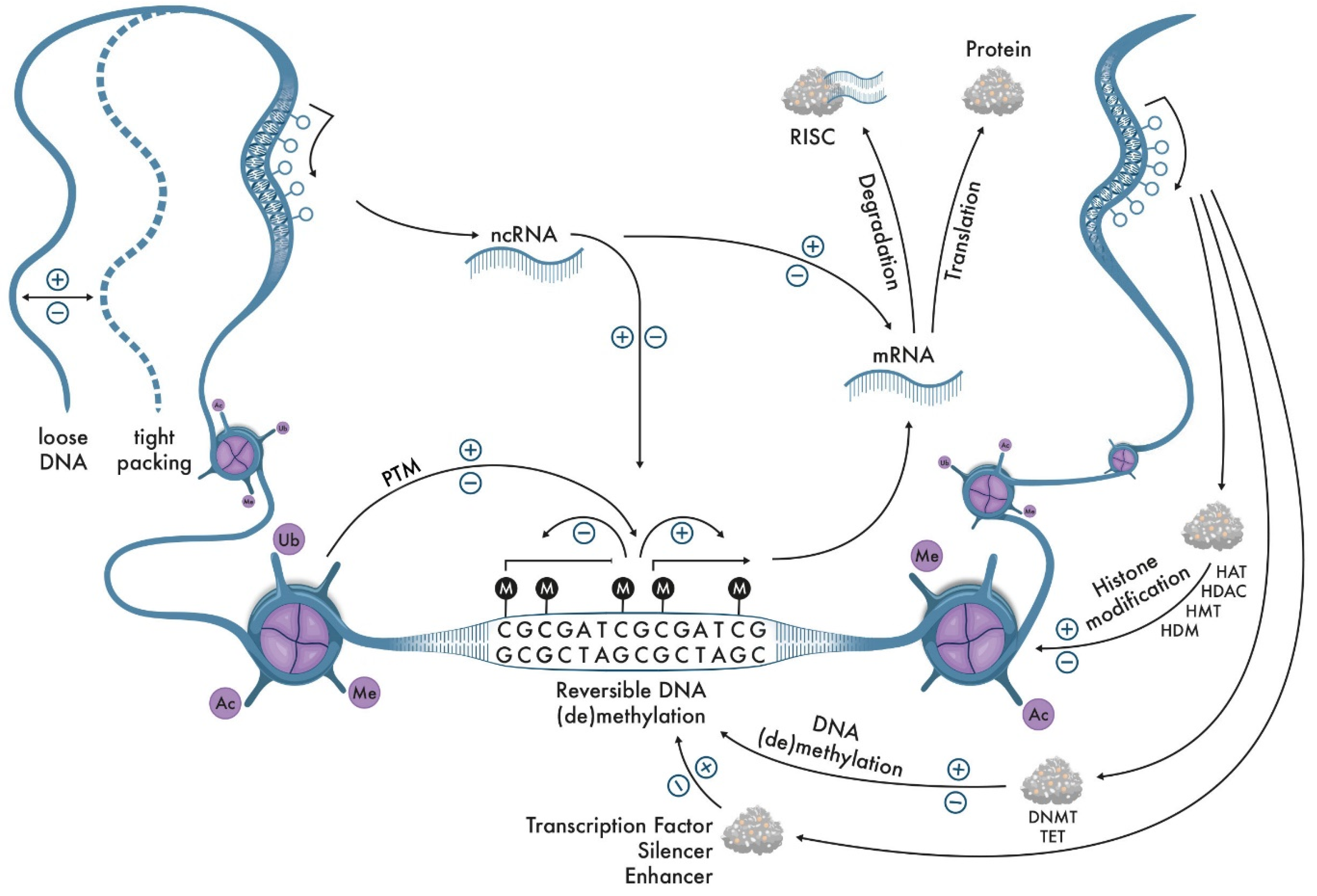
The epigenome can be regarded as a superimposed, metastable state of cells and tissues that controls spatiotemporal gene expression without altering the nucleobase sequence itself. The epigenetic landscape includes reversible DNA base modifications, such as methylation and demethylation; post-translational histone modifications (PTMs), including methylation, acetylation, phosphorylation, and ubiquitination; the abundance and availability of transcripts and proteins required to establish or maintain epigenetic marks; and, as has increasingly come into focus in recent years, non-coding RNAs (ncRNAs) (Figure 1) [28,29,30,31]. Specific epigenetic modifications are transmitted transgenerationally or are differentially erased and re-established in a highly controlled, development-dependent, and tissue-specific manner. Such modifications are therefore not rigid, but are instead subject to dynamic reprogramming during gametogenesis, fertilisation, embryogenesis, and differentiation, thereby ensuring cell-autonomous, differentiation-specific, and tissue-specific gene expression patterns [32,33,34]. Epigenomic signatures can be modified according to metabolic demands and may be severely disturbed, for instance in response to exogenous and endogenous stressors, ageing, lifestyle, or disease [35,36].
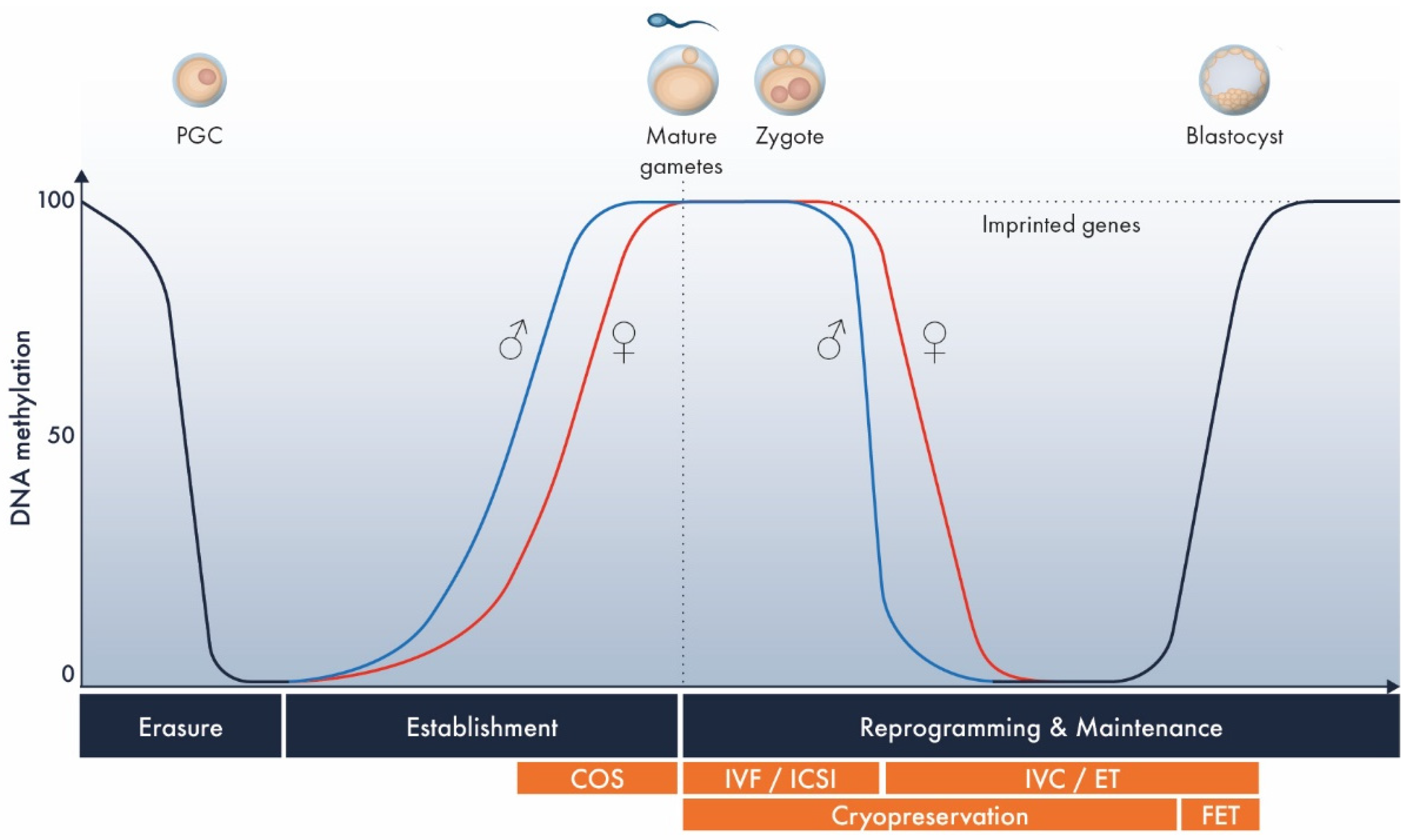
DNA methylation at distinct CpG (cytosine–phosphate–guanine dinucleotide) sites and post-translational modification of histone amino acid residues within chromatin represent key elements of the epigenetic landscape that contribute to the activation or repression of gene expression. The somatic DNA methylation pattern is erased during gametogenesis in primordial germ cells, and gamete- and sex-specific DNA methylation profiles in female and male gametes are then established de novo (Figure 2). In post-pubertal females, global DNA methylation (gDNA) is established in follicle-enclosed oocytes before maturation is resumed in meiotically arrested growing prophase I oocytes prior to ovulation [33]. In males, gamete-specific DNA methylation takes place during meiosis at the pachytene stage of spermatogenesis including the replacement of histones with protamines to induce crucial sperm DNA compaction [32]. During the early divisions of the pre-implantation embryo, passive demethylation occurs in the maternally inherited genome during replication, except at imprinted sites that are essential for controlling the expression of imprinted genes at later developmental stages and in adulthood [34,37,38,39]. By contrast, the paternally inherited genome undergoes active global DNA demethylation during chromatin remodelling after fertilisation by ten-eleven translocation (TET) methylcytosine dioxygenases, except at paternally imprinted regions. Importantly, the sex-specific maternally or paternally inherited DNA marks at imprinted genes are essential for development and monoallelic gene expression in the embryo and adult and must be retained in zygotic DNA, whereas cell- and tissue-specific de novo DNA reprogramming is established during embryogenesis and differentiation (Figure 2). The de novo establishment of parent-specific DNA methylation at imprinted genes occurs during gametogenesis in sperm and oocytes at specific CpG sites within differentially methylated regions (DMRs). Several of the 200 known imprinted genes are organised in imprinted control regions (ICRs) [37,38]. Loss of DNA methylation in specific DMRs of imprinted genes is associated with imprinting disorders, such as Beckwith–Wiedemann, Prader–Willi, and Silver–Russell syndrome [40,41,42].
To ensure proper and stage-specific DNA methylation, the abundance and availability of transcripts and proteins, including the de novo methyltransferases DNMT3A and/or DNMT3B/DNMT3L, maintenance DNA methyltransferase 1 (DNMT1), several ten-eleven translocation (TET) methylcytosine dioxygenases, zinc finger protein 57 (ZFP57), and MATER protein homologue (MATER), are required to protect imprinted genes from demethylation and are crucial for correct DNA methylation and demethylation [44,45]. In addition to DNA methylation and its corresponding enzymatic network, specific post-translational histone modifications can directly or indirectly activate or repress gene expression through changes in chromatin conformation or by recruiting transcriptional, enhancer, or silencing factors [31,34]. To establish the most common PTMs, histone deacetylases (HDACs), histone acetyltransferases (HATs), histone methyltransferases (HMTs), and histone demethylases (HDMs) add or remove acetyl or methyl groups at specific histone residues [46]. Finally, ncRNAs, such as long non-coding RNAs (lncRNAs) and microRNAs (miRNAs), can regulate transcription or translation via cis- or trans-acting mechanisms to control gene expression. The modes of action of regulatory ncRNAs are diverse and include mRNA guidance, stabilisation, or degradation; initiation or repression of gene transcription; and regulation of PTMs [47,48].
Overall, the epigenetic regulation of gene expression is embedded in a dense and complex network. Alterations of the epigenome are often not immediately monocausal and do not rely on simple all-or-nothing mechanisms; thus, they may have long-lasting and potential cascading effects at later developmental stages, whereby even small alterations on the molecular level may have substantial consequences later on with regard to phenotype expression or, conversely, no consequences at all. Therefore, assessing and classifying potential adverse effects of MAR techniques on the epigenetic landscape remains a major challenge, particularly after cryopreservation. To make assessment even more complex, differences between species in terms of lineage differentiation, transcription, and epigenetic mechanisms are well known, such as those regarding the timing of zygotic gene activation during early embryogenesis, CpG density, histone modifications for transcriptional regulation, abundance and regulation of ncRNAs, and the epigenetic reprogramming mechanism during early embryonic development [49,50,51,52]. So far, several concerns regarding epimutations have been raised from animal studies in mice and bovines, showing that findings cannot been adopted in a simple way from animals to humans and that caution is absolutely necessary when translating results from animal model systems to human clinical implications. The influence of cryopreservation of immature gametes, ovarian and testicular tissue, and mature MII oocytes on the epigenetic profile has already been reviewed previously [43,53]. In this narrative review, we focus on the potential influence of the cryopreservation of pre-implantation embryos on the epigenetic profile in humans and animals. Specifically, we consider DNA methylation of imprinted genes and global DNA methylation, post-translational histone modifications, the abundance and availability of relevant transcripts and proteins, and the presence of ncRNAs.

2. Influence of Cryopreservation on Global DNA Methylation and Methylation of Transposable Elements

The global DNA methylation pattern and the methylation of transposable elements (TEs), such as long interspersed nuclear element-1 (LINE-1) and human endogenous retrovirus-FRD envelope protein (HERV-FRD), play essential roles in the epigenetic regulation of transcription in mature oocytes and early embryos. These specific marks are crucial for fertilisation, the oocyte-to-embryo transition, early development, placentation, and foetal growth [54,55,56]. Alterations of global DNA or TE methylation, potentially induced by cryopreservation, may therefore have detrimental and long-lasting effects.
Several studies have analysed gDNA and TE methylation levels and did not identify significant alterations after vitrification of pre-implantation embryos compared with non-vitrified controls (overview in Table 1). Zhu et al. [57], using single-cell whole-genome bisulphite sequencing (scWGBS), and Marjonen and colleagues [58], using EpiTYPER and bisulphite sequencing, reported similar gDNA and TE methylation patterns in human eight-cell embryos and placental tissue, respectively, after vitrification. In contrast, global DNA methylation was not altered after vitrification of murine two-cell embryos compared with non-vitrified in vitro controls but was decreased in the inner cell mass of blastocysts compared with in vivo controls, as assessed by immunocytochemistry [59].
Using bisulphite pyrosequencing, Barberet and colleagues [55] also showed no adverse effect on the degree of TE methylation in cord blood and placentas after frozen embryo transfer compared with natural conception in humans. However, LINE-1 methylation was decreased after fresh embryo transfer compared with natural conception and frozen embryo transfer. In mice, Rhon-Calderon et al. [60] analysed global DNA methylation patterns in foetuses and placentas after blastocyst vitrification and found no differences in methylation levels compared with non-vitrified controls, using a luminometric methylation assay (LUMA) and bisulphite sequencing.
However, several authors have reported hypermethylation, rather than hypomethylation, in humans and animals following cryopreservation at different developmental stages. Mani et al. [61] analysed placentas from vitrified human and murine blastocysts and showed increased DNA methylation after vitrification compared with non-vitrified in vitro controls, using MethylationEPIC BeadChip arrays and Mouse Methylation BeadChip arrays for analysis. Ying and Zhang [62] also described hypermethylation in blastocysts in mice after vitrification of eight-cell embryos compared with non-vitrified in vitro controls, using WGBS and immunofluorescence staining. Using LUMA, Gosh and colleagues [63] analysed global DNA methylation and the LINE-1 methylation profile in human placentas after cryopreservation of blastocysts and zygotes by slow-cooling techniques. Increased DNA methylation levels were observed after cryopreservation compared with non-vitrified controls and naturally conceived pregnancies. Consistent with the findings of Barberet and colleagues [55], LINE-1 methylation was increased after cryopreservation compared with non-vitrified in vitro controls but was not different from that in naturally conceived pregnancies.
Ma et al. [64] vitrified murine eight-cell embryos and analysed gDNA in foetuses and placentas using the MethylFlash Global DNA Methylation Kit, reporting that gDNA methylation was increased after vitrification and warming compared with non-vitrified in vitro controls. Interestingly, although methylation levels in placentas were significantly reduced compared with in vivo controls, gDNA methylation in foetuses did not differ significantly from that in the corresponding in vivo controls.
Using immunocytochemistry, Yao [65] found that global methylation marks significantly decreased in vitrified murine and bovine eight-cell embryos and corresponding blastocysts compared with in vivo and non-vitrified in vitro controls. Similar results were reported by Shida et al. [66] after vitrification of bovine eight-cell embryos using different CPAs. In immunocytochemical analyses, global DNA methylation was decreased after vitrification with DMSO or propylene glycol in eight-cell embryos and in blastocysts in the DMSO group, whereas it was increased in the propylene glycol group. In a study by Movahed [67], murine two-cell embryos were vitrified, and gDNA methylation was analysed in the corresponding blastocysts by immunocytochemistry, once again showing a decrease after vitrification compared with non-vitrified in vivo and in vitro controls.
In summary, findings regarding disturbances in global DNA and TE methylation are equivocal. Some studies reported no adverse effects in mice and humans after vitrification of cleavage-stage embryos or blastocysts in corresponding pre-implantation embryos, foetuses, and placental tissues when using ethylene glycol and DMSO as cryoprotective agents. However, some reported increased methylation patterns, mainly in foetuses and placentas, after vitrification of cleavage-stage embryos or blastocysts in mice and humans, when using the same cryoprotective agents. By contrast, other studies showed hypomethylation after vitrification, mainly between the eight-cell and blastocyst stages in mice and bovines. Thus, loss of methylation patterns at pre-implantation stages and compensatory or excessive remethylation at later stages may be one possible mechanism underlying these alterations as shown in animal model systems. In humans, hypomethylation was not demonstrated after cryopreservation in pre-implantation embryos or at later stages. Overall, when focusing in particular on clinical implications, the cryopreservation of pre-implantation embryos has a possible effect on global DNA and TE methylation. It is noteworthy that in vitro treatment itself, even without cryopreservation, may also have detrimental effects on the epigenetic landscape, as shown by several studies reviewed recently [27,68,69].
Table 1. Global DNA methylation levels. Cryopreservation was performed by vitrification unless stated otherwise. All CPA concentrations are in volume per volume (v/v); immunofluorescence (IF); luminometric methylation assay (LUMA); single-cell whole-genome bisulphite sequencing (scWGBS); equilibration solution (ES); vitrification solution (VS); ethylene glycol (EG); dimethyl sulfoxide (DMSO); propylene glycol (PG); not available (n.a.).
ReferenceYearSpeciesCryopreserved Cell Type/Cryopreservation ProtocolAnalysed Cell TypeTechniqueTargetFinding
Bakhtari et al. [59]2014Mouse2-cell embryos
ES: 7.5% EG + 7.5% DMSO, 3 min
VS: 15% EG + 15% DMSO, 45 s
BlastocystsIFGlobal DNA methylationNo differences compared with non-vitrified in vitro controls. Decreased global DNA methylation in inner cell mass after vitrification compared with in vivo controls.
Barberet et al. [55]2021HumanFET vs. fresh embryo transfer vs. natural conception
No details available regarding cryopreservation protocol
Placenta and cord bloodBisulphite pyrosequencingDNA methylation profile of two transposable elements (LINE-1 and HERV-FRD)No adverse effect on the degree of methylation in cord blood. In placentas, LINE-1 methylation was increased compared with fresh embryo transfers, but similar to that for natural conception.
Ghosh et al. [63]2017HumanBlastocysts and D1 zygotes (both slow-cooling)
No details available regarding slow cooling protocol
PlacentasLUMAGlobal DNA methylation and LINE-1 methylation profile Increased global DNA methylation after cryopreservation compared with non-vitrified controls and naturally conceived pregnancies. Increased LINE-1 methylation after cryopreservation compared with in vitro controls, but no difference compared with naturally conceived pregnancies.
Ma et al. [64]2019Mouse8-cell embryos
ES: 7.5% EG + 7.5% DMSO, 5 min
VS: 15% EG + 15% DMSO, 60 s
Foetuses and placentasMethylFlash Global DNA Methylation KitGlobal DNA methylationIncreased global DNA methylation in foetuses and placentas after vitrification compared with in vitro controls. In foetuses, global DNA methylation was comparable to that in in vivo controls after vitrification. In placentas, global DNA methylation was reduced after vitrification compared with in vivo controls.
Mani et al. [61]2022Human/MouseBlastocysts
Mouse:
ES: 7.5% EG + 7.5% DMSO, 5 min
VS: 15% EG + 15% DMSO, <60 s
Human: data n.a.
PlacentasMethylationEPIC BeadChip arrayGlobal DNA methylationVitrification led to placental DNA hypermethylation in mice and humans compared with non-vitrified in vitro controls.
Marjonen et al. [58]2018HumanFET vs. fresh embryo transfer vs. natural conception
No details available regarding cryopreservation protocol
Placental tissueEpiTYPER and bisulphite sequencingDNA methylation levels of long interspersed nuclear elementsDNA methylation profiles of LINE-1 were not significantly different after frozen embryo transfer compared with non-vitrified controls and natural conception.
Movahed et al. [67]2019Mouse2-cell embryos
ES: 7.5% EG + 7.5% DMSO, 3 min
VS: 15% EG + 15% DMSO, 60 s
BlastocystsIFGlobal DNA methylationDecreased global DNA methylation after vitrification compared with non-vitrified in vivo and in vitro controls.
Rhon-Calderon et al. [60]2024MouseBlastocysts
ES: 7.5% EG + 7.5% DMSO, 5 min
VS: 15% EG + 15% DMSO, <60 s
Foetuses and placentasLUMA and bisulphite sequencingGlobal DNA methylationGlobal DNA methylation did not differ from that in in vitro controls.
Shida et al. [66]2025Bovine8-cell embryos
ES: 7.5% EG + 7.5% DMSO or 7.5% PG, 5 min
VS: 15% EG + 15% DMSO or 15% PG, 30 s
8-cell embryos/blastocystsIFGlobal DNA methylationDecreased global DNA methylation after vitrification with DMSO in 8-cell embryos and blastocysts compared with non-vitrified controls. Using propylene glycol for vitrification, global DNA methylation was decreased at the 8-cell stage and increased in blastocysts compared with non-vitrified controls.
Yao et al. [65]2017Mouse8-cell embryos
ES: 7.5% EG + 7.5% DMSO, 2 min
VS: 15% EG + 15% DMSO, 50 s
8-cell embryos/blastocystsIFGlobal DNA methylationReduced global DNA methylation in 8-cell embryos/blastocyst after vitrification compared with in vitro and/or in vivo controls.
Ying and Zhang [62]2023Mouse8-cell embryos
No details available regarding cryopreservation protocol
BlastocystsWGBS and IFGlobal DNA methylationIncreased global DNA methylation after vitrification compared with non-vitrified in vitro controls.
Zhu et al. [57]2024Human8-cell embryos (mid- and long-term storage in LN2 for 3 and 8 years vs. non-vitrified controls)
ES: 7.5% EG + 7.5% DMSO, 12–15 min
VS: 15% EG + 15% DMSO, 45–60 s
8-cell embryosscWGBS Global DNA methylation including differentiation between functional genomic regionsNo adverse effect on the overall degree of methylation compared with non-vitrified controls. Similar methylation patterns in functional regions among all groups.

3. Influence of Cryopreservation on Methylation Patterns of Imprinted and Pluripotency Genes

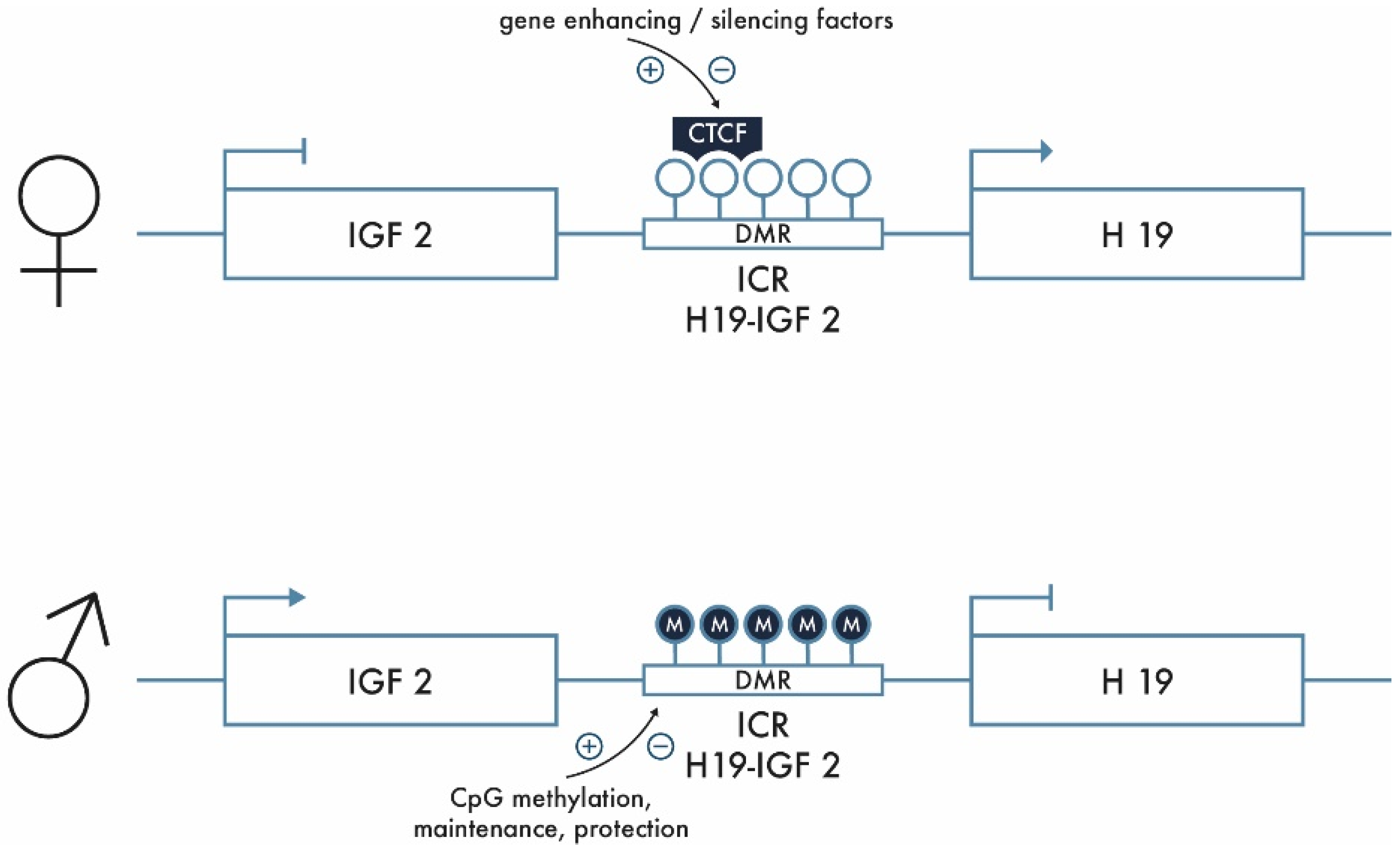
To ensure parent-of-origin-specific gene expression after fertilisation, genomic imprinting occurs differentially in DMRs in male and female gametes. DMRs consist of multiple individual CpG methylation sites and are located within imprinting control regions (ICRs). Imprinted genes are often arranged in imprinted gene clusters, and a single ICR can regulate several imprinted genes (Figure 3) [70]. Although CpG methylation is the key mechanism underlying genomic imprinting, other molecules, such as CCCTC-binding factor (CTCF) and ncRNAs, including the lncRNA transcribed from the imprinted KCNQ1OT1 gene itself, are also involved in monoallelic gene expression [71,72,73]. Genomic imprinting therefore depends mainly on CpG methylation, although aberrant hypermethylation or hypomethylation of individual CpGs does not always lead to altered gene expression. Thus, the interpretation of individual CpG epimutations after MAR treatment is complex and must be approached with caution.
Several authors found no epimutations after cryopreservation in humans or animals at different developmental stages (overview in Table 2). Derakhshan-Horeh and colleagues [74] used bisulphite sequencing to analyse H19 and IGF2 CpG methylation levels in human blastocysts after vitrification of day-3 embryos and found no adverse effects on the degree of methylation between non-vitrified controls and the vitrification group. Using EpiTYPER and bisulphite sequencing for CpG methylation analysis, Marjonen and colleagues [58] also found no differences in methylation patterns at the H19 ICR and H19 DMR in placental tissue in humans after frozen embryo transfer compared with fresh embryo transfer and natural conception. To assess the effects of single and double revitrification of human blastocysts, Movahedin et al. [75] analysed methylation levels of the H19/IGF2 DMR in corresponding blastocysts using bisulphite sequencing, finding that H19/IGF2 DMR methylation patterns did not differ after vitrification or revitrification compared with non-vitrified in vitro controls.
Yao et al. [76] analysed SNRPN DNA methylation by pyrosequencing in neonatal placental tissue after vitrification of human pre-implantation embryos, reporting no adverse effect on the degree of SNRPN methylation compared with non-vitrified in vitro and in vivo controls. The CpG methylation profile of the imprinted gene Grb10 was analysed by Yao and colleagues [65] in blastocysts after vitrification of murine eight-cell embryos using bisulphite sequencing. No differences were found between vitrified and non-vitrified pre-implantation embryos, but Grb10 CpG methylation was decreased after vitrification compared with in vivo controls. Similar results were reported by Hiura et al. [77] in human placentas using bisulphite restriction analysis. Methylation levels of the IG-DMR and C19MC-DMR were not significantly different after frozen embryo transfer, fresh embryo transfer, and natural conception. In addition, MEG3-DMR methylation was similar between FET and fresh ET but increased compared with natural conception. Although OCT4 does not belong to the group of imprinted genes, it is important for establishing genomic pluripotency during early embryogenesis. In a study by Saenz de Juano [78], rabbit morulae were vitrified, and the methylation pattern of OCT4 was analysed in the corresponding blastocysts using bisulphite sequencing. No significant differences in OCT4 methylation levels were found after vitrification compared with non-vitrified controls.
Hypermethylation of imprinted genes has also been reported by several authors after vitrification. Hosseini et al. [79] analysed the methylation status of the promoter region of the imprinted gene Meg3 in the hippocampus of D2 offspring after vitrification of murine two-cell embryos. Using methylation-specific PCR, they found higher Meg3 methylation levels after vitrification compared with non-vitrified in vitro and in vivo controls. When analysing bovine two-cell embryos and corresponding blastocysts using bisulphite sequencing, Zhao et al. [80] found increased H19 ICR methylation after vitrification at the two-cell stage compared with non-vitrified controls. In a study by Barberet and colleagues [55], the DNA methylation profiles of H19/IGF2, KCNQ1OT1, and SNURF were analysed in human placenta and cord blood by bisulphite pyrosequencing. In cord blood, no differences were present after FET compared with natural conception and fresh embryo transfer; by contrast, the DNA methylation level of H19/IGF2-seq2 was higher after frozen embryo transfer than after natural conception and fresh embryo transfer in placental tissue. Interestingly, as noted above, in vitro treatment, even without cryopreservation, may also lead to imprinting disorders. DNA methylation of H19/IGF2-seq1 was significantly lower in the fresh embryo transfer group than in the control group, whereas vitrification did not induce epimutations at this DMR.
In a study by Zhu and colleagues [57], the effect of mid- and long-term storage (3 vs. 8 years) of vitrified human eight-cell embryos in LN2 was analysed by scWGBS. Although methylation patterns of the 22 analysed imprinted genes did not differ after mid- or long-term storage compared with non-vitrified controls, hypermethylation of DIRAS3 was shown after vitrification compared with non-vitrified controls at the eight-cell stage.
Ma et al. [64] analysed methylation levels of the imprinted gene KvDMR1 in murine foetuses and placentas after vitrification of eight-cell embryos using bisulphite pyrosequencing. In placentas, methylation levels did not differ after vitrification compared with non-vitrified in vitro controls but were decreased compared with in vivo controls. In foetuses, KvDMR1 hypermethylation was present after eight-cell embryo vitrification compared with non-vitrified in vitro controls. However, methylation levels were comparable to those in appropriate in vivo controls, supporting the assumption that in vitro treatment itself may induce epimutations.
By contrast, decreased methylation levels of imprinted genes, and of some pluripotency genes, have been reported after cryopreservation of pre-implantation embryos in humans and mice. Rhon-Calderon [60] analysed the methylation profiles of the imprinted regions H19/Igf2, IgDMR, Peg3, Kcnq1ot1, and Snrpn in foetuses and placentas after vitrification of murine blastocysts. Although this work focused on the effect of embryo biopsy, hypomethylation of Snrpn and IgDMR was shown after vitrification compared with appropriate in vitro controls in placentas and foetuses. In the latter, lower H19/Igf2 DNA methylation was also shown after vitrification compared with non-vitrified controls using LUMA and bisulphite sequencing.
Wang [81] also analysed methylation levels of the H19/Igf2 DMR in murine foetuses and placentas after morula vitrification using bisulphite sequencing. H19/Igf2 methylation was reduced in foetuses after vitrification compared with in vivo and in vitro controls, and in placentas after vitrification and in vitro culture compared with in vivo controls.
In a study by Wu et al. [82], human foetal tissue was analysed by NGS-based bisulphite PCR after multifetal pregnancy reduction, and hypomethylation of H19 promoter DNA was reported after cryopreservation of pre-implantation embryos obtained after IVF, ICSI, and FET compared with fresh embryo transfers. In addition, Zhao and colleagues [83] analysed the methylation status of four pluripotency and differentiation genes (Oct4, Nanog, Cdx2, and Hand1) after blastocyst vitrification in corresponding murine blastocysts. Using bisulphite sequencing, methylation levels of the Oct4, Nanog, and Cdx2 promoters were decreased after vitrification compared with non-vitrified controls, whereas Hand1 promoter methylation was not significantly different after vitrification.
Overall, the results for methylation patterns of imprinted genes and some relevant pluripotency genes are also controversial. Irrespective of the vitrified or analysed cell type and developmental stage, hypermethylation, hypomethylation, and similar methylation patterns have all been reported. In humans, several studies showed no adverse effects following vitrification of pre-implantation embryos—neither in the corresponding embryos themselves nor at later developmental stages—although some studies also showed higher DNA methylation of H19/IGF2-seq2 or Diras3 in placental tissue or eight-cell embryos, or reduced H19 promoter DNA methylation in foetal tissue. Overall, cryopreservation of pre-implantation embryos has a possible effect on methylation patterns of imprinted genes in humans and animal model systems. Thus, cryopreservation, but also in vitro treatment without cryopreservation, may induce epimutations at the CpG level.
Table 2. DNA methylation levels of imprinted genes. Cryopreservation was performed by vitrification unless stated otherwise. All CPA concentrations are in volume per volume (v/v); luminometric methylation assay (LUMA); single-cell whole-genome bisulphite sequencing (scWGBS); equilibration solution (ES); vitrification solution (VS); ethylene glycol (EG); dimethyl sulfoxide (DMSO); not available (n.a.).
ReferenceYearSpeciesCryopreserved Cell Type/Cryopreservation ProtocolAnalysed Cell TypeTechniqueTargetFinding
Barberet et al. [55]2021HumanFET vs. fresh embryo transfer vs. natural conception
Details regarding cryopreservation protocol n.a.
Placenta and cord bloodBisulphite pyrosequencingDNA methylation profile of three imprinted genes (H19/IGF2, KCNQ1OT1, SNURF)In placental tissue, the DNA methylation level of H19/IGF2-seq2 was higher after FET compared with natural conception and fresh embryo transfer. In cord blood, no differences were observed among groups.
Derakhshan-Horeh et al. [74]2016HumanDay-3 embryos
ES: 7.5% EG + 7.5% DMSO
VS: 15% EG + 15% DMSO
BlastocystsBisulphite sequencingH19 and IGF2 CpG methylation levelsNo adverse effect on the degree of methylation after vitrification compared with non-vitrified controls.
Hiura et al. [77]2017HumanFET vs. fresh embryo transfer vs. natural conception
ES: 7.5% EG + 7.5% DMSO
VS: 15% EG + 15% DMSO
PlacentaBisulphite restriction analysisDNA methylation analysis of imprinted DMRs (IG-DMR and MEG3-DMR/C19MC-DMR)Methylation levels of IG-DMR and C19MC-DMR were not significantly different among groups. MEG3-DMR methylation was similar between FET and fresh ET, but increased compared with natural conception.
Hosseini et al. [79]2025Mouse2-cell embryos
ES: 7.5% EG + 7.5% DMSO; 5 min
VS: 15% EG + 15% DMSO; 30 s
Hippocampus of D2 offspringMethylation-specific PCRMethylation status at the promoter region of the imprinted gene Meg3Higher methylation levels of Meg3 after vitrification compared with in vitro and in vivo controls.
Ma et al. [64]2019Mouse8-cell embryos
ES: 7.5% EG + 7.5% DMSO, 5 min
VS: 15% EG + 15% DMSO, 60 s
Foetuses and placentasBisulphite pyrosequencingMethylation levels of imprinted gene KvDMR1Methylation levels of KvDMR1 were increased in foetuses after vitrification compared with non-vitrified in vitro controls and similar to those in in vivo controls. In placentas, methylation levels were decreased after vitrification compared with in vivo controls and similar to those in non-vitrified in vitro controls.
Marjonen et al. [58]2018HumanFET vs. fresh embryo transfer vs. natural conception
Details regarding cryopreservation protocol n.a.
Placental tissueEpiTYPER and bisulphite sequencingDNA methylation levels at the H19 ICR and H19 DMRDNA methylation profiles at the H19 ICR and H19 DMR were not significantly different after frozen embryo transfer compared with non-vitrified controls and natural conception.
Movahedin et al. [75]2022HumanBlastocysts (vitrified and revitrified)
ES: 7.5% EG + 7.5% DMSO
VS: 15% EG + 15% DMSO
BlastocystsBisulphite sequencingMethylation levels of H19/IGF2 DMRMethylation levels of H19/IGF2 DMR were not different after vitrification or revitrification compared with non-vitrified in vitro controls.
Rhon-Calderon et al. [60]2024MouseBlastocysts
ES: 7.5% EG + 7.5% DMSO, 5 min
VS: 15% EG + 15% DMSO, <60 s
Foetuses and placentasLUMA and bisulphite sequencingMethylation profile of the imprinted regions H19/Igf2, IgDMR, Peg3, Kcnq1ot1, and SnrpnDecreased DNA methylation for Snrpn and IgDMR after vitrification compared with in vitro controls in placentas and foetuses. In foetuses, lower H19/Igf2 DNA methylation was also observed after vitrification compared with non-vitrified controls.
Saenz de Juano et al. [78]2014RabbitMorulae
ES: 12.5% EG + 12.5% DMSO, 2 min
VS: 20% EG + 20% DMSO, 30 s
BlastocystsBisulphite sequencingMethylation levels of pluripotency gene OCT4No significant differences in OCT4 methylation levels.
Wang et al. [81]2010MouseMorulae
ES: 7.5% EG + 7.5% DMSO
VS: 15% EG + 15% DMSO
Foetuses and placentasBisulphite sequencingH19/Igf2 differentially methylated domainLoss of H19/Igf2 methylation was observed in foetuses after vitrification compared with in vivo and in vitro controls, and in placentas after vitrification and in vitro culture compared with in vivo controls.
Wu et al. [82]2024HumanCryopreserved IVF/ICSI embryos vs. fresh IVF cycles
No details available regarding cryopreservation protocol
Foetal tissue after multifetal pregnancy reductionNGS-based bisulphite PCRMethylation levels of the H19 promoter and H19 imprinting control element Reduced H19 promoter DNA methylation after cryopreservation of embryos obtained after IVF and ICSI compared with fresh IVF embryos.
Yao et al. [65]2017Mouse8-cell embryos
ES: 7.5% EG + 7.5% DMSO, 2 min
VS: 15% EG + 15% DMSO, 50 s
BlastocystsBisulphite sequencingCpG methylation profile of imprinted gene Grb10No differences compared with non-vitrified in vitro blastocysts. Decreased Grb10 CpG methylation after vitrification compared with in vivo controls.
Yao et al. [76]2020HumanFET vs. fresh embryo transfer vs. natural conception
No details available regarding cryopreservation protocol
Neonatal placental tissuePyrosequencingSNRPN DNA methylation No adverse effect on the degree of methylation.
Zhao et al. [83]2012MouseBlastocysts
EG- and DMSO-based open-pulled straw vitrification protocol
BlastocystsBisulphite sequencingMethylation status of four pluripotency and differentiation genes (Oct4, Nanog, Cdx2, Hand1)Reduced methylation levels of the Oct4, Nanog, and Cdx2 promoters after vitrification compared with non-vitrified controls. Hand1 promoter methylation was not significantly different after vitrification.
Zhao et al. [80]2012Bovine2-cell embryos
ES: 10% EG + 10% DMSO, 30 s
VS: 15% EG + 15% DMSO, 25 s
2-cell embryos/blastocystsBisulphite sequencingMethylation levels of the H19 imprinted control regionIncreased H19 methylation after vitrification at 2-cell stage in 2-cell embryos and corresponding blastocysts compared with non-vitrified controls.
Zhu et al. [57]2024Human8-cell embryos (mid- and long-term storage in LN2 for 3 and 8 years vs. non-vitrified controls)
ES: 7.5% EG + 7.5% DMSO, 12–15 min
VS: 15% EG + 15% DMSO, 45–60 s
8-cell embryosscWGBS DNA methylation of 23 imprinted DMRs DMR methylation did not differ between mid- and long-term storage, but Diras3 methylation was higher compared with non-vitrified controls.

4. Influence of Cryopreservation on Gene Expression of Imprinted Genes

Whether, and to what extent, altered CpG methylation after cryopreservation results in altered gene expression is of great importance (overview in Table 3). Zhu et al. [57] analysed the gene expression profile of 23 imprinted genes after vitrification of human eight-cell embryos using single-cell RNA-seq, and found no significant differences at the eight-cell stage between vitrified and non-vitrified pre-implantation embryos, not even for the imprinted gene DIRAS3, for which higher CpG methylation levels were found after vitrification. Movahedin and colleagues [75] also found no differences in the expression levels of H19 and IGF2 in humans after single vitrification or revitrification of blastocysts compared with non-vitrified controls, as assessed by qRT-PCR; thus, DNA methylation levels of the H19/IGF2 DMR also did not differ.
Without providing data on CpG methylation patterns, Yodrug et al. [84] analysed bovine blastocysts after vitrification by qRT-PCR, finding that expression levels of IGF2R and SNRPN did not differ after vitrification compared with non-vitrified blastocysts. Similar results were reported by Dliyaul Haq [85], Jahangiri [86,87], and Movahed [88] in mice. In the first study [85], the mRNA content of H19 and Igf2 did not differ significantly between morulae and blastocysts with or without vitrification, as assessed by qRT-PCR. Jahangiri and colleagues [86] analysed the expression levels of the imprinted genes H19 and Mest in blastocysts after two-cell-stage vitrification and subsequent in vitro culture by qRT-PCR, finding no differences between vitrified and non-vitrified in vitro controls. However, both expression levels were increased after vitrification compared with fresh in vivo controls. In a follow-up study by the same authors with a similar experimental design [87], no differences in Igf2 expression were shown between vitrified and non-vitrified blastocysts; however, in both groups, expression levels were upregulated compared with in vivo controls. Comparable results were reported by Movahed [88]. After vitrification of two-cell embryos and in vitro culture to the blastocyst stage, no differences in Dlk1 gene expression were shown between vitrified and non-vitrified in vitro controls at the blastocyst stage, whereas Dlk1 expression was increased compared with in vivo controls. qRT-PCR was used for gene expression analysis. For these latter studies in mice, no information on DNA methylation patterns was available.
Because gene transcription does not necessarily result in protein expression, the study by Yao et al. [76] is of particular interest. SNRPN mRNA levels were analysed by qRT-PCR, and protein content was assessed by Western blotting in human neonatal placental tissue after vitrification of pre-implantation embryos. No differences in gene or protein expression were observed after fresh embryo transfer or FET in placental tissue; however, similarly to findings in mice [86,88], increased mRNA and protein levels were shown after fresh or frozen embryo transfer compared with natural conception.
In contrast to studies showing no differences between vitrified and non-vitrified in vitro controls, several authors reported altered gene expression profiles after cryopreservation. In bovine embryos, Zhao and colleagues [80] vitrified two-cell cleavage-stage embryos and analysed H19 expression levels at the blastocyst stage by qRT-PCR. Coinciding with an altered H19 CpG methylation profile, H19 mRNA was downregulated after vitrification compared with non-vitrified controls. Using qRT-PCR for analysis after vitrification of murine eight-cell embryos and in vitro culture to the blastocyst stage, Yao et al. [65] showed decreased Grb10 expression after vitrification compared with non-vitrified in vitro and in vivo controls, even in the absence of alterations in the CpG methylation profile of Grb10. Similar results were also reported in mice by Sahraei and colleagues [89]: H19 and Igf2 expression was downregulated after vitrification of eight-cell embryos and in vitro culture to the blastocyst stage compared with non-vitrified controls, whereas Mest expression was unaffected. qRT-PCR was used for gene expression profiling, but no information on CpG methylation levels was available.
Barberet et al. [55] analysed the transcription profiles of three imprinted genes (H19, KCNQ1, and SNRPN) in human placentas and cord blood after frozen embryo transfer, fresh embryo transfer, and natural conception. In cord blood, no differences in gene expression were observed among groups using qRT-PCR; in placenta, H19 was downregulated after vitrification of pre-implantation embryos compared with non-vitrified in vitro controls. However, the H19 expression profile was comparable to that in natural pregnancies. Interestingly, the DNA methylation level of H19/IGF2-seq2 was higher after FET than after natural conception and fresh embryo transfer in placenta, whereas no differences were present among groups in cord blood.
Another study of particular interest was published by Bartolac et al. [90], in which the authors analysed not only the potential influence of vitrification, but also CPA exposure (EG/DMSO) alone without subsequent vitrification, on porcine blastocysts. Expression levels of the imprinted genes IGF2 and IGF2R were analysed by qRT-PCR at the blastocyst stage: whereas IGF2 and IGF2R mRNA levels after CPA exposure without vitrification were similar to those in non-vitrified control blastocysts, IGF2 and IGF2R were downregulated after the complete vitrification process compared with non-vitrified controls. Thus, vitrification, but not CPA exposure alone, may induce epimutations. However, it should be noted that DMSO exposure without subsequent cryopreservation may still induce alterations of the epigenetic landscape in different in vitro cell culture types or animal embryos, as shown by several authors [9,10,11,91,92].
Upregulation of gene expression after vitrification was shown in mice by Hosseini et al. [79] for the imprinted gene Igf2 compared with non-vitrified in vitro and in vivo controls. Two-cell embryos were vitrified, and expression of Meg3, Snrpn, H19, and Igf2 was analysed in the hippocampus of D2 offspring by qRT-PCR. Expression levels of Snrpn and H19 were unaffected. Moreover, Meg3 expression was lower after vitrification compared with in vivo controls, but not compared with non-vitrified in vitro controls. Interestingly, higher CpG methylation levels of the Meg3 promoter region were shown after vitrification compared with both controls, supporting the assumption that altered CpG methylation can, but does not necessarily, lead to gene expression defects. In this context, Wang et al. [81] vitrified murine morulae and analysed the expression levels of H19 and Igf2 in placentas and foetuses by qRT-PCR, showing upregulation of H19 and decreased Igf2 expression in placentas and foetuses after vitrification compared with non-vitrified in vitro and in vivo controls. Interestingly, methylation patterns of the H19/Igf2 DMR were also altered in this study. In contrast to the work of Hosseini and colleagues [79], dysregulation of ICR CpG methylation in the latter study may have directly affected gene expression.
Table 3. Expression levels of imprinted genes. Cryopreservation was performed by vitrification unless stated otherwise. All CPA concentrations are in volume per volume (v/v); equilibration solution (ES); vitrification solution (VS); ethylene glycol (EG); dimethyl sulfoxide (DMSO); propanediol (PrOH); not available (n.a.).
ReferenceYearSpeciesCryopreserved Cell Type/Cryopreservation ProtocolAnalysed Cell TypeTechniqueTargetFinding
Barberet et al. [55]2021HumanFET vs. fresh embryo transfer vs. natural conception
No details available regarding cryopreservation protocol
Placenta and cord bloodqRT-PCRTranscription profile of three imprinted genes (H19, KCNQ1, SNRPN) Decreased H19 expression in placenta after frozen embryo transfer compared with fresh embryo transfer.
Bartolac et al. [90]2018PorcineBlastocysts
ES: 7.5% EG + 7.5% DMSO or 7.5% PrOH, 3 min
VS: 17% EG + 17% DMSO or 17% PrOH, 30–45 s
BlastocystsqRT-PCRExpression levels of imprinted genes IGF2 and IGF2R Decreased expression of IGF2 and IGF2R compared with non-vitrified controls.
Dliyaul Haq et al. [85]2019Mouse Morulae/blastocysts
ES: 10% EG
VS: 15% EG + 15% DMSO
Morulae/blastocystsqRT-PCRExpression levels of imprinted genes H19 and Igf2No differences in H19 and Igf2 mRNA content after morulae and blastocyst vitrification compared with in vivo controls.
Hosseini et al. [79]2025Mouse2-cell embryos
ES: 7.5% EG + 7.5% DMSO; 5 min
VS: 15% EG + 15% DMSO; 30 s
Hippocampus of D2 offspringqRT-PCRGene expression levels of imprinted genes (Meg3, Snrpn, H19, Igf2)Upregulation of Igf2 after vitrification compared with in vivo and non-vitrified controls. No differences in Meg3 expression compared with non-vitrified in vitro controls, but decreased expression after vitrification compared with in vivo controls.
Jahangiri et al. [86]2014Mouse2-cell embryos
ES: 7.5% EG + 7.5% DMSO; 7 min
VS: 15% EG + 15% DMSO; 60 s
BlastocystsqRT-PCRExpression levels of imprinted genes H19 and MestNo differences compared with non-vitrified in vitro blastocysts. Increased expression levels of H19 and Mest after vitrification compared with in vivo controls.
Jahangiri et al. [87]2018Mouse2-cell embryos
ES: 7.5% EG + 7.5% DMSO; 7 min
VS: 15% EG + 15% DMSO; 60 s
BlastocystsqRT-PCRExpression levels of imprinted gene Igf2 No differences between vitrified and non-vitrified blastocysts, but increased expression levels of Igf2 in both groups compared with in vivo controls.
Ma et al. [64]2019Mouse8-cell embryos
ES: 7.5% EG + 7.5% DMSO, 5 min
VS: 15% EG + 15% DMSO, 60 s
Foetuses and placentasqRT-PCRExpression levels of 24 imprinted genes (Dlk1, Igf2, Kcnq1ot1, Mest,
Ndn, Peg3, Plagl1, Sgce,
Snrpn, Cd81, Cdkn1c, Dcn,
Gatm, Gnas, Grb10, Gtl2,
H19, Igf2r, Mash2, Osbpl5,
Phlda2, Slc22a18, Ube3a,
Zim1)
Altered gene expression of several imprinted genes (e.g., Sgce, Dcn, Gtl2, Kcnq1ot1) in foetuses/placentas after vitrification compared with in vivo and/or non-vitrified in vitro controls. Several maternally expressed genes were upregulated, which may have repressed foetal growth.
Movahed et al. [88]2020Mouse2-cell embryos
ES: 7.5% EG + 7.5% DMSO; 3 min
VS: 15% EG + 15% DMSO; <60 s
BlastocystsqRT-PCRExpressions levels of imprinted gene Dlk1No differences compared with non-vitrified in vitro controls. Increased mRNA levels of Dlk1 after vitrification compared with in vivo controls.
Movahedin et al. [75]2022HumanBlastocysts (vitrified and revitrified)
ES: 7.5% EG + 7.5% DMSO
VS: 15% EG + 15% DMSO
BlastocystsqRT-PCRExpression levels of imprinted genes H19 and IGF2Expression levels of H19 and IGF2 were not different after vitrification or revitrification compared with non-vitrified in vitro controls.
Sahraei et al. [89]2018Mouse8-cell embryos
Details regarding cryopreservation protocol n.a.
BlastocystsqRT-PCRExpression levels of imprinted genes H19, Igf2, and MestDownregulation of H19 and Igf2 after vitrification compared with non-vitrified controls. Mest expression was unaffected.
Wang et al. [81]2010MouseMorulae
ES: 7.5% EG + 7.5% DMSO
VS: 15% EG + 15% DMSO
Foetuses and placentasqRT-PCRExpression levels of imprinted genes H19 and Igf2Upregulation of H19 and decreased Igf2 expression in placentas and foetuses compared to in vitro and in vivo controls
Yao et al. [76]2020HumanFET vs. fresh embryo transfer vs. natural conception
No details available regarding cryopreservation protocol
Neonatal placental tissueqRT-PCR and Western blotExpression of Snrpn mRNA and SNRPN proteinNo differences in gene or protein expression after fresh or frozen embryo transfer. Increased levels of mRNA and protein after fresh or frozen embryo transfer compared to natural conception.
Yao et al. [65]2017Mouse8-cell embryos
ES: 7.5% EG + 7.5% DMSO, 2 min
VS: 15% EG + 15% DMSO, 50 s
BlastocystsqRT-PCRExpression levels of imprinted gene Grb10Decreased expression level of Grb10 after vitrification compared to non-vitrified in vitro blastocysts and in vivo controls.
Yodrug et al. [84]2020BovineBlastocysts
ES: 2% or 7.5% EG + 2% or 7.5% DMSO, 3 min
VS: 16.5% EG + 16.5% DMSO, 50 s
BlastocystsqRT-PCRExpression levels of two imprinted genes (IGFR2, SNRPN)Expression of IGF2R and SNRPN not different after vitrification compared to non-vitrified controls.
Zhao et al. [80]2012Bovine2-cell embryos
ES: 10% EG + 10% DMSO, 30 s
VS: 15% EG + 15% DMSO, 25 s
BlastocystsqRT-PCRExpression levels of imprinted gene H19Decreased H19 mRNA expression after vitrification compared to non-vitrified controls.
Zhu et al. [57]2024Human8-cell embryos (mid- and long-term storage in LN2 for 3 and 8 years vs. non-vitrified controls)
ES: 7.5% EG + 7.5% DMSO, 12–15 min
VS: 15% EG + 15% DMSO, 45–60 s
8-cell embryosSingle-cell RNA-seqGene expression of 23 imprinted genesExpression levels of 23 imprinted genes did not differ after vitrification compared with non-vitrified controls.
The largest dataset to date on gene expression profiles of imprinted genes was reported by Ma et al. [64]. Overall, 24 paternally or maternally expressed imprinted genes were analysed by qRT-PCR in placentas and foetuses after vitrification of murine eight-cell embryos. Several genes were upregulated (e.g., Kcnq1ot1 and Gtl2) or downregulated (e.g., Dcn and Sgce) in placentas or foetuses after vitrification compared with non-vitrified in vitro and in vivo controls. Nevertheless, in vitro culture alone also affected the expression of several imprinted genes in placentas and foetuses (e.g., Gatm and Cd8). Another important aspect of this study was the assessment of foetal growth in vitrified, non-vitrified, and naturally conceived foetuses: foetal crown–rump length at E9.5 was significantly reduced after in vitro culture with or without vitrification compared with the naturally conceived group. With respect to gene expression profiles, most maternally expressed genes were upregulated after vitrification or in vitro culture alone, which could repress foetal growth.
Overall, findings regarding the expression profiles of imprinted genes after cryopreservation of pre-implantation embryos are inconsistent. Although several authors found no alterations, many reported upregulation or downregulation of imprinted genes. No clear relationship could be established between CpG methylation levels, where available, and gene expression profiles; therefore, other upstream or downstream mechanisms are likely to influence gene expression. The study by Ma et al. [64] is of particular interest with respect to MAR outcomes in humans. As mentioned earlier, children born after fresh embryo transfer have lower birth weights, whereas infants born after frozen embryo transfer have higher birth weights than those born after spontaneous conception [3]. There is a well-known duality between maternally and paternally expressed imprinted genes in the control of foetal and postnatal development: the former are often involved in limiting resource flow to the foetus, whereas the latter promote it [93]. Alterations induced by MAR treatment, with or without cryopreservation, may disturb parent-of-origin-specific gene expression during embryogenesis, which could explain differences in birth weight after medically assisted reproduction. Thus, cryopreservation of pre-implantation embryos has a possible effect on the expression profiles of imprinted genes in humans and animal model systems.

5. Influence of Cryopreservation on PTM Profiles

Epigenetic marks established through methylation, acetylation, or ubiquitination of histone residues regulate chromatin packaging and accessibility, thereby permitting gene transcription or repression. For instance, H3K4me3 is commonly associated with gene expression and cell differentiation, whereas H3K9me3 is associated with heterochromatin [31,34,94,95,96,97,98,99]. Post-translational histone modifications occur in a stage-specific manner and are essential for gene activation and silencing during oogenesis, spermatogenesis, and early embryogenesis [31,34].
Bakhtari et al. [59] vitrified murine two-cell embryos and analysed the status of histone methylation (H3K4me3) and acetylation (H3K9ac and H4K12ac) at the blastocyst stage by immunostaining. No differences in H3K9ac, H4K12ac, or H3K4me3 were found compared with non-vitrified in vitro controls; however, H4K12ac acetylation was increased, and H3K4me3 methylation was decreased after vitrification compared with in vivo controls.
No differences between vitrified and non-vitrified embryos in post-translational histone modifications for H3K9ac, H3K9me2, and H3K4me3 were reported by Jahangiri et al. in two studies [86,87], in which murine two-cell embryos were vitrified, and histone modification profiles were analysed. Using sensitive chromatin immunoprecipitation (ChIP) assays, the authors analysed specific PTMs at CTCF-binding sites of the imprinted H19/Igf2 gene region and the Mest promoter region, respectively. In contrast to the findings of Bakhtari et al. [59], H3K4me3 methylation levels did not differ after in vitro culture with or without vitrification compared with in vivo controls. However, the H3K9ac profile was increased and H3K9me2 was decreased in both groups compared with in vivo controls.
In bovine embryos, Souza Cáceres et al. [97] cryopreserved morulae and blastocysts using slow-cooling protocols and assessed the methylation profile of H3K4me3 by immunostaining, finding no significant differences between cryopreserved and non-cryopreserved controls at the morula and blastocyst stages. By contrast, Maldonado et al. [98] reported lower H3K4me3 methylation levels after slow cooling of bovine blastocysts compared with in vitro controls, as well as increased H3K27me3 methylation compared with non-vitrified in vitro controls using immunostaining. Similarly, Sahraei and colleagues [89] found lower H3K4me3 methylation levels after vitrification of murine eight-cell embryos compared with non-vitrified controls, as well as increased H3K9me2 methylation and decreased H3K9ac acetylation patterns in blastocysts compared with non-vitrified controls, as assessed by ChIP analysis.
Chen et al. [99] found higher methylation levels for H3K4me3 in murine blastocysts after vitrification of eight-cell embryos. Immunofluorescence staining was used to analyse histone methylation marks H3K4me2, H3K4me3, and H3K9me3, and histone acetylation marks H4K12ac and H4K16ac; all epigenetic marks were significantly increased after vitrification compared with non-vitrified controls except for H3K9me3.
Finally, in a study by Truong and Gardner [100], murine blastocysts were vitrified with and without additional antioxidants to assess histone acetylation marks H3K9ac and H3K27ac by immunofluorescence staining. Compared with non-vitrified murine blastocysts, acetylation levels of both marks were significantly reduced after vitrification. Interestingly, supplementation with A3 antioxidants (acetyl-L-carnitine, N-acetyl-L-cysteine, and α-lipoic acid) ameliorated the loss of histone acetylation after vitrification, although acetylation levels still differed from those in non-vitrified controls.
Post-translational histone modifications may therefore be sensitive to cryopreservation of pre-implantation embryos by either vitrification or slow-freezing protocols (overview in Table 4). To date, the most data are available for H3K4me3 methylation, which was altered in many studies, especially when compared with fresh in vivo controls. Overall, cryopreservation of pre-implantation embryos has a possible effect on post-translational histone modifications in humans and animal model systems.
Table 4. Post-translational histone modifications. Cryopreservation was performed by vitrification unless stated otherwise. Immunofluorescence (IF). All CPA concentrations are in volume per volume (v/v) unless otherwise specified; equilibration solution (ES); vitrification solution (VS); ethylene glycol (EG); dimethyl sulfoxide (DMSO); propanediol (PrOH).
ReferenceYearSpeciesCryopreserved Cell Type/Cryopreservation ProtocolAnalysed Cell TypeTechniqueTargetFinding
Bakhtari et al. [59]2014Mouse2-cell embryos
ES: 7.5% EG + 7.5% DMSO, 3 min
VS: 15% EG + 15% DMSO, 45 s
BlastocystsIFStatus of histone methylation (H3K4me3) and acetylation (H3K9ac, H4K12ac)No differences compared with non-vitrified in vitro controls. Increased H4K12ac and decreased H3K4me3 levels compared with in vivo controls.
Chen et al. [99]2025Mouse8-cell embryos
ES: 7.5% EG + 7.5% DMSO, 8 min
VS: 15% EG + 15% DMSO, 30–60 s
BlastocystsIFStatus of histone methylation (H3K4me2, H3K4me3, H3K9me3) and acetylation (H4K12ac, H4K16ac)Vitrification elevated H3K4me2/3, H4K12ac, and H4K16ac levels.
Jahangiri et al. [86]2014Mouse2-cell embryos
ES: 7.5% EG + 7.5% DMSO; 7 min
VS: 15% EG + 15% DMSO; 60 s
BlastocystsChIP assayHistone profile of H3K9ac, H3K9me2, and H3K4me3 in CTCF site III/IV of imprinted gene H19 and in promoter region of imprinted Mest geneHistone profiles did not differ after vitrification compared with in vitro controls. Decreased H3K9me2 and increased H3K9ac levels were observed at CTCF sites III/IV of the H19 gene and in the promoter of the Mest gene in non-vitrified and vitrified in vitro blastocysts compared with in vivo controls.
Jahangiri et al. [87]2018Mouse2-cell embryos
ES: 7.5% EG + 7.5% DMSO; 7 min
VS: 15% EG + 15% DMSO; 60 s
BlastocystsChIP assayHistone profile of H3K9ac, H3K9me2, and H3K4me3 in CTCF site III of imprinted gene Igf2Histone profiles did not differ after vitrification compared with in vitro controls. Decreased H3K9me2 and increased H3K9ac levels were observed at CTCF site III of the Igf2 gene in non-vitrified and vitrified in vitro blastocysts compared with in vivo controls.
Maldonado et al. [98]2015BovineBlastocysts (slow cooling)
1.5 M EG;
−0.5 °C/min
BlastocystsIFStatus of histone methylation (H3K4me3 and H3K27me3)Decreased H3K4me3 methylation and higher H3K27me3 methylation levels compared with non-vitrified in vitro controls.
Sahraei et al. [89]2018Mouse8-cell embryos
No details available regarding cryopreservation protocol
BlastocystsChIP assayHistone profiles of H3K9me2, H3K4me3, and H3K9acIncreased H3K9me2 methylation and partially decreased H3K9ac acetylation and H3K4me3 methylation after vitrification compared with non-vitrified controls.
Souza Cáceres et al. [97]2016BovineMorulae/blastocysts (slow cooling)
1.5 M EG;
−0.6 to −2 °C/min
Morulae/blastocystsIFStatus of histone H3K4 methylation (H3K4me3)H3K4me3 histone methylation was not different after cryopreservation compared with non-vitrified controls.
Truong and Gardner [100]2020MouseBlastocysts
EG- and PrOH-based RapidVit Blast protocol
BlastocystsIFStatus of histone acetylation (H3K9ac and H3K27ac)Decreased H3K9ac and H3K27ac acetylation levels after vitrification compared with non-vitrified controls.

6. Influence of Cryopreservation on Gene Expression of Epigenetic Regulatory Genes

The transcript and protein abundance of epigenetic regulatory genes is crucial for establishing, removing, and maintaining epigenetic marks. This network includes, for instance, de novo DNA methylation mediated by DNMT3A and DNMT3B or indirectly by DNMT3L, maintenance methylation by DNMT1, protection of CpG methylation by TRIM28 and ZNF445, and removal of methylation marks by members of the TET family [44,45,101,102]. For post-translational histone modifications, several HDACs, HATs, and HMTs are required to modify histone residues [46]. Loss of function or reduced abundance of these factors may therefore induce downstream cascades that directly affect DNA methylation, PTMs, and/or epigenetically regulated gene expression.
In a study by Yodrug et al. [84], bovine blastocysts were vitrified, and the expression levels of DNMT3B and HDAC1 were analysed by qRT-PCR; overall, neither expression level differed compared with that of non-vitrified blastocysts. Shida et al. [66] also vitrified bovine eight-cell embryos with different CPAs (DMSO or propylene glycol) and analysed expression levels of the DNA-modifying enzymes DNMT1, DNMT3A, TET1, and TET3 at the eight-cell stage by immunostaining. After vitrification with PG, no differences were found between vitrified and non-vitrified controls; by contrast, increased DNMT1 and TET3 expression and a reduced DNMT3A profile were shown after vitrification with DMSO compared with non-vitrified controls.
Upregulation of different DNA methyltransferases has also been reported in mice and porcine embryos by Hosseini [79], Ma [64], and Jia [103]. In the first study [79], murine two-cell embryos were vitrified, and gene expression levels of Dnmt1, Dnmt3a, and Dnmt3b were analysed in the hippocampus of D2 offspring by qRT-PCR. Increased expression of Dnmt1, Dnmt3a, and Dnmt3b was present after vitrification compared with non-vitrified in vitro and in vivo controls, which is consistent with higher CpG methylation levels of Meg3 after vitrification compared with in vitro and in vivo controls, as mentioned earlier. Ma et al. [64] also vitrified murine eight-cell embryos and assessed mRNA expression levels of DNA methyltransferases (Dnmt1, Dnmt3a, and Dnmt3b) and TET family enzymes in foetuses and placentas by qRT-PCR. In foetuses, increased expression of Dnmt1 and Dnmt3b, and downregulation of Tet2 and Tet3, were shown after vitrification compared with in vitro and in vivo controls; in placentas, Dnmt1 was upregulated compared with in vivo and in vitro controls. In this study, gDNA methylation levels and imprinting profiles of KvDMR1 were also altered after vitrification.
In the study by Jia and colleagues [103], mRNA expression profiles of DNMT3A and DNMT3B were analysed in porcine two-cell and four-cell embryos, respectively. For DNMT3A, there were no differences among groups with or without vitrification; however, expression levels of DNMT3B were increased after vitrification of porcine two-cell and four-cell embryos compared with non-vitrified controls.
In contrast to the studies above, Movahed et al. [67] found decreased mRNA expression of Dnmt3a and Dnmt3b after vitrification compared with non-vitrified in vivo and in vitro controls. Murine two-cell embryos were vitrified, and expression levels were analysed after in vitro culture to the blastocyst stage by qRT-PCR. Notably, global DNA methylation levels were correspondingly reduced after vitrification compared with non-vitrified in vivo and in vitro controls.
Transcript and protein abundance of TET2 was analysed in murine blastocysts after vitrification of eight-cell embryos by Ying and Zhang [62]. Using qRT-PCR and Western blotting, the authors showed that Tet2 mRNA and TET2 protein levels were decreased after vitrification compared with non-vitrified controls. Interestingly, global DNA methylation levels were increased after vitrification in this study, which may indicate loss of active DNA demethylation by TET enzymes.
One study analysed a large cohort of human epigenetic regulatory genes responsible for DNA methylation (DNMT family genes), demethylation (TET family genes), and maintenance (TRIM28 and ZNF445) [57]. Zhu and colleagues [57] assessed the effect of mid- and long-term storage (3 vs. 8 years) on vitrified human eight-cell embryos in LN2 using single-cell RNA-seq. mRNA expression levels of demethylation, methylation, and methylation-maintenance genes did not differ after vitrification or mid- and long-term LN2 storage compared with non-vitrified human eight-cell embryos, consistent with comparable global DNA methylation and CpG methylation levels of 22 imprinted genes after vitrification. Only the imprinted gene DIRAS3 was hypermethylated compared with non-vitrified controls, suggesting that other regulatory effects or direct CpG epimutations could be responsible for this effect.
In summary, as shown by some authors, vitrification may induce increased gene expression of DNA methyltransferases and/or loss of TET abundance, ultimately leading to increased methylation patterns of global DNA or imprinted genes in different cell types or developmental stages (overview in Table 5). However, other authors found no alterations or reported downregulation of DNMTs, including loss of DNA methylation. For PTM-modifying enzymes, only limited data are currently available to reliably assess potential adverse effects. Overall, cryopreservation of pre-implantation embryos has a possible effect on the expression or abundance of epigenetically related enzymes in humans and animal model systems.
Table 5. Epigenetic regulatory enzymes. Cryopreservation was performed by vitrification unless stated otherwise. All CPA concentrations are in volume per volume (v/v); immunofluorescence (IF); equilibration solution (ES); vitrification solution (VS); ethylene glycol (EG); dimethyl sulfoxide (DMSO); propylene glycol (PG).
ReferenceYearSpeciesCryopreserved Cell Type/Cryopreservation ProtocolAnalysed Cell TypeTechniqueTargetFinding
Hosseini et al. [79]2025Mouse2-cell embryos
ES: 7.5% EG + 7.5% DMSO; 5 min
VS: 15% EG + 15% DMSO; 30 s
Hippocampus of D2 offspringqRT-PCRGene expression levels of DNA methyltransferases Dnmt1, Dnmt3a, and Dnmt3b Upregulation of Dnmt1, Dnmt3a, and Dnmt3b after vitrification compared with in vivo and non-vitrified controls.
Jia et al. [103]2020Porcine2-cell embryos/4-cell embryos
ES: 15%; 3 min
VS: 30% EG; 20–30 s
2-cell embryos/ 4-cell embryosqRT-PCRExpression profile of DNA methyltransferases DNMT3A and DNMT3BHigher expression levels of DNMT3B after vitrification of 2-cell and 4-cell embryos compared with non-vitrified controls. No differences for DNMT3A.
Ma et al. [64]2019Mouse8-cell embryos
ES: 7.5% EG + 7.5% DMSO, 5 min
VS: 15% EG + 15% DMSO, 60 s
Foetuses and placentasqRT-PCRExpression level of DNA methyltransferases (DNMT1, DNMT3a, and DNMT3b) and TET family enzymesIn foetuses, increased expression of Dnmt1 and Dnmt3b and downregulation of Tet2 and Tet3 after vitrification compared with in vitro and in vivo controls. In placentas, Dnmt1 was upregulated compared with in vivo and in vitro controls.
Movahed et al. [67]2019Mouse2-cell embryos
ES: 7.5% EG + 7.5% DMSO, 3 min
VS: 15% EG + 15% DMSO, 60 s
BlastocystsqRT-PCRExpression levels of DNA methyltransferases Dnmt3a and Dnmt3bDecreased expression of Dnmt3a and Dnmt3b after vitrification compared with non-vitrified in vivo and in vitro controls.
Shida et al. [66]2025Bovine8-cell embryos
ES: 7.5% EG + 7.5% DMSO or 7.5% PG, 5 min
VS: 15% EG + 15% DMSO or 15% PG, 30 s
8-cell embryosIFExpression levels of DNA-modifying enzymes (DNMT1, DNMT3A, TET1, and TET3)Increased DNMT1 and TET3 expression and reduced DNMT3A profile after vitrification with DMSO compared with non-vitrified controls. No differences were found after vitrification using propylene glycol.
Ying and Zhang [62]2023Mouse8-cell embryos
Details regarding cryopreservation protocol n.a.
BlastocystsqRT-PCR and Western blottingExpression of Tet2 mRNA and protein abundanceDecreased expression levels of Tet2 mRNA and TET2 protein after vitrification.
Yodrug et al. [84]2020BovineBlastocysts
ES: 2% or 7.5% EG + 2% or 7.5% DMSO, 3 min
VS: 16.5% EG + 16.5% DMSO, 50 s
BlastocystsqRT-PCRExpression levels of DNA methyltransferase DNMT3B and histone deacetylase 1 (HDAC1)Expression of HDAC1 and DNMT3B did not differ after vitrification compared with non-vitrified controls.
Zhu et al. [57]2024Human8-cell embryos (mid- and long-term storage in LN2 for 3 and 8 years vs. non-vitrified controls)
ES: 7.5% EG + 7.5% DMSO, 12–15 min
VS: 15% EG + 15% DMSO, 45–60 s
8-cell embryosSingle-cell RNA-seqGene expression levels of ten DNA demethylation genes (TET family), DNA methylation genes (DNMT family), and methylation-maintenance genes (TRIM28, ZNF445)Expression levels of demethylation, methylation, and methylation-maintenance genes were not different after vitrification compared with non-vitrified controls.

7. Influence of Cryopreservation on ncRNAs

It has long been known that non-coding RNAs, such as ribosomal RNAs and transfer RNAs, are crucial for translation and protein biosynthesis. In recent years, the regulatory functions of ncRNAs, which control gene expression either directly or indirectly, have also increasingly come into focus. The exact number of ncRNAs in the human genome remains unknown, but recent bioinformatic data suggest that there are tens of thousands, with some sources indicating more than 100,000 different ncRNAs [104,105,106]. In particular, lncRNAs (>200 nucleotides) and miRNAs (21–23 nucleotides) are associated with the control of gene expression [47,48,104]. However, for the vast majority of these molecules, distinct functions and target genes remain unknown, and alterations of the ncRNA transcriptome after MAR and/or cryopreservation may have long-lasting downstream consequences.
In mice, the ncRNA transcriptome after vitrification of pre-implantation embryos was analysed by Zhu [107], Zhao [108], Movahed [67,88], Heidari [109], and Azizi [110]. Differential expression of lncRNAs was analysed by Zhu et al. [107] in murine placenta after blastocyst vitrification using RNA-seq. Overall, 554 lncRNAs were differentially expressed after vitrification compared with non-vitrified controls, with 227 upregulated and 327 downregulated. Most differentially expressed lncRNAs were validated by qRT-PCR, and KEGG and GO enrichment analyses were used to assess predicted target genes. Interestingly, differentially expressed lncRNAs and their target mRNAs may be related to placental morphogenesis; more specifically, downregulation of the lncRNA Lncenc1 after vitrification could induce higher foetal weight after vitrification. The miRNA transcriptome profile was analysed by Zhao et al. [108] in vitrified murine blastocysts using a miRNA TaqMan assay. Four miRNAs (mmu-miR-199a-5p, mmu-miR-329-3p, mmu-miR-136-5p, and mmu-miR-16-1-3p) were upregulated, and one miRNA (mmu-miR-212-3p) was downregulated compared with non-vitrified controls. Bioinformatic data extraction revealed 1108 predicted target genes, and the differentially expressed miRNAs were mainly involved in implantation processes.
More specifically, expression profiles of the lncRNA gene trap locus 2 (Gtl2) and the non-coding microRNAs miR-29a and miR-29b were analysed by Movahed et al. in murine blastocysts after vitrification of two-cell embryos [67,88]. Expression of the lncRNA Gtl2, which is crucial for early development and growth, was significantly decreased after vitrification compared with in vivo and non-vitrified controls. By contrast, miR-29a and miR-29b were upregulated after vitrification compared with non-vitrified in vivo and in vitro controls. This is of particular interest because Dnmt3a and Dnmt3b are target genes of miR-29a and miR-29b, and in the latter study, reduced expression of these target genes and a corresponding decline in CpG methylation were also reported, highlighting the complex interactions and far-reaching downstream consequences.
In the study by Heidari [109], the abundance of the non-coding microRNAs miR-16-1 and let-7a was analysed at the blastocyst stage after two-cell embryo vitrification using qRT-PCR, and the authors showed downregulation of both after vitrification compared with in vitro controls. Known target genes of miR-16-1 and let-7a include Itgb3, Dicer, and Bcl2, which are crucial for embryo implantation, cell proliferation, and apoptosis [109]. Azizi and colleagues [110] analysed the expression profiles of four miRNAs (miR-21, let-7a, miR-93, and miR-24) in vitrified eight-cell embryos and blastocysts using qRT-PCR. miR-21 and let-7a expression in eight-cell embryos was decreased compared with non-vitrified controls, whereas miRNA abundance at the blastocyst stage was similar. To assess potential downstream effects in eight-cell embryos, the authors also analysed the expression of putative miRNA target genes, which are mainly involved in development and implantation. However, no differences were present at the cleavage stage.
Cuello et al. [111] analysed the expression profile of embryonic miRNAs in porcine embryos after the use of two different vitrification protocols, SOPS and Cryotop. Irrespective of the vitrification protocol, the miRNA transcriptome was dysregulated after cryopreservation: after SOPS vitrification, 94 miRNAs were differentially expressed compared with non-vitrified controls, with one upregulated and 93 downregulated; after Cryotop vitrification, 174 miRNAs were differentially expressed, with one upregulated and 173 downregulated. miRNA transcriptome microarray analysis was used to assess abundance and GO-term analysis was used for data mining. The differentially expressed miRNAs identified were mainly related to proliferation, apoptosis, and cell stress.
Li [112], Hiura [77], and Daneshvar [113] analysed lncRNAs and miRNAs after cryopreservation of pre-implantation embryos in humans. Microarray analysis and quantification of non-coding microRNAs were performed by Hiura and colleagues [77] in placentas after FET, fresh embryo transfer, and natural conception. A total of 39 miRNAs were differentially expressed after FET compared with fresh embryo transfer or natural conception, and eighteen miRNAs were located in three imprinted regions (C19MC, C14MC, and IGF2). GO-term and KEGG analyses of potential target genes showed associations with growth, development, cell migration, and type II diabetes mellitus.
Overall expression profiles of lncRNAs in human eight-cell embryos were assessed by Li et al. [112], who vitrified eight-cell embryos and stored them in LN2 for 3 or 8 years. Overall, 365 lncRNAs were differentially expressed after vitrification compared with non-vitrified controls, whereas no differences were found between mid- and long-term storage in LN2. Putative target genes were mainly related to metabolism, stress response, apoptosis, the cell cycle, and cell adhesion.
Similarly to the studies by Azizi et al. [110] and Heidari [109] in mice, Daneshvar [113] analysed the expression profiles of two small non-coding RNAs, miR-16 and let-7a, which control post-transcriptional gene expression, embryo implantation, and cell proliferation in humans. Blastocysts were analysed after vitrification or revitrification and compared with non-vitrified controls using qRT-PCR. let-7a was downregulated after vitrification or revitrification compared with non-vitrified in vitro controls, and expression levels of miR-16 were not different after vitrification compared with non-vitrified controls but were significantly lower after double revitrification compared with non-vitrified in vitro controls. To assess downstream effects, expression of related miRNA target genes was analysed: expression of ITGB3 and BCL2 was significantly increased after single and double vitrification, whereas BAX expression was increased after revitrification compared with fresh in vitro controls.
In summary, alterations of miRNAs and lncRNAs were found in several studies in humans and animals (overview in Table 6), and bioinformatic analyses revealed numerous putative or confirmed target genes involved in early development, growth, cell differentiation, and implantation. Thus, alterations of ncRNAs after cryopreservation may become a key element of induced epimutations, with several downstream short-, mid-, or long-term adverse effects. Overall, cryopreservation of pre-implantation embryos has a possible effect on the expression or abundance of miRNAs and lncRNAs in humans and animal model systems.
Table 6. Expression levels of ncRNA. Cryopreservation was performed by vitrification unless stated otherwise. All CPA concentrations are in volume per volume (v/v); equilibration solution (ES); vitrification solution (VS); ethylene glycol (EG); dimethyl sulfoxide (DMSO).
ReferenceYearSpeciesCryopreserved Cell Type/Cryopreservation ProtocolAnalysed Cell TypeTechniqueTargetFinding
Azizi et al. [110]2021Mouse8-cell embryos/blastocysts
ES: 7.5% EG + 7.5% DMSO, 10 min
VS: 15% EG + 15% DMSO, 45–60 s
8-cell embryos/blastocystsqRT-PCRExpression profile of four
miRNAs (miR-21, let-7a, miR-93, and miR-24)
Decreased miR-21 and let-7a miRNA expression after vitrification in 8-cell embryos compared with non-vitrified controls.
Cuello et al. [111]2024PorcineBlastocysts (with SOPS and Cryotop vitrification systems)
ES: 7.5% EG + 7.5% DMSO, 3 min
VS: 16% EG + 16% DMSO, 60 s
BlastocystsmiRNA transcriptome microarrayExpression profile of embryonic miRNAsAfter SOPS vitrification, 94 miRNAs were differentially expressed, with one upregulated and 93 downregulated. After Cryotop vitrification, 174 miRNAs were differentially expressed, with one upregulated and 173 downregulated compared with non-vitrified controls. The identified miRNAs were mainly related to proliferation, apoptosis, and cell stress.
Daneshvar et al. [113]2021HumanBlastocysts
ES: 7.5% EG + 7.5% DMSO, 15–20 min
VS: 15% EG + 15% DMSO, 60 s
BlastocystsqRT-PCRExpression profile of two small non-coding RNAs controlling post-transcriptional gene expression (miR-16 and let-7a)Downregulation of let-7a after vitrification or revitrification compared with non-vitrified in vitro controls. Expression levels of miR-16 were not different after vitrification compared with non-vitrified controls but were significantly lower after double revitrification compared with non-vitrified in vitro controls.
Heidari et al. [109]2019Mouse2-cell embryos
ES: 7.5% EG + 7.5% DMSO
VS: 15% EG + 15% DMSO
BlastocystsqRT-PCRExpression levels of non-coding microRNAs miR-16-1 and let-7aDownregulation of miR-16-1 and let-7a after vitrification compared with fresh embryos.
Hiura et al. [77]2017HumanFET vs. fresh embryo transfer vs. natural conception
ES: 7.5% EG + 7.5% DMSO
VS: 15% EG + 15% DMSO
PlacentamiRNA microarray analysis and qRT-PCRMicroarray analysis and quantification of non-coding microRNAs A total of 39 miRNAs were differentially expressed after frozen embryo transfer compared with fresh embryo transfer or natural conception. Eighteen were located in three imprinted regions (C19MC, C14MC, IGF2).
Li et al. [112]2022Human8-cell embryos (mid- and long-term storage in LN2 for 3 and 8 years vs. non-vitrified controls)
ES: 7.5% EG + 7.5% DMSO, 12–15 min
VS: 15% EG + 15% DMSO, 45–60 s
8-cell embryosSingle-cell RNA-seqOverall expression profiles of lncRNAs 365 lncRNAs were differentially expressed after vitrification compared with non-vitrified controls, but the differences were moderate.
Movahed et al. [88]2020Mouse2-cell embryos
ES: 7.5% EG + 7.5% DMSO; 3 min
VS: 15% EG + 15% DMSO; <60 s
BlastocystsqRT-PCRExpressions of long non-coding RNA (lncRNA) gene trap
locus 2 (Gtl2)
Decreased expression of lncRNA Gtl2 after vitrification compared with in vivo and non-vitrified controls.
Movahed et al. [67]2019Mouse2-cell embryos
ES: 7.5% EG + 7.5% DMSO, 3 min
VS: 15% EG + 15% DMSO, 60 s
BlastocystsqRT-PCRExpression levels of non-coding microRNAs miR-29a and miR-29b Upregulation of miR-29a and miR-29b after vitrification compared with non-vitrified in vivo and in vitro controls.
Zhao et al. [108]2015MouseBlastocysts
ES: 10% EG + 10% DMSO, 30 s
VS: 15% EG + 15% DMSO, 25 s
BlastocystsmiRNA TaqMan assaymiRNA transcriptome profileFour miRNAs (mmu-miR-199a-5p, mmu-miR-329-3p, mmu-miR-136-5p, mmu-miR-16-1-3p) were upregulated, and one miRNA (mmu-miR-212-3p) was downregulated. Differentially expressed miRNAs were mainly involved in implantation processes.
Zhu et al. [107]2022MouseBlastocysts
ES: 7.5% EG + 7.5% DMSO, 10–12 min
VS: 15% EG + 15% DMSO, 60 s
PlacentaRNA-seq analysisExpression profile of lncRNAs554 lncRNAs were differentially expressed after vitrification compared with non-vitrified controls, with 227 upregulated and 327 downregulated. Downregulation of lncRNA Lncenc1 may induce higher foetal weight after vitrification.

8. Conclusions and Implications for Clinical MAR

Several studies have shown that the epigenome is sensitive to the cryopreservation of pre-implantation embryos in humans and animals, although some authors found no adverse effects. The contradictory results may be due to differences in species, cell types and stages, analytical techniques, and cryopreservation protocols. Cryopreservation can affect global DNA and imprinted gene methylation, upstream post-translational histone modifications, downstream gene expression, and the epigenetically related enzymatic network (see Supplementary Figure S1). To date, little is known about non-coding RNAs, such as lncRNAs and miRNAs. However, altered ncRNA expression levels have been found in many studies, potentially indicating that ncRNA transcript levels are particularly vulnerable to cryopreservation. To complicate matters further, the exact pathways or target genes of the affected ncRNAs remain unknown for most ncRNAs, necessitating large-scale analyses and in-depth bioinformatic data mining in future work.
To date, vitrification is the most common method for cryopreservation of MII oocytes, zygotes, and pre-implantation embryos because cryopreservation protocols have been optimised to achieve higher survival and pregnancy rates over recent years. Today, commercial vitrification protocols for humans consist of a two-step procedure in which lower concentrations of cryoprotectants are used during the equilibration phase (7.5% EG and 7.5% DMSO/PrOH), and higher CPA concentrations (15% EG and 15% DMSO/PrOH) are employed immediately prior to vitrification, with minor adjustments made regarding exposure times and temperature. Nevertheless, continuous optimisation has taken place, and various additives can be utilised to mitigate potential damage caused by cryopreservation—such as sugars, antifreeze proteins, and antioxidants. Whether, and to what extent, these intervention strategies also reduce potential epigenetic alterations resulting from cryopreservation, particularly in humans, remains largely unclear. In mice, supplementation with A3 antioxidants (acetyl-L-carnitine, N-acetyl-L-cysteine, and α-lipoic acid) during vitrification or thawing attenuated changes in histone acetylation following cryopreservation of murine blastocysts [100]. Similar effects have been reported for resveratrol as an antioxidant in vitrified murine MII oocytes [114]. After vitrification of porcine embryos, supplementation with different antioxidants, iron oxide nanoparticles, or antifreeze protein I ameliorated alterations of the gene expression of BAX, BCL2, OCT4, and SOX2 [115]. Glutathione ethyl ester, when used as an additive, also enhanced the cryotolerance of vitrified murine MII oocytes and promoted their subsequent development by protecting intracellular redox homeostasis [116]. Different strategies to reduce (epigenetic) damage from cryopreservation are therefore of great interest and must be considered in further studies—in particular with regard to the epigenetic profile since even slight changes in cryopreservation protocols can have an important influence (in a positive or, in the worst case, even in a negative direction) on the epigenome. It should be noted that assessment can sometimes be difficult, as the composition of commercial vitrification systems is often not known in detail.
However, a paradigm shift is currently occurring in many MAR laboratories with respect to new ultra-rapid vitrification and warming protocols [117,118,119,120]. Conventional protocols take up to 30 min for vitrification and warming, whereas new ultra-fast protocols reduce the amount of time to few minutes. Although clinical MAR outcomes are reliable, there are currently no data on the influence of ultra-rapid vitrification protocols on the epigenome, which must therefore be considered in future work.
The interpretation of epimutations is highly complex because alterations can, but do not necessarily, lead to upstream or downstream changes that subsequently influence the resulting genotype or phenotype. Even minor alterations have the potential to induce detrimental long-term consequences in offspring, consistent with potential cascading effects, whereby even small alterations on the molecular level may have substantial future consequences on the phenotype or, conversely, no consequences at all. It is also noteworthy that MAR treatment, even without cryopreservation, induces epimutations at different levels [27,68,69].
Although cryopreservation is regarded as safe, potential epimutations must be taken into account, especially because some studies in humans have reported an increased risk of rare genomic imprinting disorders in children conceived by MAR techniques [18,22,23,26]. Moreover, long-term follow-up data from human clinical cohorts has also indicated some epigenetic-related disorders after frozen embryo transfer, although many of the identified risk associations were not present after adjustment [18]. It remains particularly unclear whether these minor increases in adverse outcomes are related to MAR itself or reflect intrinsic factors in the subfertile patient population undergoing medically assisted reproduction. So far, with respect to clinical implications, the American Society for Reproductive Medicine (ASRM) and the European Society of Human Reproduction and Embryology (ESHRE) consider vitrification as the standard of care for embryo cryopreservation [121,122,123]. However, epimutations induced by cryopreservation of pre-implantation embryos cannot be excluded. To make a final assessment even more complex, many concerns regarding epimutations have been raised from animal studies in mice or bovines, and differences between species in terms of lineage differentiation, transcription, and epigenetic mechanisms are well known and can ultimately lead to misinterpretation or incorrect translation between animal model systems and humans. Additionally, slight changes in cryopreservation protocols or even different culture media, in vitro culture strategies (sequential or continuous embryo culture), and culture conditions (low or high oxygen) in the MAR laboratory itself have the potential to affect the epigenetic landscape with or without cryopreservation and must be systematically considered. Thus, further research is clearly necessary to assess safety and improve efficiency especially in human MAR applications. Future research should therefore encompass prospective human cohort epigenetic monitoring, including novel low-toxicity cryoprotector development based on sensitive epigenetic biomarkers.

Supplementary Materials

The following supporting information can be downloaded at: https://www.mdpi.com/article/10.3390/cells15121049/s1, Figure S1. Schematic overview of potential effects of cryopreservation and warming/thawing on the epigenome of pre-implantation embryos. Cryopreservation can directly or indirectly affect the epigenetic profile by alterations of the epigenetic regulatory network (including regulatory enzymes, PTMs, ncRNAs) or DNA methylation itself (including global DNA or TE methylation or methylation of imprinted or pluripotency genes). Alterations might induce ultimately gene expression or repression.

Author Contributions

Conceptualisation, T.T. and S.D.; writing—original draft preparation, T.T., U.E.-R., K.H., S.M. and S.D.; writing—review and editing, T.T., U.E.-R., K.H., S.M. and S.D.; funding acquisition, S.D. All authors have read and agreed to the published version of the manuscript.

Funding

This research was funded by Theramex Germany GmbH.

Institutional Review Board Statement

Not applicable.

Informed Consent Statement

Not applicable.

Data Availability Statement

No new data were created or analysed in this study.

Acknowledgments

The authors would like to thank Nele Ullenbroeck for creating the figures.

Conflicts of Interest

The authors declare no conflicts of interest. The funders had no role in the design of the study; in the collection, analyses, or interpretation of data; in the writing of the manuscript; or in the decision to publish the results.

Abbreviations

The following abbreviations are used in this manuscript:
MARmedically assisted reproduction
IVFin vitro fertilisation
ICSIintracytoplasmic sperm injection
FETfrozen embryo transfer
CPAcryoprotective agent
EGethylene glycol
PGpropylene glycol
PrOHpropanediol
DMSOdimethyl sulfoxide
BWSBeckwith–Wiedemann syndrome
SRSSilver–Russell syndrome
PWSPrader–Willi syndrome
PTMpost-translational histone modification
ncRNAnon-coding RNA
DNMTDNA methyltransferase
Memethylation
Acacetylation
Ububiquitination
HAThistone acetyltransferase
HDAChistone deacetylase
HMThistone methyltransferase
HDMhistone demethylase
RISCRNA-induced silencing complex
CpGcytosine–phosphate–guanine dinucleotide
gDNAglobal DNA methylation
DMRdifferentially methylated region
ICRimprinted control region
PGCprimordial germ cell
COScontrolled ovarian stimulation
IVCin vitro culture
ETembryo transfer
lncRNAlong non-coding RNA
miRNAmicroRNA
WGBSwhole-genome bisulphite sequencing
LUMAluminometric methylation assay
ChIPchromatin immunoprecipitation
IFimmunofluorescence

References

  1. Steptoe, P.C.; Edwards, R.G. Birth after the Reimplantation of a Human Embryo. Lancet 1978, 312, 366. [Google Scholar] [CrossRef] [PubMed]
  2. Niederberger, C.; Pellicer, A.; Cohen, J.; Gardner, D.K.; Palermo, G.D.; O’Neill, C.L.; Chow, S.; Rosenwaks, Z.; Cobo, A.; Swain, J.E.; et al. Forty Years of IVF. Fertil. Steril. 2018, 110, 185–324.e5. [Google Scholar] [CrossRef] [PubMed]
  3. Pinborg, A.; Wennerholm, U.-B.; Bergh, C. Long-Term Outcomes for Children Conceived by Assisted Reproductive Technology. Fertil. Steril. 2023, 120, 449–456. [Google Scholar] [CrossRef] [PubMed]
  4. Wennerholm, U.-B.; Söderström-Anttila, V.; Bergh, C.; Aittomäki, K.; Hazekamp, J.; Nygren, K.-G.; Selbing, A.; Loft, A. Children Born after Cryopreservation of Embryos or Oocytes: A Systematic Review of Outcome Data. Hum. Reprod. 2009, 24, 2158–2172. [Google Scholar] [CrossRef]
  5. De Geyter, C.; Calhaz-Jorge, C.; Kupka, M.S.; Wyns, C.; Mocanu, E.; Motrenko, T.; Scaravelli, G.; Smeenk, J.; Vidakovic, S.; Goossens, V. ART in Europe, 2014: Results Generated from European Registries by ESHRE: The European IVF-Monitoring Consortium (EIM) for the European Society of Human Reproduction and Embryology (ESHRE). Hum. Reprod. 2018, 33, 1586–1601. [Google Scholar] [CrossRef]
  6. Wyns, C.; De Geyter, C.; Calhaz-Jorge, C.; Kupka, M.S.; Motrenko, T.; Smeenk, J.; Bergh, C.; Tandler-Schneider, A.; Rugescu, I.A.; Goossens, V. ART in Europe, 2018: Results Generated from European Registries by ESHRE. Hum. Reprod. Open 2022, 2022, hoac022. [Google Scholar] [CrossRef]
  7. Leibo, S.P.; Pool, T.B. The Principal Variables of Cryopreservation: Solutions, Temperatures, and Rate Changes. Fertil. Steril. 2011, 96, 269–276. [Google Scholar] [CrossRef]
  8. Tucker, M.; Liebermann, J. Vitrification in Assisted Reproduction; CRC Press: Boca Raton, FL, USA, 2015. [Google Scholar]
  9. Iwatani, M.; Ikegami, K.; Kremenska, Y.; Hattori, N.; Tanaka, S.; Yagi, S.; Shiota, K. Dimethyl Sulfoxide Has an Impact on Epigenetic Profile in Mouse Embryoid Body. Stem Cells 2006, 24, 2549–2556. [Google Scholar] [CrossRef]
  10. Verheijen, M.; Lienhard, M.; Schrooders, Y.; Clayton, O.; Nudischer, R.; Boerno, S.; Timmermann, B.; Selevsek, N.; Schlapbach, R.; Gmuender, H.; et al. DMSO Induces Drastic Changes in Human Cellular Processes and Epigenetic Landscape in Vitro. Sci. Rep. 2019, 9, 4641. [Google Scholar] [CrossRef]
  11. Cheng, H.; Han, Y.; Zhang, J.; Zhang, S.; Zhai, Y.; An, X.; Li, Q.; Duan, J.; Zhang, X.; Li, Z.; et al. Effects of Dimethyl Sulfoxide (DMSO) on DNA Methylation and Histone Modification in Parthenogenetically Activated Porcine Embryos. Reprod. Fertil. Dev. 2022, 34, 598–607. [Google Scholar] [CrossRef]
  12. Nakamura, Y.; Obata, R.; Okuyama, N.; Aono, N.; Hashimoto, T.; Kyono, K. Residual Ethylene Glycol and Dimethyl Sulphoxide Concentration in Human Ovarian Tissue during Warming/Thawing Steps Following Cryopreservation. Reprod. Biomed. Online 2017, 35, 311–313. [Google Scholar] [CrossRef]
  13. Dolmans, M.-M.; Donnez, J. Fertility Preservation in Women for Medical and Social Reasons: Oocytes vs Ovarian Tissue. Best Pract. Res. Clin. Obstet. Gynaecol. 2021, 70, 63–80. [Google Scholar] [CrossRef]
  14. Rienzi, L.; Gracia, C.; Maggiulli, R.; LaBarbera, A.R.; Kaser, D.J.; Ubaldi, F.M.; Vanderpoel, S.; Racowsky, C. Oocyte, Embryo and Blastocyst Cryopreservation in ART: Systematic Review and Meta-Analysis Comparing Slow-Freezing versus Vitrification to Produce Evidence for the Development of Global Guidance. Hum. Reprod. Update 2017, 23, 139–155. [Google Scholar] [CrossRef] [PubMed]
  15. Noyes, N.; Reh, A.; McCaffrey, C.; Tan, O.; Krey, L. Impact of Developmental Stage at Cryopreservation and Transfer on Clinical Outcome of Frozen Embryo Cycles. Reprod. Biomed. Online 2009, 19, 9–15. [Google Scholar] [CrossRef] [PubMed]
  16. Henningsen, A.-K.A.; Romundstad, L.B.; Gissler, M.; Nygren, K.-G.; Lidegaard, O.; Skjaerven, R.; Tiitinen, A.; Andersen, A.N.; Wennerholm, U.-B.; Pinborg, A. Infant and Maternal Health Monitoring Using a Combined Nordic Database on ART and Safety. Acta Obstet. Gynecol. Scand. 2011, 90, 683–691. [Google Scholar] [CrossRef]
  17. Sundh, K.J.; Henningsen, A.-K.A.; Källen, K.; Bergh, C.; Romundstad, L.B.; Gissler, M.; Pinborg, A.; Skjaerven, R.; Tiitinen, A.; Vassard, D.; et al. Cancer in Children and Young Adults Born after Assisted Reproductive Technology: A Nordic Cohort Study from the Committee of Nordic ART and Safety (CoNARTaS). Hum. Reprod. 2014, 29, 2050–2057. [Google Scholar] [CrossRef]
  18. Berntsen, S.; Söderström-Anttila, V.; Wennerholm, U.-B.; Laivuori, H.; Loft, A.; Oldereid, N.B.; Romundstad, L.B.; Bergh, C.; Pinborg, A. The Health of Children Conceived by ART: “The Chicken or the Egg?”. Hum. Reprod. Update 2019, 25, 137–158. [Google Scholar] [CrossRef] [PubMed]
  19. Eichenlaub-Ritter, U. Oocyte Ageing and Its Cellular Basis. Int. J. Dev. Biol. 2012, 56, 841–852. [Google Scholar] [CrossRef]
  20. Cimadomo, D.; Fabozzi, G.; Vaiarelli, A.; Ubaldi, N.; Ubaldi, F.M.; Rienzi, L. Impact of Maternal Age on Oocyte and Embryo Competence. Front. Endocrinol. 2018, 9, 327. [Google Scholar] [CrossRef]
  21. Hart, R.; Norman, R.J. The Longer-Term Health Outcomes for Children Born as a Result of IVF Treatment: Part I–General Health Outcomes. Hum. Reprod. Update 2013, 19, 232–243. [Google Scholar] [CrossRef]
  22. Vermeiden, J.P.W.; Bernardus, R.E. Are Imprinting Disorders More Prevalent after Human in Vitro Fertilization or Intracytoplasmic Sperm Injection? Fertil. Steril. 2013, 99, 642–651. [Google Scholar] [CrossRef]
  23. Lazaraviciute, G.; Kauser, M.; Bhattacharya, S.; Haggarty, P.; Bhattacharya, S. A Systematic Review and Meta-Analysis of DNA Methylation Levels and Imprinting Disorders in Children Conceived by IVF/ICSI Compared with Children Conceived Spontaneously. Hum. Reprod. Update 2014, 20, 840–852. [Google Scholar] [CrossRef]
  24. Guo, X.-Y.; Liu, X.-M.; Jin, L.; Wang, T.-T.; Ullah, K.; Sheng, J.-Z.; Huang, H.-F. Cardiovascular and Metabolic Profiles of Offspring Conceived by Assisted Reproductive Technologies: A Systematic Review and Meta-Analysis. Fertil. Steril. 2017, 107, 622–631.e5. [Google Scholar] [CrossRef]
  25. Henningsen, A.-K.A.; Bergh, C.; Skjaerven, R.; Tiitinen, A.; Wennerholm, U.-B.; Romundstad, L.B.; Gissler, M.; Opdahl, S.; Nyboe Andersen, A.; Lidegaard, Ø.; et al. Trends over Time in Congenital Malformations in Live-Born Children Conceived after Assisted Reproductive Technology. Acta Obstet. Gynecol. Scand. 2018, 97, 816–823. [Google Scholar] [CrossRef] [PubMed]
  26. Gambadauro, A.; Chirico, V.; Galletta, F.; Gulino, F.; Chimenz, R.; Serraino, G.; Rulli, I.; Manganaro, A.; Gitto, E.; Marseglia, L. Imprinting Disorders and Epigenetic Alterations in Children Conceived by Assisted Reproductive Technologies: Mechanisms, Clinical Outcomes, and Prenatal Diagnosis. Genes 2025, 16, 1242. [Google Scholar] [CrossRef] [PubMed]
  27. Sciorio, R.; El Hajj, N. Epigenetic Risks of Medically Assisted Reproduction. J. Clin. Med. 2022, 11, 2151. [Google Scholar] [CrossRef]
  28. Demond, H.; Kelsey, G. The Enigma of DNA Methylation in the Mammalian Oocyte. F1000Research 2020, 9, 146. [Google Scholar] [CrossRef] [PubMed]
  29. Morselli, M.; Dieci, G. Epigenetic Regulation of Human Non-Coding RNA Gene Transcription. Biochem. Soc. Trans. 2022, 50, 723–736. [Google Scholar] [CrossRef]
  30. Kim, U.; Lee, D.-S. Epigenetic Regulations in Mammalian Cells: Roles and Profiling Techniques. Mol. Cells 2023, 46, 86–98. [Google Scholar] [CrossRef]
  31. Bozdemir, N.; Kablan, T.; Biyikli, E.; Cinar, O.; Uysal, F. A Comprehensive Review of Histone Modifications during Mammalian Oogenesis and Early Embryo Development. Histochem. Cell Biol. 2025, 163, 70. [Google Scholar] [CrossRef]
  32. Cui, Y.; Deng, J.; Zhang, Y.; Du, L.; Jiang, F.; Li, C.; Chen, W.; Zhang, H.; He, Z. Epigenetic Regulation by DNA Methylation, Histone Modifications and Chromatin Remodeling Complexes in Controlling Spermatogenesis and Their Dysfunction with Male Infertility. Cell. Mol. Life Sci. 2025, 82, 343. [Google Scholar] [CrossRef]
  33. Sindik, N.; Pereza, N.; Dević Pavlić, S. Epigenetics of Oogenesis. Arch. Gynecol. Obstet. 2025, 311, 183–190. [Google Scholar] [CrossRef]
  34. Wilkinson, A.L.; Zorzan, I.; Rugg-Gunn, P.J. Epigenetic Regulation of Early Human Embryo Development. Cell Stem Cell 2023, 30, 1569–1584. [Google Scholar] [CrossRef] [PubMed]
  35. Wu, Z.; Qu, J.; Zhang, W.; Liu, G.-H. Stress, Epigenetics, and Aging: Unraveling the Intricate Crosstalk. Mol. Cell 2024, 84, 34–54. [Google Scholar] [CrossRef] [PubMed]
  36. Potabattula, R.; Trapphoff, T.; Dittrich, M.; Fic, K.; Ptak, G.E.; Dieterle, S.; Haaf, T. Ribosomal DNA Methylation in Human and Mouse Oocytes Increases with Age. Aging 2022, 14, 1214–1232. [Google Scholar] [CrossRef] [PubMed]
  37. Kelsey, G.; Feil, R. New Insights into Establishment and Maintenance of DNA Methylation Imprints in Mammals. Philos. Trans. R. Soc. Lond. Ser. B Biol. Sci. 2013, 368, 20110336. [Google Scholar] [CrossRef]
  38. Tucci, V.; Isles, A.R.; Kelsey, G.; Ferguson-Smith, A.C. Genomic Imprinting and Physiological Processes in Mammals. Cell 2019, 176, 952–965. [Google Scholar] [CrossRef]
  39. Wan, X.; Zhang, S.; Li, J.; Kong, D.; Chen, M. Epigenetic Remodeling during Early Embryonic Development. Front. Cell Dev. Biol. 2026, 14, 1750381. [Google Scholar] [CrossRef]
  40. Nicholls, R.D.; Saitoh, S.; Horsthemke, B. Imprinting in Prader-Willi and Angelman Syndromes. Trends Genet. 1998, 14, 194–200. [Google Scholar] [CrossRef]
  41. Poole, R.L.; Leith, D.J.; Docherty, L.E.; Shmela, M.E.; Gicquel, C.; Splitt, M.; Temple, I.K.; Mackay, D.J.G. Beckwith-Wiedemann Syndrome Caused by Maternally Inherited Mutation of an OCT-Binding Motif in the IGF2/H19-Imprinting Control Region, ICR1. Eur. J. Hum. Genet. 2012, 20, 240–243. [Google Scholar] [CrossRef]
  42. Ishida, M. New Developments in Silver-Russell Syndrome and Implications for Clinical Practice. Epigenomics 2016, 8, 563–580. [Google Scholar] [CrossRef]
  43. Trapphoff, T.; Dieterle, S. Cryopreservation of Ovarian and Testicular Tissue and the Influence on Epigenetic Pattern. Int. J. Mol. Sci. 2023, 24, 11061. [Google Scholar] [CrossRef]
  44. Hanna, C.W.; Kelsey, G. The Specification of Imprints in Mammals. Heredity 2014, 113, 176–183. [Google Scholar] [CrossRef] [PubMed]
  45. Anvar, Z.; Chakchouk, I.; Demond, H.; Sharif, M.; Kelsey, G.; Van den Veyver, I.B. DNA Methylation Dynamics in the Female Germline and Maternal-Effect Mutations That Disrupt Genomic Imprinting. Genes 2021, 12, 1214. [Google Scholar] [CrossRef] [PubMed]
  46. Marmorstein, R.; Trievel, R.C. Histone Modifying Enzymes: Structures, Mechanisms, and Specificities. Biochim. Biophys. Acta 2009, 1789, 58–68. [Google Scholar] [CrossRef]
  47. Bure, I.V.; Nemtsova, M.V.; Kuznetsova, E.B. Histone Modifications and Non-Coding RNAs: Mutual Epigenetic Regulation and Role in Pathogenesis. Int. J. Mol. Sci. 2022, 23, 5801. [Google Scholar] [CrossRef] [PubMed]
  48. Pauli, A.; Rinn, J.L.; Schier, A.F. Non-Coding RNAs as Regulators of Embryogenesis. Nat. Rev. Genet. 2011, 12, 136–149. [Google Scholar] [CrossRef]
  49. Sotomayor-Lugo, F.; Iglesias-Barrameda, N.; Castillo-Aleman, Y.M.; Casado-Hernandez, I.; Villegas-Valverde, C.A.; Bencomo-Hernandez, A.A.; Ventura-Carmenate, Y.; Rivero-Jimenez, R.A. The Dynamics of Histone Modifications during Mammalian Zygotic Genome Activation. Int. J. Mol. Sci. 2024, 25, 1459. [Google Scholar] [CrossRef]
  50. Lin, S.; Lin, Y.; Nery, J.R.; Urich, M.A.; Breschi, A.; Davis, C.A.; Dobin, A.; Zaleski, C.; Beer, M.A.; Chapman, W.C.; et al. Comparison of the Transcriptional Landscapes between Human and Mouse Tissues. Proc. Natl. Acad. Sci. USA 2014, 111, 17224–17229. [Google Scholar] [CrossRef]
  51. Lee, S.-M.; Surani, M.A. Epigenetic Reprogramming in Mouse and Human Primordial Germ Cells. Exp. Mol. Med. 2024, 56, 2578–2587. [Google Scholar] [CrossRef]
  52. Breschi, A.; Gingeras, T.R.; Guigó, R. Comparative Transcriptomics in Human and Mouse. Nat. Rev. Genet. 2017, 18, 425–440. [Google Scholar] [CrossRef]
  53. Barberet, J.; Barry, F.; Choux, C.; Guilleman, M.; Karoui, S.; Simonot, R.; Bruno, C.; Fauque, P. What Impact Does Oocyte Vitrification Have on Epigenetics and Gene Expression? Clin. Epigenetics 2020, 12, 121. [Google Scholar] [CrossRef]
  54. He, Z.M.; Li, J.; Hwa, Y.L.; Brost, B.; Fang, Q.; Jiang, S.W. Transition of LINE-1 DNA Methylation Status and Altered Expression in First and Third Trimester Placentas. PLoS ONE 2014, 9, e96994. [Google Scholar] [CrossRef]
  55. Barberet, J.; Romain, G.; Binquet, C.; Guilleman, M.; Bruno, C.; Ginod, P.; Chapusot, C.; Choux, C.; Fauque, P. Do Frozen Embryo Transfers Modify the Epigenetic Control of Imprinted Genes and Transposable Elements in Newborns Compared with Fresh Embryo Transfers and Natural Conceptions? Fertil. Steril. 2021, 116, 1468–1480. [Google Scholar] [CrossRef] [PubMed]
  56. Sendžikaitė, G.; Kelsey, G. The Role and Mechanisms of DNA Methylation in the Oocyte. Essays Biochem. 2019, 63, 691–705. [Google Scholar] [CrossRef] [PubMed]
  57. Zhu, L.; Sun, L.; Liu, W.; Han, W.; Huang, G.; Li, J. Long-Term Storage Does Not Affect the DNA Methylation Profiles of Vitrified-Warmed Human Embryos. Mol. Reprod. Dev. 2024, 91, e23713. [Google Scholar] [CrossRef] [PubMed]
  58. Marjonen, H.; Auvinen, P.; Kahila, H.; Tšuiko, O.; Kõks, S.; Tiirats, A.; Viltrop, T.; Tuuri, T.; Söderström-Anttila, V.; Suikkari, A.M.; et al. Rs10732516 Polymorphism at the IGF2/H19 Locus Associates with Genotype-Specific Effects on Placental DNA Methylation and Birth Weight of Newborns Conceived by Assisted Reproductive Technology. Clin. Epigenet. 2018, 10, 80. [Google Scholar] [CrossRef]
  59. Bakhtari, A.; Rahmani, H.-R.; Bonakdar, E.; Jafarpour, F.; Asgari, V.; Hosseini, S.-M.; Hajian, M.; Edriss, M.-A.; Nasr-Esfahani, M.-H. The Interfering Effects of Superovulation and Vitrification upon Some Important Epigenetic Biomarkers in Mouse Blastocyst. Cryobiology 2014, 69, 419–427. [Google Scholar] [CrossRef]
  60. Rhon-Calderon, E.A.; Hemphill, C.N.; Vrooman, L.A.; Rosier, C.L.; Lan, Y.; Ord, T.; Coutifaris, C.; Mainigi, M.; Schultz, R.M.; Bartolomei, M.S. Trophectoderm Biopsy of Blastocysts Following IVF and Embryo Culture Increases Epigenetic Dysregulation In a Mouse Model. Hum. Reprod. 2024, 39, 154–176. [Google Scholar] [CrossRef]
  61. Mani, S.; Ghosh, J.; Rhon-Calderon, E.A.; Lan, Y.; Ord, T.; Kalliora, C.; Chan, J.; Schultz, B.; Vaughan-Williams, E.; Coutifaris, C.; et al. Embryo Cryopreservation Leads to Sex-Specific DNA Methylation Perturbations in Both Human and Mouse Placentas. Hum. Mol. Genet. 2022, 31, 3855–3872. [Google Scholar] [CrossRef]
  62. Ying, Y.; Zhang, D. Embryo Vitrification Affects the Epigenome of Preimplantation Embryos and the Effects Are Inherited by the Female Offsprings. Hum. Reprod. 2023, 38, dead093.1097. [Google Scholar] [CrossRef]
  63. Ghosh, J.; Coutifaris, C.; Sapienza, C.; Mainigi, M. Global DNA Methylation Levels Are Altered by Modifiable Clinical Manipulations in Assisted Reproductive Technologies. Clin. Epigenet. 2017, 9, 14. [Google Scholar] [CrossRef]
  64. Ma, Y.; Ma, Y.; Wen, L.; Lei, H.; Chen, S.; Wang, X. Changes in DNA Methylation and Imprinting Disorders in E9.5 Mouse Fetuses and Placentas Derived from Vitrified Eight-Cell Embryos. Mol. Reprod. Dev. 2019, 86, 404–415. [Google Scholar] [CrossRef] [PubMed]
  65. Yao, J.; Geng, L.; Huang, R.; Peng, W.; Chen, X.; Jiang, X.; Yu, M.; Li, M.; Huang, Y.; Yang, X. Effect of Vitrification on in Vitro Development and Imprinted Gene Grb10 in Mouse Embryos. Reproduction 2017, 154, 197–205. [Google Scholar] [CrossRef] [PubMed]
  66. Shida, M.; Ito, J.; Inoue, Y.; Hara, S.; Shirasuna, K.; Iwata, H. Dimethyl Sulfoxide–Induced DNA Demethylation during Vitrification of Early Cleavage-Stage Embryos and Possible Countermeasures. J. Assist. Reprod. Genet. 2025, 42, 1275–1286. [Google Scholar] [CrossRef]
  67. Movahed, E.; Soleimani, M.; Hosseini, S.; Akbari Sene, A.; Salehi, M. Aberrant Expression of MiR-29a/29b and Methylation Level of Mouse Embryos after in Vitro Fertilization and Vitrification at Two-Cell Stage. J. Cell. Physiol. 2019, 234, 18942–18950. [Google Scholar] [CrossRef] [PubMed]
  68. El Hajj, N.; Haaf, T. Epigenetic Disturbances in in Vitro Cultured Gametes and Embryos: Implications for Human Assisted Reproduction. Fertil. Steril. 2013, 99, 632–641. [Google Scholar] [CrossRef]
  69. Anckaert, E.; De Rycke, M.; Smitz, J. Culture of Oocytes and Risk of Imprinting Defects. Hum. Reprod. Update 2013, 19, 52–66. [Google Scholar] [CrossRef]
  70. Liao, J.; Song, S.; Gusscott, S.; Fu, Z.; Kolk, I.V.; Busscher, B.M.; Lau, K.H.; Brind’Amour, J.; Szabo, P.E. Establishment of Paternal Methylation Imprint at the H19/Igf2 Imprinting Control Region. Sci. Adv. 2023, 9, eadi2050. [Google Scholar] [CrossRef]
  71. Kurukuti, S.; Tiwari, V.K.; Tavoosidana, G.; Pugacheva, E.; Murrell, A.; Zhao, Z.; Lobanenkov, V.; Reik, W.; Ohlsson, R. CTCF Binding at the H19 Imprinting Control Region Mediates Maternally Inherited Higher-Order Chromatin Conformation to Restrict Enhancer Access to Igf2. Proc. Natl. Acad. Sci. USA 2006, 103, 10684–10689. [Google Scholar] [CrossRef]
  72. Kameswaran, V.; Kaestner, K.H. The Missing Lnc(RNA) between the Pancreatic β-Cell and Diabetes. Front. Genet. 2014, 5, 200. [Google Scholar] [CrossRef]
  73. Kim, S.; Yu, N.K.; Kaang, B.K. CTCF as a Multifunctional Protein in Genome Regulation and Gene Expression. Exp. Mol. Med. 2015, 47, e166. [Google Scholar] [CrossRef]
  74. Derakhshan-Horeh, M.; Abolhassani, F.; Jafarpour, F.; Moini, A.; Karbalaie, K.; Hosseini, S.M.; Nasr-Esfahani, M.H. Vitrification at Day3 Stage Appears Not to Affect the Methylation Status of H19/IGF2 Differentially Methylated Region of in Vitro Produced Human Blastocysts. Cryobiology 2016, 73, 168–174. [Google Scholar] [CrossRef]
  75. Movahedin, M.; Daneshvar, M.; Salehi, M.; Noruzinia, M. Alterations of Methylation Level of H19/IGF2 DMR Differentially Methylated Region (DMR) in Human Blastocysts Following Re-Vitrification. Hum. Reprod. 2022, 37, deac107.173. [Google Scholar] [CrossRef]
  76. Yao, J.-F.; Huang, Y.-F.; Huang, R.-F.; Lin, S.-X.; Guo, C.-Q.; Hua, C.-Z.; Wu, P.-Y.; Hu, J.-F.; Li, Y.-Z. Effects of Vitrification on the Imprinted Gene Snrpn in Neonatal Placental Tissue. Reprod. Dev. Med. 2020, 4, 25–31. [Google Scholar] [CrossRef]
  77. Hiura, H.; Hattori, H.; Kobayashi, N.; Okae, H.; Chiba, H.; Miyauchi, N.; Kitamura, A.; Kikuchi, H.; Yoshida, H.; Arima, T. Genome-Wide MicroRNA Expression Profiling in Placentae from Frozen-Thawed Blastocyst Transfer. Clin. Epigenet. 2017, 9, 79. [Google Scholar] [CrossRef] [PubMed]
  78. Saenz de Juano, M.D.; Peñaranda, D.S.; Marco-Jiménez, F.; Vicente, J.S. Does Vitrification Alter the Methylation Pattern of OCT4 Promoter in Rabbit Late Blastocyst? Cryobiology 2014, 69, 178–180. [Google Scholar] [CrossRef]
  79. Hosseini, S.; Hosseini, S.; Aligholi, H.; Salehi, M. Embryo Vitrification Impacts Learning and Spatial Memory by Altering the Imprinting Genes Expression Level in the Mouse Offspring’ Hippocampus. Sci. Rep. 2025, 15, 5419. [Google Scholar] [CrossRef] [PubMed]
  80. Zhao, X.M.; Ren, J.J.; Du, W.H.; Hao, H.S.; Wang, D.; Liu, Y.; Qin, T.; Zhu, H.B. Effect of 5-Aza-2′-Deoxycytidine on Methylation of the Putative Imprinted Control Region of H19 during the in Vitro Development of Vitrified Bovine Two-Cell Embryos. Fertil. Steril. 2012, 98, 222–227. [Google Scholar] [CrossRef]
  81. Wang, Z.; Xu, L.; He, F. Embryo Vitrification Affects the Methylation of the H19/Igf2 Differentially Methylated Domain and the Expression of H19 and Igf2. Fertil. Steril. 2010, 93, 2729–2733. [Google Scholar] [CrossRef]
  82. Wu, W.; Ji, M.; Yang, J.; Zhang, M.; Hao, D.; Zhao, X.; Li, S.; Guan, Y.; Wang, X. ART Altered DNA Methylation of the Imprinted Gene H19 in Fetal Tissue after Multifetal Pregnancy Reduction. J. Assist. Reprod. Genet. 2024, 41, 3039–3049. [Google Scholar] [CrossRef]
  83. Zhao, X.M.; Du, W.H.; Hao, H.S.; Wang, D.; Qin, T.; Liu, Y.; Zhu, H.B. Effect of Vitrification on Promoter Methylation and the Expression of Pluripotency and Differentiation Genes in Mouse Blastocysts. Mol. Reprod. Dev. 2012, 79, 445–450. [Google Scholar] [CrossRef]
  84. Yodrug, T.; Parnpai, R.; Hirao, Y.; Somfai, T. The Effects of Vitrification after Equilibration in Different Concentrations of Cryoprotectants on the Survival and Quality of Bovine Blastocysts. Anim. Sci. J. 2020, 91, e13451. [Google Scholar] [CrossRef]
  85. Dliyaul Haq, N.M.; Pristihadi, D.; Budiariati, V.; Furqon, A.; Fahrudin, M.; Sumantri, C.; Boediono, A. Potential Ability for Implantation of Mouse Embryo Post-Vitrification Based on Igf2, H19 and Bax Gene Expression. Ital. J. Anat. Embryol. 2019, 124, 409–421. [Google Scholar] [CrossRef]
  86. Jahangiri, M.; Shahhoseini, M.; Movaghar, B. H19 and MEST Gene Expression and Histone Modification in Blastocysts Cultured from Vitrified and Fresh Two-Cell Mouse Embryos. Reprod. Biomed. Online 2014, 29, 559–566. [Google Scholar] [CrossRef]
  87. Jahangiri, M.; Shahhoseini, M.; Movaghar, B. The Effect of Vitrification on Expression and Histone Marks of Igf2 and Oct4 in Blastocysts Cultured from Two-Cell Mouse Embryos. Cell J. 2018, 19, 607–613. [Google Scholar]
  88. Movahed, E.; Shabani, R.; Hosseini, S.; Shahidi, S.; Salehi, M. Interfering Effects of in Vitro Fertilization and Vitrification on Expression of Gtl2 and Dlk1 in Mouse Blastocysts. Int. J. Fertil. Steril. 2020, 14, 110–115. [Google Scholar]
  89. Sahraei, S.S.; Shahhoseini, M.; Movaghar, B. Vitrification Has an Effect like Culture on Gene Expression and Histone Modification In Mouse Embryos. Cryo Lett. 2018, 39, 102–112. [Google Scholar]
  90. Bartolac, L.K.; Lowe, J.L.; Koustas, G.; Grupen, C.G.; Sjöblom, C. Vitrification, Not Cryoprotectant Exposure, Alters the Expression of Developmentally Important Genes in in Vitro Produced Porcine Blastocysts. Cryobiology 2018, 80, 70–76. [Google Scholar] [CrossRef]
  91. Dubois-Pot-Schneider, H.; Aninat, C.; Kattler, K.; Fekir, K.; Jarnouen, K.; Cerec, V.; Glaise, D.; Salhab, A.; Gasparoni, G.; Takashi, K.; et al. Transcriptional and Epigenetic Consequences of DMSO Treatment on HepaRG Cells. Cells 2022, 11, 2298. [Google Scholar] [CrossRef]
  92. Kang, M.-H.; You, S.-Y.; Hong, K.; Kim, J.-H. DMSO Impairs the Transcriptional Program for Maternal-to-Embryonic Transition by Altering Histone Acetylation. Biomaterials 2020, 230, 119604. [Google Scholar] [CrossRef]
  93. Ishida, M.; Moore, G.E. The Role of Imprinted Genes in Humans. Mol. Asp. Med. 2013, 34, 826–840. [Google Scholar] [CrossRef]
  94. Kageyama, S.; Liu, H.; Kaneko, N.; Ooga, M.; Nagata, M.; Aoki, F. Alterations in Epigenetic Modifications during Oocyte Growth in Mice. Reproduction 2007, 133, 85–94. [Google Scholar] [CrossRef]
  95. Bonnet-Garnier, A.; Feuerstein, P.; Chebrout, M.; Fleurot, R.; Jan, H.-U.; Debey, P.; Beaujean, N. Genome Organization and Epigenetic Marks in Mouse Germinal Vesicle Oocytes. Int. J. Dev. Biol. 2012, 56, 877–887. [Google Scholar] [CrossRef]
  96. Stewart, K.R.; Veselovska, L.; Kim, J.; Huang, J.; Saadeh, H.; Tomizawa, S.; Smallwood, S.A.; Chen, T.; Kelsey, G. Dynamic Changes in Histone Modifications Precede de Novo DNA Methylation in Oocytes. Genes Dev. 2015, 29, 2449–2462. [Google Scholar] [CrossRef]
  97. Souza Cáceres, M.B.; Leite da Silva, W.A.; Bini de Lima, A.C.; de Oliveira, J.S.; Tavares Cardoso, C.J.; dos Santos, J.V.; Andrade, E.R.; Franco, M.M.; Poehland, R.; Melo Sterza, F.D.A. Trimethylation of Histone 3 at Lysine 4 in Cryopreserved Bovine Embryos Produced in Vivo with Sexed Semen. Theriogenology 2016, 86, 1944–1952. [Google Scholar] [CrossRef]
  98. Maldonado, M.B.C.; Penteado, J.C.T.; Faccio, B.M.C.; Lopes, F.L.; Arnold, D.R. Changes in Tri-Methylation Profile of Lysines 4 and 27 of Histone H3 in Bovine Blastocysts after Cryopreservation. Cryobiology 2015, 71, 481–485. [Google Scholar] [CrossRef]
  99. Chen, Y.; Zhu, H.; Guo, F.; Wang, L.; Zhang, W.; Liu, R.; Zhang, X.; Dai, X. Vitrification Affects the Post-Implantation Development of Mouse Embryos by Inducing DNA Damage and Epigenetic Modifications. Clin. Epigenet. 2025, 17, 20. [Google Scholar] [CrossRef]
  100. Truong, T.T.; Gardner, D.K. Antioxidants Increase Blastocyst Cryosurvival and Viability Post-Vitrification. Hum. Reprod. 2020, 35, 12–23. [Google Scholar] [CrossRef]
  101. Turelli, P.; Castro-Diaz, N.; Marzetta, F.; Kapopoulou, A.; Raclot, C.; Duc, J.; Tieng, V.; Quenneville, S.; Trono, D. Interplay of TRIM28 and DNA Methylation in Controlling Human Endogenous Retroelements. Genome Res. 2014, 24, 1260–1270. [Google Scholar] [CrossRef]
  102. Takahashi, N.; Coluccio, A.; Thorball, C.W.; Planet, E.; Shi, H.; Offner, S.; Turelli, P.; Imbeault, M.; Ferguson-Smith, A.C.; Trono, D. ZNF445 Is a Primary Regulator of Genomic Imprinting. Genes Dev. 2019, 33, 49–54. [Google Scholar] [CrossRef]
  103. Jia, B.; Xiang, D.; Guo, J.; Jiao, D.; Quan, G.; Hong, Q.; Fu, X.; Wei, H.; Wu, G. Successful Vitrification of Early-Stage Porcine Cloned Embryos. Cryobiology 2020, 97, 53–59. [Google Scholar] [CrossRef]
  104. Chen, L.-L.; Kim, V.N. Small and Long Non-Coding RNAs: Past, Present, and Future. Cell 2024, 187, 6451–6485. [Google Scholar] [CrossRef]
  105. Derrien, T.; Johnson, R.; Bussotti, G.; Tanzer, A.; Djebali, S.; Tilgner, H.; Guernec, G.; Martin, D.; Merkel, A.; Knowles, D.G.; et al. The GENCODE v7 Catalog of Human Long Noncoding RNAs: Analysis of Their Gene Structure, Evolution, and Expression. Genome Res. 2012, 22, 1775–1789. [Google Scholar] [CrossRef]
  106. Poller, W.; Sahoo, S.; Hajjar, R.; Landmesser, U.; Krichevsky, A.M. Exploration of the Noncoding Genome for Human-Specific Therapeutic Targets-Recent Insights at Molecular and Cellular Level. Cells 2023, 12, 2660. [Google Scholar] [CrossRef]
  107. Zhu, Y.; Cai, Y.; Zheng, B.; Ding, M.; Zhang, Y.; Zhou, J. Alteration of LncRNA Expression in Mice Placentae after Frozen Embryo Transfer Is Associated with Increased Fetal Weight. Reprod. Biol. 2022, 22, 100646. [Google Scholar] [CrossRef]
  108. Zhao, X.; Hao, H.; Du, W.; Zhu, H. Effect of Vitrification on the MicroRNA Transcriptome in Mouse Blastocysts. PLoS ONE 2015, 10, e0123451. [Google Scholar] [CrossRef]
  109. Heidari, F.; Hosseini, S.; Yeganeh, S.M.; Salehi, M. Expression of MiR-Let-7a, MiR-15a, MiR-16-1, and Their Target Genes in Fresh and Vitrified Embryos and Its Surrounding Culture Media for Noninvasive Embryo Assessment. J. Cell. Biochem. 2019, 120, 19691–19698. [Google Scholar] [CrossRef]
  110. Azizi, E.; Ghaffari Novin, M.; Naji, M.; Amidi, F.; Hosseinirad, H.; Shams Mofarahe, Z. Effect of Vitrification on Biogenesis Pathway and Expression of Development-Related MicroRNAs in Preimplantation Mouse Embryos. Cell Tissue Bank. 2021, 22, 103–114. [Google Scholar] [CrossRef]
  111. Cuello, C.; González-Plaza, A.; Cambra, J.M.; Garcia-Canovas, M.; Parrilla, I.; Rodriguez-Martinez, H.; Gil, M.A.; Martinez, E.A. Vitrification of Pig Embryos Dysregulates the MicroRNA Transcriptome Profile. Theriogenology 2024, 226, 243–252. [Google Scholar] [CrossRef]
  112. Li, J.; Zhu, L.; Huang, J.; Liu, W.; Han, W.; Huang, G. Long-Term Storage Does Not Affect the Expression Profiles of MRNA and Long Non-Coding RNA in Vitrified-Warmed Human Embryos. Front. Genet. 2022, 12, 751467. [Google Scholar] [CrossRef]
  113. Daneshvar, M.; Movahedin, M.; Salehi, M.; Noruzinia, M. Alterations of MiR-16, MiR-Let-7a and Their Target Genes Expression in Human Blastocysts Following Vitrification and Re-Vitrification. Reprod. Biol. Endocrinol. 2021, 19, 155. [Google Scholar] [CrossRef]
  114. Chen, H.; Zhang, L.; Wang, Z.; Chang, H.; Xie, X.; Fu, L.; Zhang, Y.; Quan, F. Resveratrol Improved the Developmental Potential of Oocytes after Vitrification by Modifying the Epigenetics. Mol. Reprod. Dev. 2019, 86, 862–870. [Google Scholar] [CrossRef]
  115. Ayantoye, J.O.; Yang, B.; Dong, J.; Feng, X.; Shahzad, M.; Kolachi, H.A.; Wan, P.; Pan, H.; Zhao, X. Integrated Antioxidants, Nanoparticle, and Antifreeze Protein Strategies Synergistically Enhance Cryotop Vitrification Outcomes of Porcine Parthenogenetic Embryos. Antioxidants 2025, 14, 1412. [Google Scholar] [CrossRef]
  116. Trapphoff, T.; Heiligentag, M.; Simon, J.; Staubach, N.; Seidel, T.; Otte, K.; Fröhlich, T.; Arnold, G.J.; Eichenlaub-Ritter, U. Improved Cryotolerance and Developmental Potential of in Vitro and in Vivo Matured Mouse Oocytes by Supplementing with a Glutathione Donor Prior to Vitrification. Mol. Hum. Reprod. 2016, 22, 867–881. [Google Scholar]
  117. Liebermann, J.; Hrvojevic, K.; Hirshfeld-Cytron, J.; Brohammer, R.; Wagner, Y.; Susralski, A.; Jasulaitis, S.; Chan, S.; Takhsh, E.; Uhler, M. Fast and Furious: Pregnancy Outcome with One-Step Rehydration in the Warming Protocol for Human Blastocysts. Reprod. Biomed. Online 2024, 48, 103731. [Google Scholar] [CrossRef] [PubMed]
  118. Liebermann, J. The Tortoise or the Hare? Accelerating Freezing and Thawing. Reprod. Biomed. Online 2025, 50, 104791. [Google Scholar] [CrossRef] [PubMed]
  119. Martinez-Rodero, I.; Gallardo, M.; Pisaturo, V.; Scarica, C.; Conaghan, J.; Liebermann, J.; Cuevas-Saiz, I. Shorter Protocols for Vitrification and Post-Warming Dilution of Human Oocytes and Embryos: A Narrative Review. Reprod. Biomed. Online 2025, 51, 104857. [Google Scholar] [CrossRef] [PubMed]
  120. Schiewe, M.C.; Reichelderfer, R.; Wozniak, K.; De Romana, C.; Nordbak, M.; Baek, K.; Chung, K. Ultra-Fast Vitrification and Rapid Elution of Human Oocytes: Part I. Germinal Vesicle Model Validation. Reprod. Biomed. Online 2024, 49, 104691. [Google Scholar] [CrossRef]
  121. Practice Committees of the American Society for Reproductive Medicine and Society of Reproductive Biologists and Technologists. A Review of Best Practices of Rapid-Cooling Vitrification for Oocytes and Embryos: A Committee Opinion. Fertil. Steril. 2021, 115, 305–310. [Google Scholar] [CrossRef]
  122. The ESHRE Guideline Group on Female Fertility Preservation; Anderson, R.A.; Amant, F.; Braat, D.; D’Angelo, A.; de Sousa Lopes, S.M.C.; Demeestere, I.; Dwek, S.; Frith, L.; Lambertini, M.; et al. ESHRE Guideline: Female Fertility Preservation. Hum. Reprod. Open 2020, 2020, hoaa052. [Google Scholar]
  123. The Working Group on the Update of the ESHRE/ALPHA Istanbul Consensus; Coticchio, G.; Ahlström, A.; Arroyo, G.; Balaban, B.; Campbell, A.; De Los Santos, M.J.; Ebner, T.; Gardner, D.K.; Kovačič, B.; et al. The Istanbul Consensus Update: A Revised ESHRE/ALPHA Consensus on Oocyte and Embryo Static and Dynamic Morphological Assessment. Hum. Reprod. 2025, 40, 989–1035. [Google Scholar] [CrossRef]
Figure 1. Schematic overview of epigenetic regulation by reversible DNA methylation and demethylation, post-translational histone modifications (PTMs), and non-coding RNAs (ncRNAs). DNA methylation and demethylation are mediated by DNA methyltransferases (DNMTs) and ten-eleven translocation (TET) methylcytosine dioxygenases, respectively. Histone modifications, including methylation (Me), acetylation (Ac), and ubiquitination (Ub), are regulated by histone acetyltransferases (HATs), histone deacetylases (HDACs), histone methyltransferases (HMTs), and histone demethylases (HDMs). The epigenetic network also includes ncRNAs, which can regulate transcription, mRNA stability, transcript degradation by the RNA-induced silencing complex (RISC), and translation.
Cells 15 01049 g001
Figure 2. DNA methylation dynamics during gametogenesis and early embryogenesis. DNA methylation patterns are erased in primordial germ cells (PGCs) followed by the de novo establishment of parental-specific DNA methylation profiles in male and female gametes. After fertilisation, global DNA demethylation occurs during early embryogenesis, whereas methylation marks at imprinted genes are maintained. Cell- and tissue-specific de novo DNA methylation is subsequently established during embryogenesis and differentiation. Orange bars indicate the timing of MAR procedures relative to stage-specific epigenetic reprogramming: controlled ovarian stimulation (COS), in vitro fertilisation (IVF)/intracytoplasmic sperm injection (ICSI), in vitro culture (IVC), embryo transfer (ET), cryopreservation, and frozen embryo transfer (FET). Cryopreservation is either performed with mature metaphase II oocytes (after establishment of parental-specific DNA methylation profile) or mature or immature spermatozoa, zygotes, and cleavage-stage embryos, or at the blastocyst stage (during reprogramming and maintenance of the epigenetic profile that occurs in early embryonic development). Scheme adopted from Trapphoff et al. [43].
Cells 15 01049 g002
Figure 3. Schematic representation of the H19-IGF2 imprinting control region (ICR) on maternally and paternally inherited alleles, ensuring monoallelic gene expression in the embryo and adult. On the maternal allele, the unmethylated differentially methylated region (DMR) allows for binding of CCCTC-binding factor (CTCF), which contributes to H19 expression and IGF2 repression. On the paternal allele, CpG methylation of the DMR prevents CTCF binding, supports maintenance and protection of the methylation pattern, permits IGF2 expression, and represses H19.
Cells 15 01049 g003
Disclaimer/Publisher’s Note: The statements, opinions and data contained in all publications are solely those of the individual author(s) and contributor(s) and not of MDPI and/or the editor(s). MDPI and/or the editor(s) disclaim responsibility for any injury to people or property resulting from any ideas, methods, instructions or products referred to in the content.