Article

Deciphering the Pleiotropic Role of ARID1a and RIF1 in Endometrioid Ovarian Cancer

1
Department of Basic and Preclinical Sciences, Nicolaus Copernicus University, 87-100 Torun, Poland
2
Institute of Advanced Studies, Nicolaus Copernicus University, 87-100 Torun, Poland
3
Department of Gynecology with Center for Oncological Surgery, Campus Virchow Klinikum, Charité-Universitätsmedizin Berlin, 13353 Berlin, Germany
*
Author to whom correspondence should be addressed.
Cells 2026, 15(11), 1036; https://doi.org/10.3390/cells15111036
Submission received: 11 May 2026 / Revised: 30 May 2026 / Accepted: 3 June 2026 / Published: 4 June 2026
(This article belongs to the Special Issue Molecular Pathogenesis of Ovarian Cancer and Therapeutic Strategies)

Highlights

What are the main findings?
  • Endometrioid ovarian cancer exhibited significantly reduced BAF250a/ARID1a protein expression and increased RIF1 expression.
  • Specific oncogenic mutations, including BRCA1 and LAMB3, were significantly associated with altered ARID1a or RIF1 expression.
What are the implications of the main findings?
  • RIF1 expression demonstrated significant predictive value for platinum- and taxane-based treatment response.
  • Identification of KIF17 as a potential positive regulator of ARID1a expression provides new avenues for understanding the upstream oncogenic events of endometrioid ovarian cancer

Abstract
Background: Given the challenges in early detection and diagnosis, understanding the molecular underpinnings of endometrioid ovarian cancer (EOC) is crucial for improving patient outcomes. This multi-level study provides a new perspective on EOC, focusing on the expression of ARID1a (BAF250a) and RIF1. Methods: This study evaluates patient cohorts with EOC through semi-quantitative immunohistochemical staining of BAF250a (protein encoded by ARID1a) and RIF1 proteins alongside mutations that influence the gene expression of ARID1a and RIF1. Besides survival analyses, platinum- and taxane-based treatment responsiveness with regard to ARID1a and RIF1 expression has been analyzed using an online available database. Results: Histological and immunohistochemical analysis of clinical samples revealed a significant reciprocal alteration in protein expression, characterized by a marked reduction in the tumor suppressor BAF250a (p < 0.0001) and a concomitant elevation of RIF1 (p < 0.0001) in EOC compared to controls. Tumors harboring mutations in BRCA1 exhibited significantly (p = 2.82 × 10⁻⁴) lower ARID1a expression levels compared with corresponding wild-type tumors, whereas LAMB3-mutant tumors showed a significant (p = 5.16 × 10⁻³) upregulation of RIF1 mRNA expression. Conclusions: In conclusion, our study offers a new perspective, emphasizing that EOC is a distinct clinical and molecular entity. We demonstrated the expression patterns of ARID1a/BAF250a and RIF1 in EOC, establishing their potential relevance in the context of tumor biology and malignant transformation.

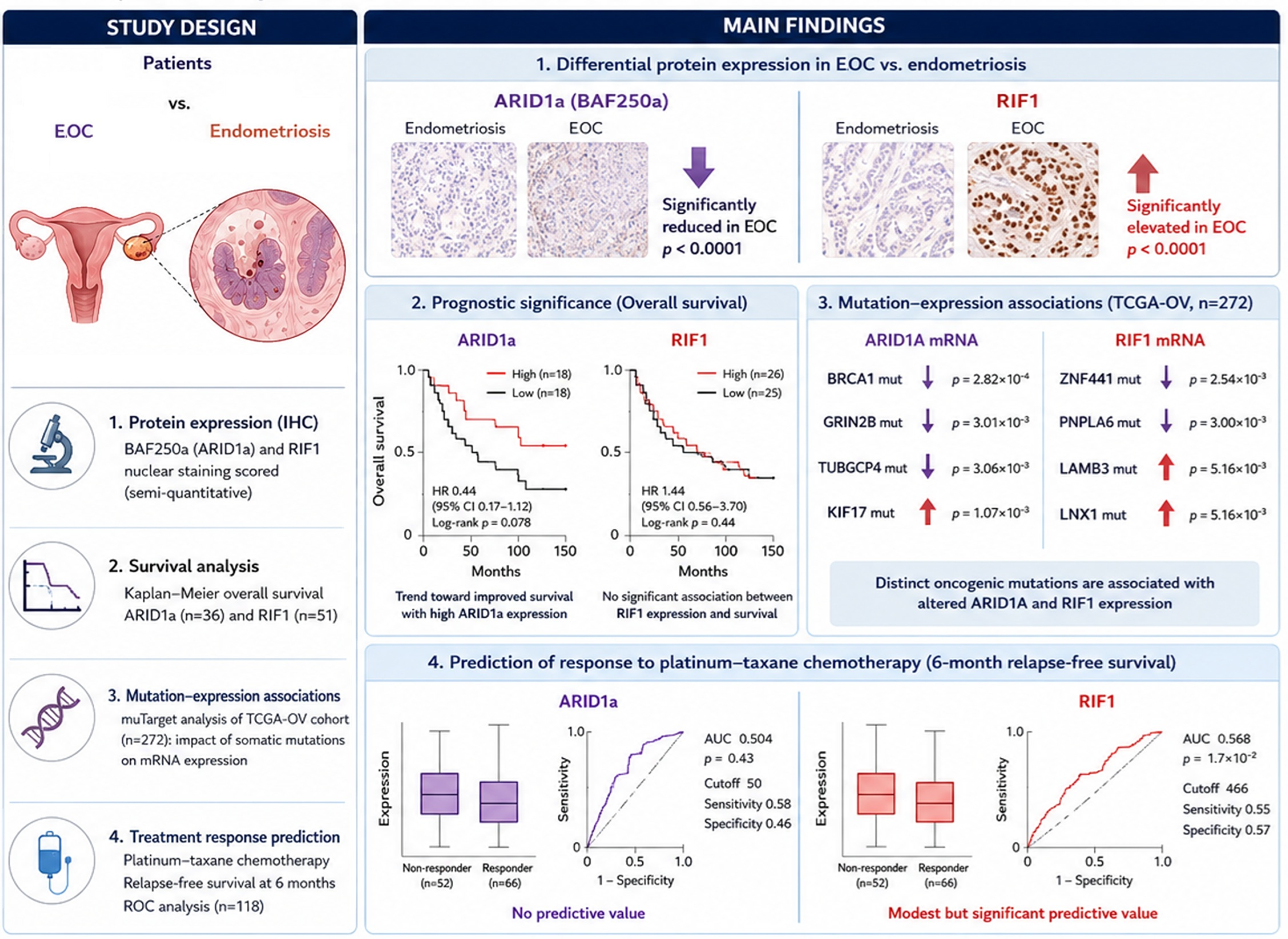
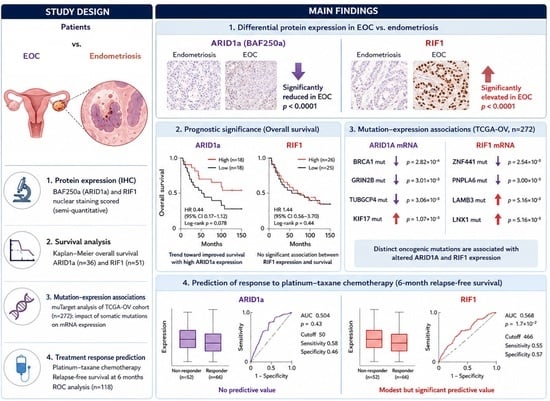
Graphical Abstract

1. Introduction

Endometrioid ovarian cancer (EOC) constitutes approximately 20–40% of epithelial ovarian cancers and is one subtype of endometriosis-associated ovarian cancers [1,2]. The global incidence rates demonstrate variability, with EOC prevalence ranging from 7% to 13% in surgical series [3]. The EOC subtype is notable for its resemblance to endometrial carcinoma of the uterus and a frequent association with endometriosis [4]. This association suggests a potential adenoma–carcinoma progression pathway, in which benign endometrioid lesions may progress to well-differentiated carcinomas [5]. Notably, although endometriosis is generally considered a benign gynecological disorder, its potential for malignant transformation into the endometrioid subtype underscores its clinical importance [6,7,8]. This connection has prompted extensive research into shared molecular pathways and key driver genes involved in their pathogenesis [9]. There is no doubt that the pathogenesis of EOC is multifactorial, involving a complex interplay of genetic, molecular, and environmental factors. Key mechanisms include genetic mutations, such as those in ARID1a, which are frequently observed in EOC and contribute to the dysregulation of oncogenic pathways [10,11,12]. ARID1a is a crucial component of the SWI/SNF (Switch/Sucrose Non-Fermentable) chromatin remodeling complex, which plays a vital role in epigenetic reprogramming and gene expression [13,14]. As a tumor suppressor, ARID1a is frequently mutated in ovarian clear cell carcinomas (over 50%) and EOC (around 30%), with these mutations typically leading to a loss of BAF250a protein expression [10,15,16,17,18]. Another gene of interest in the pathogenesis of EOC might be RIF1 (Rap1-interacting factor 1), as its expression is significantly upregulated in epithelial ovarian cancer and associated with platinum resistance and poor prognosis [18,19,20]. The RIF1 protein actively promotes the growth and progression of epithelial ovarian cancer cells [20]. Its involvement in DNA repair pathways and the activation of telomerase reverse transcriptase (hTERT) highlights RIF1’s importance in telomere biology, maintaining genomic stability and cancer stem cell characteristics, making it a promising biomarker and potential therapeutic target [21,22,23]. Current serum tumor markers, such as CA125, lack the necessary specificity and sensitivity for early EOC detection, as their levels can be influenced by various benign conditions, including endometriosis itself [24,25]. Understanding the molecular interplay between aging and EOC development is crucial for identifying novel diagnostic markers and therapeutic strategies to improve outcomes in this challenging disease [25].
We hypothesize that a reciprocal regulatory relationship exists between chromatin remodeling dysfunction and telomere repair signaling specifically in the endometriosis-associated subtype, driven by chronic inflammatory stress and replication-associated DNA damage. In this context, loss or dysregulation of a chromatin remodeler such as ARID1A may induce compensatory upregulation of telomere-associated DNA repair factors, including RIF1, in order to maintain genome stability under persistent oxidative and replicative stress. Conversely, sustained activation of telomere repair pathways may further reshape chromatin accessibility and epigenetic organization, thereby promoting survival of genomically unstable endometriotic epithelial cells. Therefore, the aim of this retrospective study was to elucidate how the expression of ARID1a and RIF1 in EOC is altered and to clarify whether these genes could be key drivers of the malignant transformation of endometriosis into EOC.

2. Materials and Methods

2.1. Ethical Approval

The study was approved by the ethics commissions of Charité—Universitätsmedizin Berlin (EA2/266/22 and EA1/150/24). Formalin-fixed paraffin-embedded (FFPE) tissues from patients were acquired with informed consent following the local institutional review and the Declaration of Helsinki.

2.2. Study Design

This retrospective study evaluated patients with histologically confirmed endometrioid ovarian cancer (FIGO stages IIIC-IVA, grade 2–3, no neoadjuvant chemotherapy before the surgery at the time of primary treatment, age range 35–65 years) and endometriosis (endometrioma, ENZIAN P1-P3) patients (age range 19–60 years). The study was conducted at Charité—Universitätsmedizin Berlin, a German tertiary academic medical center and certified European Society of Gynecological Oncology (ESGO) Center of Excellence.
Inclusion Criteria: Eligible patients were those who received primary treatment for an EOC tumor and for endometriosis at the Department of Gynecology of the Charité—Universitätsmedizin Berlin between 1 January 2014 and 31 July 2025.
Exclusion criteria: Criteria for exclusion from the study cohort included primary surgical intervention performed at an external institution, the presence of ovarian metastases derived from non-ovarian primary sites, and the existence of insufficient clinicopathologic or longitudinal follow-up data.
Study participants were ascertained via the institutional cancer registry, with pertinent clinical, histopathological, and therapeutic parameters systematically retrieved from electronic medical records and the institutional pathology database. Moreover, for the survival analysis, treatment response probability, and mutation status evaluation, the online Database on CancerHallmarks.com has been used.

2.3. Immunohistochemical Staining

Tissue quality assessment for cellularity and morphology, prior to immunohistochemical staining, was assessed based on the evaluation of Hematoxylin and Eosin (H&E) stained slides. An experienced pathologist examined the samples to ensure it contains a high enough percentage of target cells (such as tumor cells) relative to the stroma. Four-micrometer tissue sections were mounted on TOMO slides (n = 30) (Matsunami Glass, TOM-1190, Matsunami Glass Ind., Ltd., Kishiwada City, Japan) and subjected to immunohistochemical staining using Benchmark stainers (Roche, Ventana Medical Systems, Tucson, USA). BAF250a protein staining was performed on a Benchmark Discovery Ultra, with antigen retrieval using CC1 standard buffer. Sections were incubated with the primary antibody (Abcam, ab182560, clone EPR13501, 1:1000, Cambridge, UK) for 60 min, followed by a secondary anti-rabbit antibody (Vector, BA-1000-1.5, 1:200, Merck, Darmstadt, Germany) for 30 min. Visualization employed the DISCOVERY DAB Map Kit (Roche, 760-124, Ventana Medical Systems, Tucson, AZ, USA), and nuclei were counterstained with hematoxylin and bluing reagent. RIF1 staining was performed on a Benchmark Ultra, followed by primary antibody incubation (Abcam, ab229632, 1:500) for 32 min. Visualization was achieved using the ultraView Universal DAB Detection Kit (Roche, 760-500, Ventana Medical Systems, Tucson, AZ, USA), and the same nuclear counterstaining protocol was applied. All stained slides were digitized using a Leica Aperio GT 450 DX scanner (Leica Microsystems GmbH, Wetzlar, Germany) for analysis. An experienced pathologist screened the slides for fixation artifacts and excluded those if the sample suffered from over-fixation or under-fixation. The percentage of microscopically positive cells and staining intensity was scored by semi-quantitative interpretation. Five fields of view were observed on each section. In total, 15 EOC samples and 13 endometriosis samples (endometriosis genitalis externa, EZIAN 3) were analyzed by one examiner in a blinded manner. IHC evaluation quantified protein expression by combining the percentage of positive cells with the staining intensity. Staining intensity (degree of staining) refers to the grade of darkness or the concentration of the chromogen (DAB). The intensity of positive staining is also graded on a scale of 0 to 3, where colorless is 0, pale yellow is 1, tan is 2, and brown is 3. The percentage of positive cells evaluates the proportion of target cells that exhibit any visible staining. The percentage of positive-stained cells is graded on a scale of 0 to 4, where <5% is 0, 5–25% is 1, 26–50% is 2, 51–75% is 3, and 76–100% is 4. The positive grade is obtained by multiplying the two scores and relies on a standardized grading system that is widely used and well-established.

2.4. Kaplan–Meier Survival Probability Analysis

The gene-specific Kaplan–Meier analysis was performed with the help of the recently published online plotter tool and the respective database and restricted to endometrioid ovarian cancers [26]. Briefly, survival analysis was performed using the lifelines (v.0.27.4) package in Python v.3.10. Inclusion in the analysis was restricted to genes associated with at least 5 relapse events in at least one of the cohorts. Survival outcomes were characterized using Cox proportional hazards models and Log-Rank tests to evaluate prognostic significance.

2.5. Identification of Mutations Influencing the Expression of ARID1a and RIF1

The muTarget cancer biomarker platform and its integrated database were utilized to evaluate the impact of somatic mutations on the mRNA expression profiles of ARID1a and RIF1. These analyses were conducted in accordance with the methodological framework previously established and described by Nagy and Gyorffy [27]. In brief, algorithm development and data processing were implemented utilizing R software (v3.5.2). Somatic mutation datasets, identified through the Mutect2 pipeline, and corresponding transcriptomic profiles were retrieved from the Cancer Genome Atlas repository. Data aggregation and summarization were conducted via the MAFtools package within the R Bioconductor environment. To facilitate the analysis of cancer-specific somatic alterations, Mutation Annotation Format files were employed, enabling the systematic exclusion of low-confidence signals and putative germline variants. Mutation filtering was informed by Mutect2 classifications and further refined by stringent criteria, requiring a minimum sequencing depth of 20× and the presence of the identified alteration in at least five reads. Due to the fact that muTarget screens many mutations, we herein focused on the four mutations that most significantly altered the expression of ARID1a and RIF1.

2.6. Platinum- and Taxane-Based Treatment Response with Regard to ARID1a and RIF1 Expression

To evaluate the predictive potential of ARID1a and RIF1 mRNA expression for trastuzumab treatment, the ROC plotter tool and the corresponding database were used, as previously reported [28]. Briefly, study participants were stratified into binary cohorts of treatment responders and non-responders, predicated upon clinical and histopathological response criteria. For individuals undergoing neoadjuvant chemotherapy, a binary classification system was implemented as a substitute for standard four-tier categorization; “responders” were defined by a total absence of histological tumor evidence, while “non-responders” were those with identifiable residual malignant tissue.
Patients in the adjuvant therapy group were stratified based on survival and recurrence status at a five-year follow-up interval. This analysis involved the comparison of gene expression profiles between patients experiencing relapse within five years and those surviving beyond this five-year threshold, with individuals censored before this milestone excluded from the cohort. Statistical evaluations were executed using Mann–Whitney tests or Receiver Operating Characteristic analyses within the R environment, utilizing Bioconductor libraries.

2.7. Statistical Analysis

Statistical analyses were conducted using R (v3.5.2) and the lifelines (v.0.27.4) package within a Python (v.3.10) environment. Inter-group comparisons were evaluated via the Mann–Whitney U test or Receiver Operating Characteristic analysis. For the ROC assessments, the optimal diagnostic cut-off threshold was determined by the maximization of the Youden Index. Statistical significance was defined as a p-value < 0.05 or a False Discovery Rate < 0.05, as appropriate.

3. Results

3.1. Histological Appearance and Protein Expression

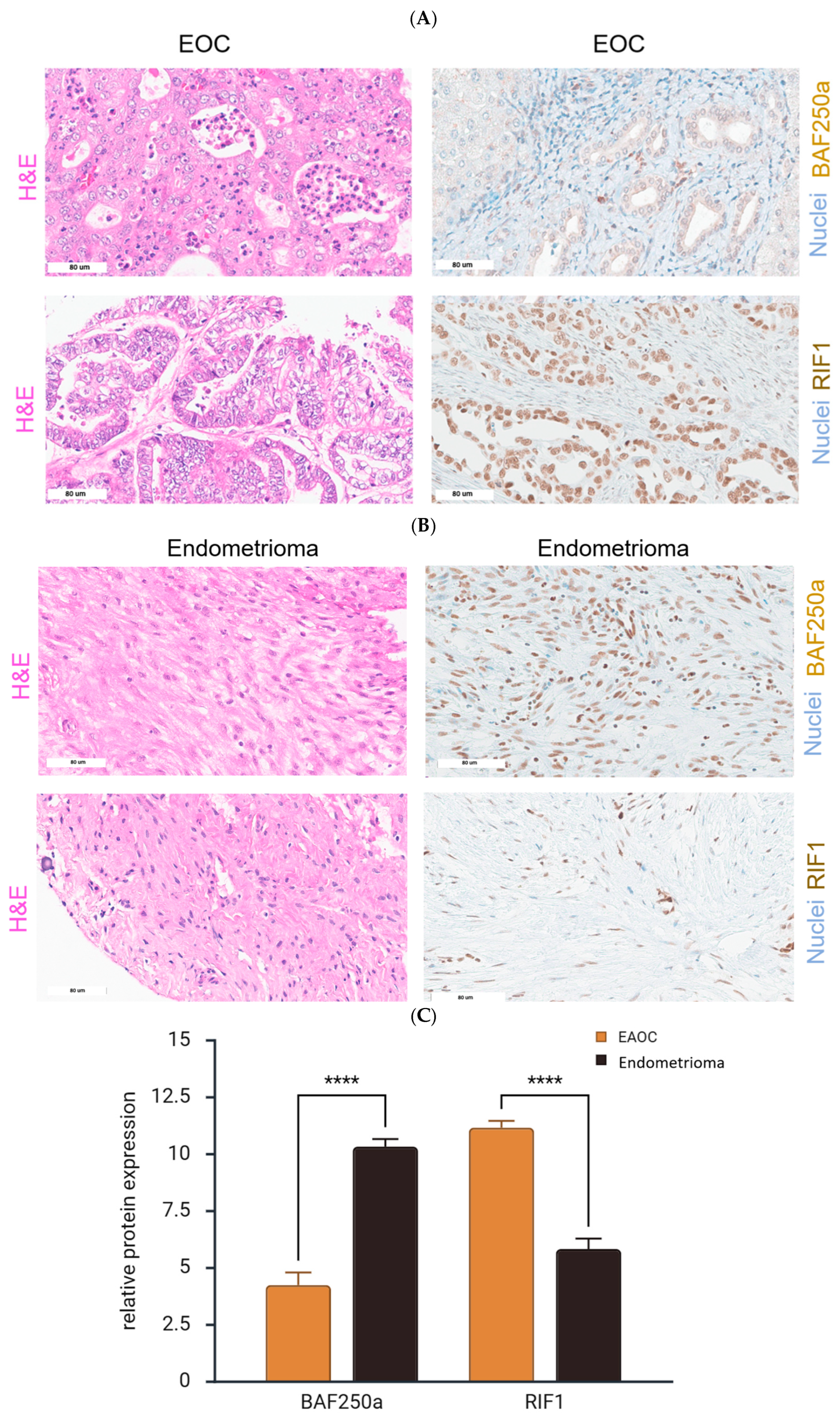
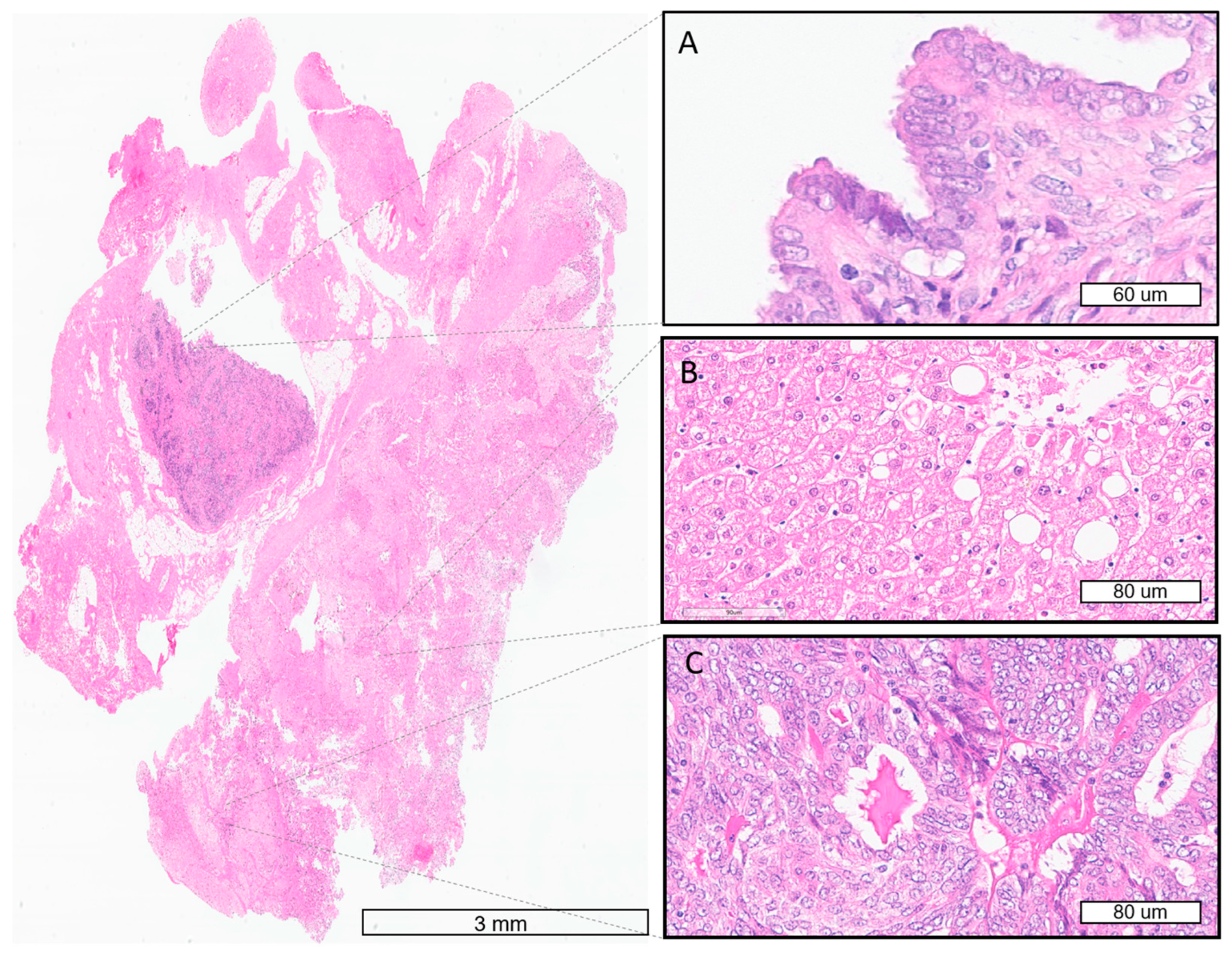
To begin, we analyzed hematoxylin and eosin (H&E)-stained resection sections histologically to confirm the malignant glandular architecture characteristic of EOC (Figure 1). Notably, all ovarian cancers are routinely classified by our Pathology Department based on the gene expression of WT1, PAX8, TP53, ER, PR, and p16. In the next step, immunohistochemical staining of EOC and endometrioma tissue samples was performed to analyze protein expression of BAF250a and RIF1. As shown in Figure 2, a nuclear localization, evident in both the nucleoplasm and the nuclear membrane, was observed for both proteins. Quantitative analysis of stained nuclei revealed a significant reduction (p < 0.0001) in BAF250a expression in EOC samples compared with endometriosis samples, which served as controls. In contrast, RIF1 showed a significantly higher protein expression in EAOC compared to control samples (p < 0.0001). These findings indicate a reciprocal alteration of chromatin- and DNA repair-associated factors in EOC. In contrast, elevated RIF1 expression suggests that enhanced or deregulated DNA damage response and replication control mechanisms are present.

3.2. Survival Probability with Regard to ARID1a and RIF1 Expression

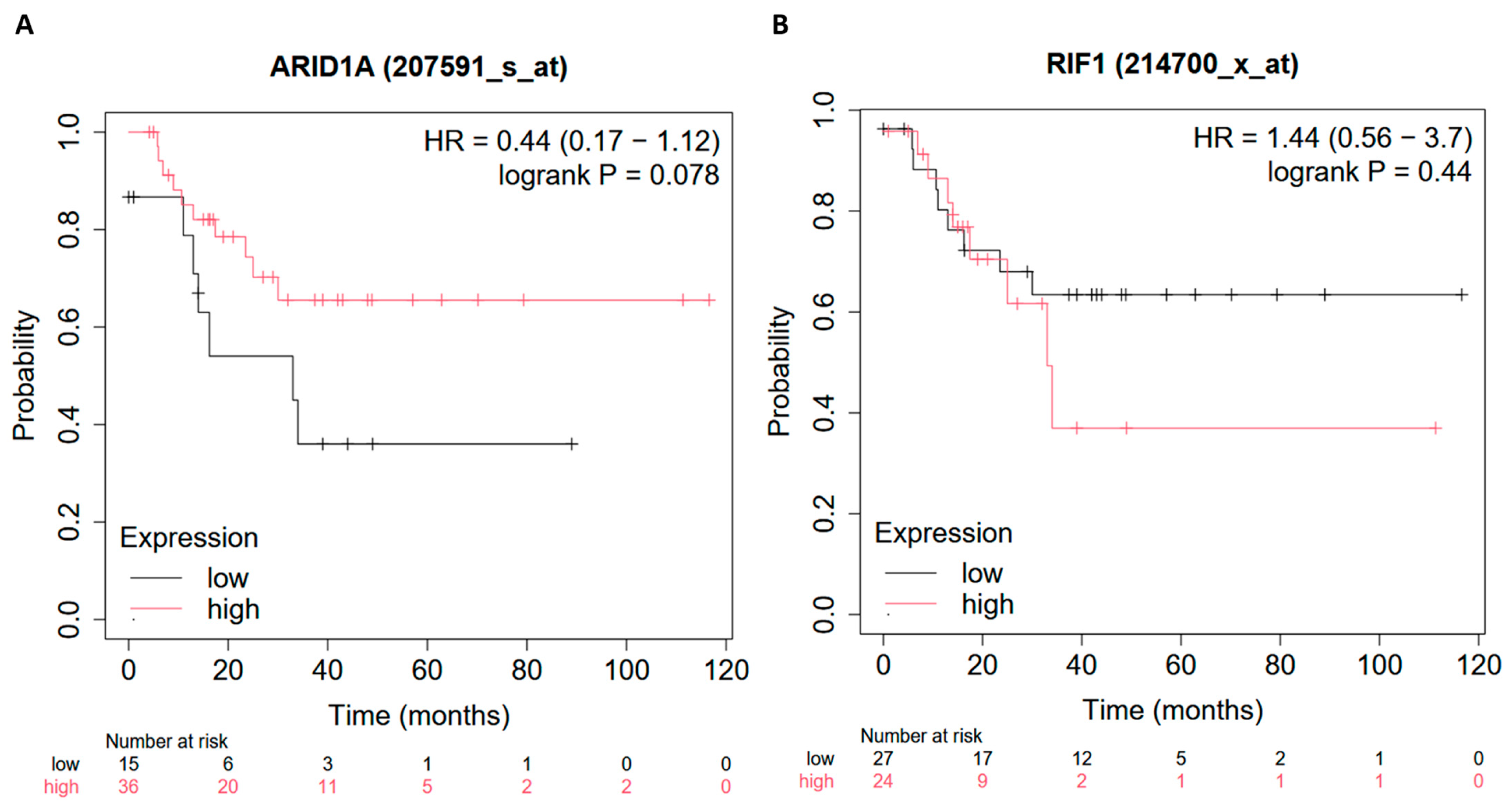
In the survival probability analysis, patients (n = 36) with elevated ARID1a expression showed no significant difference in overall survival compared with those with low ARID1a expression (HR = 0.44, 95% CI: 0.17–1.12; log-rank p = 0.078) (Figure 3A). Although the difference does not reach statistical significance, the hazard ratio below 1.0 indicates a relevant effect associated with high ARID1a expression. The separation of the survival curves appears early and is maintained over more than 100 months of follow-up. However, the relatively small number of patients at risk at later time points may limit statistical power and contribute to the borderline significance. For the gene RIF1 (Figure 3B), there is no statistically significant association between its expression levels and survival probability (HR = 1.44, 95% CI: 0.56–3.7; log-rank p = 0.44). Here, the hazard ratio above 1 suggests a possible trend toward worse outcomes with high expression, but the wide confidence interval crossing 1.0 and the high p-value indicate substantial uncertainty. The survival curves overlap considerably, supporting the conclusion that the expression of RIF1 is not a robust prognostic factor in this cohort (n = 51).

3.3. Identification of Mutations Influencing the Expression of ARID1a and RIF1

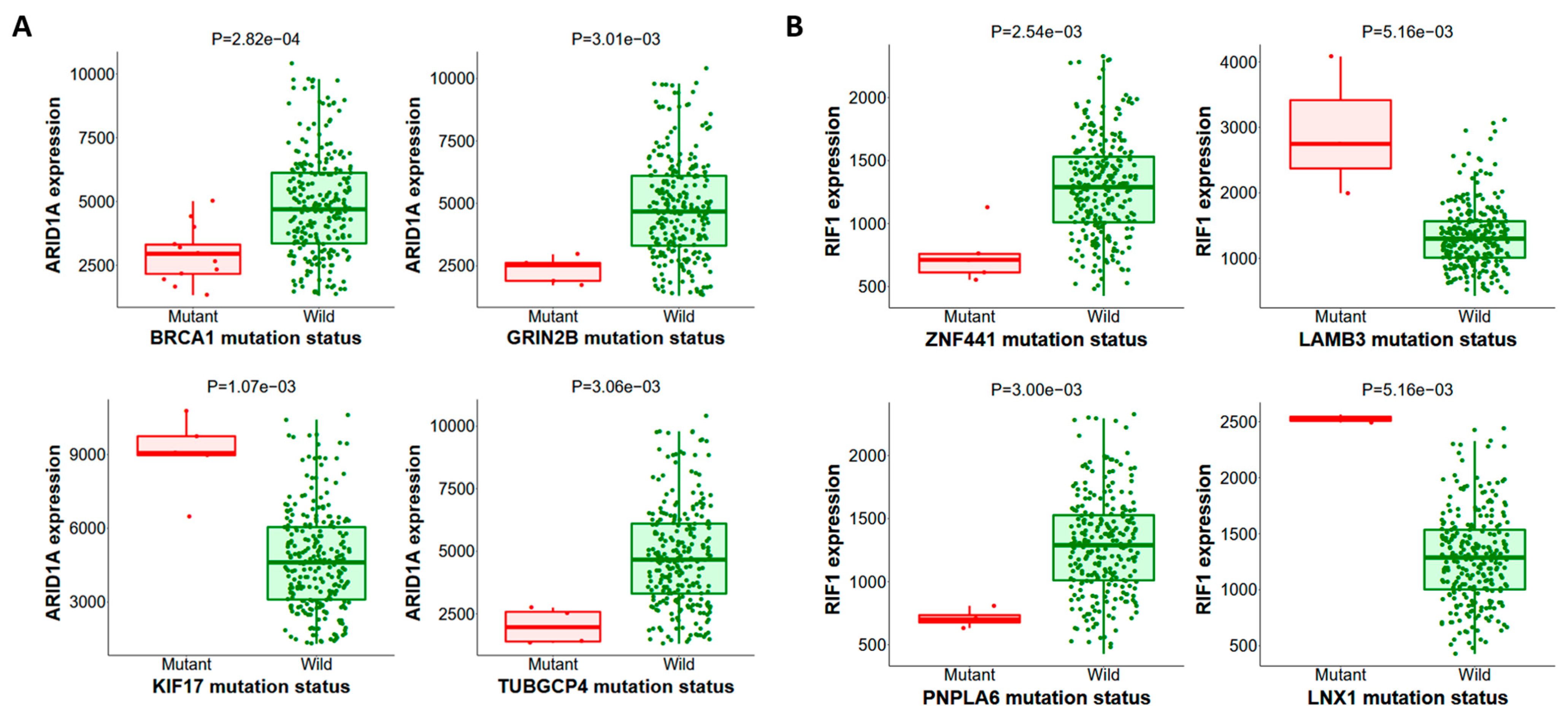
The muTarget analysis of ovarian cancer samples (mixed subtypes) revealed significant associations between mutation status and ARID1A mRNA expression. Tumors harboring mutations in BRCA1, GRIN2B, or TUBGCP4 exhibited significantly lower ARID1A expression levels compared with corresponding wild-type tumors, whereas KIF17 mutant tumors showed a significant (p = 1.07 × 10⁻³) upregulated ARID1a expression (Figure 4A). Specifically, ARID1A expression was significantly reduced in BRCA1-mutant tumors (p = 2.82 × 10⁻⁴), GRIN2B-mutant tumors (p = 3.01 × 10⁻³), and TUBGCP4-mutant tumors (p = 3.06 × 10⁻³). In all comparisons, the wild-type groups displayed broader expression distributions and higher median ARID1A mRNA expression levels (Figure 4A). The reduced ARID1A expression in tumors harboring BRCA1, GRIN2B, and TUBGCP4 mutations suggests a potential convergence of these molecular alterations on pathways regulating chromatin accessibility, DNA repair, or epigenetic stability.
Mutation-dependent alterations were also observed for RIF1 mRNA expression (Figure 4B). Tumors carrying mutations in ZNF441 and PNPLA6 demonstrated significantly decreased RIF1 mRNA expression relative to wild-type tumors, whereas tumors with mutations of the genes LAMB3 and LNX1 led to a significant upregulation of RIF1 mRNA expression. These alterations were highly significant: in ZNF441-mutant (p = 2.54 × 10⁻³), in LAMB3-mutant (p = 5.16 × 10⁻³), PNPLA6-mutant (p = 3.00 × 10⁻³), and in LNX1-mutant tumors (p = 5.16 × 10⁻³). These findings suggest that alterations in ARID1A and RIF1 expression may represent downstream molecular consequences of distinct oncogenic mutational events.

3.4. Platinum- and Taxane-Based Treatment Response with Regard to ARID1a and RIF1 Expression

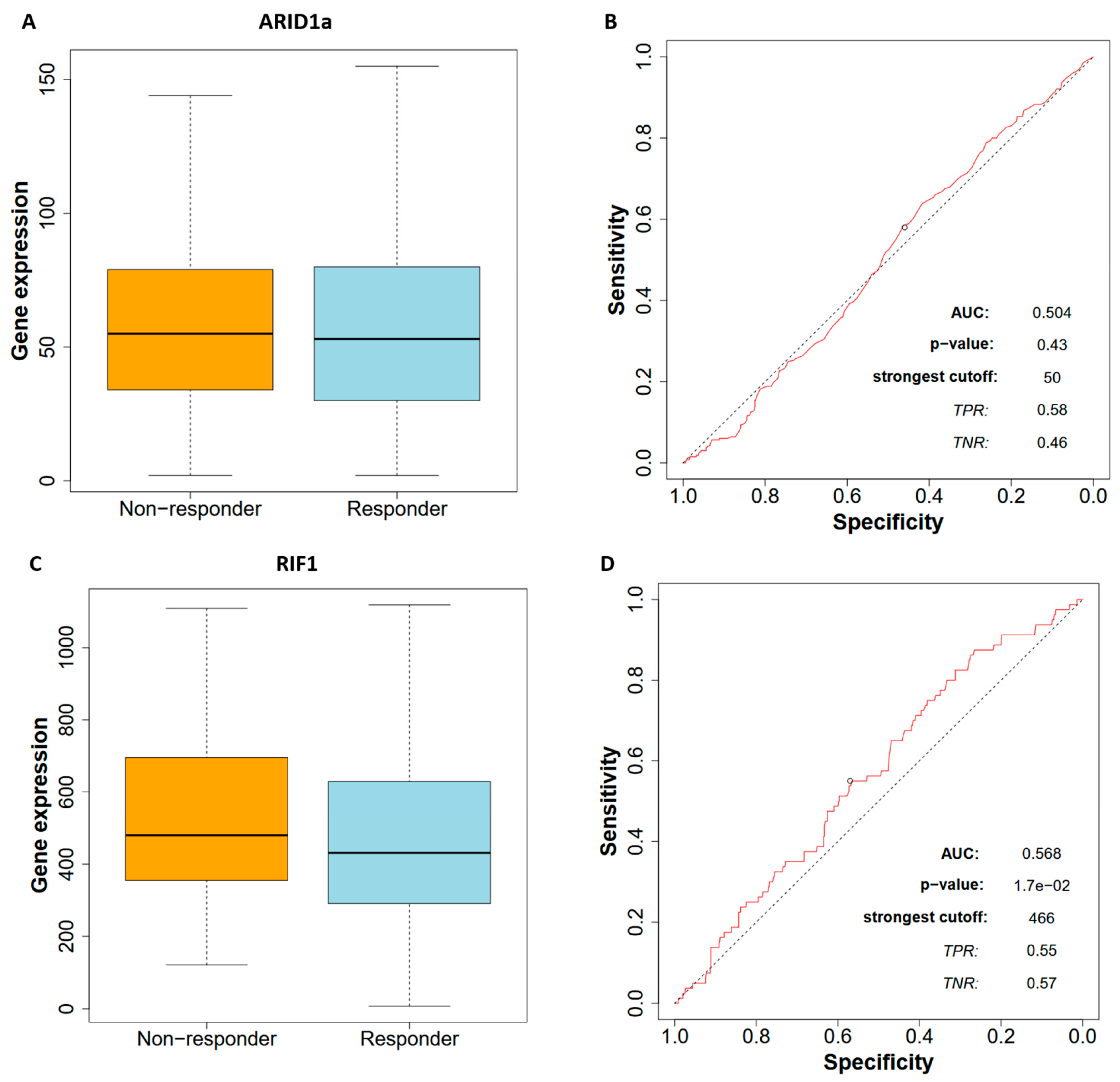
To investigate the association between gene expression and therapeutic outcome, ARID1a and RIF1 expression levels were analyzed EOC patients (n = 118) receiving platinum- and taxane-based chemotherapy, stratified according to relapse-free survival at six months following treatment initiation using the online ROC plotter tool. Comparison of ARID1a expression between treatment responders and non-responders showed largely overlapping distributions, with no evident separation between the two cohorts (Figure 5A). Median ARID1a expression levels were comparable between responders and non-responders, indicating no significant association between ARID1a expression and short-term therapeutic response. The ROC analysis evaluating the predictive performance of ARID1a expression for treatment response yielded an area under the curve (AUC) of 0.504 with a non-significant p-value of 0.43, indicating no discriminatory capacity beyond random classification (Figure 5B). The optimal cutoff value determined by the Youden Index was 50, corresponding to a sensitivity (true-positive rate, TPR) of 0.58 and a specificity (true-negative rate, TNR) of 0.46.
Analysis of RIF1 expression by treatment response status revealed a trend toward lower expression in treatment responders than in non-responders. Although expression ranges overlapped substantially between groups, responders exhibited a modest reduction in median RIF1 expression (Figure 5C). The ROC analysis for RIF1 expression demonstrated statistically significant predictive performance for treatment response, with an AUC of 0.568 and a p-value of 1.7 × 10⁻² (Figure 5D). However, this finding, although significant, should be treated with caution. The optimal cutoff value identified by the Youden Index was 466, yielding a sensitivity of 0.55 and a specificity of 0.57.

4. Discussion

This study provides novel insights into the distinct biological characteristics of RIF1 and ARID1a in endometrioid ovarian cancer, underscoring their potential as key drivers in the pathogenesis of EOC. As shown in our study, the opposing patterns of BAF250a downregulation and RIF1 upregulation support the concept that EOC is characterized by coordinated epigenetic dysregulation and altered genome maintenance pathways, which may contribute to tumor development and progression. Immunohistochemical analysis revealed differential protein expression of BAF250a (encoded by ARID1a) and RIF1 in EOC tumor samples and respective controls (endometrioma). Notably, ARID1a functions as a tumor suppressor. Its recurrent mutations and subsequent loss of protein expression (BAF250a) are a hallmark of EOC and are recognized as early molecular events in the malignant transformation of endometriosis [29,30]. This early involvement positions ARID1a downregulation as a highly relevant potential early biomarker for EOC development from ovarian endometriotic lesions. While ARID1a loss is strongly associated with EOC pathogenesis, its independent prognostic value remains debated, with some studies suggesting that its prognostic impact may be confounded by other factors, such as mismatch repair deficiency [31,32].
Moreover, our findings are particularly significant given that RIF1 overexpression has been consistently linked to aggressive disease, worse overall survival, and increased chemoresistance in epithelial ovarian cancer generally [33,34]. It should be emphasized that the protein expression analysis was limited to a small sample size. The known roles of RIF1 in DNA replication regulation and DNA repair pathways suggest that its dysregulation could contribute to genomic instability characteristic of cancer progression [35]. The observed expression pattern of RIF1 in our study, therefore, implicates it not only as a potential prognostic indicator but also as a marker reflecting the underlying mechanisms of tumor maintenance or resistance, warranting further investigation in the context of EOC progression.
Our observation that elevated ARID1a expression tends to be related to survival probability, although not statistically significant in stage IV EOC patients (HR = 0.44, p = 0.078), aligns with its established role as a tumor suppressor. ARID1a is typically linked to worse clinical outcomes [36,37,38,39]. Although our results reached only borderline significance, likely due to the limited sample size at late follow-up, the sustained separation of survival curves suggests that maintaining ARID1a expression may preserve genomic stability and suppress invasive progression [40]. Interestingly, while previous studies provided strong evidence that ARID1a loss is most prognostic in early-stage disease (FIGO I/II), our data support its potential relevance even in advanced stages [39,40].
In contrast, RIF1 expression did not significantly correlate with overall survival. While high RIF1 expression has been linked to poorer survival in other EOC cohorts due to its role in promoting cell growth and telomerase activity, our findings suggest that its prognostic value may be overshadowed by other aggressive features in stage IV disease [34,41]. Another interesting finding of this study is the modest but statistically significant predictive performance of RIF1 expression for platinum and taxane responsiveness (AUC = 0.568, p = 0.017). This is consistent with literature identifying RIF1 as a critical mediator of DNA double-strand break repair choice [40]. RIF1 promotes non-homologous end joining and inhibits the end-resection required for homologous recombination; consequently, its overexpression can confer resistance to DNA-damaging agents like cisplatin [41,42]. The trend toward lower RIF1 expression in treatment responders observed in our study corroborates the hypothesis that reduced RIF1 levels may sensitize cancer cells to chemotherapy-induced apoptosis by impairing repair mechanisms [43]. Notably, ARID1a showed no discriminatory capacity for therapeutic response (AUC = 0.504), highlighting that while ARID1a may influence long-term survival through tumor suppression, RIF1 is a more relevant biomarker for immediate chemosensitivity in the clinical setting. The muTarget analysis revealed novel associations between specific mutational profiles and the expression levels of the genes ARID1a and RIF1. The significant reduction of ARID1a in BRCA1-mutant tumors (p = 2.82 × 10⁻⁴) is particularly noteworthy. While ARID1a and BRCA1 mutations are often mutually exclusive with TP53 in certain subclasses of clear cell carcinoma, their co-occurrence or functional intersection in DNA repair pathways may represent a unique molecular phenotype [34,42,43].
Furthermore, the identification of KIF17 as a potential positive regulator of ARID1a and of LAMB3 as a regulator of RIF1 expression provides new avenues for understanding the upstream oncogenic events that dictate the epigenetic landscape of EOC. LAMB3 appears to function as an important oncogene in EOC, where its overexpression significantly promotes cellular proliferation, migration, and invasion via the WNT/β-catenin signaling pathway [44,45]. High LAMB3 expression is clinically associated with poor prognosis and an increased metastatic propensity [44,45]. The biological connection between LAMB3 mutations and the upregulation of the DNA repair factor, RIF1, is not direct or canonical, but several mechanistic links can plausibly connect extracellular matrix (ECM) dysfunction to genome instability and compensatory DNA damage responses [46]. ECM dysfunction can promote replication stress, and cells experiencing persistent replication stress often compensate by upregulating DNA repair machinery [47]. Thus, increased RIF1 expression may reflect a secondary adaptive response to genome instability induced by disrupted epithelial-ECM homeostasis. The relationship is therefore likely to be indirect, but his interaction is clinically relevant. Consequently, the LAMB3-mediated potential association of RIF1 represents a critical molecular intersection between extracellular matrix remodeling and genomic maintenance in EOC progression. Importantly, contemporary research has shown that the downregulation of RIF1 enhances the sensitivity to platinum-based chemotherapy in epithelial ovarian cancer by regulating the nucleotide excision repair (NER) pathway [34]. The aforementioned study further revealed that RIF1 knockdown potentiated cisplatin-induced apoptosis in epithelial ovarian cancer cells [34]. Consequently, RIF1 represents a promising candidate as a novel molecular biomarker for predicting clinical response to platinum-based chemotherapy and for assessing the overall prognosis of patients diagnosed with EOC.

5. Conclusions and Limitations

In conclusion, our study offers a new perspective, emphasizing that EOC is a distinct clinical and molecular entity and identifies key molecular players. We demonstrated the expression patterns of ARID1a/BAF250a and RIF1 in EOC and endometriosis, establishing their relevance in the context of tumor biology. Integrating RIF1 as a predictive biomarker could enhance the precision of treatment selection in EOC, particularly for identifying patients likely to experience early relapse following standard platinum-based therapy. However, certain limitations, such as the small sample size of IHC samples and the retrospective character of this study, should be taken into consideration. The observational nature of the study and the lack of functional validation experiments are also limitations. Another limitation concerns the muTarget analysis of differential expression of ARID1a and RIF1 across the four most significant gene mutations, which was based on an ovarian cancer cohort with different subtypes, as it was not possible to restrict to EOC. Therefore, future studies could focus on the functional validation of the identified mutational drivers to determine if targeting these upstream regulators can restore ARID1a levels or suppress RIF1-mediated chemoresistance in EOC.

Author Contributions

P.K.: participation in study design, execution, analysis, manuscript writing, and critical discussion; R.V.V. and S.B.: participation in IHC and HE sample preparation and manuscript review; J.S. and S.M.: acquisition of funding, general supervision of a research group or administrative support, as well as writing assistance. All authors have read and agreed to the published version of the manuscript.

Funding

This work was also supported by the Nicolaus Copernicus University IDUB programme through funding awarded to the FemLife_OMICS Research Team for Women’s Health Across the Lifespan. The financial support of the German Federal Ministry of Research, Technology, and Space (BMFTR) is gratefully acknowledged (ENDO-PAIN grant, number 01EJ2402A).

Institutional Review Board Statement

The study was conducted in accordance with the Declaration of Helsinki and approved by the Ethics Committee of Charité—Universitätsmedizin Berlin (EA2/266/22 and EA1/150/24).

Informed Consent Statement

Informed consent was obtained from all subjects involved in the study.

Data Availability Statement

Data will be made available on request.

Acknowledgments

The Tumor Bank Ovarian Cancer at the Department of Gynecology with Centre of Oncological Surgery, Charité University Hospital, is gratefully acknowledged for providing the tissue samples. We thank Mihnea Dragomir for their assistance during this study. The authors used Grammarly v.8.93x to enhance the accuracy of their English and improve the flow of their writing.

Conflicts of Interest

Jalid Sehouli reports research activities by Roche Pharma, AstraZeneca, Bayer, Clovis Oncology, GlaxoSmithKline, Lilly, Iqvia, Mural, and MSD; receiving honoraries by GlaxoSmithKline, PharmaMar, AstraZeneca, Clovis Oncology, Bayer, Roche Pharma, Vifor Pharma, Hexal AG, Novartis Pharma, Eisai, Esteve Pharmaceuticals, Incyte Biosciences, Phytolife Nutrition, JenaPharm, Kyowa Kirin, Oncoinvent AS, Daiichi, Medtronic Covidien, AMGEN, AbbVie, Corcept Therapeutics, Gilead Sciences, and Myriad; and consulting activities for Merck/Pfizer, PharmaMar, Clovis Oncology, AstraZeneca, Roche Pharma, GlaxoSmithKline, MSD, Eisai, Novocure, Oncoinvent, Intuitive Surgical, Seagen, Bayer Vital, Mundipharma, Sanofi-Aventis Deutschland GmbH, Immunogen, Tubulis GmbH, Daiichi Sankyo, Bristol Myers Squibb, KaryopharmTherapeutics, and Corcept Therapeutics. The remaining authors declared no conflicts of interest.

Abbreviations

The following abbreviations are used in this manuscript:
ARID1aAT-rich interaction domain-containing protein 1a
BAF250aBRG1/Brm-Associated Factor 250a
EOCEndometrioid ovarian cancer
RIF1Replication Timing Regulatory Factor 1

References

  1. Chen, S.; Li, Y.; Qian, L.; Deng, S.; Liu, L.; Xiao, W.; Zhou, Y. A review of the clinical characteristics and novel molecular subtypes of endometrioid ovarian cancer. Front. Oncol. 2021, 11, 668151. [Google Scholar] [CrossRef]
  2. Pecorino, B.; Laganà, A.S.; Chiàntera, V.; Ferrara, M.; Di Stefano, A.B.; Di Donna, M.C.; Sorrentino, F.; Nappi, L.; Mikuš, M.; Scollo, P. Progression-free survival, overall survival, and relapse rate in endometrioid ovarian cancer and synchronous endometrial-ovarian endometrioid cancer. Medicina 2022, 58, 1706. [Google Scholar] [CrossRef]
  3. Vercellini, P.; Viganò, P.; Buggio, L.; Makieva, S.; Scarfone, G.; Cribiù, F.M.; Parazzini, F.; Somigliana, E. Perimenopausal management of ovarian endometriosis and associated cancer risk. Best Pract. Res. Clin. Obstet. Gynaecol. 2018, 51, 151–168. [Google Scholar] [CrossRef]
  4. Rathod, G.; Swetha, S.; Mishra, M.; Patnaik, N.; Aslam, K. A Case Report of Endometrioid Carcinoma of the Ovary: A Comprehensive Clinical, Pathological, and Molecular Perspective. J. Midlife Health 2025, 16, 474–477. [Google Scholar] [CrossRef]
  5. Cho, K.R.; Shih, I.-M. Ovarian cancer. Annu. Rev. Pathol. 2009, 4, 287–313. [Google Scholar] [CrossRef]
  6. Chen, F.; Zhu, M.; Li, W. Advances in research on malignant transformation of endometriosis-associated ovarian cancer. Front. Oncol. 2024, 14, 1475231. [Google Scholar] [CrossRef] [PubMed]
  7. Livori, K.; Calleja-Agius, J. Rare but still there: A scoping review on endometriosis-associated ovarian cancer. Discov. Med. 2024, 36, 467. [Google Scholar] [CrossRef] [PubMed]
  8. Wilbur, M.B.; Shih, I.-M.; Segars, J.H.; Fader, A. Cancer implications for patients with endometriosis. Semin. Reprod. Med. 2017, 35, 110–116. [Google Scholar] [CrossRef]
  9. Păvăleanu, I.; Balan, T.A.; Poparlan, T.N.; Haliciu, A.M.; Buţureanu, T.; Apetrei, A.M.; Socolov, R.; Pruteanu, A.; Bălan, R. Endometriosis-associated ovarian carcinoma. In A Comprehensive Overview of Endometriosis; IntechOpen: London, UK, 2024. [Google Scholar] [CrossRef]
  10. Wiegand, K.C.; Shah, S.P.; Al-Agha, O.M.; Zhao, Y.; Tse, K.; Zeng, T.; Senz, J.; McConechy, M.K.; Anglesio, M.S.; Kalloger, S.E.; et al. ARID1A mutations in endometriosis-associated ovarian carcinomas. N. Engl. J. Med. 2010, 363, 1532–1543. [Google Scholar] [CrossRef]
  11. Lowery, W.J.; Schildkraut, J.M.; Akushevich, L.; Bentley, R.; Marks, J.R.; Huntsman, D.; Berchuck, A. Loss of ARID1A-associated protein expression in ovarian cancers. Int. J. Gynecol. Cancer 2012, 22, 9–14. [Google Scholar] [CrossRef] [PubMed]
  12. Borrelli, G.M.; Abrão, M.S.; Taube, E.T.; Darb-Esfahani, S.; Köhler, C.; Chiantera, V.; Mechsner, S. (Partial) Loss of BAF250a (ARID1A) in rectovaginal deep-infiltrating endometriosis, endometriomas and involved pelvic sentinel lymph nodes. Mol. Hum. Reprod. 2016, 22, 329–337. [Google Scholar] [CrossRef]
  13. Mathur, R.; Alver, B.H.; San Roman, A.K.; Wilson, B.G.; Wang, X.; Agoston, A.T.; Park, P.J.; Shivdasani, R.A.; Roberts, C.W. ARID1A loss drives colon cancer in mice. Nat. Genet. 2017, 49, 296–302. [Google Scholar] [CrossRef]
  14. Mullen, J.; Kato, S.; Sicklick, J.K.; Kurzrock, R. Targeting ARID1A mutations in cancer. Cancer Treat. Rev. 2021, 100, 102287. [Google Scholar] [CrossRef] [PubMed]
  15. Mandal, J.; Mandal, P.; Wang, T.-L.; Shih, I.-M. Treating ARID1A mutated cancers. J. Biomed. Sci. 2022, 29, 71. [Google Scholar] [CrossRef]
  16. Caumanns, J.J.; Wisman, G.B.A.; Berns, K.; van der Zee, A.G.J.; de Jong, S. ARID1A mutant ovarian clear cell carcinoma: A clear target for synthetic lethal strategies. Biochim. Biophys. Acta Rev. Cancer 2018, 1870, 176–184. [Google Scholar] [CrossRef]
  17. Kordowitzki, P.; Mechsner, S.; Sehouli, J. ARID1a Gene as a Potential Early Marker to Tackle Endometriosis-Associated Ovarian Cancer. Aging Dis. 2023, 15, 2331–2333. [Google Scholar] [CrossRef] [PubMed]
  18. Tian, J.; Li, J.; Liu, F.; Wang, C.; Sun, B.; Yan, J.; Zhu, B.; Qin, Y.; Fang, S.; Zhang, H.; et al. DSCC1 restrains 53BP1/RIF1 signaling. Cell Rep. 2025, 44, 115452. [Google Scholar] [CrossRef] [PubMed]
  19. Kordowitzki, P.; Graczyk, S.; Mechsner, S.; Sehouli, J. Interaction between Rif1 and telomeres in ovarian cancer. Aging Dis. 2024, 15, 535–545. [Google Scholar] [CrossRef]
  20. Liu, Y.B.; Mei, Y.; Long, J.; Zhang, Y.; Hu, D.L.; Zhou, H.H. RIF1 promotes ovarian cancer progression. J. Exp. Clin. Cancer Res. 2018, 37, 182. [Google Scholar] [CrossRef]
  21. Dong, Q.; Day, M.; Saito, Y.; Parker, E.; Watts, L.P.; Kanemaki, M.T.; Oliver, A.W.; Pearl, L.H.; Hiraga, S.I.; Donaldson, A.D. Human RIF1-long isoform interacts with BRCA1. Nat. Commun. 2025, 16, 5820. [Google Scholar] [CrossRef]
  22. Koo, A.S.; Jia, W.; Kim, S.H.; Scalf, M.; Boos, C.E.; Chen, Y.; Wang, D.; Voter, A.F.; Bajaj, A.; Smith, L.M.; et al. DNA-damage dependent isoform switching modulates RIF1 repair complex assembly. J. Biol. Chem. 2025, 301, 110857. [Google Scholar] [CrossRef] [PubMed]
  23. Kabrani, E.; Rahjouei, A.; Berruezo-Llacuna, M.; Ebeling, S.; Saha, T.; Altwasser, R.; Delgado-Benito, V.; Pavri, R.; Di Virgilio, M. RIF1 integrates DNA repair and transcriptional requirements. Nat. Commun. 2025, 16, 777. [Google Scholar] [CrossRef] [PubMed]
  24. Baltacioglu, M.H.; Soydal, C.; Araz, M.; Kuru Oz, D.; Taskin, S.; Kucuk, N.O.; Erden, G.A.; Elhan, A.H. FDG PET/MRI in ovarian cancer recurrence detection. J. Ovarian Res. 2026, 19, 21. [Google Scholar] [CrossRef] [PubMed]
  25. Kordowitzki, P.; Lange, B.; Elias, K.M.; Haigis, M.C.; Mechsner, S.; Braicu, I.E.; Sehouli, J. Transforming treatment paradigms: Focus on personalized medicine for high-grade serous ovarian cancer. CA Cancer J. Clin. 2025, 75, 436–460. [Google Scholar] [CrossRef]
  26. Győrffy, B. Discovery and ranking of prognostic biomarkers in serous ovarian cancer. Geroscience 2023, 45, 1889–1898. [Google Scholar] [CrossRef]
  27. Nagy, Á.; Győrffy, B. muTarget platform. Int. J. Cancer 2021, 148, 502–511. [Google Scholar] [CrossRef]
  28. Fekete, J.T.; Győrffy, B. ROCplot.org biomarker validation. Int. J. Cancer 2019, 145, 3140–3151. [Google Scholar] [CrossRef]
  29. Lu, J.; Tao, X.; Zhou, J.; Lu, Y.; Wang, Z.; Liu, H.; Xu, C. Clinical outcomes in ovarian carcinoma arising in endometriosis. Oncotarget 2017, 8, 5843–5852. [Google Scholar] [CrossRef]
  30. Ayhan, A.; Mao, T.-L.; Seckin, T.; Wu, C.H.; Guan, B.; Ogawa, H.; Futagami, M.; Mizukami, H.; Yokoyama, Y.; Kurman, R.J.; et al. Loss of ARID1A expression in ovarian tumor progression. Int. J. Gynecol. Cancer 2012, 22, 1310–1315. [Google Scholar] [CrossRef]
  31. Khalique, S.; Nash, S.; Natrajan, R. No association between ARID1A mutation and clinical outcome. J. Pathol. 2022, 258, 1–3. [Google Scholar] [CrossRef]
  32. Heinze, K.; Nazeran, T.M.; Lee, S.; Krämer, P.; Cairns, E.S.; Chiu, D.S.; Leung, S.C.; Kang, E.Y.; Meagher, N.S.; Kennedy, C.J.; et al. Validated biomarker assays confirm that ARID1A loss is confounded with MMR deficiency, CD8+ TIL infiltration, and provides no independent prognostic value in endometriosis-associated ovarian carcinomas. J. Pathol. 2022, 256, 388–401. [Google Scholar] [CrossRef]
  33. Sad, L.M.A.E.; Mohamed, D.A.; Elanwar, N.M.; Elkady, A. CXCR4 and RIF1 overexpression induces resistance of epithelial ovarian cancer to cisplatin-based chemotherapy. J. Cancer Res. Ther. 2021, 17, 1454–1461. [Google Scholar] [CrossRef]
  34. Liu, Y.B.; Mei, Y.; Tian, Z.W.; Long, J.; Luo, C.H.; Zhou, H.H. Downregulation of RIF1 enhances platinum sensitivity. Cell Physiol. Biochem. 2018, 46, 1971–1984. [Google Scholar] [CrossRef]
  35. Clemente, V.; Hoshino, A.; Shetty, M.; Nelson, A.; Erickson, B.K.; Baker, R.; Rubin, N.; Khalifa, M.; Weroha, S.J.; Lou, E.; et al. GLS1 is a Protective Factor in Patients with Ovarian Clear Cell Carcinoma and its Expression Does Not Correlate with ARID1A-mutated Tumors. Cancer Res. Commun. 2022, 2, 784–794. [Google Scholar] [CrossRef] [PubMed]
  36. Fontana, B.; Gallerani, G.; Salamon, I.; Pace, I.; Roncarati, R.; Ferracin, M. ARID1A in cancer: Friend or foe? Front. Oncol. 2023, 13, 1136248. [Google Scholar] [CrossRef]
  37. Takeda, T.; Banno, K.; Okawa, R.; Yanokura, M.; Iijima, M.; Irie-Kunitomi, H.; Nakamura, K.; Iida, M.; Adachi, M.; Umene, K.; et al. ARID1A gene mutation in ovarian and endometrial cancers. Oncol. Rep. 2016, 35, 607–613. [Google Scholar] [CrossRef] [PubMed]
  38. Luchini, C.; Veronese, N.; Solmi, M.; Cho, H.; Kim, J.H.; Chou, A.; Gill, A.J.; Faraj, S.F.; Chaux, A.; Netto, G.J.; et al. Prognostic role of ARID1A mutation status in cancer. Oncotarget 2015, 6, 39088–39097. [Google Scholar] [CrossRef] [PubMed]
  39. Zhang, K.; Wang, W.; Chen, L.; Liu, Y.; Hu, J.; Guo, F.; Tian, W.; Wang, Y.; Xue, F. Genes associated with platinum chemoresistance in ovarian carcinoma. Oncol. Rep. 2020, 44, 909–926. [Google Scholar] [CrossRef]
  40. Xiao, M.; Cai, J.; Cai, L.; Jia, J.; Xie, L.; Zhu, Y.; Huang, B.; Jin, D.; Wang, Z. Let-7e sensitizes ovarian cancer to cisplatin. J. Ovarian Res. 2017, 10, 24. [Google Scholar] [CrossRef]
  41. Chaudhuri, A.R.; Callen, E.; Ding, X.; Gogola, E.; Duarte, A.A.; Lee, J.E.; Wong, N.; Lafarga, V.; Calvo, J.A.; Panzarino, N.J.; et al. Replication fork stability confers chemoresistance in BRCA-deficient cells. Nature 2016, 539, 456. [Google Scholar] [CrossRef]
  42. Eoh, K.J.; Kim, H.M.; Lee, J.Y.; Kim, S.; Kim, S.W.; Kim, Y.T.; Nam, E.J. Mutation landscape of BRCA1/2 in ovarian cancer. BMC Cancer 2020, 20, 204. [Google Scholar] [CrossRef]
  43. Bolton, K.L.; Chen, D.; Corona de la Fuente, R.; Fu, Z.; Murali, R.; Köbel, M.; Tazi, Y.; Cunningham, J.M.; Chan, I.C.C.; Wiley, B.J.; et al. Molecular subclasses of clear cell ovarian carcinoma. Clin. Cancer Res. 2022, 28, 4947–4956. [Google Scholar] [CrossRef]
  44. Yu, F.; Zeng, G.; Yang, L.; Zhou, H.; Wang, Y. LAMB3 in neoplastic and non-neoplastic diseases. Biomed. Pharmacother. 2024, 178, 117233. [Google Scholar] [CrossRef]
  45. Wu, J.; Wu, Y.; Chen, S.; Guo, Q.; Shao, Y.; Liu, C.; Lin, K.; Wang, S.; Zhu, J.; Chen, X.; et al. PARP1-stabilised FOXQ1 promotes ovarian cancer progression. Oncogene 2024, 43, 866–883. [Google Scholar] [CrossRef]
  46. Martins, S.G.; Zilhão, R.; Thorsteinsdóttir, S.; Carlos, A.R. Linking Oxidative Stress and DNA Damage to Changes in the Expression of Extracellular Matrix Components. Front. Genet. 2021, 12, 673002. [Google Scholar] [CrossRef] [PubMed]
  47. He, Q.; Chang, X.; Zhang, H.; Hao, Q.; Zhi, J.; Shi, H.; Tian, Y.; Zhou, H.; Tan, Y.; Zheng, J.; et al. Nuclear damage-induced DNA damage response coupled with IFI16-driven ECM remodeling underlies dilated cardiomyopathy. Theranostics 2025, 15, 5998–6021. [Google Scholar] [CrossRef] [PubMed]
Figure 1. Representative microscopic picture of endometrioid ovarian cancer. On the left, a hematoxylin and eosin (H&E)-stained resection specimen is shown in which an Endometriosis-Associated Ovarian Cancer has arisen from an endometriotic lesion. The magnified pictures on the right show contagious atypical ovarian endometriosis (Panel A), endometroid ovarian cancer (Panel B), and malignant endometrial glands (Panel C).
Cells 15 01036 g001
Figure 2. Protein expression of BAF250a and RIF1. Panel (A) shows representative microscopic images of H&E-stained and immunohistochemical (IHC) protein staining in EOC samples, with positive (brownish stain) BAF250a and RIF1 protein expression. Panel (B) shows representative microscopic images of H&E-stained and representative IHC protein staining in Endometrioma samples, with positive (brownish stain) BAF250a and RIF1 protein expression. Panel (C) shows the quantitative analyses of protein expression for BAF250a and RIF1. The white scale bar in the lower left corner indicates 80 μm. The p-value of < 0.0001 is indicated by ****.
Cells 15 01036 g002
Figure 3. Kaplan–Meier survival curves with regard to ARID1a and RIF1 expression in stage IV endometrioid ovarian cancer patients. Panel (A) shows the survival probability by ARID1a expression status. Kaplan–Meier survival curves stratified by low (black) and high (red) ARID1a gene expression. Panel (B) shows the survival probability by RIF1 expression status. Kaplan–Meier survival curves stratified by low (black) and high (red) RIF1 gene expression. Numbers at risk are shown below the plots. Hazard ratios (HRs), 95% confidence intervals, and log-rank p values are indicated.
Cells 15 01036 g003
Figure 4. Differential expression of ARID1a and RIF1 according to the four most significant gene mutations in ovarian cancer. Boxplots depict the expression levels in the tested cohort (n = 272) for mutant versus wild-type tumors. This analysis has been performed in a mixed ovarian cancer cohort and was not restricted to EOC. Panel (A) shows ARID1a messenger RNA expression stratified by BRCA1, GRIN2B, KIF17, and TUBGCP4 mutation status with the respective p-values on the top. Panel (B) shows RIF1 messenger RNA expression stratified by ZNF441, LAMB3, PNPLA6, and LNX1 mutation status, with the respective p-values on the top. The Mann–Whitney analysis was used.
Cells 15 01036 g004
Figure 5. Treatment responsiveness with regard to ARID1a and RIF1 gene expression. Relapse-free survival for six months upon platinum and taxane treatment in EOC patients (n = 118) is shown. Panel (A) shows ARID1a expression levels by treatment response status. Panel (B) presents a Receiver Operating Characteristic analysis evaluating the utility of ARID1A expression in differentiating treatment responders from non-responders. Utilizing the Youden Index to identify the optimal diagnostic threshold ($cutoff = 50$), the analysis yielded a sensitivity of 0.58 and a specificity of 0.46. Correspondingly, Panel (C) depicts RIF1 expression levels according to clinical response. Panel (D) illustrates the ROC performance of RIF1 mRNA in predicting therapeutic outcomes; at an optimized cutoff of 466, the marker demonstrated a sensitivity of 0.55 and a specificity of 0.57. The strongest cutoff values were determined using the Youden Index. The two cohorts (responders vs. non-responders) are compared using the Mann–Whitney test and the ROC test in the R statistical environment. Statistical significance was set at p < 0.05.
Cells 15 01036 g005
Disclaimer/Publisher’s Note: The statements, opinions and data contained in all publications are solely those of the individual author(s) and contributor(s) and not of MDPI and/or the editor(s). MDPI and/or the editor(s) disclaim responsibility for any injury to people or property resulting from any ideas, methods, instructions or products referred to in the content.