MicroRNA Expression Profile in Endometriosis and Endometriosis-Associated Ovarian Cancer—Systematic Review

 , , and
Highlights
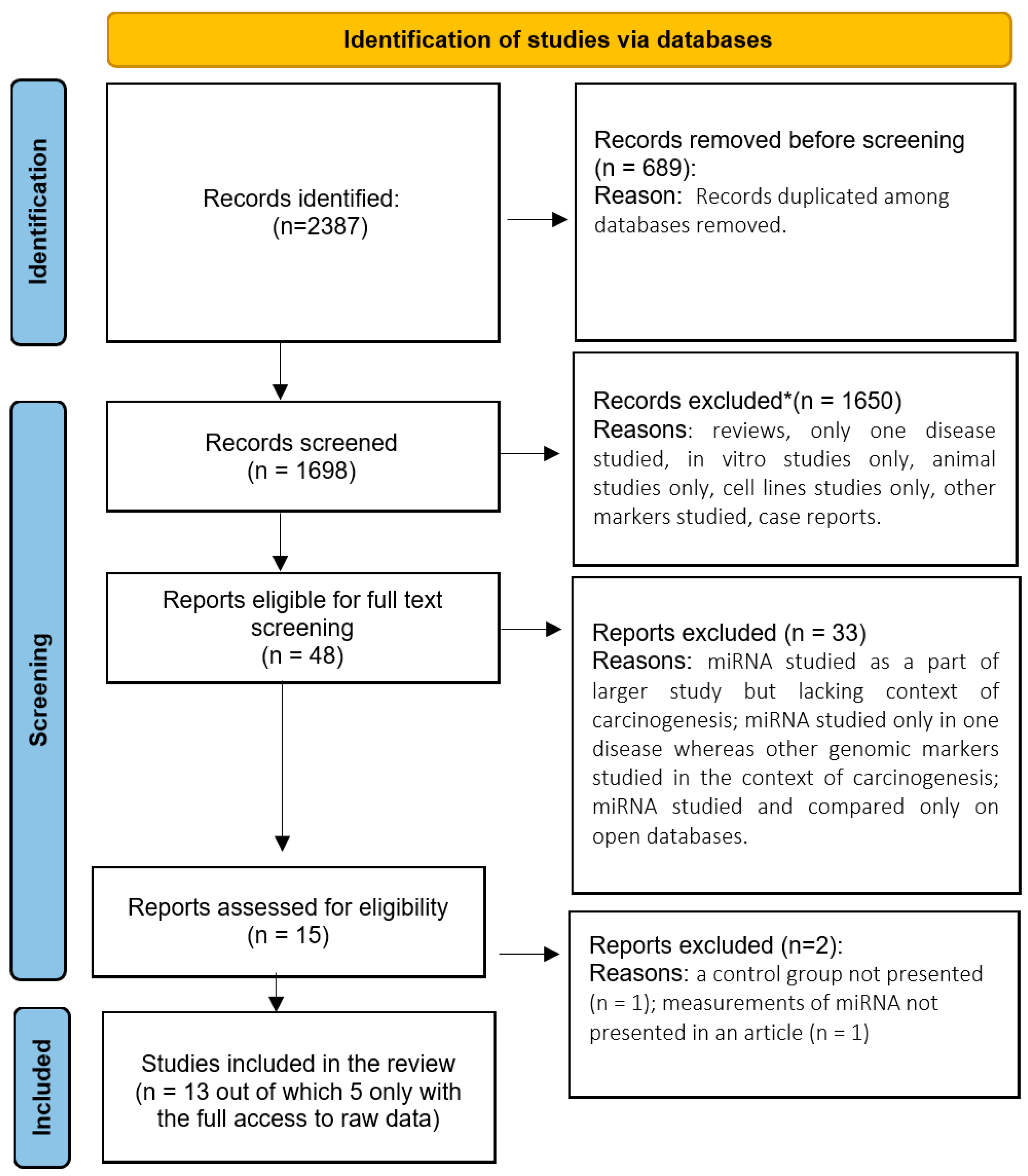
- Out of 2387 screened manuscripts, 13 studies originated from diverse geographic regions and included both patients with endometriosis and ovarian cancer diagnosed simultaneously or consecutively
- No consistent miRNA up- or downregulation was observed across all studies
- Current results in the literature related to miRNA do not allow conclusions to be drawn on the disrupted pattern leading from endometriosis to endometriosis-associated ovarian cancer
- The use of Next-Generation Sequencing (NGS) could help overcome limitations related to the selection of different reference genes in miRNA studies and improve the accuracy of relative expression analyses.
Abstract
1. Introduction
2. Materials and Methods
2.1. Search Strategy
2.2. Study Inclusion/Exclusion Criteria
- (a)
- Searched terms: miRNA in endometriosis and miRNA in ovarian cancer, miRNA in endometriosis-associated ovarian cancer (EAOC); miRNA in ovarian neoplasms and endometriosis (strings provided above).
- (b)
- Full-text original articles in English with available dataset or raw data on miRNA expression in both diseases.
- (a)
- Only abstracts;
- (b)
- Articles not in English;
- (c)
- A lack of statistical methods described;
- (d)
- Case reports, animal studies, in vitro only studies, review, meta-analyses, or editorial articles;
- (e)
- The markers were not microRNAs.
2.3. Data Extraction

| Author, Year of Publication and Raw Data | Country | Number of Patients | miRNA Studied | miRNA Assessment Method | Sample Type | Cell Lines |
|---|---|---|---|---|---|---|
| Suryawanshi S. et al., 2013 [27] | USA | 88 | panel for 1113 miRNAs, then 23 detected by RT-qPCR | qPCR | human: plasma and FFPE, mice: whole blood | No |
| Wu RL. et al., 2015, [34] raw data: in GEO: GSE71477 | USA | 19 | panel for 1156 miRNAs | qPCR | human: FFPE | No |
| Dong M. et al., 2015 [35] | China | 36 | miR-191 | qPCR | human: serum, FFPE and commercial cell lines | HEK293T, CRL7566, CRL-11731 |
| Tian X. et al., 2015 [36] | China | 30 | miR-191 | qPCR | human: FFPE and commercial cell lines | HEK293T, CRL7566, CRL-11731 |
| Braicu OL. et al., 2017 [37] | Romania | 78 | custom panel for 84 miRNAs | qPCR | human: FFPE | No |
| Hsu CY et al., 2018 [38] | Taiwan | 9 | miR-381, miR-203 | qPCR | human: serum, stromal cells isolated from tissue and commercial cell lines | TOV21G, TOV112D |
| Nakamura N. et al., 2020 [39] | Japan | 41 | microarrays panel for 2578 miRNAs; miR-39-3p and miR-486-5p in qPCR | microarrays and qPCR | human: serum, peritoneal fluid and commercial cell line | EMOsis-CC/TERT |
| Kumari P. et al., 2021 [40] | India | 40 | miR-16, miR-20a, miR-99b, miR-125a, miR-143, miR-145 | qPCR | human: fresh frozen tissue and FFPE | No |
| Szubert M. et al., 2023 [28] raw data published along the paper | Poland | 135 | array panel for 754 miRNAs; miR-1-3p, miR-125b-1-3p, miR-31-3p, miR-200b-3p, miR-502-5p, miR-503-5p and miR-548d-5p in qPCR | qPCR array and qPCR | human: FFPE | No |
| Takamizawa S. et al., 2023 [41] | Japan | 64 | array panel for 754 miRNAs; miR-146a-5p, miR-191-5p, miR-484 and miR-574-3p in qPCR | qPCR array and qPCR | human: serum | No |
| Collins KE. et al., 2023 [42] raw data in GEO: GSE230956 | USA | 35 | Whole-miRNome sequencing (WMS) | RNAseq and qPCR | human: fresh frozen tissue and commercial cell lines | ES-2, TOV-21G, IGROV-1, SKOV3ip1, OVISE, OVAS, OVTOKO, KK, SMOV-2, A2780, A2780CR5, SKOV3, RMG-I |
| Talu ECK et al., 2025 [43] raw data published along the paper | Turkiye | 33 | miR-21 and miR-200b | qPCR | human: FFPE | No |
| Ravegnini G. et al., 2025 [44] raw data in GEO: GSE292134 | Italy | 37 | Whole-miRNome sequencing (WMS) | Recover All™ total Nucleic Acid Isolation Kit (Thermo Fisher Scientific, Waltham, USA), run on NextSeq 500 high-output (Illumina, San Diego, USA) | human: FFPE | No |
2.4. Trial Quality Assessment and Risk of Bias
| Author | Selection | Comparability | Outcome | Total |
|---|---|---|---|---|
| Suryawanshi S. et al., 2013 [27] | **** | ** | *** | 9 |
| Wu RL. et al., 2015 [34] | ** | ** | ** | 6 |
| Dong M. et al., 2015 [35] | ** | ** | ** | 6 |
| Tian X. et al., 2015 [36] | *** | * | * | 5 |
| Braicu OL. et al., 2017 [37] | **** | ** | *** | 9 |
| Hsu CY. et al., 2018 [38] | ** | * | * | 4 |
| Nakamura N. et al., 2020 [39] | *** | ** | ** | 7 |
| Kumari P. et al., 2021 [40] | *** | ** | *** | 8 |
| Szubert M. et al., 2023 [28] | *** | ** | *** | 8 |
| Takamizawa S. et al., 2024 [41] | **** | ** | ** | 8 |
| Collins KE. et al., 2023 [42] | ** | ** | *** | 7 |
| Talu ECK. et al., 2025 [43] | ** | ** | *** | 7 |
| Ravegnini G. et al., 2025 [44] | **** | ** | *** | 9 |
- Confounding—confounding factors that can alter miRNA expression independently of the disease (patient’s related: age—described only partially in all manuscripts, data not comparable—mean vs. median, ethnicity—usually not given, menstrual and hormonal status—usually not described, stage of the disease; sample’s related: heterogeneity of the tissue, fresh/frozen/FFPE—usually properly described, storage conditions; laboratory related—different kits used—usually properly described, different methodology, lack of description of some steps).
- Classification of exposure—whether the exposure was measured and categorized correctly (endogenous controls properly reported in only a few manuscripts, normalization, CT values, test used properly reported).
- Deviations from the intended procedure—if there were major deviations from the planned protocol present.
- Missing data—assessment if clinical data are present, measurement of outcomes—if all measurements and raw data provided, selection of reported results—if all results presented or only part of them (including Supplementary Files).
- Overall bias—summarizing, overall judgment equals the highest level of bias in any domain.
| Author | Confounding | Selection of Participants | Classification of Exposure | Deviations from Intended Exposure | Missing Data | Measurement of Outcomes | Selection of Reported Results | Overall Risk of Bias |
|---|---|---|---|---|---|---|---|---|
| Suryawanshi S. et al., 2013 [27] | moderate | moderate | moderate | low | serious | serious | serious | serious |
| Wu RL. et al., 2015 [34] | serious | moderate | moderate | low | serious | serious | serious | serious |
| Dong M. et al., 2015 [35] | serious | moderate | moderate | low | serious | serious | serious | serious |
| Tian X. et al., 2015 [36] | moderate | moderate | moderate | low | serious | serious | serious | serious |
| Braicu OL. et al., 2017 [37] | low | moderate | moderate | low | serious | serious | serious | serious |
| Hsu CY. et al., 2018 [38] | serious | moderate | moderate | low | serious | serious | serious | serious |
| Nakamura N. et al., 2020 [39] | moderate | moderate | moderate | low | serious | serious | serious | serious |
| Kumari P. et al., 2021 [40] | moderate | moderate | moderate | low | serious | serious | moderate | serious |
| Szubert M. et al., 2023 [28] | moderate | moderate | moderate | low | serious | serious | moderate | serious |
| Takamizawa S. et al., 2024 [41] | low | moderate | moderate | low | serious | serious | moderate | serious |
| Collins KE. et al., 2023 [42] | serious | moderate | moderate | low | serious | serious | moderate | serious |
| Talu ECK. et al., 2025 [43] | serious | moderate | moderate | low | serious | serious | moderate | serious |
| Ravegnini G. et al., 2025 [44] | low | moderate | low | low | serious | serious | moderate | serious |
3. Results
| Author | Number of miRNAs Studied | Control Gene Used | Changes in Endometriosis | Changes in Endometriosis Associated Ovarian Cancer (EAOC) |
|---|---|---|---|---|
| Suryawanshi S. et al., 2013 [27] | 1113 in pooled screening cohort, then 23 detected by RT-qPCR | endogenous control miRNA, miR-132 | upregulated top three: miR-16, miR-195, miR-191 | upregulated top three: miR-21, miR-191, miR-16 |
| Dong M et al., 2015 [35] | One only, miR191 | RNU6B | upregulated | further upregulation |
| Hsu CY et al., 2018 [38] | Two—miR-203 and miR-381 | RNU6 | downregulated | downregulated |
| Nakamura N. et al., 2020 [39] | miR-92a-3p, miR-486-5p, miR-4484, miR-6821-5p, and miR-7108-5p | cel-miR-39-5p | endometriosis set as control tissue | miR-485-5p significantly upregulated |
| Takamizawa S. et al., 2023 [41] | Four miRNAs—miR-146a-5p, miR-191-5p, miR-484 and miR-574-3p | miR-16 (477860_mir) | none | upregulated: miR-146a-5p and miR-191-5p |
| Author | Number of miRNAs Studied | Control Gene Used | Changes in Endometriosis | Changes in Endometriosis Associated Ovarian Cancer (EAOC) |
|---|---|---|---|---|
| Suryawanshi S. et al., 2013 [27] | 1113 in pooled screening cohort, then 23 | endogenous control miRNA, miR-132 | N/A | upregulated: miR-16, 21, 15b, and 195 |
| Wu RL. et al., 2015 [34] | 1156 in pooled screening cohort, then 7 | miRNA in endometriosis samples; relative differential expression of the selected miRNAs in ovarian cancer was demonstrated by setting the expression level of endometriosis at 1.0. | expression levels set at 1.0 | downregulated: miR-1, miR-133a, and miR-451, upregulated: miR-141, miR-200a, miR-200c, and miR-3613 |
| Dong M. et al., 2015 [35] | One miRNA—miR-191 | RNU6B | upregulated | further upregulation in comparison to endometriosis |
| Tian X. et al., 2015 [36] | One miRNA—miR-191 | RNU6B | upregulated | further upregulation in comparison to endometriosis |
| Braicu OL. et al., 2017 [37] | 84 in PCR array, 7 in qRT-PCR quantitative validation | the average Ct value of the cel-miR-39, SNORD68, SNORD95, SNORD96A and RNU6-6P | miR-93, miR-492 | miR-93, miR-200c, miR-141, miR-492 |
| Hsu CY. et al., 2018 [38] | Two miRNAs—miR-203 and miR-381 | RNU6 (001093, Applied Biosystems) | miR-203 upregulated and miR-381 downregulated | miR-203 downregulated and miR-381 upregulated |
| Kumari P. et al., 2021 [40] | Six selected based on previous studies: miR-16, miR-20a, miR-99b, miR-125a, miR-143, and miR-145 | U6 snRNA | downregulated: miR-16, miR-20a; upregulated: miR-145, miR-99b, miR-125a, and miR-143 | downregulated: miR-16, miR-20a, upregulated: miR-99b, miR-125a, miR-145 and miR-143 |
| Szubert M. et al., 2023 [28] | 754 in screening cohort, then 7 | hsa-miR-191-5p | downregulated: miR-125b-1-3p and miR-503-5p; upregulated: miR-200b-3p | downregulated: miRNA-200b and miRNA-31-3p, upregulated: miR-503-5p |
| Collins KE. et al., 2023 [42] | Small RNA sequencing (NGS)—over 43 million reads, log2 fold change > |1| identified 64 upregulated and 61 downregulated mature miRNA molecules | U6 snRNA | Endometriosis set as comparative tissue | top three upregulated: miR-10a-5p, miR-141-3p, miR-30a-5p, top three downregulated: miR-143-3p, miR-127-3p, let-7c-5p |
| Talu ECK. et al., 2025 [43] | Two miRNAs: miR-200b, miR-21 | U6 | upregulation of miR-200 b only when comparing endometriosis from endometriosis-only patients and endometriosis foci coexisting with CCOC | upregulated miRNA-21 and miRNA-200b but only in endometrium, not in cancer tissue |
| Ravegnini G. et al., 2025 [44] | global miRNA profiling using NGS method | statistically, using DESeq2 R-package (R version 4.4.0 (2024–04–24 ucrt) - "Puppy Cup") | 13 deregulated miRNAs in endometriosis coexisting with cancer comparing to benign endometriosis: 9 were upregulated (miR-10a-5p, miR-126–5p, miR-141–3p, miR-144–3p, miR-144–5p, miR-183–5p, miR-200a-3p, miR-205–5p and miR-451a) and 4 downregulated (miR-345–5p, miR-361–3p, miR-483–3p, miR-675–3p) | upregulated in EAOC and in coexisting endometriosis tissue: miR-200a-3p, miR-141–3p, miR-183–5p, miR-10a-5p |
4. Discussion
4.1. Summary of Main Results
4.2. Results in the Context of Published Literature
4.3. Strengths and Weaknesses
4.4. Implication for Practice and Future Research
5. Conclusions
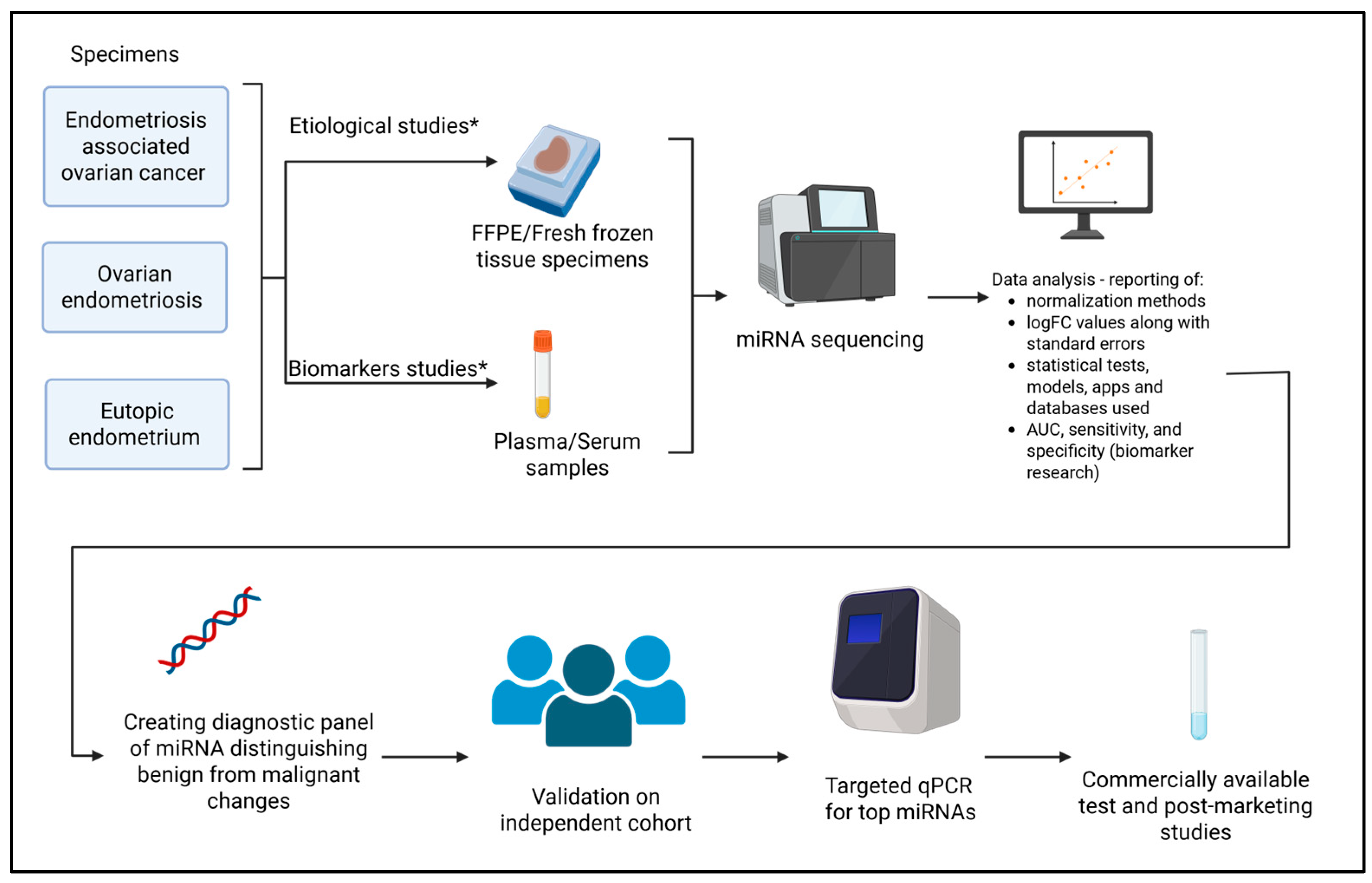
- Collection of FFPE samples from diseases of interest (endometrioma and EAOC) together with associated clinical data;
- MiRNA next-generation sequencing (NGS) with appropriate statistical normalization;
- Development of a diagnostic model estimating the probability of carcinogenic transformation;
- Validating the test on an independent cohort.
Supplementary Materials
Author Contributions
Funding
Institutional Review Board Statement
Informed Consent Statement
Data Availability Statement
Conflicts of Interest
Abbreviations
References
- Benagiano, G.; Brosens, I.; Lippi, D. The history of endometriosis. Gynecol Obstet Invest. 2014, 78, 1–9. [Google Scholar] [CrossRef]
- Alves, J.S.; Meneses, T.; Mariano, M.; Serra, S.S.; Costa, T.; Martins, J.P.; Rabishong, B.; Lima, J. Is endometriosis staging related to the type and intensity of patients’ complaints? A systematic review and meta-analysis. J. Minim. Invasive Gynecol. 2025, in press. [Google Scholar] [CrossRef] [PubMed]
- Roychoudhury, S.; Buza, N. Endometriosis Then and Now: A 100-Year Journey Around Pathogenesis and Clinicopathologic Associations. Arch. Pathol. Lab. Med. 2025, 150, 12–18. [Google Scholar] [CrossRef] [PubMed]
- Ghizzani, A.; Orlandini, C.; Bernardi, M.G.; Cevenini, G.; Luisi, S. Sexual pain in women: Quality of sex life and marital relations. Minerva Obstet. Gynecol. 2017, 69, 381–389. [Google Scholar] [CrossRef] [PubMed]
- Murakami, K.; Kotani, Y.; Nakai, H.; Matsumura, N. Endometriosis-Associated Ovarian Cancer: The Origin and Targeted Therapy. Cancers 2020, 12, 1676. [Google Scholar] [CrossRef]
- Hermens, M.; van Altena, A.M.; Nieboer, T.E.; Schoot, B.C.; van Vliet, H.A.A.M.; Siebers, A.G.; Bekkers, R.L.M. Incidence of endometrioid and clear-cell ovarian cancer in histological proven endometriosis: The ENOCA population-based cohort study. Am. J. Obstet. Gynecol. 2020, 223, 107.e1–107.e11. [Google Scholar] [CrossRef]
- Lessey, B.A.; Lebovic, D.I.; Taylor, R.N. Eutopic Endometrium in Women with Endometriosis: Ground Zero for the Study of Implantation Defects. Semin. Reprod. Med. 2013, 31, 109–124. [Google Scholar] [CrossRef]
- Wang, T.; Zhang, X.; Lu, Z.; Wang, J.; Hua, K. Comparison and analysis of the clinicopathological features of SCEO and ECOM. J. Ovarian Res. 2019, 12, 10. [Google Scholar] [CrossRef]
- Wilson, M.R.; Reske, J.J.; Holladay, J.; Wilber, G.E.; Rhodes, M.; Koeman, J.; Adams, M.; Johnson, B.; Su, R.-W.; Joshi, N.R.; et al. ARID1A and PI3-kinase pathway mutations in the endometrium drive epithelial transdifferentiation and collective invasion. Nat. Commun. 2019, 10, 3554. [Google Scholar] [CrossRef]
- Garzetti, G.G.; Ciavattini, A.; Goteri, G.; De Nictolis, M.; Cignitti, M.; Tranquilli, A.L.; Romanini, C. Endometrioid carcinoma of the ovary. Retrospective study. Eur. J. Gynaecol. Oncol. 1993, 14, 51–55. [Google Scholar] [PubMed]
- Sainz de la Cuesta, R.; Eichhorn, J.H.; Rice, L.W.; Fuller, A.F., Jr.; Nikrui, N.; Goff, B.A. Histologic transformation of benign endometriosis to early epithelial ovarian cancer. Gynecol. Oncol. 1996, 60, 238–244. [Google Scholar] [CrossRef] [PubMed]
- Ishikawa, M.; Nakayama, K.; Nakamura, K.; Ono, R.; Sanuki, K.; Yamashita, H.; Ishibashi, T.; Minamoto, T.; Iida, K.; Razia, S.; et al. Affinity-purified DNA-based mutation profiles of endometriosis-related ovarian neoplasms in Japanese patients. Oncotarget 2018, 9, 14754–14763. [Google Scholar] [CrossRef]
- Modugno, F.; Ness, R.B.; Allen, G.O.; Schildkraut, J.M.; Davis, F.G.; Goodman, M.T. Oral contraceptive use, reproductive history, and risk of epithelial ovarian cancer in women with and without endometriosis. Am. J. Obstet. Gynecol. 2004, 191, 733–740. [Google Scholar] [CrossRef] [PubMed]
- Melin, A.; Sparén, P.; Persson, I.; Bergqvist, A. Endometriosis and the risk of cancer with special emphasis on ovarian cancer. Hum. Reprod. 2006, 21, 1237–1242. [Google Scholar] [CrossRef]
- Chiaffarino, F.; Cipriani, S.; Ricci, E.; Esposito, G.; Parazzini, F.; Vercellini, P. Histologic Subtypes in Endometriosis-Associated Ovarian Cancer and Ovarian Cancer Arising in Endometriosis: A Systematic Review and Meta-Analysis. Reprod. Sci. 2024, 31, 1642–1650. [Google Scholar] [CrossRef] [PubMed]
- Wiegand, K.C.; Shah, S.P.; Al-Agha, O.M.; Zhao, Y.; Tse, K.; Zeng, T.; Senz, J.; McConechy, M.K.; Anglesio, M.S.; Kalloger, S.E.; et al. ARID1A mutations in endometriosis-associated ovarian carcinomas. N. Engl. J. Med. 2010, 363, 1532–1543. [Google Scholar] [CrossRef]
- Ye, L.; Chen, J.; Guo, W.; Zhao, Q.; Cheng, X.; Wang, X.; Xu, X.; Chen, X.; Ni, J. TCGA molecular subtypes in endometriosis-associated ovarian cancer: A systematic review and meta-analysis. Ann. Med. 2025, 57, 2583543. [Google Scholar] [CrossRef]
- Tucker, D.R.; Lee, A.F.; Orr, N.L.; Alotaibi, F.T.; Noga, H.L.; Williams, C.; Allaire, C.; Bedaiwy, M.A.; Huntsman, D.G.; Köbel, M.; et al. Somatic PTEN and ARID1A loss and endometriosis disease burden: A longitudinal study. Hum. Reprod. 2025, 40, 296–309. [Google Scholar] [CrossRef]
- Otmani, K.; Lewalle, P. Tumor Suppressor miRNA in Cancer Cells and the Tumor Microenvironment: Mechanism of Deregulation and Clinical Implications. Front. Oncol. 2021, 11, 708765. [Google Scholar] [CrossRef]
- Kay, M.A. Ruvkun and Ambros recognized for miRNAs. Mol. Ther. Nucleic Acids 2024, 35, 102379. [Google Scholar] [CrossRef]
- Volinia, S.; Calin, G.A.; Liu, C.G.; Ambs, S.; Cimmino, A.; Petrocca, F.; Visone, R.; Iorio, M.; Roldo, C.; Ferracin, M.; et al. A microRNA expression signature of human solid tumors defines cancer gene targets. Proc. Natl. Acad. Sci. USA 2006, 103, 2257–2261. [Google Scholar] [CrossRef] [PubMed]
- Yuan, L.; Li, S.; Zhou, Q.; Wang, D.; Zou, D.; Shu, J.; Huang, Y. MiR-124 inhibits invasion and induces apoptosis of ovarian cancer cells by targeting programmed cell death. Oncol. Lett. 2017, 14, 7311–7317. [Google Scholar] [CrossRef] [PubMed][Green Version]
- Wilk, G.; Braun, R. Integrative analysis reveals disrupted pathways regulated by microRNAs in cancer. Nucleic Acids Res. 2018, 46, 1089–1101. [Google Scholar] [CrossRef] [PubMed]
- Laudanski, P.; Charkiewicz, R.; Tolwinska, A.; Szamatowicz, J.; Charkiewicz, A.; Niklinski, J. Profiling of Selected MicroRNAs in Proliferative Eutopic Endometrium of Women with Ovarian Endometriosis. BioMed Res. Int. 2015, 2015, 760698. [Google Scholar] [CrossRef]
- Ohlsson Teague, E.M.; Van der Hoek, K.H.; Van der Hoek, M.B.; Perry, N.; Wagaarachchi, P.; Robertson, S.A.; Print, C.G.; Hull, L.M. MicroRNA-regulated pathways associated with endometriosis. Mol. Endocrinol. 2009, 23, 265–275. [Google Scholar] [CrossRef]
- Ochoa Bernal, M.A.; Song, Y.; Joshi, N.; Burns, G.W.; Paul, E.N.; Vegter, E.; Hrbek, S.; Sempere, L.F.; Fazleabas, A.T. The Regulation of MicroRNA-21 by Interleukin-6 and Its Role in the Development of Fibrosis in Endometriotic Lesions. Int. J. Mol. Sci. 2024, 25, 8994. [Google Scholar] [CrossRef]
- Suryawanshi, S.; Vlad, A.M.; Lin, H.-M.; Mantia-Smaldone, G.; Laskey, R.; Lee, M.; Lin, Y.; Donnellan, N.; Klein-Patel, M.; Lee, T.; et al. Plasma MicroRNAs as Novel Biomarkers for Endometriosis and Endometriosis-Associated Ovarian Cancer. Clin. Cancer Res. 2013, 19, 1213–1224. [Google Scholar] [CrossRef]
- Szubert, M.; Nowak-Glück, A.; Domańska-Senderowska, D.; Szymańska, B.; Sowa, P.; Rycerz, A.; Wilczyński, J.R. miRNA Expression Profiles in Ovarian Endometriosis and Two Types of Ovarian Cancer—Endometriosis-Associated Ovarian Cancer and High-Grade Ovarian Cancer. Int. J. Mol. Sci. 2023, 24, 17470. [Google Scholar] [CrossRef]
- Szubert, M.; Nowak-Glück, A.; Domańska-Senderowska, D.; Szymańska, B.; Sowa, P.; Rycerz, A.; Wilczyński, J.R. miR 31-3p Has the Highest Expression in Cesarean Scar Endometriosis. Int. J. Mol. Sci. 2022, 23, 4660. [Google Scholar] [CrossRef]
- Bendifallah, S.; Dabi, Y.; Suisse, S.; Delbos, L.; Spiers, A.; Poilblanc, M.; Golfier, F.; Jornea, L.; Bouteiller, D.; Fernandez, H.; et al. Validation of a Salivary miRNA Signature of Endometriosis—Interim Data. NEJM Evid. 2023, 2, EVIDoa2200282. [Google Scholar] [CrossRef]
- Yepes-Nuñez, J.J.; Urrútia, G.; Romero-García, M.; Alonso-Fernández, S. The PRISMA 2020 statement: An updated guideline for reporting systematic reviews. Rev. Esp. Cardiol. 2021, 74, 790–799. [Google Scholar] [CrossRef]
- Ouzzani, M.; Hammady, H.; Fedorowicz, Z.; Elmagarmid, A. Rayyan—A web and mobile app for systematic reviews. Syst. Reviews 2016, 5, 210. [Google Scholar] [CrossRef] [PubMed]
- Page, M.J.; McKenzie, J.E.; Bossuyt, P.M.; Boutron, I.; Hoffmann, T.C.; Mulrow, C.D.; Shamseer, L.; Tetzlaff, J.M.; Akl, E.A.; Brennan, S.E.; et al. The PRISMA 2020 statement: An updated guideline for reporting systematic reviews. BMJ (Clin. Res. Ed.) 2021, 372, n71. [Google Scholar] [CrossRef]
- Wu, R.L.; Ali, S.; Bandyopadhyay, S.; Alosh, B.; Hayek, K.; Daaboul, M.F.; Winer, I.; Sarkar, F.H.; Ali-Fehmi, R. Comparative analysis of differentially expressed miRNAs and their downstream mRNAs in ovarian cancer and its associated endometriosis. J. Cancer Sci. Ther. 2015, 7, 258–265. [Google Scholar] [CrossRef]
- Dong, M.; Hua, F.; Yang, P. miR-191 Modulates Malignant Transformation of Endometriosis Through Regulating TIMP3. Med. Sci. Monit. 2015, 21, 915–920. [Google Scholar] [CrossRef]
- Tian, X.; Xu, L.; Wang, P. MiR-191 inhibits TNF-α induced apoptosis of ovarian endometriosis and endometrioid carcinoma cells by targeting DAPK1. Int. J. Clin. Exp. Pathol. 2015, 8, 4933–4942. [Google Scholar]
- Braicu, O.-L.; Budisan, L.; Buiga, R.; Jurj, A.; Achimas-Cadariu, P.; Pop, L.A.; Braicu, C.; Irimie, A.; Berindan-Neagoe, I. miRNA expression profiling in formalin-fixed paraffin-embedded endometriosis and ovarian cancer samples. OncoTargets Ther. 2017, 10, 4225–4238. [Google Scholar] [CrossRef]
- Hsu, C.; Hsieh, T.; Er, T.; Chen, H.; Tsai, C.; Tsai, E. MiR-381 regulates cell motility, growth and colony formation through PIK3CA in endometriosis-associated clear cell and endometrioid ovarian cancer. Oncol. Rep. 2018, 40, 3734–3742. [Google Scholar] [CrossRef]
- Nakamura, N.; Terai, Y.; Nunode, M.; Kokunai, K.; Konishi, H.; Taga, S.; Nakamura, M.; Yoo, M.; Hayashi, M.; Yamashita, Y.; et al. The differential expression of miRNAs between ovarian endometrioma and endometriosis-associated ovarian cancer. J. Ovarian Res. 2020, 13, 51. [Google Scholar] [CrossRef]
- Kumari, P.; Sharma, I.; Saha, S.C.; Srinivasan, R.; Minhas, P. Diagnostic potential of differentially regulated microRNAs among endometriosis, endometrioid ovarian cancer, and endometrial cancer. J. Cancer Res. Ther. 2021, 17, 1003–1011. [Google Scholar] [CrossRef]
- Takamizawa, S.; Kojima, J.; Umezu, T.; Kuroda, M.; Hayashi, S.; Maruta, T.; Okamoto, A.; Nishi, H. miR-146a-5p and miR-191-5p as novel diagnostic marker candidates for ovarian clear cell carcinoma. Mol. Clin. Oncol. 2023, 20, 14. [Google Scholar] [CrossRef]
- Collins, K.E.; Wang, X.; Klymenko, Y.; Davis, N.B.; Martinez, M.C.; Zhang, C.; So, K.; Buechlein, A.; Rusch, D.B.; Creighton, C.J.; et al. Transcriptomic analyses of ovarian clear-cell carcinoma with concurrent endometriosis. Front. Endocrinol. 2023, 14, 1162786. [Google Scholar] [CrossRef] [PubMed]
- Talu, E.C.K.; Ulukuş, E.Ç.; Çakır, Y.; Durak, M.G.; Bayramoğlu, Z.; Timur, H.T.; Kurt, S.; Özdemir, S.M.; Aktaş, S. The Effect of MicroRNA 21 and MicroRNA 200b Expression on Carcinogenesis in Endometriosis-Associated Ovarian Cancers and Relationship with Clinicopathological Parameters. Medicina 2025, 61, 1035. [Google Scholar] [CrossRef] [PubMed]
- Ravegnini, G.; Coadă, C.A.; Mantovani, G.; De Leo, A.; de Biase, D.; Costantino, A.; Gorini, F.; Dondi, G.; Di Costanzo, S.; Mezzapesa, F.; et al. MicroRNA profiling reveals potential biomarkers for the early transformation of endometriosis towards endometriosis-correlated ovarian cancer. Transl. Oncol. 2025, 55, 102367. [Google Scholar] [CrossRef] [PubMed]
- Sterne, J.A.; Hernán, M.A.; Reeves, B.C.; Savović, J.; Berkman, N.D.; Viswanathan, M.; Henry, D.; Altman, D.G.; Ansari, M.T.; Boutron, I.; et al. ROBINS-I: A tool for assessing risk of bias in non-randomised studies of interventions. BMJ 2016, 355, i4919. [Google Scholar] [CrossRef]
- Brignardello-Petersen, R.; Guyatt, G.H. Assessing the certainty of the evidence in systematic reviews: Importance, process, and use. Am. J. Epidemiol. 2025, 194, 1681–1686. [Google Scholar] [CrossRef]
- Hirata, Y.; Murai, N.; Yanaihara, N.; Saito, M.; Saito, M.; Urashima, M.; Murakami, Y.; Matsufuji, S.; Okamoto, A. MicroRNA-21 is a candidate driver gene for 17q23-25 amplification in ovarian clear cell carcinoma. BMC Cancer 2014, 14, 799. [Google Scholar] [CrossRef]
- Buis, C.C.M.; van Leeuwen, F.E.; Mooij, T.M.; Burger, C.W.; OMEGA Project Group. Increased risk for ovarian cancer and borderline ovarian tumours in subfertile women with endometriosis. Hum. Reprod. 2013, 28, 3358–3369. [Google Scholar] [CrossRef]
- Sheikhvatan, M.; Chaichian, S.; Moazzami, B. A Systematic Review and Bioinformatics Study on Genes and micro-RNAs Involving the Transformation of Endometriosis into Ovarian Cancer. MicroRNA 2020, 9, 101–111. [Google Scholar] [CrossRef]
- Pekarek, L.; Torres-Carranza, D.; Fraile-Martinez, O.; García-Montero, C.; Pekarek, T.; Saez, M.A.; Rueda-Correa, F.; Pimentel-Martinez, C.; Guijarro, L.G.; Diaz-Pedrero, R.; et al. An Overview of the Role of MicroRNAs on Carcinogenesis: A Focus on Cell Cycle, Angiogenesis and Metastasis. Int. J. Mol. Sci. 2023, 24, 7268. [Google Scholar] [CrossRef]
- Chen, Z.; Trotman, L.C.; Shaffer, D.; Lin, H.-K.; Dotan, Z.A.; Niki, M.; Koutcher, J.A.; Scher, H.I.; Ludwig, T.; Gerald, W.; et al. Crucial role of p53-dependent cellular senescence in suppression of Pten-deficient tumorigenesis. Nature 2005, 436, 725–730. [Google Scholar] [CrossRef]
- Martins, F.C.; Couturier, D.-L.; Paterson, A.; Karnezis, A.N.; Chow, C.; Nazeran, T.M.; Odunsi, A.; Gentry-Maharaj, A.; Vrvilo, A.; Hein, A.; et al. Clinical and pathological associations of PTEN expression in ovarian cancer: A multicentre study from the Ovarian Tumour Tissue Analysis Consortium. Br. J. Cancer 2020, 123, 793–802. [Google Scholar] [CrossRef] [PubMed]
- Smolarz, B.; Durczyński, A.; Romanowicz, H.; Szyłło, K.; Hogendorf, P. miRNAs in Cancer (Review of Literature). Int. J. Mol. Sci. 2022, 23, 2805. [Google Scholar] [CrossRef] [PubMed]
- Lu, J.; Getz, G.; Miska, E.A.; Alvarez-Saavedra, E.; Lamb, J.; Peck, D.; Sweet-Cordero, A.; Ebert, B.L.; Mak, R.H.; Ferrando, A.A.; et al. MicroRNA expression profiles classify human cancers. Nature 2005, 435, 834–838. [Google Scholar] [CrossRef] [PubMed]
- Hansen, C.; Steinmetz, H.; Block, J. How to conduct a meta-analysis in eight steps: A practical guide. Manag. Rev. Q. 2022, 72, 1–19. [Google Scholar] [CrossRef]
- Babu, P.; Palaniappan, A. miR2Trait: An integrated resource for investigating miRNA-disease associations. PeerJ 2022, 10, e14146. [Google Scholar] [CrossRef]
- Cui, C.; Zhong, B.; Fan, R.; Cui, Q. HMDD v4.0: A database for experimentally supported human microRNA-disease associations. Nucleic Acids Res. 2024, 52, 1327–1332. [Google Scholar] [CrossRef]
- Vanhie, A.; Caron, E.; Vermeersch, E.; O, D.; Tomassetti, C.; Meuleman, C.; Mestdagh, P.; D’hooghe, T.M. Circulating microRNAs as Non-Invasive Biomarkers in Endometriosis Diagnosis—A Systematic Review. Biomedicines 2024, 12, 888. [Google Scholar] [CrossRef]
- Ronsini, C.; Fumiento, P.; Iavarone, I.; Greco, P.F.; Cobellis, L.; De Franciscis, P. Liquid Biopsy in Endometriosis: A Systematic Review. Int. J. Mol. Sci. 2023, 24, 6116. [Google Scholar] [CrossRef]
- Monnaka, V.U.; Hernandes, C.; Heller, D.; Podgaec, S. Overview of miRNAs for the non-invasive diagnosis of endometriosis: Evidence, challenges and strategies. A systematic review. Einstein 2021, 19, eRW5704. [Google Scholar] [CrossRef]
- Agrawal, S.; Tapmeier, T.; Rahmioglu, N.; Kirtley, S.; Zondervan, K.; Becker, C. The miRNA Mirage: How Close Are We to Finding a Non-Invasive Diagnostic Biomarker in Endometriosis? A Systematic Review. Int. J. Mol. Sci. 2025, 19, 599. [Google Scholar] [CrossRef]
- Bendifallah, S.; Suisse, S.; Puchar, A.; Delbos, L.; Poilblanc, M.; Descamps, P.; Golfier, F.; Jornea, L.; Bouteiller, D.; Touboul, C.; et al. Salivary MicroRNA Signature for Diagnosis of Endometriosis. J. Clin. Med. 2022, 11, 612. [Google Scholar] [CrossRef] [PubMed]
- Liu, A.; Xu, X. MicroRNA isolation from formalin-fixed, paraffin-embedded tissues. Methods Mol. Biol. 2011, 724, 259–267. [Google Scholar] [CrossRef] [PubMed]
- Kaija, H.; Pakanen, L.; Porvari, K. RNU6B, a frequent reference in miRNA expression studies, differentiates between deaths caused by hypothermia and chronic cardiac ischemia. Int. J. Leg. Med. 2019, 134, 159–162. [Google Scholar] [CrossRef] [PubMed]
- Costé, É.; Rouleux-Bonnin, F. The crucial choice of reference genes: Identification of miR-191-5p for normalization of miRNAs expression in bone marrow mesenchymal stromal cell and HS27a/HS5 cell lines. Sci. Rep. 2020, 10, 17728. [Google Scholar] [CrossRef]
- Donati, S.; Ciuffi, S.; Brandi, M.L. Human Circulating miRNAs Real-time qRT-PCR-based Analysis: An Overview of Endogenous Reference Genes Used for Data Normalization. Int. J. Mol. Sci. 2019, 20, 4353. [Google Scholar] [CrossRef]
- Chen, B.; Zhao, L.; Yang, R.; Xu, T. New insights about endometriosis-associated ovarian cancer: Pathogenesis, risk factors, prediction and diagnosis and treatment. Front. Oncol. 2024, 14, 1329133. [Google Scholar] [CrossRef]
- Smyczynska, U.; Rycerz, A.; Kozlowska, K.; Symecko, H.; Brower, J.; Domchek, S.M.; Elias, K.; Konstantinopoulos, P.; Apostolidou, S.; Menon, U.; et al. Comparative analysis of microRNA expression in serum and plasma in patients screened for BRCA1 or BRCA2 mutations. Biomark. Res. 2026, 14, 9. [Google Scholar] [CrossRef]
- Hassan Abadi, F.K.; Beiki, Z.; Reshadinezhad, M.R.; Mansouri, V. Development of a DNA computing processor for high-precision breast cancer detection via miRNA biomarker analysis. Biosens. Bioelectron. 2026, 292, 118078. [Google Scholar] [CrossRef]
- Qi, Y.; Chen, X.; Zheng, S.; Wu, T.; Li, Z.; Cheng, J.; Yang, X.; Tao, W.; Huang, Q.; Gu, J.; et al. Single-cell and spatially resolved omics reveal transcriptional and metabolic signatures of ovarian endometriomas. Nat. Commun. 2025, 16, 11539. [Google Scholar] [CrossRef]
- Lucidi, A.; Buca, D.; Ronsini, C.; Tinari, S.; Bologna, G.; Buca, D.; Leombroni, M.; Liberati, M.; D’Antonio, F.; Scambia, G.; et al. Role of Extracellular Vesicles in Epithelial Ovarian Cancer: A Systematic Review. Int. J. Mol. Sci. 2020, 21, 8762. [Google Scholar] [CrossRef]
- Lu, W.; Wu, Y.; Xia, D. Extracellular Vesicle-Packaged circATP2B4 Mediates M2 Macrophage Polarization via miR-532-3p/SREBF1 Axis to Promote Epithelial Ovarian Cancer Metastasis. Cancer Immunol. Res. 2023, 11, 199–216. [Google Scholar] [CrossRef]
- Ratti, M.; Lampis, A.; Ghidini, M.; Salati, M.; Mirchev, M.B.; Valeri, N.; Hahne, J.C. MicroRNAs (miRNAs) and Long Non-Coding RNAs (lncRNAs) as New Tools for Cancer Therapy: First Steps from Bench to Bedside. Target. Oncol. 2020, 15, 261–278. [Google Scholar] [CrossRef]
- Maggiore, U.L.R.; Bogani, G.; Paolini, B.; Martinelli, F.; Chiarello, G.; Bascio, L.S.; Chiappa, V.; Ferrero, S.; Ditto, A.; Raspagliesi, F. Endometriosis-associated ovarian cancer: A different clinical entity. Int. J. Gynecol. Cancer 2024, 34, 863–870. [Google Scholar] [CrossRef]

Disclaimer/Publisher’s Note: The statements, opinions and data contained in all publications are solely those of the individual author(s) and contributor(s) and not of MDPI and/or the editor(s). MDPI and/or the editor(s) disclaim responsibility for any injury to people or property resulting from any ideas, methods, instructions or products referred to in the content. |
© 2026 by the authors. Licensee MDPI, Basel, Switzerland. This article is an open access article distributed under the terms and conditions of the Creative Commons Attribution (CC BY) license.
Share and Cite
Szubert, M.; Gabriel, I.; Rycerz, A.; Golińska, M.; Wilczyński, J.R. MicroRNA Expression Profile in Endometriosis and Endometriosis-Associated Ovarian Cancer—Systematic Review. Cells 2026, 15, 374. https://doi.org/10.3390/cells15040374
Szubert M, Gabriel I, Rycerz A, Golińska M, Wilczyński JR. MicroRNA Expression Profile in Endometriosis and Endometriosis-Associated Ovarian Cancer—Systematic Review. Cells. 2026; 15(4):374. https://doi.org/10.3390/cells15040374
Chicago/Turabian StyleSzubert, Maria, Iwona Gabriel, Aleksander Rycerz, Monika Golińska, and Jacek R. Wilczyński. 2026. "MicroRNA Expression Profile in Endometriosis and Endometriosis-Associated Ovarian Cancer—Systematic Review" Cells 15, no. 4: 374. https://doi.org/10.3390/cells15040374
APA StyleSzubert, M., Gabriel, I., Rycerz, A., Golińska, M., & Wilczyński, J. R. (2026). MicroRNA Expression Profile in Endometriosis and Endometriosis-Associated Ovarian Cancer—Systematic Review. Cells, 15(4), 374. https://doi.org/10.3390/cells15040374