Artificial Intelligence in Tumor Evolution: Understanding Cancer Complexity Through Multi-Modal Data Integration in Precision Oncology



Highlights
- AI integrates multi-omics, imaging, and clinical data to model tumor evolution.
- Machine learning improves detection of heterogeneity and therapy resistance.
- AI enables prediction of adaptive tumor trajectories and drug response.
- Evolutionary oncology frameworks support adaptive and precision therapies.
Abstract
1. Introduction
2. Conceptual Framework: AI as an Evolutionary Inference Engine
3. The Complexity of Tumor Evolution
3.1. Genetic Heterogeneity
3.1.1. Intratumor Heterogeneity
3.1.2. Mechanisms of Genetic Diversity
3.2. Phenotypic Plasticity
3.2.1. Epithelial–Mesenchymal Transition (EMT)
3.2.2. Cancer Stem Cells (CSCs)
3.2.3. Tumor Microenvironment
3.2.4. Immune Evasion and Therapy Resistance
3.2.5. Angiogenesis
3.3. Evolutionary Dynamics and Tumor Progression
3.3.1. Adaptive Evolution
3.3.2. Metastatic Evolution
3.4. Strategies to Address Tumor Evolution
3.4.1. Combination Therapies
3.4.2. Adaptive Therapy
3.4.3. Targeting the Tumor Microenvironment
4. Evolutionary Questions Addressed by AI
5. AI in Genomic Data Analysis
5.1. Data Processing and Management
5.1.1. Quality Control
5.1.2. Data Compression
5.1.3. Data Augmentation
5.1.4. Pattern Recognition and Extraction
5.1.5. Variant Calling
5.1.6. Gene Expression Analysis
5.1.7. Predictive Modeling and Disease Diagnosis
5.1.8. Disease Risk Prediction
5.1.9. Precision Medicine
6. Integrative Genomics and Multi-Omics Analysis
6.1. Multi-Omics Data Integration
6.2. Functional Genomics

| Name | Type | Applicability | Environment | Input Data Type | Output/Clinical Metric | Key Performance Metric | Availability | Ref. |
|---|---|---|---|---|---|---|---|---|
| FastQC | Rule-based QC tool | Quality Control | R (fastqcr) | Raw FASTQ reads | Per-base quality scores, adapter content and duplication rate | Pass/Warn/Fail per module; Phred score distribution | Open source/GUI + CLI | [133] |
| MultiQC | Aggregation/QC summarization tool | Quality Control | Python | QC reports (FastQC, STAR, etc.) | Aggregated HTML report with cross-sample QC metrics | Visual summary: no standalone accuracy metric | Open source/CLI | [133] |
| Trimmomatic | Rule-based preprocessing tool | Quality Control | Java | Raw FASTQ reads | Trimmed reads; adapter-cleaned sequences | Read survival rate, adapter removal efficiency | Open source/CLI | [134] |
| SeqQscorer | Machine-learning QC tool | Quality Control | Python (GitHub) | FASTQ/aligned reads | Binary QC pass/fail classification | AUC-ROC; accuracy on curated QC labels | Public repository GitHub | [135] |
| MAC-ErrorReads | AI-based error detection | Quality Control | Python | Sequencing reads (NGS) | Flagged error-containing reads | Precision/Recall for error detection | Public repository GitHub | [136] |
| DeepDNA | Deep learning (CNN-LSTM hybrid) | Data Compression | Python (GitHub) | Raw DNA sequences | Compressed binary representation | Compression ratio vs. GZip/reference methods | Public repository GitHub | [138] |
| GeCo3 | Statistical/DNA compression algorithm | Data Compression | Python | DNA/RNA sequences (FASTA) | Compressed genomic files | Bits-per-symbol (bps); compression ratio | Open source/CLI | [139] |
| ctGAN | Generative Adversarial Network | Data Augmentation | Python | Tabular genomic/clinical data | Synthetic patient records/gene expression matrices | FID; statistical similarity (Wasserstein distance) | Open source | [5] |
| scMMGAN | Multi-modal GAN | Data Augmentation | Python | Single-cell multi-omics (RNA + ATAC) | Augmented cross-modal single-cell profiles | MMD; downstream clustering accuracy | Open source | [1] |
| scMASKGAN | Masked GAN | Data Augmentation | Python | scRNA-seq count matrices | Imputed/augmented gene expression data | RMSE on masked genes; cell-type preservation | Open source | [140] |
| LSH-GAN | GAN with locality-sensitive hashing | Data Augmentation | Python | High-dimensional genomic vectors | Synthetic genomic samples | Sample diversity score; classifier performance uplift | Open source | [141] |
| DeepVariant | Convolutional Neural Network (CNN) | Variant Calling | Python | Aligned BAM + reference genome | SNP/indel VCF calls | F1-score; precision/recall vs. GATK (Illumina WGS) | Open source/Cloud | [142] |
| DeepSom | CNN model | Variant Calling | Python | Tumor/normal paired BAM | Somatic SNV/indel VCF | Sensitivity/specificity for somatic mutations | Open source | [7] |
| NeuSomatic | CNN model | Variant Calling | Python | Tumor/normal BAM (WGS/WES) | Somatic variant VCF | F1-score; comparison vs. Mutect2/VarScan2 | Open source | [143] |
| VarNet | End-to-end CNN architecture | Variant Calling | Python | Raw sequencing pileups | SNP/indel VCF with confidence scores | AUC; F1-score on benchmark datasets (e.g., GIAB) | Open source | [144] |
| DeNovoCNN | CNN model | Variant Calling | Python | Parent-offspring trio BAM files | De novo mutation calls (VCF) | Precision/recall for de novo variants | Open source | [6] |
| EvoLSTM | Recurrent Neural Network (LSTM) | Variant Calling/Mutation Modeling | Python | DNA sequences; evolutionary alignments | Mutation probability scores per position | Perplexity; correlation with observed mutation rates | Open source | [145] |
| Lokatt | Residual Neural Network + LSTM | Variant Calling (Nanopore basecalling) | Python (GitHub) | Nanopore raw signal (fast5/pod5) | Base-called FASTQ + variant calls | Basecalling accuracy; SNP F1-score (Nanopore data) | Public repository GitHub | [146] |
| DAVI | RNN/LSTM model | Variant Calling | Python | Aligned reads (BAM/pileup) | Indel VCF calls | Precision/recall for indels; comparison vs. GATK | Open source | [147] |
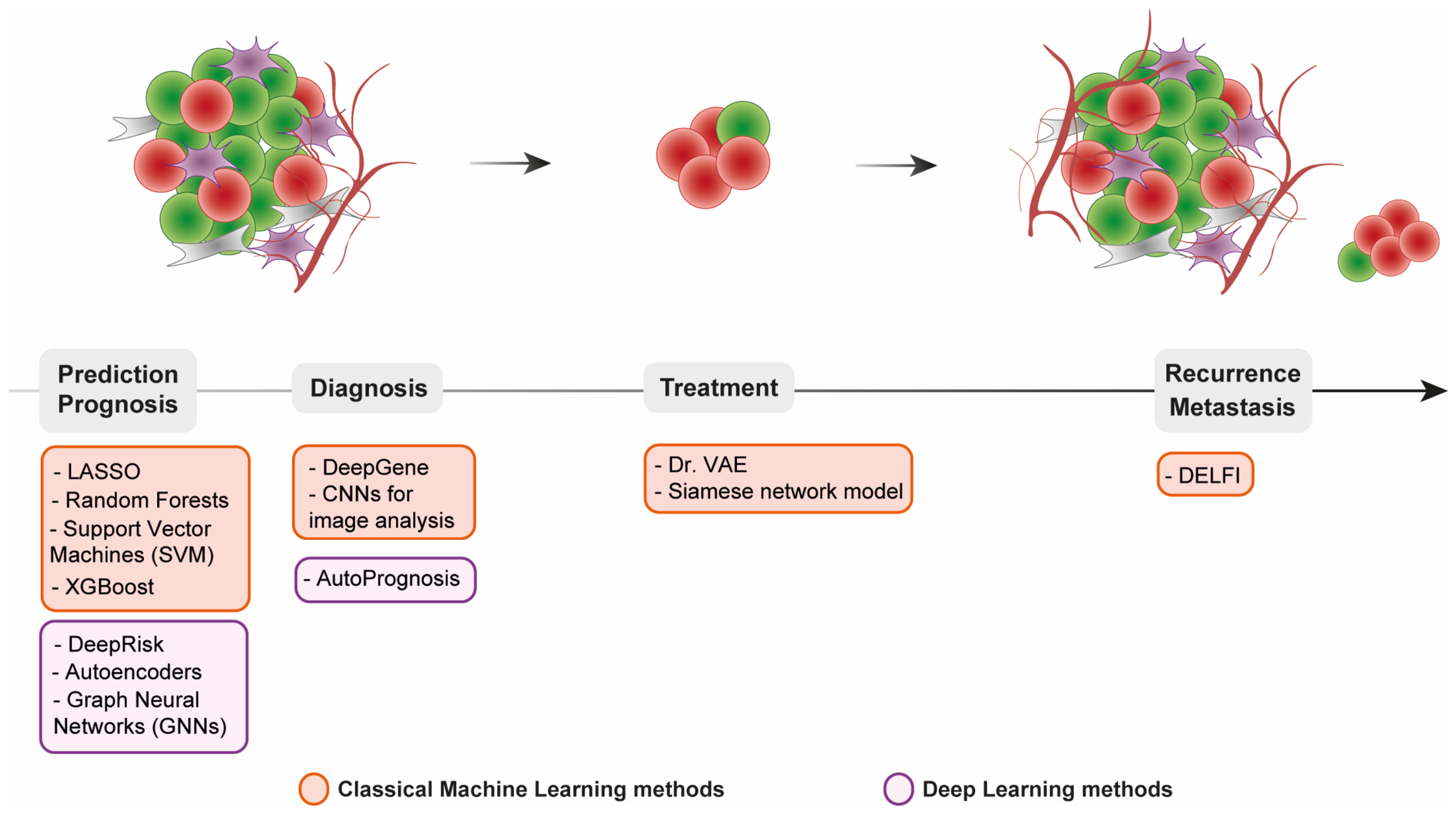
| Dr.VAE | Variational Autoencoder (VAE) | Gene Expression Analysis | Python | Bulk RNA-seq/drug response matrices | Latent embeddings; drug-response predictions | Pearson r; RMSE vs. observed IC50/EC50 | Open source | [150] |
| ScVI | Deep generative model (VAE) | Gene Expression Analysis | Python (scvi-tools) | scRNA-seq count matrices (10x, Smart-seq) | Normalized expression; batch-corrected latent space | UMAP cluster purity; ASW; kBET batch correction score | Open source | [149] |
| TotalVI | VAE for multimodal single-cell data | Gene Expression Analysis | Python (scvi-tools) | CITE-seq (RNA + protein) | Denoised RNA + protein; integrated latent space | Pearson r for protein imputation; batch mixing entropy | Open source | [149] |
| MOFA+ | Factor analysis/Probabilistic model | Gene Expression Analysis | R (MOFA2) | Multi-omics matrices (RNA, methylation, ATAC) | Latent factors explaining multi-omic variance | % variance explained per factor; enrichment analysis | Open source | [154] |
| LASSO | Penalized Regression | Disease Risk Prediction | R/Python (scikit-learn) | Genomic (SNP array/PGS) + clinical features | Disease risk score (continuous or binary) | AUC-ROC; C-statistic; calibration curve | Open source/CRAN + PyPI | [163] |
| Support Vector Machines (SVM) | Classical ML | Disease Risk Prediction | R/Python (scikit-learn) | Genomic + clinical tabular data | Binary or multi-class disease classification | AUC-ROC; accuracy; F1-score | Open source/CRAN + PyPI | [156] |
| Random Forests | Ensemble Model | Disease Risk Prediction | R/Python (scikit-learn) | Genomic + clinical tabular data | Risk class label + feature importance scores | AUC-ROC; OOB error; SHAP values | Open source/CRAN + PyPI | [157] |
| XGBoost | Gradient Boosting | Disease Risk Prediction | R/Python (xgboost) | Genomic + clinical tabular data | Risk score/class label | AUC-ROC; log-loss; SHAP feature importance | Open source/CRAN + PyPI | [158] |
| DeepRisk | Deep Learning | Disease Risk Prediction | Python | Multi-omics + EHR data | Polygenic/composite disease risk score | AUC-ROC; comparison vs. traditional PRS methods | Open source | [160] |
| Autoencoders | Deep Learning | Disease Risk Prediction | Python (TF/PyTorch)/R (keras) | High-dimensional omics data (RNA-seq, methylation) | Low-dimensional risk embeddings; anomaly scores | Reconstruction loss; downstream AUC-ROC | Open source | [148] |
| Graph Neural Networks (GNNs) | Deep Learning | Disease Risk Prediction | Python | PPI/gene regulatory networks + omics | Node-level or graph-level risk predictions | AUC-ROC; accuracy on pathway-based benchmarks | Open source | [175] |
| DeepGene | Deep learning classifier | Precision Medicine | Python | Gene expression profiles (RNA-seq) | Cancer subtype/treatment-response class | Accuracy; F1-score across cancer subtypes (TCGA) | Open source | [167] |
| AutoPrognosis | Automated ML framework | Precision Medicine | Python (autoprognosis) | Clinical + omics tabular data | Survival/prognostic risk score | C-index (Harrell); time-dependent AUC; Brier score | Open source/PyPI | [166] |
| DELFI | Fragmentomics/Machine learning | Precision Medicine | Python (GitHub) | Cell-free DNA (cfDNA) fragmentomics (WGS) | Cancer detection score; tissue-of-origin prediction | AUC-ROC; sensitivity at 98% specificity (liquid biopsy) | Public repository GitHub | [170] |
| DeepMoIC | Graph deep learning model | Multiomic Integration | Python | Multi-omics graphs (RNA, CNV, methylation) | Patient subtype clusters; survival risk groups | C-index; clustering NMI; comparison vs. MOFA/SNF | Open source | [171] |
| MOLUNGN | Graph neural network | Multiomic Integration | Python (GitHub) | Multi-omics patient graphs (lung cancer) | Survival prediction; molecular subtype labels | C-index; log-rank p-value for survival stratification | Public repository GitHub | [172] |
| MOGAT | Multi-omics Graph Attention Network | Multiomic Integration | Python | Multi-omics (RNA-seq, miRNA, methylation) | Disease classification scores; attention-weighted features | AUC-ROC; accuracy across TCGA cancer types | Open source | [174] |
| DeepSEA | CNN for regulatory genomics | Functional Genomics | Python (TensorFlow) | DNA sequence (±1 kb windows around variants) | Chromatin effect scores for variants (transcription factor binding, DNase, histone marks) | AUC-ROC for chromatin features; eQTL enrichment | Open source | [179] |
| Basenji | CNN for sequence-to-signal modeling | Functional Genomics | Python | DNA sequence (large genomic windows, ~128 kb) | Predicted regulatory signal tracks (ATAC, RNA-seq) | Pearson r vs. experimental signal; variant effect scores | Open source | [179] |
| Enformer | Transformer-based deep model | Functional Genomics | Python (TensorFlow) | DNA sequence (~196 kb windows) | Gene expression + epigenetic track predictions; variant effect scores | Pearson r; comparison vs. Basenji on Roadmap Epigenomics | Open source | [181] |
7. AI in Imaging Analysis
7.1. Enhancing Image Acquisition and Quality
7.2. Automated Image Segmentation
7.3. Tumor Characterization and Classification
7.4. Monitoring Tumor Evolution and Treatment Response
7.5. Early Detection, Accuracy and Efficiency Gains
8. Mathematical Modeling, Computer Simulations and AI in Tumor Growth Dynamics
9. Evolutionary Game Theory, Artificial Life, Complexity Theory and Tumors as Self-Adaptive Intelligent Systems
10. How AI Is Transforming the Biological Understanding of Tumor Evolution
10.1. AI as a Mechanistic Framework for Evolutionary Oncology
10.2. AI and the Decoding of Intratumoral Heterogeneity
10.3. AI Reveals Tumor Evolution as an Ecological Process
10.4. AI and the Mechanisms of Therapeutic Resistance
10.5. Toward Predictive and Evolutionary Precision Oncology
11. Ethical Considerations
12. Conclusions, Limitations and Future Directions
Author Contributions
Funding
Institutional Review Board Statement
Informed Consent Statement
Data Availability Statement
Acknowledgments
Conflicts of Interest
Abbreviations
| AI | Artificial intelligence |
| CAFs | cancer-associated fibroblasts |
| CCLE | Cancer Cell Line Encyclopedia |
| CML | chronic myeloid leukemia |
| CNN | Convolutional Neural Network |
| CSC | Cancer stem cells |
| CT | computed tomography |
| ctDNA | circulating tumor DNA |
| DL | deep learning |
| EMT | epithelial–mesenchymal transition |
| GANs | Generative Adversarial Networks |
| GAT | attention-based GNNs |
| GCNs | Graph Convolutional Networks |
| GDSC | Genomics of Drug Sensitivity in Cancer |
| GRU | Gated Recurrent Unit |
| HIFs | hypoxia-inducible factors |
| ITH | Intratumoral heterogeneity |
| LSTMs | Long Short-Term Memory |
| MDR | multidrug resistance |
| MDSCs | myeloid-derived suppressor cells |
| ML | Machine learning |
| MRI | magnetic resonance imaging |
| NGS | next-generation sequencing |
| NSCLC | non-small cell lung cancer |
| PET | positron emission tomography |
| PRS | Polygenic risk scores |
| RNNs | Recurrent Neural Networks |
| scMASKGAN | masked multi-scale CNN + attention-enhanced GAN |
| SNPs | single nucleotide polymorphisms |
| SVMs | support vector machines |
| TAMs | tumor-associated macrophages |
| TCGA | The Cancer Genome Atlas |
| TGF-β | transforming growth factor-beta |
| TME | tumor microenvironment |
| Tregs | regulatory T cells |
| VAEs | Variational autoencoders |
| VEGF | Vascular Endothelial Growth Factor |
References
- Amodio, M.; Youlten, S.E.; Venkat, A.; San Juan, B.P.; Chaffer, C.L.; Krishnaswamy, S. Single-cell multi-modal GAN reveals spatial patterns in single-cell data from triple-negative breast cancer. Patterns 2022, 3, 100577. [Google Scholar] [CrossRef]
- Huang, S.; Ouyang, L.; Tang, J.; Qian, K.; Chen, X.; Xu, Z.; Ming, J.; Xi, R. Spatial transcriptomics: A new frontier in cancer research. Clin. Cancer Bull. 2024, 3, 13. [Google Scholar] [CrossRef]
- Abbosh, C.; Birkbak, N.J.; Wilson, G.A.; Jamal-Hanjani, M.; Constantin, T.; Salari, R.; Le Quesne, J.; Moore, D.A.; Veeriah, S.; Rosenthal, R.; et al. Phylogenetic ctDNA analysis depicts early-stage lung cancer evolution. Nature 2017, 545, 446–451, Erratum in Nature 2018, 554, 264. https://doi.org/10.1038/nature25161. [Google Scholar] [CrossRef]
- Abbosh, C.; Frankell, A.M.; Harrison, T.; Kisistok, J.; Garnett, A.; Johnson, L.; Veeriah, S.; Moreau, M.; Chesh, A.; Chaunzwa, T.L.; et al. Tracking early lung cancer metastatic dissemination in TRACERx using ctDNA. Nature 2023, 616, 553–562. [Google Scholar] [CrossRef] [PubMed]
- Kim, J.; Seok, J. ctGAN: Combined transformation of gene expression and survival data with generative adversarial network. Brief. Bioinform. 2024, 25, bbae325. [Google Scholar] [CrossRef] [PubMed]
- Khazeeva, G.; Sablauskas, K.; van der Sanden, B.; Steyaert, W.; Kwint, M.; Rots, D.; Hinne, M.; van Gerven, M.; Yntema, H.; Vissers, L.; et al. DeNovoCNN: A deep learning approach to de novo variant calling in next generation sequencing data. Nucleic Acids Res. 2022, 50, e97. [Google Scholar] [CrossRef] [PubMed]
- Vilov, S.; Heinig, M. DeepSom: A CNN-based approach to somatic variant calling in WGS samples without a matched normal. Bioinformatics 2023, 39, btac828. [Google Scholar] [CrossRef]
- Alharbi, F.; Vakanski, A.; Zhang, B.; Elbashir, M.K.; Mohammed, M. Comparative Analysis of Multi-Omics Integration Using Graph Neural Networks for Cancer Classification. IEEE Access 2025, 13, 37724–37736. [Google Scholar] [CrossRef]
- Topol, E.J. High-performance medicine: The convergence of human and artificial intelligence. Nat. Med. 2019, 25, 44–56. [Google Scholar] [CrossRef]
- Gerstung, M.; Jolly, C.; Leshchiner, I.; Dentro, S.C.; Gonzalez, S.; Rosebrock, D.; Mitchell, T.J.; Rubanova, Y.; Anur, P.; Yu, K.; et al. The evolutionary history of 2658 cancers. Nature 2020, 578, 122–128. [Google Scholar] [CrossRef]
- Bressan, D.; Battistoni, G.; Hannon, G.J. The dawn of spatial omics. Science 2023, 381, eabq4964. [Google Scholar] [CrossRef]
- Rudin, C. Stop explaining black box machine learning models for high stakes decisions and use interpretable models instead. Nat. Mach. Intell. 2019, 1, 206–215. [Google Scholar] [CrossRef]
- Ciriello, G.; Magnani, L.; Aitken, S.J.; Akkari, L.; Behjati, S.; Hanahan, D.; Landau, D.A.; Lopez-Bigas, N.; Lupiáñez, D.G.; Marine, J.-C.; et al. Cancer Evolution: A Multifaceted Affair. Cancer Discov. 2024, 14, 36–48. [Google Scholar] [CrossRef]
- McGranahan, N.; Swanton, C. Clonal Heterogeneity and Tumor Evolution: Past, Present, and the Future. Cell 2017, 168, 613–628. [Google Scholar] [CrossRef]
- Liu, J.; Dang, H.; Wang, X.W. The significance of intertumor and intratumor heterogeneity in liver cancer. Exp. Mol. Med. 2018, 50, e416. [Google Scholar] [CrossRef]
- Marusyk, A.; Janiszewska, M.; Polyak, K. Intratumor Heterogeneity: The Rosetta Stone of Therapy Resistance. Cancer Cell 2020, 37, 471–484. [Google Scholar] [CrossRef]
- Rizvi, N.A.; Hellmann, M.D.; Snyder, A.; Kvistborg, P.; Makarov, V.; Havel, J.J.; Lee, W.; Yuan, J.; Wong, P.; Ho, T.S.; et al. Mutational landscape determines sensitivity to PD-1 blockade in non–small cell lung cancer. Science 2015, 348, 124–128. [Google Scholar] [CrossRef] [PubMed]
- McGranahan, N.; Furness, A.J.S.; Rosenthal, R.; Ramskov, S.; Lyngaa, R.; Saini, S.K.; Jamal-Hanjani, M.; Wilson, G.A.; Birkbak, N.J.; Hiley, C.T.; et al. Clonal neoantigens elicit T cell immunoreactivity and sensitivity to immune checkpoint blockade. Science 2016, 351, 1463–1469. [Google Scholar] [CrossRef]
- Lloyd, M.C.; Cunningham, J.J.; Bui, M.M.; Gillies, R.J.; Brown, J.S.; Gatenby, R.A. Darwinian Dynamics of Intratumoral Heterogeneity: Not Solely Random Mutations but Also Variable Environmental Selection Forces. Cancer Res. 2016, 76, 3136–3144. [Google Scholar] [CrossRef] [PubMed]
- Vendramin, R.; Litchfield, K.; Swanton, C. Cancer evolution: Darwin and beyond. EMBO J. 2021, 40, e108389. [Google Scholar] [CrossRef] [PubMed]
- Gerlinger, M.; Rowan, A.J.; Horswell, S.; Larkin, J.; Endesfelder, D.; Gronroos, E.; Martinez, P.; Matthews, N.; Stewart, A.; Tarpey, P.; et al. Intratumor Heterogeneity and Branched Evolution Revealed by Multiregion Sequencing. N. Engl. J. Med. 2012, 366, 883–892, Erratum in N. Engl. J. Med. 2012, 367, 976. [Google Scholar] [CrossRef]
- deCarvalho, A.C.; Kim, H.; Poisson, L.M.; Winn, M.E.; Mueller, C.; Cherba, D.; Koeman, J.; Seth, S.; Protopopov, A.; Felicella, M.; et al. Discordant inheritance of chromosomal and extrachromosomal DNA elements contributes to dynamic disease evolution in glioblastoma. Nat. Genet. 2018, 50, 708–717. [Google Scholar] [CrossRef] [PubMed]
- Rye, I.H.; Trinh, A.; Sætersdal, A.B.; Nebdal, D.; Lingjærde, O.C.; Almendro, V.; Polyak, K.; Børresen-Dale, A.-L.; Helland, Å.; Markowetz, F.; et al. Intratumor heterogeneity defines treatment-resistant HER2+ breast tumors. Mol. Oncol. 2018, 12, 1838–1855. [Google Scholar] [CrossRef] [PubMed]
- Mroz, E.A.; Rocco, J.W. The challenges of tumor genetic diversity. Cancer 2017, 123, 917–927. [Google Scholar] [CrossRef]
- Alexandrov, L.B.; Nik-Zainal, S.; Wedge, D.C.; Aparicio, S.A.J.R.; Behjati, S.; Biankin, A.V.; Bignell, G.R.; Bolli, N.; Borg, A.; Børresen-Dale, A.-L.; et al. Signatures of mutational processes in human cancer. Nature 2013, 500, 415–421, Erratum in Nature 2013, 502, 258. [Google Scholar] [CrossRef]
- Levine, D.A.; Getz, G.; Gabriel, S.B.; Cibulskis, K.; Lander, E.; Sivachenko, A.; Sougnez, C.; Lawrence, M.; Kandoth, C.; Dooling, D.; et al. Integrated genomic characterization of endometrial carcinoma. Nature 2013, 497, 67–73, Erratum in Nature 2013, 500, 242. [Google Scholar] [CrossRef]
- Bakhoum, S.F.; Cantley, L.C. The Multifaceted Role of Chromosomal Instability in Cancer and Its Microenvironment. Cell 2018, 174, 1347–1360. [Google Scholar] [CrossRef]
- Bakhoum, S.F.; Landau, D.A. Chromosomal Instability as a Driver of Tumor Heterogeneity and Evolution. Cold Spring Harb. Perspect. Med. 2017, 7, a029611. [Google Scholar] [CrossRef] [PubMed]
- Bielski, C.M.; Zehir, A.; Penson, A.V.; Donoghue, M.T.A.; Chatila, W.; Armenia, J.; Chang, M.T.; Schram, A.M.; Jonsson, P.; Bandlamudi, C.; et al. Genome doubling shapes the evolution and prognosis of advanced cancers. Nat. Genet. 2018, 50, 1189–1195. [Google Scholar] [CrossRef]
- Andor, N.; Graham, T.A.; Jansen, M.; Xia, L.C.; Aktipis, C.A.; Petritsch, C.; Ji, H.P.; Maley, C.C. Pan-cancer analysis of the extent and consequences of intratumor heterogeneity. Nat. Med. 2016, 22, 105–113. [Google Scholar] [CrossRef]
- Mazor, T.; Pankov, A.; Song, J.S.; Costello, J.F. Intratumoral Heterogeneity of the Epigenome. Cancer Cell 2016, 29, 440–451. [Google Scholar] [CrossRef]
- Marusyk, A.; Almendro, V.; Polyak, K. Intra-tumour heterogeneity: A looking glass for cancer? Nat. Rev. Cancer 2012, 12, 323–334. [Google Scholar] [CrossRef] [PubMed]
- Hegi, M.E.; Diserens, A.-C.; Gorlia, T.; Hamou, M.-F.; Tribolet, N.D.; Weller, M.; Kros, J.M.; Hainfellner, J.A.; Mason, W.; Mariani, L.; et al. MGMT Gene Silencing and Benefit from Temozolomide in Glioblastoma. N. Engl. J. Med. 2005, 352, 997–1003. [Google Scholar] [CrossRef]
- Delhommeau, F.; Dupont, S.; Valle, V.D.; James, C.; Trannoy, S.; Massé, A.; Kosmider, O.; Couedic, J.-P.L.; Robert, F.; Alberdi, A.; et al. Mutation in TET2 in Myeloid Cancers. N. Engl. J. Med. 2009, 360, 2289–2301. [Google Scholar] [CrossRef] [PubMed]
- Ley, T.J.; Ding, L.; Walter, M.J.; McLellan, M.D.; Lamprecht, T.; Larson, D.E.; Kandoth, C.; Payton, J.E.; Baty, J.; Welch, J.; et al. DNMT3A Mutations in Acute Myeloid Leukemia. N. Engl. J. Med. 2010, 363, 2424–2433. [Google Scholar] [CrossRef] [PubMed]
- Al-Ali, H.-K.; Heinrich, M.C.; Lange, T.; Krahl, R.; Mueller, M.; Müller, C.; Niederwieser, D.; Druker, B.J.; Deininger, M.W.N. High incidence of BCR-ABL kinase domain mutations and absence of mutations of the PDGFR and KIT activation loops in CML patients with secondary resistance to imatinib. Hematol. J. 2004, 5, 55–60. [Google Scholar] [CrossRef]
- Gorre, M.E.; Mohammed, M.; Ellwood, K.; Hsu, N.; Paquette, R.; Rao, P.N.; Sawyers, C.L. Clinical Resistance to STI-571 Cancer Therapy Caused by BCR-ABL Gene Mutation or Amplification. Science 2001, 293, 876–880. [Google Scholar] [CrossRef]
- Hochhaus, A.; Kreil, S.; Corbin, A.S.; La Rosée, P.; Müller, M.C.; Lahaye, T.; Hanfstein, B.; Schoch, C.; Cross, N.C.P.; Berger, U.; et al. Molecular and chromosomal mechanisms of resistance to imatinib (STI571) therapy. Leukemia 2002, 16, 2190–2196. [Google Scholar] [CrossRef]
- Shah, N.P.; Nicoll, J.M.; Nagar, B.; Gorre, M.E.; Paquette, R.L.; Kuriyan, J.; Sawyers, C.L. Multiple BCR-ABL kinase domain mutations confer polyclonal resistance to the tyrosine kinase inhibitor imatinib (STI571) in chronic phase and blast crisis chronic myeloid leukemia. Cancer Cell 2002, 2, 117–125. [Google Scholar] [CrossRef]
- von Bubnoff, N.; Schneller, F.; Peschel, C.; Duyster, J. BCR-ABL gene mutations in relation to clinical resistance of Philadelphia-chromosome-positive leukaemia to STI571: A prospective study. Lancet 2002, 359, 487–491. [Google Scholar] [CrossRef]
- Chhouri, H.; Alexandre, D.; Grumolato, L. Mechanisms of Acquired Resistance and Tolerance to EGFR Targeted Therapy in Non-Small Cell Lung Cancer. Cancers 2023, 15, 504. [Google Scholar] [CrossRef] [PubMed]
- Dong, R.-F.; Zhu, M.-L.; Liu, M.-M.; Xu, Y.-T.; Yuan, L.-L.; Bian, J.; Xia, Y.-Z.; Kong, L.-Y. EGFR mutation mediates resistance to EGFR tyrosine kinase inhibitors in NSCLC: From molecular mechanisms to clinical research. Pharmacol. Res. 2021, 167, 105583. [Google Scholar] [CrossRef]
- Iyer, R.S.; Needham, S.R.; Galdadas, I.; Davis, B.M.; Roberts, S.K.; Man, R.C.H.; Zanetti-Domingues, L.C.; Clarke, D.T.; Fruhwirth, G.O.; Parker, P.J.; et al. Drug-resistant EGFR mutations promote lung cancer by stabilizing interfaces in ligand-free kinase-active EGFR oligomers. Nat. Commun. 2024, 15, 2130. [Google Scholar] [CrossRef]
- Leonetti, A.; Sharma, S.; Minari, R.; Perego, P.; Giovannetti, E.; Tiseo, M. Resistance mechanisms to osimertinib in EGFR-mutated non-small cell lung cancer. Br. J. Cancer 2019, 121, 725–737. [Google Scholar] [CrossRef]
- Dong, J.; Yuan, L.; Hu, C.; Cheng, X.; Qin, J.-J. Strategies to overcome cancer multidrug resistance (MDR) through targeting P-glycoprotein (ABCB1): An updated review. Pharmacol. Ther. 2023, 249, 108488. [Google Scholar] [CrossRef]
- Ganesan, M.; Kanimozhi, G.; Pradhapsingh, B.; Khan, H.A.; Alhomida, A.S.; Ekhzaimy, A.; Brindha, G.R.; Prasad, N.R. Phytochemicals reverse P-glycoprotein mediated multidrug resistance via signal transduction pathways. Biomed. Pharmacother. 2021, 139, 111632. [Google Scholar] [CrossRef]
- Waghray, D.; Zhang, Q. Inhibit or Evade Multidrug Resistance P-Glycoprotein in Cancer Treatment. J. Med. Chem. 2018, 61, 5108–5121. [Google Scholar] [CrossRef]
- Bukowski, K.; Kciuk, M.; Kontek, R. Mechanisms of Multidrug Resistance in Cancer Chemotherapy. Int. J. Mol. Sci. 2020, 21, 3233. [Google Scholar] [CrossRef] [PubMed]
- Catalano, A.; Iacopetta, D.; Ceramella, J.; Scumaci, D.; Giuzio, F.; Saturnino, C.; Aquaro, S.; Rosano, C.; Sinicropi, M.S. Multidrug Resistance (MDR): A Widespread Phenomenon in Pharmacological Therapies. Molecules 2022, 27, 616. [Google Scholar] [CrossRef] [PubMed]
- Kulkarni, P.; Salgia, R. Comprehending phenotypic plasticity in cancer and evolution. iScience 2024, 27, 109308. [Google Scholar] [CrossRef]
- Whiting, F.J.H.; Househam, J.; Baker, A.-M.; Sottoriva, A.; Graham, T.A. Phenotypic noise and plasticity in cancer evolution. Trends Cell Biol. 2024, 34, 451–464. [Google Scholar] [CrossRef]
- Gupta, P.B.; Pastushenko, I.; Skibinski, A.; Blanpain, C.; Kuperwasser, C. Phenotypic Plasticity: Driver of Cancer Initiation, Progression, and Therapy Resistance. Cell Stem Cell 2019, 24, 65–78. [Google Scholar] [CrossRef] [PubMed]
- Brown, M.S.; Abdollahi, B.; Wilkins, O.M.; Lu, H.; Chakraborty, P.; Ognjenovic, N.B.; Muller, K.E.; Jolly, M.K.; Christensen, B.C.; Hassanpour, S.; et al. Phenotypic heterogeneity driven by plasticity of the intermediate EMT state governs disease progression and metastasis in breast cancer. Sci. Adv. 2022, 8, eabj8002. [Google Scholar] [CrossRef]
- Muller, L.; Fauvet, F.; Chassot, C.; Angileri, F.; Coutant, A.; Dégletagne, C.; Tonon, L.; Saintigny, P.; Puisieux, A.; Morel, A.-P.; et al. EMT-driven plasticity prospectively increases cell–cell variability to promote therapeutic adaptation in breast cancer. Cancer Cell Int. 2025, 25, 32. [Google Scholar] [CrossRef]
- Subbalakshmi, A.R.; Ramisetty, S.; Mohanty, A.; Pareek, S.; Do, D.; Shrestha, S.; Khan, A.; Talwar, N.; Tan, T.; Vishnubhotla, P.; et al. Phenotypic Plasticity and Cancer: A System Biology Perspective. J. Clin. Med. 2024, 13, 4302. [Google Scholar] [CrossRef] [PubMed]
- Gao, D.; Vahdat, L.T.; Wong, S.; Chang, J.C.; Mittal, V. Microenvironmental Regulation of Epithelial–Mesenchymal Transitions in Cancer. Cancer Res. 2012, 72, 4883–4889. [Google Scholar] [CrossRef]
- Saitoh, M. Transcriptional regulation of EMT transcription factors in cancer. Semin. Cancer Biol. 2023, 97, 21–29. [Google Scholar] [CrossRef] [PubMed]
- Serrano-Gomez, S.J.; Maziveyi, M.; Alahari, S.K. Regulation of epithelial-mesenchymal transition through epigenetic and post-translational modifications. Mol. Cancer 2016, 15, 18. [Google Scholar] [CrossRef]
- Mohlin, S.; Wigerup, C.; Jögi, A.; Påhlman, S. Hypoxia, pseudohypoxia and cellular differentiation. Exp. Cell Res. 2017, 356, 192–196. [Google Scholar] [CrossRef]
- Karnoub, A.E.; Dash, A.B.; Vo, A.P.; Sullivan, A.; Brooks, M.W.; Bell, G.W.; Richardson, A.L.; Polyak, K.; Tubo, R.; Weinberg, R.A. Mesenchymal stem cells within tumour stroma promote breast cancer metastasis. Nature 2007, 449, 557–563. [Google Scholar] [CrossRef]
- Carnero, A.; Lleonart, M. The hypoxic microenvironment: A determinant of cancer stem cell evolution. BioEssays 2016, 38, S65–S74. [Google Scholar] [CrossRef]
- Malagoli Tagliazucchi, G.; Wiecek, A.J.; Withnell, E.; Secrier, M. Genomic and microenvironmental heterogeneity shaping epithelial-to-mesenchymal trajectories in cancer. Nat. Commun. 2023, 14, 789. [Google Scholar] [CrossRef]
- Bidarra, S.J.; Oliveira, P.; Rocha, S.; Saraiva, D.P.; Oliveira, C.; Barrias, C.C. A 3D in vitro model to explore the inter-conversion between epithelial and mesenchymal states during EMT and its reversion. Sci. Rep. 2016, 6, 27072. [Google Scholar] [CrossRef]
- Lin, Z.; Wu, Y.; Xu, Y.; Li, G.; Li, Z.; Liu, T. Mesenchymal stem cell-derived exosomes in cancer therapy resistance: Recent advances and therapeutic potential. Mol. Cancer 2022, 21, 179. [Google Scholar] [CrossRef] [PubMed]
- Xuan, X.; Tian, C.; Zhao, M.; Sun, Y.; Huang, C. Mesenchymal stem cells in cancer progression and anticancer therapeutic resistance. Cancer Cell Int. 2021, 21, 595. [Google Scholar] [CrossRef] [PubMed]
- Dart, A. EMT in chemoresistance. Nat. Rev. Cancer 2023, 23, 349. [Google Scholar] [CrossRef] [PubMed]
- Warrier, N.M.; Kelkar, N.; Johnson, C.T.; Govindarajan, T.; Prabhu, V.; Kumar, P. Understanding cancer stem cells and plasticity: Towards better therapeutics. Eur. J. Cell Biol. 2023, 102, 151321. [Google Scholar] [CrossRef]
- Espinosa-Sánchez, A.; Suárez-Martínez, E.; Sánchez-Díaz, L.; Carnero, A. Therapeutic Targeting of Signaling Pathways Related to Cancer Stemness. Front. Oncol. 2020, 10, 1533. [Google Scholar] [CrossRef]
- Loh, J.-J.; Ma, S. Hallmarks of cancer stemness. Cell Stem Cell 2024, 31, 617–639. [Google Scholar] [CrossRef]
- Jopling, C.; Boue, S.; Belmonte, J.C.I. Dedifferentiation, transdifferentiation and reprogramming: Three routes to regeneration. Nat. Rev. Mol. Cell Biol. 2011, 12, 79–89. [Google Scholar] [CrossRef]
- Espinosa-Sánchez, A.; Blanco-Alcaina, E.; Carnero, A. PSMG2 role in tumorigenesis and stemness mediated by protein accumulation, reticulum stress and autophagy. Int. J. Biol. Sci. 2025, 21, 2531–2549. [Google Scholar] [CrossRef]
- Zhou, H.-M.; Zhang, J.-G.; Zhang, X.; Li, Q. Targeting cancer stem cells for reversing therapy resistance: Mechanism, signaling, and prospective agents. Signal Transduct. Target. Ther. 2021, 6, 62. [Google Scholar] [CrossRef]
- Huang, T.; Song, X.; Xu, D.; Tiek, D.; Goenka, A.; Wu, B.; Sastry, N.; Hu, B.; Cheng, S.-Y. Stem cell programs in cancer initiation, progression, and therapy resistance. Theranostics 2020, 10, 8721–8743. [Google Scholar] [CrossRef] [PubMed]
- Li, Y.; Wang, Z.; Ajani, J.A.; Song, S. Drug resistance and Cancer stem cells. Cell Commun. Signal. 2021, 19, 19. [Google Scholar] [CrossRef] [PubMed]
- Hanahan, D.; Coussens, L.M. Accessories to the Crime: Functions of Cells Recruited to the Tumor Microenvironment. Cancer Cell 2012, 21, 309–322. [Google Scholar] [CrossRef] [PubMed]
- Junttila, M.R.; de Sauvage, F.J. Influence of tumour micro-environment heterogeneity on therapeutic response. Nature 2013, 501, 346–354. [Google Scholar] [CrossRef]
- de Visser, K.E.; Joyce, J.A. The evolving tumor microenvironment: From cancer initiation to metastatic outgrowth. Cancer Cell 2023, 41, 374–403. [Google Scholar] [CrossRef]
- Yuan, S.; Almagro, J.; Fuchs, E. Beyond genetics: Driving cancer with the tumour microenvironment behind the wheel. Nat. Rev. Cancer 2024, 24, 274–286. [Google Scholar] [CrossRef]
- Galassi, C.; Chan, T.A.; Vitale, I.; Galluzzi, L. The hallmarks of cancer immune evasion. Cancer Cell 2024, 42, 1825–1863. [Google Scholar] [CrossRef]
- Fang, J.; Lu, Y.; Zheng, J.; Jiang, X.; Shen, H.; Shang, X.; Lu, Y.; Fu, P. Exploring the crosstalk between endothelial cells, immune cells, and immune checkpoints in the tumor microenvironment: New insights and therapeutic implications. Cell Death Dis. 2023, 14, 586. [Google Scholar] [CrossRef]
- Deng, J.; Jiang, W.; Liu, L.; Zhan, W.; Wu, Y.; Xu, X. Research progress on the intrinsic non-immune function of PD-L1 in tumors (Review). Oncol. Lett. 2023, 25, 10. [Google Scholar] [CrossRef] [PubMed]
- Wang, R.; He, S.; Long, J.; Wang, Y.; Jiang, X.; Chen, M.; Wang, J. Emerging therapeutic frontiers in cancer: Insights into posttranslational modifications of PD-1/PD-L1 and regulatory pathways. Exp. Hematol. Oncol. 2024, 13, 46. [Google Scholar] [CrossRef] [PubMed]
- Wei, Y.; Xiao, X.; Lao, X.-M.; Zheng, L.; Kuang, D.-M. Immune landscape and therapeutic strategies: New insights into PD-L1 in tumors. Cell. Mol. Life Sci. 2021, 78, 867–887. [Google Scholar] [CrossRef] [PubMed]
- Li, C.; Jiang, P.; Wei, S.; Xu, X.; Wang, J. Regulatory T cells in tumor microenvironment: New mechanisms, potential therapeutic strategies and future prospects. Mol. Cancer 2020, 19, 116. [Google Scholar] [CrossRef]
- He, S.; Zheng, L.; Qi, C. Myeloid-derived suppressor cells (MDSCs) in the tumor microenvironment and their targeting in cancer therapy. Mol. Cancer 2025, 24, 5. [Google Scholar] [CrossRef]
- Bied, M.; Ho, W.W.; Ginhoux, F.; Blériot, C. Roles of macrophages in tumor development: A spatiotemporal perspective. Cell. Mol. Immunol. 2023, 20, 983–992. [Google Scholar] [CrossRef]
- Attieh, Y.; Vignjevic, D.M. The hallmarks of CAFs in cancer invasion. Eur. J. Cell Biol. 2016, 95, 493–502. [Google Scholar] [CrossRef]
- Feng, B.; Wu, J.; Shen, B.; Jiang, F.; Feng, J. Cancer-associated fibroblasts and resistance to anticancer therapies: Status, mechanisms, and countermeasures. Cancer Cell Int. 2022, 22, 166. [Google Scholar] [CrossRef]
- Luo, M.; Luo, Y.; Mao, N.; Huang, G.; Teng, C.; Wang, H.; Wu, J.; Liao, X.; Yang, J. Cancer-Associated Fibroblasts Accelerate Malignant Progression of Non-Small Cell Lung Cancer via Connexin 43-Formed Unidirectional Gap Junctional Intercellular Communication. Cell. Physiol. Biochem. 2018, 51, 315–336. [Google Scholar] [CrossRef]
- Ni, C.; Lou, X.; Yao, X.; Wang, L.; Wan, J.; Duan, X.; Liang, J.; Zhang, K.; Yang, Y.; Zhang, L.; et al. ZIP1+ fibroblasts protect lung cancer against chemotherapy via connexin-43 mediated intercellular Zn2+ transfer. Nat. Commun. 2022, 13, 5919, Erratum in Nat. Commun. 2023, 14, 880. https://doi.org/10.1038/s41467-023-36663-1. [Google Scholar] [CrossRef]
- Wilczyński, B.; Dąbrowska, A.; Kulbacka, J.; Baczyńska, D. Chemoresistance and the tumor microenvironment: The critical role of cell–cell communication. Cell Commun. Signal. 2024, 22, 486. [Google Scholar] [CrossRef]
- Joyce, J.A.; Fearon, D.T. T cell exclusion, immune privilege, and the tumor microenvironment. Science 2015, 348, 74–80. [Google Scholar] [CrossRef]
- Kirchhammer, N.; Trefny, M.P.; Natoli, M.; Brücher, D.; Smith, S.N.; Werner, F.; Koch, V.; Schreiner, D.; Bartoszek, E.; Buchi, M.; et al. NK cells with tissue-resident traits shape response to immunotherapy by inducing adaptive antitumor immunity. Science 2022, 14, eabm9043. [Google Scholar] [CrossRef]
- Kirchhammer, N.; Trefny, M.P.; Auf der Maur, P.; Läubli, H.; Zippelius, A. Combination cancer immunotherapies: Emerging treatment strategies adapted to the tumor microenvironment. Sci. Transl. Med. 2022, 14, eabo3605. [Google Scholar] [CrossRef]
- Huang, J.; Zhang, L.; Wan, D.; Zhou, L.; Zheng, S.; Lin, S.; Qiao, Y. Extracellular matrix and its therapeutic potential for cancer treatment. Signal Transduct. Target. Ther. 2021, 6, 153. [Google Scholar] [CrossRef]
- Jurj, A.; Ionescu, C.; Berindan-Neagoe, I.; Braicu, C. The extracellular matrix alteration, implication in modulation of drug resistance mechanism: Friends or foes? J. Exp. Clin. Cancer Res. 2022, 41, 276. [Google Scholar] [CrossRef]
- Lee, J.J.; Ng, K.Y.; Bakhtiar, A. Extracellular matrix: Unlocking new avenues in cancer treatment. Biomark. Res. 2025, 13, 78. [Google Scholar] [CrossRef]
- Jiang, X.; Wang, J.; Deng, X.; Xiong, F.; Zhang, S.; Gong, Z.; Li, X.; Cao, K.; Deng, H.; He, Y.; et al. The role of microenvironment in tumor angiogenesis. J. Exp. Clin. Cancer Res. 2020, 39, 204. [Google Scholar] [CrossRef]
- Chen, Z.; Han, F.; Du, Y.; Shi, H.; Zhou, W. Hypoxic microenvironment in cancer: Molecular mechanisms and therapeutic interventions. Signal Transduct. Target. Ther. 2023, 8, 70. [Google Scholar] [CrossRef]
- Mabeta, P.; Steenkamp, V. The VEGF/VEGFR Axis Revisited: Implications for Cancer Therapy. Int. J. Mol. Sci. 2022, 23, 15585. [Google Scholar] [CrossRef]
- Zhang, Y.; Brekken, R.A. Direct and indirect regulation of the tumor immune microenvironment by VEGF. J. Leukoc. Biol. 2022, 111, 1269–1286. [Google Scholar] [CrossRef]
- Zhang, Y.; Wang, W. Advances in tumor subclone formation and mechanisms of growth and invasion. J. Transl. Med. 2025, 23, 461. [Google Scholar] [CrossRef]
- Greaves, M.; Maley, C.C. Clonal evolution in cancer. Nature 2012, 481, 306–313. [Google Scholar] [CrossRef]
- Shlyakhtina, Y.; Moran, K.L.; Portal, M.M. Genetic and Non-Genetic Mechanisms Underlying Cancer Evolution. Cancers 2021, 13, 1380. [Google Scholar] [CrossRef]
- Fares, J.; Fares, M.Y.; Khachfe, H.H.; Salhab, H.A.; Fares, Y. Molecular principles of metastasis: A hallmark of cancer revisited. Signal Transduct. Target. Ther. 2020, 5, 28. [Google Scholar] [CrossRef]
- Liu, Q.; Zhang, H.; Jiang, X.; Qian, C.; Liu, Z.; Luo, D. Factors involved in cancer metastasis: A better understanding to “seed and soil” hypothesis. Mol. Cancer 2017, 16, 176. [Google Scholar] [CrossRef]
- Shi, X.; Wang, X.; Yao, W.; Shi, D.; Shao, X.; Lu, Z.; Chai, Y.; Song, J.; Tang, W.; Wang, X. Mechanism insights and therapeutic intervention of tumor metastasis: Latest developments and perspectives. Signal Transduct. Target. Ther. 2024, 9, 192. [Google Scholar] [CrossRef]
- Ianevski, A.; Giri, A.K.; Gautam, P.; Kononov, A.; Potdar, S.; Saarela, J.; Wennerberg, K.; Aittokallio, T. Prediction of drug combination effects with a minimal set of experiments. Nat. Mach. Intell. 2019, 1, 568–577. [Google Scholar] [CrossRef]
- Monem, S.; Hassanien, A.E.; Abdel-Hamid, A.H. A multi-task graph deep learning model to predict drugs combination of synergy and sensitivity scores. BMC Bioinform. 2024, 25, 327. [Google Scholar] [CrossRef]
- Peat, T.J.; Gaikwad, S.M.; Dubois, W.; Gyabaah-Kessie, N.; Zhang, S.; Gorjifard, S.; Phyo, Z.; Andres, M.; Hughitt, V.K.; Simpson, R.M.; et al. Drug combinations identified by high-throughput screening promote cell cycle transition and upregulate Smad pathways in myeloma. Cancer Lett. 2023, 568, 216284. [Google Scholar] [CrossRef]
- Pourmousa, M.; Jain, S.; Barnaeva, E.; Jin, W.; Hochuli, J.; Itkin, Z.; Maxfield, T.; Melo-Filho, C.; Thieme, A.; Wilson, K.; et al. AI-driven discovery of synergistic drug combinations against pancreatic cancer. Nat. Commun. 2025, 16, 4020. [Google Scholar] [CrossRef]
- Patwardhan, G.A.; Marczyk, M.; Wali, V.B.; Stern, D.F.; Pusztai, L.; Hatzis, C. Treatment scheduling effects on the evolution of drug resistance in heterogeneous cancer cell populations. npj Breast Cancer 2021, 7, 60. [Google Scholar] [CrossRef]
- Mumenthaler, S.M.; Foo, J.; Leder, K.; Choi, N.C.; Agus, D.B.; Pao, W.; Mallick, P.; Michor, F. Evolutionary Modeling of Combination Treatment Strategies to Overcome Resistance to Tyrosine Kinase Inhibitors in Non-Small Cell Lung Cancer. Mol. Pharm. 2011, 8, 2069–2079. [Google Scholar] [CrossRef]
- Robert, C.; Grob, J.J.; Stroyakovskiy, D.; Karaszewska, B.; Hauschild, A.; Levchenko, E.; Sileni, V.C.; Schachter, J.; Garbe, C.; Bondarenko, I.; et al. Five-Year Outcomes with Dabrafenib plus Trametinib in Metastatic Melanoma. N. Engl. J. Med. 2019, 381, 626–636. [Google Scholar] [CrossRef]
- Larkin, J.; Ascierto, P.A.; Dréno, B.; Atkinson, V.; Liszkay, G.; Maio, M.; Mandalà, M.; Demidov, L.; Stroyakovskiy, D.; Thomas, L.; et al. Combined Vemurafenib and Cobimetinib in BRAF-Mutated Melanoma. N. Engl. J. Med. 2014, 371, 1867–1876. [Google Scholar] [CrossRef]
- Zhou, Q.; Li, J.; Cang, S.-D.; Lin, J.-X.; Tu, H.-Y.; Du, Y.; Qin, J.-W.; Liang, X.-H.; Yu, Y.; Lan, H.-T.; et al. FLAIR: A Phase II, Open Label, Randomized Study of Osimertinib Plus Bevacizumab Versus Osimertinib in Recurrent or Metastatic Treatment-Naïve NSCLC Patients Harboring EGFR 21L858R Mutation. Clin. Lung Cancer 2025, 26, 152–157.e151. [Google Scholar] [CrossRef]
- Motzer, R.J.; Tannir, N.M.; McDermott, D.F.; Frontera, O.A.; Melichar, B.; Choueiri, T.K.; Plimack, E.R.; Barthélémy, P.; Porta, C.; George, S.; et al. Nivolumab plus Ipilimumab versus Sunitinib in Advanced Renal-Cell Carcinoma. N. Engl. J. Med. 2018, 378, 1277–1290. [Google Scholar] [CrossRef]
- Labrie, M.; Brugge, J.S.; Mills, G.B.; Zervantonakis, I.K. Therapy resistance: Opportunities created by adaptive responses to targeted therapies in cancer. Nat. Rev. Cancer 2022, 22, 323–339. [Google Scholar] [CrossRef]
- West, J.; Adler, F.; Gallaher, J.; Strobl, M.; Brady-Nicholls, R.; Brown, J.; Roberson-Tessi, M.; Kim, E.; Noble, R.; Viossat, Y.; et al. A survey of open questions in adaptive therapy: Bridging mathematics and clinical translation. eLife 2023, 12, e84263. [Google Scholar] [CrossRef]
- Mukherjee, U.A.; Hockings, H.; Counsell, N.; Patel, A.; Narayanan, P.; Wilkinson, K.; Dhanda, H.; Robinson, K.; McNeish, I.; Anderson, A.R.A.; et al. Study protocol for Adaptive ChemoTherapy for Ovarian cancer (ACTOv): A multicentre phase II randomised controlled trial to evaluate the efficacy of adaptive therapy (AT) with carboplatin, based on changes in CA125, in patients with relapsed platinum-sensitive high-grade serous or high-grade endometrioid ovarian cancer. BMJ Open 2024, 14, e091262. [Google Scholar] [CrossRef]
- Hockings, H.; Lakatos, E.; Huang, W.; Mossner, M.; Khan, M.A.; Bakali, N.; McDermott, J.; Smith, K.; Baker, A.-M.; Graham, T.A.; et al. Adaptive Therapy Exploits Fitness Deficits in Chemotherapy-Resistant Ovarian Cancer to Achieve Long-Term Tumor Control. Cancer Res. 2025, 85, 3503–3517. [Google Scholar] [CrossRef]
- Strobl, M.A.R.; Gallaher, J.; West, J.; Robertson-Tessi, M.; Maini, P.K.; Anderson, A.R.A. Spatial structure impacts adaptive therapy by shaping intra-tumoral competition. Commun. Med. 2022, 2, 46. [Google Scholar] [CrossRef]
- Garcia, J.; Hurwitz, H.I.; Sandler, A.B.; Miles, D.; Coleman, R.L.; Deurloo, R.; Chinot, O.L. Bevacizumab (Avastin®) in cancer treatment: A review of 15 years of clinical experience and future outlook. Cancer Treat. Rev. 2020, 86, 102017. [Google Scholar] [CrossRef] [PubMed]
- Kirtane, K.; Elmariah, H.; Chung, C.H.; Abate-Daga, D. Adoptive cellular therapy in solid tumor malignancies: Review of the literature and challenges ahead. J. Immunother. Cancer 2021, 9, e002723. [Google Scholar] [CrossRef] [PubMed]
- Seferbekova, Z.; Lomakin, A.; Yates, L.R.; Gerstung, M. Spatial biology of cancer evolution. Nat. Rev. Genet. 2023, 24, 295–313. [Google Scholar] [CrossRef] [PubMed]
- Prol-Castelo, G.; Cirillo, D.; Valencia, A. Deep representation learning for temporal inference in cancer omics: A systematic literature review. Brief. Bioinform. 2026, 27, bbag147. [Google Scholar] [CrossRef]
- Liu, F.; Beck, S.; Yang, L.; Luo, H.; Zhang, K. Advancing AI for multi-omics and clinical data integration in basic and translational cancer research. Nat. Rev. Cancer 2026. [Google Scholar] [CrossRef]
- McKenzie, M.; Irac, S.E.; Chen, Z.; Moradi, A.; Jenner, A.; Nguyen, Q.; Rashidieh, B. Integrative spatial omics and artificial intelligence: Transforming cancer research with omics data and AI. Semin. Cancer Biol. 2026, 119, 65–82. [Google Scholar] [CrossRef]
- Alharbi, W.S.; Rashid, M. A review of deep learning applications in human genomics using next-generation sequencing data. Hum. Genom. 2022, 16, 26. [Google Scholar] [CrossRef]
- Park, Y.; Heider, D.; Hauschild, A.-C. Integrative Analysis of Next-Generation Sequencing for Next-Generation Cancer Research toward Artificial Intelligence. Cancers 2021, 13, 3148. [Google Scholar] [CrossRef]
- Pun, F.W.; Podolskiy, D.; Izumchenko, E.; Mortlock, A.; Oprea, T.I.; Scheibye-Knudsen, M.; Fortney, K.; Morgen, E.; Ren, F.; Zhavoronkov, A. Target identification and assessment in the era of AI. Nat. Rev. Drug Discov. 2026. online ahead of print. [Google Scholar] [CrossRef] [PubMed]
- Zhang, X.; Wu, F.; Yang, N.; Zhan, X.; Liao, J.; Mai, S.; Huang, Z. In silico Methods for Identification of Potential Therapeutic Targets. Interdiscip. Sci. Comput. Life Sci. 2022, 14, 285–310. [Google Scholar] [CrossRef]
- Wingett, S.; Andrews, S. FastQ Screen: A tool for multi-genome mapping and quality control [version 2; peer review: 4 approved]. F1000Research 2018, 7, 1338. [Google Scholar] [CrossRef]
- Bolger, A.M.; Lohse, M.; Usadel, B. Trimmomatic: A flexible trimmer for Illumina sequence data. Bioinformatics 2014, 30, 2114–2120. [Google Scholar] [CrossRef]
- Albrecht, S.; Sprang, M.; Andrade-Navarro, M.A.; Fontaine, J.-F. seqQscorer: Automated quality control of next-generation sequencing data using machine learning. Genome Biol. 2021, 22, 75. [Google Scholar] [CrossRef] [PubMed]
- Sami, A.; El-Metwally, S.; Rashad, M.Z. MAC-ErrorReads: Machine learning-assisted classifier for filtering erroneous NGS reads. BMC Bioinform. 2024, 25, 61. [Google Scholar] [CrossRef] [PubMed]
- Cui, W.; Yu, Z.; Liu, Z.; Wang, G.; Liu, X. Compressing Genomic Sequences by Using Deep Learning. In Proceedings of the Artificial Neural Networks and Machine Learning—ICANN 2020: 29th International Conference on Artificial Neural Networks, Bratislava, Slovakia, 15–18 September 2020; Proceedings, Part I, Bratislava, Slovakia; Springer: Cham, Switzerland, 2020; pp. 92–104. [Google Scholar]
- Wang, R.; Zang, T.; Wang, Y. Human mitochondrial genome compression using machine learning techniques. Hum. Genom. 2019, 13, 49. [Google Scholar] [CrossRef]
- Silva, M.; Pratas, D.; Pinho, A.J. Efficient DNA sequence compression with neural networks. GigaScience 2020, 9, giaa119. [Google Scholar] [CrossRef]
- Wu, Y.; Xu, L.; Cong, X.; Li, H.; Li, Y. Scmaskgan: Masked multi-scale CNN and attention-enhanced GAN for scRNA-seq dropout imputation. BMC Bioinform. 2025, 26, 130. [Google Scholar] [CrossRef]
- Lall, S.; Ray, S.; Bandyopadhyay, S. LSH-GAN enables in-silico generation of cells for small sample high dimensional scRNA-seq data. Commun. Biol. 2022, 5, 577. [Google Scholar] [CrossRef]
- Zhang, Y.-Z.; Imoto, S. Genome analysis through image processing with deep learning models. J. Hum. Genet. 2024, 69, 519–525. [Google Scholar] [CrossRef]
- Sahraeian, S.M.E.; Liu, R.; Lau, B.; Podesta, K.; Mohiyuddin, M.; Lam, H.Y.K. Deep convolutional neural networks for accurate somatic mutation detection. Nat. Commun. 2019, 10, 1041. [Google Scholar] [CrossRef] [PubMed]
- Krishnamachari, K.; Lu, D.; Swift-Scott, A.; Yeraliyev, A.; Lee, K.; Huang, W.; Leng, S.N.; Skanderup, A.J. Accurate somatic variant detection using weakly supervised deep learning. Nat. Commun. 2022, 13, 4248. [Google Scholar] [CrossRef] [PubMed]
- Lim, D.; Blanchette, M. EvoLSTM: Context-dependent models of sequence evolution using a sequence-to-sequence LSTM. Bioinformatics 2020, 36, i353–i361. [Google Scholar] [CrossRef]
- Xu, X.; Bhalla, N.; Ståhl, P.; Jaldén, J. Lokatt: A hybrid DNA nanopore basecaller with an explicit duration hidden Markov model and a residual LSTM network. BMC Bioinform. 2023, 24, 461. [Google Scholar] [CrossRef] [PubMed]
- Gupta, G.; Saini, S. DAVI: Deep learning-based tool for alignment and single nucleotide variant identification. Mach. Learn. Sci. Technol. 2020, 1, 025013. [Google Scholar] [CrossRef]
- Way, G.P.; Greene, C.S. Extracting a biologically relevant latent space from cancer transcriptomes with variational autoencoders. In Proceedings of the Pacific Symposium on Biocomputing 2018, Big Island, HI, USA, 3–7 January 2018; pp. 80–91. [Google Scholar]
- Gayoso, A.; Steier, Z.; Lopez, R.; Regier, J.; Nazor, K.L.; Streets, A.; Yosef, N. Joint probabilistic modeling of single-cell multi-omic data with totalVI. Nat. Methods 2021, 18, 272–282. [Google Scholar] [CrossRef]
- Rampášek, L.; Hidru, D.; Smirnov, P.; Haibe-Kains, B.; Goldenberg, A. Dr.VAE: Improving drug response prediction via modeling of drug perturbation effects. Bioinformatics 2019, 35, 3743–3751. [Google Scholar] [CrossRef]
- Lopez, R.; Regier, J.; Cole, M.B.; Jordan, M.I.; Yosef, N. Deep generative modeling for single-cell transcriptomics. Nat. Methods 2018, 15, 1053–1058. [Google Scholar] [CrossRef]
- Zitnik, M.; Agrawal, M.; Leskovec, J. Modeling polypharmacy side effects with graph convolutional networks. Bioinformatics 2018, 34, i457–i466. [Google Scholar] [CrossRef]
- Wang, B.; Mezlini, A.M.; Demir, F.; Fiume, M.; Tu, Z.; Brudno, M.; Haibe-Kains, B.; Goldenberg, A. Similarity network fusion for aggregating data types on a genomic scale. Nat. Methods 2014, 11, 333–337. [Google Scholar] [CrossRef] [PubMed]
- Argelaguet, R.; Arnol, D.; Bredikhin, D.; Deloro, Y.; Velten, B.; Marioni, J.C.; Stegle, O. MOFA+: A statistical framework for comprehensive integration of multi-modal single-cell data. Genome Biol. 2020, 21, 111. [Google Scholar] [CrossRef] [PubMed]
- Cortes, C.; Vapnik, V. Support-vector networks. Mach. Learn. 1995, 20, 273–297. [Google Scholar] [CrossRef]
- Abraham, G.; Inouye, M. Fast Principal Component Analysis of Large-Scale Genome-Wide Data. PLoS ONE 2014, 9, e93766. [Google Scholar] [CrossRef]
- Breiman, L. Random Forests. Mach. Learn. 2001, 45, 5–32. [Google Scholar] [CrossRef]
- Chen, T.; Guestrin, C. XGBoost: A Scalable Tree Boosting System. In Proceedings of the 22nd ACM SIGKDD International Conference on Knowledge Discovery and Data Mining, San Francisco, CA, USA, 13–17 August 2016; pp. 785–794. [Google Scholar]
- Miotto, R.; Li, L.; Kidd, B.A.; Dudley, J.T. Deep Patient: An Unsupervised Representation to Predict the Future of Patients from the Electronic Health Records. Sci. Rep. 2016, 6, 26094. [Google Scholar] [CrossRef]
- Peng, J.; Bao, Z.; Li, J.; Han, R.; Wang, Y.; Han, L.; Peng, J.; Wang, T.; Hao, J.; Wei, Z.; et al. DeepRisk: A deep learning approach for genome-wide assessment of common disease risk. Fundam. Res. 2024, 4, 752–760. [Google Scholar] [CrossRef]
- Mavaddat, N.; Michailidou, K.; Dennis, J.; Lush, M.; Fachal, L.; Lee, A.; Tyrer, J.P.; Chen, T.-H.; Wang, Q.; Bolla, M.K.; et al. Polygenic Risk Scores for Prediction of Breast Cancer and Breast Cancer Subtypes. Am. J. Hum. Genet. 2019, 104, 21–34. [Google Scholar] [CrossRef]
- Schumacher, F.R.; Al Olama, A.A.; Berndt, S.I.; Benlloch, S.; Ahmed, M.; Saunders, E.J.; Dadaev, T.; Leongamornlert, D.; Anokian, E.; Cieza-Borrella, C.; et al. Association analyses of more than 140,000 men identify 63 new prostate cancer susceptibility loci. Nat. Genet. 2018, 50, 928–936, Erratum in Nat. Genet. 2019, 51, 363. https://doi.org/10.1038/s41588-018-0330-6. [Google Scholar] [CrossRef]
- Dareng, E.O.; Tyrer, J.P.; Barnes, D.R.; Jones, M.R.; Yang, X.; Aben, K.K.H.; Adank, M.A.; Agata, S.; Andrulis, I.L.; Anton-Culver, H.; et al. Polygenic risk modeling for prediction of epithelial ovarian cancer risk. Eur. J. Hum. Genet. 2022, 30, 349–362, Erratum in Eur. J. Hum. Genet. 2022, 30, 630–631. https://doi.org/10.1038/s41431-022-01085-y. [Google Scholar] [CrossRef]
- Peters, U.; Hutter, C.M.; Hsu, L.; Schumacher, F.R.; Conti, D.V.; Carlson, C.S.; Edlund, C.K.; Haile, R.W.; Gallinger, S.; Zanke, B.W.; et al. Meta-analysis of new genome-wide association studies of colorectal cancer risk. Hum. Genet. 2012, 131, 217–234. [Google Scholar] [CrossRef]
- Yuan, B.; Yang, D.; Rothberg, B.E.G.; Chang, H.; Xu, T. Unsupervised and supervised learning with neural network for human transcriptome analysis and cancer diagnosis. Sci. Rep. 2020, 10, 19106. [Google Scholar] [CrossRef] [PubMed]
- Imrie, F.; Cebere, B.; McKinney, E.F.; van der Schaar, M. AutoPrognosis 2.0: Democratizing diagnostic and prognostic modeling in healthcare with automated machine learning. PLoS Digit. Health 2023, 2, e0000276. [Google Scholar] [CrossRef]
- Yuan, Y.; Shi, Y.; Li, C.; Kim, J.; Cai, W.; Han, Z.; Feng, D.D. DeepGene: An advanced cancer type classifier based on deep learning and somatic point mutations. BMC Bioinform. 2016, 17, 476. [Google Scholar] [CrossRef] [PubMed]
- Barretina, J.; Caponigro, G.; Stransky, N.; Venkatesan, K.; Margolin, A.A.; Kim, S.; Wilson, C.J.; Lehár, J.; Kryukov, G.V.; Sonkin, D.; et al. The Cancer Cell Line Encyclopedia enables predictive modelling of anticancer drug sensitivity. Nature 2012, 483, 603–607. [Google Scholar] [CrossRef]
- Yang, W.; Soares, J.; Greninger, P.; Edelman, E.J.; Lightfoot, H.; Forbes, S.; Bindal, N.; Beare, D.; Smith, J.A.; Thompson, I.R.; et al. Genomics of Drug Sensitivity in Cancer (GDSC): A resource for therapeutic biomarker discovery in cancer cells. Nucleic Acids Res. 2012, 41, D955–D961. [Google Scholar] [CrossRef]
- Cristiano, S.; Leal, A.; Phallen, J.; Fiksel, J.; Adleff, V.; Bruhm, D.C.; Jensen, S.Ø.; Medina, J.E.; Hruban, C.; White, J.R.; et al. Genome-wide cell-free DNA fragmentation in patients with cancer. Nature 2019, 570, 385–389. [Google Scholar] [CrossRef] [PubMed]
- Wu, J.; Chen, Z.; Xiao, S.; Liu, G.; Wu, W.; Wang, S. DeepMoIC: Multi-omics data integration via deep graph convolutional networks for cancer subtype classification. BMC Genom. 2024, 25, 1209. [Google Scholar] [CrossRef]
- Zhang, D.; Bian, G.; Zhang, Y.; Xie, J.; Hu, C. MOLUNGN: A multi-omics graph neural network for biomarker discovery and accurate lung cancer classification. Front. Genet. 2025, 16, 1610284. [Google Scholar] [CrossRef]
- Wang, C.; Lye, X.; Kaalia, R.; Kumar, P.; Rajapakse, J.C. Deep learning and multi-omics approach to predict drug responses in cancer. BMC Bioinform. 2022, 22, 632. [Google Scholar] [CrossRef]
- Tanvir, R.B.; Islam, M.M.; Sobhan, M.; Luo, D.; Mondal, A.M. MOGAT: A Multi-Omics Integration Framework Using Graph Attention Networks for Cancer Subtype Prediction. Int. J. Mol. Sci. 2024, 25, 2788. [Google Scholar] [CrossRef]
- Zhu, J.; Oh, J.H.; Simhal, A.K.; Elkin, R.; Norton, L.; Deasy, J.O.; Tannenbaum, A. Geometric graph neural networks on multi-omics data to predict cancer survival outcomes. Comput. Biol. Med. 2023, 163, 107117. [Google Scholar] [CrossRef]
- Jumper, J.; Evans, R.; Pritzel, A.; Green, T.; Figurnov, M.; Ronneberger, O.; Tunyasuvunakool, K.; Bates, R.; Žídek, A.; Potapenko, A.; et al. Highly accurate protein structure prediction with AlphaFold. Nature 2021, 596, 583–589. [Google Scholar] [CrossRef]
- Brandes, N.; Goldman, G.; Wang, C.H.; Ye, C.J.; Ntranos, V. Genome-wide prediction of disease variant effects with a deep protein language model. Nat. Genet. 2023, 55, 1512–1522. [Google Scholar] [CrossRef]
- Poplin, R.; Chang, P.-C.; Alexander, D.; Schwartz, S.; Colthurst, T.; Ku, A.; Newburger, D.; Dijamco, J.; Nguyen, N.; Afshar, P.T.; et al. A universal SNP and small-indel variant caller using deep neural networks. Nat. Biotechnol. 2018, 36, 983–987. [Google Scholar] [CrossRef]
- Zhou, J.; Troyanskaya, O.G. Predicting effects of noncoding variants with deep learning–based sequence model. Nat. Methods 2015, 12, 931–934. [Google Scholar] [CrossRef]
- Kelley, D.R.; Reshef, Y.A.; Bileschi, M.; Belanger, D.; McLean, C.Y.; Snoek, J. Sequential regulatory activity prediction across chromosomes with convolutional neural networks. Genome Res. 2018, 28, 739–750. [Google Scholar] [CrossRef]
- Avsec, Ž.; Agarwal, V.; Visentin, D.; Ledsam, J.R.; Grabska-Barwinska, A.; Taylor, K.R.; Assael, Y.; Jumper, J.; Kohli, P.; Kelley, D.R. Effective gene expression prediction from sequence by integrating long-range interactions. Nat. Methods 2021, 18, 1196–1203. [Google Scholar] [CrossRef]
- Reyna, M.A.; Haan, D.; Paczkowska, M.; Verbeke, L.P.C.; Vazquez, M.; Kahraman, A.; Pulido-Tamayo, S.; Barenboim, J.; Wadi, L.; Dhingra, P.; et al. Pathway and network analysis of more than 2500 whole cancer genomes. Nat. Commun. 2020, 11, 729, Erratum in Nat. Commun. 2022, 13, 7566. https://doi.org/10.1038/s41467-022-32334-9. [Google Scholar] [CrossRef]
- Wang, B.; Dong, X.; Hu, J.; Gao, L. Multi-omics peripheral and core regions of cancer. npj Syst. Biol. Appl. 2022, 8, 47. [Google Scholar] [CrossRef]
- van den Berk, I.A.H.; Jacobs, C.; Kanglie, M.M.N.P.; Mets, O.M.; Snoeren, M.; Montauban van Swijndregt, A.D.; Taal, E.M.; van Engelen, T.S.R.; Prins, J.M.; Bipat, S.; et al. An AI deep learning algorithm for detecting pulmonary nodules on ultra-low-dose CT in an emergency setting: A reader study. Eur. Radiol. Exp. 2024, 8, 132. [Google Scholar] [CrossRef]
- Ma, Z.-Y.; Zhang, H.-L.; Lv, F.-J.; Zhao, W.; Han, D.; Lei, L.-C.; Song, Q.; Jing, W.-W.; Duan, H.; Kang, S.-L. An artificial intelligence algorithm for the detection of pulmonary ground-glass nodules on spectral detector CT: Performance on virtual monochromatic images. BMC Med. Imaging 2024, 24, 293. [Google Scholar] [CrossRef]
- Tie, X.; Chen, W.; Huemann, Z.; Schott, B.; Liu, N.; Bradshaw, T.J. Deep Learning for Longitudinal Gross Tumor Volume Segmentation in MRI-Guided Adaptive Radiotherapy for Head and Neck Cancer. In Head and Neck Tumor Segmentation for MR-Guided Applications; Springer: Cham, Switzerland, 2025; pp. 99–111. [Google Scholar]
- Liu, T.; Hu, Y.; Liu, Z.; Jiang, Z.; Ling, X.; Zhu, X.; Li, W. Deep Learning-Based DCE-MRI Automatic Segmentation in Predicting Lesion Nature in BI-RADS Category 4. J. Imaging Inform. Med. 2025, 38, 2053–2062. [Google Scholar] [CrossRef]
- Huang, Y.-H.; Shi, Z.-Y.; Zhu, T.; Zhou, T.-H.; Li, Y.; Li, W.; Qiu, H.; Wang, S.-Q.; He, L.-F.; Wu, Z.-Y.; et al. Longitudinal MRI-Driven Multi-Modality Approach for Predicting Pathological Complete Response and B Cell Infiltration in Breast Cancer. Adv. Sci. 2025, 12, 2413702. [Google Scholar] [CrossRef]
- Wang, L.; Lin, N.; Chen, W.; Xiao, H.; Zhang, Y.; Sha, Y. Deep learning models for differentiating three sinonasal malignancies using multi-sequence MRI. BMC Med. Imaging 2025, 25, 56. [Google Scholar] [CrossRef]
- Leon, R.; Fabelo, H.; Ortega, S.; Cruz-Guerrero, I.A.; Campos-Delgado, D.U.; Szolna, A.; Piñeiro, J.F.; Espino, C.; O’Shanahan, A.J.; Hernandez, M.; et al. Hyperspectral imaging benchmark based on machine learning for intraoperative brain tumour detection. npj Precis. Oncol. 2023, 7, 119. [Google Scholar] [CrossRef]
- Wei, N.; Mathy, R.M.; Chang, D.-H.; Mayer, P.; Liermann, J.; Springfeld, C.; Dill, M.T.; Longerich, T.; Lurje, G.; Kauczor, H.-U.; et al. Longitudinal CE-MRI-based Siamese network with machine learning to predict tumor response in HCC after DEB-TACE. Cancer Imaging 2025, 25, 104. [Google Scholar] [CrossRef]
- Yaping, Z.; Beibei, J.; Lu, Z.; Marcel, J.W.G.; Geertruida, H.D.B.; Hao, Z.; Xueqian, X. Lung Nodule Detectability of Artificial Intelligence-assisted CT Image Reading in Lung Cancer Screening. Curr. Med. Imaging 2022, 18, 327–334. [Google Scholar] [CrossRef]
- Fink, N.; Sperl, J.I.; Rueckel, J.; Stüber, T.; Goller, S.S.; Rudolph, J.; Escher, F.; Aschauer, T.; Hoppe, B.F.; Ricke, J.; et al. Artificial intelligence-based automated matching of pulmonary nodules on follow-up chest CT. Eur. Radiol. Exp. 2025, 9, 48. [Google Scholar] [CrossRef]
- Xiong, L.; Tang, X.; Jiang, X.; Chen, H.; Qian, B.; Chen, B.; Lin, X.; Zhou, J.; Li, L. Automatic segmentation-based multi-modal radiomics analysis of US and MRI for predicting disease-free survival of breast cancer: A multicenter study. Breast Cancer Res. 2024, 26, 157. [Google Scholar] [CrossRef]
- Norton, L. A Gompertzian Model of Human Breast Cancer Growth. Cancer Res. 1988, 48, 7067–7071. [Google Scholar]
- West, G.B.; Brown, J.H.; Enquist, B.J. A general model for ontogenetic growth. Nature 2001, 413, 628–631. [Google Scholar] [CrossRef]
- Anderson, A.R.A.; Quaranta, V. Integrative mathematical oncology. Nat. Rev. Cancer 2008, 8, 227–234. [Google Scholar] [CrossRef]
- Altrock, P.M.; Liu, L.L.; Michor, F. The mathematics of cancer: Integrating quantitative models. Nat. Rev. Cancer 2015, 15, 730–745. [Google Scholar] [CrossRef]
- Deisboeck, T.S.; Wang, Z.; Macklin, P.; Cristini, V. Multiscale cancer modeling. Annu. Rev. Biomed. Eng. 2011, 13, 127–155. [Google Scholar] [CrossRef]
- Metzcar, J.; Wang, Y.; Heiland, R.; Macklin, P. A Review of Cell-Based Computational Modeling in Cancer Biology. JCO Clin. Cancer Inform. 2019, 3, 1–13. [Google Scholar] [CrossRef]
- Azuaje, F. Artificial intelligence for precision oncology: Beyond patient stratification. npj Precis. Oncol. 2019, 3, 6. [Google Scholar] [CrossRef]
- Yankeelov, T.E.; Atuegwu, N.; Hormuth, D.; Weis, J.A.; Barnes, S.L.; Miga, M.I.; Rericha, E.C.; Quaranta, V. Clinically Relevant Modeling of Tumor Growth and Treatment Response. Sci. Transl. Med. 2013, 5, 187ps189. [Google Scholar] [CrossRef]
- Gatenby, R.A.; Silva, A.S.; Gillies, R.J.; Frieden, B.R. Adaptive Therapy. Cancer Res. 2009, 69, 4894–4903. [Google Scholar] [CrossRef]
- Zhang, J.; Cunningham, J.J.; Brown, J.S.; Gatenby, R.A. Integrating evolutionary dynamics into treatment of metastatic castrate-resistant prostate cancer. Nat. Commun. 2017, 8, 1816. [Google Scholar] [CrossRef]
- Björnsson, B.; Borrebaeck, C.; Elander, N.; Gasslander, T.; Gawel, D.R.; Gustafsson, M.; Jörnsten, R.; Lee, E.J.; Li, X.; Lilja, S.; et al. Digital twins to personalize medicine. Genome Med. 2019, 12, 4. [Google Scholar] [CrossRef]
- Nowak, M.A.; Sigmund, K. Evolutionary Dynamics of Biological Games. Science 2004, 303, 793–799. [Google Scholar] [CrossRef]
- Basanta, D.; Anderson, A.R.A. Exploiting ecological principles to better understand cancer progression and treatment. Interface Focus 2013, 3, 20130020. [Google Scholar] [CrossRef]
- Archetti, M.; Pienta, K.J. Cooperation among cancer cells: Applying game theory to cancer. Nat. Rev. Cancer 2019, 19, 110–117. [Google Scholar] [CrossRef]
- Kaznatcheev, A.; Vander Velde, R.; Scott, J.G.; Basanta, D. Cancer treatment scheduling and dynamic heterogeneity in social dilemmas of tumour acidity and vasculature. Br. J. Cancer 2017, 116, 785–792. [Google Scholar] [CrossRef]
- Aguilar, W.; Santamaría-Bonfil, G.; Froese, T.; Gershenson, C. The Past, Present, and Future of Artificial Life. Front. Robot. AI 2014, 1, 8. [Google Scholar] [CrossRef]
- Davies, P.C.W.; Lineweaver, C.H. Cancer tumors as Metazoa 1.0: Tapping genes of ancient ancestors. Phys. Biol. 2011, 8, 015001. [Google Scholar] [CrossRef]
- Levin, M. The Computational Boundary of a “Self”: Developmental Bioelectricity Drives Multicellularity and Scale-Free Cognition. Front. Psychol. 2019, 10, 2688. [Google Scholar] [CrossRef]
- Gatenby, R.A.; Brown, J.S. Integrating evolutionary dynamics into cancer therapy. Nat. Rev. Clin. Oncol. 2020, 17, 675–686. [Google Scholar] [CrossRef]
- Hanahan, D.; Weinberg, R.A. Hallmarks of cancer: The next generation. Cell 2011, 144, 646–674. [Google Scholar] [CrossRef]
- McGranahan, N.; Swanton, C. Cancer Evolution Constrained by the Immune Microenvironment. Cell 2017, 170, 825–827. [Google Scholar] [CrossRef] [PubMed]
- Dagogo-Jack, I.; Shaw, A.T. Tumour heterogeneity and resistance to cancer therapies. Nat. Rev. Clin. Oncol. 2018, 15, 81–94. [Google Scholar] [CrossRef] [PubMed]
- Byrne, H.M. Dissecting cancer through mathematics: From the cell to the animal model. Nat. Rev. Cancer 2010, 10, 221–230. [Google Scholar] [CrossRef]
- Anderson, A.R.A.; Weaver, A.M.; Cummings, P.T.; Quaranta, V. Tumor Morphology and Phenotypic Evolution Driven by Selective Pressure from the Microenvironment. Cell 2006, 127, 905–915. [Google Scholar] [CrossRef] [PubMed]
- Alber, M.; Buganza Tepole, A.; Cannon, W.R.; De, S.; Dura-Bernal, S.; Garikipati, K.; Karniadakis, G.; Lytton, W.W.; Perdikaris, P.; Petzold, L.; et al. Integrating machine learning and multiscale modeling—Perspectives, challenges, and opportunities in the biological, biomedical, and behavioral sciences. npj Digit. Med. 2019, 2, 115. [Google Scholar] [CrossRef]
- Hoadley, K.A.; Yau, C.; Hinoue, T.; Wolf, D.M.; Lazar, A.J.; Drill, E.; Shen, R.; Taylor, A.M.; Cherniack, A.D.; Thorsson, V.; et al. Cell-of-Origin Patterns Dominate the Molecular Classification of 10,000 Tumors from 33 Types of Cancer. Cell 2018, 173, 291–304 e296. [Google Scholar] [CrossRef]
- Bi, H.; Lu, L.; Meng, Y. Hierarchical attention network for multivariate time series long-term forecasting. Appl. Intell. 2023, 53, 5060–5071. [Google Scholar] [CrossRef]
- Jiao, Y.; Lesueur, F.; Azencott, C.A.; Laurent, M.; Mebirouk, N.; Laborde, L.; Beauvallet, J.; Dondon, M.G.; Eon-Marchais, S.; Lauge, A.; et al. A new hybrid record linkage process to make epidemiological databases interoperable: Application to the GEMO and GENEPSO studies involving BRCA1 and BRCA2 mutation carriers. BMC Med. Res. Methodol. 2021, 21, 155. [Google Scholar] [CrossRef]
- Jiao, Y.; Li, J.; Qian, C.; Fei, S. Deep learning-based tumor microenvironment analysis in colon adenocarcinoma histopathological whole-slide images. Comput. Methods Programs Biomed. 2021, 204, 106047. [Google Scholar] [CrossRef]
- Kinker, G.S.; Greenwald, A.C.; Tal, R.; Orlova, Z.; Cuoco, M.S.; McFarland, J.M.; Warren, A.; Rodman, C.; Roth, J.A.; Bender, S.A.; et al. Pan-cancer single-cell RNA-seq identifies recurring programs of cellular heterogeneity. Nat. Genet. 2020, 52, 1208–1218. [Google Scholar] [CrossRef]
- He, G.; Dhar, D.; Nakagawa, H.; Font-Burgada, J.; Ogata, H.; Jiang, Y.; Shalapour, S.; Seki, E.; Yost, S.E.; Jepsen, K.; et al. Identification of liver cancer progenitors whose malignant progression depends on autocrine IL-6 signaling. Cell 2013, 155, 384–396. [Google Scholar] [CrossRef]
- Dongre, A.; Weinberg, R.A. New insights into the mechanisms of epithelial-mesenchymal transition and implications for cancer. Nat. Rev. Mol. Cell Biol. 2019, 20, 69–84. [Google Scholar] [CrossRef]
- Marjanovic, N.D.; Hofree, M.; Chan, J.E.; Canner, D.; Wu, K.; Trakala, M.; Hartmann, G.G.; Smith, O.C.; Kim, J.Y.; Evans, K.V.; et al. Emergence of a High-Plasticity Cell State during Lung Cancer Evolution. Cancer Cell 2020, 38, 229–246.e13. [Google Scholar] [CrossRef] [PubMed]
- Tomlinson, I.P.M. Game-theory models of interactions between tumour cells. Eur. J. Cancer 1997, 33, 1495–1500. [Google Scholar] [CrossRef] [PubMed]
- Moncada, R.; Barkley, D.; Wagner, F.; Chiodin, M.; Devlin, J.C.; Baron, M.; Hajdu, C.H.; Simeone, D.M.; Yanai, I. Integrating microarray-based spatial transcriptomics and single-cell RNA-seq reveals tissue architecture in pancreatic ductal adenocarcinomas. Nat. Biotechnol. 2020, 38, 333–342, Erratum in Nat. Biotechnol. 2020, 38, 1476. https://doi.org/10.1038/s41587-020-00776-5. [Google Scholar] [CrossRef]
- Lewis, S.M.; Asselin-Labat, M.L.; Nguyen, Q.; Berthelet, J.; Tan, X.; Wimmer, V.C.; Merino, D.; Rogers, K.L.; Naik, S.H. Spatial omics and multiplexed imaging to explore cancer biology. Nat. Methods 2021, 18, 997–1012. [Google Scholar] [CrossRef]
- Auslander, N.; Wolf, Y.I.; Koonin, E.V. In silico learning of tumor evolution through mutational time series. Proc. Natl. Acad. Sci. USA 2019, 116, 9501–9510. [Google Scholar] [CrossRef] [PubMed]
- Maynard, A.; McCoach, C.E.; Rotow, J.K.; Harris, L.; Haderk, F.; Kerr, D.L.; Yu, E.A.; Schenk, E.L.; Tan, W.; Zee, A.; et al. Therapy-Induced Evolution of Human Lung Cancer Revealed by Single-Cell RNA Sequencing. Cell 2020, 182, 1232–1251.e22. [Google Scholar] [CrossRef]
- Sharma, P.; Hassan, C. Artificial Intelligence and Deep Learning for Upper Gastrointestinal Neoplasia. Gastroenterology 2022, 162, 1056–1066. [Google Scholar] [CrossRef]
- Sharma, P.; Saxena, K.; Mishra, S.; Kumar, A. A comprehensive analysis of predicted HLA binding peptides of JE viral proteins specific to north Indian isolates. Bioinformation 2014, 10, 334–341. [Google Scholar] [CrossRef][Green Version]
- Sharma, H.; Drukker, L.; Chatelain, P.; Droste, R.; Papageorghiou, A.T.; Noble, J.A. Knowledge representation and learning of operator clinical workflow from full-length routine fetal ultrasound scan videos. Med. Image Anal. 2021, 69, 101973. [Google Scholar] [CrossRef]
- Gatenby, R.A. A change of strategy in the war on cancer. Nature 2009, 459, 508–509. [Google Scholar] [CrossRef]
- Stankova, K. Resistance games. Nat. Ecol. Evol. 2019, 3, 336–337. [Google Scholar] [CrossRef]
- Stankova, K.; Brown, J.S.; Dalton, W.S.; Gatenby, R.A. Optimizing Cancer Treatment Using Game Theory: A Review. JAMA Oncol. 2019, 5, 96–103. [Google Scholar] [CrossRef]
- Basanta, D.; Deutsch, A. A Game Theoretical Perspective on the Somatic Evolution of cancer. In Selected Topics in Cancer Modeling: Genesis, Evolution, Immune Competition, and Therapy; Birkhäuser: Boston, MA, USA, 2008; pp. 1–16. [Google Scholar]
- Wan, J.C.M.; Massie, C.; Garcia-Corbacho, J.; Mouliere, F.; Brenton, J.D.; Caldas, C.; Pacey, S.; Baird, R.; Rosenfeld, N. Liquid biopsies come of age: Towards implementation of circulating tumour DNA. Nat. Rev. Cancer 2017, 17, 223–238. [Google Scholar] [CrossRef] [PubMed]
- McCradden, M.D.; Baba, A.; Saha, A.; Ahmad, S.; Boparai, K.; Fadaiefard, P.; Cusimano, M.D. Ethical concerns around use of artificial intelligence in health care research from the perspective of patients with meningioma, caregivers and health care providers: A qualitative study. CMAJ Open 2020, 8, E90. [Google Scholar] [CrossRef] [PubMed]
- Kenny, L.M.; Nevin, M.; Fitzpatrick, K. Ethics and standards in the use of artificial intelligence in medicine on behalf of the Royal Australian and New Zealand College of Radiologists. J. Med. Imaging Radiat. Oncol. 2021, 65, 486–494. [Google Scholar] [CrossRef]
- Char, D.S.; Shah, N.H.; Magnus, D. Implementing Machine Learning in Health Care—Addressing Ethical Challenges. N. Engl. J. Med. 2018, 378, 981–983. [Google Scholar] [CrossRef]
- Wang, F.; Kaushal, R.; Khullar, D. Should Health Care Demand Interpretable Artificial Intelligence or Accept “Black Box” Medicine? Ann. Intern. Med. 2020, 172, 59–60. [Google Scholar] [CrossRef] [PubMed]
- Hantel, A.; Kohlschmidt, J.; Eisfeld, A.-K.; Stock, W.; Jacobson, S.; Mandrekar, S.; Larson, R.A.; Stone, R.M.; Lathan, C.S.; DeAngelo, D.J.; et al. Inequities in Alliance Acute Leukemia Clinical Trial and Biobank Participation: Defining Targets for Intervention. J. Clin. Oncol. 2022, 40, 3709–3718. [Google Scholar] [CrossRef]
- DeCamp, M.; Lindvall, C. Latent bias and the implementation of artificial intelligence in medicine. J. Am. Med. Inform. Assoc. 2020, 27, 2020–2023. [Google Scholar] [CrossRef]
- Zou, F.-W.; Tang, Y.-F.; Liu, C.-Y.; Ma, J.-A.; Hu, C.-H. Concordance Study Between IBM Watson for Oncology and Real Clinical Practice for Cervical Cancer Patients in China: A Retrospective Analysis. Front. Genet. 2020, 11, 200. [Google Scholar] [CrossRef]
- McDougall, R.J. Computer knows best? The need for value-flexibility in medical AI. J. Med. Ethics 2019, 45, 156. [Google Scholar] [CrossRef] [PubMed]
- Nelson, C.A.; Pérez-Chada, L.M.; Creadore, A.; Li, S.J.; Lo, K.; Manjaly, P.; Pournamdari, A.B.; Tkachenko, E.; Barbieri, J.S.; Ko, J.M.; et al. Patient Perspectives on the Use of Artificial Intelligence for Skin Cancer Screening: A Qualitative Study. JAMA Dermatol. 2020, 156, 501–512. [Google Scholar] [CrossRef]
- Antes, A.L.; Burrous, S.; Sisk, B.A.; Schuelke, M.J.; Keune, J.D.; DuBois, J.M. Exploring perceptions of healthcare technologies enabled by artificial intelligence: An online, scenario-based survey. BMC Med. Inform. Decis. Mak. 2021, 21, 221. [Google Scholar] [CrossRef]
- Mello, M.M.; Brennan, T.A. The Controversy over High-Dose Chemotherapy with Autologous Bone Marrow Transplant For Breast Cancer. Health Aff. 2001, 20, 101–117. [Google Scholar] [CrossRef] [PubMed]
- Misguided cancer goal. Nature 2012, 491, 637. [CrossRef] [PubMed]


Disclaimer/Publisher’s Note: The statements, opinions and data contained in all publications are solely those of the individual author(s) and contributor(s) and not of MDPI and/or the editor(s). MDPI and/or the editor(s) disclaim responsibility for any injury to people or property resulting from any ideas, methods, instructions or products referred to in the content. |
© 2026 by the authors. Licensee MDPI, Basel, Switzerland. This article is an open access article distributed under the terms and conditions of the Creative Commons Attribution (CC BY) license.
Share and Cite
Espinosa-Sánchez, A.; Carnero, A. Artificial Intelligence in Tumor Evolution: Understanding Cancer Complexity Through Multi-Modal Data Integration in Precision Oncology. Cells 2026, 15, 1031. https://doi.org/10.3390/cells15111031
Espinosa-Sánchez A, Carnero A. Artificial Intelligence in Tumor Evolution: Understanding Cancer Complexity Through Multi-Modal Data Integration in Precision Oncology. Cells. 2026; 15(11):1031. https://doi.org/10.3390/cells15111031
Chicago/Turabian StyleEspinosa-Sánchez, Asunción, and Amancio Carnero. 2026. "Artificial Intelligence in Tumor Evolution: Understanding Cancer Complexity Through Multi-Modal Data Integration in Precision Oncology" Cells 15, no. 11: 1031. https://doi.org/10.3390/cells15111031
APA StyleEspinosa-Sánchez, A., & Carnero, A. (2026). Artificial Intelligence in Tumor Evolution: Understanding Cancer Complexity Through Multi-Modal Data Integration in Precision Oncology. Cells, 15(11), 1031. https://doi.org/10.3390/cells15111031