


Abstract
Demyelinating diseases are characterized by loss of myelin and impaired neuronal function. Differentiation of oligodendrocyte progenitor cells (OPCs) and neural stem and progenitor cells is regulated by intracellular kinase signaling pathways. PI3K/Akt/mTOR and Wnt/GSK-3β signaling are involved in oligodendrocyte maturation and neurogenesis, and pharmacological modulation of these pathways affects myelin formation and neuronal differentiation. Small-molecule compounds targeting these pathways influence protein synthesis, lipid production, and β-catenin-dependent transcription. Activation of Akt and mTOR is associated with increased myelin-related protein expression, whereas inhibition of mTOR reduces oligodendrocyte differentiation. In contrast, inhibition of GSK-3β affects β-catenin stability and is associated with oligodendrocyte differentiation. These pathways also affect proliferation and differentiation of neural stem and progenitor cells. However, effects observed in experimental demyelination models have not been established as direct evidence of remyelination in patients. In addition, pharmacological agents act on multiple cell populations in the central nervous system (CNS), which complicates interpretation of their effects on specific cell types. This review examines pharmacological targeting of PI3K/Akt/mTOR and Wnt/GSK-3β signaling and describes intracellular mechanisms involved in oligodendrocyte and neuronal differentiation, with consideration of therapeutic application in demyelinating diseases.
1. Introduction
Demyelinating diseases are characterized by loss of myelin integrity and impaired axonal conduction. This review focuses on demyelinating conditions in the central nervous system (CNS), where myelin is produced by oligodendrocytes. Oligodendrocyte-derived myelin sheaths support saltatory conduction and supply metabolic substrates to axons [1,2,3]. Loss of myelin impairs action potential propagation and exposes axons to degeneration. In response to demyelination, oligodendrocyte progenitor cells (OPCs) proliferate and migrate; however, their differentiation into myelinating oligodendrocytes remains incomplete in demyelinated lesions [4,5,6]. Neural stem and progenitor cells generate neurons in demyelinated regions. In multiple sclerosis, remyelination is often incomplete in chronic plaques and is associated with impaired differentiation of OPCs. Although OPCs are present in demyelinated areas, progression into myelinating oligodendrocytes is markedly reduced, which contributes to continued myelin loss and axonal injury. Current treatments primarily reduce inflammatory activity but do not directly promote myelin restoration in these regions [7,8,9,10].
Intracellular kinase signaling pathways regulate proliferation and differentiation of oligodendrocyte progenitor cells and neural stem/progenitor cells. PI3K/Akt/mTOR signaling regulates the protein synthesis and lipid production required for myelin formation and neuronal differentiation. Wnt/β-catenin signaling induces transcription of genes that maintain progenitor identity and inhibit differentiation. Glycogen synthase kinase-3β (GSK-3β) phosphorylates β-catenin and promotes its degradation. Akt phosphorylates GSK-3β and reduces its kinase activity, resulting in changes in β-catenin-dependent transcription [11,12,13]. Pharmacological modulation of these signaling pathways promotes remyelination and neurogenesis. Small-molecule compounds targeting kinase activity, receptor signaling or downstream effectors increase oligodendrocyte differentiation and neuronal differentiation. GSK-3β inhibitors and Akt activators are used clinically for other indications and act on intracellular signaling pathways in demyelinating diseases [13,14,15,16]. However, current therapeutic approaches primarily target immune-mediated damage rather than oligodendrocyte differentiation or neuronal regeneration. Demyelinating diseases include multiple sclerosis, neuromyelitis optica spectrum disorder, and toxin-induced demyelination models. In multiple sclerosis, incomplete differentiation of OPCs and insufficient remyelination are major determinants of disease progression [10,17,18].
This review focuses on pharmacological modulators targeting PI3K/Akt/mTOR and Wnt/GSK-3β signaling pathways and describes intracellular mechanisms of oligodendrocyte differentiation and neuronal differentiation from neural stem and progenitor cells. PI3K/Akt/mTOR signaling is primarily associated with protein synthesis, lipid production, and cell proliferation, whereas Wnt/GSK-3β signaling regulates β-catenin-dependent transcription associated with progenitor maintenance and differentiation. Multiple sclerosis and toxin-induced demyelination models are discussed with emphasis on OPC differentiation, myelin repair, and neural stem and progenitor cell responses following demyelination.
2. PI3K/Akt/mTOR Signaling in Remyelination
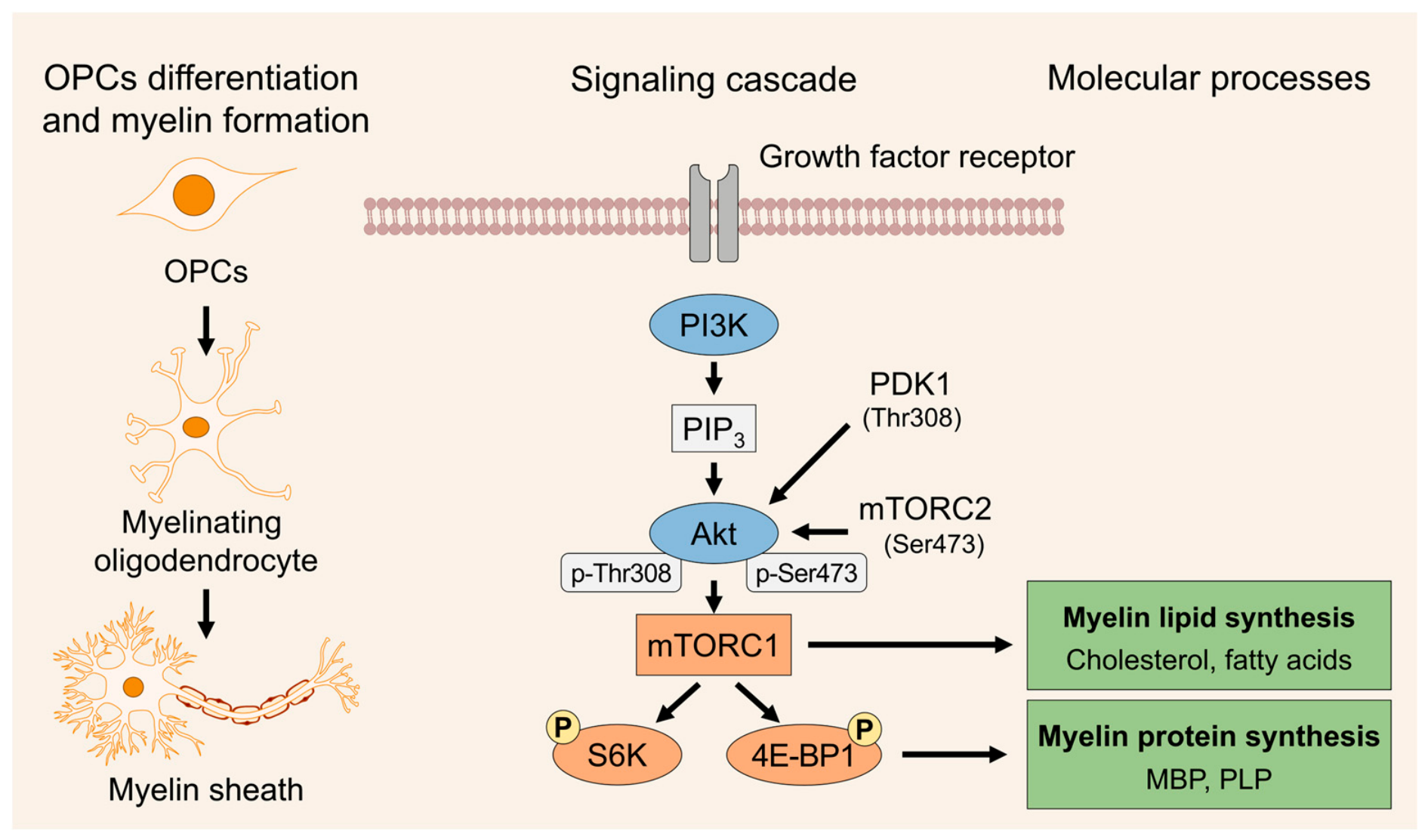
PI3K/Akt/mTOR signaling regulates OPC proliferation, oligodendrocyte differentiation, and myelin formation. Growth factor receptors activate PI3K through receptor tyrosine kinase signaling. PI3K generates phosphatidylinositol (3,4,5)-trisphosphate (PtdIns(3,4,5)P3), which promotes localization of Akt to the plasma membrane. At the membrane, 3-phosphoinositide-dependent protein kinase-1 phosphorylates Akt at Thr308, while mTOR complex 2 phosphorylates Akt at Ser473. mTORC1 primarily regulates protein synthesis, whereas mTORC2 functions upstream of Akt phosphorylation. Activated Akt promotes mTORC1 signaling and increases translation through ribosomal protein S6 kinase and eukaryotic initiation factor 4E-binding proteins [19,20,21].
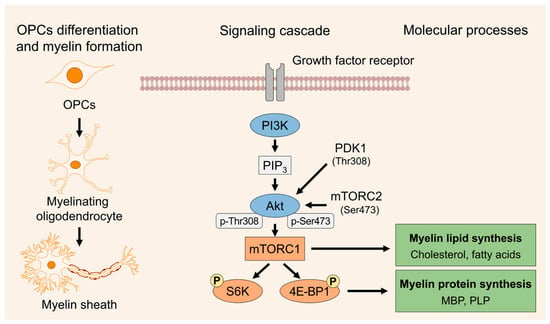
Oligodendrocyte differentiation includes OPCs (PDGFRα+, NG2+), pre-myelinating oligodendrocytes (O4+), and mature oligodendrocytes expressing myelin basic protein (MBP) and proteolipid protein (PLP) [22,23,24]. The PI3K/Akt/mTOR signaling cascade involved in oligodendrocyte differentiation and myelin formation is shown in Figure 1. Downstream of mTORC1, phosphorylation of S6K and 4E-BP1 regulates translation initiation, while activation of lipid biosynthetic pathways supports myelin membrane production [25]. In demyelinated areas, remyelination involves OPC recruitment, progression through the cell cycle toward differentiation, and advancement through premyelinating stages prior to myelin membrane formation. Impaired progression at this stage is a major pathological characteristic in chronic multiple sclerosis [26,27]. In toxin-induced demyelination models such as cuprizone exposure, activation of PI3K/Akt/mTOR signaling is associated with increased oligodendrocyte differentiation and myelin protein expression during remyelination. In OPCs, these signaling pathways regulate translation, lipid synthesis, and metabolic activity, all of which are required for oligodendrocyte differentiation and myelin membrane formation [28,29].
Figure 1.
PI3K/Akt/mTOR signaling in oligodendrocyte differentiation and myelin formation. Growth factor receptor activation induces PI3K signaling and generation of phosphatidylinositol (3,4,5)-trisphosphate (PtdIns(3,4,5)P3), which promotes localization of Akt to the plasma membrane. Akt is phosphorylated at Thr308 by 3-phosphoinositide-dependent protein kinase-1 (PDK1) and at Ser473 by mTOR complex 2 (mTORC2). Activated Akt promotes mTOR complex 1 (mTORC1) signaling. mTORC1 phosphorylates ribosomal protein S6 kinase (S6K) and eukaryotic initiation factor 4E-binding protein 1 (4E-BP1), leading to increased translation of myelin-associated proteins, including myelin basic protein (MBP) and proteolipid protein (PLP). mTORC1 also increases synthesis of lipids, including cholesterol and fatty acids required for myelin membrane formation. mTORC1 activation increases SREBP1-mediated transcription of genes required for lipid synthesis during myelin formation.
OPC differentiate into myelinating oligodendrocytes through Akt and mTOR activation. Inhibition of PI3K/Akt/mTOR signaling reduces oligodendrocyte differentiation and decreases expression of myelin proteins [30,31]. mTORC1 phosphorylates ribosomal protein S6 kinase and eukaryotic initiation factor 4E-binding proteins, increasing translation of myelin-associated proteins, including MBP and PLP. mTORC1 activation increases lipid synthesis required for myelin membrane formation. Inhibition of mTOR reduces myelin protein expression and oligodendrocyte differentiation [32,33,34]. Representative pharmacological modulators are discussed in Section 5, ‘Pharmacological Targeting of PI3K/Akt/mTOR and Wnt/GSK-3β Signaling’. PI3K/Akt/mTOR signaling regulates lipid synthesis in oligodendrocytes. mTORC1 activation increases synthesis of cholesterol and fatty acids required for myelin membrane formation. mTORC1 activation induces sterol regulatory element-binding protein 1 (SREBP1) and SREBP2; this regulates the transcription of genes involved in cholesterol and the fatty acid synthesis required for myelin membrane expansion [31,35]. mTOR signaling regulates mitochondrial function and ATP production in OPCs. Increased ATP production accompanies oligodendrocyte differentiation. Akt–mTOR activation is associated with increased oligodendrocyte differentiation and myelin protein expression. These mechanisms contribute to oligodendrocyte differentiation in demyelinated areas [28,31,36]. These findings indicate that PI3K/Akt/mTOR signaling regulates oligodendrocyte differentiation in demyelinated areas through protein synthesis and lipid production.
3. Wnt/β-Catenin and GSK-3β Signaling in Remyelination
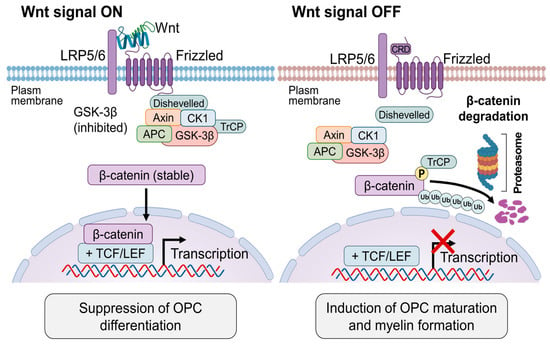
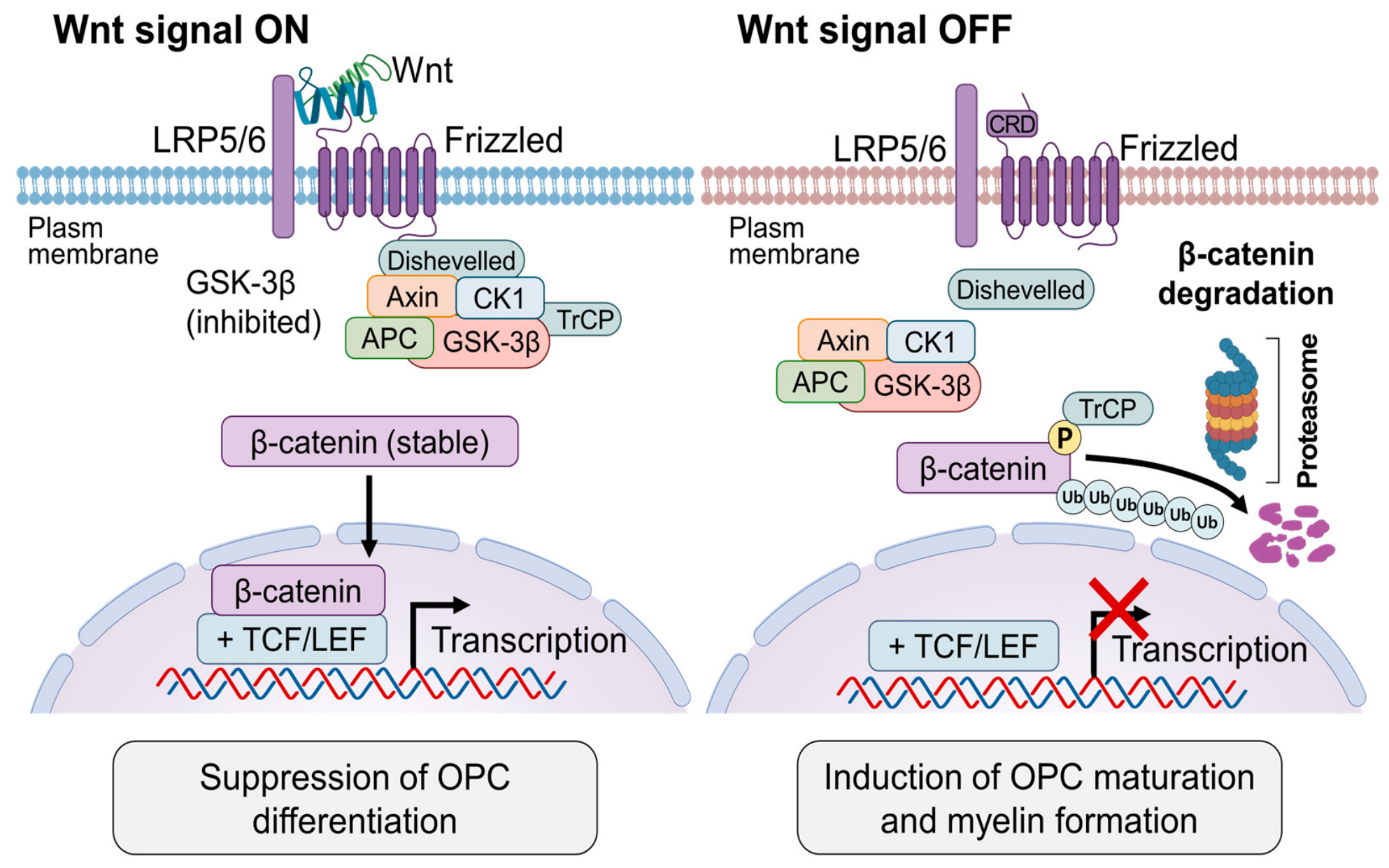
Wnt/β-catenin signaling regulates OPC differentiation and progenitor-associated transcription according to differentiation stage, and continuous activation reduces remyelination after demyelination. In demyelinated areas, increased Wnt activity maintains progenitor-associated transcription and reduces differentiation into myelinating oligodendrocytes. In experimental demyelination models, increased Wnt signaling is detected in demyelinated areas and is associated with reduced differentiation of OPCs into myelinating oligodendrocytes. Wnt/β-catenin signaling exerts different effects according to the phase of remyelination and the differentiation status of oligodendrocyte lineage cells [11,29,37]. Wnt ligands bind to Frizzled receptors and low-density lipoprotein receptor-related protein 5/6, leading to inhibition of GSK-3β-mediated β-catenin phosphorylation. β-catenin accumulates in the nucleus and induces transcription of genes that maintain progenitor cell identity and inhibit differentiation into myelinating oligodendrocytes. β-catenin binds to T cell factor/lymphoid enhancer factor (TCF/LEF) transcription factors and activates transcription of target genes. Continuous Wnt signaling reduces differentiation of oligodendrocyte progenitor cells into myelinating oligodendrocytes in demyelinated areas [38,39,40,41,42]. TCF7L2 (also known as TCF4) is a transcription factor in oligodendrocyte lineage cells, and its interaction with β-catenin regulates gene expression that inhibits differentiation [43,44]. The regulatory mechanisms of Wnt/β-catenin and GSK-3β signaling in OPC differentiation are shown in Figure 2. In the absence of Wnt signaling, GSK-3β forms a destruction complex with Axin and adenomatous polyposis coli (APC), which phosphorylates β-catenin and targets it for proteasomal degradation. This process regulates β-catenin degradation and accumulation, thereby determining transcriptional activity in OPCs and differentiating oligodendrocytes. GSK-3β activity is regulated by upstream kinases, including Akt, ERK, mTORC1, and p38 MAPK, and pharmacological inhibition of GSK-3β by lithium reduces β-catenin phosphorylation and promotes oligodendrocyte differentiation [45,46,47].
Figure 2.
Wnt/β-catenin and GSK-3β signaling in OPC differentiation. Left panel: Wnt ligand binding to Frizzled receptors and LRP5/6 inhibits GSK-3β activity and prevents phosphorylation of β-catenin, leading to β-catenin stabilization and nuclear translocation. Nuclear β-catenin interacts with TCF/LEF transcription factors and induces expression of genes that maintain progenitor cell identity and inhibit differentiation of OPCs. Right panel: In the absence of Wnt signaling, active GSK-3β within the Axin–APC destruction complex phosphorylates β-catenin, leading to its ubiquitination and proteasomal degradation. Reduced β-catenin levels decrease TCF/LEF-dependent transcription.
GSK-3β-dependent phosphorylation of β-catenin regulates its stability and modulates transcriptional activity. Akt phosphorylates GSK-3β and inhibits its kinase activity. Akt-mediated phosphorylation of GSK-3β reduces its kinase activity and promotes β-catenin-dependent transcription associated with oligodendrocyte differentiation [48,49]. In addition to β-catenin, GSK-3β also phosphorylates transcriptional regulators involved in differentiation of OPCs. GSK-3β inhibition activates mTORC1 signaling and reduces degradation of transcription factors, including C/EBPβ, while modulating β-catenin–dependent transcription [13,50,51].
In demyelinated areas, modulation of GSK-3β activity regulates differentiation of OPCs into myelinating oligodendrocytes. GSK-3β inhibition is associated with increased mTORC1 signaling and protein synthesis required for myelin membrane formation. GSK-3β inhibition also reduces degradation of transcription factors involved in oligodendrocyte differentiation [47,52,53]. β-catenin induces transcription of genes associated with progenitor maintenance and reduces differentiation into myelinating oligodendrocytes. GSK-3β inhibition modulates transcription of genes that regulate differentiation of OPCs [48,54,55]. Recent studies describe interactions between Wnt/β-catenin and PI3K/Akt/mTOR signaling, including Akt-mediated phosphorylation of GSK-3β [56,57]. Growth factor signaling activates PI3K/Akt and increases phosphorylation of GSK-3β, which modifies β-catenin phosphorylation and transcriptional activity [58,59,60,61]. GSK-3β inhibition affects oligodendrocyte differentiation through β-catenin-dependent and β-catenin-independent mechanisms, with effects that depend on the differentiation status of OPCs and differentiating oligodendrocytes [13,52]. These mechanisms regulate oligodendrocyte differentiation during remyelination through Wnt/β-catenin and GSK-3β signaling.
4. PI3K/Akt/mTOR and Wnt/GSK-3β Signaling in Neurogenesis
Neurogenesis in the adult CNS is localized to the subventricular zone and dentate gyrus, and it is regulated by intracellular kinase signaling pathways. Neural stem and progenitor cells also respond to demyelination. In the corpus callosum, OPCs are the main source of new oligodendrocytes during remyelination, whereas neural stem cell (NSC)-derived cells contribute to repair. Neurogenesis in demyelinating disease is associated with oligodendrocyte differentiation and neural stem/progenitor cell responses during remyelination [62,63]. Neural stem and progenitor cells generate neurons in these regions. Neuronal differentiation from NSCs is characterized by expression of lineage markers, including Nestin in progenitor cells, doublecortin (DCX) in neuroblasts, and Neuronal Nuclei (NeuN) in mature neurons [64,65]. PI3K/Akt/mTOR signaling increases neural stem and progenitor cell proliferation and neuronal differentiation, whereas Wnt/GSK-3β signaling regulates neuronal differentiation in neural stem and progenitor cells [66,67]. Akt phosphorylation activates mTORC1 signaling. mTORC1 phosphorylates ribosomal protein S6 kinase and eukaryotic initiation factor 4E-binding proteins, increasing translation of proteins involved in neuronal differentiation. Growth factor receptors, including insulin-like growth factor receptors, activate PI3K/Akt signaling in NSCs. Insulin-like growth factor receptor activation phosphorylates insulin receptor substrate proteins, leading to PI3K activation. Akt phosphorylation activates mTORC1 signaling and is associated with increased NSC proliferation and neuronal differentiation. Activation of Akt–mTOR signaling increases translation of proteins involved in neuronal differentiation [68,69]. GSK-3β inhibition increases β-catenin levels and neuronal differentiation in neural stem and progenitor cells.
Akt phosphorylates GSK-3β and inhibits its kinase activity. GSK-3β inhibition increases β-catenin levels and induces transcription of genes involved in neuronal differentiation. Recent studies describe mTOR signaling in metabolism of NSCs. mTORC1 increases glucose metabolism and mitochondrial activity, and it increases the protein and lipid synthesis required for neuronal differentiation. Akt–mTOR activation increases NSC proliferation and neuronal differentiation [56,70,71]. In demyelinating diseases, PI3K/Akt/mTOR signaling increases NSC proliferation and neuronal differentiation. Neuronal differentiation is associated with increased expression of neuronal markers, including NeuN and Microtubule-Associated Protein 2 (MAP2), and reduced expression of stem cell markers [69,72,73]. Wnt/β-catenin signaling and GSK-3β inhibition increase neuronal differentiation in neural stem and progenitor cells. PI3K/Akt/mTOR signaling increases NSCs proliferation, whereas Wnt/β-catenin signaling and GSK-3β inhibition increase neuronal differentiation [74,75]. These pathways regulate neuronal differentiation together with OPC differentiation during remyelination.
5. Pharmacological Targeting of PI3K/Akt/mTOR and Wnt/GSK-3β Signaling
PI3K/Akt/mTOR and Wnt/GSK-3β pathways regulate intracellular phosphorylation, protein synthesis, and β-catenin-dependent transcription associated with oligodendrocyte and neuronal differentiation [60,76,77,78]. Representative pharmacological compounds targeting PI3K/Akt/mTOR and Wnt/GSK-3β signaling are summarized in Table 1.
Table 1.
Pharmacological compounds targeting PI3K/Akt/mTOR and Wnt/GSK-3β pathways.
SC79 is a synthetic small-molecule Akt activator with membrane permeability, typically applied at micromolar concentrations in experimental models. MHY1485 is a small-molecule mTOR activator with intracellular activity, although CNS exposure has not been reported. Gastrodin is a natural compound derived from Gastrodia elata with evidence of CNS exposure. CHIR99021 is a selective GSK-3 inhibitor widely used in stem cell studies, and lithium is a clinically approved compound with CNS exposure.
PI3K/Akt/mTOR signaling regulates intracellular phosphorylation and protein synthesis associated with oligodendrocyte and neuronal differentiation. Akt activation and mTOR modulation affect translation-associated processes involved in myelin-related protein expression [89,90]. In contrast, Wnt/GSK-3β signaling regulates β-catenin-associated transcription involved in oligodendrocyte and neuronal differentiation. Direct inhibition of GSK-3β increases β-catenin stability and modifies differentiation-associated gene expression [40,91,92]. Effects of PI3K/Akt/mTOR and Wnt/GSK-3β modulation differ according to cell type and differentiation stage. In OPCs, these pathways regulate differentiation into myelinating oligodendrocytes, whereas in neural stem and progenitor cells they regulate proliferation and neuronal differentiation [12,75,93]. GSK-3β functions as a regulatory component connecting PI3K/Akt and Wnt signaling pathways. Pharmacological targeting of mTOR or GSK-3β therefore affects intracellular processes associated with oligodendrocyte and neuronal differentiation.
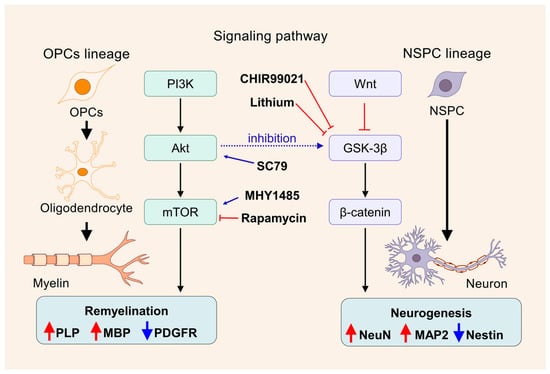
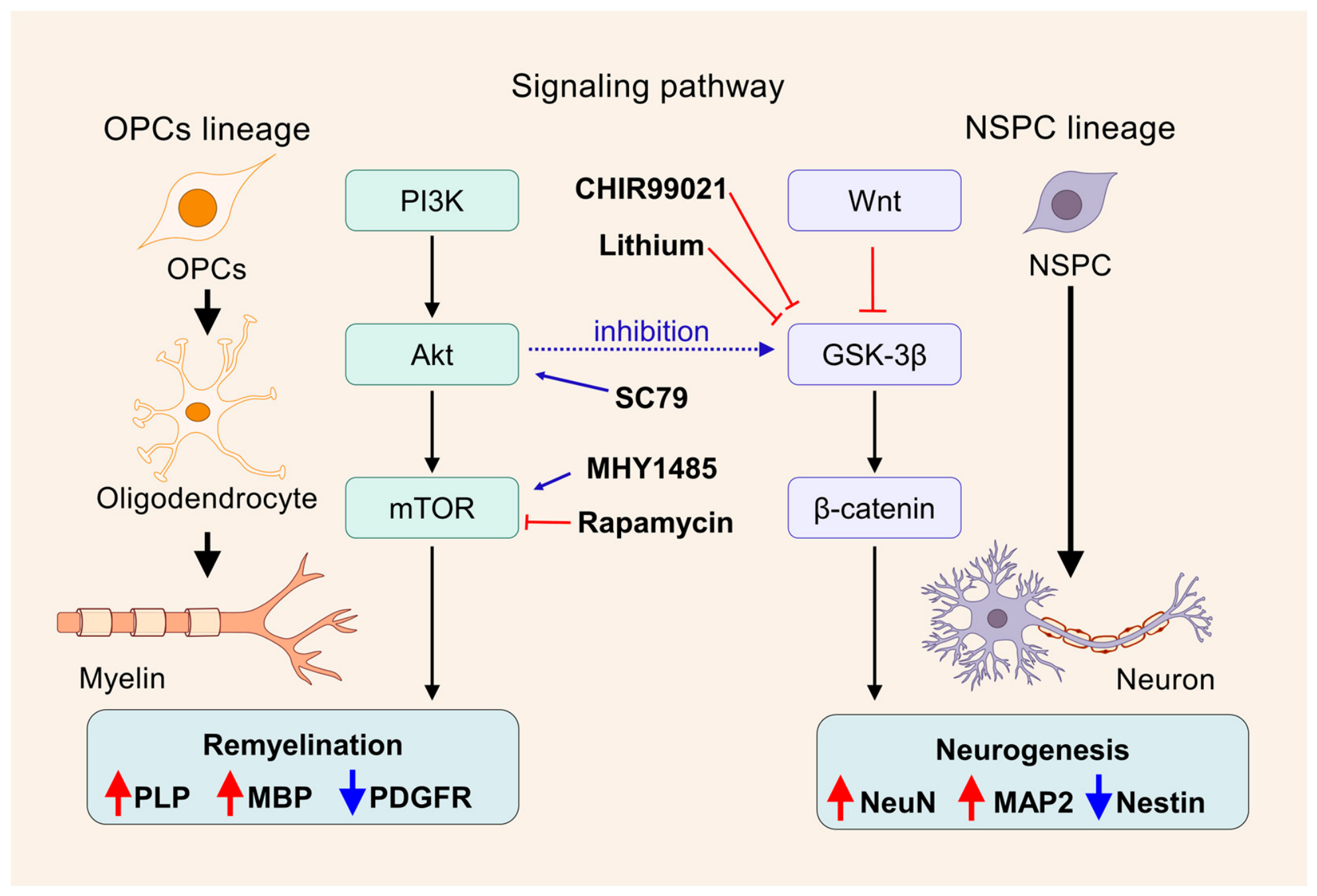
Combined targeting of PI3K/Akt/mTOR and Wnt/GSK-3β signaling affects oligodendrocyte and neuronal differentiation through intracellular kinase regulation. Regulatory interactions between these pathways are summarized in Figure 3. Selection of molecular targets should consider differentiation stage, CNS exposure, and potential effects on multiple CNS cell populations [94,95].
Figure 3.
Pharmacological targeting of PI3K/Akt/mTOR and Wnt/GSK-3β signaling pathways in remyelination and neurogenesis. PI3K activation induces Akt phosphorylation at Thr308 and Ser473, leading to activation of mTOR signaling and phosphorylation-dependent inhibition of GSK-3β. mTOR signaling increases protein synthesis via ribosomal protein S6 kinase and lipid synthesis via SREBP-mediated pathways. Pharmacological modulators target components of these pathways: SC79 activates Akt, MHY1485 activates mTOR, rapamycin inhibits mTOR, and CHIR99021 and lithium inhibit GSK-3β. Left panel: In oligodendrocyte progenitor cells and differentiating oligodendrocytes, activation of PI3K/Akt/mTOR signaling increases myelin-associated protein expression, including expression of MBP and PLP, and promotes differentiation into myelinating oligodendrocytes. Right panel: In neural stem and progenitor cells, modulation of these pathways is associated with neuronal differentiation, indicated by increased expression of neuronal markers such as NeuN and MAP2 and reduced expression of stem cell markers. NSPC—neural stem and progenitor cells; PDGFR—platelet-derived growth factor receptor.
6. Therapeutic Implications for Remyelination and Neurogenesis
Application of kinase-modulating compounds from experimental models to clinical use requires consideration of demyelination, OPC differentiation, and axonal damage in demyelinating diseases. In chronic demyelinated lesions in multiple sclerosis, differentiation of OPCs into myelinating oligodendrocytes remains reduced despite the presence of OPCs [96,97]. Current clinical studies of compounds such as lithium and rapamycin show that their effects in patients are primarily associated with immunomodulation, and direct evidence of remyelination has not been established. These findings indicate that drug development should include approaches targeting immune-mediated inflammatory responses and direct effects on myelin repair.
Selection of molecular targets should consider their position within signaling pathways and their effects on oligodendrocyte and neuronal differentiation. Targeting Akt affects multiple downstream signaling components and may be associated with off-target effects and oncogenic activity [98,99,100]. Targeting downstream components such as p70S6K for protein synthesis or β-catenin for transcription regulates specific cellular processes and may reduce off-target effects during treatment [101,102]. Furthermore, pharmacological responses differ between NSCs and oligodendrocytes, depending on the differentiation status of the target cell [103,104,105,106]. Therefore, pharmacological approaches should consider the differentiation status of target cells and the condition of demyelinated tissue when evaluating treatment effects.
The blood–brain barrier affects delivery of pharmacological compounds to the CNS. Many kinase modulators have not been well characterized with respect to central nervous system exposure and require chemical modification or delivery systems [107,108,109]. Moreover, both PI3K/Akt/mTOR and Wnt/GSK-3β signaling are active in neurons and glial cells, and pharmacological targeting may affect multiple cell types. Target selection should consider potential effects on non-target cells [94,110,111]. Future pharmacological approaches may include chemical modification and delivery systems, such as ligand-conjugated nanoparticles, to improve targeting of kinase modulators to OPCs or NSCs. These approaches should consider molecular targets and central nervous system delivery when evaluating therapeutic applications.
7. Conclusions
Remyelination and neurogenesis both contribute to neural function in demyelinating diseases. Differentiation of oligodendrocyte progenitor cells and neural stem and progenitor cells is regulated by intracellular kinase signaling pathways, including PI3K/Akt/mTOR and Wnt/GSK-3β signaling. Pharmacological agents targeting these pathways show effects on oligodendrocyte and neuronal differentiation in experimental models; however, no direct evidence of remyelination in patients has been established. Clinical studies with compounds such as lithium and mTOR inhibitors indicate that modulation of these pathways in patients primarily affects immune responses rather than myelin repair. Pharmacological compounds act on multiple cell populations in the CNS, and their effects cannot be attributed to a single cell type; this should be considered in the design of therapeutic strategies. Targeting intracellular kinases involved in protein synthesis and transcription, including Akt and GSK-3β, provides an approach for promoting oligodendrocyte differentiation. Development of pharmacological agents with defined molecular targets and CNS exposure will be required to support therapeutic application in demyelinating diseases.
Author Contributions
M.E.K. and J.S.L. contributed to the conceptualization and design of the review. M.E.K. drafted the initial manuscript, and J.S.L. provided critical revisions and edits. All authors participated in the manuscript’s revision. All authors have read and agreed to the published version of the manuscript.
Funding
This research was supported by Chosun University in 2025 (K206212017).
Institutional Review Board Statement
Not applicable.
Informed Consent Statement
Not applicable.
Data Availability Statement
The data presented in this study are available on request from the corresponding author. The data are not publicly available due to privacy.
Conflicts of Interest
The authors declare no conflicts of interest.
References
- Coutinho Costa, V.G.; Araujo, S.E.; Alves-Leon, S.V.; Gomes, F.C.A. Central nervous system demyelinating diseases: Glial cells at the hub of pathology. Front. Immunol. 2023, 14, 1135540. [Google Scholar] [CrossRef] [Scilit] [PubMed]
- Nave, K.A.; Werner, H.B. Ensheathment and Myelination of Axons: Evolution of Glial Functions. Annu. Rev. Neurosci. 2021, 44, 197–219. [Google Scholar] [CrossRef] [Scilit] [PubMed]
- Grassi, S.; Prinetti, A. How do different cell populations orchestrate myelin regeneration? Biochem. Soc. Trans. 2025, 53, 653–669. [Google Scholar] [CrossRef] [Scilit]
- Duncan, G.J.; Simkins, T.J.; Emery, B. Neuron-Oligodendrocyte Interactions in the Structure and Integrity of Axons. Front. Cell Dev. Biol. 2021, 9, 653101. [Google Scholar] [CrossRef] [Scilit]
- Gautier, H.O.; Evans, K.A.; Volbracht, K.; James, R.; Sitnikov, S.; Lundgaard, I.; James, F.; Lao-Peregrin, C.; Reynolds, R.; Franklin, R.J.; et al. Neuronal activity regulates remyelination via glutamate signalling to oligodendrocyte progenitors. Nat. Commun. 2015, 6, 8518. [Google Scholar] [CrossRef] [Scilit]
- Kuhn, S.; Gritti, L.; Crooks, D.; Dombrowski, Y. Oligodendrocytes in Development, Myelin Generation and Beyond. Cells 2019, 8, 1424. [Google Scholar] [CrossRef] [Scilit] [PubMed]
- Zveik, O.; Rechtman, A.; Ganz, T.; Vaknin-Dembinsky, A. The interplay of inflammation and remyelination: Rethinking MS treatment with a focus on oligodendrocyte progenitor cells. Mol. Neurodegener. 2024, 19, 53. [Google Scholar] [CrossRef] [Scilit]
- Podbielska, M.; Banik, N.L.; Kurowska, E.; Hogan, E.L. Myelin recovery in multiple sclerosis: The challenge of remyelination. Brain Sci. 2013, 3, 1282–1324. [Google Scholar] [CrossRef] [Scilit]
- Boyd, A.; Zhang, H.; Williams, A. Insufficient OPC migration into demyelinated lesions is a cause of poor remyelination in MS and mouse models. Acta Neuropathol. 2013, 125, 841–859. [Google Scholar] [CrossRef] [Scilit]
- Hartley, M.D.; Altowaijri, G.; Bourdette, D. Remyelination and multiple sclerosis: Therapeutic approaches and challenges. Curr. Neurol. Neurosci. Rep. 2014, 14, 485. [Google Scholar] [CrossRef] [Scilit]
- Vallee, A.; Vallee, J.N.; Guillevin, R.; Lecarpentier, Y. Interactions Between the Canonical WNT/Beta-Catenin Pathway and PPAR Gamma on Neuroinflammation, Demyelination, and Remyelination in Multiple Sclerosis. Cell. Mol. Neurobiol. 2018, 38, 783–795. [Google Scholar] [CrossRef] [Scilit]
- Ishii, A.; Furusho, M.; Macklin, W.; Bansal, R. Independent and cooperative roles of the Mek/ERK1/2-MAPK and PI3K/Akt/mTOR pathways during developmental myelination and in adulthood. Glia 2019, 67, 1277–1295. [Google Scholar] [CrossRef] [Scilit]
- Dohare, P.; Cheng, B.; Ahmed, E.; Yadala, V.; Singla, P.; Thomas, S.; Kayton, R.; Ungvari, Z.; Ballabh, P. Glycogen synthase kinase-3beta inhibition enhances myelination in preterm newborns with intraventricular hemorrhage, but not recombinant Wnt3A. Neurobiol. Dis. 2018, 118, 22–39. [Google Scholar] [CrossRef] [Scilit]
- Devanand, M.; Saiprabha, V.N.; Madhu, K. Signaling mechanisms involved in the regulation of remyelination in multiple sclerosis: A mini review. J. Mol. Med. 2023, 101, 637–644. [Google Scholar] [CrossRef] [Scilit] [PubMed]
- Plemel, J.R.; Liu, W.Q.; Yong, V.W. Remyelination therapies: A new direction and challenge in multiple sclerosis. Nat. Rev. Drug Discov. 2017, 16, 617–634. [Google Scholar] [CrossRef] [Scilit]
- Arciniegas Ruiz, S.M.; Eldar-Finkelman, H. Glycogen Synthase Kinase-3 Inhibitors: Preclinical and Clinical Focus on CNS-A Decade Onward. Front. Mol. Neurosci. 2021, 14, 792364. [Google Scholar] [CrossRef] [Scilit] [PubMed]
- Yeung, M.S.Y.; Djelloul, M.; Steiner, E.; Bernard, S.; Salehpour, M.; Possnert, G.; Brundin, L.; Frisen, J. Dynamics of oligodendrocyte generation in multiple sclerosis. Nature 2019, 566, 538–542. [Google Scholar] [CrossRef] [Scilit] [PubMed]
- Gruchot, J.; Weyers, V.; Gottle, P.; Forster, M.; Hartung, H.P.; Kury, P.; Kremer, D. The Molecular Basis for Remyelination Failure in Multiple Sclerosis. Cells 2019, 8, 825. [Google Scholar] [CrossRef] [Scilit]
- Yang, L.; Miao, L.; Liang, F.; Huang, H.; Teng, X.; Li, S.; Nuriddinov, J.; Selzer, M.E.; Hu, Y. The mTORC1 effectors S6K1 and 4E-BP play different roles in CNS axon regeneration. Nat. Commun. 2014, 5, 5416. [Google Scholar] [CrossRef] [Scilit]
- Saxton, R.A.; Sabatini, D.M. mTOR Signaling in Growth, Metabolism, and Disease. Cell 2017, 169, 361–371. [Google Scholar] [CrossRef] [Scilit] [PubMed]
- Szwed, A.; Kim, E.; Jacinto, E. Regulation and metabolic functions of mTORC1 and mTORC2. Physiol. Rev. 2021, 101, 1371–1426. [Google Scholar] [CrossRef] [Scilit]
- Hughes, E.G.; Stockton, M.E. Premyelinating Oligodendrocytes: Mechanisms Underlying Cell Survival and Integration. Front. Cell Dev. Biol. 2021, 9, 714169. [Google Scholar] [CrossRef] [Scilit] [PubMed]
- Ulloa-Navas, M.J.; Perez-Borreda, P.; Morales-Gallel, R.; Sauri-Tamarit, A.; Garcia-Tarraga, P.; Gutierrez-Martin, A.J.; Herranz-Perez, V.; Garcia-Verdugo, J.M. Ultrastructural Characterization of Human Oligodendrocytes and Their Progenitor Cells by Pre-embedding Immunogold. Front. Neuroanat. 2021, 15, 696376. [Google Scholar] [CrossRef] [Scilit]
- Fekete, C.D.; Nishiyama, A. Presentation and integration of multiple signals that modulate oligodendrocyte lineage progression and myelination. Front. Cell. Neurosci. 2022, 16, 1041853. [Google Scholar] [CrossRef] [Scilit]
- Panwar, V.; Singh, A.; Bhatt, M.; Tonk, R.K.; Azizov, S.; Raza, A.S.; Sengupta, S.; Kumar, D.; Garg, M. Multifaceted role of mTOR (mammalian target of rapamycin) signaling pathway in human health and disease. Signal Transduct. Target. Ther. 2023, 8, 375. [Google Scholar] [CrossRef] [Scilit]
- Tepavcevic, V.; Lubetzki, C. Oligodendrocyte progenitor cell recruitment and remyelination in multiple sclerosis: The more, the merrier? Brain 2022, 145, 4178–4192. [Google Scholar] [CrossRef] [Scilit]
- Gharagozloo, M.; Bannon, R.; Calabresi, P.A. Breaking the barriers to remyelination in multiple sclerosis. Curr. Opin. Pharmacol. 2022, 63, 102194. [Google Scholar] [CrossRef] [Scilit] [PubMed]
- Jeffries, M.A.; McLane, L.E.; Khandker, L.; Mather, M.L.; Evangelou, A.V.; Kantak, D.; Bourne, J.N.; Macklin, W.B.; Wood, T.L. mTOR Signaling Regulates Metabolic Function in Oligodendrocyte Precursor Cells and Promotes Efficient Brain Remyelination in the Cuprizone Model. J. Neurosci. 2021, 41, 8321–8337. [Google Scholar] [CrossRef] [Scilit]
- Gao, Z.; Guo, M.; Chen, K.; Jiang, M.-L.; Zhang, L.-M.; Di Cesare Mannelli, L.; Zhang, C.-J. Oligodendrocyte Precursor Cells in Demyelination Repair: Mechanisms, Crosstalk, and Therapeutic Frontiers. Med. Bull. 2025, 1, 104–120. [Google Scholar] [CrossRef] [Scilit]
- Tyler, W.A.; Gangoli, N.; Gokina, P.; Kim, H.A.; Covey, M.; Levison, S.W.; Wood, T.L. Activation of the mammalian target of rapamycin (mTOR) is essential for oligodendrocyte differentiation. J. Neurosci. 2009, 29, 6367–6378. [Google Scholar] [CrossRef] [Scilit] [PubMed]
- Fedder-Semmes, K.N.; Appel, B. The Akt-mTOR Pathway Drives Myelin Sheath Growth by Regulating Cap-Dependent Translation. J. Neurosci. 2021, 41, 8532–8544. [Google Scholar] [CrossRef] [Scilit] [PubMed]
- Wahl, S.E.; McLane, L.E.; Bercury, K.K.; Macklin, W.B.; Wood, T.L. Mammalian target of rapamycin promotes oligodendrocyte differentiation, initiation and extent of CNS myelination. J. Neurosci. 2014, 34, 4453–4465. [Google Scholar] [CrossRef] [Scilit]
- Figlia, G.; Gerber, D.; Suter, U. Myelination and mTOR. Glia 2018, 66, 693–707. [Google Scholar] [CrossRef] [Scilit]
- Yang, Z.; Yu, Z.; Xiao, B. Coordinated Regulation of Myelination by Growth Factor and Amino-acid Signaling Pathways. Neurosci. Bull. 2023, 39, 453–465. [Google Scholar] [CrossRef] [Scilit] [PubMed]
- Mathews, E.S.; Appel, B. Cholesterol Biosynthesis Supports Myelin Gene Expression and Axon Ensheathment through Modulation of P13K/Akt/mTor Signaling. J. Neurosci. 2016, 36, 7628–7639. [Google Scholar] [CrossRef] [Scilit]
- Narine, M.; Colognato, H. Current Insights Into Oligodendrocyte Metabolism and Its Power to Sculpt the Myelin Landscape. Front. Cell Neurosci. 2022, 16, 892968. [Google Scholar] [CrossRef] [Scilit]
- Wheeler, N.A.; Fuss, B. Extracellular cues influencing oligodendrocyte differentiation and (re)myelination. Exp. Neurol. 2016, 283, 512–530. [Google Scholar] [CrossRef] [Scilit]
- Schuijers, J.; Mokry, M.; Hatzis, P.; Cuppen, E.; Clevers, H. Wnt-induced transcriptional activation is exclusively mediated by TCF/LEF. EMBO J. 2014, 33, 146–156. [Google Scholar] [CrossRef] [Scilit]
- Shahid Hussain Soomro, J.J.; Hui, F. Oligodendrocytes Development and Wnt Signaling Pathway. Int. J. Hum. Anat. 2018, 1, 17. [Google Scholar] [CrossRef] [Scilit]
- Law, S.M.; Zheng, J.J. Premise and peril of Wnt signaling activation through GSK-3beta inhibition. iScience 2022, 25, 104159. [Google Scholar] [CrossRef] [Scilit] [PubMed]
- Hill, B.M.; Holloway, R.K.; Forbes, L.H.; Davies, C.L.; Monteiro, J.K.; Brown, C.M.; Rose, J.; Fudge, N.; Plant, P.J.; Mahmood, A.; et al. Monocyte-secreted Wnt reduces the efficiency of central nervous system remyelination. PLoS Biol. 2025, 23, e3003073. [Google Scholar] [CrossRef] [Scilit]
- Manukjan, N.; Ahmed, Z.; Fulton, D.; Blankesteijn, W.M.; Foulquier, S. A Systematic Review of WNT Signaling in Endothelial Cell Oligodendrocyte Interactions: Potential Relevance to Cerebral Small Vessel Disease. Cells 2020, 9, 1545. [Google Scholar] [CrossRef] [Scilit]
- Weng, C.; Ding, M.; Fan, S.; Cao, Q.; Lu, Z. Transcription factor 7 like 2 promotes oligodendrocyte differentiation and remyelination. Mol. Med. Rep. 2017, 16, 1864–1870. [Google Scholar] [CrossRef] [Scilit]
- Hammond, E.; Lang, J.; Maeda, Y.; Pleasure, D.; Angus-Hill, M.; Xu, J.; Horiuchi, M.; Deng, W.; Guo, F. The Wnt effector transcription factor 7-like 2 positively regulates oligodendrocyte differentiation in a manner independent of Wnt/beta-catenin signaling. J. Neurosci. 2015, 35, 5007–5022. [Google Scholar] [CrossRef] [Scilit] [PubMed]
- Lybrand, D.B.; Naiman, M.; Laumann, J.M.; Boardman, M.; Petshow, S.; Hansen, K.; Scott, G.; Wehrli, M. Destruction complex dynamics: Wnt/beta-catenin signaling alters Axin-GSK3beta interactions in vivo. Development 2019, 146, dev164145. [Google Scholar] [CrossRef] [Scilit]
- Ghosouri, S.; Soleimani, M.; Bakhtiari, M.; Ghasemi, N. Evaluation of in vivo lithium chloride effects as a GSK3-beta inhibitor on human adipose derived stem cells differentiation into oligodendrocytes and re-myelination in an animal model of multiple sclerosis. Mol. Biol. Rep. 2023, 50, 1617–1625. [Google Scholar] [CrossRef] [Scilit]
- Azim, K.; Butt, A.M. GSK3beta negatively regulates oligodendrocyte differentiation and myelination in vivo. Glia 2011, 59, 540–553. [Google Scholar] [CrossRef] [Scilit]
- Shimizu, M.; Shibuya, H. GSK3beta Regulates a Novel beta-Catenin Degradation Pathway via the GID Complex in Wnt Signaling. Genes Cells 2025, 30, e70068. [Google Scholar] [CrossRef] [Scilit] [PubMed]
- Majewska, E.; Szeliga, M. AKT/GSK3beta Signaling in Glioblastoma. Neurochem. Res. 2017, 42, 918–924. [Google Scholar] [CrossRef] [Scilit]
- Alhassan, H.H.; Janiyani, K.; Surti, M.; Adnan, M.; Patel, M. The dual role of glycogen synthase kinase-3 beta (GSK3beta) in neurodegenerative pathologies: Interplay between autophagy and disease progression. Front. Pharmacol. 2025, 16, 1693805. [Google Scholar] [CrossRef] [Scilit] [PubMed]
- Choi, H.J.; Cha, S.J.; Lee, J.W.; Kim, H.J.; Kim, K. Recent Advances on the Role of GSK3beta in the Pathogenesis of Amyotrophic Lateral Sclerosis. Brain Sci. 2020, 10, 675. [Google Scholar] [CrossRef] [Scilit]
- Zhou, L.; Shao, C.Y.; Xu, S.M.; Ma, J.; Xie, Y.J.; Zhou, L.; Teng, P.; Wang, Y.; Qiu, M.; Shen, Y. GSK3beta promotes the differentiation of oligodendrocyte precursor cells via beta-catenin-mediated transcriptional regulation. Mol. Neurobiol. 2014, 50, 507–519. [Google Scholar] [CrossRef] [Scilit] [PubMed]
- Urbanska, M.; Gozdz, A.; Macias, M.; Cymerman, I.A.; Liszewska, E.; Kondratiuk, I.; Devijver, H.; Lechat, B.; Van Leuven, F.; Jaworski, J. GSK3beta Controls mTOR and Prosurvival Signaling in Neurons. Mol. Neurobiol. 2018, 55, 6050–6062. [Google Scholar] [CrossRef] [Scilit]
- Dai, Z.M.; Sun, S.; Wang, C.; Huang, H.; Hu, X.; Zhang, Z.; Lu, Q.R.; Qiu, M. Stage-specific regulation of oligodendrocyte development by Wnt/beta-catenin signaling. J. Neurosci. 2014, 34, 8467–8473. [Google Scholar] [CrossRef] [Scilit]
- Guo, F.; Lang, J.; Sohn, J.; Hammond, E.; Chang, M.; Pleasure, D. Canonical Wnt signaling in the oligodendroglial lineage--puzzles remain. Glia 2015, 63, 1671–1693. [Google Scholar] [CrossRef] [Scilit] [PubMed]
- Duda, P.; Akula, S.M.; Abrams, S.L.; Steelman, L.S.; Martelli, A.M.; Cocco, L.; Ratti, S.; Candido, S.; Libra, M.; Montalto, G.; et al. Targeting GSK3 and Associated Signaling Pathways Involved in Cancer. Cells 2020, 9, 1110. [Google Scholar] [CrossRef] [Scilit] [PubMed]
- Jere, S.W.; Abrahamse, H.; Houreld, N.N. Interaction of the AKT and beta-catenin signalling pathways and the influence of photobiomodulation on cellular signalling proteins in diabetic wound healing. J. Biomed. Sci. 2023, 30, 81. [Google Scholar] [CrossRef] [Scilit]
- Kisoh, K.; Hayashi, H.; Itoh, T.; Asada, M.; Arai, M.; Yuan, B.; Tanonaka, K.; Takagi, N. Involvement of GSK-3beta Phosphorylation Through PI3-K/Akt in Cerebral Ischemia-Induced Neurogenesis in Rats. Mol. Neurobiol. 2017, 54, 7917–7927. [Google Scholar] [CrossRef] [Scilit]
- Zhou, L.; Shao, C.Y.; Xie, Y.J.; Wang, N.; Xu, S.M.; Luo, B.Y.; Wu, Z.Y.; Ke, Y.H.; Qiu, M.; Shen, Y. Gab1 mediates PDGF signaling and is essential to oligodendrocyte differentiation and CNS myelination. eLife 2020, 9, e52056. [Google Scholar] [CrossRef] [Scilit]
- Glaviano, A.; Foo, A.S.C.; Lam, H.Y.; Yap, K.C.H.; Jacot, W.; Jones, R.H.; Eng, H.; Nair, M.G.; Makvandi, P.; Geoerger, B.; et al. PI3K/AKT/mTOR signaling transduction pathway and targeted therapies in cancer. Mol. Cancer 2023, 22, 138. [Google Scholar] [CrossRef] [Scilit]
- Guo, J.; Jiang, X.; Lian, J.; Li, H.; Zhang, F.; Xie, J.; Deng, J.; Hou, X.; Du, Z.; Hao, E. Evaluation of the effect of GSK-3beta on liver cancer based on the PI3K/AKT pathway. Front. Cell Dev. Biol. 2024, 12, 1431423. [Google Scholar] [CrossRef] [Scilit]
- Moyon, S.; Holloman, M.; Salzer, J.L. Neural stem cells and oligodendrocyte progenitor cells compete for remyelination in the corpus callosum. Front. Cell. Neurosci. 2023, 17, 1114781. [Google Scholar] [CrossRef] [Scilit]
- Serwanski, D.R.; Rasmussen, A.L.; Brunquell, C.B.; Perkins, S.S.; Nishiyama, A. Sequential Contribution of Parenchymal and Neural Stem Cell-Derived Oligodendrocyte Precursor Cells toward Remyelination. Neuroglia 2018, 1, 91–105. [Google Scholar] [CrossRef] [Scilit]
- Defterali, C.; Moreno-Estelles, M.; Crespo, C.; Diaz-Guerra, E.; Diaz-Moreno, M.; Vergano-Vera, E.; Nieto-Estevez, V.; Hurtado-Chong, A.; Consiglio, A.; Mira, H.; et al. Neural stem cells in the adult olfactory bulb core generate mature neurons in vivo. Stem Cells 2021, 39, 1253–1269. [Google Scholar] [CrossRef] [Scilit]
- Zhang, J.; Jiao, J. Molecular Biomarkers for Embryonic and Adult Neural Stem Cell and Neurogenesis. Biomed. Res. Int. 2015, 2015, 727542. [Google Scholar] [CrossRef] [Scilit]
- Nomura, T.; Gotoh, H.; Kiyonari, H.; Ono, K. Cell Type-Specific Transcriptional Control of Gsk3beta in the Developing Mammalian Neocortex. Front. Neurosci. 2022, 16, 811689. [Google Scholar] [CrossRef] [Scilit]
- Liao, Z.; Zhou, X.; Li, S.; Jiang, W.; Li, T.; Wang, N.; Xiao, N. Activation of the AKT/GSK-3beta/beta-catenin pathway via photobiomodulation therapy promotes neural stem cell proliferation in neonatal rat models of hypoxic-ischemic brain damage. Ann. Transl. Med. 2022, 10, 55. [Google Scholar] [CrossRef] [Scilit]
- Wrigley, S.; Arafa, D.; Tropea, D. Insulin-Like Growth Factor 1: At the Crossroads of Brain Development and Aging. Front. Cell. Neurosci. 2017, 11, 14. [Google Scholar] [CrossRef] [Scilit]
- Romanyuk, N.; Sintakova, K.; Arzhanov, I.; Horak, M.; Gandhi, C.; Jhanwar-Uniyal, M.; Jendelova, P. mTOR pathway inhibition alters proliferation as well as differentiation of neural stem cells. Front. Cell. Neurosci. 2024, 18, 1298182. [Google Scholar] [CrossRef] [Scilit]
- Garone, C.; De Giorgio, F.; Carli, S. Mitochondrial metabolism in neural stem cells and implications for neurodevelopmental and neurodegenerative diseases. J. Transl. Med. 2024, 22, 238. [Google Scholar] [CrossRef] [Scilit]
- Meng, D.; Frank, A.R.; Jewell, J.L. mTOR signaling in stem and progenitor cells. Development 2018, 145, dev152595. [Google Scholar] [CrossRef] [Scilit]
- Peruzzotti-Jametti, L.; Vicario, N.; Volpe, G.; Rizzi, S.; Kwok, C.; Lombardi, I.; Bergholt, M.S.; Barea-Moya, L.; D’Angelo, A.; Nicaise, A.M.; et al. Remyelination of chronic demyelinated lesions with directly induced neural stem cells. Brain 2025, 148, 3505–3513. [Google Scholar] [CrossRef] [Scilit]
- Tandon, A.; Singh, S.J.; Chaturvedi, R.K. Stem Cells as Potential Targets of Polyphenols in Multiple Sclerosis and Alzheimer’s Disease. Biomed. Res. Int. 2018, 2018, 1483791. [Google Scholar] [CrossRef] [Scilit]
- Shi, X.Y.; He, Y.X.; Ge, M.Y.; Liu, P.; Zheng, P.; Li, Z.H. Gastrodin promotes CNS myelinogenesis and alleviates demyelinating injury by activating the PI3K/AKT/mTOR signaling. Acta Pharmacol. Sin. 2025, 46, 1610–1623. [Google Scholar] [CrossRef] [Scilit]
- Zhang, X.; He, X.; Li, Q.; Kong, X.; Ou, Z.; Zhang, L.; Gong, Z.; Long, D.; Li, J.; Zhang, M.; et al. PI3K/AKT/mTOR Signaling Mediates Valproic Acid-Induced Neuronal Differentiation of Neural Stem Cells through Epigenetic Modifications. Stem Cell Rep. 2017, 8, 1256–1269. [Google Scholar] [CrossRef] [Scilit]
- Xue, C.; Chu, Q.; Shi, Q.; Zeng, Y.; Lu, J.; Li, L. Wnt signaling pathways in biology and disease: Mechanisms and therapeutic advances. Signal Transduct. Target. Ther. 2025, 10, 106. [Google Scholar] [CrossRef] [Scilit]
- Correale, J. The Neurochemical Landscape of Oligodendrocyte Physiology: From Myelination to Metabolic and Synaptic Modulation. J. Neurochem. 2025, 169, e70318. [Google Scholar] [CrossRef] [Scilit]
- AlRuwaili, R.; Al-Kuraishy, H.M.; Al-Gareeb, A.I.; Albuhadily, A.K.; Alexiou, A.; Papadakis, M.; Fetoh, M.E.A.; Batiha, G.E. Targeting of the PI3 K/AKT/GSK3beta Pathway in Parkinson’s Disease: A Therapeutic Blueprint. Mol. Neurobiol. 2025, 62, 15108–15131. [Google Scholar] [CrossRef] [Scilit]
- Luan, Q.; Pan, L.; He, D.; Gong, X.; Zhou, H. SC79, the AKT Activator Protects Cerebral Ischemia in a Rat Model of Ischemia/Reperfusion Injury. Med. Sci. Monit. 2018, 24, 5391–5397. [Google Scholar] [CrossRef] [Scilit]
- Li, Z.; Zhang, F.; Huang, L.; Deng, J.; Pan, Y.; Xu, T.; Liu, J.; Gao, N.; Duan, R.; Shao, C.; et al. Akt/mTOR Pathway Agonist SC79 Inhibits Autophagy and Apoptosis of Oligodendrocyte Precursor Cells Associated with Neonatal White Matter Dysplasia. Neurochem. Res. 2024, 49, 670–683. [Google Scholar] [CrossRef] [Scilit]
- Shu, H.; Zhang, X.; Pu, Y.; Zhang, Y.; Huang, S.; Ma, J.; Cao, L.; Zhou, X. Fucoidan improving spinal cord injury recovery: Modulating microenvironment and promoting remyelination. CNS Neurosci. Ther. 2024, 30, e14903. [Google Scholar] [CrossRef] [Scilit]
- Musah, A.S.; Brown, T.L.; Jeffries, M.A.; Shang, Q.; Hashimoto, H.; Evangelou, A.V.; Kowalski, A.; Batish, M.; Macklin, W.B.; Wood, T.L. Mechanistic Target of Rapamycin Regulates the Oligodendrocyte Cytoskeleton during Myelination. J. Neurosci. 2020, 40, 2993–3007. [Google Scholar] [CrossRef] [Scilit]
- Mather, M.L.; Jeffries, M.A.; Wood, T.L. The mechanistic target of rapamycin as a regulator of metabolic function in oligodendroglia during remyelination. Curr. Opin. Pharmacol. 2022, 63, 102193. [Google Scholar] [CrossRef] [Scilit] [PubMed]
- Artoni, F.; Grutzmacher, N.; Demetriades, C. Unbiased evaluation of rapamycin’s specificity as an mTOR inhibitor. Aging Cell 2023, 22, e13888. [Google Scholar] [CrossRef] [Scilit] [PubMed]
- Ai, Z.; Shao, J.; Wu, Y.; Yu, M.; Du, J.; Shi, X.; Shi, X.; Zhang, Y.; Guo, Z. CHIR99021 enhances Klf4 Expression through beta-Catenin Signaling and miR-7a Regulation in J1 Mouse Embryonic Stem Cells. PLoS ONE 2016, 11, e0150936. [Google Scholar] [CrossRef] [Scilit]
- Wang, B.; Khan, S.; Wang, P.; Wang, X.; Liu, Y.; Chen, J.; Tu, X. A Highly Selective GSK-3beta Inhibitor CHIR99021 Promotes Osteogenesis by Activating Canonical and Autophagy-Mediated Wnt Signaling. Front. Endocrinol. 2022, 13, 926622. [Google Scholar] [CrossRef] [Scilit]
- Snitow, M.E.; Bhansali, R.S.; Klein, P.S. Lithium and Therapeutic Targeting of GSK-3. Cells 2021, 10, 255. [Google Scholar] [CrossRef] [Scilit]
- De-Paula, V.J.R.; Radanovic, M.; Forlenza, O.V. Lithium and neuroprotection: A review of molecular targets and biological effects at subtherapeutic concentrations in preclinical models of Alzheimer’s disease. Int. J. Bipolar Disord. 2025, 13, 16. [Google Scholar] [CrossRef] [Scilit]
- Dienstmann, R.; Rodon, J.; Serra, V.; Tabernero, J. Picking the point of inhibition: A comparative review of PI3K/AKT/mTOR pathway inhibitors. Mol. Cancer Ther. 2014, 13, 1021–1031. [Google Scholar] [CrossRef] [Scilit]
- Huang, J.; Chen, L.; Wu, J.; Ai, D.; Zhang, J.Q.; Chen, T.G.; Wang, L. Targeting the PI3K/AKT/mTOR Signaling Pathway in the Treatment of Human Diseases: Current Status, Trends, and Solutions. J. Med. Chem. 2022, 65, 16033–16061. [Google Scholar] [CrossRef] [Scilit]
- Zhu, Z.; Yin, J.; Guan, J.; Hu, B.; Niu, X.; Jin, D.; Wang, Y.; Zhang, C. Lithium stimulates human bone marrow derived mesenchymal stem cell proliferation through GSK-3beta-dependent beta-catenin/Wnt pathway activation. FEBS J. 2014, 281, 5371–5389. [Google Scholar] [CrossRef] [Scilit]
- Wang, S.; Ye, L.; Li, M.; Liu, J.; Jiang, C.; Hong, H.; Zhu, H.; Sun, Y. GSK-3beta Inhibitor CHIR-99021 Promotes Proliferation Through Upregulating beta-Catenin in Neonatal Atrial Human Cardiomyocytes. J. Cardiovasc. Pharmacol. 2016, 68, 425–432. [Google Scholar] [CrossRef] [Scilit]
- Lee, J.E.; Lim, M.S.; Park, J.H.; Park, C.H.; Koh, H.C. S6K Promotes Dopaminergic Neuronal Differentiation Through PI3K/Akt/mTOR-Dependent Signaling Pathways in Human Neural Stem Cells. Mol. Neurobiol. 2016, 53, 3771–3782. [Google Scholar] [CrossRef] [Scilit]
- Barzegar Behrooz, A.; Talaie, Z.; Jusheghani, F.; Los, M.J.; Klonisch, T.; Ghavami, S. Wnt and PI3K/Akt/mTOR Survival Pathways as Therapeutic Targets in Glioblastoma. Int. J. Mol. Sci. 2022, 23, 1353. [Google Scholar] [CrossRef] [Scilit]
- Ma, Q.; Chen, G.; Li, Y.; Guo, Z.; Zhang, X. The molecular genetics of PI3K/PTEN/AKT/mTOR pathway in the malformations of cortical development. Genes Dis. 2024, 11, 101021. [Google Scholar] [CrossRef] [Scilit] [PubMed]
- Baydyuk, M.; Morrison, V.E.; Gross, P.S.; Huang, J.K. Extrinsic Factors Driving Oligodendrocyte Lineage Cell Progression in CNS Development and Injury. Neurochem. Res. 2020, 45, 630–642. [Google Scholar] [CrossRef] [Scilit] [PubMed]
- Saraswat, D.; Shayya, H.J.; Polanco, J.J.; Tripathi, A.; Welliver, R.R.; Pol, S.U.; Seidman, R.A.; Broome, J.E.; O’Bara, M.A.; van Kuppervelt, T.H.; et al. Overcoming the inhibitory microenvironment surrounding oligodendrocyte progenitor cells following experimental demyelination. Nat. Commun. 2021, 12, 1923. [Google Scholar] [CrossRef] [Scilit] [PubMed]
- Shariati, M.; Meric-Bernstam, F. Targeting AKT for cancer therapy. Expert Opin. Investig. Drugs 2019, 28, 977–988. [Google Scholar] [CrossRef] [Scilit]
- Sementino, E.; Hassan, D.; Bellacosa, A.; Testa, J.R. AKT and the Hallmarks of Cancer. Cancer Res. 2024, 84, 4126–4139. [Google Scholar] [CrossRef] [Scilit]
- Leiphrakpam, P.D.; Batra, R.; Tenner, L.; Are, C. Targeting Akt Signaling Pathway in Cancer: Molecular Mechanisms and Advances in Therapeutic Interventions. Front. Biosci. 2025, 30, 39100. [Google Scholar] [CrossRef] [Scilit]
- Trapani, J.; Caroland, K.P.; Ahmed, Y.; Robbins, D.J.; Weiss, V.L.; Lee, E. Targeting beta-catenin: PROTACs and precision degraders for Wnt-driven cancers. Front. Oncol. 2026, 16, 1777843. [Google Scholar] [CrossRef] [Scilit]
- Parrales, A.; Lopez, E.; Lee-Rivera, I.; Lopez-Colome, A.M. ERK1/2-dependent activation of mTOR/mTORC1/p70S6K regulates thrombin-induced RPE cell proliferation. Cell. Signal. 2013, 25, 829–838. [Google Scholar] [CrossRef] [Scilit] [PubMed]
- Radecki, D.Z.; Samanta, J. Endogenous Neural Stem Cell Mediated Oligodendrogenesis in the Adult Mammalian Brain. Cells 2022, 11, 2101. [Google Scholar] [CrossRef] [Scilit]
- Elbaz, B.; Popko, B. Molecular Control of Oligodendrocyte Development. Trends Neurosci. 2019, 42, 263–277. [Google Scholar] [CrossRef] [Scilit]
- Marinelli, C.; Bertalot, T.; Zusso, M.; Skaper, S.D.; Giusti, P. Systematic Review of Pharmacological Properties of the Oligodendrocyte Lineage. Front. Cell. Neurosci. 2016, 10, 27. [Google Scholar] [CrossRef] [Scilit] [PubMed]
- Moore, C.S.; Cui, Q.L.; Warsi, N.M.; Durafourt, B.A.; Zorko, N.; Owen, D.R.; Antel, J.P.; Bar-Or, A. Direct and indirect effects of immune and central nervous system-resident cells on human oligodendrocyte progenitor cell differentiation. J. Immunol. 2015, 194, 761–772. [Google Scholar] [CrossRef] [Scilit]
- Hu, J.; Kesari, S. Strategies for overcoming the blood-brain barrier for the treatment of brain metastases. CNS Oncol. 2013, 2, 87–98. [Google Scholar] [CrossRef] [Scilit] [PubMed]
- Rust, R.; Yin, H.; Achon Buil, B.; Sagare, A.P.; Kisler, K. The blood-brain barrier: A help and a hindrance. Brain 2025, 148, 2262–2282. [Google Scholar] [CrossRef] [Scilit]
- Heffron, T.P. Small Molecule Kinase Inhibitors for the Treatment of Brain Cancer. J. Med. Chem. 2016, 59, 10030–10066. [Google Scholar] [CrossRef] [Scilit]
- Golpich, M.; Amini, E.; Hemmati, F.; Ibrahim, N.M.; Rahmani, B.; Mohamed, Z.; Raymond, A.A.; Dargahi, L.; Ghasemi, R.; Ahmadiani, A. Glycogen synthase kinase-3 beta (GSK-3beta) signaling: Implications for Parkinson’s disease. Pharmacol. Res. 2015, 97, 16–26. [Google Scholar] [CrossRef] [Scilit]
- Manni, E.; Al-Kuraishy, H.M.; Eisawy, R.; Abdelaziz, A.M.; Batiha, G.E. Reimagining GSK-3beta Therapeutics in Alzheimer’s Disease: From Inhibition to Activity Normalization and Targeted Degradation. J. Mol. Neurosci. 2026, 76, 66. [Google Scholar] [CrossRef] [Scilit]

Disclaimer/Publisher’s Note: The statements, opinions and data contained in all publications are solely those of the individual author(s) and contributor(s) and not of MDPI and/or the editor(s). MDPI and/or the editor(s) disclaim responsibility for any injury to people or property resulting from any ideas, methods, instructions or products referred to in the content. |
© 2026 by the authors. Licensee MDPI, Basel, Switzerland. This article is an open access article distributed under the terms and conditions of the Creative Commons Attribution (CC BY) license.