A Feedback Loop Driven by H3K18la and ASF1B via the LINC02732-miR-1291 Axis Promotes Hepatocellular Carcinoma Proliferation


Highlights
- H3K18la enrichment on LINC02732 promoter influences LINC02732-miR-1291-ASF1B in hepatocellular carcinoma.
- ASF1B promotes H3K18la enrichment via p300 recruitment, constituting a mutual positive regulatory feedback between H3K18la and ASF1B.
- Histone lactylation modulates the ncRNA regulatory network, and they cooperatively facilitate the progression of hepatocellular carcinoma.
Abstract
1. Introduction
2. Materials and Methods
2.1. Patients with HCC
2.2. RNA Sequencing
2.3. Chromatin Immunoprecipitation Followed by High-Throughput Sequencing (ChIP-Seq)
2.4. HCC Cell Lines and Cell Culture
2.5. Quantitative PCR (qPCR)
2.6. Western Blot Analysis
2.7. The Dual Luciferase Reporter Assay
2.8. Co-Immunoprecipitation
2.9. Cleavage Under Targets and Release Using Nuclease (Cut&Run)
2.10. Cell Viability Detection
2.11. Subcutaneous Tumorigenesis Assay in Mice
2.12. Statistical Analysis
3. Results
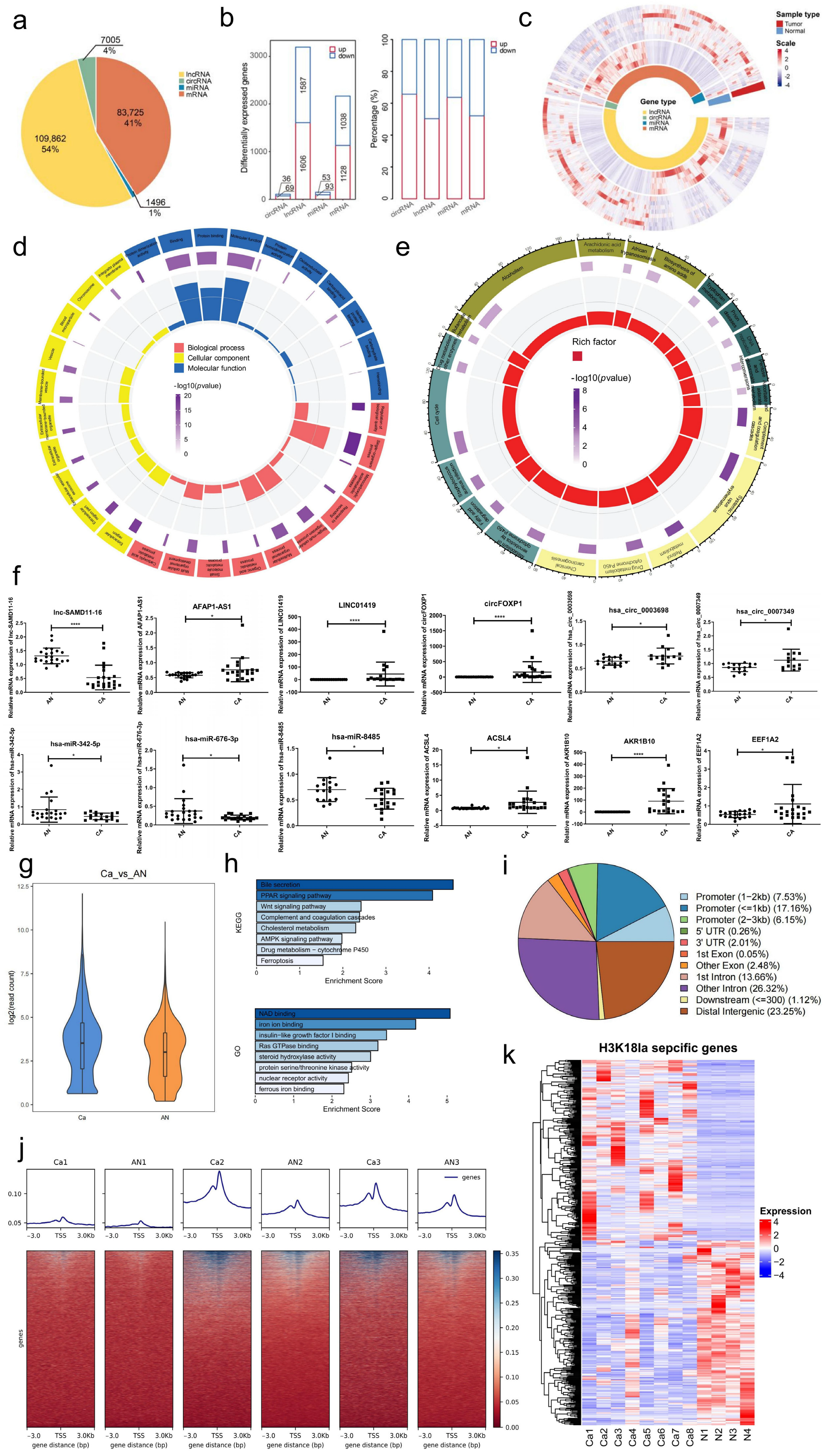
3.1. Profiles of Differentially Expressed lncRNAs, miRNAs, circRNAs, and mRNAs in HCC
3.2. Profiles of Genes with Differentially Enriched H3K18la in HCC
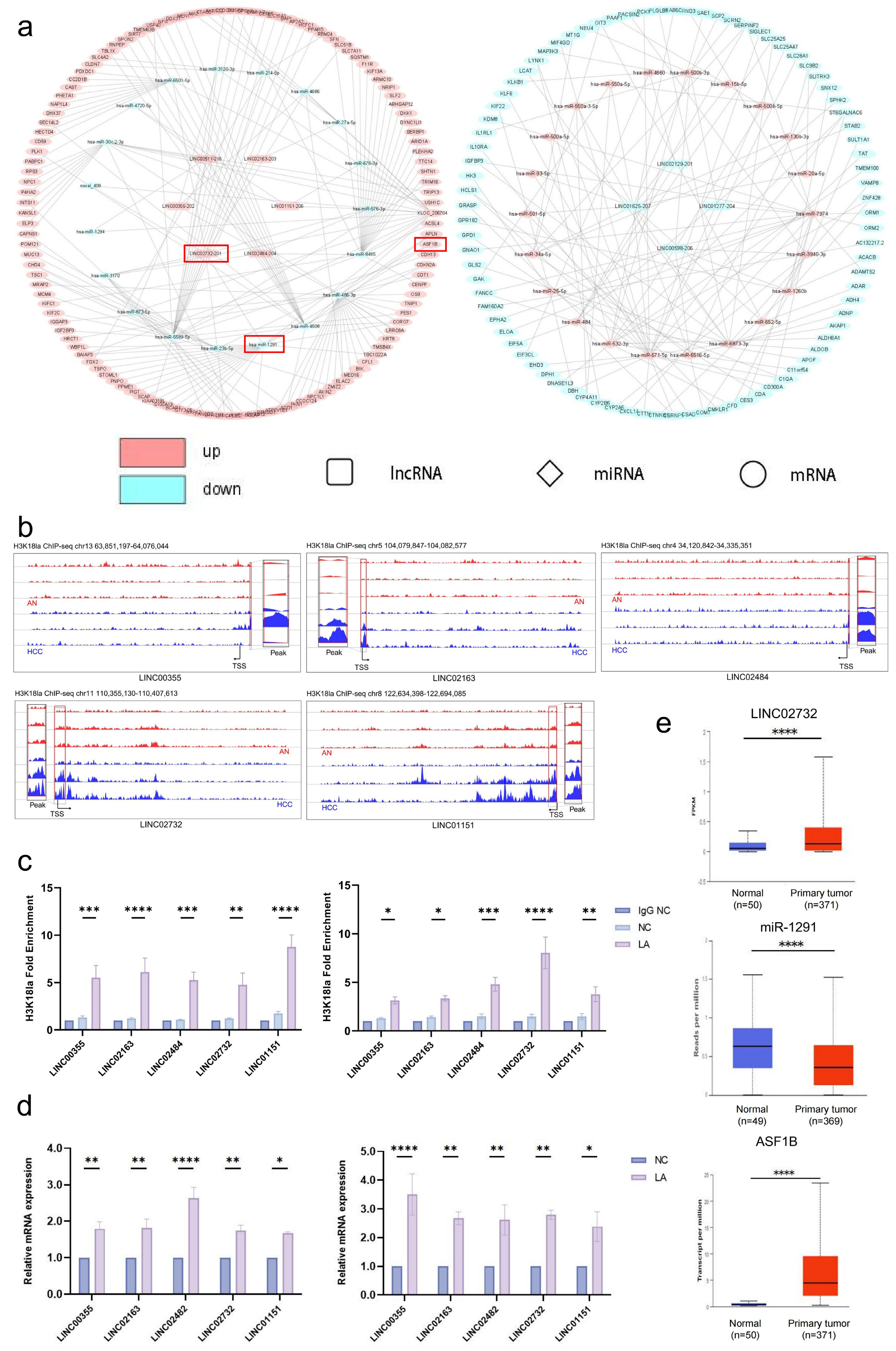
3.3. The lncRNA-miRNA-mRNA Regulatory Network Is Influenced by Differentially Enriched H3K18la
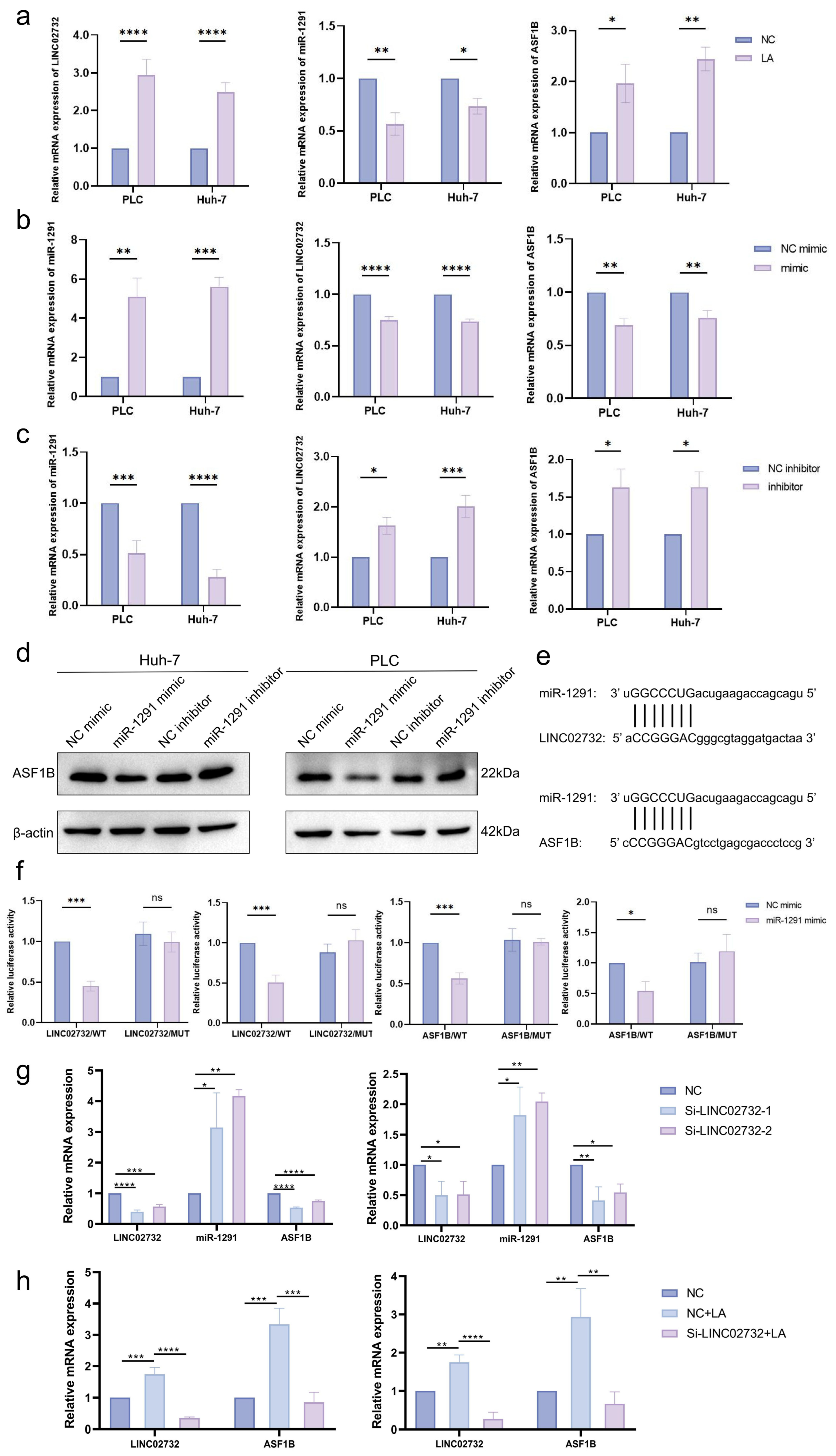
3.4. H3K18la Influences LINC02732-miR-1291-ASF1B in HCC by Upregulating LINC02732 Expression
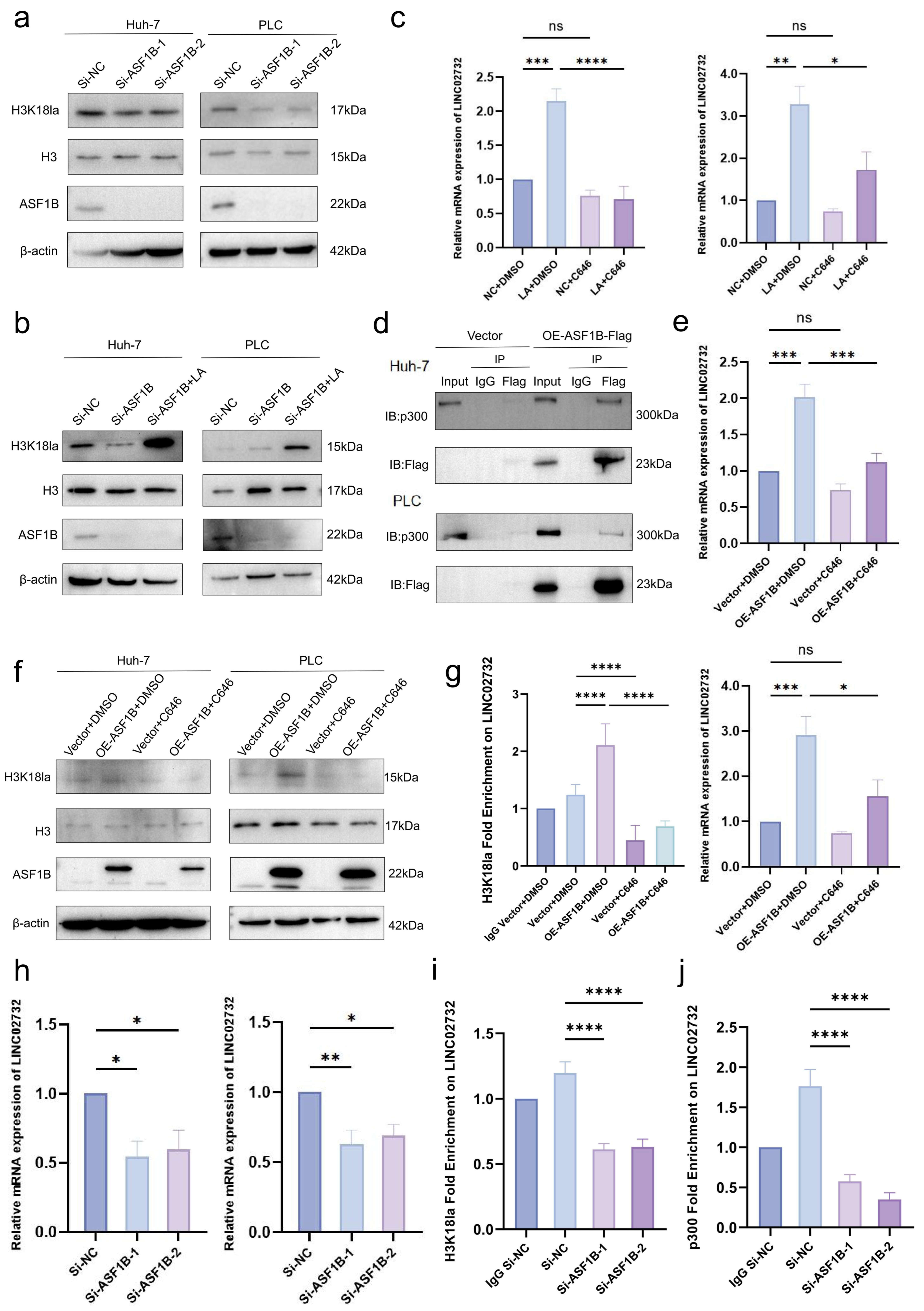
3.5. ASF1B Recruits p300 to Promote H3K18la Modification and Establish Positive Feedback on LINC02732
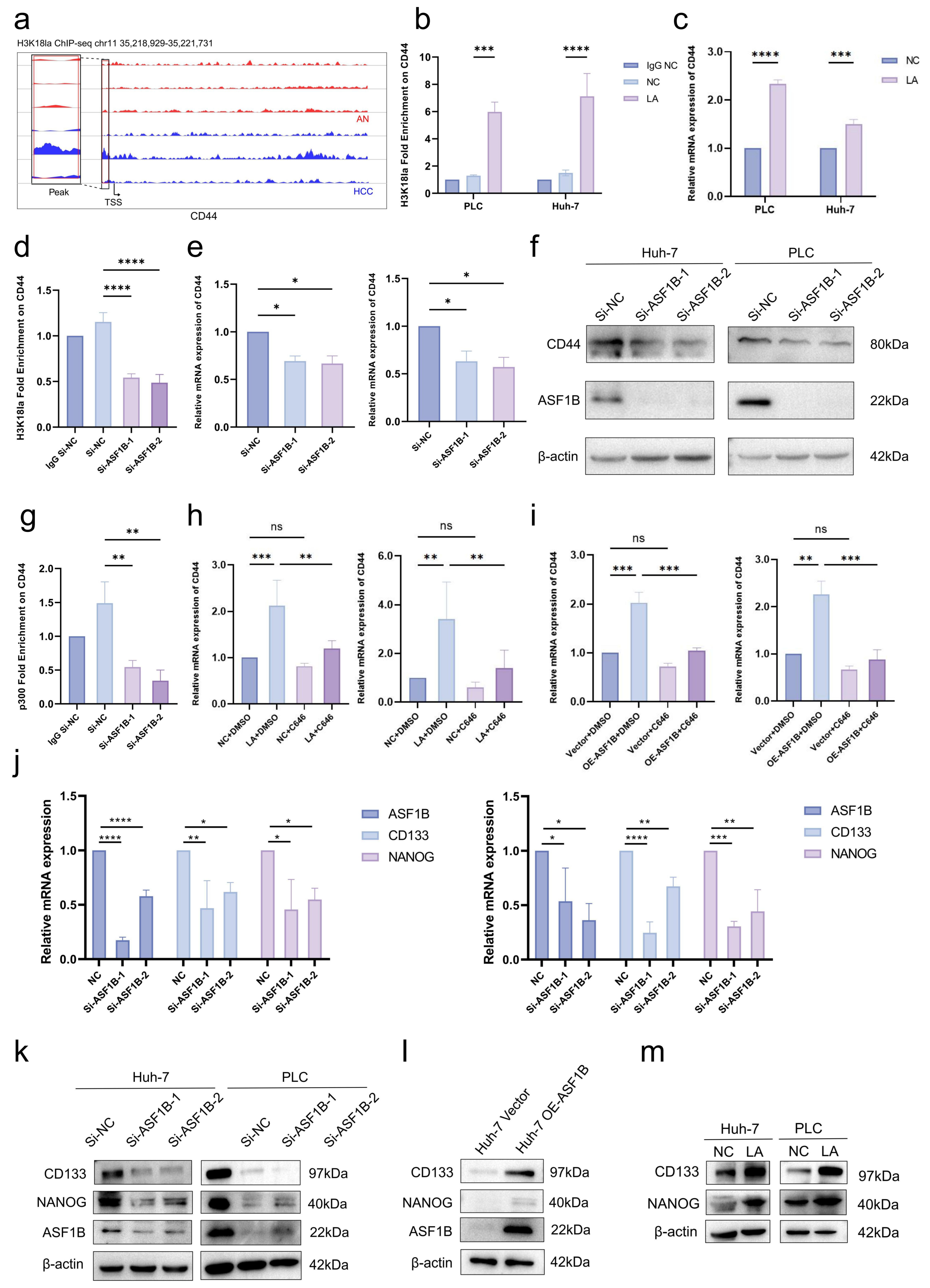
3.6. The ASF1B-H3K18la Positive Feedback Loop Promotes CD44 Expression and HCC Cell Stemness
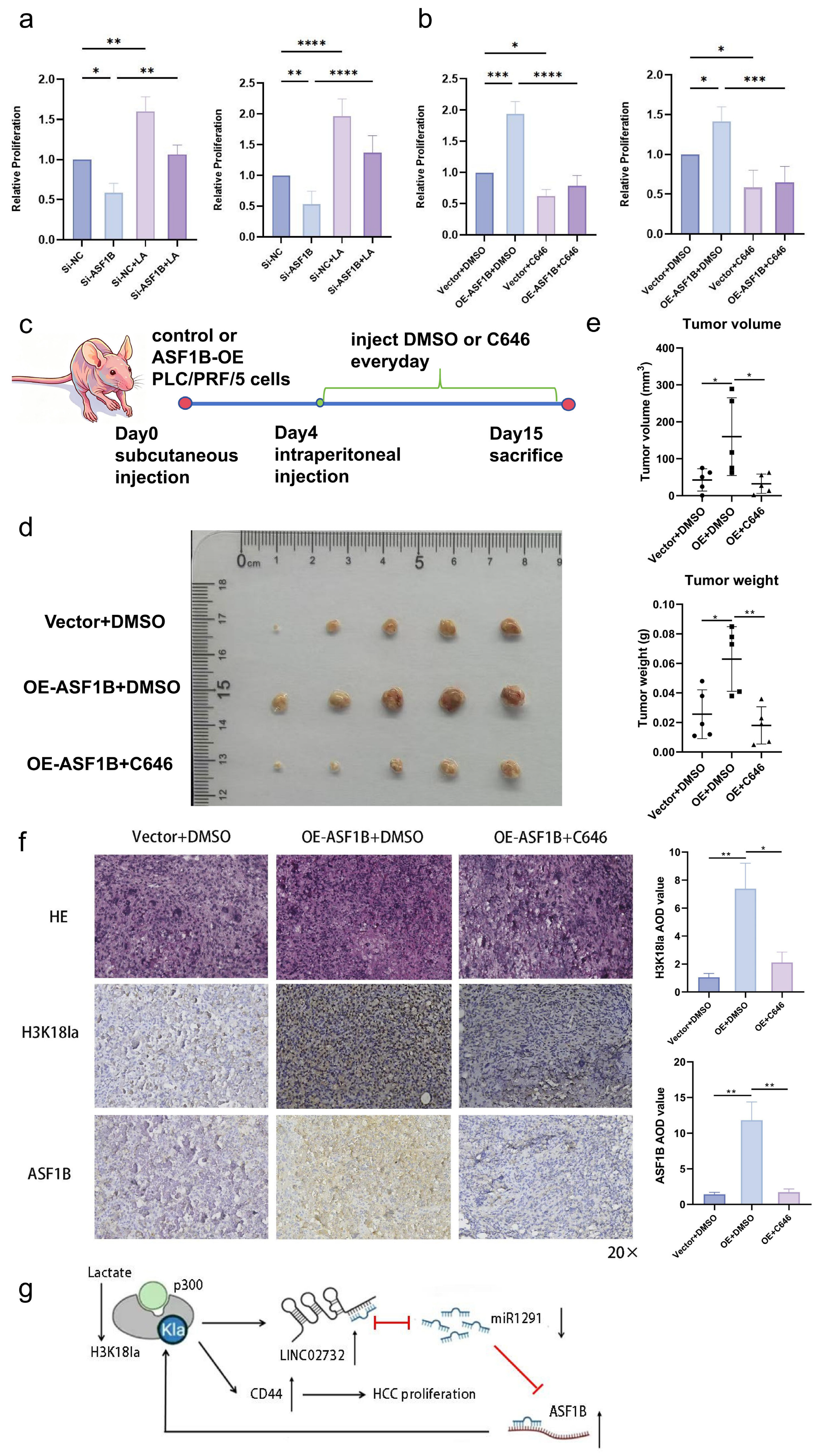
3.7. The ASF1B-H3K18la Axis Promotes HCC Cell Proliferation In Vitro and In Vivo
4. Discussion
5. Conclusions
Supplementary Materials
Author Contributions
Funding
Institutional Review Board Statement
Informed Consent Statement
Data Availability Statement
Acknowledgments
Conflicts of Interest
Abbreviations
| AN | adjacent normal |
| ASF1 | Anti-silencing Function 1 |
| BP | biological processes |
| CC | cellular components |
| Co-IP | Co-Immunoprecipitation |
| Cut&Run | Cleavage Under Targets and Release Using Nuclease |
| DE | differentially expressed |
| HCC | hepatocellular carcinoma |
| IHC | immunohistochemistry |
| GO | Gene Ontology |
| KEGG | Kyoto Encyclopedia of Genes and Genomes |
| Kla | lysine lactylation |
| lncRNA | long noncoding RNA |
| miRNA | microRNA |
| MF | molecular functions |
| NC | negative control |
| ncRNA | noncoding RNA |
| qPCR | quantitative PCR |
| TSS | transcription start site |
References
- Vogel, A.; Meyer, T.; Sapisochin, G.; Salem, R.; Saborowski, A. Hepatocellular carcinoma. Lancet 2022, 400, 1345–1362. [Google Scholar] [CrossRef]
- Koshy, A. Evolving Global Etiology of Hepatocellular Carcinoma (HCC): Insights and Trends for 2024. J. Clin. Exp. Hepatol. 2025, 15, 102406. [Google Scholar] [CrossRef] [PubMed]
- Zhang, D.; Tang, Z.; Huang, H.; Zhou, G.; Cui, C.; Weng, Y.; Liu, W.; Kim, S.; Lee, S.; Perez-Neut, M.; et al. Metabolic regulation of gene expression by histone lactylation. Nature 2019, 574, 575–580. [Google Scholar] [CrossRef]
- Yang, K.; Fan, M.; Wang, X.; Xu, J.; Wang, Y.; Tu, F.; Gill, P.S.; Ha, T.; Liu, L.; Williams, D.L.; et al. Lactate promotes macrophage HMGB1 lactylation, acetylation, and exosomal release in polymicrobial sepsis. Cell Death Differ. 2022, 29, 133–146. [Google Scholar] [CrossRef] [PubMed]
- Peng, X.; Du, J. Histone and non-histone lactylation: Molecular mechanisms, biological functions, diseases, and therapeutic targets. Mol. Biomed. 2025, 6, 38. [Google Scholar] [CrossRef] [PubMed]
- Chen, J.; Huang, Z.; Chen, Y.; Tian, H.; Chai, P. Lactate and lactylation in cancer. Signal Transduct. Target. Ther. 2025, 10, 38. [Google Scholar] [CrossRef]
- Chu, X.; Di, C.; Chang, P.; Li, L.; Feng, Z.; Xiao, S.; Yan, X.; Xu, X.; Li, H.; Qi, R.; et al. Lactylated Histone H3K18 as a Potential Biomarker for the Diagnosis and Predicting the Severity of Septic Shock. Front. Immunol. 2021, 12, 786666. [Google Scholar] [CrossRef]
- Li, W.; Zhou, C.; Yu, L.; Hou, Z.; Liu, H.; Kong, L.; Xu, Y.; He, J.; Lan, J.; Ou, Q.; et al. Tumor-derived lactate promotes resistance to bevacizumab treatment by facilitating autophagy enhancer protein RUBCNL expression through histone H3 lysine 18 lactylation (H3K18la) in colorectal cancer. Autophagy 2024, 20, 114–130. [Google Scholar] [CrossRef]
- Ji, Y.; Xu, Z.; Tang, L.; Huang, T.; Mu, X.; Ni, C.; Tang, B.; Lu, H.; Zhang, C.; Yang, S.; et al. O-GlcNAcylation of YBX1 drives a glycolysis-histone lactylation feedback loop in hepatocellular carcinoma. Cancer Lett. 2025, 631, 217957. [Google Scholar] [CrossRef]
- Yu, Y.; Li, Y.; Zhou, L.; Cheng, X.; Gong, Z. Hepatic stellate cells promote hepatocellular carcinoma development by regulating histone lactylation: Novel insights from single-cell RNA sequencing and spatial transcriptomics analyses. Cancer Lett. 2024, 604, 217243. [Google Scholar] [CrossRef]
- Cai, J.; Song, L. Targeting SRSF10 might inhibit M2 macrophage polarization and potentiate anti-PD-1 therapy in hepatocellular carcinoma. Cancer Commun. 2024, 44, 1231–1260. [Google Scholar] [CrossRef]
- Mousson, F.; Ochsenbein, F.; Mann, C. The histone chaperone Asf1 at the crossroads of chromatin and DNA checkpoint pathways. Chromosoma 2007, 116, 79–93. [Google Scholar] [CrossRef]
- Cote, J.M.; Kuo, Y.M.; Henry, R.A.; Scherman, H.; Krzizike, D.D.; Andrews, A.J. Two factor authentication: Asf1 mediates crosstalk between H3 K14 and K56 acetylation. Nucleic Acids Res. 2019, 47, 7380–7391. [Google Scholar] [CrossRef]
- Lee, K.Y.; Im, J.S.; Shibata, E.; Dutta, A. ASF1a Promotes Non-homologous End Joining Repair by Facilitating Phosphorylation of MDC1 by ATM at Double-Strand Breaks. Mol. Cell 2017, 68, 61–75.e5. [Google Scholar] [CrossRef]
- Liu, X.; Song, J.; Zhang, Y.; Wang, H.; Sun, H.; Feng, X.; Hou, M.; Chen, G.; Tang, Q.; Ji, M. ASF1B promotes cervical cancer progression through stabilization of CDK9. Cell Death Dis. 2020, 11, 705. [Google Scholar] [CrossRef]
- Kim, J.H.; Youn, Y.; Lee, J.C.; Kim, J.; Ryu, J.K.; Hwang, J.H. Downregulation of ASF1B inhibits tumor progression and enhances efficacy of cisplatin in pancreatic cancer. Cancer Biomark. Sect. A Dis. Markers 2022, 34, 647–659. [Google Scholar] [CrossRef] [PubMed]
- Chen, Y.; Zhou, W.; Gong, Y.; Ou, X. Identification of ASF1B as a prognostic marker for liver cancer by meta-analysis and its immune value revealed by a comprehensive pan-cancer analysis of 33 human cancers. Prz. Gastroenterol. 2023, 18, 249–265. [Google Scholar] [CrossRef] [PubMed]
- Dong, M.; Zhang, Y.; Chen, M.; Tan, Y.; Min, J.; He, X.; Liu, F.; Gu, J.; Jiang, H.; Zheng, L.; et al. ASF1A-dependent P300-mediated histone H3 lysine 18 lactylation promotes atherosclerosis by regulating EndMT. Acta Pharm. Sin. B 2024, 14, 3027–3048. [Google Scholar] [CrossRef] [PubMed]
- Anastasiadou, E.; Jacob, L.S.; Slack, F.J. Non-coding RNA networks in cancer. Nat. Rev. Cancer 2018, 18, 5–18. [Google Scholar] [CrossRef]
- Peng, W.X.; Koirala, P.; Mo, Y.Y. LncRNA-mediated regulation of cell signaling in cancer. Oncogene 2017, 36, 5661–5667. [Google Scholar] [CrossRef]
- Chandrashekar, D.S.; Karthikeyan, S.K.; Korla, P.K.; Patel, H.; Shovon, A.R.; Athar, M.; Netto, G.J.; Qin, Z.S.; Kumar, S.; Manne, U.; et al. UALCAN: An update to the integrated cancer data analysis platform. Neoplasia 2022, 25, 18–27. [Google Scholar] [CrossRef]
- Yamasaki, T.; Seki, N.; Yoshino, H.; Itesako, T.; Yamada, Y.; Tatarano, S.; Hidaka, H.; Yonezawa, T.; Nakagawa, M.; Enokida, H. Tumor-suppressive microRNA-1291 directly regulates glucose transporter 1 in renal cell carcinoma. Cancer Sci. 2013, 104, 1411–1419. [Google Scholar] [CrossRef] [PubMed]
- Luo, H.; Guo, W.; Wang, F.; You, Y.; Wang, J.; Chen, X.; Wang, J.; Wang, Y.; Du, Y.; Chen, X.; et al. miR-1291 targets mucin 1 inhibiting cell proliferation and invasion to promote cell apoptosis in esophageal squamous cell carcinoma. Oncol. Rep. 2015, 34, 2665–2673. [Google Scholar] [CrossRef] [PubMed]
- Tu, M.J.; Pan, Y.Z.; Qiu, J.X.; Kim, E.J.; Yu, A.M. MicroRNA-1291 targets the FOXA2-AGR2 pathway to suppress pancreatic cancer cell proliferation and tumorigenesis. Oncotarget 2016, 7, 45547–45561. [Google Scholar] [CrossRef] [PubMed]
- Tu, M.J.; Duan, Z.; Liu, Z.; Zhang, C.; Bold, R.J.; Gonzalez, F.J.; Kim, E.J.; Yu, A.M. MicroRNA-1291-5p Sensitizes Pancreatic Carcinoma Cells to Arginine Deprivation and Chemotherapy through the Regulation of Arginolysis and Glycolysis. Mol. Pharmacol. 2020, 98, 686–694. [Google Scholar] [CrossRef]
- Wang, J.; Yokoyama, Y.; Hirose, H.; Shimomura, Y.; Bonkobara, S.; Itakura, H.; Kouda, S.; Morimoto, Y.; Minami, K.; Takahashi, H.; et al. Functional assessment of miR-1291 in colon cancer cells. Int. J. Oncol. 2022, 60, 13. [Google Scholar] [CrossRef]
- Zhao, M.; Zhang, J.; He, Y.; You, C. ASF1B promotes gastric cancer progression by modulating H2AC20 and activating PI3K/AKT and ERK1/2 pathways. Front. Pharmacol. 2025, 16, 1533257. [Google Scholar] [CrossRef]
- Zhang, S.; Xu, L.; Feng, J.; Tan, D.; Zhu, Y.; Hou, J.; Li, W.; Lv, K.; Wang, W.; Jiang, L.; et al. ASF1B is a Promising Prognostic Biomarker and Correlates With Immunotherapy Efficacy in Hepatocellular Carcinoma. Front. Genet. 2022, 13, 842351. [Google Scholar] [CrossRef]


Disclaimer/Publisher’s Note: The statements, opinions and data contained in all publications are solely those of the individual author(s) and contributor(s) and not of MDPI and/or the editor(s). MDPI and/or the editor(s) disclaim responsibility for any injury to people or property resulting from any ideas, methods, instructions or products referred to in the content. |
© 2026 by the authors. Licensee MDPI, Basel, Switzerland. This article is an open access article distributed under the terms and conditions of the Creative Commons Attribution (CC BY) license.
Share and Cite
Yu, J.; Xin, L.; Cui, Y.; Fan, C.; Yang, Y.; Zhang, X. A Feedback Loop Driven by H3K18la and ASF1B via the LINC02732-miR-1291 Axis Promotes Hepatocellular Carcinoma Proliferation. Cells 2026, 15, 952. https://doi.org/10.3390/cells15100952
Yu J, Xin L, Cui Y, Fan C, Yang Y, Zhang X. A Feedback Loop Driven by H3K18la and ASF1B via the LINC02732-miR-1291 Axis Promotes Hepatocellular Carcinoma Proliferation. Cells. 2026; 15(10):952. https://doi.org/10.3390/cells15100952
Chicago/Turabian StyleYu, Jingya, Lulu Xin, Ying Cui, Chunxin Fan, Yongheng Yang, and Xiaolu Zhang. 2026. "A Feedback Loop Driven by H3K18la and ASF1B via the LINC02732-miR-1291 Axis Promotes Hepatocellular Carcinoma Proliferation" Cells 15, no. 10: 952. https://doi.org/10.3390/cells15100952
APA StyleYu, J., Xin, L., Cui, Y., Fan, C., Yang, Y., & Zhang, X. (2026). A Feedback Loop Driven by H3K18la and ASF1B via the LINC02732-miR-1291 Axis Promotes Hepatocellular Carcinoma Proliferation. Cells, 15(10), 952. https://doi.org/10.3390/cells15100952