Article

Genetic Modeling of Lysosomal Storage Disorders (LSDs) in the Brain–Midgut Axis of Drosophila melanogaster During Aging

by
Sophia P. Markaki
,
Nikole M. Kiose
,
Zoi A. Charitopoulou
,
Stylianos Kougioumtzoglou
,
Athanassios D. Velentzas
*,† and
Dimitrios J. Stravopodis
*,†
Section of Cell Biology and Biophysics, Department of Biology, School of Science, National and Kapodistrian University of Athens (NKUA), 157 01 Athens, Greece
*
Authors to whom correspondence should be addressed.
These authors contributed equally to this work.
Submission received: 18 November 2025 / Revised: 5 December 2025 / Accepted: 17 December 2025 / Published: 19 December 2025
(This article belongs to the Special Issue Drosophila as a Model for Understanding Human Disease)

Abstract

Lysosomal storage disorders (LSDs) are a group of rare inherited diseases caused by mutations in the genes encoding the proteins involved in normal lysosomal functions, leading to an accumulation of undegraded substrates within lysosomes. Among the most prominent clinical features are neurological impairment and neurodegeneration, arising from widespread cellular dysfunction. The development of powerful and reliable animal model systems that can in vivo recapitulate human LSD pathologies is critical for understanding disease mechanisms and advancing therapeutic strategies. In this study, we identified the Drosophila melanogaster orthologs of human LSD-related genes using the DIOPT tool and performed tissue-specific gene silencing along the brain–midgut axis via the use of GAL4/UAS and RNAi combined technologies. Transgenic fly models presented key features of human LSD pathologies, including significantly shortened lifespans and a progressive locomotor decline that serves as a measure for neuromuscular disintegration, following age- and sex-dependent patterns. These phenotypic parallels in pathology strongly support the functional relevance of the selected orthologs and underscore the value of Drosophila as a versatile in vivo model system for advanced LSD pathology research, offering state-of-the-art genetic tools for molecularly dissecting disease mechanisms and providing cutting-edge novel platforms for high-throughput genetic and/or pharmacological screening, moving towards development of new therapeutically beneficial drug-based regimens and mutant gene-rescue schemes.

1. Introduction

Lysosomal storage disorders (LSDs) are a group of rare diseases comprising more than 70 inherited metabolic disorders that are characterized by lysosomal dysfunction and a subsequent accumulation of undegraded substrates within lysosomes. LSDs are monogenic diseases caused by alterations in the genes encoding the proteins involved in normal lysosomal function, such as lysosomal enzymes and lysosomal membrane proteins, and their combined prevalence is estimated to be approximately 1 in 8000 live births [1,2,3,4].
Lysosomal impairment leads to the dysregulation of a diverse range of cellular processes associated with lysosomes, such as membrane repair, vesicle trafficking, lipid homeostasis, signaling, cell death pathways, autophagic flux, and the clearance of autophagosomes. Therefore, autophagic impairment has been described as a common mechanism of pathology in an increasing number of LSDs [4,5,6]. Despite their heterogeneity, their major clinical symptoms include hepatosplenomegaly, pulmonary and cardiac disorders, skeletal abnormalities, and, often, central nervous system (CNS) dysfunction, with patients frequently being presented with progressive neurodegenerative clinical courses [6,7]. Typically, LSDs are primarily classified according to the biochemical properties of the accumulated undegraded substrate and these include sphingolipidoses, glycogen storage diseases, and mucopolysaccharidoses [4,8].
Sphingolipidoses are disorders caused by genetic defects in the catabolism of sphingosine-containing lipids and their accumulation affects both the CNS and peripheral organs [9]. Gaucher, Fabry, Tay–Sachs, and Niemann–Pick are classified among the most common sphingolipid metabolism diseases [8,9,10]. Gaucher disease (GD), which is subdivided into three different types, is the most prevalent form of sphingolipidoses and is caused by mutations in the GBA gene, which encodes for the lysosomal hydrolase β-Glucocerebrosidase, responsible for the degradation of glucosylceramide into glucose and ceramide [4,8,9,10]. Fabry, an inherited X-linked disease, is the second most common form of sphingolipidoses [2] and is caused by mutations in the GLA gene encoding the enzyme α-Galactosidase A, which catalyzes the lysosomal hydrolysis of globotriaosylceramide [4,7,10]. Tay–Sachs, a type of GM2 gangliosidosis, presents with severe neurological symptoms and is caused by mutations in the HEXA gene encoding the enzyme β-Hexosaminidase A, which is responsible for breaking down GM2 gangliosides, resulting in their toxic accumulation in neuronal tissues [11]. Niemann–Pick is a group of predominantly neurodegenerative disorders classified in types A and B, caused by mutations in the SMPD1 gene, while type C derives from mutations in the NPC1 or NPC2 genes. In types A and B, the affected enzyme is Sphingomyelinase (ASM), leading to sphingomyelin buildup, whereas, in Niemann–Pick type C, proteins that mediate cholesterol transport from endosomes/lysosomes are seriously affected, causing endo-lysosomal accumulation of cholesterol, glycosphingolipids, and sphingomyelin, resulting in severe neurological pathology [1,6,12].
Glycogen storage diseases (GSDs) comprise a group of inherited metabolic disorders caused by mutations in the genes encoding the enzymes of glycogen metabolism. Among them, Pompe disease, also known as GSD II, is classified as a major LSD family member. Pompe disease results from mutations in the GAA gene encoding α-Glucosidase, which is a key lysosomal enzyme responsible for the hydrolysis of glycogen to glucose. The hallmark of Pompe disease is glycogen accumulation in lysosomes, predominantly in muscle cells, leading to cardiorespiratory failure [4,7,8].
Mucopolysaccharidoses (MPSs) form a group of eleven LSD pathologies, characterized by the cellular accumulation of glycosaminoglycans (GAGs), which are negatively charged polysaccharides essential for several cellular processes, including signaling and development. The classification of MPSs is based on mutations in specific enzymes that catabolize target substrates, with MPS I, II, and III being the most common ones [4]. MPS type I (MPS I) is caused by the deficiency of lysosomal hydrolase α-L-Iduronidase (IDUA), leading to the accumulation of dermatan- and heparan-sulfate inside lysosomes of a wide range of tissues. The severe form of MPS I, known as Hurler syndrome, is characterized by early-onset progressive somatic and neurological impairments [13]. MPS II, also known as Hunter syndrome, is caused by mutations in the IDS gene on the X chromosome and is typically described by neurological deterioration. These mutations result in a critical deficiency of Iduronate-2-sulfatase (IDS), an enzyme responsible for breaking down dermatan- and heparan-sulfate. Finally, Sly disease, also known as MPS VII, is caused by mutations in the GUSB gene, resulting in β-Glucuronidase (GUSB) enzyme deficiency. This leads to the accumulation of dermatan-, heparan-, and chondroitin-sulfate GAGs, causing progressive multi-system dysfunctions [4,14].
Neurological dysfunction and progressive neurodegeneration are key symptoms of LSDs [6]. The study of animal model organisms is imperative for advancing our understanding of human pathologies, thus enabling the identification of novel disease-related pathways that have the potential to serve as drug targets. Furthermore, recent progress has led to the development of more powerful and reliable animal models that can more precisely mirror aberrant phenotypes and the pathological processes of human diseases and, in particular, LSDs [15,16,17]. A recently explored therapeutic approach for LSDs is a targeted gene therapy that uses genome-editing technologies, like CRISPR/Cas9. However, these strategies encounter several technical challenges and bioethical considerations, making it essential to study their effects in vivo, using animal models that can closely replicate LSD-specific phenotypes. To thoroughly evaluate the mechanisms of LSD progression, mammalian genetic models have proven invaluable for characterizing novel pathways and validating potential therapies [18,19]. Complementing these studies, non-mammalian vertebrate models, such as zebrafish, with more than 60 identified LSD lines, have also contributed significantly to our understanding of lysosomal biology and drug discovery [17]. However, despite these advances, the complexity and cost of vertebrate models often limit their utility for large-scale, high-throughput genetic and pharmacological screenings, underscoring the necessity for robust invertebrate systems like Drosophila melanogaster.
Given the imminent need for robust in vivo models, we have herein generated transgenic Drosophila flies, by utilizing the binary GAL4/UAS and RNAi gene-targeting technology, to mechanistically illuminate LSD-associated pathologies during aging. This platform provides a dynamic and versatile tool to deeply investigate systemic pathologies and successfully explore novel therapies for LSDs.

2. Materials and Methods

2.1. Ortholog Prediction and Definition of DIOPT Score and Homology Ranking

To identify Drosophila orthologs of human LSD-related genes, we used the DRSC (Drosophila RNAi Screening Center, Boston, MA, USA) Integrative Ortholog Prediction Tool (DIOPT) [20]. The DIOPT integrates results of multiple ortholog-mapping tools based on different algorithms and calculates a numeric score reflecting the number of tools that support a given ortholog gene–pair relationship. In version 9, the numeric DIOPT score for fly–human gene pairs ranges from 1 to 19 (maximum = 19). The DIOPT also provides ortholog ranks (high, moderate, and low) that reflect the confidence level of each predicted orthology relationship between genes of different species. The rank is assigned from a combination of the numeric DIOPT score and the “best score” flag that indicates whether the pair is the top match in forward (fly to human) and/or reverse (human to fly) searches [20,21,22]. Specifically, high rank pairs are the best in both forward and reverse (reciprocal best) searches and have a DIOPT score ≥ 2, moderate rank pairs are the best in either forward or reverse searches and have a DIOPT score ≥ 2 or a DIOPT score ≥ 4, and low rank pairs encompass all other cases [22]. Because rank depends on both the numeric score and best-hit status, it cannot be mapped to simple DIOPT-score ranges alone.

2.2. Structural Alignment

For the structural alignment of Homo sapiens (human) and Drosophila (fly) LSD-related proteins, AlphaFold-specific molecular models were obtained from the neural network-based AlphaFold2 Protein Structure Database [23,24,25] and the generated protein models were structurally aligned with the PyMOL (v3.1) molecular graphics system [26]. The Root Mean Square Difference (RMSD) value of each alignment was used as an indicator for the reliability of the structural alignment [27].

2.3. Drosophila melanogaster Strain Stocks and Culturing Conditions

The Drosophila melanogaster transgenic RNAi fly strains utilized in this study are listed in Table 1. These stocks, along with the pan-neuronal driver elav-GAL4 (genotype: w[*]; P{w[+mC] = GAL4-elav.L}3; RRID:BDSC_8760), were obtained from the Bloomington Drosophila Stock Center (NIH P40OD018537, Bloomington, IN, USA). The D. melanogaster midgut-specific NP1-GAL4 driver strain was kindly provided by Dr. Eric H. Baehrecke [28] (Department of Cancer Biology, University of Massachusetts, Medical School, Worcester, MA, USA).
All fly stocks were maintained at 25 °C, in a relative humidity of 55–65%, under a 12 h light/dark photoperiod and using a laboratory standard Drosophila nutrition medium (6.4% rice flour, 5% tomato paste, 3.2% sugar, 0.8% yeast, 0.8% agar, 0.13% Tegosept, 0.4% ethanol, and 0.4% propionic acid).

2.4. RNA Extraction and RT-qPCR

Isolation of total cellular RNA from RNAi-targeted fly heads was performed using the PureLink™ RNA Mini Kit (Invitrogen, Thermo Fisher Scientific, Waltham, MA, USA), according to the manufacturer’s instructions. The concentration and quality of the isolated RNA were determined using the NanoDrop One UV-Vis. spectrophotometer (Thermo Fisher Scientific, Waltham, MA, USA). First-strand cDNA was synthesized using the SuperScript™ IV First-Strand Synthesis System (Invitrogen, Thermo Fisher Scientific, Waltham, MA, USA), following the manufacturer’s protocol.
Relative expression of the herein studied genes was examined by Reverse Transcription (real-time) quantitative Polymerase Chain Reaction (RT-qPCR), using specific primers (Table S1), the Fast SYBR® Green Master Mix (Applied Biosystems, Thermo Fisher Scientific, Waltham, MA, USA), and the Applied Biosystems StepOne (real-time) qPCR System (Thermo Fisher Scientific, Waltham, MA, USA), as described by the manufacturer’s guidelines. As a suitable internal control for normalization of gene expression values, the housekeeping gene Actin 5C was used accordingly. To ensure reproducibility, each assay was performed in technical triplicates, while three negative controls were also included in the analysis. Fold reductions in transcript levels were determined using the comparative 2−ΔΔCt method [29], which calculates changes in gene expression as a relative fold difference between the gene(s) of interest and the reference gene. Results were presented as a percentage of the relative gene reduction in RNAi-targeted [specifically in neuronal (brain) tissues] flies compared to control populations. Each experiment was performed three different times using independent genetic crosses.

2.5. Longevity Measurement

To study viability, newly eclosed (0–24 h) transgenic flies from each fly cross were collected and allowed to mate to ensure physiological maturity. Subsequently, flies were separated by sex and maintained in vials at a controlled density (~20–25 flies per vial). This once-mated protocol ensures that females are physiologically mature, while avoiding the effects of continuous male harassment or egg retention stress associated with enforced virginity [30,31]. Furthermore, mating triggers essential endocrine remodeling of the midgut, leading to the activation of the lipid metabolism genes required for adult homeostasis [32]. Flies were maintained in a constant temperature and humidity chamber throughout the experimental period and transferred to fresh food every 3 days. Survival curves were generated by daily counting of the deceased flies. For each viability experiment, a minimum sample size of n = 100 flies per sex and genotype was employed to ensure statistical significance. All viability experiments for control and RNAi-expressing strains were performed at the same time and under identical conditions. Each experiment was performed in at least 3 independent biological replicates.

2.6. Negative Geotaxis Assay

The locomotor performance of RNAi-targeted flies was quantified using the negative geotaxis (climbing) assay. Flies of both sexes were initially kept together and before the experimental procedure they were anesthetized and divided into male and female populations (groups of ~20–25 flies each). Each experimental group was then placed in an empty 100 mL cylinder, with a boundary line drawn at the 60 mL mark (10 cm height), and the flies were allowed for 1 min to acclimatize to the environment. To ensure they climbed simultaneously, flies were gently tapped to the bottom of the cylinder. After a time interval of 20 s, the number of flies that reached or exceeded the 60 mL limit was counted. Five trials with a 1 min time interval were performed for each group. The same populations were tested at different ages, excluding flies that died or flew away. Control and RNAi-targeted fly groups were examined simultaneously. Total sample size for each fly cross and gender was set at (a minimum of) 100 flies. Three independent biological replicates were used for each fly group examined.

2.7. Statistical Analysis

Statistical analysis and graphical presentation of the obtained results were performed using the Statistical Package for Social Sciences (IBM SPSS v25.0 for Windows IBM Corp., New York, NY, USA). The data from the longevity experiments were analyzed with the Kaplan–Meier survival test, using the Log Rank, Breslow test, and Τarone–Ware statistical packages. Climbing graphs were plotted as the mean pass rate per genotype/timepoint with the Sample Standard Deviation (±SSD) value. Statistically significant differences between the compared genotypes, at each timepoint, were evaluated by the independent t-test analysis. Significance was accepted at the following levels: p < 0.05 (*), p < 0.01 (**), and p < 0.001 (***).

3. Results

3.1. From Humans to Flies: Identification of LSD-Related Gene Orthologs Using the DIOPT

The first step for studying human disease genes in animal model organisms such as Drosophila is to recognize the putative orthologs that are being associated with the respective diseases. Ortholog genes facilitate functional genomics by allowing hypotheses concerning the functions of genes in one species to be deduced from their orthologs in another species. In Table 2, we present an extensive DIOPT-derived list, corresponding to nearly all human LSD-related genes, along with their putative orthologs in Drosophila. In addition, we provide the DIOPT rank and the associated RNAi strains available from the Bloomington (BDSC) and Vienna (VDRC) [33] Drosophila Stock/Resource Centers, thus offering a useful resource for designing genetic studies on evolutionary conserved disease genes.
Following ortholog prediction, we focused on screening LSDs not previously studied in Drosophila or examined using alternative genetic tools. Our overall objective is to identify novel genotype–phenotype associations between humans and Drosophila, to advance our understanding of the molecular mechanisms underlying LSDs. To investigate the systemic functional importance of LSD-related genes in vivo, we performed targeted gene knockdown of their Drosophila orthologs using the GAL4/UAS genetic system combined with RNAi technology [33,34]. Gene silencing was carried out in a tissue-specific manner, targeting the brain (elav-GAL4) and the midgut (NP1-GAL4). We specifically targeted the midgut because the integrity of the intestinal epithelium is an essential determinant of organismal health and viability. In diverse species, intestinal barrier dysfunction is a shared pathophysiological hallmark of aging and in Drosophila it has been causally linked to systemic metabolic dysregulation and inflammation [35,36]. Crucially, the adult Drosophila midgut is a highly sexually dimorphic organ, displaying extensive sex differences in the expression of genes governing growth and metabolism. Specifically, female midguts exhibit high plasticity and lipid turnover to support reproduction, whereas male midguts maintain a more static homeostatic profile [37,38,39].
To quantify gene-function aberrations, we adopted a phenotype-driven hierarchical screening strategy. First, life expectancy was assessed for all candidates in both tissue types. Subsequently, locomotor impairment was specifically evaluated in those Drosophila models that exhibited the most pronounced reductions in lifespan (particularly where effects were observed in both tissues). This secondary behavioral screening focused on the neuronal (elav) knockdown, as negative geotaxis (climbing activity) is a widely used method for evaluating neuromuscular dysfunction resulting from neuron-specific gene silencing [40]. For all LSDs herein examined, the predicted Drosophila orthologs being selected for further investigation were characterized by high or moderate DIOPT rankings (Table 2).

3.2. Structural Conservation of LSD-Associated Proteins Between Homo Sapiens and Drosophila melanogaster

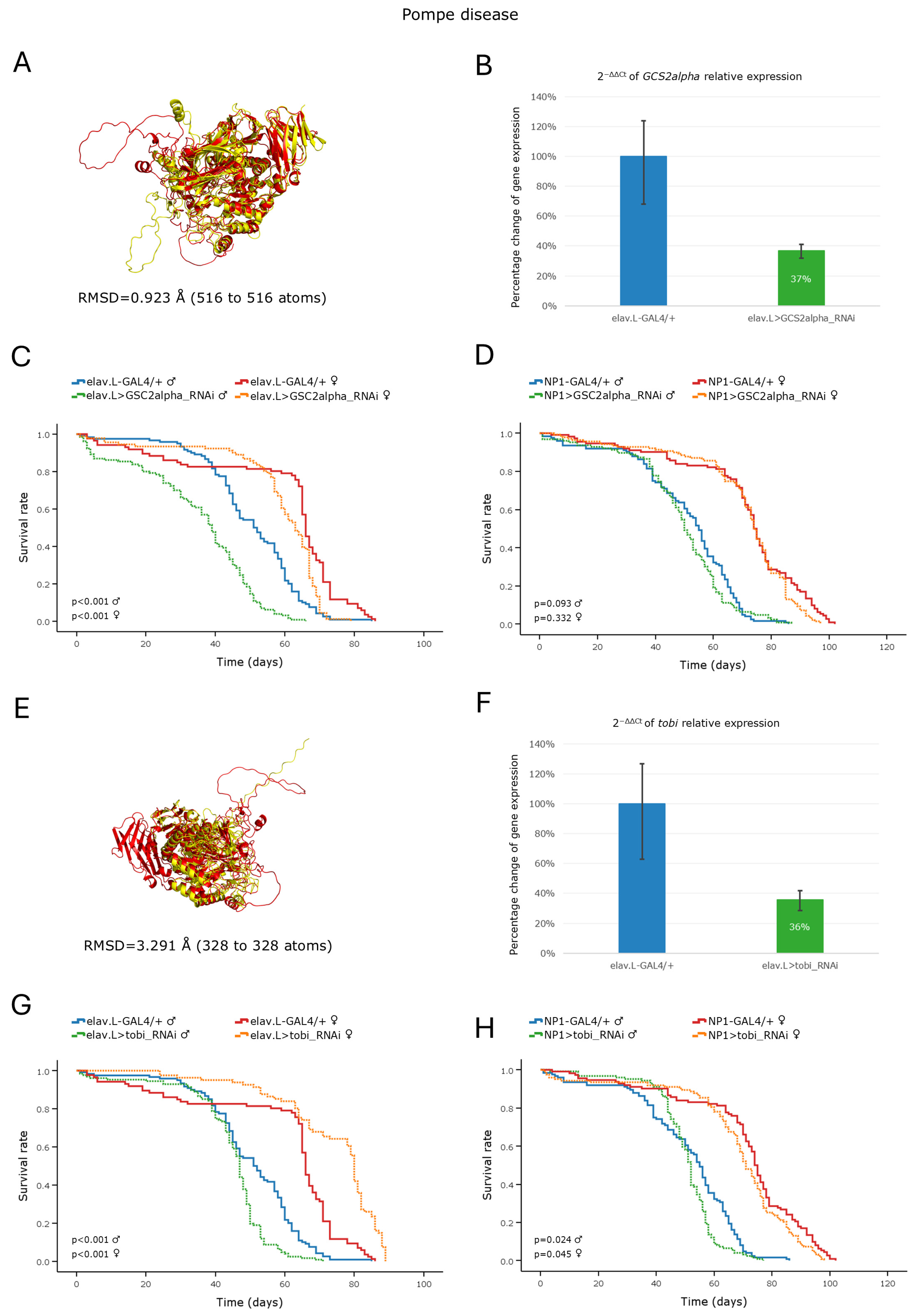
Three-dimensional structural alignment via PyMOL [26] is a valuable tool for revealing structural conservation between ortholog proteins with high sequence similarity and for gaining insights into their structural characteristics. Initially, all selected LSD-related structures of human and Drosophila proteins were retrieved from the neural network-based protein-structure prediction tool AlphaFold2 [23,24,25]. Next, PyMOL alignment was employed, with sequence alignment being followed by structural superposition and subsequent minimization of the Root Mean Square Deviation (RMSD) between the aligned residues through the execution of refinement cycles to reject structural outliers identified during alignment. RMSD value between corresponding atoms of two protein chains is the most common estimator of structural similarity, with an RMSD below 3 Å typically indicating close homology [27]. Interestingly, protein comparisons of all of the Drosophila orthologs derived from the DIOPT that carried high or moderate homologies to their human LSD-related counterparts yielded low RMSD values, ranging from 0.454 to 1.376 Å, with the majority being measured below 1 Å (Figures S1–S8), thus indicating minor structural variation. Only the comparison of protein structures produced from the human gene GAA (implicated in Pompe disease) and its Drosophila ortholog tobi (Figure S5), which shows low homology in DIOPT, resulted in a high RMSD value of 3.291 Å, strongly suggesting a comparatively greater disparity between the human and fly respective gene products. For all the alignments herein examined, each Drosophila protein structure was aligned to (superimposed with) its respective human reference structure. The high degree of structural similarity observed between the aligned (superimposed) ortholog proteins not only reflects their evolutionarily conserved architecture, but also indicates conserved functional properties and roles, thereby strongly supporting the validity of using Drosophila as a powerful, versatile, and multifaceted animal model system for in vivo investigation of human LSD-linked pathologies.

3.3. Modeling of Sphingolipidoses in Drosophila

3.3.1. Gaucher Disease

Sphingolipidoses constitute an essential group of LSDs that are characterized by the accumulation of sphingolipids [10]. Among them, Gaucher disease is the most common one [2] and is distinguished by its three different subtypes, all caused by mutations in the GBA1 gene [4]. A DIOPT analysis to identify Drosophila melanogaster orthologs revealed two candidate genes, Gba1a and Gba1b, both exhibiting high homology scores (Table 2) and encoding protein products with strong structural similarities to their human counterparts (Figure 1A,E, for Gba1a and Gba1b, respectively). Therefore, we, next, proceeded to investigate the tissue-specific, RNAi-mediated, downregulation of both Drosophila orthologs along the brain–midgut axis. To validate the efficiency of gene silencing, and thus the reliability of our genetic models, we quantified Gba1a and Gba1b gene expression levels following neuronal-specific knockdown. The analysis revealed a significant reduction in mRNA expression of ~46% for Gba1a (Figure 1B) and ~53% for Gba1b (Figure 1F), relative to the control fly brains.
RNAi-mediated downregulation of the Gba1a or Gba1b gene that specifically targets the nervous system (brain) caused a severe decrease in male fly life expectancy, with a median reduction in survival of ~31 and ~34 days, respectively, compared to control male flies (Figure 1C,G). Although female flies also exhibited a reduced median survival in response to neuronal-specific (brain) knockdown of either gene, their pathogenic effects were notably less pronounced compared to male ones (Figure 1C,G). Regarding midgut-specific knockdown models, only male flies demonstrated significantly decreased survival rates (Figure 1D,H), with the obtained pathology being comparatively more severe in the Gba1b-specific, RNAi-targeted flies.
Furthermore, compared to control flies, adult males with either a Gba1a or Gba1b gene knockdown profile specifically targeting the nervous system (brain), displayed progressive, age-dependent, locomotor defects (Figure S9), which comparatively proved more detrimental after 10 days of age, post-eclosion. Of note is that due to the high mortality levels of male Gba1a- and Gba1b-targeted (via RNAi) flies, specifically targeting neuronal tissues (brain), we were unable to collect statistically sufficient numbers of fly individuals for reliably conducting climbing experiments at the 30th day of age, post-eclosion. In contrast, female flies with neuronal-specific (brain) knockdown of either gene retained relatively normal climbing performance compared to their control counterparts (Figure S9).
Taken together, the RNAi-mediated knockdown of either the Gba1a or Gba1b Drosophila orthologs of the human GBA1 gene proved able to strikingly recapitulate key pathogenic features of Gaucher disease, strongly supporting the in vivo power and value of the fly brain–midgut axis for reliably modeling and illuminating disease mechanisms and promptly discovering therapeutic regimens.

3.3.2. Fabry Disease

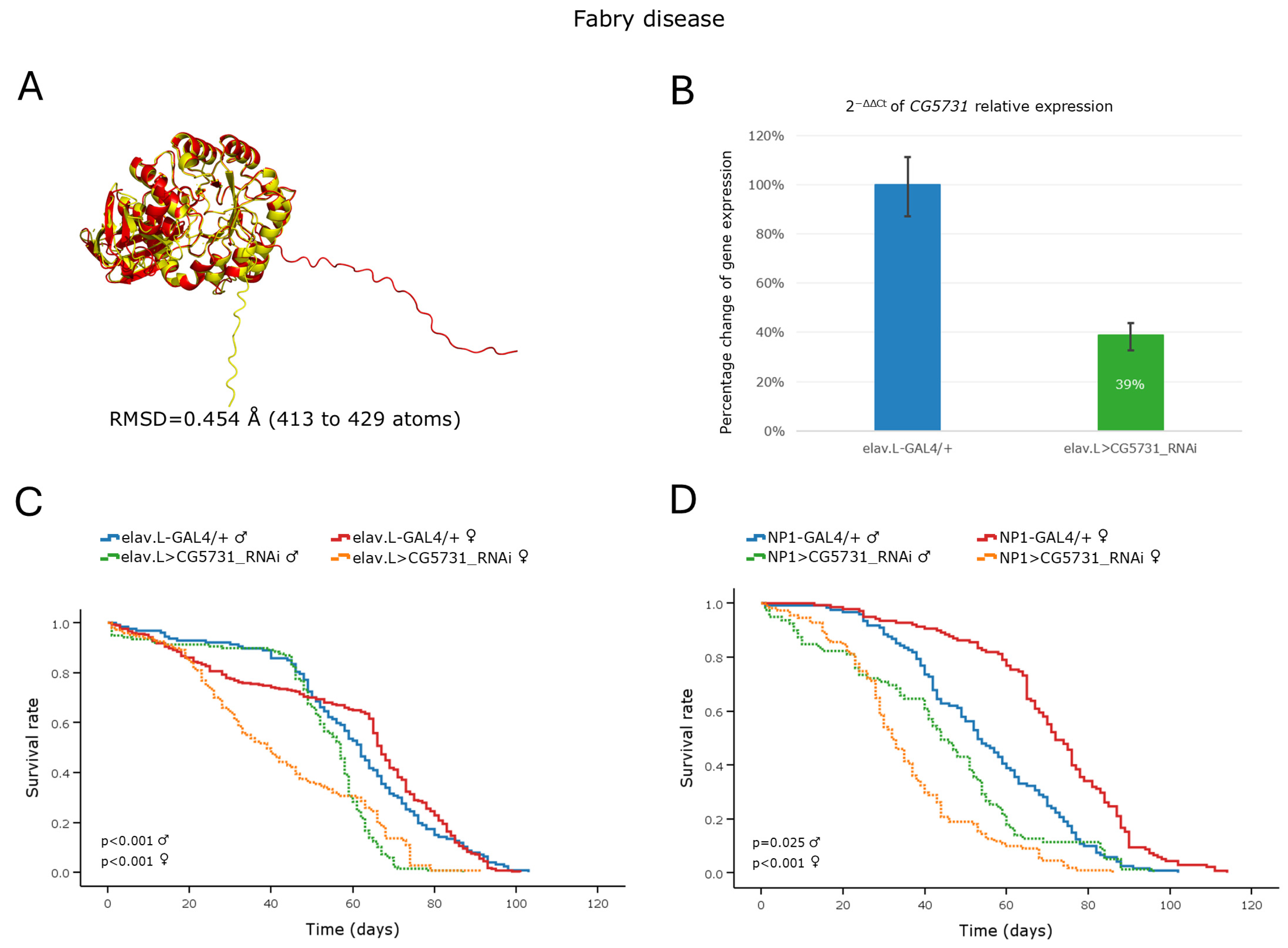
Fabry disease is an X-linked monogenic disorder and it has been reported as the second most common LSD [10]. In humans, the disease is caused by mutations in the GLA gene, which encodes the Lysosomal α-Galactosidase A, an enzyme responsible for the hydrolysis of globotriaosylceramide. In Drosophila, two orthologs (CG7997 and CG5731) of the human GLA gene have been identified. Although both genes receive moderate rankings and modest DIOPT scores (Table 2), the structural comparisons of their cognate protein products (CG7997 and CG5731) to the human counterpart (GLA) reveal very low RMSD values (below 0.5 Å; Figure S10A and Figure 2A), thus indicating the high degree of structural conservation (during species evolution). RNAi-mediated, neuronal (brain)-specific, knockdown of the CG7997 and CG5731 genes led to a decrease in mRNA expression of ~8% and ~61%, respectively, compared to that of the control flies (Figure S10B and Figure 2B). As expected from the low knockdown efficiency of CG7997, the lifespan of flies that were subjected to RNAi-mediated silencing of this gene along the brain–midgut axis did not significantly differ from that of the control fly population (Figure S10C,D). In contrast, knockdown of CG5731, in either the nervous system (brain) or midgut tissues, resulted in flies with a significantly shortened life expectancy (Figure 2C,D). Interestingly, female flies were more severely affected, exhibiting a median lifespan reduction of ~28 days following neuronal (brain)-specific knockdown and of ~40 days after midgut-specific silencing of the CG5731 gene (Figure 2C,D).
Furthermore, while flies of both sexes presented locomotor deficiencies as early as day 10 post-eclosion, after neuronal-specific knockdown of the CG5731 gene, as demonstrated by the negative-geotaxis assay (Figure S11), this phenotype was sexually dimorphic, with males exhibiting significant deficits primarily during early adulthood (up to day 15), whereas females displayed a more progressive decline. The observation that female flies, compared to male populations, are more severely affected by CG5731 downregulation may be mechanistically associated with differences in sex-dependent metabolic demand and hormonal regulation, and/or sexually dimorphic tissue-specific gene expression patterns.

3.3.3. Niemann–Pick Disease

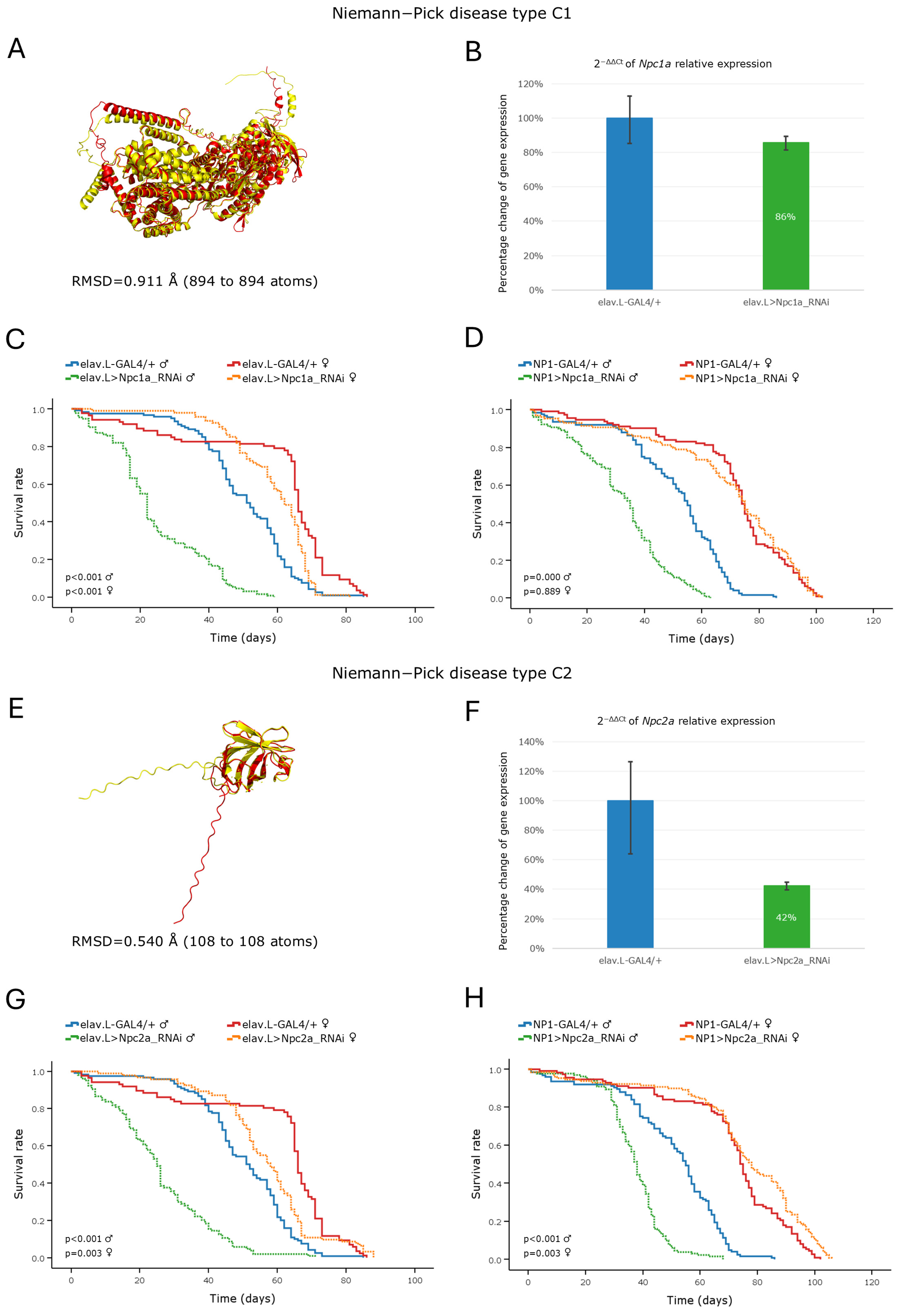
Niemann–Pick disease type C1 and C2 are caused by mutations in the NPC1 and NPC2 gene loci, leading to impaired intracellular cholesterol trafficking and subsequent accumulation of cholesterol and sphingolipids in lysosomes [4,12]. In Drosophila, the DIOPT recognized Npc1a and Npc2a as high confidence orthologs of human NPC1 and NPC2 genes, respectively (Table 2). Furthermore, structural alignment analysis yielded RMSD values below 1 Å for both the NPC1Npc1a and NPC2Npc2a protein product comparisons, thus indicating a high degree of structural similarity between the human and Drosophila proteins (during species evolution) (Figure 3A,E). Neuronal-specific downregulation of the Npc1a and Npc2a genes resulted in ~14% and ~58% reductions in mRNA expression levels (Figure 3B,F), respectively. Interestingly, albeit the moderate knockdown efficiency in the Npc1a-targeted flies, both male Drosophila Niemann–Pick models exhibited a significant decrease in lifespan along the brain–midgut axis with their median life expectancy being reduced by ~29 (Figure 3C; Npc1α targeting) and ~26 (Figure 3G; Npc2α targeting) days, following neuronal-specific downregulation, and ~20 (Figure 3D; Npc1α targeting) and ~17 (Figure 3H; Npc2α targeting) days, after midgut-specific targeting of the fly ortholog respective genes.
In contrast, female flies presented only a modest reduction in their lifespan, which could only be detected after ~50 days (post-eclosion), following neuronal-specific knockdown of either gene (Figure 3C,G), whereas their respective silencing specifically in the midgut tissues resulted in survival profiles similar to that of the controls (Figure 3D,H).
RNAi-mediated knockdown of the Npc1a gene in the nervous system caused an early and significant decline in the climbing ability of male flies. This deficit was statistically significant as early as day 10 post-eclosion and diverged sharply from the performance of control males, which maintained robust locomotor function (Figure S12A). Intriguingly, neuronal-specific silencing of the Npc2a gene in males did not affect their climbing performance relative to the controls (Figure S12B), indicating that Npc2a may play a secondary or redundant role compared to the Npc1a gene in locomotor function(s). In sharp contrast to the male phenotype, female flies of both genotypes exhibited climbing activities similar to the controls (Figure S12A,B). Strikingly, our findings indicate that even moderate reductions in Npc1a gene expression are sufficient to impair locomotor performance, occurring in a sex-specific manner during Drosophila aging.

3.3.4. Tay–Sachs/Sandhoff Disease(s)

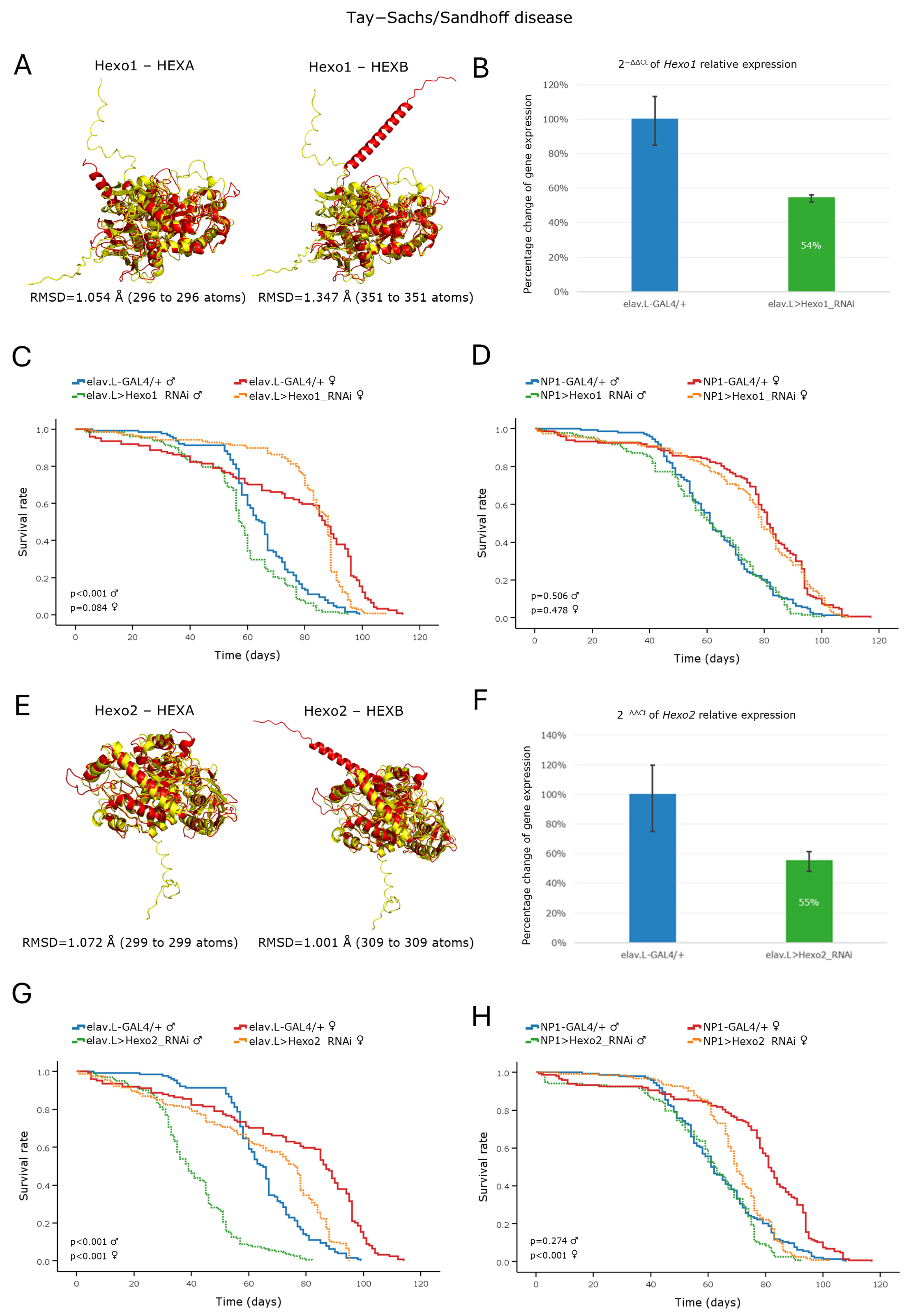
The GM2 gangliosidoses are caused by defects in the degradation of GM2 ganglioside, leading to its accumulation primarily within neuronal cells. The degradation of GM2 ganglioside requires the lysosomal isoform Hex A, a β-Hexosaminidase enzyme composed of α- and β-subunits that are encoded by the HEXA and HEXB genes, respectively. Mutations in these genes result in the development of the Tay–Sachs (HEXA) and Sandhoff (HEXB) diseases [10,11]. A DIOPT analysis of the Drosophila genome identified three putative orthologs encoding β-N-Acetylhexosaminidase-like enzymes: the Hexo1, Hexo2, and fdl genes (Table 2). We focused on Hexo1 and Hexo2, as they present the highest sequence homology and the most significant structural similarity to their human counterparts (Figure 4A,E).
RNAi-mediated knockdown of these genes in the nervous system caused a significant reduction in mRNA expression of ~46% for Hexo1 (Figure 4B) and ~45% for Hexo2 (Figure 4F) genes. Neuronal tissue-specific silencing of the Hexo1 ortholog gene led to an age-dependent reduction in the median lifespan of male flies of ~8 days, whereas, in females, it caused a mild increase in early-life survival, followed by a decline in longevity during late(r)-life stages (Figure 4C). In contrast, neuronal silencing of Hexo2 caused a comparatively more pronounced decrease in median lifespan of ~26 days for the male flies and of ~11 days for female populations (Figure 4G). Notably, RNAi-mediated downregulation of each gene in the midgut tissues proved to induce no significant impact on the lifespan profile of either gender (Figure 4D,H), thereby suggesting a limited, or redundant, functional role for the Hexo1 and Hexo2 genes in the Drosophila midgut environment during aging.
Taken together, the RNAi transgenic lines used in this study were found to be capable of recapitulating key pathological features of sphingolipidoses, thus reinforcing the exploitation of Drosophila as a reliable and powerful model organism for unmasking the molecular underpinnings of sphingolipidoses and related LSD pathologies during aging.

3.4. Modeling of Pompe Disease in Drosophila

Pompe Disease

Pompe disease is a glycogen storage disorder caused by a deficiency in Lysosomal acid-a-Glucosidase, which is encoded by the GAA gene and leads to intra-lysosomal glycogen accumulation [6]. In Drosophila, there is no single direct ortholog of the human GAA gene, hitherto pinpointed. However, three homolog genes can be, in silico, identified; GCS2alpha, which has a moderate DIOPT score and tobi and CG33080, which show low homology values (Table 2). For our study, we selected the GCS2alpha gene, as its cognate protein presents with the comparatively highest (predicted) homology and structural similarity to its human counterpart (Figure 5A). Furthermore, we also included the tobi gene (Figure 5E) due to its relatively higher DIOPT score compared to CG33080, respectively. The gene-silencing efficiency of our RNAi-based strategy, using a neuronal-specific driver, proved significantly strong for both of the ortholog genes, as the reduction in mRNA expression level was measured at ~63% for GCS2alpha (Figure 5B) and at ~64% for the tobi (Figure 5F) gene, versus control conditions. Neuronal-specific knockdown of GCS2alpha caused a significant decrease in the lifespan of male flies, a major pathology that was clearly detected from early adulthood (Figure 5C). Regarding tobi, its downregulation in males was linked to an age-dependent phenotype typified by reduced viability, observed after ~50 days from hatching (Figure 5G). Intriguingly, female flies did not suffer any negative effect on their lifespan after the silencing of either gene in the nervous system (Figure 5C,G). In fact, tobi knockdown was shown to improve, rather than deteriorate, female viability (Figure 5G). Our data strongly suggest for the a sexually dimorphic contribution of the GCS2alpha and tobi genes to the tight control of lifespan in Drosophila. Nevertheless, midgut-specific silencing of the GCS2alpha or tobi gene did not seem to cause any significant effect on life expectancy in either sex, strongly supporting their predominant functional involvement in the nervous, but not midgut, system during Drosophila aging (Figure 5D,H).

3.5. Modeling of Mucopolysaccharidoses in Drosophila

Mucopolysaccharidoses (MPSs) are caused by deficiencies in specific lysosomal hydrolases responsible for the sequential degradation of one or more glycosaminoglycans (GAGs), thus resulting in their lysosomal accumulation and ultimately in cellular dysfunction [8].

3.5.1. Hurler Syndrome

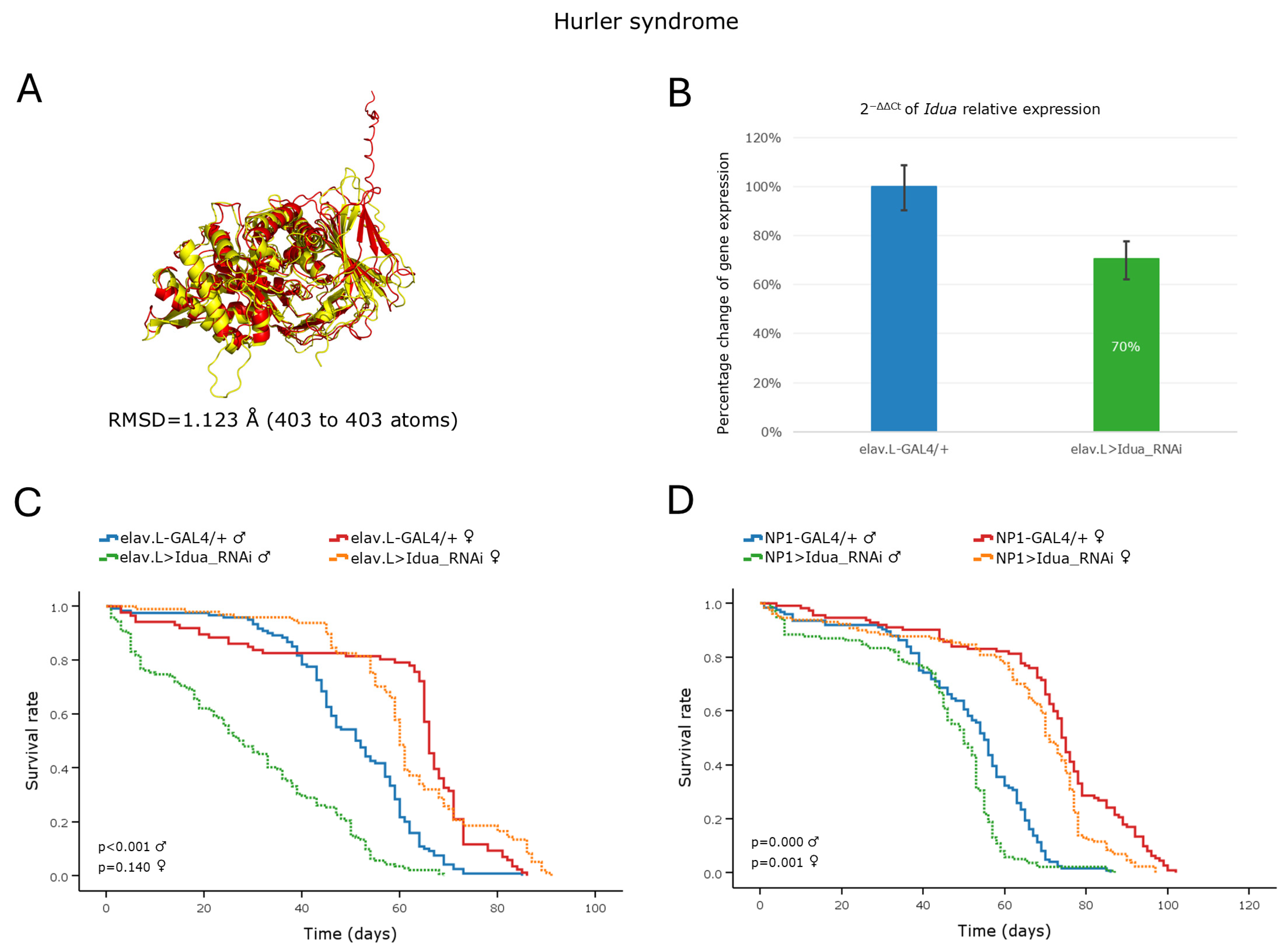
Hurler syndrome, or MPS type I, is caused by a deficiency in α-L-Iduronidase (encoded by the IDUA gene), leading to the pathological storage of dermatan- and heparan- sulfate inside the lysosomes of a wide range of tissues [13]. In Drosophila, a DIOPT analysis identified Idua as the single ortholog of the human IDUA gene, with a high-confidence homology score (Table 2) and an RMSD value of 1.123 Å (Figure 6A). Neuronal-specific RNAi-mediated knockdown of the Idua gene caused a ~30% reduction in gene expression (Figure 6B), which proved sufficient to induce a pathological phenotype in the male flies. These transgenic males exhibited a severely shortened lifespan (Figure 6C), with their median survival time being reduced by ~24 days and impaired climbing ability commencing as early as day one of their adult life (Figure S13). Strikingly, high mortality rates prevented the inclusion of 30-day-old male flies in the climbing assay, due to insufficient sample size. In contrast, female transgenic flies were characterized by absence of statistically significant changes in either life expectancy (Figure 6C) or climbing activity, apart from a slight improvement in locomotor performance observed at approximately day 30 (Figure S13). Of note is that midgut-specific knockdown of the Idua gene resulted in mildly reduced survival for both transgenic fly sexes compared to the controls (Figure 6D).
Altogether, the herein obtained results demonstrate that, following Idua suppression, Drosophila manifests key neurological and viability-related pathologies, which represent phenotypes indicative of human Hurler syndrome, thereby highlighting the strong potential of the “fly-IduaRNAi” genetic platform to serve as a reliable and effective in vivo animal disease model for mechanistically investigating Hurler syndrome pathogenesis and pre-clinically supporting high-throughput drug-screening systems, moving towards the discovery of novel therapeutic schemes and regimens.

3.5.2. Hunter Syndrome

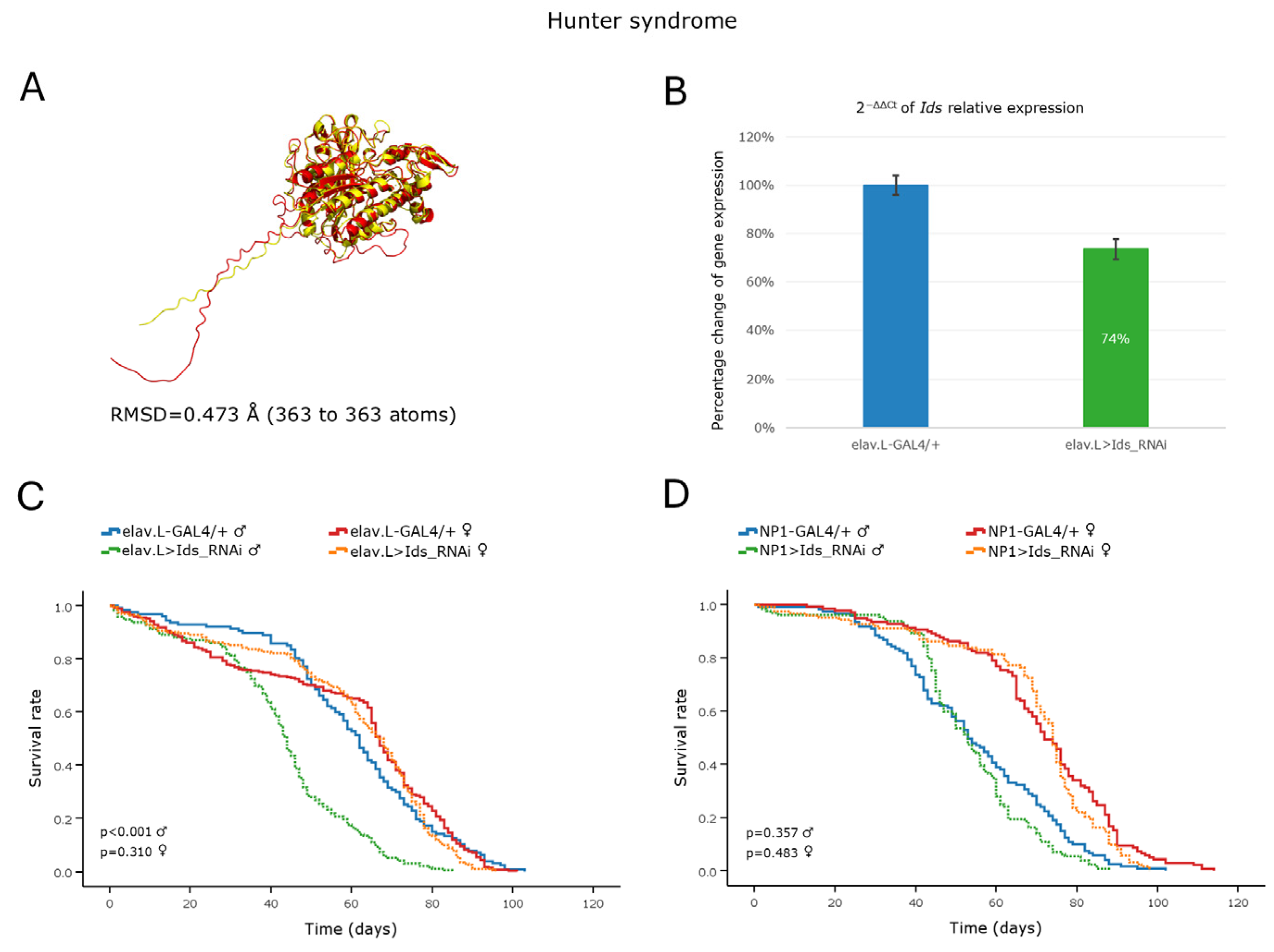
Hunter syndrome, or MPS type II, is a rare X-linked recessive disorder caused by a functional deficiency of the lysosomal enzyme Iduronate-2-sulfatase (encoded by the IDS gene in humans), which is critical for the catabolism of certain glycosaminoglycans (GAGs); the dermatan- and heparan-sulfate-GAG-species [14]. In Drosophila, a single ortholog gene, the Ids, can be identified in the 3rd chromosome, with a high DIOPT score (Table 2) and a strong structural similarity of its protein product to its human protein counterpart (an RMSD value as low as 0.473 Å; Figure 7A). Targeted, RNAi-mediated, knockdown of the Ids gene in neuronal cells led to a ~26% reduction in mRNA expression levels (Figure 7B). Despite this modest downregulation, male flies presented an age-dependent decrease in life expectancy, with their median survival time being reduced by ~18 days compared to control males (Figure 7C). In contrast, female flies were largely unaffected, producing survival curves comparable to those of the control populations (Figure 7C).
Similarly, tissue-specific knockdown of the Ids gene in Drosophila midgut tissues did not seem to significantly affect the lifespan profile of either fly sex setting (Figure 7D), further emphasizing the functional importance of the Ids gene product, specifically in the central nervous system (CNS). It may be that the remaining Ids activity, of ~74%, lies near the functional threshold of being capable of sufficiently maintaining viability in female, but not male, fly populations during aging.

3.5.3. Sly Disease

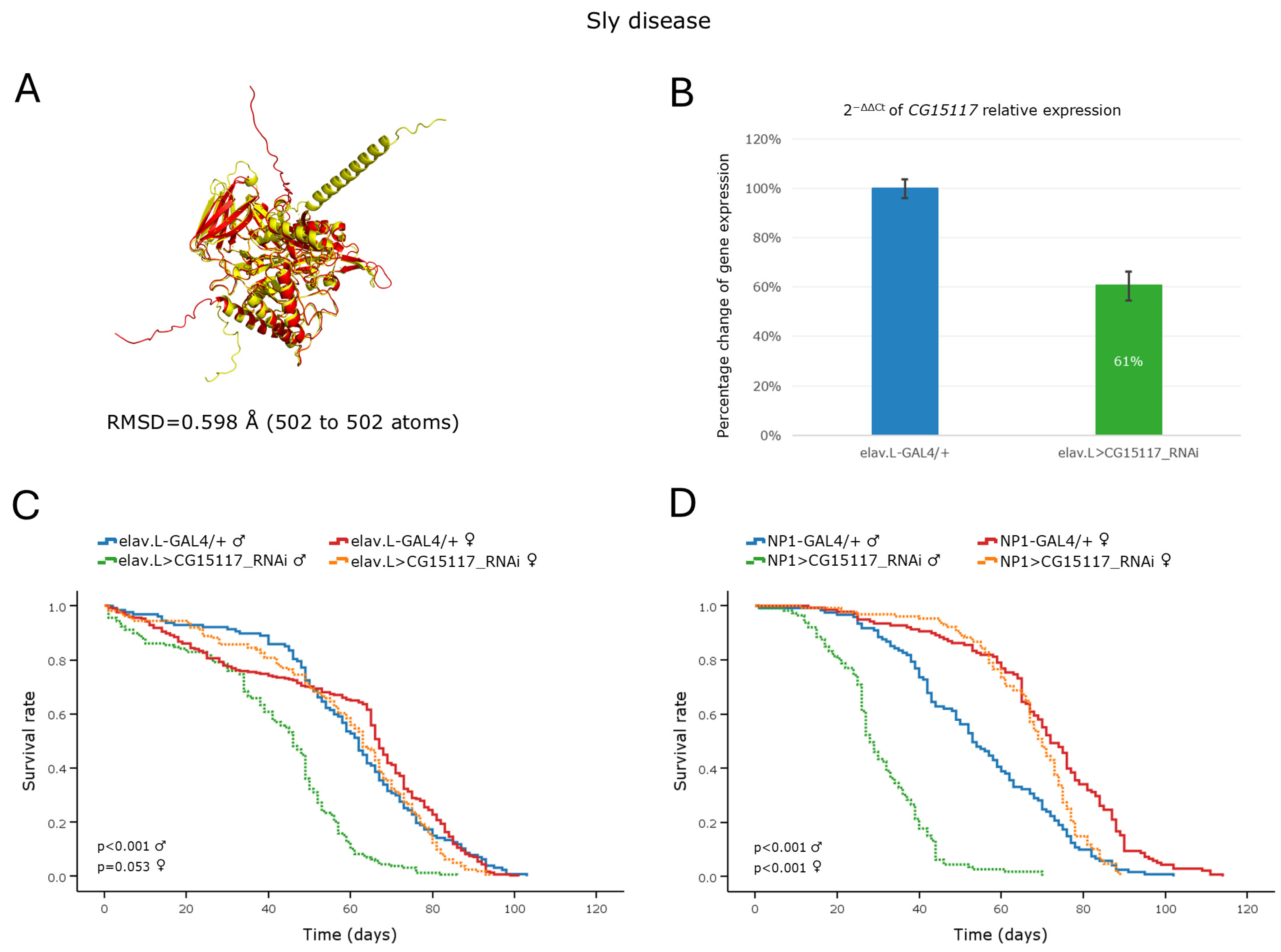
Sly disease, or MPS type VII, is an autosomal recessive LSD caused by mutations in the human GUSB gene, which encodes the β-Glucuronidase enzyme. Loss of this enzyme leads to the accumulation of undegraded, or partially degraded, glycosaminoglycans (GAGs), ultimately resulting in widespread cellular dysfunction [14]. In Drosophila, 3 orthologs of the human GUSB gene have been identified. Among them, CG15117 exhibits the highest DIOPT score (Table 2) and a notably low RMSD value of 0.598 Å (Figure 8A), indicative of their strong structural similarity. In the herein developed Drosophila model of Sly disease, RNAi-mediated knockdown of the CG15117 gene, specifically within the nervous system, revealed a modest reduction of ~39% in mRNA expression levels (Figure 8B). Male transgenic flies with neuronal-specific downregulation of the CG15117 gene were characterized by an age-dependent decline in lifespan, with a median reduction of ~16 days, compared to control males (Figure 8C). In contrast, female transgenic flies provided similar-to-control survival curves under the same growth conditions (Figure 8C).
Interestingly, midgut-specific knockdown of the CG15117 gene also caused a pronounced, sex-dependent, lifespan impairment pattern. Male transgenic flies presented a significantly shortened lifespan, as clearly indicated by their reduced median and maximum lifespan of ~25 and ~40 days, respectively (Figure 8D). Female transgenic flies were comparatively less affected, with only a slight decrease in maximum lifespan being observed, thereby suggesting a male-specific vulnerability to CG15117 loss in both neuronal and midgut tissues. Negative-geotaxis assay of RNAi-mediated, CG15117-targeted flies, specifically within the nervous system, unveiled a progressive, age-dependent decline in locomotor activity for both sexes (Figure S14). Although CG15117-downregulated flies presented near to normal climbing activity during the initial days of their adult life, with only a mild early decline being observed in females, their motor performance deteriorated significantly from day 10 onward. By this stage, their climbing efficiency closely resembled that of 20-day-old control flies, thereby indicating an accelerated onset of age-dependent locomotor impairment (Figure S14).
Taken together, the majority of the herein developed Drosophila models of Mucopolysaccharidoses (MPSs) successfully recapitulate key pathological features of MPS disorders, such as a shortened lifespan and progressive motor decline. These invertebrate models provide a powerful platform for conducting genetic screens in vivo in order to mechanistically illuminate MPSs, identify genetic modifiers, and conduct rapid, reliable, comprehensive, and cost-effective drug-screening trials that are unfeasible to implement in typical vertebrate (e.g., zebrafish and mouse) model organisms.

4. Discussion

Most lysosomal storage disorders (LSDs) lack effective treatments, rendering genome editing one of the most promising therapeutic strategies. However, before these genome editing tools can be applied in humans, several critical steps must precede their application, ranging from in vitro testing to clinical trials. To maximize safety and gather extensive preliminary data, in vivo modeling using invertebrates has gained major attention in recent years [15,17]. These organisms offer a wide array of genetic tools and allow the in vivo study of various biological pathways and therapeutic approaches, in less time and with fewer ethical concerns than those in mammals. Drosophila melanogaster is a well-established invertebrate model system that offers an ideal background for genetic and biological studies of different human pathologies, as it contains functional orthologs for ~75% of human disease-related genes [41]. Drosophila also features a plethora of genetic tools, including the GAL4/UAS, CRISPR/Cas9, and RNAi molecular platforms, which allow cell/tissue-specific gene targeting/downregulation [42,43]. Importantly, Drosophila models have been successfully utilized as robust in vivo screening platforms during the early stages of drug discovery. Numerous studies demonstrate their effectiveness for both primary high-throughput screening and secondary validation of biologically active compounds across a wide range of human diseases, ranging from neurodegeneration to cancer [44,45]. Of particular relevance to this work, the core cell biology of the lysosomal–autophagic system is highly conserved between flies and mammals. This conservation supports the translational validity of using Drosophila LSD models to identify pharmacological targets and pathways that emulate the pathological mechanisms observed in human patients.
In the present study, we utilized the binary GAL4/UAS and RNAi genetic systems, to selectively knockdown fly orthologs of human LSD-related genes within the brain–midgut axis during aging. Employment of commercially available transgenic strains, directly obtained from the Bloomington Drosophila Stock Center (BDSC; Bloomington, IN, USA), enabled us to systemically investigate their pathological phenotypes in vivo. These findings provide a powerful invertebrate model for future studies, to broadly explore and elucidate the molecular mechanisms controlling LSD pathology (initiation and progression) and to facilitate the development of novel genetic and pharmacological therapeutic strategies. Finally, it is important to note that the knockdown efficiencies reported here are likely underestimated. Because qRT-PCR was performed on whole adult heads, the inclusion of non-neuronal tissues, where the elav driver is inactive, dilutes the measurable effect of RNAi-mediated silencing within neuronal cells.
Sphingolipidoses represent a sub-category of LSDs that are developed by deficiencies in the enzymes responsible for the catabolism of sphingolipids and they mainly affect nervous-system and peripheral-organ tissues. Gaucher disease (GD) is the most prevalent form and derives from deficiencies in the β-Glucocerebrosidase (GBA1) enzyme, leading to toxic accumulation of glucosylceramide [10]. Utilization of mouse models for GD has proven challenging and limited, due to the elevated perinatal lethality associated with GBA1 gene mutations [10,46].
Hence, working towards the establishment of a new in vivo model for the disease (GD), we investigated the impact of downregulating the Drosophila Gba1a and Gba1b orthologs of the human GBA1 gene within the brain–midgut axis during aging. Our results revealed a marked reduction in lifespan and climbing ability, with male flies being more severely affected, compared to female populations. A previous study of Drosophila Minos-insertion mutants of the GBA1 orthologs reported that the Gba1b mutants exhibited a shortened lifespan and an impaired climbing ability, whereas Gba1a mutants did not present significant pathologies [47]. Although the Drosophila Gba1a and Gba1b fly orthologs show differential tissue-expression patterns, with Gba1a being primarily expressed in the midgut and Gba1b being detected in the adult head and fat body [48], both genes seem to affect fly longevity and kinetic ability in a similar pattern when downregulated in brain and midgut tissues.
Therefore, our findings demonstrate that both Gba1a and Gba1b are essential for motor performance and survival in Drosophila. The progressive loss of locomotor activity observed herein likely mirrors the neuronal cell loss and resulting neurotoxicity characteristic of human GD [10]. The distinct sexual dimorphism of lifespan and climbing phenotypes observed in our Drosophila GD models align with a growing body of evidence linking sexual dimorphism to fundamental variations in metabolic homeostasis, stress responses, hormonal regulation, immune responses, and reproductive physiology [36,37,38,39,49]. In Drosophila, female physiology is heavily geared towards lipid accumulation and protein synthesis to support egg production, whereas male metabolism is optimized for carbohydrate utilization and locomotor activity [39,49]. This intrinsic dimorphism likely explains the sex-specific phenotypes observed in our GD RNAi models. Since Gba1 and Gba1b are critical for glucosylceramide catabolism, their depletion would differentially impact the high-demand lipid environment of the female gut compared to the male gut, reflecting the divergent aging trajectories of the two sexes. Taken together, our findings strongly support Drosophila as a powerful and versatile in vivo model for GD, providing insights into its genetic and pathophysiological mechanisms, including sex-specific disease manifestations.
Fabry is an X-linked recessive sphingolipidosis caused by a deficiency in the lysosomal enzyme α-Galactosidase A due to mutations in the human GLA gene [7]. Interestingly, in our model system herein investigated, genetic downregulation of the fly GLA ortholog CG5731 proved capable of more severely affecting female flies, in terms of both life expectancy and climbing capacity, compared to male populations. Of note is that the sex-linked inheritance pattern that has been observed in humans cannot be directly applied in Drosophila, since male flies upregulate their single X chromosome via dosage compensation [50]; additionally, CG5731 is not an X-linked gene. A mechanistic explanation for the comparatively increased sensitivity detected in female flies may be associated with sex- and/or tissue-specific gene-expression programs and differences in metabolic/nutritional demands and/or hormonal pathway/network activities. Moderate homologies might also reflect redundant or compensatory functions by other enzymes or alternative mechanisms in Drosophila that are absent or less efficient in humans. In a mouse model of the disease (FD), both male and female mice deficient in α-Gal A manifested a clinically normal phenotype at the 10th–14th weeks of age, thus rendering FD modeling in this mammalian system, both challenging and limited [51]. However, in a study of Drosophila transgenic populations expressing the human mutant GLA (variant) forms A156V and A285D, significant locomotor dysfunction and reduced lifespan were observed compared to control flies (expressing the human wild-type enzyme). Strikingly, these phenotypes could be ameliorated with Migalastat (FD medication) treatment [52].
Altogether, our RNAi-based genetic platform, which targets the endogenous expression of the CG5731 fly gene (a human GLA homolog) specifically within the brain–midgut axis during aging, may offer a powerful, reliable, multifaceted, dynamic, and sensitive in vivo model system for comprehensively studying FD, to enable efficient drug screening and to illuminate underlying disease mechanisms.
Niemann–Pick type C disease (NPC) is a neurodegenerative disorder classified into types C1 and C2 depending on the respective human gene (NPC1 or NPC2) that is mutated. It is characterized by abnormalities in the intracellular transport of endocytosed cholesterol, which leads to the accumulation of cholesterol and sphingolipids within endo-lysosomes [6,12]. In the present study, we investigated the consequences of RNAi-mediated knockdown of the Drosophila orthologs Npc1a and Npc2a within the brain–midgut axis during aging. The obtained male transgenic flies were characterized by a reduced lifespan and locomotor dysfunction with organ-specific (brain or midgut) targeting, in contrast to the female flies, which exhibited near-normal phenotypes. This pronounced male-specific vulnerability highlights a significant sexual dimorphism in the susceptibility to defects in cholesterol trafficking. In Drosophila, females possess specialized metabolic adaptations to buffer lipid fluctuations to support oogenesis [39,49], likely conferring a degree of resilience against the intracellular cholesterol accumulation associated with NPC pathology. Conversely, since lysosomal lipid accumulation is known to trigger oxidative stress and mitochondrial dysfunction, the male-specific lethality observed herein likely reflects a lower physiological threshold for lipotoxicity in males, rendering them disproportionately vulnerable to the loss of Npc1a or Npc2a functions [53].
A previous study in Drosophila, using loss of function mutants of the Npc1a gene, revealed developmental arrest at the first larval stage [54], thus rendering age-dependent pathologies during adulthood impossible to profiled. Strikingly, in our model, although the viability patterns for the two genes are largely similar, the relative expression of the Npc1a gene was less markedly reduced compared to the Npc2a respective one (Figure 3B,F). This indicates that even a modest decrease in the Npc1a gene-expression level within the nervous system setting is sufficient to trigger a pathological phenotype, thereby highlighting the essential role(s) of Npc1a in Drosophila well-being during aging.
In toto, our genetic approach provides a powerful, trustworthy, and manageable model system for mechanistically illuminating and therapeutically advancing Niemann–Pick type C disease (NPC) in vivo.
GM2 gangliosidoses are characterized by excessive accumulation of ganglioside GM2 species and related glycolipids in the lysosomes. The main forms include Tay–Sachs disease (TSD), caused by mutations in the HEXA gene, and Sandhoff disease (SD), caused by mutations in the HEXB gene [9,10,11]. In Drosophila, three genes (Hexo1, Hexo2, and fdl) have been identified as encoding β-Hexosaminidase-like enzymes based on sequence homologies to human Hexosaminidases [55,56]. Strikingly, RNAi-mediated downregulation of the Hexo2 (but not Hexo1) gene, specifically within the brain, revealed a remarkable reduction in the life expectancy of Drosophila transgenic male flies (Figure 4G). Given that GM2 gangliosidoses are known to predominantly affect the central nervous system (CNS) [10,11], our results point to the essential contribution of certain β-Hexosaminidases to neuronal development and CNS/brain functionality in Drosophila during aging, thereby validating the model’s relevance to molecularly investigating GM2 gangliosidoses-induced neuro-pathologies in vivo.
Mucopolysaccharidoses (MPSs) comprise a class of 11 lysosomal storage disorders, with each one being derived from driver deficiency in the activity of a distinct lysosomal hydrolase; they all belong to a family of enzymes that are critically involved in the sequential degradation of glycosaminoglycans (GAGs). MPS I and MPS II sub-types were typically classified among the first syndromes identified within this group [8]. In our Hurler syndrome (HLS) (MPS I; α-L-Iduronidase deficiency) in vivo model, although the expression of the IDUA gene was not severely downregulated within the brain–midgut axis, reduced lifespan and locomotor deficiency were observed. Of note is that a distinct study method regarding HLS modeling using a similar strategy, but different RNAi strains, which can still target the same Drosophila IDUA ortholog (CG6201) gene, has been previously reported by Filippis et al. [57]. However, in their set of experiments, although flies with reduced expression of the IDUA gene in neuronal and glial cells presented locomotion deficiencies, they, unexpectedly, manifested a longer lifespan compared to the controls [57].
Hence, our Drosophila HLS model represents an invaluable, powerful, informative, constructive, manageable, and novel complement to the existing biological tool for genetically dissecting disease mechanisms and systemically expanding the repertoire of experimental in vivo models hitherto available for deeper investigation of HLS pathology, both mechanistically and therapeutically, for the maximum benefit of humans.
Hunter syndrome (HNS) (MPS II; Iduronate-2-sulphatase deficiency) is an X-linked recessive LSD. Remarkably, in our invertebrate model system, only males exhibited a notable reduction in life expectancy, a pathological phenotype that is genetically associated with the sex-dependent nature of HNS in humans. The genetic modeling of HNS in Drosophila has been previously described using the same RNAi strains, with the authors concluding that residual Ids activity may be sufficient to rescue MPS II-related pathologies, since, in their lethality assays, the survival from larva to pupa and the metamorphosis to the adult phase were not affected [58]. In contrast to their argument that the engagement of RNAi-dependent transgenic technology for MPS II knockdown is not an effective strategy, our data strongly suggest that, under certain circumstances and specific settings, the exploitation of male flies as a novel and reliable model system for HNS-pathology research in vivo should not be ignored or disregarded.
Employment of our Sly disease (SLD) (MPS VII; β-Glucuronidase deficiency) model demonstrated a remarkable reduction in the viability of male flies along the brain–midgut axis, together with a progressive decline in locomotor activity for both sexes during aging. A Drosophila model of MPS VII, developed by knocking out the CG2135 gene, the fly ortholog of human GUSB, has been previously established by Bar et al., successfully recapitulating key features of SLD such as shortened lifespan, motor deficiencies, and neurological abnormalities [59]. Notably, Drosophila possesses two orthologs of the human GUSB gene; the CG2135 (βGlu) and the CG15117 gene, with the latter exhibiting a slightly higher similarity score in the DIOPT analysis [20]. Although Bar et al. found that CG15117 was 6-fold less active than CG2135, our results clearly demonstrate that targeted downregulation of CG15117, in either brain or midgut tissues, critically compromises male fly viability during aging, thereby strongly suggesting its (CG15117) beneficial utilization as an additional, but important and powerful, screening tool for SLD research in vivo.
Altogether, we have herein identified the Drosophila orthologs of the genes responsible for the most common LSDs in humans and systematically screened them for “patho-phenotypic” effects on life expectancy and climbing proficiency, specifically within the brain–midgut axis during aging, suitably engaging the GAL4/UAS binary transgenic system, in combination with the RNAi-mediated gene-silencing platform. Most of these in vivo LSD models in Drosophila proved capable of successfully recapitulating the key disease phenotypes that have been identified in humans, including significantly reduced lifespan and progressive climbing deficiency, which serve as a proxy for neuro-muscular disintegration, in an age- and sex-dependent manner (Table 3). However, we acknowledge the inherent limitations of this approach, including the variable knockdown efficiency of RNAi compared to null mutants and the tissue-restricted nature of the GAL4 drivers, which precludes the assessment of systemic contributions from non-neuronal or non-midgut tissues.
Notwithstanding these constraints, the consistent phenotypic parallels undoubtedly underline the value and importance of Drosophila as a robust, reliable, powerful, rapid, multifaceted, versatile, and manageable invertebrate model system. Drosophila LSD models are ideal for high-throughput genetic and pharmacological in vivo screenings, which aim for pathological-phenotype rescues, while also providing invaluable insights into the underlying molecular and neurological mechanisms that tightly control LSD-specific pathologies.

5. Conclusions

We present a comprehensive, DIOPT-derived resource cataloging nearly all of the human LSD-related genes and their Drosophila orthologs, complemented by available RNAi reagents from major stock centers. Structural analysis via AlphaFold confirms the high degree of evolutionary conservation between human and Drosophila species, validating the molecular relevance of the fly model. Through tissue-specific targeting of LSD-related genes in the brain and midgut, we successfully recapitulated key LSD pathologies, thus demonstrating the robustness of these models during aging. Notably, our systematic screening reveals a marked sexual dimorphism in disease susceptibility (summarized in Table 3), likely driven by the distinct metabolic profiles of male and female physiology. Collectively, this phenotypic “atlas” establishes a versatile in vivo platform for dissecting the molecular mechanisms of LSDs and accelerating high-throughput therapeutic discoveries.

Supplementary Materials

The following supporting information can be downloaded at: https://www.mdpi.com/article/10.3390/cells15010006/s1; Figure S1. Structural alignment of Gaucher disease-related proteins; Figure S2. Structural alignment of Fabry disease-related proteins; Figure S3. Structural alignment of Niemann–Pick disease type C1- and C2-related proteins; Figure S4. Structural alignment of Tay–Sachs and Sandhoff disease-associated proteins; Figure S5. Structural alignment of proteins related to Pompe disease; Figure S6. Structural alignment of Hurler syndrome-associated proteins; Figure S7. Structural alignment of Hunter syndrome-related proteins; Figure S8. Structural alignment of Sly disease-associated proteins; Figure S9. Locomotor deficits in Drosophila models of Gaucher disease; Figure S10. Genetic modeling of Fabry disease in the Drosophila brain–midgut axis, through targeting of the CG7997 ortholog gene in vivo.; Figure S11. In vivo genetic modeling of Fabry disease in Drosophila via CG5731 targeting; Figure S12. Locomotor deficits in Drosophila models of Niemann–Pick disease type C; Figure S13. In vivo genetic modeling of Hurler disease in Drosophila via Idua targeting; Figure S14. In vivo genetic modeling of Sly disease in Drosophila via CG15117 ortholog gene targeting; Table S1: The gene-specific DNA oligonucleotide primers used in this study.

Author Contributions

Conceptualization, D.J.S.; Methodology, A.D.V.; Software, A.D.V.; Validation, S.P.M., A.D.V., and D.J.S.; Formal Analysis, S.P.M., N.M.K., Z.A.C., S.K., A.D.V., and D.J.S.; Investigation, S.P.M., N.M.K., Z.A.C., S.K., A.D.V., and D.J.S.; Resources, A.D.V. and D.J.S.; Data Curation, S.P.M., A.D.V., and D.J.S.; Writing—Original Draft Preparation, A.D.V.; Writing—Review and Editing, D.J.S.; Visualization, S.P.M., A.D.V., and D.J.S.; Supervision, A.D.V. and D.J.S.; Project Administration, A.D.V. and D.J.S. All authors have read and agreed to the published version of the manuscript.

Funding

This research received no external funding.

Institutional Review Board Statement

The animals used in the present study “Drosophila melanogaster flies” do not require ethical review and approval: “Ethical review and approval were not required for this study, as the experimental model, Drosophila melanogaster, is an invertebrate species and is, therefore exempted from animal welfare legislation. All experiments were performed in accordance with standard institutional guidelines for laboratory safety and animal handling”.

Informed Consent Statement

Not applicable.

Data Availability Statement

The original contributions presented in this study are included in the Original Article/Supplementary Material. Further inquiries can be directed at the Corresponding Authors.

Acknowledgments

The transgenic fly stocks used in this study were obtained from the Bloomington Drosophila Stock Center (BDSC) (NIH P40OD018537) (Bloomington, IN, USA). S.P.M. acknowledges financial support from the “Bodossaki Foundation”, through its 51st Scholarship Program for Postgraduate and Doctoral Studies (Academic Year: 2023–2024).

Conflicts of Interest

The authors declare no conflicts of interest.

References

  1. Parenti, G.; Andria, G.; Ballabio, A. Lysosomal storage diseases: From pathophysiology to therapy. Annu. Rev. Med. 2015, 66, 471–486. [Google Scholar] [CrossRef]
  2. Fuller, M.; Meikle, P.J.; Hopwood, J.J. Epidemiology of lysosomal storage diseases: An overview. In Fabry Disease: Perspectives from 5 Years of FOS; Mehta, A., Beck, M., Sunder-Plassmann, G., Eds.; Oxford PharmaGenesis: Oxford, UK, 2006. [Google Scholar]
  3. Meikle, P.J.; Hopwood, J.J.; Clague, A.E.; Carey, W.F. Prevalence of lysosomal storage disorders. JAMA 1999, 281, 249–254. [Google Scholar] [CrossRef] [PubMed]
  4. Platt, F.M.; d’Azzo, A.; Davidson, B.L.; Neufeld, E.F.; Tifft, C.J. Lysosomal storage diseases. Nat. Rev. Dis. Primers 2018, 4, 27. [Google Scholar] [CrossRef] [PubMed]
  5. Seranova, E.; Connolly, K.J.; Zatyka, M.; Rosenstock, T.R.; Barrett, T.; Tuxworth, R.I.; Sarkar, S. Dysregulation of autophagy as a common mechanism in lysosomal storage diseases. Essays Biochem. 2017, 61, 733–749. [Google Scholar] [CrossRef]
  6. van Gool, R.; Tucker-Bartley, A.; Yang, E.; Todd, N.; Guenther, F.; Goodlett, B.; Al-Hertani, W.; Bodamer, O.A.; Upadhyay, J. Targeting neurological abnormalities in lysosomal storage diseases. Trends Pharmacol. Sci. 2022, 43, 495–509. [Google Scholar] [CrossRef]
  7. Marques, A.R.A.; Saftig, P. Lysosomal storage disorders—Challenges, concepts and avenues for therapy: Beyond rare diseases. J. Cell Sci. 2019, 132, jcs221739. [Google Scholar] [CrossRef] [PubMed]
  8. Parkinson-Lawrence, E.J.; Shandala, T.; Prodoehl, M.; Plew, R.; Borlace, G.N.; Brooks, D.A. Lysosomal storage disease: Revealing lysosomal function and physiology. Physiology 2010, 25, 102–115. [Google Scholar] [CrossRef]
  9. Ozkara, H.A. Recent advances in the biochemistry and genetics of sphingolipidoses. Brain Dev. 2004, 26, 497–505. [Google Scholar] [CrossRef]
  10. Kolter, T.; Sandhoff, K. Sphingolipid metabolism diseases. Biochim. Biophys. Acta 2006, 1758, 2057–2079. [Google Scholar] [CrossRef]
  11. Myerowitz, R. Tay-Sachs disease-causing mutations and neutral polymorphisms in the Hex A gene. Hum. Mutat. 1997, 9, 195–208. [Google Scholar] [CrossRef]
  12. Pfrieger, F.W. The Niemann-Pick type diseases—A synopsis of inborn errors in sphingolipid and cholesterol metabolism. Prog. Lipid Res. 2023, 90, 101225. [Google Scholar] [CrossRef]
  13. Kubaski, F.; de Oliveira Poswar, F.; Michelin-Tirelli, K.; Matte, U.D.S.; Horovitz, D.D.; Barth, A.L.; Baldo, G.; Vairo, F.; Giugliani, R. Mucopolysaccharidosis Type I. Diagnostics 2020, 10, 161. [Google Scholar] [CrossRef]
  14. Correa, T.; Feltes, B.C.; Giugliani, R.; Matte, U. Disruption of morphogenic and growth pathways in lysosomal storage diseases. WIREs Mech. Dis. 2021, 13, e1521. [Google Scholar] [CrossRef] [PubMed]
  15. Bellen, H.J.; Wangler, M.F.; Yamamoto, S. The fruit fly at the interface of diagnosis and pathogenic mechanisms of rare and common human diseases. Hum. Mol. Genet. 2019, 28, R207–R214. [Google Scholar] [CrossRef] [PubMed]
  16. Rigon, L.; De Filippis, C.; Napoli, B.; Tomanin, R.; Orso, G. Exploiting the Potential of Drosophila Models in Lysosomal Storage Disorders: Pathological Mechanisms and Drug Discovery. Biomedicines 2021, 9, 268. [Google Scholar] [CrossRef]
  17. Zhang, T.; Peterson, R.T. Modeling Lysosomal Storage Diseases in the Zebrafish. Front. Mol. Biosci. 2020, 7, 82. [Google Scholar] [CrossRef]
  18. Gurda, B.L.; Vite, C.H. Large animal models contribute to the development of therapies for central and peripheral nervous system dysfunction in patients with lysosomal storage diseases. Hum. Mol. Genet. 2019, 28, R119–R131. [Google Scholar] [CrossRef]
  19. Suzuki, K.; Ezoe, T.; Tohyama, J.; Matsuda, J.; Vanier, M.T.; Suzuki, K. Are animal models useful for understanding the pathophysiology of lysosomal storage disease? Acta Paediatr. Suppl. 2003, 92, 54–62; discussion 45. [Google Scholar] [CrossRef] [PubMed]
  20. Hu, Y.; Flockhart, I.; Vinayagam, A.; Bergwitz, C.; Berger, B.; Perrimon, N.; Mohr, S.E. An integrative approach to ortholog prediction for disease-focused and other functional studies. BMC Bioinform. 2011, 12, 357. [Google Scholar] [CrossRef]
  21. Hu, Y.; Comjean, A.; Rodiger, J.; Liu, Y.; Gao, Y.; Chung, V.; Zirin, J.; Perrimon, N.; Mohr, S.E. FlyRNAi.org-the database of the Drosophila RNAi screening center and transgenic RNAi project: 2021 update. Nucleic Acids Res. 2021, 49, D908–D915. [Google Scholar] [CrossRef]
  22. Hu, Y.; Comjean, A.; Roesel, C.; Vinayagam, A.; Flockhart, I.; Zirin, J.; Perkins, L.; Perrimon, N.; Mohr, S.E. FlyRNAi.org-the database of the Drosophila RNAi screening center and transgenic RNAi project: 2017 update. Nucleic Acids Res. 2017, 45, D672–D678. [Google Scholar] [CrossRef] [PubMed]
  23. Jumper, J.; Evans, R.; Pritzel, A.; Green, T.; Figurnov, M.; Ronneberger, O.; Tunyasuvunakool, K.; Bates, R.; Zidek, A.; Potapenko, A.; et al. Highly accurate protein structure prediction with AlphaFold. Nature 2021, 596, 583–589. [Google Scholar] [CrossRef]
  24. Varadi, M.; Anyango, S.; Deshpande, M.; Nair, S.; Natassia, C.; Yordanova, G.; Yuan, D.; Stroe, O.; Wood, G.; Laydon, A.; et al. AlphaFold Protein Structure Database: Massively expanding the structural coverage of protein-sequence space with high-accuracy models. Nucleic Acids Res. 2022, 50, D439–D444. [Google Scholar] [CrossRef]
  25. EMBL-EBI. AlphaFold Protein Structure Database. Available online: https://alphafold.ebi.ac.uk (accessed on 21 November 2024).
  26. Schrodinger, LLC. The PyMOL Molecular Graphics System, Version 2.0; Schrodinger, LLC: New York, NY, USA, 2015.
  27. Reva, B.A.; Finkelstein, A.V.; Skolnick, J. What is the probability of a chance prediction of a protein structure with an rmsd of 6 A? Fold. Des. 1998, 3, 141–147. [Google Scholar] [CrossRef]
  28. Denton, D.; Shravage, B.; Simin, R.; Mills, K.; Berry, D.L.; Baehrecke, E.H.; Kumar, S. Autophagy, not apoptosis, is essential for midgut cell death in Drosophila. Curr. Biol. 2009, 19, 1741–1746. [Google Scholar] [CrossRef]
  29. Livak, K.J.; Schmittgen, T.D. Analysis of relative gene expression data using real-time quantitative PCR and the 2(-Delta Delta C(T)) Method. Methods 2001, 25, 402–408. [Google Scholar] [CrossRef]
  30. Markow, T.A. “Cost” of virginity in wild Drosophila melanogaster females. Ecol. Evol. 2011, 1, 596–600. [Google Scholar] [CrossRef]
  31. Partridge, L.; Fowler, K. Non-mating costs of exposure to males in female Drosophila melanogaster. J. Insect Physiol. 1990, 36, 419–425. [Google Scholar] [CrossRef]
  32. Reiff, T.; Jacobson, J.; Cognigni, P.; Antonello, Z.; Ballesta, E.; Tan, K.J.; Yew, J.Y.; Dominguez, M.; Miguel-Aliaga, I. Endocrine remodelling of the adult intestine sustains reproduction in Drosophila. eLife 2015, 4, e06930. [Google Scholar] [CrossRef]
  33. Dietzl, G.; Chen, D.; Schnorrer, F.; Su, K.C.; Barinova, Y.; Fellner, M.; Gasser, B.; Kinsey, K.; Oppel, S.; Scheiblauer, S.; et al. A genome-wide transgenic RNAi library for conditional gene inactivation in Drosophila. Nature 2007, 448, 151–156. [Google Scholar] [CrossRef] [PubMed]
  34. Brand, A.H.; Perrimon, N. Targeted gene expression as a means of altering cell fates and generating dominant phenotypes. Development 1993, 118, 401–415. [Google Scholar] [CrossRef]
  35. Rera, M.; Clark, R.I.; Walker, D.W. Intestinal barrier dysfunction links metabolic and inflammatory markers of aging to death in Drosophila. Proc. Natl. Acad. Sci. USA 2012, 109, 21528–21533. [Google Scholar] [CrossRef]
  36. Salazar, A.M.; Aparicio, R.; Clark, R.I.; Rera, M.; Walker, D.W. Intestinal barrier dysfunction: An evolutionarily conserved hallmark of aging. Dis. Model. Mech. 2023, 16, dmm049969. [Google Scholar] [CrossRef] [PubMed]
  37. Regan, J.C.; Khericha, M.; Dobson, A.J.; Bolukbasi, E.; Rattanavirotkul, N.; Partridge, L. Sex difference in pathology of the ageing gut mediates the greater response of female lifespan to dietary restriction. eLife 2016, 5, e10956. [Google Scholar] [CrossRef] [PubMed]
  38. Hudry, B.; Khadayate, S.; Miguel-Aliaga, I. The sexual identity of adult intestinal stem cells controls organ size and plasticity. Nature 2016, 530, 344–348. [Google Scholar] [CrossRef]
  39. Millington, J.W.; Rideout, E.J. Sex differences in Drosophila development and physiology. Curr. Opin. Physiol. 2018, 6, 46–56. [Google Scholar] [CrossRef]
  40. Katarachia, S.A.; Markaki, S.P.; Velentzas, A.D.; Stravopodis, D.J. Genetic Targeting of dSAMTOR, A Negative dTORC1 Regulator, during Drosophila Aging: A Tissue-Specific Pathology. Int. J. Mol. Sci. 2023, 24, 9676. [Google Scholar] [CrossRef]
  41. Bier, E. Drosophila, the golden bug, emerges as a tool for human genetics. Nat. Rev. Genet. 2005, 6, 9–23. [Google Scholar] [CrossRef]
  42. McGuire, S.E.; Roman, G.; Davis, R.L. Gene expression systems in Drosophila: A synthesis of time and space. Trends Genet. 2004, 20, 384–391. [Google Scholar] [CrossRef] [PubMed]
  43. Southall, T.D.; Elliott, D.A.; Brand, A.H. The GAL4 System: A Versatile Toolkit for Gene Expression in Drosophila. CSH Protoc. 2008, 2008, pdb-top49. [Google Scholar] [CrossRef]
  44. Maitra, U.; Ciesla, L. Using Drosophila as a platform for drug discovery from natural products in Parkinson’s disease. Medchemcomm 2019, 10, 867–879. [Google Scholar] [CrossRef]
  45. Pandey, U.B.; Nichols, C.D. Human disease models in Drosophila melanogaster and the role of the fly in therapeutic drug discovery. Pharmacol. Rev. 2011, 63, 411–436. [Google Scholar] [CrossRef] [PubMed]
  46. Farfel-Becker, T.; Vitner, E.B.; Futerman, A.H. Animal models for Gaucher disease research. Dis. Model. Mech. 2011, 4, 746–752. [Google Scholar] [CrossRef]
  47. Kawasaki, H.; Suzuki, T.; Ito, K.; Takahara, T.; Goto-Inoue, N.; Setou, M.; Sakata, K.; Ishida, N. Minos-insertion mutant of the Drosophila GBA gene homologue showed abnormal phenotypes of climbing ability, sleep and life span with accumulation of hydroxy-glucocerebroside. Gene 2017, 614, 49–55. [Google Scholar] [CrossRef]
  48. Krause, S.A.; Overend, G.; Dow, J.A.T.; Leader, D.P. FlyAtlas 2 in 2022: Enhancements to the Drosophila melanogaster expression atlas. Nucleic Acids Res. 2022, 50, D1010–D1015. [Google Scholar] [CrossRef]
  49. Parisi, M.; Li, R.; Oliver, B. Lipid profiles of female and male Drosophila. BMC Res. Notes 2011, 4, 198. [Google Scholar] [CrossRef]
  50. Lucchesi, J.C.; Kuroda, M.I. Dosage compensation in Drosophila. Cold Spring Harb. Perspect. Biol. 2015, 7, a019398. [Google Scholar] [CrossRef]
  51. Ohshima, T.; Murray, G.J.; Swaim, W.D.; Longenecker, G.; Quirk, J.M.; Cardarelli, C.O.; Sugimoto, Y.; Pastan, I.; Gottesman, M.M.; Brady, R.O.; et al. alpha-Galactosidase A deficient mice: A model of Fabry disease. Proc. Natl. Acad. Sci. USA 1997, 94, 2540–2544. [Google Scholar] [CrossRef] [PubMed]
  52. Braunstein, H.; Papazian, M.; Maor, G.; Lukas, J.; Rolfs, A.; Horowitz, M. Misfolding of Lysosomal alpha-Galactosidase a in a Fly Model and Its Alleviation by the Pharmacological Chaperone Migalastat. Int. J. Mol. Sci. 2020, 21, 7397. [Google Scholar] [CrossRef]
  53. Tower, J. Sex-specific regulation of aging and apoptosis. Mech. Ageing Dev. 2006, 127, 705–718. [Google Scholar] [CrossRef] [PubMed]
  54. Huang, X.; Suyama, K.; Buchanan, J.; Zhu, A.J.; Scott, M.P. A Drosophila model of the Niemann-Pick type C lysosome storage disease: dnpc1a is required for molting and sterol homeostasis. Development 2005, 132, 5115–5124. [Google Scholar] [CrossRef]
  55. Cattaneo, F.; Pasini, M.E.; Intra, J.; Matsumoto, M.; Briani, F.; Hoshi, M.; Perotti, M.E. Identification and expression analysis of Drosophila melanogaster genes encoding beta-hexosaminidases of the sperm plasma membrane. Glycobiology 2006, 16, 786–800. [Google Scholar] [CrossRef] [PubMed]
  56. Leonard, R.; Rendic, D.; Rabouille, C.; Wilson, I.B.; Preat, T.; Altmann, F. The Drosophila fused lobes gene encodes an N-acetylglucosaminidase involved in N-glycan processing. J. Biol. Chem. 2006, 281, 4867–4875. [Google Scholar] [CrossRef] [PubMed]
  57. De Filippis, C.; Napoli, B.; Rigon, L.; Guarato, G.; Bauer, R.; Tomanin, R.; Orso, G. Drosophila D-idua Reduction Mimics Mucopolysaccharidosis Type I Disease-Related Phenotypes. Cells 2021, 11, 129. [Google Scholar] [CrossRef] [PubMed]
  58. Rigon, L.; Kucharowski, N.; Eckardt, F.; Bauer, R. Modeling Mucopolysaccharidosis Type II in the Fruit Fly by Using the RNA Interference Approach. Life 2020, 10, 263. [Google Scholar] [CrossRef]
  59. Bar, S.; Prasad, M.; Datta, R. Neuromuscular degeneration and locomotor deficit in a Drosophila model of mucopolysaccharidosis VII is attenuated by treatment with resveratrol. Dis. Model. Mech. 2018, 11, dmm036954. [Google Scholar] [CrossRef]
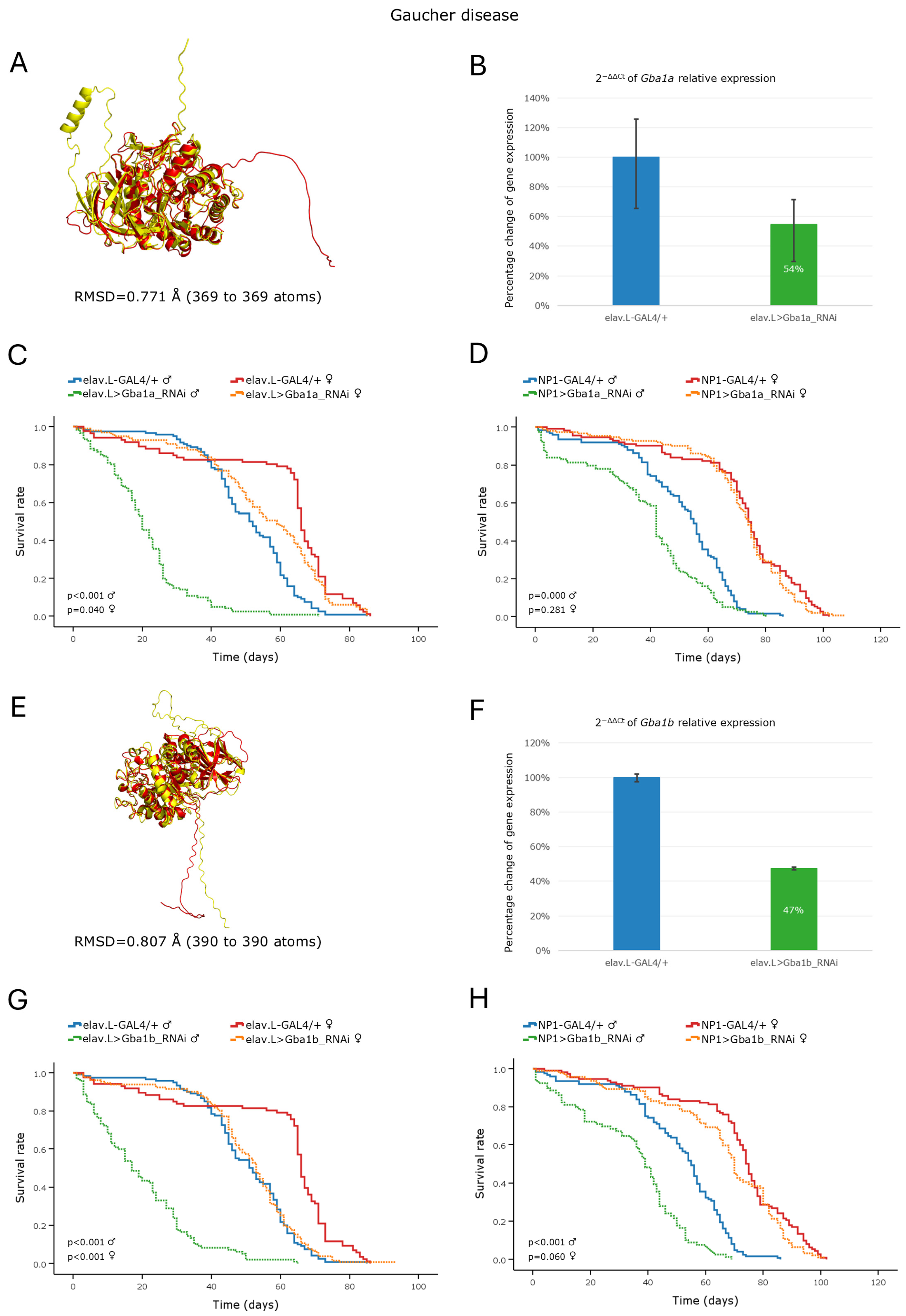
Figure 1. In vivo genetic modeling of Gaucher disease in Drosophila, via Gba1a and Gba1b ortholog gene targeting specifically within the brain–midgut axis. (A) Structural alignment of the AlphaFold-predicted protein structures that are encoded by the human GBA1 gene (red) and its Drosophila ortholog Gba1a (yellow). The human protein structure was aligned to the respective Drosophila structure using the PyMOL molecular graphics system. (B) Relative expression analysis of the Gba1a gene in fly neuronal (brain) tissues following its (Gba1a) RNAi-mediated knockdown (elav.L > Gba1a_RNAi), compared to control flies (elav.L-GAL4/+), as determined by RT-qPCR. (C) Lifespan profiling of male and female flies following Gba1a gene knockdown specifically within the nervous system (brain). (D) Survival curves of male and female flies being subjected to Gba1a gene downregulation that specifically targets midgut tissues (NP1 > Gba1a_RNAi). (E) Structural alignment of AlphaFold-derived protein structures that are encoded by the human GBA1 gene (red) and its Drosophila ortholog Gba1b gene (yellow), with the human reference protein being aligned to the Drosophila one through employment of the PyMOL molecular graphics system. (F) Relative expression levels of the Gba1b gene in neuronal (brain) tissues of RNAi-targeted flies (elav.L > Gba1b_RNAi), compared to control flies (elav.L-GAL4/+), assessed by RT-qPCR. (G) Survival curves of male and female flies following Gba1b gene knockdown specifically targeting the nervous system (brain). (H) Lifespan profiles of male and female flies after Gba1b gene silencing that specifically targets midgut tissues (NP1 > Gba1b_RNAi). Sample sizes: a total of n > 300 flies per genotype and sex (pooled from three independent biological replicates, with n > 100 per replicate).
Cells 15 00006 g001
Figure 2. In vivo genetic modeling of Fabry disease in Drosophila, via RNAi-mediated targeting of the CG5731 ortholog gene in the brain–midgut axis during aging. (A) PyMOL-mediated structural alignment of AlphaFold-derived protein structures of human GLA (red) and its Drosophila ortholog CG5731 (yellow). The human reference sequence (GLA) is aligned to the Drosophila protein (CG5731). (B) Quantitative analysis of CG5731 mRNA levels in neuronal tissues of CG5731RNAi-expressing flies (elav.L > CG5731_RNAi), relative to control (elav.L-GAL4/+), using RT-qPCR. (C) Survival curves of male and female flies, following nervous system-specific silencing of the CG5731 gene. (D) Viability profiles of flies characterized by targeted CG5731 knockdown specifically within midgut tissues (NP1 > CG5731_RNAi) (compared to control). Sample sizes: a total of n > 300 flies per genotype and sex (pooled from three independent biological replicates, with n > 100 per replicate).
Cells 15 00006 g002
Figure 3. In vivo genetic modeling of Niemann–Pick disease type C in the Drosophila brain–midgut axis. (A) Structural alignment of AlphaFold-derived protein structures of the human NPC1 (red) and its Drosophila ortholog Npc1a (yellow) genes that are generated and visualized via use of the PyMOL molecular graphics system. (B) Relative expression levels of the Npc1a gene in neuronal tissues of RNAi-targeted flies (elav.L > Npc1a_RNAi) compared to control populations (elav.L-GAL4/+), quantified by RT-qPCR. (C) Kaplan–Meier survival curves of male and female flies following neuronal-specific (elav-GAL4) knockdown of Npc1a. (D) Lifespan profiles of flies that are typified by midgut-specific Npc1a gene silencing (NP1 > Npc1a_RNAi). (E) Structural alignment of the protein encoded by the human NPC2 gene (red) and the protein encoded by its Drosophila ortholog Npc2a (yellow). (F) Relative expression of the Npc2a gene in neuronal tissues of RNAi-targeted flies (elav.L > Npc2a_RNAi), versus control populations (elav.L-GAL4/+), as examined and quantified by RT-qPCR. (G) Kaplan–Meier survival curves following neuronal-specific knockdown of Npc2a. (H) Survival profiles following midgut-specific knockdown of the Npc2a gene (NP1 > Npc2a_RNAi) compared to that of the controls (NP1-GAL4/+). Sample sizes: a total of n > 300 flies per genotype and sex (pooled from 3 independent biological replicates, with n > 100 per replicate).
Cells 15 00006 g003
Figure 4. In vivo genetic modeling of Tay–Sachs and Sandhoff diseases in the Drosophila brain–midgut axis. (AD) Functional analysis of Hexo1 gene: (A) PyMOL-mediated structural alignment of the AlphaFold-predicted human HEXA and HEXB proteins (red) with their Drosophila ortholog protein being encoded by the Hexo1 gene (yellow). (B) Relative mRNA expression levels of Hexo1 in neuronal tissues (heads) of RNAi-targeted flies (elav > Hexo1_RNAi) compared to controls (elav-GAL4/+), assessed by RT-qPCR. (C) Kaplan–Meier survival curves of male and female flies, following neuronal-specific knockdown of Hexo1. (D) Lifespan profiles, after Hexo1-gene knockdown, specifically in midgut tissues (NP1 > Hexo1_RNAi), compared to control (NP1-GAL4/+). (EH) Functional analysis of Hexo2 gene: (E) Structural alignment of AlphaFold-predicted protein structures being derived from human HEXA and HEXB genes (red), and the Drosophila ortholog protein synthesized by the Hexo2 gene (yellow). (F) Relative mRNA expression levels of Hexo2 in neuronal tissues (elav.L > Hexo2_RNAi), versus control populations (elav.L-GAL4/+), assessed by RT-qPCR. (G) Survival curves of male and female flies being characterized by neuronal Hexo2 knockdown, compared to control conditions. (H) Lifespan profiles, after Hexo2-gene silencing, specifically in the midgut tissues (NP1 > Hexo2_RNAi), compared to control (NP1-GAL4/+). Sample sizes: total n > 300 flies per genotype and sex (pooled from 3 independent biological replicates, with n > 100 per replicate).
Cells 15 00006 g004
Figure 5. In vivo genetic modeling of Pompe disease in the Drosophila brain–midgut axis. (AD) Functional analysis of the GCS2alpha gene: (A) PyMOL-mediated structural alignment of AlphaFold-derived protein products of the human GAA (red) and the Drosophila ortholog GCS2alpha (yellow) genes. (B) Relative mRNA expression levels of GCS2alpha in neuronal tissues (heads) of RNAi-targeted flies (elav > GCS2alpha_RNAi), compared to controls (elav-GAL4/+), assessed by RT-qPCR. (C) Survival curves of male and female flies following neuronal-specific knockdown of GCS2alpha versus control conditions. (D) Lifespan profiling after GCS2alpha-targeted downregulation, specifically in Drosophila midgut tissues (NP1 > GCS2alpha_RNAi), compared to control (NP1-GAL4/+). (EH) Functional analysis of the tobi gene: (E) PyMOL-mediated structural alignment of AlphaFold-derived protein products of the human GAA (red) and the Drosophila ortholog tobi (yellow) genes. (F) Relative mRNA expression levels of tobi in RNAi-targeted neuronal tissues (elav.L > tobi_RNAi) versus control fly population (elav.L-GAL4/+), assessed by RT-qPCR. (G) Kaplan–Meier survival curves following neuronal-specific knockdown of tobi gene. (H) Survival profiles following the midgut-specific knockdown of the tobi gene (NP1 > tobi_RNAi), versus control (NP1-GAL4/+). Sample sizes: a total of n > 300 flies per genotype and sex (pooled from three independent biological replicates, with n > 100 per replicate).
Cells 15 00006 g005
Figure 6. In vivo genetic modeling of Hurler syndrome in Drosophila, via the ortholog gene Idua targeting in the brain–midgut axis during aging. (A) PyMOL-mediated structural alignment of AlphaFold-derived protein structures that are encoded by the human IDUA (red) and its Drosophila ortholog Idua (yellow) genes. (B) Relative mRNA expression levels of Idua in neuronal tissues (heads) of RNAi-targeted flies (elav > Idua_RNAi) compared to the controls (elav-GAL4/+), assessed by RT-qPCR. (C) Survival curves of male and female transgenic flies following Idua-gene downregulation in the nervous system, compared to the controls. (D) Viability profiles, after midgut-specific silencing of the Idua gene (NP1 > Idua_RNAi), versus control conditions (NP1-GAL4/+). Sample sizes: a total of n > 300 flies per genotype and sex (pooled from three independent biological replicates, with n > 100 per replicate).
Cells 15 00006 g006
Figure 7. In vivo genetic modeling of Hunter syndrome in the Drosophila brain–midgut axis. (A) Structural alignment of the AlphaFold-predicted protein structures derived from the human IDS (red) and its Drosophila ortholog Ids (yellow) genes. Human proteins were aligned to the Drosophila structure using the PyMOL molecular graphics system. (B) Relative mRNA expression levels of Ids in neuronal tissues (heads) of RNAi-targeted flies (elav > Ids_RNAi) compared to controls (elav-GAL4/+), assessed by RT-qPCR. (C) Survival curves of transgenic flies from both sexes following Ids gene knockdown in the nervous system (elav.L > Ids_RNAi) versus control conditions (elav.L-GAL4/+). (D) Lifespan profiles of male and female flies after Ids gene silencing in midgut tissues (NP1 > Ids_RNAi) compared to control genetic crosses (NP1-GAL4/+). Sample sizes: a total of n > 300 flies per genotype and sex (pooled from three independent biological replicates, with n > 100 per replicate).
Cells 15 00006 g007
Figure 8. In vivo genetic modeling of Sly disease in Drosophila, via targeting of the CG15117 ortholog gene in the brain–gut axis during aging. (A) PyMOL-mediated structural alignment of AlphaFold-derived protein structures encoded by the human GUSB (red) and its Drosophila ortholog CG15117 (yellow) genes. (B) Relative mRNA expression levels of CG15117 in neuronal tissues (heads) of RNAi-targeted flies (elav > CG15117_RNAi) compared to controls (elav-GAL4/+), assessed by RT-qPCR. (C) Lifespan curves of male and female transgenic flies, following nervous system-specific targeting of the CG15117 gene (elav.L > CG15117_RNAi) compared to control conditions (elav.L-GAL4/+). (D) Survival profiles of transgenic flies (both sexes) after targeted CG15117-gene knockdown specifically within midgut tissues (NP1 > CG15117_RNAi) compared to control genetic crosses (NP1-GAL4/+). Sample sizes: a total of n > 300 flies per genotype and sex (pooled from three independent biological replicates, with n > 100 per replicate).
Cells 15 00006 g008
Table 1. A list of Drosophila RNAi strains and the specific genotypes utilized in this study.
Drosophila OrthologStock ID (RRID)Genotype
Gba1a39064y [1] sc[*] v [1] sev [21]; P{y[+t7.7] v[+t1.8] = TRiP.HMS01984}attP2
Gba1b38977y [1] sc[*] v [1] sev [21]; P{y[+t7.7] v[+t1.8] = TRiP.HMS01893}attP40
CG799763655y [1] v [1]; P{y[+t7.7] v[+t1.8] = TRiP.HMJ30222}attP40
CG573167025y [1] sc[*] v [1] sev [21]; P{y[+t7.7] v[+t1.8] = TRiP.HMS05491}attP40
Npc1a37504y [1] sc[*] v [1] sev [21]; P{y[+t7.7] v[+t1.8] = TRiP.HMS01646}attP40
Npc2a38237y [1] sc[*] v [1] sev [21]; P{y[+t7.7] v[+t1.8] = TRiP.HMS01681}attP40
Hexo167312y [1] sc[*] v [1] sev [21]; P{y[+t7.7] v[+t1.8] = TRiP.HMC06416}attP40
Hexo257199y [1] sc[*] v [1] sev [21]; P{y[+t7.7] v[+t1.8] = TRiP.HMC04581}attP40
GCS2alpha34334y [1] sc[*] v [1] sev [21]; P{y[+t7.7] v[+t1.8] = TRiP.HMS01322}attP2
tobi53379y [1] v [1]; P{y[+t7.7] v[+t1.8] = TRiP.HMJ02101}attP40
Idua64931y [1] sc[*] v [1] sev [21]; P{y[+t7.7] v[+t1.8] = TRiP.HMC05804}attP2
Ids51901y [1] v [1]; P{y[+t7.7] v[+t1.8] = TRiP.HMC03475}attP40
CG1511733693y [1] sc[*] v [1] sev [21]; P{y[+t7.7] v[+t1.8] = TRiP.HMS00562}attP2
Table 2. Drosophila orthologs of human Lysosomal Storage Disorder (LSD)–associated genes identified via DIOPT.
Lysosomal Storage Disorders
(LSDs)
Human GeneProtein NameDrosophila OrthologHomology
(Rank)/
(DIOPT Score)
RNAi Strain
1. Autosomal recessive spastic
paraplegia type 48 (SPG48)
AP5Z1Adaptor-related protein complex 5 subunit zeta 1Lpin/CG8709Low
(1)
63614 1
77170 1
2. Disorders of lysosomal amino acid transport
 A. CystinosisCTNSCystinosin, Lysosomal Cystine transporterCtns/
CG17119
High
(16)
40823 1
 B. Free sialic acid storage disease (free SASD)
  (a) Salla disease (SD)SLC17A5Sialin, Solute carrier
family 17 member 5
VGlut2/MFS9/CG4288High
(10)
29305 1
  (b) Intermediate severity Salla
disease
v104145 2
  (c) Infatile free sialic acid storage
disease (ISSD)
3. Disorders of sialic acid metabolism
 SialuriaGNEGlucosamine (UDP-N-acetyl)-2-epimerase/N-Acetyl-mannosamine kinase---
4. Glycoproteinoses
 A. Mucolipidoses (ML)
  (a) ML type II α/β: Inclusion (I)-
cell disease
GNPTABN-Acetyl-glucosamine-1-phosphotransferase
subunits α/β
Gnptab/
CG8027
High
(15)
v109400 2
  (b) ML type III: Pseudo-Hurler
polydystrophy:
    type III α/βGNPTGN-Acetyl-glucosamine-1-phosphotransferase
subunit γ
GCS2beta/
CG6453
Moderate
(3)
35008 1
    type III γCG7685Low
(2)
62254 1
  (c) ML type IV: SialolipidosisMCOLN1Mucolipin 1, Mucolipin transient receptor potencial (TRP) cation channel 1CG42638Moderate
(14)
44098 1
Trpml/
CG8743
Moderate
(14)
31294 1
31673 1
v108088 2
v45989 2
 B. Oligosaccharidoses
  (a) α-MannosidosisMAN2B1Lysosomal α-Mannosidase, Mannosidase alpha class 2B member 1LManII/
CG6206
High
(16)
53294 1
LManI/
CG5322
Moderate
(14)
44473 1
LManV/
CG9466
Moderate
(14)
v104300 2
v13040 2
LManIV/
CG9465
Moderate
(14)
66992 1
LManIII/
CG9463
Moderate
(13)
v15589 2
v48063 2
LManVI/
CG9468
Moderate
(12)
61216 1
alpha-Man-IIa/CG18802Low
(3)
v5838 2
alpha-Man-IIb/CG4606Low
(2)
v108043 2
v42652 2
  (b) β-MannosidosisMANBAβ-Mannosidasebeta-Man/
CG12582
High
(14)
53272 1
  (c) FucosidosisFUCA1α-L-Fucosidase 1Fuca/
CG6128
High
(13)
-
  (d) Aspartyglucosaminuria
(AGU)
AGAAspartylglucosaminidaseCG1827High
(14)
65141 1
CG10474High
(14)
51444 1
CG4372Moderate
(8)
v36431 2
CG7860Low
(2)
v108281 2
v34394 2
Tasp1/
CG5241
Low
(2)
64907 1
  (e) α-Ν-Acetyl-
    galactosaminidase deficiency
    (NAGA deficiency): Schindler
    disease:
    type I: Infantile onset
    Neuroaxonal dystrophy
NAGAα-N-Acetyl-galactosaminidaseCG5731High
(16)
67025 1
    type II: Kanzaki diseaseCG7997Moderate
(15)
63655 1
    type III: Intermediate severity57781 1
  (f) Galactosialidosis:
Goldberg syndrome
CTSAProtective protein Cathepsin A, and a secondary deficiency in β-Galactosidase and Neuraminidase-1CG4572Moderate
(4)
34337 1
CG32483Low
(2)
v106263 2
v22976 2
hiro/CG3344Low
(2)
v110402 2
v15213 2
CG31821Low
(2)
v106059 2
v15496 2
CG31823Low
(2)
66941 1
67027 1
  (g) Sialidosis:
    type I (ST-1): Cherry-red spot-
    myoclonus syndrome
NEU1Neuraminidase-1, Lysosomal Sialidase---
    type II (ST-2): Mucolipidosis I
5. Lysosomal acid phosphatase
deficiency
6. Glycogen storage disease(s)
[GSD(s)]
 GSD type II (due to acid maltase
 deficiency): Pompe disease
GAALysosomal α-Glucosidase, Acid maltaseGCS2alpha/
CG14476
Moderate
(5)
34334 1
tobi/
CG11909
Low
(3)
53379 1
CG33080Low
(2)
42554 1
 GSD due to LAMP-2 deficiency:
 Danon disease
LAMP2Lysosomal-associated membrane protein 2Lamp1/
CG3305
Moderate
(8)
38335 1
38254 1
CG32225Low
(3)
v102345 2
v5383 2
7. Mucopolysaccharidoses (MPSs)
 MPS I
  Hurler syndrome (MPSIH)IDUAα-L-IduronidaseIdua/CG6201High
(14)
64931 1
  Hurler-Scheie syndrome
  (MPSIH/S)
  Scheie syndrome (MPSIS)
 MPS II: Hunter syndrome
  type A (MPSIIA), severe formIDSIduronate 2-sulfataseIds/CG12014High
(18)
51901 1
  type B (MPSIIB), attenuated form63004 1
 MPS III: Sanfilippo syndrome
  type A (MPSIIIA)SGSHN-Sulfoglucosamine sulfohydrolaseSgsh/
CG14291
High
(16)
v107384 2
v16897 2
  type B (MPSIIIB)NAGLUN-Acetyl-α-glucosaminidaseNaglu/
CG13397
High
(17)
51808 1
  type C (MPSIIIC)HGSNATHeparan-α-glucosaminide N-acetyltransferaseHgsnat/
CG6903
High
(15)
33423 1
  type D (MPSIIID)GNSN-Acetylglucosamine-6-sulfataseGns/
CG18278
High
(15)
28520 1
51878 1
v109944 2
v22936 2
 MPS IV: Morquio syndrome
  type A (MPSIVA)GALNSN-Acetylgalactosamine-6-sulfataseCG7408Moderate
(3)
65359 1
Gns/
CG18278
Moderate
(3)
28520 1
51878 1
CG7402Moderate
(3)
v103947 2
v37302 2
CG32191Moderate
(3)
v101578 2
v14294 2
  type B (MPSIVB)GLB1β-Galactosidase 1Ect3/CG3132Moderate
(15)
62217 1
Gal/CG9092Moderate
(14)
42922 1
50680 1
 MPS VI: Maroteaux–Lamy
 syndrome
ARSBArylsulfatase BCG7402High
(13)
v103947 2
v37302 2
 MPS VII: Sly diseaseGUSBβ-GlucuronidaseCG15117High
(17)
33693 1
beta-Glu/CG2135Moderate
(15)
62236 1
beta-Man/
CG12582
Low
(2)
53272 1
 MPS IX: Hyaluronidase
 deficiency
HYAL1Hyaluronidase 1---
8. Neuronal ceroid lipofuscinoses
(NCL): Batten disease
 CLN1: Haltia–Santavuori disease
 /Hagberg–Santavuori disease/
 Santavuori disease (INCL)
PPT1Palmitoyl-protein thioesterase 1Ppt1/
CG12108
High
(14)
55331 1
62291 1
25952 1
Ppt2/
CG4851
Low
(3)
28362 1
v106819 2
v14592
 CLN2: Jansky–Bielschowsky
 disease (LINCL)
TPP1Tripeptidyl peptidase 1---
 CLN3: Batten–Spielmeyer–Sjogren disease (JNCL)CLN3Battenin, Endosomal transmembrane proteinCln3/
CG5582
High
(14)
35734 1
 CLN4: Parry disease/Kufs
 disease type A and B (ANCL)
DNAJC5Cysteine string protein, DnaJ Heat shock protein family (Hsp40) member C5Csp/CG6395High
(14)
33645 1
31290 1
31669 1
CG7130Low
(2)
57854 1
CG7133Low
(2)
60459 1
42820 1
l(3)80Fg/
CG40178
Low
(2)
44578 1
 CLN5: Finnish variantCLN5Ceroid-lipofuscinosis neuronal protein 5---
 CLN6: Lake–Cavanagh or Indian
 variant
CLN6Transmembrane ER protein---
 CLN7: Turkish variantMFSD8Major-facilitator superfamily domain containing 8Cln7/
CG8596
High
(16)
61960 1
55664 1
rtet/CG5760Low
(2)
v110473 2
v44002 2
 CLN8: Northern epilepsy/
 Epilepsy mental retardation
CLN8Protein CLN8, Transmembrane ER and ERGIC proteinCG17841Moderate
(3)
34948 1
 CLN9N/AN/A
 CLN10: Congenital NCLCTSDCathepsin D, Lysosomal Aspartyl peptidase/proteasecathD/
CG1548
High
(16)
28978 1
53882 1
55178 1
 CLN11GRNGranulin (precursor)CG15011Low
(1)
58284 1
31589 1
NimC2/
CG18146
Low
(1)
25960 1
v3120 2
v362612
 CLN12: Kufor–Raked syndrome/
 PARK9/Juvenile
 Parkinsonism—NCL
ATP13A2Cation-transporting ATPase 13A2, PARK9anne/
CG32000
Moderate
(13)
44005 1
30499 1
CG6230Low
(3)
77371 1
SPoCk/
CG32451
Low
(2)
44040 1
28352 1
 CLN13CTSFCathepsin FCtsF/
CG12163
High
(14)
33955 1
 CLN14: Progressive myoclonic
 epilepsy type 3
KCTD7Potassium channel tetramerization domain
containing 7
Ktl/CG10830Moderate
(2)
57171 1
25848 1
CG14647Moderate
(2)
60064 1
27032 1
twz/
CG10440
Moderate
(2)
57397 1
25846 1
9. Pycnodysostosis: Toulouse-Lautrec
syndrome—Osteopetrosis
acro-osteolytica
CTSKCathepsin KCtsL1/
CG6692
Moderate
(8)
41939 1
32932 1
10. Sphingolipidoses
 A. Acid sphingomyelinase
 deficiency (ASMD)
  Niemann–Pick disease
  types A and B
SMPD1Sphingomyelin phosphodiesteraseAsm/CG3376High
(17)
36760 1
CG15533Moderate
(8)
36761 1
CG15534Moderate
(8)
36762 1
CG32052Moderate
(6)
36763 1
 B. Autosomal recessive cerebellar
  ataxia with late-onset spasticity
  (due to GBA2 deficiency)
GBA2β-Glucosylceramidase 2CG33090High
(18)
36688 1
 C. Encephalopathy due to
    prosaposin deficiency—
    Combined PSAP deficiency
    (PSAPD)
PSAPProsaposinSap-r/
CG12070
High
(14)
v51129 2
v51130 2
 D. Fabry disease—Angiokeratoma
 corporis diffusum
GLAα-Galactosidase ACG7997Moderate
(14)
63655 1
57781 1
CG5731Moderate
(13)
67025 1
 E. Farber lipogranulomatosisASAH1Acid Ceramidase---
 F. Gangliosidoses
  (a) GM1 gangliosidosis:
     Landing disease:
    type I (infantile):
    Norman–Landing disease
GLB1β-GalactosidaseEct3/CG3132Moderate
(15)
62217 1
    type II (juvenile—late infantile)Gal/CG9092Moderate
(14)
50680 1
    type III (adult)42922 1
  (b) GM2 gangliosidosis:
   Tay–Sachs disease (B variant)HEXAβ-Hexosaminidase subunit αHexo1/
CG1318
Moderate
(13)
67312 1
Hexo2/
CG1787
Moderate
(12)
57199 1
fdl/CG8824Moderate
(11)
52987 1
28298 1
   Sandhoff disease (0 variant)HEXBβ-Hexosaminidase subunit βHexo1/
CG1318
High
(14)
67312 1
Hexo2/
CG1787
Moderate
(12)
57199 1
fdl/CG8824Moderate
(12)
52987 1
28298 1
  (c) GM2 activator deficiency (AB
 variant)
GM2AGM2 Ganglioside activator---
 G. Gaucher disease (GD)
    GD type 1GBA1β-Glucocerebrosidase 1/β-Glucosidase 1Gba1a/
CG31148
High
(15)
38379 1
    GD type 239064 1
    GD type 3Gba1b/
CG31414
High
(15)
38970 1
    Fetal/Perinatal lethal
    Gaucher disease
38977 1
    Atypical Gaucher disease due
    to Saposin C deficiency
PSAPProsaposinSap-r/
CG12070
High
(14)
v51129 2
v51130 2
Gaucher-like disease/
Gaucher disease-
ophthalmoplegia-cardiovascular calcification syndrome/Gaucher disease type 3C
GBA1β-Glucosylceramidase 1Gba1a/
CG31148
High
(15)
38379 1
39064 1
Gba1b/
CG31414
High
(15)
38970 1
38977 1
 H. Globoid cell leukodystrophy—
    Krabbe disease
GALCGalactosylceramidase---
 I. Lipid storage disease
  (a) Lysosomal acid lipase
    deficiency
    Cholesterol ester storage
    disease
LIPALipase A lysosomal acid type, Cholesterol ester hydrolaseLip3/CG8823High
(15)
65025 1
    Wolman disease
  (b) Niemann–Pick disease type C:
    type C1NPC1NPC Intracellular cholesterol transporter 1Npc1a/
CG5722
High
(16)
37504 1
Npc1b/
CG12092
Moderate
(11)
38296 1
SCAP/
CG33131
Low
(2)
31566 1
    type C2NPC2NPC Intracellular cholesterol transporter 2Npc2a/
CG7291
High
(16)
38237 1
Npc2b/
CG3153
Moderate
(7)
38238 1
42914 1
Npc2d/
CG12813
Moderate
(6)
v31095 2
Npc2c/
CG3934
Moderate
(6)
61315 1
Npc2e/
CG31410
Moderate
(6)
67956 1
Npc2f/
CG6164
Moderate
(4)
v102172 2
v12915 2
Npc2h/
CG11315
Moderate
(3)
67803 1
Npc2g/
CG11314
Moderate
(3)
63030 1
 J. Metachromatic leukodystrophy
   (MLD)
ASRA PSAPArylsulfatase A
Prosaposin
 K. Multiple Sulfatase deficiency
   (MSD)/Mucosulfatidosis
SUMF1Sulfatase modifying factor 1, Formylglycine-generating enzymeCG7049High
(14)
51896 1
Action myoclonus-renal failure syndrome/Myoclonus-nephropathy syndrome/Progressive myoclonic epilepsy type 4SCARB2Scavenger receptor class B member 2, Lysosomal integral membrane protein IIemp/
CG2727
High
(15)
40947 1
1 Bloomington Drosophila Stock Center; 2 Vienna Drosophila Resource Center; N/A: Not Applicable.
Table 3. Summary of phenotypic defects in Drosophila models of LSDs. Overview of lifespan and locomotor phenotypes observed following RNAi-mediated knockdown of LSD-related genes in neuronal (elav-GAL4) or midgut (NP1-GAL4) tissues. Phenotype Severity Scale: (+++): severe reduction; (++): moderate reduction; (+): mild but significant reduction; (-): no significant difference; (n.d.): not determined (assay not performed). Sex Bias: indicates if the phenotype severity was significantly greater in one sex (male- or female-biased). “None” indicates comparable effects in both sexes.
Modeled
Disease
Human
Gene
Drosophila OrthologNeuronal LifespanNeuronal
Climbing
Midgut
Lifespan
Sex
Bias
GaucherGBA1Gba1a++++++Male-biased
Gba1b++++++Male-biased
FabryGLACG7997-n.d.-None
CG5731++++++Female-biased
Niemann–Pick CNPC1Npc1a++++++++Male-biased
NPC2Npc2a+++-+Male-biased
Tay–Sachs/
Sandhoff
HEXA/
HEXB
Hexo1-n.d.-None
Hexo2++n.d.-Male-biased
PompeGAAGCS2alpha+n.d.-Male-biased
tobi-n.d.-None
HurlerIDUAIdua++++-Male-biased
HunterIDSIds+n.d.-Male-biased
SlyGUSBCG15117+++++Male-biased
Disclaimer/Publisher’s Note: The statements, opinions and data contained in all publications are solely those of the individual author(s) and contributor(s) and not of MDPI and/or the editor(s). MDPI and/or the editor(s) disclaim responsibility for any injury to people or property resulting from any ideas, methods, instructions or products referred to in the content.