Review

CAR-NK Engineering to Overcome TME Barriers

1
Cartherics Pty Ltd., Notting Hill, VIC 3168, Australia
2
Australian Regenerative Medicine Institute, Monash University, Clayton, VIC 3168, Australia
*
Author to whom correspondence should be addressed.
Cells 2026, 15(1), 21; https://doi.org/10.3390/cells15010021
Submission received: 29 October 2025 / Revised: 14 December 2025 / Accepted: 20 December 2025 / Published: 22 December 2025
(This article belongs to the Special Issue Novel Insights into Cancer Immune Responsiveness)

Abstract

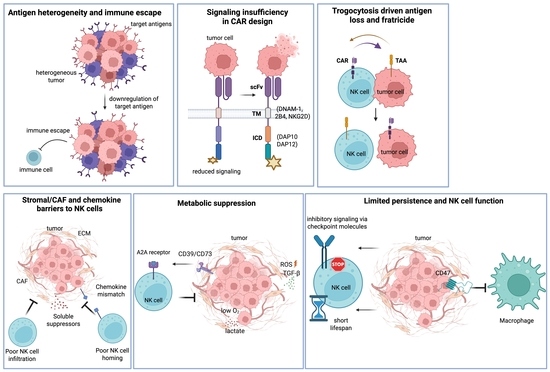
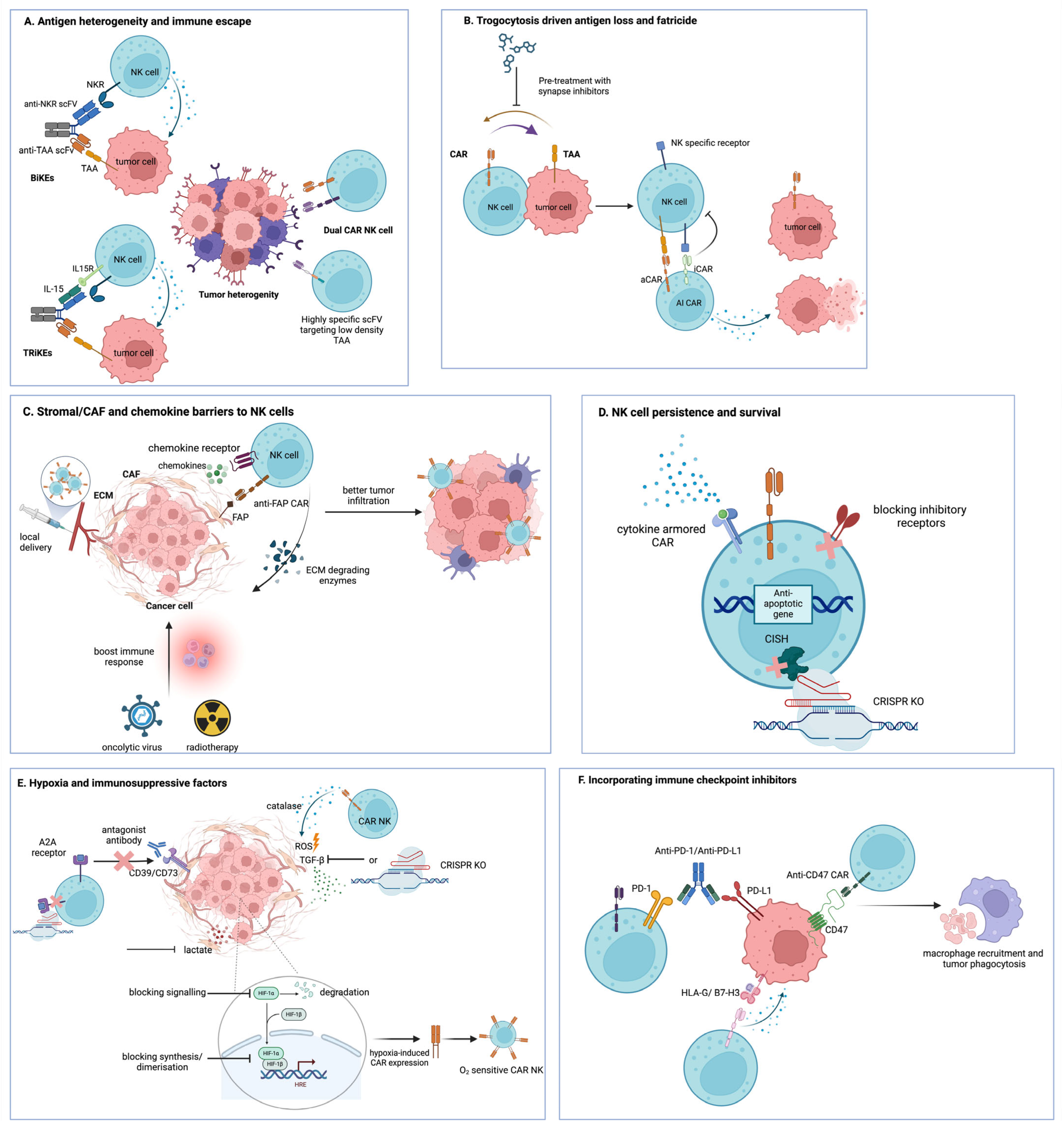
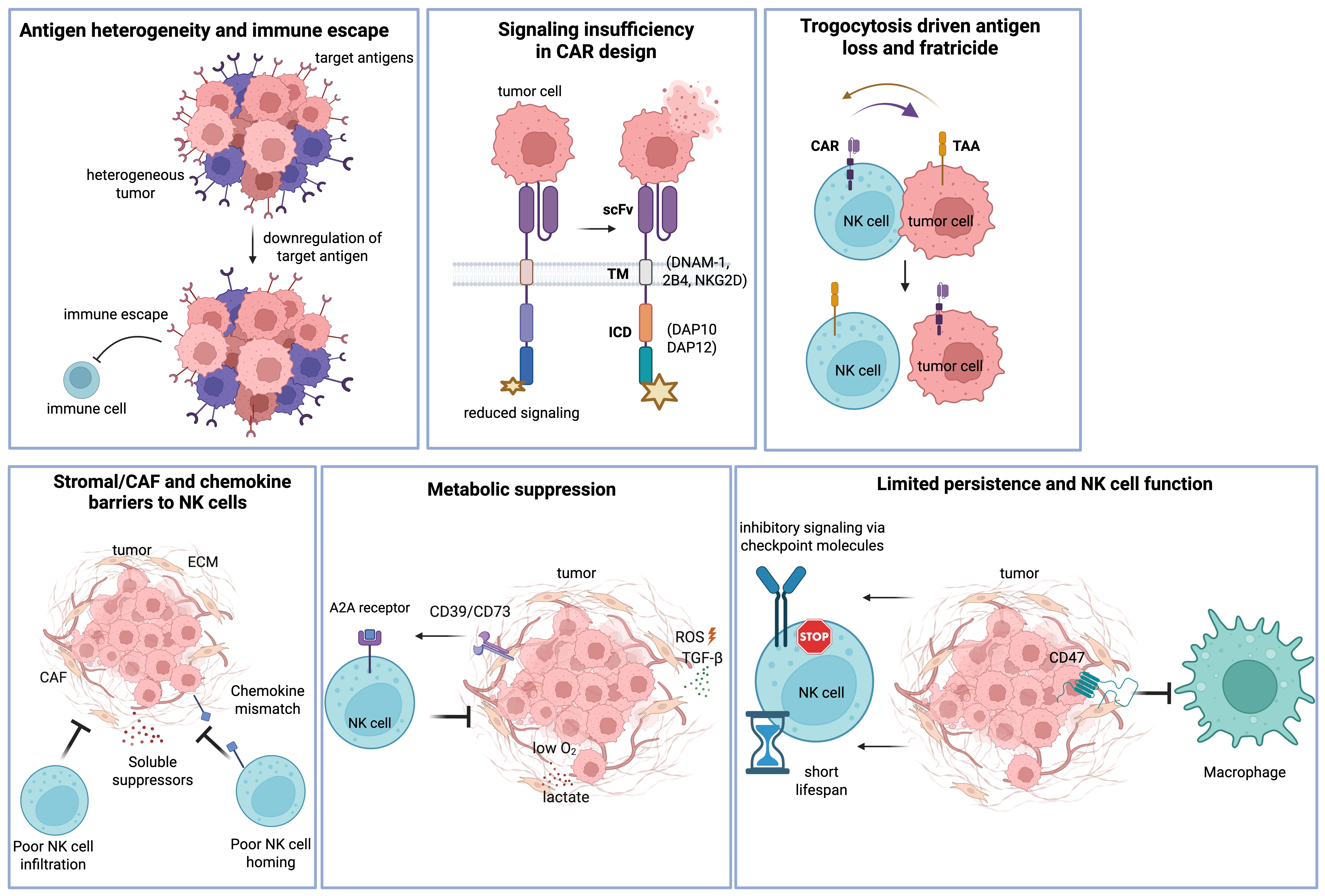
Chimeric antigen receptor (CAR)-based immunotherapy has shown considerable promise in cancer treatment by redirecting immune effector cells to recognize and eliminate tumor cells in an antigen-specific manner. While CAR-T cells bearing tumor-specific CARs have shown remarkable success in treating some hematological malignancies, their clinical application is limited by cytokine release syndrome, neurotoxicity, and graft-versus-host disease. In contrast, CAR–natural killer (NK) cells retain their multiple forms of natural anti-tumor capabilities without the pathological side effects and are compatible with allogeneic “off-the-shelf” application by not requiring prior activation signaling. Despite CAR-NK therapies showing promising results in hematological malignancies, they remain limited as effector cells against solid tumors. This is primarily due to the complex, immunosuppressive tumor microenvironment (TME), characterized by hypoxia, nutrient depletion, lactate-induced acidosis, and inhibitory soluble factors. Collectively, these significantly impair NK cell functionality. This review examines challenges faced by CAR-NK therapy in combating solid tumors and outlines strategies to reduce them. Barriers include tumor antigen heterogeneity, immune escape, trogocytosis-mediated fratricide, rigid structural and metabolic barriers in the TME, immunosuppressive factors, and defective homing and cell persistence of CAR-NK cells. We also emphasize the impact of combining other complementary immunotherapies (e.g., multi-specific immune engagers and immunomodulatory agents) that further strengthen CAR-NK efficacy. Finally, we highlight critical research gaps in CAR-NK therapy and propose that cutting-edge technologies are required for successful clinical translation in solid tumor treatment.
Keywords: CAR-NK cells; TME; antigen heterogeneity; immune escape CAR-NK cells; TME; antigen heterogeneity; immune escape
Graphical Abstract