From Zygote to Blastocyst—Molecular Aspects of Porcine Early Embryonic Development


Abstract
1. Introduction
2. Maternal-Effect Genes Controlling Early Developmental Events
2.1. Maternal Regulation
2.2. Maternal-Effect Genes and Their Degradation
3. Early Embryo Development and Genome Activation
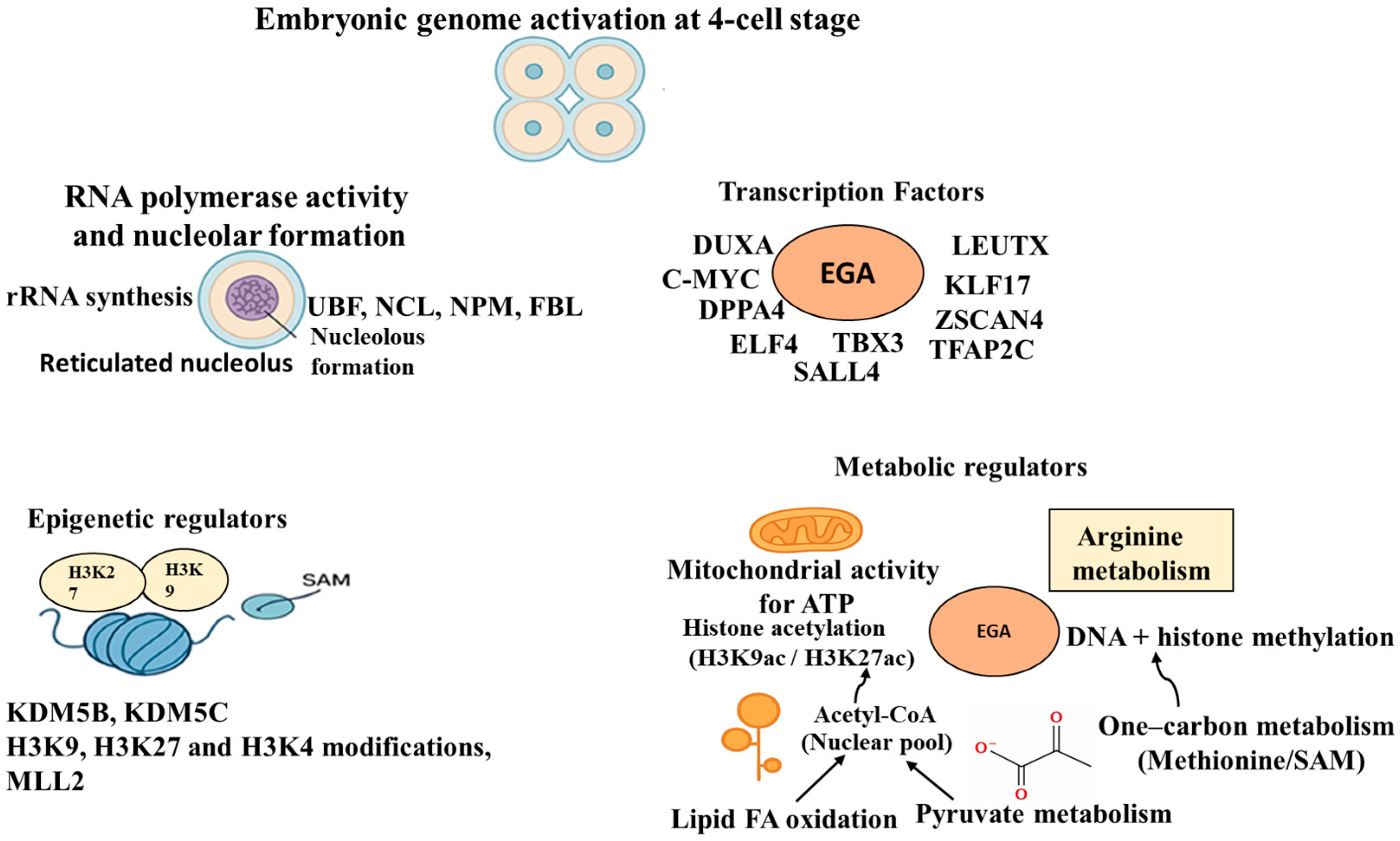
Embryonic Genome Activation
4. Epigenetic Modifications During EGA
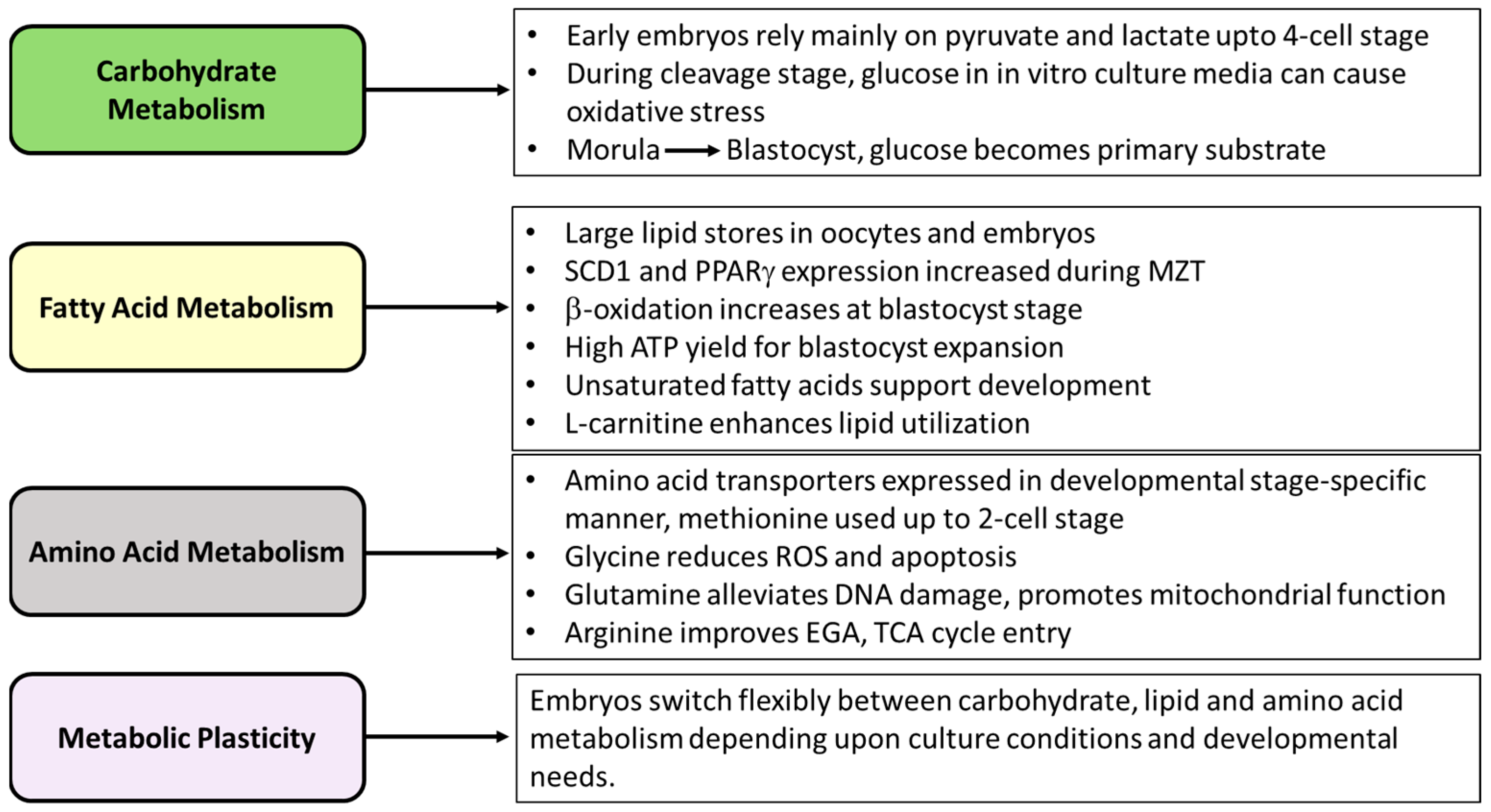
5. Embryo Metabolism
5.1. Carbohydrate Metabolism and Early Embryo Development
5.2. Fatty Acid Metabolism and Early Embryo Development
5.3. Amino Acid Metabolism and Embryo Development
6. DNA Damage and Repair in Early Porcine Embryos
Post-Translational Modifications
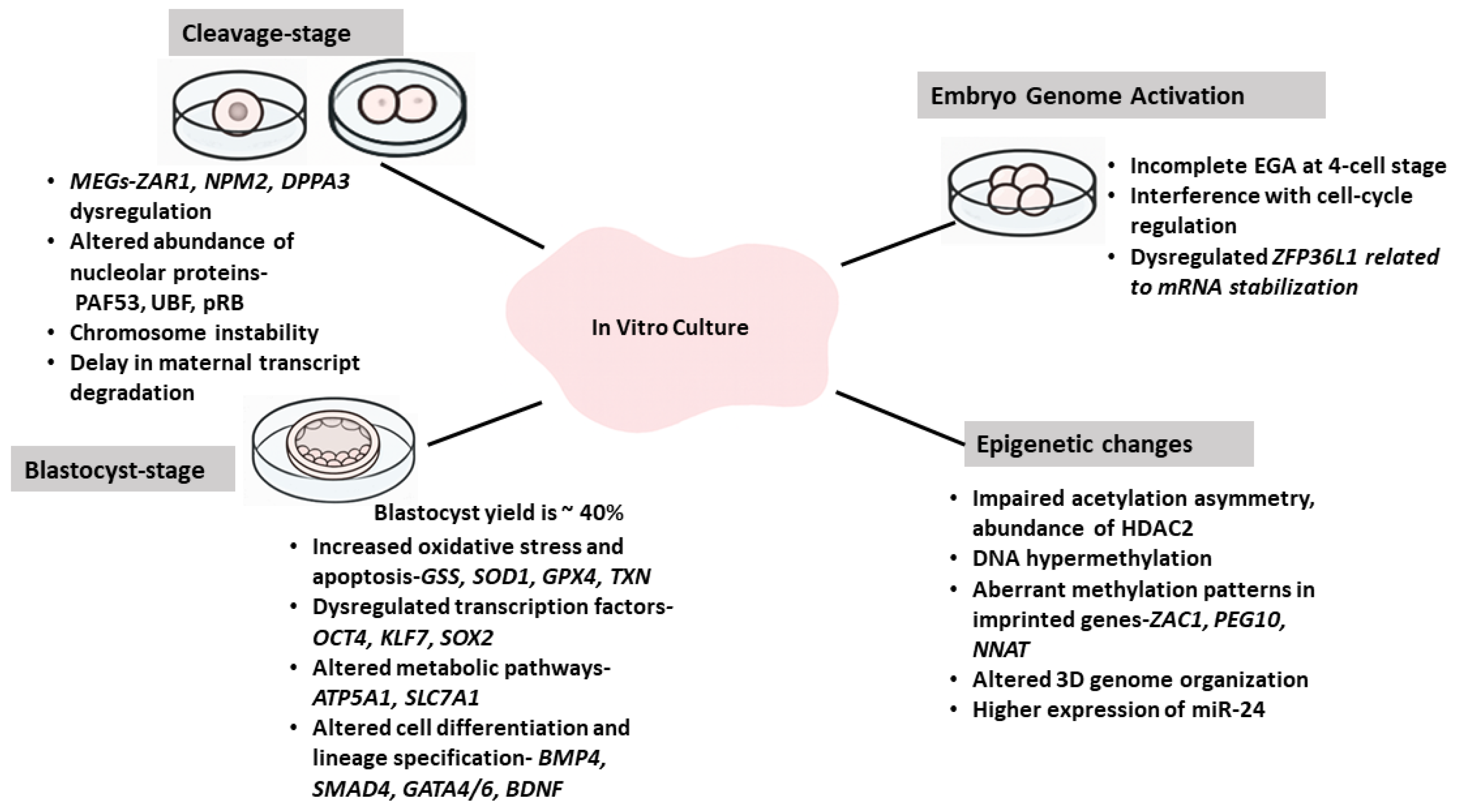
7. Effect of In Vitro Culture Conditions on the Molecular Changes in Embryo
7.1. Effect of In Vitro Culture on Maternal Transcripts, Embryonic Genome Activation, and Early Development
7.2. Effect of In Vitro Culture Conditions on Epigenetic Changes
8. Conclusions
Funding
Data Availability Statement
Conflicts of Interest
References
- Płusa, B.; Piliszek, A. Common principles of early mammalian embryo self-organisation. Development 2020, 147, dev183079. [Google Scholar] [CrossRef]
- Zhang, K.; Smith, G.W. Maternal control of early embryogenesis in mammals. Reprod. Fertil. Dev. 2015, 27, 880–896. [Google Scholar] [CrossRef]
- Mitchell, L.E. Maternal effect genes: Update and review of evidence for a link with birth defects. HGG Adv. 2021, 3, 100067. [Google Scholar] [CrossRef] [PubMed]
- Li, L.; Zheng, P.; Dean, J. Maternal control of early mouse development. Development 2010, 137, 859–870. [Google Scholar] [CrossRef] [PubMed]
- Latham, K.E. Preimplantation embryo gene expression: 56 years of discovery, and counting. Mol. Reprod. Dev. 2023, 90, 169–200. [Google Scholar] [CrossRef]
- Schulz, K.N.; Harrison, M.M. Mechanisms regulating zygotic genome activation. Nat. Rev. Genet. 2019, 20, 221–234. [Google Scholar] [CrossRef]
- Kobayashi, T.; Zhang, H.; Tang, W.W.C.; Irie, N.; Withey, S.; Klisch, D.; Sybirna, A.; Dietmann, S.; Contreras, D.A.; Webb, R.; et al. Principles of early human development and germ cell program from conserved model systems. Nature 2017, 546, 416–420. [Google Scholar] [CrossRef]
- Lunney, J.K.; Van Goor, A.; Walker, K.E.; Hailstock, T.; Franklin, J.; Dai, C. Importance of the pig as a human biomedical model. Sci. Transl. Med. 2021, 13, eabd5758. [Google Scholar] [CrossRef]
- Dang-Nguyen, T.Q.; Somfai, T.; Haraguchi, S.; Kikuchi, K.; Tajima, A.; Kanai, Y.; Nagai, T. In vitro production of porcine embryos: Current status, future perspectives and alternative applications. Anim. Sci. J. 2011, 82, 374–382. [Google Scholar] [CrossRef] [PubMed]
- Hunter, R.H. Oviduct function in pigs, with particular reference to the pathological condition of polyspermy. Mol. Reprod. Dev. 1991, 29, 385–391. [Google Scholar] [CrossRef]
- Wang, C.-R.; Ji, H.-W.; He, S.-Y.; Liu, R.-P.; Wang, X.-Q.; Wang, J.; Huang, C.-M.; Xu, Y.-N.; Li, Y.-H.; Kim, N.-H. Chrysoeriol improves in vitro porcine embryo development by reducing oxidative stress and autophagy. Vet. Sci. 2023, 10, 143. [Google Scholar] [CrossRef] [PubMed]
- Østrup, O.; Olbricht, G.; Østrup, E.; Hyttel, P.; Collas, P.; Cabot, R. RNA profiles of porcine embryos during genome activation reveal complex metabolic switch sensitive to in vitro conditions. PLoS ONE 2013, 8, e61547. [Google Scholar] [CrossRef][Green Version]
- Van der Weijden, V.A.; Schmidhauser, M.; Kurome, M.; Knubben, J.; Flöter, V.L.; Wolf, E.; Ulbrich, S.E. Transcriptome dynamics in early in vivo developing and in vitro produced porcine embryos. BMC Genom. 2021, 22, 139. [Google Scholar] [CrossRef]
- Fan, J.; Liu, C.; Zhao, Y.; Xu, Q.; Yin, Z.; Liu, Z.; Mu, Y. Single-Cell RNA Sequencing Reveals Differences in Chromatin Remodeling and Energy Metabolism Among In vivo-Developed, In vitro-Fertilized, and Parthenogenetically Activated Embryos from the Oocyte to 8-Cell Stages in Pigs. Animals 2024, 14, 465. [Google Scholar] [CrossRef] [PubMed]
- Li, X.; Zou, C.; Li, M.; Fang, C.; Li, K.; Liu, Z.; Li, C. Transcriptome Analysis of In vitro Fertilization and Parthenogenesis Activation During Early Embryonic Development in Pigs. Genes 2021, 12, 1461. [Google Scholar] [CrossRef]
- He, X.; Tan, C.; Li, Z.; Zhao, C.; Shi, J.; Zhou, R.; Wang, X.; Jiang, G.; Cai, G.; Liu, D.; et al. Characterization and Comparative Analyses of Transcriptomes of Cloned and In vivo Fertilized Porcine Pre-Implantation Embryos. Biol. Open 2019, 8, bio039917. [Google Scholar] [CrossRef]
- Gurdon, J.B. The developmental capacity of nuclei taken from intestinal epithelium cells of feeding tadpoles. Development 1962, 10, 622–640. [Google Scholar] [CrossRef]
- Heikinheimo, O.; Gibbons, W.E. The molecular mechanisms of oocyte maturation and early embryonic development are unveiling new insights into reproductive medicine. Mol. Hum. Reprod. 1998, 4, 745–756. [Google Scholar] [CrossRef]
- Pisani, L.F.; Ramelli, P.; Lazzari, B.; Braglia, S.; Ceciliani, F.; Mariani, P. Characterization of maternal antigen that embryos require (MATER/NLRP5) gene and protein in pig somatic tissues and germ cells. J. Reprod. Dev. 2010, 56, 41–48. [Google Scholar] [CrossRef] [PubMed][Green Version]
- Memili, E.; First, N.L. Zygotic and embryonic gene expression in cow: A review of timing and mechanisms of early gene expression as compared with other species. Zygote 2000, 8, 87–96. [Google Scholar] [CrossRef]
- Thelie, A.; Papillier, P.; Perreau, C.; Uzbekova, S.; Hennequet-Antier, C.; Dalbies-Tran, R. Regulation of bovine oocyte-specific transcripts during in vitro oocyte maturation and after maternal embryonic transition analyzed using a transcriptome approach. Mol. Reprod. Dev. 2009, 76, 773–782. [Google Scholar] [CrossRef]
- Zhao, L.W.; Fan, H.Y. Revisiting poly(A)-binding proteins: Multifaceted regulators during gametogenesis and early embryogenesis. Bioessays 2021, 43, e2000335. [Google Scholar] [CrossRef]
- Tadros, W.; Lipshitz, H.D. The maternal-to-zygotic transition: A play in two acts. Development 2009, 136, 3033–3042. [Google Scholar] [CrossRef] [PubMed]
- Esposito, G.; Vitale, A.M.; Leijten, F.P.; Strik, A.M.; Koonen-Reemst, A.M.; Yurttas, P.; Robben, T.J.; Coonrod, S.; Gossen, J.A. Peptidylarginine deiminase (PAD) 6 is essential for oocyte cytoskeletal sheet formation and female fertility. Mol. Cell. Endocrinol. 2007, 273, 25–31. [Google Scholar] [CrossRef] [PubMed]
- Kim, K.H.; Lee, K.A. Maternal effect genes: Findings and effects on mouse embryo development. Clin. Exp. Reprod. Med. 2014, 41, 47–61. [Google Scholar] [CrossRef]
- Tong, Z.B.; Gold, L.; Pfeifer, K.E.; Dorward, H.; Lee, E.; Bondy, C.A.; Dean, J.; Nelson, L.M. Mater, a maternal effect gene required for early embryonic development in mice. Nat. Genet. 2000, 26, 267–268. [Google Scholar] [CrossRef] [PubMed]
- Zhang, D.X.; Li, X.P.; Sun, S.C.; Shen, X.H.; Cui, X.S.; Kim, N.H. Involvement of ER-calreticulin-Ca2⁺ signaling in the regulation of porcine oocyte meiotic maturation and maternal gene expression. Mol. Reprod. Dev. 2010, 77, 462–471. [Google Scholar] [CrossRef]
- Uzbekova, S.; Roy-Sabau, M.; Dalbiès-Tran, R.; Perreau, C.; Papillier, P.; Mompart, F.; Thelie, A.; Pennetier, S.; Cognie, J.; Cadoret, V.; et al. Zygote arrest 1 gene in pig, cattle and human: Evidence of different transcript variants in male and female germ cells. Reprod. Biol. Endocrinol. 2006, 4, 12. [Google Scholar] [CrossRef]
- Peng, H.; Liu, F.; Li, W.; Zhang, W. Knockdown of NLRP5 arrests early embryogenesis in sows. Anim. Reprod. Sci. 2015, 163, 151–156. [Google Scholar] [CrossRef]
- Ding, B.; Gao, D.; Wang, X.; Liu, L.; Sun, J.; Liang, M.; Wu, F.; Liu, Y.; Zhang, Y.; Li, X.; et al. Maternal DDB1 regulates apoptosis and lineage differentiation in porcine preimplantation embryos. Reprod. Fertil. Dev. 2022, 34, 844–854. [Google Scholar] [CrossRef]
- Zheng, Z.; Zhao, M.H.; Jia, J.L.; Heo, Y.T.; Cui, X.S.; Oh, J.S.; Kim, N.H. Knockdown of maternal homeobox transcription factor SEBOX gene impaired early embryonic development in porcine parthenotes. J. Reprod. Dev. 2013, 59, 557–562. [Google Scholar] [CrossRef][Green Version]
- Cao, Z.; Xu, T.; Tong, X.; Wang, Y.; Zhang, D.; Gao, D.; Zhang, L.; Ning, W.; Qi, X.; Ma, Y.; et al. Maternal Yes-associated protein participates in porcine blastocyst development via modulation of trophectoderm epithelium barrier function. Cells 2019, 8, 1606. [Google Scholar] [CrossRef]
- Jimenez, R.; Melo, E.O.; Davydenko, O.; Ma, J.; Mainigi, M.; Fränke, V.; Schultz, R.M. Maternal SIN3A regulates reprogramming of gene expression during mouse preimplantation development. Biol. Reprod. 2015, 93, 89. [Google Scholar] [CrossRef]
- Luo, L.; Dang, Y.; Shi, Y.; Zhao, P.; Zhang, Y.; Zhang, K. SIN3A Regulates Porcine Early Embryonic Development by Modulating CCNB1 Expression. Front. Cell Dev. Biol. 2021, 9, 604232. [Google Scholar] [CrossRef] [PubMed]
- Sha, Q.Q.; Zhu, Y.Z.; Li, S.; Jiang, Y.; Chen, L.; Sun, X.H.; Shen, L.; Ou, X.H.; Fan, H.Y. Characterization of zygotic genome activation-dependent maternal mRNA clearance in mouse. Nucleic Acids Res. 2020, 48, 879–894. [Google Scholar] [CrossRef]
- Zhou, K.; Wang, T.; Zhang, J.; Zhang, J.; Liu, X.; Guan, J.; Su, P.; Wu, L.; Yang, X.; Hu, R.; et al. LEUTX Regulates Porcine Embryonic Genome Activation in Somatic Cell Nuclear Transfer Embryos. Cell Rep. 2024, 43, 114372. [Google Scholar] [CrossRef]
- Kinterova, V.; Rosenbaum Bartkova, A.; Afrin, S.; Kanka, J.; Susor, A.; Procházka, R.; Törösváry, T. The timing of maternal protein degradation during mammalian preimplantation development is species-specific. Reproduction 2025, 170, e250007. [Google Scholar] [CrossRef] [PubMed]
- Dobbs, K.B.; Spollen, W.G.; Springer, G.; Prather, R.S. The role of cytoplasmic polyadenylation element sequence on mRNA abundance during porcine embryogenesis and parthenogenetic development. Mol. Reprod. Dev. 2010, 77, 699–709. [Google Scholar] [CrossRef] [PubMed]
- Sha, Q.Q.; Zheng, W.; Wu, Y.W. Dynamics and clinical relevance of maternal mRNA clearance during the oocyte-to-embryo transition in humans. Nat. Commun. 2020, 11, 4917. [Google Scholar] [CrossRef]
- Emura, N.; Saito, Y.; Miura, R.; Sawai, K. Effect of downregulating the Hippo pathway members YAP1 and LATS2 transcripts on early development and gene expression involved in differentiation in porcine embryos. Cell. Reprogramming 2020, 22, 62–70. [Google Scholar] [CrossRef]
- Sutovsky, P.; Manandhar, G.; Laurincik, J.; Letko, J.; Caamaño, J.N.; Day, B.N.; Lai, L.; Prather, R.S.; Sharpe-Timms, K.L.; Zimmer, R.; et al. Expression and proteasomal degradation of the major vault protein (MVP) in mammalian oocytes and zygotes. Reproduction 2005, 129, 269–282. [Google Scholar] [CrossRef]
- Xu, Y.N.; Shen, X.H.; Lee, S.E.; Kwon, J.S.; Kim, D.J.; Heo, Y.T.; Cui, X.S.; Kim, N.H. Autophagy influences maternal mRNA degradation and apoptosis in porcine parthenotes developing in vitro. J. Reprod. Dev. 2012, 58, 576–584. [Google Scholar] [CrossRef]
- Chi, D.; Zeng, Y.; Xu, M.; Si, L.; Qu, X.; Liu, H.; Li, J. LC3-dependent autophagy in pig 2-cell cloned embryos could influence the degradation of maternal mRNA and the regulation of epigenetic modification. Cell Reprogramming 2017, 19, 354–362. [Google Scholar] [CrossRef]
- Wakai, T.; Vanderheyden, V.; Fissore, R.A. Ca2⁺ signaling during mammalian fertilization: Requirements, players, and adaptations. Cold Spring Harb. Perspect. Biol. 2011, 3, a006767. [Google Scholar] [CrossRef] [PubMed]
- Tatemoto, H.; Muto, N. Mitogen-activated protein kinase regulates normal transition from metaphase to interphase following parthenogenetic activation in porcine oocytes. Zygote 2001, 9, 15–23. [Google Scholar] [CrossRef]
- Brantley, S.E.; Di Talia, S. Cell cycle control during early embryogenesis. Development 2021, 148, dev193128. [Google Scholar] [CrossRef] [PubMed]
- Prather, R.S. Nuclear control of early embryonic development in domestic pigs. J. Reprod. Fertil. 1993, 48, 17–29. [Google Scholar] [CrossRef]
- Bonk, A.J.; Anderson, J.E.; Abeydeera, L.R.; Day, B.N.; Prather, R.S. Cyclin B1 levels in the porcine 4-cell stage embryo. Zygote 2002, 10, 79–84. [Google Scholar] [CrossRef] [PubMed]
- Anderson, J.E.; Matteri, R.L.; Abeydeera, L.R.; Day, B.N.; Prather, R.S. Cyclin B1 transcript quantitation over the maternal to zygotic transition in both in vivo- and in vitro-derived 4-cell porcine embryos. Biol. Reprod. 1999, 61, 1460–1467. [Google Scholar] [CrossRef][Green Version]
- Anderson, J.E.; Matteri, R.L.; Abeydeera, L.R.; Day, B.N.; Prather, R.S. Degradation of maternal Cdc25c during the maternal to zygotic transition is dependent upon embryonic transcription. Mol. Reprod. Dev. 2001, 60, 181–188. [Google Scholar] [CrossRef]
- Booth, P.J.; Watson, T.J.; Leese, H.J. Prediction of porcine blastocyst formation using morphological, kinetic, and amino acid depletion and appearance criteria determined during the early cleavage of in vitro-produced embryos. Biol. Reprod. 2007, 77, 765–779. [Google Scholar] [CrossRef]
- Isom, C.S.; Li, R.F.; Whitworth, K.M.; Prather, R.S. Timing of first embryonic cleavage is a positive indicator of the in vitro developmental potential of porcine embryos derived from in vitro fertilization, somatic cell nuclear transfer, and parthenogenesis. Mol. Reprod. Dev. 2012, 79, 197–207. [Google Scholar] [CrossRef]
- Song, X.; Li, T.; Xiong, X.; Shan, H.; Feng, T.; Cui, K.; Shi, D.; Liu, Q.; Li, Z. RNA-Seq reveals the underlying molecular mechanism of first cleavage time affecting porcine embryo development. Genes 2022, 13, 1251. [Google Scholar] [CrossRef] [PubMed]
- Zhang, D.X.; Cui, X.S.; Kim, N.H. Molecular characterization and polyadenylation-regulated expression of cyclin B1 and Cdc2 in porcine oocytes and early parthenotes. Mol. Reprod. Dev. 2010, 77, 38–50. [Google Scholar] [CrossRef]
- Heikinheimo, O.; Lanzendorf, S.; Baka, S.; Gibbons, W.E. Cell cycle genes c-mos and cyclin B1 are expressed in a specific pattern in human oocytes and pre-implantation embryos. Hum. Reprod. 1995, 10, 699–707. [Google Scholar] [CrossRef]
- Wang, H.; Kim, N.H. CDK2 is required for the DNA damage response during porcine early embryonic development. Biol. Reprod. 2016, 95, 31. [Google Scholar] [CrossRef]
- Latham, K.E.; Schultz, R.M. Embryonic genome activation. Front. Biosci. 2001, 6, D748–D759. [Google Scholar] [CrossRef]
- Garcia-Canovas, M.; Parrilla, I.; Cuello, C.; Gil, M.A.; Martinez, E.A. Swine in vitro embryo production: Potential, challenges, and advances. Anim. Reprod. Sci. 2024, 270, 107600. [Google Scholar] [CrossRef] [PubMed]
- Hyttel, P.; Laurincik, J.; Rosenkranz, C.H.; Rath, D.; Niemann, H.; Ochs, R.L.; Schellander, K. Nucleolar proteins and ultrastructure in preimplantation porcine embryos developed in vivo. Biol. Reprod. 2000, 63, 1848–1856. [Google Scholar] [CrossRef]
- Maddox-Hyttel, P.; Svarcova, O.; Laurincik, J. Ribosomal RNA and nucleolar proteins from the oocyte are to some degree used for embryonic nucleolar formation in cattle and pig. Theriogenology 2007, 68, S63–S70. [Google Scholar] [CrossRef] [PubMed]
- Viuff, D.; Greve, T.; Holm, P.; Callesen, H.; Hyttel, P.; Thomsen, P.D. Activation of the ribosomal RNA genes late in the third cell cycle of porcine embryos. Biol. Reprod. 2002, 66, 629–634. [Google Scholar] [CrossRef]
- Morovic, M.; Østrup, O.; Strejcek, F.; Benc, M.; Murin, M.; Jedlickova, K.; Bartkova, A.; Lucas-Hahn, A.; Pendovski, L.; Laurincik, J. Maternally inherited rRNA triggers de novo nucleolus formation in porcine embryos. Zygote 2018, 26, 395–402. [Google Scholar] [CrossRef]
- Bjerregaard, B.; Pedersen, H.G.; Jakobsen, A.S.; Rickords, L.F.; Lai, L.; Cheong, H.T.; Samuel, M.; Prather, R.S.; Strejček, F.; Rasmussen, Z.R.; et al. Activation of ribosomal RNA genes in porcine embryos produced in vitro or by somatic cell nuclear transfer. Mol. Reprod. Dev. 2007, 74, 35–41. [Google Scholar] [CrossRef] [PubMed]
- Fulka, H.; Rychtářová, J.; Loi, P. The nucleolus-like and precursor bodies of mammalian oocytes and embryos and their possible role in post-fertilization centromere remodelling. Biochem. Soc. Trans. 2020, 48, 581–593. [Google Scholar] [CrossRef] [PubMed]
- Tománek, M.; Kopečný, V.; Kaňka, J. Genome reactivation in developing early pig embryos: An ultrastructural and autoradiographic analysis. Anat. Embryol. 1989, 180, 309–316. [Google Scholar] [CrossRef]
- Oqani, R.K.; Zhang, J.Y.; Lee, M.G.; Diao, Y.F.; Jin, D.I. Phosphorylation status of RNA Polymerase II carboxyl-terminal domain in porcine oocytes and early embryos. Asian-Australas. J. Anim. Sci. 2012, 25, 789–793. [Google Scholar] [CrossRef]
- Du, Z.Q.; Liang, H.; Liu, X.M.; Liu, Y.H.; Wang, C.; Yang, C.X. Single cell RNA-seq reveals genes vital to in vitro fertilized embryos and parthenotes in pigs. Sci. Rep. 2021, 11, 14393. [Google Scholar] [CrossRef]
- Magnani, L.; Johnson, C.M.; Cabot, R.A. Expression of eukaryotic elongation initiation factor 1A differentially marks zygotic genome activation in biparental and parthenogenetic porcine embryos and correlates with in vitro developmental potential. Reprod. Fertil. Dev. 2008, 20, 818–825. [Google Scholar] [CrossRef] [PubMed]
- Li, X.-H.; Sun, M.-H.; Jiang, W.-J.; Zhou, D.; Lee, S.-H.; Heo, G.; Chen, Z.; Cui, X.-S. ZSCAN4 regulates zygotic genome activation and telomere elongation in porcine parthenogenetic embryos. Int. J. Mol. Sci. 2023, 24, 12121. [Google Scholar] [CrossRef]
- Zhai, Y.; Yu, H.; An, X.; Zhang, Z.; Zhang, M.; Zhang, S.; Li, Q.; Li, Z. Profiling the transcriptomic signatures and identifying the patterns of zygotic genome activation—A comparative analysis between early porcine embryos and their counterparts in other three mammalian species. BMC Genom. 2022, 23, 772. [Google Scholar] [CrossRef]
- Zhang, T.; Zheng, Y.; Kuang, T.; Yang, L.; Jiang, H.; Wang, H.; Zhao, Y.; Han, R.; Che, D. Arginine regulates zygotic genome activation in porcine embryos under nutrition restriction. Front. Vet. Sci. 2022, 9, 921406. [Google Scholar] [CrossRef]
- De Iaco, A.; Planet, E.; Coluccio, A.; Verp, S.; Duc, J.; Trono, D. DUX-family transcription factors regulate zygotic genome activation in placental mammals. Nat. Genet. 2017, 49, 941–945. [Google Scholar] [CrossRef] [PubMed]
- Vuoristo, S.; Bhagat, S.; Hydén-Granskog, C.; Yoshihara, M.; Gawriyski, L.; Jouhilahti, E.M.; Ranga, V.; Tamirat, M.; Huhtala, M.; Kirjanov, I.; et al. DUX4 is a multifunctional factor priming human embryonic genome activation. iScience 2022, 25, 104137. [Google Scholar] [CrossRef] [PubMed]
- Shi, Z.; Yan, Y.; Zhu, R.; Zhu, X.; Hu, K.; Yue, Y.; Xu, W.; Xuan, M.; Gan, X.; Yang, Z.; et al. DUXA regulates the early development of porcine cloned embryos. Theriogenology 2025, 247, 117563. [Google Scholar] [CrossRef] [PubMed]
- Oqani, R.K.; Lin, T.; Lee, J.E.; Choi, K.M.; Shin, H.Y.; Jin, D.I. P-TEFb kinase activity is essential for global transcription, resumption of meiosis, and embryonic genome activation in pig. PLoS ONE 2016, 11, e0152254. [Google Scholar] [CrossRef]
- Shi, L.; Zhai, Y.; Zhao, Y.; Kong, X.; Zhang, D.; Yu, H.; Li, Z. ELF4 is critical to zygotic gene activation and epigenetic reprogramming during early embryonic development in pigs. Front. Vet. Sci. 2022, 9, 954601. [Google Scholar] [CrossRef]
- Li, X.H.; Lee, S.H.; Kim, J.D.; Lee, G.H.; Sim, J.M.; Cui, X.S. TBX3 is essential for zygotic genome activation and embryonic development in pigs. Microsc. Microanal. 2025, 31, ozae123. [Google Scholar] [CrossRef] [PubMed]
- Sun, M.H.; Zhan, C.L.; Li, X.H.; Lee, S.H.; Cui, X.S. Transcriptome analysis of the effects of high temperature on zygotic genome activation in porcine embryos. Sci. Rep. 2024, 14, 21849. [Google Scholar] [CrossRef]
- Zhou, W.; Niu, Y.J.; Nie, Z.W.; Kim, J.Y.; Xu, Y.N.; Yan, C.G.; Cui, X.S. Nuclear accumulation of pyruvate dehydrogenase alpha 1 promotes histone acetylation and is essential for zygotic genome activation in porcine embryos. Biochim. Biophys. Acta Mol. Cell Res. 2020, 1867, 118648. [Google Scholar] [CrossRef]
- Li, X.H.; Lee, S.H.; Lu, Q.Y.; Zhan, C.L.; Lee, G.H.; Kim, J.D.; Sim, J.M.; Song, H.J.; Cui, X.S. MAT2A is essential for zygotic genome activation by maintaining histone methylation in porcine embryos. Theriogenology 2024, 230, 81–90. [Google Scholar] [CrossRef]
- Xiang, J.; Xing, Y.; Long, C.; Hou, D.; Liu, F.; Zhang, Y.; Lu, Z.; Wang, J.; Zuo, Y.; Li, X. Fatty acid metabolism as an indicator for the maternal-to-zygotic transition in porcine IVF embryos revealed by RNA sequencing. Theriogenology 2020, 151, 128–136. [Google Scholar] [CrossRef]
- Zhou, W.; Nie, Z.W.; Zhou, D.J.; Cui, X.S. Acetyl-CoA synthases are essential for maintaining histone acetylation under metabolic stress during zygotic genome activation in pigs. J. Cell Physiol. 2021, 236, 6948–6962. [Google Scholar] [CrossRef]
- Eckersley-Maslin, M.A.; Alda-Catalinas, C.; Reik, W. Dynamics of the epigenetic landscape during the maternal-to-zygotic transition. Nat. Rev. Mol. Cell Biol. 2018, 19, 436–450. [Google Scholar] [CrossRef] [PubMed]
- Lindeman, L.C.; Andersen, I.S.; Reiner, A.H.; Li, N.; Aanes, H.; Østrup, O.; Winata, C.; Mathavan, S.; Müller, F.; Aleström, P.; et al. Prepatterning of developmental gene expression by modified histones before zygotic genome activation. Dev. Cell 2011, 21, 993–1004. [Google Scholar] [CrossRef] [PubMed]
- Park, K.E.; Magnani, L.; Cabot, R.A. Differential remodeling of mono- and trimethylated H3K27 during porcine embryo development. Mol. Reprod. Dev. 2009, 76, 1033–1042. [Google Scholar] [CrossRef]
- Bogliotti, Y.S.; Ross, P.J. Mechanisms of histone H3 lysine 27 trimethylation remodeling during early mammalian development. Epigenetics 2012, 7, 976–981. [Google Scholar] [CrossRef]
- Marinho, L.S.R.; Rissi, V.B.; Lindquist, A.G.; Seneda, M.M.; Bordignon, V. Acetylation and methylation profiles of H3K27 in porcine embryos cultured in vitro. Zygote 2017, 25, 575–582. [Google Scholar] [CrossRef]
- Gao, Y.; Hyttel, P.; Hall, V.J. Regulation of H3K27me3 and H3K4me3 during early porcine embryonic development. Mol. Reprod. Dev. 2010, 77, 540–549. [Google Scholar] [CrossRef] [PubMed]
- Liu, X.; Wang, C.; Liu, W.; Li, J.; Li, C.; Kou, X.; Chen, J.; Zhao, Y.; Gao, H.; Wang, H.; et al. Distinct features of H3K4me3 and H3K27me3 chromatin domains in pre-implantation embryos. Nature 2016, 537, 558–562. [Google Scholar] [CrossRef]
- Cai, Q.; Niu, H.; Zhang, B.; Shi, X.; Liao, M.; Chen, Z.; Mo, D.; He, Z.; Chen, Y.; Cong, P. Effect of EZH2 knockdown on preimplantation development of porcine parthenogenetic embryos. Theriogenology 2019, 132, 95–105. [Google Scholar] [CrossRef]
- Glanzner, W.G.; Wachter, A.; Coutinho, A.R.; Albornoz, M.S.; Duggavathi, R.; Gonçalves, P.B.; Bordignon, V. Altered expression of BRG1 and histone demethylases, and aberrant H3K4 methylation in less developmentally competent embryos at the time of embryonic genome activation. Mol. Reprod. Dev. 2017, 84, 19–29. [Google Scholar] [CrossRef]
- Glanzner, W.G.; Gutierrez, K.; Rissi, V.B.; de Macedo, M.P.; Lopez, R.; Currin, L.; Dicks, N.; Baldassarre, H.; Agellon, L.B.; Bordignon, V. Histone lysine demethylases KDM5B and KDM5C modulate genome activation and stability in porcine embryos. Front. Cell Dev. Biol. 2020, 8, 151. [Google Scholar] [CrossRef] [PubMed]
- Huang, J.; Zhang, H.; Wang, X.; Dobbs, K.B.; Yao, J.; Qin, G.; Whitworth, K.; Walters, E.M.; Prather, R.S.; Zhao, J. Impairment of preimplantation porcine embryo development by histone demethylase KDM5B knockdown through disturbance of bivalent H3K4me3/H3K27me3 modifications. Biol. Reprod. 2015, 92, 72. [Google Scholar] [CrossRef]
- Zhang, D.; Wu, D.; Zhang, S.; Zhang, M.; Zhou, Y.; An, X.; Li, Q.; Li, Z. Transcription factor AP-2 gamma affects porcine early embryo development by regulating epigenetic modification. Reprod. Biomed. Online 2024, 49, 103772. [Google Scholar] [CrossRef]
- Bu, G.; Zhu, W.; Liu, X.; Zhang, J.; Yu, L.; Zhou, K.; Wang, S.; Li, Z.; Fan, Z.; Wang, T.; et al. Coordination of zygotic genome activation entry and exit by H3K4me3 and H3K27me3 in porcine early embryos. Genome Res. 2022, 32, 1487–1501. [Google Scholar] [CrossRef]
- Dahl, J.A.; Jung, I.; Aanes, H.; Greggains, G.D.; Manaf, A.; Lerdrup, M.; Li, G.; Kuan, S.; Li, B.; Lee, A.Y.; et al. Broad histone H3K4me3 domains in mouse oocytes modulate maternal-to-zygotic transition. Nature 2016, 537, 548–552. [Google Scholar] [CrossRef]
- Xia, W.; Xu, J.; Yu, G.; Yao, G.; Xu, K.; Ma, X.; Zhang, N.; Liu, B.; Li, T.; Lin, Z.; et al. Resetting histone modifications during human parental-to-zygotic transition. Science 2019, 365, 353–360. [Google Scholar] [CrossRef]
- Skuland, T.; Fosslie, M.; Khodeer, S.; Alemu, E.A.; Johansen, J.V.; Indahl, M.; Castroviejo, B.C.; Li, Y.; Lerdrup, M.; Dahl, J.A.; et al. Broad H3K4me3 domains support oocyte genome silencing and maturation but are dispensable for repression in early embryos. Development 2025, 152, dev204638. [Google Scholar] [CrossRef]
- Dang, Y.; Luo, L.; Shi, Y.; Li, S.; Wang, S.; Zhang, K. KDM5-mediated redistribution of H3K4me3 is required for oocyte-to-embryonic transition in cattle. Biol. Reprod. 2022, 106, 1059–1071. [Google Scholar] [CrossRef] [PubMed]
- Zhao, M.H.; Liang, S.; Kim, N.H.; Cui, X.S. MLL2 is essential for porcine embryo development in vitro. In vitro Cell Dev. Biol. Anim. 2016, 52, 699–704. [Google Scholar] [CrossRef] [PubMed]
- Zheng, H.; Xie, W. The role of 3D genome organization in development and cell differentiation. Nat. Rev. Mol. Cell Biol. 2019, 20, 535–550. [Google Scholar] [CrossRef]
- Bultman, S.J.; Gebuhr, T.C.; Pan, H.; Svoboda, P.; Schultz, R.M.; Magnuson, T. Maternal BRG1 regulates zygotic genome activation in the mouse. Genes Dev. 2006, 20, 1744–1754. [Google Scholar] [CrossRef] [PubMed]
- Tseng, Y.C.; Cabot, B.; Cabot, R.A. ARID1A, a component of SWI/SNF chromatin remodeling complexes, is required for porcine embryo development. Mol. Reprod. Dev. 2017, 84, 1250–1256. [Google Scholar] [CrossRef] [PubMed]
- Chen, Z.; Chen, X. A tremendous reorganization journey for the 3D chromatin structure from gametes to embryos. Genes 2022, 13, 1864. [Google Scholar] [CrossRef] [PubMed]
- Razin, S.V.; Ulianov, S.V. Gene functioning and storage within a folded genome. Cell Mol. Biol. Lett. 2017, 22, 18. [Google Scholar] [CrossRef]
- Flyamer, I.M.; Gassler, J.; Imakaev, M.; Brandão, H.B.; Ulianov, S.V.; Abdennur, N.; Razin, S.V.; Mirny, L.A.; Tachibana-Konwalski, K. Single-nucleus Hi-C reveals unique chromatin reorganization at oocyte-to-zygote transition. Nature 2017, 544, 110–114. [Google Scholar] [CrossRef]
- Chen, X.; Ke, Y.; Wu, K.; Zhao, H.; Sun, Y.; Gao, L.; Liu, Z.; Zhang, J.; Tao, W.; Hou, Z.; et al. Key role for CTCF in establishing chromatin structure in human embryos. Nature 2019, 576, 306–310. [Google Scholar] [CrossRef]
- Ing-Simmons, E.; Rigau, M.; Vaquerizas, J.M. Emerging mechanisms and dynamics of three-dimensional genome organisation at zygotic genome activation. Curr. Opin. Cell Biol. 2022, 74, 37–46. [Google Scholar] [CrossRef]
- Ke, Y.; Xu, Y.; Chen, X.; Feng, S.; Liu, Z.; Sun, Y.; Yao, X.; Li, F.; Zhu, W.; Gao, L.; et al. 3D Chromatin Structures of Mature Gametes and Structural Reprogramming during Mammalian Embryogenesis. Cell 2017, 170, 367–381.e20. [Google Scholar] [CrossRef]
- Silva, I.T.G.; Fernandes, V.; Souza, C.; Treptow, W.; Santos, G.M. Biophysical studies of cholesterol effects on chromatin. J. Lipid Res. 2017, 58, 934–940. [Google Scholar] [CrossRef]
- Li, F.; Wang, D.; Song, R.; Cao, C.; Zhang, Z.; Wang, Y.; Li, X.; Huang, J.; Liu, Q.; Hou, N.; et al. The asynchronous establishment of chromatin 3D architecture between in vitro fertilized and uniparental preimplantation pig embryos. Genome Biol. 2020, 21, 203. [Google Scholar] [CrossRef]
- Wang, J.; Li, X.; Wang, L.; Li, J.; Zhao, Y.; Bou, G.; Li, Y.; Jiao, G.; Shen, X.; Wei, R.; et al. A novel long intergenic noncoding RNA indispensable for the cleavage of mouse two-cell embryos. EMBO Rep. 2016, 17, 1452–1470. [Google Scholar] [CrossRef]
- Zhang, D.; Zhou, Y.; Huang, R.; Zhai, Y.; Wu, D.; An, X.; Zhang, S.; Shi, L.; Li, Q.; Kong, X.; et al. LncRNA affects epigenetic reprogramming of porcine embryo development by regulating global epigenetic modification and the downstream gene SIN3A. Front. Physiol. 2022, 13, 971965. [Google Scholar] [CrossRef]
- Wei, R.; Yue, Y.; Wu, Y.; Zhang, C.; Jin, J.X.; Liu, Z.; Wang, J. A long noncoding RNA with enhancer-like function in pig zygotic genome activation. J. Mol. Cell Biol. 2025, 17, mjae061. [Google Scholar] [CrossRef] [PubMed]
- Brinster, R.L. A method for in vitro cultivation of mouse ova from two-cell to blastocyst. Exp. Cell Res. 1963, 32, 205–208. [Google Scholar] [CrossRef] [PubMed]
- Leese, H.J. Metabolism of the preimplantation embryo: 40 years on. Reproduction 2012, 143, 417–427. [Google Scholar] [CrossRef]
- Chen, P.R.; Redel, B.K.; Kerns, K.C.; Spate, L.D.; Prather, R.S. Challenges and considerations during in vitro production of porcine embryos. Cells 2021, 10, 2770. [Google Scholar] [CrossRef]
- Zhao, J.; Wang, W.; Zhang, L.; Zhang, J.; Sturmey, R.; Zhang, J. Dynamic metabolism during early mammalian embryogenesis. Development 2023, 150, dev202148. [Google Scholar] [CrossRef]
- Leese, H.J.; Baumann, C.G.; Brison, D.R.; McEvoy, T.G.; Sturmey, R.G. Metabolism of the viable mammalian embryo: Quietness revisited. Mol. Hum. Reprod. 2008, 14, 667–672. [Google Scholar] [CrossRef]
- Gardner, D.K.; Wale, P.L.; Collins, R.; Lane, M. Glucose consumption of single post-compaction human embryos is predictive of embryo sex and live birth outcome. Hum. Reprod. 2011, 26, 1981–1986. [Google Scholar] [CrossRef] [PubMed]
- Leese, H.J.; Brison, D.R.; Sturmey, R.G. The Quiet Embryo Hypothesis: 20 years on. Front. Physiol. 2022, 13, 899485. [Google Scholar] [CrossRef]
- Milazzotto, M.P.; Noonan, M.J.; de Almeida Monteiro Melo Ferraz, M. Mining RNAseq data reveals dynamic metaboloepigenetic profiles in human, mouse and bovine pre-implantation embryos. iScience 2022, 25, 103904. [Google Scholar] [CrossRef] [PubMed]
- Sharpley, M.S.; Chi, F.; Hoeve, J.T.; Banerjee, U. Metabolic plasticity drives development during mammalian embryogenesis. Dev. Cell 2021, 56, 2329–2347.e6. [Google Scholar] [CrossRef]
- Aoki, F.; Worrad, D.M.; Schultz, R.M. Regulation of transcriptional activity during the first and second cell cycles in the preimplantation mouse embryo. Dev. Biol. 1997, 181, 296–307. [Google Scholar] [CrossRef]
- Takahashi, Y.; First, N.L. In vitro development of bovine one-cell embryos: Influence of glucose, lactate, pyruvate, amino acids, and vitamins. Theriogenology 1992, 37, 963–978. [Google Scholar] [CrossRef]
- Swain, J.E.; Bormann, C.L.; Clark, S.G.; Walters, E.M.; Wheeler, M.B.; Krisher, R.L. Use of energy substrates by various stage preimplantation pig embryos produced in vivo and in vitro. Reproduction 2002, 123, 253–260. [Google Scholar] [CrossRef]
- Flood, M.R.; Wiebold, J.L. Glucose metabolism by preimplantation pig embryos. J. Reprod. Fertil. 1988, 84, 7–12. [Google Scholar] [CrossRef]
- Petters, R.M.; Johnson, B.H.; Reed, M.L.; Archibong, A.E. Glucose, glutamine and inorganic phosphate in early development of the pig embryo in vitro. J. Reprod. Fertil. 1990, 89, 269–275. [Google Scholar] [CrossRef]
- Hagen, D.R.; Prather, R.S.; Sims, M.M.; First, N.L. Development of one-cell embryos to the blastocyst stage in simple media. J. Anim. Sci. 1991, 69, 1147–1150. [Google Scholar] [CrossRef] [PubMed]
- Sturmey, R.; Leese, H. Role of glucose and fatty acid metabolism in porcine early embryo development. Reprod. Fertil. Dev. 2008, 20, 149. [Google Scholar] [CrossRef]
- Mito, T.; Yoshioka, K.; Yamashita, S.; Suzuki, C.; Noguchi, M.; Hoshi, H. Glucose and glycine synergistically enhance the in vitro development of porcine blastocysts in a chemically defined medium. Reprod. Fertil. Dev. 2012, 24, 443–450. [Google Scholar] [CrossRef] [PubMed]
- Medvedev, S.; Onishi, A.; Fuchimoto, D.I.; Iwamoto, M.; Nagai, T. Advanced in vitro production of pig blastocysts obtained through determining the time for glucose supplementation. J. Reprod. Dev. 2004, 50, 71–76. [Google Scholar] [CrossRef] [PubMed][Green Version]
- Kikuchi, K.; Onishi, A.; Kashiwazaki, N.; Iwamoto, M.; Noguchi, J.; Kaneko, H.; Akita, T.; Nagai, T. Successful piglet production after transfer of blastocysts produced by a modified in vitro system. Biol. Reprod. 2002, 66, 1033–1041. [Google Scholar] [CrossRef] [PubMed]
- Karja, N.W.; Medvedev, S.; Onishi, A.; Fuchimoto, D.; Iwamoto, M.; Otoi, T.; Nagai, T. Effect of replacement of pyruvate/lactate in culture medium with glucose on preimplantation development of porcine embryos in vitro. J. Reprod. Dev. 2004, 50, 587–592. [Google Scholar] [CrossRef]
- Bauer, B.K.; Isom, S.C.; Spate, L.D.; Whitworth, K.M.; Spollen, W.G.; Blake, S.M.; Springer, G.K.; Murphy, C.N.; Prather, R.S. Transcriptional profiling by deep sequencing identifies differences in mRNA transcript abundance in in vivo-derived versus in vitro-cultured porcine blastocyst stage embryos. Biol. Reprod. 2010, 83, 791–798. [Google Scholar] [CrossRef]
- Sturmey, R.G.; Leese, H.J. Energy metabolism in pig oocytes and early embryos. Reproduction 2003, 126, 197–204. [Google Scholar] [CrossRef]
- Dubeibe Marin, D.F.; da Costa, N.N.; di Paula Bessa Santana, P.; de Souza, E.B.; Ohashi, O.M. Importance of lipid metabolism on oocyte maturation and early embryo development: Can we apply what we know to buffalo? Anim. Reprod. Sci. 2019, 211, 106220. [Google Scholar] [CrossRef]
- Romek, M.; Gajda, B.; Krzysztofowicz, E.; Smorag, Z. Changes of lipid composition in non-cultured and cultured porcine embryos. Theriogenology 2010, 74, 265–276. [Google Scholar] [CrossRef]
- Sudano, M.J.; Rascado, T.D.S.; Tata, A.; Belaz, K.R.A.; Santos, V.G.; Valente, R.S.; Mesquita, F.S.; Ferreira, C.R.; Araújo, J.P.; Eberlin, M.N. Lipidome signatures in early bovine embryo development. Theriogenology 2016, 86, 472–484.e1. [Google Scholar] [CrossRef]
- Sturmey, R.G.; Reis, A.; Leese, H.J.; McEvoy, T.G. Role of fatty acids in energy provision during oocyte maturation and early embryo development. Reprod. Domest. Anim. 2009, 44, 50–58. [Google Scholar] [CrossRef]
- Zhang, L.; Zhao, J.; Lam, S.M.; Chen, L.; Gao, Y.; Wang, W.; Xu, Y.; Tan, T.; Yu, H.; Zhang, M.; et al. Low-input lipidomics reveals lipid metabolism remodelling during early mammalian embryo development. Nat. Cell Biol. 2024, 26, 278–293. [Google Scholar] [CrossRef]
- Lee, D.K.; Choi, K.H.; Hwang, J.Y.; Oh, J.N.; Kim, S.H.; Lee, C.K. Stearoyl-coenzyme A desaturase 1 is required for lipid droplet formation in pig embryo. Reproduction 2019, 157, 235–243. [Google Scholar] [CrossRef]
- Jungheim, E.S.; Louden, E.D.; Chi, M.M.-Y.; Frolova, A.I.; Riley, J.K.; Moley, K.H. Preimplantation exposure of mouse embryos to palmitic acid results in fetal growth restriction followed by catch-up growth in the offspring. Biol. Reprod. 2011, 85, 678–683. [Google Scholar] [CrossRef]
- Shibahara, H.; Ishiguro, A.; Inoue, Y.; Koumei, S.; Kuwayama, T.; Iwata, H. Mechanism of palmitic acid-induced deterioration of in vitro development of porcine oocytes and granulosa cells. Theriogenology 2020, 141, 54–61. [Google Scholar] [CrossRef]
- Pawlak, P.; Malyszka, N.; Szczerbal, I.; Kolodziejski, P. Fatty acid induced lipolysis influences embryo development, gene expression and lipid droplet formation in the porcine cumulus cells. Biol. Reprod. 2020, 103, 36–48. [Google Scholar] [CrossRef]
- Hoyos-Marulanda, V.; Alves, B.; Rosa, P.; Vieira, A.; Gasperin, B.; Mondadori, R.; Lucia, T. Effects of polyunsaturated fatty acids on the development of pig oocytes in vitro following parthenogenetic activation and on the lipid content of oocytes and embryos. Anim. Reprod. Sci. 2019, 205, 150–155. [Google Scholar] [CrossRef]
- Zhang, C.; Zheng, M.; Bai, R.; Chen, J.; Yang, H.; Luo, G. Molecular mechanisms of lipid droplets-mitochondria coupling in obesity and metabolic syndrome: Insights and pharmacological implications. Front. Physiol. 2024, 15, 1491815. [Google Scholar] [CrossRef]
- Belay, B.; Esteban-Cruciani, N.; Walsh, C.A.; Kaskel, F.J. The use of levo-carnitine in children with renal disease: A review and a call for future studies. Pediatr. Nephrol. 2006, 21, 308–317. [Google Scholar] [CrossRef] [PubMed]
- Lowe, J.L.; Bartolac, L.K.; Bathgate, R.; Grupen, C.G. Supplementation of culture medium with L-carnitine improves the development and cryotolerance of in vitro-produced porcine embryos. Reprod. Fertil. Dev. 2017, 29, 2357–2366. [Google Scholar] [CrossRef]
- Cao, S.; Han, J.; Wu, J.; Li, Q.; Liu, S.; Zhang, W.; Pei, Y.; Ruan, X.; Liu, Z.; Wang, X.; et al. Specific gene-regulation networks during the pre-implantation development of the pig embryo as revealed by deep sequencing. BMC Genom. 2014, 15, 4. [Google Scholar] [CrossRef]
- Prather, R.S.; Peters, M.S.; Van Winkle, L.J. Alanine and leucine transport in unfertilized pig oocytes and early blastocysts. Mol. Reprod. Dev. 1993, 34, 250–254. [Google Scholar] [CrossRef]
- Prather, R.S.; Peters, M.S.; Van Winkle, L.J. Aspartate and glutamate transport in unfertilized pig oocytes and blastocysts. Mol. Reprod. Dev. 1993, 36, 49–52. [Google Scholar] [CrossRef]
- Van Winkle, L.J.; Tesch, J.K.; Shah, A.; Campione, A.L. System B0,+ amino acid transport regulates the penetration stage of blastocyst implantation with possible long-term developmental consequences through adulthood. Hum. Reprod. Update 2006, 12, 145–157. [Google Scholar] [CrossRef]
- Gonzalez, I.M.; Martin, P.M.; Burdsal, C.; Sloan, J.L.; Mager, S.; Harris, T.; Sutherland, A.E. Leucine and arginine regulate trophoblast motility through mTOR-dependent and independent pathways in the preimplantation mouse embryo. Dev. Biol. 2012, 361, 286–300. [Google Scholar] [CrossRef]
- Meier, C.; Ristic, Z.; Klauser, S.; Verrey, F. Activation of system L heterodimeric amino acid exchangers by intracellular substrates. EMBO J. 2002, 21, 580–589. [Google Scholar] [CrossRef]
- Aguilar, J.; Reyley, M. The uterine tubal fluid: Secretion, composition and biological effects. Anim. Reprod. 2018, 2, 91–105. [Google Scholar]
- Leese, H.J.; McKeegan, P.J.; Sturmey, R.G. Amino acids and the early mammalian embryo: Origin, fate, function and life-long legacy. Int. J. Environ. Res. Public Health 2021, 18, 9874. [Google Scholar] [CrossRef]
- Sturmey, R.G.; Brison, D.R.; Leese, H.J. Assessing embryo viability by measurement of amino acid turnover. Reprod. BioMed. Online 2008, 17, 486–496. [Google Scholar] [CrossRef]
- Guérin, P.; Guillaud, J.; Ménézo, Y. Andrology: Hypotaurine in spermatozoa and genital secretions and its production by oviduct epithelial cells in vitro. Hum. Reprod. 1995, 10, 866–872. [Google Scholar] [CrossRef]
- Li, R.; Whitworth, K.; Liangxue, L.; Wax, D.; Spate, L.D.; Murphy, C.; Rieke, A.; Isom, C.; Hao, Y.; Zhong, Z.; et al. Concentration and composition of free amino acids and osmolalities of porcine oviductal and uterine fluid and their effects on development of porcine IVF embryos. Mol. Reprod. Dev. 2007, 74, 1228–1235. [Google Scholar] [CrossRef]
- Booth, P.J.; Humpherson, P.G.; Watson, T.J.; Leese, H.J. Amino acid depletion and appearance during porcine preimplantation embryo development in vitro. Reproduction 2005, 130, 655–668. [Google Scholar] [CrossRef]
- Iritani, A.; Sato, E.; Nishikawa, Y. Secretion rates and chemical composition of oviduct and uterine fluids in sows. J. Anim. Sci. 1974, 39, 582–588. [Google Scholar] [CrossRef]
- Xia, P.; Rutledge, J. Expression of glycine cleavage system and effect of glycine on in vitro maturation, fertilization, and early embryonic development in pigs. Anim. Reprod. Sci. 1995, 38, 155–165. [Google Scholar] [CrossRef]
- Li, S.; Guo, Q.; Wang, Y.-M.; Li, Z.-Y.; Kang, J.-D.; Yin, X.-J.; Zheng, X. Glycine treatment enhances developmental potential of porcine oocytes and early embryos by inhibiting apoptosis. J. Anim. Sci. 2018, 96, 2427–2437. [Google Scholar] [CrossRef]
- Gao, L.; Zhang, C.; Zheng, Y.; Wu, D.; Chen, X.; Lan, H.; Zheng, X.; Wu, H.; Li, S. Glycine regulates lipid peroxidation promoting porcine oocyte maturation and early embryonic development. J. Anim. Sci. 2023, 101, skac425. [Google Scholar] [CrossRef]
- Redel, B.K.; Tessammen, K.J.; Spate, L.D.; Murphy, C.N.; Prather, R.S. Arginine increases development of in vitro-produced porcine embryos and affects the protein arginine methyltransferase–dimethylarginine dimethylaminohydrolase–nitric oxide axis. Reprod. Fertil. Dev. 2015, 27, 655–666. [Google Scholar] [CrossRef]
- Arrell, V.L.; Day, B.N.; Prather, R.S. The transition from maternal to embryonic control of development occurs during the 4-cell stage in the domestic pig, Sus scrofa: Quantitative and qualitative aspects of protein synthesis. Biol. Reprod. 1991, 44, 62–68. [Google Scholar] [CrossRef]
- Humpherson, P.G.; Leese, H.J.; Sturmey, R.G. Amino acid metabolism of the porcine blastocyst. Theriogenology 2005, 64, 1852–1866. [Google Scholar] [CrossRef]
- Chen, P.R.; Redel, B.K.; Spate, L.D.; Ji, T.; Salazar, S.R.; Prather, R.S. Glutamine supplementation enhances development of in vitro-produced porcine embryos and increases leucine consumption from the medium. Biol. Reprod. 2018, 99, 938–948. [Google Scholar] [CrossRef]
- Suzuki, C.; Yoshioka, K.; Sakatani, M.; Takahashi, M. Glutamine and hypotaurine improve intracellular oxidative status and in vitro development of porcine preimplantation embryos. Zygote 2007, 15, 317–324. [Google Scholar] [CrossRef]
- Miao, S.-B.; Feng, Y.-R.; Wang, X.-D.; Lian, K.-Q.; Meng, F.-Y.; Song, G.; Yuan, J.-C.; Geng, C.-P.; Wu, X.-H. Glutamine as a potential noninvasive biomarker for human embryo selection. Reprod. Sci. 2022, 29, 1721–1729. [Google Scholar] [CrossRef]
- Chen, P.R.; Lucas, C.G.; Spate, L.D.; Prather, R.S. Glutaminolysis is involved in the activation of mTORC1 in in vitro-produced gaporcine embryos. Mol. Reprod. Dev. 2021, 88, 490–499. [Google Scholar] [CrossRef]
- Wang, X.; Huang, J.; Li, Y.; Zhu, Z.; Xue, B.; Meng, Y.; Bao, J.; Ning, R.; Li, S.; Chen, F.; et al. Optimal amino acid system for early embryo development in sows based on response surface methodology and high-throughput screening cell models. J. Anim. Sci. Biotechnol. 2025, 16, 61. [Google Scholar] [CrossRef]
- Hakem, R. DNA-damage repair; the good, the bad, and the ugly. EMBO J. 2008, 27, 589–605. [Google Scholar] [CrossRef]
- Musson, R.; Gąsior, Ł.; Bisogno, S.; Ptak, G.E. DNA damage in preimplantation embryos and gametes: Specification, clinical relevance and repair strategies. Hum. Reprod. Update 2022, 28, 376–399. [Google Scholar] [CrossRef]
- Jackson, S.P. Sensing and repairing DNA double-strand breaks. Carcinogenesis 2002, 23, 687–696. [Google Scholar] [CrossRef]
- Blackford, A.N.; Jackson, S.P. ATM, ATR, and DNA-PK: The Trinity at the Heart of the DNA Damage Response. Mol. Cell 2017, 66, 801–817. [Google Scholar] [CrossRef]
- Bohrer, R.C.; Che, L.; Gonçalves, P.B.; Duggavathi, R.; Bordignon, V. Phosphorylated histone H2A.x in porcine embryos produced by IVF and somatic cell nuclear transfer. Reproduction 2013, 146, 325–333. [Google Scholar] [CrossRef]
- Paull, T.T.; Rogakou, E.P.; Yamazaki, V.; Kirchgessner, C.U.; Gellert, M.; Bonner, W.M. A critical role for histone H2AX in recruitment of repair factors to nuclear foci after DNA damage. Curr. Biol. 2000, 10, 886–895. [Google Scholar] [CrossRef]
- Fernandez-Capetillo, O.; Chen, H.T.; Celeste, A.; Ward, I.; Romanienko, P.J.; Morales, J.C.; Naka, K.; Xia, Z.; Camerini-Otero, R.D.; Motoyama, N.; et al. DNA damage-induced G2-M checkpoint activation by histone H2AX and 53BP1. Nat. Cell Biol. 2002, 4, 993–997. [Google Scholar] [CrossRef]
- Satyanarayana, A.; Kaldis, P. A dual role of Cdk2 in DNA damage response. Cell Div. 2009, 4, 9. [Google Scholar] [CrossRef]
- Bohrer, R.C.; Coutinho, A.R.; Duggavathi, R.; Bordignon, V. The incidence of DNA double-strand breaks is higher in late-cleaving and less developmentally competent porcine embryos. Biol. Reprod. 2015, 93, 59. [Google Scholar] [CrossRef]
- Baran, V.; Čikoš, Š.; Fabian, D. The consequences of DNA damage in the early embryo are important for practical procedures in assisted reproduction. Int. J. Mol. Sci. 2025, 26, 10031. [Google Scholar] [CrossRef]
- Bohrer, R.C.; Dicks, N.; Gutierrez, K.; Duggavathi, R.; Bordignon, V. Double-strand DNA breaks are mainly repaired by the homologous recombination pathway in early developing swine embryos. FASEB J. 2018, 32, 1818–1829. [Google Scholar] [CrossRef]
- Wu, Y.; Li, M.; Yang, M. Post-Translational Modifications in Oocyte Maturation and Embryo Development. Front. Cell Dev. Biol. 2021, 9, 645318. [Google Scholar] [CrossRef]
- Huo, L.J.; Fan, H.Y.; Zhong, Z.S.; Chen, D.Y.; Schatten, H.; Sun, Q.Y. Ubiquitin-proteasome pathway modulates mouse oocyte meiotic maturation and fertilization via regulation of MAPK cascade and cyclin B1 degradation. Mech. Dev. 2004, 121, 1275–1287. [Google Scholar] [CrossRef]
- Tsukamoto, S.; Kuma, A.; Murakami, M.; Kishi, C.; Yamamoto, A.; Mizushima, N. Autophagy is essential for preimplantation development of mouse embryos. Science 2008, 321, 117–120. [Google Scholar] [CrossRef]
- Lee, H.R.; Kim, D.H.; Kim, M.G.; Lee, J.S.; Hwang, J.H.; Lee, H.T. The regulation of autophagy in porcine blastocysts: Regulation of PARylation-mediated autophagy via mammalian target of rapamycin complex 1 (mTORC1) signaling. Biochem. Biophys. Res. Commun. 2016, 473, 899–906. [Google Scholar] [CrossRef]
- Lee, H.R.; Gupta, M.K.; Kim, D.H.; Hwang, J.H.; Kwon, B.; Lee, H.T. Poly(ADP-ribosyl)ation is involved in pro-survival autophagy in porcine blastocysts. Mol. Reprod. Dev. 2016, 83, 37–49. [Google Scholar] [CrossRef]
- da Silva, Z.; Glanzner, W.G.; Currin, L.; de Macedo, M.P.; Gutierrez, K.; Guay, V.; Gonçalves, P.B.D.; Bordignon, V. DNA damage induction alters the expression of ubiquitin and SUMO regulators in preimplantation stage pig embryos. Int. J. Mol. Sci. 2022, 23, 9610. [Google Scholar] [CrossRef]
- da Silva, Z.; Glanzner, W.G.; Gutierrez, K.; de Macedo, M.P.; Guay, V.; Currin, L.; Carrillo, M.E.H.; Gonçalves, P.B.D.; Bordignon, V. DCAF13 and RNF114 participate in the regulation of early porcine embryo development. Reproduction 2023, 166, 401–410. [Google Scholar] [CrossRef]
- Chen, P.R.; Uh, K.; Redel, B.K.; Reese, E.D.; Prather, R.S.; Lee, K. Production of pigs from porcine embryos generated in vitro. Front. Anim. Sci. 2022, 3, 826324. [Google Scholar] [CrossRef]
- Lane, M.; Gardner, D.K. Understanding cellular disruptions during early embryo development that perturb viability and fetal development. Reprod. Fertil. Dev. 2005, 17, 371–378. [Google Scholar] [CrossRef]
- Wale, P.L.; Gardner, D.K. The effects of chemical and physical factors on mammalian embryo culture and their importance for the practice of assisted human reproduction. Hum. Reprod. Update 2016, 22, 2–22. [Google Scholar] [CrossRef]
- Lucas, C.G.; Chen, P.R.; Seixas, F.K.; Prather, R.S.; Collares, T. Applications of omics and nanotechnology to improve pig embryo production in vitro. Mol. Reprod. Dev. 2019, 86, 1531–1547. [Google Scholar] [CrossRef]
- Cooke, S.; Quinn, P.; Kime, L.; Ayres, C.; Tyler, J.P.; Driscoll, G.L. Improvement in early human embryo development using new formulation sequential stage-specific culture media. Fertil. Steril. 2002, 78, 1254–1260. [Google Scholar] [CrossRef]
- Simopoulou, M.; Sfakianoudis, K.; Rapani, A.; Giannelou, P.; Anifandis, G.; Bolaris, S.; Pantou, A.; Lambropoulou, M.; Pappas, A.; Deligeoroglou, E.; et al. Considerations regarding embryo culture conditions: From media to epigenetics. In Vivo 2018, 32, 451–460. [Google Scholar] [CrossRef]
- Yang, G.; Xin, Q.; Dean, J. Degradation and translation of maternal mRNA for embryogenesis. Trends Genet. 2024, 40, 238–249. [Google Scholar] [CrossRef]
- Lee, K.; Cho, K.; Morey, R.; Cook-Andersen, H. An extended wave of global mRNA deadenylation sets up a switch in translation regulation across the mammalian oocyte-to-embryo transition. Cell Rep. 2024, 43, 113710. [Google Scholar] [CrossRef]
- Wasielak, M.; Więsak, T.; Bogacka, I.; Jalali, B.M.; Bogacki, M. Zygote arrest 1, nucleoplasmin 2, and developmentally associated protein 3 mRNA profiles throughout porcine embryo development in vitro. Theriogenology 2016, 86, 2254–2262. [Google Scholar] [CrossRef]
- Wasielak, M.; Więsak, T.; Bogacka, I.; Jalali, B.M.; Bogacki, M. Maternal effect gene expression in porcine metaphase II oocytes and embryos in vitro: Effect of epidermal growth factor, interleukin-1β and leukemia inhibitory factor. Zygote 2017, 25, 120–130. [Google Scholar] [CrossRef] [PubMed]
- Laurincik, J.; Bjerregaard, B.; Strejcek, F.; Rath, D.; Niemann, H.; Rosenkranz, C.; Ochs, R.L.; Maddox-Hyttel, P. Nucleolar ultrastructure and protein allocation in in vitro produced porcine embryos. Mol. Reprod. Dev. 2004, 68, 327–334. [Google Scholar] [CrossRef]
- Salilew-Wondim, D.; Tesfaye, D.; Hoelker, M.; Schellander, K. Embryo transcriptome response to environmental factors: Implications for its survival under suboptimal conditions. Anim. Reprod. Sci. 2014, 149, 30–38. [Google Scholar] [CrossRef]
- Saadeldin, I.M.; Kim, B.; Lee, B.; Jang, G. Effect of different culture media on the temporal gene expression in bovine developing embryos. Theriogenology 2011, 75, 995–1004. [Google Scholar] [CrossRef]
- Schwarzer, C.; Esteves, T.C.; Arauzo-Bravo, M.J.; Le Gac, S.; Nordhoff, V.; Schlatt, S.; Boiani, M. ART culture conditions change the probability of mouse embryo gestation through defined cellular and molecular responses. Hum. Reprod. 2012, 27, 2627–2640. [Google Scholar] [CrossRef]
- Kleijkers, S.H.; Eijssen, L.M.; Coonen, E.; Derhaag, J.G.; Mantikou, E.; Jonker, M.J.; Mastenbroek, S.; Repping, S.; Evers, J.L.; Dumoulin, J.C.; et al. Differences in gene expression profiles between human preimplantation embryos cultured in two different IVF culture media. Hum. Reprod. 2015, 30, 2303–2311. [Google Scholar] [CrossRef] [PubMed]
- Noland, R.S.; Redel, B.K.; LaMartina, M.G.; Prather, R.S.; Chen, P.R. Transcriptional profiling reveals upregulation of p53 signaling in porcine embryos produced in vitro. Biol. Reprod. 2025, 113, 777–786. [Google Scholar] [CrossRef] [PubMed]
- Wang, L.; She, L.; Qiu, P.; Lv, M.; Zhang, Y.; Qi, Y.; Han, Q.; Shi, D.; Luo, C. Vitamin C enhances the in vitro development of early porcine embryos by improving mitochondrial function. Anim. Biotechnol. 2024, 35, 2404043. [Google Scholar] [CrossRef]
- Noguchi, T.; Aizawa, T.; Munakata, Y.; Iwata, H. Comparison of gene expression and mitochondria number between bovine blastocysts obtained in vitro and in vivo. J. Reprod. Dev. 2020, 66, 35–39. [Google Scholar] [CrossRef]
- Cambra, J.M.; Martinez, E.A.; Rodriguez-Martinez, H.; Gil, M.A.; Cuello, C. Transcriptional profiling of porcine blastocysts produced in vitro in a chemically defined culture medium. Animals 2021, 11, 1414. [Google Scholar] [CrossRef]
- Whitworth, K.M.; Agca, C.; Kim, J.G.; Patel, R.V.; Springer, G.K.; Bivens, N.J.; Forrester, L.J.; Mathialagan, N.; Green, J.A.; Prather, R.S. Transcriptional profiling of pig embryogenesis by using a 15-k member unigene set specific for pig reproductive tissues and embryos. Biol. Reprod. 2005, 72, 1437–1451. [Google Scholar] [CrossRef][Green Version]
- Shi, W.; Haaf, T. Aberrant methylation patterns at the two-cell stage as an indicator of early developmental failure. Mol. Reprod. Dev. 2002, 63, 329–334. [Google Scholar] [CrossRef]
- Deshmukh, R.S.; Østrup, O.; Østrup, E.; Vejlsted, M.; Niemann, H.; Lucas-Hahn, A.; Petersen, B.; Li, J.; Callesen, H.; Hyttel, P. DNA methylation in porcine preimplantation embryos developed in vivo and produced by in vitro fertilization, parthenogenetic activation, and somatic cell nuclear transfer. Epigenetics 2011, 6, 177–187. [Google Scholar] [CrossRef]
- Anvar, Z.; Chakchouk, I.; Demond, H.; Sharif, M.; Kelsey, G.; Van den Veyver, I.B. DNA methylation dynamics in the female germline and maternal-effect mutations that disrupt genomic imprinting. Genes 2021, 12, 1214. [Google Scholar] [CrossRef]
- Gioia, L.; Barboni, B.; Turriani, M.; Capacchietti, G.; Pistilli, M.G.; Berardinelli, P.; Mattioli, M. The capability of reprogramming the male chromatin after fertilization is dependent on the quality of oocyte maturation. Reproduction 2005, 130, 29–39. [Google Scholar] [CrossRef]
- Rollo, C.; Li, Y.; Jin, X.L.; O’Neill, C. Histone 3 lysine 9 acetylation is a biomarker of the effects of culture on zygotes. Reproduction 2017, 154, 375–385. [Google Scholar] [CrossRef]
- Bonk, A.J.; Li, R.; Lai, L.; Hao, Y.; Liu, Z.; Samuel, M.; Fergason, E.A.; Whitworth, K.M.; Murphy, C.N.; Antoniou, E.; et al. Aberrant DNA methylation in porcine in vitro-, parthenogenetic-, and somatic cell nuclear transfer-produced blastocysts. Mol. Reprod. Dev. 2008, 75, 250–264. [Google Scholar] [CrossRef] [PubMed]
- Canovas, S.; Ivanova, E.; Romar, R.; García-Martínez, S.; Soriano-Úbeda, C.; García-Vázquez, F.A.; Saadeh, H.; Andrews, S.; Kelsey, G.; Coy, P. DNA methylation and gene expression changes derived from assisted reproductive technologies can be decreased by reproductive fluids. Elife 2017, 6, e23670. [Google Scholar] [CrossRef]
- Park, C.-H.; Uh, K.-J.; Mulligan, B.P.; Jeung, E.-B.; Hyun, S.-H.; Shin, T.; Ka, H.; Lee, C.-K. Analysis of imprinted gene expression in normal fertilized and uniparental preimplantation porcine embryos. PLoS ONE 2011, 6, e22216. [Google Scholar] [CrossRef] [PubMed]
- Stowe, H.M.; Curry, E.; Calcatera, S.M.; Krisher, R.L.; Paczkowski, M.; Pratt, S.L. Cloning and expression of porcine Dicer and the impact of developmental stage and culture conditions on microRNA expression in porcine embryos. Gene 2012, 501, 198–205. [Google Scholar] [CrossRef] [PubMed]
- Liang, J.; Wang, Z.; Wang, Z. Role of microRNAs in embryo implantation. Reprod. Biol. Endocrinol. 2017, 15, 90. [Google Scholar] [CrossRef] [PubMed]


Disclaimer/Publisher’s Note: The statements, opinions and data contained in all publications are solely those of the individual author(s) and contributor(s) and not of MDPI and/or the editor(s). MDPI and/or the editor(s) disclaim responsibility for any injury to people or property resulting from any ideas, methods, instructions or products referred to in the content. |
© 2025 by the authors. Licensee MDPI, Basel, Switzerland. This article is an open access article distributed under the terms and conditions of the Creative Commons Attribution (CC BY) license.
Share and Cite
Moza Jalali, B.; Wasielak-Politowska, M. From Zygote to Blastocyst—Molecular Aspects of Porcine Early Embryonic Development. Cells 2026, 15, 15. https://doi.org/10.3390/cells15010015
Moza Jalali B, Wasielak-Politowska M. From Zygote to Blastocyst—Molecular Aspects of Porcine Early Embryonic Development. Cells. 2026; 15(1):15. https://doi.org/10.3390/cells15010015
Chicago/Turabian StyleMoza Jalali, Beenu, and Marta Wasielak-Politowska. 2026. "From Zygote to Blastocyst—Molecular Aspects of Porcine Early Embryonic Development" Cells 15, no. 1: 15. https://doi.org/10.3390/cells15010015
APA StyleMoza Jalali, B., & Wasielak-Politowska, M. (2026). From Zygote to Blastocyst—Molecular Aspects of Porcine Early Embryonic Development. Cells, 15(1), 15. https://doi.org/10.3390/cells15010015