Definition, Epidemiology and Pathophysiology of Lymphoedema




Abstract
1. Definition of Lymphoedema
Distinction from Other Forms of Oedema
2. Epidemiology of Lymphoedema
- -
- In 2017, differentiated ICD10 codes were introduced. This means that there are not only I89.0, Q82.0 and I97.2, but a large number of coding keys. It can be expected that these were also used.
- -
- Hospitals often only treat patients with serious illnesses (heart insufficiency, COPD, diabetes mellitus with complications, extreme obesity) that make the outpatient phase 1 of complex physical decongestive therapy (CPT) impossible. It is therefore possible that lymphological codes play only a minor role (in terms of billing).
- -
- It is possible that many patients have migrated to outpatient care.
- -
- The length of stay of 7 days is difficult to understand, as successful lymphoedema reduction usually takes at least 12 days, see also Ref. [64].
3. Staging of Lymphoedema
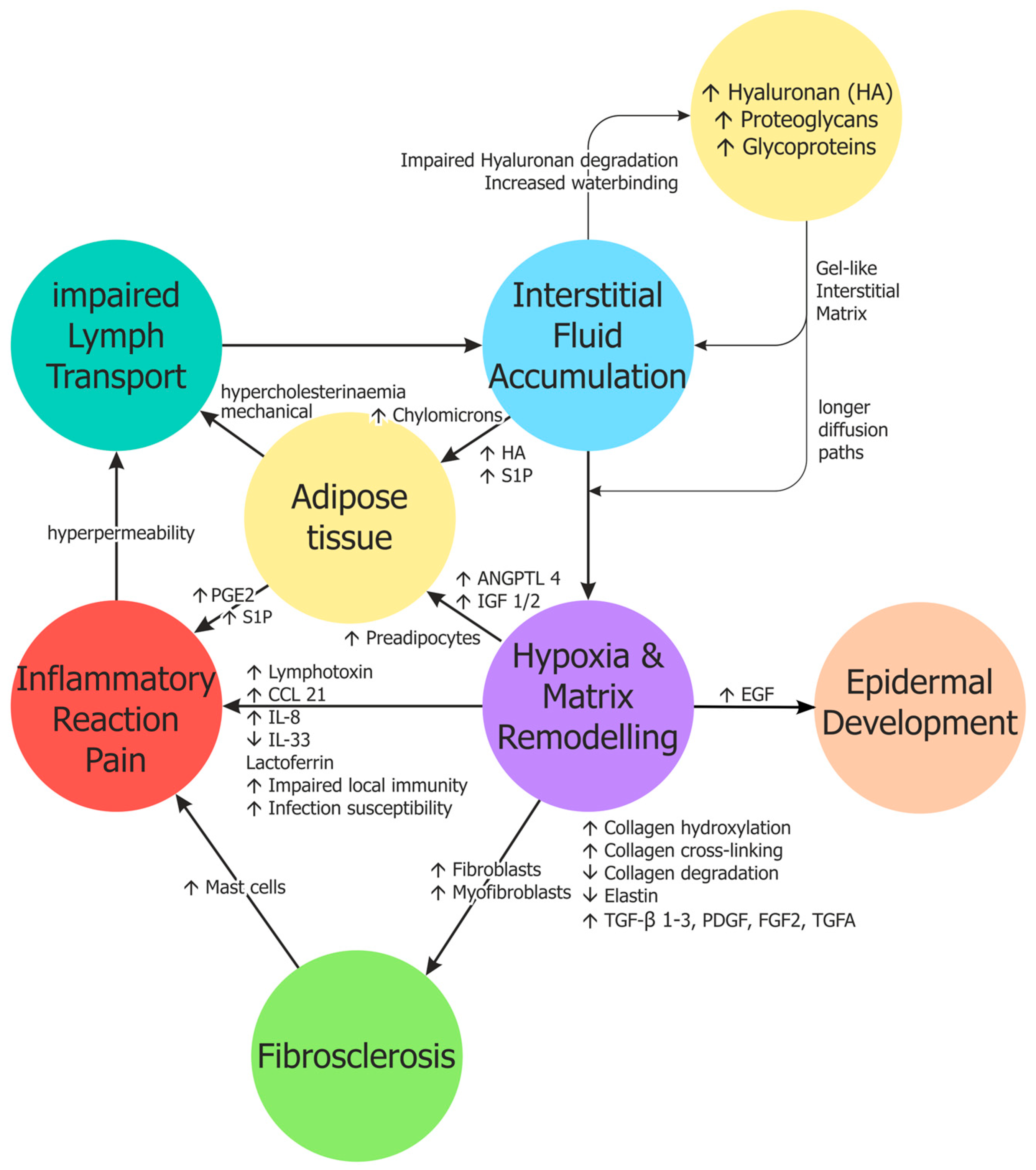
4. Pathophysiology of Lymphoedema
- Pathologically high influx of fluid from the blood vessels into the interstitium;
- Insufficient outflow of fluid via the blood or lymph vessels.
4.1. Changes in Cells and the Intercellular Space in Lymphoedema
- Thickening of the cutis and subcutis due to
- Accumulation of adipose tissue;
- Reactive proliferation of connective tissue (due to hypoxia or weight; fibrosis and sclerosis also occur after erysipelas);
- Formation of lymph cysts and fistulas; chylous cysts and fistulas in rarer cases of central drainage disorders.
- Trophic changes in the epidermis and dermis.
- Hyperplasia with hyperkeratosis;
- Mild papillomatosis;
- Extensive node and nodule formation (the term “elephant skin” is no longer appropriate);
- Discolouration (hyperpigmentation), usually only in combination with blood vessel disorders.
- Disorders of the local immune defence.
- Susceptibility to erysipelas;
- Susceptibility to fungal infections;
- Other.
- Painful changes in the musculoskeletal system.
4.1.1. Changes in the Intercellular Space
4.1.2. Changes at the Cellular Level
5. Molecular Basis of Primary Lymphoedema
5.1. Primary Lymphoedema with Myelodysplasia (Emberger Syndrome)
5.2. Microcephaly with or Without Chorioretinopathy, Lymphoedema or Intellectual Disability
5.3. Oculo-Dento-Digital Dysplasia
5.4. Hennekam Syndrome
5.5. Generalised Lymphatic Dysplasia According to Fotiou
5.6. Lymphatic-Related Hydrops Fetalis (LRHF) and Lymphoedema
5.7. Hypotrichosis, Lymphoedema, Telangiectasia Syndrome (HLTS)
5.8. Choanal Atresia and Lymphoedema
5.9. Hereditary Lymphoedema I-A (Nonne-Milroy Lymphoedema)
5.10. Hereditary Lymphoedema I-D
5.11. Lymphoedema-Distichiasis Syndrome
5.12. Hereditary Lymphoedema I-C
5.13. CELSR1-Related Lymphoedema
5.14. Primary Lymphoedema Associated with HGF
5.15. Primary Lymphoedema Associated with TIE1
5.16. Primary Lymphoedema Associated with ERG
5.17. Noonan Syndrome
6. Differentiation from Obesity and Lipoedema
6.1. Obesity
- Therapy and prevention of obesity in children and adolescents (http://www.awmf.org/leitlinien/detail/ll/050-002.html (accessed on 18 November 2025))
- Surgery for obesity and metabolic diseases (http://www.awmf.org/leitlinien/detail/ll/088-001.html (accessed on 18 November 2025))
6.2. Lipoedema
7. Conclusions
Supplementary Materials
Author Contributions
Funding
Data Availability Statement
Acknowledgments
Conflicts of Interest
References
- Executive Committee of the International Society of Lymphology. The Diagnosis and Treatment of Peripheral Lymphedema: 2023 Consensus Document of The International Society of Lymphology. Lymphology 2023, 56, 133–151. [Google Scholar] [CrossRef]
- Brenner, E. Das Lymphsystem und das Starlingsche Gleichgewicht. Lymphol. Forsch. Und Prax. 2018, 22, 9–13. [Google Scholar]
- Levick, J.R.; Michel, C.C. Microvascular fluid exchange and the revised Starling principle. Cardiovasc. Res. 2010, 87, 198–210. [Google Scholar] [CrossRef] [PubMed]
- Schad, H. Gilt die Starling’sche Hypothese noch? LymphForsch 2009, 13, 71–77. [Google Scholar]
- Knox, P.; Pflug, J.J. The effect of the canine popliteal node on the composition of lymph. J. Physiol. 1983, 345, 1–14. [Google Scholar] [CrossRef]
- Wilting, J.; Becker, J. The lymphatic vascular system: Much more than just a sewer. Cell Biosci. 2022, 12, 157. [Google Scholar] [CrossRef]
- Cui, Y.; Urschel, J.D.; Petrelli, N.J. The effect of cardiopulmonary lymphatic obstruction on heart and lung function. Thorac. Cardiovasc. Surg. 2001, 49, 35–40. [Google Scholar] [CrossRef] [PubMed]
- Witte, M.H.; Jones, K.; Wilting, J.; Dictor, M.; Selg, M.; McHale, N.; Gershenwald, J.E.; Jackson, D.G. Structure function relationships in the lymphatic system and implications for cancer biology. Cancer Metastasis Rev. 2006, 25, 159–184. [Google Scholar] [CrossRef] [PubMed]
- Luks, V.L.; Kamitaki, N.; Vivero, M.P.; Uller, W.; Rab, R.; Bovee, J.V.; Rialon, K.L.; Guevara, C.J.; Alomari, A.I.; Greene, A.K.; et al. Lymphatic and other vascular malformative/overgrowth disorders are caused by somatic mutations in PIK3CA. J. Pediatr. 2015, 166, 1048–1054.e5. [Google Scholar] [CrossRef]
- Smith, M.S.; Sarasua, S.M.; Rogers, C.; Phelan, K.; Boccuto, L. Lymphedema is associated with CELSR1 in Phelan-McDermid syndrome. Clin. Genet. 2023, 104, 472–478. [Google Scholar] [CrossRef]
- Ostergaard, P.; Simpson, M.A.; Connell, F.C.; Steward, C.G.; Brice, G.; Woollard, W.J.; Dafou, D.; Kilo, T.; Smithson, S.; Lunt, P.; et al. Mutations in GATA2 cause primary lymphedema associated with a predisposition to acute myeloid leukemia (Emberger syndrome). Nat. Genet. 2011, 43, 929–931. [Google Scholar] [CrossRef]
- Ostergaard, P.; Simpson, M.A.; Mendola, A.; Vasudevan, P.; Connell, F.C.; van Impel, A.; Moore, A.T.; Loeys, B.L.; Ghalamkarpour, A.; Onoufriadis, A.; et al. Mutations in KIF11 cause autosomal-dominant microcephaly variably associated with congenital lymphedema and chorioretinopathy. Am. J. Hum. Genet. 2012, 90, 356–362. [Google Scholar] [CrossRef]
- Brice, G.; Ostergaard, P.; Jeffery, S.; Gordon, K.; Mortimer, P.S.; Mansour, S. A novel mutation in GJA1 causing oculodentodigital syndrome and primary lymphoedema in a three generation family. Clin. Genet. 2013, 84, 378–381. [Google Scholar] [CrossRef] [PubMed]
- Alders, M.; Hogan, B.M.; Gjini, E.; Salehi, F.; Al-Gazali, L.; Hennekam, E.A.; Holmberg, E.E.; Mannens, M.M.; Mulder, M.F.; Offerhaus, G.J.; et al. Mutations in CCBE1 cause generalized lymph vessel dysplasia in humans. Nat. Genet. 2009, 41, 1272–1274. [Google Scholar] [CrossRef] [PubMed]
- Alders, M.; Al-Gazali, L.; Cordeiro, I.; Dallapiccola, B.; Garavelli, L.; Tuysuz, B.; Salehi, F.; Haagmans, M.A.; Mook, O.R.; Majoie, C.B.; et al. Hennekam syndrome can be caused by FAT4 mutations and be allelic to Van Maldergem syndrome. Hum. Genet. 2014, 133, 1161–1167. [Google Scholar] [CrossRef]
- Fotiou, E.; Martin-Almedina, S.; Simpson, M.A.; Lin, S.; Gordon, K.; Brice, G.; Atton, G.; Jeffery, I.; Rees, D.C.; Mignot, C.; et al. Novel mutations in PIEZO1 cause an autosomal recessive generalized lymphatic dysplasia with non-immune hydrops fetalis. Nat. Commun. 2015, 6, 8085. [Google Scholar] [CrossRef]
- Greene, A.K.; Brouillard, P.; Sudduth, C.L.; Smits, P.J.; Konczyk, D.J.; Vikkula, M. EPHB4 mutation causes adult and adolescent-onset primary lymphedema. Am. J. Med. Genet. A 2021, 185, 3810–3813. [Google Scholar] [CrossRef]
- Irrthum, A.; Devriendt, K.; Chitayat, D.; Matthijs, G.; Glade, C.; Steijlen, P.M.; Fryns, J.P.; Van Steensel, M.A.; Vikkula, M. Mutations in the transcription factor gene SOX18 underlie recessive and dominant forms of hypotrichosis-lymphedema-telangiectasia. Am. J. Hum. Genet. 2003, 72, 1470–1478. [Google Scholar] [CrossRef] [PubMed]
- Har-El, G.; Borderon, M.L.; Weiss, M.H. Choanal atresia and lymphedema. Ann. Otol. Rhinol. Laryngol. 1991, 100, 661–664. [Google Scholar] [CrossRef]
- Pujol, F.; Hodgson, T.; Martinez-Corral, I.; Prats, A.C.; Devenport, D.; Takeichi, M.; Genot, E.; Makinen, T.; Francis-West, P.; Garmy-Susini, B.; et al. Dachsous1-Fat4 Signaling Controls Endothelial Cell Polarization During Lymphatic Valve Morphogenesis-Brief Report. Arterioscler. Thromb. Vasc. Biol. 2017, 37, 1732–1735. [Google Scholar] [CrossRef]
- Alitalo, K. The lymphatic vasculature in disease. Nat. Med. 2011, 17, 1371–1380. [Google Scholar] [CrossRef]
- Brice, G.; Child, A.H.; Evans, A.; Bell, R.; Mansour, S.; Burnand, K.; Sarfarazi, M.; Jeffery, S.; Mortimer, P. Milroy disease and the VEGFR-3 mutation phenotype. J. Med. Genet. 2005, 42, 98–102. [Google Scholar] [CrossRef]
- Fang, J.; Dagenais, S.L.; Erickson, R.P.; Arlt, M.F.; Glynn, M.W.; Gorski, J.L.; Seaver, L.H.; Glover, T.W. Mutations in FOXC2 (MFH-1), a forkhead family transcription factor, are responsible for the hereditary lymphedema-distichiasis syndrome. Am. J. Hum. Genet. 2000, 67, 1382–1388. [Google Scholar] [CrossRef]
- Finegold, D.N.; Kimak, M.A.; Lawrence, E.C.; Levinson, K.L.; Cherniske, E.M.; Pober, B.R.; Dunlap, J.W.; Ferrell, R.E. Truncating mutations in FOXC2 cause multiple lymphedema syndromes. Hum. Mol. Genet. 2001, 10, 1185–1189. [Google Scholar] [CrossRef]
- Ferrell, R.E.; Baty, C.J.; Kimak, M.A.; Karlsson, J.M.; Lawrence, E.C.; Franke-Snyder, M.; Meriney, S.D.; Feingold, E.; Finegold, D.N. GJC2 missense mutations cause human lymphedema. Am. J. Hum. Genet. 2010, 86, 943–948. [Google Scholar] [CrossRef]
- Alpaslan, M.; Fastre, E.; Mestre, S.; van Haeringen, A.; Repetto, G.M.; Keymolen, K.; Boon, L.M.; Belva, F.; Giacalone, G.; Revencu, N.; et al. Pathogenic variants in HGF give rise to childhood-to-late onset primary lymphoedema by loss of function. Hum. Mol. Genet. 2024, 33, 1250–1261. [Google Scholar] [CrossRef]
- Michelini, S.; Ricci, M.; Veselenyiova, D.; Kenanoglu, S.; Kurti, D.; Baglivo, M.; Fiorentino, A.; Basha, S.H.; Priya, S.; Serrani, R.; et al. TIE1 as a Candidate Gene for Lymphatic Malformations with or without Lymphedema. Int. J. Mol. Sci. 2020, 21, 6780. [Google Scholar] [CrossRef]
- Greene, D.; Genomics England Research Consortium; Pirri, D.; Frudd, K.; Sackey, E.; Al-Owain, M.; Giese, A.P.J.; Ramzan, K.; Riaz, S.; Yamanaka, I.; et al. Genetic association analysis of 77,539 genomes reveals rare disease etiologies. Nat. Med. 2023, 29, 679–688. [Google Scholar] [CrossRef] [PubMed]
- Quirion, E. Recognizing and treating upper extremity lymphedema in postmastectomy/lumpectomy patients: A guide for primary care providers. J. Am. Acad. Nurse Pract. 2010, 22, 450–459. [Google Scholar] [CrossRef] [PubMed]
- de Vries, M.; Vonkeman, W.G.; van Ginkel, R.J.; Hoekstra, H.J. Morbidity after inguinal sentinel lymph node biopsy and completion lymph node dissection in patients with cutaneous melanoma. Eur. J. Surg. Oncol. 2006, 32, 785–789. [Google Scholar] [CrossRef] [PubMed]
- Fuller, J.; Guderian, D.; Kohler, C.; Schneider, A.; Wendt, T.G. Lymph edema of the lower extremities after lymphadenectomy and radiotherapy for cervical cancer. Strahlenther. Onkol. 2008, 184, 206–211. [Google Scholar] [CrossRef]
- Cormier, J.N.; Askew, R.L.; Mungovan, K.S.; Xing, Y.; Ross, M.I.; Armer, J.M. Lymphedema beyond breast cancer: A systematic review and meta-analysis of cancer-related secondary lymphedema. Cancer 2010, 116, 5138–5149. [Google Scholar] [CrossRef]
- Nguyen, T.T.; Hoskin, T.L.; Habermann, E.B.; Cheville, A.L.; Boughey, J.C. Breast Cancer-Related Lymphedema Risk is Related to Multidisciplinary Treatment and Not Surgery Alone: Results from a Large Cohort Study. Ann. Surg. Oncol. 2017, 24, 2972–2980. [Google Scholar] [CrossRef]
- Taghian, N.R.; Miller, C.L.; Jammallo, L.S.; O’Toole, J.; Skolny, M.N. Lymphedema following breast cancer treatment and impact on quality of life: A review. Crit. Rev. Oncol. Hematol. 2014, 92, 227–234. [Google Scholar] [CrossRef] [PubMed]
- Shaitelman, S.F.; Chiang, Y.-J.; Griffin, K.D.; DeSnyder, S.M.; Smith, B.D.; Schaverien, M.V.; Woodward, W.A.; Cormier, J.N. Radiation therapy targets and the risk of breast cancer-related lymphedema: A systematic review and network meta-analysis. Breast Cancer Res. Treat. 2017, 162, 201–215. [Google Scholar] [CrossRef]
- Johnson, A.R.; Kimball, S.; Epstein, S.; Recht, A.; Lin, S.J.; Lee, B.T.; James, T.A.; Singhal, D. Lymphedema Incidence After Axillary Lymph Node Dissection: Quantifying the Impact of Radiation and the Lymphatic Microsurgical Preventive Healing Approach. Ann. Plast. Surg. 2019, 82, S234–S241. [Google Scholar] [CrossRef]
- Leak, L.V.; Liotta, L.A.; Krutzsch, H.; Jones, M.; Fusaro, V.A.; Ross, S.J.; Zhao, Y.; Petricoin, E.F., 3rd. Proteomic analysis of lymph. Proteomics 2004, 4, 753–765. [Google Scholar] [CrossRef] [PubMed]
- Liu, N.F.; Zhang, L.R. Changes of tissue fluid hyaluronan (hyaluronic acid) in peripheral lymphedema. Lymphology 1998, 31, 173–179. [Google Scholar]
- Kaiserling, E. Morphologische Befunde beim Lymphödem. In Lehrbuch Lymphologie, 7th ed.; Földi, M., Földi, E., Kubik, S., Eds.; Urban and Fischer: München, Germany, 2010; pp. 266–320. [Google Scholar]
- Solti, F.; Jellinek, H.; Schneider, F.; Lengyel, Y. Lymphostatische Venopathie im Tierexperiment und beim Menschen. In Lymphologica Jahresband 1989. Ausgewählte Vorträge der Lymphologica Zürich 1988; Clodius, L., Baumeister, R.G.H., Foldi, E., Kubik, S., Partsch, H., Ströberl, C., Weisleder, H., Eds.; Medikon: München, Germany, 1988; pp. 111–112. [Google Scholar]
- Becker, J.; Schwoch, S.; Zelent, C.; Sitte, M.; Salinas, G.; Wilting, J. Transcriptome Analysis of Hypoxic Lymphatic Endothelial Cells Indicates Their Potential to Contribute to Extracellular Matrix Rearrangement. Cells 2021, 10, 1008. [Google Scholar] [CrossRef]
- Wilting, J.; Felmerer, G.; Becker, J. Control of the extracellular matrix by hypoxic lymphatic endothelial cells: Impact on the progression of lymphedema? Dev. Dyn. 2023, 252, 227–238. [Google Scholar] [CrossRef] [PubMed]
- Leclerc, S.; Teixeira, A.; Mahe, E.; Descamps, V.; Crickx, B.; Chosidow, O. Recurrent erysipelas: 47 cases. Dermatology 2007, 214, 52–57. [Google Scholar] [CrossRef]
- Zvonik, M.; Foldi, E.; Felmerer, G. The effects of reduction operation with genital lymphedema on the frequency of erysipelas and the quality of life. Lymphology 2011, 44, 121–130. [Google Scholar]
- Darstein, F.; Chao, T.L.; Wilting, J. Ödem. In Klinische Symptomie in der Arbeitsmedizin; Letzel, S., Schmitz-Spanke, S., Lang, J., Nowak, D., Eds.; Ecomed: Landsberg am Lech, Germany, 2022; pp. 647–659. [Google Scholar]
- Grigorean, A.; Lindenblatt, N.; Luchsinger, I.; Hobohm, L.; Konstantinides, S.V.; Munzel, T.; Barco, S.; Keller, K. Prevalence and Prognostic Role of Lymphedema in Patients with Deep Venous Thrombosis and Thrombophlebitis. Lymphat. Res. Biol. 2024, 22, 20–26. [Google Scholar] [CrossRef]
- Ploenes, C. Ödematologie. In Angewandte Lymphologie; Cornely, M.E., Marsch, W.C., Brenner, E., Eds.; Springer: Berlin/Heidelberg, Germany, 2023; pp. 45–57. [Google Scholar]
- Dale, R.F. The inheritance of primary lymphoedema. J. Med. Genet. 1985, 22, 274–278. [Google Scholar] [CrossRef]
- Smeltzer, D.M.; Stickler, G.B.; Schirger, A. Primary lymphedema in children and adolescents: A follow-up study and review. Pediatrics 1985, 76, 206–218. [Google Scholar] [PubMed]
- Moffatt, C.J.; Franks, P.J.; Doherty, D.C.; Williams, A.F.; Badger, C.; Jeffs, E.; Bosanquet, N.; Mortimer, P.S. Lymphoedema: An underestimated health problem. QJM 2003, 96, 731–738. [Google Scholar] [CrossRef] [PubMed]
- Neuhüttler, S.; Brenner, E. Beitrag zur Epidemiologie des Lymphödems. Phlebologie 2006, 35, 181–187. [Google Scholar] [CrossRef]
- Brunner, U. Klinische Diagnostik des primären Lymphödems der Beine. Swiss Med. 1981, 3, 59–64. [Google Scholar]
- Lymphoedema Framework. Best Practice for the Management of Lymphoedema. In International Consensus; MEP Ltd.: London, UK, 2006.
- DiSipio, T.; Rye, S.; Newman, B.; Hayes, S. Incidence of unilateral arm lymphoedema after breast cancer: A systematic review and meta-analysis. Lancet Oncol. 2013, 14, 500–515. [Google Scholar] [CrossRef]
- Weber, W.P.; Hanson, S.E.; Wong, D.E.; Heidinger, M.; Montagna, G.; Cafferty, F.H.; Kirby, A.M.; Coles, C.E. Personalizing Locoregional Therapy in Patients with Breast Cancer in 2024: Tailoring Axillary Surgery, Escalating Lymphatic Surgery, and Implementing Evidence-Based Hypofractionated Radiotherapy. Am. Soc. Clin. Oncol. Educ. Book 2024, 44, e438776. [Google Scholar] [CrossRef] [PubMed]
- Todo, Y.; Yamazaki, H.; Takeshita, S.; Ohba, Y.; Sudo, S.; Minobe, S.; Okamoto, K.; Kato, H. Close relationship between removal of circumflex iliac nodes to distal external iliac nodes and postoperative lower-extremity lymphedema in uterine corpus malignant tumors. Gynecol. Oncol. 2015, 139, 160–164. [Google Scholar] [CrossRef]
- Yamazaki, H.; Todo, Y.; Takeshita, S.; Ohba, Y.; Sudo, S.; Minobe, S.; Okamoto, K.; Yamashiro, K.; Kato, H. Relationship between removal of circumflex iliac nodes distal to the external iliac nodes and postoperative lower-extremity lymphedema in uterine cervical cancer. Gynecol. Oncol. 2015, 139, 295–299. [Google Scholar] [CrossRef]
- Ryan, M.; Stainton, M.C.; Slaytor, E.K.; Jaconelli, C.; Watts, S.; Mackenzie, P. Aetiology and prevalence of lower limb lymphoedema following treatment for gynaecological cancer. Aust. N. Z. J. Obstet. Gynaecol. 2003, 43, 148–151. [Google Scholar] [CrossRef] [PubMed]
- Carlson, J.W.; Kauderer, J.; Walker, J.L.; Gold, M.A.; O’Malley, D.; Tuller, E.; Clarke-Pearson, D.L.; Gynecologic Oncology, G. A randomized phase III trial of VH fibrin sealant to reduce lymphedema after inguinal lymph node dissection: A Gynecologic Oncology Group study. Gynecol. Oncol. 2008, 110, 76–82. [Google Scholar] [CrossRef] [PubMed]
- Blum, K.S.; Karaman, S.; Proulx, S.T.; Ochsenbein, A.M.; Luciani, P.; Leroux, J.C.; Wolfrum, C.; Detmar, M. Chronic high-fat diet impairs collecting lymphatic vessel function in mice. PLoS ONE 2014, 9, e94713. [Google Scholar] [CrossRef]
- Greene, A.K.; Grant, F.D.; Slavin, S.A.; Maclellan, R.A. Obesity-induced lymphedema: Clinical and lymphoscintigraphic features. Plast. Reconstr. Surg. 2015, 135, 1715–1719. [Google Scholar] [CrossRef]
- Brunelle, C.L.; Boyages, J.; Jung, A.W.; Suami, H.; Juhel, B.C.; Heydon-White, A.; Mackie, H.; Chou, S.S.; Paramanandam, V.S.; Koelmeyer, L.; et al. Breast lymphedema following breast-conserving treatment for breast cancer: Current status and future directions. Breast Cancer Res. Treat. 2024, 204, 193–222. [Google Scholar] [CrossRef]
- Shigematsu, H.; Fujimoto, M.; Kobayashi, Y.; Yasui, D.; Komoto, D.; Matsuura, N.; Kuraoka, K.; Yoshiyama, T. Prognostic Value of MRI Assessment of Residual Peritumoral Edema in Breast Cancer Treated with Neoadjuvant Chemotherapy. J. Magn. Reson. Imaging 2025, 61, 944–955. [Google Scholar] [CrossRef]
- Schrader, K. Begutachtung. In Angewandte Lymphologie; Cornely, M.E., Marsch, W.C., Brenner, E., Eds.; Springer: Berlin/Heidelberg, Germany, 2023; pp. 765–779. [Google Scholar]
- Liu, N.F.; Yan, Z.X.; Wu, X.F.; Luo, Y. Magnetic resonance lymphography demonstrates spontaneous lymphatic disruption and regeneration in obstructive lymphedema. Lymphology 2013, 46, 56–63. [Google Scholar] [PubMed]
- Moffatt, C.J.; Keeley, V.; Franks, P.J.; Rich, A.; Pinnington, L.L. Chronic oedema: A prevalent health care problem for UK health services. Int. Wound J. 2017, 14, 772–781. [Google Scholar] [CrossRef]
- Rankin, J.; Morris, K.; Reilly, A. The All-Ireland Guidelines for the diagnosis, assessment and management of lymphoedema. Br. J. Community Nurs. 2022, 27, S22–S26. [Google Scholar] [CrossRef]
- Bates, D.; Levick, J.; Mortimer, P. Change in Macro Molecular Composition of Interstitial Fluid from Swollen Arms after Breast Cancer Treatment, and Its Implications. Clin. Sci. 1993, 85, 737–746. [Google Scholar] [CrossRef] [PubMed]
- Brenner, E. Das Interstitium. In Angewandte Lymphologie; Cornely, M.E., Marsch, W.C., Brenner, E., Eds.; Springer: Berlin/Heidelberg, Germany, 2023; pp. 31–44. [Google Scholar]
- Földi, M.; Földi, E. Physiologie und Pathophysiologie des Lymphgefäßsystems. In Lehrbuch Lymphologie, 7th ed.; Földi, M., Földi, E., Kubik, S., Eds.; Elsevier—Urban & Fischer: München, Germany, 2010; pp. 133–174. [Google Scholar]
- Crockett, D.J. The protein levels of oedema fluids. Lancet 1956, 271, 1179–1182. [Google Scholar] [CrossRef] [PubMed]
- Taylor, G.W.; Kinmonth, J.B.; Dangerfield, W.G. Protein content of oedema fluid in lymphoedema. Br. Med. J. 1958, 1, 1159–1160. [Google Scholar] [CrossRef][Green Version]
- Karlsen, T.V.; Karkkainen, M.J.; Alitalo, K.; Wiig, H. Transcapillary fluid balance consequences of missing initial lymphatics studied in a mouse model of primary lymphoedema. J. Physiol. 2006, 574, 583–596. [Google Scholar] [CrossRef]
- Fraser, J.R.; Laurent, T.C.; Laurent, U.B. Hyaluronan: Its nature, distribution, functions and turnover. J. Intern. Med. 1997, 242, 27–33. [Google Scholar] [CrossRef]
- Jackson, D.G. The lymphatics revisited: New perspectives from the hyaluronan receptor LYVE-1. Trends Cardiovasc. Med. 2003, 13, 1–7. [Google Scholar] [CrossRef]
- Schwartz, M.S. Use of hyaluronidase by iontophoresis in treatment of lymphedema. AMA Arch. Intern. Med. 1955, 95, 662–668. [Google Scholar] [CrossRef]
- Szabó, G.; Magyar, S. Effect of hyaluronidase on capillary permeability, lymph flow and passage of dye-labelled protein from plasma to lymph. Nature 1958, 182, 377–379. [Google Scholar] [CrossRef]
- Daroczy, J.; Wolfe, J.; Mentzel, T. Diseases of the Lymphatics. In Pathology; Oxford University Press: New York, NY, USA, 2003. [Google Scholar]
- Anveden, A.; Sjoholm, K.; Jacobson, P.; Palsdottir, V.; Walley, A.J.; Froguel, P.; Al-Daghri, N.; McTernan, P.G.; Mejhert, N.; Arner, P.; et al. ITIH-5 expression in human adipose tissue is increased in obesity. Obesity 2012, 20, 708–714. [Google Scholar] [CrossRef] [PubMed]
- Ryan, T.; Narahari, S.; Vijaya, B.; Aggithaya, M. Dermatologic implications of secondary lymphedema of the lower leg. In Lymphedema: Complete Medical and Surgical Management; Neligan, P., Masia, J., Piller, N., Eds.; CRC Press: Boca Ratn, FL, USA, 2016; pp. 195–213. [Google Scholar]
- Gerhard, G.S.; Davis, B.; Wu, X.; Hanson, A.; Wilhelmsen, D.; Piras, I.S.; Still, C.D.; Chu, X.; Petrick, A.T.; DiStefano, J.K. Differentially expressed mRNAs and lncRNAs shared between activated human hepatic stellate cells and nash fibrosis. Biochem. Biophys. Rep. 2020, 22, 100753. [Google Scholar] [CrossRef]
- Hinz, B. The extracellular matrix and transforming growth factor-beta1: Tale of a strained relationship. Matrix Biol. 2015, 47, 54–65. [Google Scholar] [CrossRef] [PubMed]
- Clavin, N.W.; Avraham, T.; Fernandez, J.; Daluvoy, S.V.; Soares, M.A.; Chaudhry, A.; Mehrara, B.J. TGF-beta1 is a negative regulator of lymphatic regeneration during wound repair. Am. J. Physiol. Heart Circ. Physiol. 2008, 295, H2113–2127. [Google Scholar] [CrossRef]
- Podgrabinska, S.; Braun, P.; Velasco, P.; Kloos, B.; Pepper, M.S.; Skobe, M. Molecular characterization of lymphatic endothelial cells. Proc. Natl. Acad. Sci. USA 2002, 99, 16069–16074. [Google Scholar] [CrossRef] [PubMed]
- Hara, H.; Mihara, M.; Ohtomo, R.; Tanaka, S. Lymphatic Vessel Thrombosis in a Patient with Secondary Lymphedema. Plast. Reconstr. Surg. Glob. Open 2019, 7, e2268. [Google Scholar] [CrossRef]
- Johansson, K.; Chong, H.; Ciornei, C.D.; Brorson, H.; Mortimer, P.S. Axillary Web Syndrome: Evidence for Lymphatic Origin with Thrombosis. Lymphat. Res. Biol. 2020, 18, 329–332. [Google Scholar] [CrossRef]
- Kato, S.; Miyauchi, R. Enzyme-histochemical visualization of lymphatic capillaries in the mouse tongue: Light and electron microscopic study. Okajimas Folia Anat. Jpn. 1989, 65, 391–403. [Google Scholar] [CrossRef]
- Zukowska, P.; Kutryb-Zajac, B.; Toczek, M.; Smolenski, R.T.; Slominska, E.M. The role of ecto-5′-nucleotidase in endothelial dysfunction and vascular pathologies. Pharmacol. Rep. 2015, 67, 675–681. [Google Scholar] [CrossRef]
- Hasselhof, V.; Sperling, A.; Buttler, K.; Ströbel, P.; Becker, J.; Aung, T.; Felmerer, G.; Wilting, J. Morphological and Molecular Characterization of Human Dermal Lymphatic Collectors. PLoS ONE 2016, 11, e0164964. [Google Scholar] [CrossRef]
- Milovanovic, M.; Volarevic, V.; Radosavljevic, G.; Jovanovic, I.; Pejnovic, N.; Arsenijevic, N.; Lukic, M.L. IL-33/ST2 axis in inflammation and immunopathology. Immunol. Res. 2012, 52, 89–99. [Google Scholar] [CrossRef] [PubMed]
- Cui, N.; Jiang, L.; Tang, L.; Tang, H. Dynamic regulation of IL-33 in the obesity pathogenesis: Spatiotemporal specificity and functional paradoxes. Diabetes Res. Clin. Pract. 2025, 229, 112455. [Google Scholar] [CrossRef]
- Cornely, M.E.; Tietz, H.-J. Fungal Diseases and Lymphedema. In Applied Lymphology: Basics|Daily Practice|Perspectives; Springer: Berlin/Heidelberg, Germany, 2025; pp. 651–664. [Google Scholar]
- Pond, C.M. Long-term changes in adipose tissue in human disease. Proc. Nutr. Soc. 2001, 60, 365–374. [Google Scholar] [CrossRef]
- Pham, T.H.; Baluk, P.; Xu, Y.; Grigorova, I.; Bankovich, A.J.; Pappu, R.; Coughlin, S.R.; McDonald, D.M.; Schwab, S.R.; Cyster, J.G. Lymphatic endothelial cell sphingosine kinase activity is required for lymphocyte egress and lymphatic patterning. J. Exp. Med. 2010, 207, 17–27. [Google Scholar] [CrossRef] [PubMed]
- Cyster, J.G.; Schwab, S.R. Sphingosine-1-phosphate and lymphocyte egress from lymphoid organs. Annu. Rev. Immunol. 2012, 30, 69–94. [Google Scholar] [CrossRef] [PubMed]
- Hsu, C.K.; Lee, I.T.; Lin, C.C.; Hsiao, L.D.; Yang, C.M. Sphingosine-1-phosphate mediates COX-2 expression and PGE2 /IL-6 secretion via c-Src-dependent AP-1 activation. J. Cell. Physiol. 2015, 230, 702–715. [Google Scholar] [CrossRef] [PubMed]
- Kowalski, G.M.; Carey, A.L.; Selathurai, A.; Kingwell, B.A.; Bruce, C.R. Plasma sphingosine-1-phosphate is elevated in obesity. PLoS ONE 2013, 8, e72449. [Google Scholar] [CrossRef]
- Harvey, N.L.; Srinivasan, R.S.; Dillard, M.E.; Johnson, N.C.; Witte, M.H.; Boyd, K.; Sleeman, M.W.; Oliver, G. Lymphatic vascular defects promoted by Prox1 haploinsufficiency cause adult-onset obesity. Nat. Genet. 2005, 37, 1072–1081. [Google Scholar] [CrossRef]
- Casley-Smith, J.R.; Clodius, L.; Piller, N.B. Tissue changes in chronic experimental lymphoedema in dogs. Lymphology 1980, 13, 130–141. [Google Scholar]
- Frick, A.; Wibecke, B.; Baumeister, R.G. Histologische Befunde von Lymphgefäßen, Gewonnen bei Lymphgefäßtransplantationen. In Lymphologica Jahresband 1990; Medicon: München, Germany, 1990; pp. 106–108. [Google Scholar]
- Mattonet, K.; Wilting, J.; Jeltsch, M. Die genetischen Ursachen des primären Lymphödems. In Erkrankungen des Lymphgefäßsystems; Weissleder, H., Schuchardt, C., Eds.; Viavital Verlag: Köln, Germany, 2015; pp. 210–229. [Google Scholar]
- Radhakrishnan, K.; Rockson, S.G. The clinical spectrum of lymphatic disease. Ann. N. Y. Acad. Sci. 2008, 1131, 155–184. [Google Scholar] [CrossRef]
- Witte, M.H.; Bernas, M.J.; Martin, C.P.; Witte, C.L. Lymphangiogenesis and lymphangiodysplasia: From molecular to clinical lymphology. Microsc. Res. Tech. 2001, 55, 122–145. [Google Scholar] [CrossRef]
- Gordon, K.; Varney, R.; Keeley, V.; Riches, K.; Jeffery, S.; Van Zanten, M.; Mortimer, P.; Ostergaard, P.; Mansour, S. Update and audit of the St George’s classification algorithm of primary lymphatic anomalies: A clinical and molecular approach to diagnosis. J. Med. Genet. 2020, 57, 653–659. [Google Scholar] [CrossRef]
- Emberger, J.; Navarro, M.; Dejean, M.; Izarn, P. Surdi-mutite, lymphoedeme des membres inferieurs et anomalies hematologiques (leucose aigue, cytopenies) a transmission autosomique dominante. J. Genet. Hum. 1979, 27, 237–345. [Google Scholar]
- Blangy, A.; Lane, H.A.; d’Herin, P.; Harper, M.; Kress, M.; Nigg, E.A. Phosphorylation by p34cdc2 regulates spindle association of human Eg5, a kinesin-related motor essential for bipolar spindle formation in vivo. Cell 1995, 83, 1159–1169. [Google Scholar] [CrossRef]
- Exertier, P.; Javerzat, S.; Wang, B.; Franco, M.; Herbert, J.; Platonova, N.; Winandy, M.; Pujol, N.; Nivelles, O.; Ormenese, S.; et al. Impaired angiogenesis and tumor development by inhibition of the mitotic kinesin Eg5. Oncotarget 2013, 4, 2302–2316. [Google Scholar] [CrossRef]
- Chauviere, M.; Kress, C.; Kress, M. Disruption of the mitotic kinesin Eg5 gene (Knsl1) results in early embryonic lethality. Biochem. Biophys. Res. Commun. 2008, 372, 513–519. [Google Scholar] [CrossRef] [PubMed]
- Hägerling, R. Genetik, Diagnostik und Klinik des pimären Lymphödems. Dermatologie 2023, 74, 594–604. [Google Scholar] [CrossRef] [PubMed]
- Glade, C.; van Steensel, M.A.; Steijlen, P.M. Hypotrichosis, lymphedema of the legs and acral telangiectasias—New syndrome? Eur. J. Dermatol. 2001, 11, 515–517. [Google Scholar]
- Au, A.C.; Hernandez, P.A.; Lieber, E.; Nadroo, A.M.; Shen, Y.M.; Kelley, K.A.; Gelb, B.D.; Diaz, G.A. Protein tyrosine phosphatase PTPN14 is a regulator of lymphatic function and choanal development in humans. Am. J. Hum. Genet. 2010, 87, 436–444. [Google Scholar] [CrossRef]
- Evans, A.L.; Bell, R.; Brice, G.; Comeglio, P.; Lipede, C.; Jeffery, S.; Mortimer, P.; Sarfarazi, M.; Child, A.H. Identification of eight novel VEGFR-3 mutations in families with primary congenital lymphoedema. J. Med. Genet. 2003, 40, 697–703. [Google Scholar] [CrossRef]
- Karkkainen, M.J.; Ferrell, R.E.; Lawrence, E.C.; Kimak, M.A.; Levinson, K.L.; McTigue, M.A.; Alitalo, K.; Finegold, D.N. Missense mutations interfere with VEGFR-3 signalling in primary lymphoedema. Nat. Genet. 2000, 25, 153–159. [Google Scholar] [CrossRef] [PubMed]
- Connell, F.C.; Ostergaard, P.; Carver, C.; Brice, G.; Williams, N.; Mansour, S.; Mortimer, P.S.; Jeffery, S.; Lymphoedema, C. Analysis of the coding regions of VEGFR3 and VEGFC in Milroy disease and other primary lymphoedemas. Hum. Genet. 2009, 124, 625–631. [Google Scholar] [CrossRef]
- Tammela, T.; Alitalo, K. Lymphangiogenesis: Molecular mechanisms and future promise. Cell 2010, 140, 460–476. [Google Scholar] [CrossRef]
- Balboa-Beltran, E.; Fernandez-Seara, M.J.; Perez-Munuzuri, A.; Lago, R.; Garcia-Magan, C.; Couce, M.L.; Sobrino, B.; Amigo, J.; Carracedo, A.; Barros, F. A novel stop mutation in the vascular endothelial growth factor-C gene (VEGFC) results in Milroy-like disease. J. Med. Genet. 2014, 51, 475–478. [Google Scholar] [CrossRef] [PubMed]
- Bazigou, E.; Makinen, T. Flow control in our vessels: Vascular valves make sure there is no way back. Cell. Mol. Life Sci. 2013, 70, 1055–1066. [Google Scholar] [CrossRef] [PubMed]
- Ostergaard, P.; Simpson, M.A.; Brice, G.; Mansour, S.; Connell, F.C.; Onoufriadis, A.; Child, A.H.; Hwang, J.; Kalidas, K.; Mortimer, P.S.; et al. Rapid identification of mutations in GJC2 in primary lymphoedema using whole exome sequencing combined with linkage analysis with delineation of the phenotype. J. Med. Genet. 2011, 48, 251–255. [Google Scholar] [CrossRef] [PubMed]
- Herpertz, U. Ödeme und Lymphdrainage: Diagnose und Therapie von Ödemkrankheiten; mit 36 Tabellen, 4th ed.; Schattauer Verlag: Stuttgart, Germany, 2010. [Google Scholar]
- Burton, J.S.; Sletten, A.C.; Marsh, E.; Wood, M.D.; Sacks, J.M. Adipose Tissue in Lymphedema: A Central Feature of Pathology and Target for Pharmacologic Therapy. Lymphat. Res. Biol. 2023, 21, 2–7. [Google Scholar] [CrossRef]
- Schneider, H.J.; Friedrich, N.; Klotsche, J.; Pieper, L.; Nauck, M.; John, U.; Dorr, M.; Felix, S.; Lehnert, H.; Pittrow, D.; et al. The predictive value of different measures of obesity for incident cardiovascular events and mortality. J. Clin. Endocrinol. Metab. 2010, 95, 1777–1785. [Google Scholar] [CrossRef]
- Vasileiou, A.M.; Bull, R.; Kitou, D.; Alexiadou, K.; Garvie, N.J.; Coppack, S.W. Oedema in obesity; role of structural lymphatic abnormalities. Int. J. Obes. 2011, 35, 1247–1250. [Google Scholar] [CrossRef]
- Greene, A.K. Diagnosis and Management of Obesity-Induced Lymphedema. Plast. Reconstr. Surg. 2016, 138, 111e–118e. [Google Scholar] [CrossRef]
- Sudduth, C.L.; Greene, A.K. Current Overview of Obesity-Induced Lymphedema. Adv. Wound Care 2022, 11, 392–398. [Google Scholar] [CrossRef]
- Allen, E.U.; Hines, E.A. Lipedema of the legs: A syndrom characterized by fat legs and orthostatic edema. Proc. Staff Mayo Clin. 1940, 15, 184–187. [Google Scholar]
- Deutsche Gesellschaft für Phlebologie und Lymphologie e.V. S2k-Leitlinie Lipödem [Registernummer 037-012]. AWMF-Leitlinien-Register. 2024. Available online: https://register.awmf.org/de/leitlinien/detail/037-012 (accessed on 3 December 2025).
- Morgan, S.; Reid, I.; Bendon, C.; Ishaq, M.; Shayan, R.; Pope, B.; Park, D.; Karnezis, T. A Family-Based Study of Inherited Genetic Risk in Lipedema. Lymphat. Res. Biol. 2024, 22, 106–111. [Google Scholar] [CrossRef] [PubMed]
- Brenner, E. Lipohyperplasia dolorosa—Neu betrachtet. Phlebologie 2023, 52, 266–286. [Google Scholar] [CrossRef]
- Brenner, E.; Forner-Cordero, I.; Faerber, G.; Rapprich, S.; Cornely, M. Body mass index vs. waist-to-height-ratio in patients with lipohyperplasia dolorosa (vulgo lipedema). J. Dtsch. Dermatol. Ges. 2023, 21, 1179–1185. [Google Scholar] [CrossRef]
- Cornely, M.E.; Marsch, W.; Brenner, E. (Eds.) Applied Lymphology—Basics|Daily Practice|Perspectives, 1st ed.; Springer Nature: Cham, Switzerland, 2025; p. 1048, eBook; ISBN 978-3-031-77734-9. [Google Scholar]
- Gashev, A.A.; Nagai, T.; Bridenbaugh, E.A. Indocyanine green and lymphatic imaging: Current problems. Lymphat. Res. Biol. 2010, 8, 127–130. [Google Scholar] [CrossRef]
- Belgrado, J.P.; Vandermeeren, L.; Vankerckhove, S.; Valsamis, J.B.; Malloizel-Delaunay, J.; Moraine, J.J.; Liebens, F. Near-Infrared Fluorescence Lymphatic Imaging to Reconsider Occlusion Pressure of Superficial Lymphatic Collectors in Upper Extremities of Healthy Volunteers. Lymphat. Res. Biol. 2016, 14, 70–77. [Google Scholar] [CrossRef]
- Olszewski, W.L.; Zaleska, M.T.; Hydrabadi, R.; Banker, M.; Kurulkar, P. Edema Fluid Can Be Successfully Evacuated from the Lymphedematous Limbs by Implantation of Silicone Tubings Bypassing the Site of Flow Obstruction Long-Term Observations. Lymphat. Res. Biol. 2019, 17, 557–564. [Google Scholar] [CrossRef]
- Mazzolai, L.; Triacca, V.; Brochu-Vez, M.J.; Boucard, V.; Aberle, M.; Chaplet, V.; Ferrari, V.; Deglise, S.; Pisano, M.; Staubli, S. Advancing women’s health with a pioneering implant to treat breast cancer related lymphedema. Eur. J. Intern. Med. 2025, 135, 64–73. [Google Scholar] [CrossRef] [PubMed]
- Rosell-García, T.; Palomo-Álvarez, O.; Rodríguez-Pascual, F. A hierarchical network of hypoxia-inducible factor and SMAD proteins governs procollagen lysyl hydroxylase 2 induction by hypoxia and transforming growth factor beta1. J. Biol. Chem. 2019, 294, 14308–14318. [Google Scholar] [CrossRef]
- Benita, Y.; Kikuchi, H.; Smith, A.D.; Zhang, M.Q.; Chung, D.C.; Xavier, R.J. An integrative genomics approach identifies Hypoxia Inducible Factor-1 (HIF-1)-target genes that form the core response to hypoxia. Nucleic Acids Res. 2009, 37, 4587–4602. [Google Scholar] [CrossRef]
- Xie, H.; Xue, J.D.; Chao, F.; Jin, Y.F.; Fu, Q. Long non-coding RNA-H19 antagonism protects against renal fibrosis. Oncotarget 2016, 7, 51473–51481. [Google Scholar] [CrossRef] [PubMed]
- Ambele, M.A.; Dhanraj, P.; Giles, R.; Pepper, M.S. Adipogenesis: A Complex Interplay of Multiple Molecular Determinants and Pathways. Int. J. Mol. Sci. 2020, 21, 4283. [Google Scholar] [CrossRef]
- Yoshida, K.; Shimizugawa, T.; Ono, M.; Furukawa, H. Angiopoietin-like protein 4 is a potent hyperlipidemia-inducing factor in mice and inhibitor of lipoprotein lipase. J. Lipid Res. 2002, 43, 1770–1772. [Google Scholar] [CrossRef]
- Torrisi, J.S.; Hespe, G.E.; Cuzzone, D.A.; Savetsky, I.L.; Nitti, M.D.; Gardenier, J.C.; Garcia Nores, G.D.; Jowhar, D.; Kataru, R.P.; Mehrara, B.J. Inhibition of Inflammation and iNOS Improves Lymphatic Function in Obesity. Sci. Rep. 2016, 6, 19817. [Google Scholar] [CrossRef]
- Sevick-Muraca, E.M.; Fife, C.E.; Rasmussen, J.C. Imaging peripheral lymphatic dysfunction in chronic conditions. Front. Physiol. 2023, 14, 1132097. [Google Scholar] [CrossRef]
- Davis, M.J.; Zawieja, S.D. Pacemaking in the lymphatic system. J. Physiol. 2024. [Google Scholar] [CrossRef]
- Rannikko, E.H.; Pajula, S.; Suominen, S.H.; Kiiski, J.; Mani, M.R.; Halle, M.; Kaartinen, I.S.; Lahdenpera, O.; Arnardottir, T.H.; Kauhanen, S.M.; et al. Phase II Study Shows the Effect of Adenoviral Vascular Endothelial Growth Factor C and Lymph Node Transfer in Lymphedema. Plast. Reconstr. Surg. 2025, 155, 256e–267e. [Google Scholar] [CrossRef]
- Yamanaka, S.; Blau, H.M. Nuclear reprogramming to a pluripotent state by three approaches. Nature 2010, 465, 704–712. [Google Scholar] [CrossRef]
- Lee, S.J.; Park, C.; Lee, J.Y.; Kim, S.; Kwon, P.J.; Kim, W.; Jeon, Y.H.; Lee, E.; Yoon, Y.S. Generation of pure lymphatic endothelial cells from human pluripotent stem cells and their therapeutic effects on wound repair. Sci. Rep. 2015, 5, 11019. [Google Scholar] [CrossRef]
- Saha, S.; Graham, F.; Knopp, J.; Patzke, C.; Hanjaya-Putra, D. Robust Differentiation of Human Pluripotent Stem Cells into Lymphatic Endothelial Cells Using Transcription Factors. Cells Tissues Organs 2024, 213, 464–474. [Google Scholar] [CrossRef]


| Primary | Secondary |
|---|---|
| Aplasia/atresia Hypoplasia Hyperplasia/dysplasia Lymphatic valve defects Lymph node fibrosis Lymph node agenesis | Malignant processes Traumatic/post-traumatic (scars) (Post-)infectious Surgical procedures Lymph node dissection Radiation Advanced stages of chronic venous insufficiency (CVI) Obesity Constrictions (amniotic band, artificial) |
| Gene | Clinical Name | OMIM Number | Clinical Feature | Function of the Gene Product | ||
|---|---|---|---|---|---|---|
| GATA2 | Emberger syndrome | 614038 | Syndromic diseases (group 2a) |
| Transcription factor expressed in hematopoietic stem cells and endothelial cells [11] | |
| KIF11 | Microcephaly-chorioretinopathy-lymphoedema syndrome | 152950 |
| Motor protein that plays a role in mitosis and vesicle transport [12] | ||
| GJA1 | Oculo-dento-digital syndrome | 164200 |
| Connexin 43 as a component of gap junctions in lymphatic vessel valves plays a role in their correct development [13] | ||
| CCBE1 | Hennekam syndrome | Type 1 | 235510 | Lymphoedema with systemic involvement (group 2b) |
| Role in the processing of VEGF-C (lymphatic growth factor) and the migration and proliferation of lymphatic endothelial cells (LECs) [14] |
| ADAMTS3 | Type 3 | 618154 | ||||
| FAT4 | Type 2 | 616006 | Role in the formation of lymph vessels [15] | |||
| PIEZO1 | Generalised lymphatic dysplasia according to Fotiou | 616843 |
| Mechanosensitive ion channel with a role in lymphangio- genesis [16] | ||
| EPHB4 | Lymphatic-associated foetal hydrops (LRFH) | 617300 |
| Role in lymphatic vessel remodelling and valve development [17] | ||
| SOX18 | Hypotrichosis-lymphoedema-telangiectasia-(renal) syndrome | 607823 |
| Induces expression of the lymphatic master transcription factor PROX-1 for development of LECs from venous endothelial cells [18] | ||
| PTPN14 | Choanal atresia-lymphoedema | 613611 |
| Role in regulation of lymphangiogenesis and development of the choanes [19] | ||
| DCHS1 | Van Maldergem syndrome | 601390 |
| FAT4 and DCHS1 together play a role in the development of the lymphatic system and valve formation [20] | ||
| FLT4 | Milroy disease | 153100 | Congenital lymphoedema (group 2c) |
| FLT4 codes for vascular endothelial growth factor receptor 3 (VEGFR-3), which is expressed on LECs and binds to VEGF-C, an important mediator of lymphangiogenesis [21,22] | |
| VEGFC | Milroy-like disease | 615907 | ||||
| FOXC2 | Lymphoedema-distichiasis syndrome | 153400 | Late-onset lymphoedema (group 2d) |
| Transcription factor that plays a role in the development of valves in veins and lymph vessels [23,24] | |
| GJC2 | Four-limb lymphoedema | 613480 |
| Connexin 47, as a component of gap junctions in lymphatic vessel valves, plays a role in their correct formation [25] | ||
| CELSR1 | Phelan-McDermid syndrome | 619319 |
| CELSR1 gene product plays a key role in the planar cell polarity signalling pathway | ||
| HGF |
| Hepatocyte growth factor activates AKT and ERG [26] | ||||
| TIE1 | 619401 |
| TIE1 is a receptor tyrosine kinase regulating (lymph-) angiogenesis and vascular remodelling [27] | |||
| ERG | 620602 |
| ERG is a transcription factor of the Erythroblast Transformation Specific (ETS)-family, relevant for blood and lymphatic vessel development and maintenance [28] | |||
| Stage 0 Latency stage Subclinical stage | No clinically apparent lymphoedema, but some feeling of heaviness (tension) and, in some cases, pathological lymphoscintigraphy |
| Stage I (spontaneously reversible) | Oedema of soft consistency, elevation reduces or eliminates the swelling |
| Stage II (not spontaneously reversible) | Oedema with secondary tissue changes; elevation does not eliminate the swelling |
| Stage III | Deforming hard swelling, partly lobular in shape, partly with typical skin changes |
Disclaimer/Publisher’s Note: The statements, opinions and data contained in all publications are solely those of the individual author(s) and contributor(s) and not of MDPI and/or the editor(s). MDPI and/or the editor(s) disclaim responsibility for any injury to people or property resulting from any ideas, methods, instructions or products referred to in the content. |
© 2025 by the authors. Licensee MDPI, Basel, Switzerland. This article is an open access article distributed under the terms and conditions of the Creative Commons Attribution (CC BY) license (https://creativecommons.org/licenses/by/4.0/).
Share and Cite
Brenner, E.; Hägerling, R.; Schacht, V.; Schrader, K.; Wilting, J. Definition, Epidemiology and Pathophysiology of Lymphoedema. Cells 2025, 14, 1955. https://doi.org/10.3390/cells14241955
Brenner E, Hägerling R, Schacht V, Schrader K, Wilting J. Definition, Epidemiology and Pathophysiology of Lymphoedema. Cells. 2025; 14(24):1955. https://doi.org/10.3390/cells14241955
Chicago/Turabian StyleBrenner, Erich, René Hägerling, Vivien Schacht, Klaus Schrader, and Jörg Wilting. 2025. "Definition, Epidemiology and Pathophysiology of Lymphoedema" Cells 14, no. 24: 1955. https://doi.org/10.3390/cells14241955
APA StyleBrenner, E., Hägerling, R., Schacht, V., Schrader, K., & Wilting, J. (2025). Definition, Epidemiology and Pathophysiology of Lymphoedema. Cells, 14(24), 1955. https://doi.org/10.3390/cells14241955