Review

BMP Signaling Pathway in Dentin Development and Diseases
1
Department of Developmental Dentistry, School of Dentistry, University of Texas Health Science Center at San Antonio, San Antonio, TX 78229, USA
2
UBC Faculty of Dentistry, University of British Columbia, Vancouver, BC V6T 1Z3, Canada
*
Author to whom correspondence should be addressed.
Cells 2022, 11(14), 2216; https://doi.org/10.3390/cells11142216
Submission received: 19 May 2022 / Revised: 8 July 2022 / Accepted: 12 July 2022 / Published: 16 July 2022
(This article belongs to the Special Issue Bone Morphogenetic Protein (BMP) Signaling in Health and Diseases)

Abstract

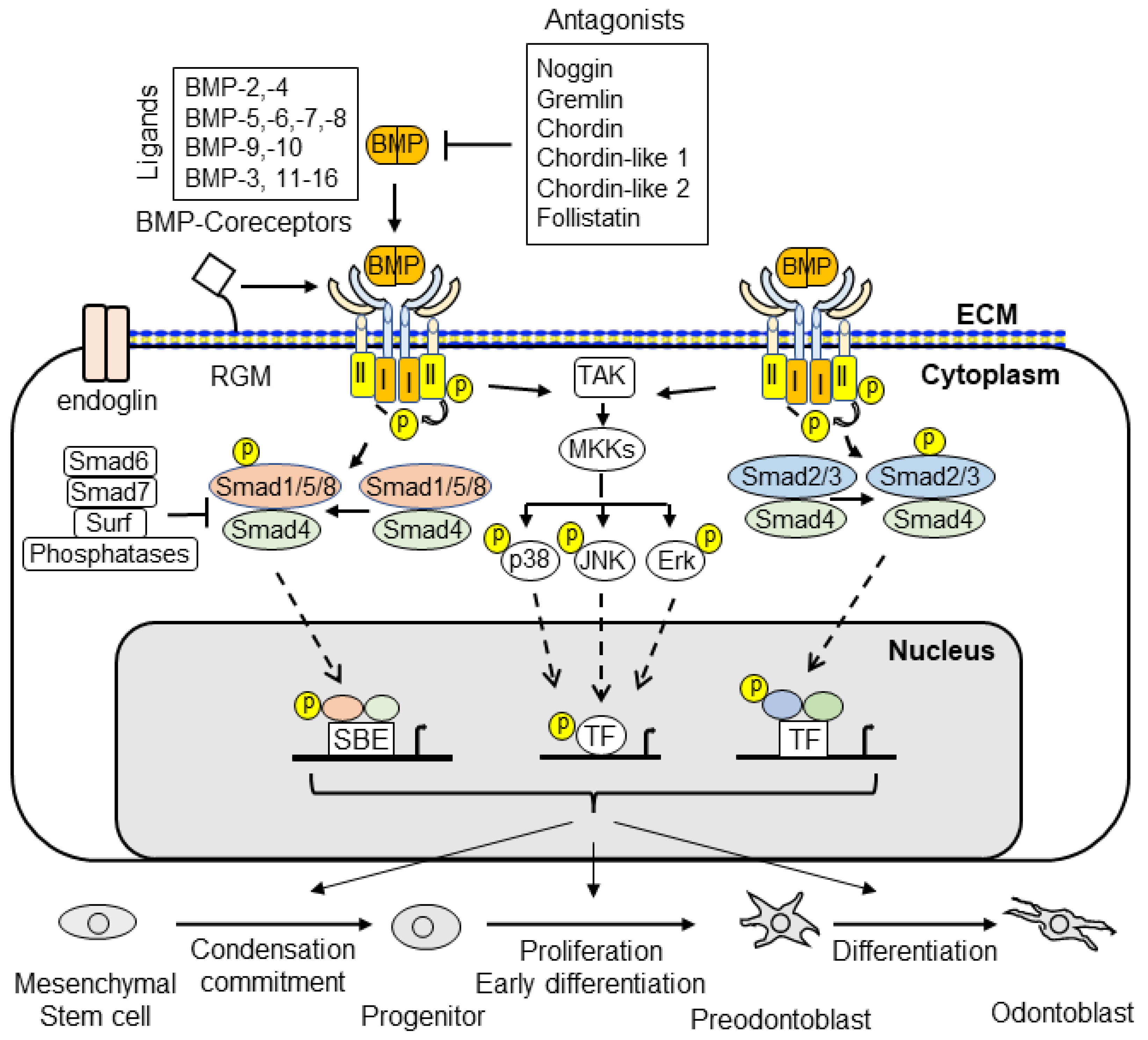
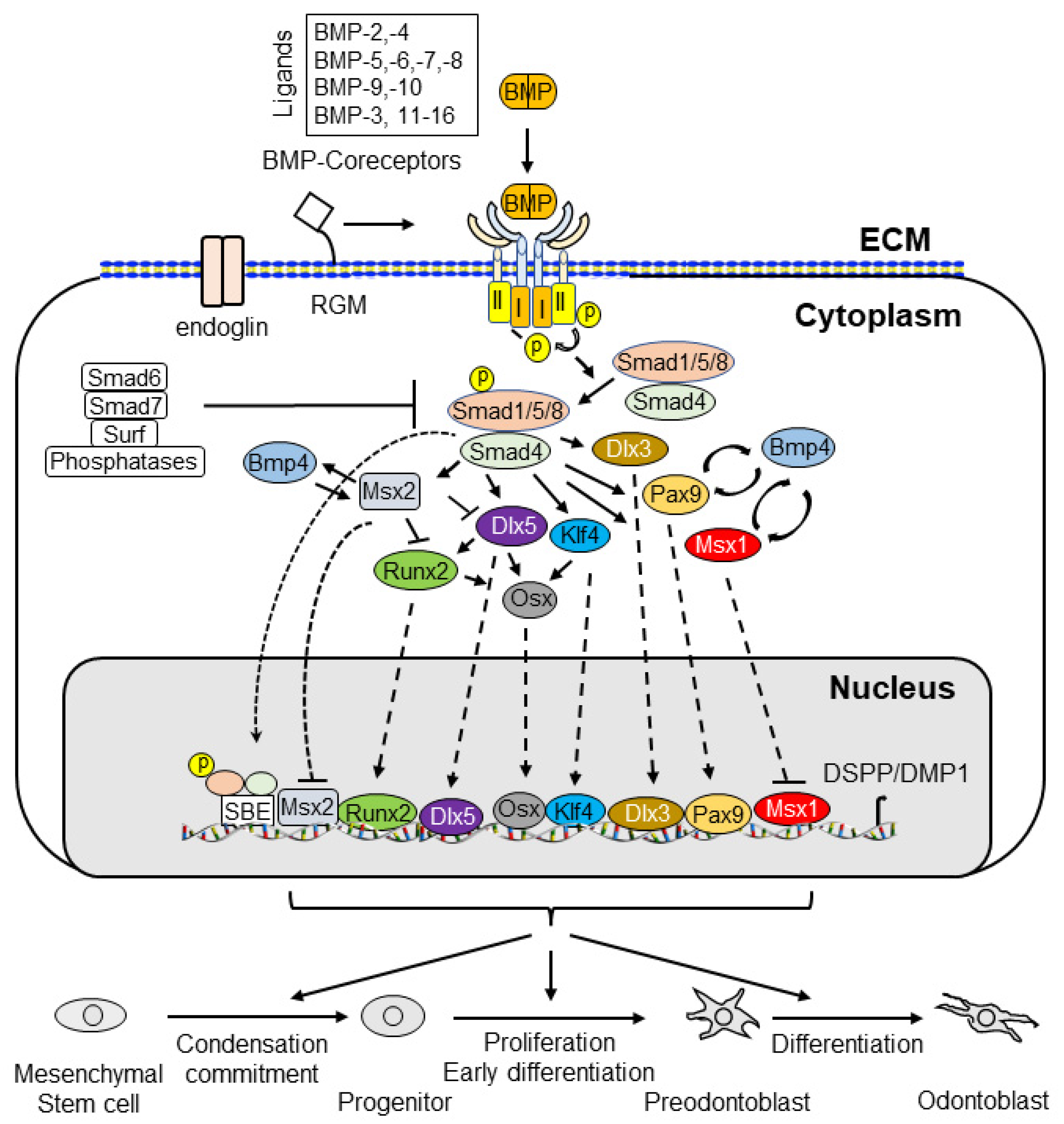
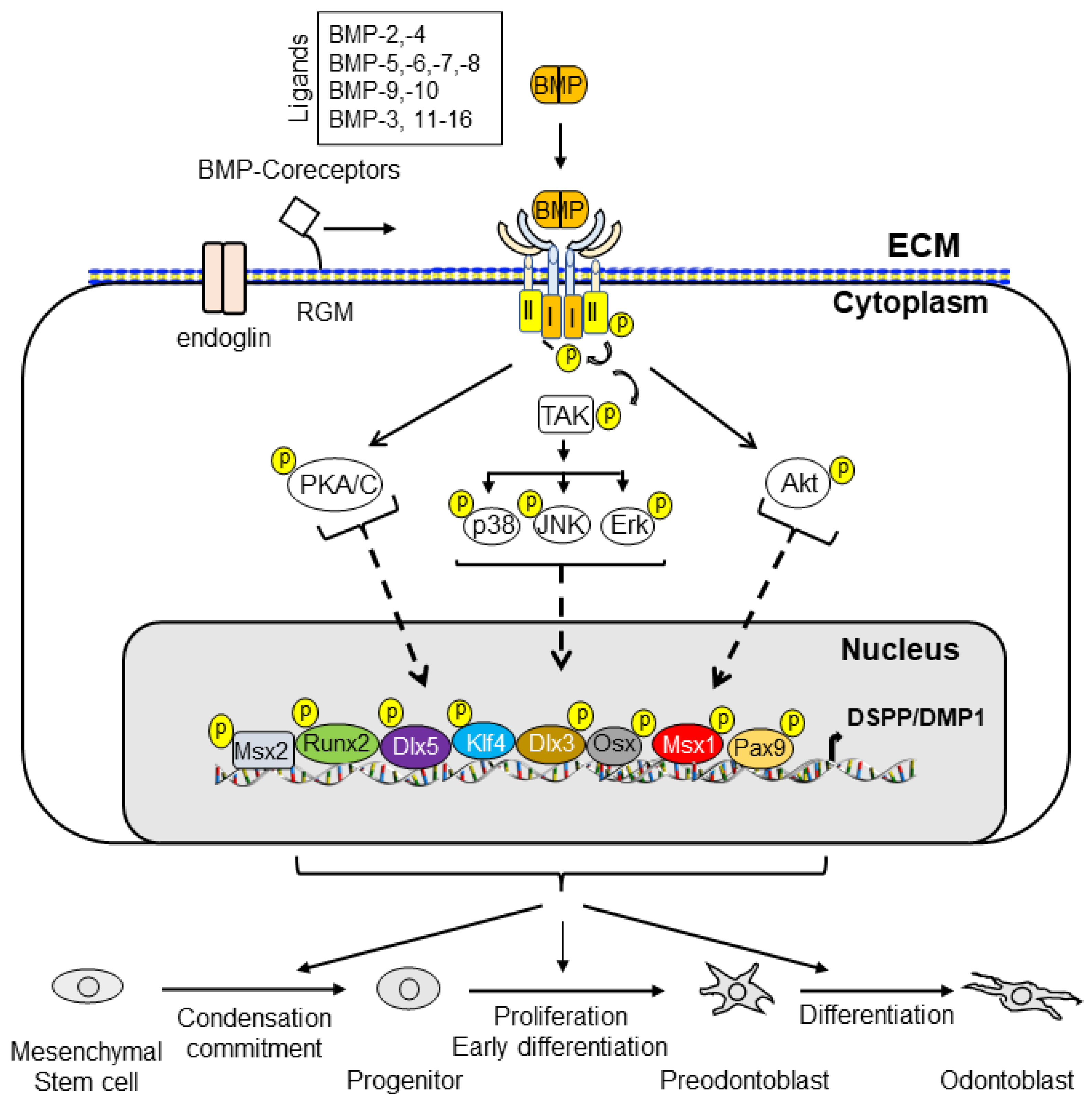
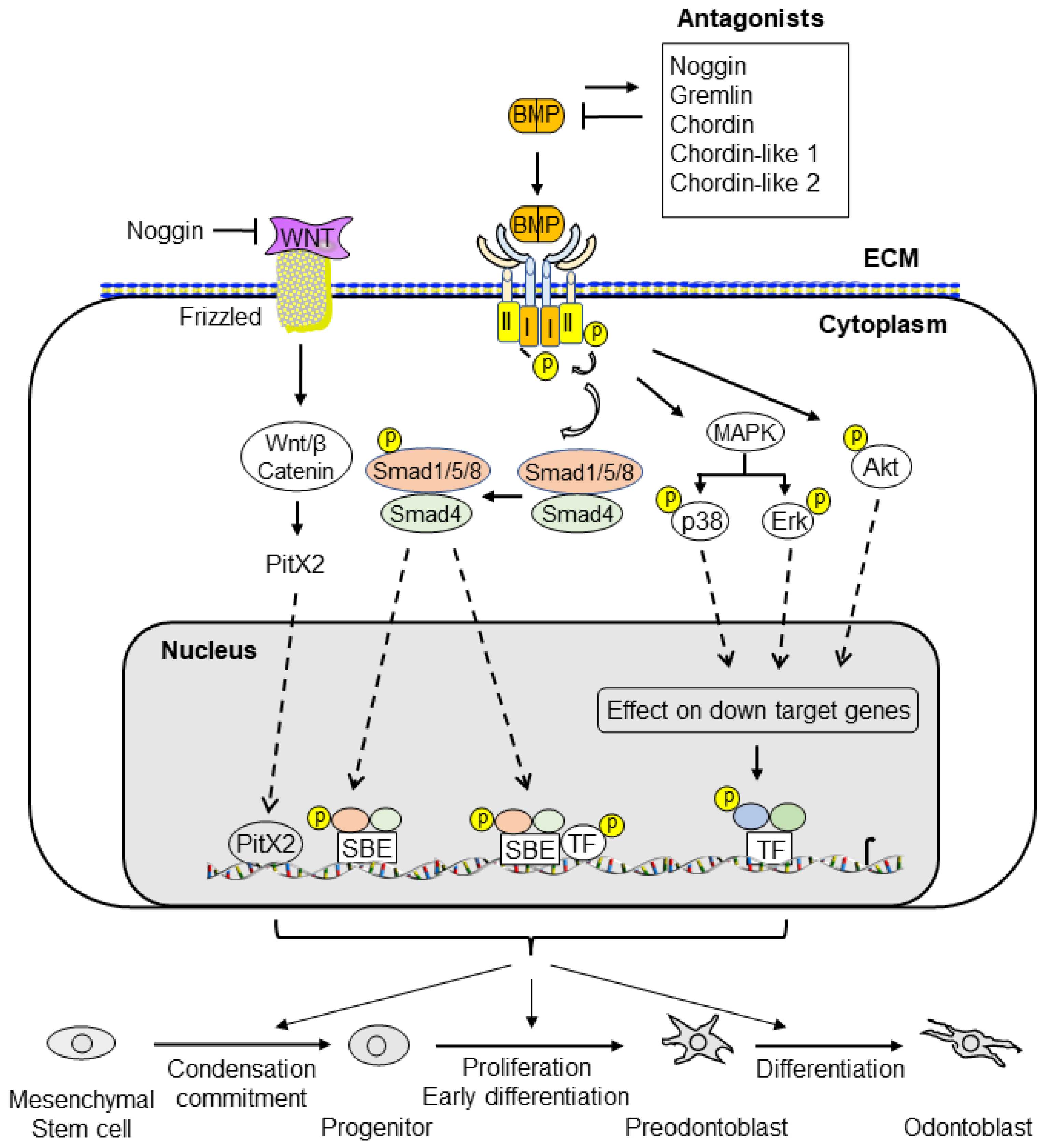
BMP signaling plays an important role in dentin development. BMPs and antagonists regulate odontoblast differentiation and downstream gene expression via canonical Smad and non-canonical Smad signaling pathways. The interaction of BMPs with their receptors leads to the formation of complexes and the transduction of signals to the canonical Smad signaling pathway (for example, BMP ligands, receptors, and Smads) and the non-canonical Smad signaling pathway (for example, MAPKs, p38, Erk, JNK, and PI3K/Akt) to regulate dental mesenchymal stem cell/progenitor proliferation and differentiation during dentin development and homeostasis. Both the canonical Smad and non-canonical Smad signaling pathways converge at transcription factors, such as Dlx3, Osx, Runx2, and others, to promote the differentiation of dental pulp mesenchymal cells into odontoblasts and downregulated gene expressions, such as those of DSPP and DMP1. Dysregulated BMP signaling causes a number of tooth disorders in humans. Mutation or knockout of BMP signaling-associated genes in mice results in dentin defects which enable a better understanding of the BMP signaling networks underlying odontoblast differentiation and dentin formation. This review summarizes the recent advances in our understanding of BMP signaling in odontoblast differentiation and dentin formation. It includes discussion of the expression of BMPs, their receptors, and the implicated downstream genes during dentinogenesis. In addition, the structures of BMPs, BMP receptors, antagonists, and dysregulation of BMP signaling pathways associated with dentin defects are described.
Keywords: bone morphogenetic proteins (BMPs); BMP receptors; dentin; odontoblasts; Smads; canonical Smad signaling; non-canonical Smad signaling; downstream genes; dentin defects bone morphogenetic proteins (BMPs); BMP receptors; dentin; odontoblasts; Smads; canonical Smad signaling; non-canonical Smad signaling; downstream genes; dentin defects