Article

The Role of AlphαSynuclein in Mouse Models of Acute, Inflammatory and Neuropathic Pain
1
Pharmazentrum Frankfurt/ZAFES, Institut für Klinische Pharmakologie, Klinikum der Goethe-Universität Frankfurt, Theodor Stern Kai 7, 60590 Frankfurt am Main, Germany
2
Fraunhofer Institute for Translational Medicine and Pharmacology ITMP, Theodor Stern-Kai 7, 60590 Frankfurt am Main, Germany
*
Author to whom correspondence should be addressed.
Cells 2022, 11(12), 1967; https://doi.org/10.3390/cells11121967
Submission received: 27 April 2022 / Revised: 2 June 2022 / Accepted: 16 June 2022 / Published: 19 June 2022

Abstract

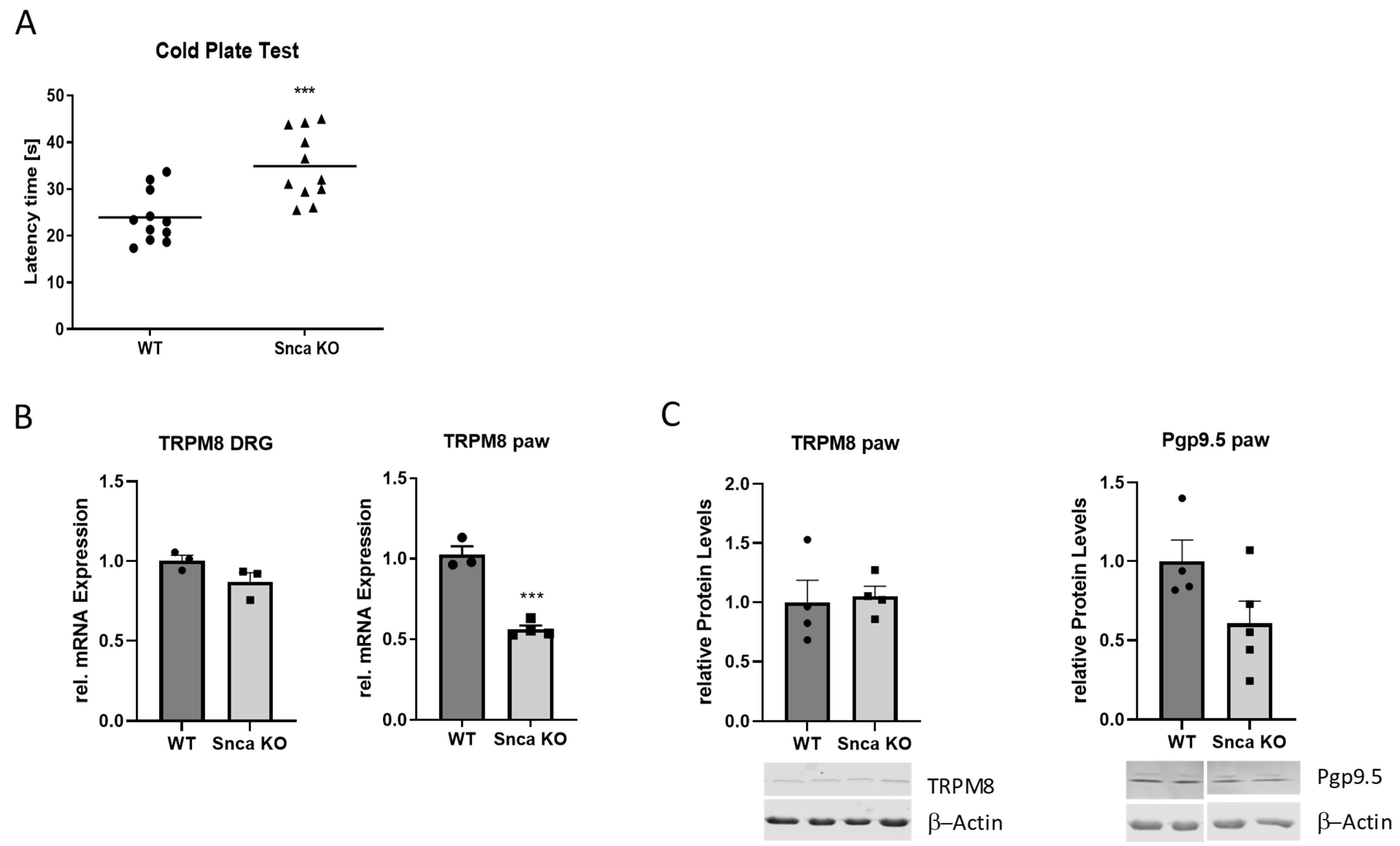
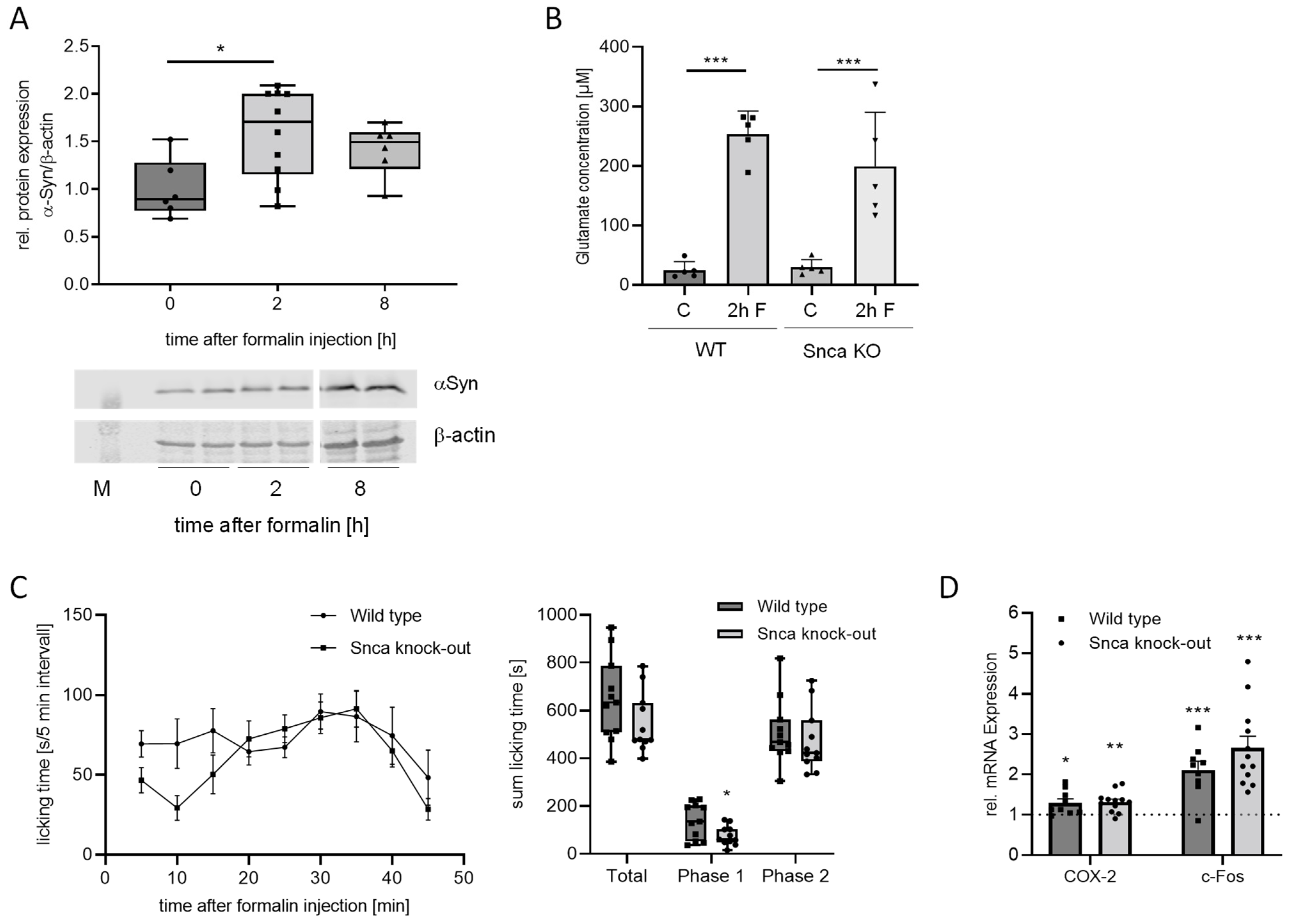
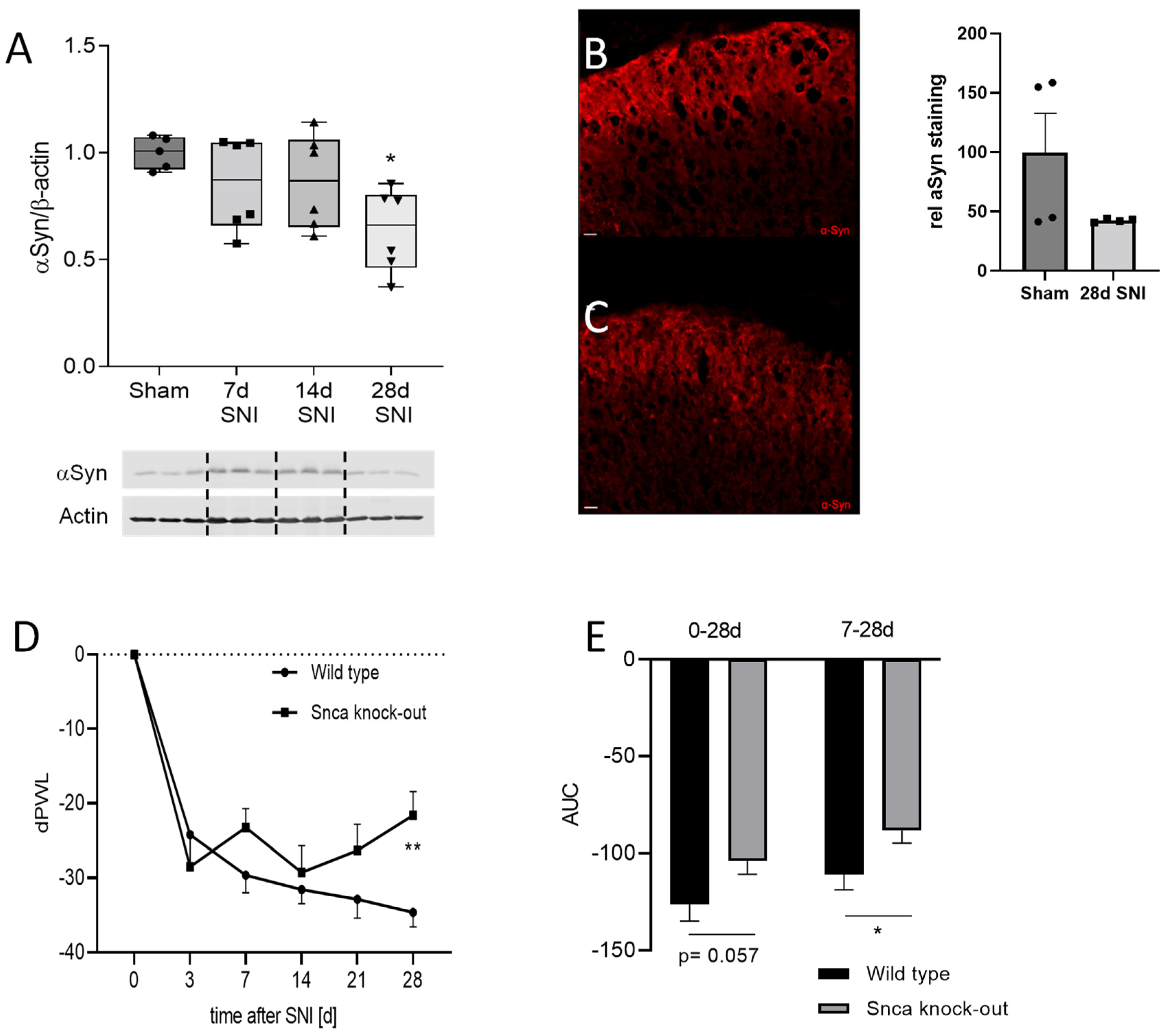
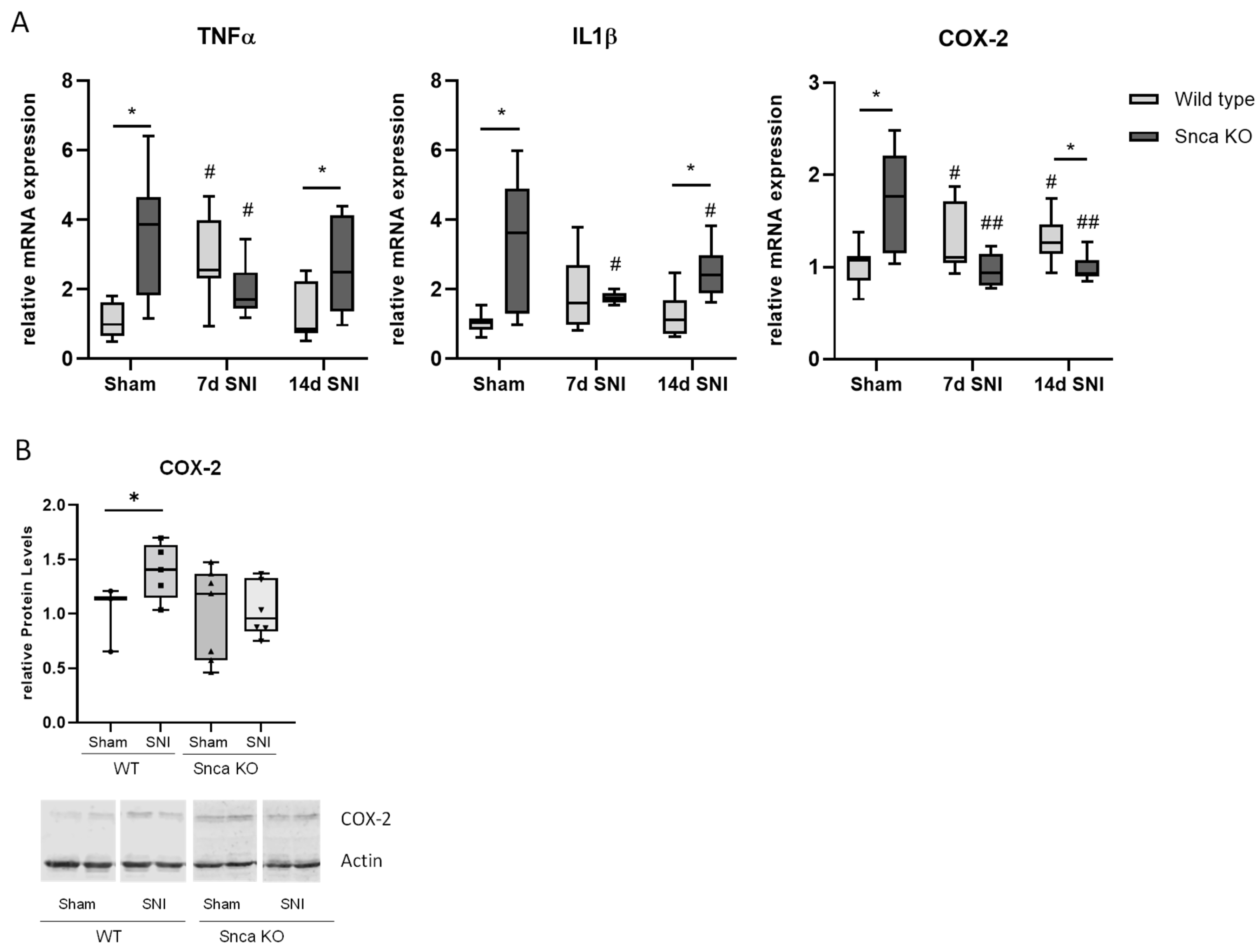
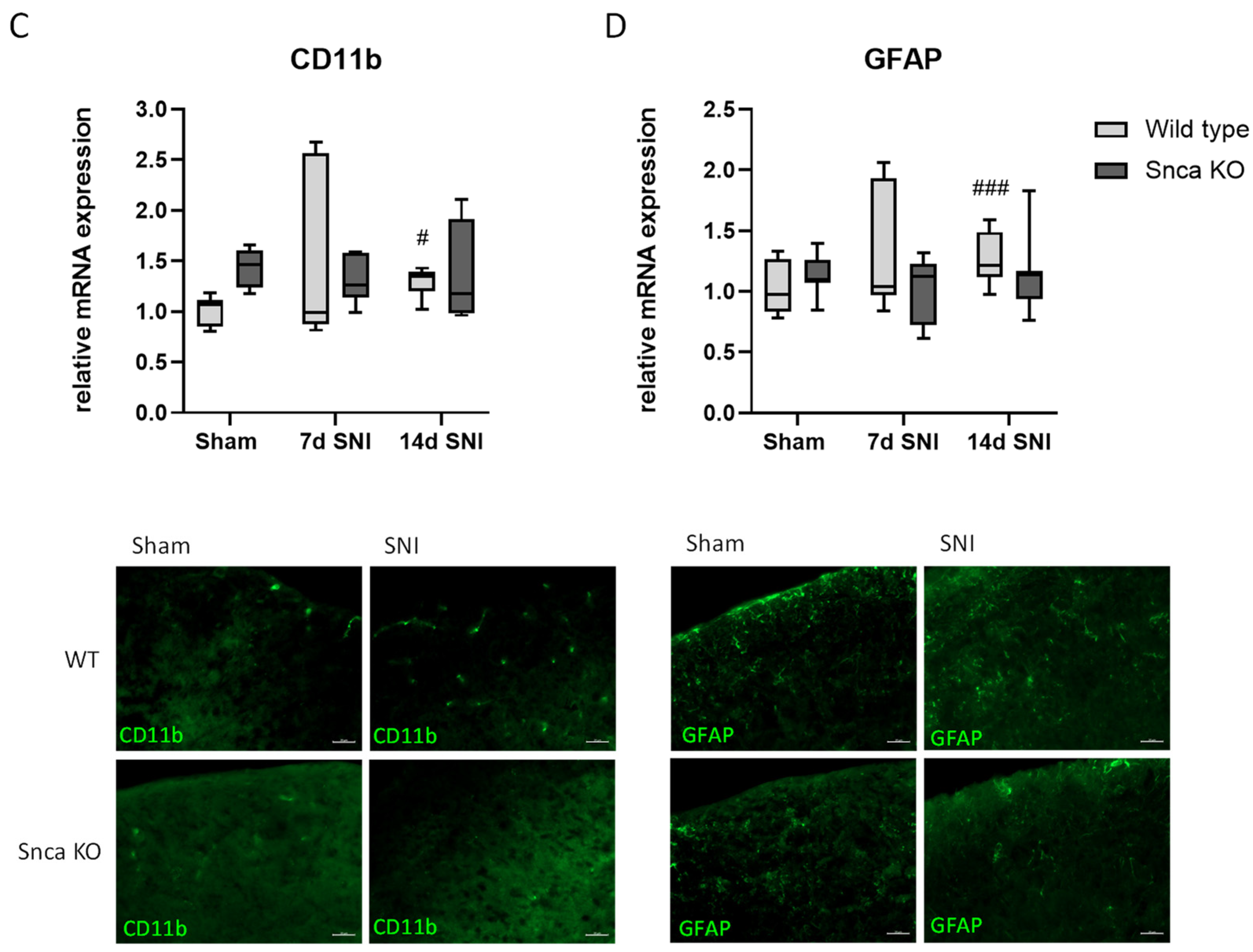
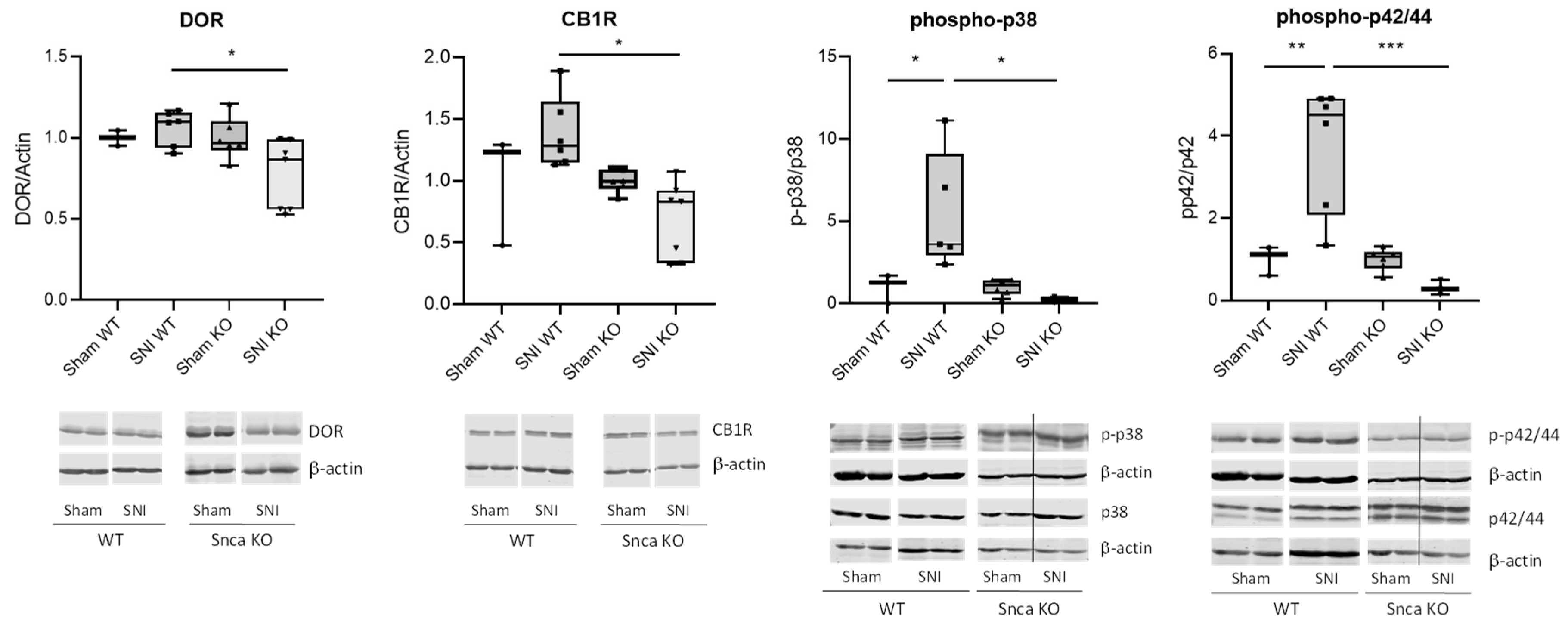
(1) AlphαSynuclein (αSyn) is a synaptic protein which is expressed in the nervous system and has been linked to neurodegenerative diseases, in particular Parkinson’s disease (PD). Symptoms of PD are mainly due to overexpression and aggregation of αSyn and include pain. However, the interconnection of αSyn and pain has not been clarified so far. (2) We investigated the potential effects of a αSyn knock-out on the nociceptive behaviour in mouse models of acute, inflammatory and neuropathic pain. Furthermore, we assessed the impact of αSyn deletion on pain-related cellular and molecular mechanisms in the spinal cord in these models. (3) Our results showed a reduction of acute cold nociception in αSyn knock-out mice while responses to acute heat and mechanical noxious stimulation were similar in wild type and knock-out mice. Inflammatory nociception was not affected by αSyn knock-out which is also mirrored by unaltered inflammatory gene expression. In contrast, in the SNI model of neuropathic pain, αSyn knock-out mice showed decreased mechanical allodynia as compared to wild type mice. This effect was associated with reduced proinflammatory mechanisms and suppressed activation of MAP kinase signalling in the spinal cord while endogenous antinociceptive mechanisms are not inhibited. (4) Our data indicate that αSyn plays a role in neuropathy and its inhibition might be useful to ameliorate pain symptoms after nerve injury.
Keywords: alphaSynuclein; nociception; inflammation; neuropathic pain; MAP kinase alphaSynuclein; nociception; inflammation; neuropathic pain; MAP kinase