Review

Role of Deep Learning in Predicting Aging-Related Diseases: A Scoping Review
1
Maitreyi College, University of Delhi, New Delhi 110021, India
2
School of Computing, Ulster University, Belfast BT15 1ED, UK
*
Author to whom correspondence should be addressed.
Cells 2021, 10(11), 2924; https://doi.org/10.3390/cells10112924
Submission received: 6 September 2021 / Revised: 22 October 2021 / Accepted: 26 October 2021 / Published: 28 October 2021

Abstract

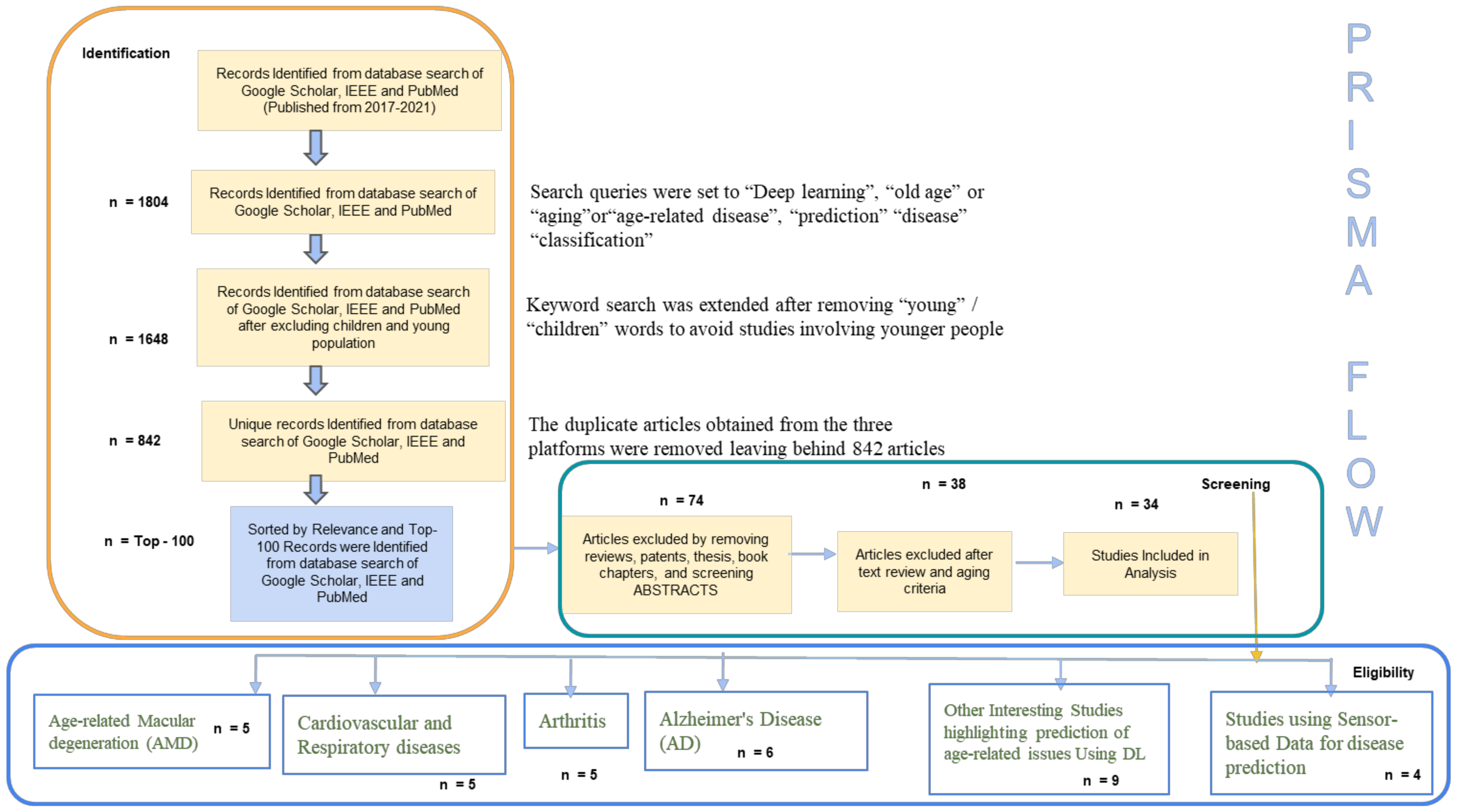
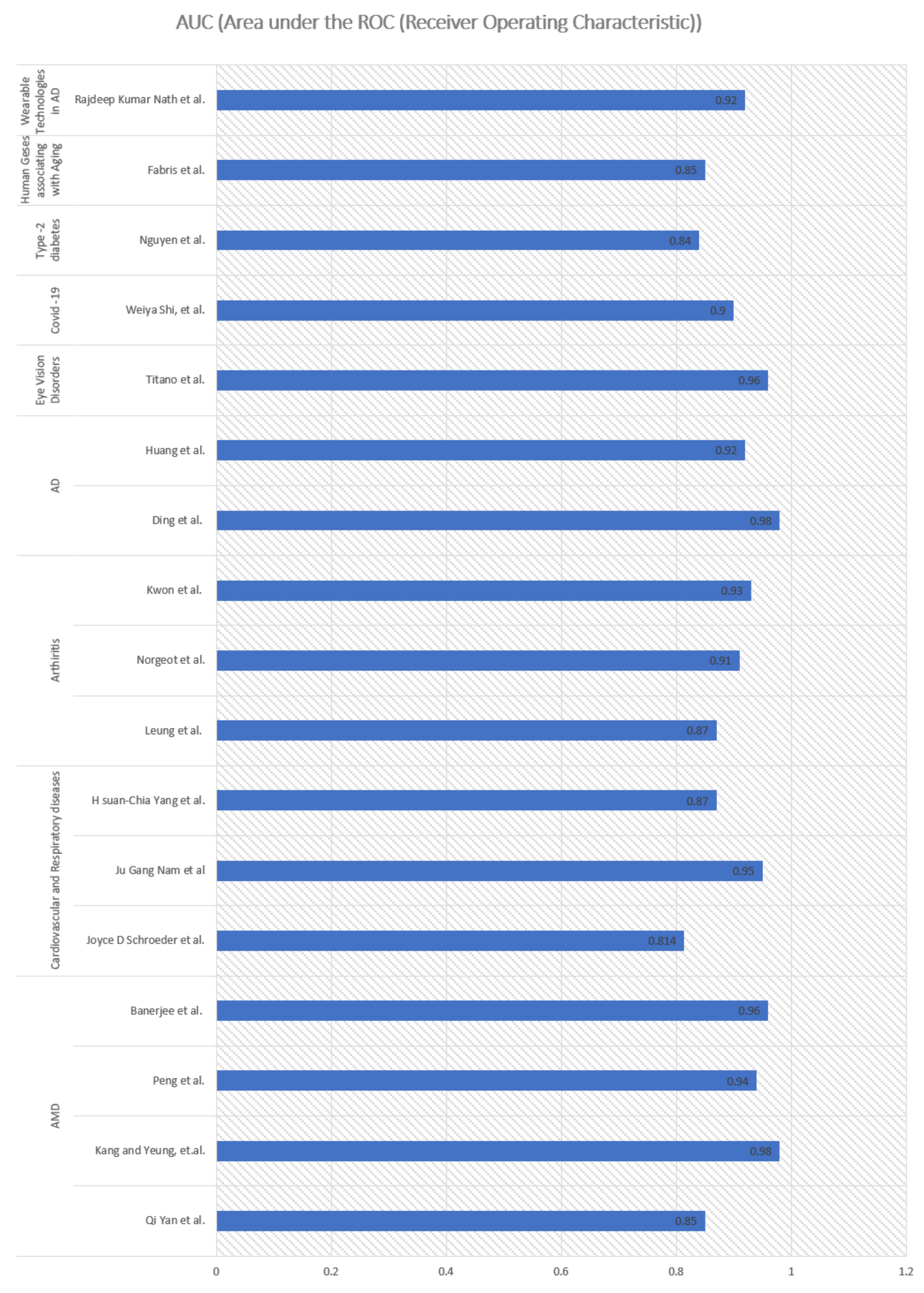
Aging refers to progressive physiological changes in a cell, an organ, or the whole body of an individual, over time. Aging-related diseases are highly prevalent and could impact an individual’s physical health. Recently, artificial intelligence (AI) methods have been used to predict aging-related diseases and issues, aiding clinical providers in decision-making based on patient’s medical records. Deep learning (DL), as one of the most recent generations of AI technologies, has embraced rapid progress in the early prediction and classification of aging-related issues. In this paper, a scoping review of publications using DL approaches to predict common aging-related diseases (such as age-related macular degeneration, cardiovascular and respiratory diseases, arthritis, Alzheimer’s and lifestyle patterns related to disease progression), was performed. Google Scholar, IEEE and PubMed are used to search DL papers on common aging-related issues published between January 2017 and August 2021. These papers were reviewed, evaluated, and the findings were summarized. Overall, 34 studies met the inclusion criteria. These studies indicate that DL could help clinicians in diagnosing disease at its early stages by mapping diagnostic predictions into observable clinical presentations; and achieving high predictive performance (e.g., more than 90% accurate predictions of diseases in aging).
Keywords: aging; deep learning; classification; prediction; PRISMA aging; deep learning; classification; prediction; PRISMA