1. Introduction
Mealybugs (Hemiptera: Pseudococcidae) are prevalent pests in grape-growing regions around the world [
1]. They are phloem feeders that use their piercing and sucking mouthparts to feed on different parts of the grapevine, including the roots. Phloem sap contains sugar in a relatively higher proportion than is needed by these insects, and hence, a large amount of sticky sugary fluid is excreted by these insects. This excreted fluid called honeydew, contains sugars, amino acids, proteins, minerals, and vitamins.
Pseudococcus maritimus (Ehrhorn) has been the predominant mealybug pest of grapes in Virginia [
2]. An earlier research project on grapevine leafroll-associated viruses in wine grape varieties and native grape species identified
P. maritimus,
P. viburni (Signoret), and
Ferrisia gilli (Gullan) (Hemiptera: Pseudococcidae) in Virginia vineyards (USA) [
3]. The density, feeding locations, and movement patterns of various mealybug species fluctuate with the seasons, influenced by regional temperatures and vineyard management strategies [
4,
5]. One of the primary methods of management of grape pests, including mealybugs, is chemical control [
6], often, the repetitive use of synthetic chemicals ([
7]). The presence of a waxy covering on their bodies and their habit of hiding in concealed locations within the vine often complicates the management of mealybugs with conventional insecticides [
7,
8]. Systemic insecticides demonstrate significant efficacy in mealybug management [
9]; however, further investigation into alternative control strategies remains essential to ensure sustainable and comprehensive pest mitigation.
Ants (Hymenoptera: Formicidae) belonging to subfamilies Myrmicinae, Dolichoderinae, and Formicinae are often found in close association with honeydew-producing hemipterans. There is a trophobiotic relation between these insects [
10]. In trophobiosis, ants receive honeydew from mealybugs (and other honeydew-producing hemipterans), and in return, they clean mealybug colonies, provide protection against natural enemies, and transport them to new feeding sites [
10,
11,
12]. Initially considered only as the reason for sooty mold growth in grape vines, honeydew also serves as a food source for natural enemies [
13].
Research has been conducted utilizing the association between ants and mealybugs to control ants and their subsequent effect on mealybug populations in the vineyard [
14,
15,
16,
17]. Granular insecticides, liquid baits, and insecticide-laced sugar provisioning have been tested in the field to control ant activity [
14,
15,
16,
17,
18] and have provided effective control of ants and mealybugs. Artificial sugar dispensers have been deployed in the field with or without insecticide. Notably, dispensers target both forager ants and the entire nest, as food is shared among colony members through trophallaxis [
19,
20,
21]. Trophallaxis is a nutritive fluid-exchange observed in social insects and some nonsocial insects. When forager ants consume insecticide-laced sugar, the toxicant is not immediately lethal but is gradually disseminated throughout the colony, ensuring widespread exposure [
19,
20]. It helps baits with a low concentration of toxicants to reach from vines to ant nests and recruit more ants to the bait [
20,
21]. This indirect mechanism allows low-concentration toxicants to travel from vines to ant nests, recruiting additional ants to baits and, hence, facilitating large-scale control.
The study primarily aimed at evaluating whether the use of sugar dispensers disrupts the interaction between ants and mealybugs in vineyards. Therefore, our study aimed 1. to identify the mealybug species and ant genera in close association with them in mealybug-infested vines, 2. to monitor the distribution of populations of ants and mealybugs before and after deploying dispensers in the vineyard, and 3. to assess the level of mealybug infestations in the sampled areas with and without dispensers. We tested the hypothesis that the provision of an alternative carbohydrate source would reduce the ant foraging activity on vines, thereby weakening the association with mealybugs and, ultimately, at the end of the season, lowering mealybug activity and infestation levels. From this hypothesis, we will be able to analyze whether the provision of carbohydrates as an alternative food source lowers the ant activity in the vicinity of mealybugs and hence lowers the mealybug infestation rates on vines.
2. Materials and Methods
2.1. Field Sites and Experimental Design
The ant–mealybug experiment was carried out on two vineyard sites: Orange County (vineyard HV) (38°13′ N, 78°6′ W) and Fauquier County (vineyard PC) (38°47′ N, 77°44′ W), both medium-sized commercial vineyards in Virginia, USA, spanning over 25 acres of vines. The vineyards were selected based on the site availability, a history of mealybug infestations, and mealybug pest pressure recorded by the researcher in previous years. These are conventional vineyards that rely on synthetic insecticides for pest management. Each vineyard block was more than 10 years old and had a previous history of mealybug infestations.
Each vineyard was divided into experimental plots, where the research was conducted. Each of these plots consisted of at least 50 vines per row and was divided into four rows. Each experimental plot ranged in area from 0.283 to 0.081 hectares, and a minimum buffer zone of 2 to 3 vine rows was maintained between the plots containing different kinds of dispensers. The control plots were separated from other treatment plots by 10 to 20 m. These boundaries were maintained uniformly across both of the vineyards.
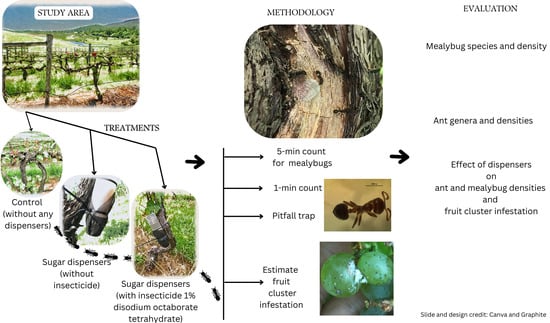
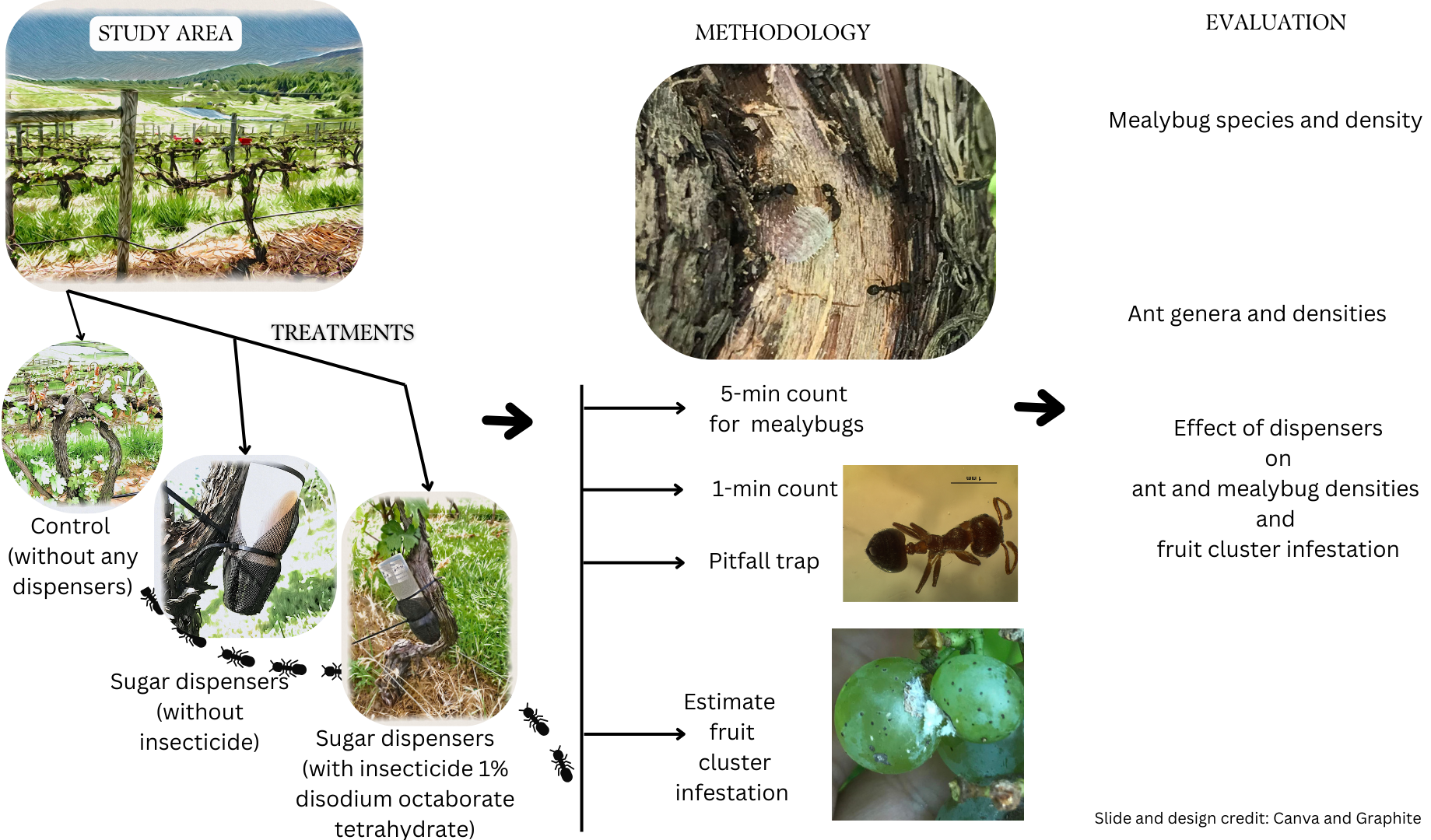
Three treatments were introduced to the experiment: control, sugar dispenser without insecticide (SD), and sugar dispenser with insecticide (SDI) (
Figure 1). The treatments were applied at the plot level, as ants can move freely within the experimental plots, and individual vines were the sampling units in which all data were measured. The area of each of the treatment plots ranged between 450 m
2 and 750 m
2.
2.2. Sugar Dispensers
The sugar dispensers used in the field are based on earlier research by Daane et al. [
22] and repeated by Parrilli et al. [
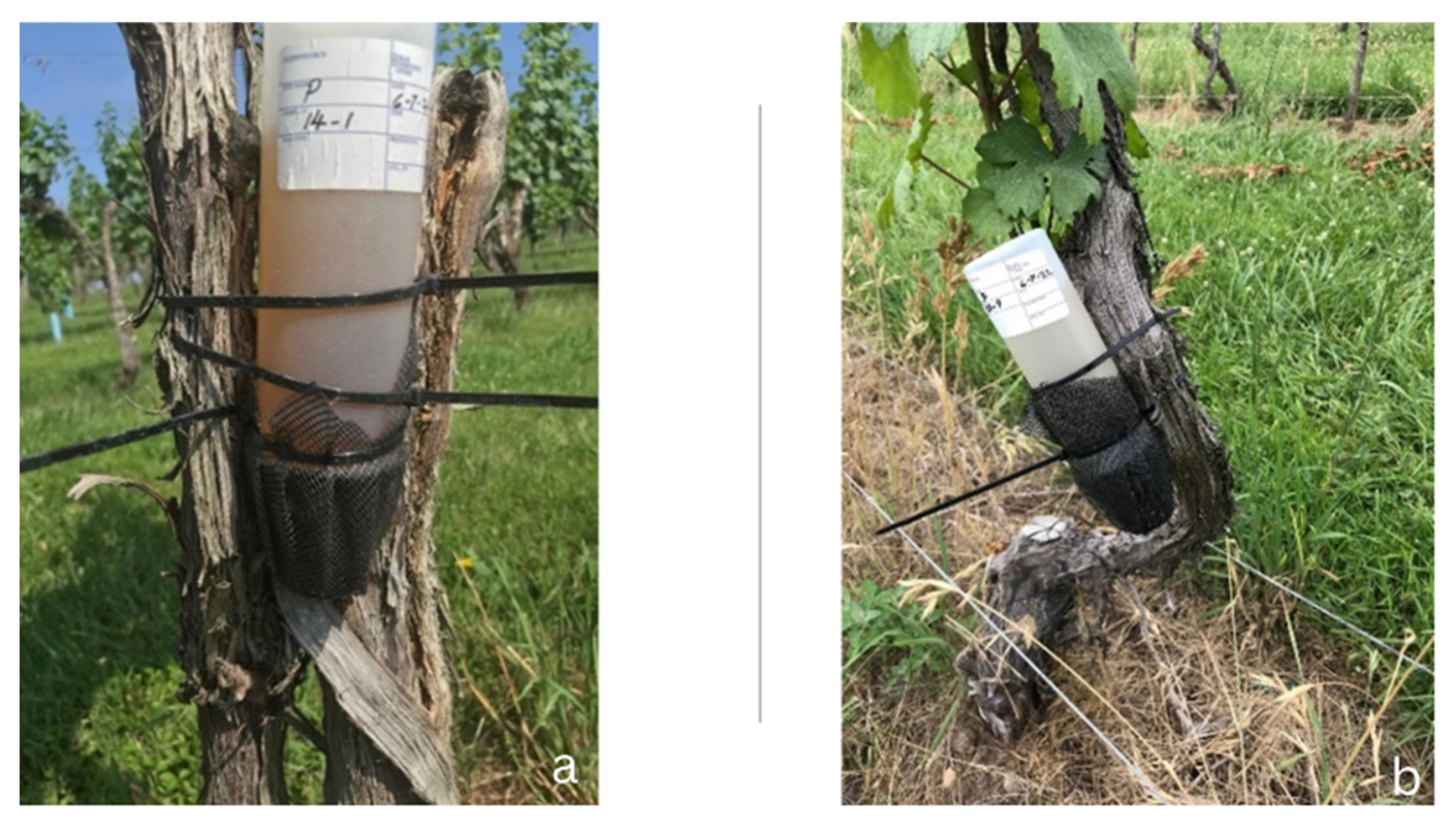
16]. Here, 250 mL HDPE narrow-mouthed bottles, assembled with white polypropylene closures, were modified into dispensers (The Lab Depot, Dawsonville, GA, USA). A 1 cm circular hole was drilled in the cap of the tube, and a permeable mesh (Vigoro, Nebraska, USA) was placed between the tube and the cap. A 5.08 cm garden slotted mesh net cup (Orimerc, USA) was placed outside the cap, with a plastic mesh (Saint-Gobain ADFORS, New York, USA) on the exterior part of cap to allow the entry of ants but not bees (
Figure 1). Sugar dispensers, if improperly set up, could have a detrimental effect on bees in the vineyard.
We deployed 12–16 dispensers (
Figure 1) in four rows of vines (vine spacing within row= 1.21–1.82 m; 4–6 feet), evenly placing them after every 5–10 plants through the experimental plots. The dispensers were placed 1 foot, nearly 30 cm, above the ground. In the first and last months of deploying dispensers (June and September), due to a lower number of ants, we deployed 12 dispensers per treatment. In July and August, 16 dispensers per treatment were deployed. They were deployed at the beginning of June and removed in the third week of September. A gap of 2 rows of grapevines was maintained between each of the two treatments. The insecticide used for ant control was Greenway liquid ant-killing bait (KM Ant Pro LLC, Florida, USA), containing 1% disodium octaborate tetrahydrate as the active ingredient. As per the manufacturer’s instructions, the Gourmet liquid ant bait can be used at full strength or diluted with an equal amount of distilled water. During the first one and a half months of the research, we used liquid bait at full concentration; after that, it was diluted to 50% strength. According to information on the KM Ant Pro website, the product remains fully effective even when applied at half-strength, allowing us to reduce the chemical intensity while maintaining treatment efficacy. Hence, we diluted the insecticide solution based on ant activities in the vineyard.
Mealybug and ant activities were measured at the vine level, with 12 replications per treatment. The number of vines sampled, number of dispensers, observation duration, and time were standardized across the treatments and different vineyards. Repeated measurements taken from multiple vines within the same plot were treated as subsamples rather than independent replicates because all vines within a plot share the same treatment conditions and are not statistically independent. Our analysis, therefore, uses plot-level summaries (weekly and end-of-season values) to evaluate the cumulative effect of continuous dispenser use over time. These repeated observations represent temporal subsampling of the same experimental unit, allowing us to assess the long-term treatment effects rather than treating each vine-level measurement as an independent data point, which would constitute pseudoreplication.
2.3. Mealybug Species
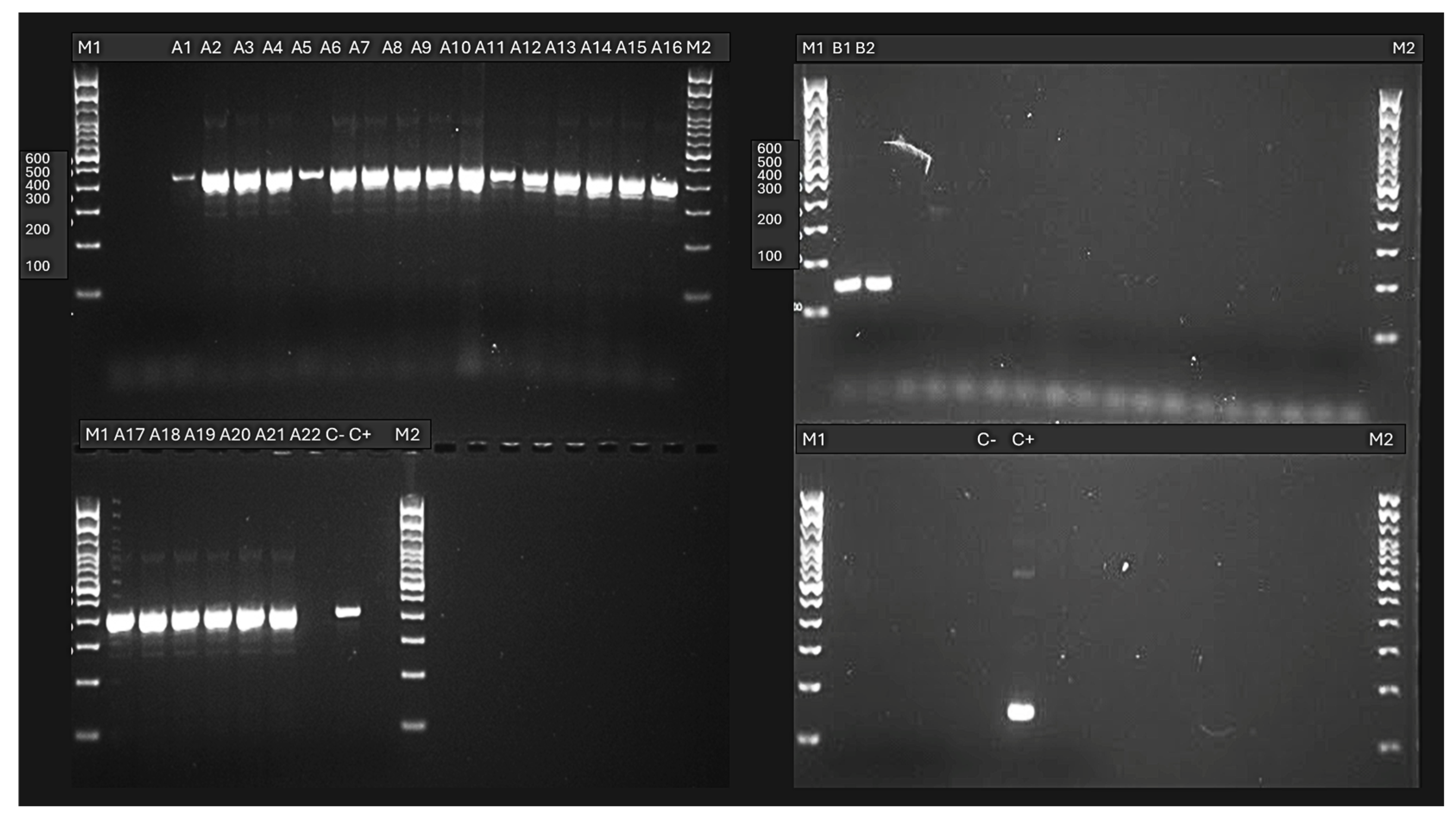
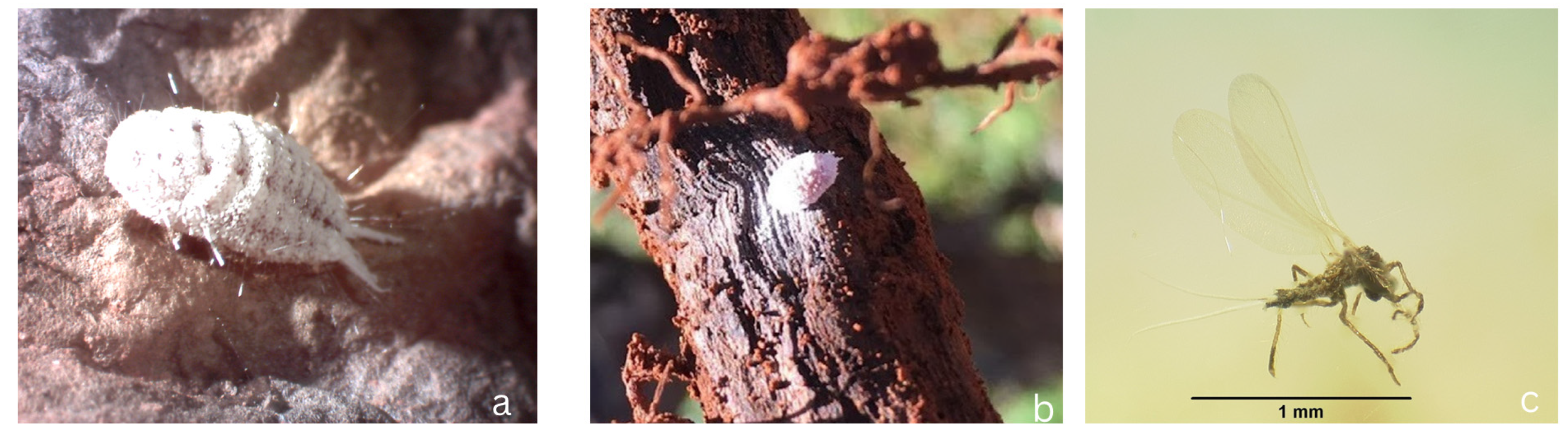
Most of the mealybug species were identified and photographed in the field based on morphology. Some representatives were taken back to the laboratory for identification. Some of the samples were pooled out and identified by multiplex PCR using mitochondrial cytochrome oxidase subunit one gene based on Daane et al. [
23]. The mealybug numbers were also counted in the vineyard by using a 5 min visual count. We used the single-vine treatment method to record data, and the number of mealybugs was counted on the trunk and leaves, with 10 replicates for each treatment. Field-based insect identification and population distribution are based entirely on morphological identification, while a portion of the collected insects were returned to the lab for confirmation of species using genetic methods.
2.4. Ant Activity
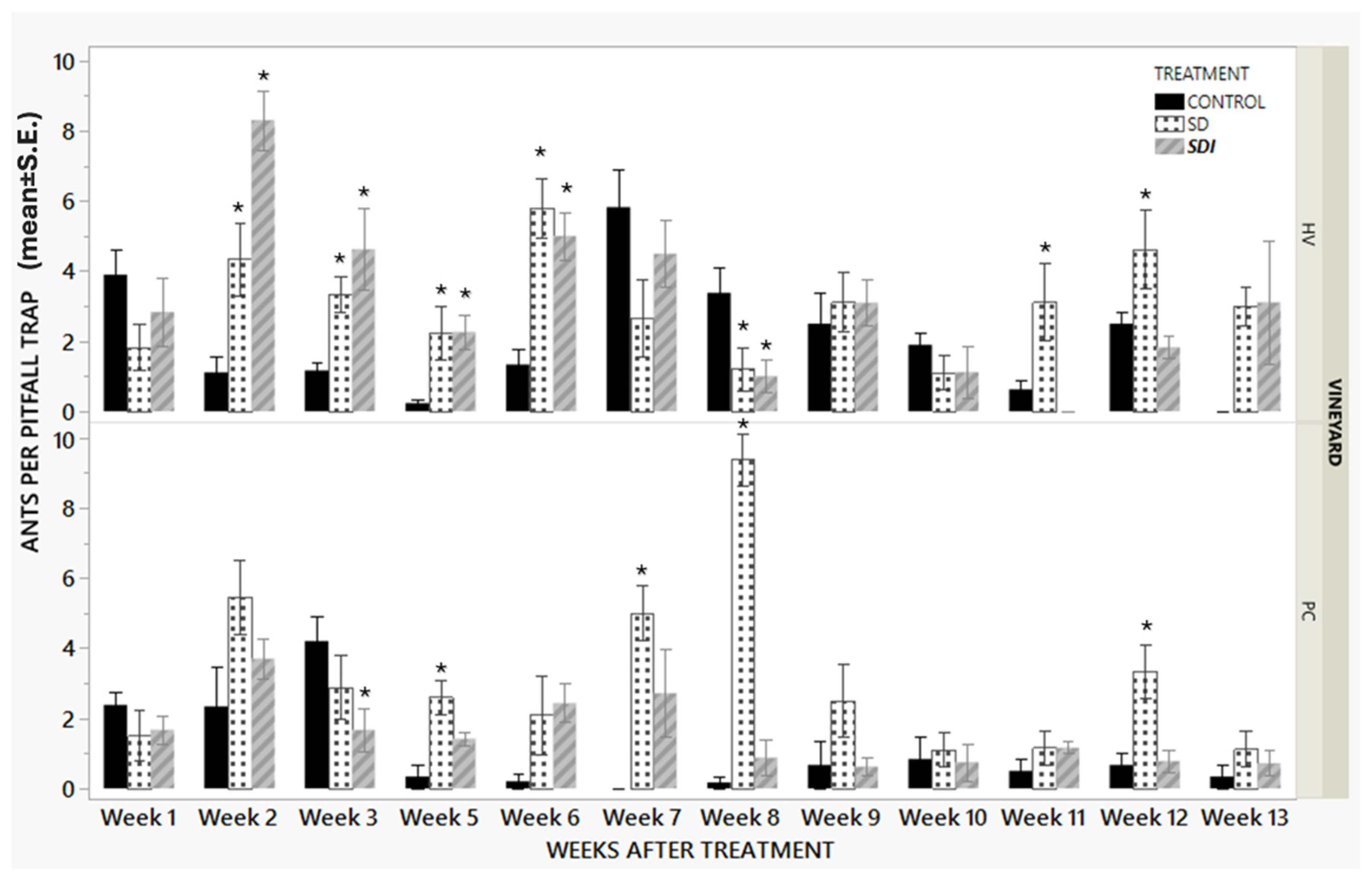
Ant populations in the vineyard were monitored and sampled weekly in all three treatment plots by both 1. pitfall trapping and 2. 1 min visual count. Here, 50 mL Falcon centrifuge tubes were used for pitfall trapping, with 75% alcohol and a few drops of ethylene glycol as the preservative [
24,
25]. The advantage of using ethanol is that it does not attract ant species differentially. A total of 5–8 pitfall traps were randomly placed in each experimental plot at each site. The pitfall traps were set up at the field sites between 8:00 and 9:00 a.m. and retrieved after approximately one hour.
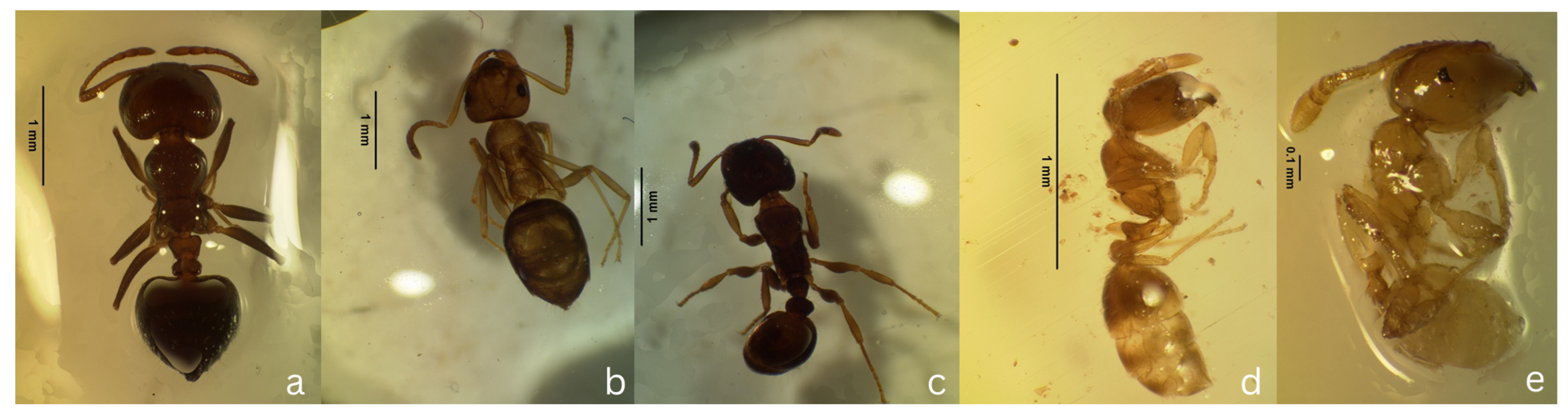
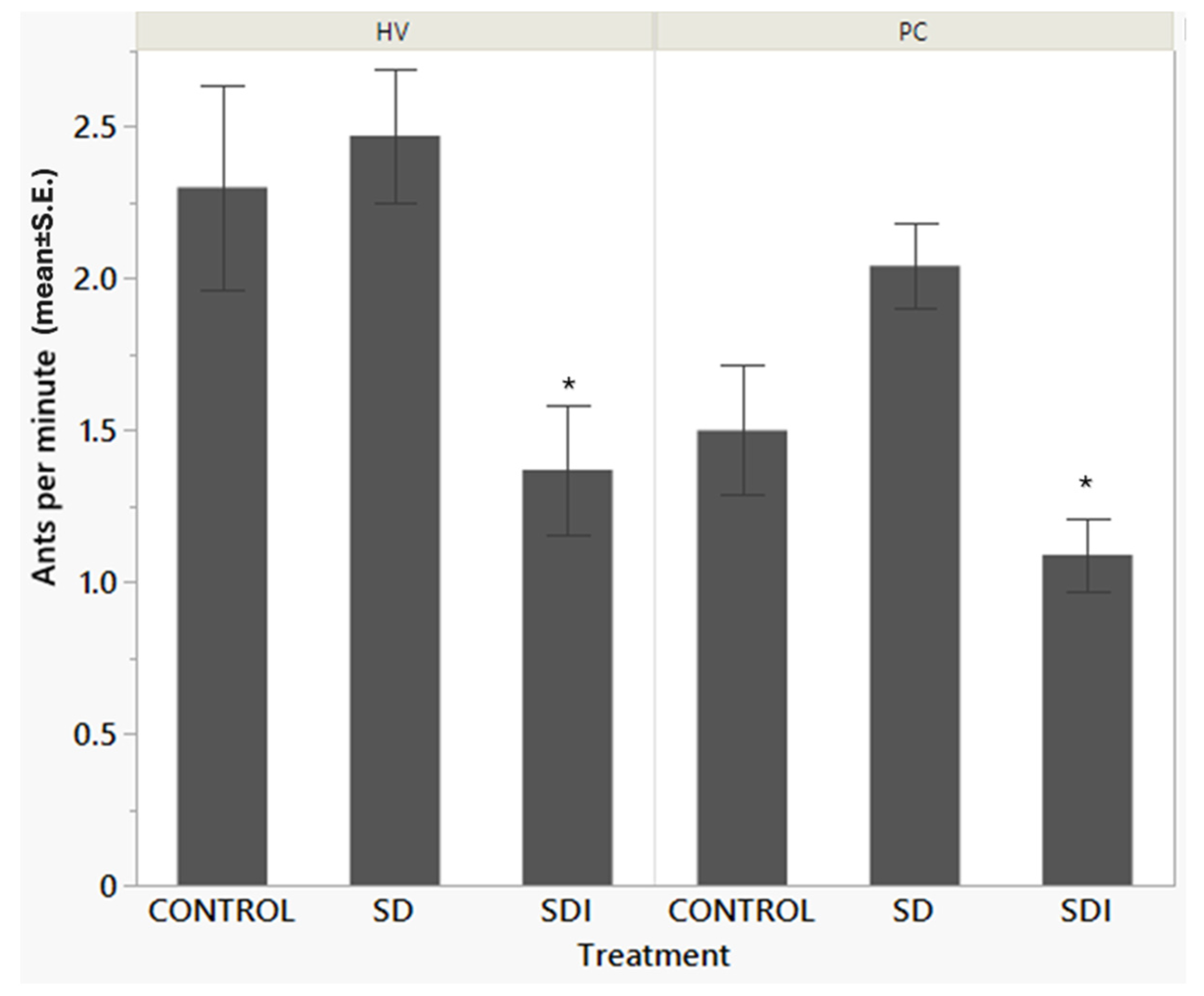
Ant activity was also monitored by counting the number of ants crossing an imaginary line of 20 cm in length and between the vine canopy and above the dispensers on the trunk for 1 min. Ant numbers during visual counts were counted at fixed times of day (9–11 a.m. in the morning and 2–4 p.m. in the afternoon). The vines for the visual count and pitfall trap placement were selected within the experimental plot and replicated 10 times as a single-vine treatment. This specific time period was selected to minimize diel variation in ant foraging, which is known to fluctuate with temperature, humidity, and light conditions. Conducting all sampling within the same time window ensured that the observed differences in ant activity reflected the treatment and site effects rather than time-of-day variation. The number of ants moving up and down the vine was recorded on 10 vines per treatment. The ants were collected in 70% ethanol and taken back to the lab for identification using the taxonomic identification keys [
26].
Pitfall trap data were recorded to measure ant activity levels in the vineyard, and visual counts recorded ant activity as a response to the presence of an alternative food source in the vines. Dispensers were maintained on a standardized schedule across all treatments and sites. Each dispenser was inspected weekly, and refilling or cleaning was performed when the sugar solution level dropped below approximately one-third of the reservoir or when debris accumulation was observed. This resulted in a maintenance interval of one to two weeks, depending on environmental conditions such as temperature and rainfall. All plots followed the same criteria to ensure consistent dispenser condition and minimize variation in attractiveness to ants.
2.5. Fruit Cluster Infestation
During the harvest season, we examined 15 replicates of single grape clusters per vine in each single-vine treatment plot to assess the presence of mealybugs under field conditions. In addition, 10 clusters per treatment were collected from each of the ten single-vine treatments and brought to the laboratory for closer inspection. Because sampling occurred in active commercial vineyards where destructive sampling had to be minimized, we used a subsampling approach: 25 clusters, one from each vine within the treatment plots, were examined. This design allowed us to capture the variation in mealybug infestation while maintaining a consistent and feasible sampling effort across commercial vineyard settings.
Sampling occurred in active commercial vineyards where destructive sampling must be minimized to avoid economic loss. For this reason, we adopted a systematic sampling approach, with vines spaced at regular intervals along each plot and a subsampling approach that balances scientific rigor with grower constraints. The number of clusters examined per plot (field inspections and laboratory samples) reflects the maximum feasible sampling effort permitted by vineyard managers while maintaining consistent sampling across sites.
To enhance the robustness of the experiment, we approach random vine selection, spatially distributed cluster sampling within plots, and complementary field and laboratory assessments to provide a representative methodologically sound estimate of mealybug infestation under commercial vineyard conditions.
2.6. Data Analysis
The foraging activity of each ant species was quantified by calculating the mean number of individuals collected throughout the season. To allow for more flexible comparisons across vineyards, sampling dates were converted to weeks after treatment. To maintain a consistent sampling effort, we standardized ant activity by calculating per-trap averages and used these values in all analyses. This ensures that differences in trap numbers do not have biased comparisons among plots or treatments. Pitfall traps were deployed for only 1 h due to constraints on working in active commercial vineyards, where longer exposure was not feasible without interfering with vineyard operations or risking trap disturbance. As a result, the traps were used to measure short-term surface activity rather than to estimate absolute abundance or community composition. Because all traps were exposed for the same amount of time, the resulting data remain comparable and suitable for evaluating treatment effects on ant activity.
To evaluate the effects of dispensers on activity across the vineyard, we analyzed data using a mixed-model with a repeated-measures structure. In our data having subsamples as repeated measures weekly, a mixed-effects model was used to avoid inflating degrees of freedom. The model assessed the number of ants per treatment per sampling date as a function of treatment, sampling date, and the vineyard site. Treatments were analyzed as fixed effects, vineyard sites as random effects, and sampling date (week) as a repeated-measures factor to account for non-independence of observations. A repeated covariance structure was applied to the model to partition variability into between-site and within-site sources, ensuring that the treatment effects were not confounded by underlying spatial or temporal correlations. Post hoc analyses were conducted using Tukey’s HSD test for all pairwise comparisons.
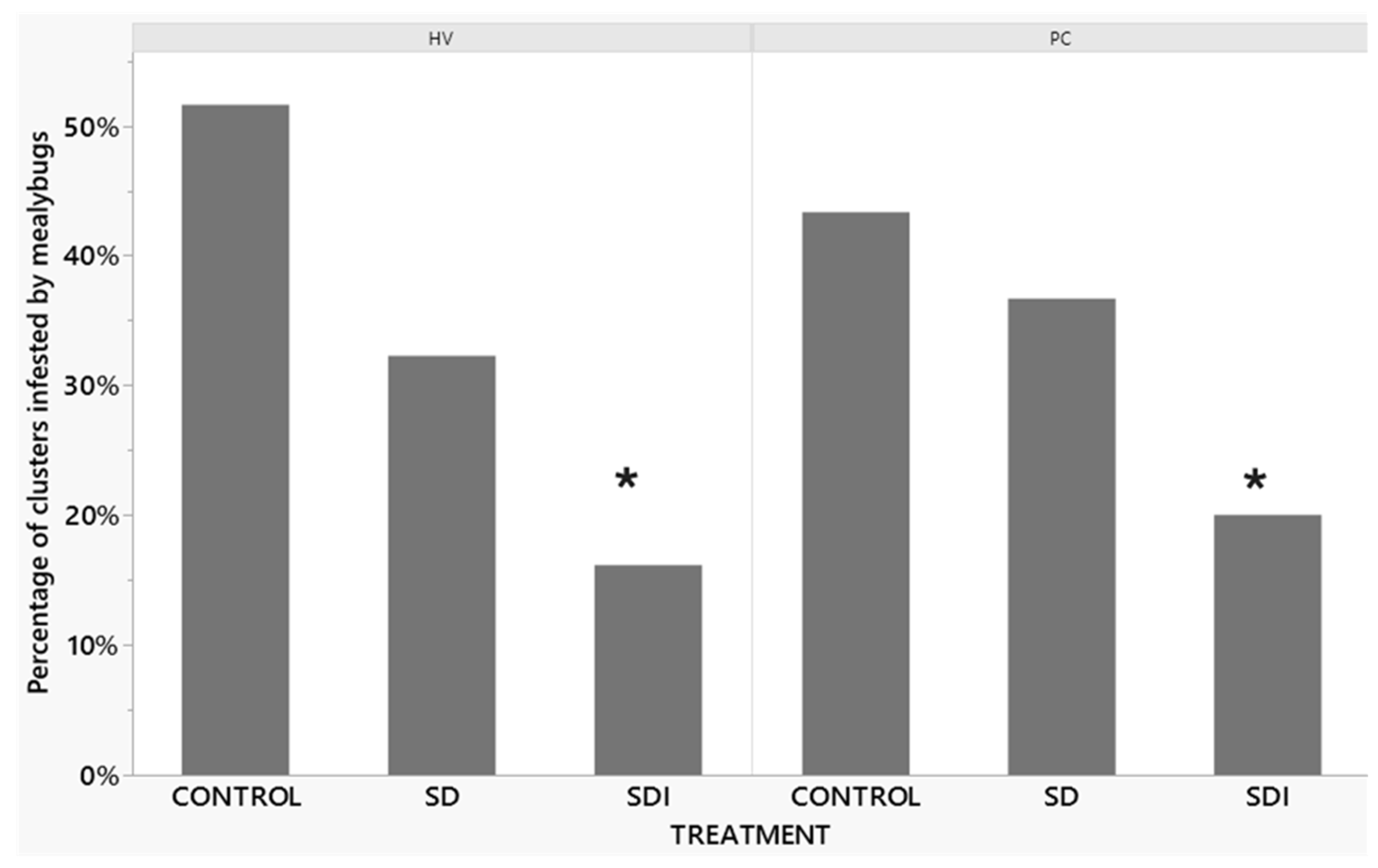
We divided the fruit clusters collected from single-vine treatment in the vineyard into two options: presence (1) or absence (0) of mealybugs in the clusters. From the grapevine that the clusters were examined or collected, we then recorded 1. two vineyard sites, 2. ant numbers per 1 min visual count on the trunk, and 3. mealybug numbers on the trunk per 5 min visual count. We used the Generalized Linear Regression with a Binomial Distribution to examine the effects of treatment, vineyard site, number of ants, and mealybug numbers on cluster infestation [
27]. Post hoc analyses were conducted using Tukey’s HSD test for all pairwise comparisons for the overall effect as well as individual vineyards.
Data analysis was carried out using JMP
® 18 Student Edition (SAS Institute, Cary, NC, USA) [
28].
4. Discussion
This study has explored vineyard-level datasets while simultaneously documenting mealybug populations in the vineyards and identifying some important ant genera in close association with mealybugs. While most of the available control methods for mealybugs available on the market heavily rely on chemical spray, our findings have highlighted an alternative method of using chemicals for pest/vector control. The confirmation of
Pseudococcus maritimus and
Ferrisia gilli through multiplex PCR strengthens the taxonomic accuracy of the survey, and the seasonal rise of
F. gilli to nearly 47% during peak months highlights important temporal dynamics in species dominance. The ant survey, comprising over 1100 specimens across 12 genera, provides a robust characterization of the foraging community and consistently identifies the dominant vineyard foragers. The dispensers were deployed coinciding with the peak ant activity and mealybug infestations (
Pseudococcus maritimus and
Ferrisia gilli) in the vineyard [
16]. Grapevine infesting mealybugs usually overwinter under the bark as egg masses or first instars and move from the trunk and start infesting new buds the following spring [
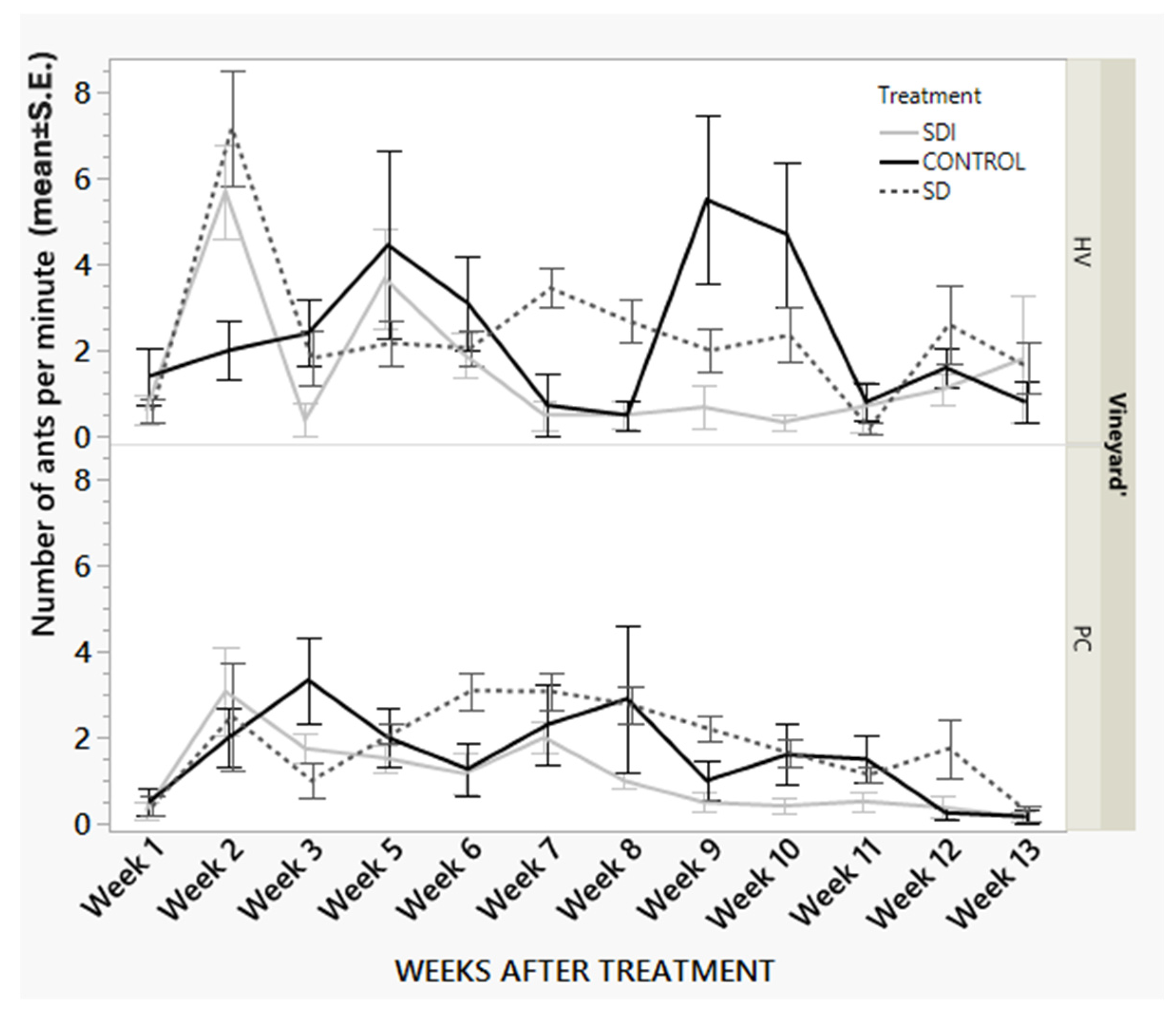
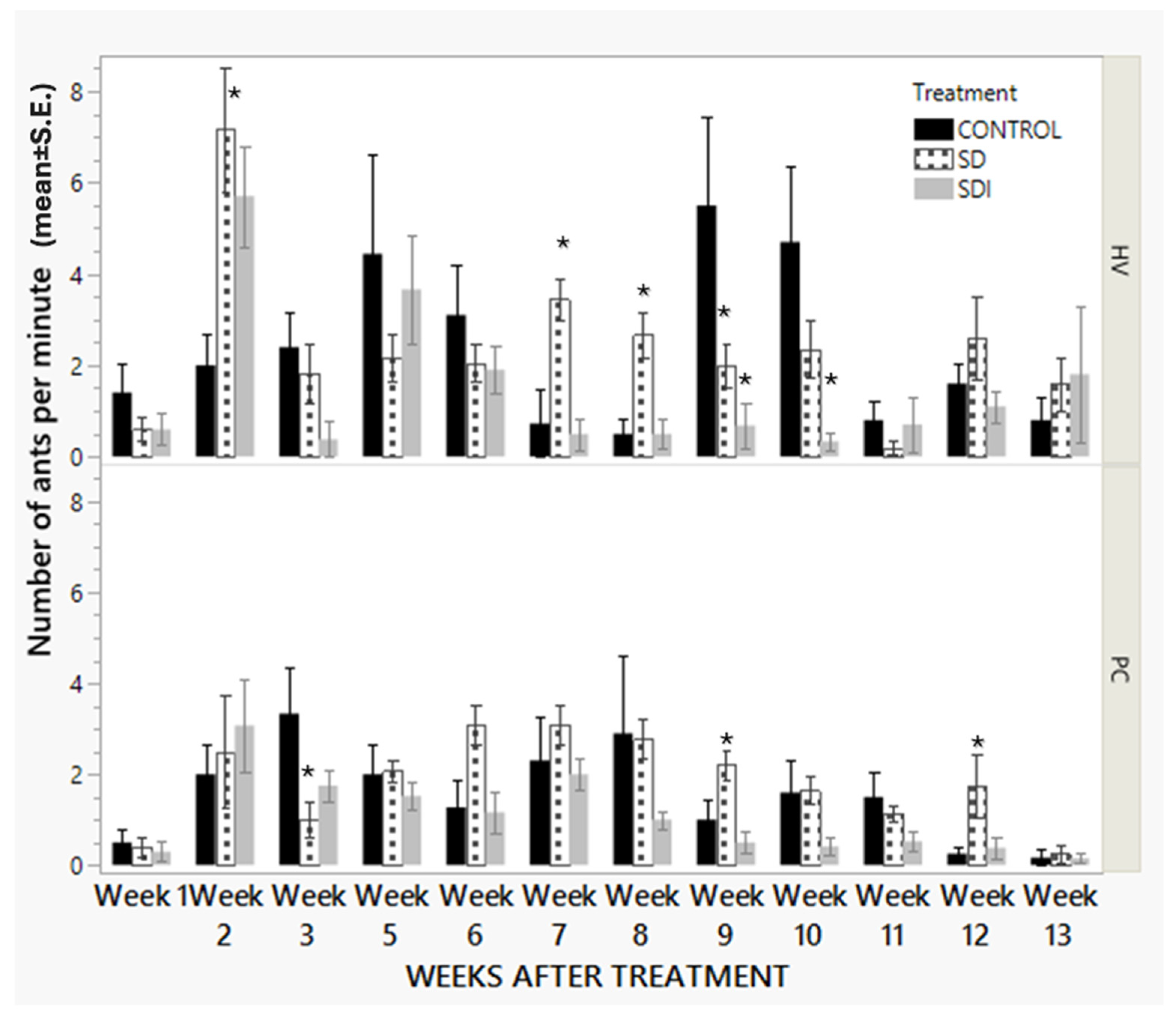
29]. Our timed-visual count results showed a significant reduction in ant activity after provisioning areas with dispensers containing insecticide. The mixed-model analysis further demonstrated that treatment had a strong and repeatable effect on ant activities, both across vineyards and within each site, reinforcing the biological relevance of the sugar dispenser intervention.
The two sampling methods used in this study, pitfall traps and timed visual counts, captured different ecological dimensions of ant activity, and the patterns in the data reflect these methodological differences. Pitfall traps are among the most widely used methods for sampling ground-active ants because they measure activity density, a combined signal of activities and movement rates. Numerous studies demonstrate that pitfall traps are particularly effective for detecting surface-foraging fast-moving species and for quantifying treatment-driven changes in ground-level activity.
Pitfall traps have high sensitivity for ground-active ants, often outperforming other methods in detecting species that forage on the soil surface [
30]. It is also recorded that pitfall traps frequently detect unique species not captured by visual or baiting methods, demonstrating that they sample a distinct ecological subset [
31]. These traps are especially effective at capturing dominant and behaviorally active species, making them ideal for detecting treatment effects on movement or foraging intensity [
32].
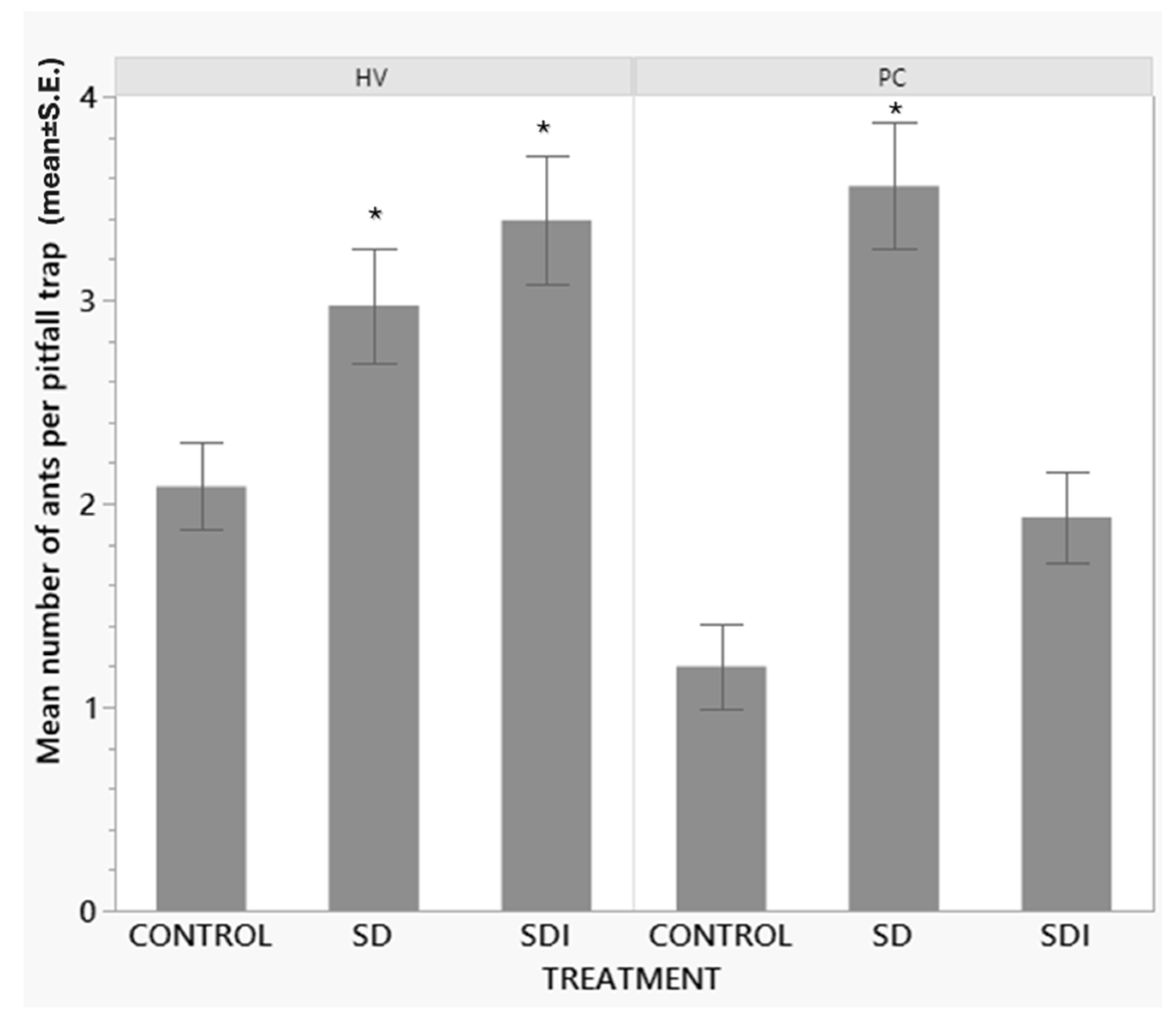
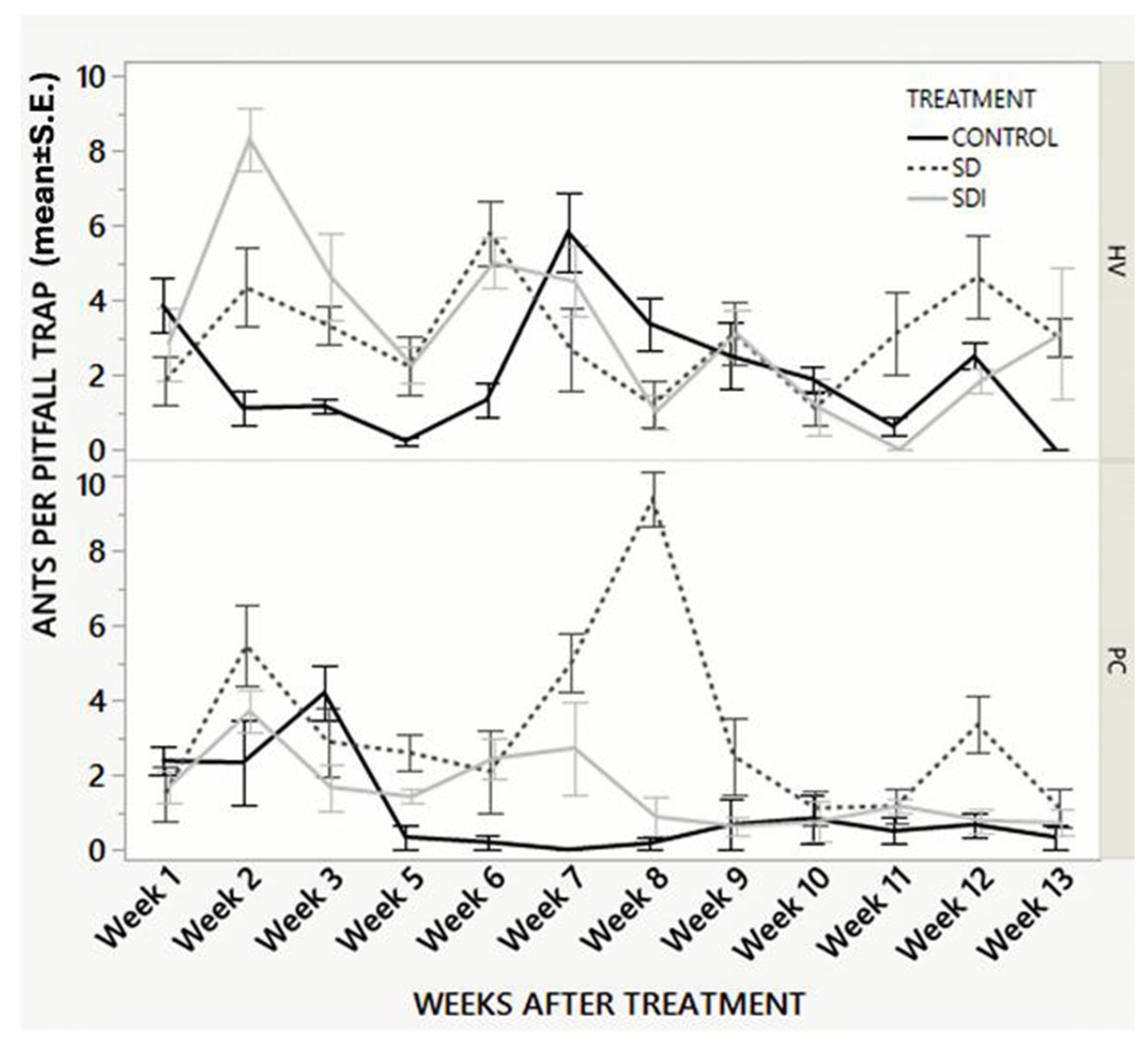
In our dataset, pitfall traps revealed strong treatment differences (e.g., SD > CONTROL > SDI), consistent with the literature showing that pitfall traps are highly responsive to changes in ground-level foraging behavior, likely through changes in resource availability, trail formation, or disturbance at the soil surface. Pitfall traps tend to capture dominant fast-moving species, and their counts reflect activity density rather than absolute abundance. Studies comparing sampling methods show that pitfall traps often detect unique subsets of species not captured by other methods, emphasizing their sensitivity to ground-level movement [
33].
Timed visual counts were used to quantify ant activity on vines, capturing behaviors that pitfall traps cannot measure, particularly vertical foraging, canopy exploration, and ant–hemipteran mutualisms. Visual surveys help detect canopy-active and plant-foraging species that are often absent from pitfall trap samples [
30]. Hand-collecting and visual observation methods capture behavioral interactions, such as the tending of honeydew-producing insects, that are invisible to ground-based traps [
34]. Studies comparing sampling methods show that visual counts and pitfall traps often capture fewer than 50% of the same species, indicating that each method samples a distinct ecological guild [
35]. Visual counts are particularly valuable in agricultural systems because they measure ant activity directly on crop plants, which is more relevant for understanding pest suppression or mutualistic interactions. In our study, the visual counts showed more variable treatment effects than pitfall traps, which aligns with the literature: canopy activity is influenced by resource distribution on vines, colony foraging decisions, and interactions with hemipterans—not just overall ant abundance.
In our data, visual counts showed weaker or nonsignificant treatment differences compared to pitfall traps, indicating that treatments influenced vine-level foraging differently than ground-level activity. Sampling methods are not interchangeable, and the results cannot be directly compared without caution. Pitfall traps and visual counts measure fundamentally different aspects of ant ecology. The pitfall traps revealed strong treatment effects because the treatments altered ground-level movement and foraging intensity. The visual counts showed weaker or inconsistent differences because the treatments did not uniformly affect vine-level foraging or mutualistic interactions.
The data on weekly ant population densities in the treatment were consistent with the ant activity observed in the vineyard. The weekly ant density patterns observed in our study closely matched the field activity in the vineyard. Ant numbers were initially higher in plots with sugar dispensers containing insecticide, likely reflecting strong attraction to the carbohydrate matrix before the delayed toxicity reduced foraging. Similar short-term increases followed by rapid declines have been reported in other liquid-bait studies targeting vineyard ants [
14,
15]. By mid-July, most nests in the treated plots had collapsed, leaving only scattered foragers or newly forming nests, indicating substantial colony-level suppression. Across the full sampling period, timed visual counts confirmed a significant reduction in vine-level ant activity in dispenser treatments compared with the control. This pattern is consistent with previous work demonstrating that liquid bait dispensers effectively reduce ant attendance on vines and disrupt ant–mealybug mutualisms [
14,
16,
17]. Together, these results reinforce that bait-based approaches can meaningfully suppress ant populations and reduce their protective effects on mealybugs in vineyard systems. Contrary to sugar dispensers containing insecticide, those lacking insecticide treatment had lower ant densities during the initial days of dispenser deployment, and the number of ants slowly began increasing after a few weeks. By the third week of August, even in the trunk containing dispensers, more ants were seen around mealybugs than on the dispensers. The increase in the number of ants foraging at sugar dispensers over time can be explained by pheromone recruitment and the establishment of foraging trails [
36]. In the meantime, fewer ants were observed in plots with sugar dispensers containing insecticide. Our study suggested that sugar dispensers equipped with insecticide are more effective in lowering the ant colony densities, as much lower ant colonies were observed by the middle of the whole chemical trial. Parrilli et al. [
16] demonstrated that the use of liquid sugar dispensers decreased the percentage of infested grape bunches compared with the control. Beltrà et al. [
14] and Perez-Rodriguez et al. [
17,
22] also demonstrated that sugar provisioning decreases mealybug infestation.
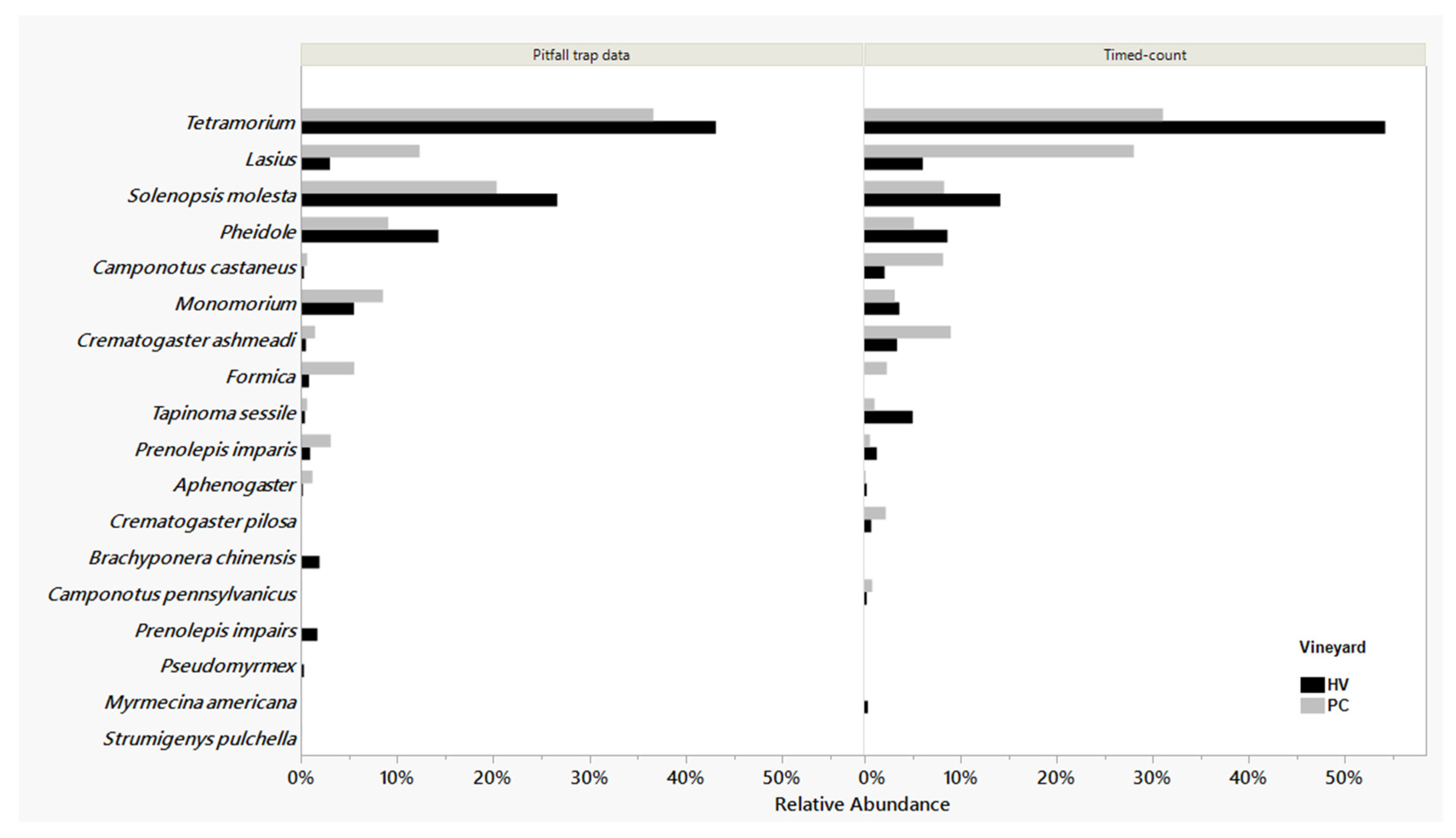
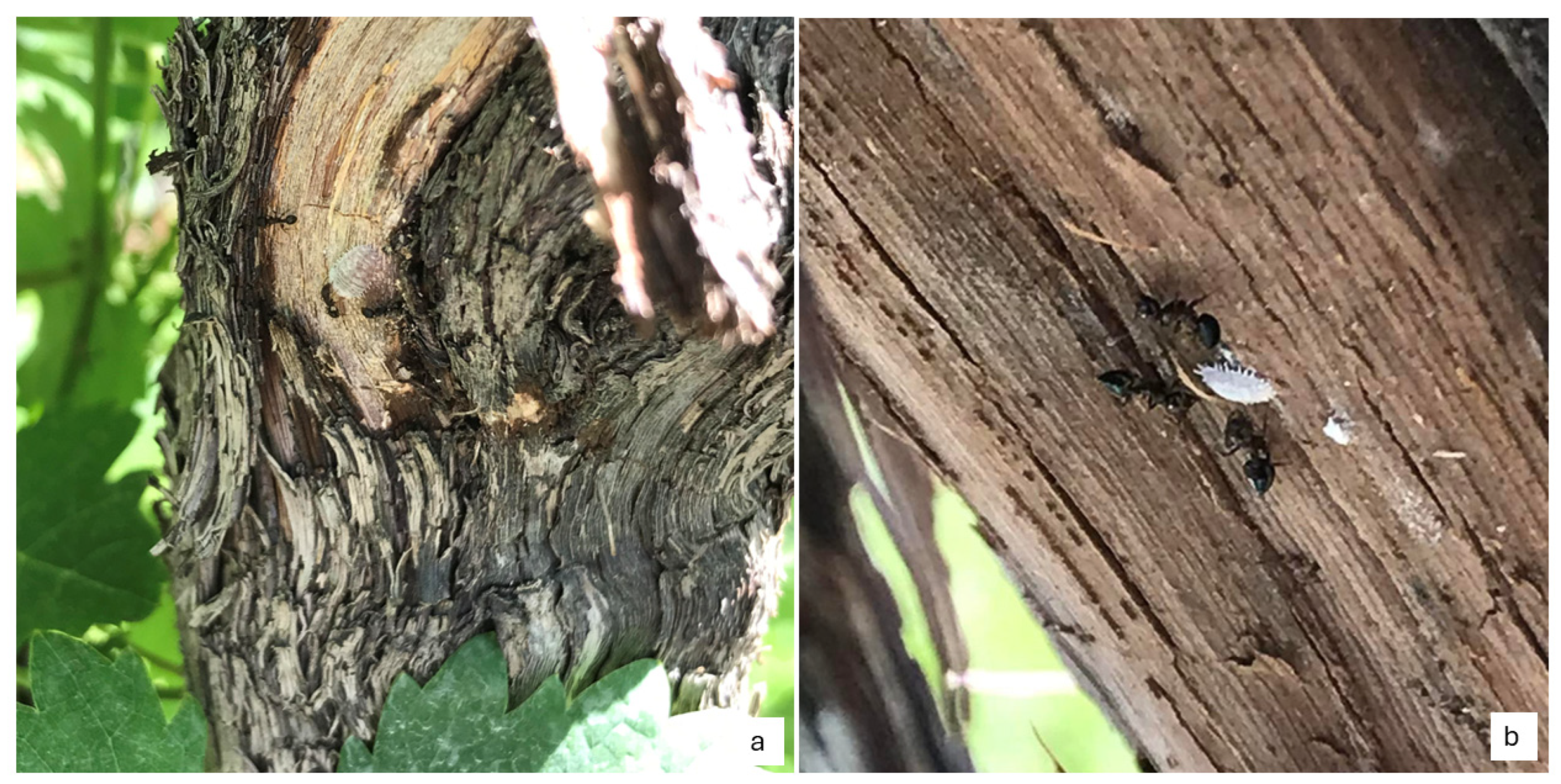
A diverse assemblage of ant genera was recorded foraging in Virginia vineyards in 2022, with Tetramorium consistently dominant, followed by Solenopsis molesta, Lasius, Tapinoma sessile, and Pheidole. Several species, particularly Crematogaster ashmeadi, C. pilosa, Tetramorium, and Lasius, were frequently observed tending mealybugs, defending them, and relocating individuals when disturbed, consistent with known ant–hemipteran mutualisms in perennial crops. Both Crematogaster species, observed in the field, were seen tending ants closely, and when disturbed, raise their pointy abdomen up, showing defense.
The increased level of ant activity in the treatment containing sugar dispensers lacking insecticide was unintentional. It suggests the need to include other biological control methods alongside the use of sugar dispensers. The use of sugar dispensers has often been combined with other biological control methods, such as predators or parasitoids [
14,
16]. The parasitization rate and predation rates on different treatments were not included in our study due to time constraints. It may also have explained some of the variation in ant and mealybug densities across two vineyards. Previous studies have reported significant increases in predation pressure and parasitization rates in mealybugs when sugar dispensers were deployed [
14,
16].
A longer-term evaluation will be essential to determine whether repeated multi-year deployment of dispensers produces cumulative reductions in ant activity, mealybug densities, and cluster infestation. Previous work suggests that the continuous use of bait dispensers for more than two consecutive seasons is necessary to achieve sustained suppression of vineyard-dwelling ant populations [
37]. One practical limitation encountered in this study was the substantial time and labor required to assemble and deploy the dispensers, which constrained their feasibility at larger scales. Despite this drawback, the dispensers performed reliably in small- to medium-sized vineyards, indicating that dispenser-based ant management is already a viable option for growers operating at these scales, with future optimization likely to improve broader applicability.
Although the treatment consistently reduced cluster infestation across both vineyards, the ecological drivers underlying infestation risk varied between sites. The overall model showed strong effects of the treatment, mealybug density, vineyard, and ant activities, yet the vineyard-specific analyses revealed substantial heterogeneity. In HV, neither ant nor mealybug densities predicted infestation, suggesting that local environmental conditions, vine structure, or colony-level dynamics may have weakened the expected trophobiotic relationships. In contrast, the PC vineyard exhibited the anticipated pattern: infestation increased with mealybug pressure, and the treatment effects remained strong. This divergence indicates that site-level factors can obscure or amplify insect–plant interactions. Additionally, because ants were identified only to genus level, we were unable to determine whether species-specific tending behaviors contributed to the differing infestation patterns. Future work incorporating species-level identification and multi-year monitoring would help clarify how local ant communities mediate mealybug pressure and treatment efficacy.
Some limitations should be considered when interpreting these results. First, our sample is based on vineyard size in Virginia, USA, and a larger sample might be required to account for large-scale vineyards. The results might have been affected by site-specific environmental or management factors (e.g., canopy structure, irrigation, presence of natural enemies, and differences in infestation rates across cultivars) that were not measured but likely contributed to the divergent patterns observed between the two vineyards. Ant activity was summarized using seasonal averages and pitfall traps and short-term fluctuations in foraging behavior or colony dynamics. The increase or decrease in nest numbers in the vineyard might give an accurate representation of the actual effect of dispensers with insecticide on the ant population. Third, the temporal mismatch between peak mealybug activity and ant sampling intervals may have reduced the ability to detect fine-scale associations between species composition and ant activity. The vineyard-specific patterns reflect site-level conditions rather than broad regional generalizations. At the same time, it is important to note that the two study vineyards are representative of typical commercial vineyard sizes and management structures on the U.S. East Coast, where operations commonly range from small to medium acreage. Thus, while our scope of inference is intentionally limited to the two sites sampled, the vineyard characteristics themselves are not atypical or unusual for the region.
Pitfall traps were deployed in the vineyard during a one-hour exposure window, and one limitation is that they do not capture relative abundance or community composition as well as 24–72 h deployments typically do. We acknowledge this as a methodological limitation and clarify that our pitfall data represent short-term surface activity rather than true population density. The one-hour deployment window was chosen due to logistical constraints in active commercial vineyards, where longer trap exposure was not feasible without interfering with vineyard operations, risking trap disturbance, or creating safety concerns for workers and equipment. Because all traps were deployed and retrieved within the same standardized time frame across plots, dates, and vineyards, the resulting captures remain comparable across treatments, even though they reflect activity rather than abundance.
Further, maintaining a minimum distance of 10 m between treatment plots may not fully prevent ant movement between treatments and therefore introduces limitations. Because ants can move across tens of meters, the 10–20 m separation used here may allow cross-plot foraging, where ants from a colony interact with multiple treatments, dilution of treatment effects, if ants access sugar dispensers in one plot but forage on vines in another, and shared colony influence, especially for species with large or polydomous colonies. This distance represents the maximum feasible spacing within the constraints of commercial vineyard operations. Hence, the treatment effects are recommended to be interpreted as plot-level differences under commercial conditions and the effects measured in the maximum available field-level experimental units. This highlights the ecological realities of ant foraging behavior and the logistical constraints of applied field research.




 ,
,