1. Introduction
Climate change is challenging the sustainability of farming activities. The distinction between natural and anthropogenic factors altering the climate is not entirely clear, but anthropogenic influence is strongly supported by evidence [
1]. Regardless of the cause, the well-documented climatic changes can severely affect the interactions between biotic communities within agroecosystems. Predicting whether, and to what extent, climate change interferes with human activities [
2] and agricultural sustainability [
3] is crucial. The efficacy of weed control largely depends on weed community composition. Because of the slow evolution of weed communities, the study on climate change effects on weeds requires medium–long term research, and predicting future weed flora composition is therefore of critical importance. Future climatic conditions are expected to favor weeds over crops [
4] overall in the Mediterranean environment [
5]. The challenge of managing the evolution of herbicide resistance in weed populations is likely to be further intensified by climate change, whose inherent variability and unpredictability may alter selection pressures and complicate the development of effective control strategies.
The great resistance of segetal weeds to agronomic disturbances provides them with a long persistence in cropland [
6]. It derives from survival strategies, i.e., fast and enhanced reproduction capacity, marked dormancy and longevity of seeds, that provide the species a wide plasticity to various soils, climates and farming systems [
7]. In cultivated land, weed flora coevolves with the crop, mainly as a function of the type and frequency of agronomic disturbances [
8], but today, climate change is becoming an additional factor [
9]. Its high selection pressure is due to climatic factors but also to human activities that are also performed out of the fields, such as in urban, peri-urban, and industrial areas, interwoven with cropland.
How can climate change threaten agricultural sustainability through weed evolution? The risks are serious because climate change effects are amplified by intraspecific diversity in weed populations that is significantly higher than that of crops [
10]. The current modern cultivars are highly productive, and the major cultivated plants are very productive, but their genetic diversity is limited. Many genotypes of the wild ancestors and of past cultivars have been lost during domestication and by recent, intensive breeding programs [
11]. While spontaneous flora can rapidly evolve into populations with a high fitness to new environments, the lower plasticity of modern cultivars limits their competitive ability. Thus, weed control in the future will likely become more difficult [
12] also because of a greater number of weed generations per year [
13].
This paper examines how weed flora is expected to respond to climate change. The findings provide insight into the future composition of weed communities to be managed under projected climatic conditions.
2. Climate Warming
Over the last century, global temperature increased significantly: in 2023, it reached 1.43 °C above the pre-industrial level (1.32–1.53 °C, as a likely range) [
14], and the greenhouse gases (GHGs) are considered the main causes of this rise [
15].
Water vapor is the most abundant greenhouse gas (GHG), although its atmospheric concentration is highly variable and primarily regulated by temperature-dependent processes. Carbon dioxide (CO
2) concentrations are influenced by both anthropogenic emissions and natural processes, particularly ocean–atmosphere exchanges and terrestrial biosphere dynamics. Similarly, methane (CH
4) originates from a combination of human activities and natural sources. The global regulation of these gases results from complex interactions among anthropogenic drivers, biogeochemical cycles, and large-scale Earth system processes. Among the major long-lived GHGs, nitrous oxide (N
2O) exhibits a particularly high global warming potential [
16,
17]. The progressive thermal increase will probably lead to a significant shift in weed communities, since temperature has a crucial role in promoting or hindering plant growth and reproduction. The rise in temperatures is expected to favor summer weeds [
18]. In the Mediterranean area, many of them use the C
4 photosynthetic pathway, which implies higher light and water use efficiency than C
3 plants. Their growth rate is faster when hot and dry conditions cause prolonged closure of their stomata. Therefore, a milder climate will likely increase the occurrence of C
4 plants [
19]. Under warming scenarios, C4 weed species may increase aboveground biomass by approximately 1–4% per 1 °C rise in temperature within their optimal thermal range, with potentially higher gains under favorable water and nutrient availability. A warm spring promotes an earlier emergence burst of summer weeds. This can lead to unusual late-spring interactions between winter crops (e.g., wheat
Triticum spp.) and summer weeds (e.g.,
Sorghum halepense (L.) Pers.) (
Figure 1). Similarly, a warm fall favors the early germination of winter weeds, like
Stellaria media (L.) Vill., that can compete with summer crops during their maturation.
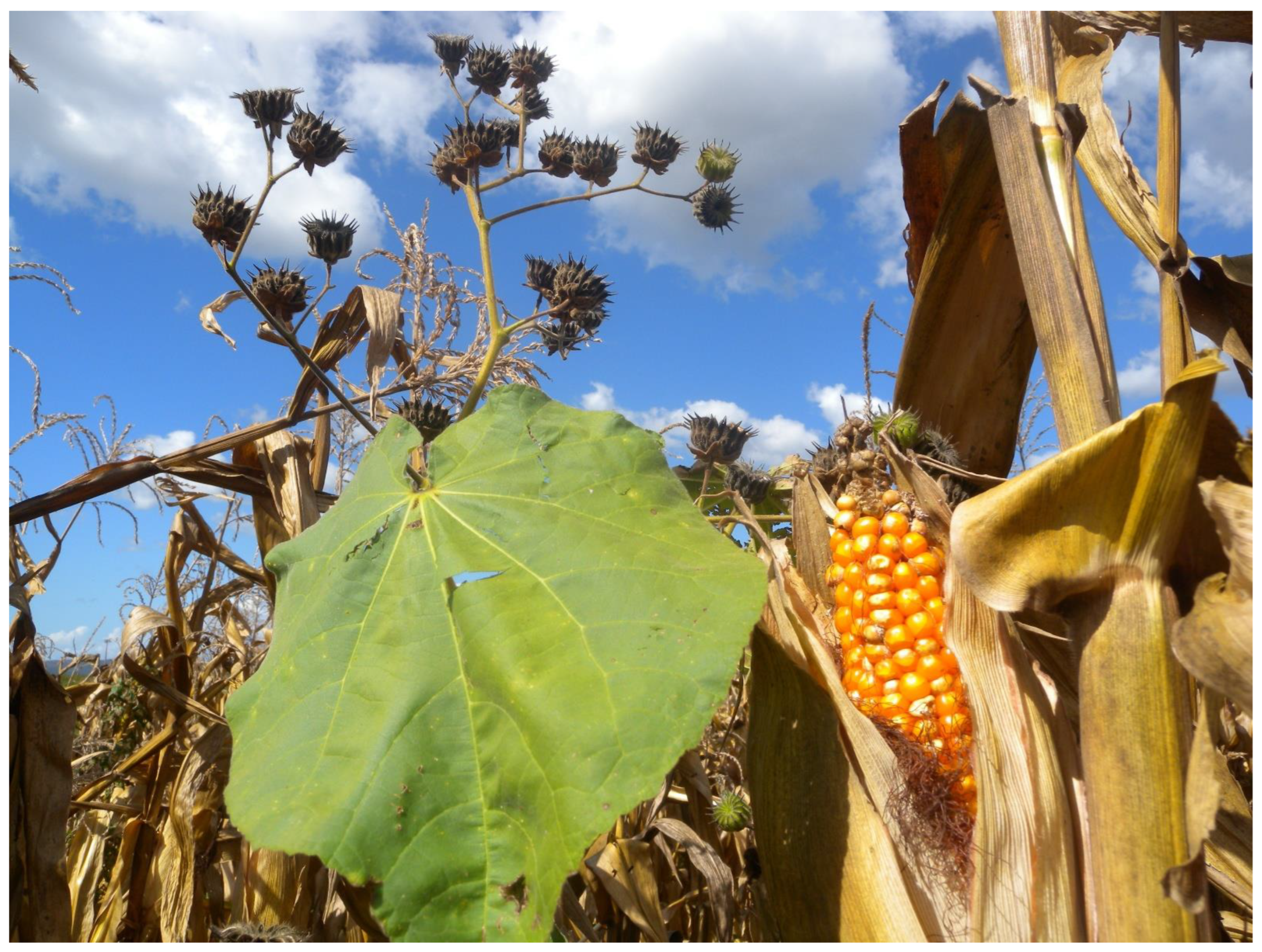
An additional advantage of a warm autumn for summer weeds is delayed senescence, which implies greater seed production. This has been observed (
Figure 2) for many indeterminate growth species [
20], especially in Northern Europe, where temperatures frequently limit the length of the growing season [
21]. A warmer climate in northern countries can also promote the occurrence of weeds requiring long, favorable seasons (i.e., many “degree days”). At mid-latitudes, weed flora composition is less influenced by the thermoperiod length, but high temperature selects “opportunistic” species that can easily prolong flowering and dissemination under favorable climatic conditions.
2.1. Alteration of the Thermo-Photoperiod
Photoperiodism is the phytochrome-mediated process that switches plant development from the vegetative to the reproductive phase [
22]. This mechanism has evolved in integration with the thermoperiod requirement, so that a species is triggered to flower by photoperiodism but disseminates only when temperatures are suitable for the offspring’s growth [
23]. Climate warming can cause a sort of “confusion” in this delicate mechanism. Indeed, the duration of the photoperiod was kept constant, but it was temporally uncoupled from the thermoperiod [
24]. This exerts a strong selection pressure on weed flora, rapidly leading to the dominance of neutral-day species, whose growth depends exclusively on thermal availability [
25]. For example, wild sugarbeet (
Beta vulgaris L. subsp.
maritima Arcang.) is a strict long-day plant, but the modern cultivars flower markedly earlier than in the past [
26], thus favoring an unwanted weed-crop hybridization. In the new climate, thermoperiod will likely become the exclusive stimulus for the flowering of weeds, as has occurred during the domestication of tree and field crops [
27].
Regarding reproduction, future weed communities will probably be mainly composed of species whose pollination does not rely on mutualism for biotic seed dispersal [
28] or insect-pollination [
29]. Indeed, mutualistic pollination requires a perfect synchronization between flowers and pollinator presence in the ecosystem. If the synchronization is lost, the weed is doomed to disappear.
In Mediterranean agroecosystems, the weed with the highest fitness to the new scenario (weed “ideotype”) will likely have an “opportunistic” aptitude only toward thermal availability, so that it can reproduce, regardless of photoperiod, even in occasional mild winters or cold springs. A high plasticity of flowering time is, in fact, the main characteristic of plants thriving in harsh habitats [
30].
2.2. Faster Release of Cold-Mediated Seed Dormancy
The survival strategy of many weeds is based on the dormancy of seeds that prevents simultaneous germination [
31]. In temperate and cold environments, exposure to several consecutive days of low winter temperatures progressively reduces dormancy, thereby enabling germination during subsequent spring periods [
32]. A short or null cold period in winter penalizes weeds that are strictly “seed chilling requiring” [
33] and their occurrence in future weed communities will likely decline [
34]. On the contrary, climate change should favor weeds with fewer dormant seeds [
35], and those with seed dormancy released by diverse stimuli, not only physiological but also physical [
36] or morphological [
37].
2.3. Insufficient Satisfaction of Vernalization Needs
Climate change will probably shorten the cold period during early plant growth that triggers flowering (vernalization) [
38]. Some weeds, e.g.,
Alopecurus myosuroides Huds [
39],
Alliaria petiolata (M. Bieb.) Cavara & Grande [
40],
Aegilops cylindrica Host [
41], and
Cyanus segetum Hill [
42], have a strong vernalization requirement that, if not satisfied, hinders their reproduction capacity. In temperate and cold climates, they are winter weeds that flower only in spring. The lack of cold-temperature stimulus delays flowering [
43] and reduces the intensity of dissemination.
3. Increase in Atmospheric CO2
Over the last century, the atmospheric CO
2 concentration has rapidly increased and currently exceeds 400 ppm [
44]. Carbon dioxide is not noxious to plants; on the contrary, its shortage represents a limiting factor of photosynthesis [
45]. A further rise in CO
2 in the atmosphere is forecasted; therefore, the crucial question is the following: “Which species will gain a competitive advantage in the future atmosphere, rich in CO
2?” Probably those with the most efficient photosynthetic pathways will gain the advantage; thus, the specific photosynthetic pathway is crucial. Except for a few CAM species [
46], spontaneous and cropped plants are divided into C
3 and C
4 species that respond differently to factors regulating photosynthesis (light, CO
2, temperature and water) [
47]. C
4 plants use CO
2 more efficiently than C
3 plants because they can perform photosynthesis even when stomata are closed due to a lack of water and at high temperatures.
Increased air CO
2, high temperatures and water shortage are all factors that forecast a greater frequency of C
4 weeds in future weed floras at medium latitudes [
48]. Climate change can also favor some C
3 weeds that are adapted to survive in environments characterized by extreme events (thermal oscillations, prolonged drought, submersion, etc.). An example is
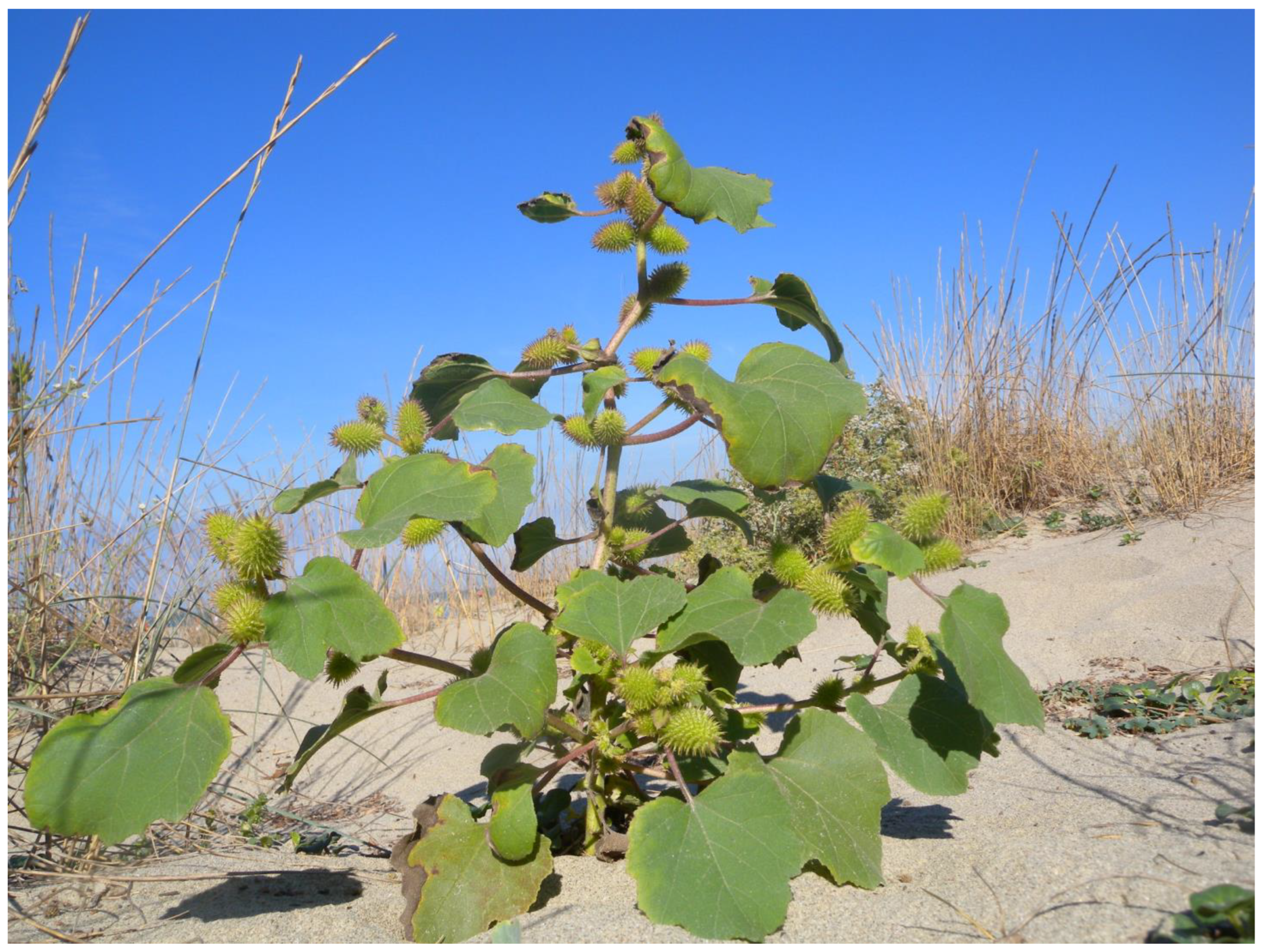
Xanthium italicum Moretti, a summer weed of medium latitude that can stand harsh conditions in all anthropogenetic habitats [
49] (
Figure 3). Indeed, elevated CO
2 concentrations (550–700 ppm) disproportionately stimulate C
3 photosynthesis by reducing photorespiration and alleviating CO
2 limitation, thereby shifting the C3–C4 competitive threshold toward higher temperature ranges and potentially reducing the relative advantage of C4 species under moderate thermal conditions, as demonstrated by FACE experiments showing significant biomass and photosynthetic enhancement in C
3 weeds such as
Xanthium italicum. This species is capable of rapidly colonizing disturbed environments and exhibits high ecological adaptability, which confers a competitive advantage in dynamic and anthropogenically altered habitats. In particular, traits such as a short life cycle, pronounced ecological plasticity, and efficient dispersal mechanisms enhance their establishment and spread, thereby facilitating the invasion success of weedy species within the genus
Xanthium.
However, the predominance of C
4 species is not certain. The current rise in CO
2 content can be thought of as a sort of evolutionary reversal. C
4 species evolved later than C
3 species [
50], and their spreading was due to CO
2 decline during the Carboniferous era (period of underground accumulation of coal, methane, and oil reserves) [
51]. The higher efficiency in photosynthesis of C
4 plants then represented an important evolutionary trait. Now, the burning of fossil fuels by man is restoring the ancient CO
2 levels, and the importance of the C
4 pathway may decline.
High level of CO
2 was also found to accelerate the transition from vegetative to the reproductive phase of plants and to increase the number of seeds produced per plant [
52]. Both traits are the basis of the survival strategy called “ruderality”; a term coined by Grime [
53] that refers to the speed with which a species invades an ecological niche. This ability is possessed by many weeds that produce a great number of offspring in just a few weeks after emergence. It will certainly represent a major characteristic of weeds in the future agroecosystems.
4. Decreasing Rainfall and Increasing Desertification
In recent years, rainfall has been decreasing all over the Mediterranean area [
54] with desertification problems in the southern regions. Rainfall patterns are also changing. Rains are concentrated in a few intense events that are often devastating. They cause erosion without replenishing the groundwater reserves, which are important in Southern Europe. These trends imply an increased frequency in the weed flora of xerophytic species, well-adapted to survive in water-deprived conditions [
55]. Water stress can be avoided through physiological (osmoregulation, stomatal conductance) or morphological (waxy, pubescence, spinescence, etc.) traits that enable the plant to overcome adverse periods, increasing its competitiveness in severe drought [
56].
An increase in water-stress-tolerant species has already been observed in the weed flora of both summer [
57] and winter [
58] crops. Indeed, this floristic shift is the most frequently reported consequence of climate change [
59]. In areas where irrigation is not feasible, either due to scarcity or its high cost, the crop–weed interaction is an important factor influencing crop yields [
60], and the specific water-use-efficiency (WUE) is crucial. In this respect, C
4 weeds (e.g.,
Cynodon dactylon (L.) Pers.,
Sorghum halepense (L.) Pers.,
Amaranthus retroflexus L.) have an advantage over C
3 species, thanks to their more efficient use of water [
61]. But a high WUE is not the only survival strategy in dry areas. Plants thriving in localities with cyclic droughts are also those that can grow and disseminate rapidly after dry spells. From this point of view, many Asteraceae species will benefit most from the increasing dry climate, both because they are specialized in colonizing degraded areas [
62] and due to their anemochorous dispersal strategy [
63]. Some of them, e.g.,
Conyza canadensis (L.) Cronq.,
Aster squamatus Hieron.,
Cirsium arvense (L.) Scop.,
Sonchus oleraceus L., and
Senecio vulgaris L., are already expanding over all anthropized ecosystems. Other Asteraceae are forecast to increase in pastures. The low forage production due to more frequent drought can lead to excessive grazing, exerting a strong selection pressure on plant communities [
64]. The less palatable plants are likely to become dominant, especially if they are thorny, such as
Xanthium spinosum L.,
Silybum marianum (L.) Gaertn. and
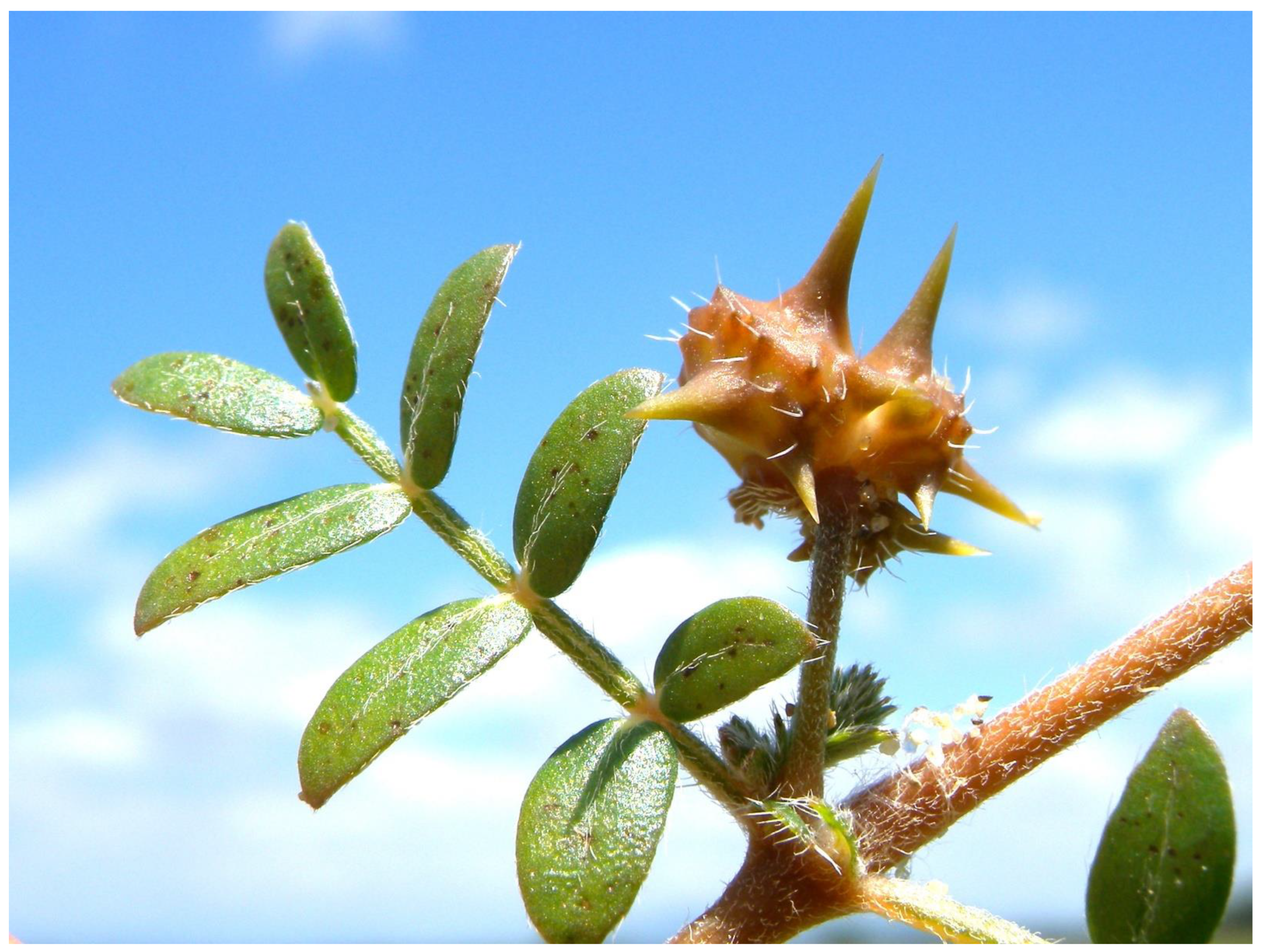
Tribulus terrestris L. (
Figure 4).
Climate change will likely also favor species that are adapted to fluctuating water availability [
65], like many perennial grasses [
66].
5. Higher Frequency of Extreme Events
Recently, extreme rainfall and wind events, sometimes associated with sudden drops or rises in temperature, are becoming more frequent [
67], and their effects on the agroecosystem are disastrous [
68]. The frequency of extreme events (flooding, freezing, drought, etc.) has a strong impact on weed flora composition, favoring species with high resilience [
69], as was confirmed, for example, by studies on the flood damage in various parts of the world [
70]. Weeds are more resilient than crops because they are generally more stress-tolerant and have a wider genotype diversity. For example,
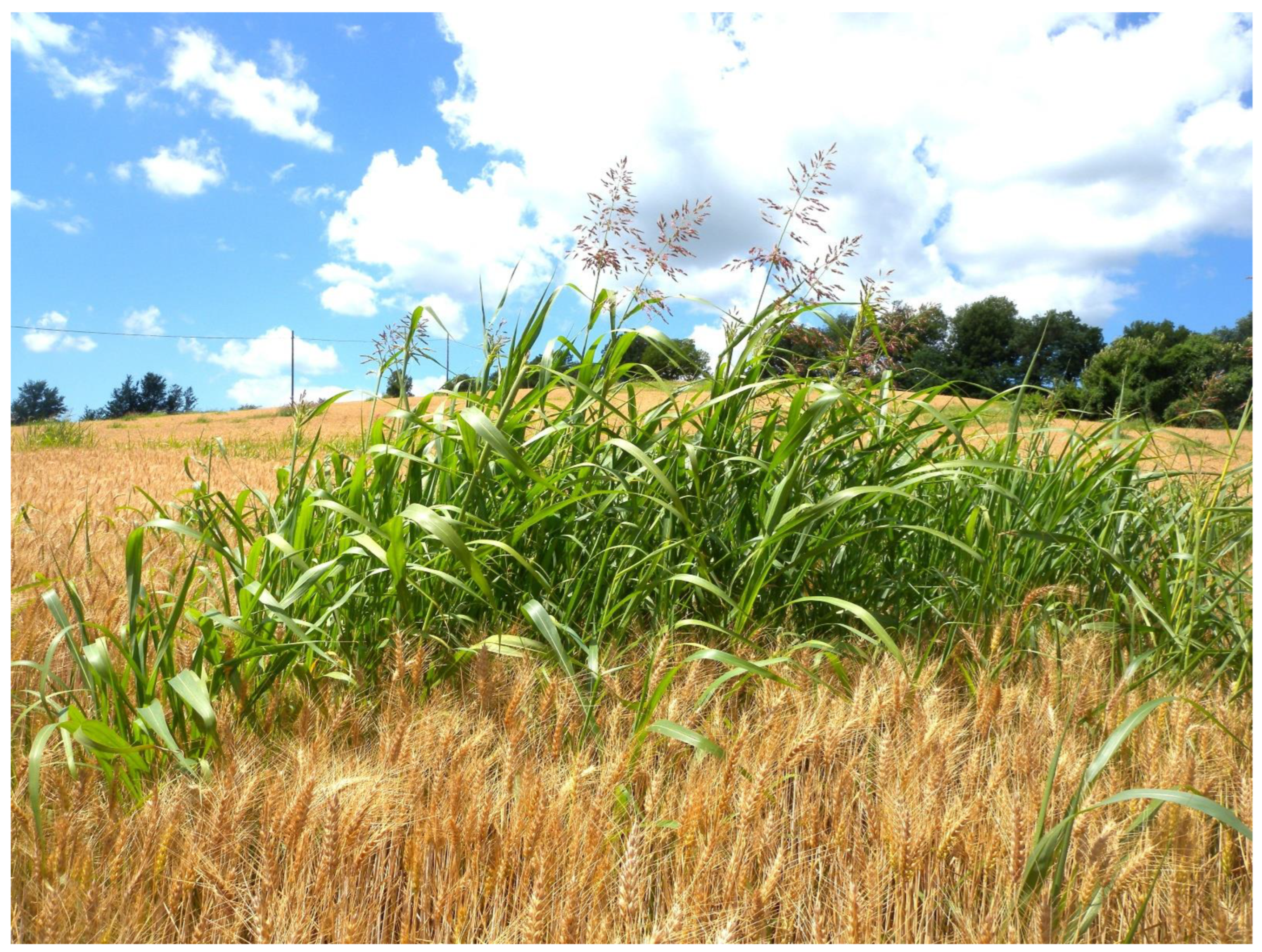
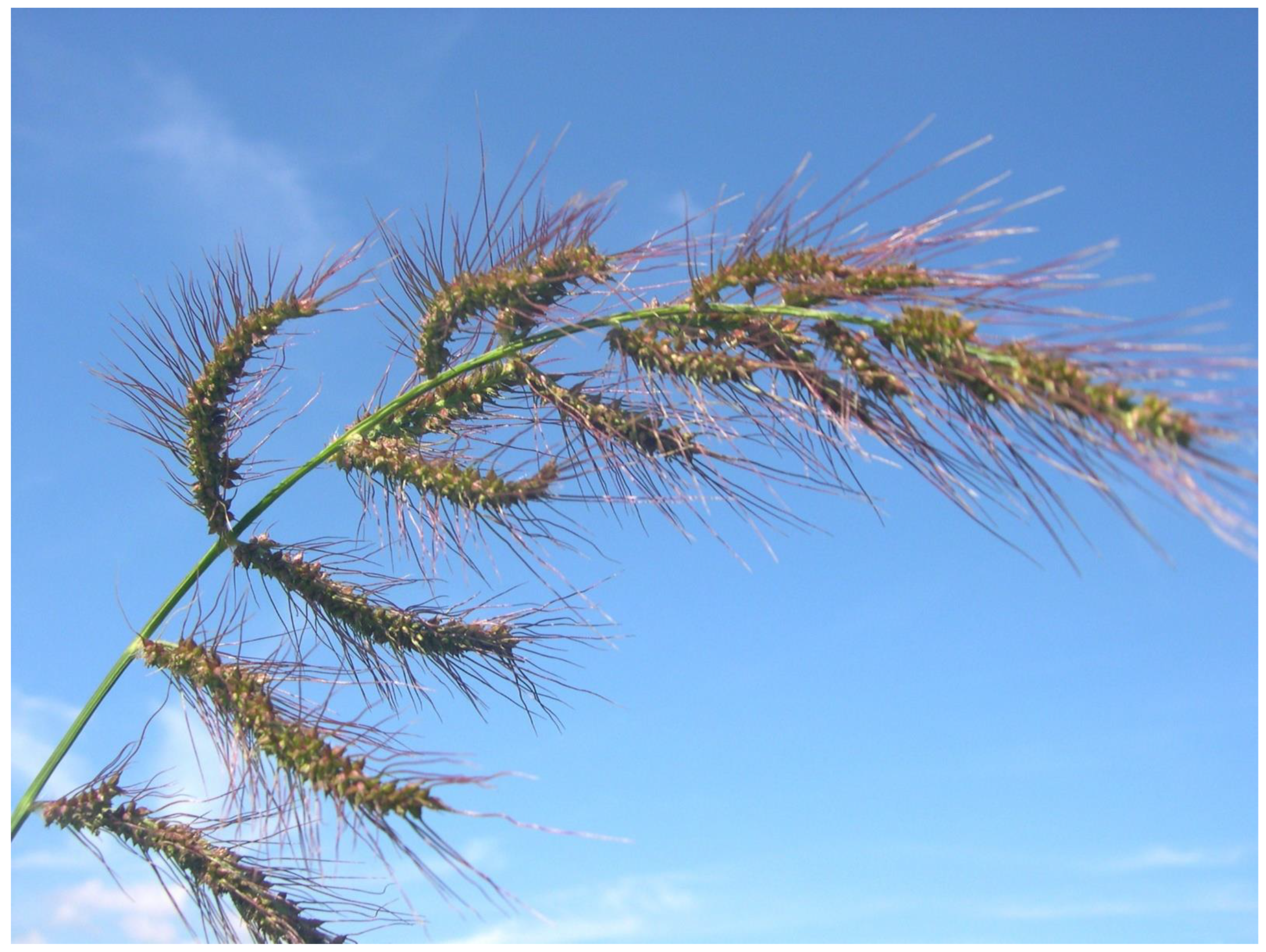
Echinochloa crus-galli (L.) P. Beauv. (
Figure 5) can be found almost everywhere (from rainfed corn to completely submerged rice), thanks to its wide genotypic variability [
71]. The highest resilience to extreme events has been reported for grass weeds [
72], especially if they can also propagate from rhizomes [
73].
6. Problems of Soil Salinization
The widening of saline soils in many coastal areas of the world can be partially ascribed to dry periods linked to climate change [
74]. They result in an increasing extraction of groundwater for irrigation that causes intrusion of seawater into aquifers [
75]. Another factor is the slow but steady rise in sea level that is due to the melting of Arctic glaciers [
76]. Soil salinity has a strong influence on weed flora composition. Some species (defined as halotolerant) resist salinity by various mechanisms. Their roots preferentially absorb certain ions (little or no Na
+) that are transferred along the xylem at various speeds. The toxic ions (e.g., Cl
−, Al
3+) are “compartmentalized” in vacuoles, where their toxicity is reduced or eliminated [
77].
Climate change promotes the spread of halotolerant species, a phenomenon that has already been observed [
78] for
Portulaca oleracea L. This plant represents a sort of “ideotype” of a salt-tolerant weed. It escapes salinity stress by morphological and physiological adaptations [
79]. It has waxy leaves, reducing transpiration, and thick cell walls, providing efficient osmoregulation, which are combined with “ruderality” traits. Ruderal species, characterized by rapid growth and high reproductive and dispersal capacity in disturbed environments, are often favored under climate-driven disturbance regimes. Likewise, halotolerant species—species capable of surviving and maintaining physiological function under elevated soil salinity conditions—may become increasingly prevalent in areas affected by drought-induced salinization.
Portulaca oleracea L. is so adapted to grow in highly saline soils, and it is even cultivated for soil desalination [
80]. A marked salinity tolerance is also shown by many Chenopodiaceae [
81] (e.g.,
Atriplex prostrata Boucher,
Chenopodium album L.,
Kochia prostrata (L.) Schrad., and
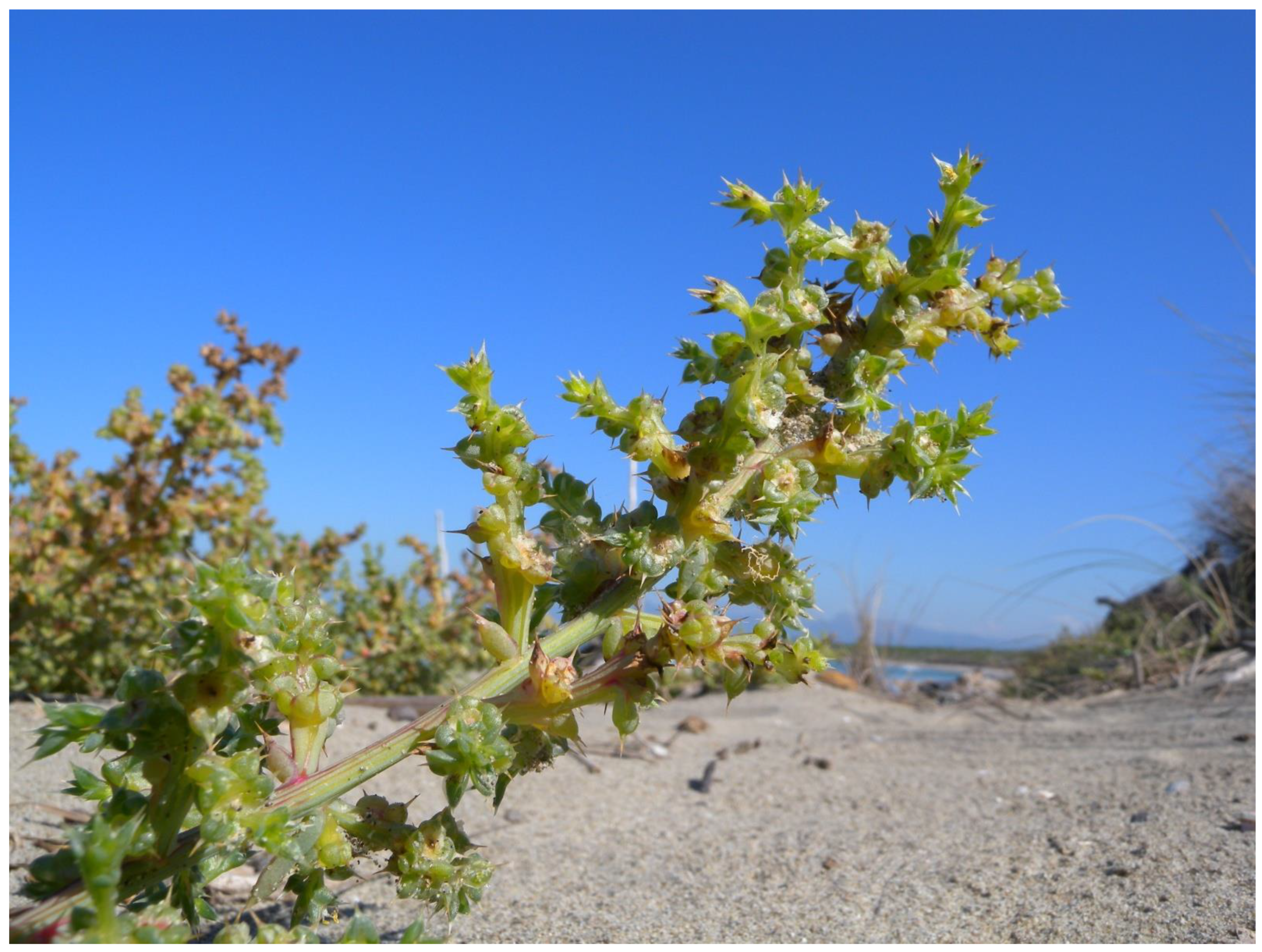
Salsola kali L. (
Figure 6)) that can grow under strong osmotic pressure [
82], and by several grasses, such as
Echinochloa crus galli (L.) P. Beauv. [
83] and
Setaria viridis (L.) P. Beauv. [
84], thanks to an accurate salt metabolism and to their broad genetic base. In summary, climatic stressors rarely act in isolation; for instance, prolonged drought can intensify soil salinization through reduced leaching and increased evaporative salt accumulation, thereby compounding osmotic stress and altering weed physiological tolerance and competitive dynamics under concurrent UV-B radiation and heat stress.
7. Increase in UV-B Radiation
The thinning of the ozone layer in the stratosphere due to human activity increases the amount of ultraviolet radiation (especially UV-B, with 280–315 nm wavelengths) reaching the Earth’s surface [
85]. This phenomenon, which is particularly acute in summer at high latitudes [
86], can alter the interactions between organisms in both natural [
87] and agroecosystems [
88]. It can also interact with the factors of climate change [
89]. However, significant biological responses were found only at high levels of radiation [
90].
Because of the degradation of many herbicides caused by energetic rays, a more intense UV-B radiation is likely to impair weed control [
91], also prompting the development of resistant biotypes, as reported in
Abutilon theophrasti L. Medicus [
92].
Few plants have a real tolerance to UV-B rays;
Digitaria sanguinalis (L.) Scop. [
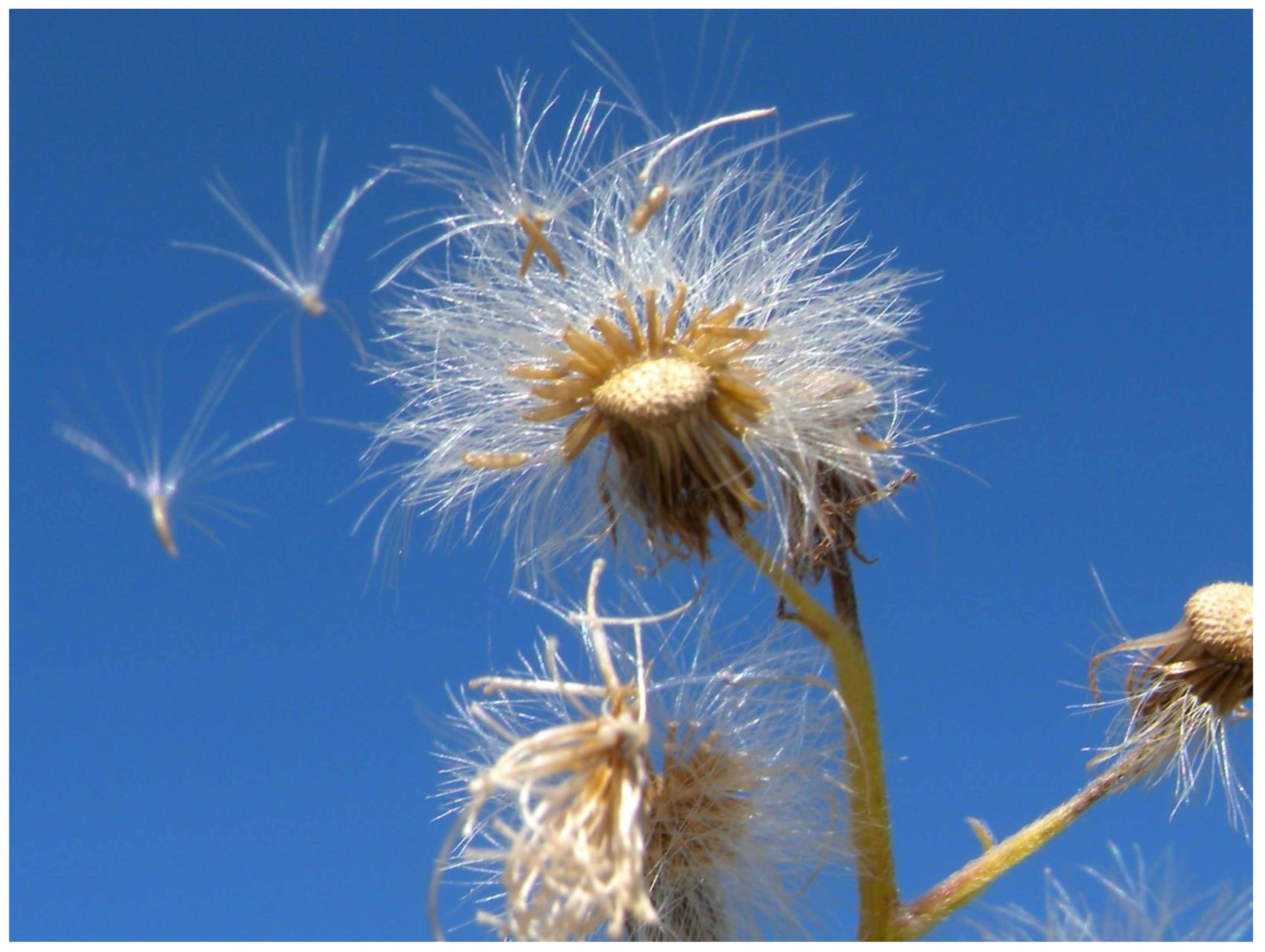
93] is one of the most resistant. Other tolerant weeds are some Asteraceae that are pioneer species of human-disturbed environments frequently exposed to high solar radiation (e.g.,
Senecio vulgaris L.,
Aster squamatus Hieron.,
Conyza canadensis (L.) Cronq. (
Figure 7),
Sonchus asper (L.) Hill, and
Picris echioides L.) [
94]. As for other tolerances, weeds can become more resistant to UV-B than crops thanks to their broader genetic base [
95].
8. Increased Occurrence of Parasitic Weeds
Some of the world’s worst weeds are totally or partially parasitic species [
96]. Two of them belong to the genus
Striga (
S. hermonthica Delile Benth. and
S. asiatica (L.) Kuntze) and are very detrimental. They are endemic to tropical Africa and Asia, respectively [
97], and parasitize various grass crops [
98,
99], such as sorghum (
Sorghum bicolor (L.) Moench), maize (
Zea mays), and, above all, sugarcane (
Saccharum officinarum L.). Because of their negative effect on crop yields [
100,
101,
102,
103], their entry into the South European flora would be detrimental, especially to wheat, which in laboratory trials was found to be a possible host [
104]. Both species produce an extraordinary number of seeds that are dormant and capable of persisting for several decades in the soil. When buried, they germinate only after having encountered the root exudates of the host plant.
The increasing occurrence of hot and prolonged summers due to the persistence of warm air masses of African origin may facilitate the establishment in southern Europe of Striga species introduced through human activities. Their parasitic activity and survival strategy are favored by both high temperatures and water shortage, which are linked to climate change. In the U.S.A., a 3 °C increase in average temperature was estimated to cause their spreading from South Carolina to the “Corn Belt” area.
The predicted higher temperatures will probably widen the geographic distribution of other parasitic plants, especially of the Orobancaceae (
Orobanche spp. and
Phelipanche spp.), which are already present in Mediterranean flora [
105]. The major species (
O. crenata Forssk. and
O. ramosa L.) are holoparasitic plants that are favored by hot and arid conditions, where they find optimal growth conditions [
106]. Climate change will likely expand their distribution northwards [
107], where they can compete with many vegetable crops [
108,
109].
Another holoparasitic weed whose occurrence may increase under climate change is
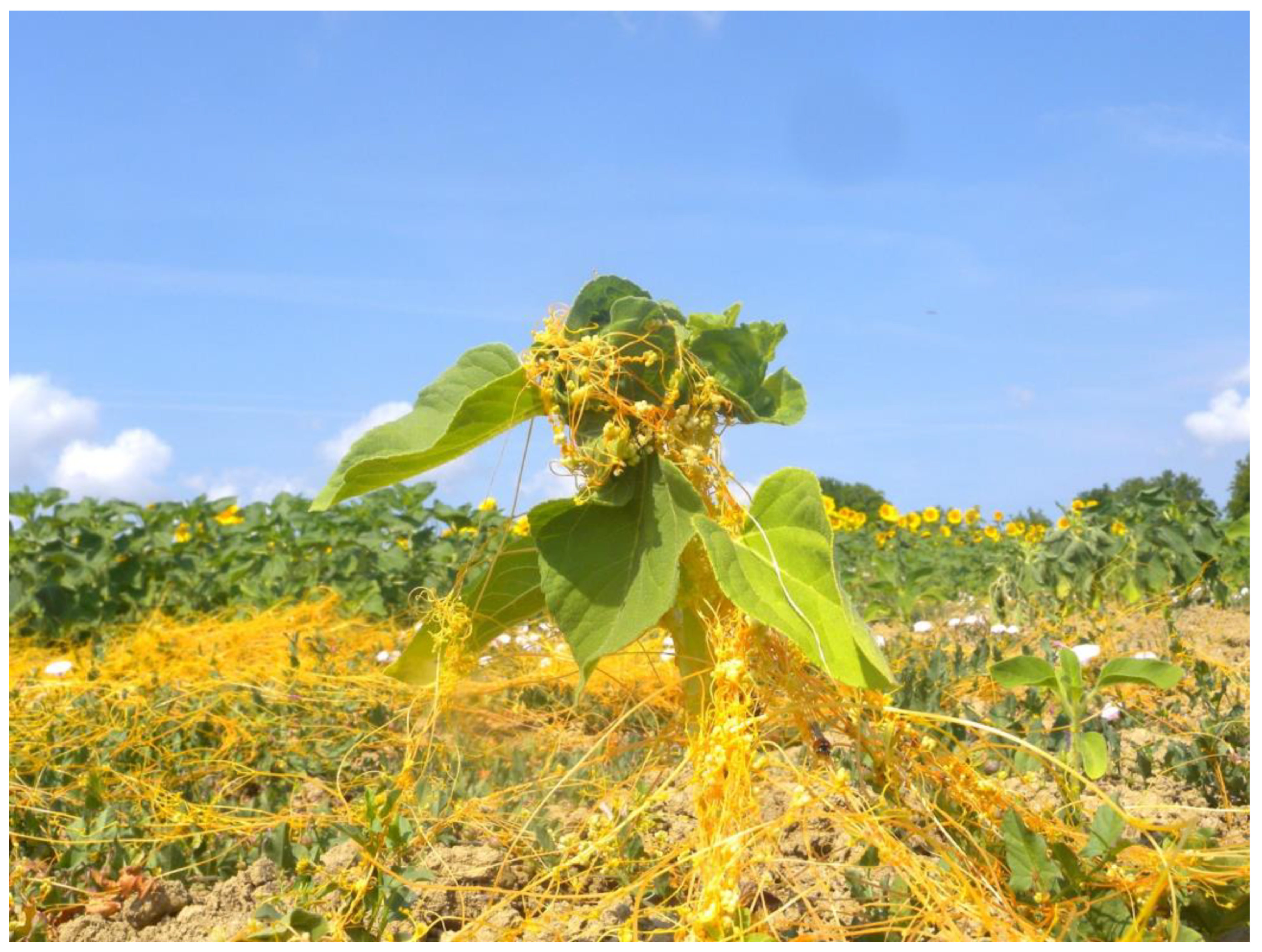
Cuscuta campestris Yunk., which is already widely distributed in the Mediterranean area, mainly infesting alfalfa (
Medicago sativa L.), sugar beet (
Beta vulgaris L.), and sunflower (
Helianthus anuus L.,
Figure 8). Dry weather can indirectly encourage its parasitic activity. To avoid water stress, host plants counterbalance the osmotic deficit by increasing their sugar content [
110]. High carbohydrate availability in the host plant is crucial for successful parasitism, as a lot of energy is required when haustoria penetrate host tissues [
111]. This mechanism was observed for the
Cuscuta campestris parasitism of sugarbeet, subjected to increasing levels of salt stress [
112].
9. Loss of Biodiversity
The community agrees that climate change will reduce biodiversity [
113] and simplify the interactions between organisms [
114]. It will increase the risk of plant extinction in all agroecosystems [
115], even in the ecological oases, i.e., cropland where environmentally friendly practices maintain a certain diversity in weed flora [
116]. Many spontaneous species will become rare mainly due to the alteration of delicate balances with other organisms [
117]. For many of them, survival depends on the activity of pollinators (e.g., social and solitary bees, dipterans, and lepidopterans [
118]) that inhabit the same ecosystem. Today, rare weeds can be found almost exclusively in mosaics of diversified land use (cropland arranged in a mosaic of pastures, woods, and uncultivated areas), which provide the pollinators with suitable niches to nest.
Climate change can affect the vulnerable balance of the ecological community in several ways. It can directly alter the interactions (i.e., competition, parasitism, predation, and mutualism) between species, or indirectly, by regulating the population size of the interacting species (e.g., rhizobia-leguminous plants), and strongly depends on environmental conditions and resource availability. For the mutualism between pollinating entomofauna and plants, climate change can desynchronize the presence of flowers and insects by modifying the usual connection between photoperiod and thermoperiod. For the obligate-pollinators Lepidoptera, the desynchronization was found to affect not only the insect–flower presence but also the interaction between the insect and suitable plants for oviposition and larvae nourishment [
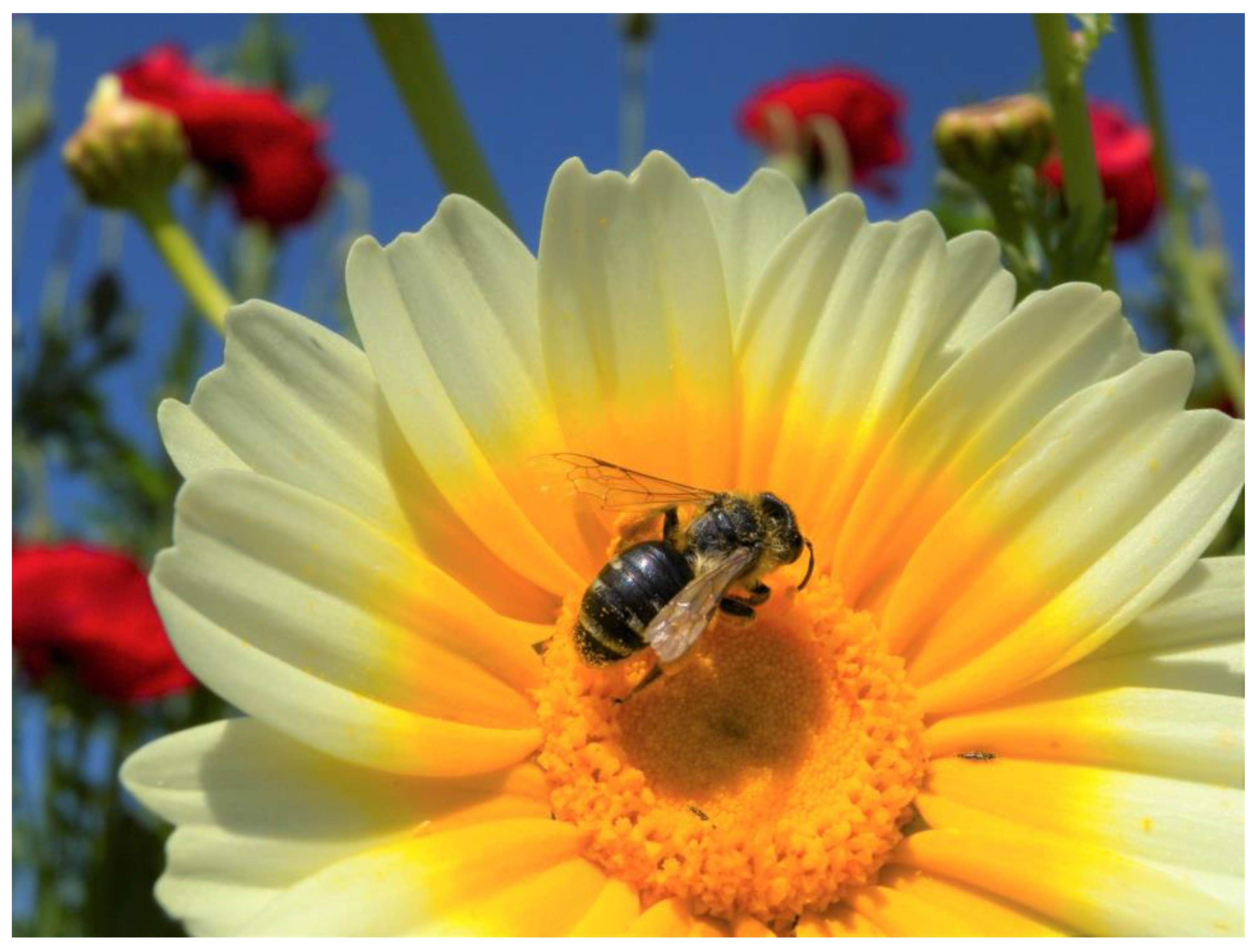
119]. From this perspective, insect-pollinated weeds (
Figure 9) are the species most threatened by climate change. Conversely, weeds that lack mutualism might be advantaged, especially the autogamous and anemophilous species that have already been found to be highly resistant to intensive cropping systems [
120].
Therefore, climate change will most likely reduce the number of weed species. This decline poses not only environmental problems (biodiversity reduction) but also agronomic issues, since the control of complex weed communities is significantly easier than that of simpler weed floras, which are often dominated by aggressive and herbicide-resistant weeds [
121]. Moreover, the “biological vacuum” in current agroecosystems, due to the almost exclusive presence of plants of the cropped species, aggravates the risk of invasion by exotic plants [
122] that can be alleviated by maintaining a high floristic diversity [
123].
10. Weed Control Problems
Climate change can hinder weed management [
124] because it can reduce herbicide efficacy [
125] and promote the establishment of pioneer species, well-adapted to thrive in harsh environments [
126]. Rising temperatures combined with elevated atmospheric CO
2 concentrations speed up and increase the production of weed seeds, thanks to the enlargement of the “window” of temperatures, which could allow species with a longer biological cycle to flower and disseminate [
127]. The weed seed bank can thus increase, and the milder temperatures can allow more generations in a single growing season. Moreover, the thermal increase could reduce the occurrence of rare long-leaved species [
128], thus narrowing biodiversity. More generations per year under strong selection pressure aggravates the risk of the evolution of herbicide-resistant biotypes [
129]. In warmer winters, summer weed species can compete, at least in their early growth stages, with winter crops. Indeed, weed floras in winter and summer crops are becoming surprisingly “globalized” through the seasons. Although weeds that emerge in autumn cannot compete with crops during their entire life cycle, they interfere with early crop growth. Similarly, an earlier spring emergence of summer weeds in winter crops can be harmful. Although the growing stage of winter crops in early spring is generally beyond the so-called “critical period” (period of significant competition between crop and weed), summer weeds can hinder crop harvesting.
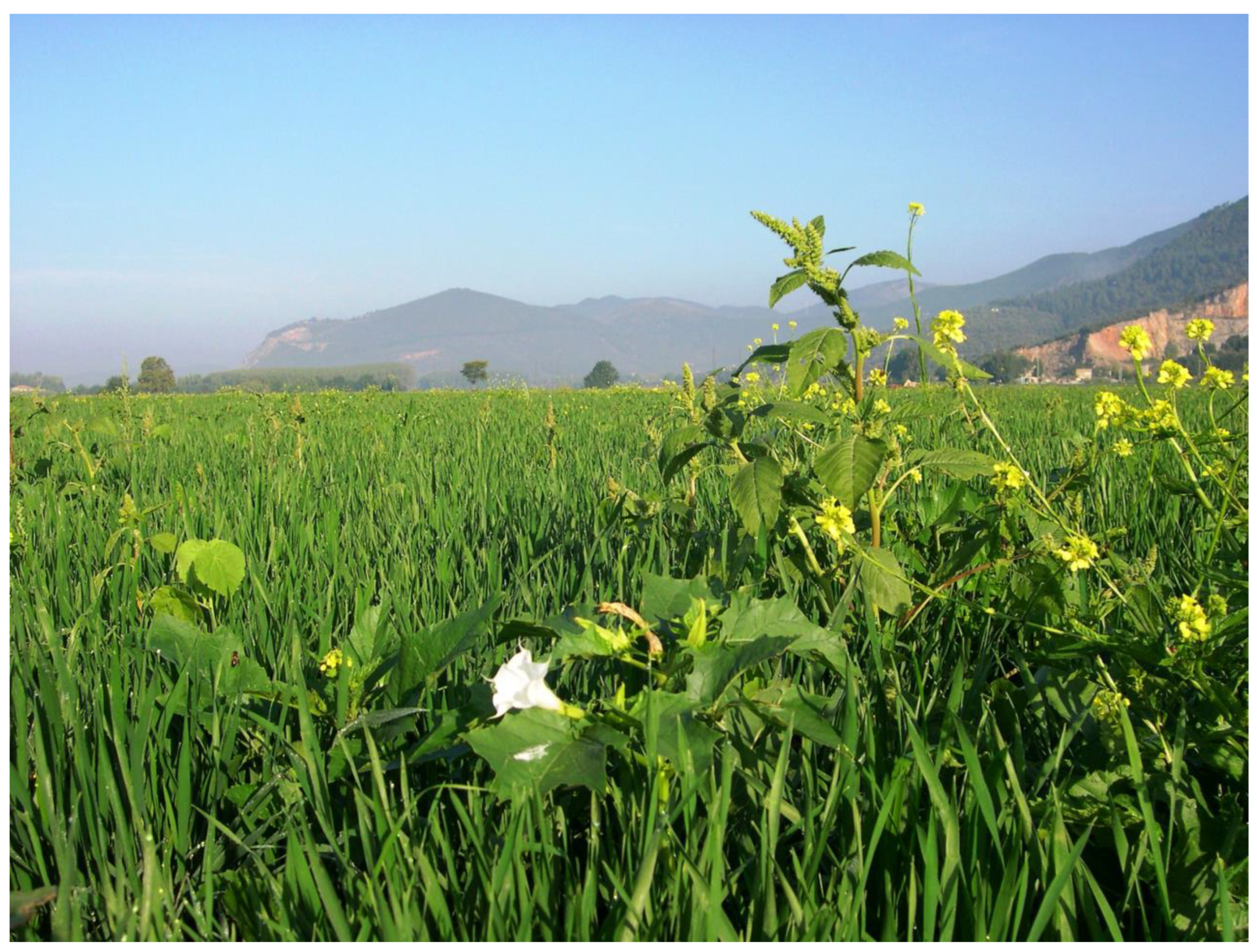
This happens with summer species, such as
Abutilon theophrasti L. Medicus,
Chenopodium album L. and
Datura stramonium L., which can compete with wheat, already at the tillering stage (
Figure 10).
Moreover, under warmer climate scenarios, some species that are now frost-mediated annuals may become “agronomically perennial” [
130] because senescence is no longer triggered under milder winter conditions. This has been observed in
Solanum nigrum L. in the absence of winter frost. Insufficient winter chilling can also lengthen the vegetative stage of perennial weeds, as was found at high latitudes for
Elymus repens (L.) Gould.,
Cirsium arvense (L.) Scop., and
Sonchus arvensis L. [
131]. This is a problem because perennial weeds are less susceptible to pre-emergence treatments [
132] and even to post-emergence herbicides, as reported for
Sorghum halepense (L.) Pers. emerging from rhizomes [
133]. For other perennial species, such as
Cirsium arvense (L.) Scop., increased CO
2 concentrations foster the growth of underground plant organs that cannot be reached by herbicides [
134].
Other weed control issues may result in the dominance of xerophytic species in the Mediterranean weed flora of xerophytic species, with leaves that are thorny or covered with waxy substances. These traits reduce water loss and protect plants from UV-B radiation, but may also decrease the efficacy of post-emergence herbicides [
135]. The tolerance of weeds to herbicides can also be increased by high levels of CO
2.
All these factors suggest that higher herbicide application rates may be required in the future [
136]. Moreover, higher application rates may also be necessary due to the reduced persistence of several active substances at high temperatures [
137]. Therefore, a more intensive chemical control will probably be needed in the forecasted climate scenario, with higher rates, more herbicides, and multiple applications.
The impact of UV-B radiation on weed control is controversial, as it depends both on the herbicide and on weed physiology. Generally, UV-B radiation tends to oxidize herbicide active substances, inhibiting their phytotoxicity and reducing their biological efficacy over time [
138]; however, experiments under simulated conditions have shown that UV-B can enhance the herbicidal action on the metabolism of certain species.
11. Aesthetic Deterioration of the Rural Landscape
The landscape acts as a mirror to the impact of human activities that modify the environment both directly (through cropping systems) and indirectly (through climate change). It reveals the sustainability of the management of agricultural and forest land and of other anthropogenic systems. Moreover, the landscape also has aesthetic value provided by agricultural systems.
It is not a coincidence that mutualistic species have flowers with an undeniable aesthetic impact. Many of them (collectively referred to as “wildflowers”) have flowers and inflorescences that evolved to attract pollinators through their chromaticity and morphology [
139]. They are an important feature of ancient agricultural landscapes [
140] that still occasionally reappear, but almost exclusively in ecologically managed areas. For example, the main species that “colored” ancient wheat fields were
Centaurea cyanus L.,
Agrostemma githago L.,
Nigella damascena L.,
Gladiolus italicus Mill.,
Papaver rhoeas L.,
Anthemis arvensis L., and
Consolida ajacis (L.) Schur. Often, they did not cause significant yield losses due to their low competitiveness; sometimes their presence even increased crop production thanks to an increase in pollinator visits [
141]. Their decline in cropland is certainly not entirely due to climate change, but in the new climate, their presence is expected to further decrease, even in the agro-ecological oases. As already reported, any environmental imbalance threatens the delicate interactions between flora and fauna organisms. Therefore, it is highly probable that climate change will hinder or prevent seed formation in species whose self-pollination is often impossible, as in
Papaver rhoeas L. [
142]. In the new climatic scenario, this aesthetic component of the rural landscape will probably disappear [
143]. They will be replaced by species that do not require any interaction with pollinators. Unfortunately, their flowers lack any aesthetic appeal because their evolutionary strategy was not based on attractiveness [
144]. Many of them are already prevalent in modern agroecosystems. Examples are grass weeds that are typically found in wheat and other winter cereals (
Lolium multiflorum Lam.,
Avena sterilis L.,
Alopecurus myosuroides Huds.,
Phalaris minor Retz.) and in summer crops (
Sorghum halepense (L.) Pers.,
Setaria viridis (L.) Beauv., and
Digitaria sanguinalis (L.) Scop.), and anaesthetic dicotyledons that are common in winter cereals (
Rumex crispus L. and
Galium aparine L.) and in summer crops (
Amaranthus retroflexus L.,
Xanthium strumarium L. and
Chenopodium album L.).
12. Hazards to Human Health
In many predictions, climate change will affect human health, mainly due to the invasion of toxic alien weeds [
145] coming from warmer environments [
146]. For example, some wind-dispersed
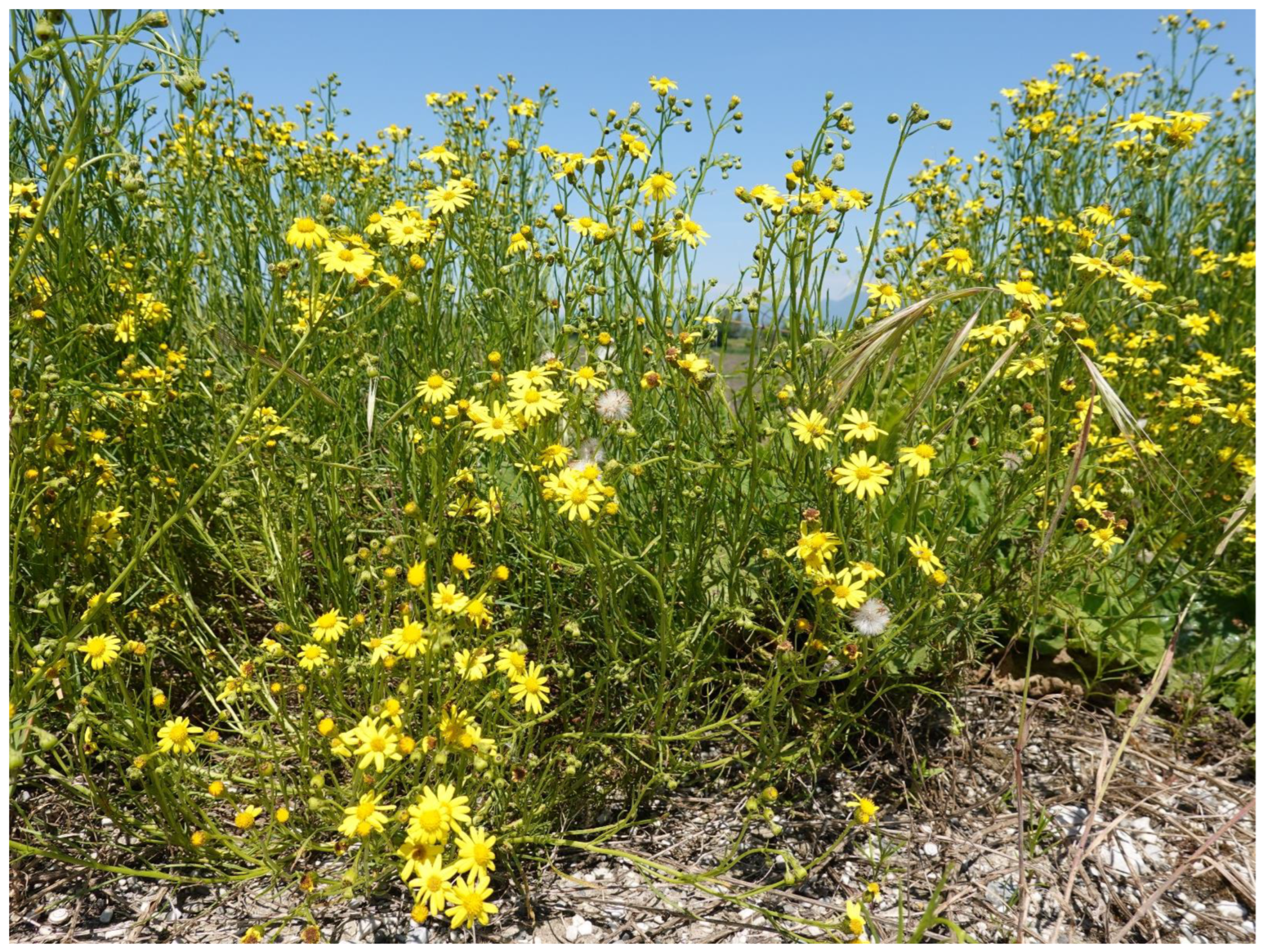
Senecio spp., rich in carcinogenic pyrrolizidine alkaloids [
147], have been accidentally introduced into Europe, and their spread is forecasted to rapidly increase [
148] (
Figure 11).
Climate change can also favor weeds (mainly grasses [
149]) that host pathogenic endophytic fungi infecting plants under abiotic stress [
150]. Many of them are asymptomatic under normal conditions but become aggressive or produce mycotoxins at high temperatures and CO
2 [
151]. Mycotoxins pose significant risks to human and animal health.
One of the recent concerns linked to climate change is the spreading of
Sorghum halepense (L.) Pers. in the pastures [
152]. This grass produces dhurrin, a highly toxic cyanogenetic glycoside that, in the cattle rumen, produces lethal hydrogen cyanide (HCN) [
153]. Its plant content is elicited by water stress [
154].
Further food security issues, aggravated by climatic changes, are expected to arise from the predicted intensification of chemical weed control [
155] that will be required both by the evolution of weed flora [
156] and by the lower efficacy of herbicides [
157]. An indirect effect of higher chemical weed control concerns the increased exposure and sensitivity of bees and other pollinators to many active substances. The pollinators’ disappearance, which will be due to a combination of multi-environmental stresses [
158], is expected to reduce agroecosystem productivity.
Human health may be affected by weeds not only through the presence of toxic species, but also through the pollen produced by anemophilous plants [
159], which represents a major cause of respiratory allergic diseases [
160]. Several exotic species recently introduced into Mediterranean weed communities combine high pollen production—facilitating rapid dispersal—with strong tolerance to environmental stress associated with intensive agricultural systems. An example is the pioneer weed
Conyza canadensis (L.) Conq. [
161], which is widespread in anthropogenically disturbed areas. Among species producing highly allergenic pollen [
162],
Ambrosia artemisiifolia L. is considered one of the most clinically relevant. Introduced into Europe several decades ago, this species is expected to be favored under future climate change scenarios [
163]. It produces large quantities of highly allergenic pollen that can be transported by wind over considerable distances, resulting in pollinosis across broad geographic areas [
164]. The pollen production was found to be increased by CO
2 content in the atmosphere [
165], similar to what happens for other allergenic species [
166]. Moreover, the biological effects of allergens are amplified by the interaction of pollen with the vast range of pollutants contained in the current atmosphere [
167]. Consequently, an increase in the incidence and severity of pollinosis is anticipated under future climate scenarios characterized by heightened environmental vulnerability [
168].
13. Conclusions
The assessment of the potential impacts of climate change on weed–crop interactions indicates that crops are generally more vulnerable to altered climatic conditions than weed species. The main climatic drivers considered in this study are summarized in
Table 1.
A diversified evolutionary response of weed populations is expected, but weed flora composition in the future climate scenarios remains uncertain. Some trends, such as increases in UV-B and CO2, may become more influential. Conversely, temperature rise, drought frequency, and, in some localities, soil salinization, are already influencing or driving shifts. The change in climatic conditions, which is already evident in Mediterranean agroecosystems, is causing a reduction in species diversity by breaking fragile interdependences of the agroecosystem components. The weeds that mostly tolerate environmental disturbance are favored, and they increase the resilience of the weed community. The consequent weed flora will be less biodiverse and more aggressive, making weed control more complicated. There will be a dominance of weeds with high environmental plasticity, mainly pollinated and dispersed by wind, characterized by high competitive ability. The progressive disappearance of insect-pollinated species (with beautiful flowers) will be replaced by self-pollinating and anemophilous species, with a drastic deterioration of the agricultural landscape. Poorly diversified plant communities may facilitate the establishment of exotic weed species within agroecosystems, some of which are toxic, poisonous, or highly allergenic. Increased herbicide use is anticipated, as simplified weed communities are likely to be dominated by herbicide-tolerant species or species characterized by low leaf permeability. A potential increase in the number of weed generations during extended warm seasons, combined with enhanced overwinter survival of certain species, may further complicate weed management. Climate change, therefore, appears to threaten the already fragile ecological and economic sustainability of agricultural systems. Even more severe consequences are projected for the economically disadvantaged regions of the Mediterranean area, where socio-economic vulnerability may exceed ecological resilience. Consequently, future climate scenarios may contribute to widening disparities between economically stronger and more vulnerable countries. On the other hand, future floristic evolution is expected to remain highly uncertain, not only because of the intrinsic complexity of climate change, but also due to its unpredictable interactions with herbicide resistance, crop system simplification, and the impact of emerging agroecosystem management strategies.
The new objective of crop breeding should no longer be focused on yield rise, which requires more inputs, but rather on increasing crop adaptability to variable climates. For this scope, the collection of germplasm from wild relatives and the retrieval of wild species that can hybridize with crops will be crucial. Most of them are weeds that should not be extinguished. Future crop genetic improvement strategies should prioritize the introgression of drought-resistance traits from wild relatives—such as Triticum dicoccoides, a wild progenitor of wheat—into elite cultivars to enhance stress tolerance and competitive ability against weeds under climate change scenarios, as demonstrated by recent breeding programs exploiting wild germplasm for improved resilience and yield stability.
The challenging future climate will require rational management of weed flora to obtain sufficient agricultural products for our generation, but also to leave optimal environmental conditions for the life of future generations.
Author Contributions
Conceptualization, S.B. and G.B.; software, S.B. and G.B.; validation, S.B. and G.B.; formal analysis, S.B. and G.B.; investigation, S.B. and G.B.; data curation, S.B. and G.B.; writing—original draft preparation, S.B. and G.B.; writing—review and editing, S.B. and G.B.; visualization, S.B. and G.B.; supervision, S.B. and G.B.; project administration, S.B. and G.B. All authors have read and agreed to the published version of the manuscript.
Funding
This research received no external funding.
Data Availability Statement
No new data were created or analyzed in this study. Data sharing is not applicable to this article.
Conflicts of Interest
The author declares no conflicts of interest.
References
- Stern, D.I.; Kaufmann, R.K. Anthropogenic and natural causes of climate change. Clim. Change 2014, 122, 257–269. [Google Scholar] [CrossRef]
- Goldman, M.J.; Turner, M.D.; Daly, M.A. Critical political ecology of human dimensions of climate change: Epistemology, ontology, and ethics. Wiley Interdiscip. Rev. Clim. Change 2018, 9, e526. [Google Scholar] [CrossRef]
- Verma, K.K.; Song, X.P.; Kumari, A.; Jagadesh, M.; Singh, M.; Seth, C.S.; Bhatt, R.; Seth, C.S.; Li, Y.R. Climate change adaptation: Challenges for agricultural sustainability. Plant Cell Environ. 2025, 48, 2522–2533. [Google Scholar] [CrossRef]
- Korres, N.E.; Norsworthy, J.K.; Tehranchian, P.; Gitsopoulos, T.K.; Loka, D.A.; Oosterhuis, D.M.; Gealy, D.R.; Moss, S.R.; Burgos, N.R.; Miller, M.R.; et al. Cultivars to face climate change effects on crops and weeds: A review. Agron. Sustain. Dev. 2016, 36, 12. [Google Scholar] [CrossRef]
- Karkanis, A.; Ntatsi, G.; Alemardan, A.; Petropoulos, S.; Bilalis, D. Interference of weeds in vegetable crop cultivation, in the changing climate of Southern Europe with emphasis on drought and elevated temperatures: A review. J. Agric. Sci. 2018, 156, 1175–1185. [Google Scholar] [CrossRef]
- Lauenroth, D.; Gokhale, C.S. Theoretical assessment of persistence and adaptation in weeds with complex life cycles. Nat. Plants 2023, 9, 1267–1279. [Google Scholar] [CrossRef] [PubMed]
- Bourgeois, B.; Munoz, F.; Fried, G.; Mahaut, L.; Armengot, L.; Denelle, P.; Storkey, J.; Gaba, S.; Violle, C. What makes a weed a weed? A large-scale evaluation of arable weeds through a functional lens. Am. J. Bot. 2019, 106, 90–100. [Google Scholar] [CrossRef] [PubMed]
- Martınez-Ghersa, M.A.; Ghersa, C.M.; Satorre, E.H. Coevolution of agricultural systems and their weed companions: Implications for research. Field Crop. Res. 2000, 67, 181–190. [Google Scholar] [CrossRef]
- Munda, S.; Nayak, B.K.; Das, S.R.; Dey, S.; Pradhan, A.; Swain, C.K.; Muduli, B.C. Understanding the effects of changing climate on weeds and their management. In Climate Change Impacts on Soil-Plant-Atmosphere Continuum; Springer Nature: Singapore, 2024; pp. 405–425. [Google Scholar]
- Borgy, B.; Perronne, R.; Kohler, C.; Grison, A.L.; Amiaud, B.; Gaba, S. Changes in functional diversity and intraspecific trait variability of weeds in response to crop sequences and climate. Weed Res. 2016, 56, 102–113. [Google Scholar] [CrossRef]
- Van de Wouw, M.; Kik, C.; Van Hintum, T.; Van Treuren, R.; Visser, B. Genetic erosion in crops: Concept, research results and challenges. Plant Genet. Resour. 2010, 8, 1–15. [Google Scholar] [CrossRef]
- Anwar, M.P.; Islam, A.M.; Yeasmin, S.; Rashid, M.H.; Juraimi, A.S.; Ahmed, S.; Shrestha, A. Weeds and their responses to management efforts in a changing climate. Agronomy 2021, 11, 1921. [Google Scholar] [CrossRef]
- Varanasi, A.; Prasad, P.V.; Jugulam, M. Impact of climate change factors on weeds and herbicide efficacy. Adv. Agron. 2016, 135, 107–146. [Google Scholar]
- Bevacqua, E.; Schleussner, C.F.; Zscheischler, J. A year above 1.5 °C signals that Earth is most probably within the 20-year period that will reach the Paris Agreement limit. Nat. Clim. Change 2025, 15, 262–265. [Google Scholar] [CrossRef]
- Hamdan, A.; Al-Salaymeh, A.; AlHamad, I.M.; Ikemba, S.; Ewim, D.R.E. Predicting future global temperature and greenhouse gas emissions via LSTM model. Sustain. Energy Res. 2023, 10, 21. [Google Scholar] [CrossRef]
- Filonchyk, M.; Peterson, M.P.; Zhang, L.; Hurynovich, V.; He, Y. Greenhouse gases emissions and global climate change: Examining the influence of CO2, CH4, and N2O. Sci. Total Environ. 2024, 935, 173359. [Google Scholar] [CrossRef]
- Feng, R.; Li, Z. Current investigations on global N2O emissions and reductions: Prospect and outlook. Environ. Pollut. 2023, 338, 122664. [Google Scholar] [CrossRef]
- Kumar, V.; Kumari, A.; Price, A.J.; Bana, R.S.; Singh, V.; Bamboriya, S.D. Impact of futuristic climate variables on weed biology and herbicidal efficacy: A review. Agronomy 2023, 13, 559. [Google Scholar] [CrossRef]
- Umkulzhum, F.; Ameena, M.; Susha, V.S.; Renjan, B.; Sreelekshmi, K.; Sethulekshmi, V.S.; Shanavas, S. Weeds and their response to changing climate: A review. Int. J. Environ. Clim. Change 2024, 14, 768–779. [Google Scholar] [CrossRef]
- Menzel, R.; Shmida, A. The ecology of flower colours and the natural colour vision of insect pollinators: The Israeli flora as a case study. Biol. Rev. 1993, 68, 81–120. [Google Scholar] [CrossRef]
- Myneni, R.B.; Keeling, C.D.; Tucker, C.J.; Asrar, G.; Nemani, R.R. Increased plant growth in the northern high latitudes from 1981 to 1991. Nature 1997, 386, 698–702. [Google Scholar] [CrossRef]
- Jackson, S.D. Plant responses to photoperiod. New Phytol. 2009, 181, 517–531. [Google Scholar] [CrossRef]
- Li, X.; Liang, T.; Liu, H. How plants coordinate their development in response to light and temperature signals. Plant Cell 2022, 34, 955–966. [Google Scholar] [CrossRef]
- Gendron, J.M.; Staiger, D. New horizons in plant photoperiodism. Annu. Rev. Plant Biol. 2023, 74, 481–509. [Google Scholar] [CrossRef]
- Casal, J.J.; Balasubramanian, S. Thermomorphogenesis. Annu. Rev. Plant Biol 2019, 70, 321–346. [Google Scholar] [CrossRef]
- Van Dijk, H.; Hautekeete, N. Long day plants and the response to global warming: Rapid evolutionary change in day length sensitivity is possible in wild beet. J. Evol. Biol. 2007, 20, 349–357. [Google Scholar] [CrossRef] [PubMed]
- Chmielewski, F.M.; Müller, A.; Bruns, E. Climate changes and trends in phenology of fruit trees and field crops in Germany, 1961–2000. Agric. For. Meteorol. 2004, 121, 69–78. [Google Scholar] [CrossRef]
- Hernandez, J.O.; Naeem, M.; Zaman, W. How does changing environment influence plant seed movements as populations of dispersal vectors decline? Plants 2023, 12, 1462. [Google Scholar] [CrossRef] [PubMed]
- Settele, J.; Bishop, J.; Potts, S.G. Climate change impacts on pollination. Nat. Plants 2016, 2, 16092. [Google Scholar] [CrossRef]
- Parmesan, C.; Hanley, M.E. Plants and climate change: Complexities and surprises. Ann. Bot. 2015, 116, 849–864. [Google Scholar] [CrossRef] [PubMed]
- Nakabayashi, K.; Leubner-Metzger, G. Seed dormancy and weed emergence: From simulating environmental change to understanding trait plasticity, adaptive evolution, and population fitness. J. Exp. Bot. 2021, 72, 4181–4185. [Google Scholar] [CrossRef]
- Baskin, C.C.; Baskin, J.M. Cold stratification in winter is more than enough for seed dormancy-break of summer annuals in eastern North America: Implications for climate change. Seed Sci. Res. 2022, 32, 63–69. [Google Scholar] [CrossRef]
- Kırmızı, S. Effects of Pre-Treatments on Seed Dormancy and Germination of Endemic Muscari bourgaei Baker. Agronomy 2023, 13, 2438. [Google Scholar] [CrossRef]
- Walck, J.L.; Hidayati, S.N.; Dixon, K.W.; Thompson, K.E.N.; Poschlod, P. Climate change and plant regeneration from seed. Glob. Change Biol. 2011, 17, 2145–2161. [Google Scholar] [CrossRef]
- Klupczyńska, E.A.; Pawłowski, T.A. Regulation of seed dormancy and germination mechanisms in a changing environment. Int. J. Mol. Sci. 2021, 22, 1357. [Google Scholar] [CrossRef]
- Hudson, A.R.; Ayre, D.J.; Ooi, M.K. Physical dormancy in a changing climate. Seed Sci. Res. 2015, 25, 66–81. [Google Scholar] [CrossRef]
- Fernández-Pascual, E.; Mattana, E.; Pritchard, H.W. Seeds of future past: Climate change and the thermal memory of plant reproductive traits. Biol. Rev. 2019, 94, 439–456. [Google Scholar] [CrossRef]
- Kim, D.H.; Doyle, M.R.; Sung, S.; Amasino, R.M. Vernalization: Winter and the timing of flowering in plants. Annu. Rev. Cell Dev. Biol. 2009, 25, 277–299. [Google Scholar] [CrossRef] [PubMed]
- Chavvel, B.; Munier-Jolain, N.M.; Grandgirard, D.; Gueritaine, G. Effect of vernalization on the development and growth of Alopecurus myosuroides. Weed Res. 2002, 42, 166–175. [Google Scholar] [CrossRef]
- Katovich, E.J.; Katovich, E.S.; Becker, R.L. Vernalization required to induce flowering in rosettes of garlic mustard (Alliaria petiolata). Invas. Plant Sci. Manag. 2022, 15, 107–114. [Google Scholar] [CrossRef]
- Donald, W.W. Vernalization requirements for flowering of jointed goatgrass (Aegilops cylindrica). Weed Sci. 1984, 32, 631–637. [Google Scholar] [CrossRef]
- Darmency, H.; Bellanger, S.; Matejicek, A.; Guillemin, J.P. Long-day-dependent segetal species threatened by climate change. Agric. Ecosyst. Environ. 2016, 216, 340–343. [Google Scholar] [CrossRef]
- Tun, W.; Yoon, J.; Jeon, J.S.; An, G. Influence of climate change on flowering time. J. Plant Biol. 2021, 64, 193–203. [Google Scholar] [CrossRef]
- Nunes, L.J. The rising threat of atmospheric CO2: A review on the causes, impacts, and mitigation strategies. Environments 2023, 10, 66. [Google Scholar] [CrossRef]
- Boretti, A.; Florentine, S. Atmospheric CO2 concentration and other limiting factors in the growth of C3 and C4 plants. Plants 2019, 8, 92. [Google Scholar] [CrossRef]
- Nimmo, H.G. The regulation of phosphoenolpyruvate carboxylase in CAM plants. Trends Plant Sci. 2000, 5, 75–80. [Google Scholar] [CrossRef] [PubMed]
- Sage, R.F.; Kubien, D.S. The temperature response of C3 and C4 photosynthesis. Plant Cell Environ. 2007, 30, 1086–1106. [Google Scholar] [CrossRef]
- Geetha, K.N.; Vidyashree, B.S.; Sondhia, S.; Prabhakar, M.; Tejaswini, C.R.; Laxman, H.R.; Kamala, B.; Sinchana, J.K. Effect of changing temperature and CO2 concentration on weed dynamics and behaviour: A review. Int. J. Environ. Clim. Change 2024, 14, 545–560. [Google Scholar]
- Zhao, Z.; Yu, J.; Zhao, W.; Ma, M.; Tang, J. Intraspecific differentiation and phenotypic plasticity help the invasive success of Xanthium italicum. J. Plant Ecol. 2025, 18, rtaf090. [Google Scholar] [CrossRef]
- Ehleringer, J.R.; Monson, R.K. Plant Ecology in a Changing World; CRC Press: Boca Raton, FL, USA, 2025; ISBN 9781315118017. [Google Scholar]
- Fletcher, B.J.; Brentnall, S.J.; Anderson, C.W.; Berner, R.A.; Beerling, D.J. Atmospheric carbon dioxide linked with Mesozoic and early Cenozoic climate change. Nat. Geosci. 2008, 1, 43–48. [Google Scholar] [CrossRef]
- Springer, C.J.; Ward, J.K. Flowering time and elevated atmospheric CO2. New Phytol. 2007, 176, 243–255. [Google Scholar] [CrossRef]
- Grime, J.P. The CSR model of primary plant strategies—Origins, implications and tests. In Plant Evolutionary Biology; Springer: Dordrecht, The Netherlands, 1988; pp. 371–393. [Google Scholar]
- Camarasa-Belmonte, A.M.; Rubio, M.; Salas, J. Rainfall events and climate change in Mediterranean environments: An alarming shift from resource to risk in Eastern Spain. Nat. Hazards 2020, 103, 423–445. [Google Scholar] [CrossRef]
- Roy, D.; Ghosh, S.; Datta, D.; Sreekanth, D.; Pawar, D.; Mukherjee, P.K.; Ghosh, D.; Santra, S.C.; Moulick, D. Climate resilient weed management for crop production. In Climate-Resilient Agriculture, Volume 2: Agro-Biotechnological Advancement for Crop Production; Springer International Publishing: Cham, Switzerland, 2023; pp. 125–156. [Google Scholar]
- Fowler, N. The role of competition in plant communities in arid and semiarid regions. Ann. Rev. Ecol Sys. 1986, 17, 89–110. [Google Scholar] [CrossRef]
- Chauhan, B.S. Grand challenges in weed management. Front. Agron. 2020, 1, 3. [Google Scholar] [CrossRef]
- Espigares, T.; Peco, B. Mediterranean annual pasture dynamics: Impact of autumn drought. J. Ecol. 1995, 83, 135–142. [Google Scholar] [CrossRef]
- Parmesan, C.; Yohe, G. A globally coherent fingerprint of climate change impacts across natural systems. Nature 2003, 421, 37–42. [Google Scholar] [CrossRef]
- Munger, P.H.; Chandler, J.M.; Cothren, J.T.; Hons, F.M. Soybean (Glycine max)–velvetleaf (Abutilon theophrasti) interspecific competition. Weed Sci. 1987, 35, 647–653. [Google Scholar] [CrossRef]
- Patterson, D.T. Weeds in a changing climate. Weed Sci. 1995, 43, 685–701. [Google Scholar] [CrossRef]
- Yang, W.; Sun, S.; Wang, N.; Fan, P.; You, C.; Wang, R.; Zheng, P.; Wang, H. Dynamics of the distribution of invasive alien plants (Asteraceae) in China under climate change. Sci. Total Environ. 2023, 903, 166260. [Google Scholar] [CrossRef]
- Benvenuti, S. Weed seed movement and dispersal strategies in the agricultural environment. Weed Biol. Manag. 2007, 7, 141–157. [Google Scholar] [CrossRef]
- Ibáñez, J.; Martínez, J.; Schnabel, S. Desertification due to overgrazing in a dynamic commercial livestock–grass–soil system. Ecol. Model. 2007, 205, 277–288. [Google Scholar] [CrossRef]
- Davis, M.A.; Grime, J.P.; Thompson, K. Fluctuating resources in plant communities: A general theory of invasibility. J. Ecol. 2000, 88, 528–534. [Google Scholar] [CrossRef]
- Norton, M.R.; Malinowski, D.P.; Volaire, F. Plant drought survival under climate change and strategies to improve perennial grasses. A review. Agron. Sustain. Dev. 2016, 36, 29. [Google Scholar] [CrossRef]
- Wright, E.L.; Erickson, J.D. Incorporating catastrophes into integrated assessment: Science, impacts, and adaptation. Clim. Change 2003, 57, 265–286. [Google Scholar] [CrossRef]
- Easterling, D.R.; Meehl, G.A.; Parmesan, C.; Changnon, S.A.; Karl, T.R.; Mearns, L.O. Climate extremes: Observations, modeling, and impacts. Science 2000, 289, 2068–2074. [Google Scholar] [CrossRef] [PubMed]
- Sharma, G.; Barney, J.N.; Westwood, J.H.; Haak, D.C. Into the weeds: New insights in plant stress. Trends Plant Sci. 2021, 26, 1050–1060. [Google Scholar] [CrossRef] [PubMed]
- Milly, P.C.D.; Wetherald, R.T.; Dunne, K.A.; Delworth, T.L. Increasing risk of great floods in a changing climate. Nature 2002, 415, 514–517. [Google Scholar] [CrossRef]
- Barrett, S.C.; Wilson, B.F. Colonizing ability in the Echinochloa crus-galli complex (barnyard grass). II. Seed biology. Can. J. Bot. 1983, 61, 556–562. [Google Scholar] [CrossRef]
- Milbau, A.; Scheerlinck, L.; Reheul, D.; De Cauwer, B.; Nijs, I. Ecophysiological and morphological parameters related to survival in grass species exposed to an extreme climatic event. Physiol. Plant. 2005, 125, 500–512. [Google Scholar] [CrossRef]
- Buckland, S.M.; Thompson, K.; Hodgson, J.G.; Grime, J.P. Grassland invasions: Effects of manipulations of climate and management. J. Appl. Ecol. 2001, 38, 301–309. [Google Scholar] [CrossRef]
- Eswar, D.; Karuppusamy, R.; Chellamuthu, S. Drivers of soil salinity and their correlation with climate change. Curr. Opin. Environ. Sustain. 2021, 50, 310–318. [Google Scholar] [CrossRef]
- Pulido-Bosch, A.; Rigol-Sanchez, J.P.; Vallejos, A.; Andreu, J.M.; Cerón, J.C.; Molina-Sanchez, L.; Sola, F. Impacts of agricultural irrigation on groundwater salinity. Environ. Earth Sci. 2018, 77, 197. [Google Scholar] [CrossRef]
- Cazenave, A.; Llovel, W. Contemporary sea level rise. Annu. Rev. Mar. Sci. 2010, 2, 145–173. [Google Scholar] [CrossRef] [PubMed]
- Mann, A.; Lata, C.; Kumar, N.; Kumar, A.; Kumar, A.; Sheoran, P. Halophytes as new model plant species for salt tolerance strategies. Front. Plant Sci. 2023, 14, 1137211. [Google Scholar] [CrossRef]
- Ungar, I.A. Seed banks and seed population dynamics of halophytes. Wetl. Ecol. Manag. 2001, 9, 499–510. [Google Scholar] [CrossRef]
- Borsai, O.; Hassan, M.A.; Negrușier, C.; Raigón, M.D.; Boscaiu, M.; Sestraș, R.E.; Vicente, O. Responses to salt stress in Portulaca: Insight into its tolerance mechanisms. Plants 2020, 9, 1660. [Google Scholar] [CrossRef] [PubMed]
- Grieve, C.M.; Suarez, D.L. Purslane (Portulaca oleracea L.): A halophytic crop for drainage water reuse systems. Plant Soil 1997, 192, 277–283. [Google Scholar] [CrossRef]
- Song, X.; Su, Y.; Zheng, J.; Zhang, Z.; Liang, Z.; Tang, Z. Study on the effects of salt tolerance type, soil salinity and soil characteristics on the element composition of Chenopodiaceae halophytes. Plants 2020, 11, 1288. [Google Scholar] [CrossRef] [PubMed]
- Rahman, M.M.; Mostofa, M.G.; Keya, S.S.; Siddiqui, M.N.; Ansary, M.M.U.; Das, A.K.; Rahman, K.D.; Tran, L.S.P. Adaptive mechanisms of halophytes and their potential in improving salinity tolerance in plants. Int. J. Mol. Sci. 2021, 22, 10733. [Google Scholar] [CrossRef]
- Yamamoto, A.; SHIM, I.S.; Fujihara, S.; Yoneyama, T.; Usui, K. Physiochemical factors affecting the salt tolerance of Echinochloa crus-galli Beauv. var. formosensis Ohwi. Weed Biol. Manag. 2003, 3, 98–104. [Google Scholar] [CrossRef]
- Itoh, M. Phenotypic variation and adaptation in morphology and salt spray tolerance in coastal and inland populations of Setaria viridis in central Japan. Weed Res. 2021, 61, 199–209. [Google Scholar] [CrossRef]
- McKenzie, R.L.; Aucamp, P.J.; Bais, A.F.; Björn, L.O.; Ilyas, M.; Madronich, S. Ozone depletion and climate change: Impacts on UV radiation. Photochem. Photobiol. Sci. 2011, 10, 182–198. [Google Scholar] [CrossRef] [PubMed]
- Bais, A.F.; McKenzie, R.L.; Bernhard, G.; Aucamp, P.J.; Ilyas, M.; Madronich, S.; Tourpali, K. Ozone depletion and climate change: Impacts on UV radiation. Photochem. Photobiol. Sci. 2015, 14, 19–52. [Google Scholar] [CrossRef] [PubMed]
- Bornman, J.F.; Barnes, P.W.; Robson, T.M.; Robinson, S.A.; Jansen, M.A.; Ballaré, C.L.; Flint, S.D. Linkages between stratospheric ozone, UV radiation and climate change and their implications for terrestrial ecosystems. Photochem. Photobiol. Sci. 2019, 18, 681–716. [Google Scholar] [CrossRef]
- Wargent, J.J.; Jordan, B.R. From ozone depletion to agriculture: Understanding the role of UV radiation in sustainable crop production. New Phytol. 2013, 197, 1058–1076. [Google Scholar] [CrossRef]
- Caldwell, M.M.; Bornman, J.F.; Ballaré, C.L.; Flint, S.D.; Kulandaivelu, G. Terrestrial ecosystems increased solar ultraviolet radiation, and interactions with other climate change factors. Photochem. Photobiol. Sci. 2007, 6, 252–266. [Google Scholar] [CrossRef]
- Searles, P.S.; Flint, S.D.; Caldwell, M.M. A meta-analysis of plant field studies simulating stratospheric ozone depletion. Oecologia 2001, 127, 1–10. [Google Scholar] [CrossRef]
- Wang, S.; Duan, L.; Li, J.; Tian, X.; Li, Z. UV-B radiation increases paraquat tolerance of two broad-leaved and two grass weeds in relation to changes in herbicide absorption and photosynthesis. Weed Res. 2007, 47, 122–128. [Google Scholar] [CrossRef]
- Yin, L.; Zhang, M.; Li, Z.; Duan, L.; Wang, S. Enhanced UV-B radiation increases glyphosate resistance in velvetleaf (Abutilon theophrasti). Photochem. Photobiol. 2012, 88, 1428–1432. [Google Scholar] [CrossRef]
- Wang, S.; Duan, L.; Eneji, A.E.; Li, Z. Variations in growth, photosynthesis and defense system among four weed species under increased UV-B radiation. J. Integr. Plant Biol. 2007, 49, 621–627. [Google Scholar] [CrossRef]
- Pyšek, P.; Hulme, P.E.; Simberloff, D.; Bacher, S.; Blackburn, T.M.; Carlton, J.T.; Dawson, W.; Essl, F.; Foxcroft, L.C.; Genovesi, P.; et al. Scientists’ warning on invasive alien species. Biol. Rev. 2020, 95, 1511–1534. [Google Scholar] [CrossRef]
- Furness, N.H.; Jolliffe, P.A.; Upadhyaya, M.K. Competitive interactions in mixtures of broccoli and Chenopodium album grown at two UV-B radiation levels under glasshouse conditions. Weed Res. 2005, 45, 449–459. [Google Scholar] [CrossRef]
- Joel, D.M. The long-term approach to parasitic weeds control: Manipulation of specific developmental mechanisms of the parasite. Crop Prot. 2000, 19, 753–758. [Google Scholar] [CrossRef]
- Oswald, A. Striga control—Technologies and their dissemination. Crop Prot. 2005, 24, 333–342. [Google Scholar] [CrossRef]
- Press, M.C.; Phoenix, G.K. Impacts of parasitic plants on natural communities. New Phytol. 2005, 166, 737–751. [Google Scholar] [CrossRef] [PubMed]
- Vasey, R.A.; Scholes, J.D.; Press, M.C. Wheat (Triticum aestivum) is susceptible to the parasitic angiosperm Striga hermonthica, a major cereal pathogen in Africa. Phytopathology 2005, 95, 1294–1300. [Google Scholar] [CrossRef]
- Mohamed, A.H.; Ejeta, G.; Butler, L.G.; Housley, T.L. Moisture content and dormancy in Striga asiatica seeds. Weed Res. 1998, 38, 257–265. [Google Scholar] [CrossRef]
- Siame, B.A.; Weerasuriya, Y.; Wood, K.; Ejeta, G.; Butler, L.G. Isolation of strigol, a germination stimulant for Striga asiatica, from host plants. J. Agric. Food Chem. 1993, 41, 1486–1491. [Google Scholar] [CrossRef]
- Teka, H.B. Advance research on Striga control: A review. Afr. J. Plant Sci. 2014, 8, 492–506. [Google Scholar]
- Bürger, M.; Chory, J. A potential role of heat-moisture couplings in the range expansion of Striga asiatica. Ecol. Evol. 2024, 14, e11332. [Google Scholar] [CrossRef]
- Ziska, L.H. My View: Weed science and public health. Weed Sci. 2001, 49, 437–438. [Google Scholar] [CrossRef]
- Mauro, R.P.; Monaco, A.L.; Lombardo, S.; Restuccia, A.; Mauromicale, G. Eradication of Orobanche/Phelipanche spp. seedbank by soil solarization and organic supplementation. Sci. Hortic. 2015, 193, 62–68. [Google Scholar] [CrossRef]
- Joel, D.M. Transgenic crops to fight parastic weeds. Nature 1995, 374, 220–221. [Google Scholar] [CrossRef]
- Mohamed, K.I.; Papes, M.; Williams, R.; Benz, B.W.; Peterson, A.T. Global invasive potential of 10 parasitic witchweeds and related Orobanchaceae. AMBIO 2006, 35, 281–288. [Google Scholar] [CrossRef] [PubMed]
- Phoenix, G.K.; Press, M.C. Effects of climate change on parasitic plants: The root hemiparasitic Orobanchaceae. Folia Geobot. 2005, 40, 205–216. [Google Scholar] [CrossRef]
- Grenz, J.H.; Sauerborn, J. Mechanisms limiting the geographical range of the parasitic weed Orobanche crenata. Agric. Ecosyst. Environ. 2007, 122, 275–281. [Google Scholar] [CrossRef]
- Pilon-Smits, E.A.; Terry, N.; Sears, T.; Van Dun, K. Enhanced drought resistance in fructan-producing sugar beet. Plant Physiol. Biochem. 1999, 37, 313–317. [Google Scholar] [CrossRef]
- Benvenuti, S.; Dinelli, G.; Bonetti, A.; Catizone, P. Germination ecology, emergence and host detection in Cuscuta campestris. Weed Res. 2005, 45, 270–278. [Google Scholar] [CrossRef]
- Frost, A.; López-Gutiérrez, J.C.; Purrington, C.B. Fitness of Cuscuta salina (Convolvulaceae) parasitizing Beta vulgaris (Chenopodiaceae) grown under different salinity regimes. Am. J. Bot. 2003, 90, 1032–1037. [Google Scholar] [CrossRef]
- Mantyka-Pringle, C.S.; Visconti, P.; Di Marco, M.; Martin, T.G.; Rondinini, C.; Rhodes, J.R. Climate change modifies risk of global biodiversity loss due to land-cover change. Biol. Conserv. 2015, 187, 103–111. [Google Scholar] [CrossRef]
- Duffy, J.E. Biodiversity loss, trophic skew and ecosystem functioning. Ecol. Lett. 2003, 6, 680–687. [Google Scholar] [CrossRef]
- Malhi, Y.; Franklin, J.; Seddon, N.; Solan, M.; Turner, M.G.; Field, C.B.; Knowlton, N. Climate change and ecosystems: Threats, opportunities and solutions. Philos. Trans. R. Soc. B Biol. Sci. 2020, 375, 20190104. [Google Scholar] [CrossRef] [PubMed]
- Altieri, M.A.; Nicholls, C.I.; Henao, A.; Lana, M.A. Agroecology and the design of climate change-resilient farming systems. Agron. Sustain. Dev. 2015, 35, 869–890. [Google Scholar] [CrossRef]
- Toby Kiers, E.; Palmer, T.M.; Ives, A.R.; Bruno, J.F.; Bronstein, J.L. Mutualisms in a changing world: An evolutionary perspective. Ecol. Lett. 2010, 13, 1459–1474. [Google Scholar] [CrossRef]
- Aslan, C.E.; Zavaleta, E.S.; Tershy, B.; Croll, D. Mutualism disruption threatens global plant biodiversity: A systematic review. PLoS ONE 2013, 8, e66993. [Google Scholar] [CrossRef] [PubMed]
- Thompson, J.N.; Pellmyr, O. Evolution of oviposition behavior and host preference in Lepidoptera. Annu. Rev. Entomol. 1991, 36, 65–89. [Google Scholar] [CrossRef]
- Suárez, S.A.; De La Fuente, E.B.; Ghersa, C.M.; Leon, R.J. Weed community as an indicator of summer crop yield and site quality. Agron. J. 2001, 93, 524–530. [Google Scholar] [CrossRef]
- Storkey, J.; Neve, P. What good is weed diversity? Weed Res. 2018, 58, 239–243. [Google Scholar] [CrossRef] [PubMed]
- Shabani, F.; Ahmadi, M.; Kumar, L.; Solhjouy-Fard, S.; Tehrany, M.S.; Shabani, F.; Kalantar, B.; Esmaeili, A. Invasive weed species’ threats to global biodiversity: Future scenarios of changes in the number of invasive species in a changing climate. Ecol. Indic. 2020, 116, 106436. [Google Scholar] [CrossRef]
- Kennedy, T.A.; Naeem, S.; Howe, K.M.; Knops, J.M.; Tilman, D.; Reich, P. Biodiversity as a barrier to ecological invasion. Nature 2002, 417, 636–638. [Google Scholar] [CrossRef]
- Ramesh, K.; Matloob, A.; Aslam, F.; Florentine, S.K.; Chauhan, B.S. Weeds in a changing climate: Vulnerabilities, consequences, and implications for future weed management. Front. Plant Sci. 2017, 8, 95. [Google Scholar] [CrossRef]
- Ziska, L.H. The role of climate change and increasing atmospheric carbon dioxide on weed management: Herbicide efficacy. Agric. Ecosyst. Environ. 2016, 231, 304–309. [Google Scholar] [CrossRef]
- Clements, D.R.; Ditommaso, A. Climate change and weed adaptation: Can evolution of invasive plants lead to greater range expansion than forecasted? Weed Res. 2011, 51, 227–240. [Google Scholar] [CrossRef]
- Bagavathiannan, M.V.; Norsworthy, J.K. Late-season seed production in arable weed communities: Management implications. Weed Sci. 2012, 60, 325–334. [Google Scholar] [CrossRef]
- Rühl, A.T.; Eckstein, R.L.; Otte, A.; Donath, T.W. Future challenge for endangered arable weed species facing global warming: Low temperature optima and narrow moisture requirements. Biol. Conserv. 2015, 182, 262–269. [Google Scholar] [CrossRef]
- Holt, J.S.; Thill, D.C. Growth and Productivity of Resistant Plants. In Herbicide Resistance in Plants. Biology and Biochemistry; Powles, S.B., Holtum, J.A.M., Eds.; Lewis Publishers: Boca Raton, FL, USA, 1994; pp. 299–316. [Google Scholar]
- Peters, K.; Breitsameter, L.; Gerowitt, B. Impact of climate change on weeds in agriculture. Agron. Sustain. Dev. 2014, 34, 707–721. [Google Scholar] [CrossRef]
- Tørresen, K.S.; Fykse, H.; Rafoss, T.; Gerowitt, B. Autumn growth of three perennial weeds at high latitude benefits from climate change. Glob. Change Biol. 2020, 6, 2561–2572. [Google Scholar] [CrossRef] [PubMed]
- Dixon, F.L.; Clay, D.V.; Willoughby, I. The efficacy of pre-emergence herbicides on problem weeds in woodland regeneration. Crop Prot. 2006, 25, 259–268. [Google Scholar] [CrossRef]
- Obrigawitch, T.T.; Kenyon, W.H.; Kuratle, H. Effect of application timing on rhizome johnsongrass (Sorghum halepense) control with DPX-V9360. Weed Sci. 1990, 38, 45–49. [Google Scholar] [CrossRef]
- Ziska, L.H.; George, K.A.T.E. Rising carbon dioxide and invasive, noxious plants: Potential threats and consequences. World Res. Rev. 2004, 16, 427–447. [Google Scholar]
- Chen, C.C.; McCarl, B.A. An investigation of the relationship between pesticide usage and climate change. Clim. Change 2001, 50, 475–487. [Google Scholar] [CrossRef]
- Ramsey, R.J.L.; Stephenson, G.R.; Hall, J.C. A review of the effects of humidity, humectants, and surfactant composition on the absorption and efficacy of highly water-soluble herbicides. Pestic. Biochem. Physiol. 2005, 82, 162–175. [Google Scholar] [CrossRef]
- Bailey, S.W. Climate change and decreasing herbicide persistence. Pest Manag. Sci. 2004, 60, 158–162. [Google Scholar] [CrossRef] [PubMed]
- Konstantinou, I.K.; Zarkadis, A.K.; Albanis, T.A. Photodegradation of selected herbicides in various natural waters and soils under environmental conditions. J. Environ. Qual. 2001, 30, 121–130. [Google Scholar] [CrossRef] [PubMed]
- Benvenuti, S. Weed role for Pollinator in the Agroecosystem: Plant–insect interactions and agronomic strategies for Biodiversity Conservation. Plants 2024, 13, 2249. [Google Scholar] [CrossRef]
- Gaba, S.; Reboud, X.; Fried, G. Agroecology and conservation of weed diversity in agricultural lands. Bot. Lett. 2016, 163, 351–354. [Google Scholar] [CrossRef]
- Feltham, H.; Park, K.; Minderman, J.; Goulson, D. Experimental evidence that wildflower strips increase pollinator visits to crops. Ecol. Evol. 2015, 5, 3523–3530. [Google Scholar] [CrossRef] [PubMed]
- Thomas, S.G.; Frankin-Tong, E.F. Self-incompatibility triggers programmed cell death in Papaver pollen. Nature 2004, 429, 305–309. [Google Scholar] [CrossRef]
- Weibull, A.C.; Östman, Ö.; Granqvist, Å. Species richness in agroecosystems: The effect of landscape, habitat and farm management. Biodivers. Conserv. 2003, 12, 1335–1355. [Google Scholar] [CrossRef]
- Culley, T.M.; Weller, S.G.; Sakai, A.K. The evolution of wind pollination in angiosperms. Trends Ecol. Evol. 2002, 17, 361–369. [Google Scholar] [CrossRef]
- Lorenz, R.J.; Dewey, S.A. Noxious weeds that are poisonous. In The Ecology and Economic Impact of Poisonous Plants on Livestock Production; CRC Press: Boca Raton, FL, USA, 2019; pp. 309–336. [Google Scholar]
- Walther, G.R.; Roques, A.; Hulme, P.E.; Sykes, M.T.; Pyšek, P.; Kühn, I.; Zobel, M.; Bacher, S.; Botta-Dukát, Z.; Bugmann, H.; et al. Alien species in a warmer world: Risks and opportunities. Trends. Ecol. Evol. 2009, 24, 686–693. [Google Scholar] [CrossRef]
- Castells, E.; Mulder, P.P.; Pérez-Trujillo, M. Diversity of pyrrolizidine alkaloids in native and invasive Senecio pterophorus (Asteraceae): Implications for toxicity. Phytochemistry 2014, 108, 137–146. [Google Scholar] [CrossRef]
- Sans, F.X.; Garcia-Serrano, H.; Afán, I. Life-history traits of alien and native Senecio species in the Mediterranean region. Acta Oecol. 2004, 26, 167–178. [Google Scholar] [CrossRef]
- Guerre, P. Ergot alkaloids produced by endophytic fungi of the genus Epichloë. Toxins 2015, 7, 773–790. [Google Scholar] [CrossRef]
- Malinowski, D.P.; Belesky, D.P. Adaptations of endophyte-infected cool-season grasses to environmental stresses: Mechanisms of drought and mineral stress tolerance. Crop Sci. 2000, 40, 923–940. [Google Scholar] [CrossRef]
- Decurgez, C.G.; Schnyder, H.; Gundel, P.E.; Striker, G.G.; Biganzoli, F.; Fazio, L.; Casas, C. Foliar fungal endophyte triggers host ecophysiological and morphological responses to drought and waterlogging. Plant Soil 2025, 515, 915–932. [Google Scholar] [CrossRef]
- Giantin, S.; Franzin, A.; Brusa, F.; Montemurro, V.; Bozzetta, E.; Caprai, E.; Fedrizzi, G.; Girolami, F.; Nebbia, C. Overview of cyanide poisoning in cattle from Sorghum halepense and S. bicolor cultivars in Northwest Italy. Animals 2024, 14, 743. [Google Scholar] [CrossRef] [PubMed]
- De Sousa, A.L.V.; Riet-Correa, F.; de Castro, M.B.; Machado, M. Sorghum poisoning in ruminants and horses: A review. Toxicon 2025, 208, 108375. [Google Scholar] [CrossRef] [PubMed]
- Giantin, S.; Franzin, A.; Topi, G.; Fedrizzi, G.; Nebbia, C. Outbreaks of lethal cyanogenic glycosides poisonings of cattle after ingestion of Sorghum ssp. Grown under drought conditions in August 2022 in Piedmont (North-Western Italy). Large Anim. Rev. 2023, 29, 171–175. [Google Scholar]
- Delcour, I.; Spanoghe, P.; Uyttendaele, M. Literature review: Impact of climate change on pesticide use. Food Res. Int. 2015, 68, 7–15. [Google Scholar] [CrossRef]
- Jeger, M.J. The impact of climate change on disease in wild plant populations and communities. Plant Pathol. 2022, 71, 111–130. [Google Scholar] [CrossRef]
- Sreekanth, D.; Pawar, D.V.; Mishra, J.S.; Naidu, V.S.G.R. Climate change impacts on crop–weed interaction and herbicide efficacy. Curr. Sci. 2023, 124, 686–692. [Google Scholar] [CrossRef]
- Albacete, S.; Sancho, G.; Azpiazu, C.; Rodrigo, A.; Molowny-Horas, R.; Sgolastra, F.; Bosch, J. Bees exposed to climate change are more sensitive to pesticides. Glob. Change Biol. 2023, 29, 6248–6260. [Google Scholar] [CrossRef]
- Gadermaier, G.; Dedic, A.; Obermeyer, G.; Frank, S.; Himly, M.; Ferreira, F. Biology of weed pollen allergens. Curr. Allergy Asthma Rep. 2004, 4, 391–400. [Google Scholar] [CrossRef]
- Knolmajer, B.; Jócsák, I.; Taller, J.; Keszthelyi, S.; Kazinczi, G. Common ragweed—Ambrosia artemisiifolia L.: A review with special regards to the latest results in biology and ecology. Agronomy 2024, 14, 497. [Google Scholar] [CrossRef]
- Huang, H.; Ye, R.; Qi, M.; Li, X.; Miller, D.R.; Stewart, C.N.; DuBois, D.; Wang, J. Wind-mediated horseweed (Conyza canadensis) gene flow: Pollen emission, dispersion, and deposition. Ecol. Evol. 2015, 5, 2646–2658. [Google Scholar] [CrossRef] [PubMed]
- Weber, R.W. Aeroallergen botany. Ann. Allergy Asthma Immunol. 2014, 112, 102–107. [Google Scholar] [CrossRef]
- Montagnani, C.; Gentili, R.; Citterio, S. Ragweed is in the air: Ambrosia L. (Asteraceae) and pollen allergens in a changing world. Curr. Protein Pept. Sci. 2023, 24, 98–111. [Google Scholar] [CrossRef]
- Goracci, E.; Goracci, G. Ragweed (Ambrosia) pollen presence in Livorno, Central Italy: Aerobiological and sensitization data. Aerobiologia 1996, 12, 139–140. [Google Scholar] [CrossRef]
- Wayne, P.; Foster, S.; Connolly, J.; Bazzaz, F.; Epstein, P. Production of allergenic pollen by ragweed (Ambrosia artemisiifolia L.) is increased in CO2-enriched atmospheres. Ann. Allergy Asthma Immunol. 2002, 88, 279–282. [Google Scholar] [CrossRef] [PubMed]
- Ziska, L.H.; Sicher, R.C.; George, K.; Mohan, J.E. Rising atmospheric carbon dioxide and potential impacts on the growth and toxicity of poison ivy (Toxicodendron radicans). Weed Sci. 2007, 55, 288–292. [Google Scholar] [CrossRef]
- Beggs, P.J. Impacts of climate change on aeroallergens: Past and future. Clin. Exp. Allergy 2004, 34, 1507–1513. [Google Scholar] [CrossRef] [PubMed]
- Damialis, A.; Traidl-Hoffmann, C.; Treudler, R. Climate change and pollen allergies. In Biodiversity and Health in the Face of Climate Change; Springer: Cham, Switzerland, 2019; pp. 47–66. [Google Scholar]
Figure 1.
Wheat (autumn–winter cycle) ready for harvest but infested by an early development of Sorghum halepense, a weed characterized by a spring–summer biological cycle. Photo taken (Stefano Benvenuti) in the hills surrounding Bologna (Italy).
Figure 1.
Wheat (autumn–winter cycle) ready for harvest but infested by an early development of Sorghum halepense, a weed characterized by a spring–summer biological cycle. Photo taken (Stefano Benvenuti) in the hills surrounding Bologna (Italy).
Figure 2.
Corn ready for harvest, infested with Abutilon theophrasti, capable of keeping seed production (autumn temperatures still not limiting) in cases of delayed crop harvest. Photo taken (Stefano Benvenuti) in the lowland agroecosystems around Pisa (Italy).
Figure 2.
Corn ready for harvest, infested with Abutilon theophrasti, capable of keeping seed production (autumn temperatures still not limiting) in cases of delayed crop harvest. Photo taken (Stefano Benvenuti) in the lowland agroecosystems around Pisa (Italy).
Figure 3.
Xanthium italicum, a xerophytic species capable of colonizing coastal dunes, whose stress tolerance makes it a weed with a probable increase in future agroecosystems. Photo taken (Stefano Benvenuti) in the dune ecosystem around Viareggio (Italy).
Figure 3.
Xanthium italicum, a xerophytic species capable of colonizing coastal dunes, whose stress tolerance makes it a weed with a probable increase in future agroecosystems. Photo taken (Stefano Benvenuti) in the dune ecosystem around Viareggio (Italy).
Figure 4.
Tribulus terrestris weed, characterized by extremely thorny fruits, evolved to limit its water consumption in hot and dry environments. Photo taken (Stefano Benvenuti) in the hind-dune ecosystem around Viareggio (Italy).
Figure 4.
Tribulus terrestris weed, characterized by extremely thorny fruits, evolved to limit its water consumption in hot and dry environments. Photo taken (Stefano Benvenuti) in the hind-dune ecosystem around Viareggio (Italy).
Figure 5.
Echinochloa crus-galli weed with high environmental “plasticity” capable of invading crops grown in arid environments (e.g., sunflower) and submerged environments (e.g., rice). Photo taken (Stefano Benvenuti) in an agroecosystem around Pisa (Italy).
Figure 5.
Echinochloa crus-galli weed with high environmental “plasticity” capable of invading crops grown in arid environments (e.g., sunflower) and submerged environments (e.g., rice). Photo taken (Stefano Benvenuti) in an agroecosystem around Pisa (Italy).
Figure 6.
Salsola kali wild species belonging to the Chenopodiaceae botanical family that can survive in extreme conditions of salt stress. Photo taken (Stefano Benvenuti) in the dune ecosystem around Tirrenia (PI), Italy.
Figure 6.
Salsola kali wild species belonging to the Chenopodiaceae botanical family that can survive in extreme conditions of salt stress. Photo taken (Stefano Benvenuti) in the dune ecosystem around Tirrenia (PI), Italy.
Figure 7.
Conyza canadensis, a wind-dispersed weed, belongs to the botanical family Asteraceae, the pioneer of anthropized habitats. Photo taken (Stefano Benvenuti) in a lowland agroecosystem around Pisa (Italy).
Figure 7.
Conyza canadensis, a wind-dispersed weed, belongs to the botanical family Asteraceae, the pioneer of anthropized habitats. Photo taken (Stefano Benvenuti) in a lowland agroecosystem around Pisa (Italy).
Figure 8.
Cuscuta europaea, a holo-parasitic weed (on sunflower plant), is characterized by strong aggressivity even under conditions of deep-water stress. Photo taken (Stefano Benvenuti) in lowland agroecosystems around Pisa (Italy).
Figure 8.
Cuscuta europaea, a holo-parasitic weed (on sunflower plant), is characterized by strong aggressivity even under conditions of deep-water stress. Photo taken (Stefano Benvenuti) in lowland agroecosystems around Pisa (Italy).
Figure 9.
Solitary bee on the inflorescence of Glebionis coronaria, a species frequently visited by pollinating insects. Photo taken (Stefano Benvenuti) in a natural meadow around Grosseto (Italy).
Figure 9.
Solitary bee on the inflorescence of Glebionis coronaria, a species frequently visited by pollinating insects. Photo taken (Stefano Benvenuti) in a natural meadow around Grosseto (Italy).
Figure 10.
Wheat during the early autumn growth stages, in which, paradoxically, species with a spring–summer cycle are also present, such as (from left to right) Abutilon theoprasti, Datura stramonium and Amaranthus retroflexus, as well as the common autumn-winter Sinapis arvensis (yellow flowers on the right). Photo taken (Stefano Benvenuti) in the lowland agroecosystems around Pisa (Italy).
Figure 10.
Wheat during the early autumn growth stages, in which, paradoxically, species with a spring–summer cycle are also present, such as (from left to right) Abutilon theoprasti, Datura stramonium and Amaranthus retroflexus, as well as the common autumn-winter Sinapis arvensis (yellow flowers on the right). Photo taken (Stefano Benvenuti) in the lowland agroecosystems around Pisa (Italy).
Figure 11.
Senecio inaequidens, an alien xerophytic weed, rich in toxic pyrrolizidine alkaloids, is today widespread in many Mediterranean agroecosystems. Photo taken (Stefano Benvenuti) in the lowland agroecosystems around Pisa (Italy).
Figure 11.
Senecio inaequidens, an alien xerophytic weed, rich in toxic pyrrolizidine alkaloids, is today widespread in many Mediterranean agroecosystems. Photo taken (Stefano Benvenuti) in the lowland agroecosystems around Pisa (Italy).
Table 1.
Overview of some of the most likely impacts of recent climate change on the floristic evolution of weed communities in Mediterranean agroecosystems.
Table 1.
Overview of some of the most likely impacts of recent climate change on the floristic evolution of weed communities in Mediterranean agroecosystems.
| Climatic Change Parameter | Weed Evolution | Agronomic Problems |
|---|
| Temperature increase | Increase in macrothermal species; increase in their dissemination due to greater “thermal sums”; increase in “perennial weeds”; photoperiod-thermoperiod desynchronization; reduction in microthermal species, especially those requiring “vernalization”; macrothermal species infesting the early stages of development of autumn–winter crops; risk of invasiveness of parasitic species already present (Orobanche, Cuscuta, etc.) or from Africa; risk of invasiveness of toxic species | High “aggressiveness” of warm-weather weeds; increase in annual seed production (late senescence); difficulty in controlling “perennials”; opportunistic seed production regardless of the time of year (photo-indifference); multiple generations of weeds in a single year; difficulty in controlling parasitic species; difficulty in controlling exotic warm-weather species |
| Winter frost rarefaction | Reduction in weeds requiring vernalization for flowering induction and/or reduction in dormancy-loss in “cold-mediated” physiological seed dormancy: Lengthening of the agronomic cycle of spring–summer weeds | Biodiversity reduction in many microthermal species. Increased “seed rain” of spring–summer weeds |
| Drought and desertification | Increase in xerophytic species, reduction in species with mutualistic relationships; increase in “colonizer” species such as many Asteraceae; increase in self-producing and/or anemophilous species; increase in the invasiveness of exotic species, especially those with allelopathic action | Morphological and physiological barriers to herbicide absorption; reduced biodiversity; deterioration of the agricultural landscape; increase in “allergenic” species; difficulty controlling invasive alien weeds; increase in parasitic weeds; easier eradication of toxic and/or poisonous species |
| Soil salinization | Increase in halotolerant weeds such as Portulaca oleracea, some Chenopodiaceae and Graminaceae | Osmotic stress factor is almost always able to promote weeds in the competitive weed-crop balances |
| Increase in CO2 | Increase in C3 weeds; higher and faster seed production (ruderality); increased production of allergenic pollen | Competitive imbalances to the advantage of C3 weeds, especially compared to C4 crops; pollinosis in rural and urban populations |
| Extreme events | Increase in species that are tolerant to stress of an often-opposite nature and/or capable of being “resilient” to it | Greater “vulnerability” of the crop with competitive imbalances to the advantage of weeds |
| Increase in UV-B rays | Slow-growing species lacking in carotenoids and epicuticular waxes, increase in weeds with protective leaf hairs and/or waxes | Increase in species rich in protective pigments and epicuticular waxes with lower susceptibility to herbicides |
| Disclaimer/Publisher’s Note: The statements, opinions and data contained in all publications are solely those of the individual author(s) and contributor(s) and not of MDPI and/or the editor(s). MDPI and/or the editor(s) disclaim responsibility for any injury to people or property resulting from any ideas, methods, instructions or products referred to in the content. |