Etiology, Biological Characteristics, and Fungicide Sensitivity of Bipolaris sorokiniana Causing Root Rot in Wild Orchardgrass (Dactylis glomerata L.)


Abstract
1. Introduction
2. Materials and Methods
2.1. Disease Survey and Sample Collection
2.2. Pathogen Isolation and Morphological Identification
2.3. Molecular Identification
2.4. Pathogenicity Tests
2.5. Biological Characteristics of the Pathogen
2.6. In Vitro Fungicide Sensitivity Assays
2.7. Statistical Analysis
3. Results
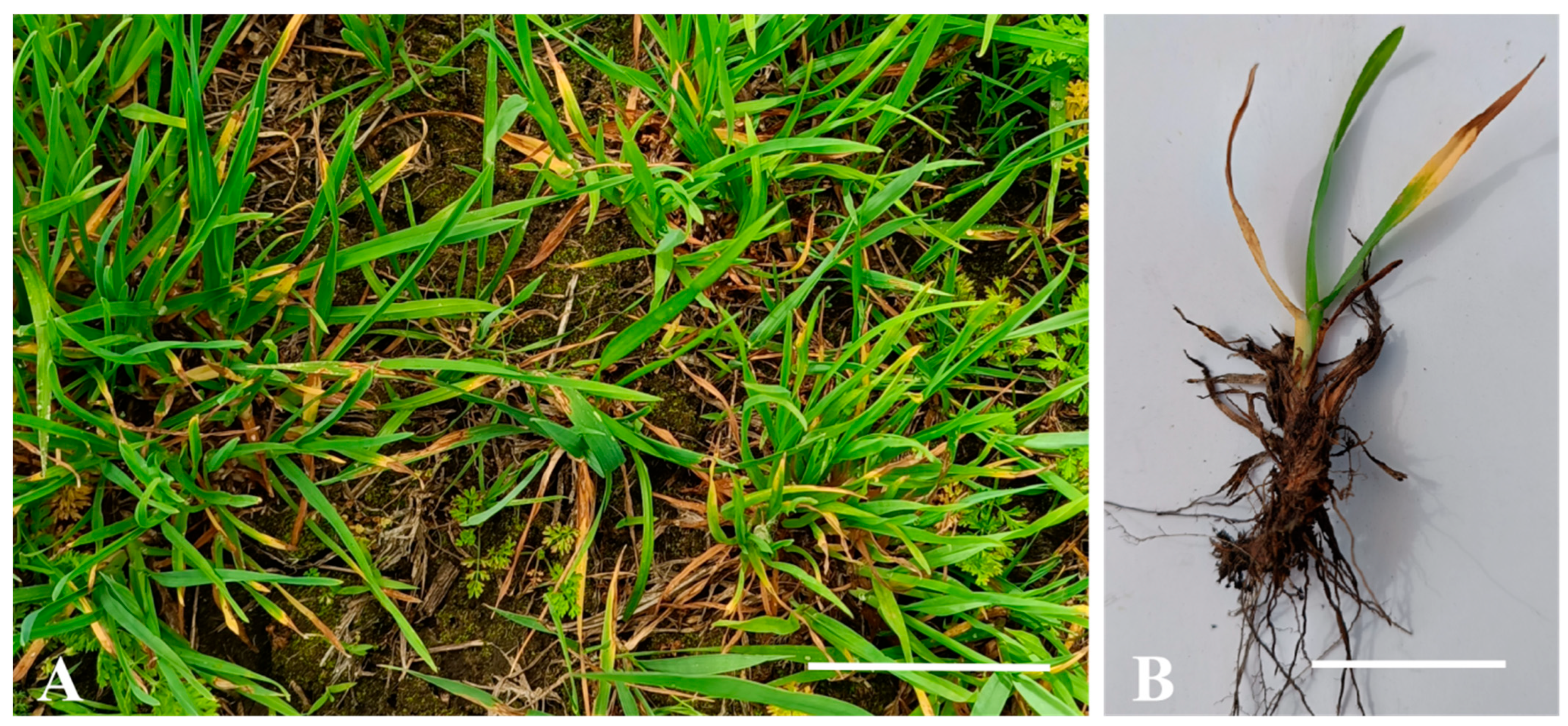
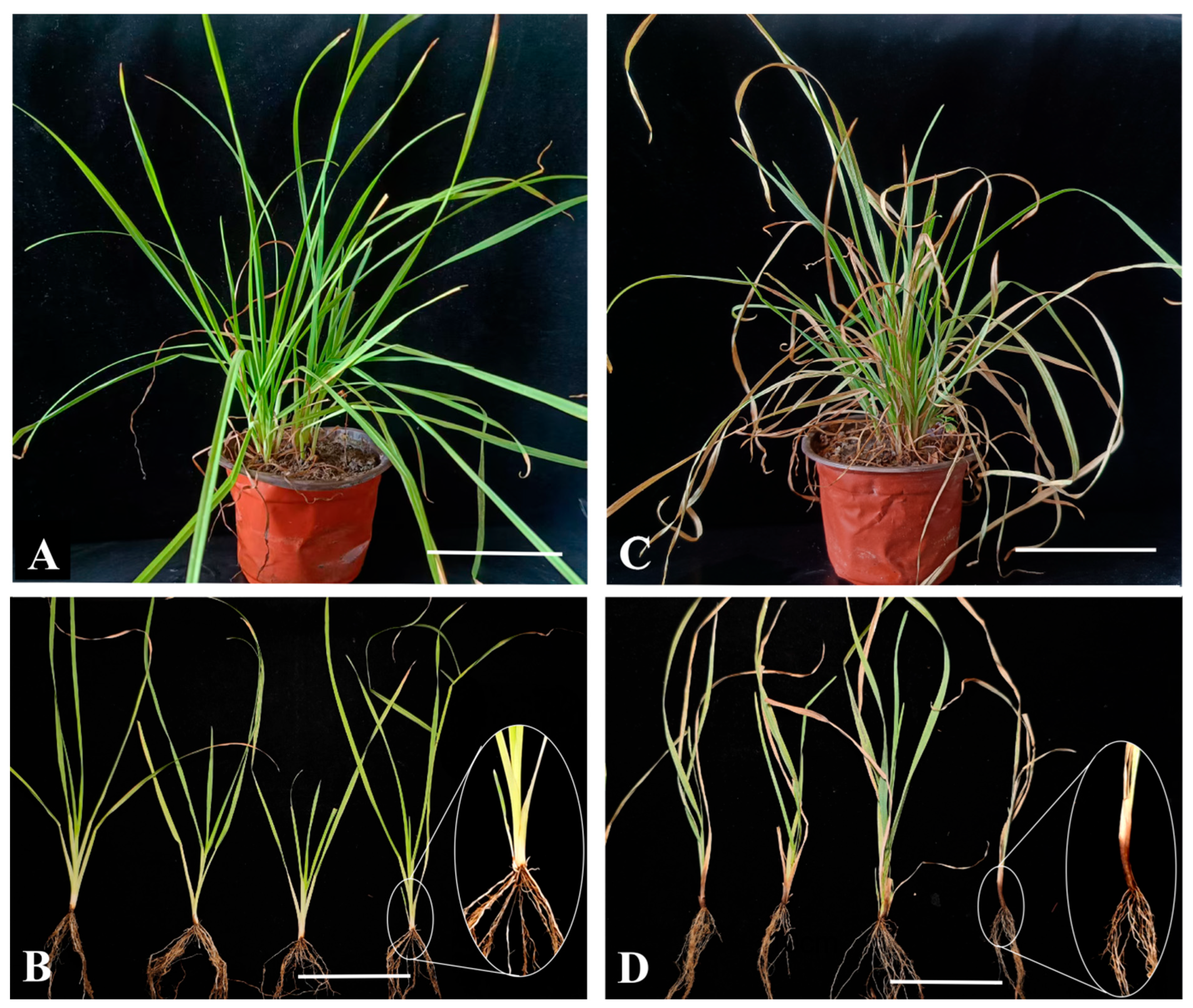
3.1. Field Disease Symptoms
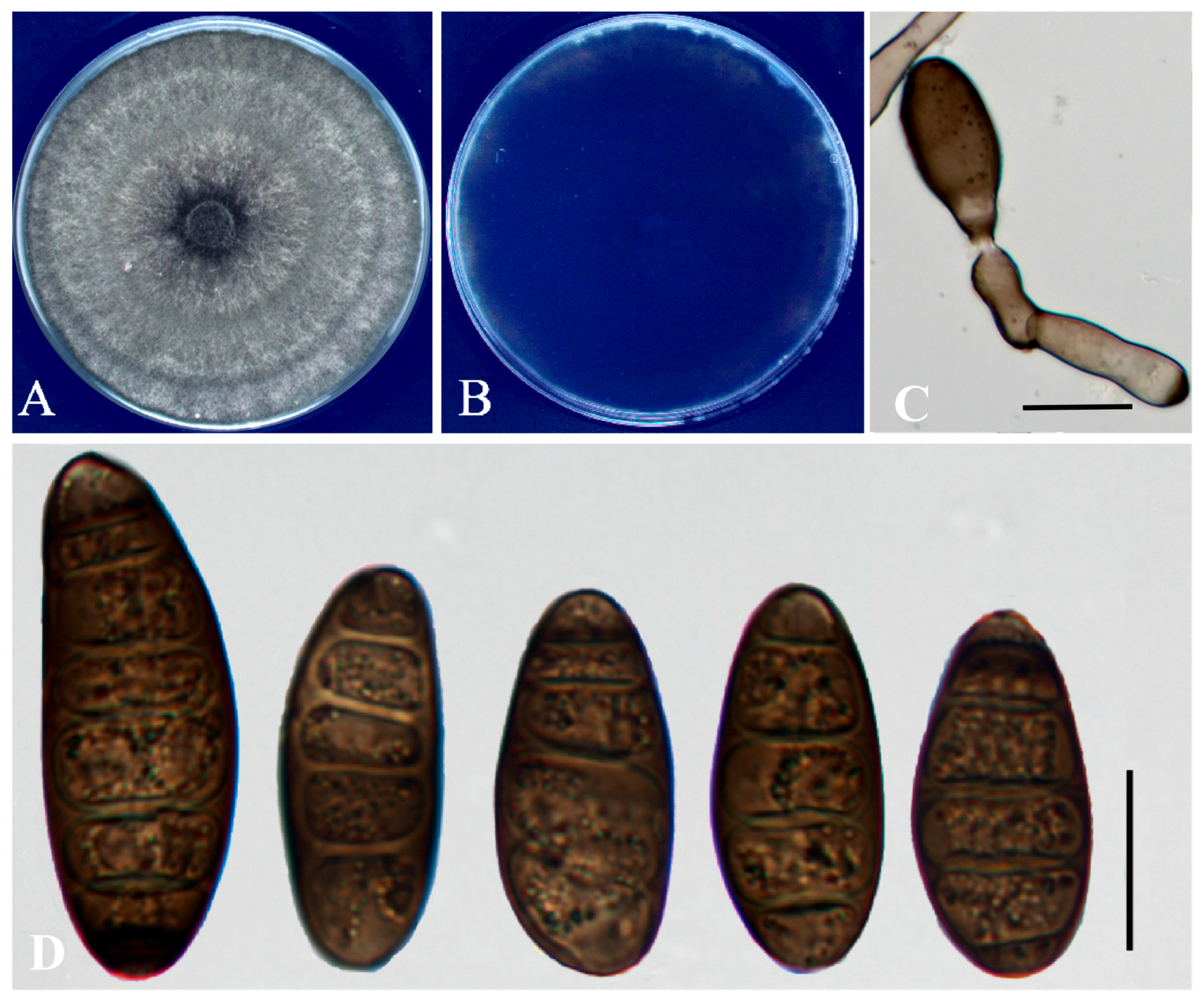
3.2. Morphological Identification
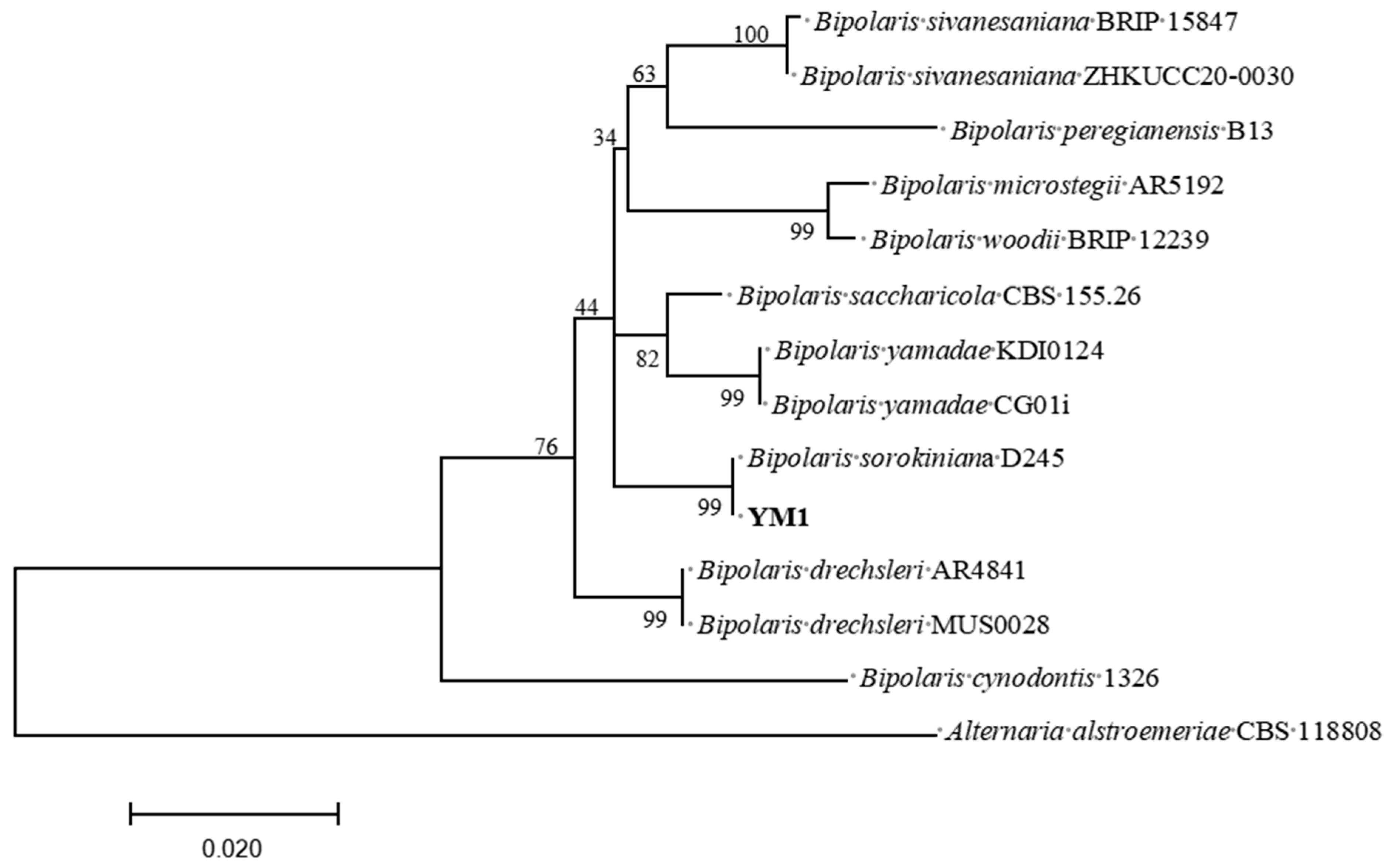
3.3. Molecular Identification and Phylogeny
3.4. Pathogenicity of Isolate YM1
3.5. Biological Characteristics of YM1
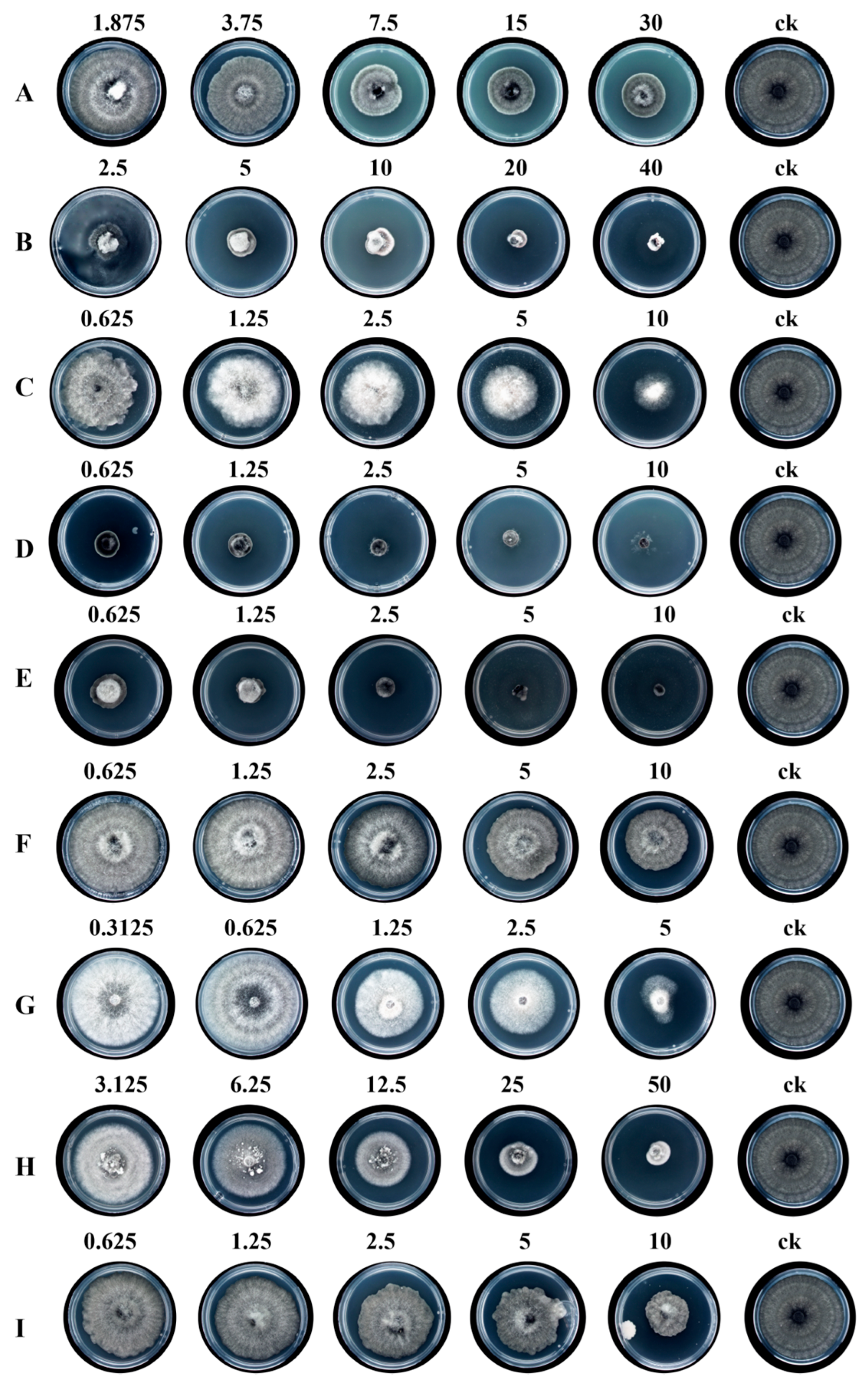
3.6. In Vitro Fungicide Sensitivity
4. Discussion
5. Conclusions
Author Contributions
Funding
Institutional Review Board Statement
Informed Consent Statement
Data Availability Statement
Acknowledgments
Conflicts of Interest
References
- Hirata, M.; Yuyama, N.; Cai, H. Isolation and characterization of simple sequence repeat markers for the tetraploid forage grass Dactylis glomerata: Simple sequence repeatmarkers for Dactylis. Plant Breed. 2011, 130, 503–506. [Google Scholar] [CrossRef]
- Lolicato, S.; Rumball, W.; Sutherland, G. Past and present improvement of cocksfoot (Dactylis glomerata L.) in Australia and New Zealand. N. Z. J. Agric. Res. 1994, 37, 379–390. [Google Scholar] [CrossRef]
- Probert, R.J. Germination studies in European populations of Dactylis glomerata L. J. Agron. 2016, 195, e993–994. [Google Scholar]
- Pen, Y.; Zhang, X.Q. Progress in studies on genetic diversity of Dactylis glomerata L. J. Plant Genet. Resour. 2003, 4, 179–183. [Google Scholar]
- Yan, H.D.; Zhang, X.Q.; Zeng, B.; Cheng, L.; Nie, G.; Ji, Y.; Huang, L.K. Resistance evaluation of Dactylis glomerata germplasm resources to rust and field investigation on summer survival. Acta Agrestia Sin. 2013, 21, 720–728. [Google Scholar]
- Cécile, L.; Karen, C.G.S.; Hugo, G.; Arnaud, H. Advances in understanding obligate biotrophy in rust fungi. New Phytol. 2019, 222, 1190–1206. [Google Scholar]
- Cagaš, B.; Macháč, R. Effect of some factors on the incidence of choke (Epichloë typhina) in grass seed stands in the Czech Republic. Plant Prot. Sci. 2012, 48, 10–16. [Google Scholar] [CrossRef]
- Zaffarano, P.L.; McDonald, B.A.; Linde, C.C. Two new species of Rhynchosporium. Mycologia 2011, 103, 195–202. [Google Scholar] [CrossRef]
- Fulcher, M.R.; Winans, J.B.; Bergstrom, G.C. Fusarium graminearum isolates obtained from wheat and wild grasses in northeastern New York display comparable range of phenotypes, including virulence on crop hosts. J. Plant Pathol. 2021, 103, 71–77. [Google Scholar] [CrossRef]
- Hartman, T.; Tharnish, B.; Harbour, J.; Yuen, G.Y.; Jackson-Ziems, T.A. Alternative Hosts in the Families Poaceae and Cyperaceae for Xanthomonas vasicola pv. vasculorum, causal agent of bacterial leaf streak of corn. Phytopathology 2020, 110, 1147–1152. [Google Scholar] [CrossRef]
- Fang, X.L.; Zhang, C.X.; Nan, Z.B. Research advances in Fusarium root rot of alfalfa (Medicago sativa). Acta Prataculturae Sin. 2019, 28, 169–183. [Google Scholar]
- Nan, Z. Legume forage root rot. In Foreign Animal Husbandry. Grassland and Forage; Wiley: Hoboken, NJ, USA, 1991; pp. 5–11. [Google Scholar]
- Deng, H. Taxonomic Studies on the Genus Bipolaris Shoemaker in China; Shandong Agricultural University: Jinan, China, 2002. [Google Scholar]
- Ma, H.J.; Chen, S.Y.; Li, H. Study on single-spore isolation methods based on different pathogenic fungi. Ningxia J. Agric. For. Sci. Technol. 2022, 65, 37–40. [Google Scholar]
- Al-Sadi, A.M. Bipolaris sorokiniana-Induced black point, common root rot, and spot blotch diseases of wheat: A review. Front. Cell. Infect. Microbiol. 2021, 11, 584899. [Google Scholar] [CrossRef]
- Kouadri, A.E.M.; Bekkar, A.A.; Zaim, S. First characterization of Bipolaris sorokiniana isolated from lentil (Lens culinaris) in Algeria. J. Plant Pathol. 2025, 107, 4–14. [Google Scholar] [CrossRef]
- Neves, D.; Bruening, B.; Knott, C.; Lee, C.A.; Bradley, C.A. First report of spot blotch caused by Bipolaris sorokiniana on winter rye in Kentucky. Plant Dis. 2021, 105, 4160. [Google Scholar] [CrossRef]
- White, T.J.; Bruns, T.; Lee, S.; Taylor, J. Amplification and direct sequencing of fungal ribosomal RNA genes for phylogenetics. In PCR Protocols: A Guide to Methods and Applications; Innis, M.A., Gelfand, D.H., Sninsky, J.J., White, T.J., Eds.; Academic Press: San Diego, CA, USA, 1990; pp. 315–322. [Google Scholar]
- O’Donnell, K.; Kistler, H.C.; Cigelnik, E. Multiple evolutionary origins of the fungus causing Panama disease of banana: Concordant evidence from nuclear and mitochondrial gene genealogies. Proc. Natl. Acad. Sci. USA 1998, 95, 2044–2049. [Google Scholar] [CrossRef] [PubMed]
- Aggarwal, N.; Rathore, M.; Shakeel, M. First Report of Bipolaris sorokiniana Causing Spot Blotch on Wheat (Triticum aestivum L.) from the Kashmir Valley of Western Himalayas, India. Plant Dis. 2025, 109, 2206. [Google Scholar] [CrossRef]
- Tamura, K.; Stecher, G.; Kumar, S. MEGA11: Molecular Evolutionary Genetics Analysis version 11. Mol. Biol. Evol. 2021, 38, 3022–3027. [Google Scholar] [CrossRef] [PubMed]
- Aaihaiti, N.; Wei, R.; Cai, C.Y.; Zhang, Q.; Wang, H.Y.; Guo, Q.Y.; Wang, L.L. Identification, biological characteristics and fungicides of pathogen causing marigold brown spot disease in Xinjiang. J. Xinjiang Agric. Univ. 2023, 46, 42–49. [Google Scholar]
- Farr, D.F.; Bills, G.F.; Chamuris, G.P.; Rossman, A.Y. Fungi on Plants and Plant Products in the United States; The American Phytopathological Society Press: St. Paul, MN, USA, 1989; p. 1252. [Google Scholar]
- Sharma, B.A.; Singh, A.; Singh, P.T. Effect of black point on seed germination parameters in popular wheat cultivars of Northern India. Indian Phytopathol. 2021, 74, 271–275. [Google Scholar] [CrossRef]
- Yan, R.; Zhou, X.Y.; Zhang, J.G.; Wang, L.; Li, J.; Liang, L.; Gong, J.Y.; Du, Y.; Li, K.M.; Lei, B. Pathogen identification and biological characteristics analysis of wheat root rot caused by Bipolaris sorokiniana in Xinjiang. Xinjiang Agric. Sci. 2024, 61, 1209–1217. [Google Scholar]
- Guo, N.; Hu, Q.Y.; Liu, Y.Y.; Shi, J.; Zhang, H.J.; Liu, S.S. Biological characteristics and fungicide sensitivity of Bipolaris sorokiniana causing maize leaf spot. Acta Agric. Boreali-Sin. 2019, 34, 289–295. [Google Scholar]
- Kouadri, M.E.A.; Bekkar, A.A.; Zaim, S. First report of Bipolaris sorokiniana causing spot blotch of lentil in Algeria. New Dis. Rep. 2021, 43, e12009. [Google Scholar] [CrossRef]
- Naresh, P.; Biswas, K.S.; Kumar, U.; Rajik, M. Effect of media, pH, temperature, host range and fungicides on Bipolaris sorokiniana. Ann. Plant Prot. Sci. 2009, 17, 394–397. [Google Scholar]
- Sinijadas, K.; Dhar, A.; Bhaumik, P.; Chowdhury, A.K. Evaluation of culture medium for the growth of Bipolaris sorokiniana the causal agent of spot blotch of wheat. Int. J. Curr. Microbiol. Appl. Sci. 2018, 7, 579–583. [Google Scholar] [CrossRef]
- Sun, H.; Wang, R.R.; Shi, C.C.; Zhang, L.R.; Liu, D.Q.; Yang, W.X. Fungicide screening and variety resistance identification of wheat root rot. Northeast. Agric. Sci. 2023, 48, 58–61+82. [Google Scholar]
- Liang, S.Y.; He, B.X.; Ai, C.X.; Wang, L.; Zhang, M.; Chen, J. Pathogen identification and indoor screening of control agents for kiwifruit bacterial canker. J. South. Agric. 2025, 56, 3761–3772. [Google Scholar]




| Medium | Formula |
|---|---|
| Potato dextrose agar (PDA) | Potato 200 g, glucose 20 g, agar 17 g, distilled water 1000 mL |
| Potato carrot agar (PCA) | Potato 20 g, carrot 20 g, agar 17 g, distilled water 1000 mL |
| Potato sucrose agar (PSA) | Potato 200 g, sucrose 20 g, agar 17 g, distilled water 1000 mL |
| Oatmeal agar (OMA) | Oatmeal 30 g, agar 17 g, distilled water 1000 mL |
| Cornmeal agar (CMA) | Cornmeal 30 g, agar 17 g, distilled water 1000 mL |
| Water agar (WA) | Agar 17 g, distilled water 1000 mL |
| Carrot agar (CA) | Carrot 200 g, agar 17 g, distilled water 1000 mL |
| Czapek agar | NaNO3 2 g, K2HPO4 1 g, KCl 1 g, MgSO4·7H2O 0.5 g, FeSO4·7H2O 0.01 g, sucrose 30 g, agar 20 g, distilled water 1000 mL |
| Fungicide (Active Ingredient, Formulation) | Manufacturer (City, Country) | Concentration (mg·L−1) |
|---|---|---|
| 50% Carbendazim | Sichuan Runer Technology Co., Ltd. (Chengdu, China) | 100, 50, 25, 12.5, 6.25 |
| 0.15% Tetramycin | Liaoning Micro Biotechnology Co., Ltd. (Shenyang, China) | 40, 20, 10, 5, 2.5 |
| 25% Pyraclostrobin | Shandong Xiubang Biotechnology Co., Ltd. (Binzhou, China) | 10, 5, 2.5, 1.25, 0.625 |
| 25% Difenoconazole | Shandong Heyi Biotechnology Co., Ltd. (Jinan, China) | 10, 5, 2.5, 1.25, 0.625 |
| 430 g·L−1 Tebuconazole | Suzhou FMC Plant Protection Co., Ltd. (Suzhou, China) | 10, 5, 2.5, 1.25, 0.625 |
| 500 g·L−1 Thiophanate-methyl | Jiangsu Rotam Chemistry Co., Ltd. (Kunshan, China) | 10, 5, 2.5, 1.25, 0.625 |
| 30% Hymexazol | Jiangxi Heyi Chemical Co., Ltd. (Jiujiang, China) | 5, 2.5, 1.25, 0.625, 0.3125 |
| 80% Ethylicin | Shandong Guihe Biotechnology Co., Ltd. (Linyi, China) | 100, 50, 25, 12.5, 6.25 |
| 20% Eugenol | Jiangsu Sword Agrochemicals Co., Ltd. (Nantong, China) | 10, 5, 2.5, 1.25, 0.625 |
| Test | Culture Condition | Colony Diameter/mm |
|---|---|---|
| Temperature (°C) | 5 | 5.3 ± 0.08 f |
| 10 | 10.5 ± 1.06 e | |
| 15 | 19.68 ± 0.21 d | |
| 20 | 36.84 ± 1.18 c | |
| 25 | 62.15 ± 0.73 a | |
| 30 | 40.94 ± 0.83 b | |
| 35 | 37.73 ± 0.72 c | |
| pH | 4 | 37.49 ± 1.68 e |
| 5 | 44.61 ± 2.73 c | |
| 6 | 43.9 ± 0.49 c | |
| 7 | 53.15 ± 0.71 a | |
| 8 | 50.21 ± 0.58 b | |
| 9 | 41.78 ± 1.28 d | |
| 10 | 36.43 ± 0.14 e | |
| 11 | 34.2 ± 0.89 f | |
| Media | PSA | 68.53 ± 0.46 a |
| OMA | 62.33 ± 1.16 b | |
| CA | 53.49 ± 0.29 c | |
| PCA | 48.25 ± 1.1 d | |
| Czapek | 48.48 ± 0.34 d | |
| WA | 46.42 ± 0.75 d | |
| CMA | 54.85 ± 5.98 c | |
| PDA | 62.54 ± 0.6 b | |
| Light | 24 h All light | 34.68 ± 2.14 c |
| 24 h All dark | 47.53 ± 1.33 a | |
| 12 h Dark/Light | 43.16 ± 0.32 b | |
| carbon source | Soluble starch | 58.43 ± 0.40 a |
| Glucose | 44.29 ± 2.74 cd | |
| Lactose | 48.34 ± 0.30 bc | |
| Mannitol | 48.47 ± 0.51 bc | |
| Inulin | 49.93 ± 7.24 b | |
| Maltose | 48.04 ± 1.06 bc | |
| D-Maltose | 41.22 ± 2.82 d | |
| nitrogen source | Ammonium sulfate | 35.85 ± 0.85 f |
| Yeast extract powder | 45.22 ± 0.39 abc | |
| Yeast extract | 45.36 ± 0.52 ab | |
| Urea | 38.33 ± 2.07 e | |
| Potassium nitrate | 40.59 ± 0.81 d | |
| Beef extract | 43.66 ± 0.25 c | |
| Peptone | 46.28 ± 0.58 a |
| Fungicides | Colony Diameter (mm) | Antibacterial Efficacy Rate | Toxicity Regression Equation | R2 | EC50 (mg·L−1) | 95% Confidence Interval |
|---|---|---|---|---|---|---|
| 50% Carbendazim | 25.44 | 53.00 | y = 1.7923x + 2.7708 | 0.9179 | 20.4080 | 13.149~28.311 |
| 27.56 | 48.15 | |||||
| 28.35 | 46.32 | |||||
| 43.35 | 11.84 | |||||
| 47.65 | 1.95 | |||||
| 0.15% Tetramycin | 10.39 | 87.61 | y = 0.6576x + 5.1095 | 0.9316 | 0.6815 | 0.25~1.179 |
| 11.28 | 85.56 | |||||
| 16.45 | 73.67 | |||||
| 17.29 | 71.75 | |||||
| 19.83 | 65.91 | |||||
| 25% Pyraclostrobin | 22.55 | 59.67 | y = 1.1942x + 3.9304 | 0.9685 | 7.8643 | 6.518~9.591 |
| 31.98 | 37.97 | |||||
| 38.11 | 23.89 | |||||
| 41.23 | 16.72 | |||||
| 43.05 | 12.54 | |||||
| 25% Difenoconazole | 7.29 | 94.74 | y = 0.7625x + 5.8776 | 0.9643 | 0.0706 | 0.022~0.149 |
| 8.34 | 92.32 | |||||
| 9.54 | 89.56 | |||||
| 13.67 | 80.06 | |||||
| 14.74 | 77.61 | |||||
| 430 g·L−1 Tebuconazole | 6.41 | 96.76 | y = 1.2488x + 5.5532 | 0.9844 | 0.3606 | 0.249~0.46 |
| 9.10 | 90.58 | |||||
| 10.59 | 87.15 | |||||
| 16.38 | 73.84 | |||||
| 21.44 | 62.21 | |||||
| 500 g·L−1 Thiophanate-Methyl | 36.95 | 26.56 | y = 1.7537x + 2.7646 | 0.9721 | 18.8225 | 16.056~28.702 |
| 39.14 | 21.52 | |||||
| 46.15 | 5.40 | |||||
| 47.56 | 2.16 | |||||
| 48.45 | 0.31 | |||||
| 30% Hymexazol | 28.15 | 46.79 | y = 1.6131x + 3.7758 | 0.9699 | 5.7400 | 4.887~7.165 |
| 37.93 | 24.30 | |||||
| 40.05 | 19.42 | |||||
| 46.51 | 4.59 | |||||
| 47.54 | 2.20 | |||||
| 80% Ethylicin | 14.85 | 77.36 | y = 1.9093x + 2.4992 | 0.9856 | 20.8310 | 18.465~22.104 |
| 22.77 | 59.16 | |||||
| 33.31 | 34.91 | |||||
| 43.16 | 12.27 | |||||
| 45.29 | 7.38 | |||||
| 20% Eugenol | 25.13 | 53.73 | y = 1.3971x + 3.5512 | 0.9517 | 10.8894 | 8.918~13.267 |
| 38.13 | 23.85 | |||||
| 39.31 | 21.12 | |||||
| 44.73 | 8.33 | |||||
| 46.52 | 5.22 |
Disclaimer/Publisher’s Note: The statements, opinions and data contained in all publications are solely those of the individual author(s) and contributor(s) and not of MDPI and/or the editor(s). MDPI and/or the editor(s) disclaim responsibility for any injury to people or property resulting from any ideas, methods, instructions or products referred to in the content. |
© 2026 by the authors. Licensee MDPI, Basel, Switzerland. This article is an open access article distributed under the terms and conditions of the Creative Commons Attribution (CC BY) license.
Share and Cite
Shan, L.; Yang, Z.; Sun, S.; Fu, B.; Wang, L. Etiology, Biological Characteristics, and Fungicide Sensitivity of Bipolaris sorokiniana Causing Root Rot in Wild Orchardgrass (Dactylis glomerata L.). Agronomy 2026, 16, 756. https://doi.org/10.3390/agronomy16070756
Shan L, Yang Z, Sun S, Fu B, Wang L. Etiology, Biological Characteristics, and Fungicide Sensitivity of Bipolaris sorokiniana Causing Root Rot in Wild Orchardgrass (Dactylis glomerata L.). Agronomy. 2026; 16(7):756. https://doi.org/10.3390/agronomy16070756
Chicago/Turabian StyleShan, Lei, Zhenyu Yang, Sen Sun, Benzhong Fu, and Lili Wang. 2026. "Etiology, Biological Characteristics, and Fungicide Sensitivity of Bipolaris sorokiniana Causing Root Rot in Wild Orchardgrass (Dactylis glomerata L.)" Agronomy 16, no. 7: 756. https://doi.org/10.3390/agronomy16070756
APA StyleShan, L., Yang, Z., Sun, S., Fu, B., & Wang, L. (2026). Etiology, Biological Characteristics, and Fungicide Sensitivity of Bipolaris sorokiniana Causing Root Rot in Wild Orchardgrass (Dactylis glomerata L.). Agronomy, 16(7), 756. https://doi.org/10.3390/agronomy16070756