Article

Enhancing Azotobacter chroococcum with Fe3O4 NPs and n-MoO3: A Promising Strategy for Sustainable Agriculture

1
Biological Physics Laboratory, College of Science, Beijing Forestry University, Beijing 100083, China
2
Beijing Key Lab for Source Control Technology of Water Pollution, Engineering Research Center for Water Pollution Source Control & Eco-Remediation, College of Environmental Science and Engineering, Beijing Forestry University, Beijing 100083, China
*
Author to whom correspondence should be addressed.
Agronomy 2026, 16(7), 748; https://doi.org/10.3390/agronomy16070748
Submission received: 2 March 2026 / Revised: 28 March 2026 / Accepted: 30 March 2026 / Published: 31 March 2026
(This article belongs to the Section Farming Sustainability)

Abstract

(1) Background: Overuse of chemical nitrogen fertilizers drives the need for biological alternatives. Azotobacter chroococcum is a promising free-living nitrogen-fixing bacterium, but its efficiency needs improvement. This study investigated how Fe3O4 nanoparticles (Fe3O4 NPs) and molybdenum trioxide nanoparticles (n-MoO3) affect A. chroococcum growth and nitrogen fixation, and tested the modified inoculants on Glycine max (legume) and Nicotiana benthamiana (non-legume); (2) Methods: In vitro tests measured bacterial growth, viable counts (CFU), nitrogenase activity, and nitrogen metabolites (total N, NO3-N, NH4+-N) under 0–100 ng·mL−1 Fe3O4 NPs or n-MoO3. Pot experiments then tested modified inoculants on Glycine max and N. benthamiana for biomass and N, P, K uptake; (3) Results: Both nanomaterials showed low-dose stimulation and high-dose inhibition. At 10 ng·mL−1, bacterial growth (OD600 up ~1.2×) and nitrogenase activity (up >90%) rose significantly (p < 0.05–0.001), along with higher total N, NO3-N, and NH4+-N. In pots, 10 ng·mL−1 modified inoculant improved all Glycine max traits and nutrient uptake (p < 0.05). For N. benthamiana, biomass peaked at 20 ng·mL−1, while stem and root growth did best at 10 ng·mL−1. At 100 ng·mL−1, effects weakened or vanished. A “metabolic remodeling–rhizosphere transformation–systemic response” mechanism is proposed; (4) Conclusions: Low concentrations (10–20 ng·mL−1) of Fe3O4 NPs and n-MoO3 can effectively boost the nitrogen-fixing function and growth-promoting effect of A. chroococcum inoculant, showing good potential for use on both legume and non-legume crops. This study provides a theoretical basis and technical reference for developing efficient, broad-spectrum nanomaterial-microbe composite inoculants.

1. Introduction

Nitrogen is a core limiting factor for crop yield and quality formation, and its efficient utilization is the cornerstone of green and sustainable agricultural development [1]. The long-term overuse of chemical nitrogen fertilizers in agriculture has caused multiple problems, such as low nutrient use efficiency, soil degradation, and non-point source pollution [2]. These problems greatly limit the progress toward green agricultural development. Therefore, biological nitrogen fixation is an important way to reduce dependence on chemical fertilizers and promote sustainable agricultural production [3,4].
Azotobacter chroococcum is an aerobic, free-living bacterium capable of fixing nitrogen. In addition to nitrogen fixation, it can secrete plant growth hormones, including indole-3-acetic acid (IAA). These traits give it significant potential as a broad-spectrum microbial fertilizer [5,6,7,8]. Unlike rhizobia, which exhibit strict host specificity, A. chroococcum is non-host-specific and can associate with the root systems of a wide range of plant species. Its nitrogen-fixing activity contributes to elevated nitrogen levels in the rhizosphere soil, conferring a distinct advantage for its application across diverse cropping systems [5,9]. However, compared with highly efficient symbiotic nitrogen-fixing systems, A. chroococcum exhibits relatively low nitrogen fixation efficiency, which often fails to fully satisfy the nitrogen demand of high-yield crops. Therefore, identifying effective and stable strategies to enhance their nitrogen fixation efficiency represents a key scientific challenge for improving the field performance of such inoculants and facilitating their widespread application.
Nanomaterials possess unique physicochemical properties, including small-size effects, high specific surface area, and slow-release capability for trace elements [10,11,12]. These properties render nanomaterials promising for the development of novel fertilizers. Studies have shown that iron-based nanomaterials, such as Fe3O4 nanoparticles (NPs), can act as slow-release iron sources [13,14,15,16]. Consequently, they can directly supply the iron required for nitrogenase activity. Similarly, nano-molybdenum trioxide (n-MoO3) can serve as an efficient molybdenum (Mo) source [17,18]. Iron and molybdenum are core components of the iron–molybdenum cofactor (FeMo-co) of nitrogenase, where they directly participate in and govern the catalytic reduction of dinitrogen. Thus, their bioavailability represents a key limiting factor affecting nitrogen fixation efficiency [19,20]. Nanomaterials can optimize the supply and availability of iron and molybdenum. This helps them better meet the metabolic demands of nitrogen-fixing bacteria over time, leading to enhanced nitrogenase activity and functional stability [21,22,23,24]. However, few systematic and quantitative studies have been conducted on how iron-based and molybdenum-based nanomaterials interact with specific nitrogen-fixing strains like A. chroococcum. Important issues that remain unclear include their optimal concentration windows and the systemic effects that ultimately affect crop growth through the “material-strain-plant” interaction chain.
The present study focused on Fe3O4 NPs and n-MoO3 in combination with A. chroococcum. The aim was to investigate how these nanomaterials affect the nitrogen-fixing ability and growth-promoting function of the bacterium, and to assess their potential for use in crop production. In vitro experiments were performed first to test the effects of the nanomaterials on bacterial growth, survival, and nitrogenase activity. This was followed by pot experiments with Glycine max (a legume) and N. benthamiana (a non-legume model plant) under moderately low soil fertility conditions to evaluate the effects of the composite inoculants on plant growth and nutrient uptake. The findings are expected to provide a scientific basis and technical reference for developing high-performance nanomaterial-microbe composite inoculants, supporting efforts to reduce chemical fertilizer use, improve efficiency, and advance greener and more sustainable agriculture.

2. Materials and Methods

2.1. Materials and Strain

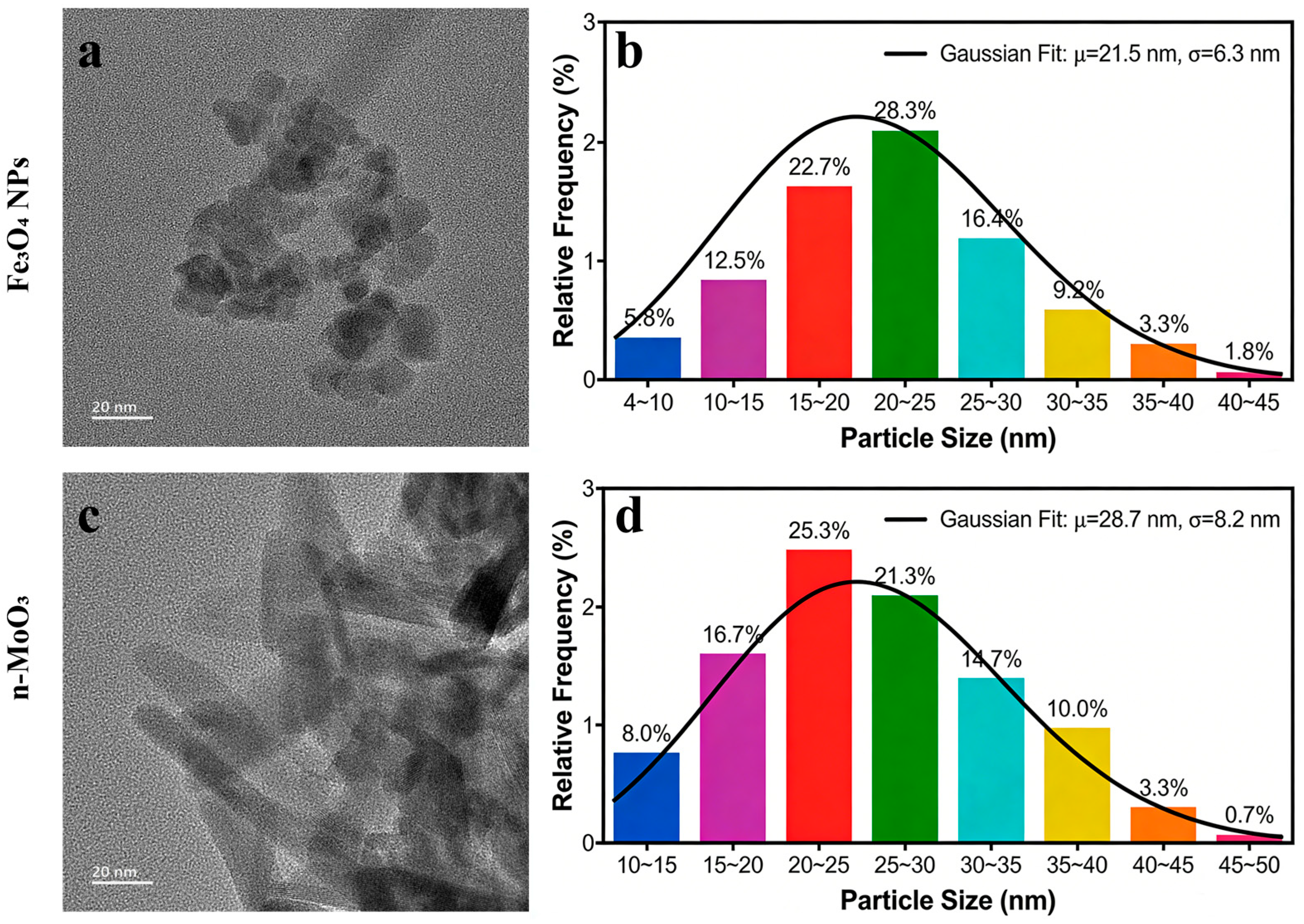
The Fe3O4 nanoparticles (Fe3O4 NPs, purity > 97%) used in this study were purchased from Shanghai Macklin Biochemical Technology Co., Ltd., Shanghai, China. Fe3O4 NPs were observed under transmission electron microscopy (TEM, JEOL JEM-F200, Tokyo, Japan) to check their shape and size. The images showed that they were spherical or polyhedral, with sizes mostly between 10 and 50 nm (Figure 1a,b). Nano-molybdenum trioxide (n-MoO3, purity > 99%) was obtained from Qinghe Enyi Metal Materials Co., Ltd., Xingtai, Hebei Province, China. n-MoO3 was also observed under TEM, which showed a sheet-like (two-dimensional nanosheet) shape, with sizes mainly between 5 and 45 nm (Figure 1c,d). The nanoparticles showed some slight aggregation. This happened because their high surface energy makes them stick together through van der Waals forces. However, most particles were still separate, which means their dispersion was acceptable. Before use, the nanoparticles were put in an ultrasonic bath with an operating frequency of 40 kHz for 30–45 min to make them disperse better.
Azotobacter chroococcum (BNC192292) was obtained from Beijing Beina Chuanglian Biotechnology Co., Ltd., Beijing, China. According to the depository’s records, the strain was originally isolated from soil. Experiments were conducted using a nitrogen-free medium (ABM) with the following composition (g·L−1): KH2PO4 0.2, K2HPO4 0.8, MgSO4·7H2O 0.2, CaSO4·2H2O 0.1, FeCl3·6H2O 0.02 and Na2MoO4·2H2O 0.02, yeast extract 0.5, and mannitol 20.0. For a solid medium, agar (15.0 g·L−1) was added. The medium pH was adjusted to 7.2 and sterilized at 121 °C for 15 min before use.

2.2. Bacterial Cultivation and Growth Measurement

Fe3O4 NPs and n-MoO3 were prepared at concentrations of 10, 20, 50, and 100 ng·mL−1, control treatments consisted of A. chroococcum incubated without nanomaterials (0 ng·mL−1). The concentration gradients (10, 20, 50 and 100 ng·mL−1) were selected based on preliminary dose–response experiments covering a broad range from 1 ng·mL−1 to 500 μg·mL−1. Within the ng·mL−1 range, consistent biological effects were observed without acute toxicity to bacterial or plant growth, allowing for the investigation of dose–effect relationships. All concentrations are expressed in ng/mL (nanograms per milliliter). Under sterile conditions, the nanomaterials were separately added to the liquid medium after it had cooled to approximately 60 °C. Subsequently, the A. chroococcum strain, which had been activated in liquid medium, was inoculated into the medium at a volume of 1 mL per 50 mL of liquid medium, corresponding to 2% of the total culture volume. A. chroococcum was inoculated and incubated at 30 °C without continuous agitation. To ensure adequate aeration for this strictly aerobic strain, the culture was manually mixed at 4–6 h intervals. This static but intermittently mixed condition was employed to mimic the low-disturbance microenvironment of rhizosphere soil. The total incubation duration was 36 h. Three biological replicates were used for each treatment. During incubation, samples were taken every 6 h to measure OD600 and monitor bacterial growth. When the cultures reached the stationary phase, 50 μL of each culture was collected and serially diluted from 10−1 to 10−6 using sterile water [25]. The diluted samples were spread onto solid ABM plates, with three plates per dilution. These plates were incubated at 30 °C for 48 h, and then colony-forming units (CFU) were counted.

2.3. Nitrogen Metabolism and Nitrogenase Activity Analysis

To measure nitrogen metabolites, bacterial cultures were collected after 8 days of growth in media with different concentrations of Fe3O4 NPs or n-MoO3. A control group consisting of bacteria grown without any nanoparticles was also set up in parallel. Total nitrogen (TN) [26], ammonium nitrogen (NH4+-N) [27], and nitrate nitrogen (NO3-N) [28] were measured using standard methods. Three replicates were used for each treatment.
Nitrogenase activity was assessed by the acetylene reduction assay (ARA) [29]. Bacterial cells were prepared as a suspension of approximately 1 × 10⁸ CFU·mL−1. A 10 μL aliquot of the suspension was inoculated into 15 mL serum bottles containing 5 mL of nitrogen-free semisolid medium (NFM); the NFM was composed of 0.5 g·L−1 K2HPO4, 0.2 g·L−1 MgSO4·7H2O, 0.1 g·L−1 NaCl, 0.5 g·L−1 yeast extract, 10 g·L−1 glucose, and 15 g·L−1 agar (pH 7.0); medium without inoculation served as the control. After 48 h of incubation at 30 °C, 1 mL of headspace gas was removed and replaced with an equal volume of high-purity acetylene. Following an additional 48 h of incubation, ethylene production was analyzed using a gas chromatograph (GC7890B, Agilent, Agilent Technologies, Santa Clara, CA, USA). The chromatographic conditions were as follows: a capillary column (HP-5, 30 m × 0.32 mm × 0.25 μm, Agilent) was used; column temperature 180 °C, FID detector temperature 160 °C, injection port temperature 150 °C; carrier gas (N2), fuel gas (H2), and oxidant gas (air) flow rates were 30, 8, and 150 mL·min−1, respectively.

2.4. Pot Experiment Design

Glycine max L. cv. ‘Zhonghuang 13’ (purchased from Shandong Xuhong Seed Co., Ltd., Shouguang, China) and Nicotiana benthamiana were used in the present study. The two plant species were selected based on the research focus and experimental feasibility: Glycine max L. cv. ‘Zhonghuang 13’ is a widely cultivated leguminous crop, whose symbiotic relationship with nitrogen-fixing bacteria matches the research focus (nanomaterial-nitrogen-fixing bacteria-plant interaction). N. benthamiana, provided by the National Key Laboratory of Forest Genetics and Breeding, Beijing Forestry University, is a common model plant with rapid growth and a clear genetic background, facilitating efficient experimentation and result verification. Both are more suitable than common agricultural crops for exploring the target interaction mechanism. Prior to germination, the seeds (both Glycine max and N. benthamiana) were subjected to surface sterilization treatment to eliminate surface contaminants: briefly, the seeds were soaked in 75% (v/v) ethanol for 30 s, followed by rinsing with sterile deionized water 3 times, then immersed in 5% (v/v) sodium hypochlorite solution for 10 min, and finally rinsed thoroughly with sterile deionized water 5 times to remove residual sterilizing agents. After sterilization, the seeds were germinated and grown into two-week-old seedlings. The seedlings were then transplanted into pots filled with a substrate mixture (nutrient soil: vermiculite: perlite = 2:1:1, v/v/v). The substrate was commercially sourced plant humus soil. No fertilizer was added during the experiment. Plants were grown in a controlled greenhouse at 23 °C with a 16/8 h light/dark cycle.
From day 15 after transplanting, plants were subjected to one initial inoculation followed by three reinoculations with A. chroococcum treated with different concentrations of Fe3O4 NPs or n-MoO3 (0, 10, 20, 50, and 100 ng·mL−1), with all inoculations performed at 7-day intervals (a total of four inoculations). Inoculation was done by root drenching: 10 mL of bacterial suspension was slowly poured around the base of each plant stem to allow it to soak into the rhizosphere soil. After each inoculation (both initial and reinoculations), watering was stopped for 24 h to help the bacteria attach and colonize the roots. Control plants received the same amount of sterile culture medium. The same inoculation and cultivation methods were used for both Glycine max and N. benthamiana experiments. Three replicate pots were used for each treatment.

2.5. Determination of Plant Traits and Nutrient Contents

Plants were harvested 60 days after transplanting. The 60-day period was selected based on the growth characteristics of the test plants (Glycine max and N. benthamiana) and research objectives. During this period, Glycine max reached the stable vegetative growth stage, and N. benthamiana entered the early reproductive stage, which is suitable for evaluating the interaction effects of nanomaterials, nitrogen-fixing bacteria and plants. Roots were washed first with deionized water and then with 0.1% (v/v) nitric acid solution. Root length, shoot height, and fresh weight were recorded. Plant samples were heated at 105 °C for 30 min to stop enzyme activity, then dried at 80 °C until constant weight. The dried samples were ground and passed through a 100-mesh sieve. A digestion solution was prepared using the H2SO4-H2O2 method. Total nitrogen was measured by the Kjeldahl method [30], total phosphorus by the molybdenum antimony colorimetric method [31], and total potassium by flame photometry [32]. Three replicates were done for each sample. Blank tests and standard substance analyses were also carried out for quality control.

2.6. Statistical Analysis

All data are shown as mean ± standard deviation (SD) (n = 3). Differences between treatment groups and the control group were tested by analysis of variance (ANOVA) followed by Tukey’s multiple comparison test. Significance levels are indicated as follows compared to the control: * p ≤ 0.05, ** p ≤ 0.01, *** p ≤ 0.001.

3. Results

3.1. Effects of Fe3O4 NPs and n-MoO3 on the Growth of A. chroococcum

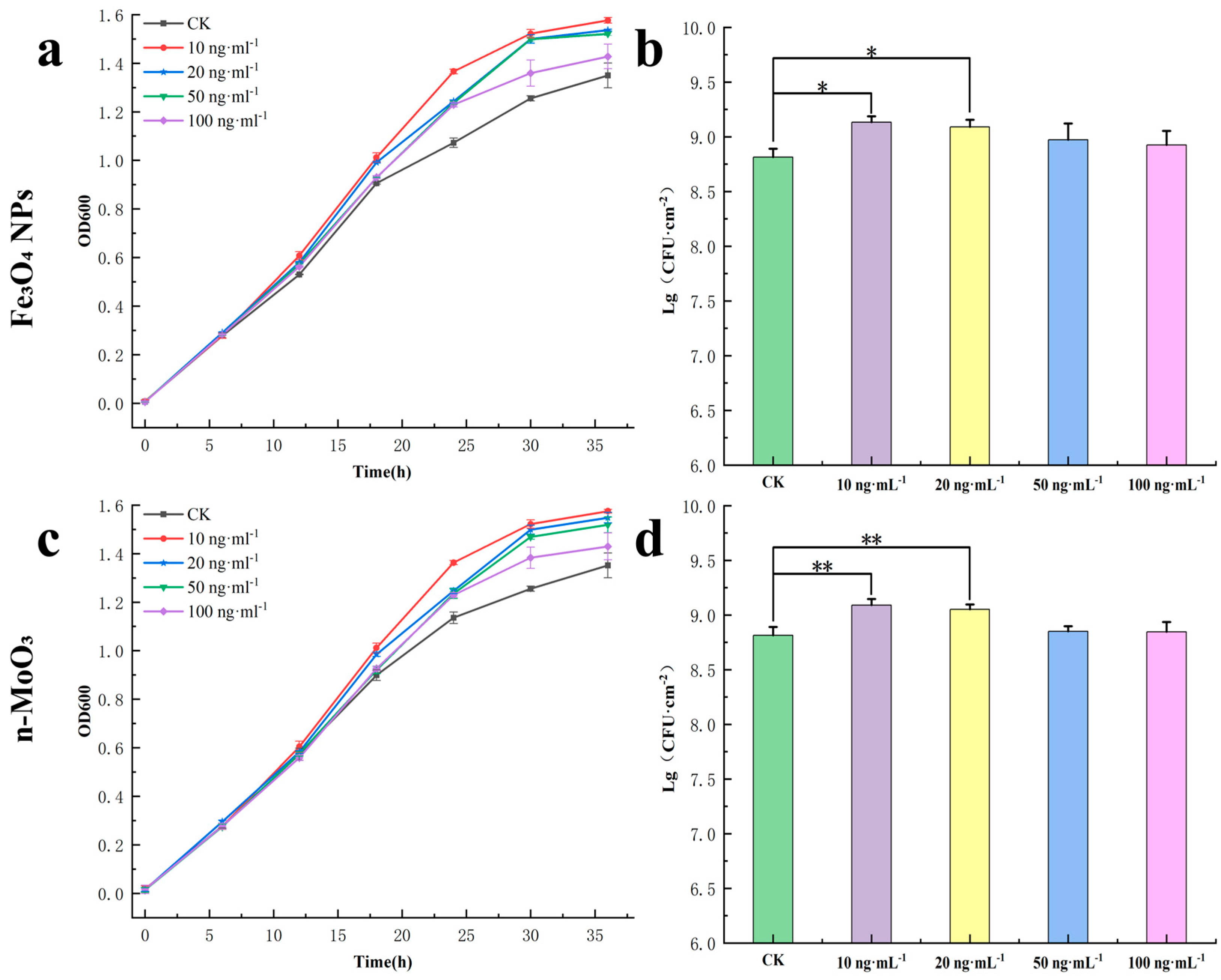
To see how different concentrations of Fe3O4 NPs and n-MoO3 affect the growth of A. chroococcum, we measured OD600 and did plate colony counting (CFU). This helped us track how the bacteria grew and how many live cells there were.
As shown in Figure 2a,b, all concentrations of Fe3O4 NPs (10–100 ng·mL−1) helped the bacteria grow better than the control group (CK). During the exponential growth phase, all treated groups grew faster. Looking at the final OD600 values (Figure 2a), the 10 ng·mL−1 group had the highest reading, about 1.2 times that of the CK group (p < 0.05). The colony counts (Figure 2b) matched the OD600 data. The 10 ng·mL−1 group had the most colonies per unit area (CFU·cm−2) (p < 0.05). When the concentration went up to 50 and 100 ng·mL−1, the growth boost got weaker.
As shown in Figure 2c,d, n-MoO3 had a similar effect on bacterial growth. All n-MoO3 groups had higher final OD600 values than the CK group (Figure 2c). The 10 ng·mL−1 group reached the highest value, which was 14.0% higher than the control (p < 0.05). During the exponential growth phase, the n-MoO3-treated cultures also grew faster. The colony counts (Figure 2d) agreed with the OD600 data. All n-MoO3 groups had more colonies per unit area, and the 10 ng·mL−1 group showed the strongest effect (p < 0.01). At 50 and 100 ng·mL−1, the effect became weaker and was not significantly different from the control group (p > 0.05).
In short, both Fe3O4 NPs and n-MoO3 at 10–100 ng·mL−1 helped A. chroococcum grow. Both nanomaterials worked best at the low concentration (10 ng·mL−1) and lost their effect at higher concentrations.

3.2. Effects of Fe3O4 NPs and n-MoO3 on Enhancing the Nitrogen Fixation Efficiency of A. chroococcum

3.2.1. Fe3O4 NPs and n-MoO3 Promote Nitrogen Accumulation and Transformation by A. chroococcum

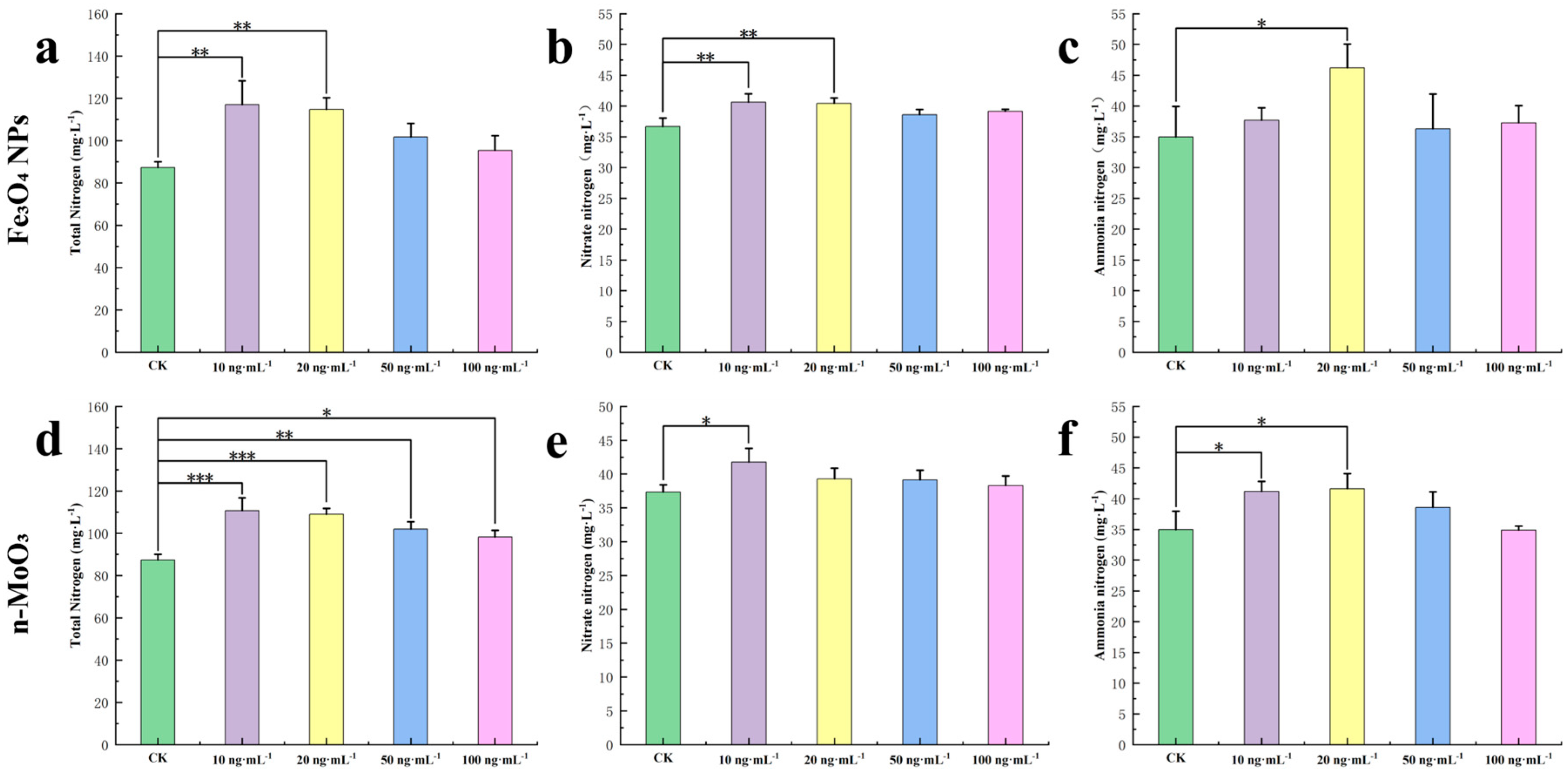
Figure 3 shows how total nitrogen, nitrate nitrogen, and ammonium nitrogen changed in A. chroococcum cultures treated with different amounts of Fe3O4 NPs and n-MoO3. Overall, both nanomaterials promoted bacterial nitrogen accumulation. This effect was stronger at low concentrations and weaker at high concentrations. Different forms of nitrogen also responded best to different concentrations.
As shown in Figure 3a–c, Fe3O4 NPs worked best at low concentrations (10–20 ng·mL−1). At 10 ng·mL−1, total nitrogen (Figure 3a) reached its highest level (116.95 ± 6.56 mg·L−1), which was 33.9% higher than the control group (87.33 ± 2.74 mg·L−1) (p < 0.01). Nitrate nitrogen (Figure 3b) also peaked at this concentration (40.63 ± 1.35 mg·L−1), 19.8% higher than the control (p < 0.01). Ammonium nitrogen (Figure 3c), however, only went up at 20 ng·mL−1, reaching 46.21 ± 3.84 mg·L−1, 15.3% higher than the control (p < 0.05). This shows that different forms of nitrogen respond differently to the nanomaterials. When the concentration went up to 50 and 100 ng·mL−1, the positive effect got weaker. Total nitrogen and nitrate nitrogen were still higher than the control, but much lower than their best levels. Ammonium nitrogen at high concentrations (50 and 100 ng·mL−1) was not much different from the control.
n-MoO3 also changed how nitrogen was transformed in the system (Figure 3d–f). As shown in Figure 3d, n-MoO3 raised total nitrogen levels. The 10 ng·mL−1 group had the biggest increase, with total nitrogen 26.9% higher than the control (p < 0.001). The 20 ng·mL−1 concentration showed a similar significant enhancement, with no significant difference detected between the two concentrations (Figure 3d). As the amount went up to 50 and 100 ng·mL−1, the effect slowly dropped. Nitrate nitrogen (Figure 3e) also went up most at 10 ng·mL−1, 12.0% higher than the control (p < 0.05). Above 20 ng·mL−1, the effect was not clear. Ammonium nitrogen (Figure 3f) went up at low concentrations (≤20 ng·mL−1), with the best result at 20 ng·mL−1 (20.0% higher than the control, p < 0.05). At 50 ng·mL−1 and above, there was no statistically significant difference compared with the control.
In short, the addition of Fe3O4 NPs and n-MoO3 altered the growth and nitrogen metabolism of A. chroococcum. Low amounts of nanomaterials promoted bacterial growth and enhanced nitrogen transformation, and different forms of nitrogen had different best amounts: total nitrogen and nitrate nitrogen worked best at 10 ng·mL−1, while ammonium nitrogen worked best at 20 ng·mL−1.

3.2.2. Fe3O4 NPs and n-MoO3 Enhance the Nitrogenase Activity of A. chroococcum

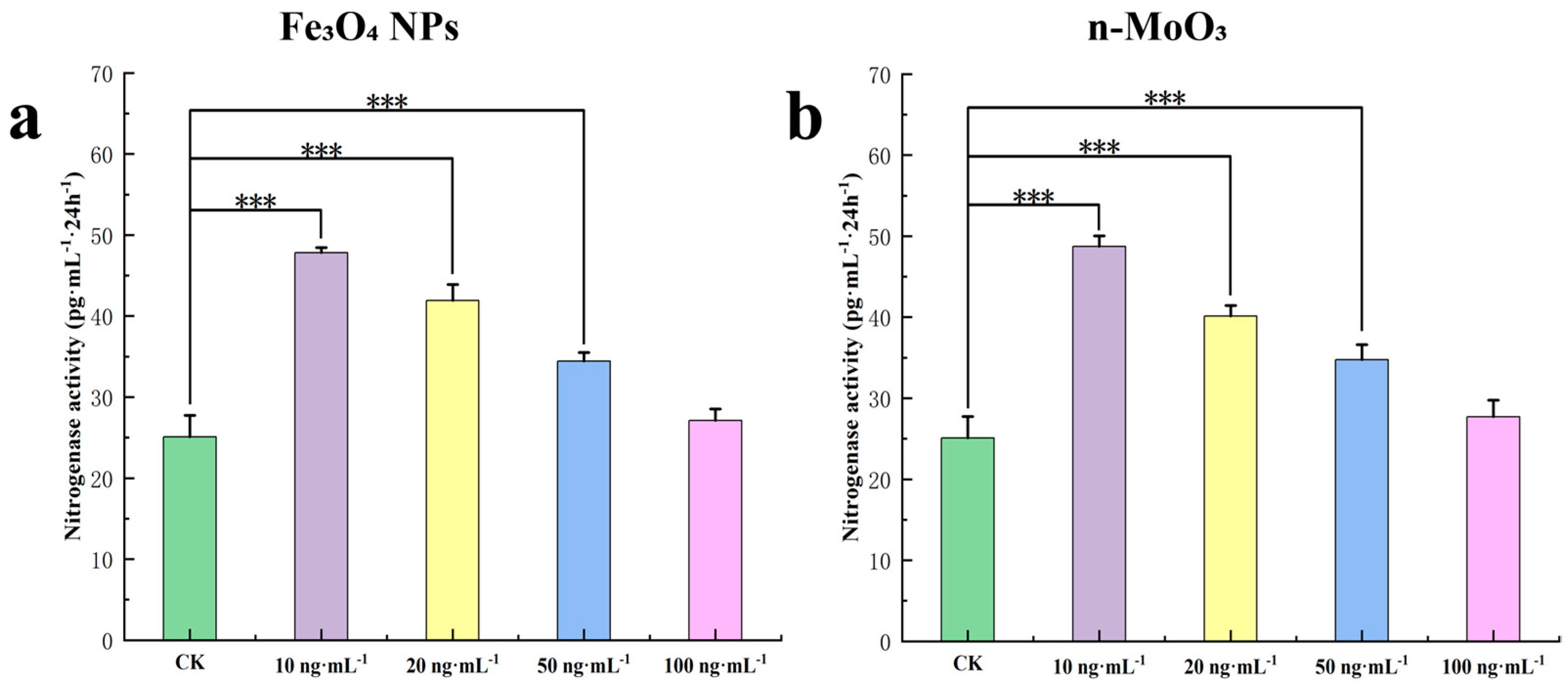
Figure 4 shows how different concentrations of Fe3O4 NPs and n-MoO3 affected the nitrogenase activity of A. chroococcum. Both nanomaterials had different effects at different concentrations: they stimulated activity at low doses but inhibited it at high doses. Nitrogenase activity was expressed as pg·mL−1·24 h−1 (picograms per milliliter per 24 h).
As shown in Figure 4a, low concentrations of Fe3O4 NPs significantly increased nitrogenase activity compared to the control (CK, 25.10 ± 2.62 pg·mL−1·24 h−1). All three concentrations of 10, 20, and 50 ng·mL−1 exhibited statistically significant increases relative to the CK, with no significant differences among them (p < 0.001). The activity values were 47.81 ± 0.61, 41.9 ± 1.99, and 34.44 ± 1.07 pg·mL−1·24 h−1 for the 10, 20, and 50 ng·mL−1 groups, respectively. At 100 ng·mL−1, activity (27.10 ± 1.43 pg·mL−1·24 h−1) was not statistically different from CK (p > 0.05).
n-MoO3 showed a similar pattern (Figure 4b). Similarly, the 10, 20, and 50 ng·mL−1 concentrations all significantly enhanced nitrogenase activity compared to CK, with no significant differences among them (p < 0.001). The activity reached 48.75 ± 1.31, 40.14 ± 1.33, and 34.74 ± 1.88 pg·mL−1·24 h−1 for the 10, 20, and 50 ng·mL−1 groups, respectively. Like Fe3O4 NPs, the 100 ng·mL−1 n-MoO3 treatment gave activity (27.71 ± 2.06 pg·mL−1·24 h−1) that was not significantly different from CK (p > 0.05).
In short, both Fe3O4 NPs and n-MoO3 showed a clear “low-dose stimulation” pattern on A. chroococcum nitrogenase activity at concentrations ranging from 10 to 50 ng·mL−1, with no significant differences among these concentrations.

3.3. Effects of A. chroococcum Inoculant Modified with Fe3O4 NPs or n-MoO3 on Glycine max Growth

3.3.1. Fe3O4 NPs or n-MoO3-Modified A. chroococcum Inoculant Promotes Glycine max Growth

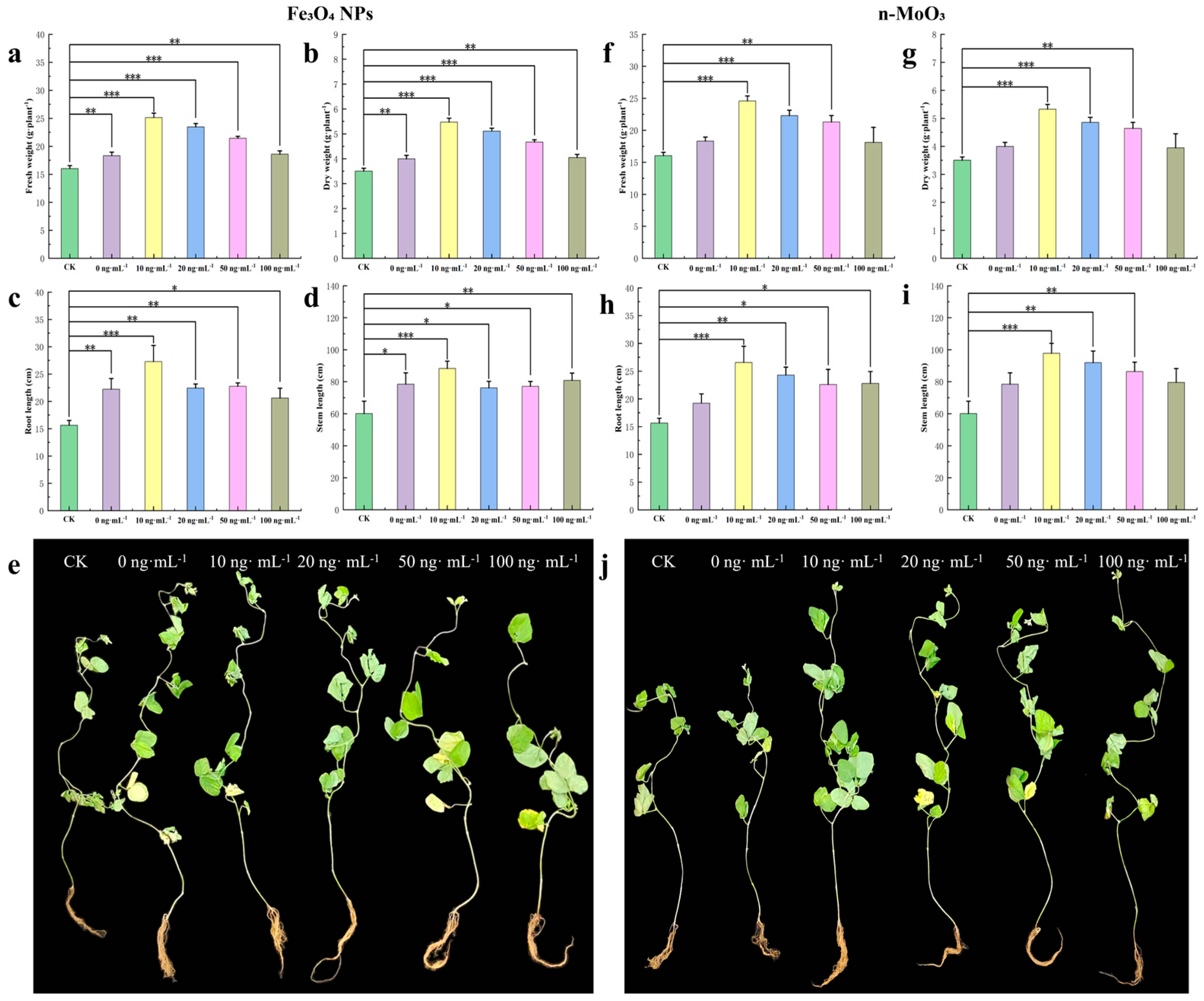
Figure 5 shows how A. chroococcum inoculant modified with different amounts of Fe3O4 NPs and n-MoO3 affected Glycine max growth. The inoculant itself and its modification with nanomaterials both had clear effects on fresh weight, dry weight, stem length, and root length. These effects depended on the concentration used.
As shown in Figure 5a–e, without nanomaterials (0 ng·mL−1), the inoculant already helped Glycine max grow better than the control (CK). Adding Fe3O4 NPs made the inoculant work even better. The best results were at 10 ng·mL−1. At this concentration, fresh weight was 25.1 ± 0.8 g·plant−1, dry weight was 5.47 ± 0.16 g·plant−1, stem length was 88.28 ± 4.61 cm, and root length was 27.28 ± 2.9 cm. All these were higher than both the unmodified inoculant group and the CK group.
At 20 and 50 ng·mL−1, the positive effect got weaker. Growth numbers were still higher than CK (p < 0.01), but they were lower than at 10 ng·mL−1. At 100 ng·mL−1, the effect dropped further. Fresh weight (18.59 ± 0.58 g·plant−1) and dry weight (4.0 ± 0.12 g·plant−1) were still above CK, but the increase was much smaller (p < 0.01).
As shown in Figure 5f–j, n-MoO3 worked in a similar way. Without nanomaterials, the inoculant already helped Glycine max grow better than CK. Application of n-MoO3 further enhanced the growth-promoting effect, with relatively higher values observed at 10 ng·mL−1. At this concentration, fresh weight was 24.58 ± 0.81 g·plant−1, dry weight was 5.33 ± 0.17 g·plant−1, stem length was 97.78 ± 6.23 cm, and root length was 26.56 ± 2.93 cm. All were higher than the unmodified inoculant group and CK (p < 0.05).
At 20 and 50 ng·mL−1, growth numbers were still higher than CK (p < 0.01) but lower than at 10 ng·mL−1 (p < 0.001). At 100 ng·mL−1, fresh weight (18.11 ± 2.35 g·plant−1), dry weight (3.94 ± 0.50 g·plant−1), and stem length (79.54 ± 8.77 cm) were higher than CK, but the differences were not significant (p > 0.05). Root length was about the same as CK.
In short, low concentrations (around 10 ng·mL−1) of Fe3O4 NPs or n-MoO3 combined with A. chroococcum inoculation effectively promoted Glycine max growth. Higher amounts gave weaker effects or no effect at all. This again shows the “low-dose stimulation, high-dose inhibition” pattern for both nanomaterials in farming use.

3.3.2. Fe3O4 NPs or n-MoO3-Modified A. chroococcum Inoculant Promotes Nutrient Accumulation in Glycine max

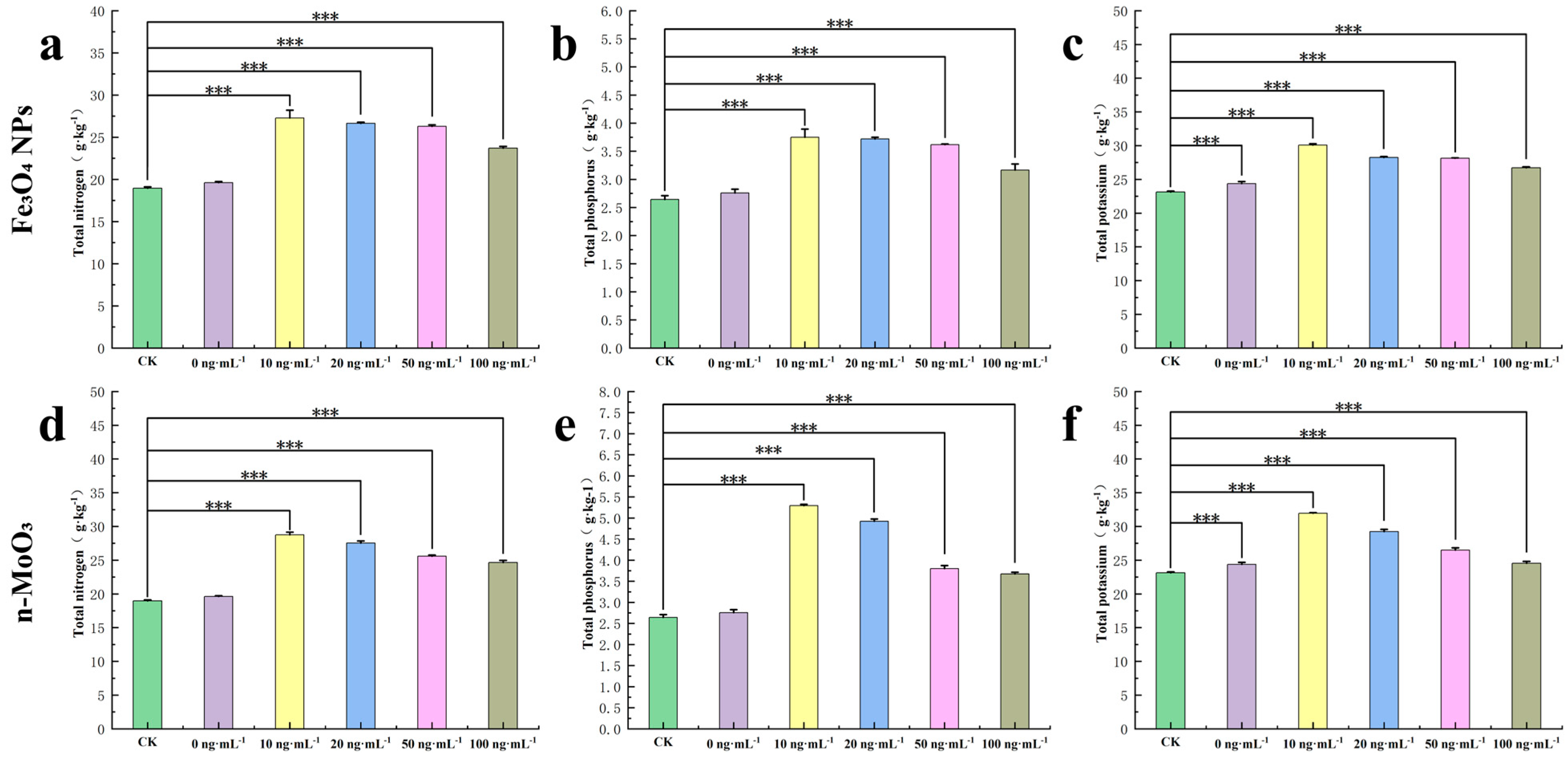
Figure 6 shows how A. chroococcum inoculant with different amounts of Fe3O4 NPs and n-MoO3 affected nitrogen, phosphorus, and potassium levels in Glycine max plants. Adding nanomaterials helped the plants take up more of all three nutrients, and how much they helped depended on the concentration used.
As shown in Figure 6a–c, with Fe3O4 NPs, the effect on nutrient uptake first got better, then got worse as concentration went up. At 10 ng·mL−1 Fe3O4 NPs, total nitrogen (27.29 ± 0.91 g·kg−1), total phosphorus (3.75 ± 0.14 g·kg−1), and total potassium (30.09 ± 0.19 g·kg−1) all reached their highest levels. These were much higher than the control group (CK) (p < 0.001). The unmodified inoculant (0 ng·mL−1) did not raise total nitrogen or total potassium much (p > 0.05).
At 20, 50, and 100 ng·mL−1, nutrient levels all dropped. Total nitrogen (Figure 6a) went down step by step as concentration went up, and was lower at all concentrations than at 10 ng·mL−1 (p < 0.001). Total phosphorus (Figure 6b) stayed fairly high at 20 ng·mL−1, but dropped at 50 and 100 ng·mL−1 (p < 0.001). Total potassium (Figure 6c) was the most sensitive to concentration changes. It was already lower at 20 ng·mL−1 than at 10 ng·mL−1 (p < 0.001), and kept dropping as the concentration went up.
As shown in Figure 6d–f, n-MoO3 worked in a similar way. At 10 ng·mL−1 n-MoO3, total nitrogen (28.75 ± 0.41 g·kg−1), total phosphorus (5.29 ± 0.32 g·kg−1), and total potassium (31.94 ± 0.11 g·kg−1) all hit their highest levels, much higher than CK (p < 0.01). Same as with Fe3O4 NPs, the unmodified inoculant did not raise total nitrogen or total phosphorus much (p > 0.05), and only helped total potassium a little. At 20, 50, and 100 ng·mL−1, all three nutrients dropped step by step as concentration went up, and were lower at all concentrations than at 10 ng·mL−1 (p < 0.001).
In short, low amounts (10 ng·mL−1) of Fe3O4 NPs and n-MoO3 worked best with the A. chroococcum inoculant to help Glycine max take up nitrogen, phosphorus, and potassium. This good effect got weaker as amounts went up. These results confirm that the right amount of nanomaterials can make the inoculant work better as a fertilizer.

3.4. Effects of A. chroococcum Inoculant Treated with Fe3O4 NPs or n-MoO3 on N. benthamiana Growth

3.4.1. Fe3O4 NPs or n-MoO3-Modified A. chroococcum Inoculant Promotes N. benthamiana Growth

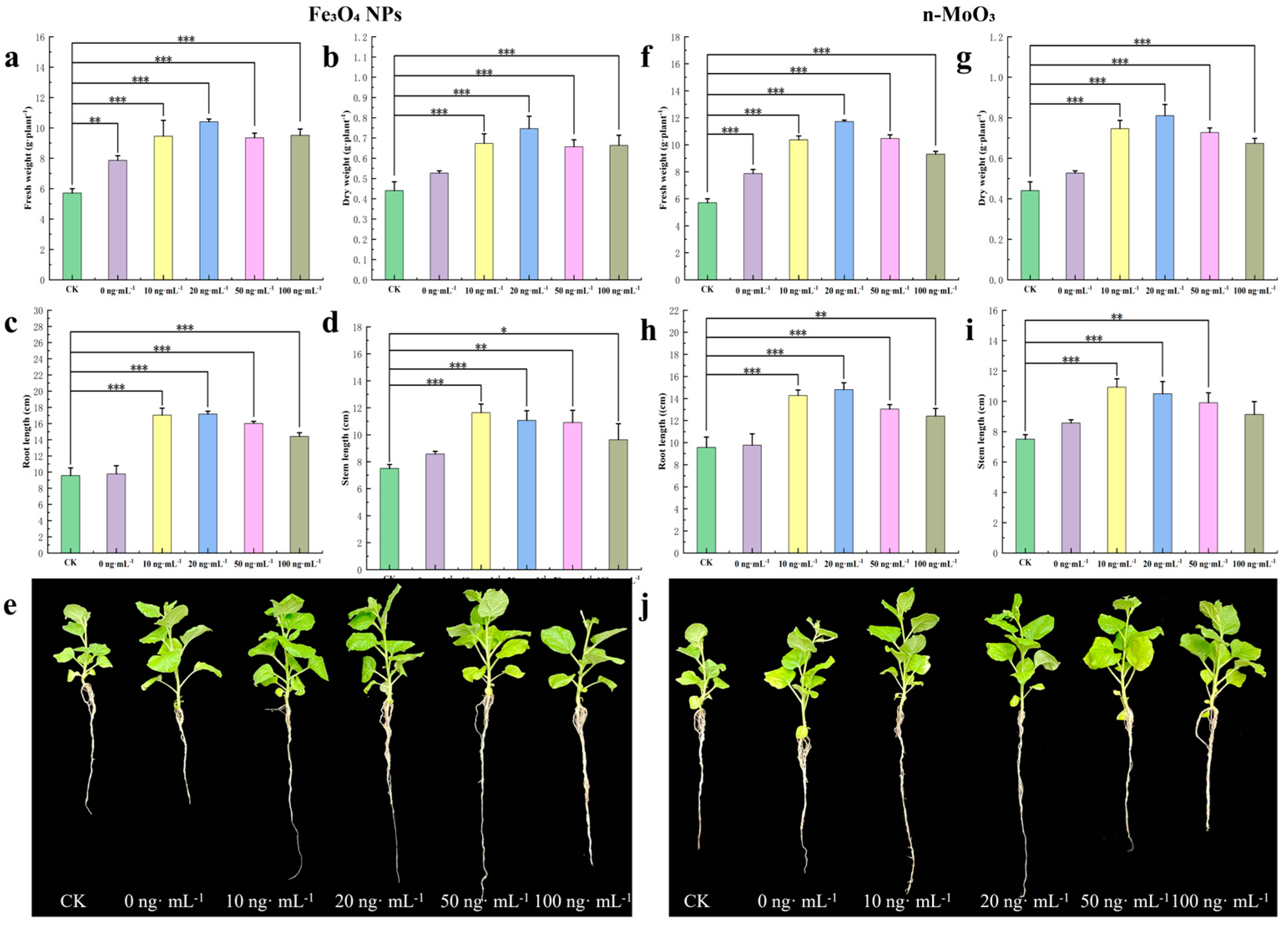
To investigate the effect of nanomaterial-modified A. chroococcum inoculant on non-legume crops, we conducted pot tests with N. benthamiana. Figure 7 illustrates the effects of the inoculant supplemented with different concentrations of Fe3O4 NPs and n-MoO3 on plant growth. Compared with the control (CK), both the nanomaterial-modified inoculant and the unmodified inoculant promoted the growth of N. benthamiana, as reflected by increased fresh weight, dry weight, stem length, and root length.
As shown in Figure 7a–e, the unmodified inoculant (0 ng·mL−1) significantly increased fresh weight compared to CK (p < 0.01). Under Fe3O4 NPs treatment, all tested concentrations (10, 20, 50, and 100 ng·mL−1) resulted in significant increases in fresh weight, dry weight, and root length compared to CK (p < 0.001 for all). For stem length, significant increases were observed at 10 and 20 ng·mL−1 (p < 0.001), at 50 ng·mL−1 (p < 0.01), and at 100 ng·mL−1 (p < 0.05). The highest mean values for fresh weight and dry weight were observed at 20 ng·mL−1, while those for root length and stem length were observed at 10 ng·mL−1.
As shown in Figure 7f–j, the unmodified inoculant (0 ng·mL−1) significantly increased fresh weight compared to CK (p < 0.001). Under n-MoO3 treatment, all tested concentrations (10, 20, 50, and 100 ng·mL−1) significantly increased fresh weight and dry weight compared to CK (p < 0.001). For root length, significant increases were observed at 10, 20, and 50 ng·mL−1 (p < 0.001) and at 100 ng·mL−1 (p < 0.01). For stem length, significant increases were observed at 10 and 20 ng·mL−1 (p < 0.001) and at 50 ng·mL−1 (p < 0.01), while no significant difference was detected at 100 ng·mL−1. The highest mean values for fresh weight, dry weight, and root length were observed at 20 ng·mL−1, while that for stem length was observed at 10 ng·mL−1.
In summary, supplementation of A. chroococcum inoculant with Fe3O4 NPs or n-MoO3 at concentrations ranging from 10 to 100 ng·mL−1 promoted N. benthamiana growth, with the optimal concentrations varying by growth parameter. Unlike Glycine max, where all growth parameters achieved the highest values at 10 ng·mL−1, N. benthamiana exhibited distinct concentration responses across different growth traits. These results indicate that different crops, or even different growth traits of the same crop, may exhibit distinct response patterns to nanomaterial-enhanced inoculants. This variation may be attributed to differences in root zone characteristics or plant internal physiological processes, which will be further discussed in the Section 4.

3.4.2. Fe3O4 NPs or n-MoO3-Modified A. chroococcum Inoculant Promotes Nutrient Accumulation in N. benthamiana

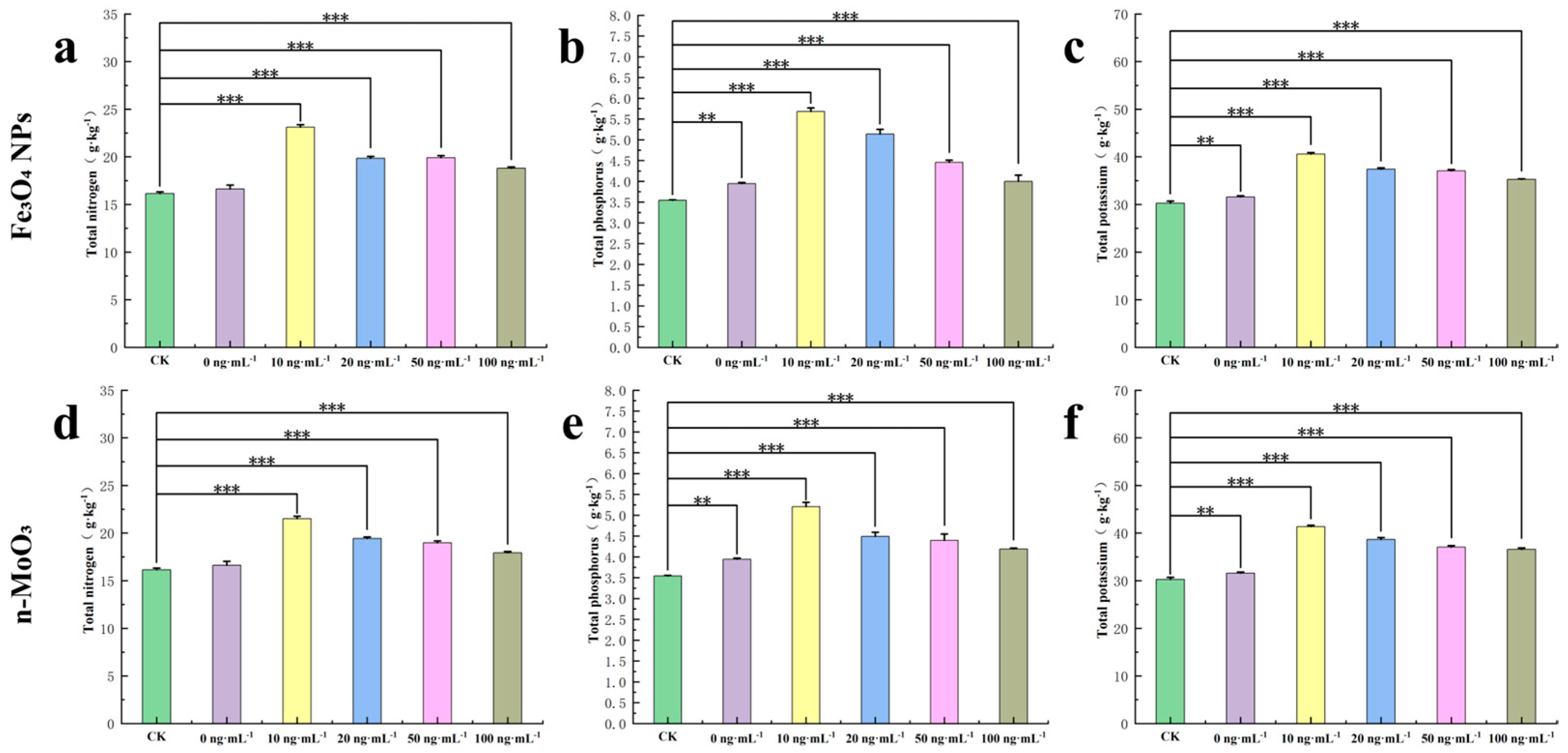
Figure 8 shows the effects of A. chroococcum inoculant with different amounts of Fe3O4 NPs and n-MoO3 on nitrogen, phosphorus, and potassium levels in N. benthamiana plants.
As shown in Figure 8a–c, the unmodified inoculant (0 ng·mL−1) significantly increased total phosphorus and total potassium compared to CK (p < 0.01), but showed no significant effect on total nitrogen. Under Fe3O4 NPs treatment, all tested concentrations (10, 20, 50, and 100 ng·mL−1) resulted in significant increases in total nitrogen, total phosphorus, and total potassium compared to CK (p < 0.001). The highest mean values for all three nutrients were observed at 10 ng·mL−1.
As shown in Figure 8d–f, similar patterns were observed for n-MoO3 treatment. The unmodified inoculant (0 ng·mL−1) significantly increased total phosphorus and total potassium compared to CK (p < 0.01), but showed no significant effect on total nitrogen. Under n-MoO3 treatment, all tested concentrations (10, 20, 50, and 100 ng·mL−1) significantly increased total nitrogen, total phosphorus, and total potassium compared to CK (p < 0.001). The highest mean values for all three nutrients were observed at 10 ng·mL−1.
In summary, supplementation of A. chroococcum inoculant with Fe3O4 NPs or n-MoO3 at concentrations ranging from 10 to 100 ng·mL−1 significantly enhanced N, P, and K uptake in N. benthamiana, with the optimal concentration being 10 ng·mL−1 for all three nutrients. Combined with the results obtained for Glycine max, these findings indicate that this nanomaterial-enhanced strategy exerts stable growth-promoting effects on both leguminous and non-leguminous crops, suggesting its potential as a broad-spectrum microbial fertilizer enhancement technology.

4. Discussion

This study investigated the effects of Fe3O4 NPs and n-MoO3 on the growth and nitrogen-fixing function of A. chroococcum, and their role in improving crop growth when used as part of microbial inoculants. The results showed that low concentrations of Fe3O4 NPs and n-MoO3, particularly 10 ng·mL−1, effectively promoted bacterial growth, enhanced nitrogenase activity, and significantly increased the biomass and nutrient accumulation of Glycine max and N. benthamiana treated with these inoculants. These findings provide a theoretical and experimental basis for the development of next-generation high-efficiency microbial fertilizers based on nanomaterials.

4.1. Potential Mechanisms of nMoO3 in Enhancing Nitrogen Fixation Efficiency in A. chroococcum

The results show that different nanomaterials improved both the growth (Figure 2) and nitrogenase activity (Figure 4) of A. chroococcum. This is likely because these materials help supply iron and molybdenum more effectively. Nitrogenase, especially its iron-molybdenum cofactor (FeMo-co), is essential for nitrogen fixation, and it needs both iron and molybdenum to work [19,20]. Traditional iron and molybdenum fertilizers are often not easily taken up by bacteria and do not remain available for long [33,34]. The Fe3O4 NPs and n-MoO3 used here have small sizes and large surface areas, so they can act as slow-release sources of iron and molybdenum [35]. We suggest that in the culture medium, these nanoparticles may release iron and molybdenum ions in a more controlled and steady way. This release could happen slowly from the particle surfaces or through contact with substances released by the bacteria [22,36,37]. This continuous and stable supply fits well with what nitrogenase needs for its formation and ongoing activity.
Besides supplying key trace elements, Fe3O4 NPs and n-MoO3 may also improve nitrogen fixation in other ways. Studies have shown that nanomaterials such as carbon dots [38], cadmium sulfide (CdS) nanorods [39], and iron-molybdenum quantum dots [40] can act as efficient electron transfer systems, interacting with biological enzymes to enhance their activity. Fe3O4 NPs and n-MoO3 can both give and take electrons easily. This may allow them to serve as electron mediators, giving electrons to nitrogenase (the MoFe protein) and speeding up the reduction of N2 [40]. Research also shows that nanomaterials can help keep superoxide dismutase (SOD) and catalase (CAT) stable and active. SOD and CAT work together to remove reactive oxygen species (ROS), which reduces damage to bacterial cells and creates a better environment for nitrogenase to function [40,41].
Nitrogenase is a complex enzyme that needs metals. Its activity depends not only on the supply of trace elements but also on the expression of certain genes (like the nif gene cluster) and the complex assembly of FeMo-co [42]. The right nanomaterials may affect gene expression in microbial metabolic pathways through mild stimulation [43]. We think that at low concentrations, the contact between the nanomaterial surface and the bacterial cell surface may act as a weak signal. This signal could indirectly affect the expression of genes related to nitrogenase synthesis or how well the cofactor is assembled. As a result, more fully functional nitrogenase may be produced. Also, nitrogen fixation needs a lot of energy and reducing power in the form of ATP. In this study, Fe3O4 NPs and n-MoO3 treatments promoted bacterial growth (Figure 2), which suggests that overall metabolic activity went up. This may have increased the supply of energy and reduced power, giving nitrogenase what it needs to work well [44]. This steady and lasting supply fits well with what nitrogenase needs for its formation and ongoing activity.
This study found that Fe3O4 NPs and n-MoO3 affected nitrogenase activity only within a certain concentration range. Depending on the statistical analysis, different concentrations showed different response patterns; however, in general, it could be concluded that the 10 ng·mL−1 concentration exhibited the highest level of statistical significance across all analyses. While the most pronounced growth-promoting effect was observed at this concentration, the promoting effect disappeared at 100 ng·mL−1 (Figure 4). This pattern matches the hormesis effect in nanotoxicology: low doses of a stimulus can trigger beneficial responses, but high doses become toxic and cause inhibition [45,46]. Such a nonlinear dose–response relationship is a typical characteristic of nano-bio interactions.
At low concentrations, the main mechanisms are nutrient supply and metabolic stimulation. At high concentrations, however, nanoparticles tend to clump together. These clumps can coat the surface of bacterial cells, blocking the exchange of materials (like oxygen and nutrients) and signals with the outside environment [40]. This directly interferes with nitrogenase synthesis and its working conditions. At high concentrations, more active sites on the nanoparticle surfaces can produce too many reactive oxygen species (ROS, such as •OH and H2O2) through reactions like the Fenton reaction. Nitrogenase, especially the MoFe protein, is very sensitive to ROS. Too much ROS can oxidize the metal cofactors (like the Mo-Fe cluster) in the enzyme, damaging its structure and causing loss of activity [47,48,49]. Even though high concentrations of n-MoO3 can remove some ROS, the amount of ROS they produce may be more than they can remove, which indirectly lowers the nitrogenase activity of A. chroococcum [50].
In addition, high concentrations of Fe3O4 NPs release iron ions, and high concentrations of n-MoO3 release molybdenum ions. The buildup of these ions may increase ionic stress. This can work together through several pathways—affecting membrane permeability, upsetting ion balance inside cells, and deactivating enzyme functions—to inhibit normal bacterial activity [51].

4.2. Glycine max and N. benthamiana Differ in Their Optimal Nanomaterial Concentration: What Causes the Difference?

The results show that Glycine max and Nicotiana benthamiana responded slightly differently to the optimal nanomaterial concentration. For example, the best biomass for N. benthamiana was seen at 20 ng·mL−1, while all Glycine max measurements were best at 10 ng·mL−1. These differences probably come from natural differences between the two plants in root structure, root exudates, and how they interact with microbes [46,48,52].
One key reason for this is how the two plants get nitrogen. Glycine max is a legume that forms a symbiotic relationship with rhizobia, which takes a lot of energy. When A. chroococcum works with Glycine max, it needs plenty of energy to support nitrogenase activity. The low concentration (10 ng·mL−1) of nanomaterials seems to best support this process. N. benthamiana, on the other hand, is not a legume. It forms a looser “associative” relationship with A. chroococcum. In this case, bacteria mainly live on the root surface or in the rhizosphere. The nitrogen they fix is used by the bacteria themselves or given to the plant in small amounts, so less energy is needed. Because of this, N. benthamiana does not need as much help with nitrogen fixation. Instead, it may benefit from other effects of nanomaterials, such as the regulation of plant physiological processes, potentially involving hormone signaling pathways.
Differences in root exudates also help explain these different responses. Glycine max roots release flavonoids (like daidzein and genistein), which are signals that turn on nodulation genes (nod genes) in rhizobia [53]. N. benthamiana roots mainly release organic acids (like malic acid and citric acid) and sugars. These substances attract bacteria and provide them with food [54]. So, the different environments around the roots of these two plants, along with how they interact with nitrogen-fixing bacteria, lead to the different optimal concentrations.

4.3. A Hypothetical “Material–Microbe–Plant” Interplay Chain: A Proposed Three-Level Linkage Mechanism Underlying Crop Growth Promotion

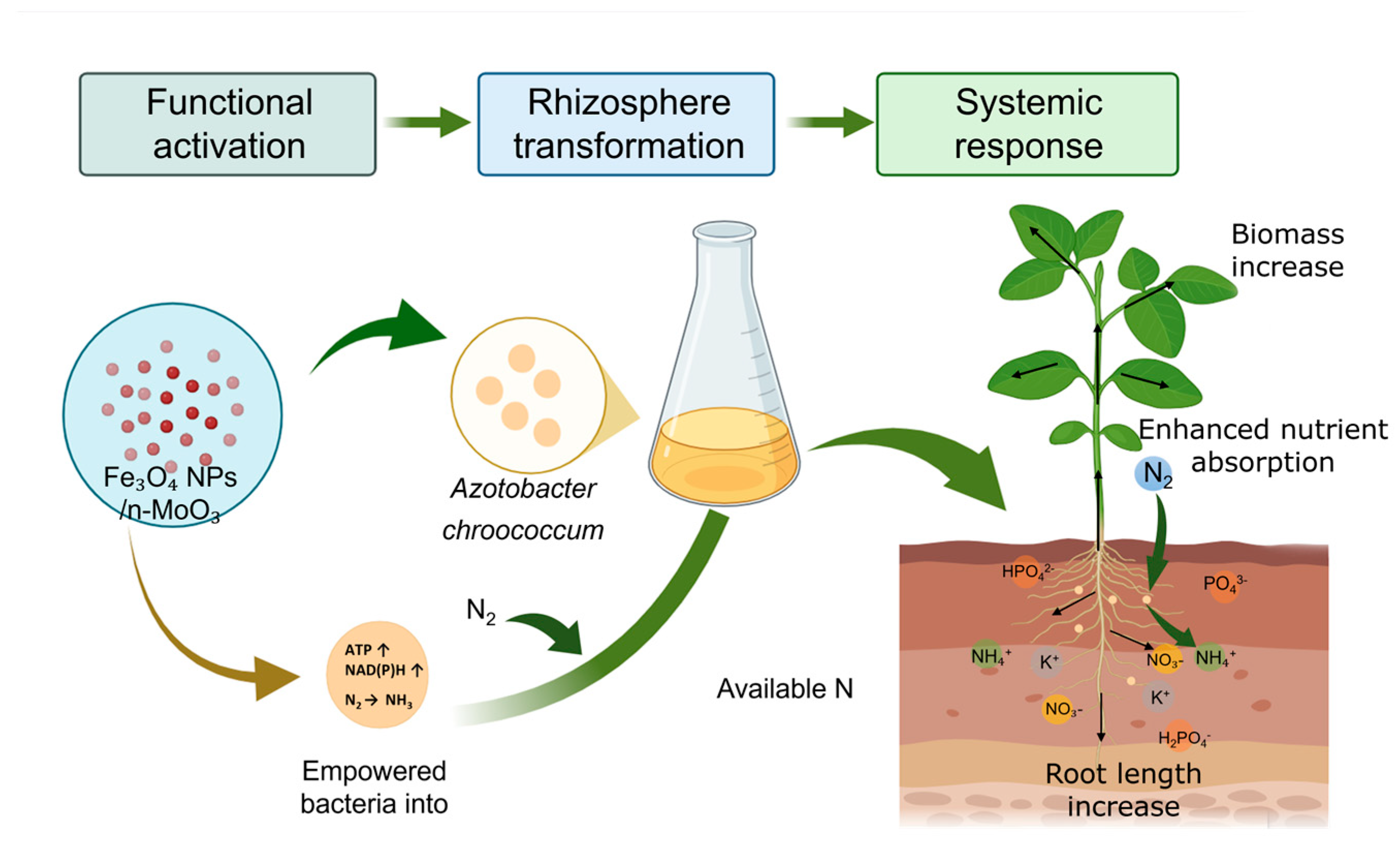
Results from the pot experiments show that the interaction between nanomaterials and bacteria can be extended to plants. Inoculants modified with Fe3O4 NPs and n-MoO3 significantly promoted the growth of both Glycine max and Nicotiana benthamiana (Figure 5 and Figure 7). The best effects were seen at concentrations between 10 and 20 ng·mL−1. Based on these results, we propose a hypothetical three-level mechanism to explain how these inoculants work. We call it “metabolic remodeling–rhizosphere transformation–systemic response” (Figure 9).
Metabolic remodeling and functional activation (enhancement at the source). At low concentrations, nanomaterials act like “metabolic primers” when the inoculant is being prepared. They provide nutrients and help the bacteria use energy and reduce power better. This strongly activates the nitrogenase system and increases bacterial growth. The result is a highly active “seed” inoculant ready for use in the field.
Rhizosphere colonization and nitrogen transformation (enhancement during the process). When this stronger inoculant is added to soil, it adapts better and competes well with other microbes. This helps it colonize and survive in the rhizosphere. Because the bacteria fix more nitrogen, more nitrogen becomes available in the soil around the roots. This increases both the amount and the turnover of nitrogen in the rhizosphere (Figure 3), giving the plant a steady supply of nitrogen.
Plant systemic nutrition and growth response (enhancement at the end). More nitrogen in the rhizosphere acts as a starting signal. It not only helps the plant take up more nitrogen but also helps the root system grow better (Figure 5 and Figure 7). A. chroococcum can also make auxins like IAA. When low concentrations of nanoparticles boost the bacteria’s metabolism, they may also make more of these hormones. This directly helps roots and plants grow. A bigger root system can take up more nutrients from the soil, including less mobile ones like phosphorus and potassium (Figure 6 and Figure 8). In the end, the plant takes up more nitrogen, phosphorus, and potassium, and grows more biomass.
Although rhizosphere colonization, soil nitrogen concentration, and IAA production were not directly evaluated in this study, we hypothesize that the enhanced growth promotion may involve improved colonization of the modified inoculant, increased nitrogen availability, and elevated IAA production. Further studies are needed to validate these hypothesized mechanisms.

4.4. Limitations and Future Perspectives

Although this study demonstrates the plant growth-promoting effects of bacteria modified by nanomaterials and preliminarily explores the underlying mechanisms, certain limitations should be acknowledged and addressed in future investigations.
First, the experimental design did not include a “nanomaterial alone” (without bacteria) control group. Given our focus on the regulatory role of nanomaterials in bacterial efficacy, we included treatments with bacteria modified by varying nanomaterial concentrations alongside an unmodified bacterial control (0 ng·mL−1). Notably, the nanomaterial concentrations used (10–100 ng·mL−1) are three to five orders of magnitude lower than those reported to exert direct plant growth-promoting effects, such as FeP NPs at 10–200 mg·L−1 [55] and Iron-Molybdenum Quantum Dots at 250–1000 mg·L−1 [40]. Thus, direct contributions from free nanomaterials to the observed phenotypes are highly unlikely. Nevertheless, the absence of this control group precludes complete deconvolution of the respective contributions of the nanomaterial and the bacterium, representing a limitation of this study.
Second, the characterization of A. chroococcum as a plant growth-promoting bacterium (PGPR) remains limited. In this study, the classification was primarily based on its ability to grow in a nitrogen-free medium (indicative of nitrogen fixation) and the observed growth-promoting effects on tobacco and soybean in pot experiments. However, typical PGPR strains exhibit multiple plant growth-promoting traits, such as phosphate solubilization, siderophore production, and ACC deaminase activity, which were not assessed in this work. Therefore, the mechanisms underlying the observed growth promotion are not fully defined, and the PGPR classification should be interpreted with caution, as it is based on phenotypic effects rather than comprehensive functional characterization.
Third, this study relied primarily on phenotypic and physiological assessments under pot conditions, without field trials or systematic molecular-level analysis of the regulatory networks governing interactions between nanomaterial-modified bacteria and host plants.
To address these limitations, future studies will include a nanomaterial-only treatment to delineate the contributions of the nanomaterial and the bacterium. In addition, in vitro functional assays (e.g., phosphate solubilization, siderophore production) and transcriptomic or metabolomic analyses will be conducted to further elucidate the growth-promoting mechanisms of the strain. Integrating transcriptomic, metabolomic, or multi-omics approaches will further elucidate the underlying molecular mechanisms, while field trials will validate the practical applicability of this combined inoculant.

5. Conclusions

This study investigated how Fe3O4 NPs and n-MoO3 affect A. chroococcum and its performance as an inoculant on Glycine max (legume) and N. benthamiana (non-legume). The main findings are:
(1) Low-dose stimulation, high-dose inhibition. Both nanomaterials at 10–20 ng·mL−1 boosted bacterial growth and nitrogenase activity. At 100 ng·mL−1, the positive effect weakened or disappeared. This shows a narrow optimal concentration window.
(2) Nanomaterials improved inoculant performance. At 10 ng·mL−1, modified inoculants increased biomass and nitrogen, phosphorus, and potassium uptake in both crops. Both nanomaterials worked in similar ways.
(3) Crops responded differently to optimal concentrations. Glycine max did best at 10 ng·mL−1 for all traits. For N. benthamiana, biomass peaked at 20 ng·mL−1, while stem and root growth were best at 10 ng·mL−1. These differences likely come from variations in nitrogen fixation methods and root exudates between the two crops.
(4) A three-level enhancement mechanism is proposed. Low-concentration nanomaterials act as “metabolic primers” during inoculant preparation, activating nitrogenase. After soil application, the enhanced inoculant colonizes roots better and fixes more nitrogen. This extra nitrogen stimulates root growth, which in turn helps the plant take up more nutrients and build more biomass.
In short, low concentrations (10 ng·mL−1) of Fe3O4 NPs and n-MoO3 can effectively boost the nitrogen-fixing ability and growth-promoting effect of A. chroococcum inoculant in both legume and non-legume crops. This work provides a basis for developing efficient, broad-spectrum microbial fertilizers using nanomaterials. It should be noted that this study lacked a nanomaterial-alone control group and field trials. Future research will address these limitations by incorporating multi-omics analyses (e.g., transcriptomics and metabolomics) alongside field validation.

Author Contributions

Conceptualization, L.Y., X.L., J.J., S.G., H.L., L.L. and W.G.; methodology, L.Y. and X.L.; resources, W.G.; data curation, S.G.; writing—original draft preparation, L.Y.; writing—review and editing, L.Y.; visualization, J.J.; supervision, W.G.; project administration, W.G.; funding acquisition, W.G. All authors have read and agreed to the published version of the manuscript.

Funding

This research was funded by the National Natural Science Foundation of China (31070651).

Data Availability Statement

The original contributions presented in this study are included in the article. Further inquiries can be directed to the corresponding author.

Acknowledgments

We would like to thank the Deepseek generative AI tool (Web Version) for its assistance in the refinement and optimization of some paragraphs in this manuscript. We thank the editor for providing this opportunity. The authors gratefully acknowledge the reviewers for their constructive and insightful comments.

Conflicts of Interest

The authors declare no conflicts of interest.

References

  1. Cleveland, C.C.; Houlton, B.Z.; Smith, W.K.; Marklein, A.R.; Reed, S.C.; Parton, W.; Del Grosso, S.J.; Running, S.W. Patterns of new versus recycled primary production in the terrestrial biosphere. Proc. Natl. Acad. Sci. USA 2013, 110, 12733–12737. [Google Scholar] [CrossRef]
  2. FAO. The State of Food and Agriculture 2024—Value-Driven Transformation of Agrifood Systems; FAO: Rome, Italy, 2024. [Google Scholar]
  3. Ladha, J.K.; Tirol-Padre, A.; Reddy, C.K.; Cassman, K.G.; Verma, S.; Powlson, D.S.; van Kessel, C.; Richter, D.d.B.; Chakraborty, D.; Pathak, H. Global nitrogen budgets in cereals: A 50-year assessment for maize, rice, and wheat production systems. Sci. Rep. 2016, 6, 19355. [Google Scholar] [CrossRef]
  4. Forghieri, G.; Ghedini, E.; Torrigino, F.; Di Martino, R.; Lucarini, F.; Staedler, D.; Biasi, P.; Signoretto, M. Enabling biological nitrogen fixation in agriculture: An eco-industrial perspective. Food Biosci. 2025, 73, 107734. [Google Scholar] [CrossRef]
  5. Timofeeva, A.M.; Galyamova, M.R.; Sedykh, S.E. Plant Growth-Promoting Soil Bacteria: Nitrogen Fixation, Phosphate Solubilization, Siderophore Production, and Other Biological Activities. Plants 2023, 12, 4074. [Google Scholar] [CrossRef] [PubMed]
  6. Aasfar, A.; Bargaz, A.; Yaakoubi, K.; Hilali, A.; Bennis, I.; Zeroual, Y.; Meftah Kadmiri, I. Nitrogen Fixing Azotobacter Species as Potential Soil Biological Enhancers for Crop Nutrition and Yield Stability. Front. Microbiol. 2021, 12, 628379. [Google Scholar] [CrossRef]
  7. Pourjani, S.; Aminpanah, H.; Vishkaei, M.N.S. Increasing the productivity of intercropping corn and peanuts by inoculation with Azotobacter chroococcum. Rom. Agric. Res. 2022, 39, 327–336. [Google Scholar] [CrossRef]
  8. Bastakoti, B.; Pandey, M.; Shrestha, S.; Degola, F. Impacts of Azotobacter Inoculation on Hybrid Maize Growth and Yield in Midhill of Lamjung, Nepal. Int. J. Agron. 2025, 2025, 1511706. [Google Scholar] [CrossRef]
  9. Mahmud, K.; Makaju, S.; Ibrahim, R.; Missaoui, A. Current Progress in Nitrogen Fixing Plants and Microbiome Research. Plants 2020, 9, 97. [Google Scholar] [CrossRef] [PubMed]
  10. Ahmed, T.; Noman, M.; Gardea-Torresdey, J.L.; White, J.C.; Li, B. Dynamic interplay between nano-enabled agrochemicals and the plant-associated microbiome. Trends Plant Sci. 2023, 28, 1310–1325. [Google Scholar] [CrossRef] [PubMed]
  11. Haris, M.; Hussain, T.; Mohamed, H.I.; Khan, A.; Ansari, M.S.; Tauseef, A.; Khan, A.A.; Akhtar, N. Nanotechnology—A new frontier of nano-farming in agricultural and food production and its development. Sci. Total Environ. 2023, 857, 159639. [Google Scholar] [CrossRef]
  12. Zhang, M.-X.; Zhao, L.-Y.; He, Y.-Y.; Hu, J.-P.; Hu, G.-W.; Zhu, Y.; Khan, A.; Xiong, Y.-C.; Zhang, J.-L. Potential roles of iron nanomaterials in enhancing growth and nitrogen fixation and modulating rhizomicrobiome in alfalfa (Medicago sativa L.). Bioresour. Technol. 2024, 391, 129987. [Google Scholar] [CrossRef]
  13. Khan, F.; Pandey, P.; Upadhyay, T.K. Applications of Nanotechnology-Based Agrochemicals in Food Security and Sustainable Agriculture: An Overview. Agriculture 2022, 12, 1672. [Google Scholar] [CrossRef]
  14. Shang, Y.; Hasan, M.K.; Ahammed, G.J.; Li, M.; Yin, H.; Zhou, J. Applications of Nanotechnology in Plant Growth and Crop Protection: A Review. Molecules 2019, 24, 2558. [Google Scholar] [CrossRef]
  15. Kale, S.S.; Chauhan, R.; Nigam, B.; Gosavi, S.; Chaudhary, I.J. Effectiveness of nanoparticles in improving soil fertility and eco-friendly crop resistance: A comprehensive review. Biocatal. Agric. Biotechnol. 2024, 56, 103066. [Google Scholar] [CrossRef]
  16. Li, M.; Gao, L.; White, J.C.; Haynes, C.L.; O’Keefe, T.L.; Rui, Y.; Ullah, S.; Guo, Z.; Lynch, I.; Zhang, P. Nano-enabled strategies to enhance biological nitrogen fixation. Nat. Nanotechnol. 2023, 18, 688–691. [Google Scholar] [CrossRef]
  17. Sharma, P.K.; Raghubanshi, A.S.; Shah, K. Examining the uptake and bioaccumulation of molybdenum nanoparticles and their effect on antioxidant activities in growing rice seedlings. Environ. Sci. Pollut. Res. Int. 2021, 28, 13439–13453. [Google Scholar] [CrossRef] [PubMed]
  18. Osman, S.A.; Salama, D.M.; Abd El-Aziz, M.E.; Shaaban, E.A.; Abd Elwahed, M.S. The influence of MoO(3)-NPs on agro-morphological criteria, genomic stability of DNA, biochemical assay, and production of common dry bean (Phaseolus vulgaris L.). Plant Physiol. Biochem. 2020, 151, 77–87. [Google Scholar] [CrossRef] [PubMed]
  19. Shang, Y.; Shi, H.; Liu, M.; Lan, P.; Li, D.; Liu, X.; Wang, M.; Zhang, Z.; Chen, S. Using synthetic biology to express nitrogenase biosynthesis pathway in rice and to overcome barriers of nitrogenase instability in plant cytosol. Trends Biotechnol. 2025, 43, 946–968. [Google Scholar] [CrossRef]
  20. Liu, X.; Zhao, X.; Li, X.; Chen, S. Suppression of hesA mutation on nitrogenase activity in Paenibacillus polymyxa WLY78 with the addition of high levels of molybdate or cystine. PeerJ 2019, 7, e6294. [Google Scholar] [CrossRef]
  21. Li, Q.; Huang, K.; Liu, Z.; Qin, X.; Liu, Y.; Tan, Q.; Hu, C.; Sun, X. Nano molybdenum trioxide-mediated enhancement of soybean yield through improvement of rhizosphere soil molybdenum bioavailability for nitrogen-fixing microbial recruitment. Sci. Total Environ. 2024, 937, 173304. [Google Scholar] [CrossRef]
  22. Riaz, M.; Sattar, M.; Yan, L.; Ali, Q.; Xia, H. Nano-molybdenum alters microbial community structure and enhances soil–plant–microbe synergy in arsenic-stressed systems. Environ. Technol. Innov. 2025, 40, 104455. [Google Scholar] [CrossRef]
  23. Zhang, H.; Wang, R.; Chen, Z.; Pu, J.; Wang, J.; Zhang, H.; Yang, Y. Nanoscale molybdenum oxide improves plant growth and increases nitrate utilisation in rice (Oryza sativa L.). Food Energy Secur. 2022, 11, e383. [Google Scholar] [CrossRef]
  24. Yu, G.H.; Kuzyakov, Y.; Luo, Y.; Goodman, B.A.; Kappler, A.; Liu, F.F.; Sun, F.S. Molybdenum Bioavailability and Asymbiotic Nitrogen Fixation in Soils are Raised by Iron (Oxyhydr)oxide-Mediated Free Radical Production. Environ. Sci. Technol. 2021, 55, 14979–14989. [Google Scholar] [CrossRef] [PubMed]
  25. Supanwong, K.; Nounurai, P. Identification and elimination of errors in the drop plate counts. Maejo Int. J. Sci. Technol. 2020, 14, 252–260. [Google Scholar]
  26. Malone, R.W.; Morrow, A.J.; Pisani, O.; Kovar, J.L.; Hamilton, S.K.; Cole, K.J. USDA LTAR Common Experiment Measurement: Total Nitrogen (TN) and Total Dissolved Nitrogen (TDN) Concentration. 2024. Available online: https://www.protocols.io/view/usda-ltar-common-experiment-measurement-total-nitr-5jyl82rkrl2w/v1 (accessed on 20 January 2026).
  27. Verdouw, H.; Van Echteld, C.J.A.; Dekkers, E.M.J. Ammonia determination based on indophenol formation with sodium salicylate. Water Res. 1978, 12, 399–402. [Google Scholar] [CrossRef]
  28. Kelly, R.T., II; Love, N.G. Ultraviolet spectrophotometric determination of nitrate: Detecting nitrification rates and inhibition. Water Environ. Res. 2007, 79, 808–812. [Google Scholar] [CrossRef]
  29. Montes-Luz, B.; Conrado, A.C.; Ellingsen, J.K.; Monteiro, R.A.; de Souza, E.M.; Stacey, G. Acetylene Reduction Assay: A Measure of Nitrogenase Activity in Plants and Bacteria. Curr. Protoc. 2023, 3, 17. [Google Scholar] [CrossRef]
  30. Kjeldahl, J. Neue Methode zur Bestimmung des Stickstoffs in organischen Körpern. Z. Anal. Chem. 1883, 22, 366–382. [Google Scholar] [CrossRef]
  31. Murphy, J.; Riley, J.P. A modified single solution method for the determination of phosphate in natural waters. Anal. Chim. Acta 1962, 27, 31–36. [Google Scholar] [CrossRef]
  32. Tao, S.H.; Gong, H.R.; Chen, Z.W.; Chen, Y.Z.; Miao, X.X.; Wang, J.M. Determination of total potassium in plants samples by microwave digestion-flame photometry. Hubei Agric. Sci. 2019, 58, 142–145. [Google Scholar] [CrossRef]
  33. Sun, W.; Selim, H.M. Chapter Two—Fate and transport of molybdenum in soils: Kinetic modeling. In Advances in Agronomy; Sparks, D.L., Ed.; Academic Press: Cambridge, MA, USA, 2020; Volume 164, pp. 51–92. [Google Scholar]
  34. Chen, L.; Hu, Z.; Chen, W.; Xu, Z.; Hao, C.; Lakshmanan, P.; Liu, D.; Chen, X. Comparative study of the effectiveness of nano-sized iron-containing particles as a foliar top-dressing of peanut in rainy conditions. Agric. Water Manag. 2023, 286, 108392. [Google Scholar] [CrossRef]
  35. Semenova, N.A.; Burmistrov, D.E.; Shumeyko, S.A.; Gudkov, S.V. Fertilizers Based on Nanoparticles as Sources of Macro- and Microelements for Plant Crop Growth: A Review. Agronomy 2024, 14, 1646. [Google Scholar] [CrossRef]
  36. Benes, K.; Curn, V.; Pudhuvai, B.; Motis, J.; Michalcova, Z.; Bohata, A.; Lencova, J.; Barta, J.; Rost, M.; Vilcinskas, A.; et al. Autonomous Defense Based on Biogenic Nanoparticle Formation in Daunomycin-Producing Streptomyces. Microorganisms 2025, 13, 107. [Google Scholar] [CrossRef] [PubMed]
  37. Shirsat, S.; K, S. Iron oxide nanoparticles as iron micronutrient fertilizer—Opportunities and limitations. J. Plant Nutr. Soil Sci. 2023, 187, 565–588. [Google Scholar] [CrossRef]
  38. Wang, H.; Li, H.; Zhang, M.; Song, Y.; Huang, J.; Huang, H.; Shao, M.; Liu, Y.; Kang, Z. Carbon Dots Enhance the Nitrogen Fixation Activity of Azotobacter Chroococcum. ACS Appl. Mater. Interfaces 2018, 10, 16308–16314. [Google Scholar] [CrossRef]
  39. Brown, K.A.; Harris, D.F.; Wilker, M.B.; Rasmussen, A.; Khadka, N.; Hamby, H.; Keable, S.; Dukovic, G.; Peters, J.W.; Seefeldt, L.C.; et al. Light-driven dinitrogen reduction catalyzed by a CdS:nitrogenase MoFe protein biohybrid. Sciences 2016, 352, 448–450. [Google Scholar] [CrossRef]
  40. Ma, J.; Song, Z.; Zhou, Y.; Han, H. Iron–Molybdenum Quantum Dots for Enhancing the Nitrogenase Activity of Nodules. ACS Appl. Nano Mater. 2022, 5, 16694–16705. [Google Scholar] [CrossRef]
  41. Taran, N.; Batsmanova, L.; Kosyk, O.; Smirnov, O.; Kovalenko, M.; Honchar, L.; Okanenko, A. Colloidal Nanomolybdenum Influence upon the Antioxidative Reaction of Chickpea Plants (Cicer arietinum L.). Nanoscale Res. Lett. 2016, 11, 476. [Google Scholar] [CrossRef]
  42. Hu, Y.; Ribbe, M.W. Biosynthesis of the iron-molybdenum cofactor of nitrogenase. J. Biol. Chem. 2013, 288, 13173–13177. [Google Scholar] [CrossRef]
  43. Ivask, A.; Juganson, K.; Bondarenko, O.; Mortimer, M.; Aruoja, V.; Kasemets, K.; Blinova, I.; Heinlaan, M.; Slaveykova, V.; Kahru, A. Mechanisms of toxic action of Ag, ZnO and CuO nanoparticles to selected ecotoxicological test organisms and mammalian cells in vitro: A comparative review. Nanotoxicology 2014, 8, 57–71. [Google Scholar] [CrossRef]
  44. Peng, H.; Su, Y.; Fan, X.; Wang, S.; Zhang, Q.; Chen, Y. Nano-micro materials regulated biocatalytic metabolism for efficient environmental remediation: Fine engineering the mass and electron transfer in multicellular environments. Water Res. 2025, 268, 122759. [Google Scholar] [CrossRef]
  45. Ouyang, B.; Yilihamu, A.; Liu, D.; Ouyang, P.; Zhang, D.; Wu, X.; Yang, S.-T. Toxicity and environmental impact of multi-walled carbon nanotubes to nitrogen-fixing bacterium Azotobacter chroococcum. J. Environ. Chem. Eng. 2021, 9, 105291. [Google Scholar] [CrossRef]
  46. Khan, S.T.; Adil, S.F.; Shaik, M.R.; Alkhathlan, H.Z.; Khan, M.; Khan, M. Engineered Nanomaterials in Soil: Their Impact on Soil Microbiome and Plant Health. Plants 2021, 11, 109. [Google Scholar] [CrossRef]
  47. Ouyang, P.; Liang, C.; Liu, F.; Chen, Q.; Yan, Z.; Ran, J.; Mou, S.; Yuan, Y.; Wu, X.; Yang, S.T. Stimulating effects of reduced graphene oxide on the growth and nitrogen fixation activity of nitrogen-fixing bacterium Azotobacter chroococcum. Chemosphere 2022, 294, 133702. [Google Scholar] [CrossRef]
  48. Wang, Q.; Zhang, P.; Zhao, W.; Noman, S.; Muhammad, A.; Zhu, G.; Sun, Y.; Wang, Q.; Jiang, Y.; Rui, Y. Effects and fate of metal-based engineered nanomaterials in soil ecosystem: A review. Pedosphere 2024, 34, 843–852. [Google Scholar] [CrossRef]
  49. Cale, A.; Elblova, P.; Andelova, H.; Lunova, M.; Lunov, O. Analyzing Molecular Determinants of Nanodrugs’ Cytotoxic Effects. Int. J. Mol. Sci. 2025, 26, 6687. [Google Scholar] [CrossRef] [PubMed]
  50. Manke, A.; Wang, L.; Rojanasakul, Y. Mechanisms of nanoparticle-induced oxidative stress and toxicity. Biomed. Res. Int. 2013, 2013, 942916. [Google Scholar] [CrossRef] [PubMed]
  51. Khina, A.G.; Biktasheva, L.R.; Gordeev, A.S.; Mikhaylov, D.M.; Mukhina, M.T.; Lisichkin, G.V.; Krutyakov, Y.A. Effect of Silver Nanoparticles on Growth of Wheat: Is It Stage-Specific or Not? Agronomy 2025, 15, 2540. [Google Scholar] [CrossRef]
  52. Yang, S.; Liu, H.; Xie, P.; Wen, T.; Shen, Q.; Yuan, J. Emerging Pathways for Engineering the Rhizosphere Microbiome for Optimal Plant Health. J. Agric. Food Chem. 2023, 71, 4441–4449. [Google Scholar] [CrossRef] [PubMed]
  53. Li, Y.; Lu, L.; Wang, Q.; Liu, X.; Tian, J.; Zhang, R.; Liao, H.; Lambers, H.; Wang, X. Arbuscular Mycorrhizal Fungi Promote Nodulation and N(2) Fixation in Soybean by Specific Root Exudates. Plant Cell Environ. 2025, 48, 5514–5528. [Google Scholar] [CrossRef]
  54. Huang, H.; Lu, R.; Zhan, J.; He, J.; Wang, Y.; Li, T. Role of Root Exudates in Cadmium Accumulation of a Low-Cadmium-Accumulating Tobacco Line (Nicotiana tabacum L.). Toxics 2023, 11, 141. [Google Scholar] [CrossRef]
  55. Yi, T.; Zhu, G.; Li, Y.; Rui, Y. Biological Effects of FeP Nanoparticles on Symbiotic Nitrogen Fixation Capacity of Soybean Seedlings. Russ. J. Plant Physiol. 2025, 71, 215. [Google Scholar] [CrossRef]
Figure 1. TEM characterization and particle size distribution of Fe3O4 NPs and n-MoO3. (a,b) TEM image and particle size distribution histogram of Fe3O4 NPs; (c,d) TEM image and particle size distribution histogram of n-MoO3.
Agronomy 16 00748 g001
Figure 2. Effects of Fe3O4 NPs and n-MoO3 on the growth of A. chroococcum. (a,b) Growth curves and colony-forming units per unit area (CFU·cm−2) of A. chroococcum after treatment with different concentrations of Fe3O4 NPs; (c,d) Growth curves and colony-forming units per unit area (CFU·cm−2) of A. chroococcum after treatment with different concentrations of n-MoO3. * p < 0.05, ** p < 0.01 indicate different significance levels.
Agronomy 16 00748 g002
Figure 3. Fe3O4 NPs and n-MoO3 promote nitrogen accumulation and transformation in A. chroococcum. (ac) Total nitrogen, nitrate nitrogen, and ammonium nitrogen contents in the culture system of A. chroococcum after treatment with different concentrations of Fe3O4 NPs; (df) Total nitrogen, nitrate nitrogen, and ammonium nitrogen contents in the culture system of A. chroococcum after treatment with different concentrations of n-MoO3. * p < 0.05, ** p < 0.01, and *** p < 0.001 indicate three different significance levels.
Agronomy 16 00748 g003
Figure 4. Enhancement of nitrogenase activity of A. chroococcum by Fe3O4 NPs or n-MoO3. (a) Nitrogenase activity of A. chroococcum after treatment with different concentrations of Fe3O4 NPs; (b) Nitrogenase activity of A. chroococcum after treatment with different concentrations of n-MoO3. *** p < 0.001 indicates a significant difference.
Agronomy 16 00748 g004
Figure 5. Fe3O4 NPs or n-MoO3-modified A. chroococcum inoculant improves Glycine max growth. (ae) Fresh weight, dry weight, root length, stem length and photographs of Glycine max plants treated with A. chroococcum inoculant supplemented with different amounts of Fe3O4 NPs; (fj) Fresh weight, dry weight, root length, stem length and photographs of Glycine max plants treated with A. chroococcum inoculant supplemented with different amounts of n-MoO3. * p < 0.05, ** p < 0.01, and *** p < 0.001 indicate three different significance levels.
Agronomy 16 00748 g005
Figure 6. Fe3O4 NPs or n-MoO3-modified A. chroococcum inoculant helps Glycine max take up more nutrients. (ac) Nitrogen, phosphorus, and potassium levels in Glycine max plants after treatment with Fe3O4 NPs-modified inoculant at different concentrations; (df) Nitrogen, phosphorus, and potassium levels in Glycine max plants after treatment with n-MoO3-modified inoculant at different concentrations. *** p < 0.001 indicates a significant difference.
Agronomy 16 00748 g006
Figure 7. Fe3O4 NPs or n-MoO3-modified A. chroococcum inoculant improves N. benthamiana growth. (ae) Fresh weight, dry weight, root length, stem length and photographs of N. benthamiana plants treated with A. chroococcum inoculant mixed with different amounts of Fe3O4 NPs; (fj) Same growth measurements for plants treated with inoculant mixed with different amounts of n-MoO3. * p < 0.05, ** p < 0.01, and *** p < 0.001 indicate three different significance levels.
Agronomy 16 00748 g007
Figure 8. Fe3O4 NPs or n-MoO3-modified A. chroococcum inoculant boosts nutrient uptake in N. benthamiana. (ac) Nitrogen, phosphorus, and potassium levels in plants treated with A. chroococcum inoculant plus different amounts of Fe3O4 NPs; (df) Same nutrient measurements for plants treated with inoculant plus different amounts of n-MoO3. ** p < 0.01, and *** p < 0.001 indicate different significance levels.
Agronomy 16 00748 g008
Figure 9. A Hypothetical “Material–Microbe–Plant” Interplay Chain: A Proposed Three-Level Linkage Mechanism Underlying Crop Growth Promotion.
Agronomy 16 00748 g009
Disclaimer/Publisher’s Note: The statements, opinions and data contained in all publications are solely those of the individual author(s) and contributor(s) and not of MDPI and/or the editor(s). MDPI and/or the editor(s) disclaim responsibility for any injury to people or property resulting from any ideas, methods, instructions or products referred to in the content.