Biosynthesis and Application of 2-Amino-3-Methylhexanoic Acid as a Novel Biostimulant for Tea Plants



Abstract
1. Introduction
2. Materials and Methods
2.1. Material
Strains, Plants and Chemicals
2.2. Determination of AMHA Content
2.2.1. Preparation of AMHA Standard Curve
2.2.2. Detection of AMHA Content in Test Samples
2.3. Selection of Optimal Fermentation Strains
2.4. Selection of Matrix Components in Culture Medium for NAU002-4
2.4.1. Optimization of Corn Steep Liquor (CSL) Concentration for Strain NAU002-4 Cultivation
2.4.2. Optimization of the Type and Amount of Precursor Amino Acids in the Medium
2.5. AMHA Liquid Fermentation Process Optimization
2.6. Isolation and Extraction of AMHA
2.7. Treatment of Tea Plant with Reagents
2.8. Determination of Fast Chlorophyll Fluorescence Rise Kinetics and JIP-Test Analysis
2.9. Data Processing and Statistical Analyses
3. Results
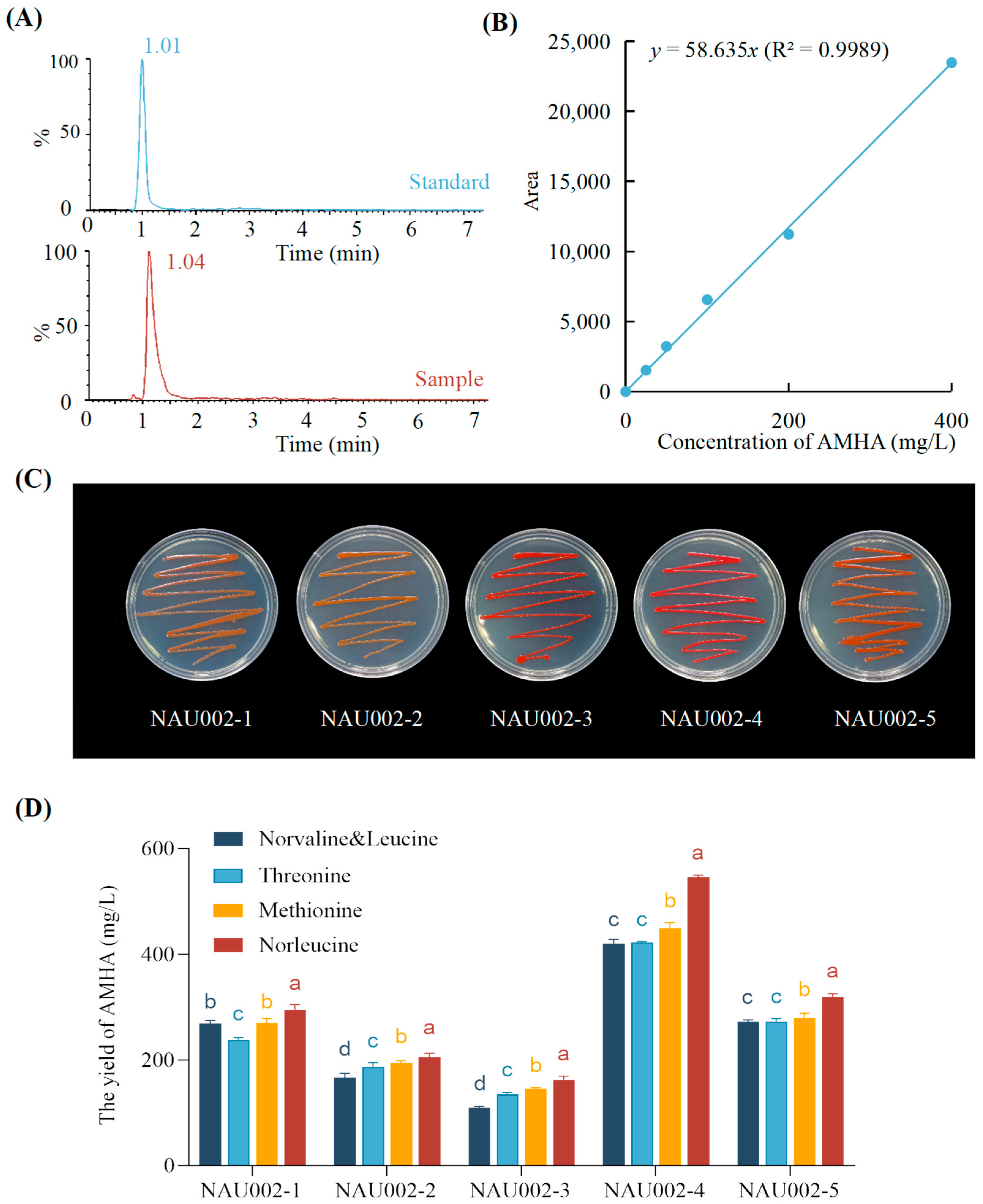
3.1. Strain NAU002-4 Produced AMHA by Fermentation
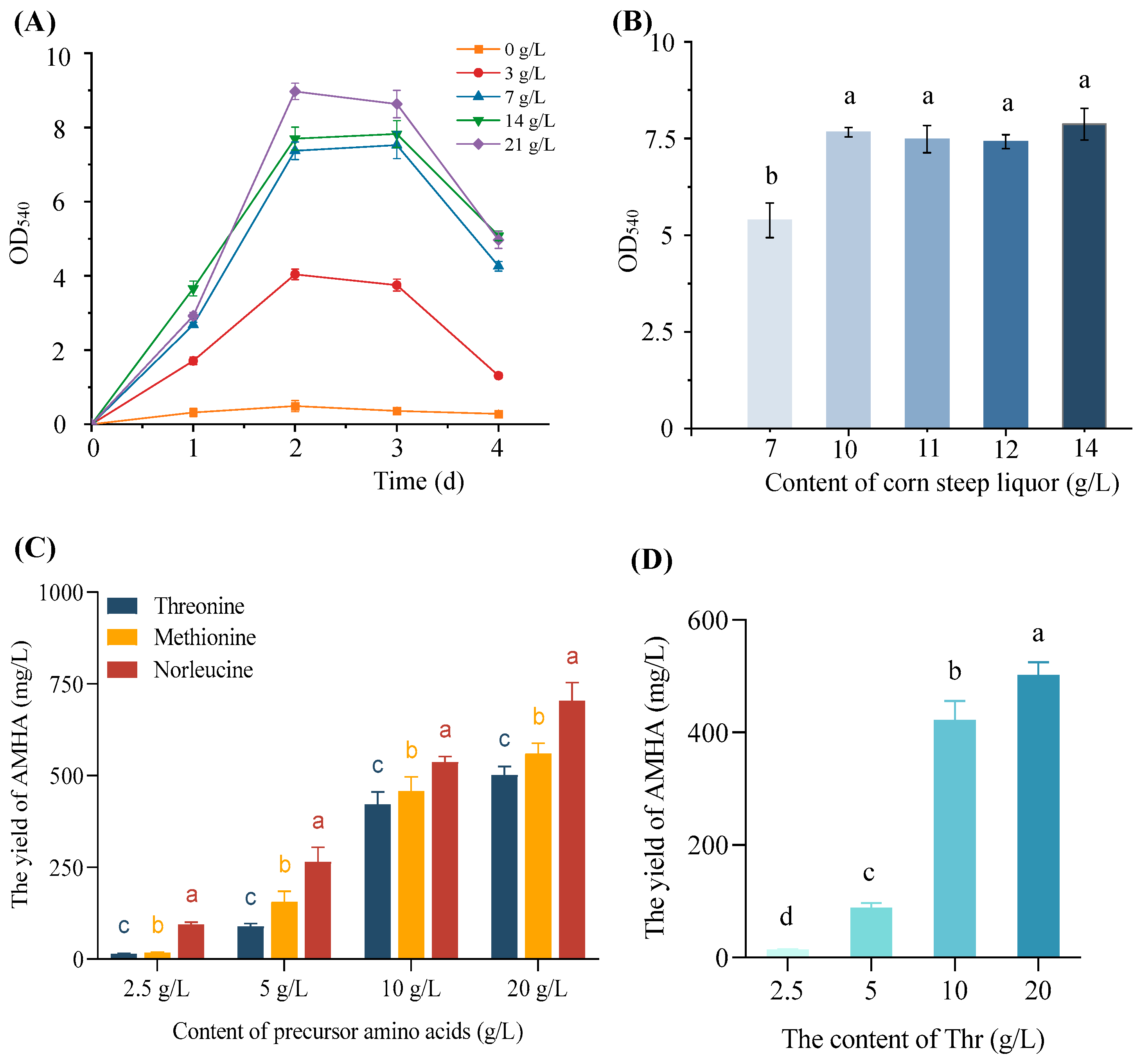
3.2. CSL and Threonine Were Identified as the Optimal Nitrogen Source and Precursor Amino Acid in NAU002-4 Medium
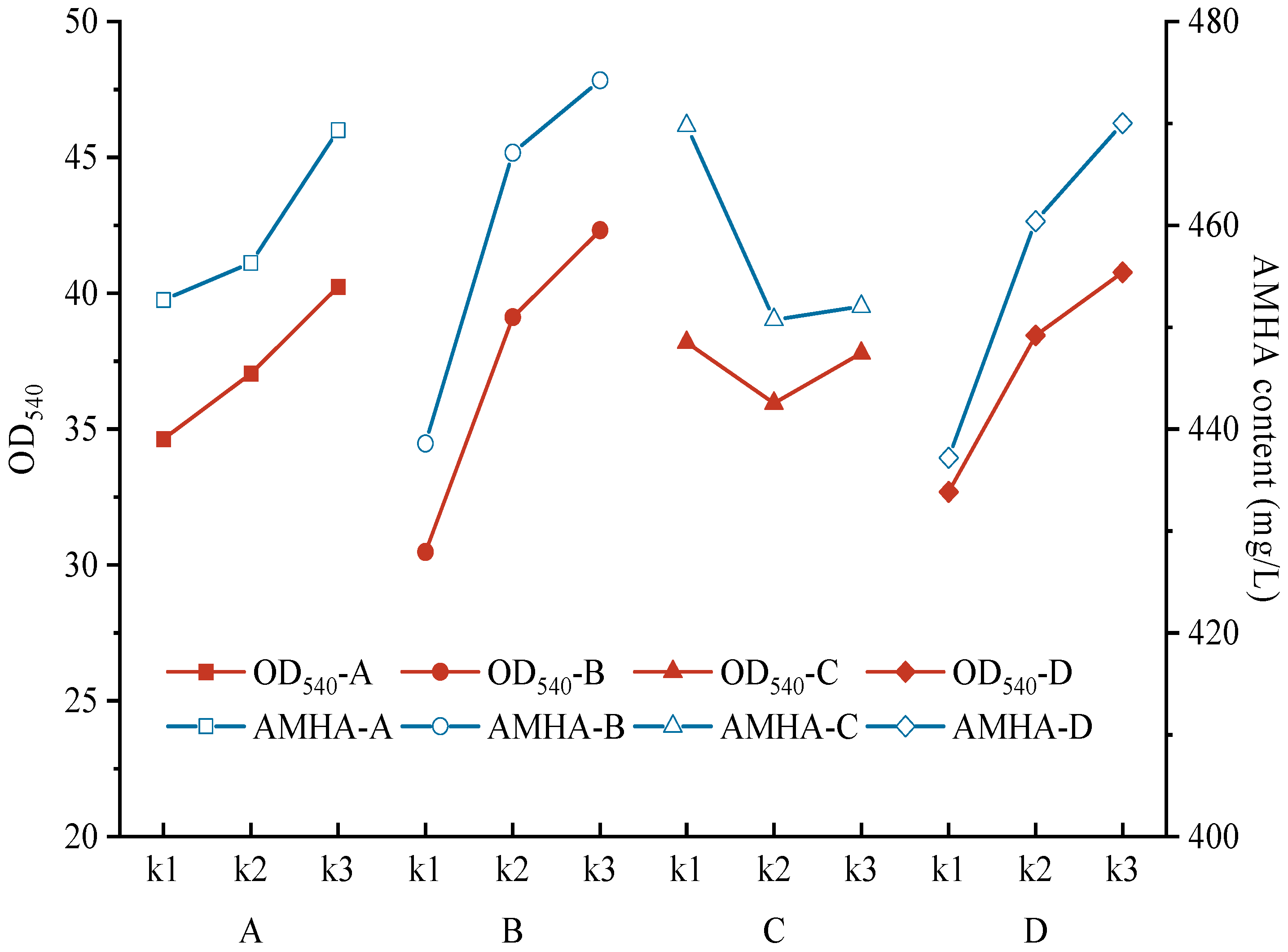
3.3. AMHA Liquid Fermentation Process Optimization
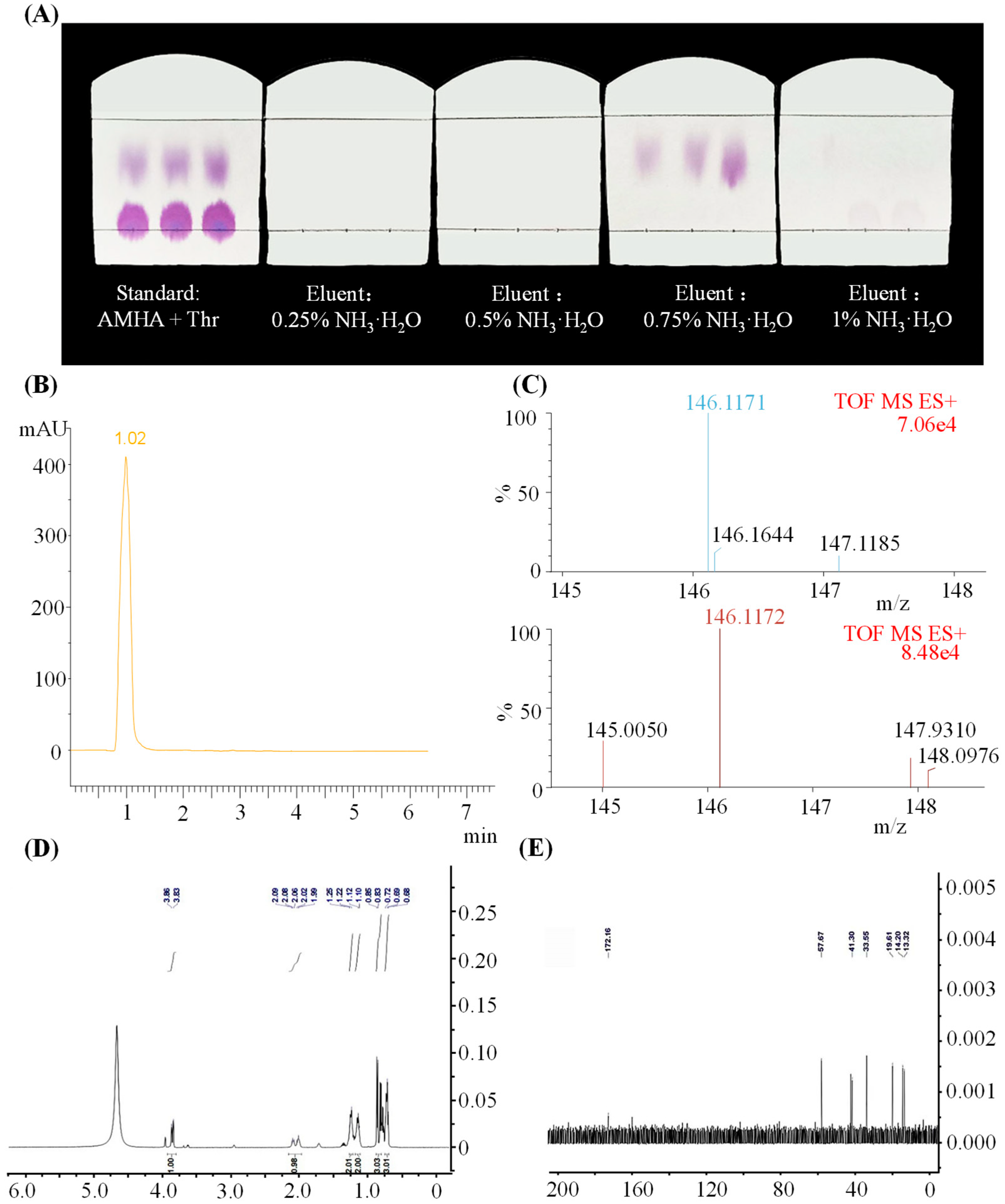
3.4. Purification of AMHA from Fermentation Broth of NAU002-4
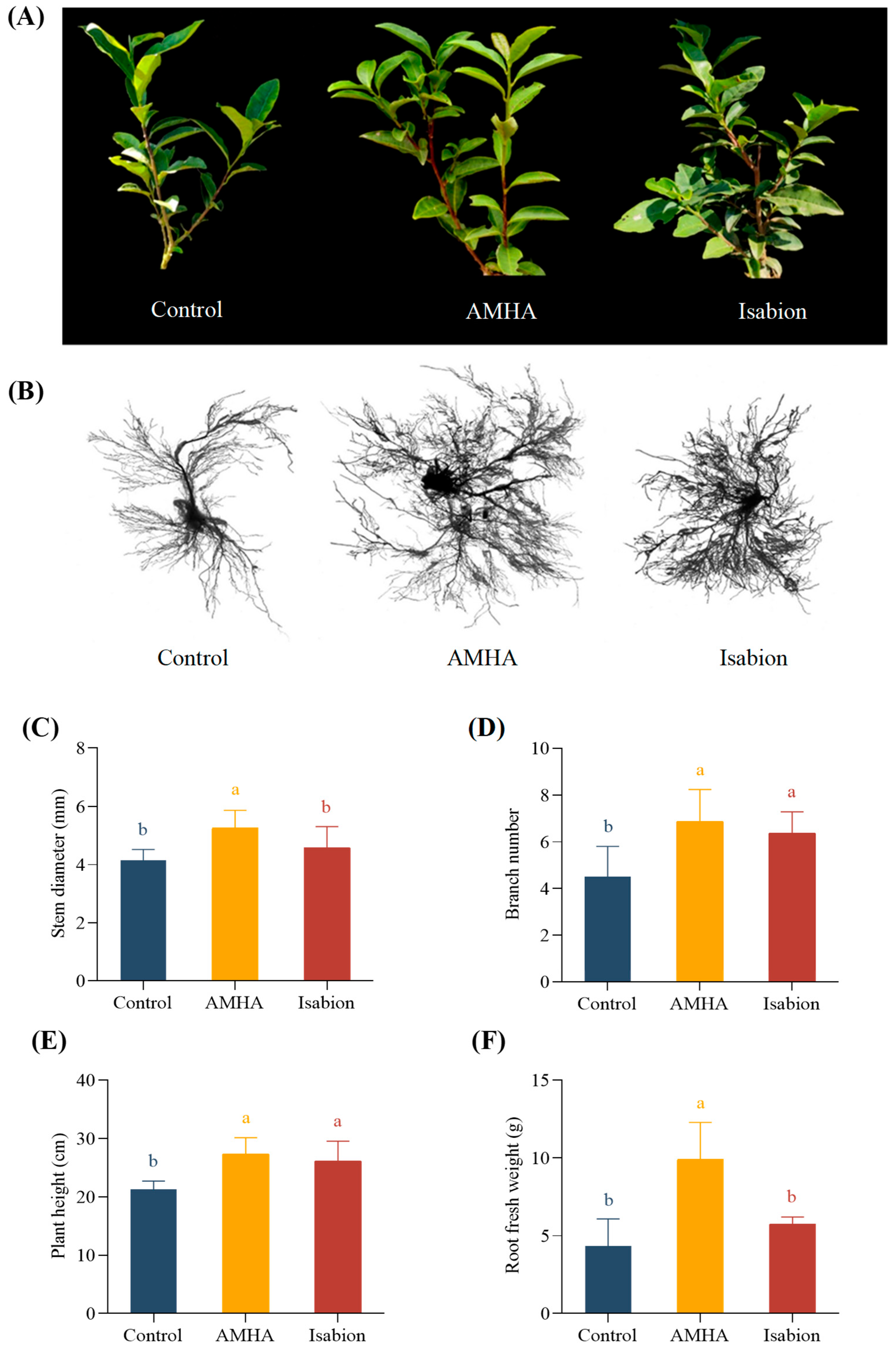
3.5. AMHA Promotes the Growth of Tea Plants
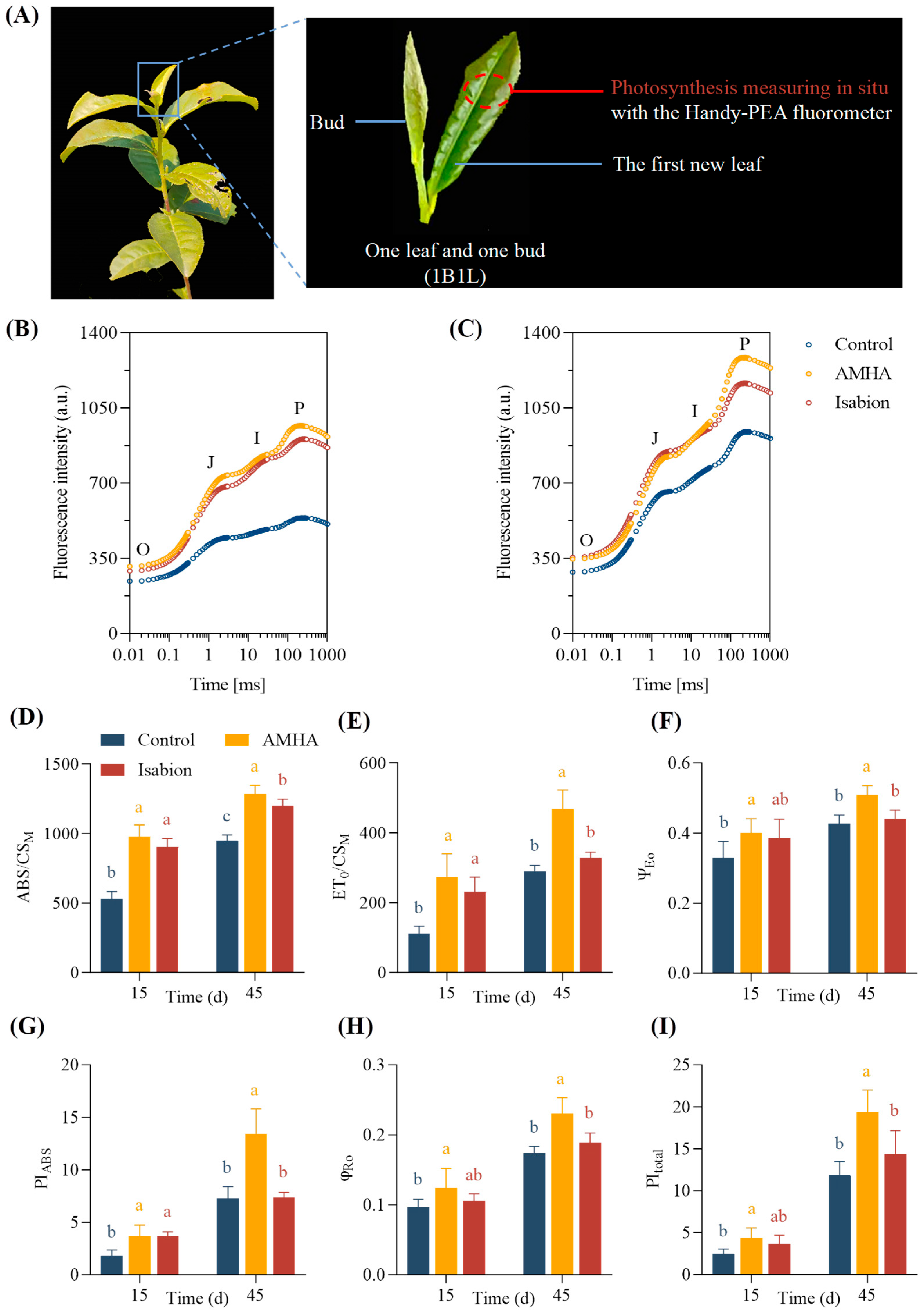
3.6. Chlorophyll Fluorescence Rise Kinetics Reveals the Mechanism by AMHA Promotes Photosynthetic II Activity
4. Discussion
5. Conclusions
Author Contributions
Funding
Data Availability Statement
Conflicts of Interest
Abbreviations
| AMHA | 2-Amino-3-methylhexanoic acid |
| HPLC | High-performance liquid chromatography |
| IEC | Ion exchange chromatography |
| CSL | Corn steep liquor |
| Thr | Threonine |
| Met | Methionine |
| Nle | Norleucine |
| Nva | Norvaline |
| Leu | Leucine |
| OD | Optical Density |
| MS | Mass Spectrometry |
| NMR | Nuclear Magnetic Resonance |
| 1B1L | One leaf and one bud |
References
- Santos, J.; Silva, M.N.D.; Santos, C.S. Mechanistic insights into bio-based fertilisers, biostimulants, and novel delivery systems in plant physiology. J. Plant Physiol. 2026, 316, 154665. [Google Scholar] [CrossRef]
- Calia, C.; García, S.G.; Ingrao, C.; Lagioia, G.; Ruta, C.; Secchi, N.; Mastro, G.D. Life cycle assessment of microbial plant biostimulant production or application in sustainable agricultural systems. Sci. Total Environ. 2025, 981, 179610. [Google Scholar] [CrossRef]
- Abdelkader, M.; Bhuker, A.; Malik, A.; Punia, H.; Koul, A.; Ahmed, M.; Elshamly, A.M.S.; Iqbal, R.; Aghayeva, S.; Ullah, S. Cultivating resilience from the ocean to the field: Leveraging seaweed biostimulants for sustainable and efficient farming systems. Plant Stress 2026, 19, 101170. [Google Scholar] [CrossRef]
- Shahrajabian, M.H.; Petropoulos, S.A.; Sun, W. Survey of the influences of microbial biostimulants on horticultural crops: Case studies and successful paradigms. Horticulturae 2023, 9, 193. [Google Scholar] [CrossRef]
- Ritchie, H.; Roser, M.; Rosado, P. “Fertilizers” Published Online at Our World in Data.org. 2022. Available online: https://ourworldindata.org/fertilizers (accessed on 1 December 2025).
- Sharma, A.; Shukla, A.; Attri, K.; Kumar, M.; Kumar, P.; Suttee, A.; Singh, G.; Barnwal, R.P.; Singla, N. Global trends in pesticides: A looming threat and viable alternatives. Ecotoxicol. Environ. Saf. 2020, 201, 110812. [Google Scholar] [CrossRef]
- Ansabayeva, A.; Makhambetov, M.; Rebouh, N.Y.; Abdelkader, M.; Saudy, H.S.; Hassan, K.M.; Nasser, M.A.; Ali, M.A.A.; Ebrahim, M. Plant growth-promoting microbes for resilient farming systems: Mitigating environmental stressors and boosting crops productivity—A review. Horticulturae 2025, 11, 260. [Google Scholar] [CrossRef]
- du Jardin, P. Plant biostimulants: Definition, concept, main categories and regulation. Sci. Hortic. 2015, 196, 3–14. [Google Scholar] [CrossRef]
- Martínez-Lorente, S.E.; Martí-Guillén, J.M.; Pedreño, M.Á.; Almagro, L.; Sabater-Jara, A.B. Higher plant-derived biostimulants: Mechanisms of action and their role in mitigating plant abiotic stress. Antioxidants 2024, 13, 318. [Google Scholar] [CrossRef]
- Priyanka, P.; Raman, K.; Yograj, N.; Vidyashankar, S. Microalgae as next generation plant growth additives: Functions, applications, challenges and circular bioeconomy based solutions. Front. Plant Sci. 2023, 14, 1073546. [Google Scholar] [CrossRef]
- Savvides, A.; Ali, S.; Tester, M.; Fotopoulos, V. Chemical priming of plants against multiple abiotic stresses: Mission possible? Trends Plant Sci. 2016, 21, 329–340. [Google Scholar] [CrossRef] [PubMed]
- Li, J.; Lardon, R.; Mangelinckx, S.; Geelen, D. A practical guide to the discovery of biomolecules with biostimulant activity. J. Exp. Bot. 2024, 75, 3797–3817. [Google Scholar] [CrossRef]
- Makonya, G.M.; Bryla, D.R.; Hardigan, M.A.; Hoashi-Erhardt, W.; DeVetter, W.L. Biostimulants with glycine betaine or kelp extract alleviate heat stress in red raspberry (Rubus idaeus). Sci. Rep. 2025, 15, 2251. [Google Scholar] [CrossRef] [PubMed]
- Handoko, R.N.S.; Lin, S. Integrating plant growth regulators and biostimulants to enhance resilient and sustainable raspberry and blackberry production. Sci. Hortic. 2025, 350, 114296. [Google Scholar] [CrossRef]
- Breuer, M.; Ditrich, K.; Habicher, T.; Hauer, B.; Keßeler, M.; Strmer, R.; Zelinski, T. Industrial methods for the production of optically active intermediates. Angew. Chem. Int. Ed. 2004, 43, 788–824. [Google Scholar] [CrossRef]
- Ikeda, M. Amino acid production processes. Adv. Biochem. Eng. Biotechnol. 2003, 79, 1–35. [Google Scholar] [CrossRef]
- Sugimoto, M. Amino Acids, Production Processes. In Encyclopedia of Industrial Biotechnology: Bioprocess, Bioseparation, and Cell Technology; Flickinger, M.C., Ed.; Wiley: Hoboken, NJ, USA, 2010; pp. 1–18. [Google Scholar] [CrossRef]
- D’Este, M.; Alvarado-Morales, M.; Angelidaki, I. Amino acids production focusing on fermentation technologies—A review. Biotechnol. Adv. 2018, 36, 14–25. [Google Scholar] [CrossRef]
- Ivanov, K.; Stoimenova, A.; Obreshkova, D.; Luciano, S.L. Biotechnology in the production of pharmaceutical industry ingredients: Amino acids. Biotechnol. Biotechnol. Equip. 2013, 27, 3620–3626. [Google Scholar] [CrossRef]
- Xu, S.; Zhang, L.; Zhou, S.; Deng, Y. Biosensor-based multigene pathway optimization for enhancing the production of glycolate. Appl. Environ. Microbiol. 2021, 87, e0011321. [Google Scholar] [CrossRef]
- Zhou, J.; Li, S. Conversion of viridicatic acid to crustosic acid by cytochrome P450 enzyme-catalysed hydroxylation and spontaneous cyclisation. Appl. Microbiol. Biotechnol. 2021, 105, 9181–9189. [Google Scholar] [CrossRef]
- Wang, H.; Li, J.; Yang, Q.; Wang, L.; Wang, J.; Zhang, Y.; Guo, Y.; Li, R.; Zhang, R.; Chen, S.; et al. Natural 2-amino-3-methylhexanoic acid as plant elicitor inducing resistance against temperature stress and pathogen attack. Int. J. Mol. Sci 2022, 10, 5715. [Google Scholar] [CrossRef] [PubMed]
- Sugiura, M.; Kisumi, M.; Chibata, I. Biosynthetic pathway of β-methylnorleucine, an anti-metabolite produced by Serratia marcescens. J. Antibiot. 1981, 34, 1283–1289. [Google Scholar] [CrossRef]
- Li, J.; Liu, H.; Guo, Y.; Chang, Y.; Zhang, J.; Wang, H.; Liu, Q.; Ji, Y.; Zhang, Z.; Chen, S.; et al. Fast chlorophyll fluorescence rise kinetics as a high-throughput diagnostic tool for evaluating the capacity of 2-amino-3-methylhexanoic acid at inducing plant resistance against high temperature. Environ. Exp. Bot. 2025, 229, 106040. [Google Scholar] [CrossRef]
- Yang, Q.; Guo, Y.; Li, J.; Wang, L.; Wang, H.; Liu, G.; Fang, W.; Qiang, S.; Strasser, R.J.; Chen, S. Natural plant inducer 2-amino-3-methylhexanoic acid protects physiological activity against high-temperature damage to tea (Camellia sinensis). Sci. Hortic. 2023, 312, 111836. [Google Scholar] [CrossRef]
- Ji, Y.; Shen, Q.; Guo, Y.; Chen, Q.; Li, K.; Wang, H.; Wang, L.; Chen, X.; Fang, W.; Chen, S. Foliar application of 2-amino-3-methylhexanoic acid enhances low temperature tolerance in five key horticultural crops. Sci. Hortic. 2026, 357, 114669. [Google Scholar] [CrossRef]
- Suigura, M.; Kisumi, M.; Chibat, I. β-methylnorleucine, an antimetabolite produced by Serratia marcescens. J. Antibiot. 1981, 34, 1278–1282. [Google Scholar] [CrossRef] [PubMed]
- Kisumim, M.; Sugiura, M.; Kato, J.; Chibata, I. L-Norvaline and L-homoisoleucine formation by Serratia marcescens. J. Biochem. 1976, 79, 1021–1028. [Google Scholar] [CrossRef]
- Saeed, M.; Naveed, M.; Arif, M.; Kakar, M.U.; Manzoor, R.; El-Hack, M.E.A.; Alagawany, M.; Tiwari, R.; Khandia, R.; Munjal, A.; et al. Green tea (Camellia sinensis) and L-theanine: Medicinal values and beneficial applications in humans—A comprehensive review. Biomed. Pharmacother. 2017, 95, 1260–1275. [Google Scholar] [CrossRef]
- Ding, W.; Guo, Y.; Zhang, H.; Wang, L.; Zhang, J.; Chen, X. Efficient purification of the antimicrobial peptide ε-poly-L-lysine from microbial culture medium with continuous ion-exchange chromatography. Sep. Purif. Technol. 2024, 339, 126608. [Google Scholar] [CrossRef]
- Nesterenko, E.P.; Nesterenko, P.N.; Paull, B. Zwitterionic ion-exchangers in ion chromatography: A review of recent developments. Anal. Chim. Acta 2009, 652, 3–21. [Google Scholar] [CrossRef]
- Strasser, R.J.; Tsimilli-Michael, M.; Srivastava, A. Analysis of the Chlorophyll a Fluorescence Transient. In Advances in Photosynthesis and Respiration; Papageorgiou, G.C., Govindjee, Eds.; Springer: Dordrecht, The Netherlands, 2004; Volume 19, pp. 321–362. [Google Scholar]
- Strasser, R.J.; Srivastava, A.; Govindjee, G. Polyphasic chlorophyll a fluorescence transient in plant and cyanobacteria. Photochem. Photobiol. 1995, 61, 32–42. [Google Scholar] [CrossRef]
- Chen, S.; Yang, J.; Zhang, M.; Strasser, R.J.; Qiang, S. Classification and characteristics of heat tolerance in Ageratina adenophora populations using fast chlorophyll a fluorescence rise O-J-I-P. Environ. Exp. Bot. 2016, 122, 126–140. [Google Scholar] [CrossRef]
- Rivas, B.; Moldes, A.B.; Domínguez, J.M.; Parajó, J.C. Development of culture media containing spent yeast cells of Debaryomyces hansenii and corn steep liquor for lactic acid production with Lactobacillus rhamnosus. Int. J. Food Microbiol. 2004, 97, 93–98. [Google Scholar] [CrossRef]
- Huang, J.; Zhu, S.; Li, C.; Zhang, C.; Ji, Y. Cost-effective optimization of gellan gum production by Sphingomonas paucimobilis using corn steep liquor. Prep. Biochem. Biotechnol. 2020, 50, 191–197. [Google Scholar] [CrossRef]
- Cao, X.; Chen, Z.; Liang, L.; Guo, L.; Jiang, Z.; Tang, F.; Yun, Y.; Wang, Y. Co-valorization of paper mill sludge and corn steep liquor for enhanced n-butanol production with Clostridium tyrobutyricum Delta cat1::adhE2. Bioresour. Technol. 2020, 296, 122347. [Google Scholar] [CrossRef]
- Wu, W.; Pang, B.; Yang, R.; Liu, G.; Ai, C.; Jiang, C.; Shi, J. Improvement of the probiotic potential and yield of Lactobacillus rhamnosus cells using corn steep liquor. LWT-Food Sci. Technol. 2020, 131, 109862. [Google Scholar] [CrossRef]
- Hammad, S.A.R.; Ali, O.A.M. Physiological and biochemical studies on drought tolerance of wheat plants by application of amino acids and yeast extract. Ann. Agric. Sci. 2014, 59, 133–145. [Google Scholar] [CrossRef]
- Yang, L.; Zhu, X.; Yu, Z.; Hu, B.; Liu, P.; Zhang, F.; Chen, M.; Wang, J.; Huang, Y.; Yuan, H.; et al. Agronomic characteristics, objective quantitative, metabolome and transcriptome analysis reveal the influence of fertilization treatments on fresh leaf characteristics and finished tea quality. Food Chem. 2025, 482, 144183. [Google Scholar] [CrossRef] [PubMed]
- Zaman, F.; Zhang, E.; Ihtisham, M.; Ilyas, M.; Khattak, W.A.; Guo, F.; Wang, P.; Wang, M.; Wang, Y.; Ni, D. Metabolic profiling, pigment component responses to foliar application of Fe, Zn, Cu, and Mn for tea plants (Camellia sinensis). Sci. Hortic. 2023, 319, 112149. [Google Scholar] [CrossRef]
- Strasser, R.J.; Govindjee. The FO and the O-J-I-P fluorescence rise in higher plants and algae. In Regulation of Chloroplast Biogenesis; Argyroudi-Akoyunoglou, J.H., Ed.; Plenum Press: New York, NY, USA, 1992; Volume 225, pp. 423–426. [Google Scholar]
- Strasser, R.J.; Srivastava, A.; Tsimilli-Michael, M. The fluorescence transient as a tool to characterize and screen photosynthetic samples. In Probing Photosynthesis: Mechanism, Regulation and Adaptation; Mohanty, P., Yunus, P., Eds.; Taylor and Francis: London, UK, 2000; Volume 25, pp. 443–480. [Google Scholar]
- Srivastava, A.; Guisse, B.; Greppin, H.; Strasser, R.J. Regulation of antenna structure and electron transport in photosystem II of Pisum sativum under elevated temperature probed by the fast polyphasic chlorophyll a fluorescence transient: OKJIP. Biochim. Biophys. Acta 1997, 1320, 95–106. [Google Scholar] [CrossRef]
- Wang, F.; Hu, T.; Han, Y.; Zhao, Z.; Ren, S.; Pan, Y.; Wang, D.; Liu, X. Biological control of gentian spot blight by the combination of endophytic fungi fermentation broth and traditional Chinese medicine extractions. Physiol. Mol. Plant Pathol. 2023, 128, 102149. [Google Scholar] [CrossRef]
- Bogasa, A.C.; Cruza, F.P.N.; Lacavaa, P.T.; Sousaa, C.P. Endophytic fungi: An overview on biotechnological and agronomic potential. Braz. J. Biol. 2022, 84, 258557. [Google Scholar] [CrossRef]
- Cao, H.; Chen, Z.; Li, X.; Song, G.; Wu, Y.; Jin, J.; Cui, F.; Yuan, J.; Qi, H.; Chen, J.; et al. Optimization of fermentation conditions for Bacillus velezensis TCS001 and evaluation of its growth promotion and disease prevention effects on strawberries. Biol. Control 2024, 198, 105632. [Google Scholar] [CrossRef]
- Chen, Y.; Zhang, X.; Gong, X.; Tao, T.; Wang, Z.; Zhang, J.; Zhu, Y. Recovery and utilization of waste filtrate from industrial biological fermentation: Development and metabolite profile of the Bacillus cereus liquid bio-fertilizer. J. Environ. Manag. 2023, 346, 118945. [Google Scholar] [CrossRef]
- Wang, F.; Hu, J.; Guo, C.; Liu, C. Enhanced laccase production by Trametes versicolor using corn steep liquor as both nitrogen source and inducer. Bioresour. Technol. 2014, 166, 602–605. [Google Scholar] [CrossRef]
- Liu, X.; Wang, X.; Xu, J.; Xia, J.; Lv, J.; Zhang, T.; Wu, Z.; Deng, Y.; He, J. Citric acid production by Yarrowia lipolytica SWJ-1b using corn steep liquor as a source of organic nitrogen and vitamins. Ind. Crops Prod. 2015, 78, 154–160. [Google Scholar] [CrossRef]
- Saxena, J.; Tanner, R.S. Optimization of a corn steep medium for production of ethanol from synthesis gas fermentation by Clostridium ragsdalei. World J. Microb. Biot. 2012, 28, 1553–1561. [Google Scholar] [CrossRef]
- Reitz, C.; Fan, Q.; Neubauer, P. Synthesis of non-canonical branched-chain amino acids in Escherichia coli and approaches to avoid their incorporation into recombinant proteins. Curr. Opin. Biotechnol. 2018, 53, 248–253. [Google Scholar] [CrossRef]
- Cantoni, G.L. S-Adenosylmethionine: A new intermediate formed enzymatically from methionine and ATP. J. Biol. Chem. 1953, 204, 403–416. [Google Scholar] [CrossRef] [PubMed]
- Parekh, S.; Vinci, V.A.; Strobel, R.J. Improvement of microbial strains and fermentation processes. Appl. Microbiol. Biotechnol. 2000, 54, 287–301. [Google Scholar] [CrossRef]
- Chen, X.; Huang, C.; Yang, X.; Xiong, L.; Chen, X.; Ma, L. Evaluating the effect of medium composition and fermentation condition on the microbial oil production by Trichosporon cutaneum on corncob acid hydrolysate. Bioresour. Technol. 2013, 143, 18–24. [Google Scholar] [CrossRef] [PubMed]
- Mondal, S.; Neogi, S.; Chakraborty, S. Optimization of reactor parameters for amplifying synergy in enzymatic co-hydrolysis and microbial co-fermentation of lignocellulosic agro-residues. Renew. Energy 2024, 225, 120281. [Google Scholar] [CrossRef]
- Wang, H.; Shan, M.; Gao, Q.; Wang, J.; Zhang, R.; Wang, Y.; Yao, M.; Xiao, W. Efficient nepetalactone production in Saccharomyces cerevisiae via metabolic engineering and bioprocess optimization. Bioresour. Technol. 2025, 428, 132440. [Google Scholar] [CrossRef]
- Siwach, R.; Sharma, S.; Khan, A.A.; Kumar, A.; Agrawal, S. Optimization of xylanase production by Bacillus sp. MCC2212 under solid-state fermentation using response surface methodology. Biocatal. Agric. Biotechnol. 2024, 57, 103085. [Google Scholar] [CrossRef]
- Wang, X.; Gao, J.; Gao, Y.; Zhang, L.; Xu, C.; Li, Q.; Li, L.; Xue, J. Analysis of surfactant production by Bacillus cereus GX7 and optimization of fermentation conditions. Colloids Surf. B Biointerfaces 2024, 233, 113629. [Google Scholar] [CrossRef] [PubMed]
- Wang, X.; Wang, Y.; Nan, B.; Cao, Y.; Piao, C.; Li, X.; Wang, Y. Optimization of fermentation for gamma-aminobutyric acid (GABA) production by Lactiplantibacillus plantarum Lp3 and the development of fermented soymilk. LWT-Food Sci. Technol. 2024, 195, 115841. [Google Scholar] [CrossRef]
- Zhou, Y.; Han, L.; He, H.; Sang, B.; Yu, D.; Feng, J.; Zhang, X. Effects of agitation, aeration and temperature on production of a novel glycoprotein GP-1 by Streptomyces kanasenisi ZX01 and scale-up based on volumetric oxygen transfer coefficient. Molecules 2018, 23, 125. [Google Scholar] [CrossRef]
- Ge, Y.; Yu, X.; Zhao, X.; Liu, C.; Li, T.; Mu, S.; Zhang, L.; Chen, Z.; Zhang, Z.; Yao, S.; et al. Fermentation characteristics and postacidification of yogurt by Streptococcus thermophilus CICC 6038 and Lactobacillus delbrueckii ssp. bulgaricus CICC 6047 at optimal inoculum ratio. J. Dairy Sci. 2023, 107, 123–140. [Google Scholar] [CrossRef]
- Yan, G.; Du, G.; Li, Y.; Chen, J.; Zhong, J. Enhancement of microbial transglutaminase production by Streptoverticillium mobaraense: Application of a two-stage agitation speed control strategy. Process Biochem. 2005, 40, 963–968. [Google Scholar] [CrossRef]
- Lenteren, C.J.; Bolckmans, K.; Köhl, J.; Ravensberg, W.J.; Urbaneja, A. Biological control using invertebrates and microorganisms: Plenty of new opportunities. BioControl 2018, 63, 39–59. [Google Scholar] [CrossRef]



| Levels | Factors | |||
|---|---|---|---|---|
| Initial pH | Inoculation Volume (%) | Stirring Speed (rpm) | Aeration Rate (L/h) | |
| 1 | 6.8 | 2 | 180 | 250 |
| 2 | 7.0 | 4 | 200 | 300 |
| 3 | 7.2 | 6 | 220 | 350 |
| No. | pH (A) | Inoculation Volume (%, B) | Stirring Speed (rpm, C) | Aeration Rate (L/h, D) | OD540 | AMHA Content (mg/L) |
|---|---|---|---|---|---|---|
| 1 | 1 | 1 | 1 | 1 | 24.08 | 430.63 ± 2.50 |
| 2 | 1 | 2 | 3 | 2 | 38.08 | 459.67 ± 2.09 |
| 3 | 1 | 3 | 2 | 3 | 41.76 | 467.70 ± 5.34 |
| 4 | 2 | 1 | 3 | 3 | 34.16 | 444.40 ± 5.37 |
| 5 | 2 | 2 | 2 | 1 | 32.88 | 443.75 ± 4.22 |
| 6 | 2 | 3 | 1 | 2 | 44.08 | 480.77 ± 4.22 |
| 7 | 3 | 1 | 2 | 2 | 33.20 | 440.73 ± 1.86 |
| 8 | 3 | 2 | 1 | 3 | 46.40 | 497.94 ± 3.04 |
| 9 | 3 | 3 | 3 | 1 | 41.12 | 461.07 ± 3.41 |
| A | B (%) | C (rpm) | D (L/h) | |
|---|---|---|---|---|
| K1 | 103.92 | 91.44 | 114.56 | 98.08 |
| K2 | 111.12 | 117.36 | 107.84 | 115.36 |
| K3 | 120.72 | 126.96 | 113.36 | 122.32 |
| k1 | 34.64 | 30.48 | 38.19 | 32.69 |
| k2 | 37.04 | 39.12 | 35.95 | 38.45 |
| k3 | 40.24 | 42.32 | 37.79 | 40.77 |
| R | 5.60 | 11.84 | 2.24 | 8.08 |
| Optimal level | 3 | 3 | 1 | 3 |
| Factors of priority | B > D > A > C | |||
| Optimal technical solution | A3B3C1D3 | |||
| A | B (%) | C (rpm) | D (L/h) | |
|---|---|---|---|---|
| K1 | 1358.00 | 1315.76 | 1409.34 | 1335.45 |
| K2 | 1368.92 | 1401.36 | 1352.18 | 1381.17 |
| K3 | 1399.74 | 1409.54 | 1365.14 | 1410.04 |
| k1 | 452.67 | 438.59 | 469.78 | 445.15 |
| k2 | 456.31 | 467.12 | 450.73 | 460.39 |
| k3 | 466.58 | 469.85 | 455.05 | 470.01 |
| R | 13.91 | 31.26 | 19.05 | 24.86 |
| Optimal level | 3 | 3 | 1 | 3 |
| Factors of priority | B > D > C > A | |||
| Optimal technical solution | A3B3C1D3 | |||
| A | B (%) | C (rpm) | D (L/h) | OD540 | AMHA Content (mg/L) |
|---|---|---|---|---|---|
| 7.2 | 6 | 180 | 350 | 47.76 | 504.00 ± 1.31 |
Disclaimer/Publisher’s Note: The statements, opinions and data contained in all publications are solely those of the individual author(s) and contributor(s) and not of MDPI and/or the editor(s). MDPI and/or the editor(s) disclaim responsibility for any injury to people or property resulting from any ideas, methods, instructions or products referred to in the content. |
© 2026 by the authors. Licensee MDPI, Basel, Switzerland. This article is an open access article distributed under the terms and conditions of the Creative Commons Attribution (CC BY) license.
Share and Cite
Liu, Q.; Chen, Q.; Yang, Q.; Wu, M.; Mo, H.; Wang, H.; Chen, S. Biosynthesis and Application of 2-Amino-3-Methylhexanoic Acid as a Novel Biostimulant for Tea Plants. Agronomy 2026, 16, 745. https://doi.org/10.3390/agronomy16070745
Liu Q, Chen Q, Yang Q, Wu M, Mo H, Wang H, Chen S. Biosynthesis and Application of 2-Amino-3-Methylhexanoic Acid as a Novel Biostimulant for Tea Plants. Agronomy. 2026; 16(7):745. https://doi.org/10.3390/agronomy16070745
Chicago/Turabian StyleLiu, Qing, Qizhen Chen, Qian Yang, Mingli Wu, Haoqi Mo, He Wang, and Shiguo Chen. 2026. "Biosynthesis and Application of 2-Amino-3-Methylhexanoic Acid as a Novel Biostimulant for Tea Plants" Agronomy 16, no. 7: 745. https://doi.org/10.3390/agronomy16070745
APA StyleLiu, Q., Chen, Q., Yang, Q., Wu, M., Mo, H., Wang, H., & Chen, S. (2026). Biosynthesis and Application of 2-Amino-3-Methylhexanoic Acid as a Novel Biostimulant for Tea Plants. Agronomy, 16(7), 745. https://doi.org/10.3390/agronomy16070745