Article

Biostimulant Applications Improve Crop Root Morphology in Agricultural Systems: A Global Meta-Analysis


1
College of Resources and Environment, Southwest University, Chongqing 400716, China
2
Interdisciplinary Research Center for Agriculture Green Development in Yangtze River Basin, College of Resources and Environment, Southwest University, Chongqing 400716, China
3
Citrus Research Institute, Southwest University, Chongqing 400712, China
4
Institute of Forest Sciences, Albert-Ludwigs-Universität Freiburg, Georges-Köhler-Allee 53/54, 79110 Freiburg, Germany
5
Yunnan Yuntianhua Co., Ltd., Kunming 650100, China
6
College of Resources and Environmental Science, China Agricultural University, Beijing 100196, China
*
Author to whom correspondence should be addressed.
Agronomy 2026, 16(7), 743; https://doi.org/10.3390/agronomy16070743
Submission received: 9 February 2026 / Revised: 12 March 2026 / Accepted: 25 March 2026 / Published: 31 March 2026
(This article belongs to the Section Farming Sustainability)

Abstract

Biostimulant applications may alleviate various stresses and improve the yield of crops, thus contributing to the promotion of crop growth and development in agricultural systems. Despite these potential benefits, the effects of biostimulants on root morphological traits remain poorly understood. In the present study, a global meta-analysis of 111 peer-reviewed publications was conducted to quantify the effects of biostimulant applications on various root morphological traits and identify the determining factors. Compared to untreated controls, biostimulant applications significantly increased the primary root length by 14.7%, total root length by 17.7%, root biomass by 24.5%, root activity by 21.7%, root diameter by 4.0%, root-to-shoot ratio by 2.4%, root volume by 25.7%, root surface area by 15.6%, root tips by 15.4%, and root forks by 15.6%. The biostimulant type and crop species were identified as the main moderators of root morphological responses. Among various biostimulants, humic acid showed the most consistent and pronounced positive effects. Additionally, orchard and vegetable crops exhibited greater responsiveness than grain crops. These findings provide quantitative evidence that biostimulants promote root system development across diverse crop species. They also underscore the potential of biostimulants to enhance nutrient acquisition and support more sustainable agricultural production.

1. Introduction

The widespread use of chemical fertilizers has long underpinned gains in crop productivity and food security [1]. However, excessive and imbalanced applications have incurred substantial agroecosystem costs, notably soil acidification and the deterioration of soil health, which in turn constrain sustainable crop production [2,3]. To address these challenges, plant biostimulants have gained increasing attention as complementary tools [4,5]. Defined as substances or microorganisms that enhance nutrient efficiency, stress tolerance, or crop quality regardless of their intrinsic nutrient content, biostimulants are considered a promising strategy to improve the crop performance while reducing fertilizer dependency [6,7]. Although numerous studies report positive effects of biostimulants on plant growth and stress resilience [8,9,10], others show limited or inconsistent outcomes across crops and environments [11]. A global meta-analysis is thus needed to quantitatively synthesize existing evidence, identify the key moderators of biostimulant efficacy, and assess the magnitude and variability of their agronomic benefits. Such insights are essential to guide evidence-based input strategies aimed at maintaining the yield while enhancing sustainability.
According to their origin, plant biostimulants are generally classified into two main categories, microbial-based and non-microbial-based products. The latter group includes humic and fulvic substances, protein hydrolysates, seaweed extracts, chitosan, amino acids, organic compounds, arbuscular mycorrhizal fungi and microbial inoculants [5,7,12]. In general, biostimulant applications could partially mitigate abiotic stress, thereby improving plant growth [10], enhancing nutrient uptake and utilization, and affecting hormonal regulation, antioxidant defenses, and metabolic adjustments, thus exerting a multifaceted influence on plant physiology [13,14]. For example, seaweed extracts were shown to enhance nutrient uptake and improve growth performance in crops under stressed and normal conditions [15]. Protein hydrolysate promoted rapeseed plant phenology and productivity by improving photosynthesis [16]. In addition, biostimulant application increased plant hormone contents, thereby promoting plant and root growth [17]. In contrast, some research findings indicate that the application of biostimulants has negative or no effects on plant growth. For example, the application of moringa extract increased nitrate levels in broccoli [18]. Furthermore, in field trials, the application of biostimulants did not exhibit a significant yield-increasing effect [19]. Furthermore, some studies showed that the application of biostimulants had no significant effect on corn grain yield and nitrogen use efficiency [19] or plant growth [20,21]. Combining different research reports indicates that the application of biostimulants exhibits a high variability in plant responses, with results being scattered and lacking consistency. Therefore, a comprehensive meta-analysis is needed to systematically evaluate the magnitude and consistency of biostimulant effects across crops and environmental conditions.
The beneficial effects of biostimulants are largely mediated through their influence on root system development and rhizosphere interactions, which play central roles in nutrient acquisition and plant growth [22,23,24]. Increasing evidence indicates that the application of biostimulants has a positive effect on plant root morphology [25,26]. For example, protein hydrolysate applications stimulated lateral root growth by increasing salicylic acid contents in tomato [27], oligosaccharide-based biostimulants promoted aboveground biomass formation and root system development [28], and humic acid application increased the linear growth and biomass of maize roots [29]. These beneficial effects are mainly attributed to the modulation of rhizosphere microbial communities and plant hormonal activity by biostimulants. Apparently, biostimulant use enhances the abundance of beneficial microorganisms and alters the root exudate composition, thereby reshaping the microbial community structure to promote nutrient uptake and plant growth [30,31]. Moreover, biostimulant applications often elevate auxin and other growth-related phytohormones, exerting significant regulatory effects on the root architecture and development [32,33]. However, the effectiveness of biostimulants on root growth is highly context-dependent. Contrasting effects have been reported among different product types and crop species. For example, biostimulant applications produced distinct impacts on maize root traits [31], while pea cultivars exhibited variable growth responses under identical application conditions [34]. Apparently, factors such as the biostimulant type, crop genotype, growing conditions and application concentration are key determinants of their growth-promoting potential [35,36]. Consequently, the root system represents an ideal indicator for assessing biostimulant efficacy, yet a comprehensive quantitative synthesis of root responses has not been reported, underscoring the need for a meta-analysis to evaluate the magnitude, variability, and drivers of these effects across crops and environments.
To address this gap, we conducted a global meta-analysis and systematically evaluated changes in crop root morphology under biostimulant treatments. Specifically, the results were categorized according to the crop variety, biostimulant type, experimental design, and application method. We hypothesized that (I) biostimulant application enhances root morphological traits of crops, and (II) the strength of this response mainly depends on regulatory factors such as the biostimulant type and crop species. Our findings provide new insights into root morphology formation under biostimulant application and offer evidence-based guidance for sustainable crop management.

2. Materials and Methods

2.1. Data Extraction and Refinement

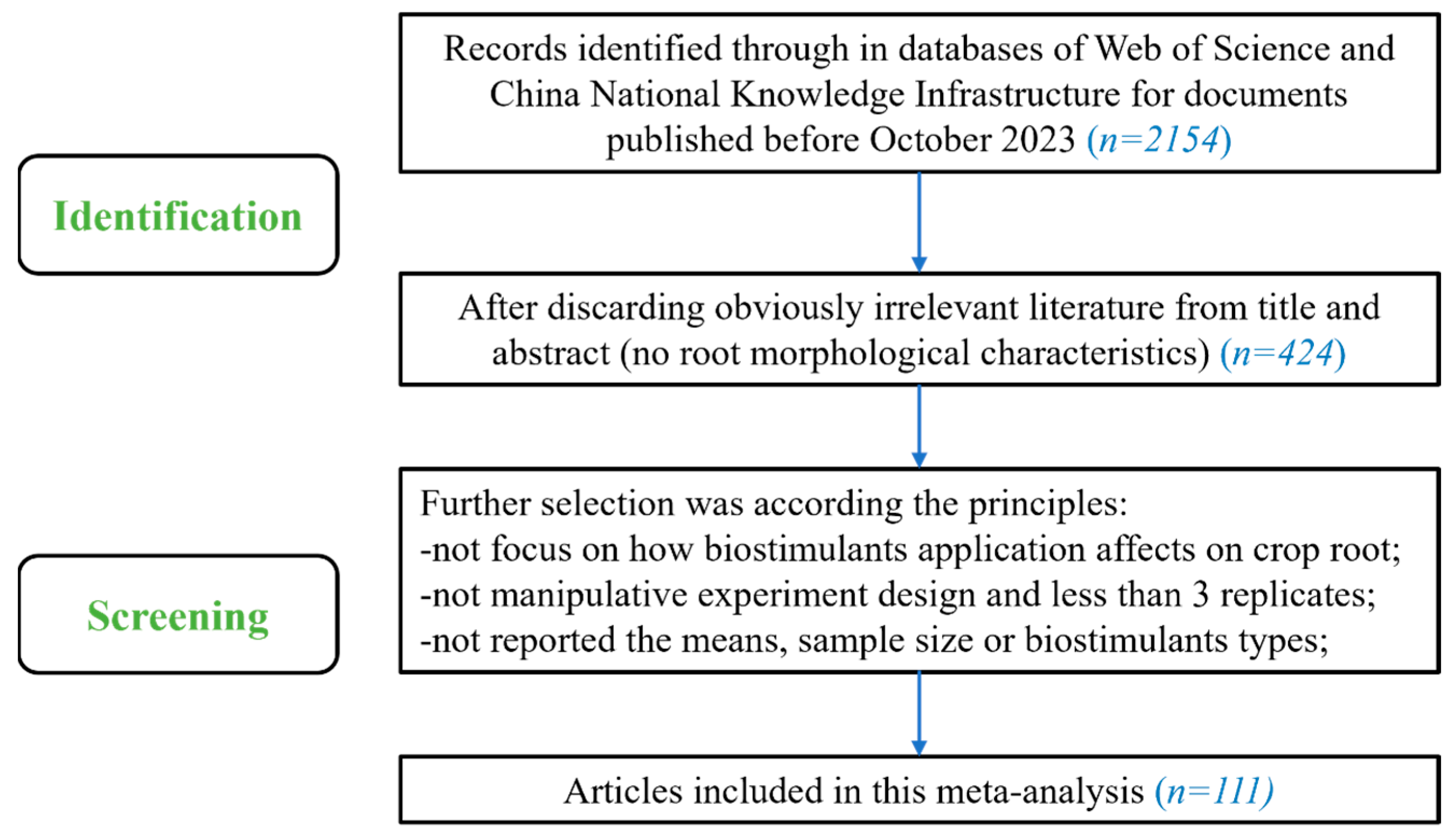
To investigate root morphology formation under biostimulant applications, a literature survey of peer-reviewed publications was undertaken using the “China National Knowledge Infrastructure (CNKI)” (http://www.cnki.net/) and the “Web of Science” (http://www.webofknowledge.com/). Data were collected between January 2000 and October 2023 from these two databases. Search terms included “biostimulants” or “plant biostimulants” and “root length” or “root morphology” or “root architecture”. The selected publications were screened based on the following criteria: (I) At least one comparison across treatments in the experimental design includes biostimulant application (treatment group) and non-biostimulant application (control group). (II) The biostimulant types used in the experiments are clearly described. (III) At least one root morphology index is provided, such as root biomass, root length or root volume. (IV) If results are reported for different growth stages, only data of the final stage are included. (V) Mean values and sample size could be extracted from this study; at the missing standard deviation (SD) or standard error (SE), one-tenth of the mean value was used instead [37]. Further details on the literature search and basic information on the selected studies are shown in Figure A1. Based on these criteria, a total of 111 publications at 70 sites (Figure 1a) and with 376 observations were finally selected (Figure A1, Figure A2 and Figure A3). The literature used in this meta-analysis can be found in the Supplementary Materials.
From these publications, we extracted means, SDs and sample sizes of dependent variables of the control and biostimulant application treatments. The software of GetData Graph Digitizer 2.25 (http://getdata-graph-digitizer.com) was used to extract the data presented in figures, tables and text. We recorded detailed information of each publication on crop species, morphology characteristics of the root systems (i.e., root biomass (RB), primary root length (PRL), root activity (RA), root volume (RV), total root length (TRL), root diameter (RD), root-to-shoot ratio (RSR), root surface (RSA), root tips (RT) and root forks (RF)), biostimulant types (i.e., fulvic acid, humic acid, amino acids, chitosan, seaweed extracts, protein hydrolysate), biostimulant application methods (i.e., solid, application, foliar application or solution application), the application rates of biostimulants and experimental methods (i.e., field and laboratory experiments) and the crop types (i.e., grains, orchards, vegetables and other crop), and only these parameters were collected and used in the meta-analysis. The detailed information of these empirical studies was identified and is listed in Table A1.

2.2. Data Analysis

The meta-analysis was conducted in the OpenMEE software 2016 [38,39,40]. The ln-transformed response ratios (lnRR) were used to calculate effect sizes and to quantify crop root morphology impacts of biostimulant applications. For each observation, the lnRR was defined by using Equation (1):
l n R R = l n ( X t / X c )   = l n ( X t ) l n ( X c )
where Xt and Xc indicated the mean values of the response variables of biostimulant applications and control plots, respectively. The OpenMEE software was used to calculate the lnRR and 95% bootstrap confidence interval (CI) values. Similar to previous studies [39,40], the lnRR of biostimulant applications was calculated for each root fraction with 999 iterations in the restricted maximum likelihood (REML) random effects model. When the bootstrap CI did not overlap with zero, the effects of biostimulant applications were indicated to be significant at p < 0.05 [41]. The variance (vi) of each individual lnRR was estimated by Equation (2):
v i = S t 2 N t X t 2 + S c 2 N c X c 2
where St and Sc represent the SD values of treatment and control plots, respectively; and Nt and Nc represent the sample size of treatment and control plots, respectively. In addition, the weighting factor (ωi) was measured as the inverse of the pooled variance (1/vi) in each study. The weighted lnRR was calculated by Equation (3):
ln R R ¯ = ( l n R R i ω i )   ω i
where the ωi and lnRRi indicated the weight and effect size from the comparison between treatments and controls, respectively. If the CI of the weighted lnRR did not cross zero, the difference between treatment and control was significant. Positive values indicated that biostimulant applications significantly increase the root fraction, whereas negative values indicated a decrease. The relative variance contribution ratio (RC) was calculated based on the Test for Heterogeneity of Moderators (Qm) in this model [38].
For ease of description and understanding, Equation (4) was used to convert the weighted lnRR into the effect size:
E f f e c t   s i z e = e ln R R ¯ 1 100 %

2.3. Publication Bias Test

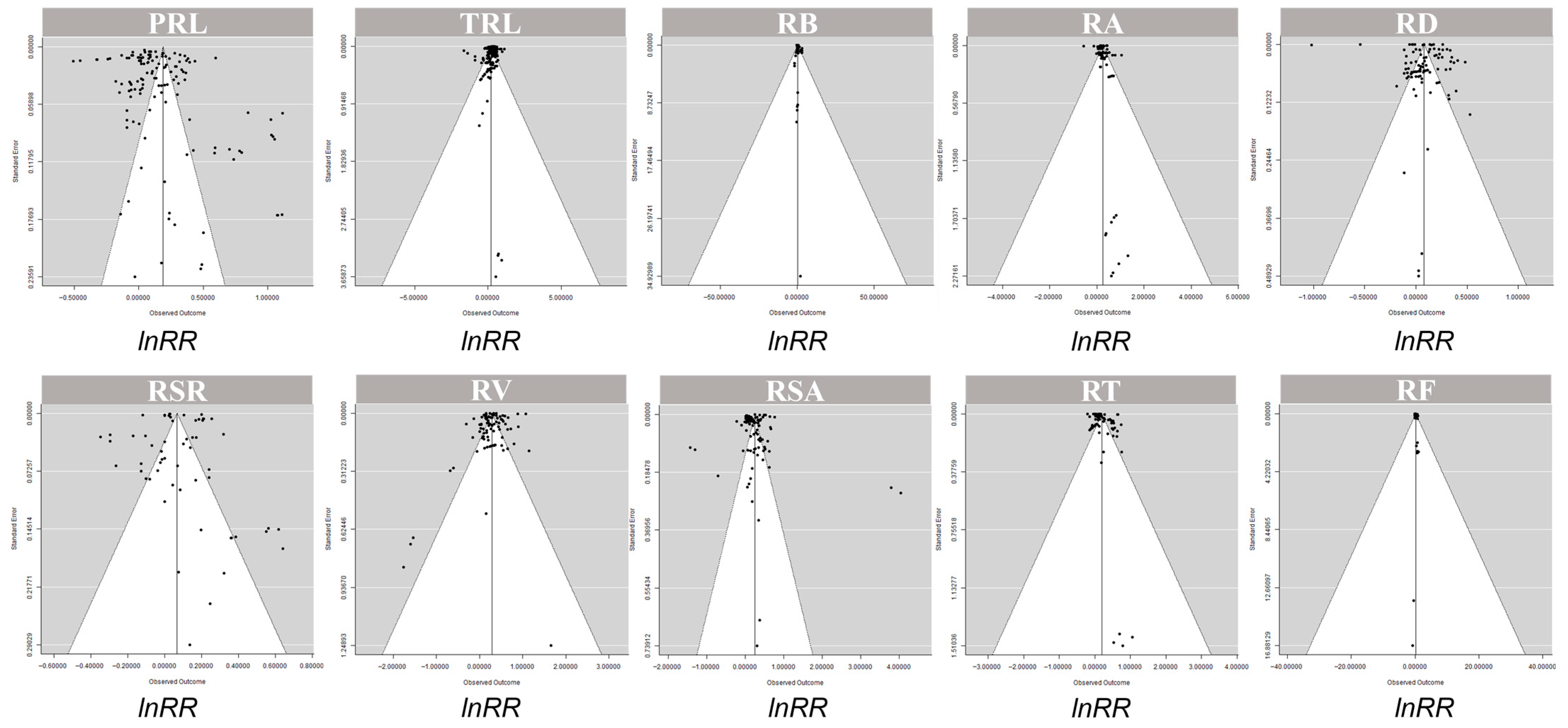
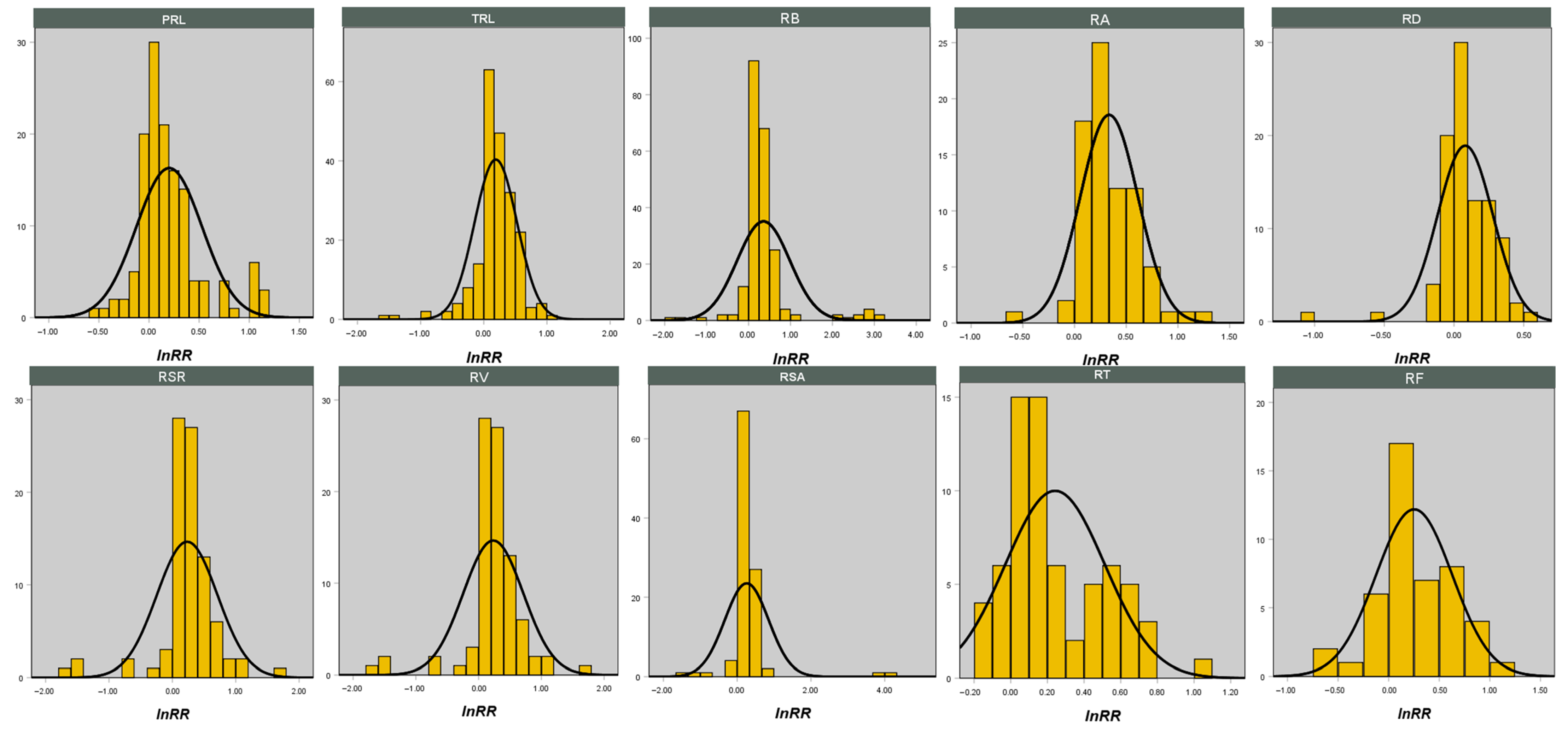
To ensure that the results are credible [41,42], the OpenMEE software was used for sensitivity and fail-safe number analysis of each comparison. If fail-safe numbers were greater than 5n + 10 (n indicates the number of studies included in the meta-analysis), a small publication bias was encountered (Table A1), indicating that the results were reliable [40]. Finally, funnel plots and normal distribution plots were generated in OpenMEE and SPSS software (version 25.0, SPSS Inc., Chicago, IL, USA). The detailed plots are shown in Figure A2 and Figure A3.

2.4. Statistical Analysis

The OpenMEE software was used in each group and factor to analyze the effect sizes on root morphology, with statistical significance considered when p < 0.05. Specifically, we used the factor as a covariate and lnRR as the dependent variable in the meta-regression using the REML mixed-effects model with 999 iterations in OpenMEE. Furthermore, the “maps” and “ggplot2” packages were used to create the site spatial distribution in R (version 3.5.1; R Foundation for Statistical Computing, Vienna, Austria). The data and charts were analyzed and drawn by Microsoft Excel 2021 (Redmond, WA, USA) and Origin 2021 (OriginLab, Northampton, MA, USA). Various factors influencing crop root fractions under biostimulant applications were explored using the random forest analysis of the “randomForest”, “rfPermute” and “tidyverse” packages in the R software (version 3.5.1).

3. Results

3.1. Overall Effects of Crops Root Morphology Fractions Under Biostimulant Applications

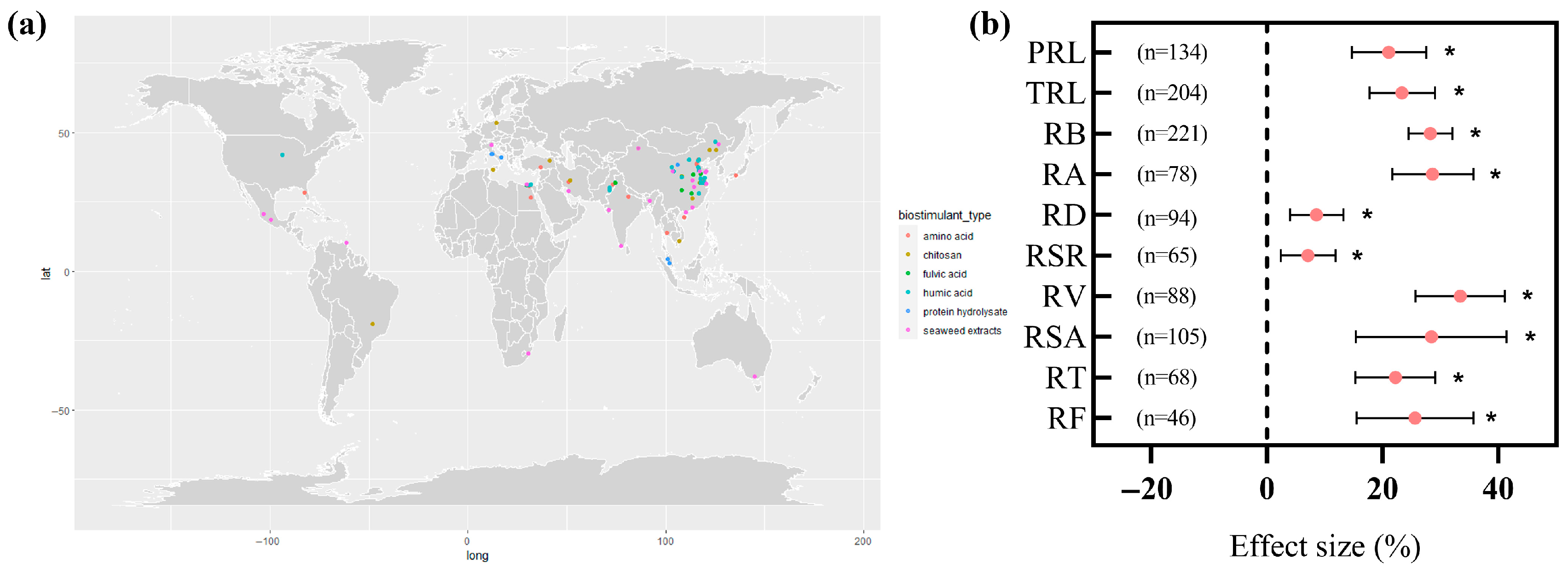
To elucidate the overall effects of biostimulant applications on crop root morphology, we first examined the geographical distribution of relevant studies (Figure 1). Most investigations have been conducted in Asia and Europe, with fewer reports from the Americas, Africa, and Oceania (Figure 1a). On average, across all datasets, biostimulant treatments significantly increased the primary root length (14.7%), total root length (17.7%), root biomass (24.5%), root activity (21.7%), root diameter (4.0%), root-to-shoot ratio (2.4%), root volume (25.7%), root surface (15.6%), root tips (15.4%), and root forks (15.6%) compared with non-biostimulant fertilization treatments (Figure 1b; Table A1). Overall, biostimulant applications exerted significant positive effects on root morphological development.

3.2. Effects of Application Methods and Biostimulant Types on Crop Root Morphology

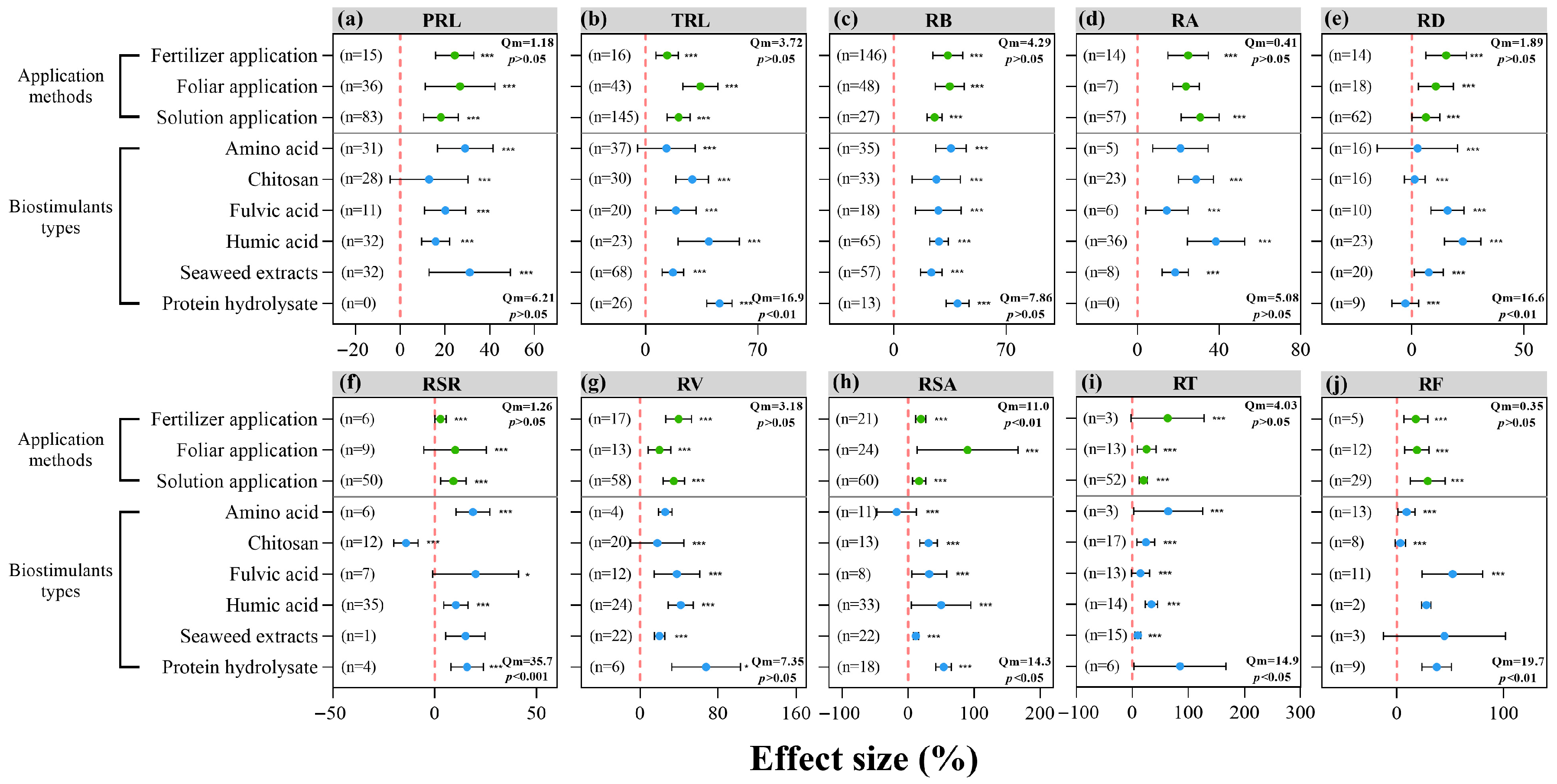
Given the total significant improvements in root morphology under biostimulant applications, we subsequently investigated whether these responses vary across different application methods and types of biostimulants (Figure 2). Among different application methods of biostimulants, fertilizer application and solution application had more significant effects on root morphological traits compared to foliar fertilization. The effect sizes of root activity and root volume under solid fertilizer application were 1.04 and 2.01 times those under foliar application, respectively, whereas solution application resulted in 1.28- and 1.77-times higher effects. Moreover, root surface responses to biostimulant applications were significantly affected by the application method. In addition to application methods, root responses differed substantially among biostimulant types. Specifically, the total root length, root diameter, root-to-shoot ratio, root surface, root tips, and root forks were all significantly influenced by biostimulant types (Figure 2). Among all biostimulants types, humic acid consistently enhanced all root traits, demonstrating the most pronounced growth-promoting effects, whereas chitosan showed the weakest and often inconsistent effects. The effect sizes of the primary root length, root activity, root diameter, and root volume under humic acid application were 1.58, 2.33, 4.88, and 1.27 times higher than those under other biostimulants, respectively (Figure 2). Protein hydrolysates also exhibited a strong root growth promoting potential, with the highest effect sizes observed for the total root length (45.9%), root biomass (36.7%), root volume (65.2%), root-to-shoot ratio (53.7%), and root tips (72.8%) (Figure 2). These results indicate that both application methods and biostimulant types are critical determinants of root morphological responses, with humic acid and protein hydrolysates exerting the most consistent and pronounced positive effects, while chitosan was least effective.

3.3. Effects of Experimental Methods and Crop Types on Crop Root Morphology Under Biostimulant Applications

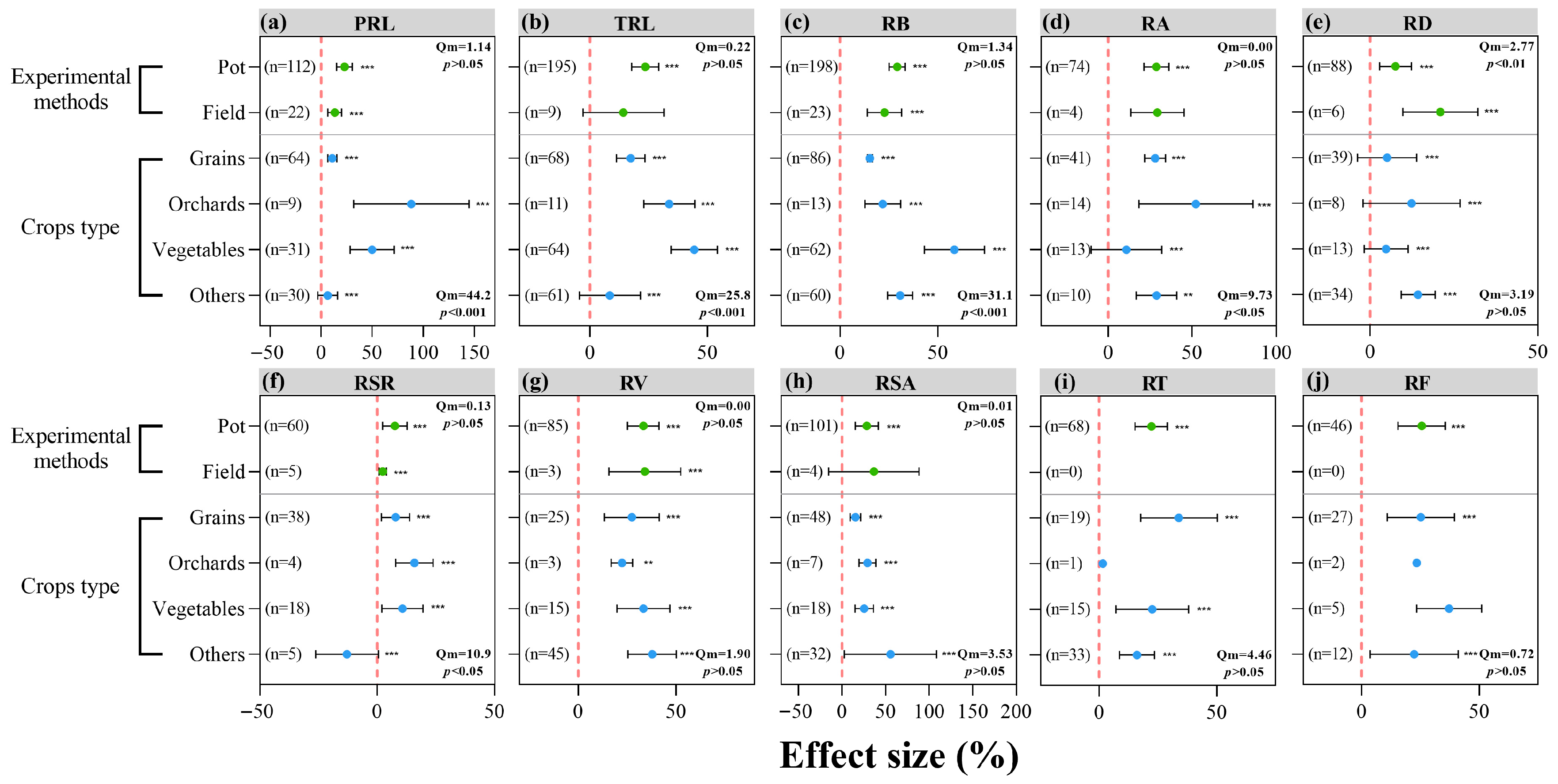
Given that root morphology showed differential responses under various application methods and biostimulant types, we subsequently analyzed the effects of experimental methods and crop types on root traits (Figure 3). Among all experimental methods, pot experiments generally produced more stable and pronounced increases in root morphological traits than field experiments, particularly for the primary root length, total root length, and root biomass, which were 1.71, 1.75, and 1.06 times higher, respectively (Figure 3a–c). Moreover, the experimental method significantly affected the root diameter (p < 0.01; Figure 3e). Additionally, the entire dataset showed that different crop types exhibited varying root growth-promoting responses upon biostimulant applications (Figure 3). In all root fractions, the primary root length, total root length, root biomass, root activity and root-to-shoot ratio (p < 0.05) were significantly influenced by different crop types (Figure 3). While all crop types exhibited positive effects, vegetable crops showed the greatest enhancement in root biomass, whereas grain crops displayed the lowest response (Figure 3). These results demonstrate that both the experimental environment and crop type substantially modulate the root growth-promoting effects of biostimulants, with pot experiments and vegetable crops showing the strongest responses (Figure 3).

3.4. Effects of Biostimulant Doses on Root Growth and Morphology

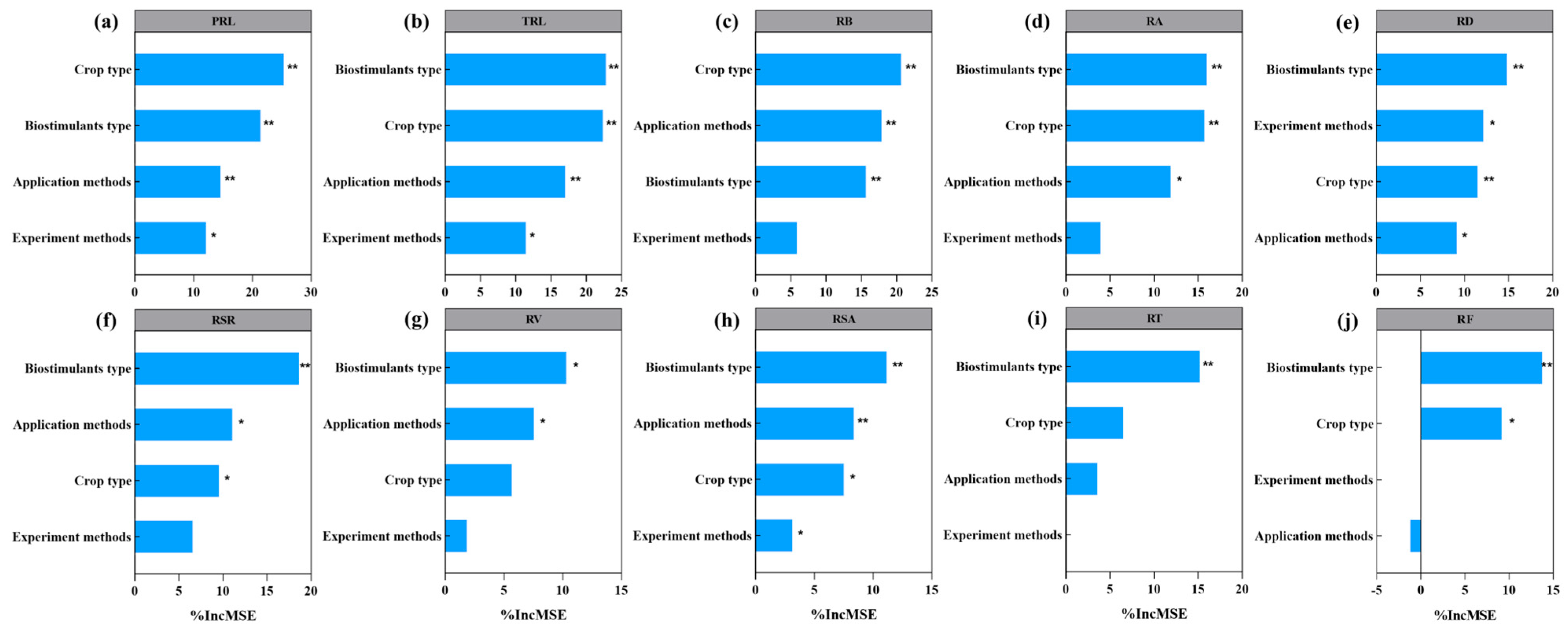
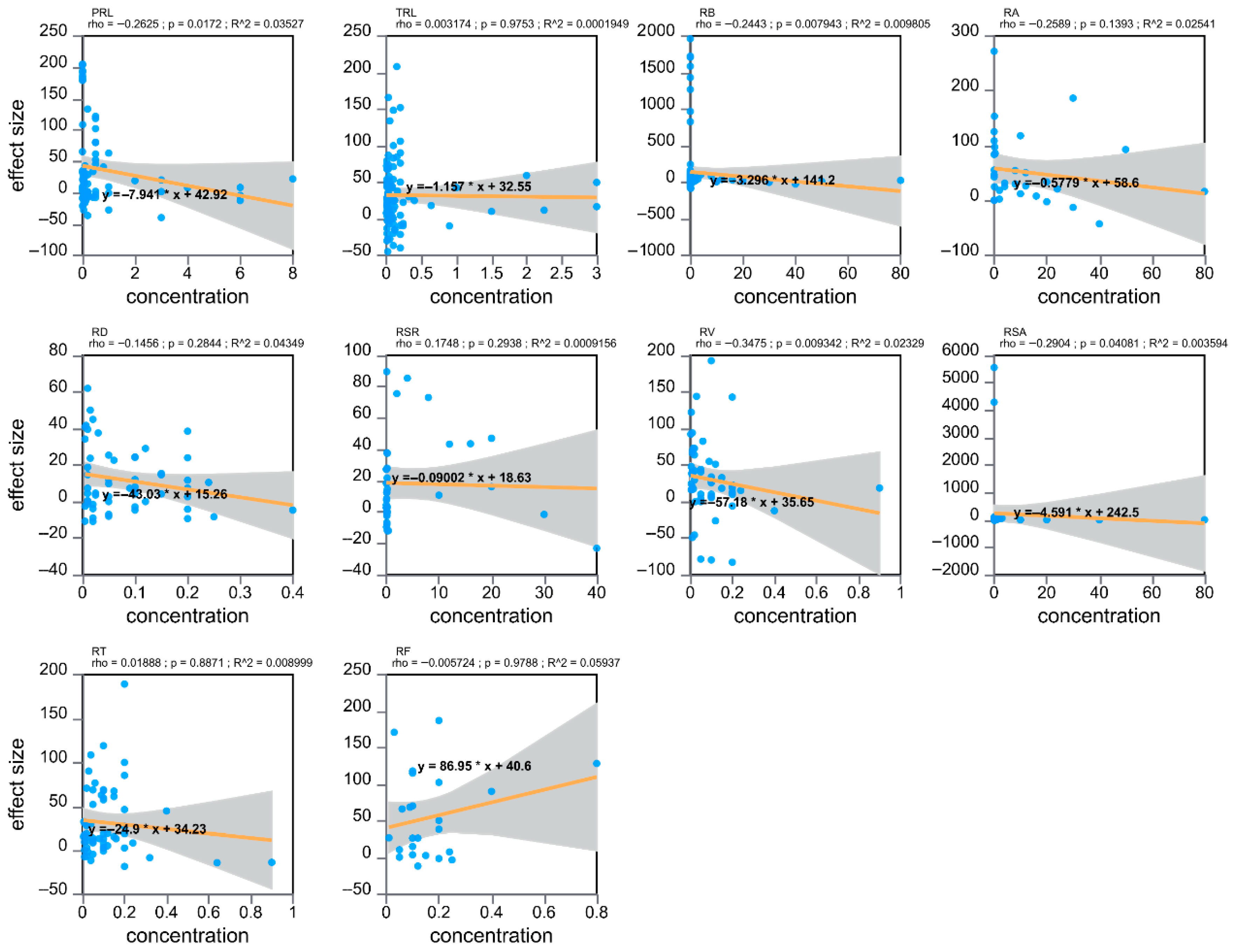
Root morphological responses also depended on the biostimulant dosage, exhibiting a clear linear relationship with application concentration (Figure 4). All root parameters, except root forks, declined as the biostimulant concentration increased. In particular, the primary root length, root biomass, root volume, and root surface area decreased significantly with increasing doses of biostimulants. In addition to this linear dose–response relationship, random forest analysis revealed that several other factors also contributed to the variations in root morphology under biostimulant applications (Figure 5). The application method, biostimulant type, experimental method, and crop type were all identified as significant drivers, with the biostimulant type and crop type exerting the strongest influence (Figure 5; Table A2). Specifically, biostimulant types significantly affected the total root length, root activity, root diameter, root-to-shoot ratio, root volume, root surface area, root tips, and root forks, while crop types strongly influenced the primary root length and root biomass. Moreover, the primary root length, total root length, root diameter, and root surface area were jointly shaped by multiple factors, including the biostimulant type, crop type, application method, and experimental method. By contrast, experimental methods exerted comparatively weaker effects on root morphology (Figure 5; Table A2). These findings indicated that root responses to biostimulants are not only dose-dependent but are also predominantly shaped by the biostimulant and crop type, whereas the application and experimental methods exert comparatively minor effects.

4. Discussion

4.1. Biostimulant Application Significantly Enhances Crop Root Morphological Traits

Consistent with our first hypothesis, this meta-analysis demonstrated that biostimulant application significantly enhanced a wide range of root morphological traits across diverse crop species. These include the primary root length, total root length, root biomass, root activity, root diameter, root-to-shoot ratio, root volume, root surface area, and the number of root tips and forks (Figure 1). This enhancement may be related to the dual role of biostimulants in mitigating environmental stresses [10,43] and directly stimulating root development [31,44,45]. The underlying mechanisms can be broadly categorized into direct physiological effects and indirect regulatory effects mediated through soil microorganisms.
As the primary interface between plants and the soil environment, roots represent the first point of contact with applied biostimulants and are highly sensitive to bioactive compounds present in the rhizosphere. Biostimulants derived from diverse sources—including protein hydrolysates, organic waste extracts, and microalgal materials [46,47,48]—contain various active molecules such as amino acids, peptides, and phytohormones. These compounds can be directly absorbed by roots and function as metabolic activators and signaling molecules that stimulate elongation and branching. For example, indole-3-acetic acid (IAA) has been identified in humic acid and algal biostimulants [48,49]. These phytohormones are believed to significantly promote plant growth, particularly the formation of root systems. In addition to their direct physiological effects, biostimulants effectively alleviate multiple forms of biotic and abiotic stress in plants [10]. Under adverse conditions such as soil acidification or nutrient deficiency, root growth is often severely inhibited [50]. The presence of biostimulants effectively improves the root growth environment, enabling normal root development. Simultaneously, by increasing the root surface area, they enhance nutrient absorption, thereby significantly promoting plant growth.
Plant hormone biosynthesis and the colonization of beneficial rhizobacteria are recognized as two interconnected regulatory pathways that govern root development in higher plants [51,52]. Research has demonstrated that rhizosphere microbial communities play an active role in regulating root growth and nutrient uptake. Among their multifaceted functions, these microorganisms are capable of synthesizing plant hormones, thereby directly contributing to the promotion of root development [53,54]. Application of biostimulants drives a significant reassembly of the rhizosphere microbial community. This microbial reshaping alters the rhizosphere microenvironment, which in turn modulates root system architecture [31,55]. Enrichment of beneficial root-associated microorganisms is often accompanied by elevated levels of plant hormones, which in turn promote root growth. Conversely, root-associated microbes utilize root exudates—including plant hormones—as carbon and nitrogen sources, as well as signaling molecules, to facilitate the targeted recruitment of beneficial microbial populations [56,57]. This bidirectional communication between roots and microbes establishes a feedback loop that sustains enhanced root development and rhizosphere functionality.
In summary, biostimulants promote plant root growth through direct action of bioactive compounds, alleviation of stress-induced root inhibition, and indirect regulation of rhizosphere hormone networks and microbial networks.

4.2. Different Regulators of the Root Fractions Formation by Biostimulants Application

Consistent with hypothesis (II), the present global meta-analysis demonstrated that the extent of root morphological responses to biostimulant applications differed across studies and was largely influenced by key regulatory factors, particularly the biostimulant type and crop species (Figure 2 and Figure 3). For instance, walnuts exhibit different responses to the application of various biostimulants [35], and different crop species show variation under identical biostimulant application conditions [36]. The random forest model further revealed that the biostimulant type was the most influential factor affecting the effect size of biostimulant applications on root morphological traits (Figure 5). Different biostimulants exert varying regulatory effects on crops after application. Apparently, the appropriate type of biostimulant should be selected for different crop cultivation systems based on the anticipated use requirements and objectives.
In this context, humic acid exhibited the greatest effect size on root morphological traits among all tested biostimulants (Figure 2). Previous studies have suggested that humic substances, primarily derived from the decomposition of organic matter and regarded as “living” organic carbon [58], can effectively stimulate the expression of IAA synthesis in plants [49]. This hormonal activation may account for the substantial enhancement in root morphological responses observed under humic acid application in the present meta-analysis (Figure 2). Although humic acid demonstrated relatively good root growth-promoting effects in this study, further research is needed to determine whether it exhibits significant promotion in all crop growth environments and for which crops it is the optimal type of biostimulant. In addition to the biostimulant type, crop type-specific effects on root fractions were observed due to inherent differences in biomass allocation and heritable root characteristics [59]. In this meta-analysis, crop types were categorized into grains, orchards, vegetables, and others to evaluate their influence on the effect size of biostimulant applications (Figure 3), particularly on differences in biomass and heritable traits [59]. Among all groups, orchard and vegetable crops exhibited the greatest effect sizes, particularly for the primary and total root length (Figure 3a,b). Generally, these crops require higher fertilizer inputs and tend to develop relatively shallower root systems compared with grain and other crop types [60,61]. Consequently, biostimulant applications produced more pronounced effects on root morphological traits in orchard and vegetable crops. These findings suggest that biostimulant treatments are more effective in enhancing specific root fractions in crops with high nutrient demand and limited root depth.
Management practices related to biostimulant use, including experimental design and application methods, can also influence the effect size of root morphological traits (Figure 2 and Figure 3). Compared with foliar application, both soil application and solution applications produced larger effect sizes, particularly for root activity and root volume (Figure 2d,g). These differences are mainly attributed to the fact that foliar fertilization is more affected by environmental conditions such as temperature and light intensity, and the mobility of nutrients is limited by leaf surface characteristics [62]. In contrast, solid fertilizer and solution applications allow biostimulants to directly interact with plant roots, thereby achieving stronger effects on root development. These findings indicate that foliar application should be minimized and solid- or solution-based soil application methods should be prioritized to maximize root growth promotion in plantation systems upon biostimulant applications. Furthermore, the application method significantly contributed to the variations in specific root morphological traits (Figure 5). Pot experiments exhibited greater effect sizes for the primary and total root length, root biomass, and root-to-shoot ratio compared with field experiments, likely due to the more controlled conditions and easier management [63]. In contrast, field applications of biostimulants are often subject to environmental fluctuations and potential nutrient losses, which can reduce their effectiveness [64]. Nevertheless, field studies have also reported substantial yield improvements following biostimulant applications [9], indicating that the efficacy of biostimulant applications can be maintained under practical conditions at optimized management. In addition, increasing biostimulant concentrations tended to suppress most root traits except root forks, with significant reductions observed in root biomass, root volume, and root surface area (Figure 4). Such inhibitory patterns have been reported, e.g., in tomato [65] and tuberose [66]. These results indicate that an appropriate concentration is a prerequisite for achieving the optimal efficacy of biostimulant applications. Collectively, the present meta-analysis underscores that the effective use of biostimulants in agricultural systems depends on selecting suitable application methods, biostimulant types, and crop-specific management strategies to maximize root growth promotion.

4.3. Limitations and Implications

Several limitations of this meta-analysis highlight existing knowledge gaps in understanding root morphological responses to biostimulant applications. First, the available literature is geographically biased, with most studies concentrated in specific regions, resulting in an uneven global distribution of case studies, and differences in climate conditions, soil types, and growing environments resulting from geographical variations all influence the effectiveness of biostimulant application. Second, this meta-analysis did not account for soil nutrient conditions, which limits the generalization of the present findings. Previous research has shown that biostimulants exhibit the highest efficacy under suboptimal growth conditions, promoting crop growth more effectively in nutrient-depleted than in fertile soils [9,67]. Meanwhile, the positive impact of biostimulant application was amplified in plants exposed to abiotic or biotic stress, indicating that stressed plants are more responsive to biostimulant-mediated regulation. Therefore, environmental parameters such as soil fertility and environmental stress intensity should be integrated into future assessments of plant performance upon biostimulant applications. Third, compared with pot experiments, the limited number of field trials constrains our ability to accurately evaluate biostimulant effectiveness under real-world conditions [63]. More field-based evidence is needed to validate the practical benefits of biostimulant applications on root system development. In addition, although an increasing number of studies report that composite biostimulants produce synergistic growth-promoting effects, the mechanisms underlying the interactions among different active ingredients remain poorly understood [68]. Finally, inconsistencies persist regarding the optimal timing and frequency of biostimulant application across different crop growth stages, which requires further systematic investigation.
Collectively, these findings emphasize the need to integrate biostimulant research with multifactorial experimental approaches that consider soil conditions, crop species, application strategies, and biostimulant formulations including mechanistic studies. Such efforts will help maximize the root growth potential of crops and enhance the practical efficiency of biostimulant use in sustainable agricultural systems.

5. Conclusions

This global meta-analysis demonstrates that biostimulant applications significantly enhance root morphological traits across diverse crop species through both direct physiological stimulation and indirect rhizosphere-mediated regulation. The improvement in root development can be primarily attributed to bioactive compounds, such as amino acids and phytohormones, and their interactions with soil microbial communities. The extent of these effects, however, varies with biostimulant type, crop species, and management practices. Among all biostimulants, humic acid and protein hydrolysates exhibited the strongest root growth-promoting effects, while orchard and vegetable crops showed greater responsiveness than grain crops. Soil application and solution applications were more effective than foliar treatments, underscoring the importance of the direct root contact of biostimulants. Nevertheless, excessive concentrations of biostimulants reduce several root traits, highlighting the need for dosage optimization for biostimulant applications. Despite certain limitations, such as geographic bias, limited field data, and lack of soil condition integration as well as mechanistic information, this study emphasizes that context-specific management, including appropriate biostimulant selection, application strategies, and environmental considerations, is essential for maximizing root system development and advancing sustainable crop production in biostimulant applications.

Supplementary Materials

The following supporting information can be downloaded at: https://www.mdpi.com/article/10.3390/agronomy16070743/s1. The list of the 111 papers from which the data were extracted for this meta-analysis.

Author Contributions

Y.W.: formal analysis, writing—original draft. J.Y.: formal analysis. H.X. and H.R.: writing—review and editing. L.Z., Y.S., X.S. and F.Z.: conceptualization, funding acquisition. Y.Z.: formal analysis—original draft, writing—review and editing. All authors have read and agreed to the published version of the manuscript.

Funding

This work was supported by the National Key Research and Development Program of China (2023YFD1901204), the Open Research Fund Program of the State Key Laboratory of Nutrient Use and Management (KF2024-8), the Research on Quality Improvement and Efficiency Enhancement Technologies and Product Development for Citrus (YTH-4320-WB-FW-2023-004138-00) and the Academician Expert Workstation (YSZJGZZ-2022034).

Data Availability Statement

All data are contained within the article.

Conflicts of Interest

Authors Lingxiang Zhou, Yucui Sun and Jiawei Yang were employed by Yunnan Yuntianhua Co., Ltd. The remaining authors declare that the research was conducted in the absence of any commercial or financial relationships that could be construed as a potential conflict of interest.

Appendix A

Table A1. Summary of effect sizes for plant root morphology and its fractions in response to biostimulant application, reporting global estimate, its 95% confidence interval, p-value, number of observations (n), total between-study heterogeneity (τ2), and fail-safe number.
Root FractionnEstimateLower BoundUpper Boundp-Valueτ2Fail-Safe Number
PRL1340.1900.1370.243<0.0010.092207,351
TRL2040.2090.1630.255<0.0010.0884,173,067
RB2210.2480.2190.278<0.0010.0302,231,608
RA780.2510.1960.305<0.0010.043302,053
RD940.0810.0390.124<0.0010.0396416
RSR650.0680.0240.112<0.0010.02848,010
RV880.2870.2290.345<0.0010.0644,024,349
RSA1050.2470.1450.348<0.0010.2712,449,068
RT680.1990.1430.256<0.0010.0481,167,188
RF460.2260.1450.306<0.0010.0521,496,582
Abbreviations: PRL, primary root length; TRL, total root length; RB, root biomass; RA, root activity; RD, root diameter; RSR, root-to-shoot ratio; RV, root volume; RSA, root surface; RT, root tips; RF, root forks.
Table A2. The effect test summary of various factors on each effect size of root fractions under the moderators model (permuted meta-regression). Qm represents the total heterogeneity among covariate levels explained by the model, and τ2 represents total between-study heterogeneity.
ModeratorsQmDFp-Valueτ2
PRLFertilizer application38.6114<0.0010.018
Foliar application13.7135<0.0010.138
Solution application24.4082<0.0010.087
Amino acids26.2330<0.0010.069
Chitosan2.0327<0.0010.170
Fulvic acid21.6210<0.0010.012
Humic acid28.1431<0.0010.024
Seaweed extracts13.8431<0.0010.154
Protein hydrolysate////
Grains25.6463<0.0010.024
Orchards15.118<0.0010.200
Vegetables29.6830<0.0010.159
Others1.6829<0.0010.063
Field experiment16.8221<0.0010.019
Pot experiment40.89111<0.0010.109
TRLFertilizer application15.7615<0.0010.011
Foliar application49.3442<0.0010.058
Solution application37.78144<0.0010.106
Amino acids1.9536<0.0010.228
Chitosan39.8829<0.0010.031
Fulvic acid9.9819<0.0010.036
Humic acid21.6122<0.0010.108
Seaweed extracts28.8167<0.0010.037
Protein hydrolysate190.1125<0.0010.011
Grains37.0567<0.0010.038
Orchards48.8810<0.0010.015
Vegetables111.6763<0.0010.056
Others1.5860<0.0010.167
Field experiment2.6980.9450.001
Pot experiment76.71194<0.0010.091
RBFertilizer application65.6626<0.0010.023
Foliar application76.6347<0.0010.032
Solution application143.40145<0.0010.030
Amino acids70.0734<0.0010.023
Chitosan14.3532<0.0010.084
Fulvic acid17.8417<0.0010.039
Humic acid118.7164<0.0010.020
Seaweed extracts56.0456<0.0010.024
Protein hydrolysate169.0912<0.0010.004
Grains73.1185<0.0010.027
Orchards26.2912<0.0010.018
Vegetables85.1861<0.0010.068
Others112.2059<0.0010.023
Field experiment31.1522<0.0010.024
Pot experiment239.47197<0.0010.031
RAFertilizer application29.4413<0.0010.017
Foliar application63.5060.5620.001
Solution application53.7056<0.0010.056
Amino acids10.8040.3610.004
Chitosan54.7622<0.0010.012
Fulvic acid8.055<0.0010.009
Humic acid38.0135<0.0010.080
Seaweed extracts36.457<0.0010.005
Protein hydrolysate////
Grains102.8740<0.0010.016
Orchards12.4213<0.0010.114
Vegetables0.8912<0.0010.079
Others27.9790.0020.014
Field experiment16.0830.9140.001
Pot experiment73.5073<0.0010.046
RDFertilizer application12.2113<0.0010.021
Foliar application7.8617<0.0010.021
Solution application4.1261<0.0010.048
Amino acids0.0315<0.0010.126
Chitosan0.2815<0.0010.006
Fulvic acid20.349<0.0010.009
Humic acid36.2122<0.0010.022
Seaweed extracts5.4819<0.0010.015
Protein hydrolysate0.938<0.0010.004
Grains1.2038<0.0010.069
Orchards2.867<0.0010.013
Vegetables2.0412<0.0010.009
Others34.9733<0.0010.015
Field experiment15.695<0.0010.011
Pot experiment10.1287<0.0010.040
RSRFertilizer application3.865<0.0010.001
Foliar application0.268<0.0010.014
Solution application8.8249<0.0010.036
Amino acids22.945<0.0010.006
Chitosan19.2611<0.0010.012
Fulvic acid3.6660.0100.033
Humic acid12.7434<0.0010.022
Seaweed extracts////
Protein hydrolysate17.443<0.0010.005
Grains6.7637<0.0010.026
Orchards17.463<0.0010.005
Vegetables6.1417<0.0010.021
Others3.474<0.0010.030
Field experiment9.374<0.0010.001
Pot experiment8.4059<0.0010.031
RVFertilizer application46.2516<0.0010.035
Foliar application13.2712<0.0010.028
Solution application50.7157<0.0010.081
Amino acids66.7130.6590.001
Chitosan1.4619<0.0010.244
Fulvic acid13.0011<0.0010.082
Humic acid56.2623<0.0010.044
Seaweed extracts62.8621<0.0010.005
Protein hydrolysate21.8250.0120.043
Grains18.1824<0.0010.075
Orchards78.7520.0020.001
Vegetables30.2614<0.0010.026
Others48.8944<0.0010.074
Field experiment16.672<0.0010.015
Pot experiment86.1884<0.0010.067
RSAFertilizer application29.7020<0.0010.018
Foliar application7.9123<0.0011.007
Solution application11.9659<0.0010.115
Amino acids1.5510<0.0010.372
Chitosan26.8312<0.0010.029
Fulvic acid6.747<0.0010.084
Humic acid5.9332<0.0010.760
Seaweed extracts40.9321<0.0010.005
Protein hydrolysate123.9817<0.0010.023
Grains28.1047<0.0010.029
Orchards44.796<0.0010.010
Vegetables26.9917<0.0010.029
Others5.2331<0.0010.983
Field experiment1.7730.9840.001
Pot experiment21.40100<0.0010.279
RTFertilizer application4.302<0.0010.130
Foliar application10.7612<0.0010.044
Solution application33.9851<0.0010.042
Amino acids5.282<0.0010.113
Chitosan10.1916<0.0010.069
Fulvic acid3.1612<0.0010.061
Humic acid47.6213<0.0010.023
Seaweed extracts15.1114<0.0010.007
Protein hydrolysate5.5650.8230.042
Grains21.3018<0.0010.068
Orchards////
Vegetables9.5114<0.0010.057
Others19.9232<0.0010.029
Field experiment////
Pot experiment48.2267<0.0010.048
RFFertilizer application10.974<0.0010.007
Foliar application11.9411<0.0010.019
Solution application14.9128<0.0010.081
Amino acids5.3712<0.0010.010
Chitosan1.887<0.0010.003
Fulvic acid18.3010<0.0010.090
Humic acid191.8110.6580.001
Seaweed extracts2.3820.0790.077
Protein hydrolysate37.0880.9850.001
Grains14.1826<0.0010.074
Orchards29.2810.4900.001
Vegetables36.8840.7870.001
Others6.1011<0.0010.024
Field experiment////
Pot experiment30.3445<0.0010.052
Figure A1. The systematic criteria that were applied and the number of unique manuscripts that remained at each stage.
Agronomy 16 00743 g0a1
Figure A2. Funnel diagram of ln-response ratio (lnRR) of plant root morphology and its fractions in response to biostimulant application. Abbreviations: PRL, primary root length; TRL, total root length; RB, root biomass; RA, root activity; RD, root diameter; RSR, root-to-shoot ratio; RV, root volume; RSA, root surface; RT, root tips; RF, root forks.
Agronomy 16 00743 g0a2
Figure A3. Normal distribution of ln-response ratio (lnRR) of plant root morphology and its fractions in response to biostimulants application. Abbreviations: PRL, primary root length; TRL, total root length; RB, root biomass; RA, root activity; RD, root diameter; RSR, root-to-shoot ratio; RV, root volume; RSA, root surface; RT, root tips; RF, root forks.
Agronomy 16 00743 g0a3

References

  1. Delitte, M.; Caulier, S.; Bragard, C.; Desoignies, N. Plant microbiota beyond farming practices: A review. Front. Sustain. Food Syst. 2021, 5, 624203. [Google Scholar] [CrossRef] [Scilit]
  2. Guo, J.H.; Liu, X.J.; Zhang, Y.; Shen, J.L.; Han, W.X.; Zhang, W.F.; Christie, P.; Goulding, K.W.T.; Vitousek, P.M.; Zhang, F.S. Significant acidification in major Chinese croplands. Science 2010, 327, 1008–1010. [Google Scholar] [CrossRef] [Scilit]
  3. Uddin, M.K.; Saha, B.K.; Wong, V.N.L.; Patti, A.F. Organo-mineral fertilizer to sustain soil health and crop yield for reducing environmental impact: A comprehensive review. Eur. J. Agron. 2025, 162, 127433. [Google Scholar] [CrossRef] [Scilit]
  4. Halpern, M.; Bar-Tal, A.; Ofek, M.; Minz, D.; Muller, T.; Yermiyahu, U. The use of biostimulants for enhancing nutrient uptake. Adv. Agron. 2015, 30, 141–174. [Google Scholar] [CrossRef] [Scilit]
  5. Jiang, Y.K.; Yue, Y.Z.; Wang, Z.X.; Lu, C.C.; Yin, Z.Y.; Li, Y.; Ding, X.H. Plant biostimulant as an environmentally friendly alternative to modern agriculture. J. Agric. Food Chem. 2024, 72, 5107–5121. [Google Scholar] [CrossRef] [Scilit]
  6. Calvo, P.; Nelson, L.; Kloepper, J.W. Agricultural uses of plant biostimulants. Plant Soil 2014, 383, 3–41. [Google Scholar] [CrossRef] [Scilit]
  7. du Jardin, P. Plant biostimulants: Definition, concept, main categories and regulation. Sci. Hortic. 2015, 196, 3–14. [Google Scholar] [CrossRef] [Scilit]
  8. Quille, P.; Kacprzyk, J.; O’Connell, S.; Ng, C.K.Y. Reducing fertiliser inputs: Plant biostimulants as an emerging strategy to improve nutrient use efficiency. Discov. Sustain. 2025, 16, 128. [Google Scholar] [CrossRef] [Scilit]
  9. Li, J.; Van Gerrewey, T.; Geelen, D. A meta-analysis of biostimulant yield effectiveness in field trials. Front. Plant Sci. 2022, 13, 836702. [Google Scholar] [CrossRef] [Scilit]
  10. Ma, Y.; Freitas, H.; Dias, M.C. Strategies and prospects for biostimulants to alleviate abiotic stress in plants. Front. Plant Sci. 2022, 13, 1024243. [Google Scholar] [CrossRef] [Scilit]
  11. Khoulati, A.; Ouahhoud, S.; Taibi, M.; Ezrari, S.; Merah, O.; Hakkou, A.; Addi, M.; Maleb, A.; Saalaoui, E. Harnessing biostimulants for sustainable agriculture: Innovations, challenges, and future prospects. Discov. Agric. 2025, 3, 56. [Google Scholar] [CrossRef] [Scilit]
  12. Giehl, R.F.H.; Gruber, B.D.; von Wirén, N. It’s time to make changes: Modulation of root system architecture by nutrient signals. J. Exp. Bot. 2014, 64, 769–778. [Google Scholar] [CrossRef] [Scilit]
  13. keya Tudu, C.; Dey, A.; Pandey, D.K.; Panwar, J.S.; Nandy, S. Role of plant derived extracts as biostimulants in sustainable agriculture: A detailed study on research advances, bottlenecks and future prospects. In New and Future Developments in Microbial Biotechnology and Bioengineering; Elsevier: Amsterdam, The Netherlands, 2022; pp. 159–179. [Google Scholar] [CrossRef] [Scilit]
  14. Khalid, F.; Rasheed, Y.; Asif, K.; Ashraf, H.; Maqsood, M.F.; Shahbaz, M.; Zulfiqar, U.; Sardar, R.; Haider, F.U. Plant biostimulants: Mechanisms and applications for enhancing plant resilience to abiotic stresses. J. Soil Sci. Plant Nutr. 2024, 22, 6641–6690. [Google Scholar] [CrossRef] [Scilit]
  15. Deolu-Ajayi, A.O.; van der Meer, I.M.; van der Werf, A.; Karlova, R. The power of seaweeds as plant biostimulants to boost crop production under abiotic stress. Plant Cell Environ. 2022, 45, 2537–2553. [Google Scholar] [CrossRef] [Scilit]
  16. Ancín, M.; Soba, D.; Picazo, P.J.; Gámez, A.L.; Le Page, J.F.; Houdusse, D.; Aranjuelo, I. Optimizing oilseed rape growth: Exploring the effect of foliar biostimulants on the interplay among metabolism, phenology, and yield. Physiol. Plant. 2024, 175, e14561. [Google Scholar] [CrossRef] [Scilit]
  17. Nardi, S.; Pizzeghello, D.; Schiavon, M.; Ertani, A. Plant biostimulants: Physiological responses induced by protein hydrolyzed-based products and humic substances in plant metabolism. Sci. Agric. 2016, 73, 18–23. [Google Scholar] [CrossRef] [Scilit]
  18. Toscano, S.; Ferrante, A.; Branca, F.; Romano, D. Enhancing the quality of two species of baby leaves sprayed with moringa leaf extract as biostimulant. Agronomy 2021, 11, 1399. [Google Scholar] [CrossRef] [Scilit]
  19. Gajula, P.; Dhillon, J.; Sharma, R.K.; Bryant, C.; Bheemanahalli, R.; Reed, V.; Larson, E. Evaluating the impact of biostimulants at variable nitrogen rates in corn production. Eur. J. Agron. 2025, 167, 127554. [Google Scholar] [CrossRef] [Scilit]
  20. Rayorath, P.; Jithesh, M.N.; Farid, A.; Khan, W.; Palanisamy, R.; Hankins, S.D.; Critchley, A.T.; Prithiviraj, B. Rapid bioassays to evaluate the plant growth promoting activity of Ascophyllum nodosum (L.) Le Jol. using a model plant, Arabidopsis thaliana (L.) Heynh. J. Appl. Phycol. 2008, 20, 423–429. [Google Scholar] [CrossRef] [Scilit]
  21. Craigie, J.S. Seaweed extract stimuli in plant science and agriculture. J. Appl. Phycol. 2011, 23, 371–393. [Google Scholar] [CrossRef] [Scilit]
  22. Hamid, B.; Zaman, M.; Farooq, S.; Fatima, S.; Sayyed, R.Z.; Baba, Z.A.; Sheikh, T.A.; Reddy, M.S.; El Enshasy, H.; Gafur, A.; et al. Bacterial plant biostimulants: A sustainable way towards improving growth, productivity, and health of crops. Sustainability 2021, 13, 2856. [Google Scholar] [CrossRef] [Scilit]
  23. Turner, T.R.; James, E.K.; Poole, P.S. The plant microbiome. Genome Biol. 2013, 14, 209. [Google Scholar] [CrossRef] [Scilit]
  24. Fan, X.Y.; Ge, A.H.; Qi, S.S.; Guan, Y.F.; Wang, R.; Yu, N.; Wang, E.T. Root exudates and microbial metabolites: Signals and nutrients in plant-microbe interactions. Sci. China-Life Sci. 2025, 68, 2290–2302. [Google Scholar] [CrossRef] [Scilit]
  25. Basile, B.; Rouphael, Y.; Colla, G.; Soppelsa, S.; Andreotti, C. Appraisal of emerging crop management opportunities in fruit trees, grapevines and berry crops facilitated by the application of biostimulants. Sci. Hortic. 2020, 267, 109330. [Google Scholar] [CrossRef] [Scilit]
  26. Petropoulos, S.A. Practical applications of plant biostimulants in greenhouse vegetable crop production. Agronomy 2020, 10, 1569. [Google Scholar] [CrossRef] [Scilit]
  27. Casadesús, A.; Pérez-Llorca, M.; Munné-Bosch, S.; Polo, J. An enzymatically hydrolyzed animal protein-based biostimulant (Pepton) increases salicylic acid and promotes growth of tomato roots under temperature and nutrient stress. Front. Plant Sci. 2020, 11, 953. [Google Scholar] [CrossRef] [Scilit] [PubMed]
  28. Katiyar, D.; Hemantaranjan, A.; Singh, B. Chitosan as a promising natural compound to enhance potential physiological responses in plant: A review. Indian. J. Plant Physiol. 2015, 20, 1–9. [Google Scholar] [CrossRef] [Scilit]
  29. Jindo, K.; Martim, S.A.; Navarro, E.C.; Pérez-Alfocea, F.; Hernandez, T.; Garcia, C.; Aguiar, N.O.; Canellas, L.P. Root growth promotion by humic acids from composted and non-composted urban organic wastes. Plant Soil 2012, 353, 209–220. [Google Scholar] [CrossRef] [Scilit]
  30. Yu, P.; He, X.M.; Baer, M.; Beirinckx, S.; Tian, T.; Moya, Y.A.T.; Zhang, X.C.; Deichmann, M.; Frey, F.P.; Bresgen, V.; et al. Plant flavones enrich rhizosphere Oxalobacteraceae to improve maize performance under nitrogen deprivation. Nat. Plants 2021, 7, 481–499. [Google Scholar] [CrossRef] [Scilit]
  31. Shi, J.; Zhao, B.; Zhao, L.; Zha, Y.; Yu, X.Q.; Yu, B.; Luo, L.T.; Wu, J.G.; Yue, E.R. Facilitating growth of maize (Zea mays L.) by biostimulants: A perspective from the interaction between root transcriptome and rhizosphere microbiome. J. Agric. Food Chem. 2024, 72, 3415–3426. [Google Scholar] [CrossRef] [Scilit]
  32. Jan, M.; Muhammad, S.; Jin, W.C.; Zhong, W.H.; Zhang, S.L.; Lin, Y.J.; Zhou, Y.N.; Liu, J.L.; Liu, H.F.; Munir, R.; et al. Modulating root system architecture: Cross-talk between auxin and phytohormones. Front. Plant Sci. 2024, 15, 1343928. [Google Scholar] [CrossRef] [Scilit]
  33. Xiao, G.H.; Zhang, Y.Z. Adaptive growth: Shaping auxin-mediated root system architecture. Trends Plant Sci. 2020, 25, 121–123. [Google Scholar] [CrossRef] [Scilit]
  34. Klimek-Kopyra, A.; Kliszcz, A.; Slizowska, A.; Kot, D. Application of biostimulants influences shoot and root characteristics of seedlings of winter pea (Pisum sativum L.). Acta Agrobot. 2019, 72, 1771. [Google Scholar] [CrossRef] [Scilit]
  35. Simon, G.; Bujdosó, G.; Cvetkovic, M.; Alp, O.T.; Kithi, L.; Oláh, R.; Ficzek, G.; Végvári, G. Responses of Persian walnut on foliar applications of different biostimulants. Front. Plant Sci. 2023, 14, 1263396. [Google Scholar] [CrossRef] [Scilit]
  36. Zuluaga, M.Y.A.; Monterisi, S.; Rouphael, Y.; Colla, G.; Lucini, L.; Cesco, S.; Pii, Y. Different vegetal protein hydrolysates distinctively alleviate salinity stress in vegetable crops: A case study on tomato and lettuce. Front. Plant Sci. 2023, 14, 1077140. [Google Scholar] [CrossRef] [Scilit]
  37. Shakoor, A.; Shakoor, S.; Rehman, A.; Ashraf, F.; Abdullah, M.; Shahzad, S.M.; Farooq, T.H.; Ashraf, M.; Manzoor, M.A.; Altaf, M.M.; et al. Effect of animal manure, crop type, climate zone, and soil attributes on greenhouse gas emissions from agricultural soils—A global meta-analysis. J. Clean. Prod. 2021, 278, 124019. [Google Scholar] [CrossRef] [Scilit]
  38. Wallace, B.C.; Lajeunesse, M.J.; Dietz, G.; Dahabreh, I.J.; Trikalinos, T.A.; Schmid, C.H.; Gurevitch, J. OpenMEE: Intuitive, open-source software for meta-analysis in ecology and evolutionary biology. Methods Ecol. Evol. 2017, 8, 941–947. [Google Scholar] [CrossRef] [Scilit]
  39. Deng, L.; Peng, C.; Kim, D.-G.; Li, J.; Liu, Y.; Hai, X.; Liu, Q.; Huang, C.; Shangguan, Z.; Kuzyakov, Y. Drought effects on soil carbon and nitrogen dynamics in global natural ecosystems. Earth-Sci. Rev. 2021, 214, 103501. [Google Scholar] [CrossRef] [Scilit]
  40. Hu, Q.J.; Thomas, B.; Powlson, D.; Hu, Y.X.; Zhang, Y.; Xie, J.; Shi, X.J.; Zhang, Y.T. Soil organic carbon fractions in response to soil, environmental and agronomic factors under cover cropping systems: A global meta-analysis. Agric. Ecosyst. Environ. 2023, 355, 108591. [Google Scholar] [CrossRef] [Scilit]
  41. Koricheva, J.; Gurevitch, J.; Mengersen, K.L. Handbook of Meta-Analysis in Ecology and Evolution; Princeton University Press: Princeton, NJ, USA, 2013. [Google Scholar]
  42. Borenstein, M.; Hedges, L.V.; Higgins, J.P.T.; Rothstein, H.R. Introduction to Meta-Analysis; John Wiley and Sons: Chichester, UK, 2009. [Google Scholar] [CrossRef] [Scilit]
  43. Di Sario, L.; Boeri, P.; Matus, J.T.; Pizzio, G.A. Plant biostimulants to enhance abiotic stress resilience in crops. Int. J. Mol. Sci. 2025, 26, 1129. [Google Scholar] [CrossRef] [Scilit]
  44. Qiu, X.Q.; Wang, W.Q.; Yang, J.S.; Li, D.M.; Jiao, J.; Wang, E.T.; Yuan, H.L. Fulvic acid promotes legume-rhizobium symbiosis by stimulating endogenous flavonoids synthesis and secretion. J. Agric. Food Chem. 2024, 72, 6133–6142. [Google Scholar] [CrossRef] [Scilit]
  45. Han, M.; Wang, S.Z.; Wu, L.D.; Feng, J.H.; Si, Y.J.; Liu, X.N.; Su, T. Effects of exogenous L-Asparagine on poplar biomass partitioning and root morphology. Int. J. Mol. Sci. 2022, 23, 13126. [Google Scholar] [CrossRef] [Scilit]
  46. Colla, G.; Nardi, S.; Cardarelli, M.; Ertani, A.; Lucini, L.; Canaguier, R.; Rouphael, Y. Protein hydrolysates as biostimulants in horticulture. Sci. Hortic. 2015, 196, 28–38. [Google Scholar] [CrossRef] [Scilit]
  47. Zhang, X.J.; Yin, J.H.; Ma, Y.; Peng, Y.T.; Fenton, O.; Wang, W.H.; Zhang, W.N.; Chen, Q. Unlocking the potential of biostimulants derived from organic waste and by-product sources: Improving plant growth and tolerance to abiotic stresses in agriculture. Environ. Technol. Innov. 2024, 34, 103571. [Google Scholar] [CrossRef] [Scilit]
  48. Kapoore, R.V.; Wood, E.E.; Llewellyn, C.A. Algae biostimulants: A critical look at microalgal biostimulants for sustainable agricultural practices. Biotechnol. Adv. 2021, 49, 107754. [Google Scholar] [CrossRef] [Scilit] [PubMed]
  49. Trevisan, S.; Pizzeghello, D.; Ruperti, B.; Francioso, O.; Sassi, A.; Palme, K.; Quaggiotti, S.; Nardi, S. Humic substances induce lateral root formation and expression of the early auxin-responsive IAA19 gene and DR5 synthetic element in Arabidopsis. Plant Biol. 2010, 12, 604–614. [Google Scholar] [CrossRef] [Scilit]
  50. Long, A.; Zhang, J.; Yang, L.T.; Ye, X.; Lai, N.W.; Tan, L.L.; Lin, D.; Chen, L.S. Effects of low pH on photosynthesis, related physiological parameters and nutrient profile of citrus. Front. Plant Sci. 2017, 8, 185. [Google Scholar] [CrossRef] [Scilit]
  51. Yamada, M.; Sawa, S. The roles of peptide hormones during plant root development. Curr. Opin. Plant Biol. 2013, 16, 56–61. [Google Scholar] [CrossRef] [Scilit] [PubMed]
  52. Liu, Y.P.; Xu, Z.H.; Chen, L.; Xun, W.B.; Shu, X.; Chen, Y.; Sun, X.L.; Wang, Z.Q.; Ren, Y.; Shen, Q.R.; et al. Root colonization by beneficial rhizobacteria. Fems Microbiol. Rev. 2024, 48, fuad066. [Google Scholar] [CrossRef] [Scilit]
  53. Colombi, T.; Pandey, B.K.; Chawade, A.; Bennett, M.; Mooney, S.J.; Keller, T. Root plasticity versus elasticity-when are responses acclimative? Trends Plant Sci. 2024, 27, 856–864. [Google Scholar] [CrossRef] [Scilit]
  54. Mekureyaw, M.F.; Pandey, C.; Hennessy, R.C.; Nicolaisen, M.H.; Liu, F.L.; Nybroe, O.; Roitsch, T. The cytokinin-producing plant beneficial bacterium Pseudomonas fluorescens G20-18 primes tomato (Solanum lycopersicum) for enhanced drought stress responses. J. Plant Physiol. 2022, 270, 153629. [Google Scholar] [CrossRef] [Scilit]
  55. Gonin, M.; Salas-González, I.; Gopaulchan, D.; Frene, J.P.; Roden, S.; van de Poel, B.; Salt, D.E.; Castrillo, G. Plant microbiota controls an alternative root branching regulatory mechanism in plants. Proc. Natl. Acad. Sci. USA 2023, 120, e2301054120. [Google Scholar] [CrossRef] [Scilit]
  56. Costa, O.Y.A.; Chang, J.J.; Li, J.; van Lith, W.; Kuramae, E.E. Unraveling the impact of protein hydrolysates on rhizosphere microbial communities: Source matters. Appl. Soil Ecol. 2024, 196, 105307. [Google Scholar] [CrossRef] [Scilit]
  57. Dini-Andreote, F.; Wells, D.M.; Atkinson, J.A.; Atkinson, B.S.; Finkel, O.M.; Castrillo, G. Microbial drivers of root plasticity. New Phytol. 2025, 248, 52–67. [Google Scholar] [CrossRef] [Scilit] [PubMed]
  58. García, A.C.; de Castro, T.A.V.; Santos, L.A.; Tavares, O.C.H.; Castro, R.N.; Berbara, R.L.L.; García-Mina, J.M. Structure-property-function relationship of humic substances in modulating the root growth of plants: A review. J. Environ. Qual. 2019, 48, 1622–1632. [Google Scholar] [CrossRef] [Scilit]
  59. Lynch, J. Root Architecture and Plant Productivity. Plant Physiol. 1995, 109, 7–13. [Google Scholar] [CrossRef] [Scilit] [PubMed]
  60. Ferchaud, F.; Vitte, G.; Bornet, F.; Strullu, L.; Mary, B. Soil water uptake and root distribution of different perennial and annual bioenergy crops. Plant Soil 2015, 388, 307–322. [Google Scholar] [CrossRef] [Scilit]
  61. Zhu, X.Q.; Zhou, P.; Miao, P.; Wang, H.Y.; Bai, X.L.; Chen, Z.J.; Zhou, J.B. Nitrogen use and management in orchards and vegetable fields in China: Challenges and solutions. Front. Agric. Sci. Eng. 2022, 9, 386–395. [Google Scholar] [CrossRef] [Scilit]
  62. Niu, J.H.; Liu, C.; Huang, M.L.; Liu, K.Z.; Yan, D.Y. Effects of foliar fertilization: A review of current status and future perspectives. J. Soil Sci. Plant Nutr. 2021, 21, 104–118. [Google Scholar] [CrossRef] [Scilit]
  63. Montesinos, D. Trade-offs involved in the choice of pot vs field experiments. New Phytol. 2025, 245, 1808–1809. [Google Scholar] [CrossRef] [Scilit]
  64. Mickelbart, M.V.; Hasegawa, P.M.; Bailey-Serres, J. Genetic mechanisms of abiotic stress tolerance that translate to crop yield stability. Nat. Rev. Genet. 2015, 16, 237–251. [Google Scholar] [CrossRef] [Scilit] [PubMed]
  65. Mzibra, A.; Aasfar, A.; Benhima, R.; Khouloud, M.; Boulif, R.; Douira, A.; Bamouh, A.; Kadmiri, I.M. Biostimulants derived from moroccan seaweeds: Seed germination metabolomics and growth promotion of tomato plant. J. Plant Growth Regul. 2021, 40, 353–370. [Google Scholar] [CrossRef] [Scilit]
  66. Saravani, M.; Boogar, A.R.; Aran, M.; Ramezan, D.; Zargar, M.; Diakite, S. Optimizing tuberose (Polianthes tuberosa L.) production using mycorrhiza and biostimulants to enhance water-deficit tolerance. Horticulturae 2025, 11, 34. [Google Scholar] [CrossRef] [Scilit]
  67. Turan, M.; Yildirim, E.; Ekinci, M.; Argin, S. Effect of biostimulants on yield and quality of cherry tomatoes grown in fertile and stressed soils. Hortscience 2021, 56, 414–423. [Google Scholar] [CrossRef] [Scilit]
  68. García-García, A.L.; García-Machado, F.J.; Borges, A.A.; Morales-Sierra, S.; Boto, A.; Jiménez-Arias, D. Pure organic active compounds against abiotic stress: A biostimulant overview. Front. Plant Sci. 2020, 11, 575829. [Google Scholar] [CrossRef] [Scilit] [PubMed]
Figure 1. Global distribution of biostimulant application experiments included in this meta-analysis (a). Impact of biostimulants on plant root morphology (b); the red dot and black line segments in the graph represent the mean and 95% confidence interval, respectively, with confidence intervals excluding 0 indicating a significant response. The dashed lines represent an effect size = 0. Asterisks represent p < 0.05. The number in parentheses represents the number of included studies. Abbreviations: PRL, primary root length; TRL, total root length; RB, root biomass; RA, root activity; RD, root diameter; RSR, root-to-shoot ratio; RV, root volume; RSA, root surface; RT, root tips; RF, root forks.
Agronomy 16 00743 g001
Figure 2. Influence of application methods and biostimulants types on the effect sizes of crop root fractions. Asterisks indicate a significant response of root fractions to different conditions (*, p < 0.05; ***, p < 0.001). The dashed lines represent the effect size without effect. Qm represents total heterogeneity among covariate levels explained by the meta-regression model; p < 0.05 indicates that there are differences in effect size among factor levels; p > 0.05 indicates there are no significant differences in effect size among factor levels. The number in parentheses represents the number of included studies. Abbreviations: PRL, primary root length (a); TRL, total root length (b); RB, root biomass (c); RA, root activity (d); RD, root diameter (e); RSR, root-to-shoot ratio (f); RV, root volume (g); RSA, root surface (h); RT, root tips (i); RF, root forks (j).
Agronomy 16 00743 g002
Figure 3. Influence of experimental methods and crop types on the effect sizes of crop root fractions. Asterisks indicate a significant response of root fractions to different conditions (**, p < 0.01; ***, p < 0.001). The dashed lines represent the effect size without effect. Qm represents total heterogeneity among covariate levels explained by the meta-regression model; p < 0.05 indicates that there are differences in effect size among factor levels; p > 0.05 indicates there are no significant differences in effect size among factor levels. The number in parentheses represents the number of included studies. Abbreviations: PRL, primary root length (a); TRL, total root length (b); RB, root biomass (c); RA, root activity (d); RD, root diameter (e); RSR, root-to-shoot ratio (f); RV, root volume (g); RSA, root surface (h); RT, root tips (i); RF, root forks (j).
Agronomy 16 00743 g003
Figure 4. Linear relationship between the effect size of root fraction under biostimulant application conditions and biostimulant concentration. Abbreviations: PRL, primary root length; TRL, total root length; RB, root biomass; RA, root activity; RD, root diameter; RSR, root-to-shoot ratio; RV, root volume; RSA, root surface; RT, root tips; RF, root forks. The blue dots represent different effect sizes, the yellow line represents the regression curve, and the gray area represents the 95% confidence interval.
Agronomy 16 00743 g004
Figure 5. Random forest analysis between crop root fractions and application methods, biostimulant types, experimental methods and crop types. Asterisks indicate a significant difference in root fractions in response to biostimulant application (*, p < 0.05; **, p < 0.01). Abbreviations: PRL, primary root length (a); TRL, total root length (b); RB, root biomass (c); RA, root activity (d); RD, root diameter (e); RSR, root-to-shoot ratio (f); RV, root volume (g); RSA, root surface (h); RT, root tips (i); RF, root forks (j).
Agronomy 16 00743 g005
Disclaimer/Publisher’s Note: The statements, opinions and data contained in all publications are solely those of the individual author(s) and contributor(s) and not of MDPI and/or the editor(s). MDPI and/or the editor(s) disclaim responsibility for any injury to people or property resulting from any ideas, methods, instructions or products referred to in the content.