1. Introduction
Land-use changes in the agropastoral sector usually feed back on the climate by altering greenhouse gas (GHG) emissions, surface vegetation cover, hydrological conditions, etc. [
1]. With the global expansion of rice cultivation, rice paddies alone contributed approximately 48% of total GHG emissions from croplands, 22% of agricultural CH
4 and 11% of N
2O emissions, projected to increase with the stimulation of climate change under elevated CO
2 conditions [
2]. The contribution of China’s paddy fields to the global rice-cultivation CH
4 budget has reached 22~38%, with a marked increasing trend in the northeast [
3,
4]. Moreover, grassland intensification, such as increased grazing pressure and high nitrogen inputs from fertilizers, significantly enhances N
2O emissions [
5,
6]. Beyond GHG emissions, these processes substantially alter the surface energy balance and albedo (α) through changes in vegetation, which are key to biophysical functions [
7,
8,
9,
10,
11]. According to the IPCC AR6, anthropogenic radiative forcing (RF) induced by land-use change has resulted in a global cooling of −0.20 W/m
2 during the industrial era (1750–2019) [
12]. However, the contribution from agropastoral land use remains highly uncertain due to complex fluctuations in climate, cultivation patterns and management regimes. Among them, the intensification of grasslands and rice cultivation contributed a great proportion in China’s CH
4 emissions.
The significance of α in global terrestrial ecosystems and carbon-mitigation strategies is increasingly recognized [
13,
14,
15], as α-induced RF can offset the benefits of carbon sequestration or the cooling effects of evaporation [
16,
17,
18]. For instance, a decrease in surface α following vegetation restoration can exert a warming effect that partially counteracts the climatic benefit of atmospheric CO
2 reduction. Given the joint influence of α and GHGs (e.g., CO
2, CH
4, N
2O) on climate [
12,
18], a comprehensive assessment of the biophysical effect of land-use changes is essential for scientific land planning and achieving carbon neutrality goals.
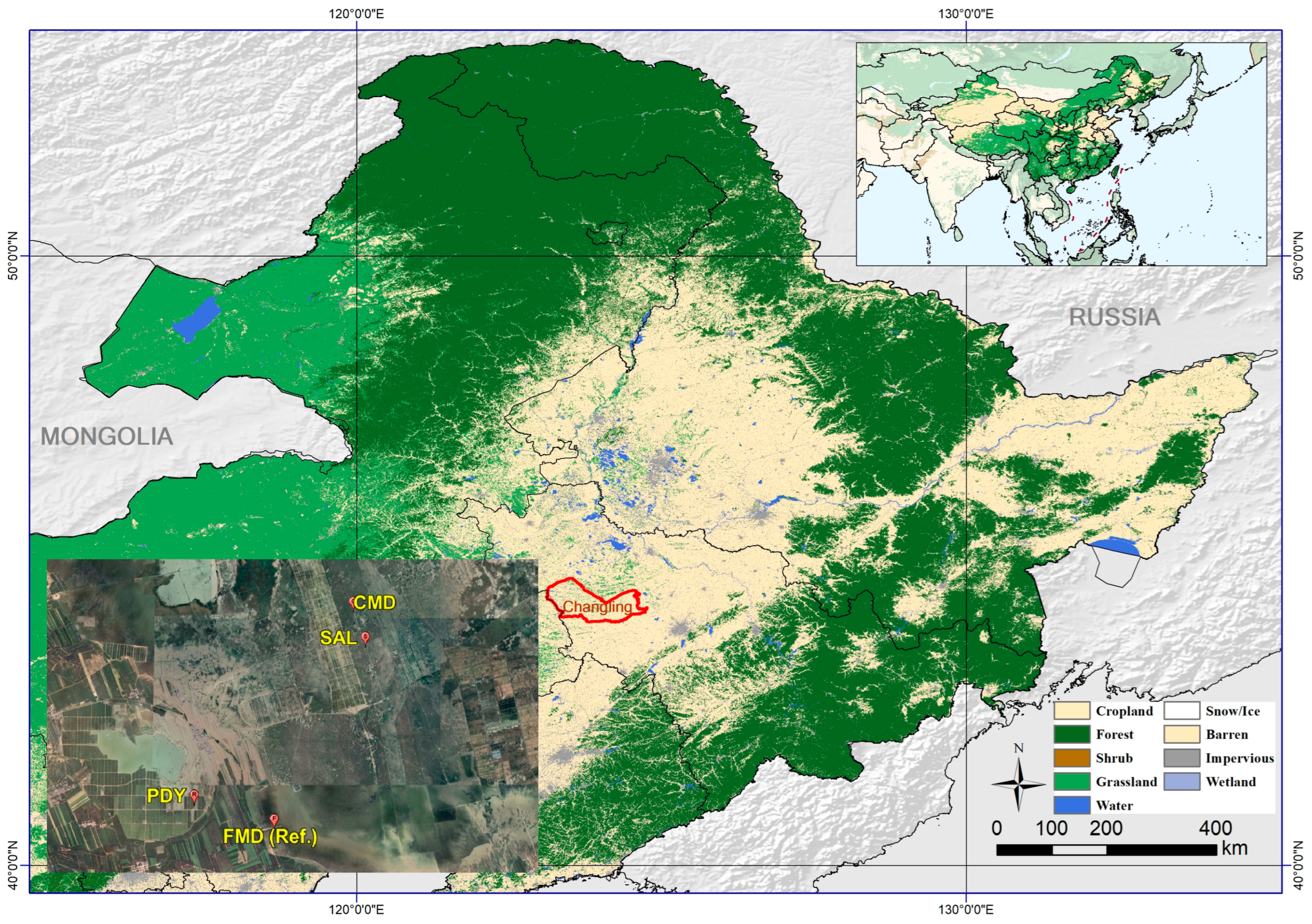
As a critical region for grain and livestock production in northern China, the agropastoral transition zone (APTZ) in Northeast China is pivotal to regional food security and climate. Historically dominated by meadows, this region now has over 3 million hectares of saline-alkaline land, primarily in the western Songnen Plain [
19]. Driven by overgrazing and overall westward-sloping terrain, over 43.7% of the land is severely salinized [
20,
21]. The unique physical characteristic of saline soil, i.e., the formation of a hard crust after rainfall, hinders water infiltration and plant root growth, while poor aeration easily creates anaerobic environments that stimulate CH
4 and N
2O emissions [
22]. Under the dual pressures of intensive management and accelerating salinization, native undisturbed meadows are being widely converted to croplands (e.g., paddy rice fields), clipped meadows and degraded saline-alkaline meadows. These transitions are expected to amplify the spatial heterogeneity of carbon storage and surface α, reshaping regional biophysical features and carbon-energy budgets under the same climatic conditions [
23,
24,
25,
26].
In the complex framework of land-atmosphere interactions, different land-use types modulate climate through both vegetation-driven α changes and the altered net ecosystem exchange of CO
2 (NEE). During the growing seasons, the sparsely vegetated saline soils generally exhibit higher α than dense fenced meadows or crop canopies, enhancing net radiation absorption while reducing surface energy partitioning towards latent heat. Moreover, α is susceptible to changes in environmental drivers (such as soil moisture, snow cover, and atmospheric conditions) and exhibits strong seasonal heterogeneity in its response to the environment [
23,
27]. However, these biophysical effects are often intertwined with biogeochemical processes; for example, reclaiming degraded saline-alkali lands for rice cultivation may enhance evaporative cooling but introduce anaerobic conditions that create hotspots for CH
4 emissions. Furthermore, waterlogged meadow habitats may stimulate higher GHG emissions compared to drier steppes [
28]. Currently, the extent to which α-induced RF and GHG-driven warming offset each other lacks systematic quantification, which constrains the formulation of climate-smart land management strategies for saline-alkali and waterlogging-prone regions.
Existing research is limited by satellite-based estimates (e.g., MODIS), which often suffer from biases in spatial representativeness across inhomogeneous landscapes like the Songnen Plain [
29,
30,
31]. Moreover, the seasonal dynamics of α and GHG fluxes are driven by complex factors such as soil moisture, snow cover, and plant phenology, with potentially distinct mechanisms operating between waterlogging-prone growing seasons and snow-covered non-growing seasons [
32]. Due to the sparse geographic coverage of ground stations in the Northeast China APTZ, synchronized, long-term in situ monitoring of α and GHG emissions across land-use types remains scarce, leading to large uncertainties in our understanding of net climatic impacts.
To address these gaps, this study proposes two hypotheses based on the unique saline-alkali environment of the Songnen Plain: (a) Land-use conversion from undisturbed fenced meadows to anthropogenically managed ecosystems (CMD and PDY) increases the net warming effect. Specifically, we hypothesize that these conversions lead to a decrease in surface α and an increase in CH4 emissions, resulting in a positive seasonal RF compared to FMD. (b) The sensitivity of α to environmental drivers is governed by threshold effects that differ between seasons. We hypothesize that during the growing season, α is primarily regulated by coupled biotic (vegetation indices) and abiotic factors (soil moisture), whereas in the snow-covered non-growing season, the response is dominated by temperature-induced snow-masking effects, leading to significantly different magnitudes of climate feedback.
In light of the above, we utilized a long-term eddy covariance (EC) system to observe ecosystem CO2 flux and α, combined with periodic field sampling of CH4 and N2O across four typical land uses. By constructing a comprehensive GWP assessment framework, we systematically quantify the integrated impacts of major land uses on the net radiative balance. We employ machine learning to resolve the seasonal response mechanisms of α to key environmental drivers. The specific objectives of this research are: (1) to quantify the magnitude and direction of intra-annual α-induced RF (RFΔα) in converted land uses relative to undisturbed FMD; (2) to determine the net climate impact (warming or cooling) by estimating the extent to which RFΔα offsets or amplifies the GWP of CO2, CH4 and N2O by CO2 equivalent, CO2eq, in growing seasons; and (3) to evaluate the seasonal shifts in the regulatory mechanisms of α, specifically identifying the dominant biophysical predictors between growing and non-growing seasons. This work aims to clarify how the mechanisms of land-use transitions contribute to regional warming or cooling, providing critical data support for land governance and sustainable agricultural development in Northeast China under a warming climate.
3. Results
3.1. GWP Induced by Methane (CH4) and Nitrous Oxide (N2O) Emissions
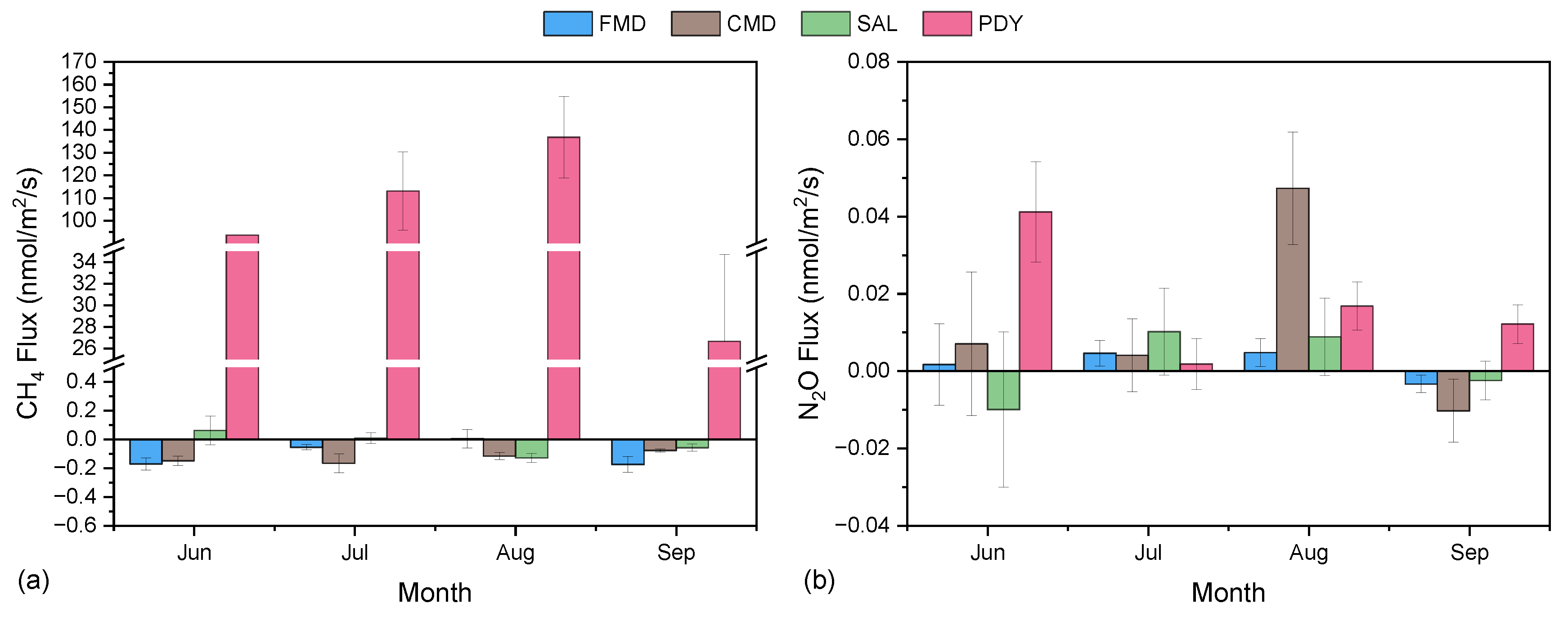
CH
4 emissions differed significantly across land-use types (One-way ANOVA,
p < 0.001), with the PDY surpassing all other sites by three orders of magnitude (
Figure 2a). Fluxes at the PDY averaged 92.5 ± 9.1 nmol/m
2/s (mean ± SE) during the late vegetative and reproductive stages (June–September), and peaked at 136.8 ± 17.9 nmol/m
2/s. Conversely, CH
4 fluxes in the FMD, CMD, and SAL were persistently low, ranging from −0.1 to 0.0 nmol/m
2/s, with no statistically significant difference between these three meadow types (
p > 0.05). Such nominal uptake in the FMD and CMD points to a minor potential for atmospheric cooling.
N2O fluxes remained negligible and statistically similar across all sites (p = 0.057, F = 2.516). The PDY and CMD sites exhibited low-level N2O emissions, averaging 0.018 ± 0.004 and 0.012 ± 0.007 nmol/m2/s respectively, with sporadic peaks observed in June (0.047 nmol/m2/s for PDY) and August (0.41 nmol/m2/s for CMD). Exceedingly stagnant and low N2O fluxes were found in the SAL and FMD, averaging below 0.002 nmol/m2/s in growing seasons (0.002 ± 0.005 and 0.002 ± 0.002 nmol/m2/s, respectively).
Growing season of the FMD, CMD, SAL and PDY were −0.0062 ± 0.0004, −0.0101 ± 0.0004, −0.0021 ± 0.0003 and 5.0402 ± 0.1314 kg CO2 m−2 yr−1, respectively, while of the FMD, CMD, SAL and PDY were 0.0033 ± 0.0007, 0.0122 ± 0.0024, 0.0037 ± 0.0017, 0.0214 ± 0.0013 kg CO2 m−2 yr−1, respectively.
3.2. α Change-Induced GWP
3.2.1. Temporal Variations in α, Δα, DSR and RF
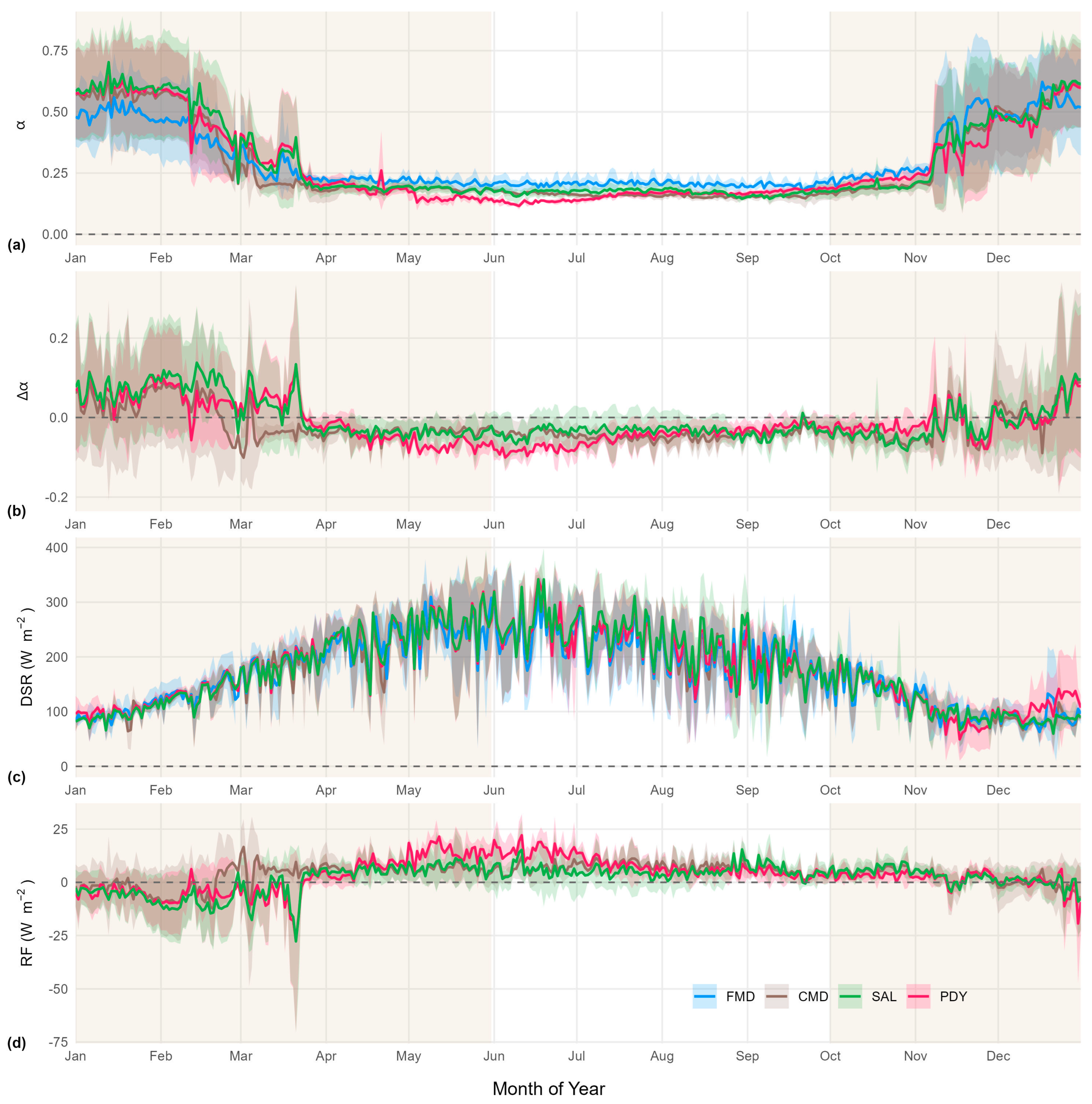
A pronounced seasonal hierarchy in α was observed across all land uses (
p < 0.01,
Figure 3), characterized by significantly higher values during the non-growing seasons (0.342 ± 0.041) compared to the growing seasons (0.173 ± 0.012). This seasonality was driven by the ecological transition from vegetation-mediated absorption (summer) to snow-induced reflectance (winter). During the winter time (January–March), a significant “snow-masking” reversal occurred, i.e., α in the FMD was lower than other sites (
p < 0.05) because the tall standing litter of undisturbed
Leymus chinensis trapped radiation, whereas the clipped (CMD) or degraded (SAL) sites allowed for a continuous, reflective snowpack. In summer, α dropped as a result of the high absorptivity of the canopy and the moisture-darkening effect of soil. Annual mean α remained relatively consistent across sites, following the sequence of PDY (0.270) < CMD (0.282) < SAL (0.289) < FMD (0.301). Notably, the FMD consistently exhibited the highest growing or non-growing season average α, while the PDY remained the lowest.
3.2.2. Temporal Variations in Climatic Factors and Vegetation Index
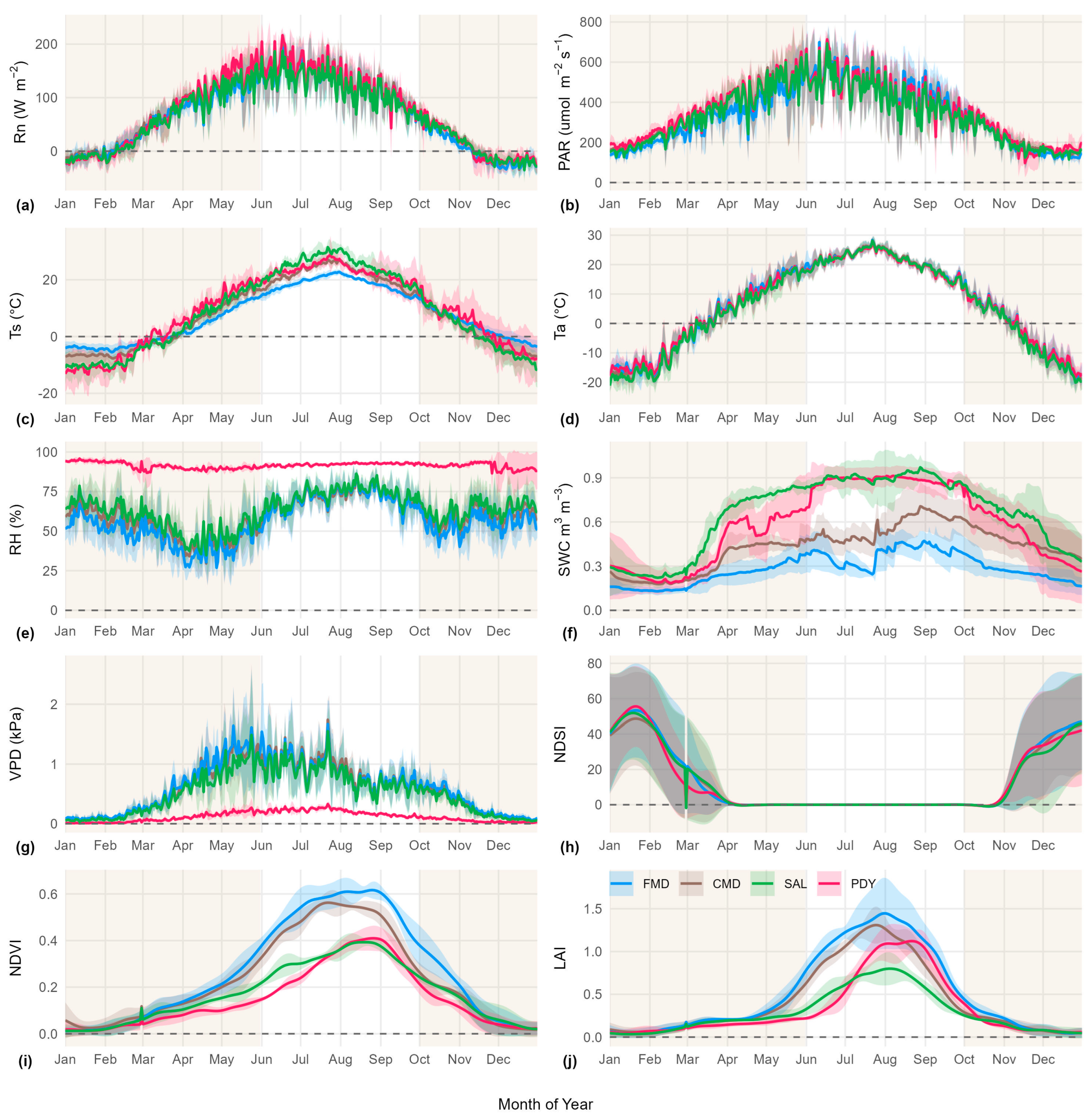
Among the observed environmental metrics, only the NDSI exhibited winter peaks; all other variables reached the peak in growing season (
Figure 4). Rn, PAR and Ta were spatially uniform across sites. The intra-year variation in Ts was clear with the FMD being less variable, whereas the SAL site recorded the highest summer peaks, a likely consequence of high bare-soil exposure and attenuated evaporative cooling by sparser vegetation. Growing season vegetation indices (NDVI and LAI) followed a clear hierarchy of FMD > CMD > SAL > PDY, because the initial LAI was lower in the PDY due to wide transplanting spacing, while the low LAI in the SAL stems mainly from sparse vegetation coverage characteristic of saline-alkaline degradation.
Distinct hydraulic regimes were observed across sites. The PDY maintained a near-saturated RH (~90%) and suppressed VPD year-round due to intensive irrigation management. In contrast, the other three sites reached their annual RH minima in April/May before peaking in late summer (August/September), with VPD peaking at ~1.5 kPa in early June; SWC exhibited the highest spatio-temporal variability. The SAL and PDY maintained higher SWC than the CMD and FMD. High interannual variability in SWC was particularly pronounced during August and September across all sites, driven by a regime of high-intensity, low-frequency rainfall. Notably, the unique phenomenon of soil crusting in the SAL helps the SAL to maintain a minimal seasonal SWC variation from April to October compared to other land uses (SWC > 0.6 m3 m−3) due to obstructed water infiltration. However, extreme precipitation events can be detrimental to SAL ecosystems, because they not only exacerbated soil surface crusting but also potentially increased surface runoff and erosion, further degrading the saline-alkaline environment. On an annual scale, α showed an inverse relationship with temperature, SWC, and vegetation indices, and a strong positive correlation with NDSI due to the drastically high fresh snow reflectivity (0.8–1.0) that overrides vegetation and soil signals.
3.3. Total Effect of GWP and CO2 Sequestration
The reduced annual mean α in converted land uses (CMD, SAL, and PDY) and positive GWP∆α indicated that the conversion of native FMDs to intensified or degraded ecosystems would exert a distinct biophysical warming effect. And the α-induced GWP (GWP∆α) yields positive forcing equivalents of 0.083, 0.041, and 0.073 kg CO
2 eq m
−2 yr
−1 for the CMD, SAL, and PDY, respectively (
Table 2). These α-driven warming effects, however, were limited, with GWP∆α offsetting less than 5% of the annual CO
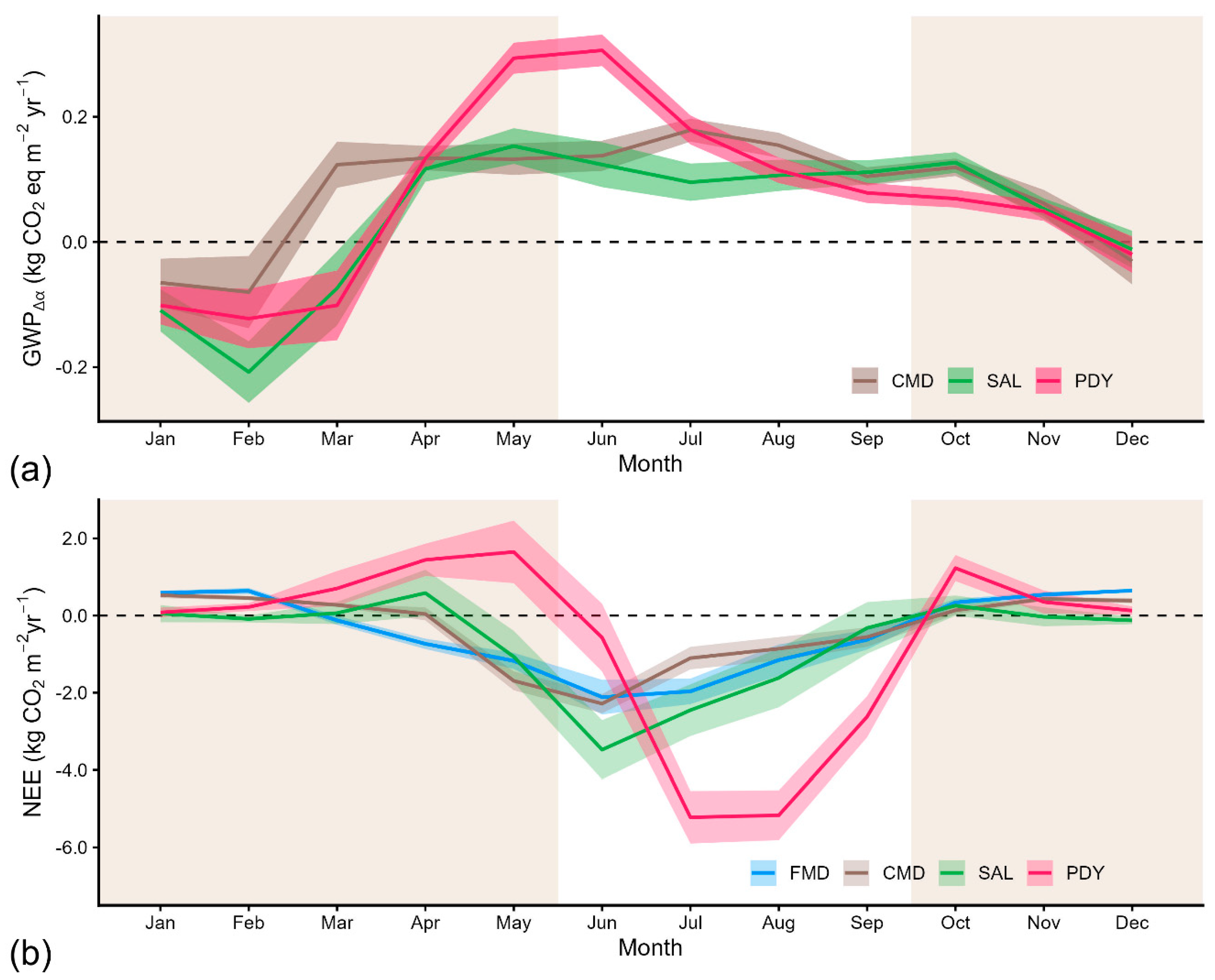
2 sequestration across all land-use types. Seasonal variations in RF were characterized by a shift from transient cooling to sustained warming for all land uses, exhibiting negative RF (cooling) from January–March (with the SAL being an exception, whose cooling effect ceased one month earlier) and positive RF (warming) in April–December In terms of GWP∆α intra-annual variability, the PDY displayed the highest variability, with GWP∆α peaking sharply in May and June, while the CMD and SAL showed prolonged plateaus, signaling a more stable warming effect throughout the year (
Figure 5).
The studied grassland sites functioned as a minor source of CH
4 and N
2O but a significant sink for CO
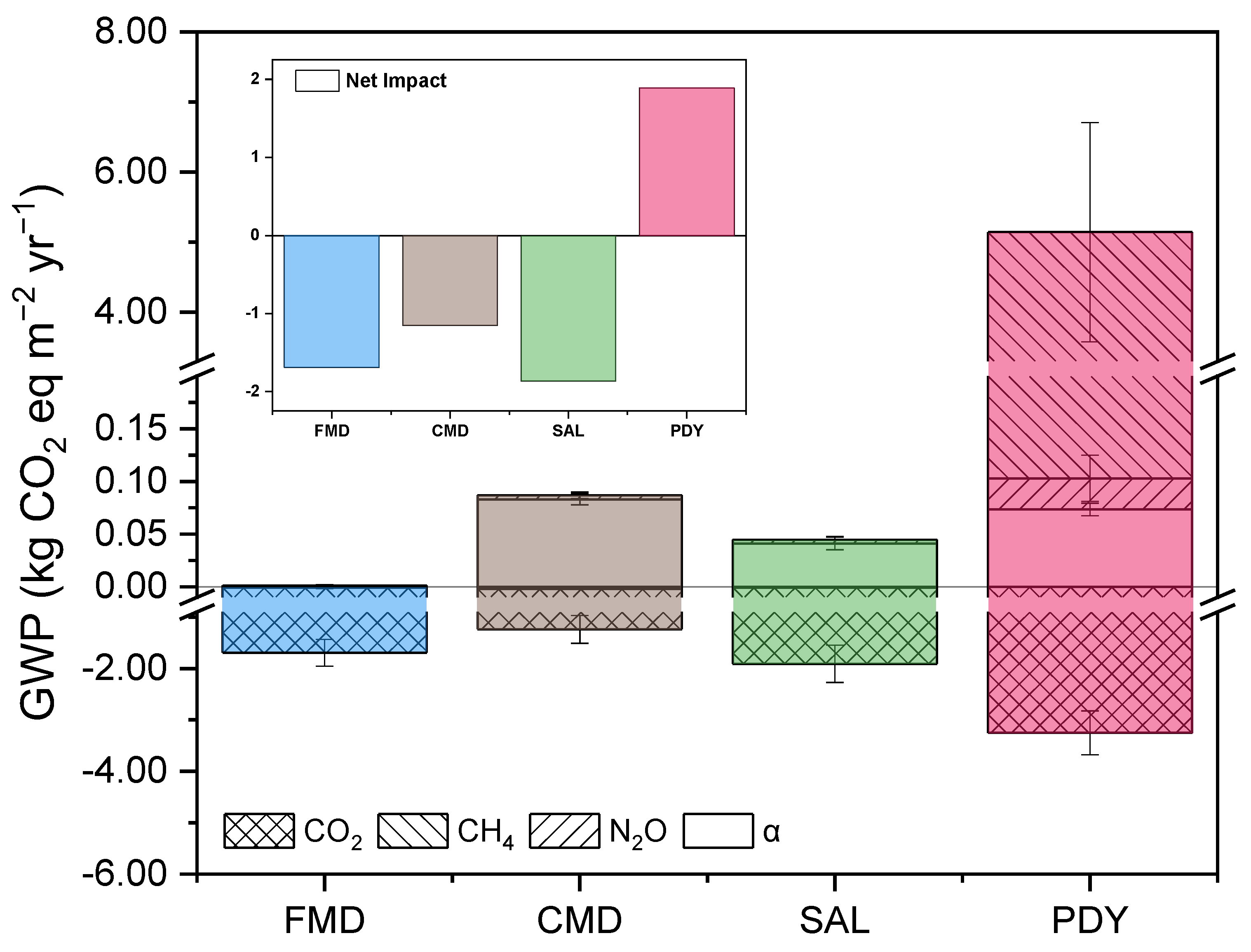
2 in the growing seasons of 2020~2022 (
Figure 6). Compared to the CO
2 sequestration in original land-use FMD, mowing (CMD) slightly reduced it and the SAL exhibited higher interannual variability, but none of the differences were statistically significant. When integrating biophysical (α) and biogeochemical (GHG) GWP, a clear divergence in net climatic impact emerged. The net climatic impacts (after uncertainty propagation) of GWP∆α,
,
and the NEE are −1.690 ± 0.262, −1.151 ± 0.271, −1.861 ± 0.360, 1.897 ± 1.639 kg CO
2 m
−2 yr
−1 for the FMD, CMD, SAL and PDY, respectively. In the CMD and SAL, the synergistic warming effects of α reduction and CH
4/N
2O emissions were readily offset by robust carbon sinks. But this offsetting capacity failed in the PDY. The transition to PDYs could result in the highest net positive GWP (
p < 0.001), primarily driven by disproportionately high CH
4 emissions, which exceeded the magnitude of their NEE by twofold, transforming the system into a potent net warming source.
3.4. Machine Learning Analysis of α Drivers
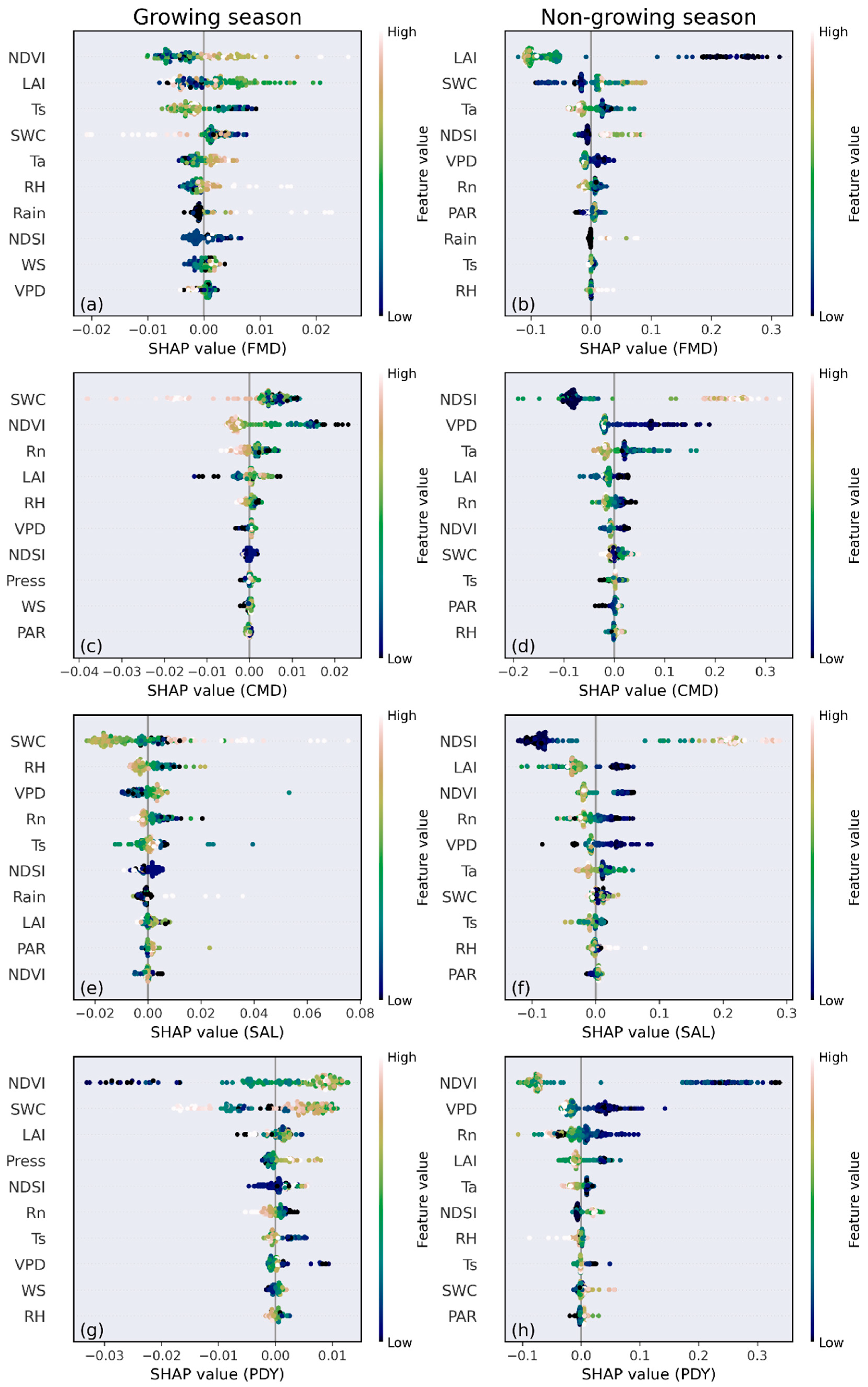
Using Random Forest algorithms, we modeled the dynamic responses of growing season and non-growing season surface α across four land uses in the saline-alkaline agropastoral ecotone, Changling. Results showed that the drivers of α were highly land use-specific and season-specific (
Figure 7). In growing seasons, soil moisture (SWC) emerged as a dominant predictor of α across all four land uses (
Figure 7, left panels); meanwhile, vegetation indices (NDVI and LAI) played a primary role in determining α for the FMD and PDY (
Figure 7a,g), but their relative importance was lower in the degraded (SAL) and managed (CMD) sites; the effects of temperature and radiation are relatively minor. In non-growing seasons, the importance of SWC diminished significantly except in the undisturbed site FMD, while the snow-cover-related NDSI became the decisive factor of α for the CMD and SAL.
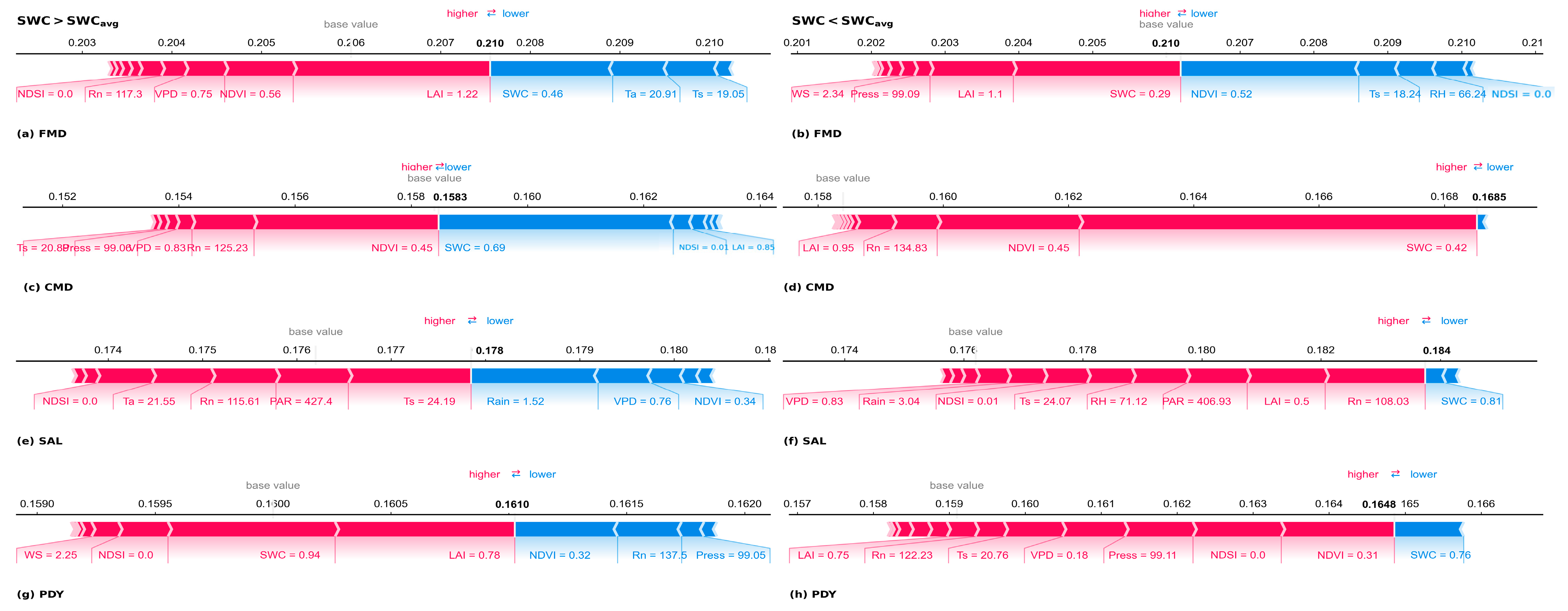
To further elucidate the non-linear coupling of drivers during the growing season, SHAP force plots were employed to decompose individual contributions under varying soil moisture regimes (
Figure 8).
SWC stood out in determining that the effects of biophysical drivers on α show a bifurcated response contingent upon SWC thresholds in the FMD and CMD. When SWC was above the average (hydric state,
Figure 7a,b), positive SWC anomalies significantly attenuated α through enhanced surface absorption (darkening effect), while when SWC was below the average (xeric state,
Figure 7e,f), increases in SWC contribute to an elevation in α. In contrast, the PDY exhibited an opposite response regime to that of the FMD and CMD, where SWC increased α at hydric condition (
Figure 7d), a phenomenon potentially attributed to the increasing obstruction of water body energy absorption by the denser rice canopy. This suggests that while SWC acts as a universal “biophysical balancer”, its specific influence on α deviation is modulated by ecosystem-specific surface properties across landscapes. In the subsets divided by high/low SWC, variables like Rn and Ts slightly enhanced α, possibly because of the soil surface drying out and warming up, induced by increasing Rn, which lit up the surface and made soil more reflective.
Our analysis revealed ecosystem-specific heterogeneity of α, i.e., the distinct divergent sensitivities to environmental drivers across land uses. For meadow steppes and agroecosystems (FMD, CMD, and PDY), a profound sensitivity of α to biotic indices, specifically NDVI and LAI, alongside SWC, addressed the vital role of biophysical regulation, i.e., canopy structure and moisture availability, on α for well-vegetated or managed landscapes. In contrast, the SAL exhibited a heightened dependence of α on abiotic radiative drivers, i.e., Rn and Ts, but an attenuated response to NDVI and LAI. This suggests that abiotic factors dominate the RF regime over biological regulation in degraded or high-salinity systems.
4. Discussion
4.1. Land-Use Impact on GWP: Balancing GHG and α-Induced Radiative Forcing
GHG variations across land-use types are primarily driven by distinct hydro-thermal conditions and microbial activity. In this study, the PDY was the predominant CH
4 source, as prolonged flooding creates anaerobic environments that hinder CH
4 oxidation while providing optimal condition for rhizosphere methanogens [
47]. This thermally enhanced methanogenesis, coupled with biological CH
4 release via rice aerenchyma, explains why rice cultivation accounts for ~40.1% of China’s agricultural CH
4 emission. The aerobic conditions in the meadow systems (FMD, CMD, and SAL) result in negligible or negative CH
4 fluxes. These well-aerated soils suppress anaerobic methanogens while facilitating atmospheric CH
4 oxidation by robust methanotrophs. Consequently, in the absence of rice vascular pathways, these meadows often function as CH
4 sinks. Critically, the saline-alkali nature of the soil in the Songnen Plain acts as a fundamental constraint on these biogeochemical processes. In the degraded SAL site, where pH (10.7) and electrical conductivity (1143.28 us/cm,
Table 2) were the highest among land uses, CH
4 fluxes remained negligible. High salinity restricts methanogen and methanotroph diversity, with CH
4 emissions often decreasing due to reduced activity of methanogenesis (
mcrA) and methanotrophy (
pmoA) genes [
48]. Another reason might be the osmotic stress of high salinity [
49]. Elevated Na
+ concentrations increase environmental osmotic pressure, leading to the dehydration of methanogenic archaea or the diversion of metabolic energy toward maintaining intracellular ionic balance, thereby directly inhibiting their methanogenic activity [
50]. Thus, the high salinity and alkalinity in the SAL, coupled with soil-crusting-driven obstructed water infiltration, suppress primary productivity and limit organic substrate availability. This restricts the carbon “fuel” necessary for microbial methane metabolism, effectively neutralizing the warming potential from CH
4 in degraded saline lands. In contrast, N
2O fluxes remained negligible across all studied sites, a phenomenon largely attributable to the absence of intensive nitrogen fertilization compared to high-input systems like maize fields. Unlike in high-input maize fields, N
2O emissions in these ecosystems are constrained by low nitrogen availability and cooler temperatures (particularly FMD and SAL), creating conditions unfavorable for the microbial processes typically driving N
2O production. Our results are consistent with findings from other agro-pastoral ecotones in China, indicating that N
2O emissions remain at extremely low levels in grassland systems with low nitrogen inputs and well-aerated soils, as microbial processes are constrained by low temperatures and limited organic substrate availability [
51].
Our observed CH
4 fluxes from rice paddies and grasslands are consistent with the ranges reported for the Songnen Plain and Northeast China [
52]. In this study, the seasonal average CH
4 emission from the PDY was 5.03 kg CO
2 m
−2 yr
−1, which falls within the typical range of 1.26~7.154 kg CO
2 m
−2 yr
−1 observed in a previous study [
53] but is higher than the 0.78 kg CO
2 m
−2 yr
−1 reported by [
3]. Compared to natural ecosystems, the methane emission in our PDY site is higher than the values reported for degraded saline-alkaline grasslands of ~0.02 kg CO
2 m
−2 yr
−1 in the Songnen Plain [
54], attributable to its long-term flooded conditions and high organic carbon input. For the grassland sites (FMD and CMD), our findings of weak methane uptake or near-zero flux align with the regional characteristics of semi-arid agropastoral ecotones, where soil moisture limits methanogenic activity [
55]. These comparisons confirm that while the paddy fields in this region represent a significant local methane source, the values recorded in our study are representative of the regional land-use conversion impact rather than an overestimation.
The significant difference in α between sites, despite similar microclimatic forcing, highlights the decisive role of land management. During the growing seasons, the PDY’s low α is driven by the high absorptivity of the water canopy. Conversely, sparse vegetation at the CMD and SAL exposes dark soil surfaces, resulting in lower α than densely vegetated FMD. The slightly higher α at the SAL relative to the CMD likely reflects the presence of reflective saline-alkaline crusts. During the non-growing season, the FMD becomes the least reflective site, with its tall standing litter exerting a “snow-masking effect” and creating a darker surface than the uniform snowpacks at more heavily managed sites. These findings suggest that grazing exclusion (FMD) modulates the local energy balance through these distinct biophysical feedbacks, alongside its impacts on carbon sequestration.
Land-use divergence in the Songnen Plain influences GWP through two primary pathways: altering surface α and modulating GHG emissions. The conversion of native FMDs to managed (CMD) or degraded (SAL) grasslands triggers a persistent biophysical warming, as the reduction in α generates a positive RF. Specifically, clipping manipulations can reduce NDVI by up to 0.2, resulting in a warming RF range from 4.6~15.9 W m
−2. While the CH
4 -induced GWP in the PDY remains orders of magnitude greater, the α-driven warming at the CMD and SAL is a critical, yet often overlooked component of the net climatic impact. While this α-driven warming is largely offset by robust carbon sinks (NEP), the efficiency of this trade-off is highly sensitive to regional biophysical characteristics, for instance, vegetation structure and soil moisture. These findings align with a concerning global trend where intensification, e.g., fertilization and high-density grazing, transitions managed grasslands from climate coolers to warmers. To mitigate this, sustainable management practices, such as optimized grazing and the restoration of degraded pastures (e.g., SAL) are essential to preserve surface α and maximize carbon sequestration, ensuring the long-term efficiency of grasslands in global climate mitigation [
56].
4.2. Mechanisms Governing α
Our findings highlight that soil moisture is as crucial as vegetation indices in determining surface α among managed land uses (FMD, CMD and PDY) of the saline-alkaline agropastoral ecotone in Northeast China. The observed α variations are underpinned by distinct quantitative relationships between surface biophysical properties and radiative balance. During the growing season, vegetation structure (LAI) and soil moisture serve as primary determinants, exhibiting significant negative correlations with albedo (r = −0.462 and −0.472, respectively). However, the regulatory mechanisms exhibit a clear seasonal threshold between the growing and non-growing seasons. During the growing seasons, α is shaped by a coupled biotic and soil moisture control. In the FMD and CMD, SWC anomalies significantly attenuate α through surface darkening when above the average (hydric state). This mechanism shifts abruptly during the non-growing seasons, where the snow-cover related NDSI becomes the decisive factor. A critical “snow-masking” effect is observed in the FMD (
Figure 3 and
Figure 5), while other sites (CMD, SAL) maintain a continuous, highly reflective snowpack due to the absence of standing residues; the protruding vegetation structure at the undisturbed FMD site traps more radiation. This reversal, where the FMD’s α drops significantly below other sites during January–March, demonstrates how vegetation–snow interactions create a biophysical threshold that modulates regional climate feedback.
Th coupled biotic-moisture control over α arises from the interplay between canopy structure and soil background. Under xeric conditions, the counterintuitive rise in α with SWC is driven by vegetation expansion masking dark backgrounds. Increasing SWC triggers leaf development and elevates LAI, replacing the dark-toned substrate with green canopy layers that exhibit higher hemispherical reflectance than the soil–litter complex. Conversely, under hydric conditions, moisture saturation reduces α through refractive index shifts that darken the soil. In these environments, the saturated, low-reflectance substrate acts as a “background trap”, where photons penetrating foliage gaps undergo multiple reflections and enhanced absorption rather than being reflected. This synergistic mechanism is supported by quantitative evidence showing that α is significantly sensitive to vegetation index (NDVI) and soil moisture (SWC), which together explain the non-linear dynamics of the soil–vegetation continuum.
The directional divergence in the influence of SWC on α reflects the shifting interplay between vegetation and soil reflectance, governed by an ecosystem’s hydrological state. In drainable ecosystems (FMD, CMD), rising SWC under hydric conditions primarily reduces α through soil darkening and increased optical absorption. Conversely, in inundated agroecosystems (like the PDY), increased SWC drives the canopy closure that shields the highly absorptive water background, causing α to rise via enhanced surface reflectance. Ultimately, the SWC-α feedback hinges on the trade-off between biophysical structure-driven enhancement and optical absorption-driven attenuation.
Furthermore, surface α regulation follows distinct pathways based on land uses: while less saline-alkali ecosystems are shaped by coupled biotic-soil moisture controls, degraded saline-alkali meadows (SALs) are almost exclusively abiotic-driven. In SAL systems, SWC and snowfall regulate seasonal α, with a unique positive feedback where high irradiance triggers rapid evaporation and salt crust accumulation. This “white surface” effect boosts reflectance, highlighting the critical role of land management in dictating surface–atmosphere feedback mechanisms. Quantitative modeling supports this, as soil moisture serves as a significant independent variable in both growing and non-growing seasons, with a total impact on α comparable to that of vegetation greenness.
4.3. Evaluation of Hypotheses
Our findings provided robust evidence to support the two central hypotheses proposed in this study while systematically achieving our research objectives. Regarding the first hypothesis, results demonstrated that anthropogenic interventions, such as clipping and reclamation, along with natural degradation, significantly reshape the seasonal dynamics of RFΔα compared to undisturbed meadows (FMD). Specifically, the CMD, SAL, and PDY all exhibite positive annual GWPΔα values of 0.083, 0.041 and 0.073 kg CO
2eq m
−2 yr
−1, respectively, confirming a distinct biophysical warming effect resulting from reduced α. In quantifying the extent to which RFΔα offsets NEE impacts (Objective 2), we found that α-induced warming typically offset less than 5% of annual CO
2 sequestration across most sites (
Table 3). Though only an integrated GWP assessment for growing season α, CH
4 and N
2O values were available due to the constraints of periodic gas sampling, and a profound divergence occurred in the PDY. Driven by CH
4 emissions that were three orders of magnitude higher than other land uses (5.04 kg CO
2 m
−2 yr
−1), the biogeochemical warming in the PDY far exceeded its NEE cooling capacity, transforming the ecosystem into a potent net warming source during growing seasons.
Furthermore, the study fully supported the second hypothesis, revealing that α regulation mechanisms were characterized by seasonal thresholds and land-use-specific sensitivities. Machine learning confirmed that the mechanisms regulating α vary significantly by season (
Figure 7,
Table 4). Soil moisture was identified as the dominant predictor of α across all four land uses during the growing season; however, in the non-growing season, the influence of SWC diminished as snow-related NDSI became the decisive factor for the CMD and SAL. The transition from moisture/biotic dominance in the growing seasons to snow-dominance in the non-growing seasons, evidenced by the “snow-masking” reversal in the FMD, confirms the existence of threshold-driven biophysical feedbacks. This also revealed a fundamental shift from coupled biotic-moisture control in productive ecosystems (FMD, PDY) to a predominantly abiotic-driven regime in degraded saline-alkaline systems (SAL), successfully addressing our third objective regarding seasonal response mechanisms.
4.4. Practical Feasibility and Albedo Trade-Offs in Land Restoration
The conversion of native FMDs to managed (CMD) or degraded (SAL) ecosystems exerts a distinct biophysical warming effect due to reduced annual mean α. Consequently, restoring degraded pastures (e.g., SAL to FMD) through grazing exclusion offers a pathway to climate mitigation.
However, this restoration involves complex α trade-offs. While FMD restoration maximizes carbon sequestration and increases α during the growing season (providing a cooling effect compared to the SAL), it also introduces the aforementioned “snow-masking” warming effect in winter. Despite this winter warming, the annual α of the FMD (0.301) remains higher than that of the SAL (0.289). Thus, the net biophysical impact of restoring the SAL to FMD is a cooling effect that, when combined with robust carbon sinks, enhances the region’s sustainable capability in global climate mitigation. Implementing such management is practically feasible and critical for land governance in the Songnen Plain.
Current rice fertilization and intensive grazing practices present significant challenges to climate change mitigation. In paddy fields (PDYs), organic fertilizer application may reduce CH
4 and CO
2 emissions but often stimulates N
2O production. This trade-off is driven by enhanced organic nitrogen ammonification, where accumulated NH4
+-N ultimately increases N
2O emissions [
51,
57]. Furthermore, grazing intensity is a critical driver of emissions; intensive grazing can increase emissions by over 68% compared to ungrazed areas [
58]. To mitigate the net warming effect in the PDY, alternate wetting and drying (AWD) irrigation is recommended to suppress CH
4 emissions by 40% without compromising yield [
59].
4.5. Limitations
While this multi-dimensional analysis yields significant insights into GWP dynamics, certain limitations merit discussion. Primarily, our assessment relies on site-specific observations of both α and GHG fluxes. Due to the inherent constraints of gas sampling intervals, high-frequency observations across the growing season and non-growing season (winter) remained unattainable. Consequently, our quantified GWP contributions are only representative of the growing season GWP. However, given the acknowledged low microbial activity during the winter, this temporal gap likely exerts a negligible influence on the overall trends, while the observed patterns and inter-class variances remain scientifically robust. Since the majority of biogenic flux and vegetation-driven albedo changes occur during this window, the growing season GWP captures the most dynamic component of the ecosystem’s climate impact. However, we noticed the importance of maintaining observations as continuously and completely as possible, because the typical steppe of Inner Mongolia was reported to still hold a 30% CH
4 uptake ability in non-growing seasons [
55]. Whether freeze–thaw events affect GHG exchange remains inconclusive in different ecosystems [
60,
61]. It is our future priority to expand our measurements to a year-round scale in future studies once continuous gas-sensing technology becomes more accessible, allowing us to validate whether the growing season trends hold true for the full annual budget.
While automated continuous monitoring is ideal, such equipment for CH4 was not available at our field site during the study period. However, manual static chamber sampling remains a robust and widely adopted standard in field ecology, particularly for comparative studies across multiple land-use types where technical and financial constraints limit the deployment of automated systems. Furthermore, for N2O, automated field-ready measurement systems are currently not mass-produced or widely accessible for large-scale multi-site deployment. Manual static chamber sampling, despite its lower frequency compared to eddy covariance or automated chambers, remains a standardized, reliable, and primary technique in ecosystem ecology for quantifying CH4 and N2O fluxes. It is by no means an outdated approach and is widely accepted for establishing annual budgets and comparing land-use impacts. While some pulse emissions might be underrepresented, the sampling frequency was sufficient with sampling conducted on the same day to ensure the comparability of climatic conditions, and to capture the dominant seasonal trends and the significant disparities between the four land-use types.
From a spatial perspective, the representativeness of α-induced GWP presents ongoing challenges. While incoming solar radiation (
) can be reasonably extrapolated to larger spatial scales (e.g., several kilometers), temporal extrapolation is difficult due to the high sensitivity of
to atmospheric depth. Additionally, the disparate impacts of wind, vegetation, and landscape heterogeneity on α are difficult to resolve via remote sensing, particularly given the dynamic nature of canopy light absorption [
42]. While this study used vegetation indices and meteorological factors to elucidate α dynamics, the underlying mechanisms governing the reflectance of the canopy and soil background are multifaceted. Our analysis did not fully decouple the relative contributions of these specific components, nor explore their divergence across critical phenological stages.
Future research should disentangle how non-vegetated components influence radiative transfer, either through shifts in intrinsic physical properties or interactions with vegetation. Moreover, plant physiological traits, such as canopy chlorophyll concentrations, may further modulate α. Incorporating these physiological and mechanical drivers will further refine our understanding of how land-use types in the Songnen Plain govern the complex feedback loops between the land surface and the regional climate.
5. Conclusions
This study provides an integrated analysis revealing how different land-use types in the Songnen Plain influence GWP via surface α and GHG (CH4 and N2O), driven by an interplay of meteorological and biotic factors. We evaluated the GWPΔα variations in the CMD, SAL, and PDY relative to the undisturbed, native FMD (serving as the reference site). Our results demonstrate that GHG-induced GWP exhibits significant divergence across ecosystems, primarily regulated by the synergetic effects of climate factors, soil conditions, and vegetation characteristics. Annual GWPΔα remains positive for the CMD, SAL, and PDY, as their decreased α compared to the FMD induces a warming effect. The most prominent CH4 emission is found in the PDY ( being 5.03 kg CO2 m−2 yr−1), exceeding that in other land uses by three orders of magnitude. N2O emissions are consistently stable and minimal across land uses. Taking the NEE into consideration, GHG emission and α change result in a net warming effect for the PDY, while GWP of other land uses can be readily offset by the NEE. Machine learning identified SWC as a dominant predictor of α across all four land uses in growing season. Meanwhile, vegetation indices play a critical role in the FMD and PDY. We further found that α in less saline-alkali ecosystems (FMD, CMD and PDY) is shaped by coupled biotic and soil moisture controls, while α in the degraded SAL is almost exclusively abiotic-driven. Beyond the divergent α responses identified here, future studies should focus on the interplay between α and the dynamics of vegetation morphology, photosynthesis, and soil background changes.




 ,
,