Article

On-Farm Nitrification Inhibitor Application to Urine Patches in Reducing Nitrous Oxide Emissions


by
Surinder Saggar
*,
Thilak Palmada
,
Peter Berben
and
Liyin Liang
Bioeconomy Science Institute, Riddet Road, Massey University Campus, Palmerston North 4474, New Zealand
*
Author to whom correspondence should be addressed.
Agronomy 2026, 16(7), 701; https://doi.org/10.3390/agronomy16070701
Submission received: 30 January 2026 / Revised: 23 March 2026 / Accepted: 23 March 2026 / Published: 26 March 2026

Abstract

In livestock-grazed pastures, urine patches are a major contributor of nitrous oxide (N2O) emissions, and the use of nitrification inhibitors (NIs) has the potential to reduce N losses from urine patches using New Zealand (NZ)-devised Spikey®—a ground-based machine that measures the change in soil conductivity from the deposited urine patches. Our ongoing research suggests that the efficacy of on-farm targeted NIs treatment requires suitable inhibitor concentrations within urine patches to be achieved to reduce N2O emissions. This study evaluates the effect of varying NI rates and volumes on reducing N2O emissions. The application rates for NIs were 1.6 g and 3.2 g dicyanamide (DCD) patch-1 and 0.96 g and 1.92 g of 3, 4-dimethylpyrazole phosphate (DMPP) patch−1, using 100, 150, and 200 mL inhibitor solutions. These rates were higher than those used in previous studies to ensure an adequate supply of inhibitors above the threshold concentration within the urine patch and to enhance the inhibitor efficacy in reducing N2O emissions. This study points to two important aspects: Determine the optimum inhibitor concentration required to eliminate, minimise/reduce N2O emissions and ensure that at the optimised amounts of inhibitor application rates, inhibitor residues are below their maximum residue level (MRL) in the food chain and environment, and eliminate their potential harm to human health.

1. Introduction

Most commonly, the two-step conversion of ammonium (NH4+) to nitrate (NO3) is catalysed by ammonium-oxidising bacteria (AOB) and ammonium-oxidising archaea (AOA) through the enzyme ammonium mono-oxygenase (AMO). Nitrification inhibitors (NIs) inhibit the activity of AOB, thereby hampering the transformation of NH4+ to NO3 in the soil. NIs have extensive benefits in reducing nitrous oxide (N2O) emissions and improving nitrogen (N) use efficiency, particularly when used with N fertiliser and applied to livestock-grazed soils to treat excretal urine-N following grazing events [1,2,3,4,5]. However, reducing N losses from urine patches using NIs also requires close contact between the inhibitor and the deposited urine-N in the soil, including information on their biodegradation and persistence in soils [6,7,8,9] revealed that NIs used in a laboratory study had no effects on soil microbial biomass. Additionally, the lack of a clear pattern in microbial biomass N across treatments suggested that soil microbial dynamics were not adversely affected by the inhibitors. However, the effectiveness of inhibitors depends on the proportion of urine-N able to be treated by the applied inhibitor [10,11,12,13,14]. Among various biophysical and biochemical factors, the characteristics of the soil and the inhibitor’s time, concentration, and volume play a significant role in influencing the physical contact between the inhibitor and urine, thereby altering its efficacy in reducing N2O emissions [15].
NIs such as dicyandiamide (DCD), 3, 4-dimethylpyrazole phosphate (DMPP), and 2-chloro-6-(trichloromethyl) pyridine (Nitrapyrin) have been used to reduce N2O emissions from urine patches. The use of NIs also raises concerns about their environmental behaviour and health impacts. In New Zealand, the use of nitrogen transformation inhibitors in agricultural production to mitigate ecological and/or climate change impacts is now regulated under the Agriculture Compounds and Veterinary Medicines Act 1997 (ACVM Act) [16] to avoid the food safety concerns raised around the use of DCD [17,18].
In livestock grazing, technologies for detecting and treating freshly deposited urine patches, such as those developed by New Zealand Pastoral Robotics Limited’s ground-based Spikey®, are available. These technologies can provide accurate and targeted applications of post-grazing treatments to urine patches [19]. This targeted treatment of the urine patch reduces the amount of inhibitor used by up to 90% (based on 6–12% urine patches areas measured by [20], reducing the risk of inhibitors being taken up by pastures and entering the food chain via grazing animals. Under normal soil and environmental conditions (rainfall, wind), there is a potential time delay of 4 to 48 h between urine deposition and inhibitor application in livestock-grazed pastures. This could result in physical separation between the urine and inhibitor, potentially reducing the inhibitor’s effectiveness. The interception of the inhibitor by the pasture canopy may also reduce the amount of inhibitor solution reaching the soil. Adhikari et al. [10,11] identified the low volume of the inhibitor applied relative to the urine volume 1:50 (based on NZ recommended DCD application (10 kg DCD dissolved in 800 L water ha−1; 40 mL of inhibitor to the 2 L of urine patch)) affected their co-location to urine patches, where up to 59% of inhibitors were retained in the pasture canopy and the inhibitor threshold concentration was only met in the top 0–20 mm of soil in most cases when NIs were applied 4–48 h after natural urine patch simulation.
The objectives of this pilot study were:
(i)
To evaluate the role of increasing the inhibitor/urine volume ratio from the traditional 1:50 (40 mL of inhibitor to 2 L of urine patch) to 1:20 (100 mL of inhibitor to 2 L of urine patch); 1:13.3 (150 mL of inhibitor to 2 L of urine patch); and 1:10 (200 mL of inhibitor to 2 L of urine patch) on the N2O mitigation efficacy of two NIs (DCD and DMPP), applied 24 h after simulated urine deposition;
(ii)
To collect information on NIs’ potential to enter the food chain by measuring the proportion of each inhibitor retained by the pasture canopy, the pasture at first grazing, and at the end of the trial.

2. Materials and Methods

2.1. Experimental Site

A spring-initiated field experiment was conducted at Massey University’s No. 1 Dairy Farm in the Manawatū. The freely draining dairy farm’s soil was Manawatū fine sandy loam, classified as Weather Fluvial Recent soil in the NZ soil classification system [21] and Fluvisols [22]; hereafter referred to as ‘Manawatū’ soil. The soil had a growing a mixture of perennial ryegrass (Lolium perenne L.) and white clover (Trifolium repens L.). The site was last grazed on 20 May 2024, and the selected areas for the experiment were fenced off (on 17 July 2024) for about 10 weeks before the start of the experiments to avoid interference from fresh dung and urine inputs, as well as to reduce spatial variability from the previous N fertiliser inputs and uneven deposition of dung and urine. The experimental area was mowed at four- to six-week intervals, and the clippings were removed. Approximately one week before the trial, field plots were established in a randomised complete block design with four blocks and 14 treatments. Four representative soil samples were collected (to 100 mm depth) for physicochemical analysis. An additional 12 plots were established to collect soil and plant samples for analysis of the inhibitors’ residues.

2.2. Experimental Design and Treatment Application

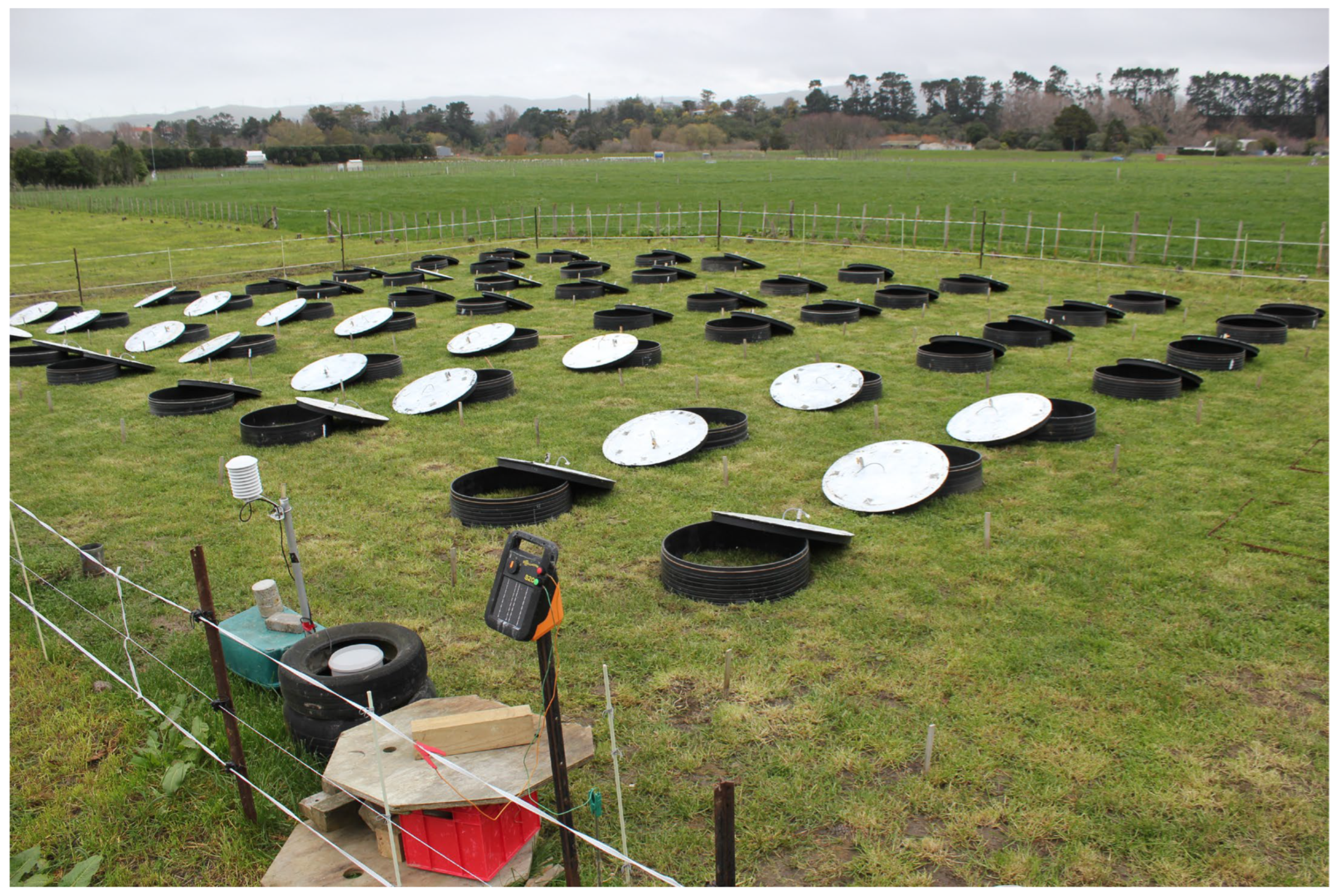
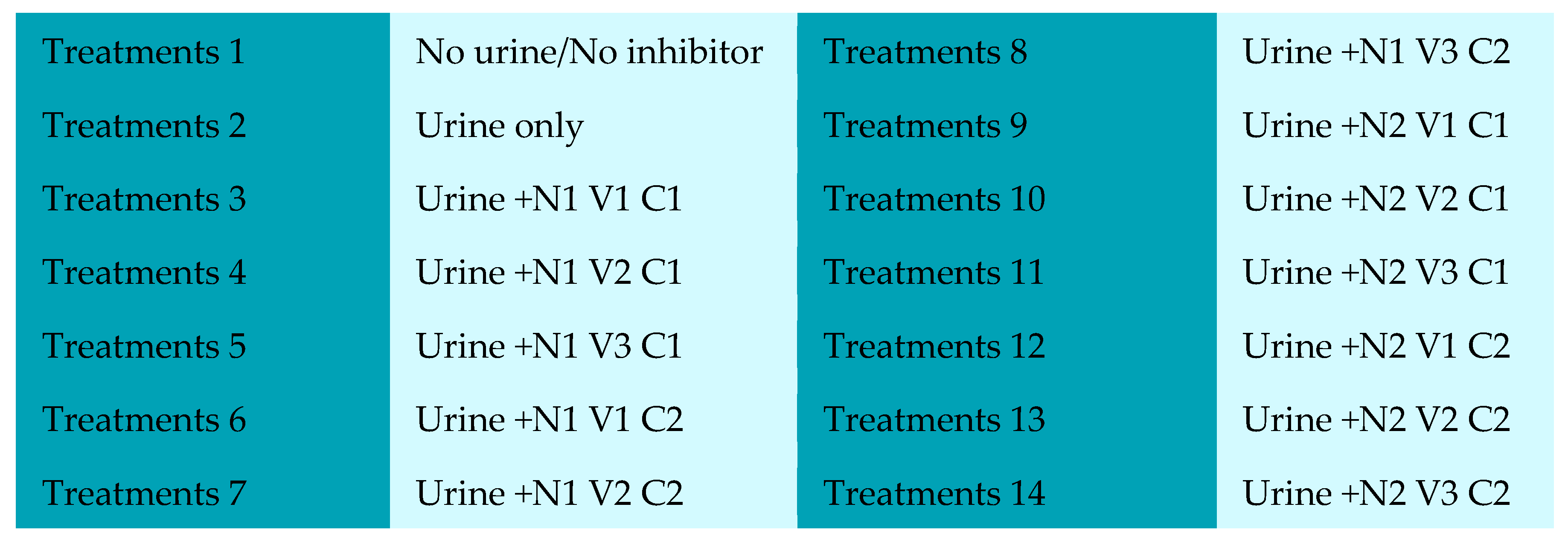
The trial layout for N2O emission measurements (Figure 1) consisted of a completely randomised block design with 4 blocks and 14 treatments (Figure 2) assigned at random to each block (N = 56). Separate sampling chambers were established for determining the inhibitor residues in the soil and pasture samples from the treatments with inhibitors. Individual treatments (2.5 m × 2.5 m) included a (0.5 m2) static gas chamber for N2O emissions measurements. The inhibitor residue sampling plots were separated by a distance of at least 0.5 m.
Synthetic urine with a total N content of 6 g L−1 was prepared using a modification of the method described by [23], which adjusted the chemicals in proportion to the total N content. Potassium bromide (KBr) was replaced with potassium chloride (KCl) at an equivalent rate, since bromide, a tracer, was not required in our study. A total of 140 L of synthetic urine required in this study was prepared by dissolving 1659.4 g of urea, 414.13 g of glycine, 1958.11 g of KHCO3, 708.88 g of KCl, and 192.97 g of K2SO4.
The pastures within the chambers were cut to 50 mm on 7 October 2024, the day before urine application, to simulate grazing. A total of 2 L of synthetic urine (average urine volume per urination event from dairy cattle) was poured onto the centre of the 0.5 m2 circular chamber area from a height of approximately 1.2 m and allowed to spread naturally (simulating natural urine deposition).
Twenty-four hours after urine patch simulation, 100 (V1), 150 (V2), or 200 (V3) mL of inhibitor solutions/suspensions, prepared in deionised water, were applied within the chambers (0.5 m2) using the Spikey’s micro-sprayer, which was calibrated for delivering the above urine volumes between 0.50 and 0.60 m2 across the chamber area.
The equivalent application rates set for the NIs were 1.6 g (N1C1) and 3.2 g (N1C2) patch−1 for DCD and 0.96 g (N2C1) and 1.92 g (N2C2) patch−1 for DMPP, and were applied in 100, 150, and 200 mL inhibitor solutions. In the absence of on-farm urine patch treatment application rates and the inability of traditional 1:50 (40 mL of inhibitor to the 2 L of urine patch) to adequately mix with urine patch [10,11], the higher rates were selected to ensure an adequate supply of inhibitors above the threshold concentration within the urine patch, as well as to enhance the inhibitor co-location with urine-N in the deposited urine patches.
An additional 12 plots were set up to collect soil and plant samples for inhibitor residue analysis
  • N1 = DCD (dicyandiamide) and N2 DMPP (3,4-dimethylpyrazole phosphate);
  • DCD C1 = 1.60 g, C2 = 3.2 g;
  • DMPP C1 = 0.96 g, C2 = 1.92 g;
  • Inhibitor solution volumes V1 (100 mL), V2 (150 mL), and V3 (200 mL) applied per urine patch.
Note: Considerable amounts of both inhibitors were applied to ensure an adequate supply of inhibitors to interact with urine-N in the urine patch and sustain a threshold inhibitor concentration.

2.3. Soil Characteristics

The characterisation of the soil’s physical and chemical properties was performed using four representative replicate soil samples (0–100 mm depth) collected from the sites before the trial began.
The soil pHw (1:2.5 water), cation exchange capacity (CEC), exchangeable Ca, Mg, and K, Olsen P and mineral N, and Olsen P were determined according to [24]. The total C and total N concentrations of air-dried soil samples (<2 mm) were measured using a Leco TruMac CN analyser, LECO Corporation, MI, US. The soil bulk density, particle size analysis, porosity, and field capacity were measured as described in [25,26] and are presented in Table 1.

2.4. Nitrous Oxide Flux Measurements

A static chamber technique was used to measure N2O emissions, which was based on previously published studies on N2O emissions [1]. Briefly, about a week before the trial began, static chamber bases (800 mm diameter) were inserted 50–100 mm into the soil at each treatment and replicate area. Nitrous oxide fluxes from this well-drained Manawatū fine sandy loam urine-treated pasture soil with or without inhibitors were measured in spring (9 October and 2 December 2024). The day before urine application, a pre-treatment gas measurement was taken from each chamber to determine the spatial variability of background N2O fluxes between the treatment plots and to help interpret patterns of N2O flux from individual chamber areas post urine application. The flux measurements were carried out at 24, 48, and 72 h after the treatment (inhibitor) application, then twice a week for the first month, and weekly thereafter until the emissions reached background levels (Day 55). The flux measurements were also carried out before the inhibitor was applied to determine the amount of N2O emitted from urine. During weekly phases of N2O flux measurements, additional sampling occurred as soon as was practical following rainfall events of greater than 10 mm of rain in the previous 24 h period.
Gas samples (25 mL) from the chamber headspace were collected for 60 min at times t0, t30, and t60. On each sampling day, two background atmosphere samples were also taken. The measurements were continued until the N2O flux values for the urine plots with and without inhibitor reached the background levels measured in the control plots. The N2O concentrations of the gas samples were measured with a Shimadzu GC-17a gas chromatograph, equipped with a 63Ni electron capture detector using oxygen-free N2 as the carrier gas [27]. The increase in N2O concentration within the chamber headspace for the gas samples collected at different times was linear (R2 > 0.95). The hourly fluxes were calculated using the rate of change in concentration (∆C/∆t) and the ideal gas law, according to Equation (1):
F (N2O) = (∆C/∆t) × (MW × P)/(R × T) × (V/A)
where ∆C is the increase in N2O concentration in the headspace volume (ppmv); ∆t is the enclosure time period (minutes); MW is the molar mass of N2O-N (28 g mol−1); P is the atmospheric pressure at the time of sampling (Pa); R is the gas constant (8.314 J mol−1 K−1); T is the air temperature at the time of sampling (K); V is the headspace volume within the chamber (m3); and A is the area covered by the base (m2). (∆C/∆t) was calculated using linear regression in most cases. When there was strong evidence of the slope decreasing over time (i.e., [∆C from 0 to 30 min]/[∆C from 30 to 60 min] > 2.5), we used the non-linear calculation of [28].
For each chamber, the measured hourly flux data, from Equation (1), were assumed to be representative of the mean daily flux. Cumulative emissions were calculated via trapezoidal integration of the daily fluxes on measurement dates to estimate the total emissions over the measurement period. Emission factors (EF3PRP; representing the percentage of N deposited being lost as N2O, according to IPCC methodology, hereafter termed EF3) were calculated using Equation (2):
E F 3   % = C u m u l a t i v e   N 2 O N   ( T r e a t m e n t C o n t r o l ) U r i n e + I n h i b i o t r   N   a p p l i e d × 100
The efficacy of the inhibitor, including concentration and volume, to reduce N2O emissions was further investigated by calculating the percentage reduction in cumulative N2O emissions relative to the urine-only emissions. The cumulative treatment N2O-N for each replicate was calculated by subtracting the total control (no urine/and no inhibitor) N2O-N from the treatment total N2O-N. For each inhibitor treatment, the % efficacy was calculated as:
E f f i c a c y   ( % ) = E F 3   u r i n e E F 3   i n h i b i t o r E F 3   u r i n e × 100
where EF3 urine and inhibitor treatment values are used, as calculated in Equation (2).

2.5. Environmental Variables

An automated meteorological station was set up to monitor daily rainfall, wind velocity, and soil water content (SWC). The gravimetric soil water content (GWC) was monitored using calibrated Deta-T theta probes (MLZx) at 50 and 75 mm depth. Field-moist samples collected on each gas sampling day were weighed and oven-dried at 105 °C to a constant mass.
The difference between field-moist (Ms) and dry-soil masses (Mw) was used to calculate the gravimetric soil water content as: G W C = [ ( M s M w ) / M w ] × 100 .
The volumetric SWC was then calculated by multiplying the GWC by the soil bulk density measured from four undisturbed (Ø100 mm) soil core samples.
For total soil porosity calculation using Equation (4) the soil particle density was assumed to be 2.65 mg m−3.
T o t a l   p o r e   s p a c e   % = 100 [ 1 ( b u l k   d e n m s i t y ) ( p a r t i c l e   d e n s i t y ) ]
The water-filled pore space (WFPS) was then calculated as the ratio of the soil water volume to the total pore volume [29].

2.6. Detection of Inhibitors in Pasture and Soil Samples

Soil and pasture samples for inhibitor analysis were collected from the residue sampling plots. Pastures were sampled after inhibitor application to determine the proportion of each inhibitor retained by the pasture canopy and at the first harvest (to estimate the amount of inhibitor present in the pasture plants). Similarly, both pasture and soil were collected at the end of the trial to determine inhibitor residues and meet Environmental Protection Agency (EPA) containment requirements. Three replicates of pasture and soil samples were collected from each plot at each sampling. The measurement of DCD was performed with the methods described in [14,30]. The concentrations of DCD in the acidified extracts were determined on an UltiMate 3000 HPLC system (ThermoFisher Scientific, Auckland, New Zealand) using a ROA-organic acid H+ column (150 × 4.6 mm) and Diode-Array Detection (DAD) technique. DMPP extraction and analysis were conducted via the methods described in [31], using the HPLC-DAD technique.

2.7. Statistical Analysis

Using R version 4.2.1 [32], visualisation of the 13 treatments (one urine-only and 12 urine-with-inhibitor) showed that treatments with inhibitor applications had lower cumulative N2O emissions. Before conducting ANOVA, a test on the residuals confirmed a normal distribution (Shapiro–Wilk test, not significant, p = 0.055); however, the variance of each treatment was not homogeneous (Levene’s test, significant, p = 0.0003). No suitable data transformation was identified to satisfy both assumptions for parametric ANOVA; therefore, the Welch ANOVA was applied to handle the differences.

3. Results and Discussion

3.1. Meteorological Data

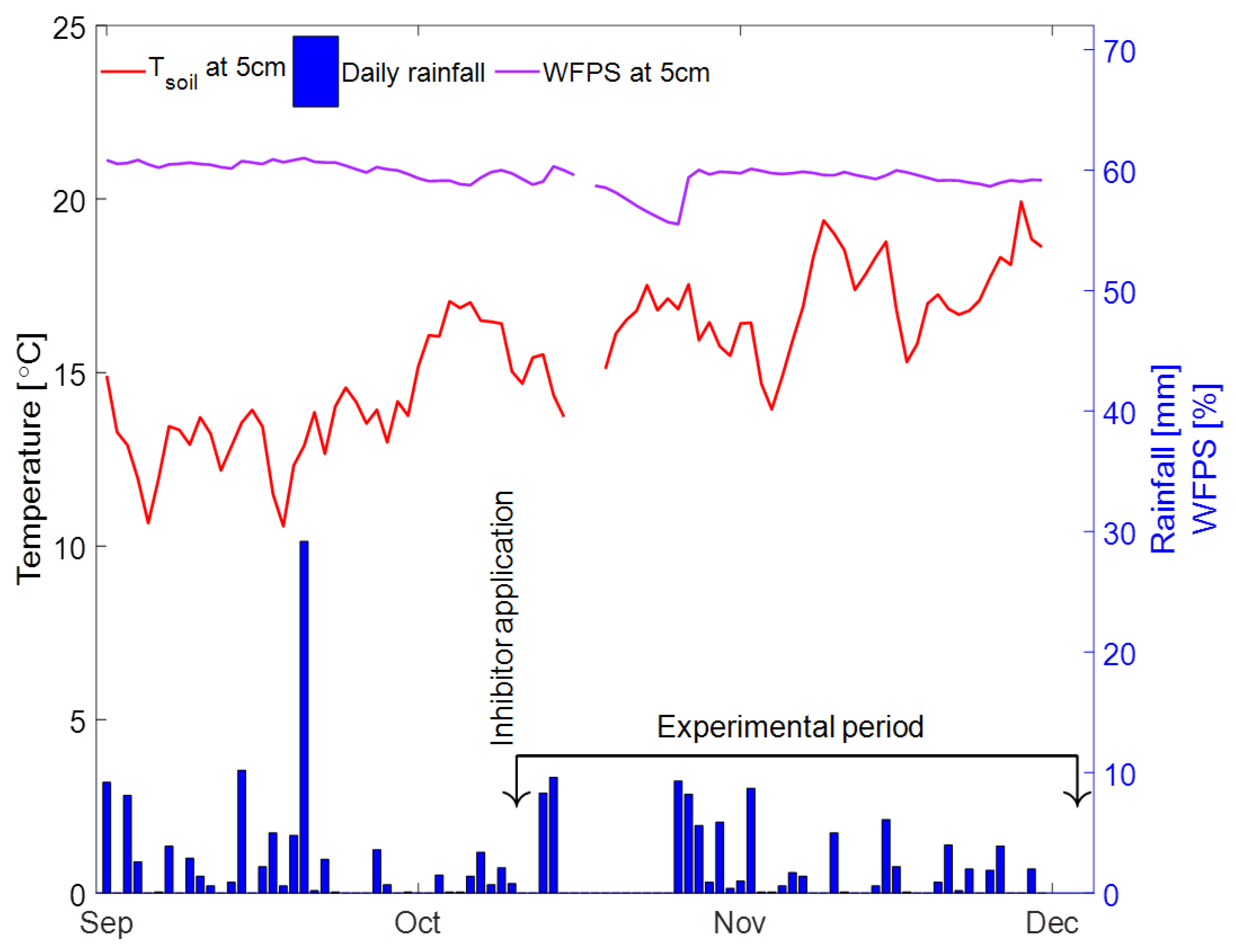
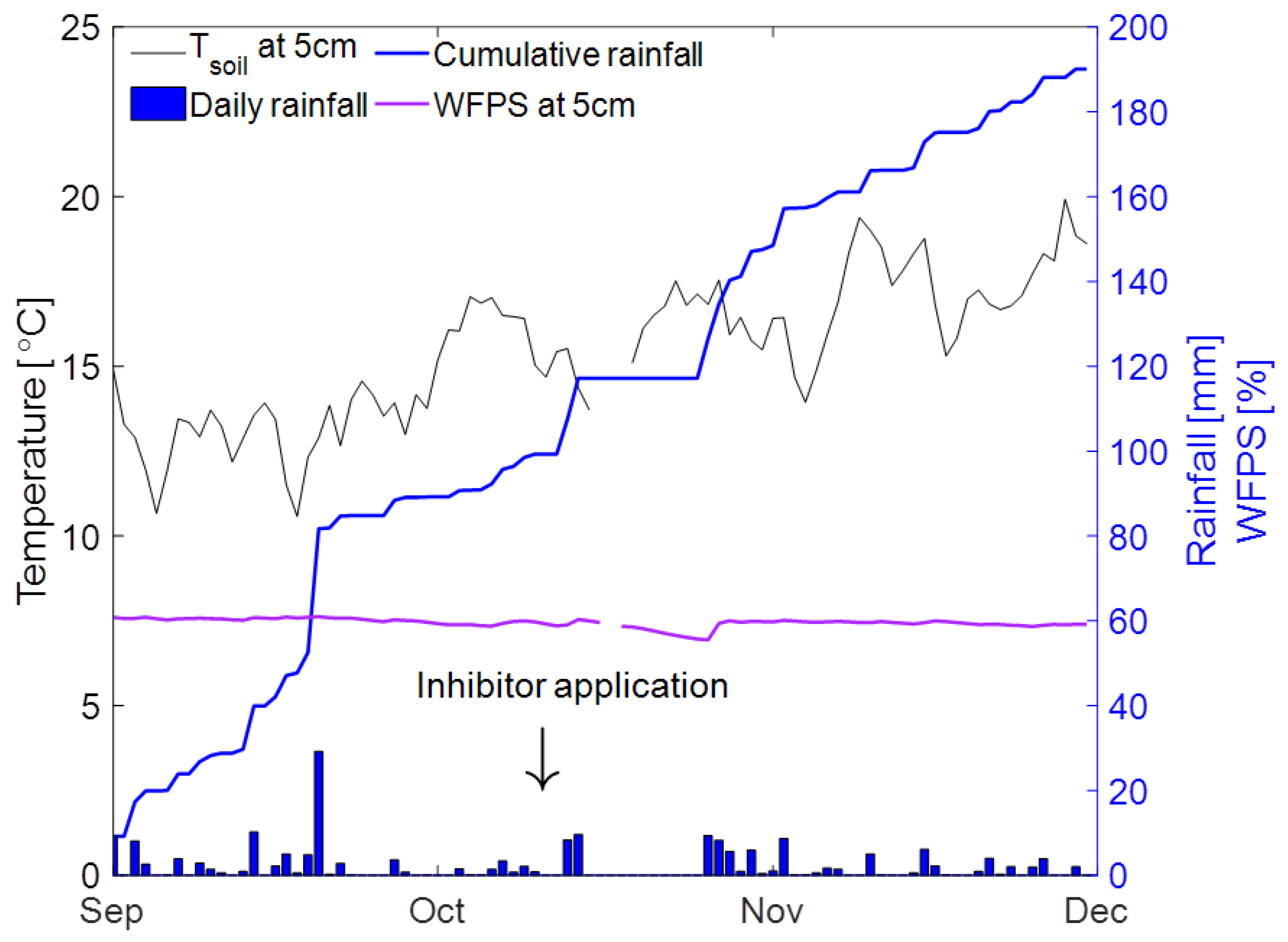
The daily rainfall (mm) and soil temperature (°C) (at 50 and 100 mm depth) during the 55-day emissions measurements period (9 October to 2 December 2024) at the farm site are presented in Figure 3. About 200 mm of rainfall was measured at this site between September and December. The rainfall maintained the soil surface WFPS between 52 and 61%, which was close to the field capacity WFPS of 64%. These soil moisture conditions are favourable for denitrification and the production of N2O. The daily mean soil temperatures recorded ranged between 15 and 20 °C.

3.2. Nitrous Oxide Emissions

The pre-treatment daily N2O fluxes measured across all 0.50 m2 chambers ranged between 0.68 ± 0.26 and 1.15 ± 0.30 mg N2O-N, showing no significant difference in the background N2O emission among all the plots, confirming that by fencing off an 18-week ungrazed trial area for a further 10 weeks reduced the spatial heterogeneity from previous N inputs and uneven dung and urine deposition.
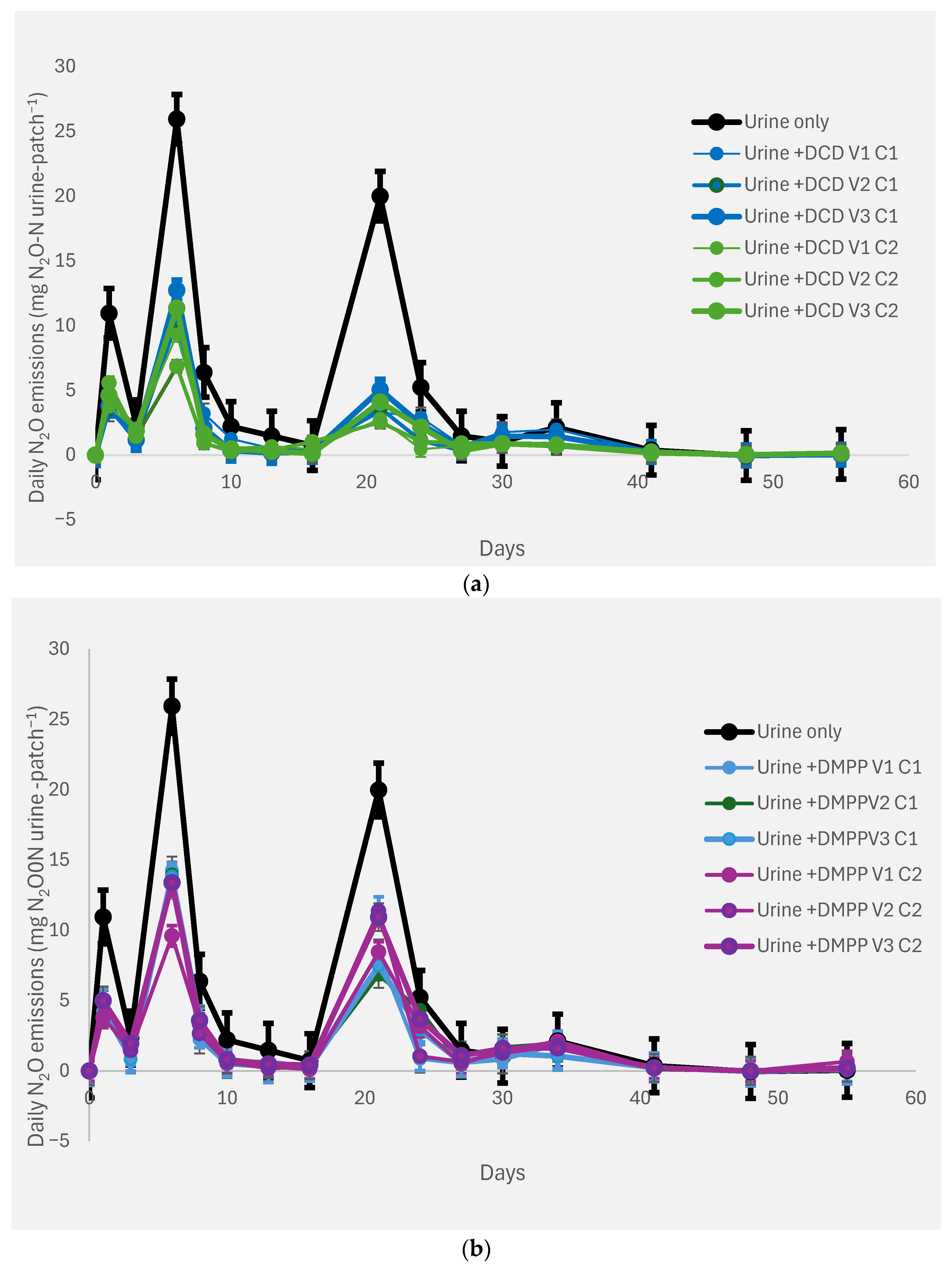
During these measurements, treatment and temporal variations were observed in the daily N2O-N fluxes (Figure 4). The magnitude of daily N2O-N fluxes from the urine-only treatments was generally higher than with the inhibitors applied to the urine. The highest daily fluxes (25.94 mg N patch−1) on day 6, followed by a second peak (19.99 mg N patch−1) on day 21, were measured after urine application in the urine-only treatment. The emissions from all treatments followed a similar trend and subsequently declined, reaching background emission levels.
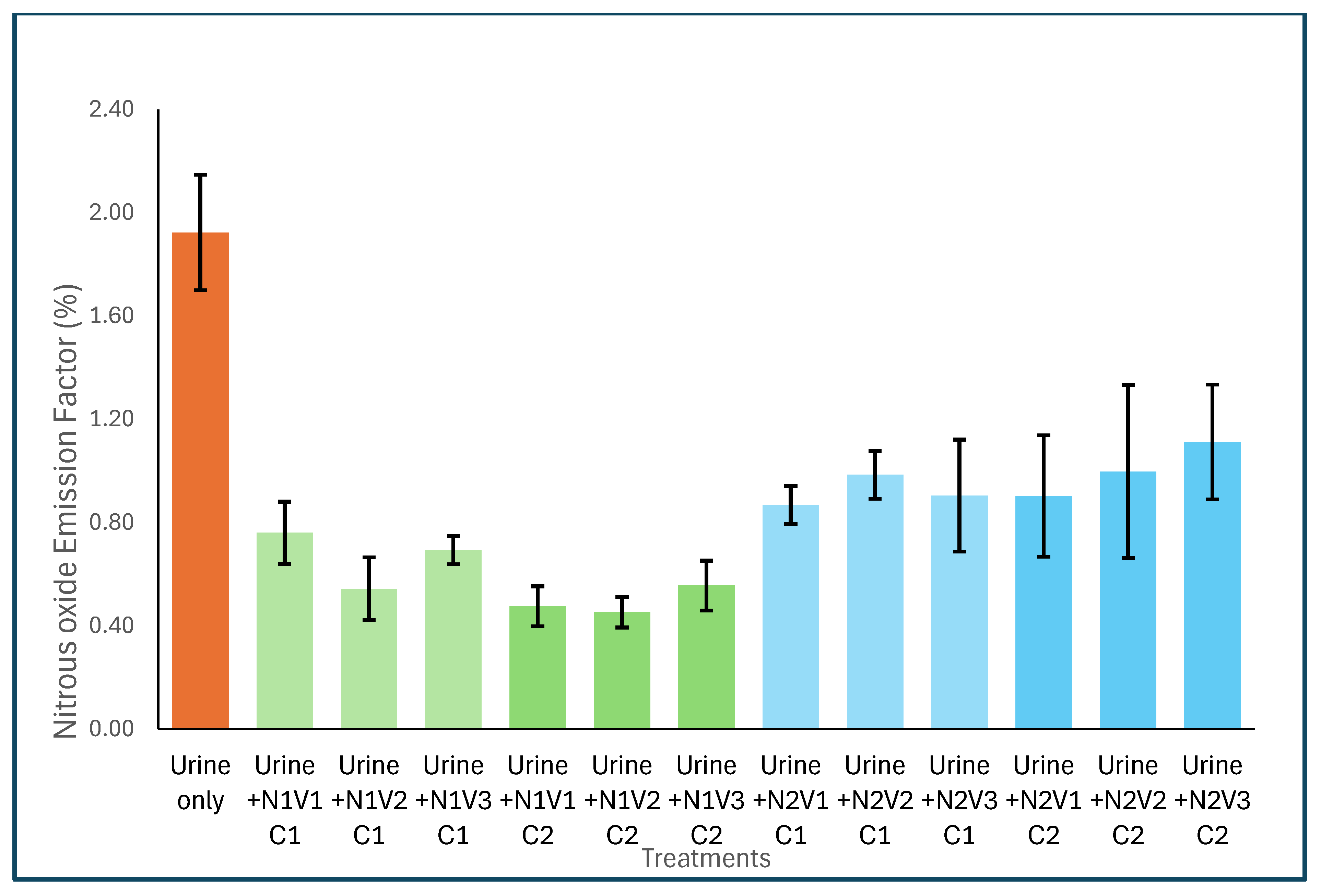
Total N2O emissions results for the urine-only treatment (Figure 4) were significantly higher than those from the inhibitors applied to urine treatments. These results showed that both inhibitors slowed the nitrification in the urine-N and effectively reduced N2O emission; however, there was no significant difference in emissions reduction with the inhibitor concentrations (C1, C2) and volumes (V1, V2, V3).
The urine-only treatment emitted 230.80 ± 26.83 mg N2O-N urine patch−1. A mean EF3 value of 1.92 ± 0.22% was measured during 55-day, under wetter soil moisture conditions (Figure 5). In this field study, the urine-only treatment had a higher N2O EF3 compared with the 0.98% reported in the NZ inventory [33]. This higher EF3 reflected favourable soil moisture conditions (WFPS near field capacity soil moisture (Figure 3)) for the nitrification, denitrification, and production of N2O. Among the two inhibitors (DCD and DMPP) applied to the urine, both significantly reduced the EF3 values and N2O-N emissions from the simulated urine patches (Figure 4), indicating an adequate mix with the urine patch with the rates of inhibitors used to ensure an adequate inhibitor supply above the threshold concentration, as well as enhancing the inhibitor co-location with urine-N in the deposited urine patches.

3.3. Percent Reduction in Nitrous Oxide Emissions

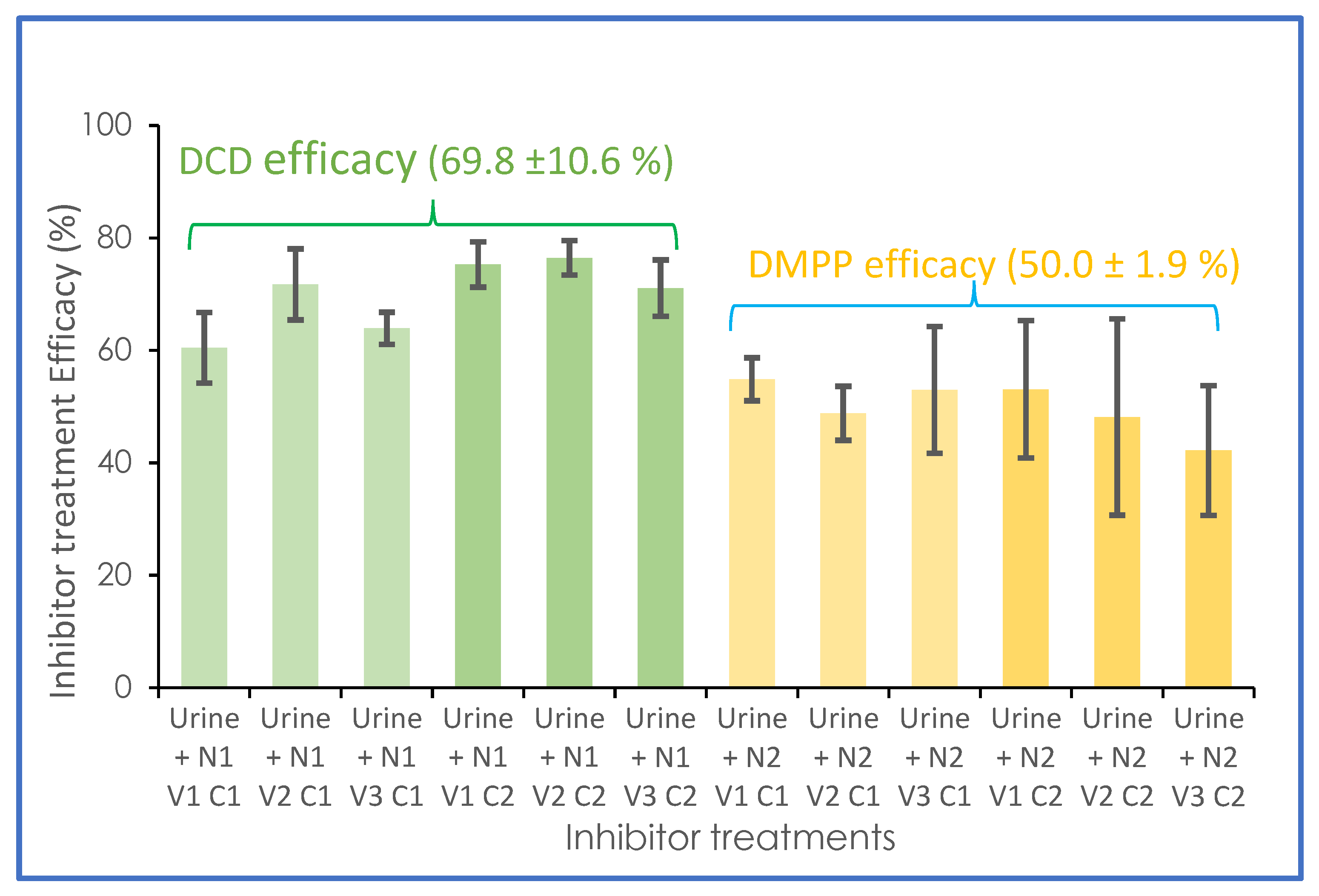
A three-way ANOVA was performed for the 12 inhibitor treatments to assess the influence of the three experimental factors (inhibitor type, concentration, and application volume) and their interactions on the reduction in N2O emissions (Table 2). This showed that both inhibitors significantly influenced the reduction in urine N2O emissions, while the DCD reduction efficacy was higher than that of the DMPP. The 69.8 ± 10.6% reduction in N2O EF3 obtained by DCD in this study (Figure 6) was within the inhibitory effect ranges of DCD (13–95%) reported in laboratory and field studies [3,6,34,35,36]. The inhibitory effect of DMPP in reducing N2O EF3 (50.0 ± 1.9%) measured in this study was similar to the >40% achieved by Friedl et al. (2020) [4] from mineral fertiliser. The available review of 196 datasets by [1] indicated that DCD and DMPP reduced N2O emissions from urine patches by 44 ± 2% and 28 ± 38% (average ± s.e.), respectively. The above DCD reduction values differed marginally from those reported in the previous review [3]. The difference was due to the inclusion of laboratory, glasshouse, and field studies in the previous reviews, compared with only field studies in this review.
Overall, DMPP showed potential to be used as an alternative NI for mitigating on-farm N2O emission from freshly deposited urine patches in livestock-grazed pasture soils. But there was no significant difference in the emissions reduction between the inhibitor volume and concentration (Table 2 and Figure 6), indicating these application rates may be higher than those required to sustain the threshold concentration within the urine patch; as such, this points to the need for further evaluation of lower inhibitor concentration in 100, 150, and 200 mL inhibitor solutions to optimise the inhibitor supply within the urine patch and to enhance the inhibitor co-location with urine-N in the deposited urine patches.

3.4. Inhibitor Residues in Pasture and Soil Samples

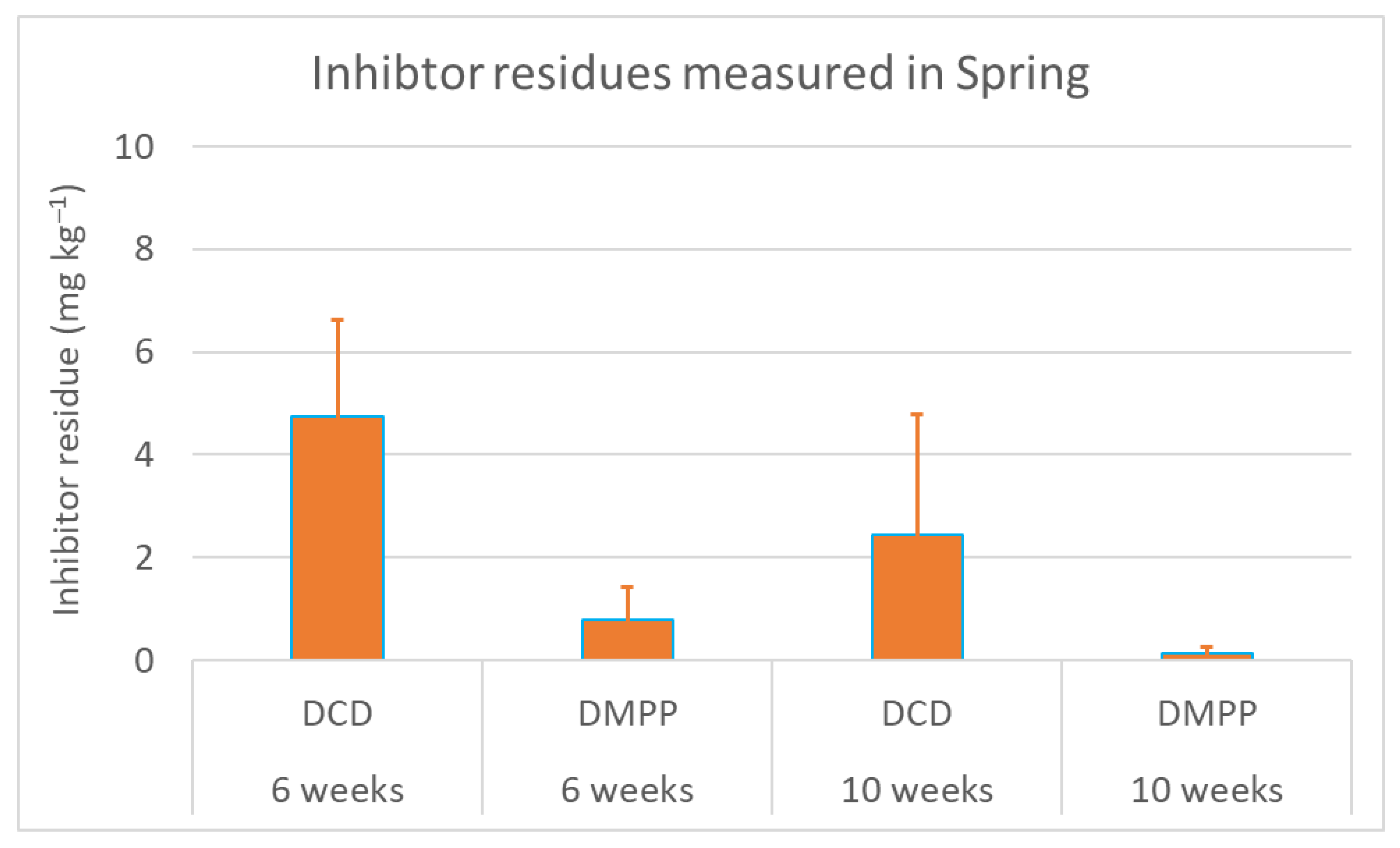
The proportions of the inhibitors intercepted by the pasture canopy, calculated from the amounts of inhibitors applied and the amounts retained on the pasture canopy following the application to the urine patches, ranged from 6.77 ± 3.00 to 23.32 ± 1.01% for DCD and 4.73 ± 3.37 to 37.83 ± 1.03% for DMPP, irrespective of the inhibitor concentration and volume applied. The inhibitor residue analysed (Figure 7) on pasture samples collected at the first grazing (6 weeks) and at the end of the trial, when N2O emissions reached the background levels (10 weeks) showed that the concentrations of DCD and DMPP in the pasture samples were extremely above the NZ acceptable maximum residue level (MRL, 0.1 mg kg−1 [16]).
In an Irish field study, DCD concentration in pasture samples receiving 1.04 to 1.74 kg DCD ha−1 was within the range (0.004 to 28 mg DCD kg−1 grass) and mean (6.8 ± 0.06 mg DCD kg−1, n = 125) measured over five harvesting days (5, 10, 15, 20, and 30) for each harvesting cycle [37]. This study also observed a decreasing trend in DCD residues from 12 to 0.3 mg kg−1 grass over 5 to 30 days and showed that the DCD phytoaccumulation factor was between 0.004% to 1.1%. In an NZ glasshouse study, 2.7 to 5.2% of the applied DCD was absorbed from a 10 kg DCD ha−1 equivalent application [38]. However, in the present NZ field study, 0.54 ± 0.09% and 0.24 ± 0.13% of DCD and 0.02 ± 0.002% and 0.003 ± 0.001% of DMPP were measured in the pasture samples collected at 6 and 10 weeks after the applications to the urine patches.
In the present study, the amounts of both inhibitors used were higher than normally used to ensure sufficient inhibitors were available to freshly deposited urine patches. The inhibitor residue data suggested that the lower concentration of both inhibitors may be suitable to sustain the threshold concentration within the urine patch, as the higher inhibitor concentration used in this study did not result in further reduction in emissions. The urine patch paddock area covered by inhibitor residue from targeted treatment represented a small proportion (6% to 12%) of the total pasture intake [20,39]. Thus, the pasture grazed at 4 and 6 weeks following targeted inhibitor application to the urine patches could significantly reduce the inhibitor residue compared to blanket inhibitor application, as the required inhibitor amount in targeted application was reduced by about 90%.

4. Conclusions

This study highlighted the potential efficacy of DCD and DMPP in reducing on-farm N2O emissions and their associated residues in pasture at first grazing and has pointed to two important aspects that are now addressed in the Bioeconomy Science Institute’s NZ–Ireland (Global Research Alliance)-funded Strategic Urine Patch Emissions Research Technology (SUPER-Tech) project to determine the optimum inhibitor concentration required to minimise/reduce N2O emissions and ensure that, at optimised amounts of inhibitor application rates, inhibitor residues are below their maximum residue level (MRL) in the food chain and the environment, eliminating their potential harm to human health.
A concern has remained that in the absence of an international codex (meaning that the MRL is set at zero), any amount of NI present in food, even at a level not causing potential harm to human health, could be unacceptable for trade.

Author Contributions

Conceptualisation, S.S.; methodology, S.S., T.P. and P.B.; software, S.S. and T.P.; validation, S.S., T.P. and P.B.; formal analysis, S.S. and L.L.; investigation, S.S., T.P. and P.B.; data curation, S.S. and L.L.; writing—original draft preparation, S.S.; writing—review and editing, S.S.; visualisation, S.S. and L.L.; supervision, S.S.; project administration, S.S.; funding acquisition, S.S. All authors have read and agreed to the published version of the manuscript.

Funding

This research was supported by the MBIE Strategic Science Funding (SSIF) project PRJ4510, with in-kind equipment contributions from Pastoral Robotics Limited (NZ).

Data Availability Statement

The data that support this study will be shared upon reasonable request to the corresponding author.

Acknowledgments

Thanks to Massey University’s Troy Bosher for providing the pasture site; Yu Zhang, Maggie Zou, and Natascha Stroebinger for the HPLC analysis of inhibitor residues; and Donna Giltrap for providing helpful suggestions.

Conflicts of Interest

The authors declare no conflicts of interest. The funders had no role in the design of the study; in the collection, analyses, or interpretation of the data; in the writing of the manuscript; or in the decision to publish the results.

References

  1. Adhikari, K.P.; Chibuike, G.; Saggar, S.; Simon, P.L.; Luo, J.; de Klein, C.A.M. Management and implications of using nitrification inhibitors to reduce nitrous oxide emissions from urine patches on grazed pasture soils—A review. Sci. Total Environ. 2021, 791, 148099. [Google Scholar] [CrossRef]
  2. Di, H.J.; Cameron, K.C. How does the application of different nitrification inhibitors affect nitrous oxide emissions and nitrate leaching from cow urine in grazed pastures. Soil Use Manag. 2012, 28, 54–61. [Google Scholar] [CrossRef]
  3. Di, H.J.; Cameron, K.C. Inhibition of nitrification to mitigate nitrate leaching and nitrous oxide emissions in grazed grassland—A review. J. Soils Sediments 2016, 16, 1401–1420. [Google Scholar] [CrossRef]
  4. Friedl, J.; Scheer, C.; Rowling, D.W.; DelTedesco, E.; Gorfer, M.; De Rosa, D.; Grace, P.R.; Muller, C.; Keiblinger, K.M. Effect of the nitrification inhibitor 3,4-dimethylpyrazole phosphate (DMPP) on N-turnover. The N2O reductase gene nosZ and N20-N2 partitioning from agricultural soils. Sci. Rep. 2020, 10, 2399. [Google Scholar] [CrossRef]
  5. Gillingham, A.G.; Ledgard, S.F.; Saggar, S.; Cameron, K.C.; Di, H.; de Klein, C.; Aspin, M. Initial evaluation of the effects of dicyandiamide (DCD) on nitrous oxide emissions, nitrate leaching and dry matter production from dairy pastures in a range of locations within New Zealand. In Advanced Nutrient Management: Gains from the Past—Goals for the Future; Currie, L.D., Christensen, C.L., Eds.; Occasional Report No. 25; Fertilizer and Lime Research Centre, Massey University: Palmerston North, New Zealand, 2012; 16p, Available online: http://flrc.massey.ac.nz/publications.html (accessed on 19 January 2026).
  6. Kim, D.-G.; Giltrap, D.; Saggar, S.; Palmada, T.; Berben, P.; Drysdale, D. Fate of the nitrification inhibitor dicyandiamide (DCD) sprayed on a grazed pasture: Effect of rate and time of application. Soil Res. 2012, 50, 337–347. [Google Scholar] [CrossRef]
  7. Chibuike, G.; Saggar, S.; Palmada, T.; Luo, J. The persistence of nitrification inhibitors to mitigate nitrous oxide emissions from New Zealand pasture soils amended with urine. Geoderma Reg. 2022, 30, e00541. [Google Scholar] [CrossRef]
  8. Chibuike, G.; Palmada, T.; Saggar, S.; Giltrap, D.; Luo, J. A comparison of the threshold concentration of DCD, DMPP and nitrapyrin to reduce urinary nitrogen nitrification rates on pasture soils—A laboratory study. Soil Res. 2023, 61, 187–197. [Google Scholar] [CrossRef]
  9. Rodríguez, M.J.; Saggar, S.; Berben, P.; Palmada, T.; López-Villalobos, N.; Pal, P. Use of a urease inhibitor to mitigate ammonia emissions from urine patches. Environ. Technol. 2021, 42, 20–31. [Google Scholar] [CrossRef] [PubMed]
  10. Saggar, S.; Bolan, N.; Singh, J.; Blard, A. Economic and environmental impacts of increased nitrogen use in grazed pastures and the role of inhibitors in mitigating nitrogen losses. N. Z. Sci. Rev. 2005, 62, 62–67. [Google Scholar] [CrossRef]
  11. Adhikari, K.P.; Luo, J.; Saggar, S.; Giltrap, D. Inhibitor application time and pasture canopy interception regulate gaseous losses of urine-N. Nutr. Cycl. Agroecosyst 2024, 128, 359–371. [Google Scholar] [CrossRef]
  12. Adhikari, K.; Saggar, S.; Luo, J.; Giltrap, D.; Lindsey, S.; Berben, P.; Palmada, T.; Bates, G. Significance of inhibitor volume in on-farm mitigation of nitrous oxide emission from dairy cattle urine patches. In Opportunities for Improved Farm and Catchment Outcomes; Christensen, C.L., Horne, D.J., Singh, R., Eds.; Occasional Report No 36; Farmed Landscapes Research Centre, Massey University: Palmerston North, New Zealand, 2024; 11p, Available online: http://flrc.massey.ac.nz/publications.html (accessed on 19 January 2026).
  13. Saggar, S.; Singh, J.; Giltrap, D.L.; Zaman, M.; Luo, J.; Rollo, M.; Kim, D.-G.; Rys, G.; van der Weerden, T.J. Quantification of reductions in ammonia emissions from fertiliser urea and animal urine in grazed pastures with urease inhibitors for agriculture inventory: New Zealand as a case study. Sci. Total Environ. 2013, 465, 136–146. [Google Scholar] [CrossRef]
  14. Zaman, M.; Nguyen, M.L. How application timings of urease and nitrification inhibitors affect N losses from urine patches in a pastoral system. Agric. Ecosyst. Environ. 2012, 156, 37–48. [Google Scholar] [CrossRef]
  15. Giltrap, D.; Portegys, N.; Saggar, S.; Hanly, J.A. The proportion of deposited urine-patch intercepted by a delayed inhibitor application. Environ. Technol. 2022, 43, 3755–3764. [Google Scholar] [CrossRef]
  16. MPI (Ministry for Primary Industries). Food Notice: Maximum Residue Levels (MRLs) for Agricultural Compounds|NZ Government. 2025. Available online: https://www.mpi.govt.nz/agriculture/agricultural-compounds-vet-medicines/maximum-residue-levels-agricultural-compounds (accessed on 22 March 2026).
  17. Astley, M. DCD Use Suspended in New Zealand After Residue Discovered in Dairy; William Reed Business Media Ltd.: Crawley, UK, 2013; Available online: http://www.dairyreporter.com/Article/2013/01/24/DCD-use-suspended-in-New-Zealand-after-residue-discovered-in-dairy (accessed on 20 January 2026).
  18. Danaher, M.; Jordan, K. Identification of existing and emerging chemical residue contamination concerns in milk. Ir. J. Agric. Food Res. 2013, 52, 173–183. [Google Scholar]
  19. Jolly, B.; Luo, J.; Mehra, P.; Forrestal, P.; O’Neill, M.; Richards, K.; Singh, B.P.; Bates, J.; Saggar, S. Evaluation of proximal sensing technologies for mapping bovine urine patches in grazing pastures. Comput. Electron. Agric. 2021, 188, 106309. [Google Scholar] [CrossRef]
  20. Moir, J.L.; Cameron, K.C.; Di, H.J.; Fertsak, U. The spatial coverage of dairy cattle urine patches in an intensively grazed pasture system. J. Agric. Sci. 2011, 149, 473–485. [Google Scholar] [CrossRef]
  21. Hewit, A. Soil Classification in New Zealand; DSIR Land Resources Scientific Report No. 19; Department of Scientific and Industrial Research: New Delhi, India, 1992; pp. 91–120.
  22. FAO–UNESCO. Soil Map of the World; World Soil Resources Report No 84; FAO: Rome, Italy, 1998. [Google Scholar]
  23. de Klein, C.A.; Barton, L.; Sherlock, R.R.; Li, Z.; Littlejohn, R.P. Estimating a nitrous oxide emission factor for animal urine from some New Zealand pastoral soils. Soil Res. 2003, 41, 381–399. [Google Scholar] [CrossRef]
  24. Blakemore, L.C.; Searle, P.L.; Daly, B.K. Methods for Chemical Analysis of Soils; Scientific Report 80; New Zealand Soil Bureau: Wellington, New Zealand, 1987. Available online: http://digitallibrary.landcareresearch.co.nz/cdm/ref/collection/p20022coll2/id/139 (accessed on 13 January 2023).
  25. Gradwell, M.W. Methods for Physical Analysis of Soils; New Zealand Soil Bureau Scientific Report 10C; New Zealand Soil Bureau: Wellington, New Zealand, 1972. Available online: http://digitallibrary.landcareresearch.co.nz/cdm/ref/collection/p20022coll2/id/180 (accessed on 13 January 2023).
  26. Head, K.H. Manual of Soil Laboratory Testing: Vol. 1, 2nd ed.; Pentech Press: London, UK, 1992. [Google Scholar]
  27. Hedley, C.B.; Saggar, S.; Tate, K.R. Procedure for fast simultaneous analysis of the greenhouse gases: Methane, carbon dioxide and nitrous oxide in air samples. Commun. Soil Sci. Plant Anal. 2006, 37, 1501–1510. [Google Scholar] [CrossRef]
  28. Hutchinson, G.L.; Mosier, A.R. Improved soil cover method for field measurement of nitrous oxide fluxes. Soil Sci. Soc. Am. J. 1981, 45, 311–316. [Google Scholar] [CrossRef]
  29. Saggar, S.; Andrew, R.M.; Tate, K.R.; Hedley, C.B.; Rodda, N.J.; Townsend, J.A. Modelling nitrous oxide emissions from dairy grazed pastures. Nutr. Cycl. Agroecosyst. 2004, 68, 243–255. [Google Scholar] [CrossRef]
  30. Schwarzer, C.; Haselwandter, K. Rapid quantification of the nitrification inhibitor dicyandiamide in soil samples, nutrient media, and bacterial cell-free extracts. J. Chromatogr. A 1996, 732, 390–393. [Google Scholar] [CrossRef]
  31. Adhikari, K.P.; Bishop, P.; Saggar, S. Methods for extracting and analysing DMPP and Nitrapyrin in soil and plant samples from grazed pasture. Plant Soil 2021, 469, 149–160. [Google Scholar] [CrossRef]
  32. R Core Team. R: A Language and Environment for Statistical Computing, Version 4.1.2; R Foundation for Statistical Computing: Vienna, Austria, 2021. Available online: https://www.R-project.org/ (accessed on 19 January 2024).
  33. MfE (Ministry for the Environment). New Zealand’s Greenhouse Inventory 1990–2023. 2025. Available online: https://Environmentgovt.nz/publications/new-zealands-greenhouse-gas-inventory-1990-2023/ (accessed on 16 April 2025).
  34. Balaine, N.; Clough, T.J.; Kelliher, F.M.; van Koten, C. Increasing soil aeration reduces mitigation efficiency of dicyandiamide when targeted at ruminant urine-derived N2O emissions. N. Z. J. Agric. Res. 2015, 58, 441–458. [Google Scholar] [CrossRef]
  35. Barneze, A.S.; Minet, E.P.; Cerri, C.C.; Misselbrook, T. The effect of nitrification inhibitors on nitrous oxide emissions from cattle urine depositions to grassland under summer conditions in the UK. Chemosphere 2015, 119, 122–129. [Google Scholar] [CrossRef] [PubMed]
  36. Singh, J.; Saggar, S.; Giltrap, D.L.; Bolan, N.S. Decomposition of dicyandiamide (DCD) in three contrasting soils and its effect on nitrous oxide emission, soil respiratory activity, and microbial biomass—An incubation study. Aus. J. Soil Res. 2008, 46, 517–525. [Google Scholar] [CrossRef]
  37. Rahman, N.; Nkwonta, C.G.; Danaher, M.; Richards, K.G.; Hogan, S.A.; Cummins, H.; O’Neill, M.; Ray, A.; Byrne, M.; Forrestal, P.J. Measurements of grass uptake of the urease inhibitor NBPT and of the nitrification inhibitor dicyandiamide co-applied with granular urea. Environ. Sci. Pollut. Res. 2023, 30, 85482–85493. [Google Scholar] [CrossRef] [PubMed]
  38. Pal, P.; McMillan, A.M.S.; Saggar, S. Pathways of dicyandiamide uptake in pasture plants: A glasshouse study. Biol. Fertil. Soils 2016, 52, 539–546. [Google Scholar] [CrossRef]
  39. Maire, J.; Gibson-Poole, S.; Cowan, N.; Reay, D.S.; Richards, K.G.; Skiba, U.; Rees, R.M.; Lanigan, G.J. Identifying urine patches on intensively managed grassland using aerial imagery captured from remotely piloted aircraft systems. Front. Sustain. Food Syst. 2018, 2, 10. [Google Scholar] [CrossRef]
Figure 1. Chamber layout.
Agronomy 16 00701 g001
Figure 2. Details of the 14 treatments applied in this study.
Agronomy 16 00701 g002
Figure 3. Distribution of daily air and soil temperatures at 5 and 7.5 cm, daily rainfall, cumulative rainfall, and % water-filled pore space (WFPS) during the study period.
Agronomy 16 00701 g003aAgronomy 16 00701 g003b
Figure 4. Mean daily N2O-N emissions from urine treatments (a) with and without DCD (dicyanamide) and (b) with and without DMPP (3,4-dimethylpyrazole phosphate) at the Manawatū dairy No. 1 farm (n = 4); inhibitor concentrations, C1 (low) and C2 (high); and inhibitor solution volumes, V1 (100 mL), V2 (150 mL), and V3 (200 mL) per urine patch.
Agronomy 16 00701 g004
Figure 5. Mean N2O-N EF3 from the urine treatments with and without NIs at the Manawatū dairy No. 1 farm (n = 4; error bars are ± stdev). Urine treatments: inhibitors, N1 (DCD = dicyandiamide) and N2 (DMPP = 3,4-dimethylpyrazole phosphate); inhibitor concentrations, C1 (low) and C2 (high); and inhibitor solution volumes, V1 (100 mL), V2 (150 mL), and V3 (200 mL) per urine patch.
Agronomy 16 00701 g005
Figure 6. Percent efficacy of NIs in reducing N2O-N emissions from urine at the Manawatū dairy No. farm (n = 4). Urine treatments: inhibitors, N1 (DCD = dicyandiamide) and N2 (DMPP = 3,4-dimethylpyrazole phosphate); inhibitor concentrations, C1 (low) and C2 (high); and inhibitor solution volumes, V1 (100 mL), V2 (150 mL), and V3 (200 mL) per urine patch.
Agronomy 16 00701 g006
Figure 7. Mean DCD and DMPP residue (mg kg−1) measured in pasture samples collected from the urine treatments with NIs (DCD and DMPP at concentrations, C1 (low) and C2 (high); and inhibitor solution volumes, V1 (100 mL), V2 (150 mL), and V3 (200 mL) per urine patch) at the Manawatū dairy No. 1 farm (n = 18; error bars are ± s.e.m.).
Agronomy 16 00701 g007
Table 1. Physicochemical properties (0–100 mm depth) of pasture soil studies.
Soil CharacteristicsManawatu Fine Sandy Loam
Sand, silt, and clay (%)35.0, 45.0, 20.0
Bulk density (mg m−3)1.12
Field capacity water content (%)37.0
Total porosity (%)57.8
pH (w)5.99
Total C (%)24.7
Total N (%)2.50
NH4+-N (mg kg−1)4.66
NO3-N (mg kg−1)0.53
Olsen P (mg L−1)53.0
CEC (cmol (+) kg−1)15.8
Calcium (cmol (+) kg−1)9.00
Magnesium (cmol (+) kg−1)1.02
Potassium (cmol (+) kg−1)0.383
Sodium (cmol (+) kg−1)0.238
Table 2. Three-way ANOVA on the reduction in cumulative N2O emissions.
Factorsd.f.F-Valuep-Value
Inhibitor110.340.0027
Concentration10.270.77
Volume20.090.77
Inhibitor × Concentration10.510.60
Inhibitor × Volume21.410.24
Concentration × Volume20.270.77
Inhibitor × Concentration × Volume20.170.85
Error36
Total47
Disclaimer/Publisher’s Note: The statements, opinions and data contained in all publications are solely those of the individual author(s) and contributor(s) and not of MDPI and/or the editor(s). MDPI and/or the editor(s) disclaim responsibility for any injury to people or property resulting from any ideas, methods, instructions or products referred to in the content.