Review of Seed Hemp (Cannabis sativa L.) Harvesting Techniques and the Challenges of Harvesting Technologies for This Crop



Abstract
1. Introduction
2. Biological and Agronomic Constraints Influencing Hemp Harvesting Technologies
2.1. General Agronomic Considerations
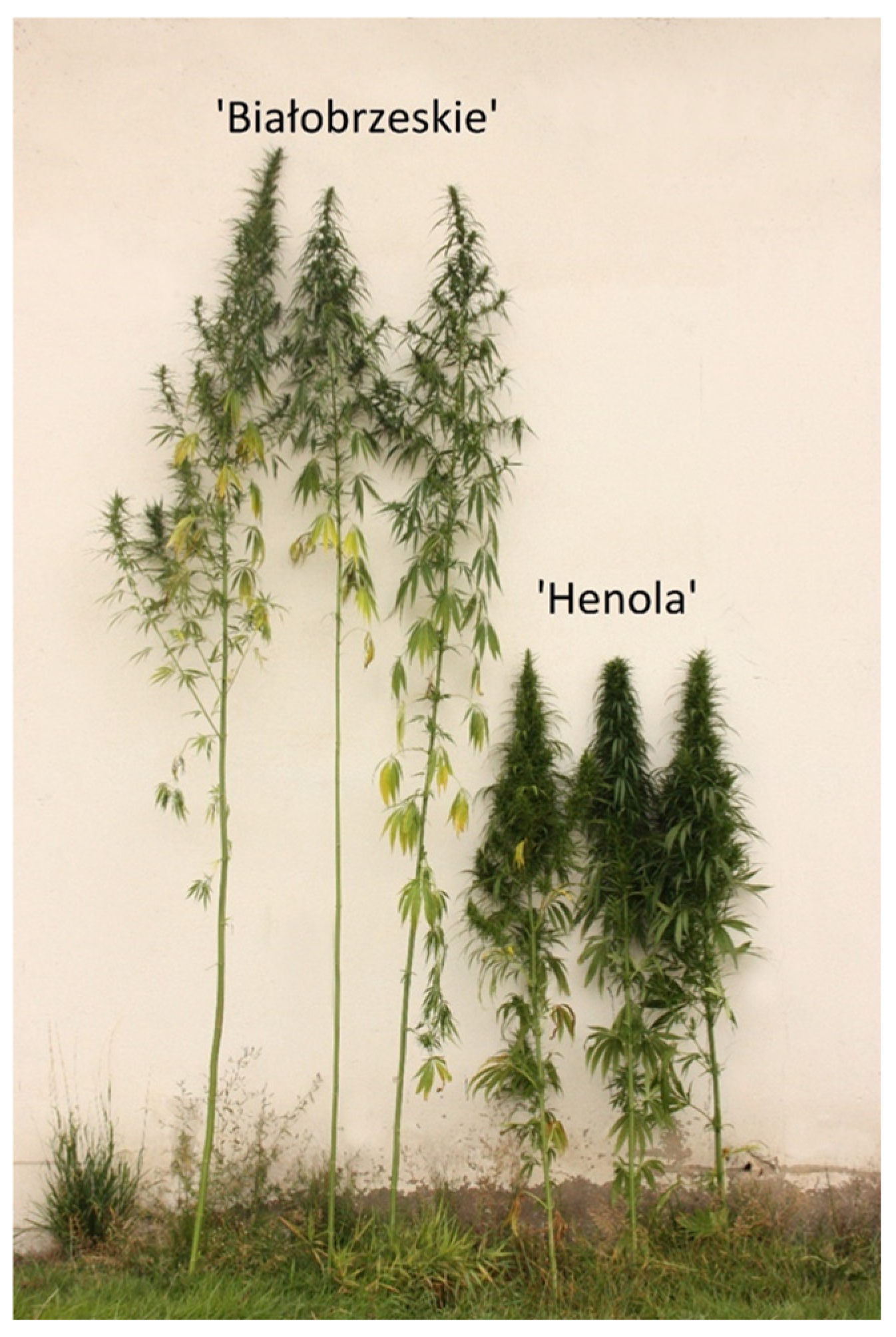
2.2. Stem Morphology
2.3. Panicle Morphology and Seed Maturation
3. Review of Industrial Hemp Harvesting Methods
- Whole-plant harvesting
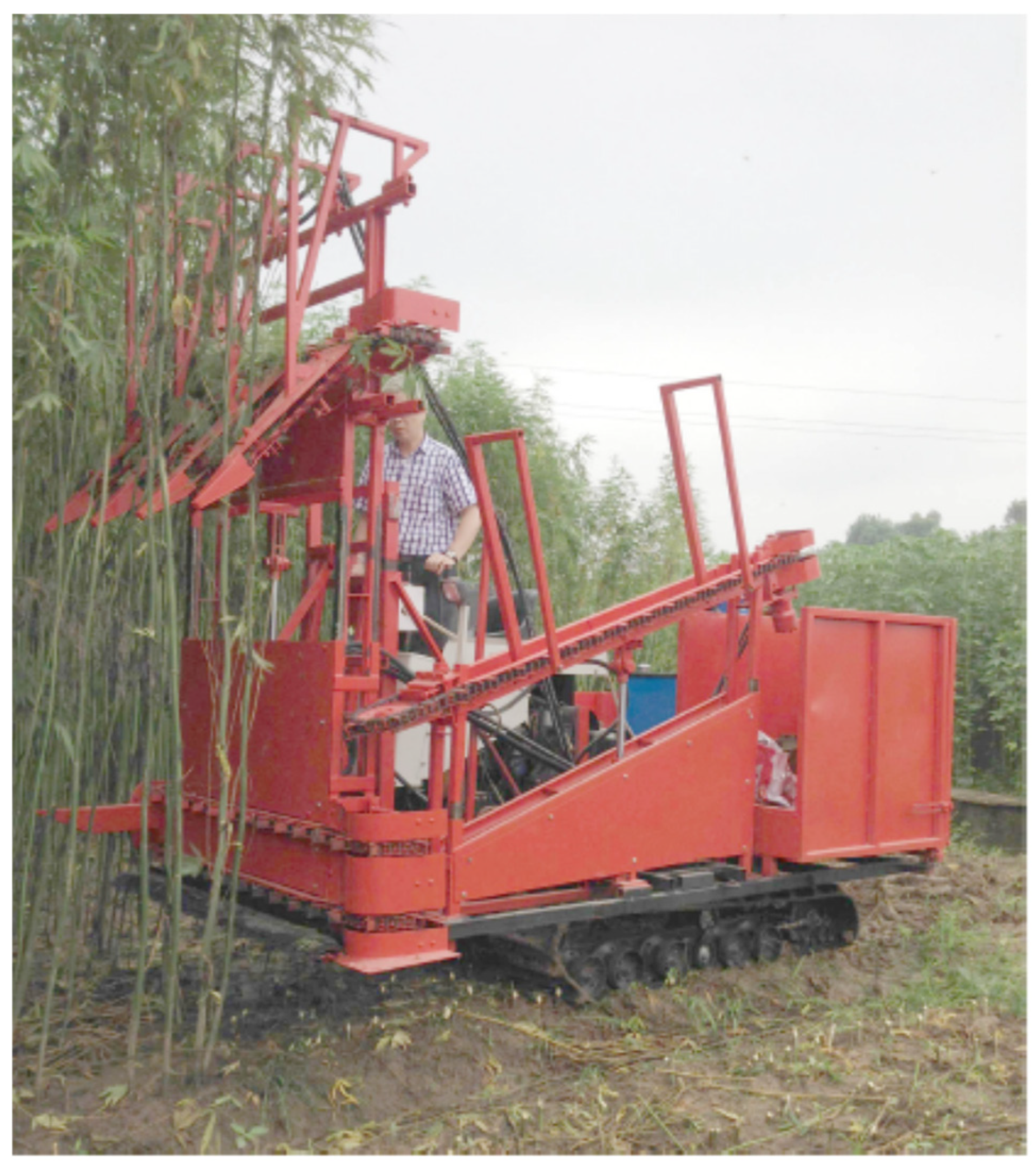
- Segmented (cut-to-length) harvesting
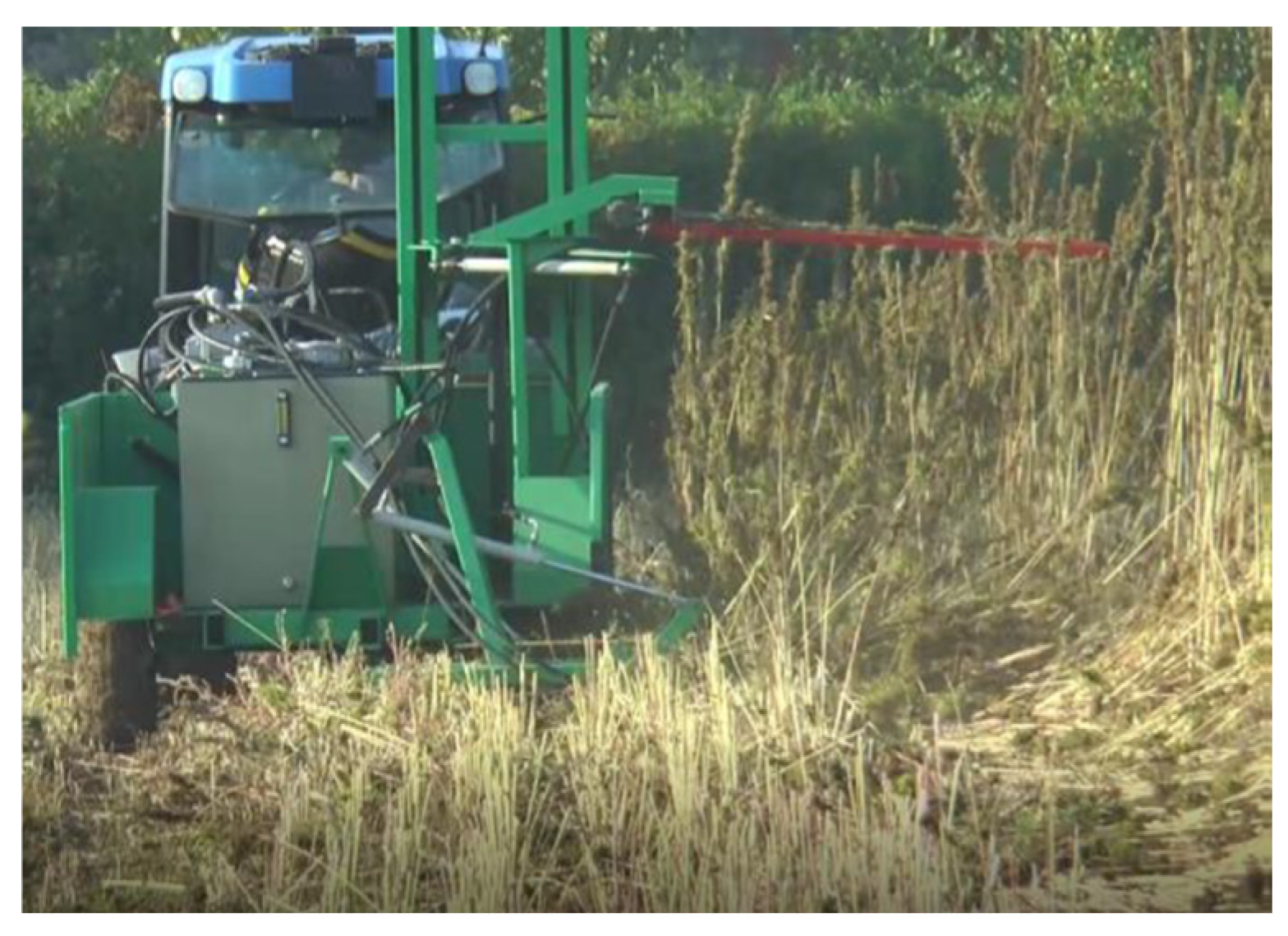
- Selective harvesting.
- cutting whole hemp plants;
- cutting them into sections approximately 1 m in length, with the option of separating the panicles;
- collecting and transporting the cut plants for on-farm drying, or
- leaving the segmented plants in the field to dry;
- threshing the seeds and processing the stems.
- Mowing and collection of the hemp panicles alone;
- Drying of the panicles using either heated air or natural ambient conditions;
- Threshing of the pre-dried panicles.
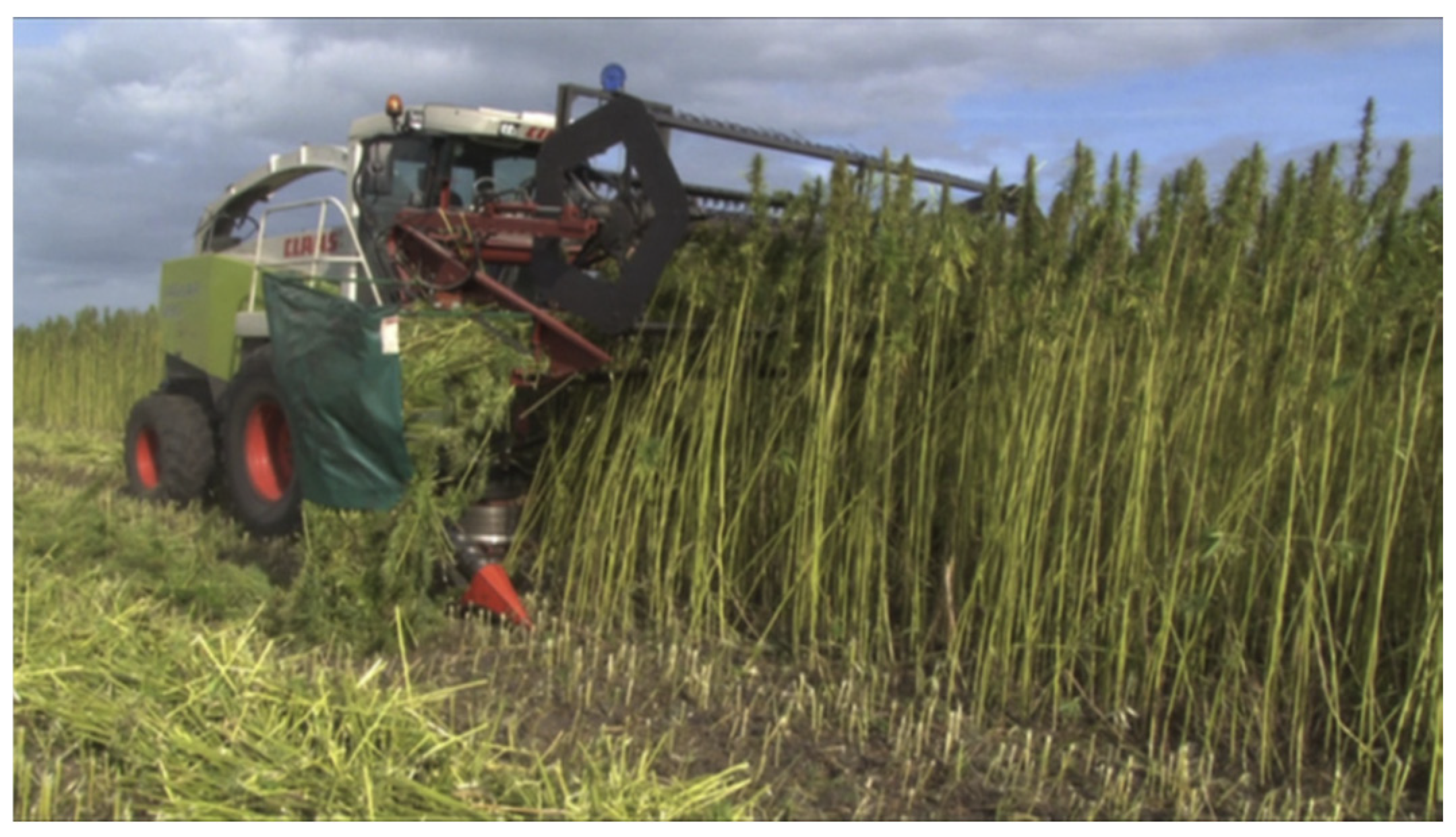
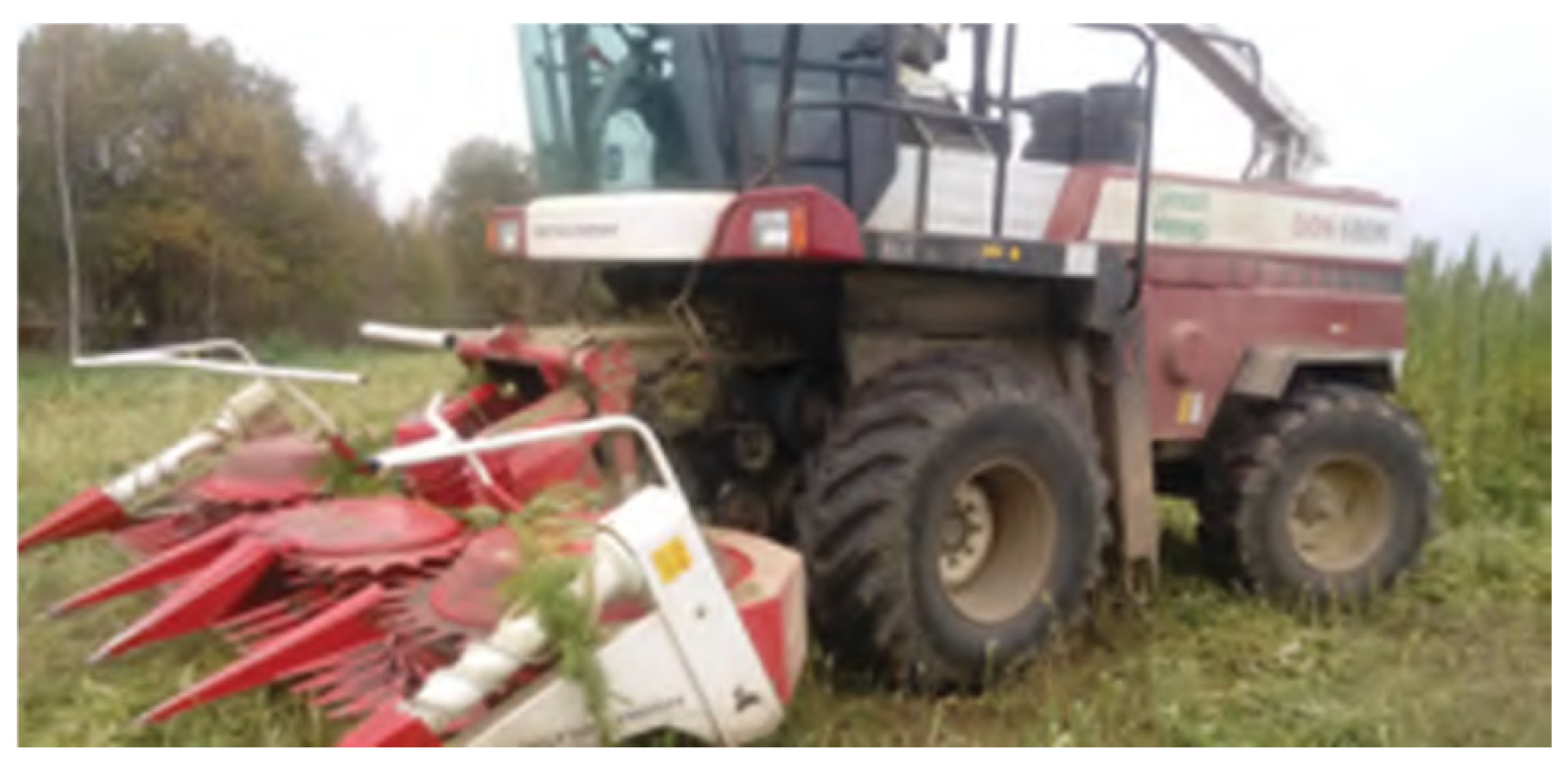
3.1. Whole-Plant Harvesting
- Reduction in wind-induced losses.
- Partial drying of seeds before harvesting.
- Potential reduction in aeration and drying requirements.
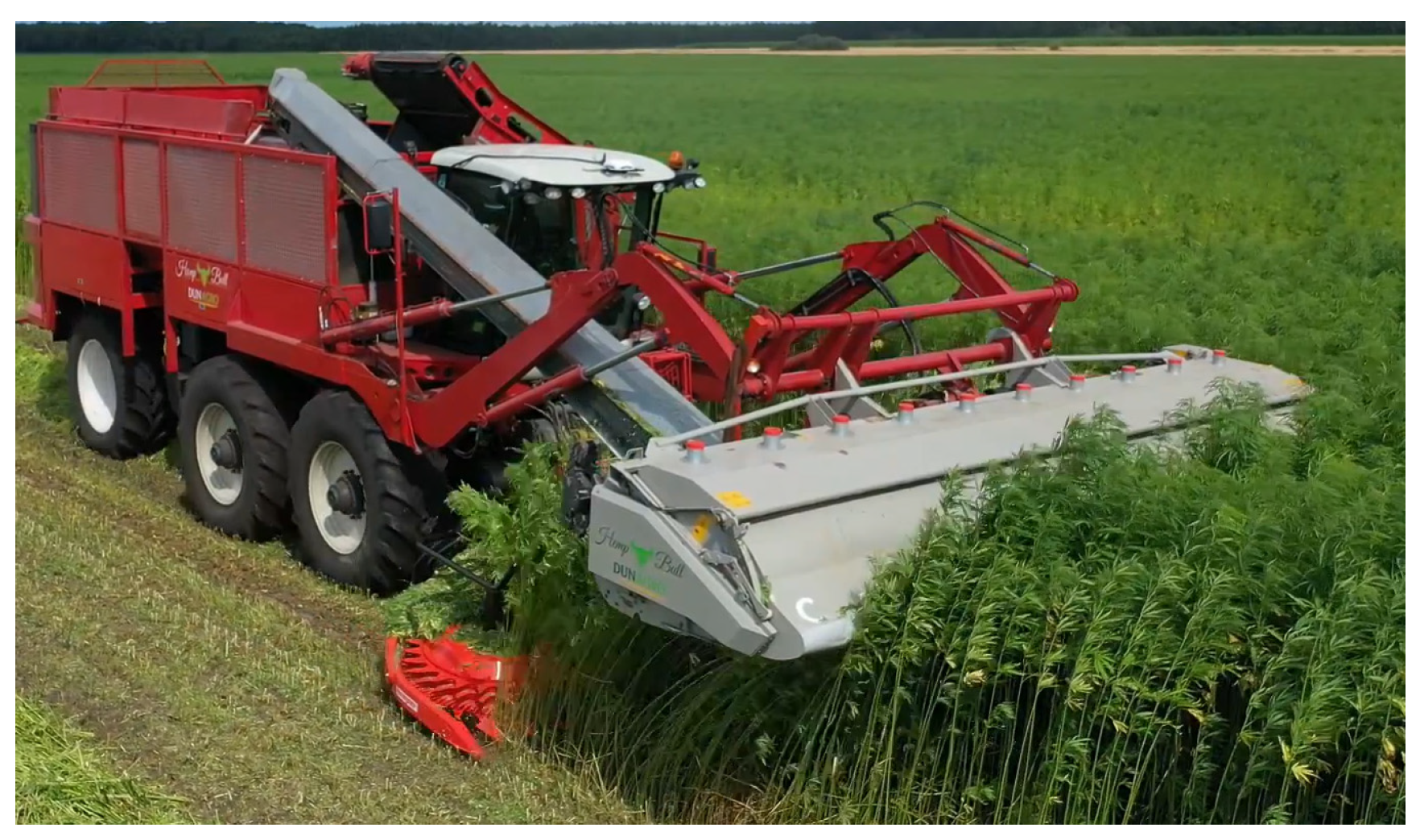
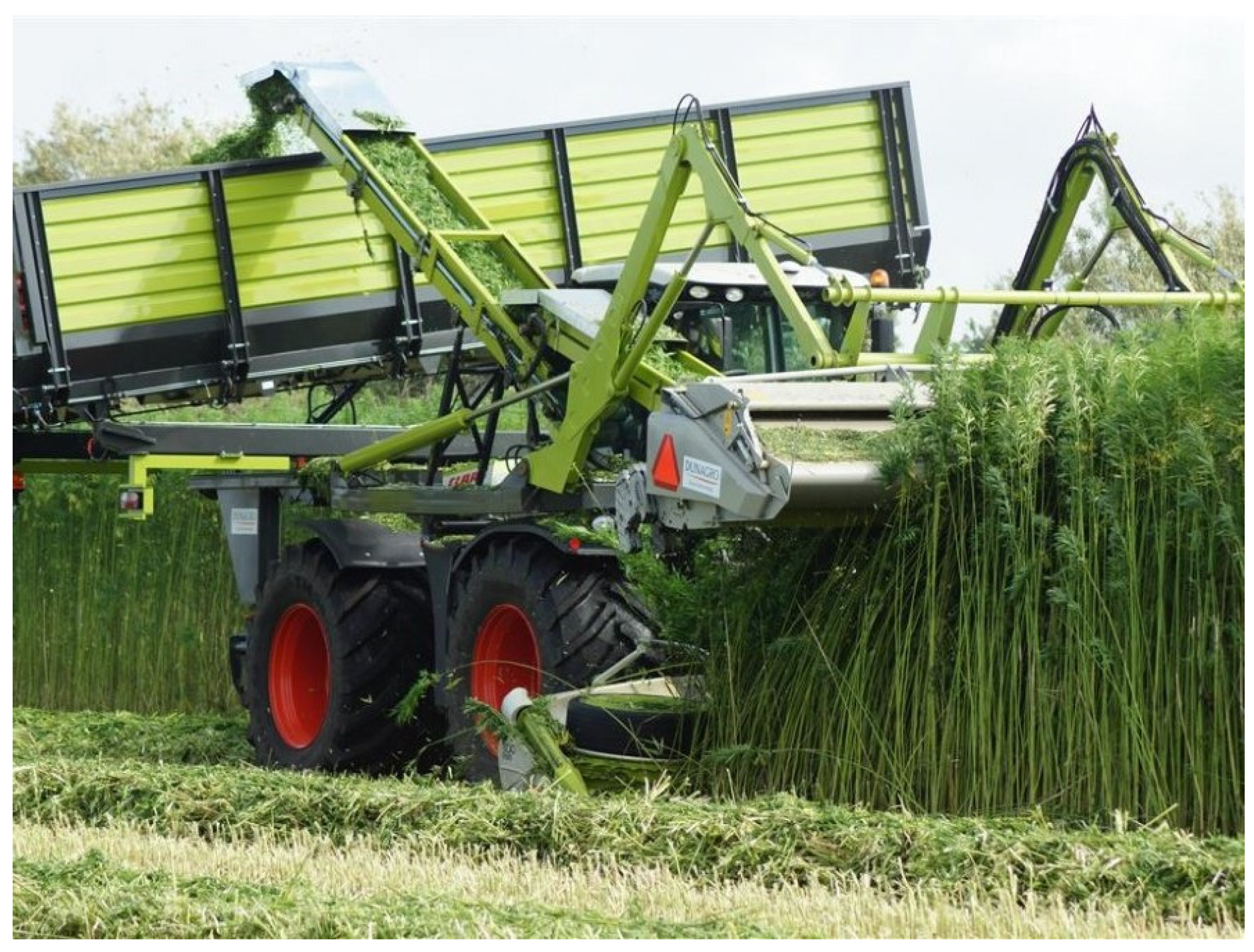
3.2. Segmented Harvesting (Cut-to-Length)
- ○
- Shielding: Exposed moving parts should be shielded with high-density polyethylene (puckboard) or sheet metal to prevent fiber wrapping.
- ○
- Deflectors: Deflectors should be installed to keep the crop away from the header reel ends and to narrow the feeder house inlet, preventing fiber from wrapping around outer shafts and pulleys.
- ○
- Shaft Protection: ABS piping can be placed over front drive shafts to provide a smooth, non-binding surface that prevents fiber entanglement.
- ○
- Line Management: Cables and hydraulic lines should be secured tightly to the machine’s chassis to reduce the risk of fiber build-up.
- ○
- Header Height: Header hydraulic cylinders should be extended by approximately 30 cm to allow for higher lift, which is essential when handling taller varieties.
3.3. Selective Hemp Harvesting for Seed Production
4. Discussion
Research Gaps and Technological Needs
- Quantitative Seed Loss Models: There is a lack of a reliable, physics-based model capable of predicting seed loss as a function of panicle morphology, header dynamics, and environmental conditions. The development of such a model would be instrumental in designing optimal header speeds and integrated machine settings. To date, no such models have been developed due to the multifaceted impact of environmental and technical parameters. The magnitude of seed loss, as described in Section 3.3, depends on the variety, maturity and harvesting technology itself.
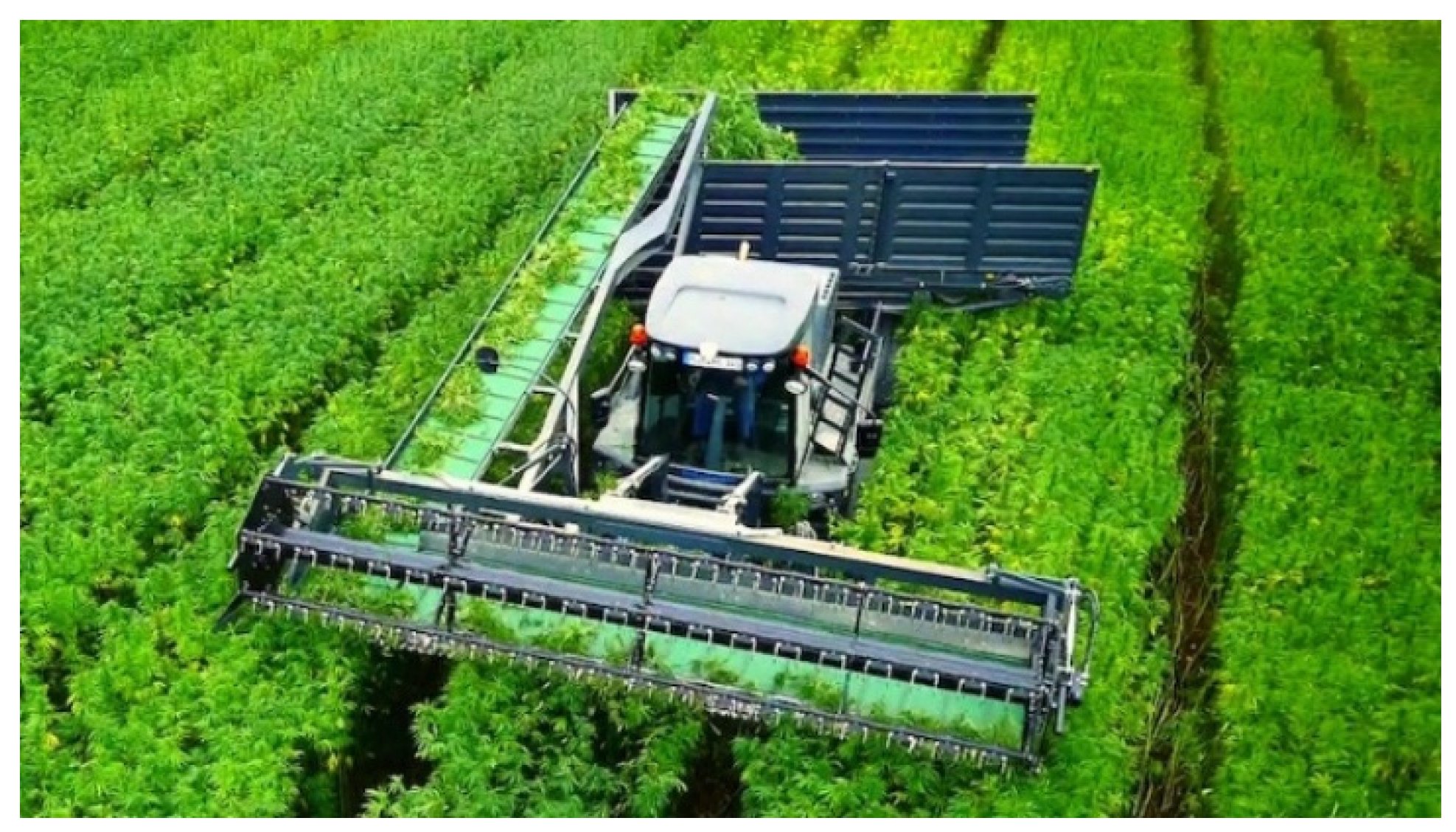
- Standardized Harvesting Unit Testing Protocols: There is a distinct lack of independent, comparative testing of both newly designed and currently operational harvesting units under standardized field conditions. The establishment of such a unified methodology would facilitate the accelerated implementation of best practices across the industry [62]. A review of the technology and the machines that implement it clearly indicates three possible methods of harvesting hemp. While many machines are available, most are single-unit productions or limited-run prototypes, or possibly small prototypes. The review also revealed that some of the machines, despite sharing the same general design and operating concept, are constructed from different components. This applies to both their chassis and transport units (e.g., a two-row machine on an Agrifac combine harvester chassis) as well as harvesting units themselves.
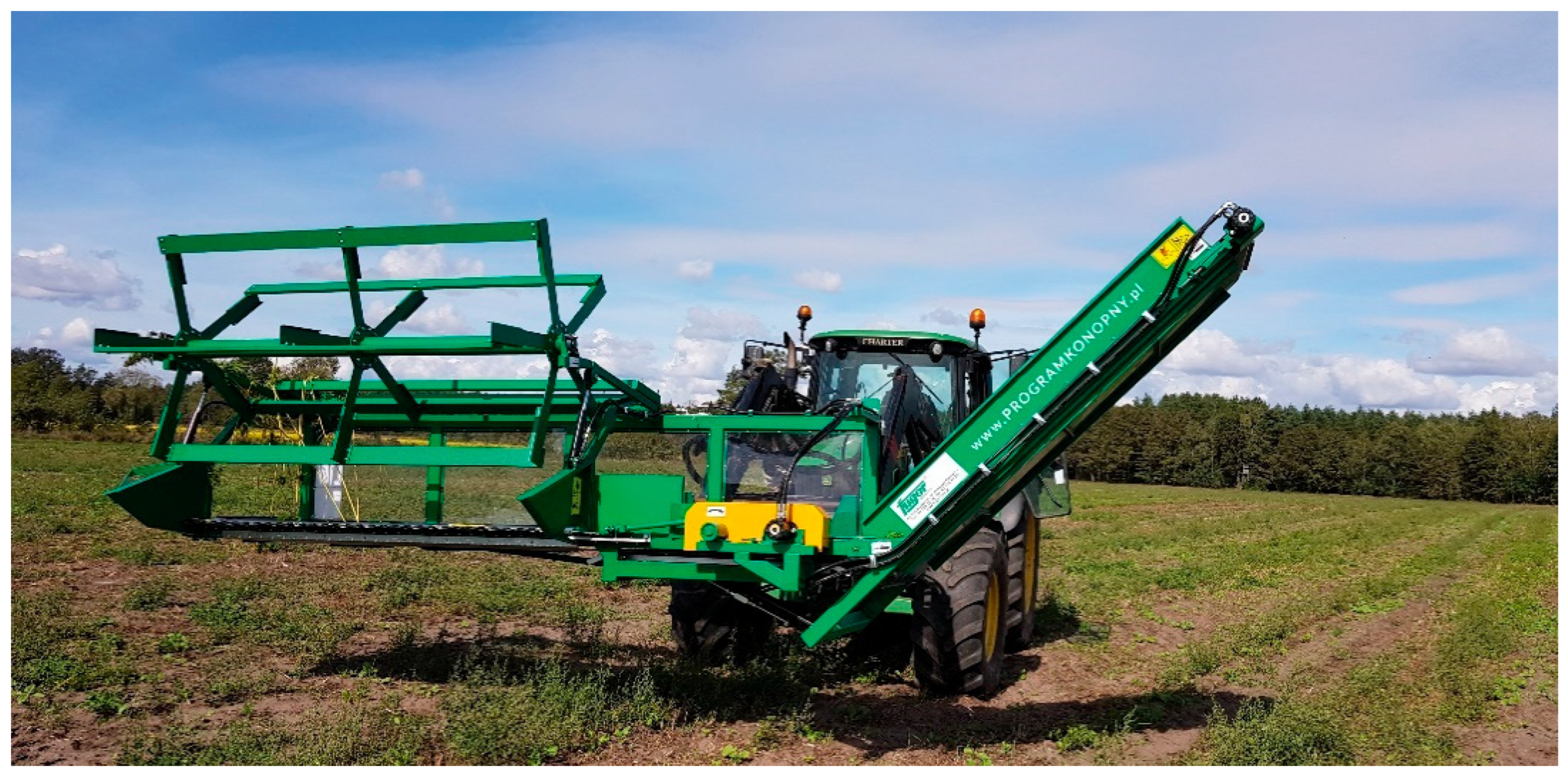
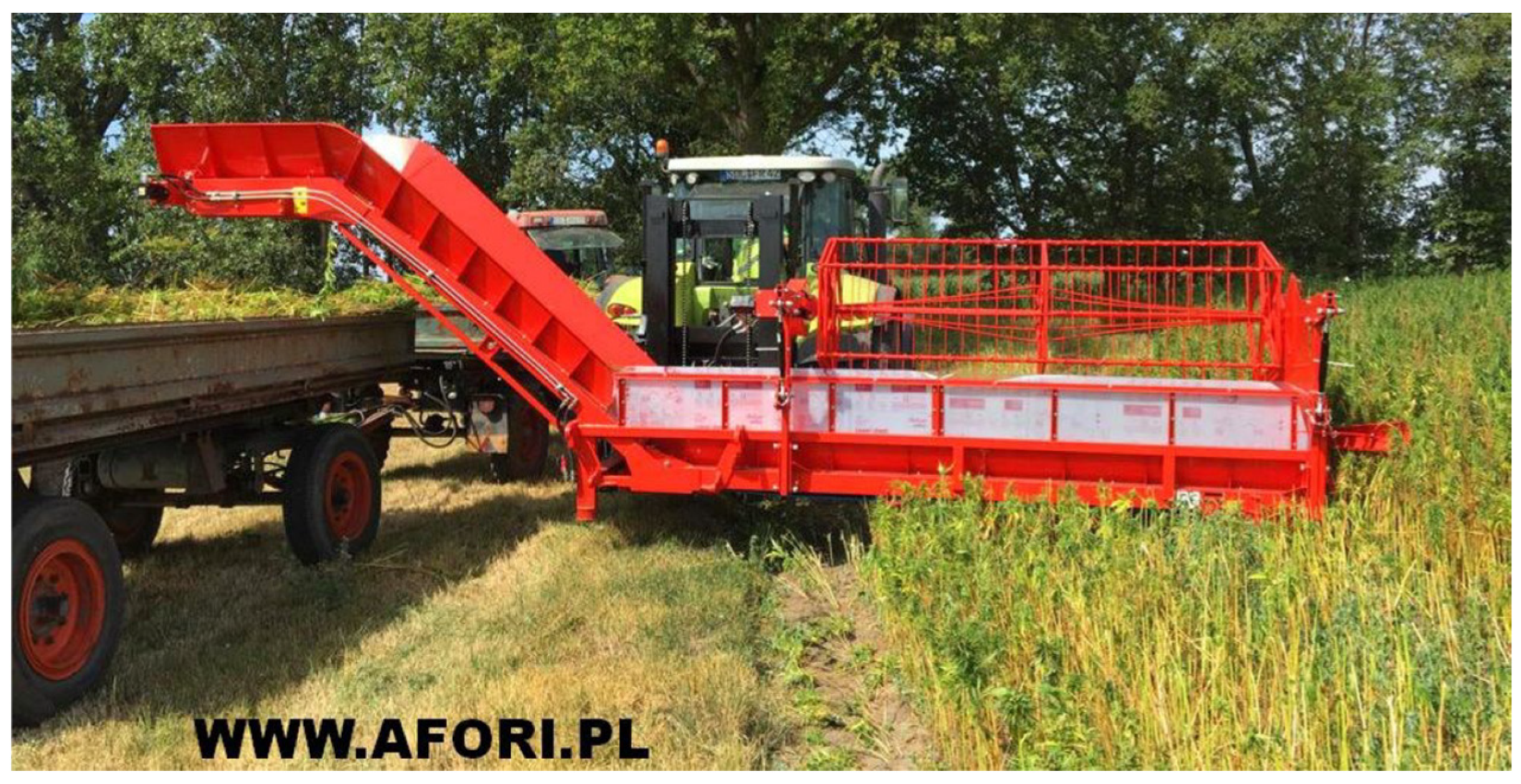
- Adaptive Combine Control Systems: The implementation of closed-loop control—utilizing various sensors to monitor both the execution of technological processes and the physical properties of the processed material—could significantly reduce seed damage and losses in real-time [21,22]. The review highlighted the lack of electronic monitoring and control over the harvesting, sectioning and threshing processes of hemp plants in many machines. Currently, such advanced systems are primarily found in modern, high-performance harvesters developed on established platforms (such as John Deere, New Holland, Kemper, or Claas), which are economically optimized for large-scale, uniform cultivation. Consequently, many custom-built machines require retrofitting with control systems based on precision farming principles. While the equipment level in Polish panicle harvesters developed by Afori and Fugor aligns with current technological standards, the integration of such systems into prototypes developed, for example, in Romania or China may prove technically challenging and cost-prohibitive.
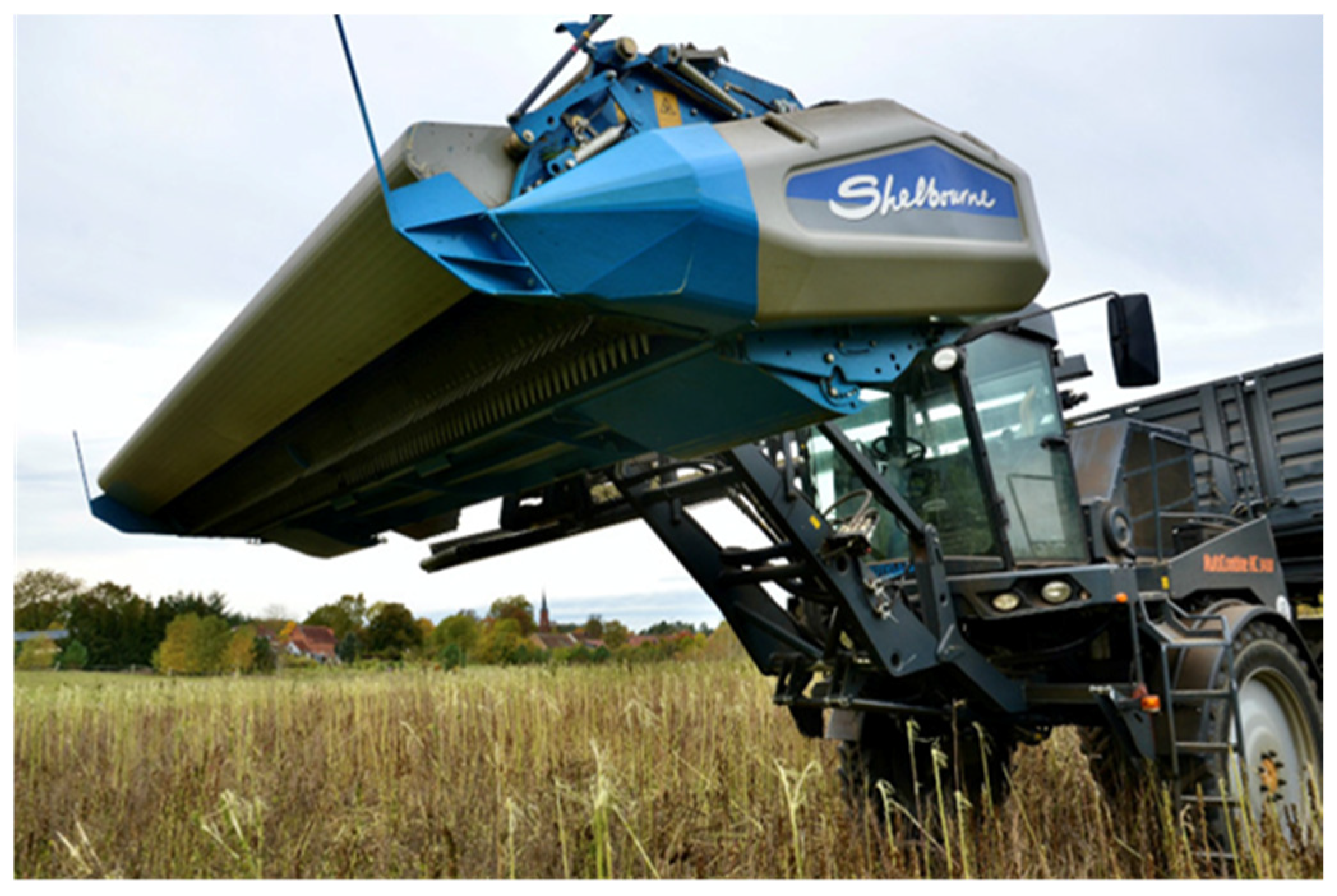
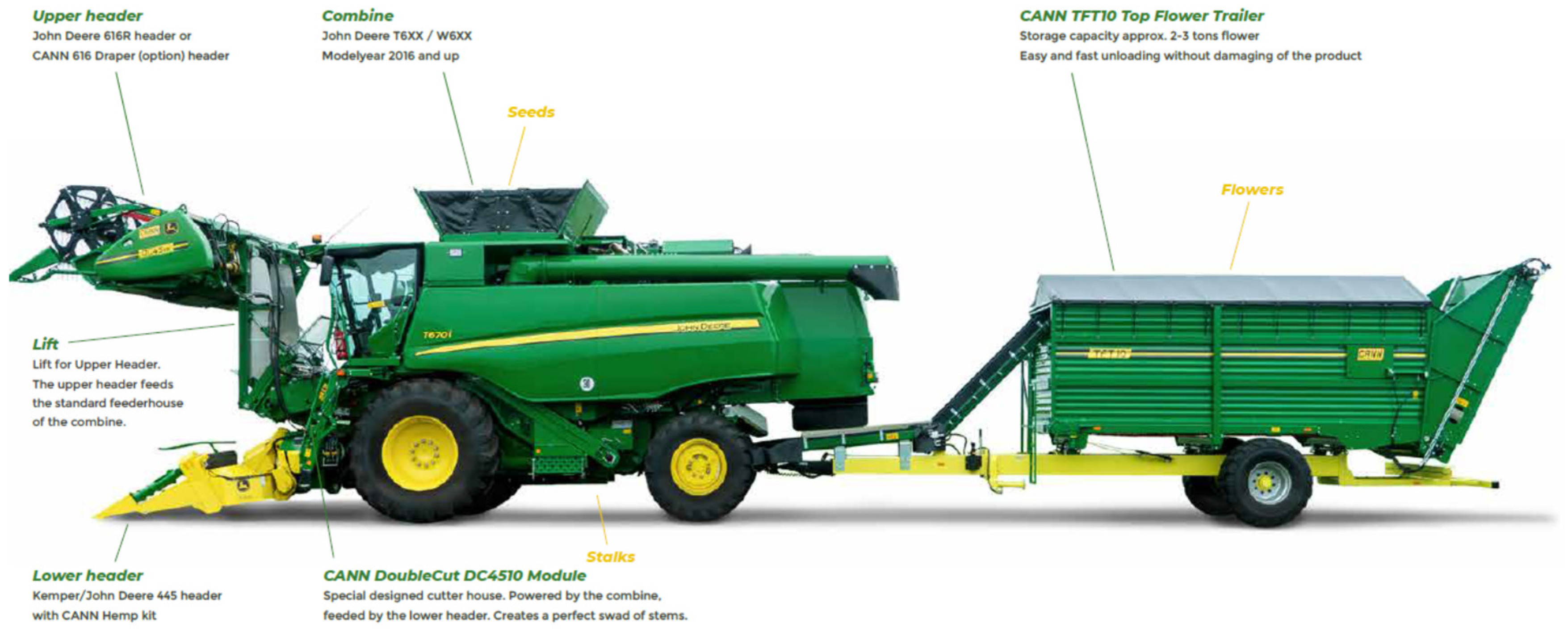
- Application of Wear-Resistant Materials and Machine Design Based on Agronomic Principles: In the machine design process, careful attention must be paid to the selection of appropriate, durable, and abrasion-resistant materials, as well as to the environmental, biological, and agronomic factors stemming from the nature and morphological structure of hemp and the agrotechnical practices used for its cultivation (e.g., row spacing, plant density, maturity uniformity, plant height, hardness, elasticity). These aspects are discussed in the second part of the paper. In the case of sectional harvesting, the height of the plants is of utmost importance. This method, as well as dual-header systems, cannot be effectively utilized for cultivars attaining a height of only 1.0–1.5 m. For such heights, the former would essentially become a whole-plant harvesting method, while the latter would be technically unfeasible, as the dimensions and range of movement of both headers would not allow for effective operation below the minimum working height of the upper unit. Implementing these design considerations will undoubtedly facilitate better adaptation of machinery to specific cultivation systems, thereby optimizing the harvesting process, reducing machine downtime, and lowering associated operating costs. A comparison of the operating costs and area performance of some of the discussed machines is included in previous works [22,28,31,37,38,61].
5. Conclusions
Author Contributions
Funding
Data Availability Statement
Acknowledgments
Conflicts of Interest
References
- Sieracka, D.; Frankowski, J.; Wacławek, S.; Czekała, W. Hemp Biomass as a Raw Material for Sustainable Development. Appl. Sci. 2023, 13, 9733. [Google Scholar] [CrossRef]
- Mariz, J.; Guise, C.; Silva, T.L.; Rodrigues, L.; Silva, C.J. Hemp: From field to fiber—A review. Textiles 2024, 4, 165–182. [Google Scholar] [CrossRef]
- Farinon, B.; Molinari, R.; Costantini, L.; Merendino, N. The Seed of Industrial Hemp (Cannabis sativa L.): Nutritional Quality and Potential Functionality for Human Health and Nutrition. Nutrients 2020, 12, 1935. [Google Scholar] [CrossRef]
- Leonard, W.; Zhang, P.; Ying, D.; Fang, Z. Hempseed in food industry: Nutritional value, health benefits, and industrial applications. Compr. Rev. Food Sci. Food Saf. 2020, 19, 282–308. [Google Scholar] [CrossRef]
- Assirelli, A.; Santangelo, E.; Stagno, F.; Roccuzzo, G.; Musio, S.; Amaducci, S. Hemp Sowing Seed Production: Assessment of New Approaches in North-Italy. Sustainability 2022, 14, 17020. [Google Scholar] [CrossRef]
- Burczyk, H.; Oleszak, G. Konopie oleiste (Cannabis sativa L. var. oleifera) uprawiane na nasiona do produkcji oleju i biogazu. Probl. Inżynierii Rol. 2016, 24, 109–116. [Google Scholar]
- Prade, T.; Svensson, S.E.; Mattsson, J.E. Energy balances for biogas and solid biofuel production from industrial hemp. Biomass Bioenergy 2012, 40, 36–52. [Google Scholar] [CrossRef]
- Parvez, A.M.; Lewis, J.D.; Afzal, M.T. Potential of industrial hemp (Cannabis sativa L.) for bioenergy production in Canada: Status, challenges and outlook. Renew. Sustain. Energy Rev. 2021, 141, 110784. [Google Scholar] [CrossRef]
- Das, L.; Liu, E.; Saeed, A.; Williams, D.W.; Hu, H.; Li, C.; Ray, A.E.; Shi, J. Industrial hemp as a potential bioenergy crop incomparison with kenaf, switchgrass and biomass sorghum. Bioresour. Technol. 2017, 244, 641–649. [Google Scholar] [CrossRef] [PubMed]
- Adamczyk, F. The analysis of the possibility stalk materials briquetting by the method of the curling (Analiza możliwości brykietowania materiałów źdźbłowych metodą zwijania). In Wybrane Zagadnienia Ekologiczne we Współczesnym Rolnictwie. Monografia t. 6; Zbytek, Z., Ed.; PIMR: Poznań, Poland, 2009; pp. 134–138. ISBN 978-83-927505-3-6. (In Polish) [Google Scholar]
- Pari, L.; Baraniecki, P.; Kaniewski, R.; Scarfone, A. Harvesting strategies of bast fiber crops in Europe and in China. Ind. Crops Prod. 2015, 68, 90–96. [Google Scholar] [CrossRef]
- Olesen, J.E.; Børgesen, C.D.; Elsgaard, L.; Palosuo, T.; Rötter, R.P.; Skjelvåg, A.O.; Peltonen-Sainio, P.; Börjesson, T.; Trnka, M.; Ewert, F.; et al. Changes in time of sowing, flowering and maturity of cereals in Europe under climate change. Food Addit. Contam. Part A 2012, 29, 1527–1542. [Google Scholar] [CrossRef]
- Protasova, I.M.; Aniskina, T.S.; Gulevich, A.A.; Shchuklina, O.A.; Baranova, E.N. Can Kernel Uniformity Indices Be Used as Criteria for Variability Assessment of Wheat Breeding Lines? Appl. Sci. 2024, 14, 11885. [Google Scholar] [CrossRef]
- Strzelczyk, M.; Lochynska, M.; Chudy, M. Systematics and botanical characteristics of industrial hemp Cannabis sativa L. J. Nat. Fibers 2022, 19, 5804–5826. [Google Scholar] [CrossRef]
- Chen, X.; Guo, H.Y.; Zhang, Q.Y.; Wang, L.; Guo, R.; Zhan, Y.X.; Lv, P.; Xu, Y.P.; Guo, M.B.; Zhang, Y.; et al. Whole-genome resequencing of wild and cultivated cannabis reveals the genetic structure and adaptive selection of important traits. BMC Plant Biol. 2022, 22, 371. [Google Scholar] [CrossRef]
- Tang, K.; Struik, P.C.; Yin, X.; Thouminot, C.; Bjelková, M.; Stramkale, V.; Amaducci, S. Comparing hemp (Cannabis sativa L.) cultivars for dual-purpose production under contrasting environments. Ind. Crops Prod. 2016, 87, 33–44. [Google Scholar] [CrossRef]
- Amaducci, S.; Errani, M.; Venturi, G. Plant population effects on fibre hemp morphology and production. J. Ind. Hemp 2002, 7, 33–60. [Google Scholar] [CrossRef]
- Burczyk, H.; Frankowski, J. Henola–pierwsza polska odmiana konopi oleistych. Zagadnienia Doradz. Rol. 2018, 93, 89–101. [Google Scholar]
- Chen, Y.; Gratton, J.L.; Liu, J. Power requirements of hemp cutting and conditioning. Biosyst. Eng. 2004, 87, 417–424. [Google Scholar] [CrossRef]
- Amarasinghe, P.; Pierre, C.; Moussavi, M.; Geremew, A.; Woldesenbet, S.; Weerasooriya, A. The morphological and anatomical variability of the stems of an industrial hemp collection and the properties of its fibres. Heliyon 2022, 8, e09276. [Google Scholar] [CrossRef]
- Stefanoni, W.; Latterini, F.; Attolico, A. D5.5—Report on Harvesting Systems and Densification for Industrial Crops on Marginal Land; first version; Zenodo: Geneva, Switzerland, 2022. [Google Scholar] [CrossRef]
- Assirelli, A.; Dal Re, L.; Esposito, S.; Cocchi, A.; Santangelo, E. The Mechanical Harvesting of Hemp Using In-Field Stand-Retting: A Simpler Approach Converted to the Production of Fibers for Industrial Use. Sustainability 2020, 12, 8795. [Google Scholar] [CrossRef]
- Government of Alberta. Industrial Hemp Harvest and Storage. Best Management Practices. In Government of Alberta Report; Government of Alberta: Edmonton, AB, Canada, 2015; 31p. Available online: https://www.scribd.com/document/473405361/HempHarvesalberta-eua-tStorage (accessed on 30 November 2025).
- Yılmaz, G.; Yıldırım, C.; Gür, N.D. Determination of Germination and Emergence Performance of Hemp (Cannabis sativa L.) Seeds at Different Maturity Stages. Turk. J. Agric. Food Sci. Technol. 2025, 13, 175–180. [Google Scholar] [CrossRef]
- Baraniecki, P.; Latterini, F.; Stefanoni, W.; Frankowski, J.; Wielgusz, K.; Pari, L. Assessment of the Working Performance of an Innovative Prototype to Harvest Hemp Seed in Two Different Conditions of Terrain Slope. Agronomy 2022, 12, 185. [Google Scholar] [CrossRef]
- Tiwari, A.; Jian, F. Desorption and sorption isotherms of different varieties of hemp seeds with different percentages of dockage under different temperatures and different relative humidities. Agriculture 2023, 13, 1959. [Google Scholar] [CrossRef]
- Jiang, Y.; Lawrence, M.; Hussain, A.; Ansell, M.; Walker, P. Comparative moisture and heat sorption properties of fibre and shiv derived from hemp and flax. Cellulose 2019, 26, 823–843. [Google Scholar] [CrossRef]
- Gusovius, H.-J.; Hoffmann, T.; Budde, J.; Lühr, C. Still special? Harvesting procedures for industrial hemp. Landtechnik 2016, 71, 14–24. [Google Scholar]
- Gowda, B. Fibers, rubber, firewood, timber and bamboo. In Economic Botany; Univerity of Agricultural Sciences: Bangalore, India, 2007. [Google Scholar]
- Shen, C.; Liang, S.; Liang, J.; Liu, H.; Huang, J.; Tian, K.; Zhang, B.; Yin, G. Status of hemp field production mechanization and research thoughts for China’s hemp production areas. Int. Agric. Eng. J. 2020, 29, 194–204. [Google Scholar]
- Manea, D.; Stroescu, G.; Popa, L.; Ionescu, A.; Zaica, A. Management practices in industrial hemp harvesting and storage. INMATEH-Agric. Eng. 2023, 69, 520–526. [Google Scholar] [CrossRef]
- Kaniewski, R. Zbiór konopi nasiennych z plantacji przemysłowych. Pamiętnik Puławski 2010, 151, 307–317. [Google Scholar]
- Kozłowski, R.; Kaniewski, R.; Mankowski, J. New trends in harvesting, processing and applications of hemp used for production of textiles and cellulose. In Proceedings of the Conference: The 1st Nordic Conference on Flax and Hemp Processing, Conference Proceedings, Tampere, Finland, 10–12 August 1998. [Google Scholar]
- Kırbaş, H.; Battal, Ö.; Demir, S.; Yatgın, U.; Baslar, A.; Uzun, M. Industrial hemp: A comprehensive analysis from hemp seeds to a sustainable alternative raw material for textiles and industrial applications. Tekst. Ind. 2025, 73, 4–25. [Google Scholar] [CrossRef]
- Huang, J.C.; Shen, C.; Li, X.W.; Tian, K.P.; Chen, Q.M.; Zhang, B. Design and tests of hemp harvester. Int. Agric. Eng. J. 2017, 26, 117–127. [Google Scholar]
- Popa, D.; Zaica, A.; Nedelcu, A.; Zaica, A.; Matei, G.; Naie, M.; Rădeanu, G.; Precupeanu, C. Considerations on hemp stalk harvesting using specialized equipment. INMATEH Agric. Eng. 2022, 68, 51–59. [Google Scholar] [CrossRef]
- Păun, A.; Stroescu, G.; Bunduchi, G.; Olan, M.; Milea, D.; Epure, M.; Zaica, A. The influence of morphological particularities of hemp plants on technical equipment during the harvesting process. In Proceedings of the International Symposium, ISB-INMA TEH’, Agricultural and Mechanical Engineering, Bucharest, Romania, 29 October 2021; pp. 652–661. [Google Scholar]
- Nedelcu, A.; Popa, L.-D.; Zaica, A.; Zaica, A.; Ştefan, V. Considerations regarding technologies for hemp stem harvesting. In Proceedings of the ISB-INMA TEH 2020 International Symposium, Bucharest, Romania, 30 October 2020; pp. 609–614. [Google Scholar]
- USDA. Industrial Hemp in the United States: Status and Market Potential; Staff Reports 278840; United States Department of Agriculture, Economic Research Service: Washington, DC, USA, 2000. [CrossRef]
- Ivanovs, S.; Rucins, A. Cutting of the biological mass of industrial hemp. J. Res. Appl. Agric. Eng. 2014, 59, 87–90. [Google Scholar]
- Sponner, J.; Toth, L.; Cziger, S.; Franck, R.R. Hemp. In Bast and Other Plant Fibres; Franck, R.R., Ed.; Woodhead Publishing: Cambridge, UK, 2005; pp. 176–206. [Google Scholar]
- Available online: https://www.laumetris.lt/kp_fiber_hemp_cutter (accessed on 30 November 2025).
- Paulitz, J.; Gusovius, H.-J. Ausgangsbedingungen, Verfahrenstechnische Anforderungen und Rahmenbedingungen für Konzipierung und Einsatz von Basistechnologien im Bereich der Faserezeugung bis zu Faseraufbereitungsanlagen. In Abschlussbericht im FuE Vorhaben “Regionalisierungspotenziale von Naturafastern”; 07REG23 FuE-Baustein B2. Febr; IMU-Institut Berlin GmbH: Berlin, Germany, 2006; pp. 7–16. [Google Scholar]
- Paulitz, J.; Rascher, G.; Gusovius, H. High effective harvesting and straw handling technologies to improve competitive situation of bast fibre production. In Proceedings of the 6th International Conference of the European Industrial Hemp Association (EIHA), Wesseling, Germany, 3 November 2009; Available online: https://eiha.org/media/attach/451/15-00_Paulitz.pdf (accessed on 25 February 2026).
- Müssig, J. Industrial applications of natural fibers: Structure. In Properties and Technical Applications; John Wiley & Sons, Ltd.: Hoboken, NJ, USA, 2010. [Google Scholar]
- Păun, A.; Stroescu, G.; Zaica, A.; Ciupercă, R.; Bogdanof, C. Analysis of the process of green hemp stalks sequential harvesting. E3S Web Conf. 2020, 180, 03026. [Google Scholar] [CrossRef]
- Rostovtsev, R.; Popov, R.; Puchkov, E. An innovative technical hemp harvesting method and a diagram of a multifunctional unit for its implementation. Agrar. Sci. 2023, 7, 129–133. [Google Scholar] [CrossRef]
- Available online: https://www.hempflax.com/en/equipment/ (accessed on 30 November 2025).
- Available online: https://www.profi.co.uk/news/third-hemp-bull-version-claas-xerion/ (accessed on 30 November 2025).
- Available online: https://hempfarm.co.nz/blogs/hemp-blog/new-zealand-hemp-harvest?srsltid=AfmBOoo5_wXH13tqXCf95lejefl5kRFstsUz7QkjUWBDqi7ZiwqjoLWl (accessed on 30 November 2025).
- CANN. Doublecut DC4510. Brochure. CANN BV. 2022. Available online: https://cannbv.com/URL (accessed on 10 February 2026).
- Assirelli, A.; Santangelo, E.; Brambilla, M.; Bisaglia, C.; Civitarese, V.; Caracciolo, G.; Spinelli, R. Techniques for the Transportation of Complete-Trees from the Termination of Peach Orchards. Biomass Bioenergy 2019, 130, 105378. [Google Scholar] [CrossRef]
- Del Giudice, A.; Assirelli, A.; Gallucci, F.; Bellacima, R.; Pari, L.; Santangelo, E. Production of Energy Feedstock from the Riparian Vegetation of Arundo donax (L.): Suitability of the Chopping Systems. Ecol. Eng. 2017, 102, 459–467. [Google Scholar] [CrossRef]
- Assirelli, A.; Santangelo, E.; Spinelli, R.; Acampora, A.; Croce, S.; Civitarese, V.; Pari, L. Mechanization of Rhizome Extraction in Giant Reed (Arundo donax L.) Nurseries. Appl. Eng. Agric. 2013, 29, 489–494. [Google Scholar]
- Available online: https://dunagrohempgroup.com/hemp-cultivation/ (accessed on 30 November 2025).
- Available online: https://fugor.pl/produkcja/kosiarka-do-wiech-konopnych/ (accessed on 30 November 2025).
- Available online: https://afori.pl/pl/maszyny (accessed on 30 November 2025).
- Available online: http://multicombine.com/index.html#facts (accessed on 30 November 2025).
- Riabchenko, O.P.; Lukianenko, P.V.; Koropchenko, S.P. Known methods of harvesting hemp green mass. In Proceedings of the State Institution “Scientific and Methodological Center for Higher and Professional Pre-Higher Education”, Hlukhiv Agrotechnical Professional College of SNAU; Ministry of Education and Science of Ukraine: Hlukhiv, Ukraine, 2020; p. 96. (In Ukrainian) [Google Scholar]
- Available online: https://agroservis-proizvodnja.eu/ (accessed on 10 February 2026).
- Available online: https://hemptoday.net/mchc-3400/ (accessed on 30 November 2025).
- Kozłowski, R.; Rynduch, W.; Kaniewski, R.; Mańkowski, J. The Method of Hemp Harvest and Hemp Harvesting Machine. International Patent no WO2001039590A2, 7 June 2001. [Google Scholar]








| Technology | Methods | Shearing Units | Preferred Crop Size * |
|---|---|---|---|
| Harvesting of whole plants | Cutting plants and arranging them in swaths | Sickle-bar mowers, cutter bars | Small- and medium-sized |
| Cutting plants and collecting them in the machine’s hopper | Sickle-bar mowers | Small sized | |
| Cutting with simultaneous seed threshing (harvesting with adapted combine harvesters) | Sickle-bar mowers, | Large- and medium sized | |
| Harvesting of plants divided into sections | Cutting entire plants and arranging stem sections in swaths | Sickle-bar units operating at two or three height levels (fixed or adjustable) | All sizes |
| Cutting entire plants and arranging stem sections in swaths | Drum cutting units | Large- and medium- sized | |
| Double-cut system: collecting panicles (and potentially leaves) while arranging stem sections in swaths | Reciprocating units (upper) and rotary units (lower) | Large-sized | |
| Combing, stripping (upper unit) and rotary cutting assemblies (lower unit) | Large-sized | ||
| Selective harvesting | Cutting off panicles, inflorescences and leaves; leaving uncut stems in the field for subsequent harvest | Sickle-bar units, combing and stripping units | Large- and medium- sized |
| Cutter | Maximum Working Width | Working Speed | Area Performance | Swath Width | Power Requirement |
|---|---|---|---|---|---|
| mm | km·h−1 | ha·h−1 | mm | kW | |
| KR mover | 1900 | 11–12 | 2.4 | 700–800 | 22.6–35 |
| Tebeco Beagle 3.2 | 3000 | 12–13 | 3.9 | 3000 | 35–50 |
| INMA mover | 1300 | 5.5–6.5 | 0.9–1.0 | 1300 | 45–50 |
Disclaimer/Publisher’s Note: The statements, opinions and data contained in all publications are solely those of the individual author(s) and contributor(s) and not of MDPI and/or the editor(s). MDPI and/or the editor(s) disclaim responsibility for any injury to people or property resulting from any ideas, methods, instructions or products referred to in the content. |
© 2026 by the authors. Licensee MDPI, Basel, Switzerland. This article is an open access article distributed under the terms and conditions of the Creative Commons Attribution (CC BY) license.
Share and Cite
Adamczyk, F.; Sieracka, D.; Zaborowicz, M. Review of Seed Hemp (Cannabis sativa L.) Harvesting Techniques and the Challenges of Harvesting Technologies for This Crop. Agronomy 2026, 16, 677. https://doi.org/10.3390/agronomy16070677
Adamczyk F, Sieracka D, Zaborowicz M. Review of Seed Hemp (Cannabis sativa L.) Harvesting Techniques and the Challenges of Harvesting Technologies for This Crop. Agronomy. 2026; 16(7):677. https://doi.org/10.3390/agronomy16070677
Chicago/Turabian StyleAdamczyk, Florian, Dominika Sieracka, and Maciej Zaborowicz. 2026. "Review of Seed Hemp (Cannabis sativa L.) Harvesting Techniques and the Challenges of Harvesting Technologies for This Crop" Agronomy 16, no. 7: 677. https://doi.org/10.3390/agronomy16070677
APA StyleAdamczyk, F., Sieracka, D., & Zaborowicz, M. (2026). Review of Seed Hemp (Cannabis sativa L.) Harvesting Techniques and the Challenges of Harvesting Technologies for This Crop. Agronomy, 16(7), 677. https://doi.org/10.3390/agronomy16070677