Article

Temporal Metabolomic Dynamics of Methyl Jasmonate-Induced Reprogramming in Vitis vinifera L. cv. Tempranillo Leaves


by
Diego F. Paladines-Quezada
1,* and
Cristina Cedeño-Pinos
2,*
1
Instituto de Ciencias de la Vid y del Vino (CSIC, Universidad de La Rioja, Gobierno de La Rioja), Ctra. de Burgos, km. 6, 26007 Logroño, Spain
2
Department of Food Technology and Science and Nutrition, Veterinary Faculty, Regional Campus of International Excellence “Campus Mare Nostrum”, University of Murcia, 30100 Murcia, Spain
*
Authors to whom correspondence should be addressed.
Agronomy 2026, 16(6), 673; https://doi.org/10.3390/agronomy16060673
Submission received: 3 March 2026 / Revised: 18 March 2026 / Accepted: 20 March 2026 / Published: 23 March 2026

Abstract

Methyl jasmonate (MeJA) is a defence-related phytohormone that triggers metabolic reprogramming in grapevines and modulates pathways associated with stress responses and secondary metabolism. However, the temporal organisation of leaf metabolic responses following MeJA elicitation remains insufficiently characterised. In this study, an untargeted metabolomic approach based on UPLC-QTOF-MS was applied to investigate the time-resolved metabolic response of Vitis vinifera L. cv. Tempranillo leaves following foliar application of 10 mM MeJA under controlled greenhouse conditions. Leaf samples were collected at 0, 3, 6, 18, 24, and 48 h post-treatment. After quality filtering, 2552 metabolite features were detected, of which 40 discriminant features met stringent statistical criteria (maximum fold change ≥ 2 and p ≤ 0.05). Putative annotation according to Metabolomics Standards Initiative guidelines (MSI levels 2–3) revealed modulation of several metabolite classes, including carbohydrate-derived conjugates, terpenoid-related metabolites, hydroxycinnamic acid derivatives, and flavonoid-associated compounds. Temporal profiling revealed structured and non-monotonic metabolic responses characterised by rapid early changes between 3 and 6 h, followed by delayed accumulation patterns peaking around 24 h. Early phases were mainly associated with carbohydrate-related metabolites, suggesting rapid redistribution of carbon resources after elicitor perception. These results indicate that MeJA-induced metabolic adjustment in Tempranillo leaves occurs through temporally differentiated response phases rather than a uniform metabolic shift, providing a time-resolved metabolomic framework for interpreting elicitor-driven defence responses in grapevine.

1. Introduction

Grapevine (Vitis vinifera L.) is one of the most economically important fruit crops worldwide, cultivated across diverse climatic regions. However, the sector is increasingly challenged by biotic pressures and the need to adapt to climate change scenarios that threaten both productivity and fruit quality [1,2,3]. In response, modern viticulture is progressively adopting more sustainable crop protection strategies aimed at reducing dependence on synthetic agrochemicals. Among these approaches, the use of plant defence elicitors has gained particular attention as a means of activating endogenous defence pathways [4,5]. Methyl jasmonate (MeJA), a lipid-derived phytohormone involved in jasmonate signalling, acts as a central regulator of plant defence responses. Recent reviews have consolidated its role in grapevine responses to both biotic and abiotic stresses, where it triggers transcriptional reprogramming and promotes the accumulation of secondary metabolites associated with defence processes [6,7,8].
Extensive research has demonstrated that exogenous MeJA application not only activates defence mechanisms but may also influence grape berry composition and wine quality across several cultivars and developmental stages. For example, in V. vinifera cv. Monastrell, pre-harvest foliar application of MeJA significantly increased the concentration of anthocyanins and stilbenes, phytoalexins associated with antioxidant and antifungal activity in grapes and wines [9]. The timing of elicitor application has also proven critical, as treatments applied at mid-ripening produced stronger increases in chromatic parameters and phenolic content than applications performed at veraison [10]. In addition to metabolic changes, MeJA treatments can modify berry structural traits, including alterations in skin cell wall composition characterised by increased phenolic and protein content and reduced pectic polysaccharides [11,12].
While the phenotypic effects of MeJA on berry composition and wine quality are well documented, the upstream metabolic reprogramming occurring in vegetative tissues remains insufficiently characterised. Leaves act as primary sensors of environmental signals and represent the main source tissues for carbon assimilation and metabolite biosynthesis. Recent studies have shown that berry secondary metabolism and leaf physiological responses may be independently regulated following exogenous MeJA application, highlighting the need to evaluate source and sink tissues as distinct metabolic compartments [13].
Early metabolic responses to elicitors in grapevine leaves have begun to be explored. For instance, metabolic changes in standardised clonal material of V. vinifera cv. Monastrell seedlings were recently characterised, revealing MeJA-induced alterations in amino acid metabolism and phenolic biosynthesis pathways [14]. However, grapevine secondary metabolism exhibits strong genotype-dependent regulation [15]. Consequently, metabolic biomarkers identified in one cultivar cannot be assumed to be universally applicable. Establishing temporally resolved metabolic baselines for widely cultivated premium varieties such as Tempranillo is, therefore, necessary in order to determine whether similar metabolic signatures occur across genotypes [16,17]. Nevertheless, most previous studies have focused primarily on berry composition, and temporally resolved metabolomic analyses of grapevine leaves following MeJA elicitation remain scarce.
Recent work has also explored controlled-release formulations of MeJA designed to improve field application efficiency and reduce dosage requirements [18]. The development and calibration of such technologies require a detailed understanding of the intrinsic metabolic dynamics triggered by conventional MeJA treatments.
Because leaves represent the primary source tissue for carbon assimilation and the biosynthesis of defence-related precursors, understanding how their metabolic networks reorganise over time following elicitor perception is essential for interpreting whole-plant responses. Prior to the present experiment, preliminary metabolomic assessments involving several grapevine cultivars were conducted in order to optimise extraction protocols and evaluate the suitability of foliar tissues for untargeted metabolomic profiling [19]. Based on these optimisation trials, Vitis vinifera cv. Tempranillo was selected for the present study due to its stable metabolic signal and reproducible extraction performance.
We hypothesised that exogenous MeJA application induces a phase-structured metabolic response in Vitis vinifera L. cv. Tempranillo leaves, characterised by an early redistribution of primary metabolic resources associated with stress perception, followed by a temporally coordinated activation of secondary metabolic pathways linked to defence reinforcement. Within this framework, establishing a temporally resolved metabolomic baseline under conventional MeJA application represents a necessary step for interpreting subsequent agronomic and formulation-oriented developments.

2. Materials and Methods

2.1. Plant Material and Experimental Design

The experiment was conducted at the experimental greenhouse of the Instituto de Ciencias de la Vid y del Vino (Logroño, Spain). Vitis vinifera L. cv. Tempranillo plantlets propagated from hardwood cuttings were grown in individual pots (9 × 9 × 15 cm3) containing a substrate mixture of universal soil:perlite:coconut fibre (2:1:1, v/v/v), under controlled environmental conditions: day/night temperature of 25 ± 3 °C and relative humidity of 60 ± 10%. Plants were approximately six months old at the time of treatment. Greenhouse environmental conditions were maintained using ventilation systems and humidity control to stabilise temperature and relative humidity, and environmental parameters were monitored regularly to ensure stable growth conditions. Light conditions corresponded to the natural greenhouse photoperiod typical of Mediterranean spring conditions. Plants were irrigated daily with tap water and fertilised weekly with a complete nutrient solution (Hoagland’s solution, diluted 1:2). At the time of treatment, plantlets exhibited 10–15 fully expanded leaves and uniform vegetative growth.
The experiment followed a completely randomised design comprising two treatments (control and MeJA) and six sampling time points. In total, 36 experimental units were established, corresponding to three independent biological replicates for each treatment × time combination. This level of replication is widely applied in exploratory untargeted metabolomics studies when combined with multivariate analysis and stringent statistical filtering procedures [20,21].

2.2. Methyl Jasmonate Treatment Application

Methyl jasmonate (Sigma-Aldrich, St. Louis, MO, USA) was dissolved in absolute methanol to prepare a 1 M stock solution, which was subsequently diluted in deionised water containing 0.1% (v/v) Tween 80 (Sigma-Aldrich) as a surfactant to obtain a final concentration of 10 mM MeJA. This concentration was selected based on previous optimisation studies conducted on Vitis vinifera standardised clonal material, which demonstrated its efficacy in inducing metabolic responses without causing phytotoxicity [14], and is consistent with concentrations reported in previous elicitor-based studies of grapevines.
Control plants received a mock treatment consisting of deionised water containing 0.1% Tween 80 and an equivalent proportion of methanol (1%, v/v) to match the solvent composition of the MeJA treatment. Solutions were prepared immediately prior to application to prevent compound degradation. Foliar treatments were applied uniformly to leaf surfaces using a hand-held sprayer (10 mL per plant), ensuring complete coverage. Application was performed at midday (13:00 h), after which plants were maintained in the greenhouse under the environmental conditions described above.

2.3. Sample Collection and Processing

Leaf samples were harvested at six time points: 0 h (immediately before treatment), 3 h, 6 h, 18 h, 24 h, and 48 h post-treatment. These sampling intervals were selected to capture early, intermediate, and late metabolic responses following MeJA perception. At each time point, fully expanded young leaves (positions 4–6 from the shoot apex) were collected.
To prevent rapid post-harvest metabolic alterations, samples were immediately immersed in liquid nitrogen to arrest metabolic activity [22]. Frozen leaves were subsequently lyophilised (LyoQuest−55, Telstar, Terrassa, Spain) for 48 h to remove water content while maintaining metabolite stability [23]. Lyophilisation preserves the metabolic composition of plant tissues and minimises metabolite loss compared with alternative drying methods [24]. The dried material was ground to a fine powder using a porcelain mortar and stored at −80 °C in sealed tubes under an inert nitrogen atmosphere until extraction.

2.4. Metabolite Extraction

Extraction was performed following an optimised protocol designed to achieve the broadest possible metabolic coverage of polar and semi-polar compounds whilst balancing metabolite preservation and efficient transfer [25,26]. Briefly, 50 mg of lyophilised leaf powder was weighed into 15 mL tubes. A biphasic consecutive extraction was executed to ensure maximum recovery. For the first step, 2.5 mL of a methanol:water solution (70:30, v/v) was added. The mixture was vortexed vigorously for 60 s, sonicated in an ultrasonic bath (Branson 5800, Branson Ultrasonics, Danbury, CT, USA) at room temperature for 15 min to enhance solubilisation [27], and subsequently centrifuged at 15,000× g for 10 min at 4 °C using a Sorvall Lynx 4000 refrigerated centrifuge (Thermo Scientific, Madrid, Spain). The supernatant was recovered, and the solid residue was subjected to a second identical extraction using another 2.5 mL of the same solvent. The supernatants from both extractions were combined to achieve a final volume of 5 mL. A fraction of this pooled extract was diluted three times using 0.1% formic acid to adjust analytical sensitivity and subsequently filtered through 0.22 μm polytetrafluoroethylene (PTFE) syringe filters (Millipore, Burlington, MA, USA) into amber vials. Crucially, extraction blanks comprising only the extraction solvents without plant material were processed in parallel using the exact same protocol to subsequently filter background noise. Extracts were stored at −80 °C and analysed within 24 h of preparation. Quality control samples were prepared by pooling equal volumes of all individual extracts to generate a representative composite sample. These QC samples were analysed at regular intervals (every 10 samples) to monitor instrument performance, assess analytical reproducibility, and facilitate data normalisation. All samples were analysed in random order.

2.5. Ultra-Performance Liquid Chromatography Coupled with Quadrupole Time of Flight Mass Spectrometry (UPLC-QTOF-MS) Analysis

LC analysis was performed on a Waters ACQUITY I-Class UPLC system (Waters Corp, Milford, MA, USA) equipped with a Waters Acquity HSS T3 100 × 2.1 (i.d.) mm, 1.8 μm particle size column. The flow rate was 0.4 mL min−1, and the injection volume was 1 µL and 0.5 µL for positive and negative electrospray ionisation (ESI) modes, respectively. The autosampler and column oven temperatures were maintained at 8 °C and 40 °C, respectively. The mobile phase consisted of 0.1% formic acid in water (eluent A) and 0.1% formic acid in acetonitrile (eluent B). The elution gradient was as follows: 0–12 min, 5–50% B; 12–13 min, 50–95% B; 13–16 min, 95% B isocratic; 16–17 min, 95–5% B; and 17–20 min, 5% B isocratic [27]. Mass spectrometry data were acquired using a Waters Synapt XS (Waters Corp, Wilmslow, UK) set to collect data in continuum format using electrospray ionisation (ESI) operating in positive (ESI+) and negative (ESI) modes over the mass range of m/z 50–1200. The ESI+ parameters were as follows: capillary and sampling cone voltages were set to 0.7 kV and 40 V, respectively, with the source temperature set to 120 °C and desolvation temperature to 500 °C. Gas flow rates were set at 800 L h−1 for the desolvation gas and 50 L h−1 for the cone gas; the nebuliser gas was fixed at 6 bar. The ESI parameters were: capillary and sampling cone voltages set to 1.75 kV and 40 V, respectively, with source and desolvation temperatures matching those of the positive mode. The mass spectrometer was set to acquire in resolution mode with a scan time of 0.2 s. Fragment ion information was acquired using a collision energy ramp from 20 to 40 V. Real-time lockmass correction was achieved by infusing leucine enkephalin at 10 µL min−1 through a lockspray probe and acquired every 30 s (for positive mode: [M + H]+ = 556.2771; for negative mode: [M − H] = 554.2915). Data were collected using MassLynx V 4.2 (Waters Corp., Milford, MA, USA).

2.6. Data Processing and Statistical Analysis

Raw UPLC-QTOF-MS data were processed using Progenesis QI software (Waters Corporation, Milford, MA, USA). Quality control (QC) samples were used as a reference for retention time alignment and signal intensity normalisation in Progenesis QI to ensure analytical stability throughout the analytical sequence. Signal intensities were normalised relative to QC samples using the Progenesis QI normalisation algorithm. Features detected in extraction blanks with intensities exceeding 30% of those observed in biological samples were removed to eliminate background contaminants and instrumental artefacts. Peak deconvolution and compound definition were performed by grouping isotopic features and adduct ions corresponding to the same metabolite, following the criteria described by Moro et al. [28].
The resulting normalised data matrix was exported to EZinfo software (v3.03, Umetrics, Umeå, Sweden) for multivariate statistical analysis. An unsupervised principal component analysis (PCA) was first performed to explore the overall structure of the dataset, assess analytical reproducibility, and evaluate the clustering of QC samples. Subsequently, supervised Orthogonal Partial Least Squares Discriminant Analysis (OPLS-DA) was applied as an exploratory multivariate approach to highlight metabolic features contributing to the separation between control and MeJA-treated samples, following the strategy described by Arapitsas et al. [29].
Prior to statistical testing, data distribution and homogeneity of variance were evaluated using the Shapiro–Wilk and Levene tests, respectively. Differences between treatments were assessed using one-way ANOVA with a significance threshold of p ≤ 0.05. Putative biomarkers were selected based on stringent statistical criteria, retaining only those features exhibiting a maximum fold change ≥ 2 and a p-value ≤ 0.05 (ANOVA) at least at one sampling time point. Statistical power analysis was conducted to confirm the adequacy of biological replication [30]. Preliminary optimisation trials evaluating replicate number indicated that three biological replicates were sufficient to achieve high internal consistency (Cronbach’s α > 0.9), supporting the reliability of the experimental design [19].
The graphical abstract accompanying this study was prepared with the assistance of NotebookLM (accessed March 2026; Google, Mountain View, CA, USA) as a visual layout support tool. The authors reviewed and manually edited the graphical output to ensure its accuracy and consistency with the scientific content of the manuscript.

2.7. Metabolite Identification

Metabolite annotation was performed using the Progenesis MetaScope tool by comparing accurate mass data (mass error < 5 ppm), isotopic distribution patterns, and MS/MS fragmentation spectra against external databases, including the METLIN MS/MS Library and ChemSpider (integrating BioCyc, FooDB, KEGG, MassBank, PlantCyc, Phenol-Explorer, and ChEBI).
Since authentic reference standards were not available for all detected features, metabolite identifications were assigned according to the Metabolomics Standards Initiative (MSI) guidelines [31] as Level 2 (putatively annotated compounds based on physicochemical properties and spectral similarity) or Level 3 (putatively characterised compound classes). Annotation confidence was further supported by comparison with the published literature on grapevine metabolomics to ensure biological plausibility and consistency with known metabolic pathways.
Although high-resolution accurate mass and MS/MS fragmentation data were used to support metabolite annotation, definitive structural confirmation would require validation using authentic chemical standards. Therefore, compound identification in this study should be considered putative according to MSI criteria.
A comprehensive list of tentatively identified metabolites, including retention times, accurate masses, fold changes, and putative annotations, is provided in Table 1.

3. Results

3.1. Overview of Metabolomic Profiling

Metabolomic features were considered significant when showing a maximum fold change ≥ 2 together with a p-value ≤ 0.05 in at least one sampling point. These criteria were used to select the candidate biomarkers discussed below.
Untargeted UPLC-QTOF-MS analysis of V. vinifera cv. Tempranillo leaf extracts in both ESI+ and ESI modes generated comprehensive metabolomic profiles comprising 2552 distinct metabolite features after quality filtering and data processing. The majority of features were detected in negative ionisation mode (2187 features, 85.7%), reflecting the predominance of acidic and phenolic metabolites in grapevine leaves, whilst positive ionisation mode contributed 365 features (14.3%).
Quality control (QC) samples analysed throughout the analytical sequence exhibited high reproducibility, with a median relative standard deviation (RSD) of peak intensities <15% for over 90% of detected features, confirming robust analytical performance and data quality suitable for statistical analysis. Qualitative differences were observed in BPI (Base Peak Intensity) chromatograms in metabolite profiles between control and MeJA-treated samples, particularly at later time points (18–48 h), where numerous peaks exhibited marked intensity changes. The complexity of the chromatographic profiles, with retention times spanning from 1 to 14 min, underscored the chemical diversity of leaf metabolites and the capacity of the UPLC-QTOF-MS platform to resolve and detect a wide range of compound classes.

3.2. Multivariate Statistical Analysis

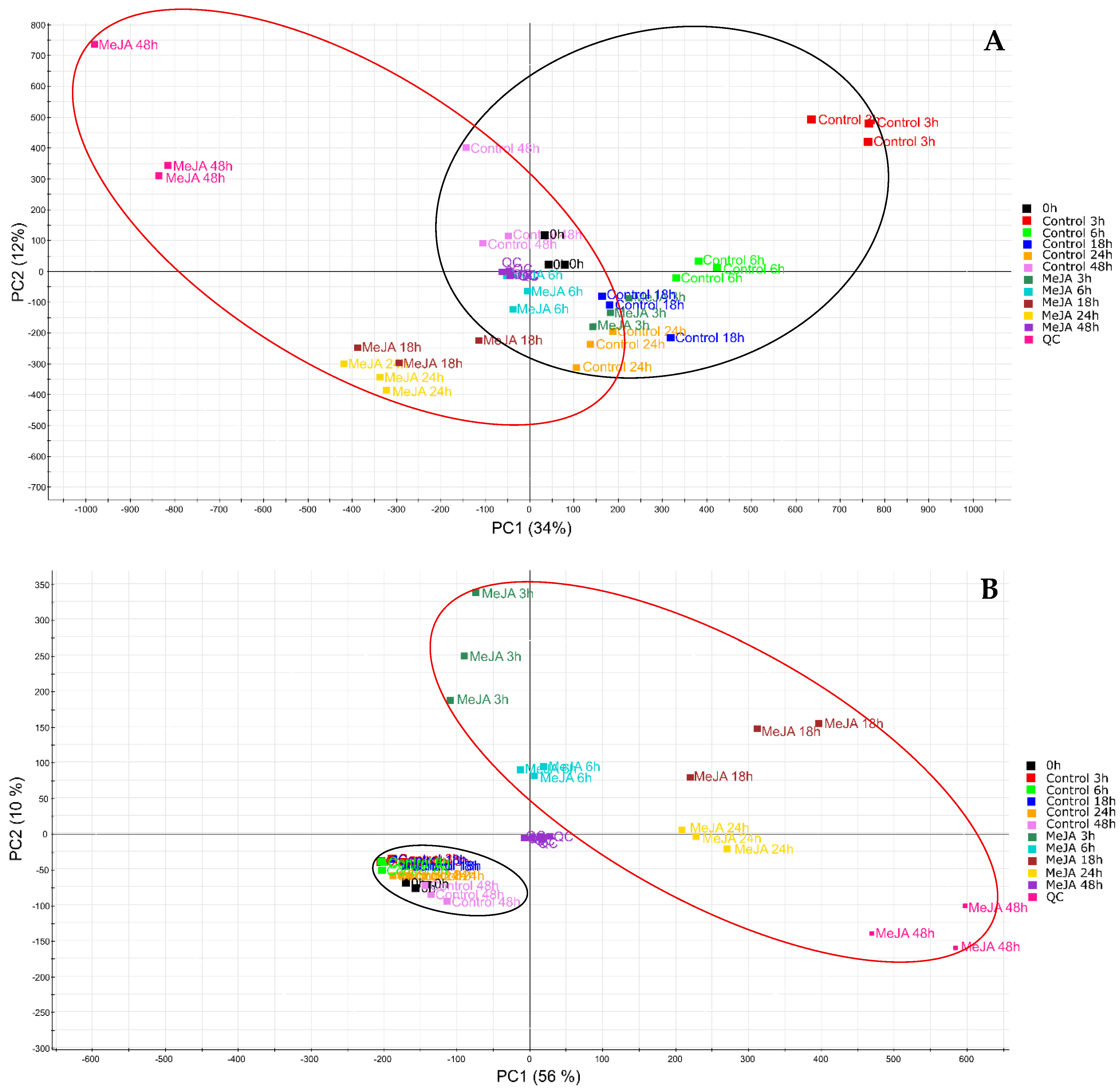
Principal component analysis applied to the global dataset provided an unsupervised overview of metabolomic variation, enabling the evaluation of the influence of MeJA-treatment and the temporal factor on the metabolic phenotype of Vitis vinifera L. cv. Tempranillo leaves (Figure 1A,B). The score plots revealed distinct clustering patterns; while samples collected at 0 h exhibited homogeneity, the elicited samples progressively separated from the control along the first principal component, reaching maximum phenotypic divergence at 48 h. Specifically, high intrafactorial variability driven predominantly by metabolites detected in positive ionisation mode was observed (Figure 1B), which proved decisive for statistical discrimination despite presenting a lower total signal count compared to the negative mode. This profound reprogramming is consistent with the fact that exogenous application of this compound triggers a strong induction of foliar secondary biosynthesis pathways, a phenomenon intrinsically linked to the activation of basal defence mechanisms against biotic stresses. Within this analytical and biological context, these features may represent potential metabolic biomarkers associated with the elicitor response. QC samples clustered tightly in the centre of the score plot, confirming analytical stability.
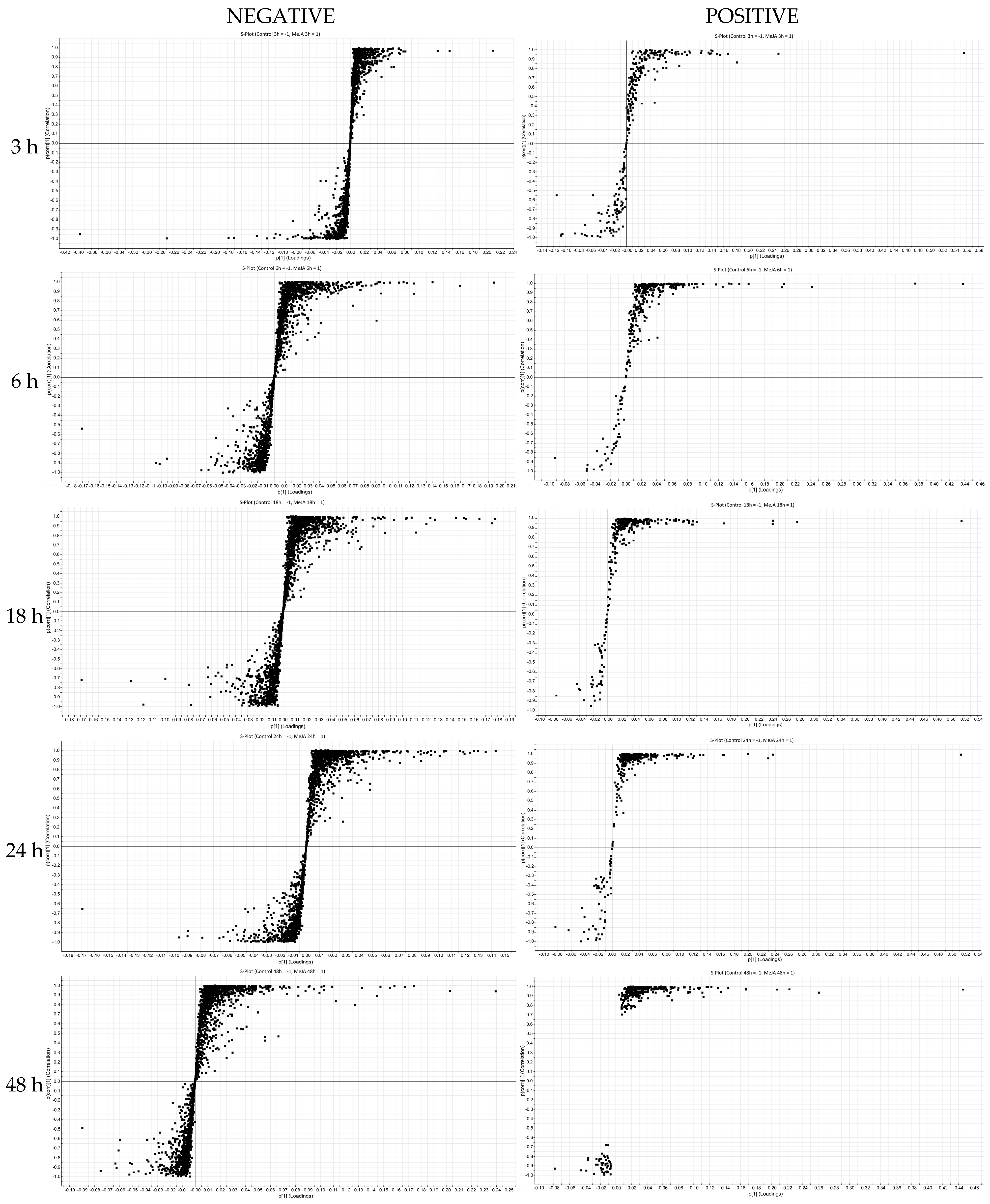
To identify metabolite features contributing to the differentiation between control and MeJA-treated samples at each sampling time point, supervised Orthogonal Partial Least Squares Discriminant Analysis (OPLS-DA) was applied. The resulting S-plots enabled visualisation of metabolite features showing both high covariance and correlation with the treatment effect. Variables located at the extremities of the S-plots were considered potential candidates contributing to group discrimination (Figure 2). Candidate biomarkers were subsequently selected by combining the multivariate OPLS-DA output with univariate statistical filtering based on a maximum fold change ≥ 2 and a p-value ≤ 0.05.
A total of 40 metabolite features exhibited significant differential accumulation between control and MeJA-treated samples across the time course. Tentative identification of these biomarkers was performed using accurate mass measurements (mass error < 5 ppm), MS/MS fragmentation patterns, isotopic distribution analysis, and comparison with metabolite databases. Several of these compounds were classified under the same name, despite being detected at different retention times (Table 1). When several peaks share a high degree of similarity in their isotopic patterns, but separate chromatographically, it is probable that they represent structural isomers of the same molecular formula [32]. Confidence levels were assigned according to the Metabolomics Standards Initiative guidelines, with Level 2 and Level 3 identifications reported [31]. The identified biomarkers spanned multiple metabolite classes, including carbohydrates, terpenoids, hydroxycinnamic acid derivatives, flavonoids, etc.

3.3. Temporal Evolution of MeJA-Responsive Metabolites

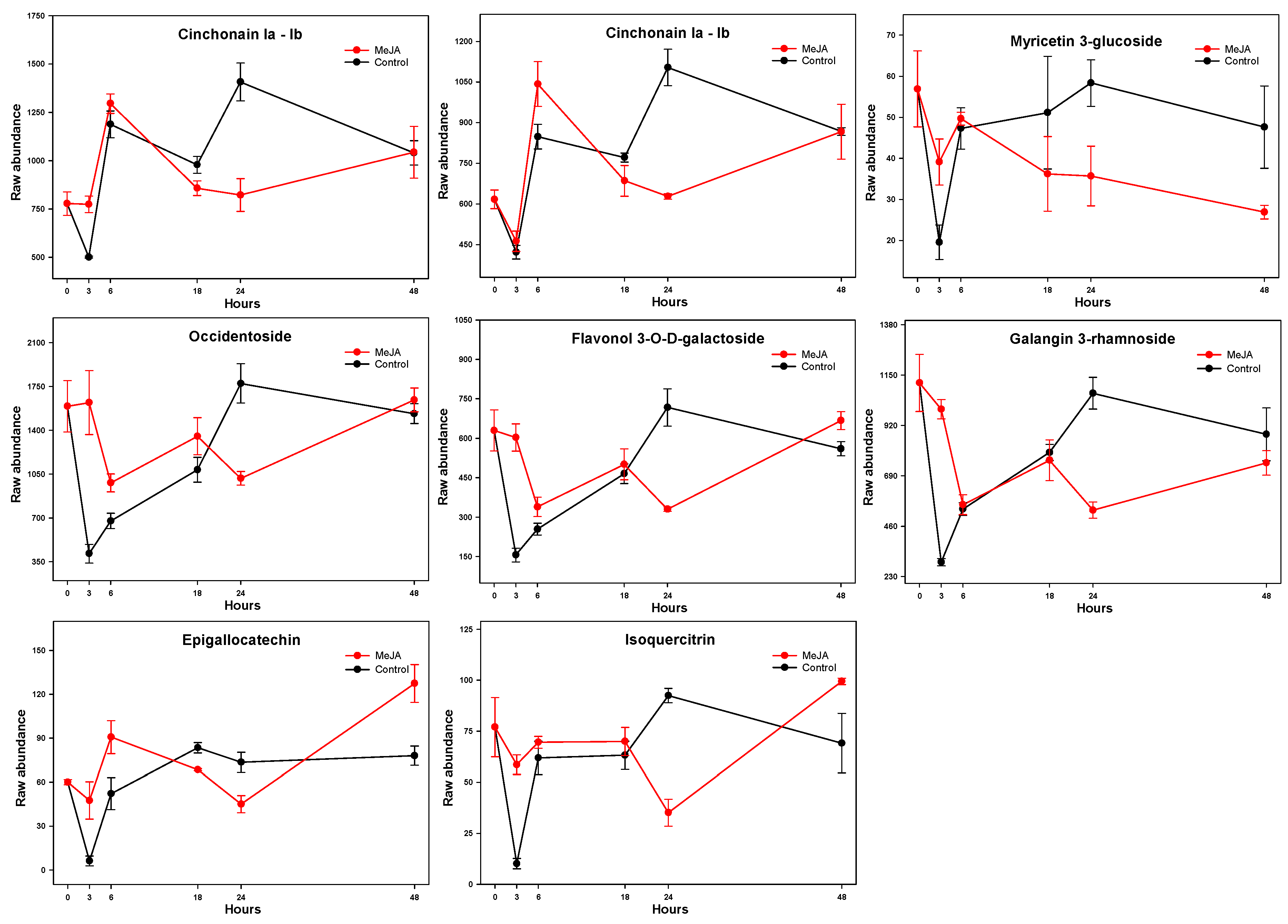
Temporal profiles of the tentatively identified metabolites were analysed and grouped according to their biosynthetic evolution patterns over time, allowing the identification of distinct temporal response behaviours following MeJA treatment (Figure 3, Figure 4, Figure 5, Figure 6, Figure 7, Figure 8 and Figure 9). In control samples, most biomarkers remained at basal or near-basal levels throughout the experimental period, indicating relatively stable metabolic homeostasis under untreated conditions. In contrast, MeJA-treated leaves exhibited clear temporal reprogramming, characterised not only by differences in accumulation intensity but also by marked shifts in kinetic behaviour across time points (3, 6, 18, 24, and 48 h).
Based on their kinetic behaviour and the timing of their maximum accumulation, the discriminant metabolites were grouped into seven distinct temporal response patterns. This classification highlights the dynamic and non-linear nature of MeJA-induced metabolic modulation.

3.3.1. Biphasic Early–Late Accumulation Pattern

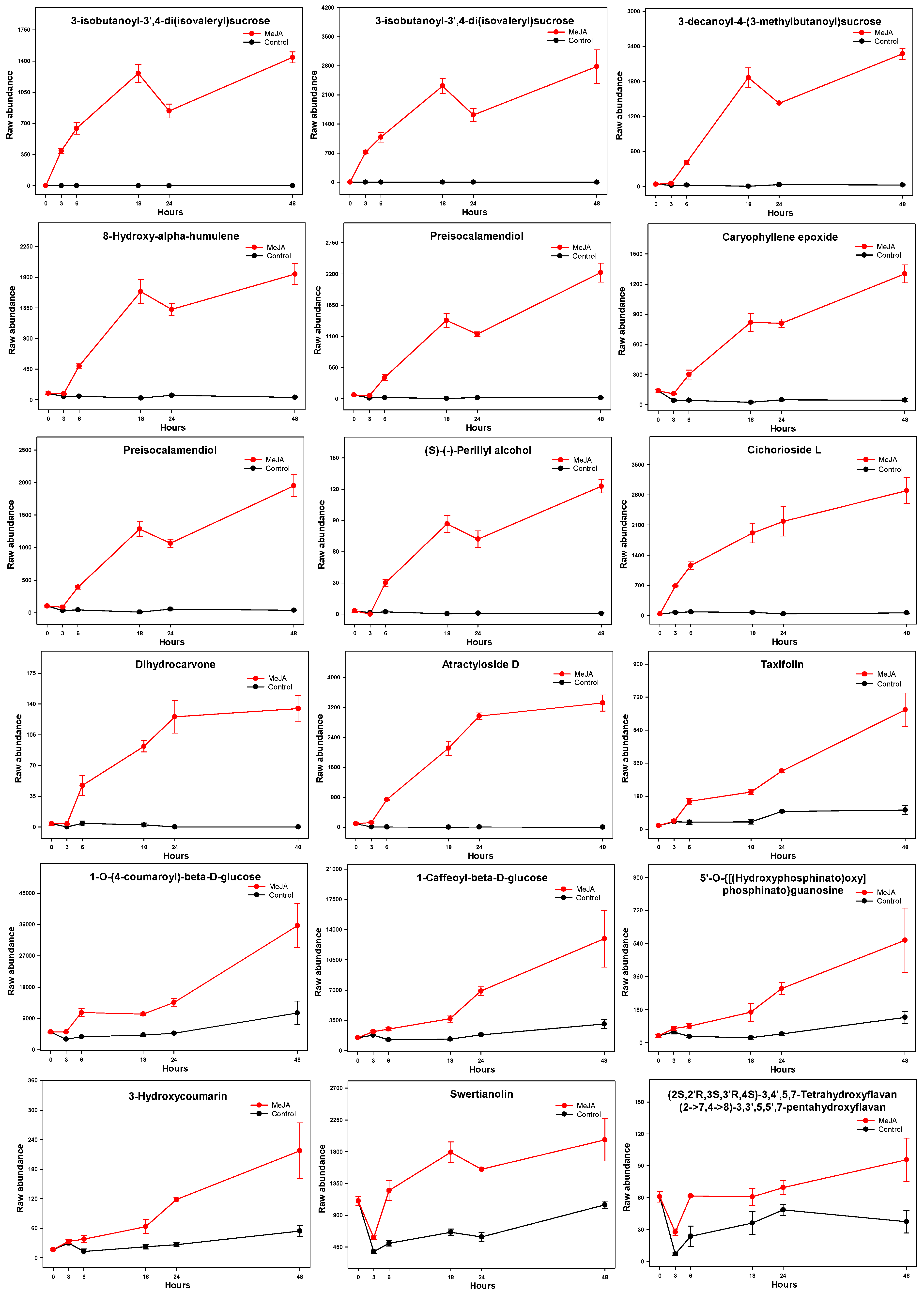
Compounds ranging from 3-isobutanoyl-3′,4-di(isovaleryl)sucrose to the biflavonoid (2S,2′R,3S,3′R,4S)-3,4′,5,7-Tetrahydroxyflavan(2->7,4->8)-3,3′,5,5′,7-pentahydroxyflavan displayed a characteristic biphasic profile (Figure 3).
A rapid and significant increase was observed within the first hours following MeJA application (3–6 h), suggesting immediate metabolic responsiveness. Between 18 and 24 h post-treatment, a moderate but consistent decrease was recorded across most compounds in this group. However, at 48 h, a second marked accumulation phase was evident, with concentrations exceeding those observed at earlier time points.
This biphasic pattern indicates an early activation phase likely associated with immediate stress perception, followed by transient attenuation and subsequent reinforcement, resulting in sustained metabolic activation at the end of the experimental period.

3.3.2. Progressive Induction with Terminal Decline

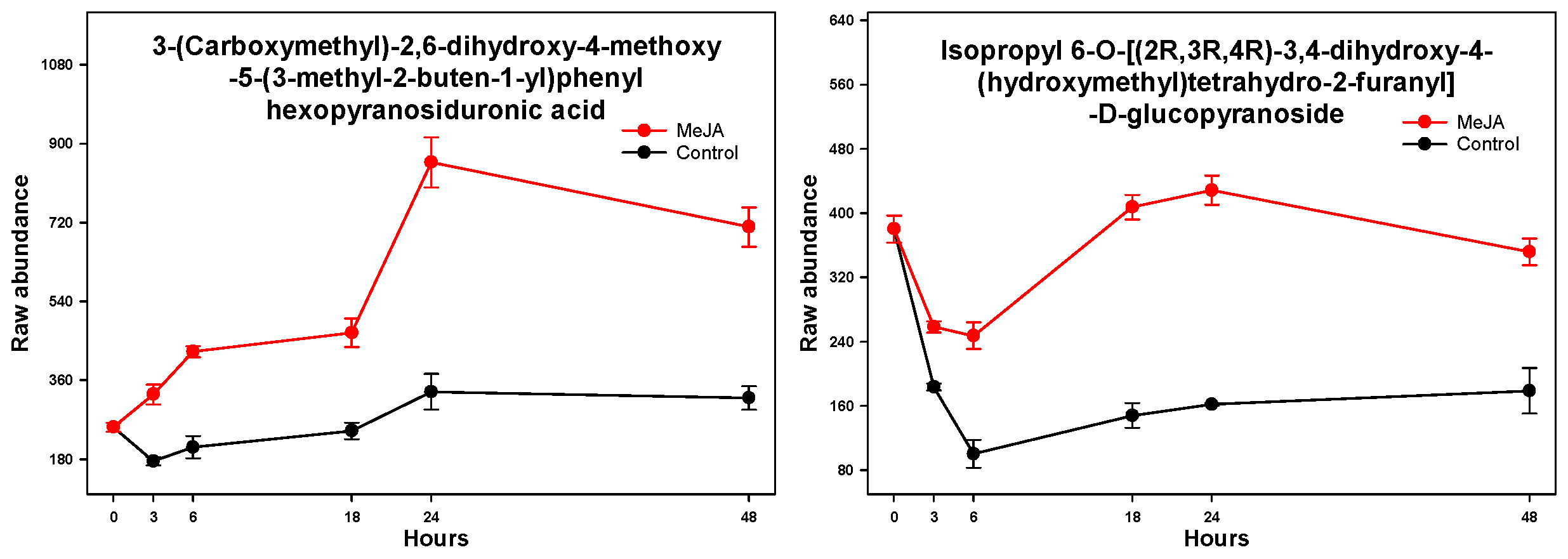
Two carbohydrate-derived conjugates—3-(Carboxymethyl)-2,6-dihydroxy-4-methoxy-5-(3-methyl-2-buten-1-yl)phenyl hexopyranosiduronic acid and Isopropyl 6-O-[(2R,3R,4R)-3,4-dihydroxy-4-(hydroxymethyl)tetrahydro-2-furanyl]-D-glucopyranoside—followed a similar trend to the previous group but differed in their behaviour at the final sampling point (Figure 4).
Although both metabolites exhibited progressive accumulation following MeJA treatment, their concentrations declined at 48 h. The isopropyl glucoside derivative showed a marked decrease during the first 6 h, particularly in control samples, followed by gradual accumulation thereafter. Importantly, MeJA-treated leaves maintained consistently higher levels than controls throughout the time course.
This profile suggests delayed activation coupled with limited persistence at later stages.

3.3.3. Late Transient Induction (24 h Peak)

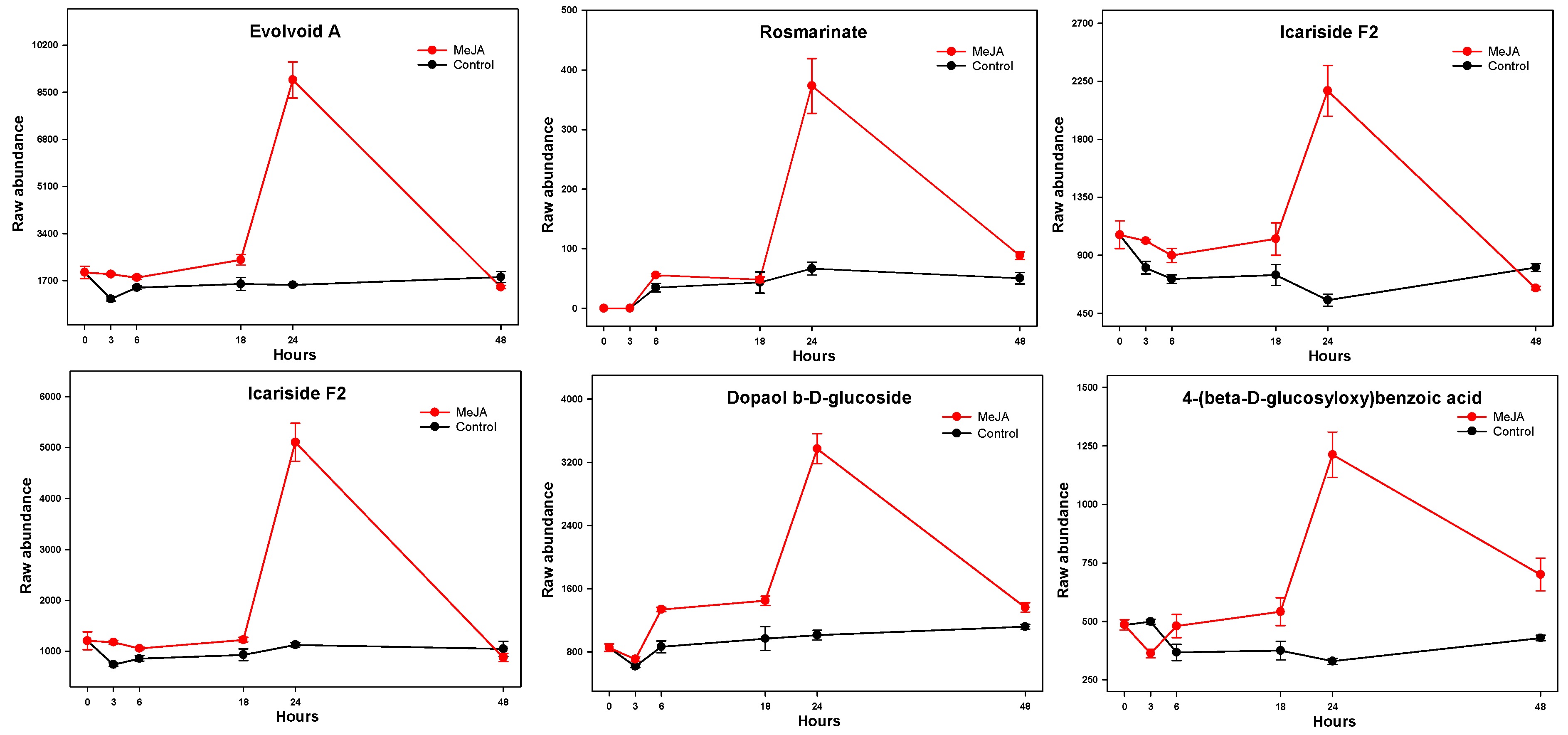
Compounds from Evolvoid A to 4-(beta-D-glucosyloxy) benzoic acid exhibited minimal variation during the early phase of the experiment (0–18 h), maintaining concentrations comparable to basal levels (Figure 5).
At 24 h post-treatment, however, a pronounced induction was detected. In several cases, concentrations increased up to fourfold relative to 18 h values. This strong induction was not sustained, as levels sharply declined by 48 h, approaching initial concentrations.
Such tightly restricted activation suggests a temporally controlled biosynthetic burst centred at 24 h, rather than progressive accumulation.

3.3.4. Oscillatory Early Response

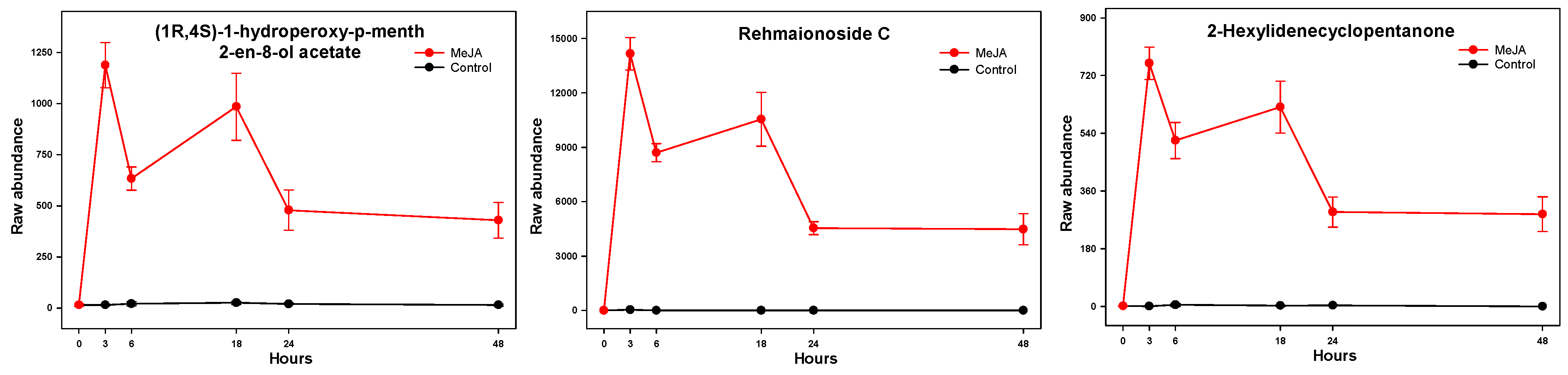
Metabolites spanning from (1R,4S)-1-hydroperoxy-p-menth-2-en-8-ol acetate to 2-Hexylidenecyclopentanone exhibited a clear oscillatory behaviour (Figure 6).
A significant increase occurred at 3 h post-treatment, followed by a decrease at 6 h. A secondary increase was observed at 18 h, after which concentrations declined again at 24 h. From 24 to 48 h, levels stabilised with a slight downward tendency.
This fluctuating pattern indicates repeated cycles of induction and attenuation rather than sustained metabolic activation, suggesting complex regulatory dynamics.

3.3.5. Rapid Early Transient Activation

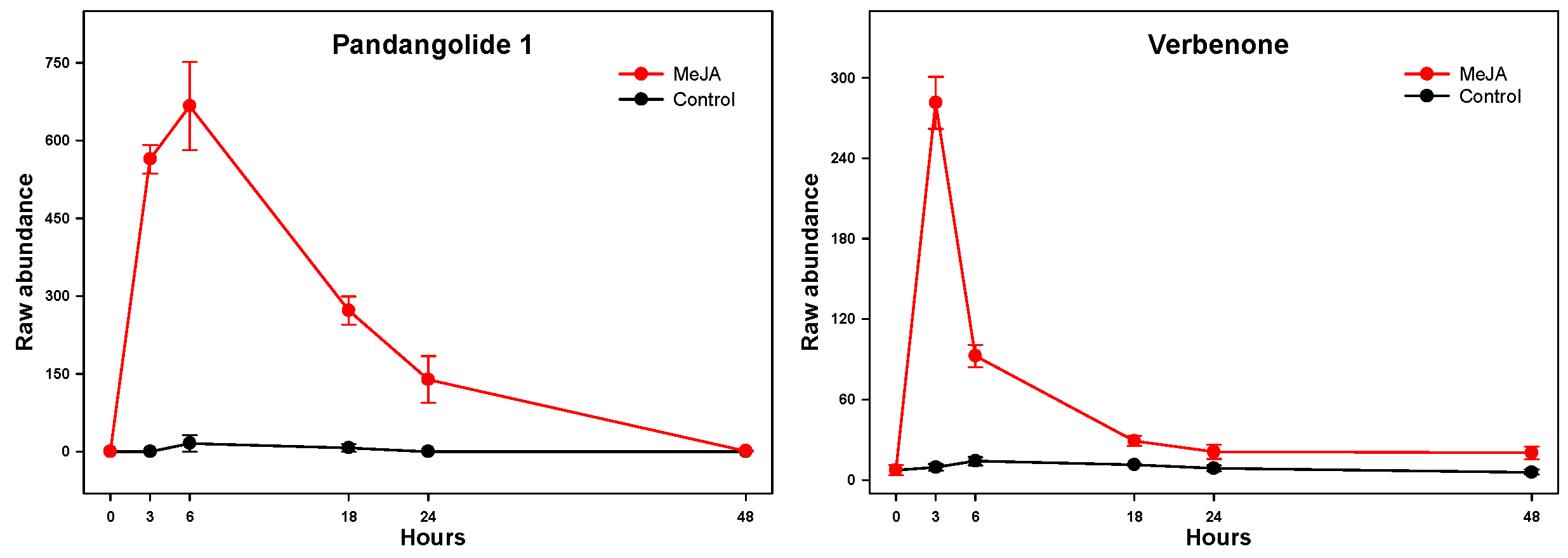
Pandangolide 1 and Verbenone (Figure 7) showed intense biosynthetic activity during the first 6 h after MeJA application. Their concentrations increased sharply compared to basal levels but rapidly declined thereafter, reaching values comparable to pre-treatment conditions.
This rapid activation, followed by fast reversion to baseline, is indicative of short-lived metabolic responses restricted to the early perception phase.

3.3.6. Irregular Profiles with Strong Control Contribution

Compounds from Cinchonain Ia–Ib to Isoquercitrin (Figure 8) displayed more irregular accumulation patterns. Control samples exhibited notable peaks, particularly at 6 h and 24 h, which partially masked treatment-specific effects.
Although MeJA influenced their accumulation, the magnitude and direction of changes were less consistent than in other groups, suggesting that these metabolites may also be sensitive to intrinsic physiological fluctuations independent of elicitor application.

3.3.7. Progressive Downregulation

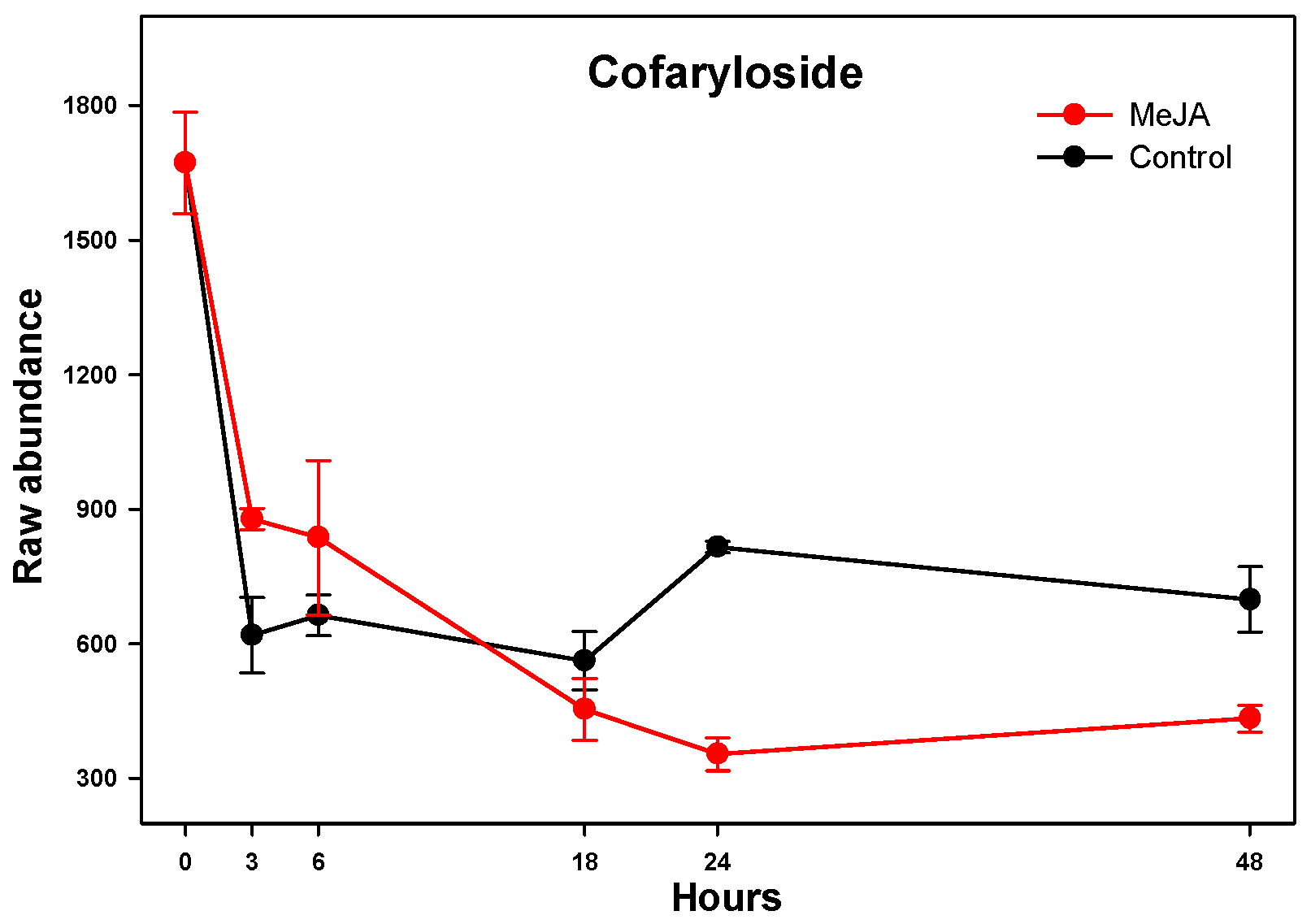
Cofaryloside (Figure 9) exhibited a gradual and continuous decline throughout the experimental period in both control and treated samples. At 48 h, MeJA-treated leaves showed slightly lower concentrations compared to controls.
Unlike the other groups, this metabolite did not display induction phases, suggesting downregulation or progressive metabolic turnover under both conditions.

4. Discussion

Metabolite annotation in this study corresponds to MSI level 2–3 based on accurate mass and database matching, and therefore represents putative identification rather than fully confirmed metabolite identities.

4.1. Early Metabolic Reconfiguration Rapid Perception and Carbon Reallocation

The first 6 h following MeJA application were characterised by rapid metabolic adjustments, particularly in compounds displaying biphasic or early transient kinetics. Such immediate responses are consistent with the rapid perception of exogenous jasmonates and activation of downstream signalling cascades.
Jasmonate signalling is known to trigger transcriptional reprogramming that redirects metabolic fluxes from growth-oriented processes towards defence-related pathways [33]. The sharp but transient accumulation observed for Pandangolide 1 and Verbenone may therefore reflect early metabolic shifts associated with signalling amplification and rapid biochemical adjustment rather than long-term structural defence reinforcement.
The modulation of carbohydrate-derived conjugates further supports the hypothesis of early carbon redistribution. Beyond their structural role, sugars function as metabolic signals integrating stress perception with hormonal crosstalk [34,35,36]. MeJA-induced alterations in carbohydrate metabolism have previously been described in Arabidopsis leaves, where changes in starch and soluble sugar dynamics accompany stress adaptation [37]. In the present study, the early fluctuations observed in carbohydrate conjugates suggest that carbon mobilisation constitutes one of the primary layers of MeJA-induced metabolic reprogramming in Tempranillo leaves.

4.2. Temporal Structuring of Secondary Metabolic Activation

Following the early phase, the 18–48 h window was characterised by structured and temporally differentiated activation of secondary metabolism. Rather than uniform accumulation across all metabolites, distinct kinetic behaviours were observed, including biphasic reinforcement and tightly restricted 24 h peaks.
Terpenoid-related metabolites such as Preisocalamendiol, 8-Hydroxy-alpha-humulene, and Caryophyllene epoxide have documented ecological roles in plant–environment interactions, including defensive signalling and deterrence of herbivores and pathogens [38,39,40]. Their oscillatory profiles suggest rapid synthesis and turnover, possibly reflecting dynamic regulation rather than simple accumulation. This behaviour aligns with the known responsiveness of terpenoid pathways to jasmonate signalling [33].
The pronounced but transient peak detected at 24 h for cinnamate- and benzoic acid-related derivatives indicates temporally restricted activation of phenylpropanoid metabolism. MeJA has been reported to induce genes involved in flavonoid and phenolic biosynthesis in grapevine leaves [41,42]. The present kinetic data complement those findings by showing that induction is not continuous but instead highly time-dependent.
Flavonoids such as Isoquercitrin, Epigallocatechin, Taxifolin, and Icariside F2 accumulated in patterns compatible with defensive reinforcement. These compounds are associated with antioxidant activity, antimicrobial effects, and modulation of oxidative stress [43,44,45,46,47,48]. Their induction supports the interpretation that MeJA promotes chemical defence fortification in leaf tissues, although the persistence and systemic consequences of this activation require further investigation. This increased accumulation of phenolic compounds and flavonoids does not occur in a metabolic vacuum but rather imposes a potential redistribution of metabolic resources of the plant. The reprogramming induced by methyl jasmonate drastically sacrifices the synthesis of structural carbohydrates and the accumulation of organic acids from primary metabolism to finance the urgent defensive response, suggesting a potential metabolic cost at the metabolomic level, without direct physiological quantification [49].

4.3. Biphasic and Oscillatory Dynamics as Indicators of Regulatory Complexity

A key observation of this study is the predominance of non-linear accumulation profiles. Most metabolites did not follow a monotonic increase, but instead exhibited biphasic or oscillatory patterns.
Such dynamics suggest tight regulatory control, potentially involving feedback inhibition, substrate competition, or sequential pathway activation. The second accumulation wave detected at 48 h for several compounds may reflect sustained defence reinforcement following initial signalling and metabolic adjustment.
These structured temporal patterns are compatible with the concept that jasmonate-induced responses unfold in phases: an early perception and signalling phase, followed by metabolic reallocation, and finally secondary metabolite reinforcement. Although transcriptomic confirmation would be required to fully validate this sequence, the kinetic evidence presented here supports a multi-layered regulatory model.

4.4. Relevance for Viticulture and Optimisation of Elicitor Strategies

From an agronomic perspective, defining the temporal architecture of MeJA-induced metabolic responses provides actionable information for refining elicitor-based management strategies in grapevine cultivation. The rapid metabolic adjustments detected within the first 3–6 h after application reflect early signalling events and carbon reallocation processes, and could serve as short-term biochemical indicators of elicitor perception. Such early-responsive metabolites may facilitate rapid validation of treatment efficiency under controlled or semi-field conditions [40].
In contrast, the pronounced activation observed between 24 and 48 h indicates that maximal biochemical reprogramming in leaves occurs one to two days after application, corresponding to sustained engagement of secondary metabolic pathways. This delayed reinforcement phase suggests that MeJA-induced defence activation is not instantaneous but dynamically structured, involving sequential metabolic layers rather than a uniform response.
In practical viticulture, synchronising MeJA application with anticipated pathogen pressure or with phenological stages characterised by high metabolic plasticity may enhance treatment efficacy. Field studies have demonstrated that foliar MeJA applications increase anthocyanins, flavonols, and stilbenes in grape berries [8,42]. The present work provides metabolic context at the source-tissue level in Tempranillo, supporting the hypothesis that early leaf reprogramming may contribute to broader systemic defence responses and potentially influence grape compositional traits.
However, environmental variables (biotic and abiotic conditions), genotype, and stage of development, among others, are likely to modulate both the magnitude and persistence of these metabolic responses. Although transcriptomic analyses were beyond the scope of the present study, integration of gene expression profiling with the temporally resolved metabolomic framework described here would further clarify the regulatory hierarchy underlying early signalling and sustained defence activation. Future multi-level validation under field conditions will be essential to strengthen agronomic translation and optimise elicitor deployment strategies in sustainable viticulture systems.
Several limitations should be acknowledged. Metabolite identification was based on accurate mass and database matching (MSI level 2–3), and therefore represents putative annotation. In addition, the experiment was conducted under controlled greenhouse conditions, and further studies under vineyard conditions will be required to validate the agronomic implications of these findings.

5. Conclusions

This study demonstrates that exogenous methyl jasmonate induces a temporally structured metabolic response in Vitis vinifera L. cv. Tempranillo leaves rather than a uniform activation of defence metabolism. Early responses were associated with modulation of carbohydrate-related metabolites, suggesting rapid carbon redistribution following elicitor perception, whereas later stages showed coordinated accumulation of terpenoid- and phenylpropanoid-related compounds consistent with defence-associated secondary metabolism. Although metabolite annotations remain tentative according to MSI level 2–3 criteria, the observed kinetic patterns provide a temporally resolved metabolomic framework for understanding MeJA responsiveness in grapevine leaves and may assist future studies aimed at optimising elicitor-based strategies in viticulture.

Author Contributions

Conceptualization, D.F.P.-Q.; methodology, D.F.P.-Q.; formal analysis, D.F.P.-Q.; investigation, D.F.P.-Q. and C.C.-P.; writing—original draft preparation, D.F.P.-Q. and C.C.-P.; writing—review and editing, D.F.P.-Q. and C.C.-P.; funding acquisition, D.F.P.-Q. All authors have read and agreed to the published version of the manuscript.

Funding

This work was funded by the Agencia Estatal de Investigación (AEI) and the Ministerio de Ciencia, Innovación y Universidades (FJC2021-046437-I), within the framework of the State Plan for Scientific and Technical Research and Innovation (2021–2023), and co-funded by the European Union (NextGenerationEU) through the Recovery, Transformation and Resilience Plan. Diego Paladines-Quezada was supported by a Juan de la Cierva-Formación contract (FJC2021-046437-I) funded by the same institutions.

Data Availability Statement

The raw data supporting the conclusions of this article will be made available by the authors on request.

Acknowledgments

During the preparation of this manuscript, the authors used ChatGPT (version 5.3; OpenAI, San Francisco, CA, USA) for English-language editing to improve clarity and readability of the text. NotebookLM (accessed March 2026; Google, Mountain View, CA, USA) was used as a support tool for the preparation of the graphical abstract. The authors have reviewed and edited the outputs generated by these tools and take full responsibility for the content of this publication.

Conflicts of Interest

The authors declare no conflicts of interest.

Abbreviations

The following abbreviations are used in this manuscript:
ANOVAAnalysis of variance
BPIBase peak intensity
ESIElectrospray ionisation
LC-MSLiquid chromatography mass spectrometry
MeJAMethyl jasmonate
MSIMetabolomics Standards Initiative
OPLS-DAOrthogonal partial least squares discriminant analysis
PCAPrincipal component analysis
PTFEPolytetrafluoroethylene
QCQuality control
RSDRelative standard deviation
UPLC-QTOF-MSUltra-performance liquid chromatography coupled with quadrupole time of flight mass spectrometry

References

  1. Fraga, H. Viticulture and Winemaking under Climate Change. Agronomy 2019, 9, 783. [Google Scholar] [CrossRef]
  2. Dinis, L.T.; Bernardo, S.; Yang, C.; Fraga, H.; Malheiro, A.C.; Moutinho-Pereira, J.; Santos, J.A. Mediterranean Viticulture in the Context of Climate Change. Cienc. Tec. Vitivinic. 2022, 37, 139–158. [Google Scholar] [CrossRef]
  3. van Leeuwen, C.; Sgubin, G.; Bois, B.; Ollat, N.; Swingedouw, D.; Zito, S.; Gambetta, G.A. Climate Change Impacts and Adaptations of Wine Production. Nat. Rev. Earth Environ. 2024, 5, 258–275. [Google Scholar] [CrossRef]
  4. Delaunois, B.; Farace, G.; Jeandet, P.; Clément, C.; Baillieul, F.; Dorey, S.; Cordelier, S. Elicitors as Alternative Strategy to Pesticides in Grapevine? Current Knowledge on Their Mode of Action from Controlled Conditions to Vineyard. Environ. Sci. Pollut. Res. 2014, 21, 4837–4846. [Google Scholar] [CrossRef]
  5. Paladines-Quezada, D.F.; Moreno-Olivares, J.D.; Fernández-Fernández, J.I.; Bautista-Ortín, A.B.; Gil-Muñoz, R. Influence of Methyl Jasmonate and Benzothiadiazole on the Composition of Grape Skin Cell Walls and Wines. Food Chem. 2019, 277, 691–697. [Google Scholar] [CrossRef]
  6. Hakeem, A.; Li, S.; Nasiru, M.M.; Mustafa, G.; Elatafi, E.; Shangguan, L.; Fang, J. Methyl Jasmonate Acts as a Crucial Player in Abiotic Stress Responses in Grape. Stresses 2025, 5, 40. [Google Scholar] [CrossRef]
  7. Wasternack, C.; Song, S. Jasmonates: Biosynthesis, Metabolism, and Signaling by Proteins Activating and Repressing Transcription. J. Exp. Bot. 2017, 68, 1303–1321. [Google Scholar] [CrossRef]
  8. Hasan, M.U.; Singh, Z.; Shah, H.M.S.; Kaur, J.; Woodward, A.; Afrifa-Yamoah, E.; Vithana, M.D.K. Preharvest Methyl Jasmonate Application Regulates Ripening, Colour Development and Improves Phytochemical Quality of Fruits: A Review. Sci. Hortic. 2025, 339, 113909. [Google Scholar] [CrossRef]
  9. Paladines-Quezada, D.F.; Moreno-Olivares, J.D.; Fernández-Fernández, J.I.; Bleda-Sánchez, J.A.; Martínez-Moreno, A.; Gil-Muñoz, R. Elicitors and Pre-Fermentative Cold Maceration: Effects on Polyphenol Concentration in Monastrell Grapes and Wines. Biomolecules 2019, 9, 671. [Google Scholar] [CrossRef] [PubMed]
  10. Paladines-Quezada, D.F.; Fernández-Fernández, J.I.; Moreno-Olivares, J.D.; Bleda-Sánchez, J.A.; Gómez-Martínez, J.C.; Martínez-Jiménez, J.A.; Gil-Muñoz, R. Application of Elicitors in Two Ripening Periods of Vitis vinifera L. Cv Monastrell: Influence on Anthocyanin Concentration of Grapes and Wines. Molecules 2021, 26, 1689. [Google Scholar] [CrossRef]
  11. Paladines-Quezada, D.F.; Moreno-Olivares, J.D.; Fernández-Fernández, J.I.; Bleda-Sánchez, J.A.; Gil-Muñoz, R. Application of Elicitors at Two Maturation Stages of Vitis vinifera L. Cv Monastrell: Changes in Skin Cell Walls. Chemistry 2022, 4, 98–111. [Google Scholar] [CrossRef]
  12. Giménez-Bañón, M.J.; Paladines-Quezada, D.F.; Moreno-Olivares, J.D.; Bleda-Sánchez, J.A.; Fernández-Fernández, J.I.; Parra-Torrejón, B.; Ramírez-Rodríguez, G.B.; Delgado-López, J.M.; Gil-Muñoz, R. Methyl Jasmonate and Nanoparticles Doped with Methyl Jasmonate Affect the Cell Wall Composition of Monastrell Grape Skins. Molecules 2023, 28, 1478. [Google Scholar] [CrossRef]
  13. Palai, G.; D’Onofrio, C. Berry Secondary Metabolites and Leaf Physiological Parameters Are Independently Regulated by Exogenous Methyl Jasmonate Application in Sangiovese Grapevines (Vitis vinifera L.). Plant Physiol. Biochem. 2024, 207, 108378. [Google Scholar] [CrossRef]
  14. Paladines-Quezada, D.; Gil-Muñoz, R. Metabolic Response Induced by Methyl Jasmonate and Benzothiadiazole in Vitis vinifera Cv. Monastrell Seedlings. Horticulturae 2025, 11, 277. [Google Scholar] [CrossRef]
  15. Gil-Muñoz, R.; Fernández-Fernández, J.I.; Portu, J.; Garde-Cerdán, T. Methyl Jasmonate: Effect on Proanthocyanidin Content in Monastrell and Tempranillo Grapes and Wines. Eur. Food Res. Technol. 2018, 244, 611–621. [Google Scholar] [CrossRef]
  16. Ramos, M.C. Effect of Climate Extremes and Elevation on the Tempranillo Grapevine Response: Case Study in Ribera Del Duero DO over the Period 2004–2023. Int. J. Biometeorol. 2025, 69, 2337–2352. [Google Scholar] [CrossRef] [PubMed]
  17. Zhang, C.; Echeverria, J.; Foresti, C.; Santiago, A.; El Idrissi Moubtassim, H.; Amato, A.; Sonego, P.; Pindo, M.; Zenoni, S.; Moretto, M.; et al. A Grapevine MYC2-MYB24 Regulatory Module Activates Terpenoid Biosynthesis Upon Methyl Jasmonate Elicitation. bioRxiv 2025. [Google Scholar] [CrossRef]
  18. Parra-Torrejón, B.; Ramírez-Rodríguez, G.B.; Giménez-Bañón, M.J.; Moreno-Olivares, J.D.; Paladines-Quezada, D.F.; Gil-Muñoz, R.; Delgado-López, J.M. Nanoelicitors with Prolonged Retention and Sustained Release to Produce Beneficial Compounds in Wines. Environ. Sci. Nano 2021, 8, 3524–3535. [Google Scholar] [CrossRef]
  19. Paladines-Quezada, D.F.; Pérez-Álvarez, E.P.; Sáenz de Urturi, I.; González-Lázaro, M.; Garde-Cerdán, T. Puesta a Punto de Un Método Metabolómico No Dirigido Mediante UPLC-QTOF-MS Para Caracterizar Hojas de Vitis vinifera. In Proceedings of the Congreso Nacional de Investigación Enológica. GIENOL; Universidad de Zaragoza and Laboratorio de Análisis del Aroma y Enología (LAAE): Zaragoza, Spain, 2024; pp. 110–111. [Google Scholar]
  20. Saccenti, E.; Hoefsloot, H.C.J.; Smilde, A.K.; Westerhuis, J.A.; Hendriks, M.M.W.B. Reflections on Univariate and Multivariate Analysis of Metabolomics Data. Metabolomics 2014, 10, 361–374. [Google Scholar] [CrossRef]
  21. Perez de Souza, L.; Alseekh, S.; Naake, T.; Fernie, A. Mass Spectrometry-Based Untargeted Plant Metabolomics. Curr. Protoc. Plant Biol. 2019, 4, e20100. [Google Scholar] [CrossRef]
  22. Benelli, C. (Ed.) Plant Cryopreservation; MDPI: Basel, Switzerland, 2022; 174p. [Google Scholar] [CrossRef]
  23. Maisl, C.; Doppler, M.; Seidl, B.; Bueschl, C.; Schuhmacher, R. Untargeted Plant Metabolomics: Evaluation of Lyophilization as a Sample Preparation Technique. Metabolites 2023, 13, 686. [Google Scholar] [CrossRef]
  24. Lang, J.; Ramos, S.E.; Smohunova, M.; Bigler, L.; Schuman, M.C. Screening of Leaf Extraction and Storage Conditions for Eco-Metabolomics Studies. Plant Direct 2024, 8, e578. [Google Scholar] [CrossRef]
  25. Malagoli, M.; Sut, S.; Kumar, G.; Dall’Acqua, S. Variations of Elements, Pigments, Amino Acids and Secondary Metabolites in Vitis vinifera (L.) Cv Garganega after 501 Biodynamic Treatment. Chem. Biol. Technol. Agric. 2022, 9, 36. [Google Scholar] [CrossRef]
  26. Billet, K.; Malinowska, M.A.; Munsch, T.; Unlubayir, M.; Adler, S.; Delanoue, G.; Lanoue, A. Semi-Targeted Metabolomics to Validate Biomarkers of Grape Downy Mildew Infection under Field Conditions. Plants 2020, 9, 1008. [Google Scholar] [CrossRef]
  27. Theodoridis, G.; Gika, H.; Franceschi, P.; Caputi, L.; Arapitsas, P.; Scholz, M.; Masuero, D.; Wehrens, R.; Vrhovsek, U.; Mattivi, F. LC-MS Based Global Metabolite Profiling of Grapes: Solvent Extraction Protocol Optimisation. Metabolomics 2012, 8, 175–185. [Google Scholar] [CrossRef]
  28. Moro, L.; Da Ros, A.; da Mota, R.V.; Purgatto, E.; Mattivi, F.; Arapitsas, P. LC–MS Untargeted Approach Showed That Methyl Jasmonate Application on Vitis labrusca L. Grapes Increases Phenolics at Subtropical Brazilian Regions. Metabolomics 2020, 16, 18. [Google Scholar] [CrossRef]
  29. Arapitsas, P.; Speri, G.; Angeli, A.; Perenzoni, D.; Mattiv, F. The Influence of Storage on the “Chemical Age” of Red Wines. Metabolomics 2014, 10, 816–832. [Google Scholar] [CrossRef]
  30. Streiner, D.L. Starting at the Beginning: An Introduction to Coefficient Alpha and Internal Consistency. J. Pers. Assess. 2003, 80, 99–103. [Google Scholar] [CrossRef]
  31. Sumner, L.W.; Alexander, A.E.; Ae, A.; Ae, D.B.; Ae, M.H.B.; Beger, R.; Daykin, C.A.; Teresa, A.E.; Fan, W.-M.; Oliver, A.E.; et al. Proposed Minimum Reporting Standards for Chemical Analysis Chemical Analysis Working Group (CAWG) Metabolomics Standards Initiative (MSI). Metabolomics 2007, 3, 211–221. [Google Scholar] [CrossRef]
  32. Zhao, M.; Luo, Y.; Li, Y.; Liu, X.; Wua, J.; Liao, X.; Chen, F. The Identification of Degradation Products and Degradation Pathway of Malvidin-3-Glucoside and Malvidin-3,5-Diglucoside under Microwave Treatment. Food Chem. 2013, 141, 3260–3267. [Google Scholar] [CrossRef]
  33. Schwab, W.; Wüst, M. Understanding the Constitutive and Induced Biosynthesis of Mono- and Sesquiterpenes in Grapes (Vitis vinifera): A Key to Unlocking the Biochemical Secrets of Unique Grape Aroma Profiles. J. Agric. Food Chem. 2015, 63, 10591–10603. [Google Scholar] [CrossRef]
  34. Parvaiz, A.; Joyia, F.A.; Saeed, M.; Azwar, M.; Khan, M.S.; Mustafa, G. Defense-Related Proteins in Sugarcane and Their Role in Disease Resistance: Molecular Advancements and Beyond. In Agro-Industrial Perspectives on Sugarcane Production Under Environmental Stress; Springer: Singapore, 2022; pp. 171–192. ISBN 9789811939556. [Google Scholar]
  35. Yao, T.; Gai, X.T.; Pu, Z.J.; Gao, Y.; Xuan, Y.H. From Functional Characterization to the Application of SWEET Sugar Transporters in Plant Resistance Breeding. J. Agric. Food Chem. 2022, 70, 5273–5283. [Google Scholar] [CrossRef]
  36. Hernández-Bernal, A.F.; Gregorio-Jorge, J.; León, P.; Hernández-Bernal, A.F.; Gregorio-Jorge, J.; León, P. El Papel de Los Azúcares Como Moléculas de Señalización En Las Plantas. TIP Rev. Espec. Cienc. Quím.-Biol. 2022, 25, 1–20. [Google Scholar] [CrossRef]
  37. Takahashi, I.; Hara, M. Enhancement of Starch Accumulation in Plants by Exogenously Applied Methyl Jasmonate. Plant Biotechnol. Rep. 2013, 8, 143–149. [Google Scholar] [CrossRef]
  38. Li, X.Y.; Wen, Y.Q.; Meng, N.; Qian, X.; Pan, Q.H. Monoterpenyl Glycosyltransferases Differentially Contribute to Production of Monoterpenyl Glycosides in Two Aromatic Vitis vinifera Varieties. Front. Plant Sci. 2017, 8, 1226. [Google Scholar] [CrossRef]
  39. Salvagnin, U.; Carlin, S.; Angeli, S.; Vrhovsek, U.; Anfora, G.; Malnoy, M.; Martens, S. Homologous and Heterologous Expression of Grapevine E-(β)-Caryophyllene Synthase (VvGwECar2). Phytochemistry 2016, 131, 76–83. [Google Scholar] [CrossRef]
  40. Lemaitre-Guillier, C.; Chartier, A.; Dufresne, C.; Douillet, A.; Cluzet, S.; Valls, J.; Aveline, N.; Daire, X.; Adrian, M. Elicitor-Induced VOC Emission by Grapevine Leaves: Characterisation in the Vineyard. Molecules 2022, 27, 6028. [Google Scholar] [CrossRef] [PubMed]
  41. Rahman, F.U.; Zhang, Y.; Khan, I.A.; Liu, R.; Sun, L.; Wu, Y.; Jiang, J.; Fan, X.; Liu, C. The Promoter Analysis of VvPR1 Gene: A Candidate Gene Identified through Transcriptional Profiling of Methyl Jasmonate Treated Grapevine (Vitis vinifera L.). Plants 2022, 11, 1540. [Google Scholar] [CrossRef] [PubMed]
  42. Gutiérrez-Gamboa, G.; Mateluna-Cuadra, R.; Díaz-Gálvez, I.; Mejía, N.; Verdugo-Vásquez, N. Methyl Jasmonate Applications in Viticulture: A Tool to Increase the Content of Flavonoids and Stilbenes in Grapes and Wines. Horticulturae 2021, 7, 133. [Google Scholar] [CrossRef]
  43. Kozhikkadan Davis, C.; Nasla, K.; Anjana, A.K.; Rajanikant, G.K. Taxifolin as Dual Inhibitor of Mtb DNA Gyrase and Isoleucyl-TRNA Synthetase: In Silico Molecular Docking, Dynamics Simulation and in Vitro Assays. In Silico Pharmacol. 2018, 6, 8. [Google Scholar] [CrossRef]
  44. Kedrina-Okutan, O.; Novello, V.; Hoffmann, T.; Hadersdorfer, J.; Occhipinti, A.; Schwab, W.; Ferrandino, A. Constitutive Polyphenols in Blades and Veins of Grapevine (Vitis vinifera L.) Healthy Leaves. J. Agric. Food Chem. 2018, 66, 10977–10990. [Google Scholar] [CrossRef]
  45. Pagliarani, C.; Moine, A.; Chitarra, W.; Meloni, G.R.; Abbà, S.; Nerva, L.; Pugliese, M.; Gullino, M.L.; Gambino, G. The Molecular Priming of Defense Responses Is Differently Regulated in Grapevine Genotypes Following Elicitor Application against Powdery Mildew. Int. J. Mol. Sci. 2020, 21, 6776. [Google Scholar] [CrossRef]
  46. Kil, Y.S.; Kang, U.; Seo, E.K. Chemical Constituents of the Leaves of Vitis labruscana Cv. Steuben. Chem. Nat. Compd. 2017, 53, 958–960. [Google Scholar] [CrossRef]
  47. Luo, Y.Y.; Li, R.X.; Jiang, Q.S.; Bai, R.; Duan, D. Changes in the Chlorophyll Content of Grape Leaves Could Provide a Physiological Index for Responses and Adaptation to UV-C Radiation. Nord. J. Bot. 2019, 37, e02314. [Google Scholar] [CrossRef]
  48. Shomali, A.; Das, S.; Arif, N.; Sarraf, M.; Zahra, N.; Yadav, V.; Aliniaeifard, S.; Chauhan, D.K.; Hasanuzzaman, M. Diverse Physiological Roles of Flavonoids in Plant Environmental Stress Responses and Tolerance. Plants 2022, 11, 3158. [Google Scholar] [CrossRef]
  49. Goddard, M.L.; Belval, L.; Martin, I.R.; Roth, L.; Laloue, H.; Deglène-Benbrahim, L.; Valat, L.; Bertsch, C.; Chong, J. Arbuscular Mycorrhizal Symbiosis Triggers Major Changes in Primary Metabolism Together With Modification of Defense Responses and Signaling in Both Roots and Leaves of Vitis vinifera. Front. Plant Sci. 2021, 12, 721614. [Google Scholar] [CrossRef]
Figure 1. PCA of Tempranillo standardised clonal leaf samples collected at different time points after MeJA treatment. Compounds analysed in negative (A) and positive (B) mode. Each point represents an independent biological replicate (n = 3).
Agronomy 16 00673 g001
Figure 2. S-Plot of the OPLS-DA analysis of each time point for the selection of biomarkers analysed in negative and positive mode of Tempranillo leaf samples (control vs. MeJA).
Agronomy 16 00673 g002
Figure 3. Evolution of the biosynthesis of tentatively identified compounds in Tempranillo leaf samples treated with methyl jasmonate, showing a biphasic early-late accumulation pattern. Data represent mean ± SE (n = 3).
Agronomy 16 00673 g003
Figure 4. Evolution of the biosynthesis of tentatively identified compounds in Tempranillo leaf samples treated with methyl jasmonate, showing a progressive induction followed by a terminal decline pattern. Data represent mean ± SE (n = 3).
Agronomy 16 00673 g004
Figure 5. Evolution of the biosynthesis of tentatively identified compounds in Tempranillo leaf samples treated with methyl jasmonate, showing a Late Transient Induction (24 h Peak) pattern. Data represent mean ± SE (n = 3).
Agronomy 16 00673 g005
Figure 6. Evolution of the biosynthesis of tentatively identified compounds in Tempranillo leaf samples treated with methyl jasmonate, showing an Oscillatory Early Response pattern. Data represent mean ± SE (n = 3).
Agronomy 16 00673 g006
Figure 7. Evolution of the biosynthesis of tentatively identified compounds in Tempranillo leaf samples treated with methyl jasmonate, showing a Rapid Early Transient Activation pattern. Data represent mean ± SE (n = 3).
Agronomy 16 00673 g007
Figure 8. Evolution of the biosynthesis of tentatively identified compounds in Tempranillo leaf samples treated with methyl jasmonate, showing Irregular Profiles with Strong Control Contribution. Data represent mean ± SE (n = 3).
Agronomy 16 00673 g008
Figure 9. Evolution of the biosynthesis of tentatively identified compounds in Tempranillo leaf samples treated with methyl jasmonate, showing Progressive Downregulation. Data represent mean ± SE (n = 3).
Agronomy 16 00673 g009
Table 1. Biomarkers tentatively identified in leaf extracts of Vitis vinifera L. cv. Tempranillo standardised clonal plants induced by the application of methyl jasmonate.
Retention Time (min)Compound NameMSI LevelChemical ClassFormulaMass Error (ppm)ESI
Mode
7.983-isobutanoyl-3′,4-di(isovaleryl)sucrose3Carbohydrate derivativeC26H44O140.67(−)
7.703-isobutanoyl-3′,4-di(isovaleryl)sucrose3Carbohydrate derivativeC26H44O14−0.83(−)
6.613-decanoyl-4-(3-methylbutanoyl)sucrose3Carbohydrate derivativeC27H48O13−0.57(−)
6.548-Hydroxy-alpha-humulene3Terpenoids-SesquiterpenoidC15H24O−1.25(+)
7.25Preisocalamendiol3Terpenoids-SesquiterpenoidC15H24O0.08(+)
7.49Caryophyllene epoxide3Terpenoids-SesquiterpenoidC15H24O−4.41(+)
7.06Preisocalamendiol3Terpenoids-SesquiterpenoidC15H24O−1.20(+)
7.08(S)-(-)-Perillyl alcohol2Terpenoids-MonocyclicC10H16O1.50(+)
7.36Cichorioside L2Terpene lactonesC26H40O13−4.21(+)
5.75Dihydrocarvone3Terpenoids-MonoterpenoidC10H16O1.96(+)
11.43Atractyloside D3Terpene glycosideC27H46O12−0.46(−)
5.18Taxifolin3Flavonoid-FlavansC15H12O7−3.61(−)
3.141-O-(4-coumaroyl)-beta-D-glucose2Hydroxycinnamic acid glycosidesC15H18O8−1.90(−)
2.491-Caffeoyl-beta-D-glucose2Hydroxycinnamic acid glycosidesC15H18O8−2.30(−)
2.495′-O-{[(Hydroxyphosphinato)oxy]phosphinato} guanosine3Nucleoside diphosphateC10H13N5O11P23.99(−)
2.493-Hydroxycoumarin2HydroxycoumarinsC9H6O3−4.80(−)
4.28Swertianolin2Xanthone glucosideC20H20O11−1.68(−)
4.14(2S,2′R,3S,3′R,4S)-3,4′,5,7-Tetrahydroxyflavan(2->7,4->8)-3,3′,5,5′,7-pentahydroxyflavan3BiflavonoidsC30H24O110.06(+)
2.273-(Carboxymethyl)-2,6-dihydroxy-4-methoxy-5-(3-methyl-2-buten-1-yl)phenyl hexopyranosiduronic acid2Hexopyranosiduro-nic acidC20H26O12−1.42(−)
3.82Isopropyl 6-O-[(2R,3R,4R)-3,4-dihydroxy-4-(hydroxymethyl)tetrahydro-2-furanyl]-D-glucopyranoside3Carbohydrates and carbohydrate conjugatesC14H26O104.28(−)
3.83Evolvoid A3Cinnamate esterC19H28O10−1.09(−)
2.84Rosmarinate3Rosmarinic acidC18H16O8−2.71(−)
3.43Icariside F22Flavonoid glycosidesC18H26O10−1.49(−)
3.27Icariside F23Flavonoid glycosidesC18H26O10−1.75(−)
2.05Dopaol b-D-glucoside3CatecholsC14H20O8−4.61(−)
2.074-(beta-D-glucosyloxy)benzoic acid3Benzoic acidsC13H16O8−3.64(−)
6.43(1R,4S)-1-hydroperoxy-p-menth-2-en-8-ol acetate3Terpenoids-MonoterpenoidC12H20O40.91(+)
8.13Rehmaionoside C3Terpene glycosideC19H32O8−0.36(−)
8.132-Hexylidenecyclopentanone3Cyclic ketonesC11H18O0.93(+)
4.30Pandangolide 12Hexaketide lactoneC12H20O5−4.76(−)
8.58Verbenone3Terpenoids-MonoterpenoidC10H14O1.57(+)
6.24Cinchonain Ia-Ib3Flavonoid-FlavansC24H20O9−1.17(−)
6.84Cinchonain Ia-Ib2Flavonoid-FlavansC24H20O9−1.62(−)
1.97Myricetin 3-glucoside3Flavonoid glycosidesC21H20O13−4.70(−)
2.81Occidentoside2Lignan glycosidesC36H32O15−0.64(−)
4.35Flavonol 3-O-D-galactoside2Flavonoid-FlavonolsC21H20O8−1.88(−)
3.16Galangin 3-rhamnoside2Flavonoid glycosidesC21H20O9−1.23(−)
3.46Epigallocatechin2Flavonoid-FlavansC15H14O7−3.23(−)
2.84Isoquercitrin3Flavonoid glycosidesC21H20O12−2.14(−)
11.18Cofaryloside2Terpene glycosideC26H42O10−0.46(−)
Disclaimer/Publisher’s Note: The statements, opinions and data contained in all publications are solely those of the individual author(s) and contributor(s) and not of MDPI and/or the editor(s). MDPI and/or the editor(s) disclaim responsibility for any injury to people or property resulting from any ideas, methods, instructions or products referred to in the content.