Article

Fungal Diversity, Pathogenic Characteristics and Fungicide Sensitivity of Pathogens Isolated from Areca catechu L. Diseases in Hainan Island

1
College of Plant Protection, China Agricultural University, Beijing 100193, China
2
Sanya Institute, China Agricultural University, Sanya 572019, China
3
College of Science, China Agricultural University, Beijing 100193, China
4
School of Intelligent Manufacturing, Hunan University of Science and Engineering, Yongzhou 425100, China
5
Smart Agriculture Research Center, Hunan University of Science and Engineering (SARCHUSE), Yongzhou 425199, China
*
Authors to whom correspondence should be addressed.
Agronomy 2026, 16(6), 671; https://doi.org/10.3390/agronomy16060671
Submission received: 2 February 2026 / Revised: 4 March 2026 / Accepted: 10 March 2026 / Published: 23 March 2026
(This article belongs to the Special Issue Environmentally Friendly Ways to Control Plant Disease)

Abstract

This study systematically identified the pathogenic fungi affecting Areca catechu in Hainan. Using diseased tissues from five regions, isolates were obtained using molecular methods, and their pathogenicity was confirmed using Koch’s postulates. We obtained 44 distinct fungal isolates from 9 genera. Fusarium (27.27%) and Colletotrichum (38.12%) were the dominant genera across all tissues. Twenty isolates were confirmed as pathogens. Key findings include the first report of Alternaria angustiovoidea and A. pogostemonis as areca leaf spot pathogens in China and the first confirmation of pathogenicity for three Fusarium species complexes (FSSC, FFSC, FIESC). Five Fusarium species are newly reported as pathogens in China. Cladosporium tenuissimum and Plectosphaerella cucumerina were confirmed for the first time to cause leaf spot. Fusarium, Colletotrichum, and Alternaria were core pathogens, all exhibiting high polygalacturonase and cellulase activity. The FFSC and Colletotrichum gloeosporioides species complex (CGSC) showed broad-spectrum pathogenicity on tropical fruits. Fungicide sensitivity assays ranked efficacy as prochloraz > difenoconazole > tebuconazole > ethylicin > pyraclostrobin, with genus-specific responses observed. This research fills a systematic knowledge gap on areca fungal diseases in China, providing a crucial basis for precise control strategies and integrated management.

1. Introduction

Areca catechu is a signature economic crop in the tropical and subtropical regions of southern China. It holds important ecological, economic, and socio-cultural values. Its cultivation and utilization have a history of over 2000 years. It occupies a unique position in folk consumption and traditional medicine [1]. Hainan serves as the core production area for areca in China. With its unique tropical monsoon climate and suitable soil conditions, Hainan has become the main base for the development of the areca industry. Areca cultivation thus forms a key pillar of Hainan’s agricultural economy. It is also a central pathway for income generation for many local farmers. By the end of 2021, the areca planting area in Hainan reached 173,100 hectares. and the total output amounted to 276,000 tons [2]. This has made significant contributions to local economic development and farmers’ income growth. At the same time, Areca catechu ranks first among the four major southern medicinal plants in China. Its fruits and floral organs can be used in medicine. By 2021, more than 500 traditional Chinese patent medicines in China contained Areca catechu as an ingredient [3].
In recent years, the rapid expansion of Areca catechu cultivation in Hainan has led to increasingly severe occurrences of various diseases [4,5,6,7]. Diseases affecting the leaves, fruits, and stems of Areca catechu cause yield reduction and quality deterioration [8]. They result in substantial economic losses for growers. YLD is widely recognized as the most significant and severe disease affecting Areca catechu in Hainan [9]. It causes serious damage to areca plantations. However, field surveys in areca plantations have revealed that fungal diseases also occur frequently [10,11,12]. These diseases spread rapidly and affect wide areas.
In terms of disease types, foliar diseases such as anthracnose and leaf spot often cause leaf yellowing, drying, and shedding [13]. This directly weakens the nutrient synthesis capacity of the Areca catechu. For example, Pandian reported that Colletotrichum kahawae subsp. cigarro can cause areca leaf spot [14]. The incidence reached 90% in areca plantations in Karnataka, India. Fruit diseases are represented by fruit rot. Infection leads to brown lesions and decay of the fruit [15]. Fruit rot mainly occurs in areca planting areas with heavy rainfall [10]. Huang reported that areca fruit decay caused by Colletotrichum species [16]. Fusarium also causes areca fruit rot [17]. Improper control can result in serious yield impacts.
The Areca catechu planting area in Hainan Province, China, is extensive. However, frequent disease occurrence has become a key factor constraining industry development [1]. Existing research primarily focuses on the phytoplasma and viral pathogens of yellowing disease [1,7]. Studies on the fungal diversity causing areca diseases are limited and lack systematic investigation. Current domestic research mainly remains at the stage of preliminary pathogen identification and scattered biological characteristic observation [18,19,20,21]. Only a few pathogens, such as Colletotrichum species complexes [22] and Diaporthe yunnanensis have been sporadically reported to cause areca diseases [23].
In this study, leaf, fruit, and peduncle samples with symptoms were collected from areca nut plantations with high disease incidence in Hainan Province. Fungal isolates were obtained through isolation and purification, and their species were identified using molecular techniques. Pathogenicity was confirmed according to Koch’s postulates. The population diversity of the pathogenic fungi and their sensitivity to five commonly used agricultural fungicides were further analyzed. Interestingly, these isolates were identified as common fungal pathogens of tropical fruits. These isolates were subsequently used to evaluate their broad-spectrum infectivity on harvested tropical fruits. In summary, this study provides the first systematic characterization of fungal pathogens associated with areca nut and their diversity. Effective fungicides and their optimal concentrations for disease control were also determined. These findings not only fill a knowledge gap in areca nut fungal pathology but also provide practical and scientific guidance for field management. Moreover, the broad-spectrum pathogenicity observed on other tropical fruits highlights the potential risk of cross-infection in mixed cropping systems, emphasizing the need for region-specific phytosanitary strategies. This study provides a scientific basis for sustainable areca nut production and thus contributes to the stability and growth of the tropical fruit industry in the region.

2. Materials and Methods

2.1. Sample Collection

We collected samples from five Areca catechu plantations in Hainan Province, China. The plantations were located in Sanya (18.503° N, 109.340° E), Ledong (18.564° N, 108.808° E), Dongfang (19.097° N, 108.855° E), Baisha (19.236° N, 109.404° E), and (19.257° N, 109.427° E). We collected leaves, fruits, and peduncles exhibiting different disease symptoms. A total of 50 samples were obtained. Detailed information on the sampling sites is shown in Table S1.

2.2. Isolation and Identification of Microorganisms

Microorganism isolation was adjusted according to the method of Lu [24]. Briefly, diseased samples were surface-sterilized in 0.05% sodium hypochlorite solution for 2 min. They were then rinsed three times with sterile water. Using a sterile scalpel, the samples were cut into 0.5 cm × 0.5 cm pieces. The pieces were placed on PDA medium with the symptomatic side facing down. They were incubated at 28 °C for 7 days until mycelia grew from the diseased tissue. Single hyphal tips were transferred to fresh PDA plates using the streak plate method for sub-culturing. Primary cultures were purified on fresh PDA (Potato Dextrose Agar) medium at 28 °C for 7 d. For strains difficult to purify, single hyphal tips were inoculated onto Rose Bengal medium using the method described above until pure isolates were obtained.
Genomic DNA was extracted from the isolates using a Plant Genomic DNA Extraction Kit (BL1042A, Biosharp, Beijing, China). The ITS region was amplified using universal primers ITS1/ITS4. The obtained sequences were deposited in GenBank. All isolates were subjected to BLASTn searches on NCBI. The ITS sequences of all candidate standard strains were downloaded. Multiple sequence alignment was performed using Clustal W. Phylogenetic trees were constructed using the neighbor-joining method in MEGA (version 7.0) with 1000 bootstrap replicates.

2.3. Pathogenicity Testing Using Koch’s Postulates

All isolates were inoculated onto fresh Areca catechu leaves and fruits to test for pathogenicity. Briefly, areca leaves and fruits were surface-sterilized in 0.05% sodium hypochlorite for 2 min and then rinsed three times with sterile water. Inoculation sites were wounded with a sterile needle, creating a 0.1 cm × 0.1 cm wound. A mycelial plug (0.25 cm radius) was taken from a 7-day-old PDA culture of each isolate. The plug was placed onto the wound. Samples were kept in sterile containers and incubated at 28 °C and 85% relative humidity for 5–7 days. Infection was observed every 24 h. Three biological replicates were performed for each inoculation. Symptomatic isolates were recorded, and the lesion area was measured using Image J (version 1.54g, National Institutes of Health, Bethesda, MD, USA). Following the method described above, fungi were re-isolated from the diseased tissues. The morphology and ITS sequences of the original and re-isolated strains were compared to confirm their identity.

2.4. Host Broad-Spectrum Pathogenicity Test

Banana (Brazil), cherry tomato (Qianxi), and grape (Summer Black) were used as fruit hosts to test for broad-spectrum pathogenicity. The fruits were purchased from a local supermarket. Following the method described in Section 2.3, all pathogenic isolates were inoculated onto these three types of fruit. Symptomatic isolates were recorded. The lesion area was measured using Image J. Each experiment was performed with three biological replicates.

2.5. Determination of Cell Wall-Degrading Enzyme Activities in Fungal Strains

Polygalacturonase (PG) activity was measured with reference to the method of Ren [25]. For the PG assay, 1 g of mycelia was ground into powder under liquid nitrogen. The powder was dissolved in 5 mL of Na-acetate buffer (0.1 mol/L, pH = 5.0). The mixture was centrifuged at 4 °C and 10,000 rpm. The supernatant was collected for use. The substrate was prepared by dissolving 1 g of polygalacturonic acid in 100 mL of Na-acetate buffer (50 mmol/L, pH = 5.5). The reaction system consisted of 0.5 mL of enzyme solution, 0.5 mL of substrate, and 1 mL of Na-acetate buffer (50 mmol/L, pH = 5.5). The reaction was conducted at 40 °C for 1 h. Absorbance was measured at 540 nm. A D-galacturonic acid (Macklin, Shanghai, China) standard solution was used to generate a standard curve.
Cellulase (CX) activity was measured with reference to the method of Wu [26]. For the CX assay, 1 g of mycelia was ground into powder under liquid nitrogen. Then, 5 mL of citrate-sodium citrate buffer (0.1 mol/L, pH = 5.0) was added. The mixture was centrifuged at 4 °C and 10,000 rpm for 10 min. The supernatant was collected for use. The substrate was prepared by dissolving 1 g of carboxymethyl cellulose (CMC) in 100 mL of sodium citrate buffer (0.05 mol/L, pH = 5.0). The mixture was heated until completely dissolved to a final concentration of 10 g/L. The reaction system consisted of 1 mL of sodium citrate buffer (0.05 mol/L, pH = 5.0), 0.5 mL of enzyme solution, and 0.5 mL of substrate. The reaction was conducted at 40 °C for 1 h. Absorbance was measured at 540 nm.

2.6. Determination of EC50 of Pathogenic Isolates to Five Pesticides

The following pesticides were selected for testing: 80% ethylicin (Nanyang Sacred Agricultural Technology Limited, Nanyang, China), 95% difenoconazole (Macklin, Shanghai, China), 98% prochloraz (Shanghai Yuanye Bio-Technology Co., Ltd., Shanghai, China), 97% tebuconazole (Macklin, Shanghai, China), and 97% pyraclostrobin (Macklin, Shanghai, China). Briefly, different concentration gradients of each pesticide were added to 60 mL of sterilized PDA medium. Each pesticide was first dissolved in 80% DMSO as a stock solution. The stock solution was filter-sterilized through a 0.22 µm membrane and then added to the PDA. This process yielded PDA plates amended with the pesticide at six different concentrations. An equal volume of 80% DMSO served as the control. A mycelial plug (0.5 cm in diameter) was placed at the center of each Petri dish. Plates were incubated at 28 °C for 7 days. The fungal growth diameter was then measured. Each experiment was conducted with three biological replicates. For fungi producing irregularly shaped colonies, the growth area was calculated using Image J. The inhibition rate was determined with reference to the method of [27]. Because different pathogenic fungi exhibited varying sensitivity, multiple concentration gradients were selected for each pesticide (Table S2).

2.7. Data Analysis

Significant differences in pesticide EC50 values were analyzed using Python (2024 version) with the Mann–Whitney U test from the scipy.stats module (p < 0.05). Other data were analyzed for significance using SPSS 27 (IBM Corp, Armonk, NY, USA). Significant differences were determined at p < 0.05 using Duncan’s multiple range test. All data were obtained from at least three replicates. Figures were created using Origin 2022.

3. Results

3.1. Diversity Classification of Isolated Microorganisms

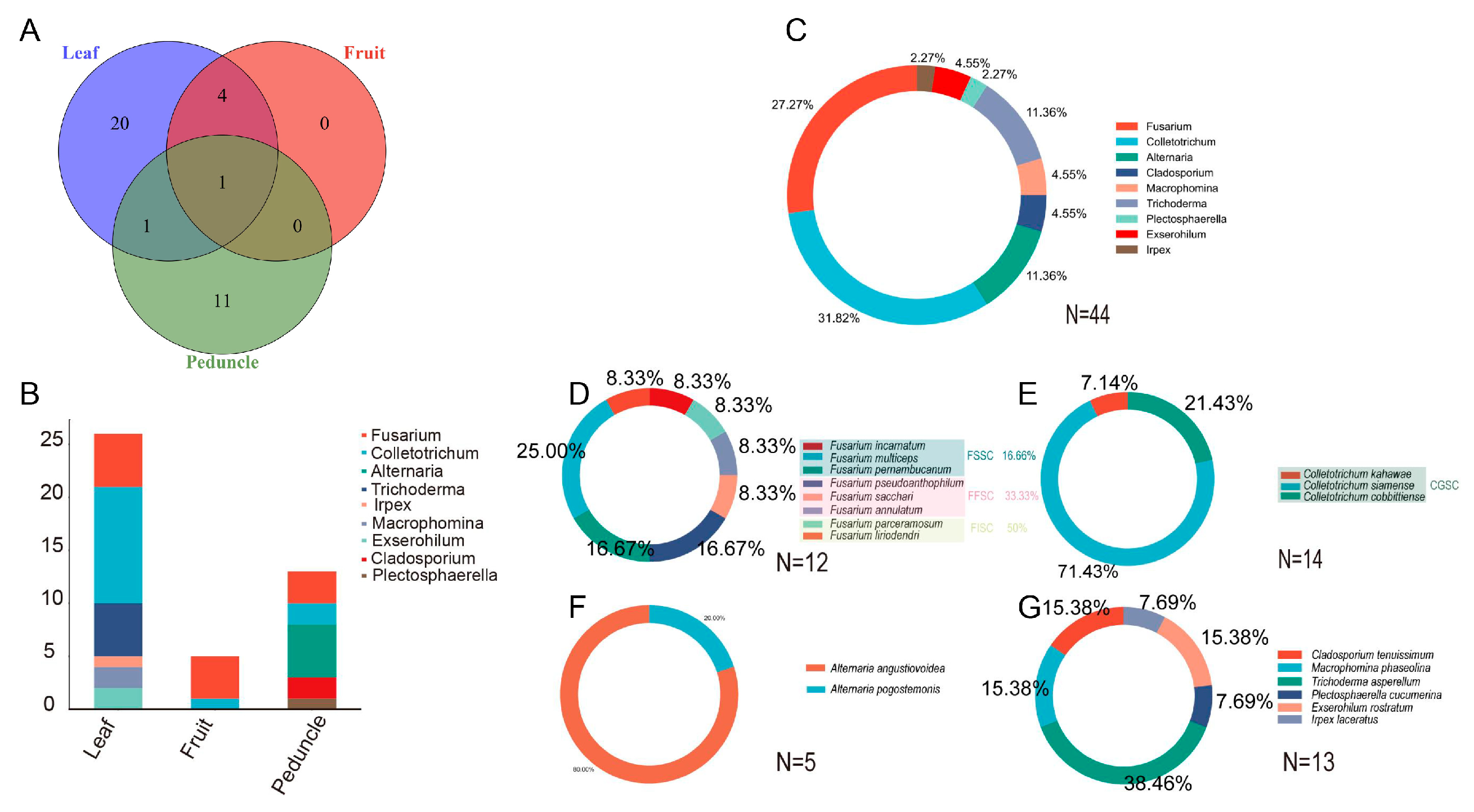
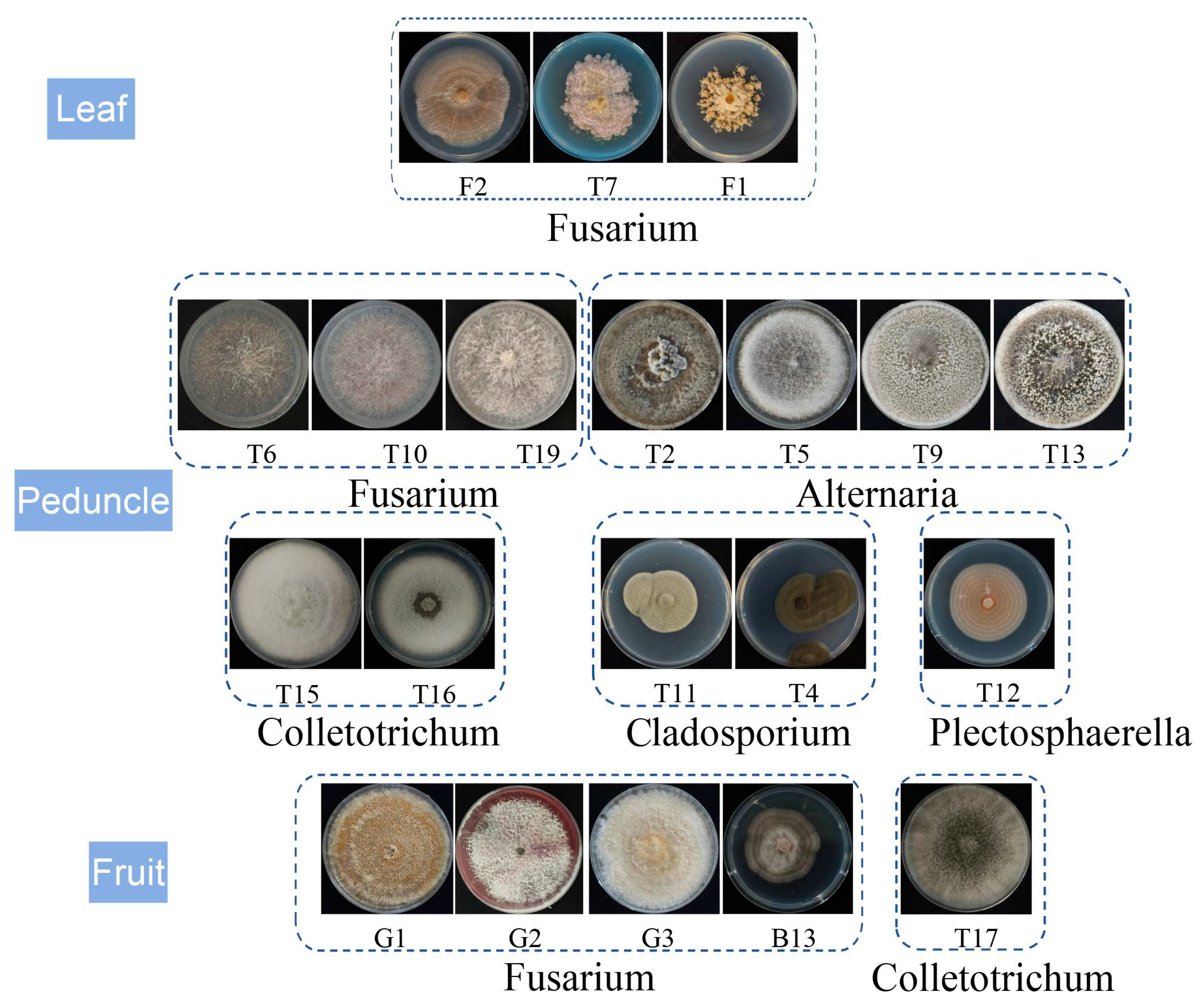
Microbial isolation and identification were performed using diseased samples (including leaves, fruits, and peduncles) collected from five regions. Preliminary screening yielded 44 microbial isolates (Figure 1A and Figure 2). The ITS region was amplified and compared for each isolate. Phylogenetic trees were constructed using MEGA7.0 (Figures S1–S4). A total of 26 isolates were obtained from leaves, 5 isolates from fruits, and 13 isolates from the peduncle. As shown in Figure 1B and Figure 2, microorganisms isolated from leaves belonged to Fusarium, Colletotrichum, Trichoderma, Irpex, Macrophomina, and Exserohilum, accounting for 19.23%, 42.31%, 19.23%, 3.85%, 7.69%, and 7.69%, respectively. Microorganisms isolated from fruits were Fusarium and Colletotrichum, accounting for 80% and 20%, respectively. Microorganisms isolated from the peduncle were Fusarium, Colletotrichum, Alternaria, Cladosporium, and Plectosphaerella, accounting for 23.08%, 15.38%, 38.46%, 15.39%, and 7.69%, respectively. Interestingly, Fusarium, Colletotrichum, and Trichoderma were the dominant microorganisms in leaves. Fusarium and Colletotrichum were the dominant microorganisms in fruits. Fusarium, Colletotrichum, Alternaria, and Cladosporium were the dominant microorganisms in peduncles. Among the three parts of the Areca catechu, Fusarium and Colletotrichum were both dominant microorganisms (Figure 1B).
Overall, microorganisms belonging to 9 genera were isolated from the three parts of the Areca catechu. These were Fusarium, Colletotrichum, Alternaria, Cladosporium, Macrophomina, Trichoderma, Plectosphaerella, Exserohilum, and Irpex, accounting for 27.27%, 38.12%, 11.36%, 4.55%, 4.55%, 11.36%, 2.27%, 4.55%, and 2.27%, respectively (Figure 1C). The Fusarium isolates primarily comprised three species complexes: Fusarium incarnatum-equiseti species complex (FIESC), Fusarium fujikuroi species complex (FFSC), and Fusarium solani species complex (FSSC), accounting for 50%, 33.33%, and 16.66%, respectively (Figure 1D). Among these, FIESC mainly included Fusarium incarnatum, Fusarium multiceps, and Fusarium pernambucanum, representing 8.33%, 25.0%, and 16.67%, respectively. FFSC mainly included Fusarium pseudoanthophilum, Fusarium sacchari, and Fusarium annulatum, representing 16.67%, 8.33%, and 8.33%, respectively. FSSC mainly included Fusarium parceramosum and Fusarium liriodendri, each representing 8.33%. All Colletotrichum isolates belonged to the Colletotrichum gloeosporioides species complex (CGSC). This complex mainly consisted of Colletotrichum kahawae, Colletotrichum siamense, and Colletotrichum cobbittiense, accounting for 7.14%, 71.43%, and 21.43%, respectively (Figure 1E). The Alternaria isolates mainly comprised Alternaria angustiovoidea and Alternaria pogostemonis, accounting for 80% and 20%, respectively (Figure 1F). Other genera isolated included Trichoderma asperellum, Cladosporium tenuissimum, Macrophomina phaseolina, Exserohilum rostratum, Plectosphaerella cucumerina, and Irpex laceratus. These accounted for 38.46%, 15.38%, 15.38%, 15.38%, 7.69%, and 7.69% of the other genera, respectively (Figure 1G, Table 1).

3.2. Fusarium, Colletotrichum, and Alternaria Are the Main Pathogenic Fungi of Areca catechu

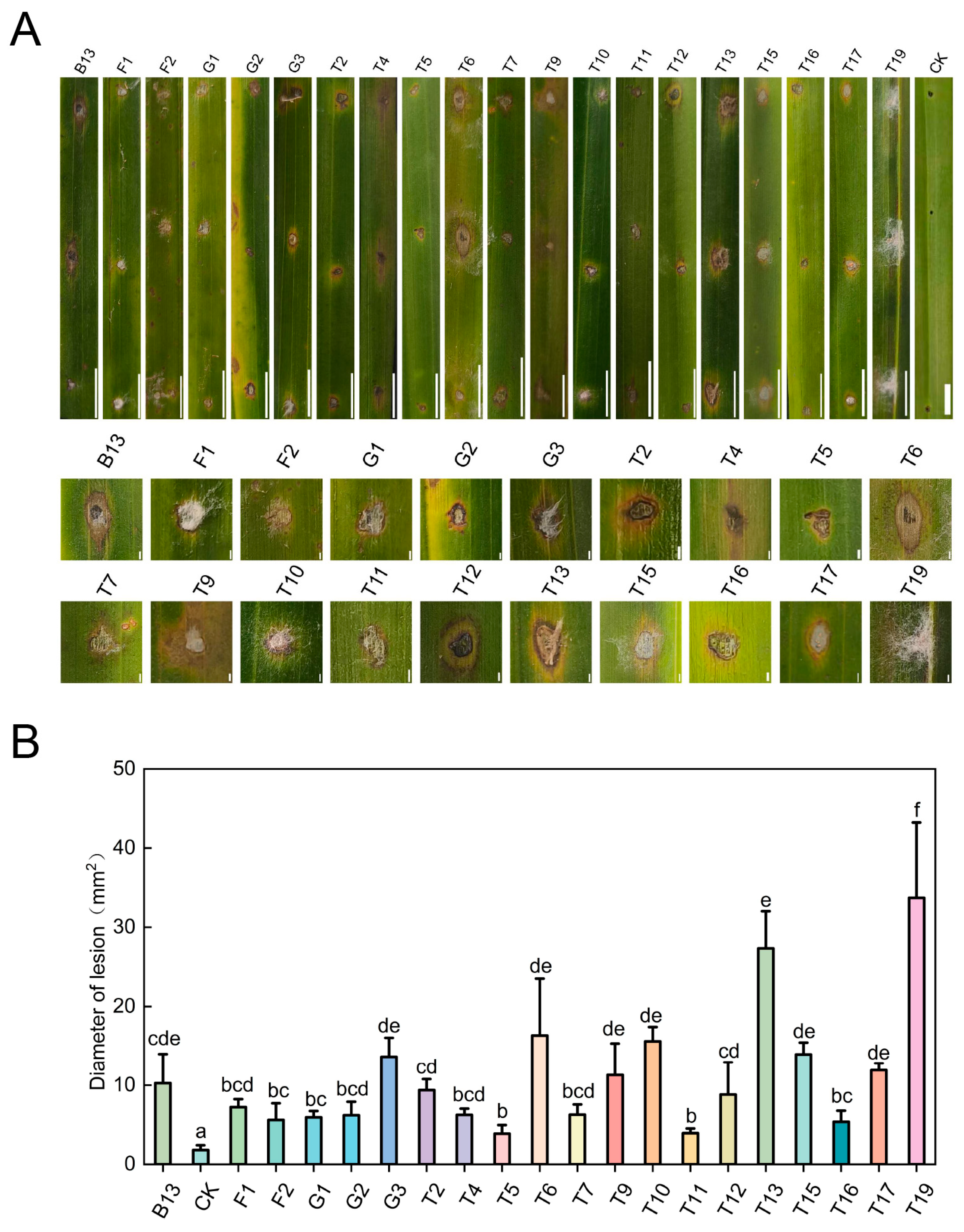
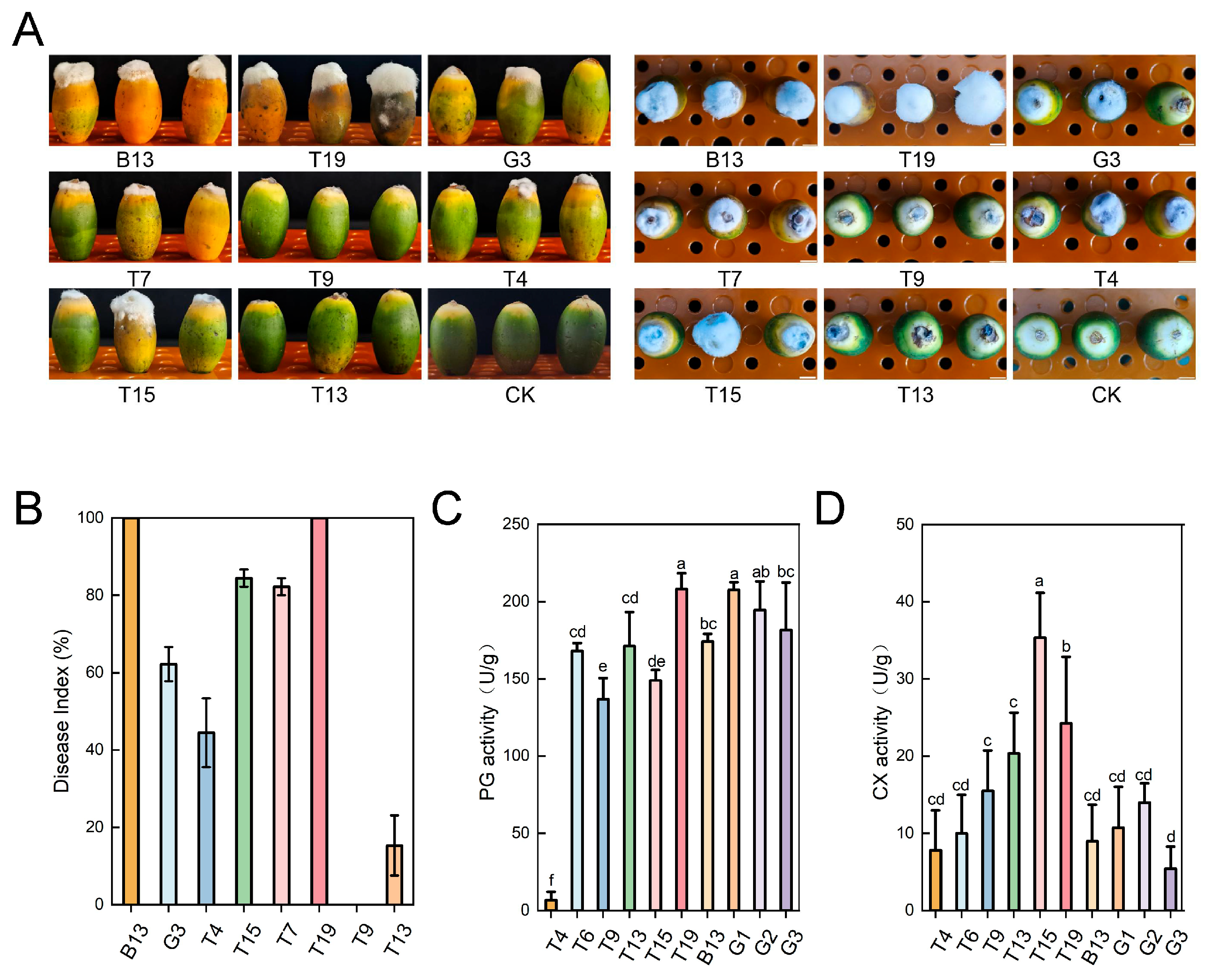
To verify whether the isolated microorganisms were pathogenic to Areca catechu, Koch’s postulates were performed. The results are shown in Figure 3 and Figure 4. We tested the pathogenicity of these isolates on leaves. Among the 44 isolates, a total of 20 isolates caused varying degrees of leaf yellowing. They formed brown-yellow circular spots around the leaves, with some visible mycelial attachment on the leaf surface (Figure 3A). Isolates B13, G3, T6, T9, T10, T13, T15, T17, and T19 showed strong pathogenicity. Among them, isolate T19 exhibited the strongest pathogenicity, with a lesion area of 33.73 ± 9.5 mm2 (Figure 3B). Isolates T5 and T11 showed the weakest pathogenicity, with lesion areas of 3.87 ± 1.1 mm2 and 3.93 ± 0.6 mm2, respectively. We observed that these pathogenic isolates mainly belonged to Fusarium, Colletotrichum, and Alternaria. We also tested the pathogenicity of these leaf-pathogenic isolates on fruits. The results are shown in Figure 4A. Except for isolate T9, the other 7 isolates were pathogenic on fruits. B13, T19, T15, and T7 showed stronger pathogenicity, with disease indices of 100%, 100%, 84.45 ± 2.22%, and 82.22 ± 2.22%, respectively (Figure 4B). Meanwhile, previous studies have demonstrated that the isolate G2 also exhibits a strong infectivity to fruits, with its disease index reaching 100% [28]. Fungi were re-isolated from both leaf and fruit infections. We obtained strains with stable morphological characteristics identical to the original isolates, confirming them as pathogenic fungi. We also measured the PG and CX enzyme activities of these isolates. The results are shown in Figure 4C,D. Interestingly, all these pathogenic isolates exhibited high PG and CX enzyme activities. Isolate T19 showed the highest PG activity (208.19 ± 10.149 U/g), significantly higher than other isolates. Isolate T15 showed the highest CX activity (35.33 ± 5.80 U/g), significantly higher than other isolates. Therefore, we conclude that Fusarium, Colletotrichum, and Alternaria are the main pathogenic fungi of Areca catechu.

3.3. FFSC and CGSC Exhibit Broad-Spectrum Pathogenicity

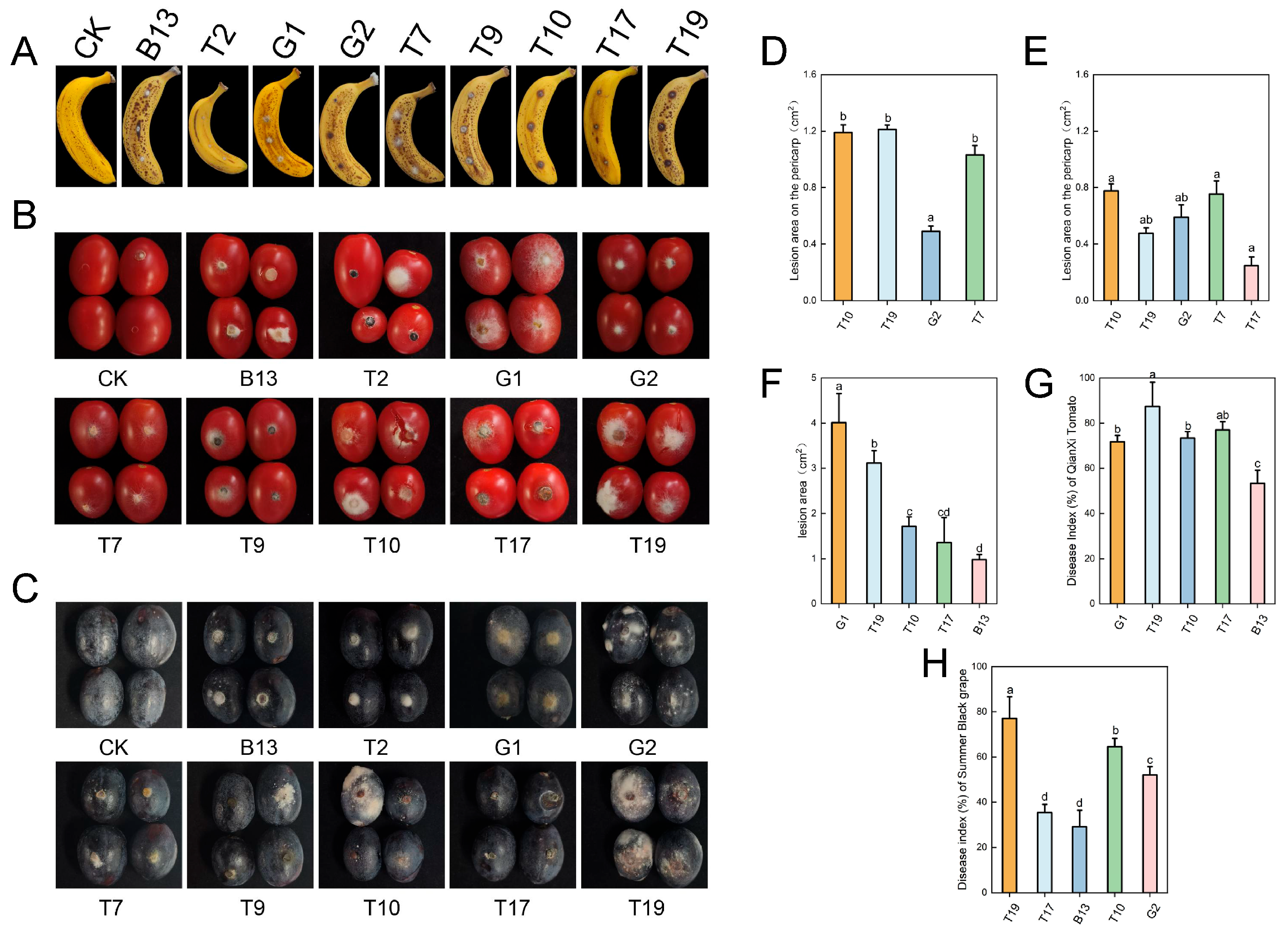
As indicated by the aforementioned results, the FFSC and CGSCs possess strong pathogenicity. We further assessed their pathogenicity on banana (Brazil), cherry tomato (Qianxi), and grape (Summer Black) to determine their broad-spectrum infectivity. According to Figure 5A, isolates T10, T19, G2, T7, and T17 were able to infect banana. Among these, isolates T10, T19, and T7 produced the largest lesion areas on the fruit peel, measuring 1.191 ± 0.054 mm2, 1.213 ± 0.031 mm2, and 1.032 ± 0.066 mm2, respectively (Figure 5D,E). Isolates G1, T19, T10, T17, and B13 were capable of infecting cherry tomato (Figure 5B). Among them, isolates T10, T19, and T17 achieved disease indices of 73.33 ± 2.89%, 87.41 ± 10.75%, and 77.08 ± 3.61%, respectively (Figure 5F,G). Isolates T19, T17, T13, T10, and G2 could infect grape (Figure 5C). Among these, T19, T10, and G2 reached disease indices of 77.08 ± 9.55%, 64.58 ± 3.61%, and 52.08 ± 3.61%, respectively (Figure 5H). Notably, in all three fruit infection experiments, isolates T19, T10, and T17 were consistently pathogenic and caused significant damage to the fruits. Isolates T19 and T10 belong to the FFSC, while T17 belongs to the CGSC. We therefore infer that these two species complexes possess broad-spectrum pathogenicity and strong damaging capability.

3.4. Evaluation of EC50 of Pathogenic Fungi to Five Pesticides

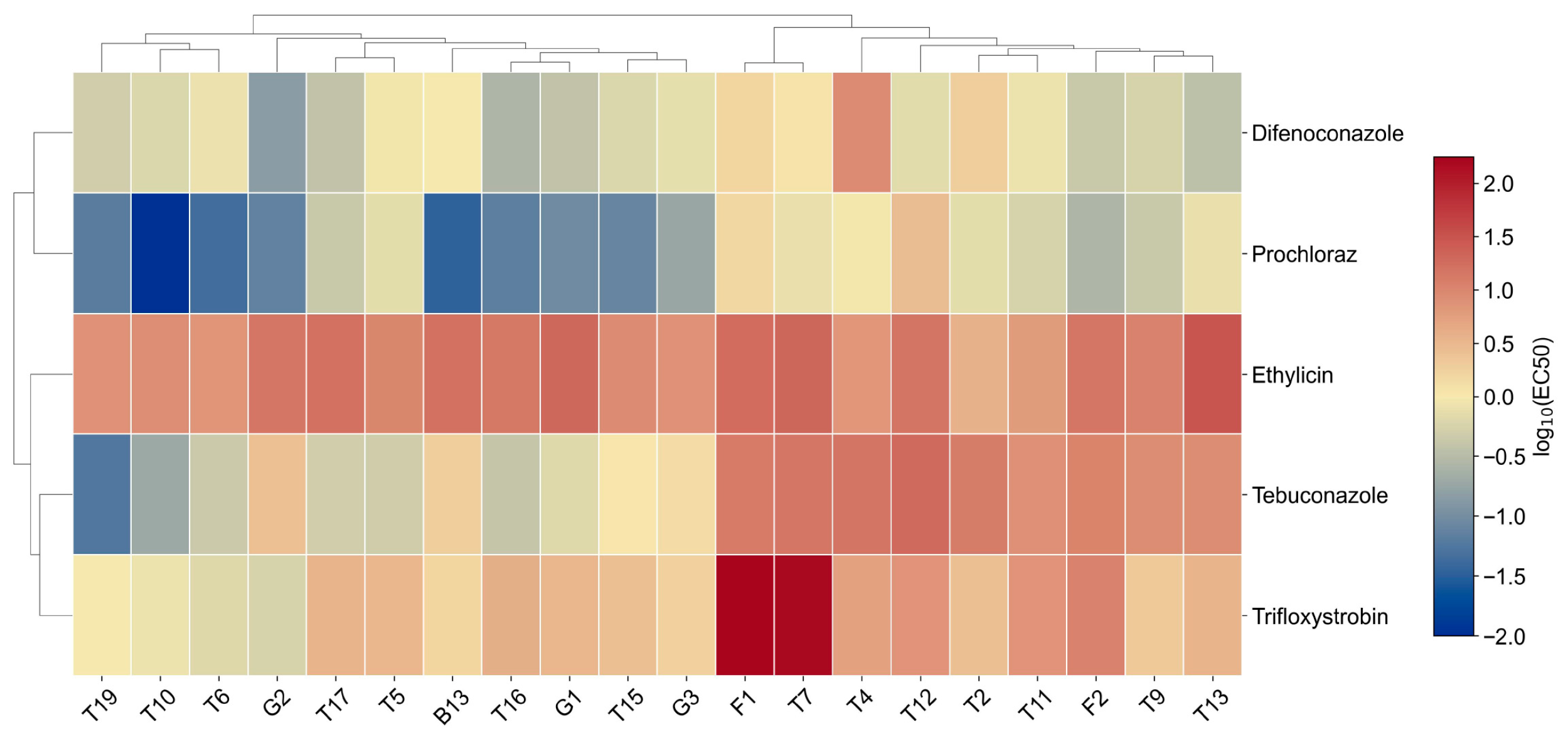
To provide suitable pesticide application concentrations for controlling these pathogenic fungi in areca plantations, we determined the EC50 values of five common and effective chemical pesticides against 20 isolated pathogenic fungi (Figure 6, Tables S4–S8). However, the efficacy of fungicides may be influenced by fluctuating temperatures and other climatic conditions in the field; therefore, results obtained in vitro may not always be reproducible in the field [29]. As shown in Table S3, the EC50 range for ethylicin was 4.627–32.974 ppm. The EC50 range for tebuconazole was 0.061–22.365 ppm. The EC50 range for difenoconazole was 0.168–10.667 ppm. The EC50 range for pyraclostrobin was 0.734–175.798 ppm. The EC50 range for prochloraz was 0.010–3.553 ppm. As shown in Table S3, the overall sensitivity of these pathogenic fungi to the pesticides ranked as follows: prochloraz (0.681 ppm) > difenoconazole (1.432 ppm) > tebuconazole (7.005 ppm) > ethylicin (14.843 ppm) > Trifloxystrobin (20.4 ppm). Prochloraz showed the best overall inhibitory effect against this set of strains, while pyraclostrobin showed the poorest overall effect.
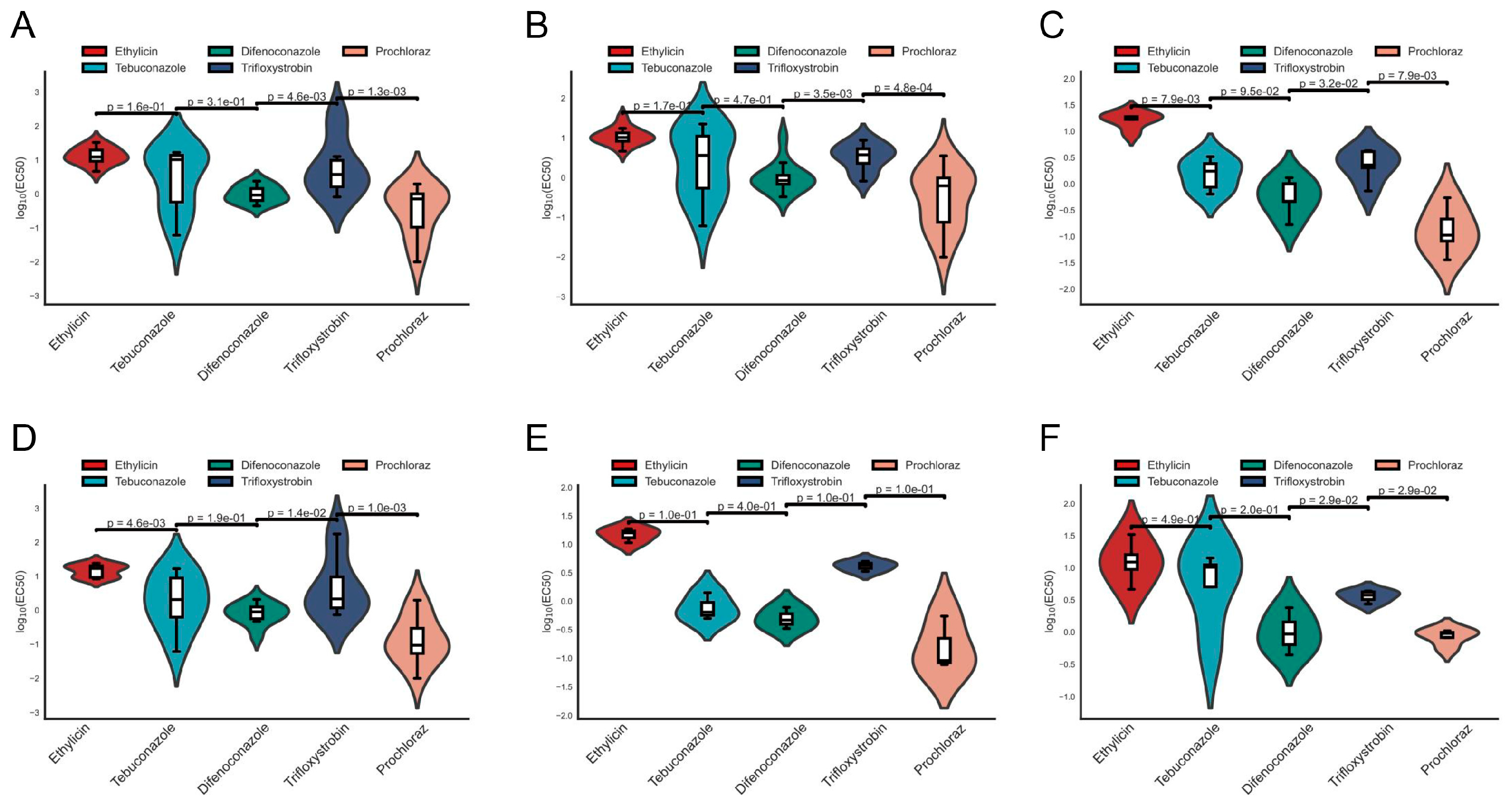
We determined the EC50 values of pathogenic fungi from three tissue parts: leaf, peduncle, and fruit (Figure 7A–C). As shown in Figure 7A, isolates from leaves showed significantly lower sensitivity to prochloraz, difenoconazole, and tebuconazole compared to ethylicin and Trifloxystrobin (p < 0.05). According to Figure 7B,C, isolates from fruit and peduncle exhibited significantly lower sensitivity to prochloraz than to the other four treatments (p < 0.05). We also calculated the EC50 values for three genera—Fusarium, Colletotrichum, and Alternaria—due to their high pathogenicity, which requires special attention. As presented in Figure 7D, Fusarium isolates showed significantly lower sensitivity to prochloraz than to the other treatment groups (p < 0.05). Difenoconazole ranked next, with sensitivity significantly lower than that of the other three treatments except prochloraz. Figure 7E shows that Colletotrichum isolates did not differ significantly in sensitivity to the five fungicides. Among them, prochloraz had the lowest mean EC50 value (0.238). As indicated in Figure 7F, Alternaria isolates overall showed significantly lower sensitivity to difenoconazole and prochloraz compared to the other fungicide treatments (p < 0.05).

4. Discussion

Areca catechu is a pillar crop in Hainan’s agricultural economy, but its development is increasingly constrained by frequent disease outbreaks. To date, research has centered primarily on phytoplasma and viral pathogens associated with Yellow Leaf Disease, while investigations into fungal diseases have remained largely at the stage of sporadic pathogen identification [1]. 44 fungal strains were isolated from diseased samples collected across five major areca-growing regions in Hainan. These strains belonged to 9 genera. Fusarium and Colletotrichum were the dominant fungi common to leaves, fruits, and peduncles, with total proportions of 27.27% and 38.12%, respectively. This is consistent with sporadic reports on areca fungal diseases both domestically and internationally [11,18,30]. Notably, significant variation in fungal community composition was observed among different tissues. In leaves, a relatively high proportion of Trichoderma (19.23%) was detected alongside the dominant genera, while fruits harbored only Fusarium and Colletotrichum. In peduncles, Alternaria emerged as the primary dominant fungus (38.46%). Similar tissue-specific variation in dominant fungi has also been reported in Acrostichum speciosum and A. aureum [31]. These differences are likely attributable to the distinct microhabitat characteristics of each tissue. For example, fruit tissues are characterized by high moisture and sugar content and are frequently soaked by rainwater in the field. These conditions are considered favorable for the colonization and reproduction of Fusarium and Colletotrichum, facilitating spore attachment and germination [32]. Colletotrichum is widely recognized as an important fruit-decaying pathogen, as demonstrated by its involvement in coffee berry rot [33], cherry anthracnose [34], and strawberry fruit rot [35]. Fusarium is typically regarded as a soil-borne pathogen; its substantial enrichment in fruit tissues and potential pathogenicity in this context might appear unusual. However, this phenomenon has been noted previously. Serrato-Diaz, for example, isolated nine Fusarium species from decayed coffee berries, confirming their role in berry decay [36].
Fusarium, Colletotrichum, and Alternaria were confirmed as the core pathogenic fungi of Areca catechu through Koch’s postulates. Brown-yellow circular leaf spots and fruit rot were induced by strains from these three genera. These symptoms were consistent with typical field manifestations of areca fungal diseases. Pathogenicity-related enzyme activities of the strains were examined. Almost all pathogenic strains exhibited high polygalacturonase (PG) and cellulase (CX) activities. Among them, isolate T19 exhibited the highest PG activity, and isolate T15 exhibited the highest CX activity. These activities were significantly higher than those of other strains, which corresponded to their strong pathogenicity. This suggested that cell wall-degrading enzymes played a crucial role in the infection process. PG and CX were shown to degrade the pectin and cellulose components of the plant cell wall, respectively. The structural integrity of plant tissues was compromised, creating conditions for pathogen invasion and colonization. This mechanism is consistent with the classical pathogenesis of plant-pathogenic fungi [37,38,39]. This is supported by Zhang [40], who reported that salicylic acid (SA) extended the storage time of peaches by reducing PG and CX activities and regulating cell wall metabolism [41].
Broad-spectrum host infectivity was also exhibited by FFSC isolates (T10, T19) and the CGSC isolate (T17). When these isolates were inoculated onto common postharvest tropical fruits such as banana, cherry tomato, and grape, both lesion area and disease index remained at high levels. F. sacchari and F. proliferatum were previously isolated from the ‘Lady finger’ banana cultivar by Conti Taguali [40]. These fungi were shown to produce mycotoxins and cause postharvest decay of banana fruit. A new disease on Vicia tetrasperma, caused by F. proliferatum and leading to severe yield loss, was also reported [42]. These findings indicated that FFSC and CGSC complexes are not only important pathogens of Areca catechu but may also pose a potential cross-infection risk to the tropical fruit and vegetable industry. Under the continuous cropping and intercropping practices common in Hainan’s tropical agriculture, such pathogens can be spread among different crops through soil, farming operations, and other pathways. Consequently, compound diseases may be triggered. Therefore, an important warning is provided for the coordinated control of areca fungal diseases and other crop diseases in the field.
To provide a precise basis for chemical control strategies against areca fungal diseases in the field, EC50 values of five common pesticides were determined against 20 pathogenic fungal strains. Overall inhibitory efficacy against areca pathogenic fungi was ranked as: prochloraz > difenoconazole > tebuconazole > ethylicin > pyraclostrobin. The average EC50 of prochloraz was only 0.681 ppm, indicating a strong inhibitory effect on most pathogenic fungi. As an imidazole fungicide, it inhibits fungal ergosterol biosynthesis, accounting for its broad-spectrum antifungal activity [43]. Interestingly, we found that ethylicin had a coefficient of variation (CV) of 0.47 (Table S3, making it the only fungicide with low variation. It acts on pathogen walls and membranes via sulfur derivatives with conserved targets, which may cause the low variability [44].
Sensitivity of pathogenic fungi to the pesticides varied significantly by genus [45]. Colletotrichum isolates showed relatively low sensitivity to prochloraz, with a mean EC50 of 0.238 ppm. In contrast, their lowest sensitivity was observed with Ethylicin, where the mean EC50 reached 15.097 ppm. Similarly, Colletotrichum strains from mango-producing areas in Mexico were sensitive to prochloraz, and this sensitivity was widely distributed [46]. Fusarium exhibited significantly higher sensitivity to prochloraz and difenoconazole than to other pesticides (p < 0.05). Similarly, in another research, a strong inhibitory effect of prochloraz on three Fusarium species has also been reported, with complete inhibition observed at 10 mg/L [47]. Interestingly, the research showed that among 89 isolates of Fusarium fujikuroi, the resistance frequency to prochloraz was as high as 92.1%; however, they remained sensitive to difenoconazole and tebuconazole [48].

5. Conclusions

The dominant pathogenic fungi associated with Areca catechu in Hainan were systematically identified, providing the first systematic characterization of their population structure and fungicide sensitivity. Essential data and technical support for accurate identification, early warning, and targeted chemical management of Areca catechu fungal diseases were therefore provided. Stable and broad-spectrum efficacy against most tested strains was observed with the combination of prochloraz, difenoconazole, and ethylicin; this mixture is recommended as a preferred fungicide formulation for field control. A reliable quantitative reference for field application rates was thus established, contributing to the development of efficient and sustainable control strategies for Areca catechu diseases in Hainan.

Supplementary Materials

The following supporting information can be downloaded at https://www.mdpi.com/article/10.3390/agronomy16060671/s1: Figure S1: Phylogenetic tree of culturable Fusarium isolates obtained from Areca catechu, constructed by the neighbor-joining (NJ) method in MEGA 7.0 based on ITS sequences, with bootstrap support based on 1000 replicates; Figure S2: Phylogenetic tree of culturable Colletotrichum isolates obtained from Areca catechu, constructed by the neighbor-joining (NJ) method in MEGA 7.0 based on ITS sequences, with bootstrap support based on 1000 replicates; Figure S3: Phylogenetic tree of culturable Alternaria isolates obtained from Areca catechu, constructed by the neighbor-joining (NJ) method in MEGA 7.0 based on ITS sequences, with bootstrap support based on 1000 replicates; Figure S4: Phylogenetic tree of culturable other Genus isolates obtained from Areca catechu, constructed by the neighbor-joining (NJ) method in MEGA 7.0 based on ITS sequences, with bootstrap support based on 1000 replicates; Table S1: Detailed information on the five sampling areas; Table S2: Concentration gradients of five selected pesticides were used to determine the respective EC50 values of the isolates against each pesticide.; Table S3: EC50 values of five pesticides against the 20 isolates; Table S4: EC50 values of Ethylicin against the 20 isolates.; Table S5: EC50 values of Tebuconazole against the 20 isolates.; Table S6: EC50 values of Difenoconazole against the 20 isolates.; Table S7: EC50 values of Trifloxystrobin against the 20 isolates.; Table S8: EC50 values of Prochloraz against the 20 isolates.

Author Contributions

W.Z.: Conceptualization, validation, methodology, investigation, Data curation, writing—original draft, visualization. X.P.: Methodology, resources, visualization. Z.Y.: Conceptualization, supervision. J.L.: Investigation, resources, investigation. X.H.: Conceptualization, supervision, funding acquisition. L.W.: methodology, funding acquisition. All authors have read and agreed to the published version of the manuscript.

Funding

This study was supported by the National Key Research and Development Program of China titled Intelligent Plant Protection Key Equipment and Technology R&D and Application (No. 2025YFE0208900), the Earmarked Fund for China Agriculture Research System (No. CARS-28), the 2115 Talent Development Program of China Agricultural University (No. 2115-89052), the Scientific Research Project of the Natural Science Foundation of Hunan Province (No. 2024JJ6226), and the National Natural Science Foundation of China (No. 31761133019).

Data Availability Statement

The original contributions presented in this study are included in the article/Supplementary Materials. Further inquiries can be directed to the corresponding author.

Acknowledgments

During the preparation of this manuscript, the authors used DeepSeek (V3.2) for the purposes of language polishing (including grammar, spelling, and formatting suggestions). The authors have reviewed and edited the output and take full responsibility for the content of this publication.

Conflicts of Interest

The authors declare that they have no known competing financial interests or personal relationships that could have appeared to influence the work reported in this paper.

References

  1. Khan, L.U.; Zhao, R.; Wang, H.; Huang, X. Recent advances of the causal agent of yellow leaf disease (YLD) on areca palm (Areca catechu L.). Trop. Plants 2023, 2, 7. [Google Scholar] [CrossRef]
  2. Shen, D.Y.; Qiu, S.H.; Lin, Z.Q.; Liu, D. Cost-benefit analysis and industrial development suggestions for areca palm cultivation in Hainan Province. Trop. Agric. Sci. 2025, 48, 58–63. [Google Scholar] [CrossRef]
  3. Yan, X.; Liu, L.; Wang, Q.; Li, H.; Huang, L.; Yang, Q.; Tang, H.; Wang, Z. Investigation on suitable planting areas for areca palm in Hainan. China Trop. Agric. 2021, 33–40. [Google Scholar]
  4. Wang, H.; Zhao, R.; Zhang, H.; Cao, X.; Li, Z.; Zhang, Z.; Zhai, J.; Huang, X. Prevalence of yellow leaf disease (YLD) and its associated areca palm velarivirus 1 (APV1) in betel palm (Areca catechu) plantations in Hainan, China. Plant Dis. 2020, 104, 2556–2562. [Google Scholar] [CrossRef] [PubMed]
  5. Zhang, C.; Xie, C.; Wu, Y.; Li, J.; Li, X. First Report of Lasiodiplodia hormozganensis Causing Leaf Spot Disease on Areca catechu in China. Plant Dis. 2024, 108, 1098. [Google Scholar] [CrossRef]
  6. Gao, Y.; Li, H.; Ma, X.; Tang, H.; Hu, X.; Tang, Y.; Liu, Z. First report of Cerrena unicolor causing root rot of areca in China. Plant Dis. 2019, 103, 2954. [Google Scholar] [CrossRef]
  7. Song, S.; Wang, Q.; Huo, L.; Xie, L.; Chen, J.; Cui, H.; Dai, Z.; Kang, J.; Li, Y.; Guo, W. The phytoplasma (Candidatus phytoplasma arecae) is the crucial pathogen to cause areca palm yellow leaf disease. Sci. Bull. 2025, 70, 847–851. [Google Scholar] [CrossRef]
  8. Kumari, A.; Das, A.; Mahanta, M.; Akhila, G.; Dutta, P. Diseases of areca nut (Areca catechu) and their integrated management. In Diseases of Commercial Crops and Their Integrated Management; CRC Press: Boca Raton, FL, USA, 2023; pp. 88–99. [Google Scholar]
  9. Bhat, R.; Sujatha, S.; Bhavishya; Priya, U.; Gupta, A.; Uchoi, A. Arecanut (Areca catechu L.). In Soil Health Management for Plantation Crops: Recent Advances and New Paradigms; Springer: Berlin/Heidelberg, Germany, 2024; pp. 177–206. [Google Scholar]
  10. Balanagouda, P.; Sridhara, S.; Shil, S.; Hegde, V.; Naik, M.K.; Narayanaswamy, H.; Balasundram, S.K. Assessment of the spatial distribution and risk associated with fruit rot disease in Areca catechu L. J. Fungi 2021, 7, 797. [Google Scholar] [CrossRef]
  11. To-anun, C.; Nguenhom, J.; Meeboon, J.; Hidayat, I. Two fungi associated with necrotic leaflets of areca palms (Areca catechu). Mycol. Prog. 2009, 8, 115–121. [Google Scholar] [CrossRef]
  12. Harahap, D. Plant diseases of Areca nut. In Nut Crops-New Insights; IntechOpen: London, UK, 2022. [Google Scholar]
  13. Zhang, H.; Wei, Y.; Shi, H. First report of anthracnose caused by Colletotrichum kahawae subsp. ciggaro on Areca in China. Plant Dis. 2020, 104, 1871. [Google Scholar] [CrossRef]
  14. Pandian, R.T.P.; Thube, S.H.; Rajashekara, H.; Madhu, T.; Diwakar, Y.; Santhoshkumar, P.; Nirmalkumar, B.; Patil, B.; Hegde, V. Colletotrichum kahawae subsp. cigarro causing leaf spot disease on arecanut, Areca catechu L. in India: A first report. Crop Prot. 2024, 179, 106607. [Google Scholar] [CrossRef]
  15. Srivastava, H.; Banu, Z.; Govindarajan, V. Fruit rot of arecanut caused by a new fungus. Mycologia 1962, 54, 5–11. [Google Scholar] [CrossRef]
  16. Huang, Z.; Xie, L. Rotten Fruit Disease Pathogen Identification that Isolated from Betel Nut. Mol. Pathog. 2010, 1. [Google Scholar]
  17. Kumar, K.; Varshini, U.; Manohar, N.; Jipeng, T. Disease Detection in Areca Nut Using Deep Learning. In Proceedings of the 2023 IEEE International Conference on Cloud Computing in Emerging Markets (CCEM), Mysuru, India, 2–4 November 2023; IEEE: New York, NY, USA, 2023; pp. 66–74. [Google Scholar]
  18. Zhu, H.; Mehmood, S.; Liu, L. Identification of Fusarium proliferatum causing leaf blight of Arecanut (Areca catechu) in China. Plant Dis. 2025, 109, 2208. [Google Scholar] [CrossRef]
  19. Wang, H.; Xu, L.; Zhang, Z.; Lin, J.; Huang, X. First report of Curvularia pseudobrachyspora causing leaf spots in Areca catechu in China. Plant Dis. 2019, 103, 150. [Google Scholar] [CrossRef]
  20. Lei, J.; Gao, Y.; Khan, W.U.; Li, H.; Ma, X.; Wang, D.; Tang, Y.; Liu, Z. First report of grammothele lineata causing stem rot of Areca catechu in Hainan Province, China. Plant Dis. 2021, 105, 2240. [Google Scholar] [CrossRef]
  21. Zhu, H.; Mehmood, S.; Liu, L. First Report of Diaporthe chamaeropicola Causing Leaf Spot of Arecanut (Areca catechu) in China. Plant Dis. 2026, 110, 238. [Google Scholar] [CrossRef]
  22. Cao, X.; Xu, X.; Che, H.; West, J.S.; Luo, D. Eight Colletotrichum species, including a novel species, are associated with areca palm anthracnose in Hainan, China. Plant Dis. 2020, 104, 1369–1377. [Google Scholar] [CrossRef]
  23. Xu, G.; Qiu, F.; Li, X.; Zheng, F.; Zheng, L.; Miao, W.; Xie, C. Diaporthe limonicola causing leaf spot disease on Areca catechu in China. Plant Dis. 2020, 104, 1869. [Google Scholar] [CrossRef]
  24. Lü, Z.-W.; Liu, H.-Y.; Wang, C.-L.; Chen, X.; Huang, Y.-X.; Zhang, M.-M.; Huang, Q.-L.; Zhang, G.-F. Isolation of endophytic fungi from Cotoneaster multiflorus and screening of drought-tolerant fungi and evaluation of their growth-promoting effects. Front. Microbiol. 2023, 14, 1267404. [Google Scholar] [CrossRef]
  25. Ren, Y.-y.; Sun, P.-p.; Wang, X.-x.; Zhu, Z.-y. Degradation of cell wall polysaccharides and change of related enzyme activities with fruit softening in Annona squamosa during storage. Postharvest Biol. Technol. 2020, 166, 111203. [Google Scholar] [CrossRef]
  26. Wu, Y.; Yang, X.; Wang, X.; Yan, L.; Hu, X.; Lian, M. Effect of foliar calcium fertilization on fruit quality, cell wall enzyme activity and expression of key genes in Chinese cherry. Int. J. Fruit Sci. 2023, 23, 200–216. [Google Scholar] [CrossRef]
  27. Zhou, D.; Jing, T.; Chen, Y.; Yun, T.; Qi, D.; Zang, X.; Zhang, M.; Wei, Y.; Li, K.; Zhao, Y. Biocontrol potential of a newly isolated Streptomyces sp. HSL-9B from mangrove forest on postharvest anthracnose of mango fruit caused by Colletotrichum gloeosporioides. Food Control 2022, 135, 108836. [Google Scholar] [CrossRef]
  28. Zeng, W.; Liu, X.; Yu, Z.; Lv, H.; Li, J.; He, X. First Report of Fusarium annulatum Causing Leaf Wilt and Fruit Rot on Areca catechu in Hainan Province, China. Plant Dis. 2025, 110. [Google Scholar] [CrossRef]
  29. Juroszek, P.; Laborde, M.; Kleinhenz, B.; Mellenthin, M.; Racca, P.; Sierotzki, H. A review on the potential effects of temperature on fungicide effectiveness. Plant Pathol. 2022, 71, 775–784. [Google Scholar] [CrossRef]
  30. Naik, B.G.; Hariprasad, K.; Naik, M.; Patil, S.; Kumar, M.R. First Report of Molecular characterization of Colletotrichum gloeosporioides L. causing Leaf Blight Disease of Arecanut in Karnataka, India. Biol. Forum Int. J. 2021, 14, 401–403. [Google Scholar]
  31. Zhu, H.; Zeng, W.; Chen, M.; He, D.; Cheng, X.; Yu, J.; Liu, Y.; Wu, Y.; Yang, D. Endophytic fungal diversity of mangrove ferns Acrostichum speciosum and A. Aureum in China. Plants 2024, 13, 685. [Google Scholar] [CrossRef]
  32. Vishwakarma, P.K.; Chander, S.; Nimbolkar, P. Efficient water management tactics for mitigating fruit crop diseases. Appl. Fruit Sci. 2024, 66, 771–779. [Google Scholar] [CrossRef]
  33. Zhang, H.; Xie, Y.; Chen, H.; Su, Q.; He, J.; Su, X.; Wu, D.; Zhou, H.; Yu, L.; Tan, W. First report of large-berry coffee (Coffea liberica) anthracnose caused by Colletotrichum kahawae in China. Plant Dis. 2024, 108, 2236. [Google Scholar] [CrossRef]
  34. Won, S.-J.; Kim, C.-W.; Moon, J.-H.; Choi, S.-I.; Ajuna, H.B.; Choub, V.; Yun, J.-Y.; Ahn, Y.S. Biological control of anthracnose fruit rot disease (Colletotrichum spp.) and fruit yield improvement of jujube (Zizyphus jujuba Miller var. inermis Rehder) using Bacillus velezensis CE 100. Biol. Control 2023, 187, 105405. [Google Scholar] [CrossRef]
  35. Li, X.; Zhang, L.; Zhao, Y.; Feng, J.; Chen, Y.; Li, K.; Zhang, M.; Qi, D.; Zhou, D.; Wei, Y. Biocontrol potential of volatile organic compounds produced by Streptomyces corchorusii CG-G2 to strawberry anthracnose caused by Colletotrichum gloeosporioides. Food Chem. 2024, 437, 137938. [Google Scholar] [CrossRef]
  36. Serrato-Diaz, L.M.; Mariño, Y.A.; Gonzalez, J.d.J.; Goenaga, R.; Bayman, P. Coffee Fruit Rot: The previously unrecognized role of Fusarium and its interactions with the coffee berry borer (Hypothenemus hampei). Phytopathology 2024, 114, 1320–1332. [Google Scholar] [CrossRef]
  37. Dean, R.A.; Timberlake, W.E. Production of cell wall-degrading enzymes by Aspergillus nidulans: A model system for fungal pathogenesis of plants. Plant Cell 1989, 1, 265–273. [Google Scholar]
  38. Kikot, G.E.; Hours, R.A.; Alconada, T.M. Contribution of cell wall degrading enzymes to pathogenesis of Fusarium graminearum: A review. J. Basic Microbiol. 2009, 49, 231–241. [Google Scholar] [CrossRef] [PubMed]
  39. Kubicek, C.P.; Starr, T.L.; Glass, N.L. Plant cell wall–degrading enzymes and their secretion in plant-pathogenic fungi. Annu. Rev. Phytopathol. 2014, 52, 427–451. [Google Scholar] [CrossRef] [PubMed]
  40. Conti Taguali, S.; Riolo, M.; Dopazo, V.; Meca, G.; Cacciola, S.O. Characterization of mycotoxins produced by two Fusarium species responsible for postharvest rot of banana fruit. J. Plant Pathol. 2024, 106, 1785–1800. [Google Scholar] [CrossRef]
  41. Zhang, G.; Zhang, Y.; Yang, T.; Luo, D.; Zhao, Z.; Ba, L.; Xu, S.; Li, J.; Cao, S. Physiological and transcriptomic analysis of salicylic acid on membrane lipid metabolism and cell wall metabolism in postharvest peach fruit. Postharvest Biol. Technol. 2025, 229, 113683. [Google Scholar] [CrossRef]
  42. Shi, K.; Xu, J.; Wang, H.; Xue, X.; Xie, Z.; Han, Y. First Report of Fusarium proliferatum Infection in Pods of Four-Seeded Vetch and Its Relationships with Plants. Plants 2025, 14, 1480. [Google Scholar] [CrossRef]
  43. Vinggaard, A.M.; Hass, U.; Dalgaard, M.; Andersen, H.R.; Bonefeld-Jørgensen, E.; Christiansen, S.; Laier, P.; Poulsen, M.E. Prochloraz: An imidazole fungicide with multiple mechanisms of action. Int. J. Androl. 2006, 29, 186–192. [Google Scholar] [CrossRef]
  44. Ge, J.-T.; Rong, N.; Li, J.-Z.; Lu, Y.-Y.; Tao, S.-Y.; Ye, X.-R.; Cheng, J.-X.; Wang, J.-Q.; Zhang, B.; Li, Y. Isolation, Identification and Prevention of Bacterial Spot Disease on Grifola frondosa. J. Fungi 2025, 11, 777. [Google Scholar] [CrossRef]
  45. Nagai, T. Sensitivity differences among five species of aquatic fungi and fungus-like organisms for seven fungicides with various modes of action. J. Pestic. Sci. 2020, 45, 223–229. [Google Scholar] [CrossRef] [PubMed]
  46. Mora-Aguilera, J.A.; Ríos-López, E.G.; Yáñez-Zúñiga, M.; Rebollar-Alviter, A.; Nava-Díaz, C.; Leyva-Mir, S.G.; Sandoval-Islas, J.S.; Tovar-Pedraza, J.M. Sensitivity to MBC fungicides and prochloraz of Colletotrichum gloeosporioides species complex isolates from mango orchards in Mexico. J. Plant Dis. Prot. 2021, 128, 481–491. [Google Scholar] [CrossRef]
  47. Ivić, D.; Sever, Z.; Kuzmanovska, B. In vitro sensitivity of Fusarium graminearum, F. avenaceum and F. verticillioides to carbendazim, tebuconazole, flutriafol, metconazole and prochloraz. Pestic. Fitomedicina 2011, 26, 35–42. [Google Scholar] [CrossRef]
  48. Peng, Q.; Waqas Younas, M.; Yang, J.; Zhu, H.; Miao, J.; Gu, B.; Liu, X. Characterization of prochloraz resistance in Fusarium fujikuroi from Heilongjiang Province in China. Plant Dis. 2022, 106, 418–424. [Google Scholar] [CrossRef]
Figure 1. Culturable microorganisms isolated from three diseased tissues of Areca catechu. (A) Venn diagram of microorganisms isolated from leaf, inflorescence stalk, and fruit tissues. (B) Composition of culturable microorganisms isolated from the three diseased tissues. (C) Relative abundance of the nine microbial genera isolated from all tissues. (DG), Composition (relative abundance) of species within the genera Fusarium, Colletotrichum, Alternaria, and other isolated genera.
Agronomy 16 00671 g001
Figure 2. Morphological characteristics of the 20 pathogenic isolates cultured on PDA medium.
Agronomy 16 00671 g002
Figure 3. Pathogenicity verification of the 20 isolates on Areca catechu leaves via Koch’s postulates. (A) Symptoms on Areca catechu leaves caused by the pathogenic isolates. (B) Lesion area (unit: mm2) on leaves caused by the isolates. Significant differences among groups were analyzed using Duncan’s multiple range test, with statistical significance set at p < 0.05. Different letters above the bars indicated a significant difference. Note: Inoculation variability may be influenced by the diversity of mycelial growth among isolates.
Agronomy 16 00671 g003
Figure 4. Fruit infection assays performed with isolates selected based on strong pathogenicity on leaves. (A) Disease symptoms on fruit caused by the isolates. (B) Disease index (DI) of fruit infection. (C,D) Polygalacturonase (PG) and cellulase (CX) enzyme activities of isolates with high pathogenicity. Different letters above the bars indicate significant differences according to Duncan’s multiple range test (p < 0.05).
Agronomy 16 00671 g004
Figure 5. Infection symptoms caused by broad-spectrum pathogenic isolates on three fruit hosts: (A) banana (Brazil); (B) cherry tomato (Qianxi); (C) grape (Summer Black). (D,E) Lesion area on the peel (D) and pulp (E) of the banana fruit. (F,G) Lesion area (F) and disease index (G) on cherry tomato caused by the isolates. (H) Disease index on the grape caused by the isolates. Different letters above the bars indicate significant differences according to Duncan’s multiple range test (p < 0.05).
Agronomy 16 00671 g005
Figure 6. Heatmap visualization of EC50 values for five pesticides (ethylicin, difenoconazole, trifloxystrobin, prochloraz, tebuconazole) against the 20 pathogenic isolates.
Agronomy 16 00671 g006
Figure 7. Violin plots of EC50 values for five pesticides against pathogenic isolates from different diseased tissues of Areca catechu (AC) and from three major pathogenic genera (DF). (A) Leaves; (B) Peduncles; (C) Fruits; (D) Fusarium; (E) Colletotrichum; (F) Alternaria. Statistical significance was determined by the Mann-Whitney U test, with p < 0.05 considered statistically significant.
Agronomy 16 00671 g007
Table 1. ITS alignment results of the 20 isolates and their corresponding reference ex-type strain.
NumberIsolateCompare ResultsEx-TypeGenBank ID
Fusarium
1B13Fusarium liriodendriNRRL 22389PX952988
2F2Fusarium multicepsNRRL 43639PX952995
3F1Fusarium multicepsNRRL 43639PX952992
4T7Fusarium multicepsNRRL 43639PX952989
5G1Fusarium pernambucanumURM7559PX928183
6G3Fusarium pernambucanumURM7559PX952981
7T6Fusarium pseudoanthophilumCBS 414.97PX952983
8T10Fusarium pseudoanthophilumCBS 414.97PX957574
9T19Fusarium sacchariNRRL 13999PX957575
10G2Fusarium annulatumCBS 258.54PX022875
Alternaria
1T2Alternaria angustiovoideaCBS:195.86PX952998
2T5Alternaria angustiovoideaCBS:195.86PX953000
3T9Alternaria pogostemonisZHKUCC22-0146PX953001
4T13Alternaria angustiovoideaCBS:195.86PX953003
Colletotrichum
1T15Colletotrichum siamenseICMP:18578PX953002
2T17Colletotrichum siamenseICMP:18578PX953010
3T16Colletotrichum siamenseBRIP 66219PX953009
Others
1T4Cladosporium tenuissimumCBS:125995PX957576
2T11Cladosporium tenuissimumCBS:125995PX953015
3T12Plectosphaerella cucumerinaPlect 11PX953013
Disclaimer/Publisher’s Note: The statements, opinions and data contained in all publications are solely those of the individual author(s) and contributor(s) and not of MDPI and/or the editor(s). MDPI and/or the editor(s) disclaim responsibility for any injury to people or property resulting from any ideas, methods, instructions or products referred to in the content.