Article

Additional Saline Water Irrigation Improves Winter Wheat Productivity Under Deficit Irrigation in the North China Plain


1
Hebei Laboratory of Agricultural Water-Saving, Center for Agricultural Resources Research, Institute of Genetics and Developmental Biology, Chinese Academy of Sciences, Shijiazhuang 050021, China
2
University of Chinese Academy of Sciences, Beijing 100049, China
3
Institute of Urban Environment, Chinese Academy of Sciences, Xiamen 361021, China
*
Author to whom correspondence should be addressed.
Agronomy 2026, 16(6), 637; https://doi.org/10.3390/agronomy16060637
Submission received: 29 January 2026 / Revised: 6 March 2026 / Accepted: 14 March 2026 / Published: 18 March 2026

Abstract

Due to limited freshwater availability for winter wheat and summer maize, grain production in the annual double-cropping system of the low plain surrounding the Bohai Sea in North China is strongly influenced by inter-annual rainfall variability. The relatively abundant saline water resources in this region offer a potential source for irrigation. This study aimed to evaluate the effects of additional saline water irrigation under deficit irrigation on the crop yields and water productivity of winter wheat and its following crop maize, as well as to determine the soil salinity dynamics and annual salt balance under saline irrigation. A two-year field experiment (2023–2025) was conducted using six irrigation treatments, namely rainfed (I0), one freshwater irrigation (If), one saline irrigation (Is), combinations of freshwater and saline irrigation (Is + If, If + Is), and two freshwater applications (If2) to evaluate the effects of an additional saline water irrigation event, compared with the commonly used freshwater irrigation regime, on crop yields, water productivity, and the soil salt balance. The results showed that a single saline irrigation event (70 mm) increased the wheat yield by 18–38% under rainfed conditions and by 7–10% under limited freshwater irrigation. In contrast, the maize yield was not affected by the additional saline irrigation applied during the winter wheat season. Although salt accumulation occurred in the topsoil following the saline irrigation of winter wheat, it did not impair maize growth, owing to salt leaching during irrigation for maize emergence and concentrated summer rainfall. Within the two-year observation period, no progressive salt accumulation was observed in the top 1 m soil profile. These findings indicate that the strategic use of saline water to supplement the crop water supply can enhance crop production under deficit irrigation, provided that soil salinity is effectively managed.

1. Introduction

The low plain around the Bohai Sea, located in the eastern part of the North China Plain (NCP), is a major grain production area in China, contributing 59% of the nation’s wheat (Triticum aestivum) and 26% of its maize (Zea mays) production [1,2]. The water use in the annual double-cropping of winter wheat and maize is much greater than the amount of rainfall, and irrigation is required to maintain the stable and high yields of the two crops. The irrigation water mainly comes from deep groundwater, which has resulted in the severe depletion of freshwater aquifers [3,4,5,6] and caused serious environmental issues in this region [7], including groundwater table declines, land subsidence, seawater intrusion, soil salinization, and ecosystem degradation. Subsequently, the low plain around the Bohai Sea is now recognized as one of the most severely affected regions in terms of groundwater overexploitation worldwide [8,9]. In response to this crisis, the implementation of policies limiting deep groundwater withdrawal have further reduced the volume of freshwater available for irrigation, thereby intensifying agricultural water shortages and threatening regional crop production [10,11].
The identification and use of unconventional water resources are urgently required to alleviate this regional water crisis and ensure national food security [2,12]. In this context, the low plains around the Bohai Sea possess abundant shallow saline water resources, of which 57.3% has salinity of 1–3 g/L and 22.4% has salinity of 3–5 g/L, although less than 10% of the total saline water is utilized [11,13,14]. However, as an alternative source of freshwater, shallow saline groundwater resources are being used for irrigation in this region [15,16,17]. Several studies have confirmed that unconventional water resources, primarily marginal-quality saline groundwater and treated effluents, provide a viable opportunity to narrow the irrigation water demand and can be used for crop production [18,19,20,21]. Irrigation with treated wastewater is a strategic practice for conserving limited freshwater resources [22], potentially improving soil fertility and crop yields [23], yet its sustainability depends on adequate treatment and management to prevent environmental contamination [24]. Rational saline water irrigation can enhance crop biomass and water use efficiency. Studies have indicated that water with electrical conductivity (EC) ≤ 8 dS/m can be used to increase crop production, particularly under dry conditions [14]. Therefore, the sustainable utilization of this saline water resource could be essential for conserving deep groundwater reserves and establishing a more reliable base to support grain production in this water shortage region.
Irrigation practices with saline water could result in salt accumulation in the soil, causing alterations to key soil physiochemical properties, and potentially damage the soil environment and reduce crop production [25,26,27,28]. A study by Wang et al. [29] documented that drip irrigation with saline water increased the soil EC and decreased the soil organic carbon content, which led to adverse effects on the soil environment. Gao et al. [30] observed that, in monsoon climate regions, prolonged saline water irrigation raised soil salinity at the 1–2 m depth, with concentrations rising in direct relation to the salinity of the irrigation water applied. Similarly, Singh et al. [31] demonstrated that irrigation with saline water reduces soil nutrient availability and adversely impacts the growth and activity of beneficial soil microbes. Consequently, to ensure the long-term sustainability of saline water irrigation, the critical challenge of progressive soil salinization must be addressed. This requires the development of optimized irrigation schedules and the establishment of crop-specific salinity thresholds for irrigation water.
Since the 1970s, the multiple cropping index has generally increased in the low plain around the Bohai Sea in the NCP; thus, the double-cropping system of winter wheat–maize has become the main cropping system [32,33]. The NCP experiences a semi-humid continental monsoon climate, with only 100–180 mm of precipitation occurring during the wheat growing season (October–June of the next year) [34]. The minimum water requirement is approximately 350–450 mm to achieve the target yield [35,36]. Due to the limited freshwater supply in the low plain, wheat is usually irrigated once at the jointing stage, with the water deficit being over 100 mm in a normal rainfall season. Since winter wheat is relatively tolerant to salt stress, the benefits of additional saline water irrigation on grain production need further investigation to mitigate freshwater shortages in this region.
In this region, summer season under the monsoon climate experiences relatively high rainfall from July to September, which corresponds to the growing season of maize [12]. This seasonal rainfall can meet the water requirements of maize. However, when sowing maize after wheat harvesting, the soil is very dry, and irrigation is necessary to ensure the germination and seedling establishment of the crop. Since maize is notably sensitive to saline conditions due to its inherently low salt tolerance [37], if wheat is irrigated with saline water, the potential accumulation of salts in the soil and its impact on subsequent maize growth must be carefully evaluated. Liu et al. [12] showed that the salt accumulated in the top 20 cm soil layer could be leached with irrigation when sowing maize, and saline water irrigation for wheat did not significantly influence maize yields. However, existing studies remain limited in assessing short-term salt dynamics and the potential impacts of saline irrigation applied during the winter wheat season on the subsequent maize crop under combined saline irrigation and deficit irrigation strategies in a wheat–maize rotation system. The key objectives of this study were to (a) evaluate the effects of additional saline water irrigation on the yield and water productivity of wheat and its subsequent maize crop under deficit irrigation conditions; (b) evaluate the short-term soil salinity dynamics and the potential of seasonal rainfall during the maize season to leach accumulated salts and maintain a sustainable annual salt balance; and (c) propose a practical irrigation scheduling strategy for integrating saline water into deficit irrigation systems.

2. Materials and Methods

2.1. Experimental Site

This study was conducted during 2023–2024 and 2024–2025, representing two full growing seasons for winter wheat and maize, at the Nanpi Eco-Agricultural Experimental Station (38°06′ N, 116°40′ E, and 20 m above sea level), which is located in the low plain near the Bohai Sea in the NCP. Winter wheat and maize, constituting an annual double-cropping system, is the dominant cropping system in this region. During the winter wheat growing season, which is from the middle of October to early June in the next year, the average seasonal rainfall is around 120 mm, and the evapotranspiration (ET) requirement of the crop is around 450 mm. Irrigation is important for high-yielding winter wheat. During the maize growing season, which is from the middle of June to the end of September, corresponding to the rainy season in this monsoon climate zone, the average annual seasonal rainfall is around 415 mm. The deep fresh groundwater occurs at about 100 m below the surface, with EC of approximately 1.6 dS/m. The shallow groundwater depth varies from 3 to 9 m below the soil surface, with EC ranging from 3.1 to 7.8 dS/m.
The soil at the experimental site was loam, with an average bulk density of 1.42 g/cm3 for the rooting zone profile, and the average water holding capacity was 24.0% (g/g). The initial soil salt content for the top tillage layer (0–20 cm) was around 0.8–0.9 g/kg (EC of the saturated soil solution was around 1.3–1.8 dS/m). The soil organic matter content was approximately 20.8 g/kg, total nitrogen was 1.38 g/kg, and the available P and exchangeable K were 23.6 and 206 mg/kg, respectively.

2.2. Experimental Design

Due to the limitations in using deep fresh groundwater, irrigation to winter wheat in the low plain around the Bohai Sea was conducted either using one irrigation step at the jointing stage, which is the critical stage for irrigation and fertilization, or without irrigation as rainfed winter wheat. Taking the non-irrigated winter wheat (rainfed, I0) and that with one irrigation using freshwater at the jointing stage (If) as the controls, additional saline water was added to I0 and If, with the treatments described in Table 1. Based on the irrigation combinations shown in Table 1, a total of six irrigation treatments were established for the winter wheat season: I0 (rainfed), If (one freshwater irrigation at jointing), Is (one saline irrigation at jointing), If + Is (freshwater irrigation at jointing followed by saline irrigation at anthesis), Is + If (saline irrigation at jointing followed by freshwater irrigation at anthesis), and If2 (two freshwater irrigations applied at jointing and anthesis). Saline irrigation increased the supplemental irrigation supply by 70 mm, and the total irrigation for the winter wheat season was increased from 0–70 mm to 70–140 mm. Irrigation was applied to maize at sowing with freshwater, without other irrigations during the growth season, following the local practice.
Deep ground freshwater was obtained from a pumping well, with the groundwater level being approximately 100 m below the soil surface at the experimental site. Saline water with total salt content of around 3.86 g/L was obtained from a nearby shallow well. The chemical components of the two water sources are shown in Table 2.
Four replicates were established for each of the six irrigation treatments (total 24 plots). Each plot had an area of 4.5 m × 8 m and was separated by a 1.4 m wide buffer zone planted with non-irrigated crops to prevent mutual effects. The plots were arranged in two adjacent blocks, and, in each block, there were two plots arranged for each treatment. The treatment was fixed for each plot, without changes during the experimental period. Irrigation was conducted using plastic hoses connected to the water outlets of pumping wells. The hoses delivered water to each plot, and a water meter was used to record the irrigation amount per application. Plots were surrounded by soil ridges to prevent runoff after irrigation and rainfall events. Other than irrigation, the field management measures for each treatment were consistent with local practices.
Winter wheat was sown in the middle of October in each season using a sowing machine (2BXF-12, Nonghaha, Shijiazhuang, China). Before sowing, the straw from summer maize was chopped and incorporated into the topsoil 20 cm layer. The initial soil moisture at wheat sowing for the whole rooting zone was generally over 80% of the field capacity, due to the summer rainfall replenishing the soil moisture. The high initial soil moisture created good growing conditions for winter wheat. The amounts applied as base fertilizers were as follows: P at 90 kg/ha (using diammonium phosphate), K at 50 kg/ha (using potassium chloride), and N at 150 kg/ha (using urea). The seeding rate for winter wheat was 300 vital seeds m−2, and the row spacing was set to 15 cm. At the jointing stage of winter wheat, N was applied again with a rate of 140 kg/ha. Nitrogen fertilization was conducted with the irrigation water at the jointing stage. For the rainfed treatment, winter wheat was fertilized at the jointing stage when there was a rainfall event. After winter wheat harvesting, maize was directly planted without tillage using a sowing machine (2BYFT-4, Nonghaha, Shijiazhuang, China), with row spacing at 60 cm and with a planting density of approximately 6 plants m−2. At approximately the 7th leaf stage, the summer maize was fertilized with 150 kg/ha urea during a rainfall event. At the end of September, the summer maize was harvested, and the land was prepared again for the sowing of winter wheat. The cultivars used for winter wheat and maize were locally planted cultivars. Field management was implemented to keep the plants free of weeds and diseases.

2.3. Measurements

2.3.1. Meteorological Conditions

The daily rainfall, maximum and minimum temperature, humidity, wind speed, and sunshine hours were obtained from a standard meteorological station approximately 100 m away from the field experimental site. The Penman–Monteith equation was used to calculate the daily crop reference evapotranspiration (ETo) [38].

2.3.2. Soil Water and Salt Content

Soil water content was monitored at the sowing and harvesting of the two crops by sampling. For each sampling, each plot was monitored down to a 2 m depth with 20 cm increments using a soil auger (Inner diameter of 40 mm, manufactured by Xingxing Soil and Water Conservation Factory, Taiyuan, China). Soil samples were collected at depths of 20, 40, 60, 80, 100, 120, 140, 160, 180, and 200 cm, resulting in 10 samples per plot for each sampling event. The mass water content obtained was converted into volumetric water content by multiplying it by the bulk density. Automated soil water sensors (Insentek, Eastern Ecology Company, Beijing, China) were installed for I0, If, and If2 to record the dynamic changes in the volumetric soil water content at 10 cm increments down to a 2 m depth. These sensors could automatically monitor the soil moisture and temperature at multiple depths in real time and transmit the data to the user’s computer through a built-in general packet radio service (GPRS) wireless communication module [39].
Soil sampling for salt content measurements was conducted using soil augers to obtain soil samples to a depth of 2 m at 10 cm increments for each plot at winter wheat and maize harvesting. This resulted in 20 soil samples per plot for each sampling event. Additional sampling was conducted after irrigation at maize sowing to check the salt leaching effects under this irrigation. The monitoring depth was 1 m. The soil samples were taken to the laboratory to determine both the ion content and EC for a 1:5 air-dried soil and water mixed solution. For soil salt content monitoring, both the ion content and EC for a 1:5 air-dried soil and water mixed solution were measured using a handheld conductivity meter (SD30-Kit, Mettler Toledo, Inc., Shanghai, China). The complexometric titration method was used to determine the content of the major salt ions HCO3, Cl, SO42−, NO3, Ca2+, Mg2+, Na+, and K+ in the solution. The total soil soluble salt content was calculated as the sum of these eight measured ions.

2.3.3. Crop Yield and Yield Components

At harvesting, for each plot, approximately 10 m2 areas in the center location were manually harvested, and the grains were threshed to obtain the weight at moisture content of 13%. Before harvesting, the crop density was measured, and 80 winter wheat plants and four maize plants were randomly selected from each plot for grain weight and total biomass measurements to obtain the harvest index, number of seeds per spike, and seed weight, in order to obtain the yield component values of winter wheat and maize.

2.4. Seasonal Evapotranspiration and Water Productivity Calculation

The actual seasonal evapotranspiration (ETa) for winter wheat and maize was calculated using the soil water balance equation (Equation (1)):
E T a = P + I + S W D + C R R D
where P is the seasonal rainfall, I is the irrigation, CR is the capillary rise, D is drainage from the rooting zone, R is runoff, and SWD is soil water depletion, which is the difference in soil water storage at sowing and at harvesting for the 2 m soil profile. In addition, automated soil moisture sensors installed in representative treatments continuously monitored the soil water content at multiple depths throughout the growing season, allowing the in-season soil moisture dynamics to be tracked and supporting the estimation of seasonal crop water use. Although the soil moisture sensors recorded the continuous soil water dynamics during the growing season, seasonal evapotranspiration was estimated using the seasonal soil water balance approach based on soil water storage differences between sowing and harvesting. Because the groundwater level was 2.5 m below the surface at the experimental site, the CR was taken as zero. All plots were surrounded by compacted soil ridges (25–30 cm high), and the field slope was less than 1%, preventing runoff and over-ridge flow even during heavy rainfall events (>100 mm). Therefore, runoff (R) was assumed to be zero. The units for all components in the equation were mm.
Drainage from the rooting zone (D) was calculated using Equation (2):
D = k ( Δ h / Δ z )
where k is the hydraulic conductivity, and Δh is the difference in hydraulic potential over the depth interval Δz at the bottom of the 2 m rooting zone profile. The parameters used in the calculation were estimated using the Darcy–Buckingham method, following the approach described by Zhang et al. [40].
Water productivity (WP) is defined as the grain yield divided by the seasonal ETa. ETa was used in the denominator because it represents the actual crop water consumption, integrating irrigation, rainfall, and soil water contributions, thereby reflecting the crop-level water use efficiency under different irrigation regimes.

2.5. Statistical Analysis

Statistical analysis was conducted using IBM SPSS Statistics 25 (IBM, Stanford, CA, USA) and Microsoft Excel 2019 (Microsoft, Redmond, CA, USA). Data were first tested for normality (Kolmogorov–Smirnov test) and homogeneity of variances (Levene’s test). The means of the variables were compared by the least significant difference (LSD) test. Differences were considered statistically significant at p < 0.05.

3. Results

3.1. Growth Conditions During the Experimental Period

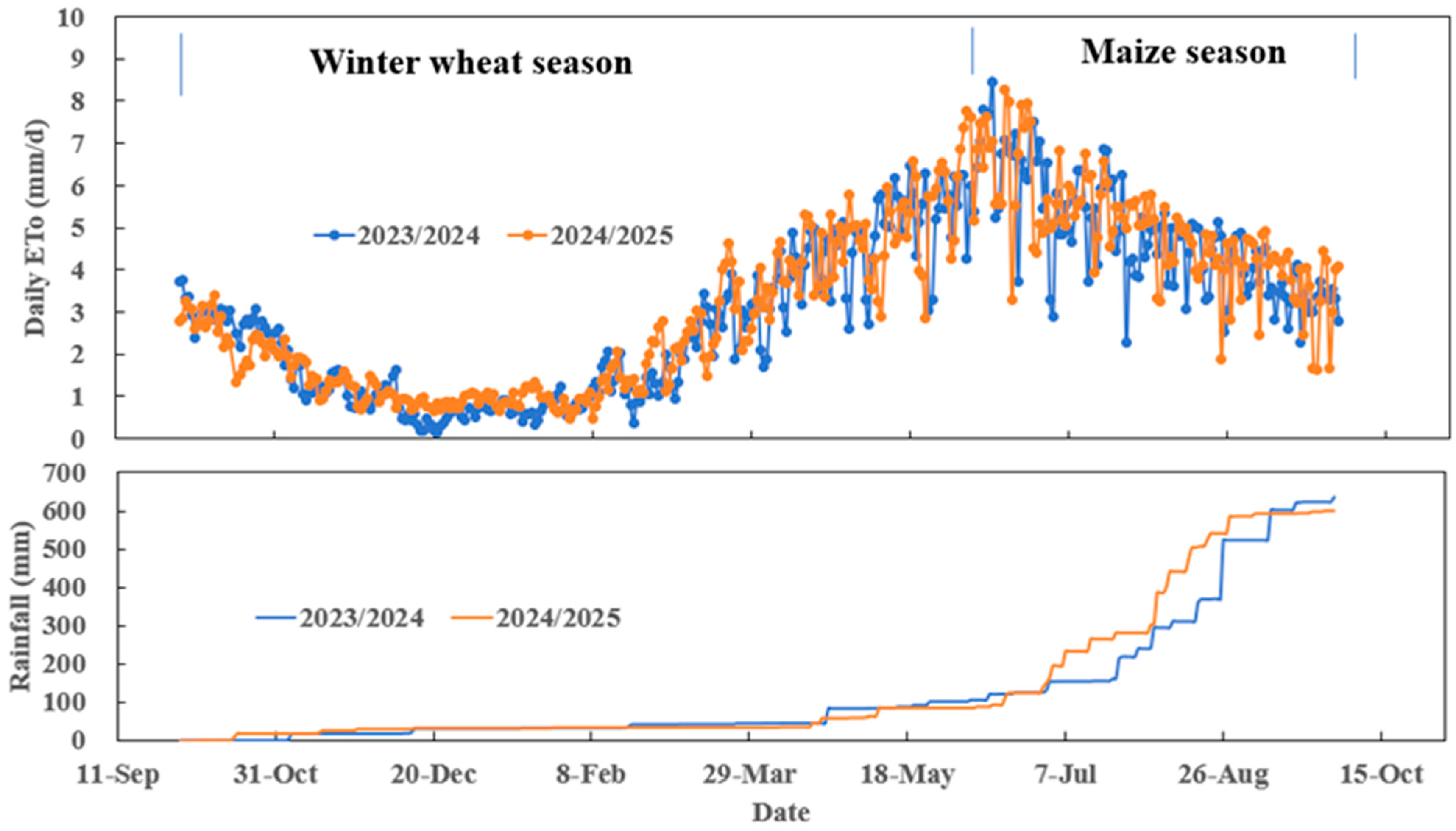
The winter wheat growing season is generally from 15 October to 10 June, and the maize season is from 15 June to 30 September. The accumulated reference ETo for winter wheat during the 2023/2024 and 2024/2025 seasons was 523.3 mm and 556.5 mm, respectively (Figure 1). Rainfall was 106.0 mm and 89.1 mm, respectively, for the two seasons. The accumulated ETo for the maize season in 2024 and 2025 was 465.6 mm and 484.6 mm, and the seasonal rainfall was 529.4 mm and 512.0 mm, respectively (Figure 1). Using crop coefficients without water stress (winter wheat at 0.83 and maize at 0.91) [41,42], the estimated cumulative seasonal crop evapotranspiration was around 434.1 mm and 431.9 mm for winter wheat and 423.7 mm and 440.9 mm for maize, respectively, for the two seasons. The results showed that the seasonal rainfall during the maize growing season (2024 and 2025) was greater than the water use of maize; meanwhile, in the winter wheat season, the seasonal rainfall was far below the water requirements of this crop, with the difference being over 300 mm. Supplemental irrigation should be considered very important for winter wheat.
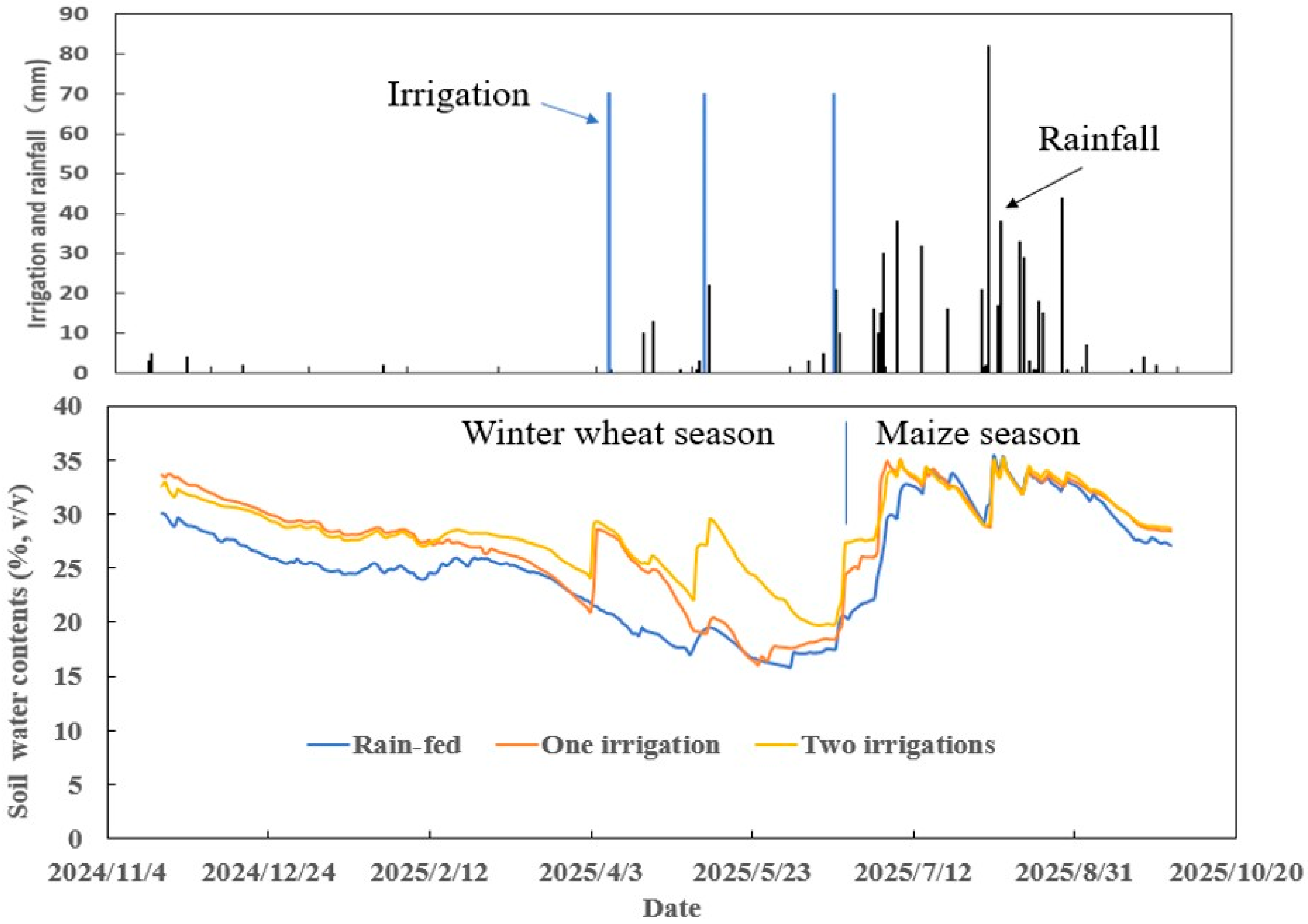
Figure 2 shows the daily average soil moisture of the top 1 m soil profile during the growing season of 2024/2025 for winter wheat and maize under the three irrigation treatments, indicating the rapidly declining soil moisture during the winter wheat season. Supplemental irrigation significantly increased the soil moisture, and a large difference among I0, If, and If2 existed. The irrigation at maize sowing increased the soil moisture level; subsequently, with the summer rainfall, the soil was fully replenished, and the difference among the three treatments disappeared during the maize season. The results show the importance of irrigation in the regulation of soil moisture for winter wheat.

3.2. Water Use of Winter Wheat and Summer Maize

Irrigation influenced the seasonal water use for winter wheat significantly. The ET was around 330 mm under the rainfed treatment (I0). With an additional water supply, either fresh or saline, the ET increased by about 17–20% compared with I0. With an additional irrigation step added to the one-irrigation treatment, the seasonal ET was further increased by 16% under both fresh and saline irrigation, with the ET being similar to the water requirement of the crop (Table 3). The results showed that the water use for winter wheat without irrigation or only with one irrigation step was below the water requirements of the crop, and a certain water deficit occurred in the plants, which could negatively influence crop production. An additional saline water supply promoted crop water use, which could benefit crop production. Due to the high seasonal rainfall, the ET of maize was not influenced by irrigation during the winter wheat season, as shown in Table 3. The seasonal ET in 2025 was greater than that in 2024 for maize due to variations in the weather conditions and crop growth conditions.
The water use that contributed to the seasonal ET for winter wheat included the soil water depletion for the top 2 m soil profile. The contribution from soil water depletion accounted for approximately 74%, 60%, and 50% of the seasonal ET under the rainfed (I0), one freshwater irrigation (If), and two freshwater irrigation (If2) treatments, respectively. Due to the large amount of water use for the rooting zone soil profile during the wheat season, the soil became dry at maize sowing. With the large amount of rainfall, the soil was replenished to achieve high soil water content again during the maize season, as shown in Figure 2. Then, the initial soil moisture for the wheat season could be maintained at a high level. Even with limited rainfall, the ET of winter wheat without irrigation still reached over 70% of the ET under a full water supply across the two experimental seasons.

3.3. Grain Yield and Water Productivity

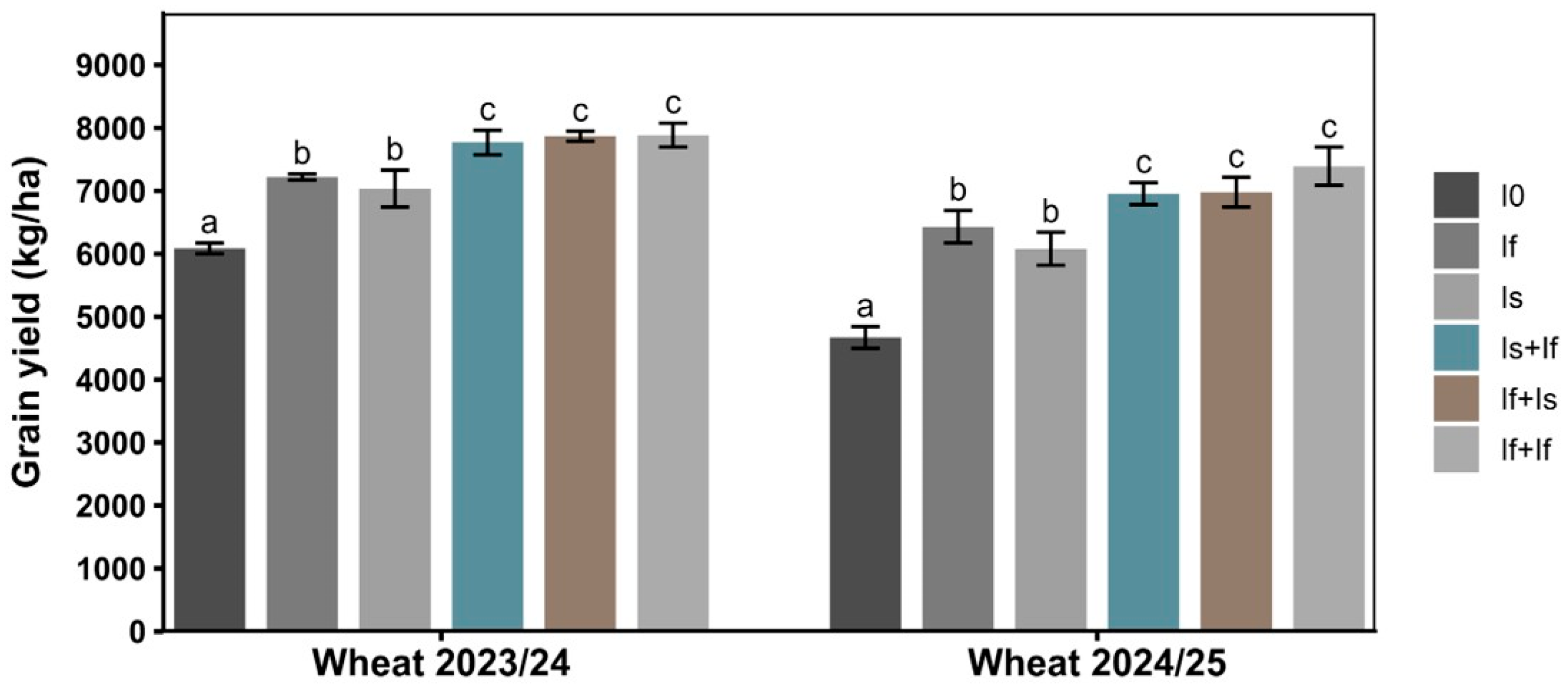
The winter wheat yield was significantly affected by the irrigation frequency, regardless of the water quality (Figure 3). Rainfed wheat produced substantially lower yields than the irrigated treatments, particularly in the 2024/2025 season, when rainfall was limited. A single irrigation step at the jointing stage increased the yield by 18.6% in 2023/2024 and 37.7% in 2024/2025 when freshwater was applied and by 15.6% and 30.1%, respectively, when saline water was used. An additional irrigation step at flowering further enhanced the yield by 9.2% and 14.9% with freshwater across the two seasons. Treatments combining freshwater and saline water (Is + If or If + Is) increased the yield by 7–9% compared with one freshwater irrigation. Although saline irrigation slightly reduced the yield compared with freshwater irrigation, the difference was not statistically significant (p > 0.05). Overall, additional saline irrigation significantly improved winter wheat grain production under deficit conditions.
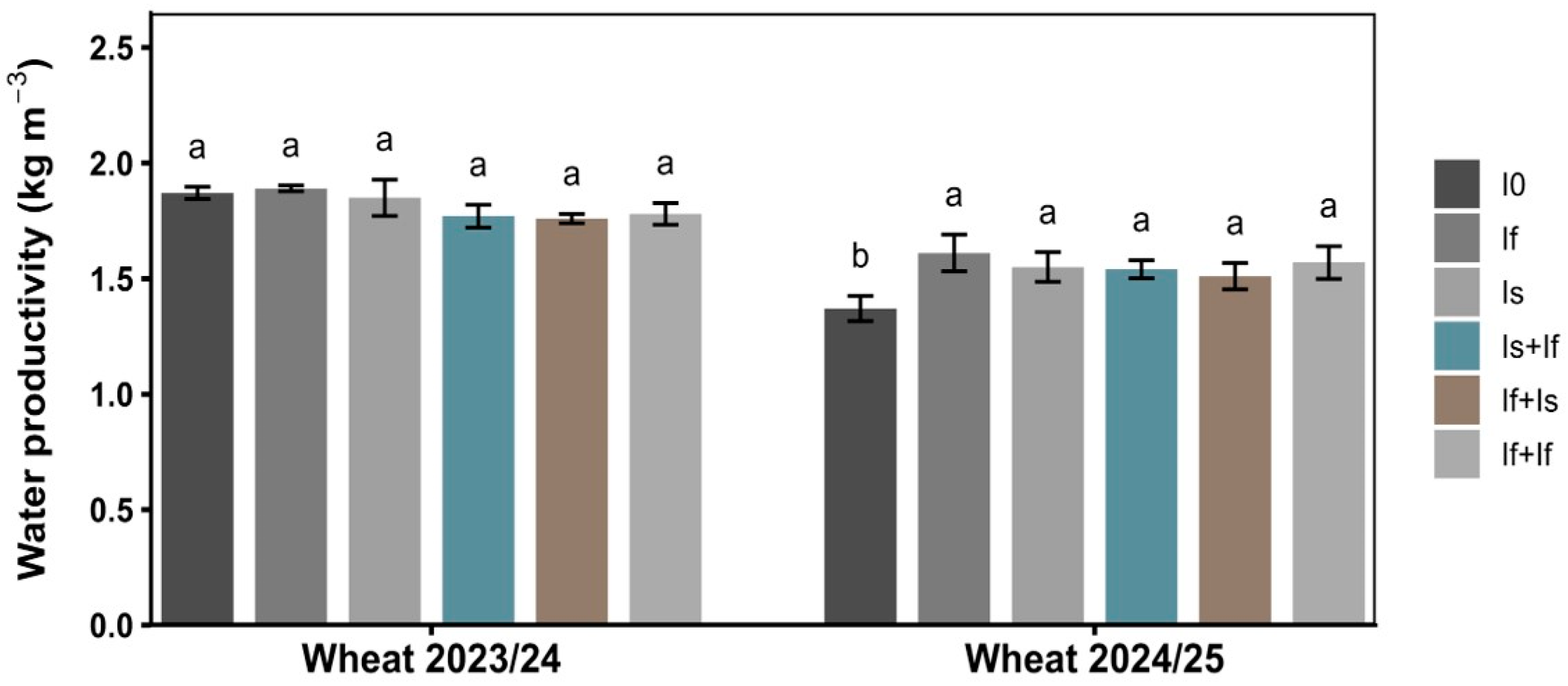
The yield increase for winter wheat was associated with an increase in the spike number per area from rainfed to one irrigation of 15–19%. One additional irrigation increased the seed number per spike and seed weight by 5–7% and the harvest index by 10%. Irrigation at the jointing stage improved the soil water conditions and benefited the productive tillers. Additional irrigation at the flowering stage favored biomass accumulation during the reproductive stage and biomass translocation to seeds, which resulted in higher seed numbers per spike, seed weights, and harvest indices. Irrigation in the dry season of 2024/2025 for winter wheat improved water productivity (WP) due to the improvement in the harvest index. No significant difference in WP was found among saline and freshwater irrigation in winter wheat for the two seasons (Figure 4).
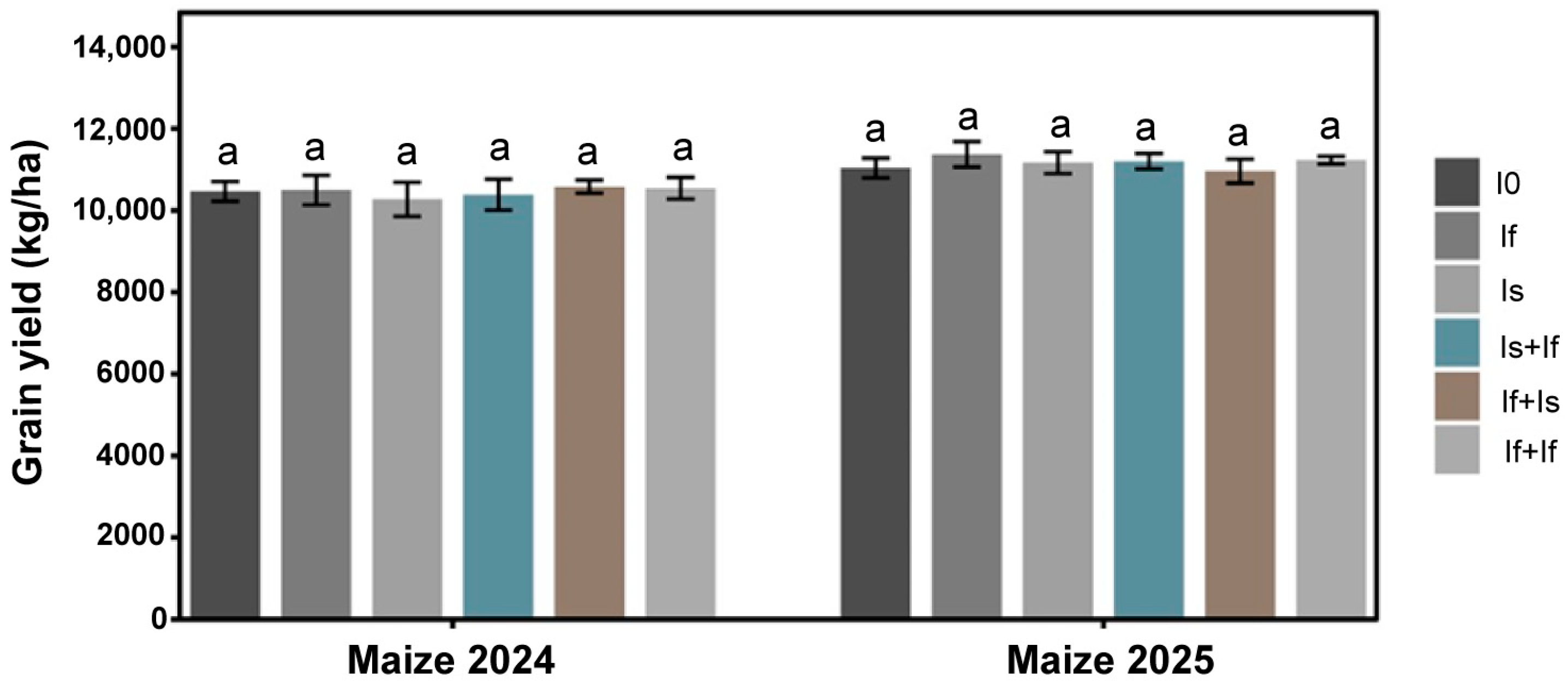
Irrigation in the winter wheat season did not influence the yield of maize (Figure 5). The average yield in 2024 was 10,460 kg/ha, and it was 11,331 kg/ha in 2025, averaged across all six winter wheat irrigation treatments. Figure 2 shows the low soil moisture at wheat harvesting for all treatments. Irrigation at maize sowing improved the soil moisture, and, with the high rainfall during the maize season, the soil moisture was not influenced by irrigation during the winter wheat season and was maintained at a high level. Therefore, all treatments achieved high maize production. The WP of maize was also similar among the six irrigation treatments, with values of 2.9 kg/m3 in 2024 and 2.65 kg/m3 in 2025. The slightly lower WP in 2025 was associated with the lower harvest index of 0.48, as compared with the value of 0.51 in 2024.

3.4. Soil Salt Changes and Balance

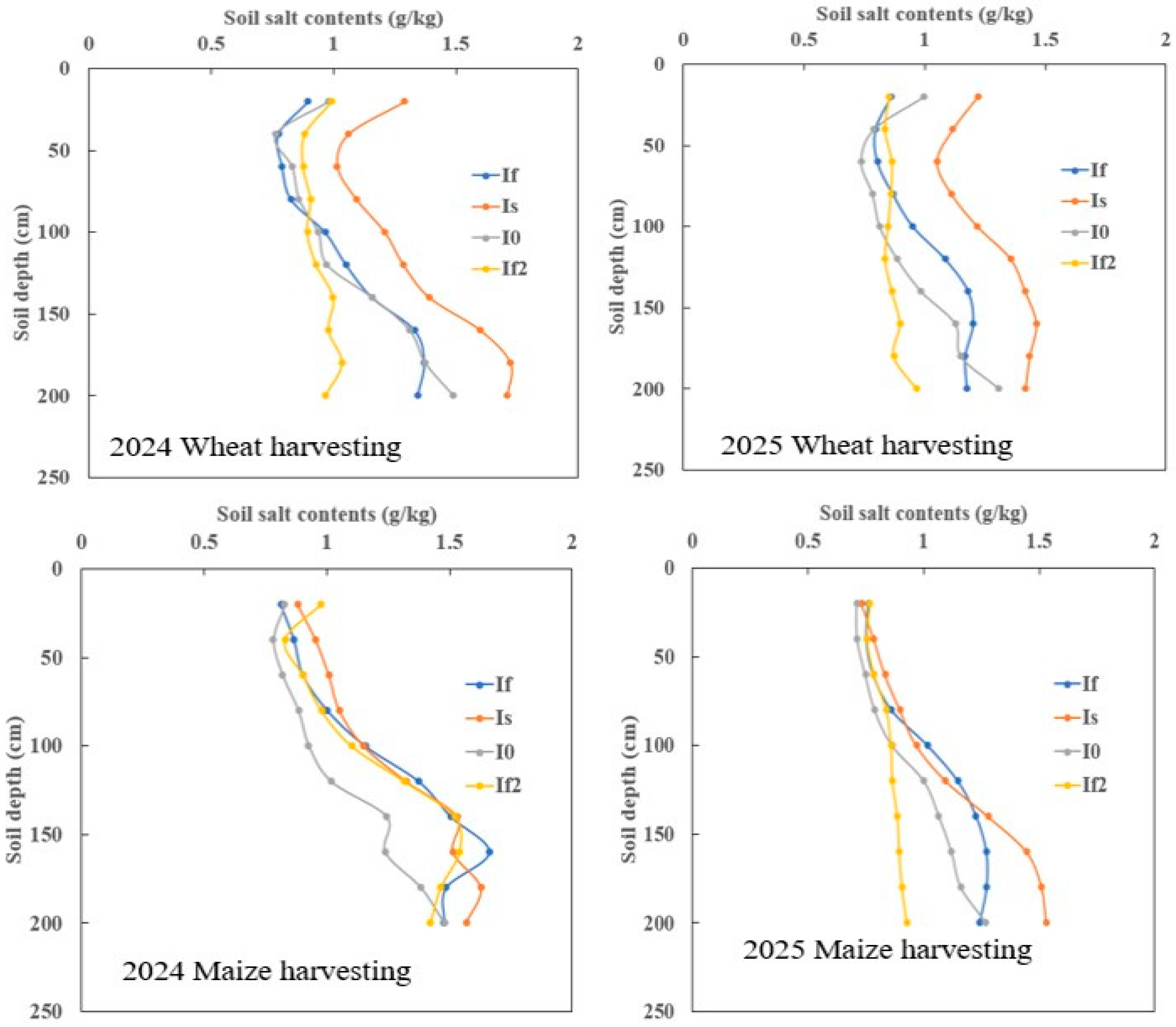
Irrigation with saline water during the winter wheat season brought salt into the soil and increased the salt content along the rooting zone profile, as shown in Figure 6. The increase in salt content following single saline irrigation in winter wheat was significant for all depths of the soil profile at wheat harvesting, with the average increase being around 25% in 2024 and 30% in 2025, as compared with the I0 treatment. The two-times freshwater irrigation treatment If2 reduced the salt content by 10% as compared with I0 for the two seasons. At maize harvesting, with the leaching effects from the summer rainfall, the average salt content for the top 2 m profile was reduced by 15%, and the reduction was more apparent in the top 1 m profile. The drainage water during the maize season with normal or high rainfall could reach 150 mm, which could effectively leach the salt, especially for the top soil layer.
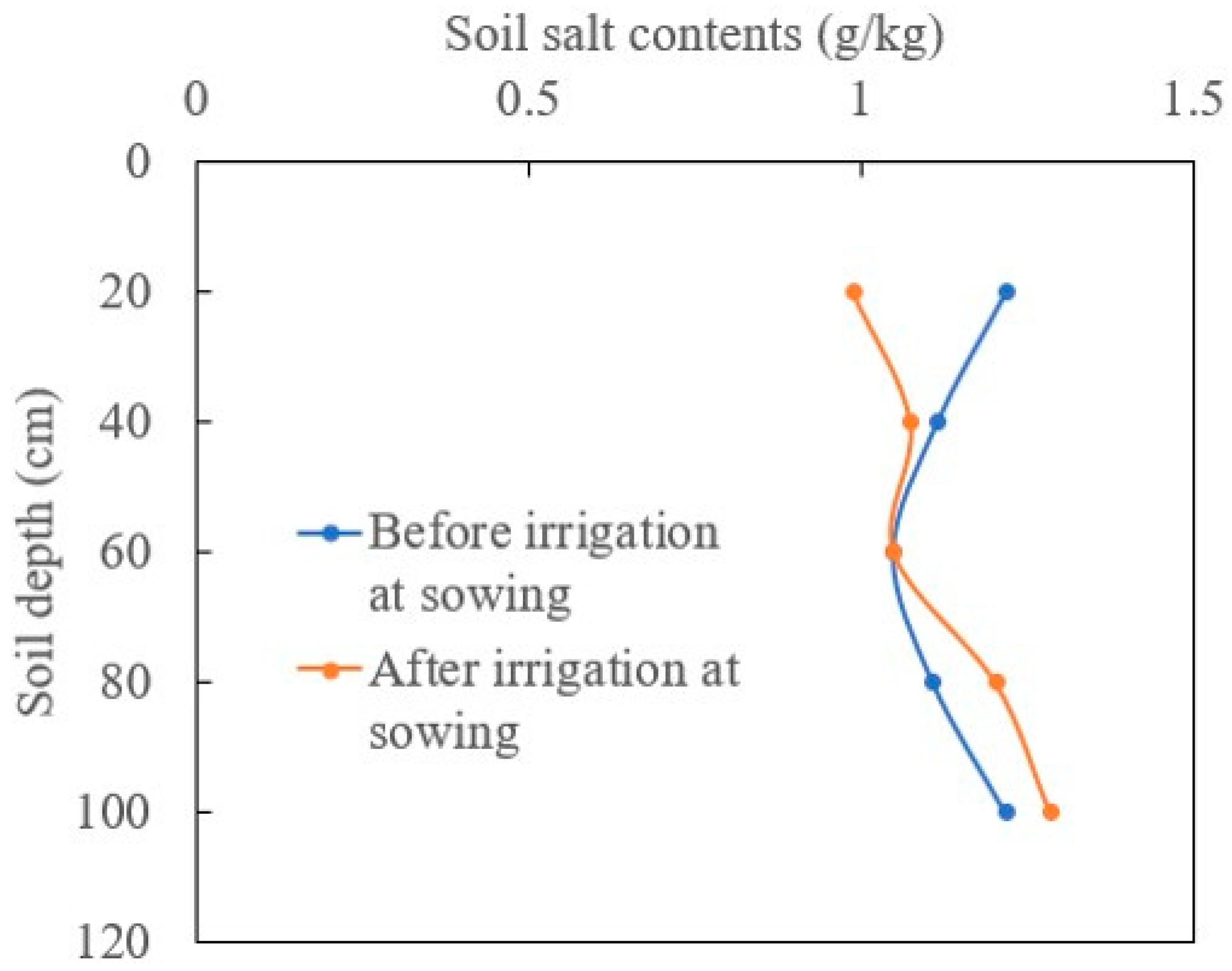
The high salt content in the tillage soil layer after winter wheat harvesting using saline water irrigation could pose a problem for maize. The irrigation at maize sowing had the function of not only replenishing the soil moisture but also leaching the salt in the tillage layer; with the subsequent rainy season, the salt was further leached into the deep soil profile. Figure 7 shows that, during the maize sowing period in 2024, the salt in the tillage layer was significantly reduced by about 20% to less than 1 g kg−1, which was below the threshold value of salt tolerance for maize and ensured successful seedling establishment.
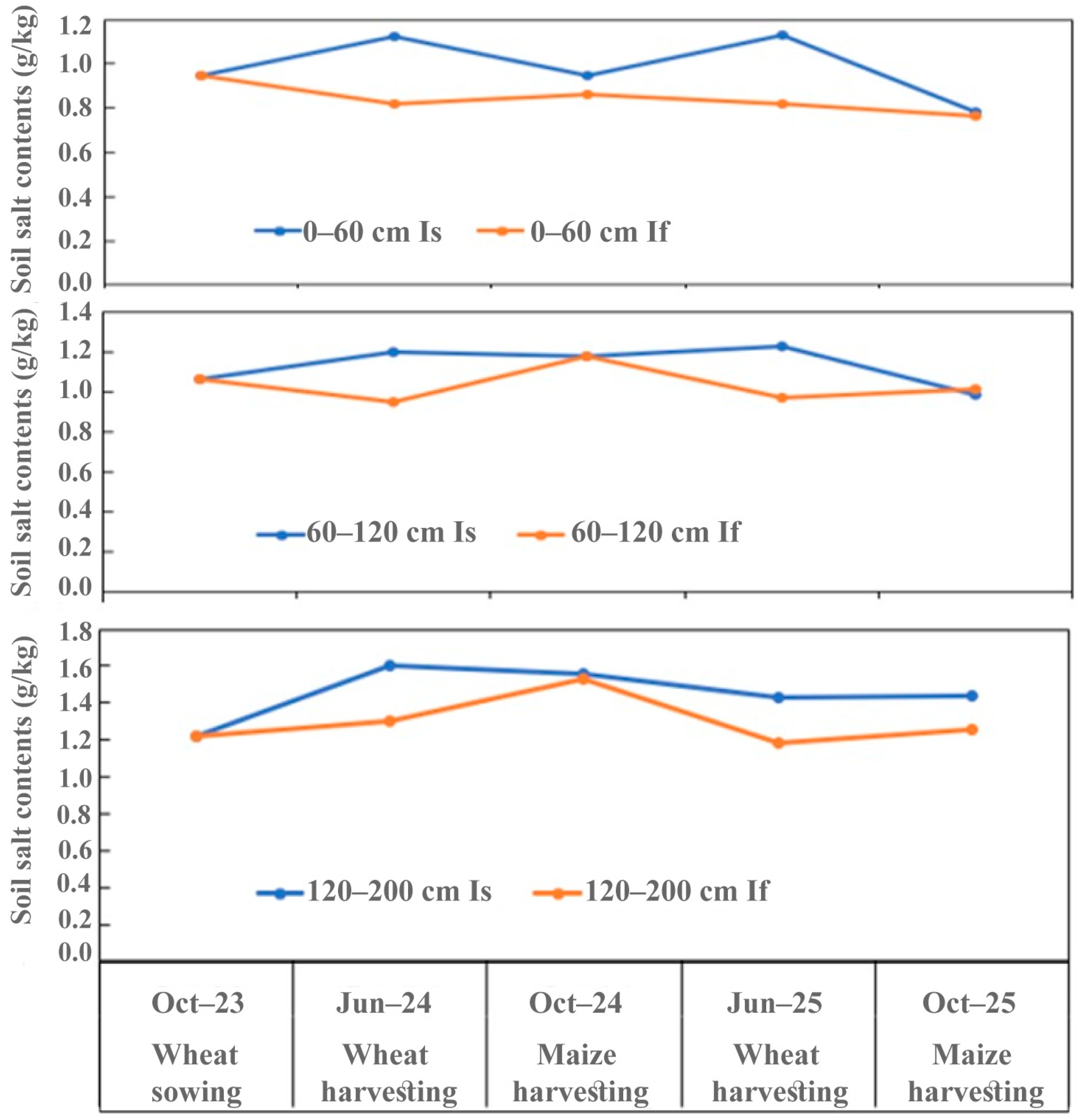
The soil salt content under Is + If and If + Is in the top 1 m soil profile at wheat harvesting was always lower than that in the single Is irrigation treatment, indicating that additional irrigation has the capacity to reduce the salt content in the top soil layer by leaching. Therefore, one additional saline water irrigation step applied to winter wheat improved the soil water content, and the increased salt in the soil could be leached by the summer rainfall to achieve an annual salt balance. Figure 8 shows the changes in salt content during the experimental period for the top (0–60 cm), middle (60–120 cm), and deep layers (120–200 cm) of the soil profile under different treatments at the sowing and harvesting of the two crops. As compared with freshwater irrigation (If), one saline irrigation increased the salt content during the winter wheat season for the whole 2 m soil profile. With the leaching of the salt during the maize season, the salt content became similar between the fresh and saline irrigation treatments. At maize harvesting in 2025, the salt content in the lower part of the soil profile under saline irrigation was slightly higher than that under fresh irrigation, indicating salt accumulation in the deep soil profile due to leaching. Generally, an annual salt balance could be achieved for the major rooting zone of the top 1 m soil profile.

4. Discussion

The crop yield is usually positively related to crop water use; with an increasing water supply, the crop yield generally increases. Based on the two-year field observations, a practical scheduling strategy is proposed, applying one freshwater irrigation at the jointing stage and supplementing it with one saline irrigation (≤4 g/L) either at the jointing or anthesis stage, which can improve the winter wheat yield without causing harmful salt accumulation in the top 1 m soil profile under monsoon conditions.

4.1. Saline Water as an Alternative Water Source

The scarcity of freshwater for irrigation has driven farmers to use alternative water sources for crop production, such as saline water and wastewater [43,44,45]. In the plains around the Bohai Sea, the annual double cropping of winter wheat and maize requires over 800 mm of water, which is much greater than the annual rainfall amount of 500 mm [12]. During the winter wheat season, rainfall is around 120 mm, and crop water use is over 400 mm [46]. Irrigation is critical for achieving high yields of winter wheat. Due to the limited freshwater supply, deficit irrigation scheduling is usually applied to winter wheat, which limits its yield potential.
Using the relatively abundant shallow saline groundwater as an alternative water source to compensate for freshwater shortages can be a viable solution. Previous studies conducted in the NCP have demonstrated the feasibility of saline water irrigation for winter wheat under deficit irrigation [12,47]. Liu et al. [47] found that applying saline water irrigation at the jointing stage of winter wheat and freshwater at maize sowing achieved high yields while saving freshwater for irrigation. Liu et al. [12] suggested that saline water irrigation with EC not exceeding 6.3 dS/m should be applied during the winter wheat season. These findings indicate that properly managed saline irrigation can mitigate freshwater shortages while maintaining stable wheat production in this region.
The results from this study showed that additional saline water irrigation with salt content lower than 4 g/L improved the yield of winter wheat by 18–38%. This magnitude of yield improvement is consistent with the findings of Liu et al. [47], who observed high yields when saline irrigation was applied at the jointing stage, followed by freshwater irrigation at maize sowing. The yield improvement was the most significant when saline irrigation was applied to the rainfed winter wheat at the jointing stage. This irrigation increased the seasonal ET by 17–20% depending on the seasonal rainfall. Soil moisture during the winter wheat season showed a declining trend from sowing to the end of winter dormancy, mainly due to limited rainfall during this period. After winter dormancy, winter wheat enters a rapid growth stage, with increasing water demands. Irrigation at the jointing stage replenishes the depleted soil moisture and supplies the water required for crop growth. Numerous studies in the NCP have emphasized that irrigation at the jointing stage is critical for stabilizing the winter wheat yield under water-limited conditions [48,49].
Additional irrigation using saline water over the one freshwater irrigation step applied to winter wheat either at the jointing stage or at the flowering stage increased the seasonal water use by 7–10% and resulted in a yield improvement of over 10%. The increase in the water supply benefited grain production in winter wheat, outweighing the negative effects caused by salts introduced through saline irrigation. The following crop, maize, was planted in soil with slightly higher salinity due to the saline irrigation applied during the winter wheat season. Due to the dry soil at wheat harvesting, irrigation was necessary for seed germination. This irrigation not only replenished the soil moisture but also reduced the salinity in the topsoil layer, enabling normal seed germination and seedling establishment [12]. Subsequently, the concentrated summer rainfall helped to further leach the salt outside the rooting zone during the maize season, and the yield of maize was not affected by the saline irrigation during the winter wheat season. Utilizing marginal water resources therefore provides a sustainable approach to addressing freshwater shortages [44,50].

4.2. Maintaining Soil Salt Content Below the Threshold Value

The application of saline irrigation can increase the soil salt concentration and, if not properly managed, may lead to secondary salinization. Even low-salinity water will add salts to the soil, which may accumulate over time, especially in arid climates [51]. Sarkar et al. [52] showed that continuous irrigation with saline water caused osmotic stress and ion toxicity, thereby significantly hindering tomato cultivation in dry areas, where freshwater resources are scarce and unsuitable for regular irrigation. Moreover, irrigation with water of 3 g/L salinity did not significantly affect the cotton yield, whereas high salinity levels (≥5 g/L) led to a significant reduction in yields [53]. Therefore, when using saline irrigation, one must carefully consider its influence on soil quality and crop growth.
Salt tolerance varies among different crops and across different growth stages of the same crop. The threshold value of the soil electrical conductivity of saturated paste (ECe) when a yield reduction occurs is 6.0 dS/m for winter wheat and 1.8 dS/m for maize [54]. Manhou et al. [55] showed that some wheat cultivars can maintain grain yields with up to 8 dS/m and straw yields with up to 12 dS/m ECe. The results of the present study showed that the soil salt content for the top 1 m soil profile during the winter wheat season was around 3.5–4.0 dS/m, which was below the threshold value. Irrigation at maize sowing also reduced the salt content in the top 20 cm soil layer to below the threshold value for maize. The monsoon climate in the plains around the Bohai Sea creates favorable conditions for saline irrigation during the dry season for relatively salt-tolerant crops, while concentrated summer rainfall facilitates salt leaching for more salt-sensitive crops.
The influence of soil salt on crop production is also closely related to the soil water conditions. Wang et al. [45] recommend controlling the irrigation salinity at <4 g/L and maintaining the water content at 60–75% of the field capacity to achieve synergistic benefits for soil health and emission reduction. The results of this study indicate that additional saline irrigation combined with deficit freshwater irrigation for winter wheat can fulfill the crop water requirements while promoting salt leaching from the rooting zone through summer rainfall, which could be considered an effective strategy for addressing limited freshwater availability.

4.3. Approaches to Sustainable Long-Term Use of Saline Water

Saline water has become a significant resource for agricultural irrigation in arid regions. However, its potential negative impact on soil health remains a concern. In areas with freshwater resource shortages, although saline water irrigation can alleviate agricultural water use pressures, long-term application may lead to soil salinization and ecological function degradation [51]. Therefore, practices to maintain the soil should be implemented to support the sustainable long-term use of saline water irrigation [56].
Deep vertical rotary tillage can enhance the soil structure and create a low-salinity environment [57]. Xiao et al. [58] found that the use of autumn and spring irrigation could mitigate soil salinization before crop cultivation. De Souza et al. [59] applied an organic fertilizer to stimulate soil microbial activity, which promoted the decomposition of organic residues and nutrient release, thereby helping to reduce the negative effects of soil salinity. Sekhon et al. [60] suggest that table grape yields on calcareous sandy loam soil under saline–sodic groundwater irrigation can be sustained through appropriate soil amendments, with minimal detrimental effects on soil health.
Irrigation and drainage management are critical for preventing salt imbalances in soils at the farm scale. Phytoremediation can be used in cases of low soil salinity and represents a cheaper and more sustainable method than chemical remediation. Studies have shown that phytoremediation has similar or improved results compared to chemical remediation, but it requires specific planning regarding the amelioration process. Phytoremediation has an advantage in improving soil nutrient availability as a result of root exudates and calcite dissolution. It is also beneficial as sodium removal occurs more uniformly and in depth when compared to chemical remediation, as it occurs along the whole rooting zone profile [61]. Therefore, when using saline water for irrigation, appropriate soil management practices should be implemented to ensure the sustainable utilization of marginal water resources.
It should be noted that this study was conducted at the plot scale, where runoff between plots was prevented by soil ridges. Under farm-scale conditions, additional hydrological processes such as surface runoff, spatial variability in soil properties, and field drainage may influence salt transport and leaching dynamics. Furthermore, the conclusions regarding the salt leaching effects of seasonal rainfall are based on two years of field observations. Longer-term monitoring or modeling approaches would be beneficial to further evaluate the sustainability of saline irrigation under varying climatic conditions and management practices.

5. Conclusions

The use of marginal water resources is an option in regions with freshwater shortages. The results of this study showed that adding one saline irrigation step to deficit-irrigated winter wheat increased the crop ET, as well as crop production. Based on the two-year experimental period, seasonal rainfall during the maize growing season was sufficient to leach accumulated salts from the top 1 m soil profile, preventing significant short-term salt accumulation. Regarding irrigation timing, irrigation can be applied at the jointing stage or at the flowering stage for winter wheat. Based on these results, a practical irrigation strategy for the winter wheat–maize rotation system in the NCP is to apply one saline irrigation (≈70 mm) during the wheat season to counter freshwater deficits. This irrigation can be applied either at the jointing stage or at the flowering stage of winter wheat. The relatively high salt tolerance of winter wheat also favors the use of saline water with moderate salt content (≤4 g/L), which increases the available irrigation water resources. The subsequent rainy season following winter wheat provides favorable conditions for soil salt leaching, which helps to maintain an approximate annual salt balance under saline water irrigation in this monsoon climate region. Therefore, integrating one saline irrigation into a deficit freshwater irrigation schedule may be considered a practical management strategy under monsoon conditions, provided that adequate leaching occurs during the subsequent rainy season.

Author Contributions

Conceptualization, Methodology, Data Curation, Investigation, Validation, Visualization, Writing—Original Draft: K.S.; Conceptualization, Writing—Review and Editing: Z.L.; Conceptualization, Writing—Review and Editing: Z.U.R.; Conceptualization, Writing—Review and Editing: J.N.; Project Administration, Funding Acquisition, Conceptualization, Writing—Review and Editing: S.C.; Conceptualization, Supervision, Validation, Writing—Review and Editing: L.S. All authors have read and agreed to the published version of the manuscript.

Funding

This study was supported by the National Key Research and Development Project of China (2023YFD1900803).

Data Availability Statement

All relevant data are included in this article. Any further details related to the data may be obtained from the corresponding author upon reasonable request.

Acknowledgments

During the preparation of this work, the authors used ChatGPT-5 (Open AI, San Francisco, CA, USA) in order to improve the readability and language of the manuscript. The authors reviewed and edited the content as needed and take full responsibility for the content of the published article. All authors have read and agreed to the published version of the manuscript.

Conflicts of Interest

The authors declare no conflicts of interest.

Abbreviations

The following abbreviations are used in this manuscript:
NCPNorth China plain
ECElectrical conductivity
ETEvapotranspiration
ETaActual seasonal evapotranspiration
EToDaily crop evapotranspiration
WPWater productivity
GPRSGeneral packet radio service
ECeElectrical conductivity of saturated paste

References

  1. Liang, Z.; van der Werf, W.; Cheng, J.; Wang, C.; Cong, W.F.; Zhang, C.; Zhang, F.; Groot, J.C. Identifying exemplary sustainable cropping systems using a positive deviance approach: Wheat–maize double cropping in the North China Plain. Agric. Syst. 2022, 201, 103471. [Google Scholar] [CrossRef]
  2. Yuan, H.; Zhang, A.; Zhu, C.; Dang, H.; Zheng, C.; Zhang, J.; Cao, C. Saline Water Irrigation Changed the Stability of Soil Aggregates and Crop Yields in a Winter Wheat–Summer Maize Rotation System. Agronomy 2024, 14, 2564. [Google Scholar] [CrossRef]
  3. He, K.K.; Yang, Y.G.; Yang, Y.M.; Chen, S.Y.; Hu, Q.L.; Liu, X.J.; Gao, F. HYDRUS Simulation of Sustainable Brackish Water Irrigation in a Winter Wheat–Summer Maize Rotation System in The North China Plain. Water 2017, 9, 536. [Google Scholar] [CrossRef]
  4. Zeng, R.; Yao, F.; Wang, J.; Wang, X.; Zhang, S.; Yang, S.; Bai, Y.; Zhang, J. Assessing the effects of precipitation and irrigation on winter wheat yield and water productivity in the North China Plain. Agric. Water Manag. 2021, 254, 107063. [Google Scholar] [CrossRef]
  5. Zhang, X.; Ren, L.; Feng, W. Comparison of the shallow groundwater storage change estimated by a distributed hydrological model and GRACE satellite gravimetry in a well-irrigated plain of the Haihe River basin, China. J. Hydrol. 2022, 610, 127799. [Google Scholar] [CrossRef]
  6. Du, J.; Laghari, Y.; Wei, Y.-C.; Wu, L.; He, A.-L.; Liu, G.-Y.; Yang, H.-H.; Guo, Z.-Y.; Leghari, S.J. Groundwater Depletion and Degradation in the North China Plain: Challenges and Mitigation Options. Water 2024, 16, 354. [Google Scholar] [CrossRef]
  7. Han, D.M.; Currell, M.J.; Guo, H.M. Controls on distributions of sulphate, fluoride, and salinity in aquitard porewater from the North China Plain: Long-term implications for groundwater quality. J. Hydrol. 2021, 603, 126828. [Google Scholar] [CrossRef]
  8. Tan, L.; Zhang, X.; Qi, J.; Sun, D.; Marek, G.W.; Feng, P.; Li, B.; Liu, D.L.; Srinivasan, R.; Chen, Y. Assessment of the sustainability of groundwater utilization and crop production under optimized irrigation strategies in the North China Plain under future climate change. Sci. Total Environ. 2023, 891, 165619. [Google Scholar] [CrossRef]
  9. Ou, J.; Ding, B.; Zhang, X.; Feng, P.; Chen, Y.; Yu, L.; Liu, D.L.; Srinivasan, R. How to stop groundwater drawdown in the North China Plain? Combining agricultural management strategies and climate change. J. Hydrol. 2024, 647, 132352. [Google Scholar] [CrossRef]
  10. Ma, Q.; Yang, Y.; Sheng, Z.; Han, S.; Yang, Y.; Moiwo, J.P. Hydro-economic model framework for achieving groundwater, food, and economy trade-offs by optimizing crop patterns. Water Res. 2022, 226, 119199. [Google Scholar] [CrossRef]
  11. Gao, H.; Fu, T.; Tang, S.; Liu, J. Effects of saline water irrigation on winter wheat and its safe utilization under a subsurface drainage system in coastal saline-alkali land of Hebei Province, China. Irrig. Sci. 2023, 41, 251–260. [Google Scholar] [CrossRef]
  12. Liu, Z.M.; Gao, C.S.; Yan, Z.Z. Effects of long-term saline water irrigation on soil salinity and crop production of winter wheat–maize cropping system in the North China Plain: A case study. Agric. Water Manag. 2024, 303, 109060. [Google Scholar] [CrossRef]
  13. Wang, H.; Feng, D.; Zhang, A.; Zheng, C.; Li, K.; Ning, S.; Zhang, J.; Sun, C. Effects of saline water mulched drip irrigation on cotton yield and soil quality in the North China Plain. Agric. Water Manag. 2021, 262, 107405. [Google Scholar] [CrossRef]
  14. Lou, B.; Hu, Y.; Li, T.; Liu, Q.; Wang, J.; Dong, X.; Tian, L.; Zhang, X.; Bian, W.; Liu, T.; et al. Assessment of saline water irrigation on biomass and quality of alfalfa: A sustainable agriculture perspective. Agric. Water Manag. 2025, 314, 109504. [Google Scholar] [CrossRef]
  15. Li, P.; Ren, L. Evaluating the saline water irrigation schemes using a distributed agro-hydrological model. J. Hydrol. 2021, 594, 125688. [Google Scholar] [CrossRef]
  16. Guo, K.; Liu, X.J. Reclamation effect of freezing saline water irrigation on heavy saline-alkali soil in the Hetao Irrigation District of North China. Catena 2021, 204, 105420. [Google Scholar] [CrossRef]
  17. Su, F.; Wu, J.; Wang, D.; Zhao, H.; Wang, Y.; He, X. Moisture movement, soil salt migration, and nitrogen transformation under different irrigation conditions: Field experimental research. Chemosphere 2022, 300, 134569. [Google Scholar] [CrossRef] [PubMed]
  18. Jiang, J.; Zhai, D.; Zhang, C.; Ma, J. Influence of Saline Water Irrigation on Root Distribution, Wheat Yield, and Soil Salinity. J. Irrig. Drain. Eng. 2021, 147, 04021005. [Google Scholar] [CrossRef]
  19. Ren, F.T.; Yang, G.; Li, W.J.; He, X.L.; Gao, Y.L.; Tian, L.J.; Li, F.D.; Wang, Z.L.; Liu, S.H. Yield-compatible salinity level for growing cotton (Gossypium hirsutum L.) under mulched drip irrigation using saline water. Agric. Water Manag. 2021, 250, 106859. [Google Scholar] [CrossRef]
  20. Singh, G.; Mavi, M.S.; Choudhary, O.P.; Kaur, M.; Singh, B. Interaction of pyrolysed and un-pyrolysed organic material enhances carbon accumulation in soil irrigated with water of variable electrical conductivity. Soil Tillage Res. 2022, 215, 105193. [Google Scholar] [CrossRef]
  21. Minhas, P.; Qadir, M. Promoting Irrigation Sustainability with Saline Water: The Way Forward. In Irrigation Sustainability with Saline and Alkali Waters: Extent, Impacts and Management Guidelines; Springer: Singapore, 2024; pp. 295–304. [Google Scholar]
  22. Zhang, X.; Qin, W.; Chen, S.; Shao, L.; Sun, H. Responses of yield and WUE of winter wheat to water stress during the past three decades—A case study in the North China Plain. Agric. Water Manag. 2017, 179, 47–54. [Google Scholar] [CrossRef]
  23. Wang, G.; Du, Z.; Ning, H.; Liu, H.; Abubakar, S.A.; Gao, Y. Changes in GHG Emissions Based on Irrigation Water Quality in Short-Term Incubated Agricultural Soil of the North China Plain. Agriculture 2021, 11, 1268. [Google Scholar] [CrossRef]
  24. Lu, S.; Xie, F.; Zhang, X.; Pei, L.; Tang, Y. Health evaluation on migration and distribution of heavy metal Cd after reclaimed water drip irrigation. Environ. Geochem. Health 2020, 42, 841–848. [Google Scholar]
  25. Hu, Y.X.; Li, X.W.; Jin, M.G.; Wang, R.; Chen, J.Y.; Guo, S.L. Reduced co-occurrence and ion-specific preferences of soil microbial hub species after ten years of irrigation with brackish water. Soil Tillage Res. 2020, 199, 104599. [Google Scholar]
  26. Ning, S.R.; Zhou, B.B.; Shi, J.C.; Wang, Q.J. Soil water/salt balance and water productivity of typical irrigation schedules for cotton under film-mulched drip irrigation in northern Xinjiang. Agric. Water Manag. 2021, 245, 106651. [Google Scholar] [CrossRef]
  27. Seleiman, M.F.; Kheir, A.M.S. Saline soil properties, quality and productivity of wheat grown with bagasse ash and thiourea in different climatic zones. Chemosphere 2018, 193, 538–546. [Google Scholar] [CrossRef]
  28. Bouras, H.; Mamassi, A.; Devkota, K.P.; Choukr-Allah, R.; Bouazzama, B. Integrated effect of saline water irrigation and phosphorus fertilization practices on wheat (Triticum aestivum) growth, productivity, nutrient content, and soil properties under dryland farming. Plant Stress 2023, 10, 100295. [Google Scholar] [CrossRef]
  29. Wang, H.; Zheng, C.; Ning, S.; Cao, C.; Li, K.; Dang, H.; Wu, Y.; Zhang, J. Impacts of long-term saline water irrigation on soil properties and crop yields under maize–wheat crop rotation. Agric. Water Manag. 2023, 282, 108383. [Google Scholar] [CrossRef]
  30. Gao, C.S.; Shao, L.W.; Yan, Z. Annual soil salt balance and crop performance under brackish water irrigation during the winter wheat season. Chin. J. Eco-Agric. 2021, 29, 809–820. [Google Scholar]
  31. Singh, G.; Mavi, M.S.; Choudhary, O.P.; Gupta, N.; Singh, Y. Rice straw biochar application to soil irrigated with saline water in a cotton–wheat system improves crop performance and soil functionality in north-west India. J. Environ. Manag. 2021, 295, 113277. [Google Scholar] [CrossRef] [PubMed]
  32. Zhang, Y.F.; Guo, Y.; Shen, Y.J.; Qi, Y.Q.; Luo, J.M. Impact of planting structure changes on agricultural water requirement in North China Plain. Chin. J. Eco-Agric. 2020, 28, 8–16. [Google Scholar]
  33. Huang, H.C.; Wen, L.Y.; Kong, X.B.; Chen, W.G.; Sun, X.B. The Impact of Spatial Pattern Evolution of Cultivated Land on Cultivated Land Suitability in China and Its Policy Implication. China Land Sci. 2021, 35, 61–70. [Google Scholar]
  34. Yang, Y.; Zou, J.; Feng, B.; Hua, S.; Qiao, B.; Huang, W.; Zhang, L.; Zheng, H.; Harrison, M.T.; Liu, K.; et al. Long-term N fertilization increases water use and use-efficiency of winter wheat. Field Crops Res. 2025, 318, 109808. [Google Scholar] [CrossRef]
  35. Si, Z.Y.; Zain, M.; Mehmood, F.; Wang, G.S.; Gao, Y.; Duan, A.W. Effects of nitrogen application rate and irrigation regime on growth, yield, and water–nitrogen use efficiency of drip-irrigated winter wheat in the North China Plain. Agric. Water Manag. 2020, 231, 106002. [Google Scholar] [CrossRef]
  36. Wang, Y.Q.; Zhang, Y.H.; Zhang, R.; Li, J.P.; Zhang, M.; Zhou, S.L.; Wang, Z.M. Reduced irrigation increases the water use efficiency and productivity of winter wheat–summer maize rotation on the North China Plain. Sci. Total Environ. 2018, 618, 112–120. [Google Scholar] [CrossRef]
  37. Zhou, Q.; Lyu, D.; Li, W.; Wen, Y.; Wang, Z. Effects of Irrigation Amount and Salinity Levels on Maize (Zea mays L.) Growth, Water Productivity and Carbon Emissions in Arid Region of Northwest China. Agronomy 2024, 14, 2656. [Google Scholar] [CrossRef]
  38. Allen, R.G.; Pereira, L.S.; Raes, D.; Smith, M. Crop evapotranspiration—Guidelines for computing crop water requirements. In FAO Irrigation and Drainage Paper 56; FAO: Rome, Italy, 1998. [Google Scholar]
  39. Feng, X.D.; Bi, S.J.; Li, H.J.; Qi, Y.Q.; Chen, S.Y.; Shao, L.W. Soil moisture forecasting for precision irrigation management using real-time electricity consumption records. Agric. Water Manag. 2024, 291, 108656. [Google Scholar] [CrossRef]
  40. Zhang, X.Y.; Chen, S.Y.; Sun, H.Y.; Shao, L.W.; Wang, Y.Z. Changes in evapotranspiration over irrigated winter wheat and maize in North China Plain over three decades. Agric. Water Manag. 2011, 98, 1097–1104. [Google Scholar] [CrossRef]
  41. Li, H.T.; Li, L.; Yan, Z.Z.; Gao, C.S.; Han, L.N.; Zhang, X.Y. Changes in and influencing factors of crop coefficient of winter wheat during the past 40 years on the Taihang Piedmont Plain. Chin. J. Eco-Agric. 2022, 30, 747–760. [Google Scholar]
  42. Liu, Z.M.; Li, L.; Li, H.T.; Liu, N.; Wang, H.X.; Shao, L.W. Changes and influencing factors of crop coefficient of summer maize during the past 40 years in the North China Plain. Chin. J. Eco-Agric. 2023, 31, 1355–1367. [Google Scholar]
  43. Xie, Y.C.; Dang, H.K.; Zheng, Y.D. Effects of Long-Term Saline Water Irrigation on Cotton Emergence and Seedling Growth. J. Agron. Crop Sci. 2025, 212, e70149. [Google Scholar]
  44. Zhang, X.; Liu, X.; Che, S.; Sun, H.; Shao, L.; Niu, J. Efficient utilization of various water sources in farmlands in the low plain nearby Bohai Sea. Chin. J. Eco-Agric. 2016, 24, 995–1004. [Google Scholar]
  45. Wang, Y.Y.; Zhang, J.P.; Gao, Y. Impact of Saline Water Irrigation on Soil Carbon Pool Composition and the Response of Carbon Emissions to Water Regulation. J. Agron. Crop Sci. 2025, 211, e70120. [Google Scholar] [CrossRef]
  46. Liu, C.M.; Zhang, X.Y.; Zhang, Y.Q. Determination of daily evaporation and evapotranspiration of winter wheat and maize by large-scale weighing lysimeter and micro-lysimeter. Agric. For. Meteorol. 2002, 111, 109–120. [Google Scholar] [CrossRef]
  47. Liu, X.W.; Feike, T.; Chen, S.Y. Effects of saline irrigation on soil salt accumulation and grain yield in the winter wheat–summer maize double cropping system in the low plain of North China. J. Integr. Agric. 2016, 15, 603–617. [Google Scholar] [CrossRef]
  48. Zhang, X.; Chen, S.; Sun, H.; Pei, D.; Wang, Y. Dry matter, harvest index, grain yield and water use efficiency as affected by water supply in winter wheat. Irrig. Sci. 2008, 27, 1–10. [Google Scholar] [CrossRef]
  49. Zhang, X.Y.; Wang, Y.Z.; Sun, H.Y. Optimizing the yield of winter wheat by regulating water consumption during vegetative and reproductive stages under limited water supply. Irrig. Sci. 2013, 31, 1103–1112. [Google Scholar] [CrossRef]
  50. Xiang, P.; Zheng, J.; Wang, Y.; Liu, J.Y. Irrigation with brackish water–biogas slurry regulates soil salinity and water use efficiency to improve tomato quality. Irrig. Sci. 2025, 44, 14. [Google Scholar] [CrossRef]
  51. Paz, A.M.; Amezketa, E.; Canfora, L.; Castanheira, N.; Falsone, G.; Gon, M.C.; Hristov, B.; Mastrorilli, M.; Ramos, T.; Costantini, E.A.C. Salt-affected soils at the farm scale: Successful experiences and innovation needs. In Proceedings of IECAG 2021, Online, 3–17 May 2021; MDPI: Basel, Switzerland, 2021; Volume 4. [Google Scholar]
  52. Sarkar, M.D.; Mousa, M.A.A.; Ibrahim, O.H.; Naznin, M.T. Genotype-specific grafting of tomato under saline water irrigation: Conferring physiological adaptation, ion homeostasis, antioxidant activity and yield. Sci. Hortic. 2026, 355, 114569. [Google Scholar] [CrossRef]
  53. Ma, Z.L.; Zhang, J.Z.; Li, W.H. The dual-threat: How saline water irrigation compromises soil health and seed cotton yield under mulched drip irrigation in Xinjiang, China. Agric. Water Manag. 2025, 320, 109847. [Google Scholar] [CrossRef]
  54. FAO. Crop Salt Tolerance Data; Irrigation and Drainage Paper No. 29; FAO: Rome, Italy, 1985. [Google Scholar]
  55. Manhou, K.; Moussadek, R.; Dakak, H. Effect of Irrigation with Saline Water on Germination, Physiology, Growth, and Yield of Durum Wheat Varieties on Silty Clay Soil. Agriculture 2025, 15, 2364. [Google Scholar] [CrossRef]
  56. Shahid, K.; Liu, Z.M.; Shao, L.W.; Niu, J.F.; Chen, S.Y.; Zhang, X.Y. Effects of applying manure on soil physical properties and crop yield under long-term saline water irrigation. Chin. J. Eco-Agric. 2026, 34, 103–117. [Google Scholar]
  57. Xia, H.J.; Liu, H.G.; Sun, K. Mechanisms of cotton growth and water use efficiency in saline–alkali soil using deep vertical rotary tillage and Bacillus subtilis. Ind. Crops Prod. 2026, 239, 122472. [Google Scholar] [CrossRef]
  58. Xiao, C.A.; Wu, J.W.; Lu, Y. Optimization of coordinated autumn and spring irrigation under water resource constraints in cold and arid region. Agric. Water Manag. 2026, 323, 110047. [Google Scholar] [CrossRef]
  59. De Souza, M.V.P.; De Sousa, G.G.; Pereira, A.P.D. Cattle Manure Fertilizer and Biostimulant Trichoderma Application to Mitigate Salinity Stress in Green Maize Under an Agroecological System in the Brazilian Semiarid Region. Plants 2025, 14, 3643. [Google Scholar] [CrossRef]
  60. Sekhon, K.S.; Kaur, A.; Thaman, S. Sustaining Grape Yield and Soil Health Under Saline–Sodic Irrigation Through Amendments and Canal Water Application. Water 2025, 17, 2683. [Google Scholar] [CrossRef]
  61. Qadir, M.; Oster, J.D.; Schubert, S.; Noble, A.D.; Sahrawat, K.L. Phytoremediation of Sodic and Saline–Sodic Soils. In Advances in Agronomy; Academic Press: San Diego, CA, USA, 2007; Volume 96, pp. 197–247. [Google Scholar]
Figure 1. Daily reference crop evapotranspiration (ETo) and accumulated rainfall for two growing seasons of winter wheat and summer maize during 2023/2024 and 2024/2025.
Agronomy 16 00637 g001
Figure 2. Changes in the daily average soil volumetric water content (%, v/v) in the top 1 m soil profile during the winter wheat and maize growing seasons in 2024/2025 under three irrigation treatments and daily irrigation and rainfall events.
Agronomy 16 00637 g002
Figure 3. Winter wheat yield under irrigation treatments (different letters indicate significant differences at p < 0.05).
Agronomy 16 00637 g003
Figure 4. Water productivity of winter wheat in 2023/2024 and 2024/2025 seasons under six irrigation treatments with one irrigation at jointing and two irrigations at jointing and flowering using either freshwater or saline water (the different letters indicate significance at p < 0.05).
Agronomy 16 00637 g004
Figure 5. Yields of summer maize in 2024 and 2025 seasons following different irrigation treatments administered to the previous crop, winter wheat.
Agronomy 16 00637 g005
Figure 6. Soil salt content at harvesting of wheat and maize in 2024 and 2025 seasons following different irrigation treatments administered to winter wheat.
Agronomy 16 00637 g006
Figure 7. Soil salt content for the top 1 m soil profile before and after irrigation at maize sowing in the 2024 season.
Agronomy 16 00637 g007
Figure 8. The changes in the average soil salt content for three soil depths (0–60 cm, 60–120 cm, and 120–200 cm) during the experimental period under fresh (If) and saline (Is) irrigation to winter wheat.
Agronomy 16 00637 g008
Table 1. Treatments of additional saline irrigation in winter wheat. Abbreviations: I0 = rainfed; If = one freshwater irrigation (70 mm); Is = saline irrigation (70 mm); If2 = two freshwater irrigations (70 mm each).
TreatmentWinter Wheat SeasonMaize Season
Rainfed (I0)No irrigation during winter wheat season, as the control representing a serious water shortage situationIrrigation of 70 mm at maize sowing to ensure seedling establishment for all treatments
Irrigation once
using freshwater (If)
One irrigation (70 mm) applied to winter wheat at the jointing stage using freshwater, as the control representing deficit irrigation scheduling for winter wheat
Additional
saline irrigation added (70 mm, Is)
Is: Saline irrigation (70 mm) added to I0 at jointing stage
If + Is: Freshwater irrigation at jointing stage followed by saline irrigation (70 mm) at anthesis
Is + If: Saline irrigation (70 mm) at jointing stage followed by freshwater irrigation at anthesis
Two freshwater applications with 70 mm (If2)Irrigation at jointing and anthesis stages, both using freshwater, as the control to be compared with If + Is and Is + If
Table 2. Total soluble solid content in the deep ground freshwater and shallow ground saline water for irrigation.
Water SourceElectrical Conductivity (EC, dS/m)Total Soluble Solid Content
(g/L)
Ion Concentrations (g/L)
HCO3CISO42−Na+NH4+ + NO2 + NO3K+ + Mg2+ + Ca2+
Deep groundwater as freshwater1.530.970.320.130.170.300.010.04
Shallow ground saline water5.473.860.900.611.070.900.030.35
Table 3. Seasonal evapotranspiration (ET, mm) of winter wheat and maize under different irrigation treatments applied to winter wheat.
TreatmentWheatMaize
2023/20242024/202520242025
Rainfed (I0)324.9 a342.1 a352.3 a415.9 a
One freshwater irrigation (If)382.7 b400.6 b361.3 a418.9 a
One saline water irrigation (Is)379.8 b391.4 b356.7 a423.1 a
Two irrigations (Is + If)439.5 c452.3 c361.2 a423.9 a
Two irrigations (If + Is)447.8 c463.2 c371.3 a416.8 a
Two freshwater irrigations (If2)443.5 c469.7 c364.5 a432.9 a
p-value<0.05<0.05>0.05>0.05
Note: Values followed by different lowercase letters within a column indicate statistically significant differences according to the LSD test at p < 0.05.
Disclaimer/Publisher’s Note: The statements, opinions and data contained in all publications are solely those of the individual author(s) and contributor(s) and not of MDPI and/or the editor(s). MDPI and/or the editor(s) disclaim responsibility for any injury to people or property resulting from any ideas, methods, instructions or products referred to in the content.